
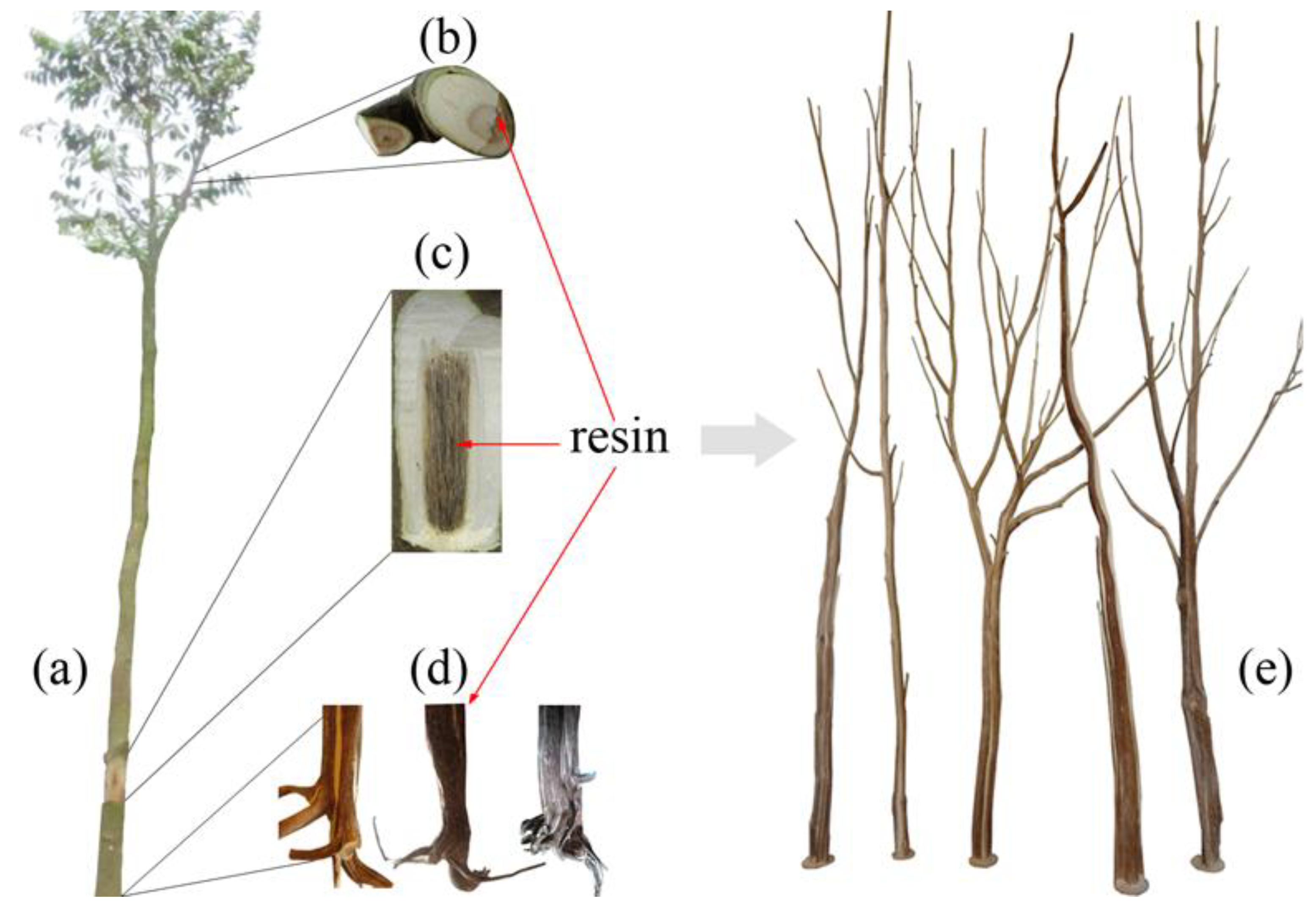
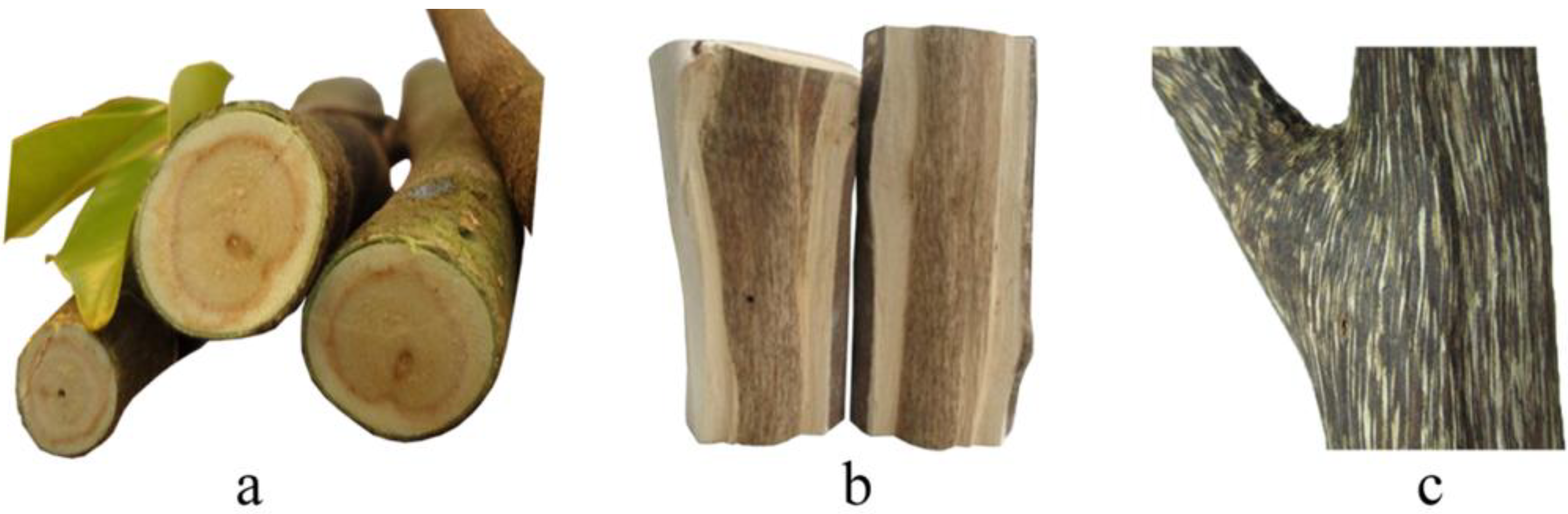
Whole-tree Agarwood-Inducing Technique: An Efficient Novel Technique for Producing High-Quality Agarwood in Cultivated Aquilaria sinensis Trees

Abstract
:1. Introduction
2. Results and Discussion
2.1. Agarwood Formation
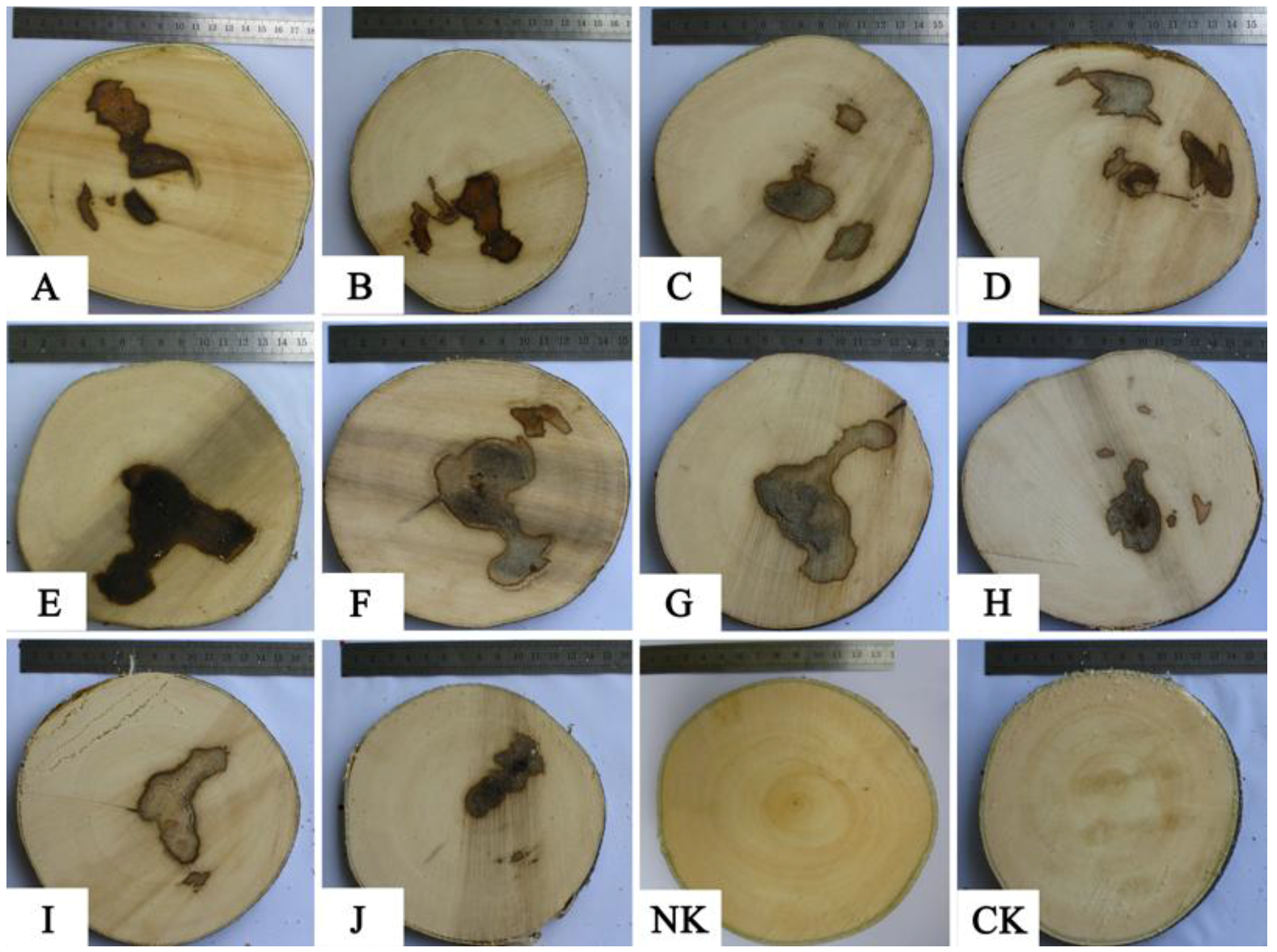
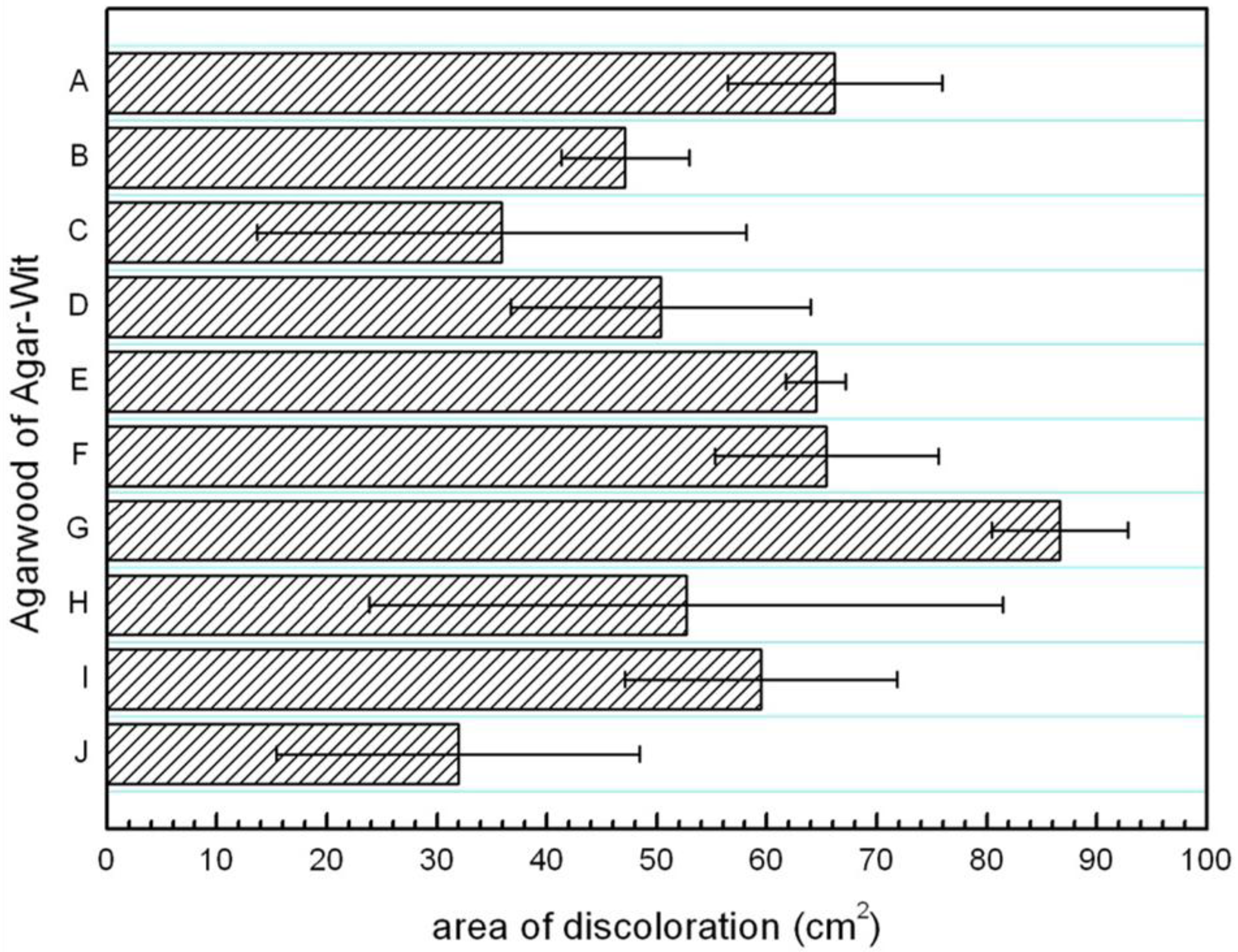
2.1.1. Resinous Wood Formed Inside Aquilaria Trees
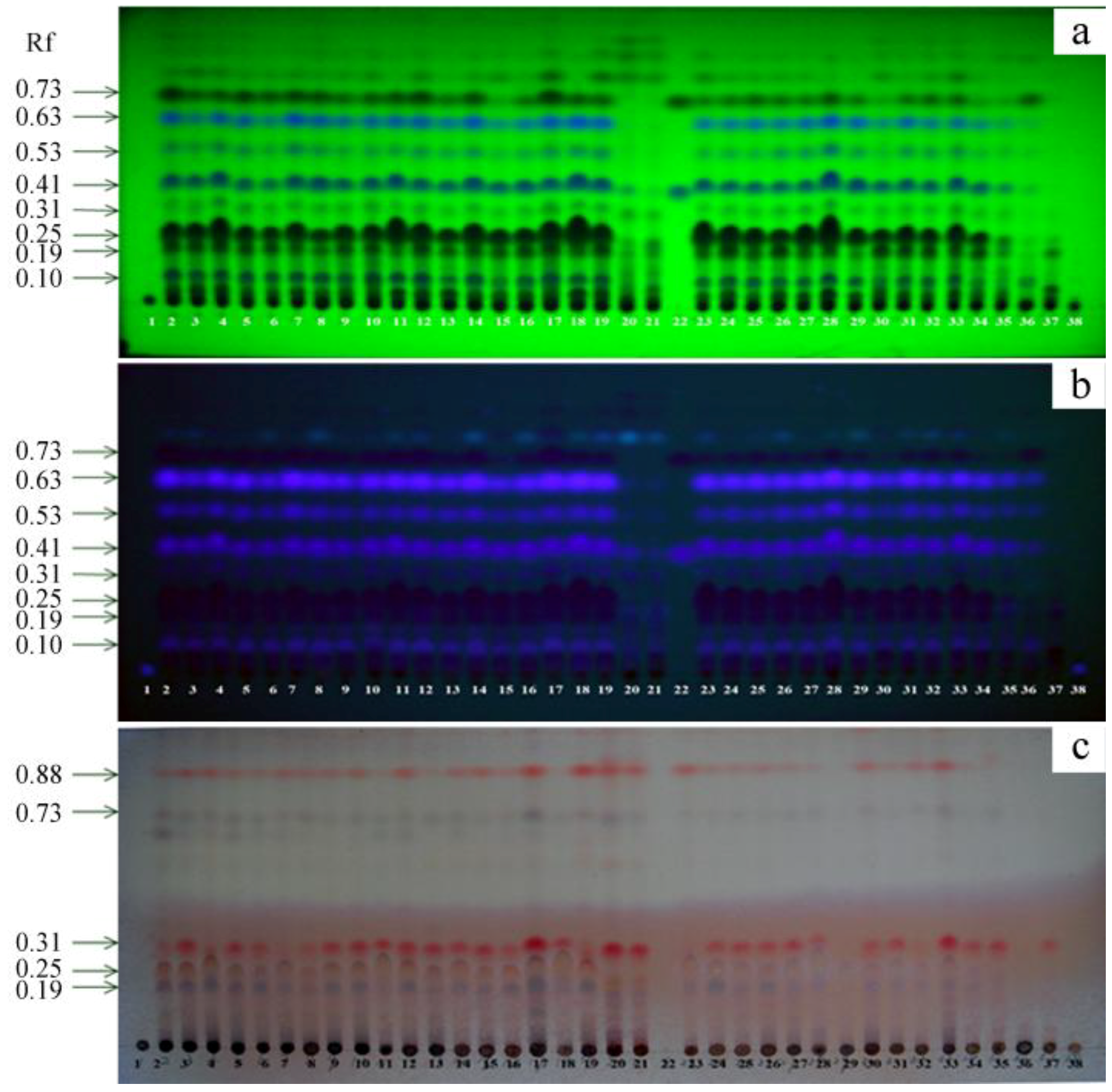
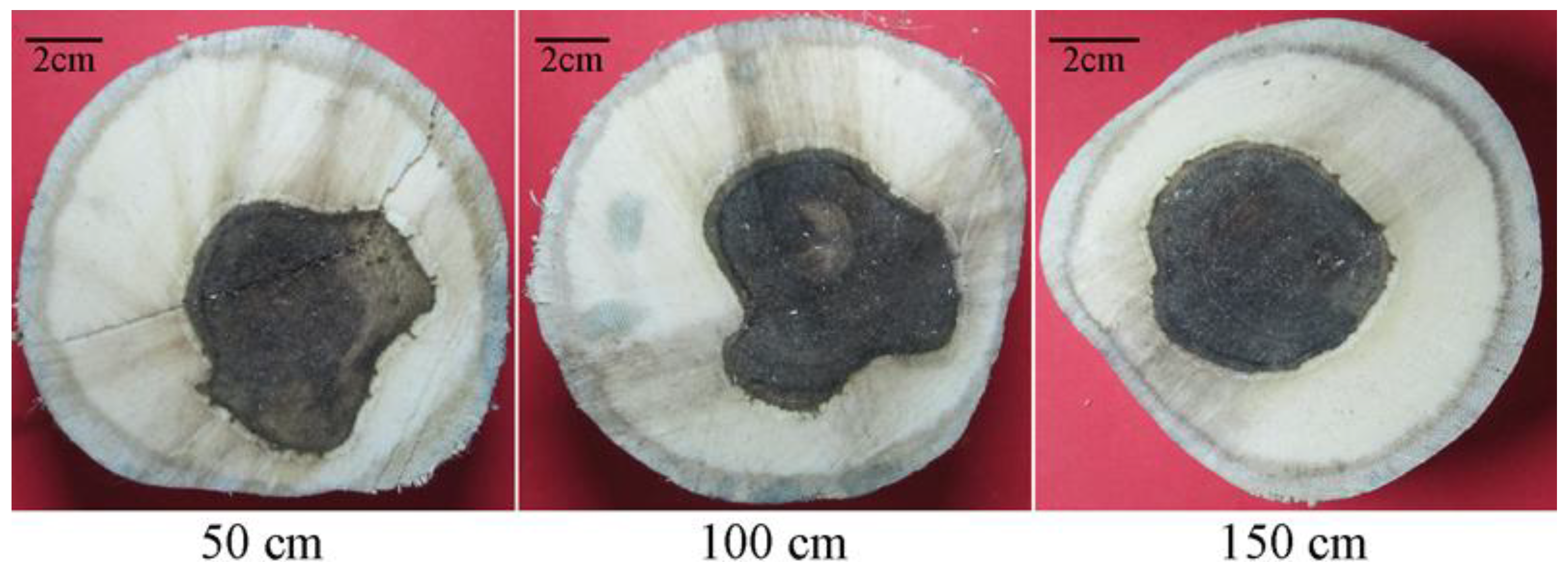
2.1.2. Identification of Agarwood by TLC

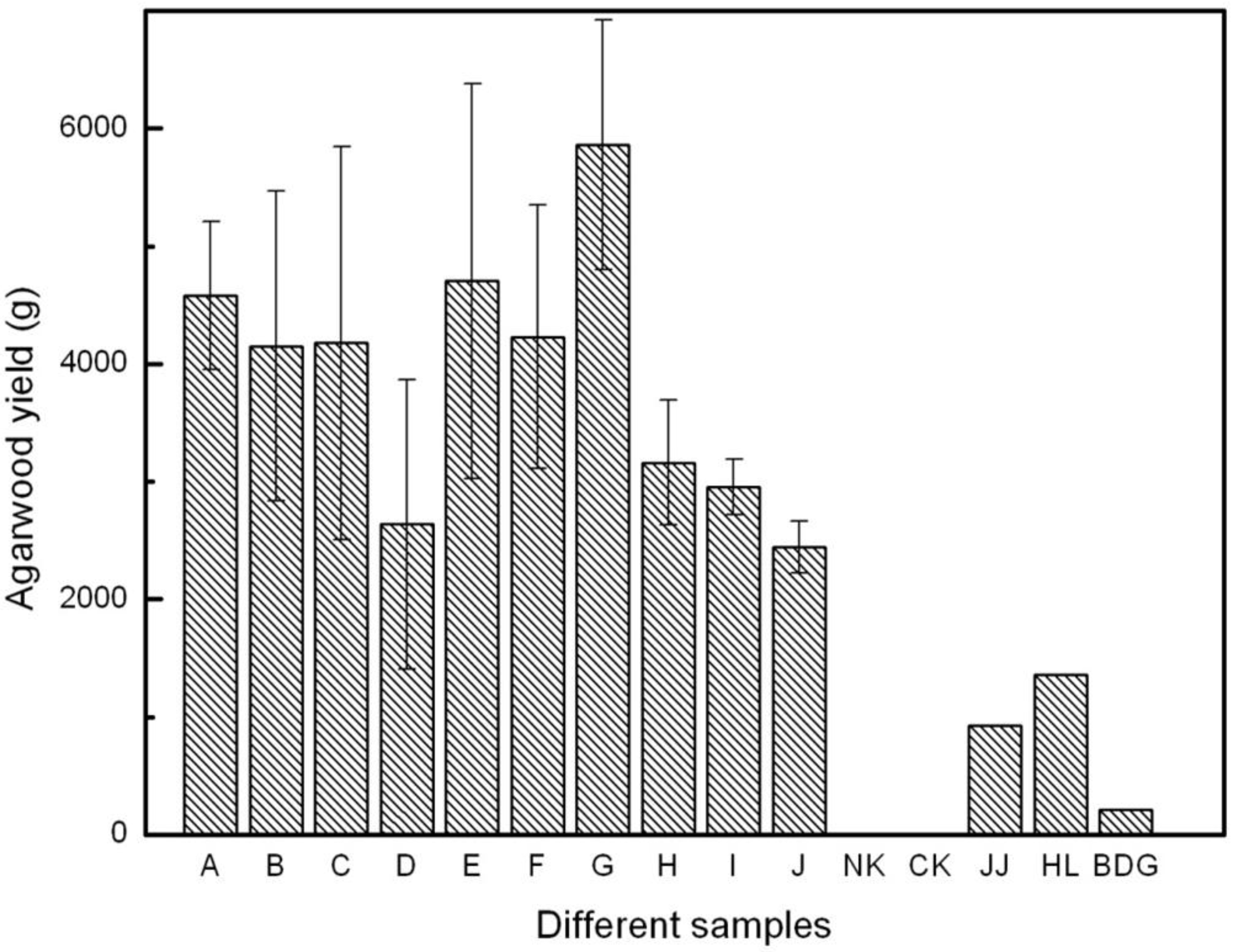
2.2. Agarwood Yield Per Tree

2.3. Quality Characteristics
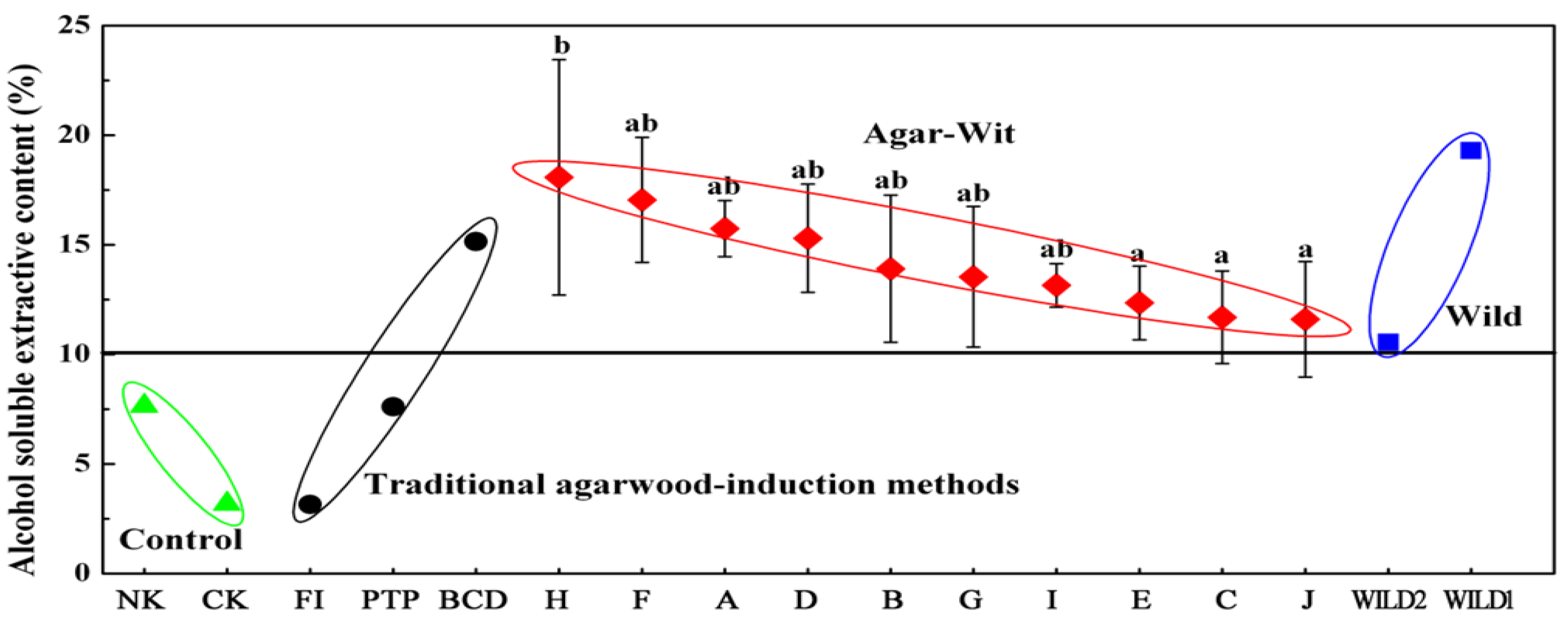
2.3.1. Alcohol Soluble Extractive Content
2.3.2. Essential Oil Content

| Sample code | Oil yield |
|---|---|
| A * | 0.175 ± 0.069 a |
| B * | 0.212 ± 0.073 a |
| C * | 0.162 ± 0.023 a |
| D * | 0.147 ± 0.049 a |
| E * | 0.179 ± 0.048 a |
| F * | 0.247 ± 0.174 a |
| G * | 0.150 ± 0.049 a |
| H * | 0.184 ± 0.067 a |
| I * | 0.147 ± 0.069 a |
| J * | 0.158 ± 0.087 a |
| NK | 0.047 |
| FI # | 0.052 |
| BCD # | 0.199 |
| PTP # | 0.062 |
| CK # | 0.039 |
| WILD 1 # | 0.345 |
2.4. Essential Oil Constituents
2.5. Discussion
2.5.1. High and Steady Yield of Agarwood Produced by the Agar-Wit
| Compound | RIa [19] | A | B | C | D | E | F | G | H | I | J | NK | FI | BCD | PTP | CK | WILD 1 | WILD 2 | Identification |
|---|---|---|---|---|---|---|---|---|---|---|---|---|---|---|---|---|---|---|---|
| Benzylacetone * | 1257 | 7.99 ± 2.29 | 6.65 ± 3.29 | 7.02 ± 1.29 | 7.88 ± 4.11 | 7.93 ± 2.21 | 7.02 ± 4.89 | 8.65 ± 1.77 | 8.92 ± 5.40 | 10.07 ± 5.38 | 6.44 ± 2.73 | -b | 2.70 | 2.10 | 1.51 | - | 2.34 | 2.39 | RI, MS |
| Caryophyllene oxide | 1588 | 4.73 ± 2.35 | 2.69 ± 1.06 | 3.10 ± 1.34 | 2.17 ± 0.82 | 3.40 ± 0.38 | 3.75 ± 3.46 | 4.06 ± 3.05 | 2.70 ± 0.93 | 3.23 ± 0.99 | 3.17 ± 1.89 | 0.23 | 1.19 | 2.46 | 0.45 | - | 2.12 | 1.47 | RI, MS |
| γ-eudesmol | 1632 | 2.06 ± 1.28 | 0.95 ± 0.28 | 0.74 ± 0.12 | 0.77 ± 0.20 | 0.81 ± 0.38 | 0.65 ± 0.10 | 0.66 ± 0.09 | 0.73 ± 0.06 | 0.91 ± 0.60 | 0.43 ± 0.09 | - | 3.10 | 0.42 | 0.79 | 0.50 | 2.84 | 0.26 | RI, MS |
| Hinesol | 1638 | 1.73 ± 2.06 | 2.89 ± 2.34 | 1.97 ± 0.37 | 2.60 ± 0.50 | 2.40 ± 0.55 | 4.38 ± 3.21 | 2.74 ± 2.04 | 3.29 ± 2.25 | 1.24 ± 0.83 | 1.75 ± 0.91 | - | 1.41 | 2.25 | 1.58 | - | 0.34 | 2.97 | RI, MS |
| Agarospirol | 1643 | 1.54 ± 0.59 | 1.63 ± 0.54 | 2.16 ± 0.49 | 1.21 ± 0.20 | 1.21 ± 0.19 | 1.49 ± 0.17 | 1.12 ± 0.17 | 1.23 ± 0.38 | 1.76 ± 0.74 | 0.85 ± 0.14 | 0.24 | 1.37 | 0.86 | 0.56 | 0.85 | 4.03 | 1.05 | RI, MS |
| Cubenol | 1647 | 1.78 ± 0.60 | 1.29 ± 0.14 | 1.09 ± 0.40 | 1.01 ± 0.62 | 1.42 ± 0.34 | 1.19 ± 0.99 | 1.67 ± 1.00 | 1.07 ± 0.32 | 1.29 ± 0.84 | 1.18 ± 0.52 | - | 2.77 | 0.67 | 0.28 | - | 1.97 | 0.62 | RI, MS |
| (−)-aristolene | 1654 | 1.59 ± 1.71 | 2.56 ± 1.78 | 2.09 ± 0.22 | 3.03 ± 0.11 | 2.57 ± 0.21 | 3.52 ± 2.32 | 2.71 ± 1.82 | 3.13 ± 1.46 | 1.47 ± 1.11 | 2.16 ± 1.14 | 0.35 | 2.14 | 3.79 | 2.51 | 1.31 | 4.70 | 3.61 | MS |
| Guaiol | 1661 | 2.97 ± 3.65 | 5.03 ± 2.60 | 5.09 ± 0.89 | 7.57 ± 1.20 | 5.46 ± 0.65 | 6.89 ± 4.78 | 6.26 ± 4.78 | 6.53 ± 3.34 | 3.89 ± 2.39 | 5.80 ± 3.01 | 0.37 | 3.56 | 11.34 | 5.25 | 2.18 | 10.67 | 6.69 | MS |
| α-eudesmol | 1665 | 4.17 ± 1.61 | 4.43 ± 1.24 | 3.42 ± 0.64 | 2.60 ± 0.29 | 3.86 ± 1.38 | 2.21 ± 0.81 | 2.49 ± 0.27 | 2.59 ± 0.49 | 5.45 ± 4.16 | 2.46 ± 1.43 | - | 10.12 | 1.20 | 2.96 | - | - | 1.13 | RI, MS |
| Eudesm-7(11)-en-4α-ol | 1666 | 2.58 ± 0.80 | 2.30 ± 1.47 | 1.44 ± 1.09 | 1.16 ± 1.03 | 1.84 ± 0.20 | 2.13 ± 1.50 | 2.01 ± 1.12 | 1.48 ± 0.41 | 1.51 ± 0.95 | 1.48 ± 0.78 | - | 0.91 | 1.06 | 0.88 | - | 2.09 | 1.88 | RI, MS |
| Aromadendrene oxide (1) | 1674 | 2.43 ± 0.58 | 2.05 ± 0.69 | 2.66 ± 0.80 | 2.51 ± 0.87 | 2.08 ± 0.67 | 1.98 ± 1.04 | 1.88 ± 0.76 | 1.56 ± 0.57 | 2.40 ± 0.88 | 1.90 ± 1.26 | 0.66 | - | 0.51 | - | - | 1.41 | 0.71 | RI, MS |
| α-Copaen-11-ol | 1686 | 4.44 ± 2.32 | 5.72 ± 1.06 | 5.52 ± 1.90 | 8.34 ± 0.74 | 6.67 ± 1.52 | 5.78 ± 2.03 | 6.71 ± 0.86 | 7.61 ± 1.23 | 5.32 ± 3.49 | 7.24 ± 3.14 | - | 2.90 | 11.45 | 10.89 | - | 10.22 | 10.74 | RI, MS |
| Baimuxinal | 1707 | 5.47 ± 5.47 | 7.83 ± 4.78 | 7.69 ± 3.20 | 13.29 ± 3.22 | 11.91 ± 3.22 | 10.18 ± 5.97 | 10.16 ± 7.26 | 13.43 ± 3.27 | 9.56 ± 7.60 | 11.65 ± 7.14 | 0.15 | 4.72 | 17.86 | 22.40 | 1.52 | 14.78 | 17.00 | RI, MS |
| Santalol | 1710 | 2.68 ± 0.94 | 4.19 ± 1.94 | 3.98 ± 1.06 | 3.68 ± 1.58 | 2.81 ± 2.22 | 3.26 ± 1.51 | 3.34 ± +4.00 | 3.07 ± 3.61 | 2.22 ± 1.06 | 1.59 ± 1.23 | 6.03 | 0.64 | 0.93 | 0.64 | - | - | - | RI, MS |
| Guaia-1(10),11-dien-9-one | 1752 | 5.62 ± 2.51 | 3.51 ± 1.81 | 3.76 ± 1.62 | 1.70 ± 1.29 | 3.22 ± 1.34 | 2.64 ± 3.05 | 3.10 ± 1.34 | 1.76 ± 0.49 | 4.83 ± 5.39 | 4.32 ± 2.99 | 0.14 | - | 0.86 | 1.98 | - | 10.89 | 6.32 | RI, MS |
| Eremophila-7(11),9-dien-8-one | 1811 | 5.35 ± 2.84 | 2.68 ± 1.33 | 2.74 ± 1.76 | 1.11 ± 1.08 | 2.00 ± 0.37 | 1.62 ± 1.72 | 2.25 ± 0.37 | 1.03 ± 0.08 | 3.51 ± 2.84 | 3.45 ± 3.28 | 0.08 | - | 1.92 | 0.86 | 2.11 | 5.42 | 7.90 | RI, MS |
| n-Hexadecanoic acid | 1982 | 0.98 ± 0.34 | 0.65 ± 0.36 | 0.50 ± 0.39 | 0.50 ± 0.42 | 0.7 ± 0.37 | 0.94 ± 1.09 | 0.89 ± 0.68 | 0.49 ± 0.28 | 0.65 ± 0.59 | 0.92 ± 0.71 | 6.02 | 0.16 | 0.36 | 0.69 | 49.47 | 0.06 | 0.35 | RI, MS |
| Aromatics | 7.99 ± 2.29 | 6.65 ± 3.29 | 7.02 ± 1.29 | 7.88 ± 4.11 | 7.93 ± 2.21 | 7.02 ± 4.89 | 8.65 ± 1.77 | 8.92 ± 5.40 | 10.07 ± 5.38 | 6.44 ± 2.73 | - | 2.70 | 2.10 | 1.51 | - | 2.34 | 2.39 | ||
| Sesquiterpenes | 49.17 ± 8.32 | 49.75 ± 5.40 | 47.43 ± 2.90 | 52.78 ± 3.88 | 51.67 ± 4.20 | 51.67 ± 5.66 | 50.85 ± 5.42 | 51.22 ± 4.75 | 48.68 ± 10.42 | 49.41 ± 2.73 | 8.25 | 34.84 | 57.58 | 52.03 | 8.47 | 71.48 | 62.35 | ||
| Fatty acids | 0.98 ± 0.34 | 0.65 ± 0.36 | 0.50 ± 0.39 | 0.50 ± 0.42 | 0.7 ± 0.37 | 0.94 ± 1.09 | 0.89 ± 0.68 | 0.49 ± 0.28 | 0.65 ± 0.59 | 0.92 ± 0.71 | 6.02 | 0.16 | 0.36 | 0.69 | 49.47 | 0.06 | 0.35 | ||
| Total | 58.14 ± 5.77 | 57.05 ± 1.95 | 54.95 ± 2.01 | 61.16 ± 2.48 | 60.47 ± 2.72 | 59.62 ± 7.67 | 60.40 ± 2.98 | 60.63 ± 2.59 | 59.41 ± 6.09 | 59.77 ± 0.79 | 14.27 | 37.69 | 60.04 | 54.23 | 57.94 | 73.88 | 65.08 |
2.5.2. Qualified Agarwood Produced by the Agar-Wit
2.5.3. The Prospect of the Agar-Wit
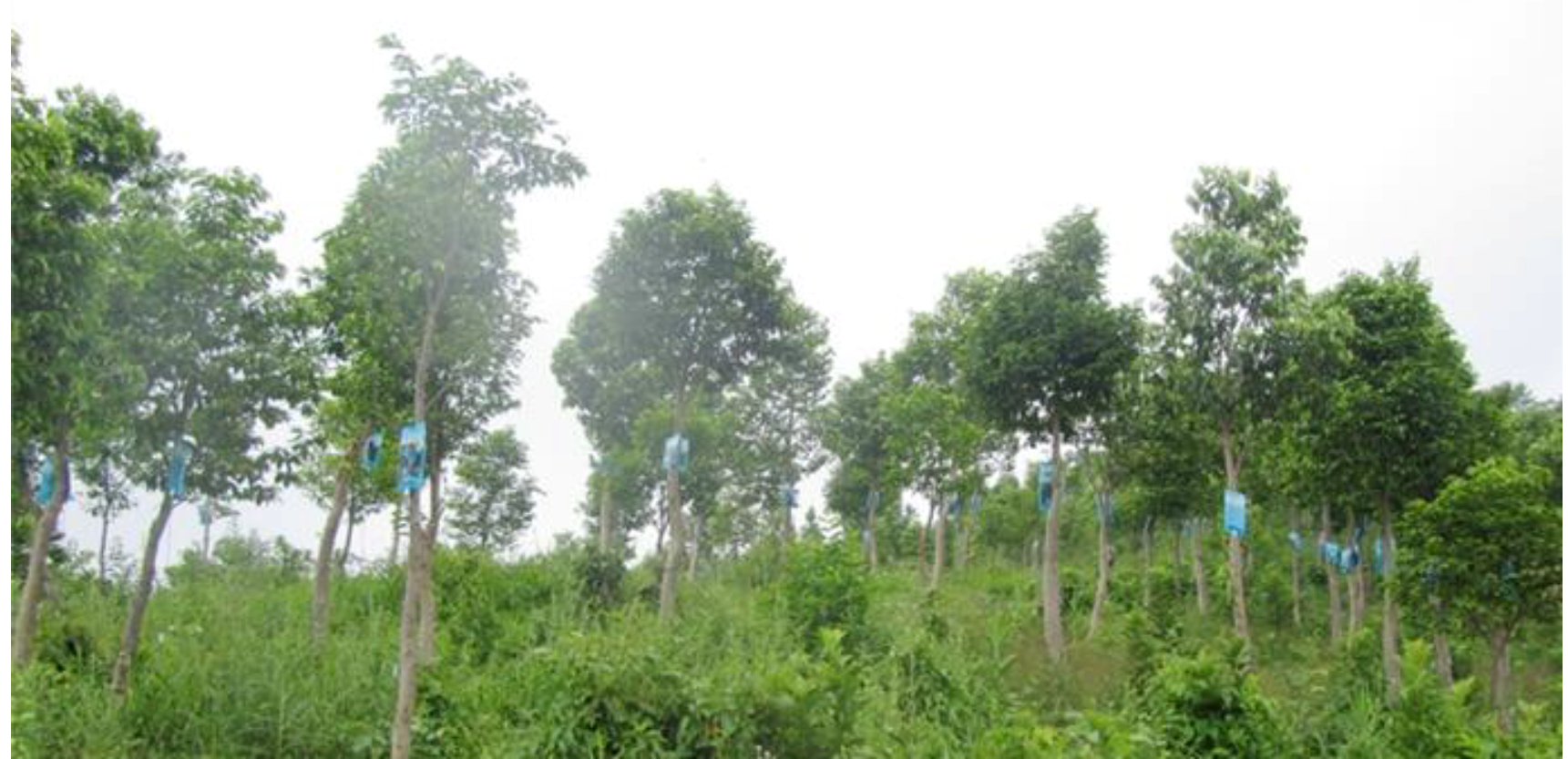
3. Experimental
3.1. Plant Material
3.1.1. Material Treatments
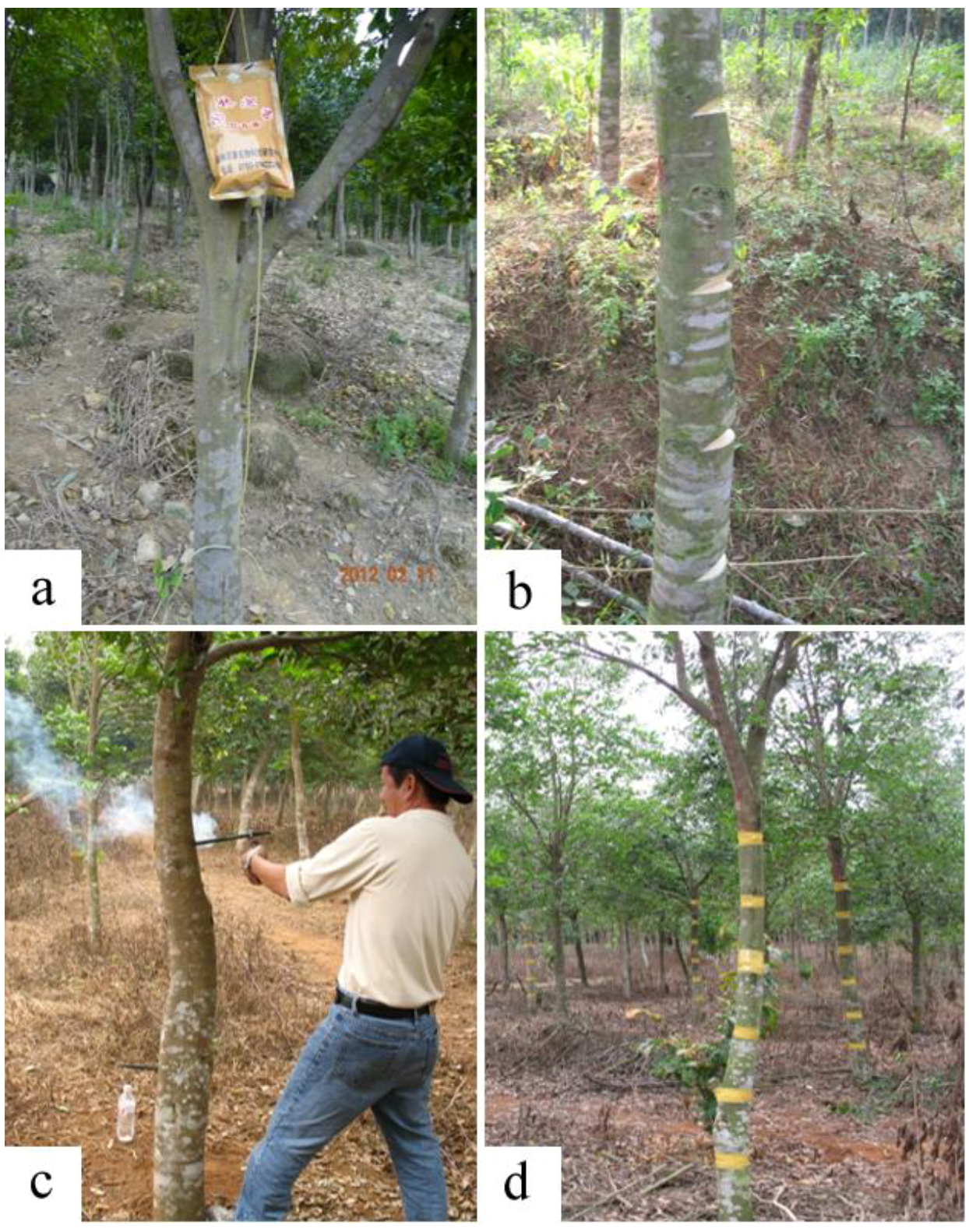
| Sample code | Age/year | Treatment method | Treatment time/month |
|---|---|---|---|
| A | 7 | Agar-Wit with inducer A | 6 |
| B | 7 | Agar-Wit with inducer B | 6 |
| C | 7 | Agar-Wit with inducer C | 6 |
| D | 7 | Agar-Wit with inducer D | 6 |
| E | 7 | Agar-Wit with inducer E | 6 |
| F | 7 | Agar-Wit with inducer F | 6 |
| G | 7 | Agar-Wit with inducer G | 6 |
| H | 7 | Agar-Wit with inducer H | 6 |
| I | 7 | Agar-Wit with inducer I | 6 |
| J | 7 | Agar-Wit with inducer J | 6 |
| NK | 7 | Agar-Wit with pure water | 6 |
| FI | 7 | Fungi-inoculation method (FI) | 12 |
| BCD | 7 | Burning-chisel-drilling method (BCD) | 20 |
| PTP | 7 | Partly-trunk-prunning method (PTP) | 28 |
| CK | 7 | no treatment | - |
| WILD 1 | unknown | unknown natural factor | Unknown |
| WILD 2 | unknown | unknown natural factor | Unknown |
3.1.2. Agarwood Yield Estimation
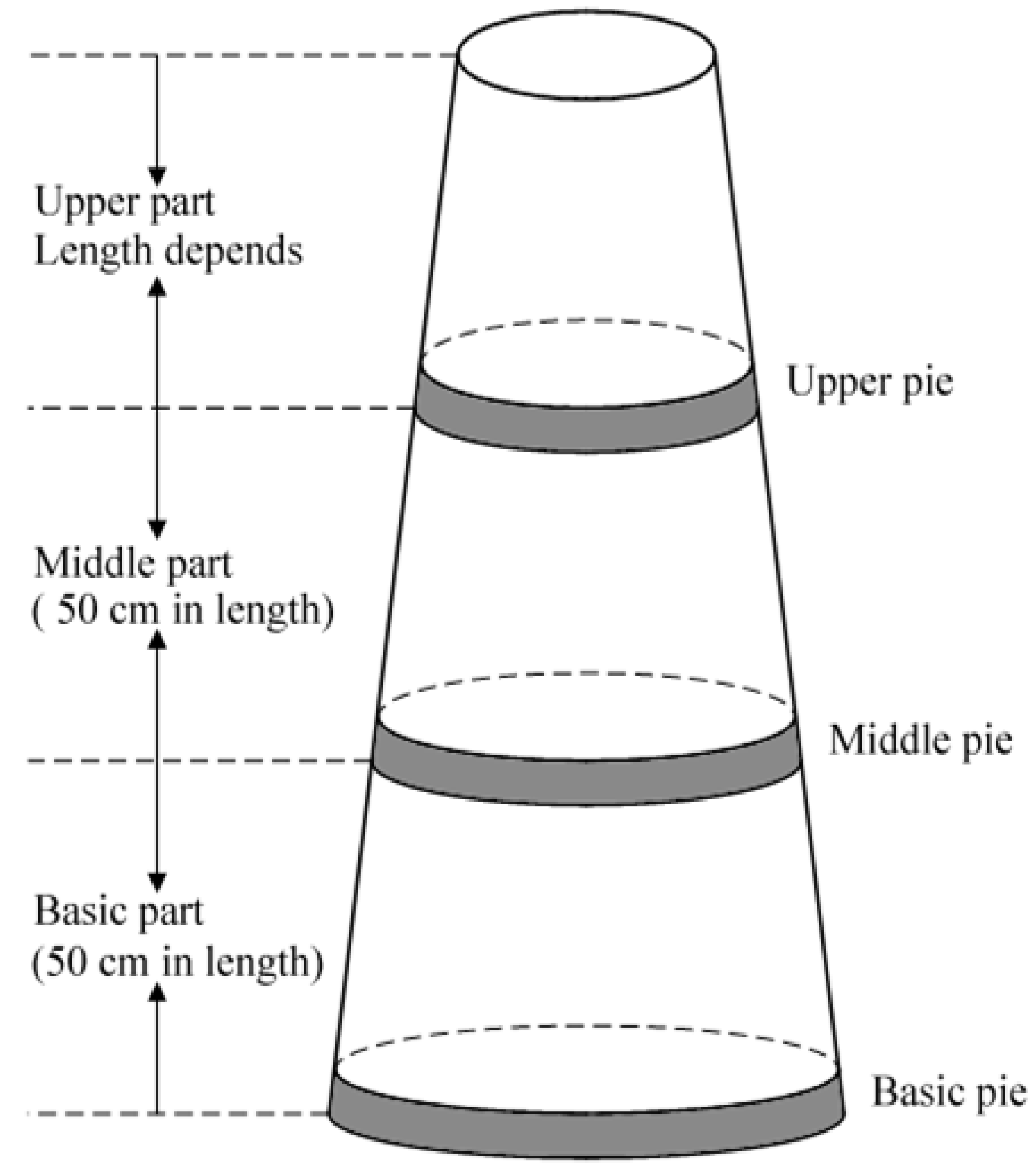

3.1.3. Material Processing
3.2. Quality Analyses
3.2.1. Thin-Layer Chromatography (TLC)
3.2.2. Alcohol Soluble Extractive Content
3.2.3. Essential Oil Content
3.2.4. Chemical Constituents
4. Conclusions
Acknowledgments
References and Notes
- CITES. Amendments to appendices I and II of CITES. In Proceedings of Thirteenth Meeting of the Conference of the Parties, Bangkok, Thailand, 2 October 2004.
- CITES. The Trade and Use of Agarwood in Taiwan, Province of China. Available online: http://www.cites.org/common/com/pc/15/x-pc15–07-inf.pdf (accessed on 21 May 2005).
- CITES. The Use and Trade of Agarwood in Japan. Available online: http://www.cites.org/common/com/PC/15/X-PC15–06-Inf.pdf (accessed on 21 May 2005).
- Hansen, E. The hidden history of a scented wood. Saudi Aramco World 2000, 51, 1–13. [Google Scholar]
- Rogers, Z.S. A World Checklist of Thymelaeaceae (version 1). Missouri Botanical Garden: St. Louis, MO, USA. Available online: http://www.tropicos.org/project/thymelaeaceae (accessed on 9 July 2009).
- Fu, J.L. The Culture of Chinese Incense; QiLu Press: Ji'nan, China, 2008; pp. 121–123. [Google Scholar]
- Blanchette, R.; Heuveling, V.B.H. Cultivated agarwood. US 7638145B2, 2009. [Google Scholar]
- Pojanagaroon, S.; Kaewrak, C. Mechanical methods to stimulate aloes wood formation in Aquiliria crassna Pierre ex H Lec (kritsana) trees. ISHS Acta Hort. 2006, 676, 161–166. [Google Scholar]
- Zhang, L.X.; Brockelman, W.Y.; Allen, M.A. Matrix analysis to evaluate sustainability: The tropical tree Aquilaria crassna, a heavily poached source of agarwood. Biol. Conse. 2008, 141, 1676–1686. [Google Scholar] [CrossRef]
- Soehartono, T.; Newton, A.C. Conservation and sustainable use of tropical trees in the genus Aquilaria. I. Status and distribution in Indonesia. Biol. Conse. 2000, 96, 83–94. [Google Scholar] [CrossRef]
- IUCN. 2008 IUCN Red List of Threatened Species. Available online: http://www.iucnredlist.org (accessed on 3 April 2009).
- Soehartono, T.; Newton, A.C. Conservation and sustainable use of tropical trees in the genus Aquilaria. II. The impact of gaharu harvesting in Indonesia. Biol. Conse. 2001, 97, 29–41. [Google Scholar] [CrossRef]
- Barden, A.; Anak, N.A.; Mulliken, T.; Song, M. Heart of the matter: Agarwood use and trade and CITES Implementation for Aquailaria malaccencis; TRAFFIC International: Cambridge, UK, 2000; p. 46. [Google Scholar]
- Persoon, G.A. Agarwood: the life of a wounded tree. IIAS Newslett. 2007, 45, 24–25. [Google Scholar]
- Wei, J.H.; Zhang, Z.; Yang, Y.; Meng, H.; Feng, J.D.; Gan, B.C. Production of agarwood in Aquilaria sinensis trees via transfusion technique. CN101755629B, 2010. [Google Scholar]
- Editorial Board of Chinese Pharmacopoeia. Chinese Pharmacopoeia; Chinese Medicine Science and Technology Publishing House: Beijing, China, 2010; pp. 172–173. [Google Scholar]
- Naef, R. The volatile and semi-volatile constituents of agarwood, the infected heartwood of Aquilaria species: A review. Flavour. Fragr. J. 2011, 26, 73–89. [Google Scholar] [CrossRef]
- Chen, H.Q.; Wei, J.H.; Yang, J.S.; Zhang, Z.; Yang, Y.; Gao, Z.H.; Sui, C.; Gong, B. Chemical constituents of agarwood originating from the endemic genus Aquilaria plants. Chem. Biodivers. 2012, 9, 236–250. [Google Scholar] [CrossRef]
- Chen, H.; Yang, Y.; Xue, J.; Wei, J.; Zhang, Z. Comparison of compositions and antimicrobial activities of essential oils from chemically stimulated agarwood, wild agarwood and healthy Aquilaria sinensis (Lour.) gilg trees. Molecules 2011, 16, 4884–4896. [Google Scholar] [CrossRef]
- Gibson, I.A.S. The role of fungi in the origin of oleoresin deposits of agaru in the wood of Aquilaria agallocha Roxb. Bano. Biggyan. Patrika. 1977, 6, 16–26. [Google Scholar]
- Frankie, J.L. Population dynamics of some tropical trees that yield non-timber forest products. Econ. Bot. 1994, 48, 301–309. [Google Scholar] [CrossRef]
- Cui, J.L.; Xiao, P.G.; Guo, S.X.; Wang, M.L. Fungi inducing formation of agarwood from Aquilaria sinensis. Chin. Pharm. J. 2012, 47, 335–338. [Google Scholar]
- Konishi, T.; Konoshima, T.; Shimada, Y.; Kiyosawa, S. Six new 2-(2-Phenylethyl) chromones from Agarwood. Chem. Pharm. Bull. 2002, 50, 419–422. [Google Scholar] [CrossRef]
- Yagura, T.; Ito, M.; Kiuchi, F.; Honda, G.; Shimada, Y. Four new 2-(2-Phenylethyl) chromone derivatives from withered wood of Aquilaria sinensis. Chem. Pharm. Bull. 2003, 51, 560–564. [Google Scholar] [CrossRef]
- Dai, H.F.; Liu, J.; Zeng, Y.B.; Han, Z.; Wang, H.; Mei, W.L. Two new 2-(2-phenylethyl) chromones from Chinese eaglewood. J. Asian Nat. Prod. Res. 2010, 12, 134–137. [Google Scholar] [CrossRef]
- Tajuddin, S.; Yusoff, M. Chemical composition of volatile oils of Aquilaria malaccensis (Thymelaeaceae) from Malaysia. Nat. Prod. Commun. 2010, 5, 1965–1968. [Google Scholar]
- Yang, J.S. Review on the chemical constituents isolated from chen-xiang. Nat. Prod. Res. Dev. 1998, 10, 99–103. [Google Scholar]
- Liu, J.; Wu, J.; Zhao, Y.X.; Deng, Y.Y.; Mei, W.L.; Dai, H.F. A new cytotoxic 2-(2-phenylethyl) chromone from Chinese eaglewood. Chin. Chen. Lett. 2008, 19, 934. [Google Scholar] [CrossRef]
- Zhang, X.L.; Liu, Y.Y.; Wei, J.H.; Yang, Y.; Zhang, Z.; Huang, J.Q.; Chen, H.Q.; Liu, Y.J. Production of high-quality agarwood in Aquilaria sinensis trees via whole-tree agarwood-induction technology. Chin. Chem. Lett. 2012, 23, 727–730. [Google Scholar] [CrossRef]
- Wei, J.H.; Zhang, Z.; Yang, Y.; Meng, H.; Gao, Z.H.; Chen, W.P.; Feng, J.D.; Chen, H.Q. An agarwood induction agent and its preparation method. CN101731282B, 2012. [Google Scholar]
- Jing, X.; Su, Z. Rapid analysis of Lignum Aquilaria Resinatum. J. Chin. Med. Mater. 1996, 19, 632–633. [Google Scholar]
- Sample Availability: Samples of the agarwood are available from the authors.
© 2013 by the authors; licensee MDPI, Basel, Switzerland. This article is an open access article distributed under the terms and conditions of the Creative Commons Attribution license (http://creativecommons.org/licenses/by/3.0/).
Share and Cite
Liu, Y.; Chen, H.; Yang, Y.; Zhang, Z.; Wei, J.; Meng, H.; Chen, W.; Feng, J.; Gan, B.; Chen, X.; et al. Whole-tree Agarwood-Inducing Technique: An Efficient Novel Technique for Producing High-Quality Agarwood in Cultivated Aquilaria sinensis Trees. Molecules 2013, 18, 3086-3106. https://doi.org/10.3390/molecules18033086
Liu Y, Chen H, Yang Y, Zhang Z, Wei J, Meng H, Chen W, Feng J, Gan B, Chen X, et al. Whole-tree Agarwood-Inducing Technique: An Efficient Novel Technique for Producing High-Quality Agarwood in Cultivated Aquilaria sinensis Trees. Molecules. 2013; 18(3):3086-3106. https://doi.org/10.3390/molecules18033086
Chicago/Turabian StyleLiu, Yangyang, Huaiqiong Chen, Yun Yang, Zheng Zhang, Jianhe Wei, Hui Meng, Weiping Chen, Jindong Feng, Bingchun Gan, Xuyu Chen, and et al. 2013. "Whole-tree Agarwood-Inducing Technique: An Efficient Novel Technique for Producing High-Quality Agarwood in Cultivated Aquilaria sinensis Trees" Molecules 18, no. 3: 3086-3106. https://doi.org/10.3390/molecules18033086