



Journal Description
FinTech
FinTech
is an international, peer-reviewed, open access journal on a variety of themes connected with financial technology, such as cryptocurrencies, risk management, robo-advising, crowdfunding, blockchain, new payment solutions, machine learning and AI for financial services, digital currencies, etc., published quarterly online by MDPI.
- Open Access— free for readers, with article processing charges (APC) paid by authors or their institutions.
- High Visibility: indexed within ESCI (Web of Science), Scopus, RePEc, and other databases.
- Journal Rank: CiteScore - Q1 (Economics, Econometrics and Finance (miscellaneous))
- Rapid Publication: manuscripts are peer-reviewed and a first decision is provided to authors approximately 20.2 days after submission; acceptance to publication is undertaken in 4.7 days (median values for papers published in this journal in the second half of 2025).
- Recognition of Reviewers: APC discount vouchers, optional signed peer review, and reviewer names published annually in the journal.
Latest Articles
Generative AI as an Investment Advisor: Same Client, Different Advice
FinTech 2026, 5(2), 54; https://doi.org/10.3390/fintech5020054 - 11 Jun 2026
Abstract
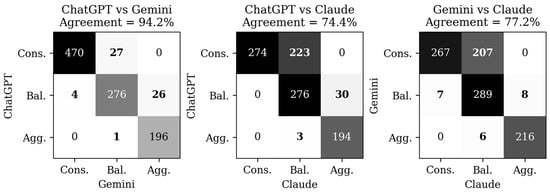
Generative artificial intelligence (GAI) is increasingly embedded in personal finance, yet little is known about how models make recommendations using financial information and demographic cues. This study audits three frontier GAI models, GPT 5.5, Gemini 3.1 Pro, and Claude Opus 4.7, using a
[...] Read more.
Generative artificial intelligence (GAI) is increasingly embedded in personal finance, yet little is known about how models make recommendations using financial information and demographic cues. This study audits three frontier GAI models, GPT 5.5, Gemini 3.1 Pro, and Claude Opus 4.7, using a conjoint experiment in which each model evaluated the same hypothetical investor profiles and selected among standardized conservative, balanced, and aggressive portfolios. Investor profiles systematically varied attributes, including risk tolerance, time horizon, goal type, income, and age, gender, ethnicity, marital status, and employment type. Ordered logistic regressions and matched-profile comparisons show that all three models base recommendations primarily on financial attributes, especially risk tolerance and time horizon. Age and marital status shift recommendations towards conservatism in all models, conversely only Claude conditions on gender and employment type. Ethnicity exerts no detectable influence on the recommendations of ChatGPT or Claude, but is a small, statistically significant predictor for Gemini, with non-White profiles receiving slightly more conservative recommendations than otherwise identical White profiles. Overall, we find that the models are not interchangeable: they differ significantly in overall risk appetite and in how they translate risk tolerance, time horizon, goal type, and age into portfolio choices, with economically meaningful differences in predicted recommendations for identical clients. These findings suggest that contemporary GAI investment advice is driven mainly by financially relevant attributes, but that demographic sensitivity may appear in model-specific and statistically nuanced ways, alongside a distinct form of platform risk arising from model-specific advisory logic.
Full article
(This article belongs to the Topic Artificial Intelligence Applications in Financial Technology, 2nd Edition)
►
Show Figures
Open AccessArticle
Trust, Security, and Nonlinear Retention Dynamics in FinTech Neobanking: An Explainable Machine Learning (XAI) Approach
by
Istiaque Bhuiyan, Haseeb Ahmed, Ariful Hoque and Tanvir Bhuiyan
FinTech 2026, 5(2), 53; https://doi.org/10.3390/fintech5020053 - 8 Jun 2026
Abstract
This study examines customer retention intention in neobanking environments using a theory-informed explainable machine learning framework. Existing digital banking research typically relies on linear modelling approaches to explain retention behaviour, potentially overlooking nonlinear, value-range-dependent, and interaction-based predictive patterns. Using a publicly available survey
[...] Read more.
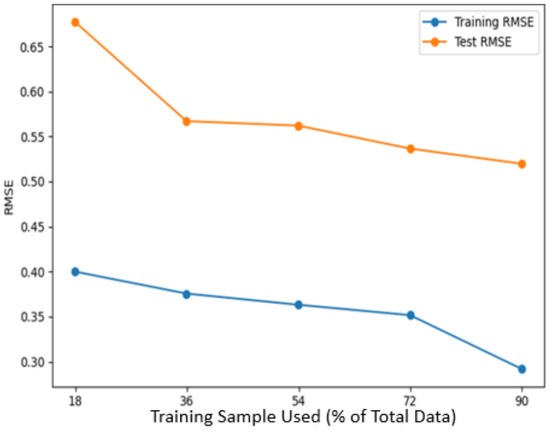
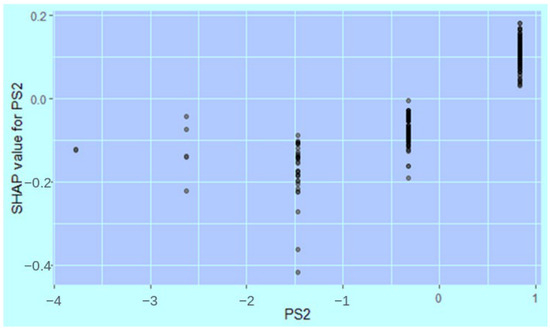
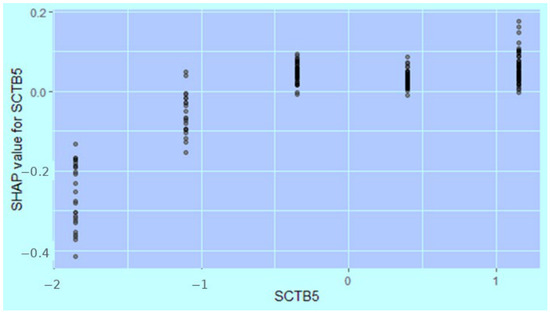
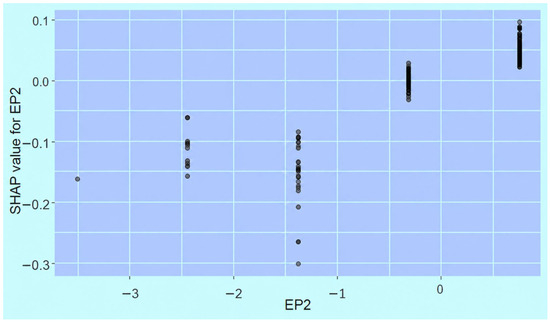
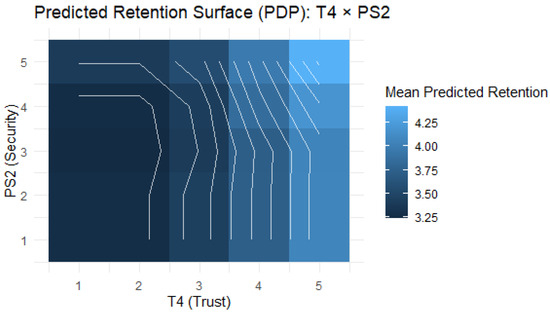
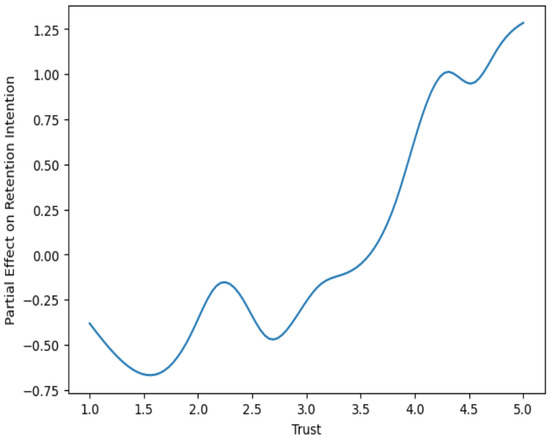
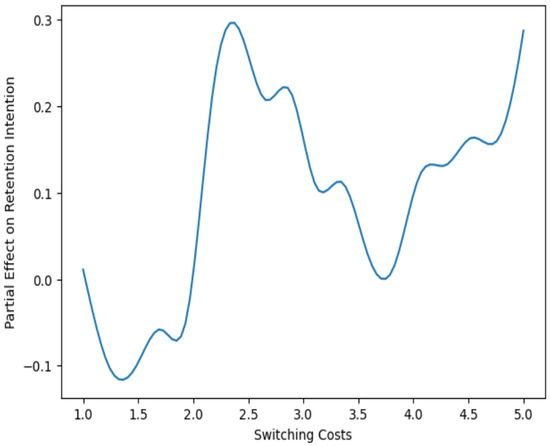
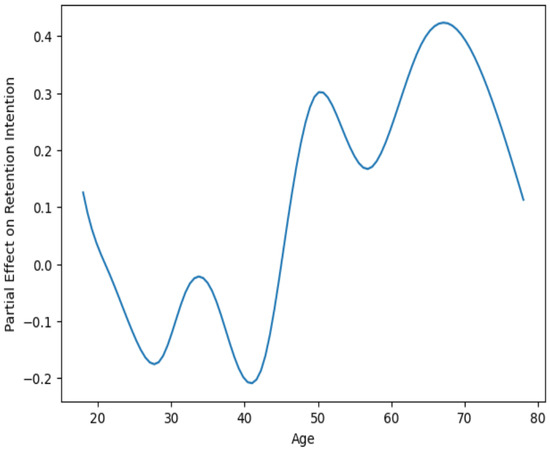
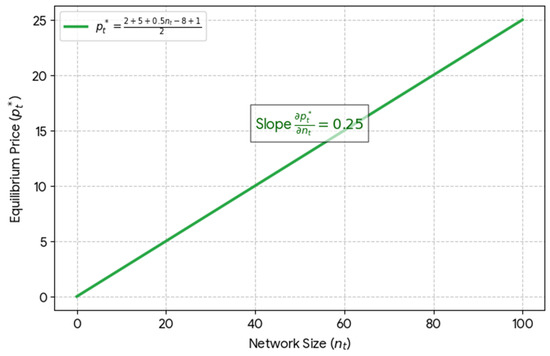
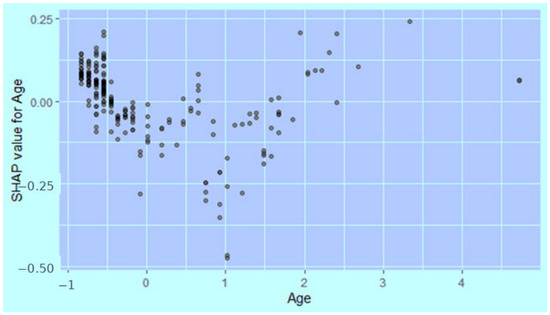
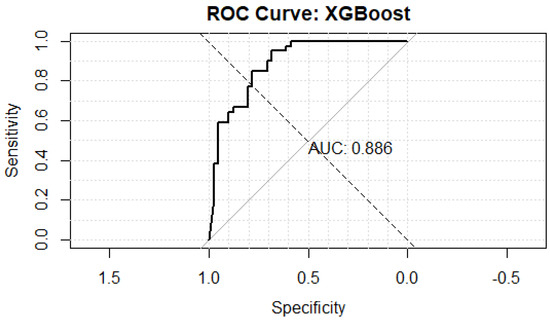
This study examines customer retention intention in neobanking environments using a theory-informed explainable machine learning framework. Existing digital banking research typically relies on linear modelling approaches to explain retention behaviour, potentially overlooking nonlinear, value-range-dependent, and interaction-based predictive patterns. Using a publicly available survey of 305 neobank users, this study compares regularized linear models, a partial least squares structural equation modelling (PLS-SEM)-inspired benchmark, and XGBoost (version 3.2.0) under repeated nested cross-validation. SHapley Additive exPlanations (SHAP)-based explainability, SHAP interaction analysis, generalized additive model (GAM) diagnostics, construct-level aggregation, and construct-sensitivity checks are used to interpret model behaviour and assess robustness. The results show that XGBoost substantially outperforms the linear benchmarks, achieving the lowest average RMSE and highest average R2 across 100 out-of-sample test-fold estimates. Trust-related indicators provide the largest share of model-based predictive importance, followed by perceived security and switching costs. SHAP and GAM diagnostics suggest that trust and switching costs may contribute to retention intention in heterogeneous and nonlinear ways, while perceived security displays a more stable positive predictive pattern. Age-related nonlinearities appear weak and should be interpreted cautiously given the young sample profile. The analysis also suggests possible non-additive relationships between trust and perceived security. The study contributes to digital banking and FinTech research by showing how explainable machine learning can complement theory-driven retention models, identify potentially nonlinear predictive patterns, and preserve interpretability. The findings offer practical insight for trust-building, visible security assurance, and retention diagnostics in neobanking contexts.
Full article
(This article belongs to the Special Issue Modeling Behavioral and Cognitive Drivers of FinTech Adoption: Trust, Emotion and Digital Decision-Making)
►▼
Show Figures

Figure 1
Open AccessArticle
Crypto Voucher Laundering: Mapping a Shadow Payment Architecture Outside the Current AML Framework
by
Raghav Wahal, Raj K. Jaiswal, Ritika Jaiswal and Yamya Reiki
FinTech 2026, 5(2), 52; https://doi.org/10.3390/fintech5020052 - 8 Jun 2026
Abstract
►▼
Show Figures
This study aims to examine gaps in the current AML framework related to cryptocurrency and digital assets. We focused on money laundering typologies involving the conversion of illicit funds into clean value through cryptocurrency-based purchases of vouchers, gift cards, and other non-traditional instruments.
[...] Read more.
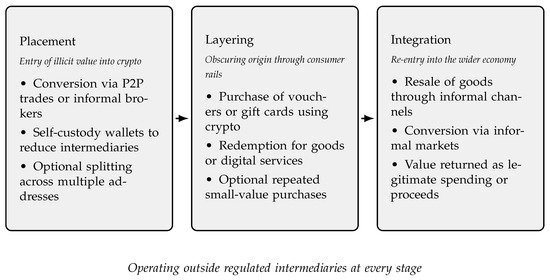
This study aims to examine gaps in the current AML framework related to cryptocurrency and digital assets. We focused on money laundering typologies involving the conversion of illicit funds into clean value through cryptocurrency-based purchases of vouchers, gift cards, and other non-traditional instruments. We examined the existing literature on cryptocurrency and digital assets to identify gaps in detection and classification by mapping platform features and transaction pathways using an original dataset. The work adopts the Placement Layering Integration model. It conceptualises a laundering pathway that operates outside regulated intermediaries via crypto acquisition, voucher purchases on low Know Your Customer (KYC) platforms, redemption into goods, and informal resale for cash. The analysis revealed that most platforms required minimal verification for transactions, and many supported privacy coins that can hide the flow of funds from standard detection techniques. These features create conditions for cross-border money transfers that may fall outside law enforcement oversight. Such mechanisms can lead to undeclared remittance and potential tax evasion. This study contributes to the understanding of cryptocurrency related financial crime within broader money laundering typologies. It contributes to AML frameworks by identifying a shadow payment architecture, proposing targeted reforms to extend AML coverage to voucher intermediaries, and highlights areas for future research and policy improvements.
Full article

Figure 1
Open AccessArticle
Trust, Privacy, and Adoption: A Global Policy Framework for Central Bank Digital Currencies
by
Alam Ahmad
FinTech 2026, 5(2), 51; https://doi.org/10.3390/fintech5020051 - 2 Jun 2026
Abstract
Central Bank Digital Currencies (CBDCs) have transitioned from theoretical concepts to operational realities across multiple jurisdictions. While they promise improved payment efficiency and financial inclusion, public trust, privacy, and user adoption have emerged as the critical determinants of success. Users fear that CBDCs
[...] Read more.
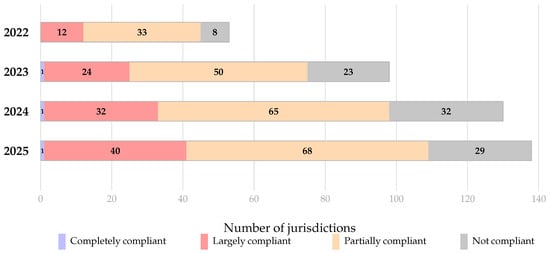
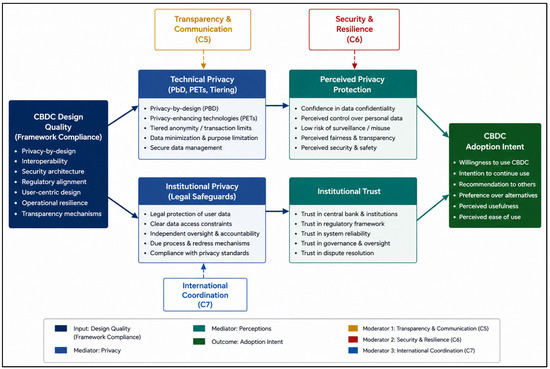
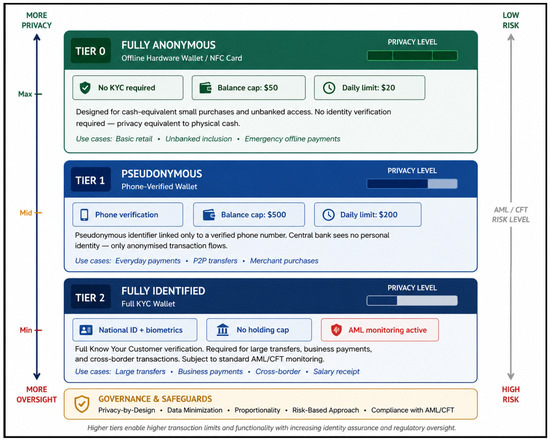
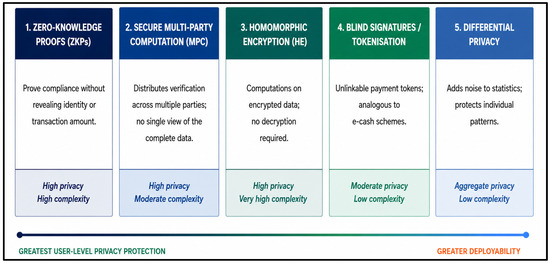
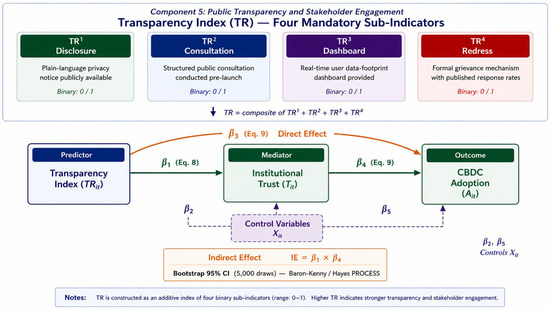
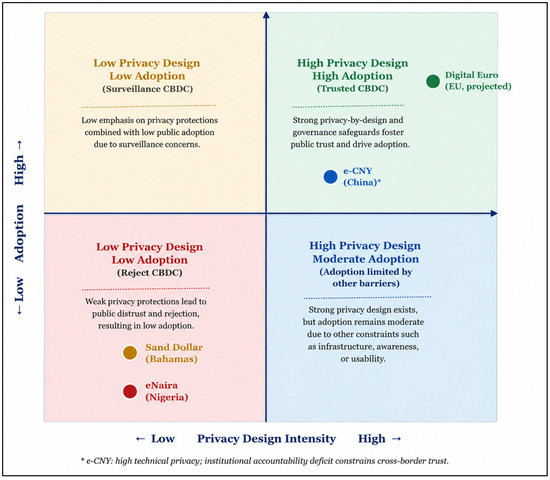
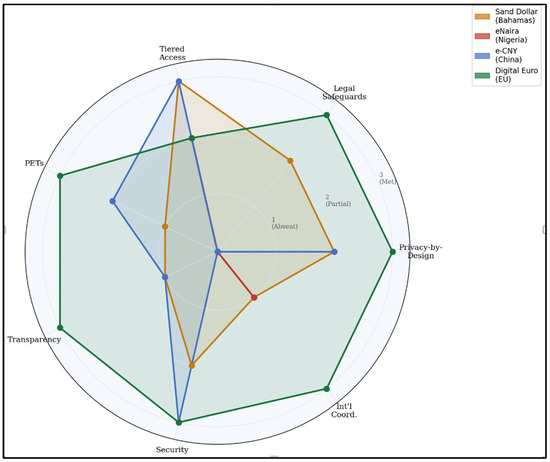
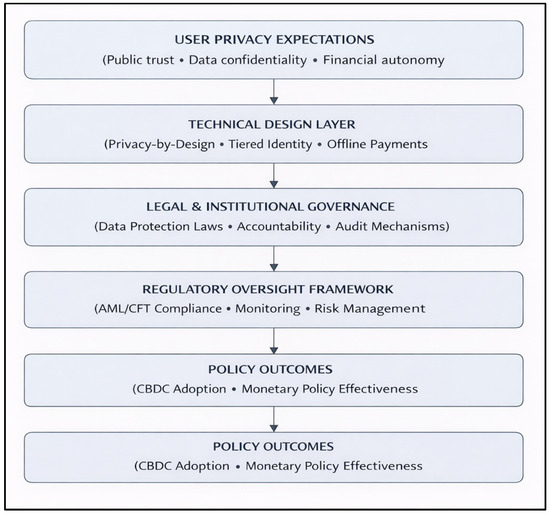
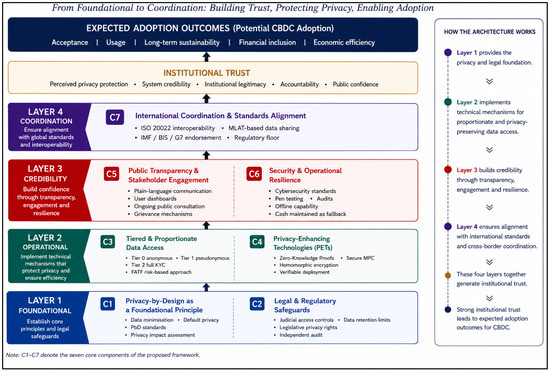
Central Bank Digital Currencies (CBDCs) have transitioned from theoretical concepts to operational realities across multiple jurisdictions. While they promise improved payment efficiency and financial inclusion, public trust, privacy, and user adoption have emerged as the critical determinants of success. Users fear that CBDCs could enable government surveillance, while regulators require sufficient oversight to prevent illicit finance, which creates a fundamental tension between privacy and compliance. This paper addresses the question: how can policymakers craft a global policy framework for retail CBDCs that balances user privacy and trust with necessary regulatory oversight, in order to maximize public adoption? Employing a structured narrative synthesis of peer-reviewed empirical literature and case analysis of four major CBDC implementations, the Bahamas Sand Dollar, Nigeria’s eNaira, China’s e-CNY, and the proposed digital euro, the study develops a seven-component global policy framework organized across four architectural layers. We additionally formulate seven testable propositions linking each framework component to adoption and trust outcomes, providing a structured agenda for future quantitative research. Evidence from randomized survey experiments shows that strong privacy safeguards raise adoption willingness by up to 60, underscoring that privacy is not merely a civil liberty concern but a prerequisite for widespread CBDC success. The comparative cross-case assessment suggests that broader alignment with the proposed framework components appears conceptually consistent with more favorable trust and adoption patterns across the cases examined.
Full article
(This article belongs to the Special Issue Cryptocurrency and Digital Cash)
►▼
Show Figures

Figure 1
Open AccessSystematic Review
Central Bank Digital Currencies and Cross-Border Digital Payments: A Systematic Review in a Fragmented Global Financial Environment
by
Abdelhalem Mahmoud Shahen and Mesbah Fathy Sharaf
FinTech 2026, 5(2), 50; https://doi.org/10.3390/fintech5020050 - 1 Jun 2026
Abstract
►▼
Show Figures
Amid rising geopolitical fragmentation and growing uncertainty in global financial systems, Central Bank Digital Currencies (CBDCs) are increasingly viewed as a potential innovation in cross-border digital payments. This paper provides a systematic review of the literature on CBDCs, with a particular focus on
[...] Read more.
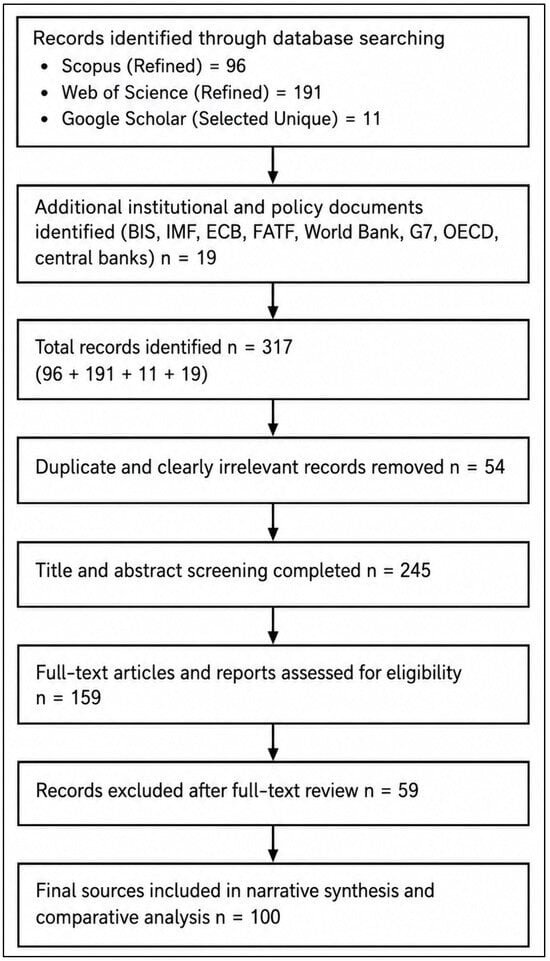
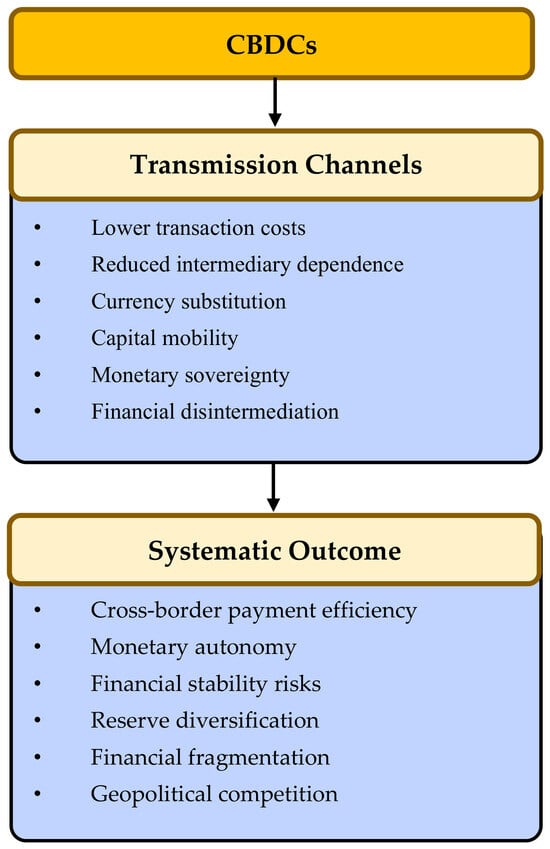
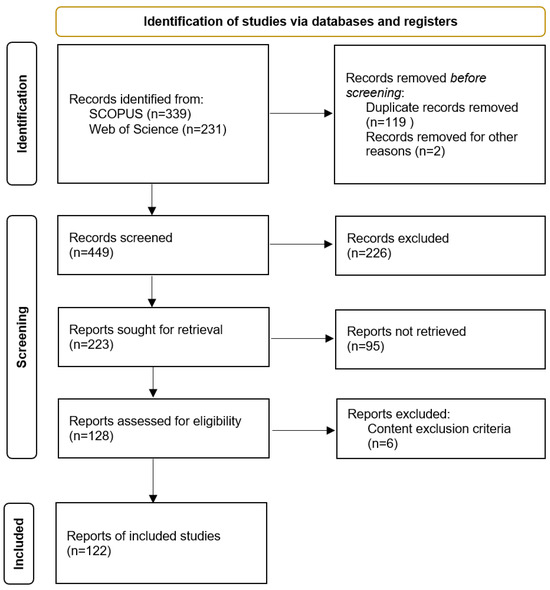
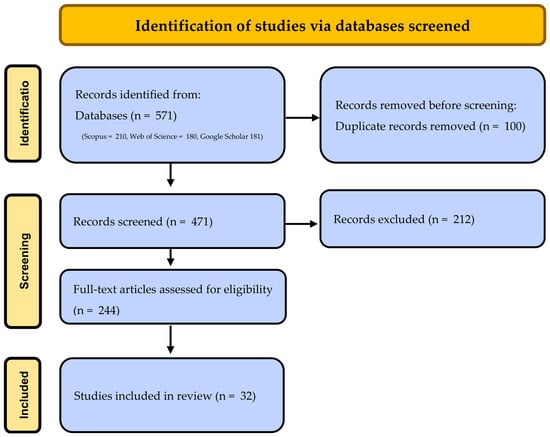
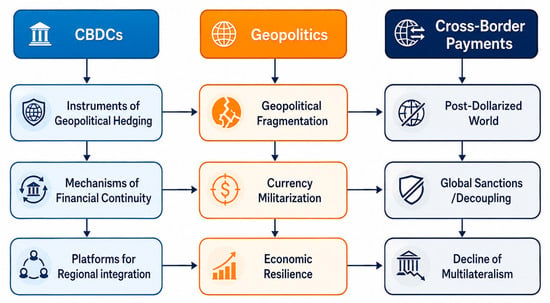
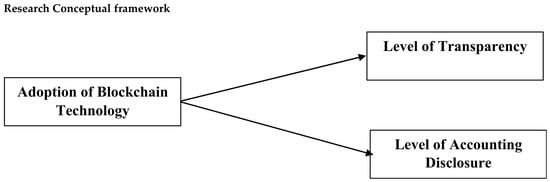
Amid rising geopolitical fragmentation and growing uncertainty in global financial systems, Central Bank Digital Currencies (CBDCs) are increasingly viewed as a potential innovation in cross-border digital payments. This paper provides a systematic review of the literature on CBDCs, with a particular focus on their role in cross-border payment systems, while also considering broader implications for monetary power and geopolitical realignment. Using a PRISMA-based review approach, complemented by bibliometric mapping, the study synthesizes existing research across economic, technological, institutional, and geopolitical dimensions. Unlike prior studies that primarily examine technical design features or domestic monetary implications, this review develops an integrated framework that situates CBDCs within the evolving architecture of cross-border digital payment systems in a fragmented global environment. The evidence suggests that CBDCs can enhance cross-border payment efficiency by reducing transaction costs, shortening settlement times, and enabling more direct transfer mechanisms that bypass traditional correspondent banking networks. At the same time, the literature highlights several critical challenges, including interoperability constraints, regulatory divergence, privacy concerns, and cybersecurity risks. Importantly, the findings also point to the potential emergence of parallel digital currency ecosystems, which may reinforce existing financial fragmentation rather than fully resolve it. Overall, CBDCs should be understood not only as technological innovations in digital payments but also as strategic instruments with implications for monetary sovereignty and global economic influence. Their long-term impact on cross-border payment systems will depend on the development of interoperable standards, coordinated regulatory frameworks, and sustained international cooperation. By bringing together fragmented strands of research, this study contributes to a more comprehensive understanding of how CBDCs are reshaping both digital payment infrastructures and the broader global financial order.
Full article

Figure 1
Open AccessArticle
Cognitive Bias and Trust in Digital Accounting Decisions
by
Ioannis Ch. Lampropoulos, Eleftherios Aggelopoulos, Elen Paraskevi Paraschi, Nikolaos Georgopoulos and Maria Kalogera
FinTech 2026, 5(2), 49; https://doi.org/10.3390/fintech5020049 - 1 Jun 2026
Abstract
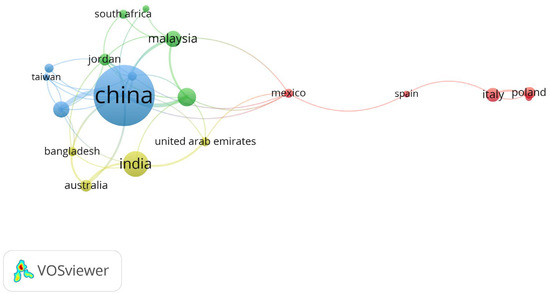
This study maps how cognitive and behavioral concepts such as trust, emotion, and bias are represented in the literature on digital financial accounting-based decision-making and FinTech adoption (artificial intelligence, blockchain, big data analytics, and automated reporting). The study employs a bibliometric mapping analysis
[...] Read more.
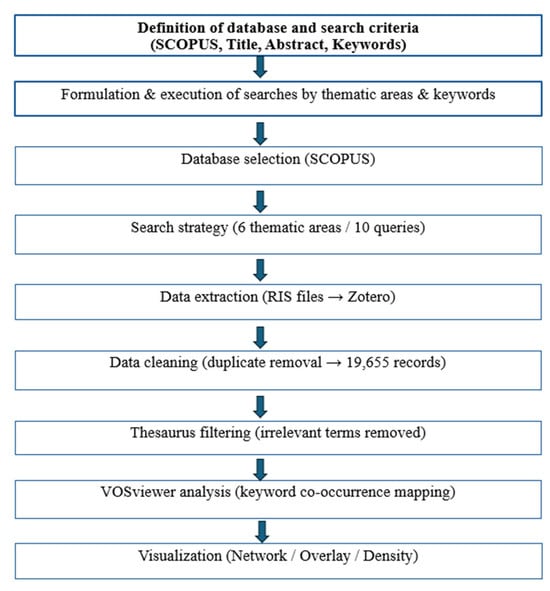
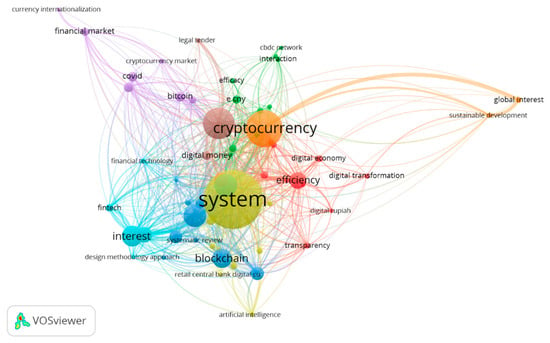
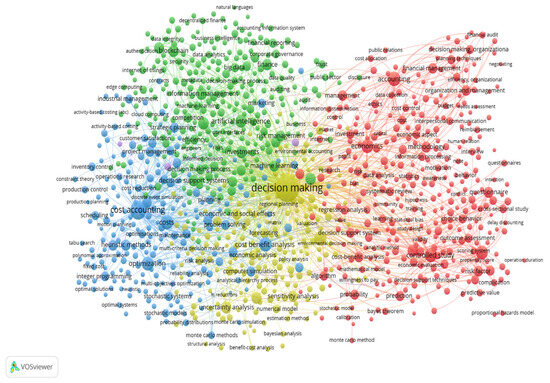
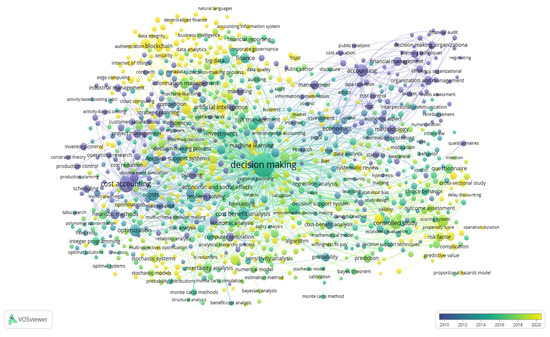
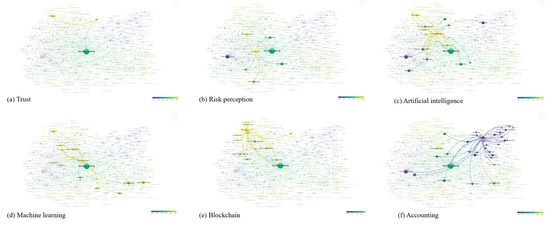
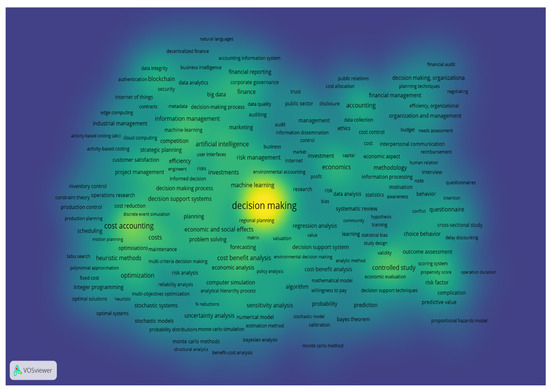
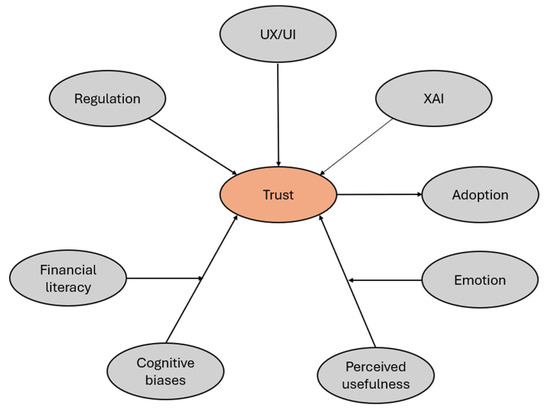
This study maps how cognitive and behavioral concepts such as trust, emotion, and bias are represented in the literature on digital financial accounting-based decision-making and FinTech adoption (artificial intelligence, blockchain, big data analytics, and automated reporting). The study employs a bibliometric mapping analysis of 19,655 publications from SCOPUS, creating three visualizations through the VOSviewer software: Network, Overlay, and Density Visualization. This technique maps thematic clusters and identifies conceptual connections in the literature on cognitive and behavioral dimensions of FinTech adoption. Results highlight trust as a central node linking FinTech adoption with cognitive and behavioral factors. Key cognitive biases, including overconfidence, anchoring, and loss aversion, appear in the literature as recurrent concepts associated with FinTech adoption, while financial literacy is frequently discussed as a mitigating factor. The study extends behavioral financial accounting-based theory and technology acceptance models by integrating psychological and technological approaches into a unified conceptual framework, providing theoretical and practical implications for FinTech designers, regulatory authorities, and educational institutions.
Full article
(This article belongs to the Special Issue Modeling Behavioral and Cognitive Drivers of FinTech Adoption: Trust, Emotion and Digital Decision-Making)
►▼
Show Figures

Figure 1

Open AccessArticle
Digital Financial Innovation and Sustainable Development: Cross-Countries Analysis and ESG Risks Management
by
Jekaterina Kuzmina, Inese Mavļutova, Atis Verdenhofs, Andris Fomins and Andris Nātriņš
FinTech 2026, 5(2), 48; https://doi.org/10.3390/fintech5020048 - 1 Jun 2026
Abstract
This study assesses how a country’s digitalization impacts sustainability indicators as measured by unmonitored environmental, social and governance (ESG) risks, which serve as a proxy for the development of financial technology (FinTech). The study employs a cross-country approach using data for up to
[...] Read more.
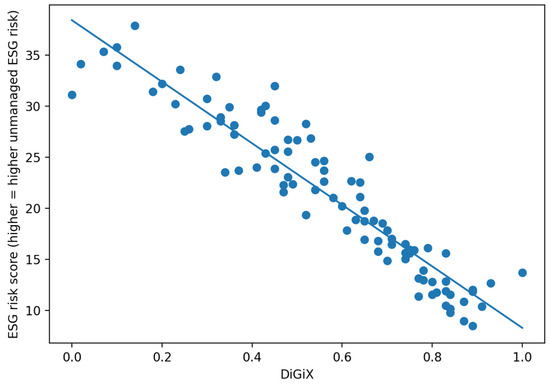
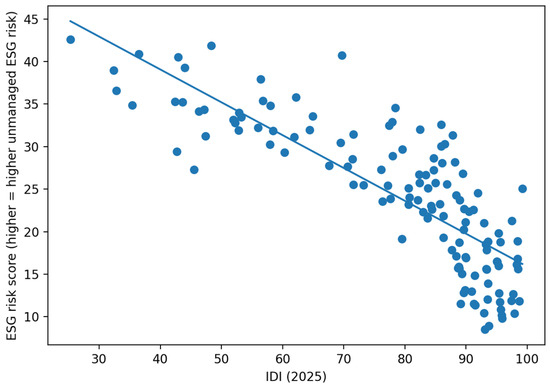
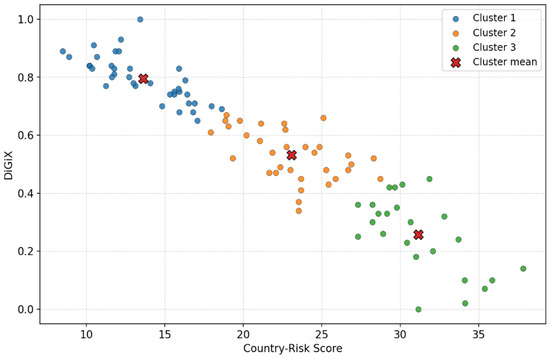
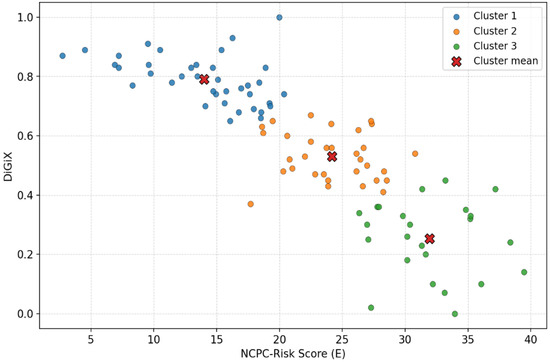
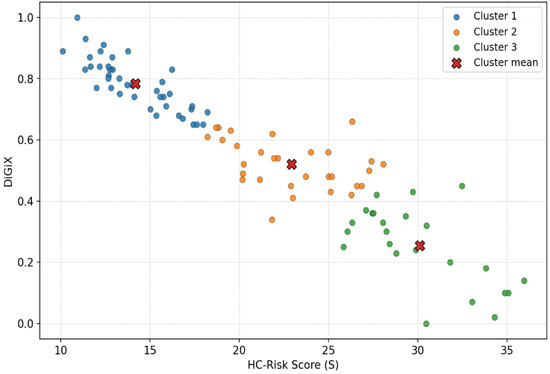
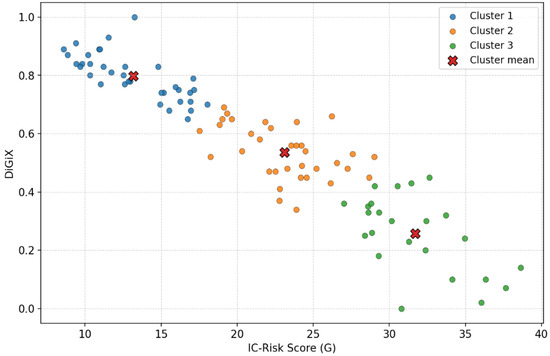
This study assesses how a country’s digitalization impacts sustainability indicators as measured by unmonitored environmental, social and governance (ESG) risks, which serve as a proxy for the development of financial technology (FinTech). The study employs a cross-country approach using data for up to 163 countries, going beyond the firm-level focus of previous studies. The DiGiX Digitalization Index and the ICT Development Index are used to measure digital maturity, while pillar-level indicators and Sustainalytics ESG country risk scores are used to assess ESG indicators. With evidence of nonlinear, threshold-type effects at higher levels of digital maturity, the regression results suggest a strong negative correlation between digital maturity and ESG risk. Different country typologies are further identified using unsupervised cluster analysis, which reveals a continuous digital and ESG gradient in environmental, social and governance aspects. The analysis proves digital maturity serves as a systemic enabler of ESG risk management by strengthening data availability, governance capacity and policy enforcement. These findings provide policy-related guidance for coordinating digitalization strategies in line with the Sustainable Development Goals.
Full article
(This article belongs to the Special Issue Creativity and Innovation in the Digital Economy: Finance and Economic Perspectives)
►▼
Show Figures

Figure 1
Open AccessArticle
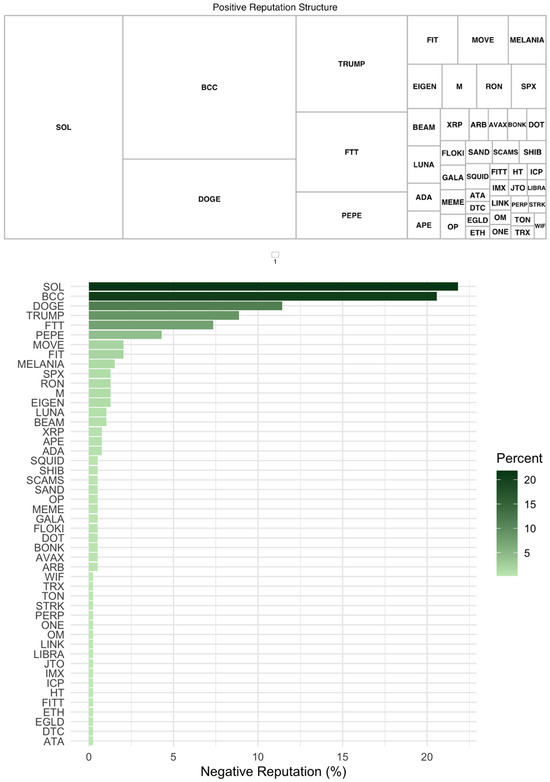
Reputation Spillovers and Trust Dynamics of Cryptocurrencies in Wartime Ukraine: Evidence from Ukrainian SME Entrepreneurs
by
Kostiantyn Pysanets, Olena Naumova, Mariia Naumova, Ganna Kharlamova and Silviu Nate
FinTech 2026, 5(2), 47; https://doi.org/10.3390/fintech5020047 - 1 Jun 2026
Abstract
►▼
Show Figures
Cryptocurrencies have become increasingly in demand in Ukraine’s wartime economy, yet little is known about how entrepreneurs perceive them in terms of trust, business use, and reputation. This study examines trust dynamics in cryptocurrencies among Ukrainian small-to-medium enterprise (SME) entrepreneurs under wartime conditions,
[...] Read more.
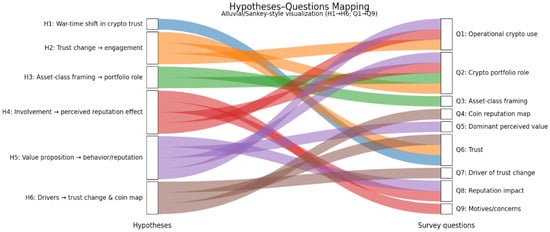
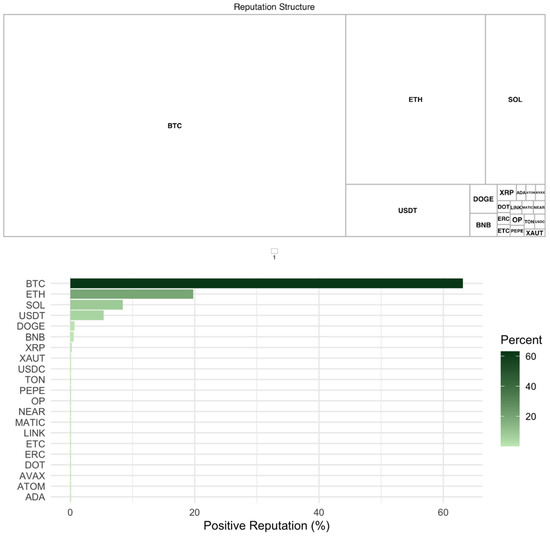
Cryptocurrencies have become increasingly in demand in Ukraine’s wartime economy, yet little is known about how entrepreneurs perceive them in terms of trust, business use, and reputation. This study examines trust dynamics in cryptocurrencies among Ukrainian small-to-medium enterprise (SME) entrepreneurs under wartime conditions, exploring their association with business behavior, investment decisions, and reputational perceptions. The analysis is based on a survey of 561 Ukrainian entrepreneurs. The results show a statistically significant increase in trust in cryptocurrencies during the war. Higher trust is associated with more intensive operational use of cryptocurrencies and greater importance in investment portfolios. Entrepreneurs who associate cryptocurrencies with traditional liquid assets are more likely to assign them a stronger investment role. The use of cryptocurrencies affects both cryptoassets’ reputations and entrepreneurs’ business reputations. Greater engagement with cryptocurrencies is associated with a higher likelihood of viewing their use as a reputational advantage. However, overall assessments remain cautious due to regulatory uncertainty, financial risks, and potential involvement in tax evasion or speculative activities. Different perceived value propositions of cryptocurrencies are also linked to distinct behavioral strategies. Overall, the findings suggest that, in wartime Ukraine, trust in cryptocurrencies is shaped by their practical usefulness during periods of financial disruption and by their implications for entrepreneurs’ reputations.
Full article

Figure 1
Open AccessArticle
Accountability and Liability in AI-Related Financial Regulatory Sandboxes: A Comparative Legal Analysis
by
János Kálmán
FinTech 2026, 5(2), 46; https://doi.org/10.3390/fintech5020046 - 30 May 2026
Abstract
►▼
Show Figures
Regulatory sandboxes have evolved from specialised FinTech tools into broader mechanisms of regulatory experimentation. As artificial intelligence (AI) applications become embedded in credit decisioning, payment-fraud detection, identity verification, crypto-asset compliance, customer-facing advice and supervisory analytics, sandbox design increasingly affects how legal and institutional
[...] Read more.
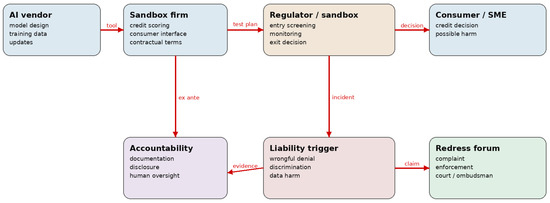
Regulatory sandboxes have evolved from specialised FinTech tools into broader mechanisms of regulatory experimentation. As artificial intelligence (AI) applications become embedded in credit decisioning, payment-fraud detection, identity verification, crypto-asset compliance, customer-facing advice and supervisory analytics, sandbox design increasingly affects how legal and institutional responsibility is allocated among regulators, participating firms, technology vendors and users. This article provides a comparative doctrinal and institutional analysis of accountability and liability in AI-related financial regulatory sandboxes. It clarifies the relevant AI modalities, distinguishes accountability (answerability and enforceability during sandbox participation) from liability (contractual, tort/product and regulatory/public law responsibility after harm), and maps framework-level safeguards across the European Union, the United Kingdom, Singapore, Norway and Hungary. The analysis does not seek to measure sandbox effectiveness empirically. Instead, it examines how publicly available legal and regulatory materials structure the allocation of duties before, during and after sandbox testing. The article shows that sandboxes generally do not operate as liability shields. Their legal significance lies in reallocating ex ante accountability duties—documentation, disclosure, monitoring, human oversight and exit planning—while preserving baseline liability rules. An Accountability and Liability Protocol is proposed to clarify roles, protect baseline consumer rights, support evidentiary traceability and connect sandbox learning to enforceable post-sandbox obligations.
Full article

Figure 1
Open AccessArticle
Examining the Impact of FinTech and Artificial Intelligence on Financial Performance: The Moderating Role of Dynamic Capabilities
by
Shahram Atashi Asemanjerdi, Mostafa Khosraviniya, Pablo de Frutos Madrazo, Zahra Moradi and Pedro Antonio Martín-Cervantes
FinTech 2026, 5(2), 45; https://doi.org/10.3390/fintech5020045 - 21 May 2026
Abstract
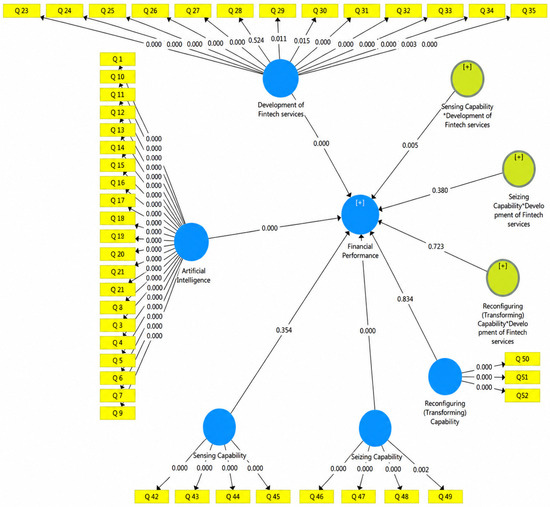
This study examines the impact of artificial intelligence (AI) and the development of FinTech services on firms’ financial performance, with particular emphasis on the moderating role of dynamic capabilities. Drawing on the dynamic capabilities perspective, the study explains how organizations can effectively leverage
[...] Read more.
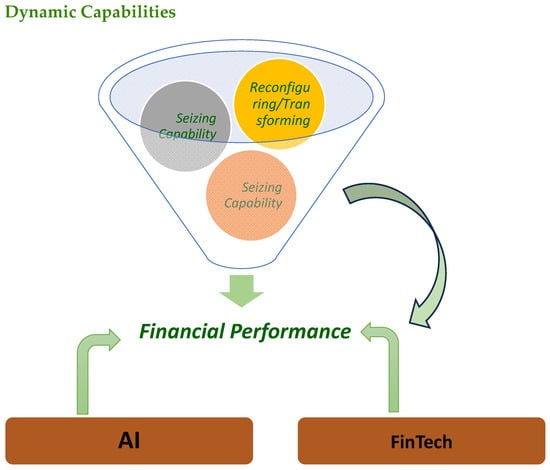
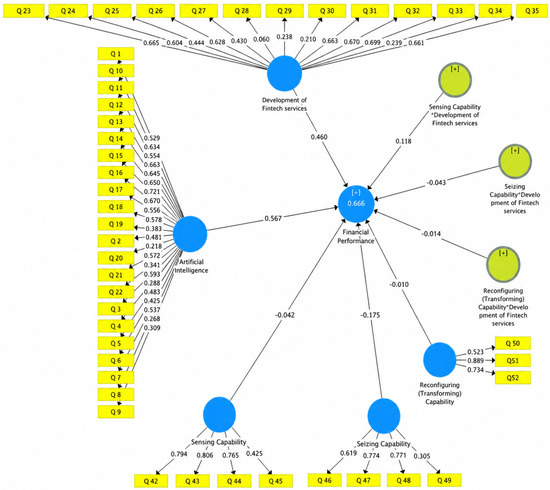
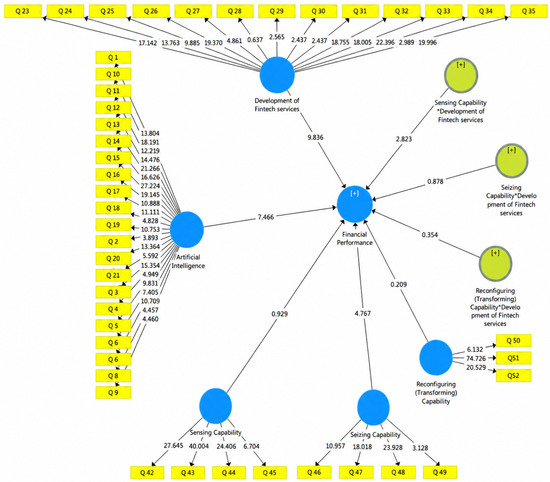
This study examines the impact of artificial intelligence (AI) and the development of FinTech services on firms’ financial performance, with particular emphasis on the moderating role of dynamic capabilities. Drawing on the dynamic capabilities perspective, the study explains how organizations can effectively leverage emerging digital technologies to enhance financial outcomes. The study is applied in purpose and adopts a descriptive correlational design. Data were collected using four structured questionnaires administered to 384 respondents, including senior executives, chief financial officers, and board members of companies listed on the Tehran Stock Exchange. A convenience sampling method was employed. The conceptual model and research hypotheses were tested using structural equation modeling based on the partial least squares structural equation modeling (PLS-SEM) approach, implemented using IBM SPSS Statistics version 29 and Smart PLS version 4. The results indicate that both artificial intelligence and FinTech have positive and statistically significant effects on firms’ financial performance. Although dynamic capabilities do not have a direct statistically significant effect on financial performance, they play a significant moderating role in the relationship between FinTech and financial performance. A disaggregated analysis of the dimensions of dynamic capabilities shows that only sensing capability has a positive and statistically significant moderating effect on the relationship between FinTech and financial performance, whereas seizing and reconfiguring capabilities do not show statistically significant moderating effects. By emphasizing the conditional and indirect role of dynamic capabilities, this study contributes to the growing literature on FinTech and artificial intelligence in emerging markets. The findings suggest that performance advantages from FinTech and AI stem less from the technologies themselves and more from firms’ ability to identify and interpret technological opportunities promptly. The study provides valuable practical insights for managers of publicly listed Iranian firms and clarifies how digital investments translate into improved financial performance.
Full article
(This article belongs to the Special Issue The Impact of AI in Business, Finance and Accounting)
►▼
Show Figures

Figure 1

Open AccessArticle
FinTech-Enabled Startup Portfolio Optimization Under Uncertainty: A Multi-Objective CVaR–ESG Framework
by
Zornitsa Yordanova and Hamed Nozari
FinTech 2026, 5(2), 44; https://doi.org/10.3390/fintech5020044 - 13 May 2026
Abstract
►▼
Show Figures
Startup investment decisions are always accompanied by high uncertainty, limited historical data, and the need to simultaneously consider financial performance, sustainability, and innovation. With the rapid expansion of financial technologies, the use of digital decision-support tools to manage this complex environment has become
[...] Read more.
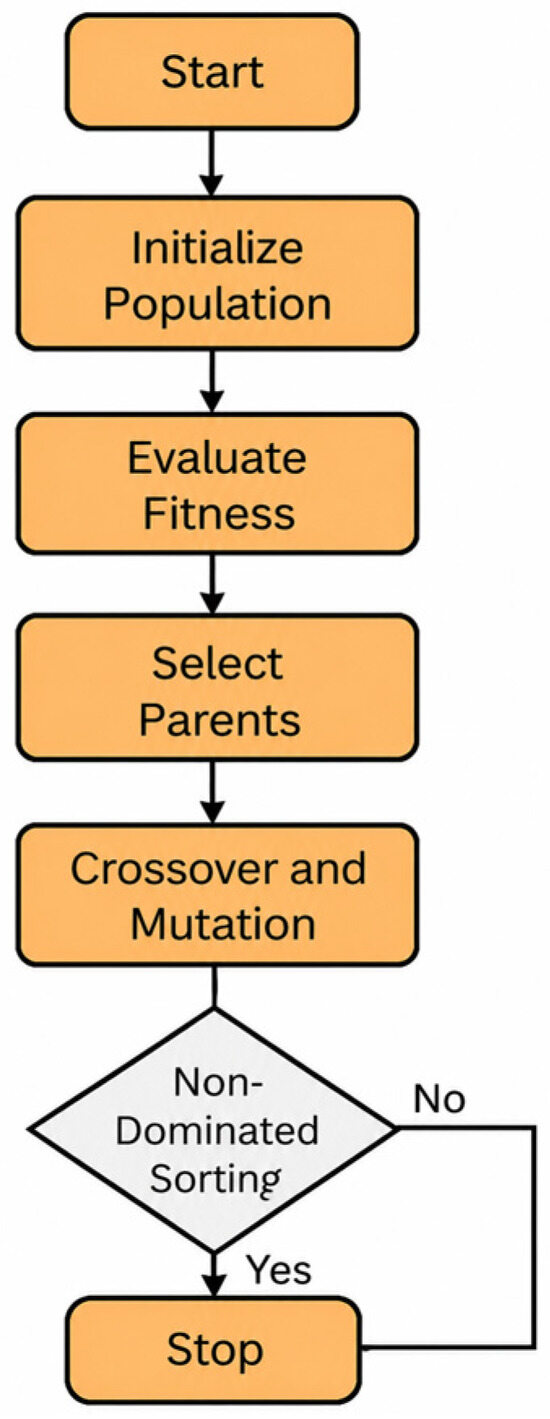
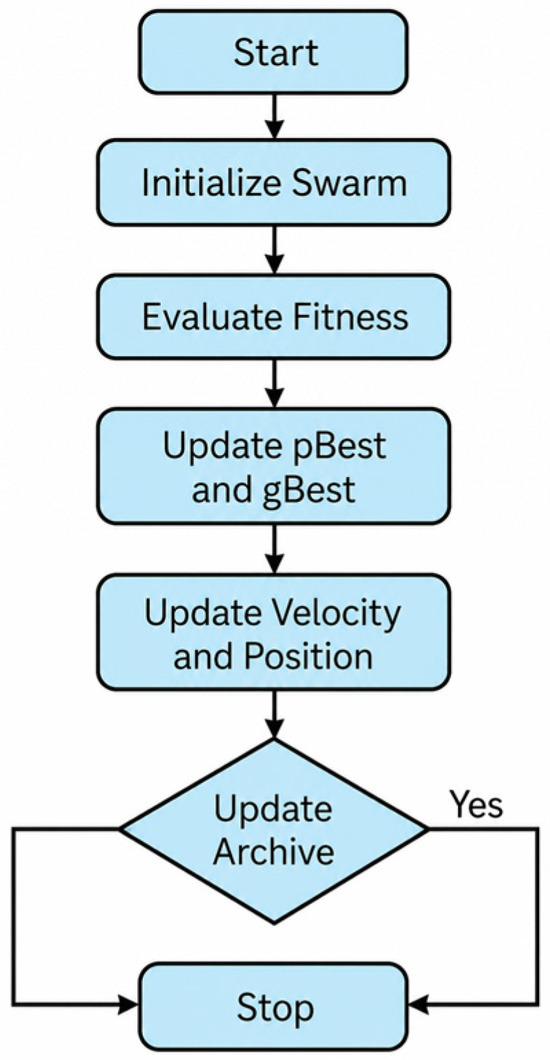
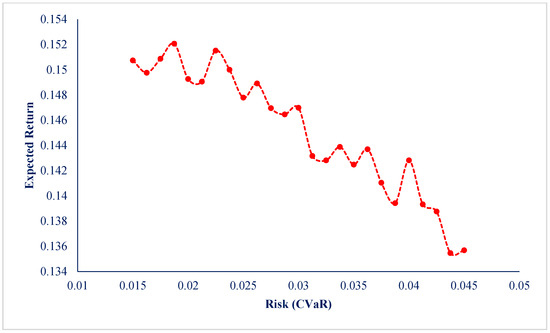
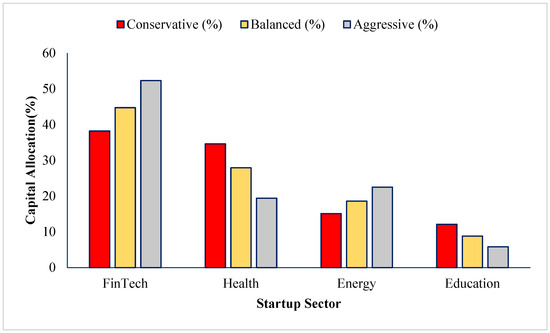
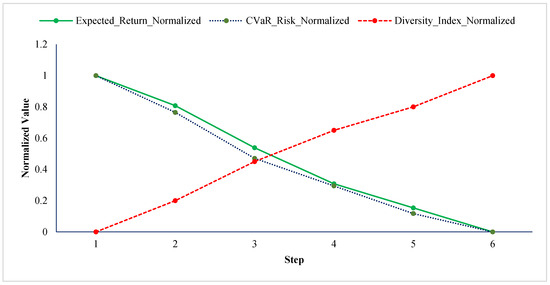
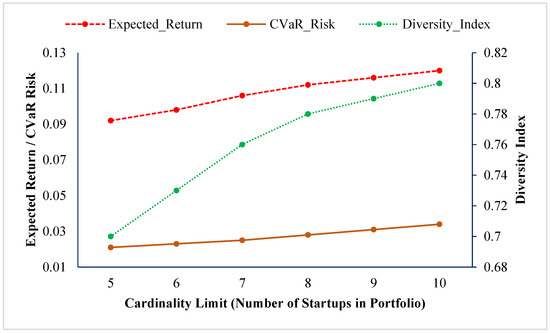
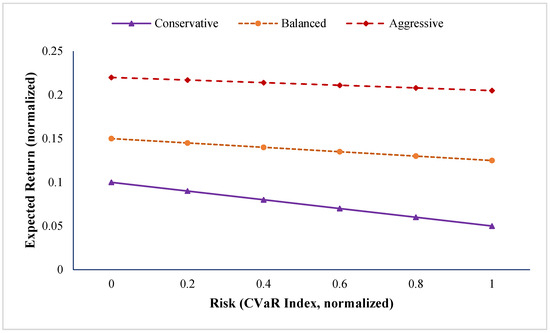
Startup investment decisions are always accompanied by high uncertainty, limited historical data, and the need to simultaneously consider financial performance, sustainability, and innovation. With the rapid expansion of financial technologies, the use of digital decision-support tools to manage this complex environment has become increasingly important. This study presents a multi-objective optimization framework for startup portfolio selection that simultaneously maximizes expected returns, minimizes downside risk using the Conditional Value-at-Risk (CVaR) measure, improves sustainability performance based on ESG indicators, and considers liquidity constraints. The main innovation of this study is the simultaneous integration of financial and non-financial criteria alongside a set of realistic structural constraints, including budget constraints, the number of options available, the concentration ceiling, and the minimum required levels for ESG, innovation, and liquidity. The results show that the proposed model is able to create a transparent balance between return, risk, sustainability, and investment horizon, and by changing the parameters related to risk and sustainability, it can target capital flows towards more innovative startups with higher ESG scores. This framework can be used as a practical tool for investors, digital investment platforms, and policymakers in responsible and data-driven capital allocation.
Full article

Figure 1
Open AccessArticle
Determinants of Greek Banking Customers’ Intention to Use AI-Based Green Fintech Solutions
by
Paraskevi Gatzioufa, Vaggelis Saprikis, Georgios Avlogiaris, Ioannis Antoniadis and Konstantinos Panitsidis
FinTech 2026, 5(2), 43; https://doi.org/10.3390/fintech5020043 - 11 May 2026
Abstract
As Artificial Intelligence (AI) becomes increasingly integrated into financial services, its alignment with sustainability goals has given rise to a new domain: Green FinTech. This study investigates the Behavioural Intention (BI) of Greek banking customers to adopt AI chatbots in the context of
[...] Read more.
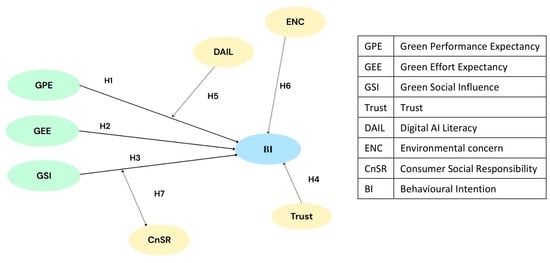
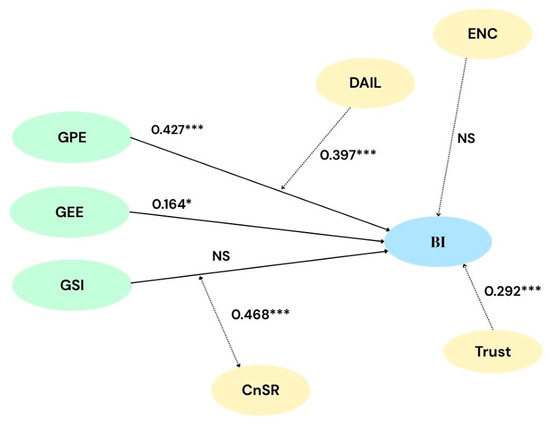
As Artificial Intelligence (AI) becomes increasingly integrated into financial services, its alignment with sustainability goals has given rise to a new domain: Green FinTech. This study investigates the Behavioural Intention (BI) of Greek banking customers to adopt AI chatbots in the context of sustainable digital finance. Building upon the Unified Theory of Acceptance and Use of Technology (UTAUT), the proposed model incorporates additional constructs, i.e., Trust, Digital AI Literacy (DAIL), Environmental Concern (ENC), and Consumer Social Responsibility (CnSR), to examine the behavioural intention (BI) to use AI chatbots in the context of sustainable digital finance. Unlike prior UTAUT-based research, which has mainly examined AI, FinTech, or chatbot adoption separately or in different contexts, the present study develops and empirically tests an extended green-oriented UTAUT model that integrates technological, environmental, and ethical dimensions within a single framework. In this way, the study addresses a geographical, contextual, and model-specific gap in the literature, as research on AI chatbot adoption in Green FinTech remains limited, particularly in the Greek banking context. The target population for this study consists of educated, working-age adults who have already used an AI chatbot for a banking transaction in the context of e-banking services. A structured questionnaire was administered to a sample of 209 users of AI chatbots in the banking context. Using Structural Equation Modelling (SEM) and factor analysis via Principal Component Analysis (PCA) in conjunction with orthogonal rotation (VARIMAX), the results show that Green Performance Expectancy (GPE), Green Effort Expectancy (GEE), Digital AI Literacy (DAIL), and Trust significantly influence Behavioural Intention (BI). Consumer Social Responsibility (CnSR) also has an indirect impact via Green Social Influence (GSI). The study extends UTAUT in the Green FinTech context by integrating sustainability- and AI chatbot usage-related constructs, showing that Green Performance Expectancy and trust are the strongest drivers of bank customers’ behavioural intention to use AI chatbots. The study therefore contributes theoretically by extending UTAUT into a green-oriented framework that captures sustainability-related and ethical drivers of AI chatbot adoption in banking, rather than examining technology-use determinants alone. More specifically, it explains AI chatbot adoption in Green FinTech through a unified framework that combines core UTAUT variables with Trust, Digital AI Literacy, Environmental Concern, and Consumer Social Responsibility in the underexplored context of Greek banking.
Full article
(This article belongs to the Special Issue The Impact of E-Business Practices on FinTech: Blockchain, AI, Social Media, and Digital Transformation for a Greener Future)
►▼
Show Figures

Figure 1

Open AccessArticle
Blockchain-Secured Digital Twin Framework for Fuzzy Multi-Objective Optimization in Supply Chain Finance
by
Hamed Nozari and Zornitsa Yordanova
FinTech 2026, 5(2), 42; https://doi.org/10.3390/fintech5020042 - 10 May 2026
Abstract
►▼
Show Figures
This research presents an integrated framework for supply chain finance in which digital twin, blockchain, and multi-objective fuzzy optimization are used in synergy to improve financial decision-making in dynamic and uncertain environments. In this framework, the digital twin acts as a real-time monitoring
[...] Read more.
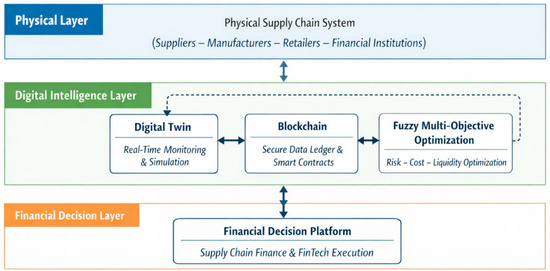
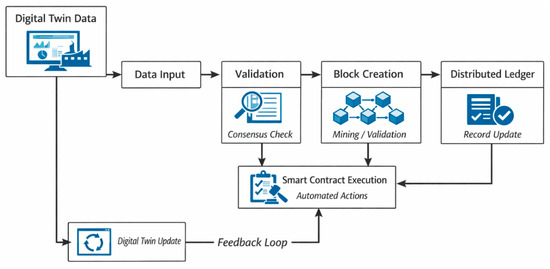
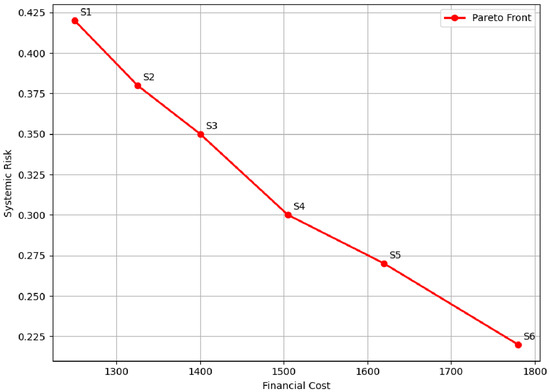
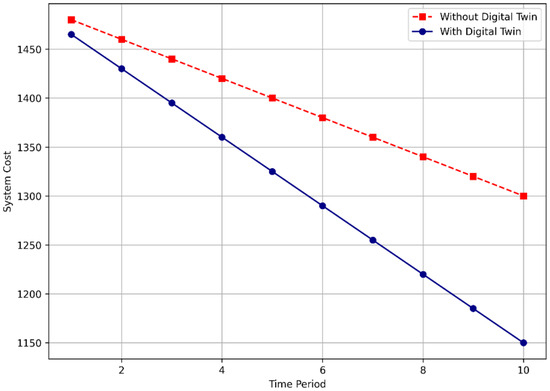
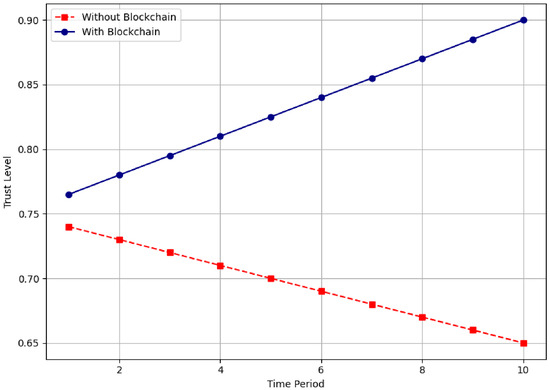
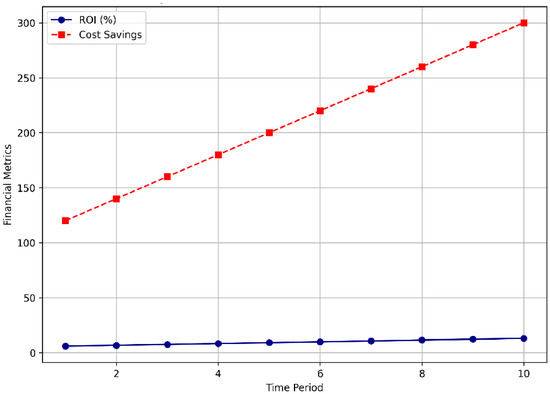
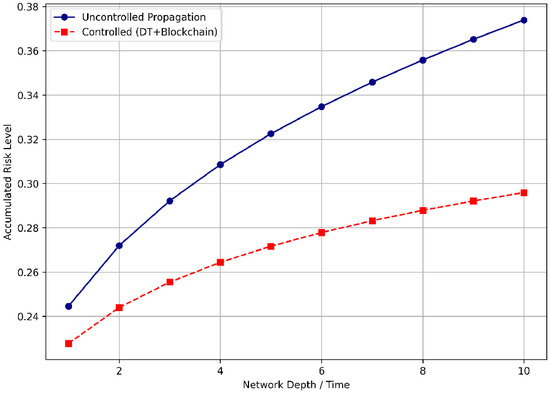
This research presents an integrated framework for supply chain finance in which digital twin, blockchain, and multi-objective fuzzy optimization are used in synergy to improve financial decision-making in dynamic and uncertain environments. In this framework, the digital twin acts as a real-time monitoring and forecasting layer, blockchain acts as a trust and transparency infrastructure, and the optimization model acts as the decision-making core. To evaluate the proposed framework, a scenario-based mathematical model was developed and analyzed using a combination of real-world and simulated data. The results showed that the proposed framework was able to reduce the total cost by 18.6% and increase the return on investment to 12.4%. Also, the use of the digital twin framework significantly reduced financial risks and delays, while the integration of blockchain improved the transparency, traceability, and reliability of transactions and reduced operational errors. Overall, the findings show that this framework has high potential for developing smart, transparent, and resilient financial systems in the supply chain context.
Full article

Figure 1
Open AccessReview
Transparency by Design: A Narrative Synthesis of AI Disclosure, Explainability, and Trust in Consumer-Facing FinTech
by
Stefanos Balaskas
FinTech 2026, 5(2), 41; https://doi.org/10.3390/fintech5020041 - 6 May 2026
Abstract
Artificial intelligence is increasingly embedded in consumer-facing FinTech, but trust in AI-enabled finance depends not only on performance, but also on whether users can understand and appropriately evaluate algorithmic outputs. This review synthesizes research on AI disclosure, explainability, and related transparency cues in
[...] Read more.
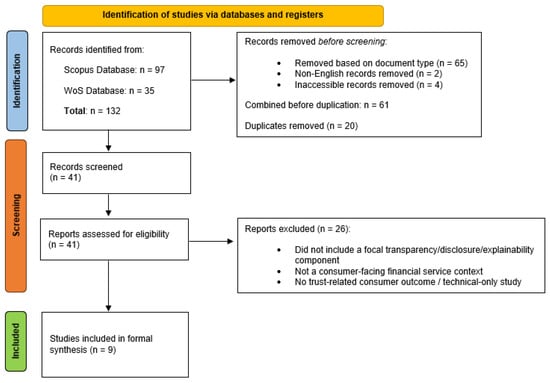
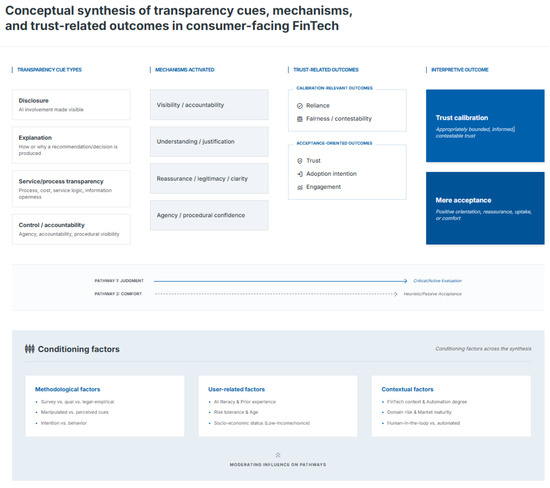
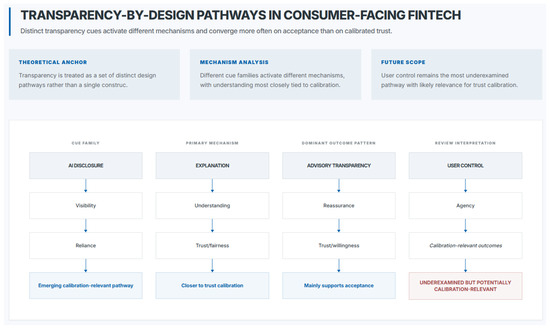
Artificial intelligence is increasingly embedded in consumer-facing FinTech, but trust in AI-enabled finance depends not only on performance, but also on whether users can understand and appropriately evaluate algorithmic outputs. This review synthesizes research on AI disclosure, explainability, and related transparency cues in consumer-facing FinTech, with particular attention to whether these cues support trust calibration rather than merely increasing trust or adoption. Searches in Scopus and Web of Science identified nine formally included studies and six adjacent contextual studies. The available evidence base is concentrated in robo-advisory and adjacent AI-enabled investment advising, with only limited evidence on automated credit decisions and crowdfunding recommendation platforms. The most studied cues are explanation/explainable AI and broader advisory or platform transparency, whereas disclosure, responsibility attribution, user control, and information-quality cues remain underexamined. Across the formal corpus, transparency cues are generally associated with more positive trust-related outcomes, especially trust and adoption-oriented responses. However, only a small subset of studies addresses trust calibration through outcomes such as reliance, fairness, accountability, and contestability. Overall, the current literature supports transparency more strongly as an acceptance mechanism than as a basis for appropriately bounded trust.
Full article
(This article belongs to the Special Issue Modeling Behavioral and Cognitive Drivers of FinTech Adoption: Trust, Emotion and Digital Decision-Making)
►▼
Show Figures

Figure 1

Open AccessArticle
Artificial Intelligence and Financial Market Connectedness: Evidence from AI-Related Equities, Cryptocurrencies, and Global Assets
by
Shigeyuki Hamori
FinTech 2026, 5(2), 40; https://doi.org/10.3390/fintech5020040 - 6 May 2026
Abstract
The rapid expansion of artificial intelligence (AI), particularly with the rise of generative AI technologies, has attracted increasing attention in financial markets. This study examines how the recent AI boom relates to changes in the interconnectedness of global financial markets. Using daily data
[...] Read more.
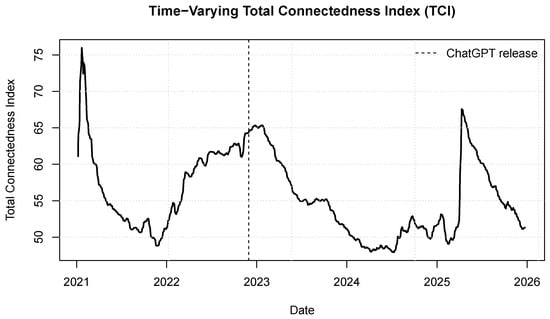
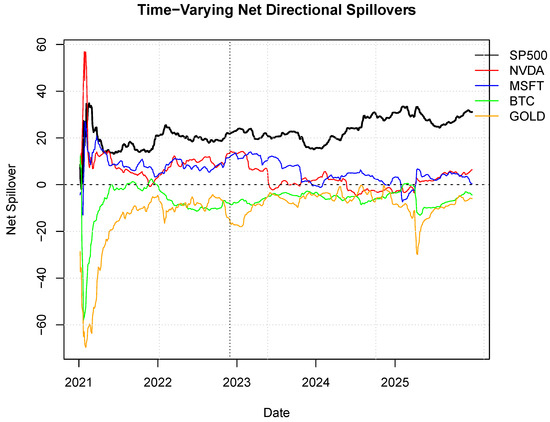
The rapid expansion of artificial intelligence (AI), particularly with the rise of generative AI technologies, has attracted increasing attention in financial markets. This study examines how the recent AI boom relates to changes in the interconnectedness of global financial markets. Using daily data from January 2021 to December 2025, we analyze spillover dynamics among AI-related equities, cryptocurrencies, and traditional financial assets within a time-varying parameter vector autoregression (TVP-VAR) framework. Our findings indicate that the emergence of generative AI is not associated with a uniform increase in financial connectedness. Instead, the overall level of connectedness declines modestly following the public release of ChatGPT by OPENAI in November 2022, while the structure of spillovers undergoes significant changes. In particular, AI-related equities initially act as net transmitters of shocks, but their relative importance diminishes over time. In contrast, broader equity markets, proxied by the S&P 500, remain the dominant source of spillovers throughout the sample period. These results are robust to alternative model specifications, including different lag lengths and forecast horizons. Overall, the findings suggest that the impact of AI on financial markets is better understood as a structural transformation of interconnectedness rather than a simple intensification of linkages. This study contributes to the literature by providing new evidence on how technological innovation reshapes financial spillover networks and highlights the importance of considering both the level and structure of connectedness in assessing systemic risk.
Full article
(This article belongs to the Special Issue AI × DeFi × Sustainability: Redesigning the Operating System of Global Finance)
►▼
Show Figures

Figure 1
Open AccessEditorial
Financial Technology and Strategic AI Integration in FinTech: Transforming Banking, Payments, and Building a Sustainable Economy—Challenges and Opportunities
by
Otilia Manta, Valentina Vasile and Shigeyuki Hamori
FinTech 2026, 5(2), 39; https://doi.org/10.3390/fintech5020039 - 3 May 2026
Cited by 1
Abstract
The accelerated digitalization of financial systems, intensified by the strategic integration of artificial intelligence (AI), marks a profound paradigm shift in the global financial architecture [...]
Full article
(This article belongs to the Special Issue Financial Technology and Strategic AI Integration in FinTech: Transforming Banking, Payments, and Building a Sustainable Economy—Challenges and Opportunities)
Open AccessReview
Security Challenges in Open Banking: A Systematic Review and Conceptualisation of a Tri-Dimensional Security Framework
by
Cristiano Wilson and Carlos Tam
FinTech 2026, 5(2), 38; https://doi.org/10.3390/fintech5020038 - 2 May 2026
Abstract
Background: Open banking (OB) is rapidly transforming financial ecosystems by enabling controlled data sharing among multiple actors through application programming interfaces (APIs). While this transformation promises innovation and competition, it also introduces complex security challenges that extend beyond purely technical considerations. Despite growing
[...] Read more.
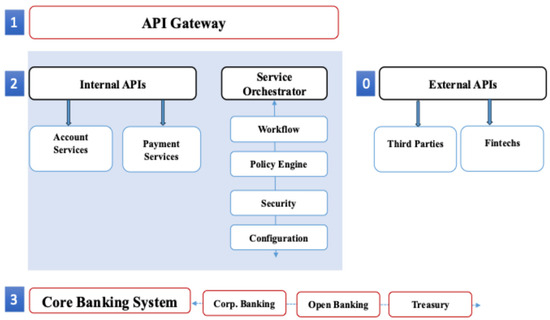
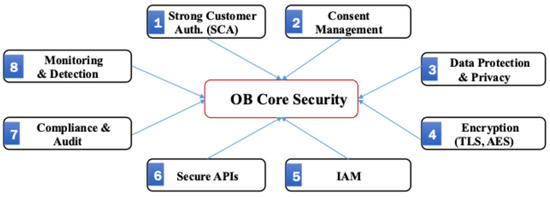
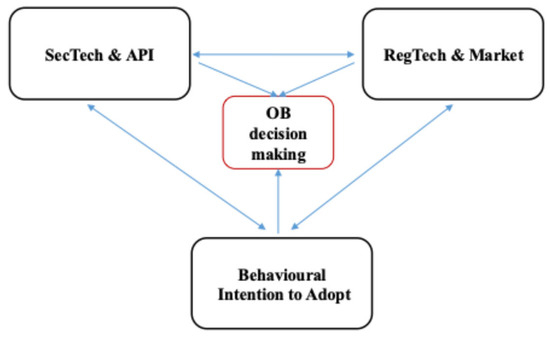
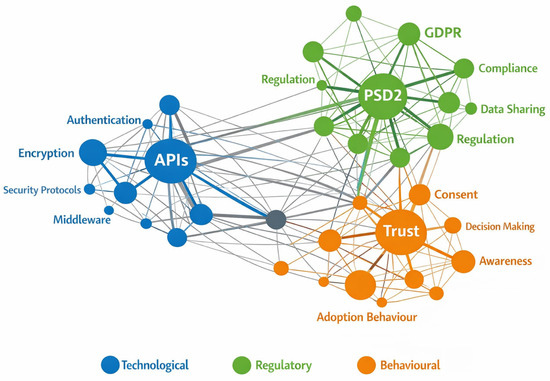
Background: Open banking (OB) is rapidly transforming financial ecosystems by enabling controlled data sharing among multiple actors through application programming interfaces (APIs). While this transformation promises innovation and competition, it also introduces complex security challenges that extend beyond purely technical considerations. Despite growing attention in academic and professional domains, existing reviews provide limited integration of security concerns with global adoption patterns and cross regional variation. Methods: This systematic review analyses empirical and conceptual research on security in OB published between 1999 and 2025, capturing early digital banking studies that later informed the development of OB. The literature is structured into three distinct phases: foundational digital banking developments, regulatory formalisation of OB frameworks, and post-implementation expansion of OB ecosystems. A comprehensive search was conducted across major academic databases and scholarly portals, complemented by relevant regulatory and policy sources. Following duplicate removal, title and abstract screening, full-text eligibility assessment, and methodological quality appraisal, 117 studies were retained for qualitative synthesis. Results: The findings reveal recurring security challenges arising from the interaction between technological infrastructures, regulatory frameworks, and user behaviour within OB ecosystems. Technical safeguards such as APIs, strong customer authentication, and encryption are necessary but insufficient when they are misaligned with regulatory implementation and user behaviour. Behavioural factors, including trust, consent understanding, and security-related decision making, play a central role in shaping ecosystem resilience. Based on this synthesis, the study develops a tri-dimensional security framework integrating technological, regulatory, and behavioural dimensions. The bibliometric analysis of 117 studies reveals that technological security dominates the literature (58%), followed by regulatory governance (44%) and behavioural dimensions (42%). However, only 17.9% of studies integrate all three dimensions simultaneously. APIs and authentication mechanisms represent the most frequent technological terms, while PSD2 and GDPR dominate regulatory discourse. Trust and decision-making are the most recurrent behavioural constructs. The relatively low proportion of fully integrated studies confirms a structural fragmentation within OB security research, thereby empirically justifying the proposed tri-dimensional framework. Chronologically, early studies (1999–2015) predominantly focused on technical security mechanisms and regulatory compliance, whereas more recent research (2020–2025) increasingly highlights the interplay between regulatory frameworks and user behaviour, suggesting a shift towards a more holistic understanding of security within OB adoption. Conclusions: This systematic review concludes that integrating technological, regulatory, and behavioural perspectives advances a more comprehensive understanding of security in OB ecosystems. The proposed tri-dimensional security framework provides a structured foundation for future research and supports policy-relevant and practice-oriented security design.
Full article
(This article belongs to the Special Issue Fintech Innovations: Transforming the Financial Landscape)
►▼
Show Figures

Figure 1

Open AccessArticle
Cryptocurrency Adoption in Central and Eastern Europe: Psychological Decision-Making Mechanisms, Motives, and Barriers from a Qualitative Perspective
by
Kiryl Minkin and Dariusz Drążkowski
FinTech 2026, 5(2), 37; https://doi.org/10.3390/fintech5020037 - 2 May 2026
Abstract
Cryptocurrency adoption remains difficult to explain when treated as a single decision or static outcome. Addressing this limitation, the present study develops a qualitative, process-oriented account of cryptocurrency adoption among users in Central and Eastern Europe, with particular attention to how engagement emerges,
[...] Read more.
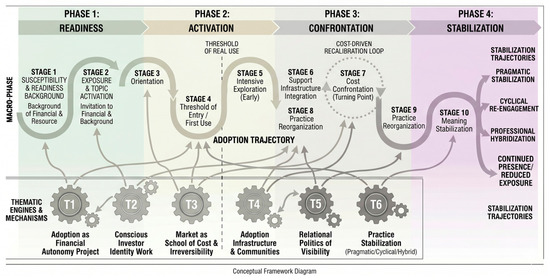
Cryptocurrency adoption remains difficult to explain when treated as a single decision or static outcome. Addressing this limitation, the present study develops a qualitative, process-oriented account of cryptocurrency adoption among users in Central and Eastern Europe, with particular attention to how engagement emerges, changes, and stabilizes over time. Semi-structured individual in-depth interviews were conducted with 25 cryptocurrency users, and the material was analyzed using reflexive thematic analysis within an interpretivist framework. The findings show that adoption unfolds as a multi-phase process embedded in users’ biographies, financial practices, and socio-technical environments. Across accounts, cryptocurrencies were described not only as speculative assets but also as tools of financial autonomy, learning, and optionality under conditions of institutional uncertainty and constrained access to conventional financial pathways, making the CEE context particularly revealing for a process-oriented understanding of adoption. The analysis identified six interrelated themes: adoption as a project of financial autonomy; the “conscious investor” identity; the market as a school of cost and irreversibility; platforms and communities as adoption infrastructures; the relational politics of visibility; and practice stabilization. Together, these themes show that factors already highlighted in prior adoption research—such as trust, risk, autonomy, and knowledge—do not function as stable predictors, but change their meaning across different phases of engagement. The study contributes to FinTech adoption research by proposing a processual model that reconceptualizes cryptocurrency adoption as a phased, experience-dependent pattern of participation rather than a static outcome of parallel determinants. In doing so, it extends existing variable-centered frameworks toward a more dynamic and interpretive understanding of financial technology use.
Full article
(This article belongs to the Special Issue Cryptocurrency and Digital Cash)
►▼
Show Figures

Figure 1
Open AccessArticle
Network Effects and Boom–Bust Dynamics in NFT Prices
by
Ding Ding, Yang Li, Poh Ling Neo, Zhiyuan Wang and Chongwu Xia
FinTech 2026, 5(2), 36; https://doi.org/10.3390/fintech5020036 - 1 May 2026
Cited by 1
Abstract
►▼
Show Figures
This paper develops a tractable theoretical framework to study how network participation shapes the boom–bust dynamics of non-fungible token (NFT) prices. We model NFT pricing under network effects and heterogeneous consumers, and show that prices and participation are jointly determined in equilibrium. The
[...] Read more.
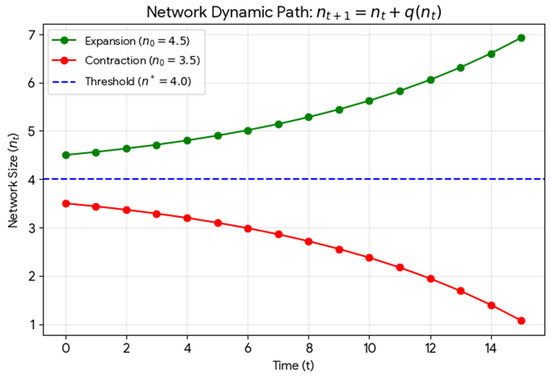
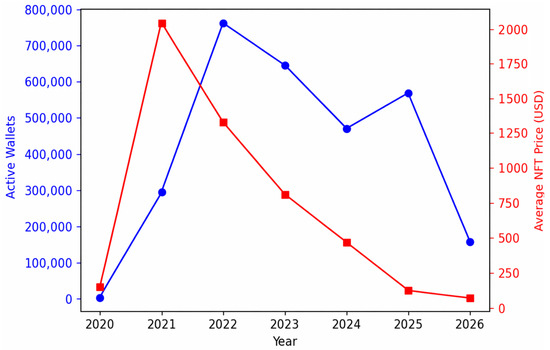
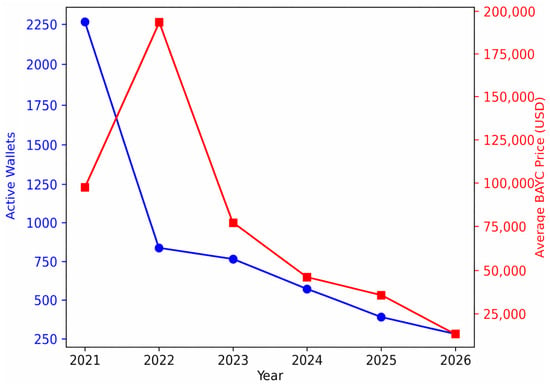
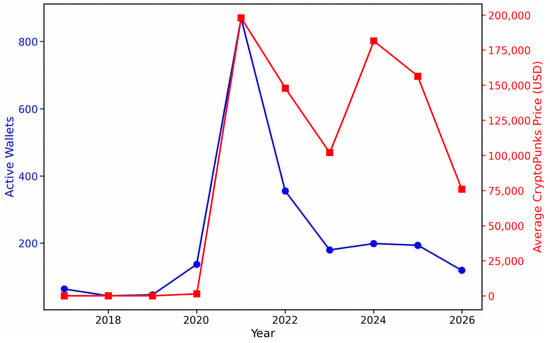
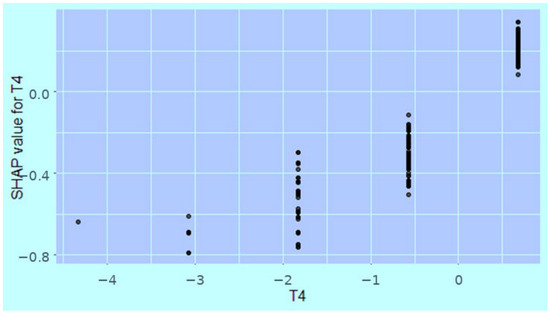
This paper develops a tractable theoretical framework to study how network participation shapes the boom–bust dynamics of non-fungible token (NFT) prices. We model NFT pricing under network effects and heterogeneous consumers, and show that prices and participation are jointly determined in equilibrium. The model implies a critical participation threshold that separates expansion from contraction regimes: above this threshold, positive feedback between participation and valuation generates self-reinforcing growth, while below it, weakening network benefits lead to contraction. We provide empirical evidence using data from the aggregate NFT market and prominent collections including Bored Ape Yacht Club (BAYC) and CryptoPunks. Reduced-form regressions show a positive association between prices and network participation, with stronger effects at the collection level than in the aggregate market. Threshold estimation further provides evidence consistent with regime-dependent dynamics, with clearer tipping behaviour in well-defined NFT communities than in the aggregate market. These findings suggest that NFT valuation is closely tied to network structure and participation dynamics. More broadly, this paper contributes a unified framework that links participation, price formation, and threshold behaviour in NFT markets.
Full article

Figure 1
Open AccessArticle
The Impact of Blockchain Technology Adoption in Enhancing Transparency and Accounting Disclosure Levels in Digital Financial Reports: Evidence from Jordanian Banks
by
Mohammad Motasem Alrfai, Mahmoud Khaled Al-Kofahi, Ali Hasan Alkharabsheh and Ibrahim Radwan Alnsour
FinTech 2026, 5(2), 35; https://doi.org/10.3390/fintech5020035 - 20 Apr 2026
Abstract
►▼
Show Figures
Despite growing recognition of blockchain technology’s potential to enhance traceability, verifiability, and integrity in financial reporting, empirical evidence from regulated banking environments in developing economies remains scarce. This study investigates whether blockchain adoption is positively associated with transparency and accounting disclosure in digital
[...] Read more.
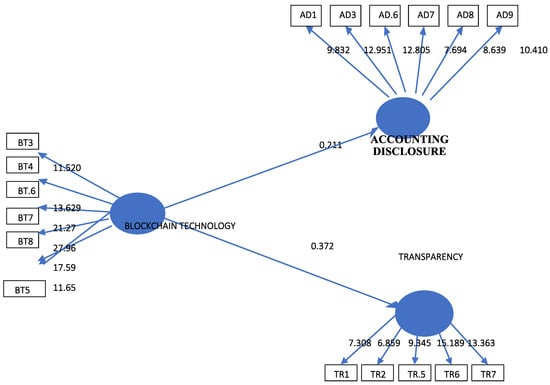
Despite growing recognition of blockchain technology’s potential to enhance traceability, verifiability, and integrity in financial reporting, empirical evidence from regulated banking environments in developing economies remains scarce. This study investigates whether blockchain adoption is positively associated with transparency and accounting disclosure in digital financial reports among Jordanian listed banks. A structured questionnaire was distributed to managers, financial managers, and accountants across 15 banks listed on the Amman Stock Exchange, yielding 312 valid responses. Partial Least Squares Structural Equation Modeling (PLS-SEM) with 5000 bootstrap subsamples was employed for data analysis. The results show that blockchain adoption is positively and significantly associated with transparency (β = 0.361, p < 0.001) and accounting disclosure (β = 0.437, p < 0.001), explaining 13.0% and 19.1% of the variance, respectively. These findings suggest that blockchain-enabled systems are perceived by banking professionals as contributing to greater reporting credibility. By providing empirical evidence from a developing economy banking sector, this study indicates that blockchain adoption may serve as a governance-supporting mechanism associated with improved perceived transparency and disclosure quality.
Full article

Figure 1
Highly Accessed Articles
Latest Books
E-Mail Alert
News
Topics
Topic in
Clean Technol., Economies, FinTech, JRFM, Sustainability
Green Technology Innovation and Economic Growth
Topic Editors: David (Xuefeng) Shao, Miaomiao Tao, Selena ShengDeadline: 31 December 2026
Topic in
IJFS, JRFM, Risks, Sustainability, FinTech, Platforms
Innovations of Digital Finance, Green Finance, Climate Finance and Financial Risk in the AI Era
Topic Editors: Qian Li, Canzhong YaoDeadline: 1 February 2027
Topic in
AI, BDCC, FinTech, IJFS, JTAER, Risks
Artificial Intelligence Applications in Financial Technology, 2nd Edition
Topic Editors: Albert Y.S. Lam, Andy ChunDeadline: 28 February 2027
Topic in
Businesses, Economies, FinTech, JRFM, Sustainability, Information, AI, Technologies, Applied Sciences, Encyclopedia
AI-Driven Information Governance for Sustainable Decision Making and Innovation
Topic Editors: Won Sang Lee, Yonghan JuDeadline: 30 April 2027
Special Issues
Special Issue in
FinTech
Creativity and Innovation in the Digital Economy: Finance and Economic Perspectives
Guest Editors: Mirela Panait, Irina Gabriela Rǎdulescu, Bogdan George Tudorică, Catalin Popescu, Marian Catalin VoicaDeadline: 30 June 2026
Special Issue in
FinTech
Modeling Behavioral and Cognitive Drivers of FinTech Adoption: Trust, Emotion and Digital Decision-Making
Guest Editors: Stefanos Balaskas, Yannis C. Stamatiou, George S. AndroulakisDeadline: 31 August 2026
Special Issue in
FinTech
Cryptocurrency and Digital Cash
Guest Editors: Juraj Fabuš, Shyan-Ming YuanDeadline: 30 November 2026
Special Issue in
FinTech
Fintech and Financial Regulation
Guest Editors: Yiannis Anagnostopoulos, Emmanouil NoikokyrisDeadline: 30 November 2026