Journal Description
Commodities
Commodities
is an international, peer-reviewed, open access journal on economics, finance, and commerce published quarterly online by MDPI.
- Open Access— free for readers, with article processing charges (APC) paid by authors or their institutions.
- High Visibility: indexed within RePEc, and other databases.
- Rapid Publication: manuscripts are peer-reviewed and a first decision is provided to authors approximately 16.4 days after submission; acceptance to publication is undertaken in 6.9 days (median values for papers published in this journal in the second half of 2025).
- Recognition of Reviewers: APC discount vouchers, optional signed peer review, and reviewer names published annually in the journal.
Latest Articles
Transition from Fossil Fuels to Renewables: A Comparative Analysis Between Energy-Rich and Energy-Poor Economies
Commodities 2026, 5(2), 9; https://doi.org/10.3390/commodities5020009 - 18 Apr 2026
Abstract
►
Show Figures
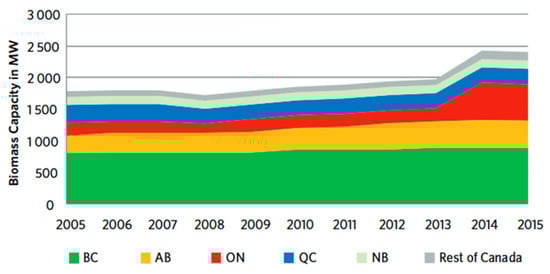
The transition from non-renewable to renewable energy sources has emerged as a pressing global issue, driven by concerns over climate change, resource depletion, and the need for sustainable development. This study compares Canada, an energy-rich nation, and Bangladesh, an energy-scarce country, to understand
[...] Read more.
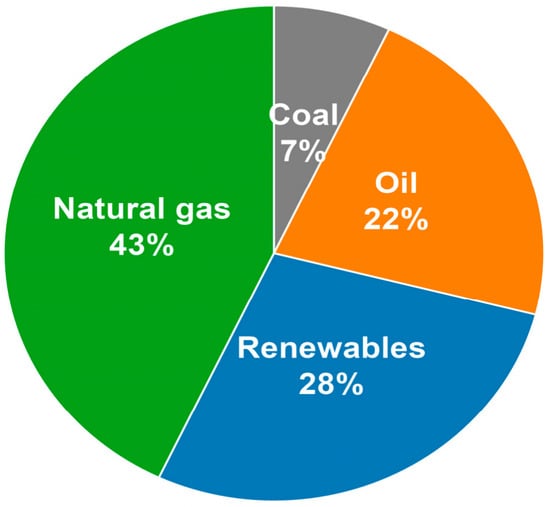
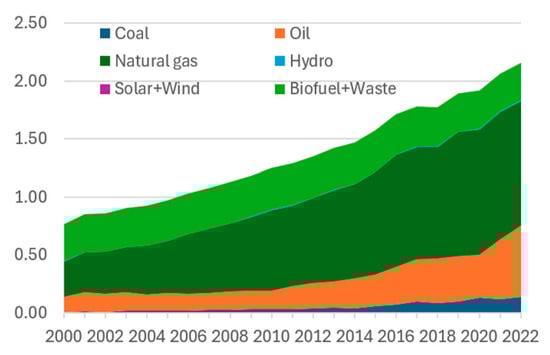
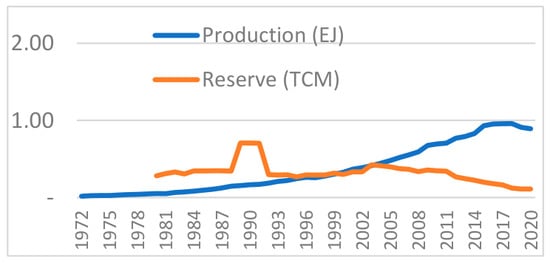
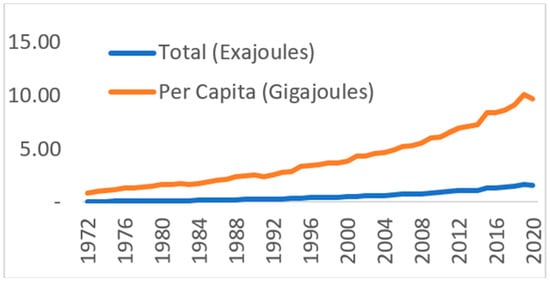
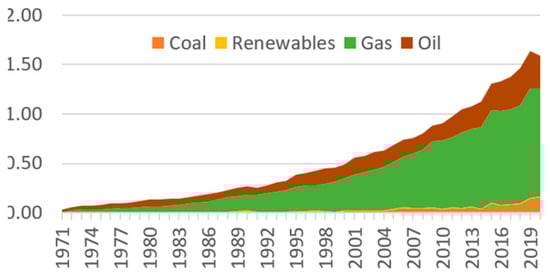
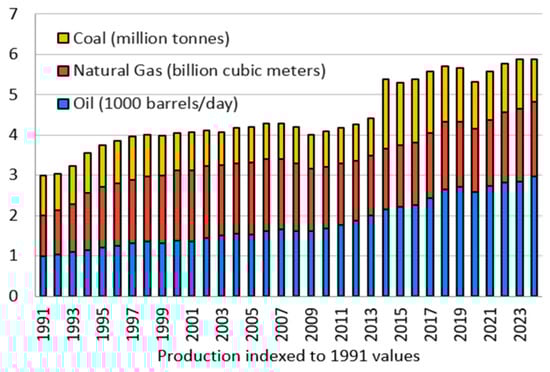
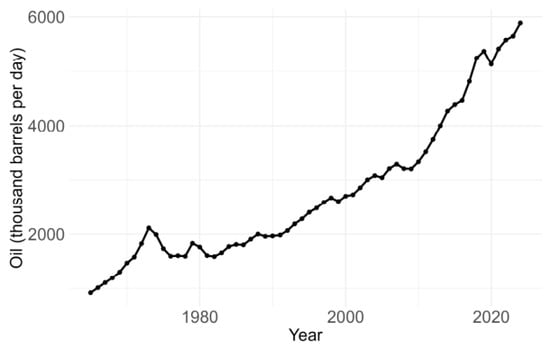
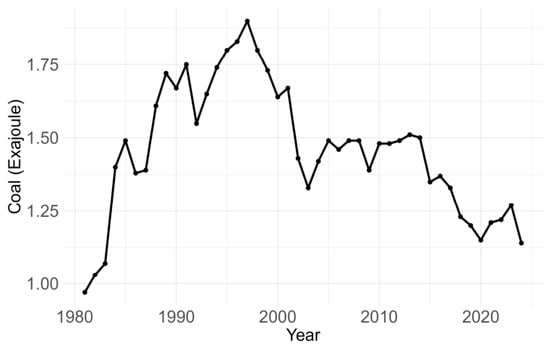
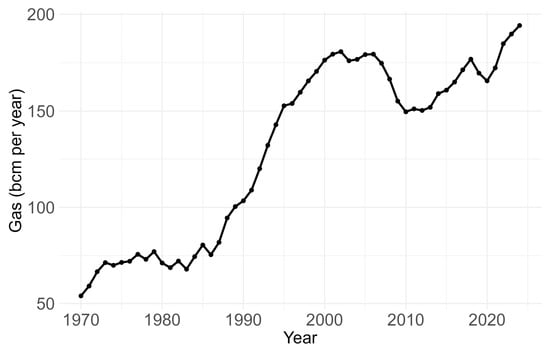
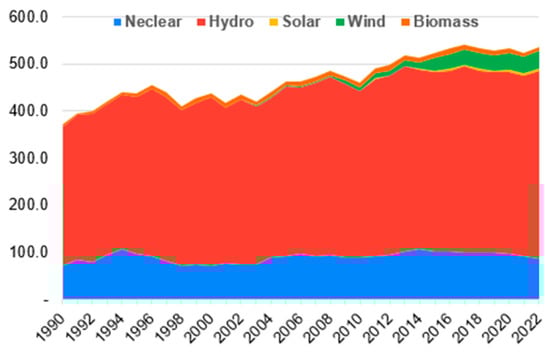
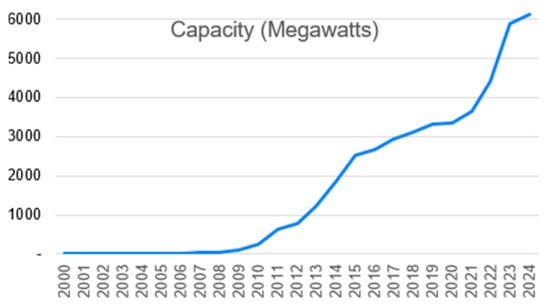
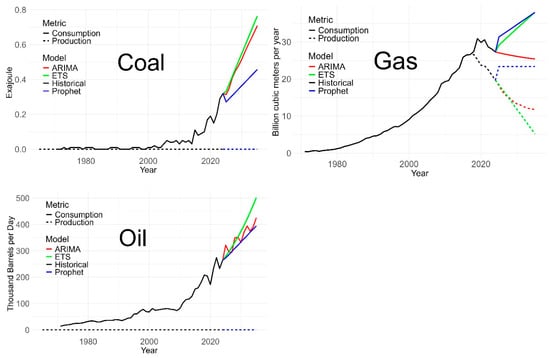
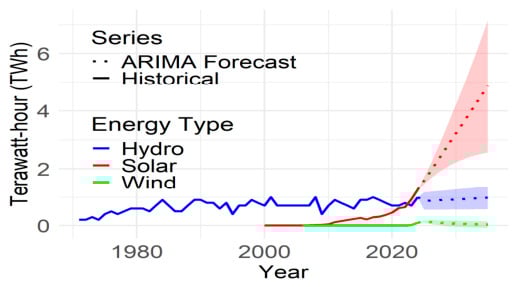
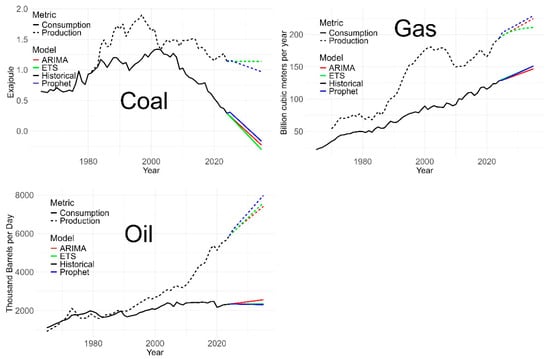
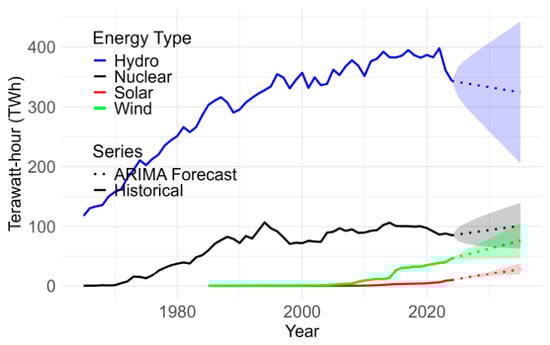
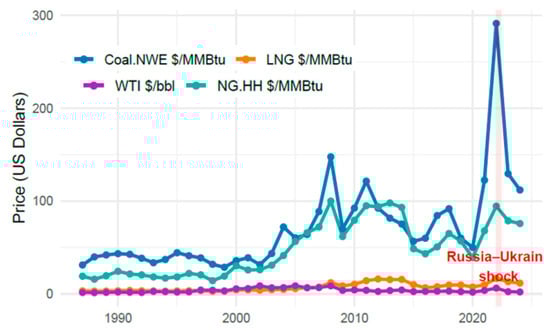
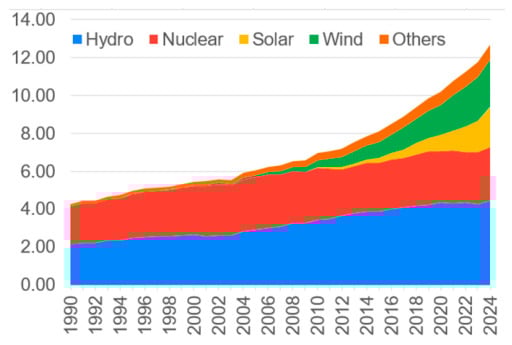
The transition from non-renewable to renewable energy sources has emerged as a pressing global issue, driven by concerns over climate change, resource depletion, and the need for sustainable development. This study compares Canada, an energy-rich nation, and Bangladesh, an energy-scarce country, to understand the structural, institutional, and market factors driving their respective renewable energy transitions. Using univariate time-series models (ARIMA, ETS, and Prophet) for energy demand forecasting and extensive literature-based policy evaluation, the paper examines trends in energy production, consumption, and trade from 1990 to 2024. Our analysis indicates that Canada’s vast reserves of both renewable and non-renewable energy sources, its diversified energy portfolio, and carbon-pricing framework support a stable decarbonization pathway, with renewables projected to account for more than 20% of total supply by 2030. However, regional disparities and political resistance from the established energy sector continue to delay transition outcomes. On the other hand, Bangladesh has limited renewable and non-renewable energy sources, with its primary energy resource being natural gas reserves. Consequently, its heavy reliance on imports (over 75% of primary energy) and institutional bottlenecks expose its energy system to commodity-price volatility, undermining energy security and slowing renewable investment. Despite these challenges, targeted solar programs and concessional financing have modestly increased the penetration of renewable energy. The analysis highlights that commodity market fluctuations, technological innovations (such as smart grids and energy storage), and market-based policy instruments critically shape each country’s transition trajectory. A coordinated policy linking market stabilization, innovation investment, and social inclusion is essential for achieving a just and secure low-carbon transition in both countries.
Full article
Open AccessArticle
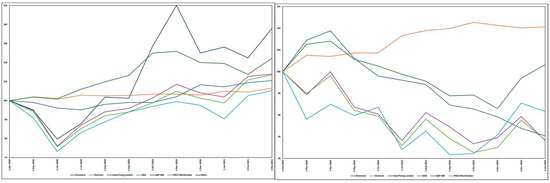
Clustering and Volatility Spillovers in Steel-Related Commodity Markets: Evidence from US Producer Prices and Global Metal Indices
by
Ana Lorena Jiménez-Preciado, Francisco Venegas-Martínez and José Álvarez-García
Commodities 2026, 5(2), 8; https://doi.org/10.3390/commodities5020008 - 1 Apr 2026
Abstract
►▼
Show Figures
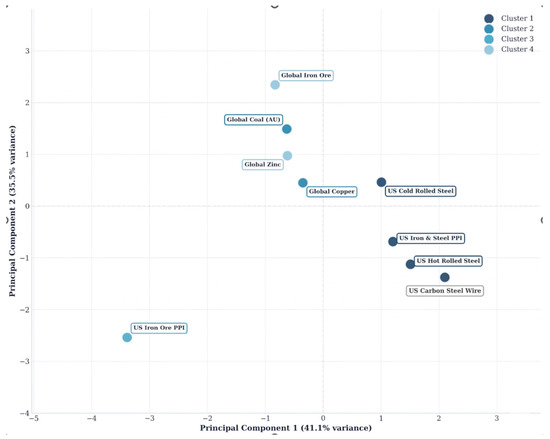
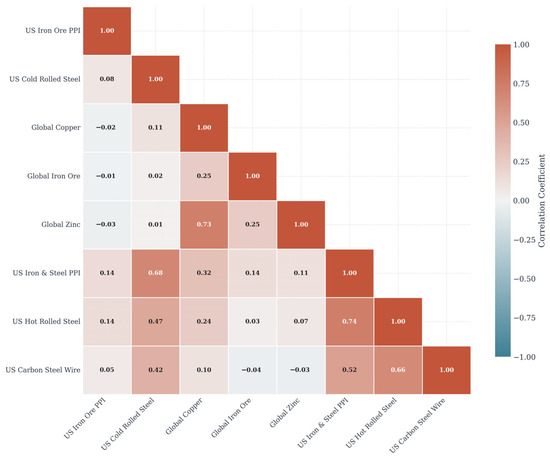
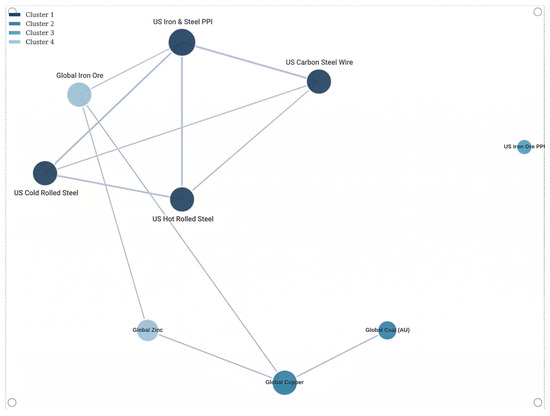
This research examines the clustering structure and volatility spillover among steel-related products in monthly data from July 2004 to September 2025. Using various clustering methods, K-means, hierarchical techniques and market network analysis with correlations, four distinct marketing clusters have been identified: (1) US
[...] Read more.
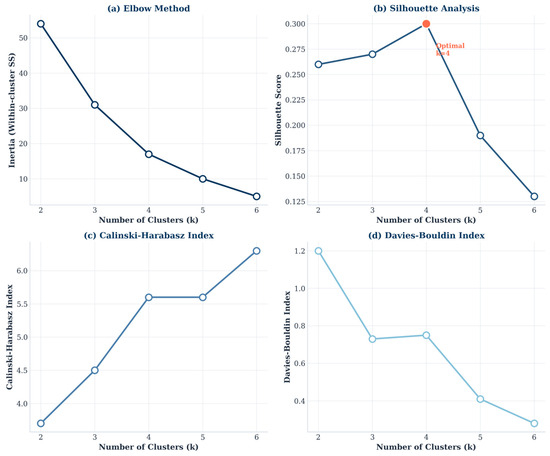
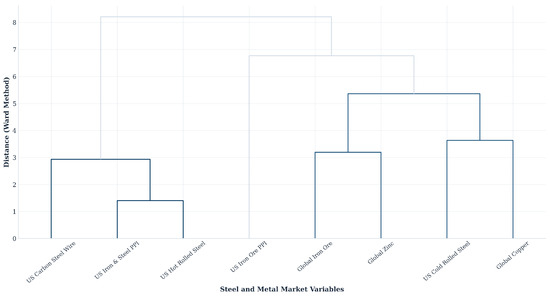
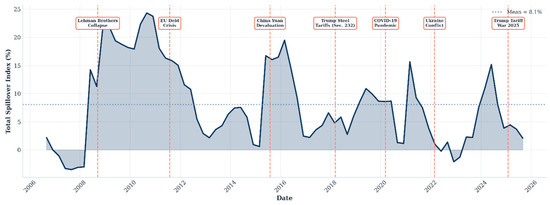
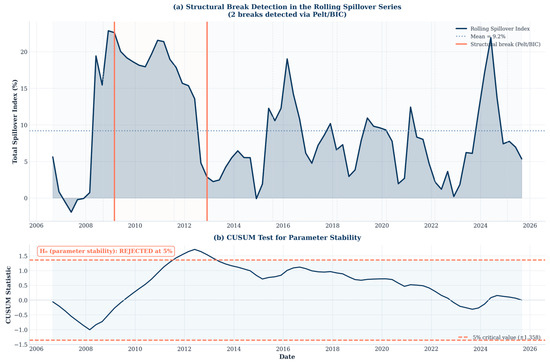
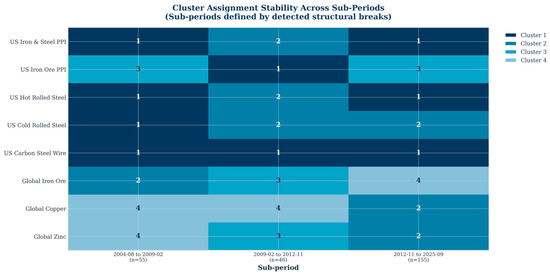
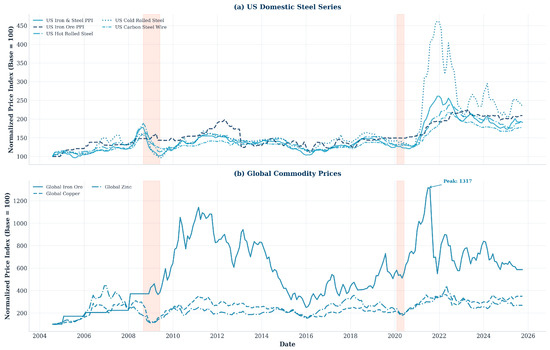
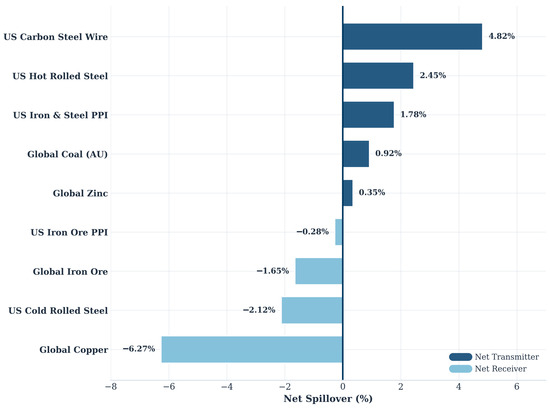
This research examines the clustering structure and volatility spillover among steel-related products in monthly data from July 2004 to September 2025. Using various clustering methods, K-means, hierarchical techniques and market network analysis with correlations, four distinct marketing clusters have been identified: (1) US (United States) steel products, (2) global cyclical raw materials, (3) US iron ore market, and (4) global base metals. The overall volatility spillover index stands at 15.39%, exhibiting significant dynamics that vary over time, driven by major economic events, including the 2008 global financial crisis, the 2015 Chinese currency devaluation, the COVID-19 outbreak, the 2022 Ukrainian conflict, and the 2025 Trump trade tariffs. The primary driver of volatility in global trade is US carbon steel wire prices, while the largest net recipient of volatility shocks is the global copper price. These findings have key implications for understanding the global interconnectedness of steel markets in the current context.
Full article

Figure 1
Open AccessReview
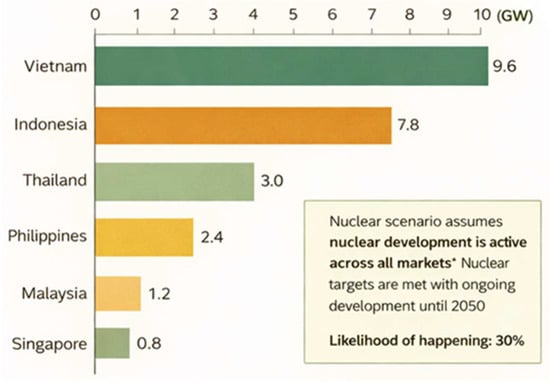
Nuclear Fuel Revival: Uranium Markets, SMRs, and Global Energy Security
by
Brenda Huerta-Rosas and Eduardo Sánchez-Ramírez
Commodities 2026, 5(1), 7; https://doi.org/10.3390/commodities5010007 - 13 Mar 2026
Abstract
►▼
Show Figures
This review examines the renewed strategic relevance of uranium within the evolving global energy system, emphasizing uranium market dynamics, emerging nuclear technologies, and geopolitical realignments. Moving beyond traditional perspectives that treat uranium primarily as a cyclical commodity or focus narrowly on reactor design,
[...] Read more.
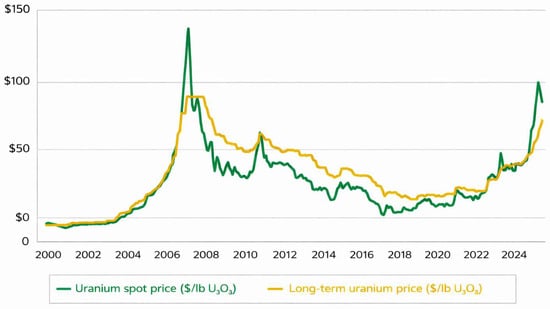
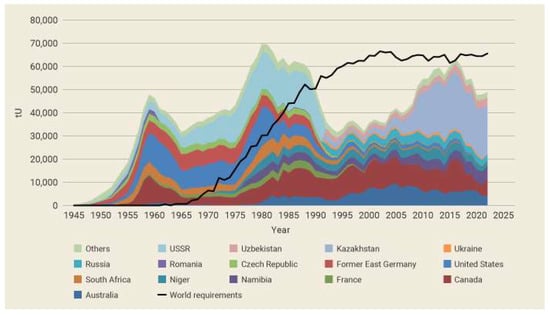
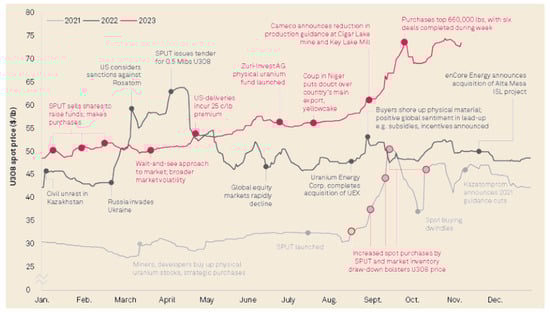
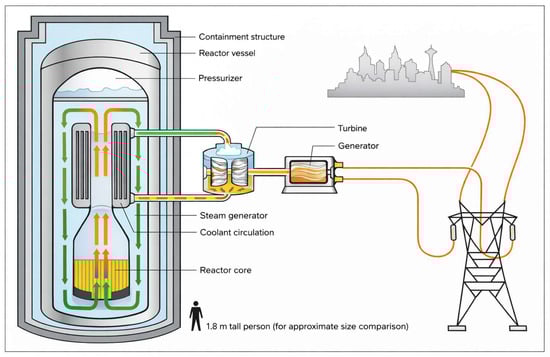
This review examines the renewed strategic relevance of uranium within the evolving global energy system, emphasizing uranium market dynamics, emerging nuclear technologies, and geopolitical realignments. Moving beyond traditional perspectives that treat uranium primarily as a cyclical commodity or focus narrowly on reactor design, the article frames uranium as a critical strategic resource at the intersection of energy security, decarbonization, and industrial transformation. The analysis integrates market fundamentals with technological developments, particularly small modular reactors (SMRs) and advanced high-temperature reactor systems, and regional policy strategies to provide a holistic perspective largely absent from the existing literature. Quantitative evidence indicates a structurally tightening uranium market, with global reactor demand of approximately 67,500 tU per year and mine production historically meeting only 74–90% of annual requirements. Uranium prices have rebounded from below $20 lb−1 U3O8 in 2016 to above $80 lb−1 by late 2023, reflecting supply concentration, long development timelines for new mines, and renewed political commitments to nuclear energy. Demand projections suggest an increase of around 28% by 2030 and the potential for a doubling by mid-century under high-nuclear deployment scenarios. From a technological perspective, while SMRs and advanced reactors may increase uranium consumption per unit of electricity, they substantially expand nuclear energy deployment into new domains, including remote power systems, industrial heat applications, and large-scale low-carbon hydrogen production. Overall, the study highlights a qualitative shift in uranium’s role, positioning it as both a foundational component and a key enabler of integrated low-carbon energy systems spanning electricity, heat, and hydrogen production.
Full article

Figure 1
Open AccessArticle
Is Plasma Treatment of Commodity Lettuce Seeds Worth It? Economic Impacts and Yield Study in Indoor Vertical Farming Testing Non-Thermal Plasmas
by
Nima Asgari, Nan Zou, Ying Zheng and Joshua M. Pearce
Commodities 2026, 5(1), 6; https://doi.org/10.3390/commodities5010006 - 12 Mar 2026
Abstract
►▼
Show Figures
Agricultural seeds are sold as commodities yet seed quality can be non-uniform. Despite the extensive literature showing that plasma treatments of seeds provides advantages for many crops, lettuce studies, particularly in indoor farming systems, are limited. This study provides a systematic investigation of
[...] Read more.
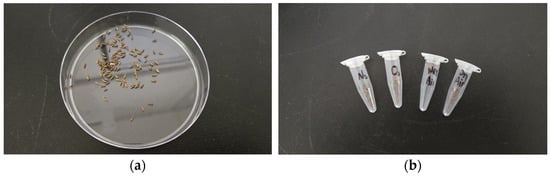
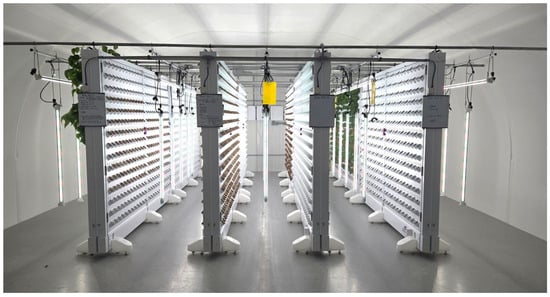
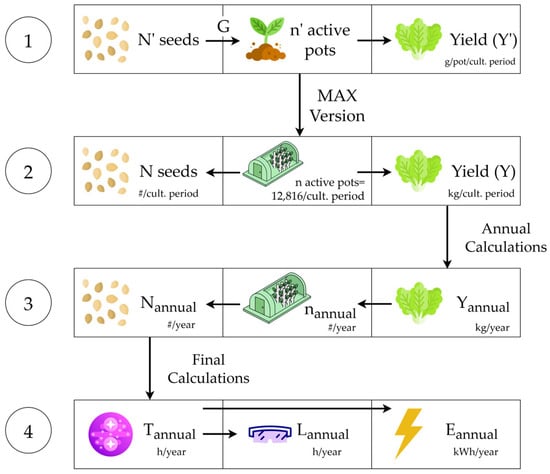
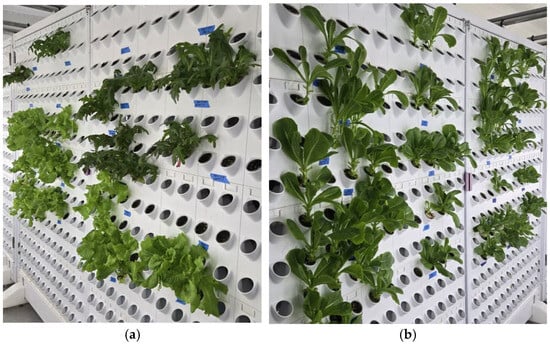
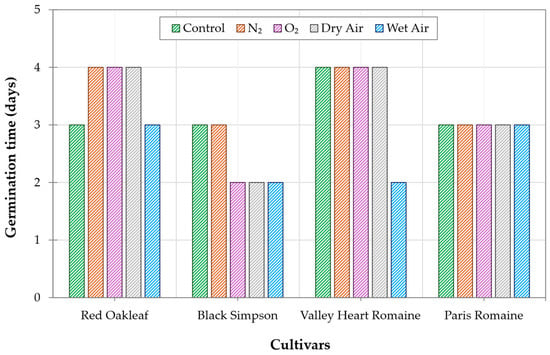
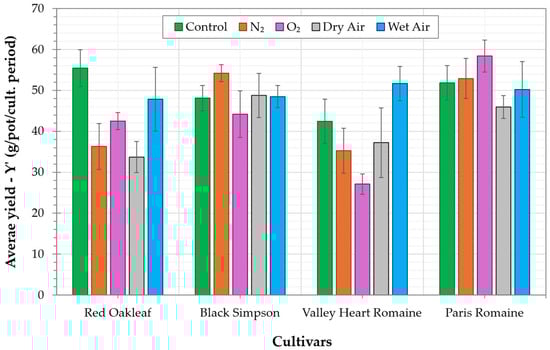
Agricultural seeds are sold as commodities yet seed quality can be non-uniform. Despite the extensive literature showing that plasma treatments of seeds provides advantages for many crops, lettuce studies, particularly in indoor farming systems, are limited. This study provides a systematic investigation of the impacts of non-thermal plasma treatments with various feed gases (N2, O2, dry air, and wet air) on the germination and growth characteristics of four lettuce cultivars (Red Oakleaf (RO), Black Simpson (BS), Valley Heart Romaine (VHR), and Paris Romaine (PR)) under controlled cultivation conditions in an agrivoltaic agrotunnel. Although the germination time was not conclusively affected by the treatments, the results show a complex interaction between germination rate and yield across the different cultivars and plasma treatments. Except for PR seeds (77.8% vs. 65.8% control), wet air plasma treatments increased germination rates by 18.7–100% over controls for all other cultivars. In yield analysis, wet air treatment had the strongest effect, especially for VHR (51.7 vs. 42.5 g/pot). Treatments did not notably affect RO. For BS, N2 treatment gave the highest increase (54.2 vs. 48.1 g/pot), while PR responded best to O2 treatment (58.4 vs. 51.8 g/pot). The energy consumption of plasma treatments was negligible for all treatments, while labor costs for small batches of seeds accounted for the largest share of secondary operating costs (839, 622, and 659 h/year, respectively for BS, VHR, and PR). Despite additional expenses, including labor, O&M, and degradation costs, the reduced seed requirements from higher germination rates and higher yield increased net profit by 12.0% compared to untreated cultivation in the most impacted (Valley Heart Romaine) lettuce. There is an opportunity for further cost optimization of the non-thermal plasma treatment for each type of lettuce seed.
Full article

Figure 1
Open AccessArticle
Trade Trends and Price Determination in Mexico’s Domestic Frozen Octopus Market: Challenges in Sustaining Its Supply
by
José A. Duarte, Álvaro Hernández-Flores and Francisco Iván Hernández-Cuevas
Commodities 2026, 5(1), 5; https://doi.org/10.3390/commodities5010005 - 24 Feb 2026
Abstract
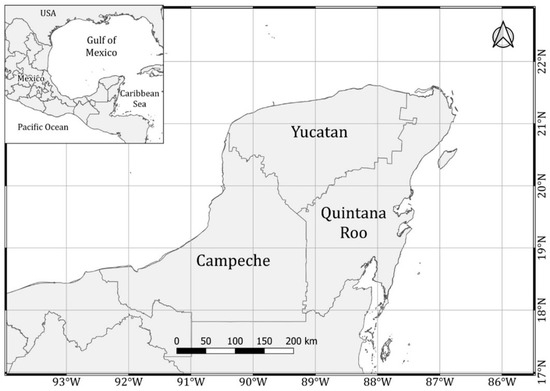
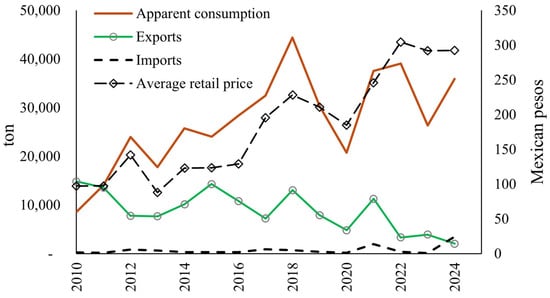
Mexican octopus fisheries play an important role in both domestic and international seafood markets, yet little is known about the determinants of retail price in the national frozen octopus sector. This study examines how trade flows and domestic demand interact to shape price
[...] Read more.
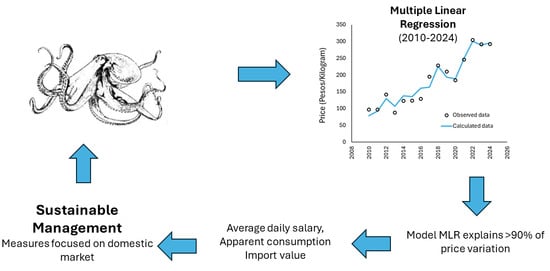
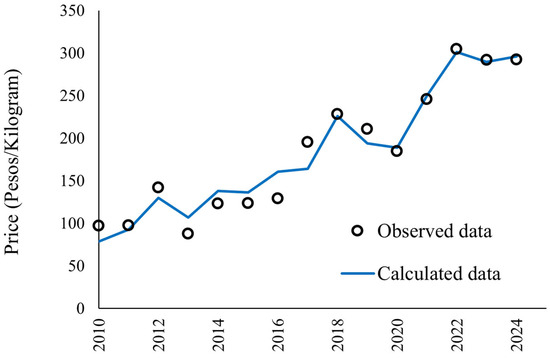
Mexican octopus fisheries play an important role in both domestic and international seafood markets, yet little is known about the determinants of retail price in the national frozen octopus sector. This study examines how trade flows and domestic demand interact to shape price dynamics, providing insights into sustainability challenges. Multiple linear regression was employed to test the influence of economic, production, and trade variables on retail prices, based on annual data from 2010 to 2024. The best-performing model identified average daily salary, apparent consumption and import value as significant determinants, explaining more than 90% of the observed variation. Results show that rising salaries and greater domestic consumption are exerting upward pressure on prices, while imports, although limited, contribute to price moderation. Export values have declined, signaling a weakening role of the international markets. These findings suggest that domestic demand is becoming increasingly important for sustaining value in the sector, but this shift could intensify fishing pressure on wild stocks. Strengthening compliance with management measures and aligning policies with domestic market realities are crucial to ensuring long-term sustainability of the Mexican octopus supply.
Full article
(This article belongs to the Special Issue Trends and Changes in Agricultural Commodities Markets)
►▼
Show Figures

Graphical abstract
Open AccessArticle
Do Cash Transfers Improve Dietary Diversity in Zambia?
by
Belinda Tshiula, Waldo Krugell, Johann Jerling and Christine Taljaard-Krugell
Commodities 2026, 5(1), 4; https://doi.org/10.3390/commodities5010004 - 4 Feb 2026
Abstract
This paper investigates whether participation in Zambia’s social cash transfer programme (SCTP) improves household dietary diversity among ultra-poor rural households. While cash transfers are widely implemented across sub-Saharan Africa as social protection measures, empirical evidence regarding their impact on nutritional status remains mixed.
[...] Read more.
This paper investigates whether participation in Zambia’s social cash transfer programme (SCTP) improves household dietary diversity among ultra-poor rural households. While cash transfers are widely implemented across sub-Saharan Africa as social protection measures, empirical evidence regarding their impact on nutritional status remains mixed. This study focuses on dietary diversity, a proxy for nutrition quality, and uses data from the 2015 Rural Agricultural Livelihood Survey (RALS). The analysis employs propensity score matching to control for demographic differences between recipient and non-recipient households, followed by a regression analysis to examine the association between SCTP participation and dietary diversity scores. The findings reveal no statistically significant association between receiving social cash transfers and higher household dietary diversity. In contrast, positive predictors of dietary diversity included household remittances, own production of animal-source foods, and maize sales. Notably, households that relied on foraging exhibited significantly lower dietary diversity, suggesting foraging may be a coping strategy among food-insecure households. These results imply that while the SCTP may enhance household income stability, it does not necessarily translate into improved diet quality. This study contributes to the ongoing policy debate on the effectiveness of cash-based interventions in improving nutrition outcomes. It highlights the need to complement cash transfers with interventions that support food production and access, particularly in rural settings where market and infrastructure limitations persist.
Full article
(This article belongs to the Special Issue Trends and Changes in Agricultural Commodities Markets)
Open AccessArticle
Macroeconomic Drivers of Poultry Price Volatility in Nigeria: A Study of Inflation and Exchange Rate Dynamics
by
Prosper E. Edoja, Rosemary N. Okoh, Emmanuella O. Udueni and Goodness C. Aye
Commodities 2026, 5(1), 3; https://doi.org/10.3390/commodities5010003 - 15 Jan 2026
Cited by 1
Abstract
►▼
Show Figures
Poultry price instability remains a critical challenge for food security in Nigeria. This study examines the relationship between poultry price volatility (PPV), exchange rate (LEXR), and inflation (LCPI) from 1991 to 2024 using the Autoregressive Distributed Lag (ARDL) model. Descriptive results show that
[...] Read more.
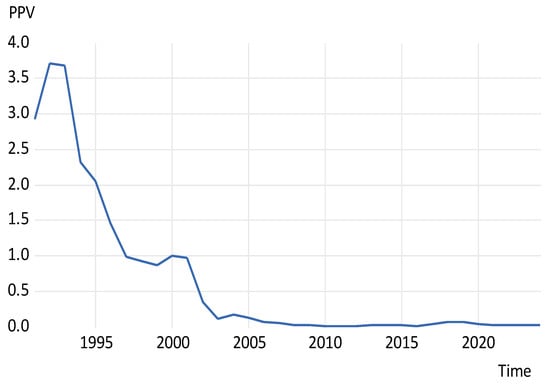
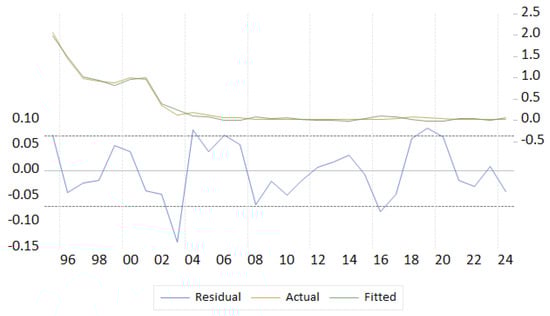
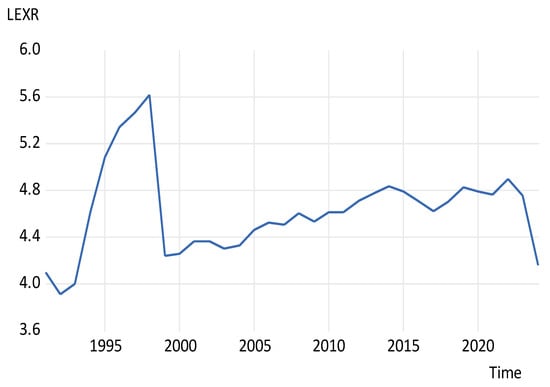
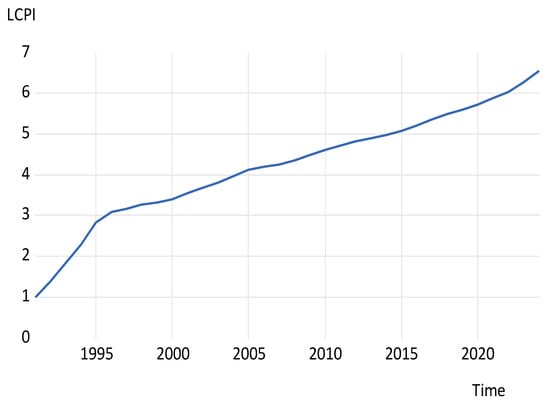
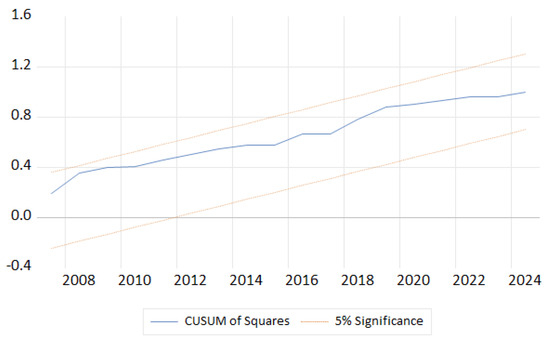
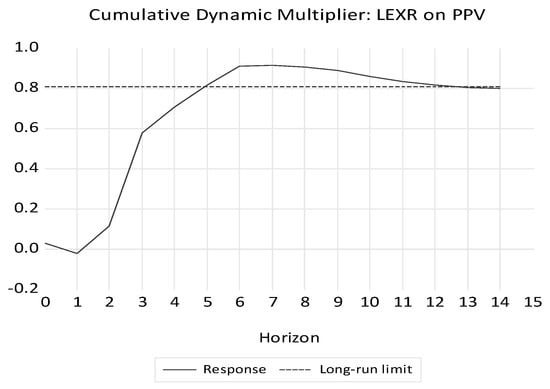
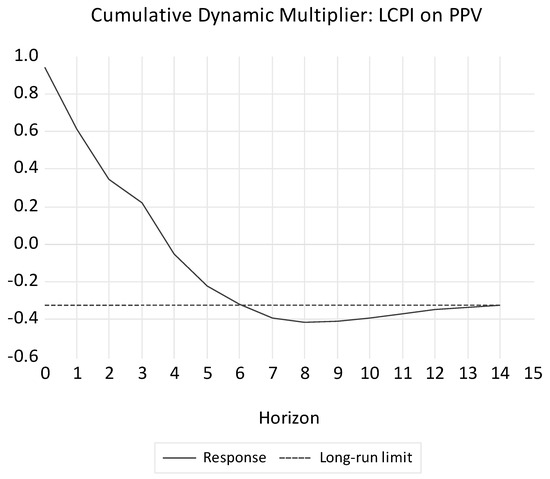
Poultry price instability remains a critical challenge for food security in Nigeria. This study examines the relationship between poultry price volatility (PPV), exchange rate (LEXR), and inflation (LCPI) from 1991 to 2024 using the Autoregressive Distributed Lag (ARDL) model. Descriptive results show that PPV had the highest variability (mean 0.65; standard deviation 1.07), while LEXR and LCPI were relatively more stable. Trend analysis indicates that poultry price volatility was high in the early 1990s but declined steadily after 2005, coinciding with persistent inflation and cycles of exchange rate depreciation and appreciation.Unit root and bounds tests confirm that the variables werecointegrated, with an F-statistic of 4.50 exceeding the upper bound at 5 percent significance. The long-run estimates reveal that inflation hada negative effect on poultry price volatility (−0.109), while the exchange rate exerteda positive effect (0.2702). The errorcorrection term (−0.336) indicates a 33.6 percent adjustment to equilibrium each period. In the short run, changes in inflation (0.942) and lagged exchange rate variations significantly influenced poultry price volatility. These findings underscore the importance of stabilizing exchange rates and controlling inflation to reduce price volatility in Nigeria’s poultry sector.
Full article

Figure 1
Open AccessArticle
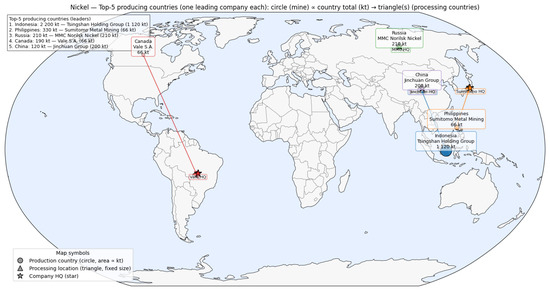
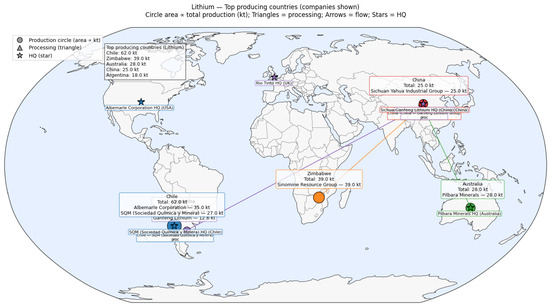
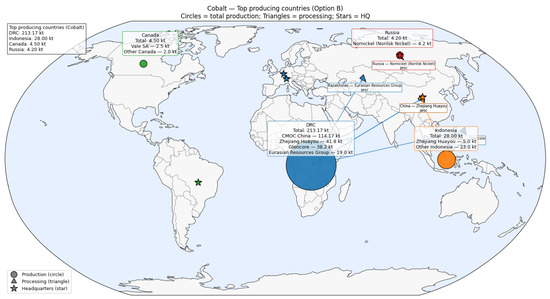
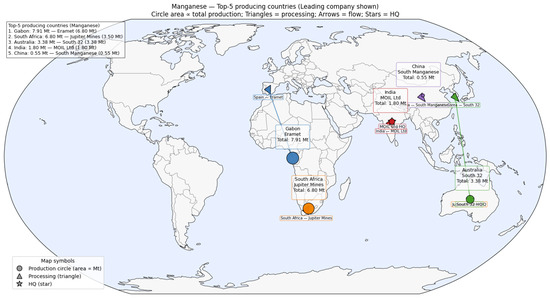
Mapping the Supply Chain of Lithium-Ion Battery Metals from Mine to Primary Processing by Country and Corporation
by
Ramsha Akhter, Sisira Reddy Palli, Mithilesh Walanjuwani and Erick C. Jones, Jr.
Commodities 2026, 5(1), 2; https://doi.org/10.3390/commodities5010002 - 13 Jan 2026
Cited by 2
Abstract
►▼
Show Figures
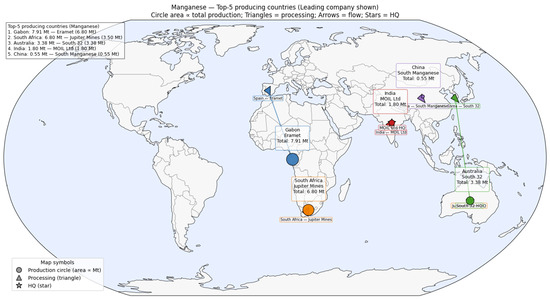
Global critical mineral production patterns differ markedly across the metals needed for advanced energy technologies. This study examines the extraction and processing landscape, in the year 2024, of six key commodities—lithium, cobalt, aluminum, nickel, manganese, and copper—to identify who the major players (countries
[...] Read more.
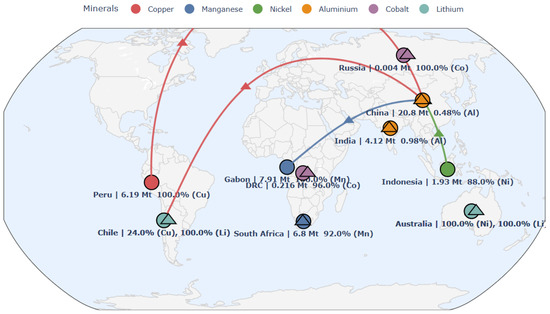
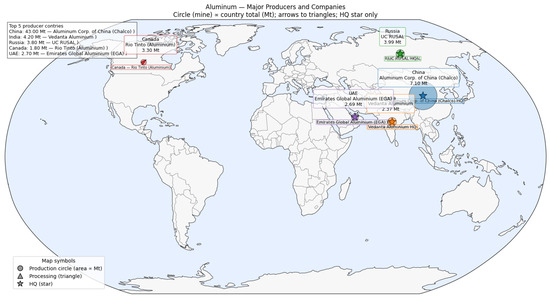
Global critical mineral production patterns differ markedly across the metals needed for advanced energy technologies. This study examines the extraction and processing landscape, in the year 2024, of six key commodities—lithium, cobalt, aluminum, nickel, manganese, and copper—to identify who the major players (countries and corporations) are in the critical mineral space and to understand what they are mining, where they are mining, and where are they sending their ore to be processed. This study aims to provide a snapshot of the critical mineral supply chain that serves as a useful resource for researchers and policymakers seeking to understand and improve the critical mineral supply chain. We analyze company financial filings, government datasets, and other public and proprietary sources for the year 2024. Then, we calculate production volumes and identify geographic and corporate concentration. The results show that copper and aluminum production and processing are relatively diverse, while lithium and cobalt extraction and processing are highly concentrated among a few countries and dominant firms. Nickel and manganese occupy an intermediate position, displaying moderate diversity with emerging signs of consolidation.
Full article

Figure 1
Open AccessArticle
Revisiting Boi Gordo Index Futures: Long-Run Daily Data, Structural Breaks, and a Comparative Evaluation of Classical and Machine Learning Time-Series Models
by
Renata G. Alcoforado, Hudo L. S. G. Alcoforado, Alfredo D. Egídio dos Reis and Pedro A. d. L. Tenório
Commodities 2026, 5(1), 1; https://doi.org/10.3390/commodities5010001 - 22 Dec 2025
Abstract
►▼
Show Figures
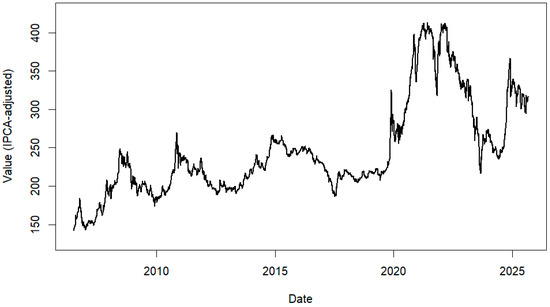
We study one of the world’s largest cattle markets by revisiting and extending previous work on the forecasting of Brazil’s Boi Gordo Index (BGI). Using an updated daily dataset (July 2006–September 2025, inflation-adjusted), we evaluate classical and machine learning (ML) approaches for price
[...] Read more.
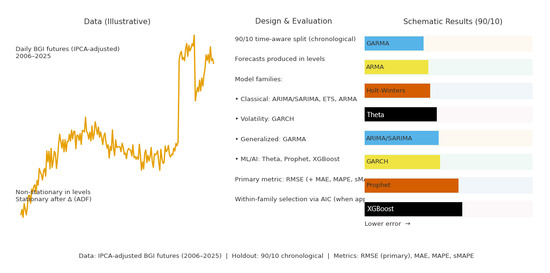
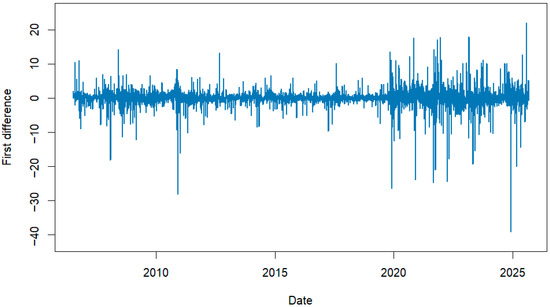
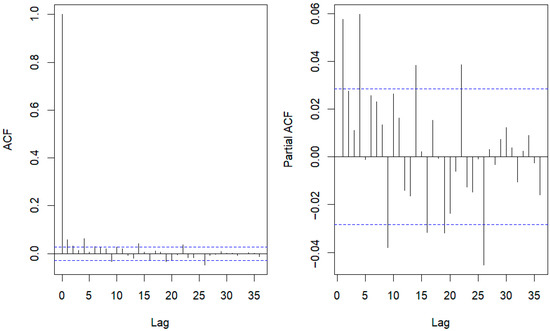
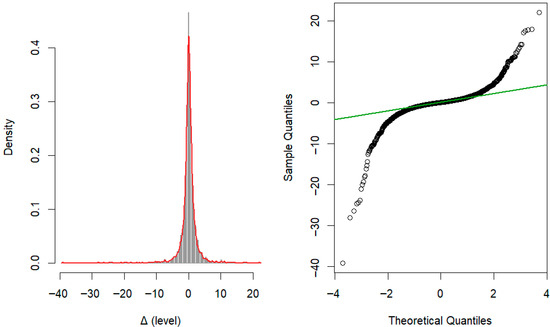
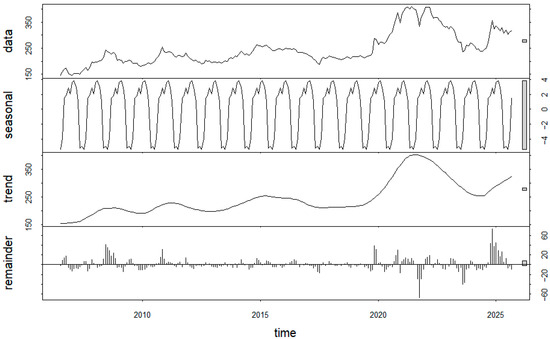
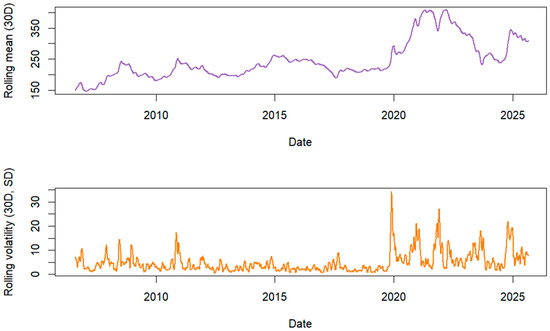
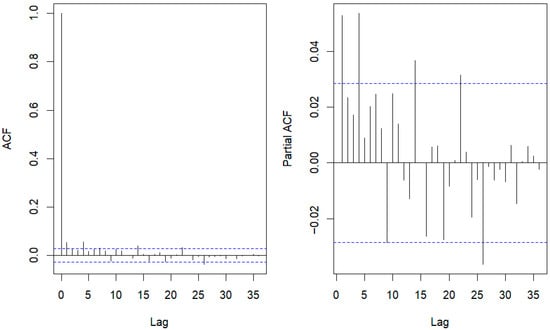
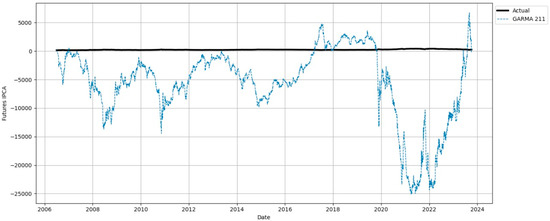
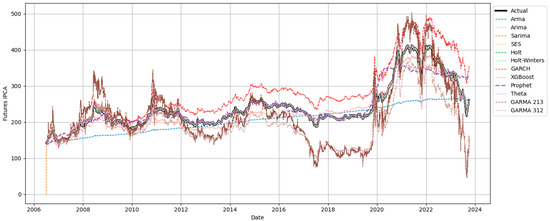
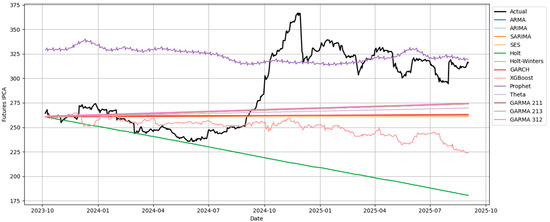
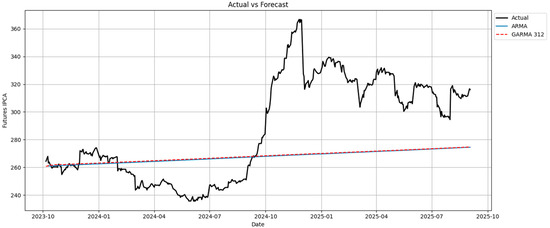
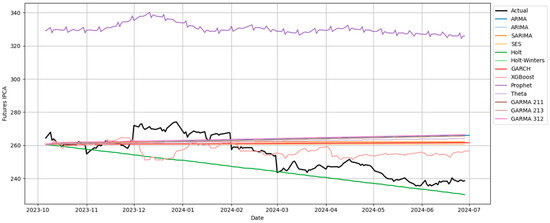
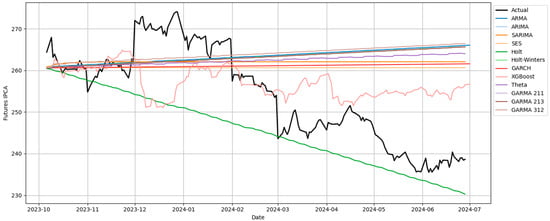
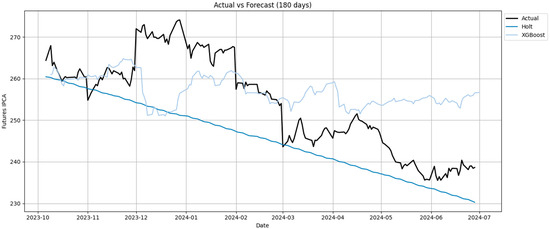
We study one of the world’s largest cattle markets by revisiting and extending previous work on the forecasting of Brazil’s Boi Gordo Index (BGI). Using an updated daily dataset (July 2006–September 2025, inflation-adjusted), we evaluate classical and machine learning (ML) approaches for price prediction. Methods include Exponential Smoothing (Simple, Holt, and Holt–Winters), ARMA/ARIMA/SARIMA, GARMA variants, GARCH, Theta, Prophet, and XGBoost; models are compared under a strictly chronological 90/10 holdout (~476 test days) using RMSE, MAE, and MSE, with the AIC guiding within-family selection. Results show that, for the full out-of-sample window, GARMA delivers the best overall accuracy, with ARMA and Holt–Winters close behind, while Prophet and XGBoost perform comparatively worse in this volatile setting. Performance is horizon-dependent: in the first 180 test days, prior to the late-2024 level shift, Holt attains the lowest RMSE/MSE, and XGBoost achieves the lowest MAE. No method anticipates the October–November 2024 exogenous jump and subsequent correction, highlighting the difficulty of structural breaks and the need for timely re-specification. We conclude that GARMA is a robust default for long, turbulent windows, whereas smoothing and ML methods can be competitive on shorter horizons. These findings inform risk measurement and risk mitigation strategies in Brazil’s cattle futures market.
Full article

Graphical abstract
Open AccessArticle
Can Agriculture Benefit from a Potential Free Trade Agreement Between SACU and the US?
by
Tiroyaone Ambrose Sirang, Waldo Krugell, Lorainne Ferreira and Riaan Rossouw
Commodities 2025, 4(4), 30; https://doi.org/10.3390/commodities4040030 - 16 Dec 2025
Abstract
The Trump administration signalled a shift toward protectionism in U.S. trade policy, imposing tariffs on imports from both strategic partners and competitors, which generated renewed uncertainty in international trade relations and the future of existing frameworks such as the African Growth and Opportunity
[...] Read more.
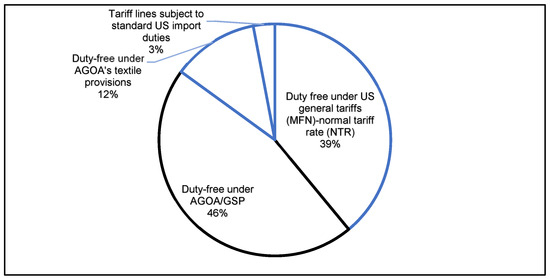
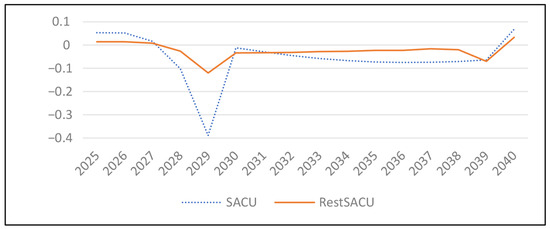
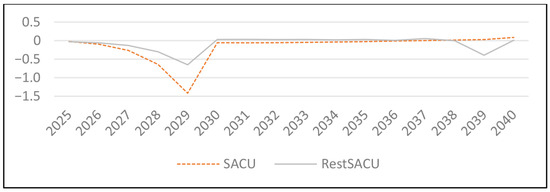
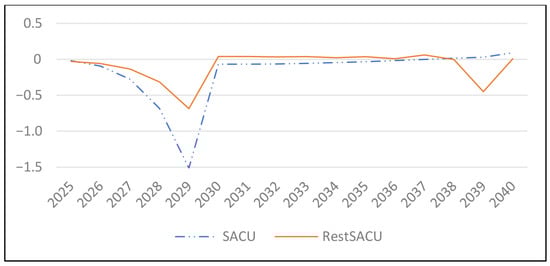
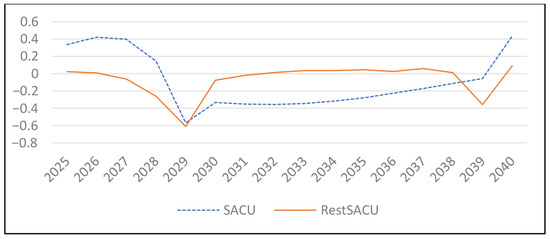
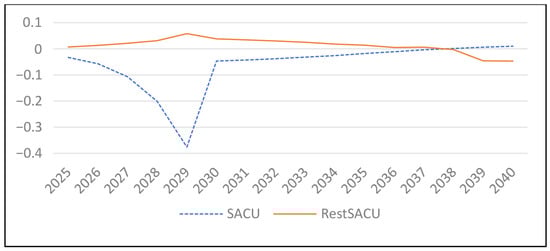
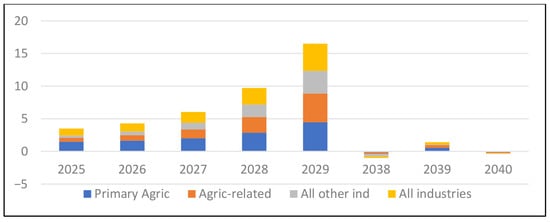
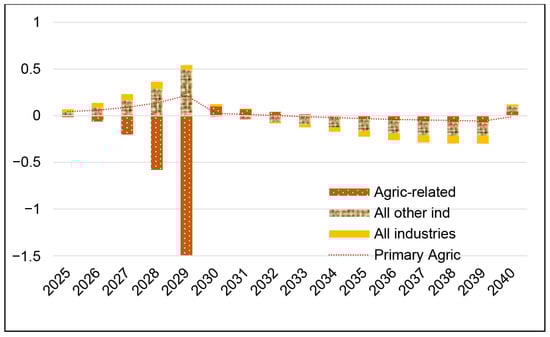
The Trump administration signalled a shift toward protectionism in U.S. trade policy, imposing tariffs on imports from both strategic partners and competitors, which generated renewed uncertainty in international trade relations and the future of existing frameworks such as the African Growth and Opportunity Act (AGOA) and the Generalised System of Preferences (GSP). Earlier analysis has shown that a Free Trade Agreement (FTA) between the Southern African Customs Union (SACU) and the United States can be trade-creating and lead to improved macroeconomic outcomes in SACU countries. However, these positive effects decline over time, with varying impacts across different industries, influenced by initial tariff levels and export orientation relative to the US. This paper examines whether there are economic and strategic incentives for SACU to negotiate a more beneficial agreement than a simple across-the-board elimination of ad valorem import tariffs. Using a dynamic computable general equilibrium (CGE) model, the paper examines the outcomes if cereals, poultry, dairy products, red meat, and sugar products—often classified as sensitive due to their labour intensity, food security implications, and exposure to import competition—were to retain some level of protection under a SACU–US Free Trade Agreement. The results suggest that while the FTA boosts key macroeconomic indicators in the short run, gains taper off over time. Crucially, real wages and employment remain stagnant, and terms of trade deteriorate, raising questions about the inclusivity and sustainability of such a deal. Shielding vulnerable sectors initially enhances SACU’s exports and supports some industry growth, particularly in agriculture. However, without broader reforms and export diversification, long-term competitiveness remains weak. A nuanced FTA design, combined with structural support policies, is essential to unlock lasting and inclusive trade benefits.
Full article
(This article belongs to the Special Issue Trends and Changes in Agricultural Commodities Markets)
►▼
Show Figures

Figure 1
Open AccessArticle
Volatility Spillovers and Market Integration in South Africa’s Fresh Produce Markets
by
David Kalima, Mariëtte Geyser and Andrea Saayman
Commodities 2025, 4(4), 29; https://doi.org/10.3390/commodities4040029 - 4 Dec 2025
Abstract
Price volatility in the South African fresh produce market poses significant risks to the entire value chain. This study examines the extent of price volatility and spillover effects in these markets to improve price risk management and enhance market stability. Using weekly price
[...] Read more.
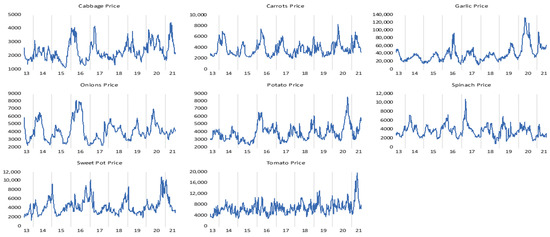
Price volatility in the South African fresh produce market poses significant risks to the entire value chain. This study examines the extent of price volatility and spillover effects in these markets to improve price risk management and enhance market stability. Using weekly price data for eight major vegetables (cabbages, carrots, garlic, onions, potatoes, sweet potatoes, spinach, and tomatoes) collected from 19 regional fresh produce markets, volatility patterns were initially assessed with descriptive statistics. Time-varying volatility persistence was modelled using ARCH and GARCH frameworks. The DCC-GARCH framework was used to evaluate spillover effects between markets, and cointegration analysis is employed to determine both short- and long-run interdependencies. The results confirm the existence of spillover effects and patterns of price volatility in the fresh produce markets. We found volatility spillovers between key regional markets. For example, Johannesburg and Tshwane fresh produce markets (large central markets) transmit to several smaller markets, as indicated by significant DCC-GARCH spillover coefficients. Cointegration results show the partial integration of fresh produce markets, suggesting that price movements and volatility are interconnected across regions. This empirical result underscores the importance of understanding price risk management strategies in fresh produce markets and helps value chain decision makers better understand, anticipate, or test the possible effects of price volatility in fresh produce markets at any given time. Policy makers and other stakeholders in the value chain are equipped with knowledge of how best to serve society.
Full article
(This article belongs to the Special Issue Trends and Changes in Agricultural Commodities Markets)
►▼
Show Figures

Figure 1
Open AccessArticle
The Impact of Geopolitical Risk on the Volatility of Wheat Futures: A Quantile ARDL Approach
by
Roland Amagbo, Hélyette Geman and Ilaria Peri
Commodities 2025, 4(4), 28; https://doi.org/10.3390/commodities4040028 - 11 Nov 2025
Cited by 1
Abstract
►▼
Show Figures
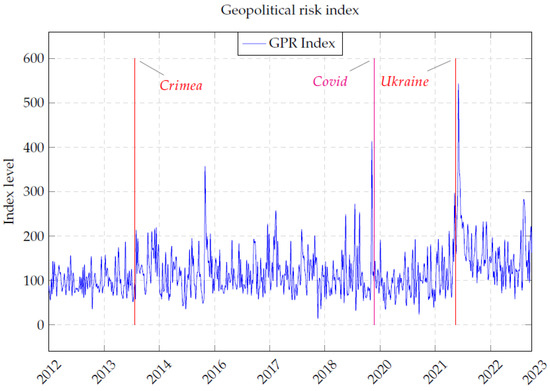
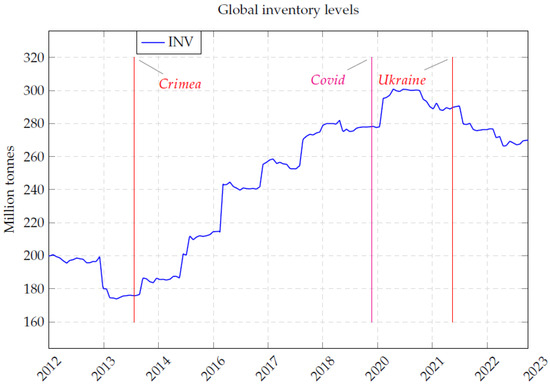
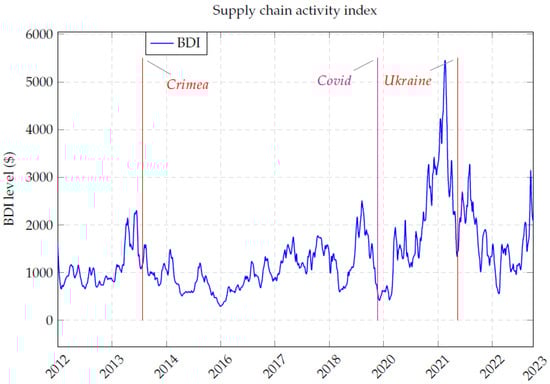
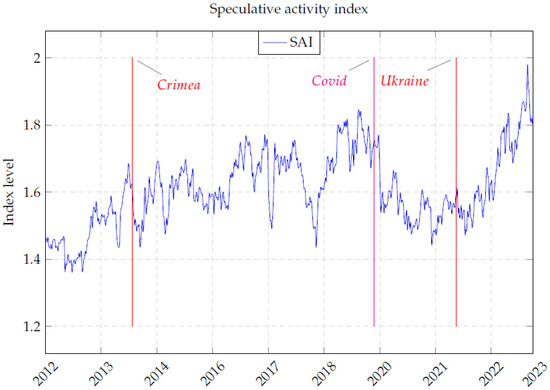
This study looks at the impact of geopolitical risk on the volatility of wheat futures returns over the period 2012–2023, while controlling for inventories, shipping rates, and speculative activity. Using the volatility of CBOT first nearby futures returns, we apply a quantile regression
[...] Read more.
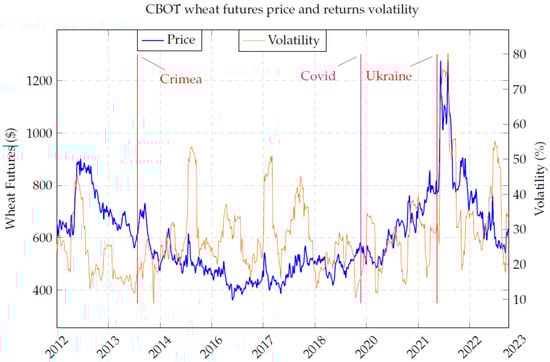
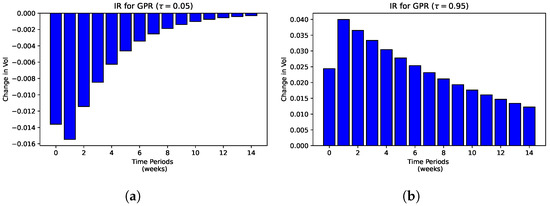
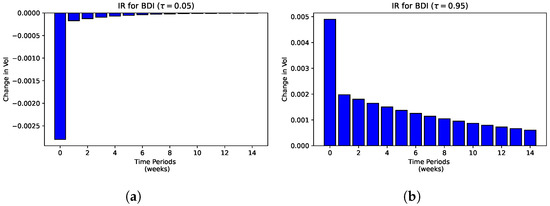
This study looks at the impact of geopolitical risk on the volatility of wheat futures returns over the period 2012–2023, while controlling for inventories, shipping rates, and speculative activity. Using the volatility of CBOT first nearby futures returns, we apply a quantile regression approach to assess the impact of the variables on different parts of the volatility distribution. More specifically, we adopt the Quantile Autoregressive Distributed Lag (QARDL) model, which allows for examining the dynamic short- and long-run effects. We find that geopolitical risk has a non-linear, large positive effect on the top quartile of the distribution of wheat futures returns. We also show that the response of the volatility of wheat futures to shocks in the control variables is mostly non-linear across the conditional quantiles, significant in the tails and not around the median.
Full article

Figure 1
Open AccessArticle
Green Hydrogen Market and Green Cryptocurrencies: A Dynamic Correlation Analysis
by
Eder J. A. L. Pereira, Thanmillys Nadhynne de Lima da Conceição and Emanuel Cruz da Lima
Commodities 2025, 4(4), 27; https://doi.org/10.3390/commodities4040027 - 4 Nov 2025
Abstract
►▼
Show Figures
The urgent need to mitigate climate change has elevated green hydrogen as a sustainable alternative to fossil fuels, while green cryptocurrencies have emerged to address the environmental concerns of traditional cryptocurrency mining. This study investigates the dynamic correlation between the green hydrogen market
[...] Read more.
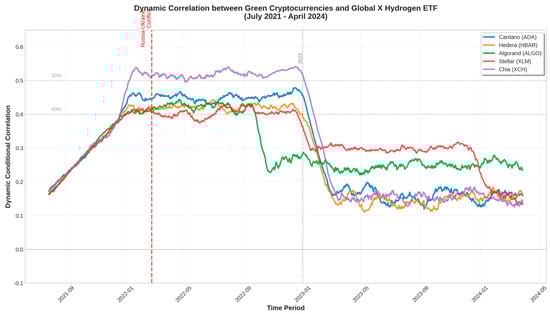
The urgent need to mitigate climate change has elevated green hydrogen as a sustainable alternative to fossil fuels, while green cryptocurrencies have emerged to address the environmental concerns of traditional cryptocurrency mining. This study investigates the dynamic correlation between the green hydrogen market and selected green cryptocurrencies (Cardano, Stellar, Hedera, Algorand, and Chia) from July 2021 to April 2024, utilizing the Dynamic Conditional Correlation GARCH (DCC-GARCH) model with robustness checks using EGARCH and GJR-GARCH specifications. Our findings reveal significant correlations, with peaks reaching up to 50% in 2022, a period likely influenced by the Russia-Ukraine conflict. Subsequently, a decline in these correlations was observed in 2023. These results underscore the interconnectedness of sustainability-driven markets, suggesting potential contagion effects during periods of global instability. The high persistence of correlation shocks (α + β values approaching unity) indicates that correlation regimes tend to be long- lasting, with important implications for portfolio diversification and risk management strategies. Robustness checks using EGARCH and GJR-GARCH specifications confirmed qualitatively similar patterns, reinforcing the validity of our findings into the evolving landscape of green finance and energy.
Full article

Figure 1
Open AccessArticle
Industrial Bio-Inputs for Commodity Farming: An Ongoing Revolution in Brazil’s Agriculture
by
Gabriel da Silva Medina and Nicolau Brito da Cunha
Commodities 2025, 4(4), 26; https://doi.org/10.3390/commodities4040026 - 3 Nov 2025
Abstract
►▼
Show Figures
Industrial bio-inputs can improve commodity farming by replacing the use of agrochemicals. To assess the potential of agricultural bio-inputs to contribute to Brazil’s agro-industrial growth, we analyzed the market share held by domestic companies and the local market created by farmers who adopt
[...] Read more.
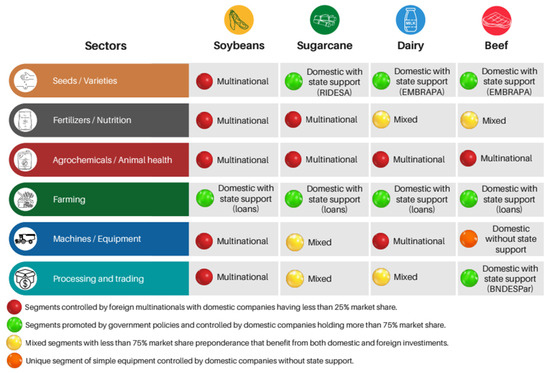
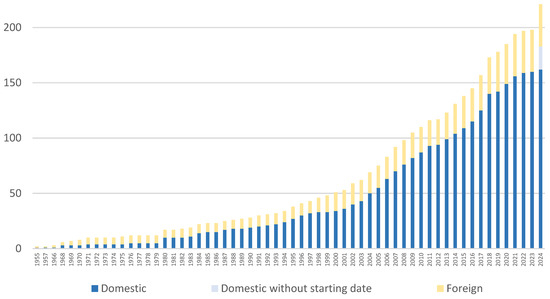
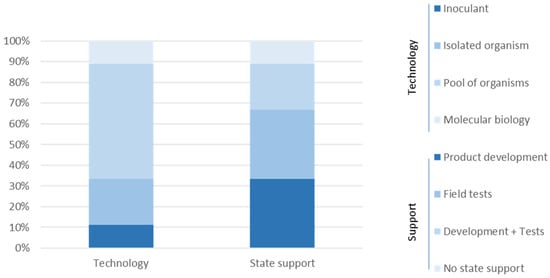
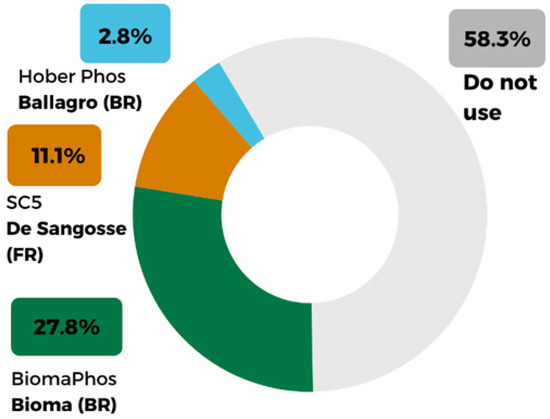
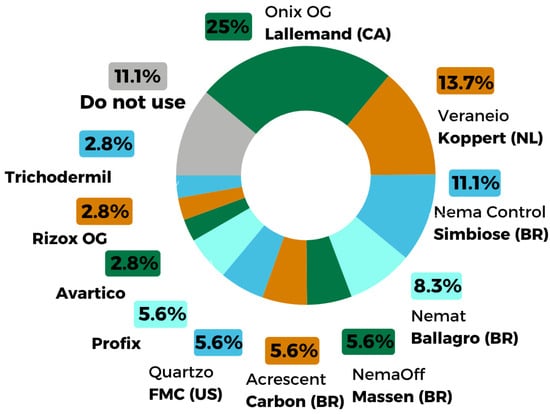
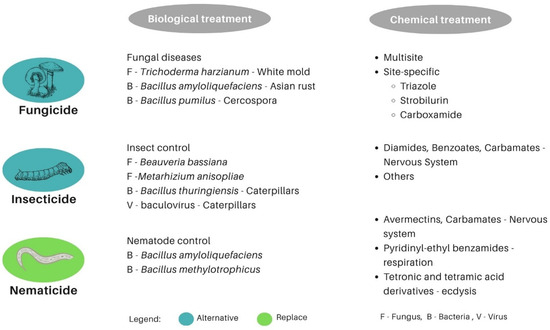
Industrial bio-inputs can improve commodity farming by replacing the use of agrochemicals. To assess the potential of agricultural bio-inputs to contribute to Brazil’s agro-industrial growth, we analyzed the market share held by domestic companies and the local market created by farmers who adopt bio-inputs. The results revealed that Brazilian companies accounted for 82.8% of the 221 companies with agricultural bio-inputs registered in Brazil by 2024. These domestic companies used technologies available to local investors and developed in collaboration with public innovation centers. Adoption levels among interviewed farmers ranged from 41.7% for biosolubilizers to 88.9% for bionematicides, revealing a large domestic market potential for bio-inputs in Brazil. We conclude that industrial agricultural bio-inputs represent an area of opportunity for Brazilian neo-industrialization based on local competitive advantages, low entry barriers, and domestic and foreign investments that can benefit from the local market for bio-inputs.
Full article

Figure 1
Open AccessArticle
Safe Haven Re-Evaluated: Technological Disruption and the Collapse of Natural and Synthetic (Manmade) Diamond Value
by
Ingo Wolf and Martin Užík
Commodities 2025, 4(4), 25; https://doi.org/10.3390/commodities4040025 - 16 Oct 2025
Abstract
►▼
Show Figures
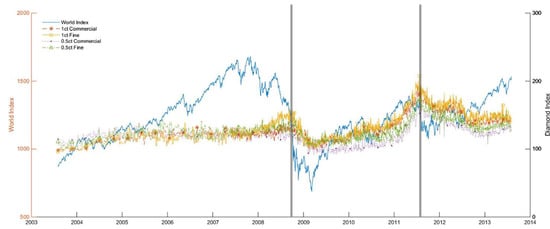
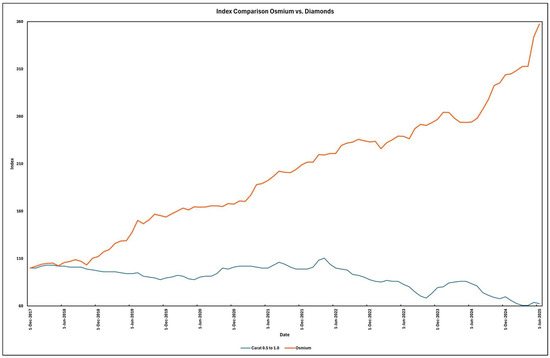
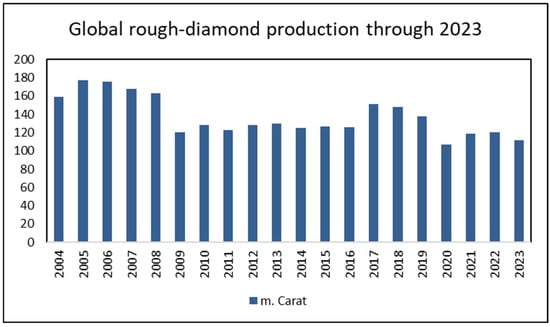
Technological advances in laboratory-grown diamonds (LGDs) have eroded the scarcity premium of natural diamonds, raising the question of whether diamonds still function as a safe haven. At the same time, crystalline osmium has become investable for the first time, as crystallization technology enables
[...] Read more.
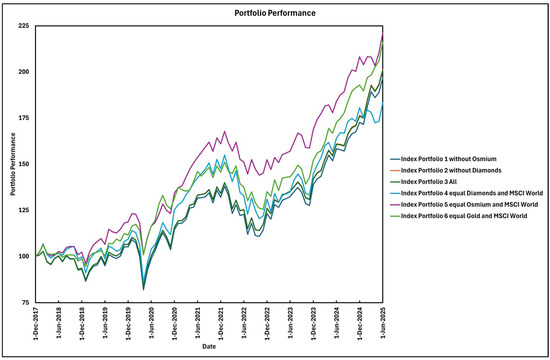
Technological advances in laboratory-grown diamonds (LGDs) have eroded the scarcity premium of natural diamonds, raising the question of whether diamonds still function as a safe haven. At the same time, crystalline osmium has become investable for the first time, as crystallization technology enables safe storage, certification, and global trading. Using monthly data from 2017–2025, we form diversified portfolios with and without diamonds and with and without osmium, as well as two-asset combinations with the MSCI World. The results show that diamonds no longer provide reliable stability, while osmium consistently contributes to reducing volatility. For portfolio investors, the key lesson is that traditional safe-haven roles can change; diamonds no longer offer robust protection, whereas crystalline osmium acts as a stabilizing component. These findings illustrate the contrasting effects of technological change: substitution and loss of value for diamonds, usability and stabilization for osmium.
Full article

Figure 1
Open AccessArticle
Extreme Value Theory and Gold Price Extremes, 1975–2025: Long-Term Evidence on Value-at-Risk and Expected Shortfall
by
Michael Bloss, Dietmar Ernst and Leander Geisinger
Commodities 2025, 4(4), 24; https://doi.org/10.3390/commodities4040024 - 16 Oct 2025
Cited by 1
Abstract
►▼
Show Figures
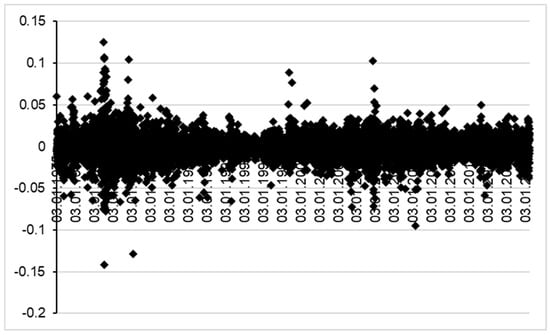
We analyze extreme gold price movements between 1975 and 2025 using Extreme Value Theory (EVT). Using both the Block-Maxima and Peaks-over-Threshold approaches on a daily return basis, we estimate Value-at-Risk (VaR) and Expected Shortfall (ES) for the entire distribution focusing on a long-term
[...] Read more.
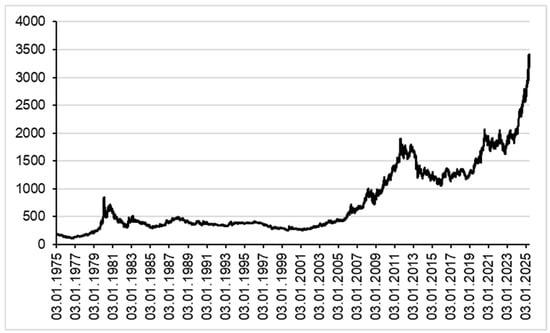
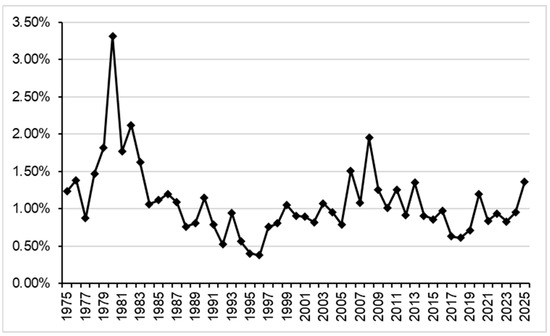
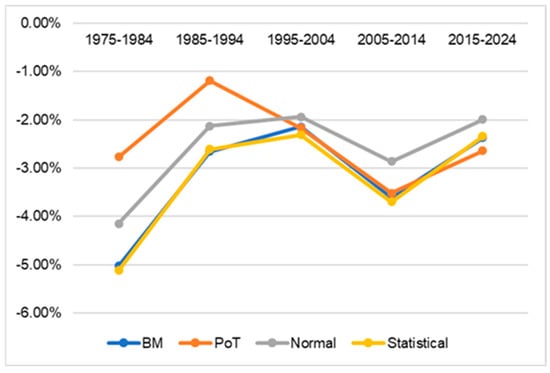
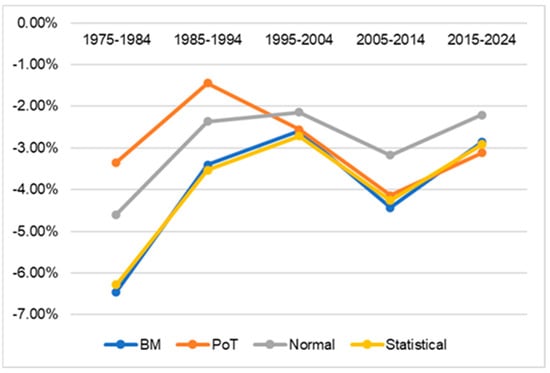
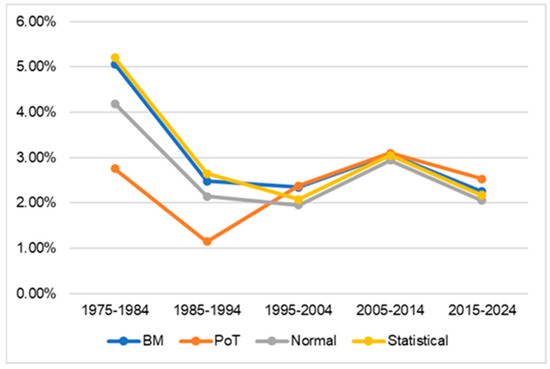
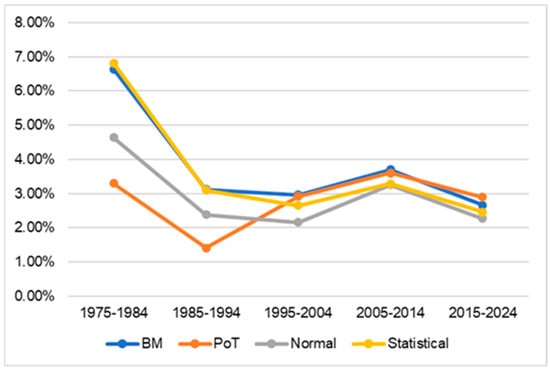
We analyze extreme gold price movements between 1975 and 2025 using Extreme Value Theory (EVT). Using both the Block-Maxima and Peaks-over-Threshold approaches on a daily return basis, we estimate Value-at-Risk (VaR) and Expected Shortfall (ES) for the entire distribution focusing on a long-term view. Our results demonstrate that models based on the standard normal distribution systematically underestimate extreme risks, whereas EVT provides more reliable measures. In particular, EVT captures not only rare losses, but also sudden positive rallies, highlighting gold’s dual function as a risk and opportunity asset. Asymmetries emerge in the analysis: at the 0.99 quantile, losses appear larger in absolute value than gains. At the 0.995 quantile, in some episodes, upside extremes dominate. Furthermore, we find that geopolitical and economic shocks, including the oil crises, the 2008 financial crisis, and the COVD-19 pandemic, leave distinct signatures in the extremes. By covering five decades, our study provides the most extensive EVT-based assessment of gold risks to date. Our findings contribute to debates on financial stability and provide practical guidance for investors seeking to manage tail risks while recognizing gold’s potential as both a safe haven and a speculative asset.
Full article

Figure 1
Open AccessArticle
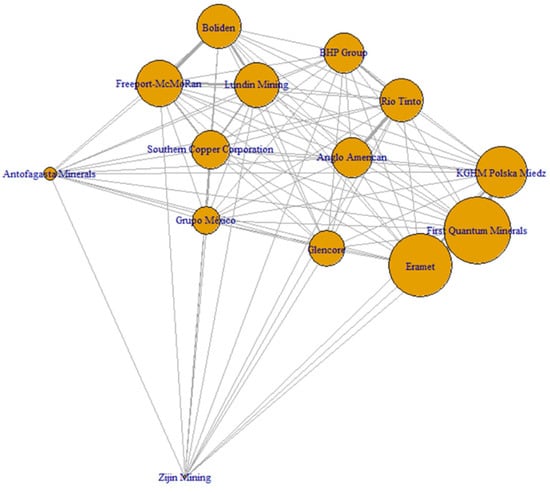
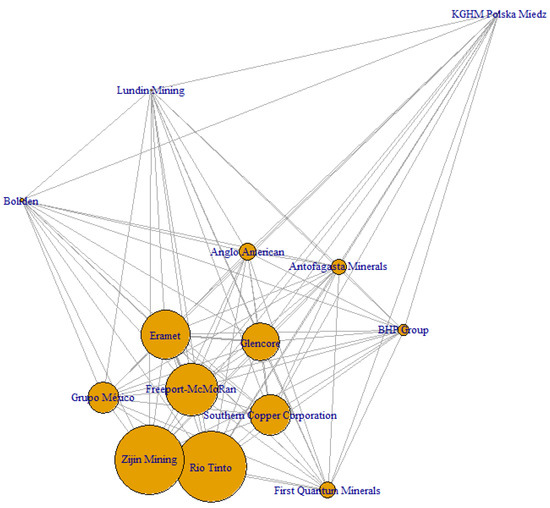
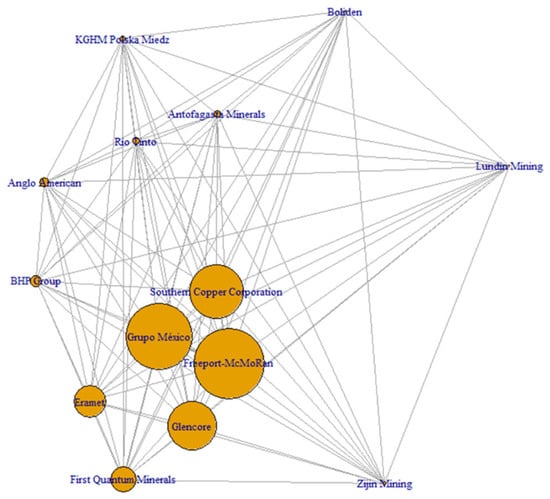
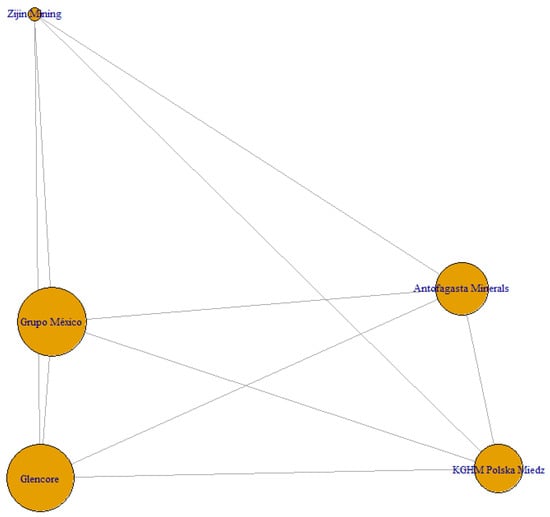
Systemic Risk in the Lithium and Copper Value Chains: A Network-Based Analysis Using Euclidean Distance and Graph Theory
by
Marc Cortés Rufé, Yihao Yu and Jordi Martí Pidelaserra
Commodities 2025, 4(4), 23; https://doi.org/10.3390/commodities4040023 - 4 Oct 2025
Abstract
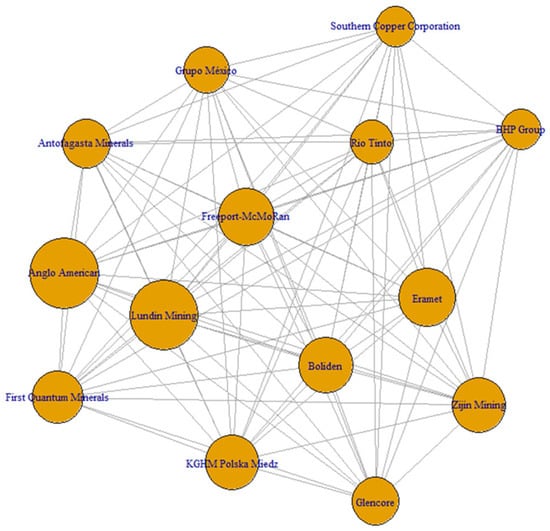
The global push for electrification and decarbonization has sharply increased demand for critical raw materials—especially lithium and copper—heightening financial and strategic pressures on firms that lead these supply chains. Yet, the systemic financial risks arising from inter-firm interdependencies in this sector remain largely
[...] Read more.
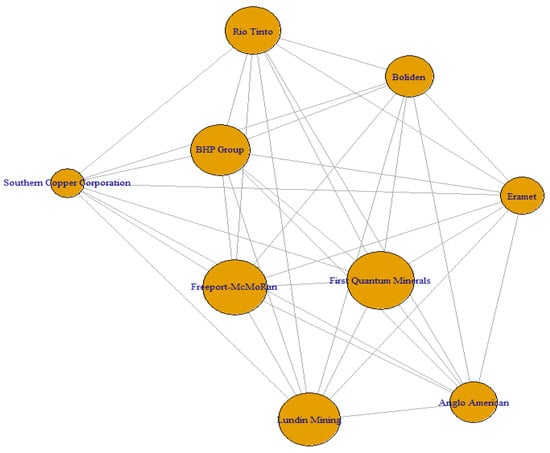
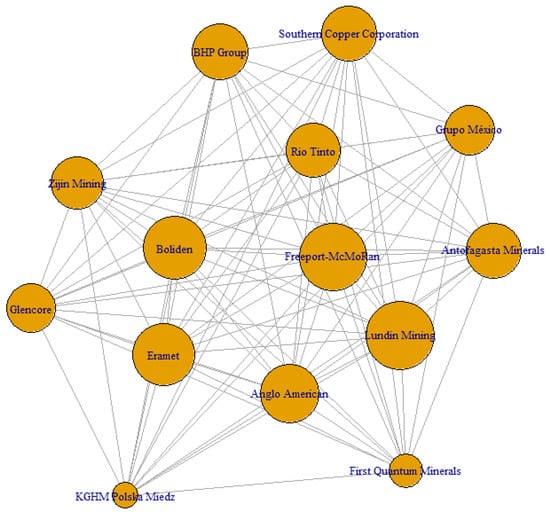
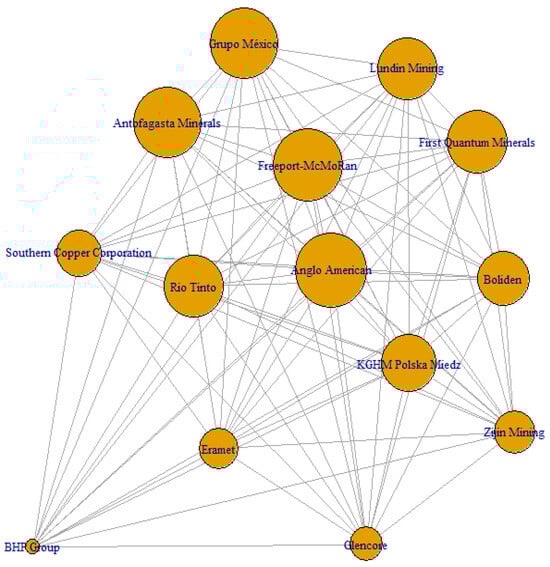
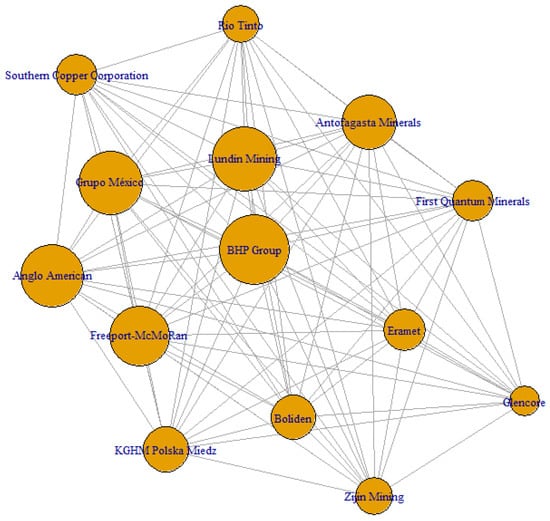
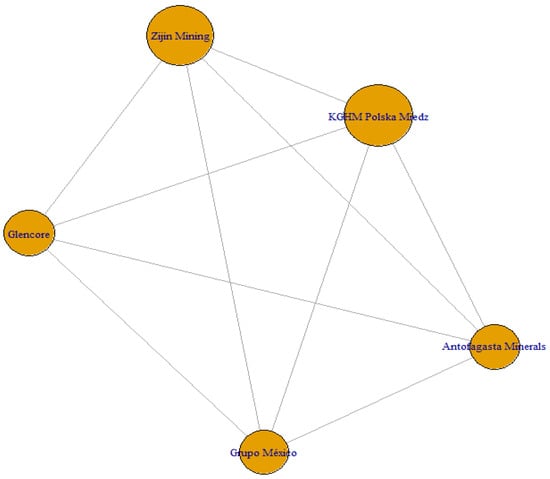
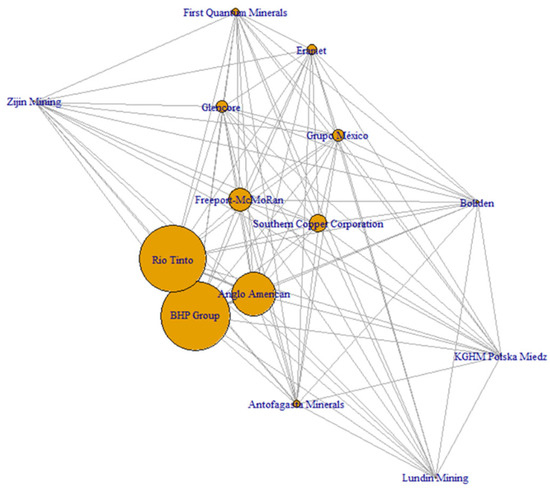
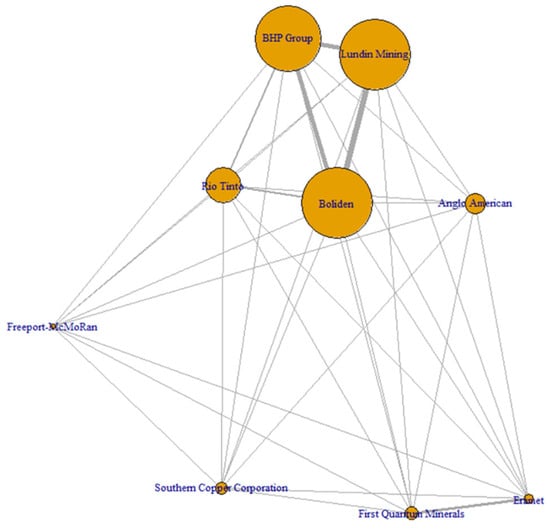
The global push for electrification and decarbonization has sharply increased demand for critical raw materials—especially lithium and copper—heightening financial and strategic pressures on firms that lead these supply chains. Yet, the systemic financial risks arising from inter-firm interdependencies in this sector remain largely unexplored. This article presents a novel distance-based network framework to analyze systemic risk among the world’s top 15 lithium and copper producers (2020–2024). Firms are represented through standardized vectors of profitability and risk indicators (liquidity–solvency), from which we construct a two-layer similarity network using Euclidean distances. Graph-theoretic tools—including Minimum Spanning Tree, eigenvector centrality, modularity detection, and contagion simulations—reveal the structural properties and transmission pathways of financial shocks. The results show a robust-yet-fragile topology: while stable under minor perturbations, the network is highly vulnerable to failures of central firms. These findings highlight the utility of distance-based network models in uncovering hidden fragilities in critical commodity sectors, offering actionable insights for macroprudential regulators, investors, and corporate risk managers amid growing geopolitical and financial entanglement.
Full article
(This article belongs to the Special Issue Commodity Supply Chains in an Age of Climate Crisis, Resource Nationalism, and Geopolitical Tensions)
►▼
Show Figures

Figure 1
Open AccessArticle
Optimisation of Cryptocurrency Trading Using the Fractal Market Hypothesis with Symbolic Regression
by
Jonathan Blackledge and Anton Blackledge
Commodities 2025, 4(4), 22; https://doi.org/10.3390/commodities4040022 - 3 Oct 2025
Abstract
►▼
Show Figures
Cryptocurrencies such as Bitcoin can be classified as commodities under the Commodity Exchange Act (CEA), giving the Commodity Futures Trading Commission (CFTC) jurisdiction over those cryptocurrencies deemed commodities, particularly in the context of futures trading. This paper presents a method for predicting both
[...] Read more.
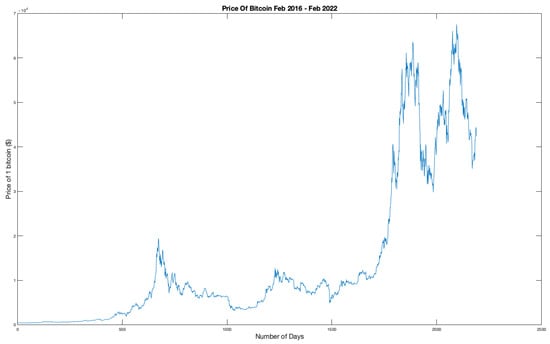
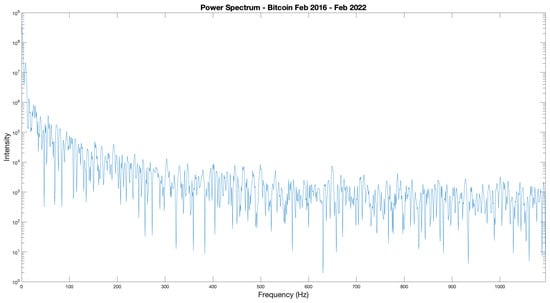
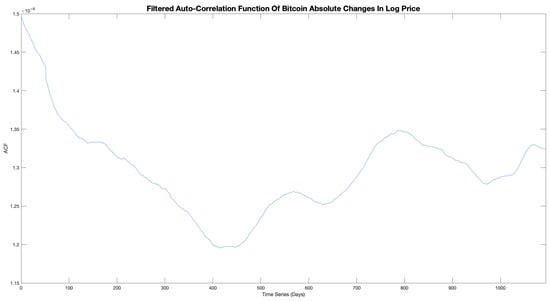
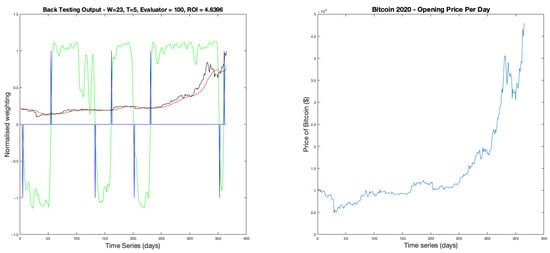
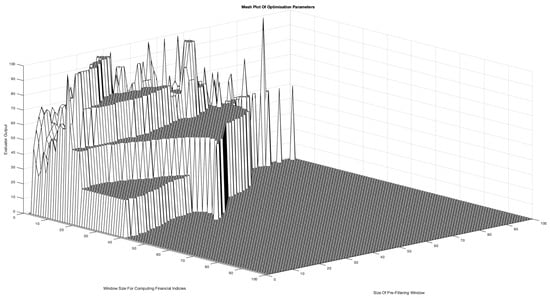
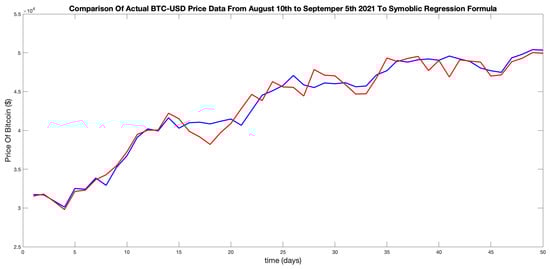
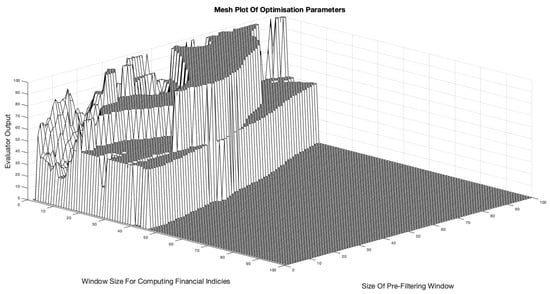
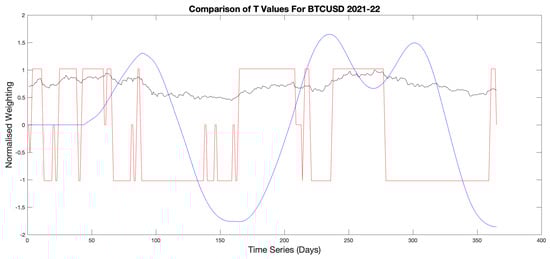
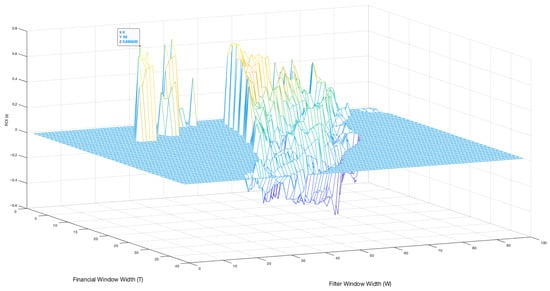
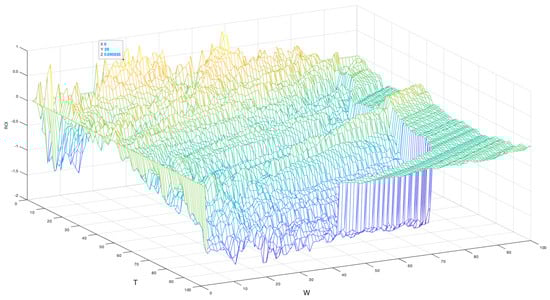
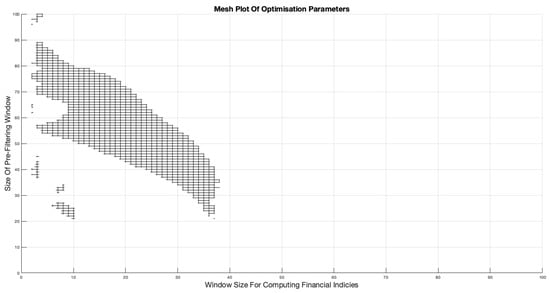
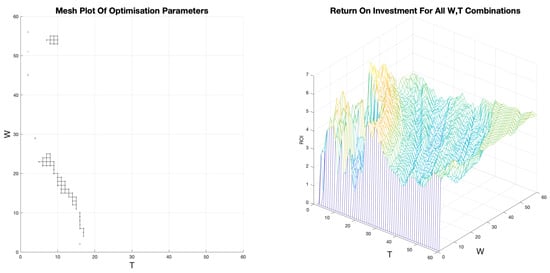
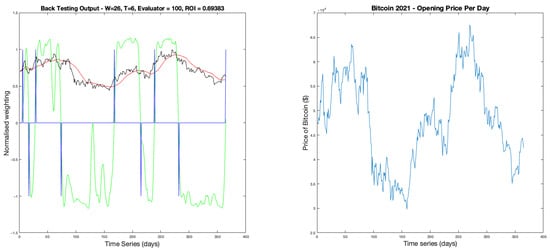
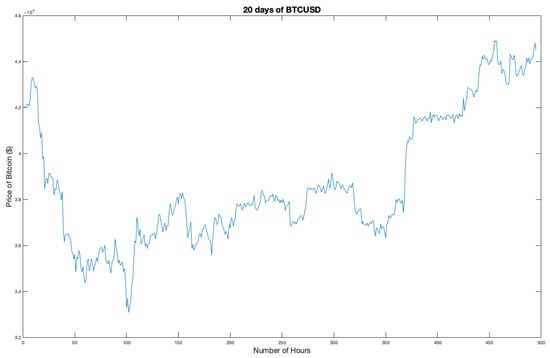
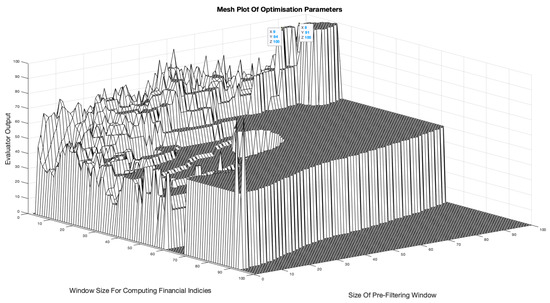
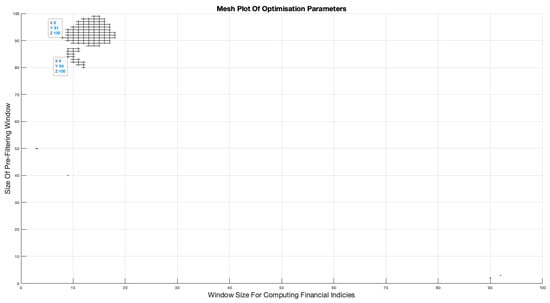
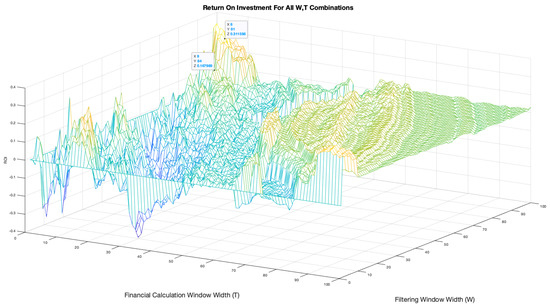
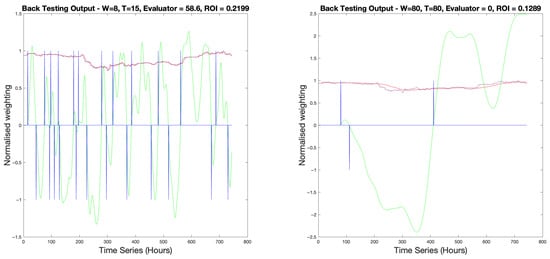
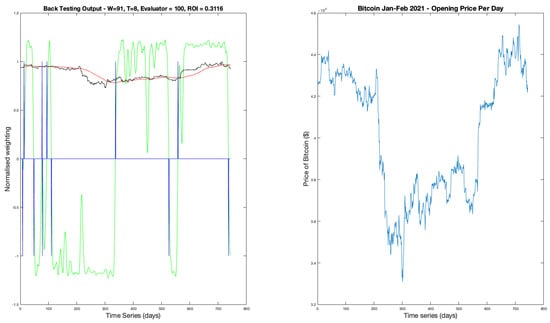
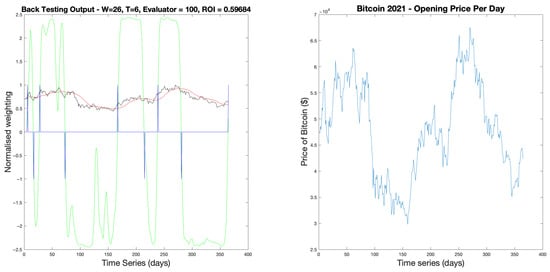
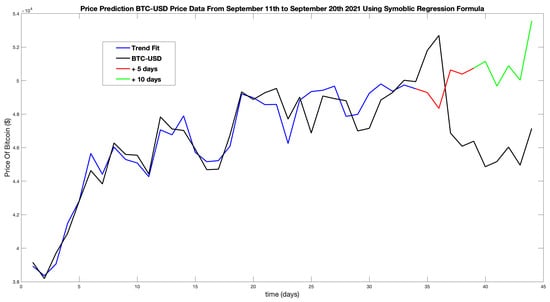
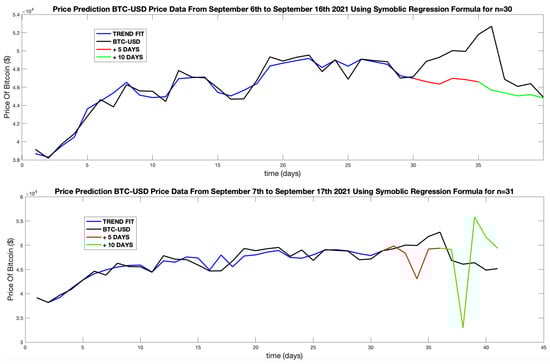
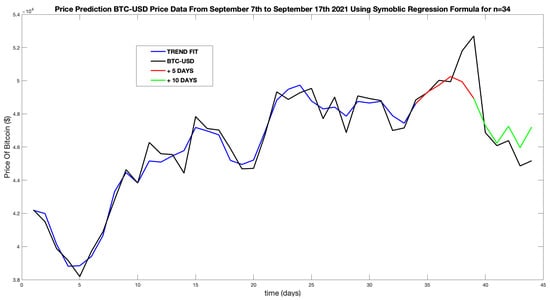
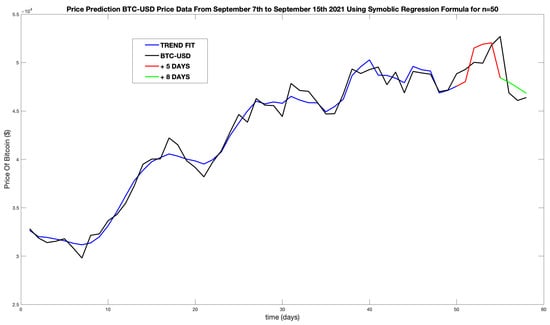
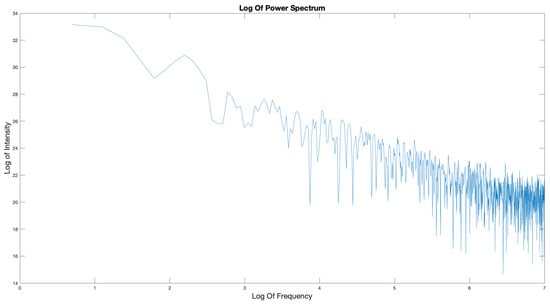
Cryptocurrencies such as Bitcoin can be classified as commodities under the Commodity Exchange Act (CEA), giving the Commodity Futures Trading Commission (CFTC) jurisdiction over those cryptocurrencies deemed commodities, particularly in the context of futures trading. This paper presents a method for predicting both long- and short-term trends in selected cryptocurrencies based on the Fractal Market Hypothesis (FMH). The FMH applies the self-affine properties of fractal stochastic fields to model financial time series. After introducing the underlying theory and mathematical framework, a fundamental analysis of Bitcoin and Ethereum exchange rates against the U.S. dollar is conducted. The analysis focuses on changes in the polarity of the ‘Beta-to-Volatility’ and ‘Lyapunov-to-Volatility’ ratios as indicators of impending shifts in Bitcoin/Ethereum price trends. These signals are used to recommend long, short, or hold trading positions, with corresponding algorithms (implemented in Matlab R2023b) developed and back-tested. An optimisation of these algorithms identifies ideal parameter ranges that maximise both accuracy and profitability, thereby ensuring high confidence in the predictions. The resulting trading strategy provides actionable guidance for cryptocurrency investment and quantifies the likelihood of bull or bear market dominance. Under stable market conditions, machine learning (using the ‘TuringBot’ platform) is shown to produce reliable short-horizon estimates of future price movements and fluctuations. This reduces trading delays caused by data filtering and increases returns by identifying optimal positions within rapid ‘micro-trends’ that would otherwise remain undetected—yielding gains of up to approximately 10%. Empirical results confirm that Bitcoin and Ethereum exchanges behave as self-affine (fractal) stochastic fields with Lévy distributions, exhibiting a Hurst exponent of roughly 0.32, a fractal dimension of about 1.68, and a Lévy index near 1.22. These findings demonstrate that the Fractal Market Hypothesis and its associated indices provide a robust market model capable of generating investment returns that consistently outperform standard Buy-and-Hold strategies.
Full article

Figure 1
Open AccessArticle
Government Announcements Through Harvest Reports, Extreme Market Conditions, and Commodity Price Volatility
by
Erica Juvercina Sobrinho and Rodrigo Fernandes Malaquias
Commodities 2025, 4(4), 21; https://doi.org/10.3390/commodities4040021 - 24 Sep 2025
Abstract
The objective of this research is to understand the relationship between the tone of information released in government harvest reports, in extreme market conditions (rising and falling), and the behavior of agricultural commodity prices. In the period between January/2017 and February/2023, an autoregressive
[...] Read more.
The objective of this research is to understand the relationship between the tone of information released in government harvest reports, in extreme market conditions (rising and falling), and the behavior of agricultural commodity prices. In the period between January/2017 and February/2023, an autoregressive model of moving averages was used with a generalized autoregressive conditional heteroscedasticity approach. The evidence allows us to infer that investors can, on some occasions, use this information to direct their portfolios in order to balance risk and return. However, the full impact of the tone is not reflected immediately, possibly requiring time to be absorbed. Depending on the informational weight, the commodity, and the market context, there may or may not be an impact. This divergent empirical evidence indicates that there is a complex relationship between tone reading and asset pricing.
Full article
(This article belongs to the Special Issue Trends and Changes in Agricultural Commodities Markets)
Open AccessArticle
Electricity as a Commodity: Liberalisation Outcomes, Market Concentration and Switching Dynamics
by
Nuno Soares Domingues
Commodities 2025, 4(3), 20; https://doi.org/10.3390/commodities4030020 - 19 Sep 2025
Abstract
►▼
Show Figures
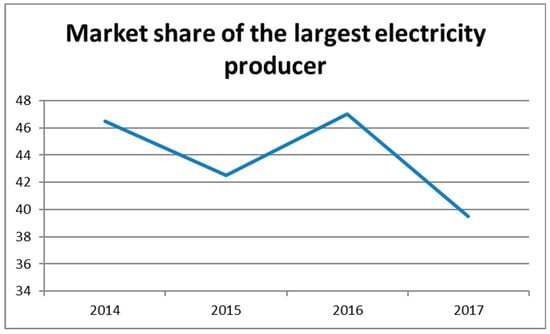
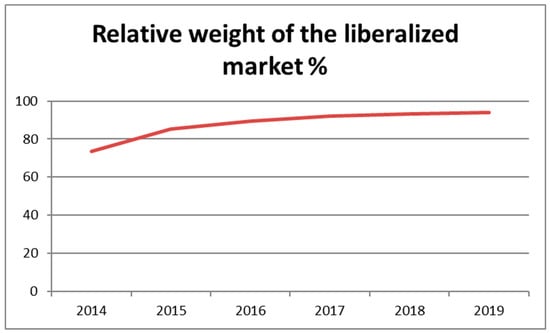
We study Portugal’s household electricity retail market after legal liberalisation, quantifying market concentration (Herfindahl–Hirschman Index (HHI) and the four-firm concentration ratio (CR4)), consumer switching, and asymmetric wholesale-to-retail price pass-through. Using monthly data for January 2014–December 2019 (primary sample) and robustness checks for 2008–2022,
[...] Read more.
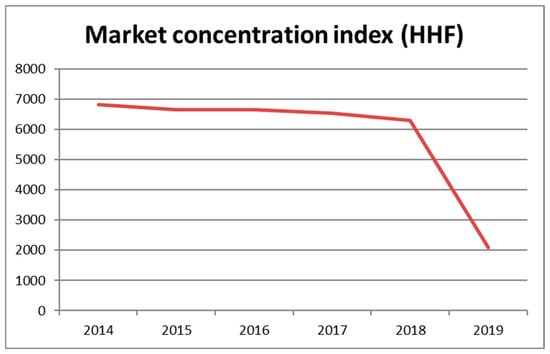
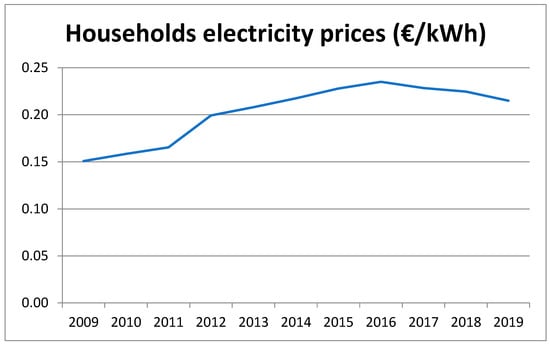
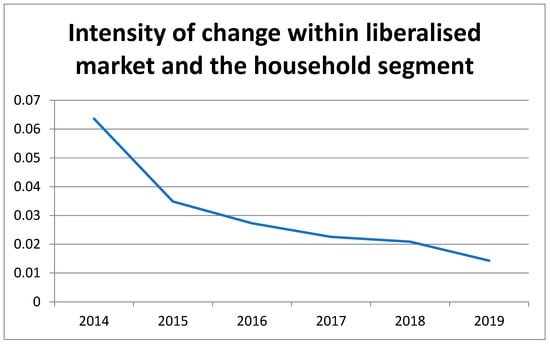
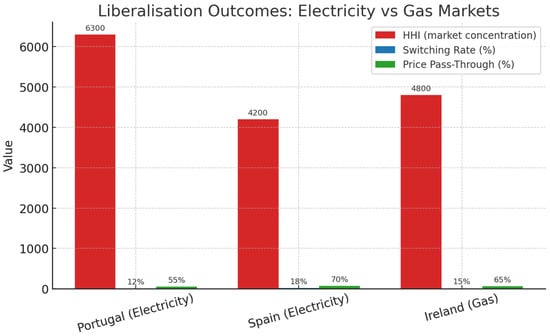
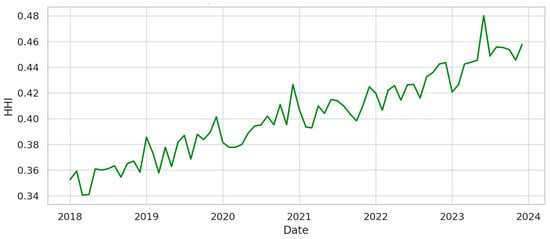
We study Portugal’s household electricity retail market after legal liberalisation, quantifying market concentration (Herfindahl–Hirschman Index (HHI) and the four-firm concentration ratio (CR4)), consumer switching, and asymmetric wholesale-to-retail price pass-through. Using monthly data for January 2014–December 2019 (primary sample) and robustness checks for 2008–2022, we compute concentration indices from ERSE supplier shares, analyse switching dynamics, and estimate nonlinear autoregressive distributed lag (NARDL) models that decompose wholesale price changes into positive and negative components. The retail market remains highly concentrated during the primary window (HHI ≈ 6300–6800 using shares expressed as percentages on a 10,000 scale); switching rose after deregulation but stabilised at moderate monthly rates; and long-run pass-through is estimated at β+ ≈ 0.55–0.61 for wholesale increases and β− ≈ 0.49 for decreases (Wald tests reject symmetry at conventional levels). Results are robust to alternative concentration metrics, exclusion of 2022, and varied lag orders. Policy implications emphasise tariff simplification, active consumer-activation measures, and regular monitoring of concentration and pass-through metrics.
Full article

Figure 1
Highly Accessed Articles
Latest Books
E-Mail Alert
News
Topics
Conferences
Special Issues
Special Issue in
Commodities
Trends and Changes in Agricultural Commodities Markets
Guest Editors: Mariette Geyser, Anmar PretoriusDeadline: 30 April 2026
Special Issue in
Commodities
Cross-Sector Decision Intelligence for Critical Commodities: Integrating Health, Cybersecurity, and Logistics in Modern Supply Chains
Guest Editor: Dilshad SarwarDeadline: 30 November 2026
Special Issue in
Commodities
Advances in Understanding and Forecasting Commodity Market Dynamics
Guest Editor: Li YangDeadline: 31 May 2027