



Machine Learning for Medical Imaging
A special issue of Algorithms (ISSN 1999-4893).
Deadline for manuscript submissions: closed (31 December 2009) | Viewed by 124215
Special Issue Editor
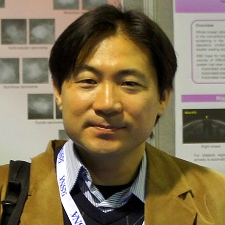
Artificial Intelligence in Biomedical Imaging Lab (AIBI Lab), Laboratory for Future Interdisciplinary Research of Science and Technology, Institute of Innovative Research, Tokyo Institute of Technology, Tokyo 152-8550, Japan
Interests: deep learning; machine learning; computer-aided diagnosis; medical imaging
Special Issues, Collections and Topics in MDPI journals
Interests: deep learning; machine learning; computer-aided diagnosis; medical imaging
Special Issues, Collections and Topics in MDPI journals
Special Issue Information
Summary: Medical imaging is an indispensable tool of patients’ healthcare in modern medicine. Machine leaning plays an essential role in the medical imaging field, including medical image analysis, computer-aided diagnosis, organ/lesion segmentation, image fusion, image-guided therapy, image annotation and image retrieval, because objects such as lesions and anatomy in medical images cannot be modeled accurately by simple equations; thus, tasks in medical imaging require learning from examples. Because of its essential needs, machine learning for medical imaging is one of the most promising, growing fields. As medical imaging has been advancing with the introduction of new imaging modalities and methodologies such as cone-beam/multi-slice CT, positron-emission tomography (PET)-CT, tomosynthesis, diffusion-weighted magnetic resonance imaging (MRI), electrical impedance tomography and diffuse optical tomography, new machine-learning algorithms/applications are demanded in the medical imaging field. Areas of interest in this special issue are all aspects of machine-learning research for medical imaging/images including, but not limited to:
- Computer-aided detection/diagnosis (e.g., for lung cancer, breast cancer, colon cancer, liver cancer, acute disease, chronic disease, osteoporosis)
- Machine learning (e.g., with support vector machines, statistical methods, manifold-space-based methods, artificial neural networks) applications to medical images with 2D, 3D and 4D data.
- Multi-modality fusion (e.g., PET/CT, projection X-ray/CT, X-ray/ultrasound)
- Medical image analysis (e.g., pattern recognition, classification, segmentation) of lesions, lesion stage, organs, anatomy, status of disease and medical data
- Image reconstruction (e.g., expectation maximization (EM) algorithm, statistical methods) for medical images (e.g., CT, PET, MRI, X-ray)
- Biological image analysis (e.g., biological response monitoring, biomarker tracking/detection)
- Image fusion of multiple modalities, multiple phases and multiple angles
- Image retrieval (e.g., lesion similarity, context-based)
- Gene data analysis (e.g., genotype/phenotype classification/identification)
- Molecular/pathologic image analysis
- Dynamic, functional, physiologic, and anatomic imaging.
Keywords
- computer-aided diagnosis
- artificial neural networks
- support vector machines
- manifold, classification
- pattern recognition
- image reconstruction
- medical image analysis
- statistical pattern recognition
- segmentation
- image fusion
- image retrieval
- biological imaging
- multiple modalities
- gene
- X-ray
- CT
- MRI
- PET
- ultrasound