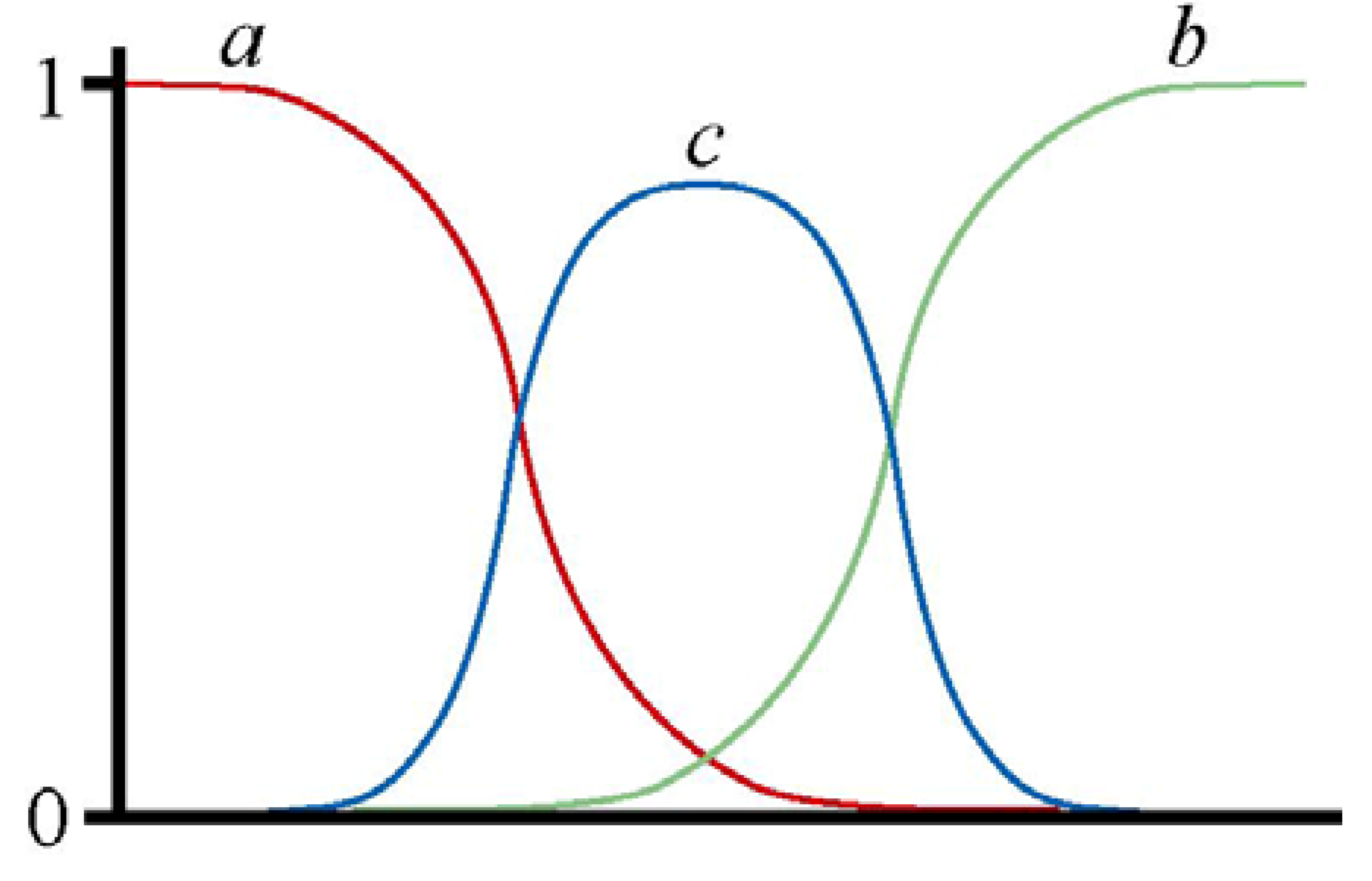

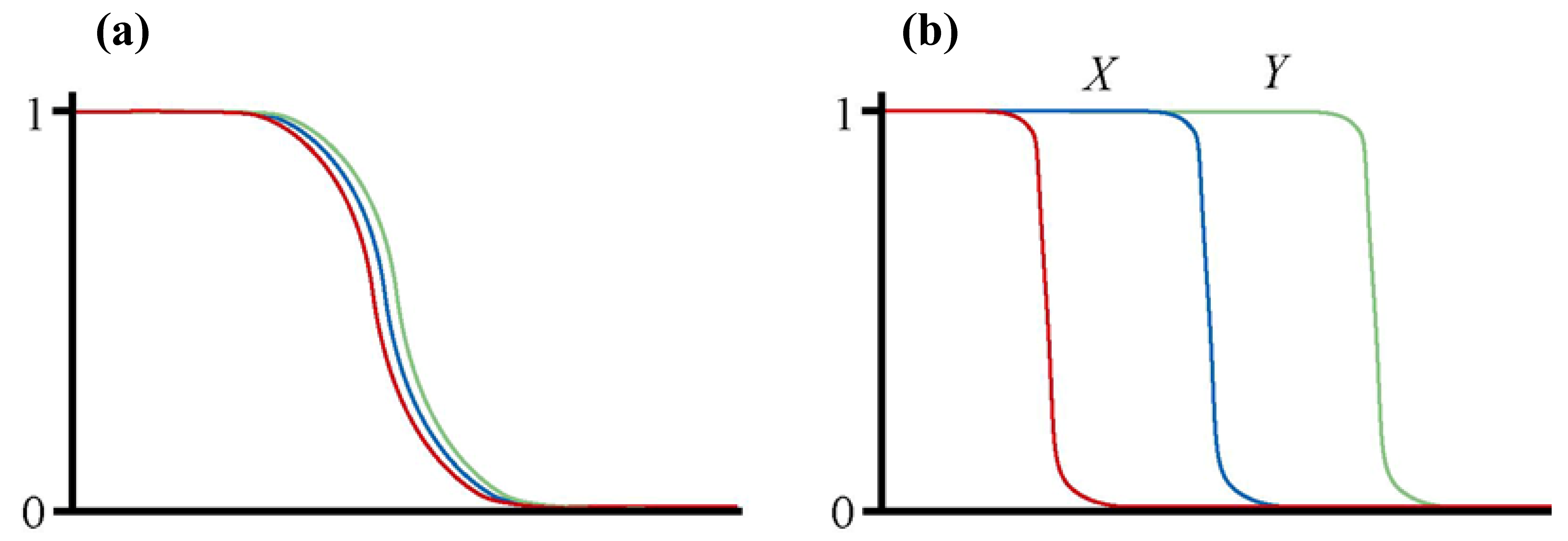
Staggered Chromosomal Hybrid Zones in the House Mouse: Relevance to Reticulate Evolution and Speciation

Abstract
:1. Introduction

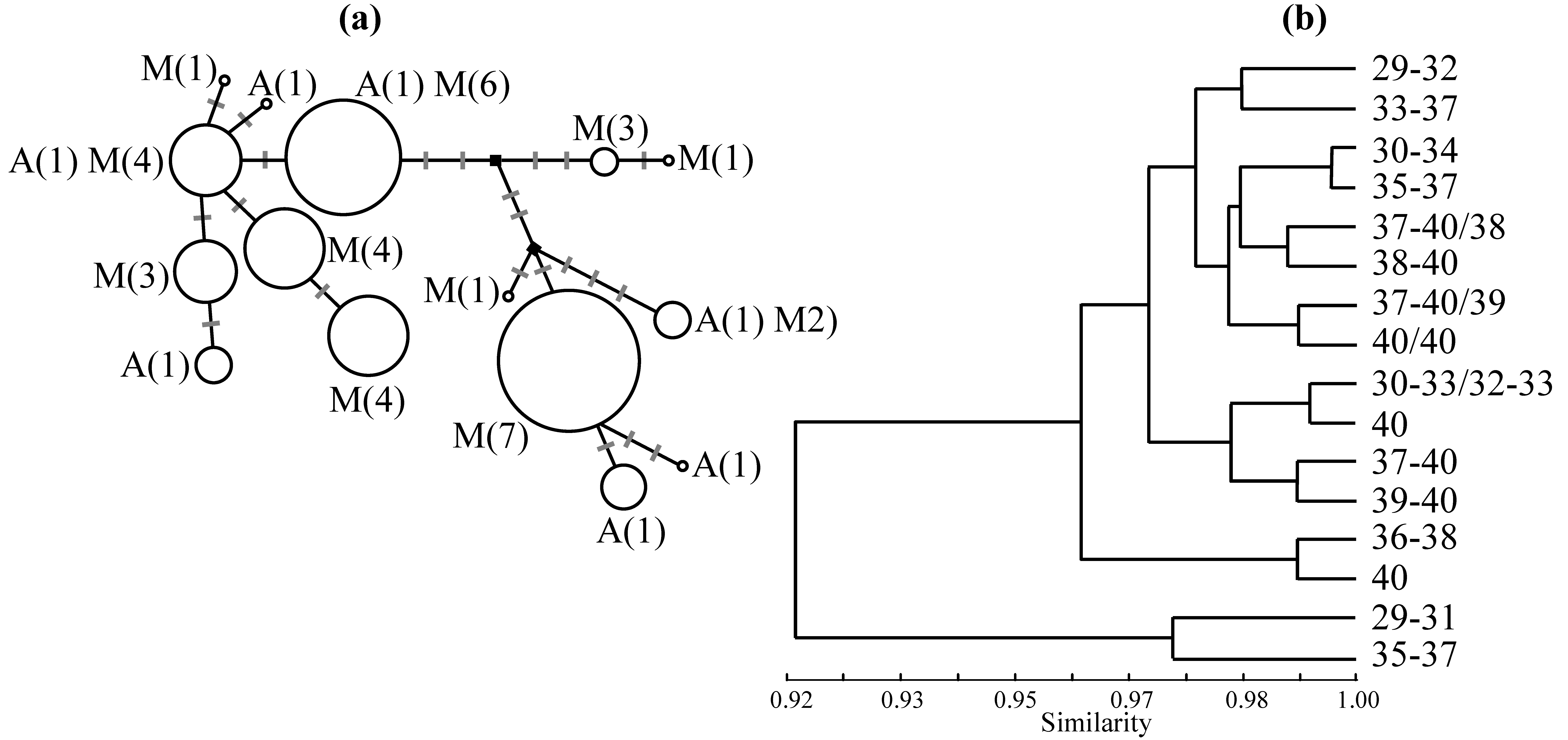
2. A staggered hybrid zone arising through primary contact? An area of chromosomal polymorphism near Barcelona, Spain

| Metacentric | Cline centre (km) |
|---|---|
| 6.10 | 12 (8 - 15) |
| 9.11 | 25 (21 - 28) |
| 5.15 | 28 (22 - 33) |
| 12.13 | 31 (26 - 37) |
| 4.14 | 37 (31 - 45) |

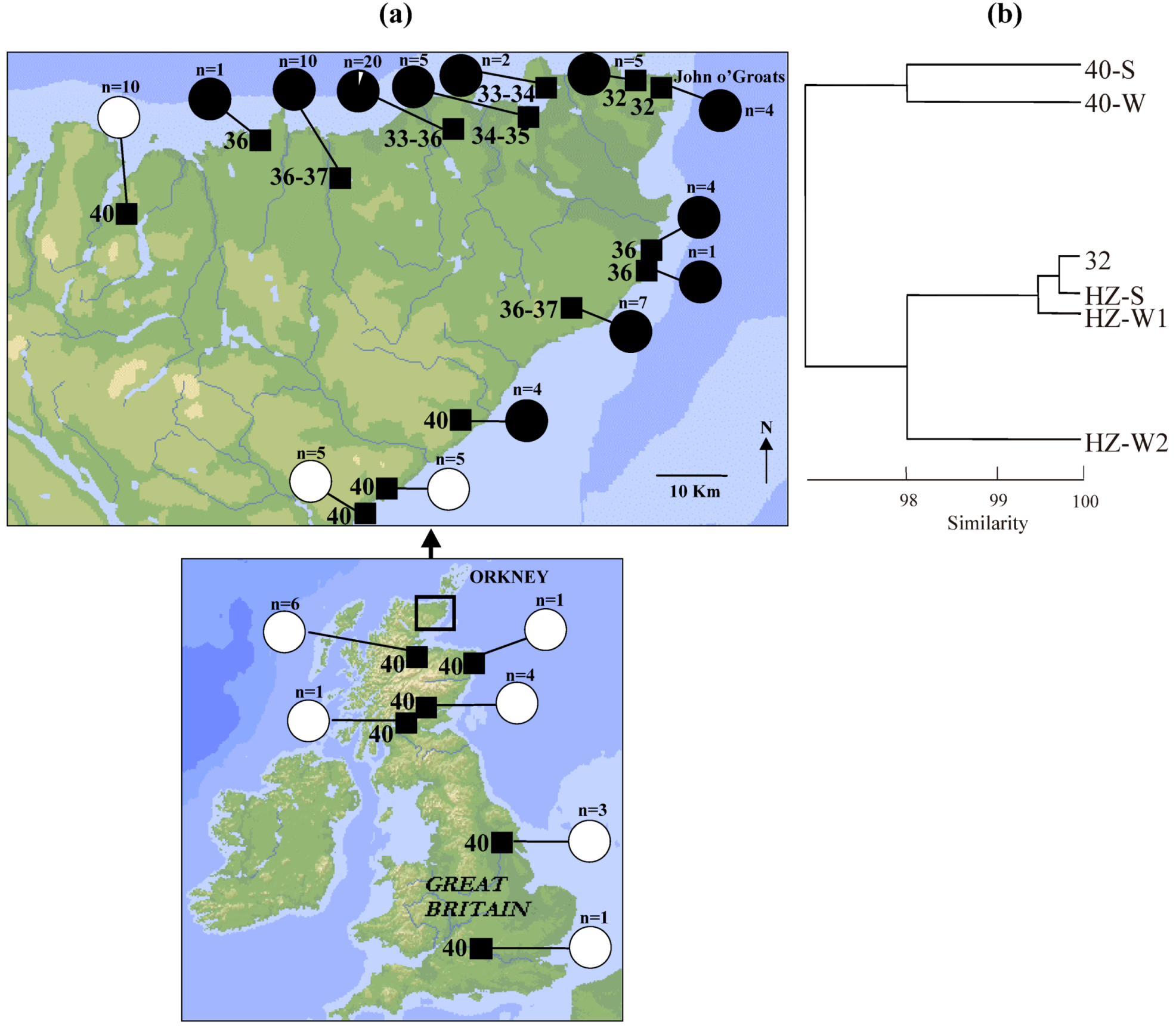
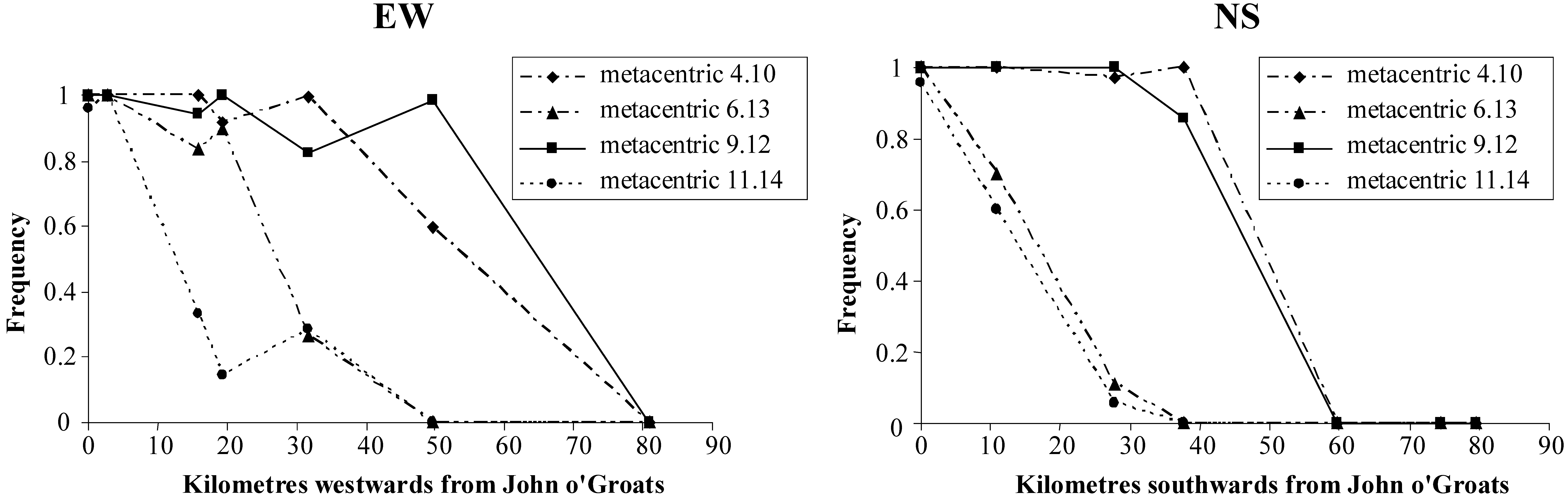
3. A staggered hybrid zone arising through secondary contact? The John o’Groats-standard hybrid zone in Scotland
4. Zonal raciation in the Upper Valtellina hybrid zone in Italy?
| Race | Race-specific metacentrics and acrocentrics | |||||||
|---|---|---|---|---|---|---|---|---|
| CHPO | 2 | 8.12 | 10 | 7 | 18 | |||
| ILVA | 2.8 | 10.12 | 7.18 | |||||
| IMVA | 2 | 8.12 | 10 | 7.18 | ||||
| IUVA | 2.8 | 10.12 | 7 | 18 | ||||
5. ‘Staggered clines within one locus.’ The Madeira hybrid zone
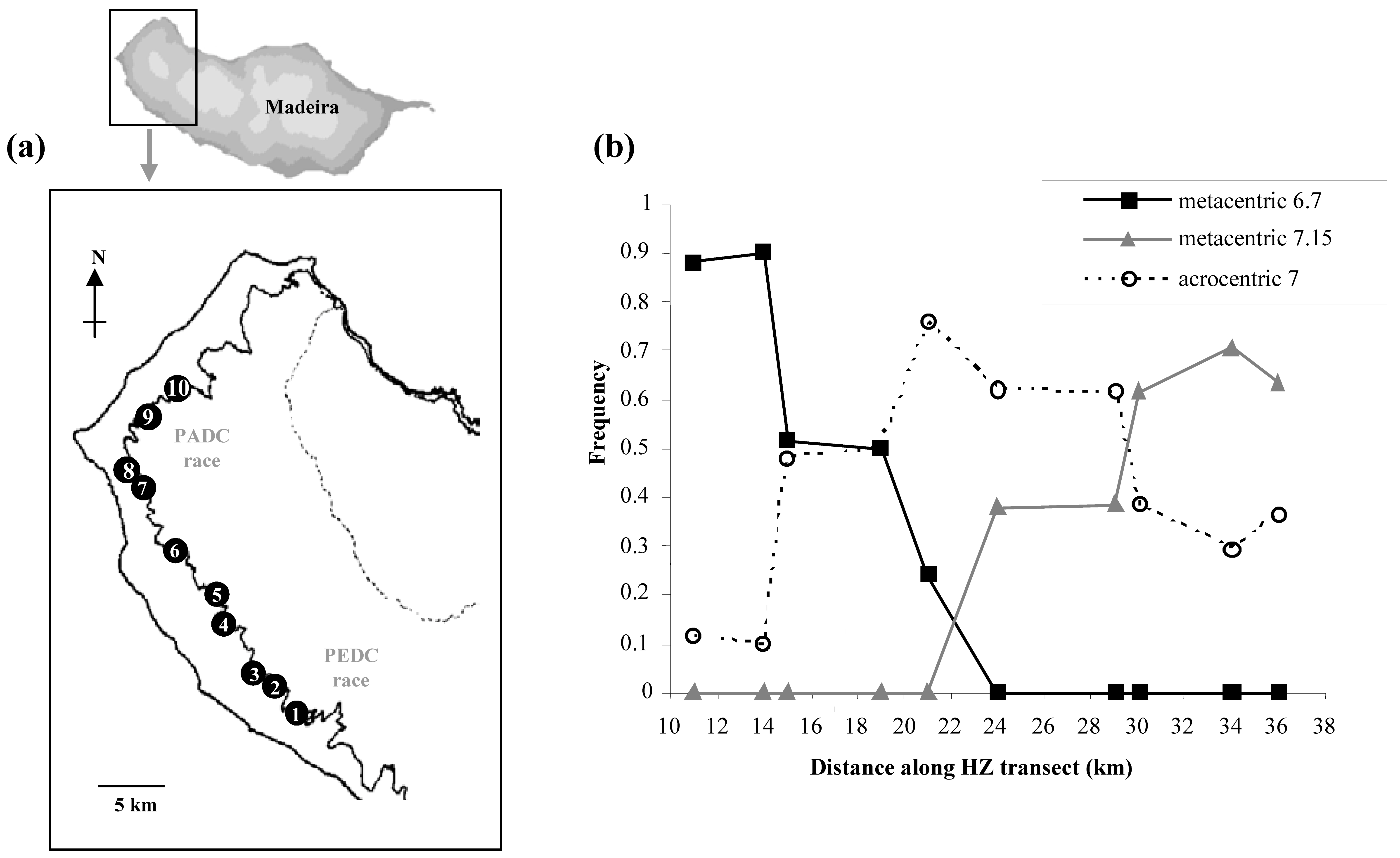
6. Summary and Synthesis
- a)
- It appears that staggering may sometimes reflect time of formation of metacentrics, with earlier formed metacentrics more widespread than other metacentrics. This form of staggering relates to primary contact. Whether metacentrics are spreading through the ancestral population through some sort of selective advantage or meiotic drive as posited in the stasipatric model of White [46], or whether population processes and genetic drift can explain the pattern, is unclear. In another ‘classic’ case where White applied his model, the Australian grasshopper Vandiemenella, a stasipatric process has been discredited [47].
- b)
- Non-coincident clines tend to occur in hybrid zones where there are only a few chromosomal differences between the hybridising races. Other hybrid zones that have been described in northern and central Italy and Tunisia where there is a contact between a 22 or 24 chromosome race and the standard 40 chromosome race or where there are massive differences between metacentric races, there tends not to be staggering associated with the hybrid zone [33,48,49,50,51], as already noted by Searle [4]. The following chromosomal explanation may be suggested: Where there are many chromosomal differences, F1 hybrids are very unfit and selective forces tend to hold the clines together [4,52]. Thus, hybrid zones with fewer chromosomal differences are less constrained by such forces, and so staggering is ‘permitted’ (though this does not necessarily occur: see Mitsainas et al. [53]).
Acknowledgments
References and Notes
- Barton, N.H.; Hewitt, G.M. Analysis of hybrid zones. Annu. Rev. Ecol. Syst. 1985, 16, 113–148. [Google Scholar] [CrossRef]
- Barton, N.H. Multilocus clines. Evolution 1983, 37, 454–471. [Google Scholar] [CrossRef]
- Barton, N.H.; Hewitt, G.M. Hybrid zones and speciation. In Evolution and speciation; Atchley, W.R., Woodruff, D., Eds.; 1981; pp. 109–145. Cambridge University Press: Cambridge, UK. [Google Scholar]
- Searle, J.B. Chromosomal hybrid zones in eutherian mammals. In Hybrid zones and the evolutionary process; Harrison, R.G., Ed.; 1993; pp. 309–353. Oxford University Press: New York, NY, USA. [Google Scholar]
- White, M.J.D. Animal cytology and evolution; 1973; Cambridge University Press: London, UK. [Google Scholar]
- Barton, N.H.; Gale, K.S. Genetic analysis of hybrid zones. In Hybrid zones and the evolutionary process; 1993; Harrison, R.G., Ed.; Oxford University Press: New York, NY, USA. [Google Scholar]
- Rieseberg, L.H. Chromosomal rearrangements and speciation. TREE 2001, 16, 351–358. [Google Scholar] [PubMed]
- Ayala, F.J.; Coluzzi, M. Chromosome speciation: humans, Drosophila, and mosquitoes. Proc. Natl. Acad. Sci. U. S. A. 2005, 102, 6535–6542. [Google Scholar] [CrossRef] [PubMed]
- Hoffmann, A. A.; Rieseberg, L. H. Revisiting the impact of inversions in evolution: from population genetic markers to drivers of adaptive shifts and speciation? Annu. Rev. Ecol. Evol. Syst. 2008, 39, 21–42. [Google Scholar] [CrossRef] [PubMed]
- Piálek, J.; Hauffe, H. C.; Rodríguez-Clark, K. M.; Searle, J. B. Raciation and speciation in house mice from the Alps: the role of chromosomes. Mol. Ecol. 2001, 10, 613–625. [Google Scholar] [CrossRef] [PubMed]
- Noor, M. A. F.; Grams, K. L.; Bertucci, L. A.; Reiland, J. Chromosomal inversions and the reproductive isolation of species. Proc. Natl. Acad. Sci. U. S. A. 2001, 98, 12084–12088. [Google Scholar] [CrossRef] [PubMed]
- White, T.A.; Bordewich, M.; Searle, J.B. A network approach to study karyotypic evolution: the chromosomal races of the common shrew (Sorex araneus) and house mouse (Mus musculus) as model systems. Syst. Biol. 2010, 59, 262–276. [Google Scholar] [CrossRef] [PubMed]
- Nachman, M.W.; Searle, J.B. Why is the house mouse karyotype so variable? TREE 1995, 10, 397–402. [Google Scholar] [PubMed]
- Piálek, J.; Hauffe, H.C.; Searle, J.B. Chromosomal variation in the house mouse: a review. Biol. J. Linn. Soc. 2005, 84, 535–563. [Google Scholar] [CrossRef]
- White, T.A. Unpublished work. 2010. [Google Scholar]
- Yang, H.; Ding, Y.M.; Hutchins, L.N.; Szatkiewicz, J.; Bell, T.A.; Paigen, B.J.; Graber, J.H.; de Villena, F.P.M.; Churchill, G.A. A customized and versatile high-density genotyping array for the mouse. Nat. Methods 2009, 6, 663–666. [Google Scholar] [CrossRef] [PubMed]
- Adolph, S.; Klein, J. Robertsonian variation in Mus musculus from central Europe, Spain, and Scotland. J. Hered. 1981, 72, 219–221. [Google Scholar] [PubMed]
- Gündüz, İ.; López-Fuster, M.J.; Ventura, J.; Searle, J.B. Clinal analysis of a chromosomal hybrid zone in the house mouse . Genet. Res. 2001, 77, 41–51. [Google Scholar] [CrossRef] [PubMed]
- Sans-Fuentes, M.A.; Muñoz-Muñoz, F.; Ventura, J.; López-Fuster, M.J. Rb(7.17), a rare Robertsonian fusion in wild populations of the house mouse . Genet. Res. 2007, 89, 207–213. [Google Scholar] [CrossRef] [PubMed]
- Sans-Fuentes, M.A. Unpublished work. 2010. [Google Scholar]
- Sans-Fuentes, M.A.; Ventura, J.; López-Fuster, M.J.; Corti, M. Morphological variation in house mice from the Robertsonian polymorphism area of Barcelona. Biol. J. Linn. Soc. 2009, 97, 555–570. [Google Scholar] [CrossRef]
- Searle, J.B.; Jones, C.S.; Gündüz, İ.; Scascitelli, M.; Jones, E.P.; Herman, J.S.; Rambau, R.V.; Noble, L.R.; Berry, R.J.; Giménez, M.D.; Jóhannesdóttir, F. Of mice and (Viking?) men: phylogeography of British and Irish house mice . P. Roy. Soc. B.-Biol. Sci 2009, 276, 201–207. [Google Scholar] [CrossRef]
- Bandelt, H.-J.; Forster, P.; Röhl, A. Median-joining networks for inferring intraspecific phylogenies. Mol. Biol. Evol. 1999, 16, 37–48. [Google Scholar] [PubMed]
- Swofford, D.L.; Selander, R.B. BIOSYS-1: a FORTRAN program for the comprehensive analysis of electrophoretic data in population genetics and systematics. J. Hered. 1981, 72, 281–283. [Google Scholar]
- Nei, M. Genetic distance between populations. Am. Nat. 1972, 106, 283–292. [Google Scholar] [CrossRef]
- Searle, J.B. A hybrid zone comprising staggered chromosomal clines in the house mouse (Mus musculus domesticus). P. Roy. Soc. B.-Biol. Sci. 1991, 246, 47–52. [Google Scholar] [CrossRef]
- Searle, J.B.; Navarro, Y.N.; Ganem, G. Further studies of a staggered hybrid zone in Mus musculus domesticus (the house mouse). Heredity 1993, 71, 523–531. [Google Scholar] [CrossRef] [PubMed]
- Scriven, P.N.; Brooker, P.C. Caithness revisited: Robertsonian chromosome polymorphism in Caithness house mice. Heredity 1990, 64, 25–27. [Google Scholar] [CrossRef] [PubMed]
- Gündüz, İ. Unpublished work. 2010. [Google Scholar]
- Capanna, E.; Corti, M. Reproductive isolation between two chromosomal races of Mus musculus in the Rhaetian Alps (northern Italy). Mammalia 1982, 46, 107–109. [Google Scholar] [CrossRef]
- Hauffe, H.C.; Searle, J.B. Extreme karyotypic variation in a Mus musculus domesticus hybrid zone - the tobacco mouse story revisited. Evolution 1993, 47, 1374–1395. [Google Scholar] [CrossRef]
- Hauffe, H.C.; Panithanarak, T.; Dallas, J.F.; Piálek, J.; Gündüz, İ.; Searle, J.B. The tobacco mouse and its relatives: a "tail" of coat colors, chromosomes, hybridization and speciation . Cytogenet. Genome Res. 2004, 105, 395–405. [Google Scholar] [CrossRef] [PubMed]
- Giménez, M.D. Unpublished work . 2010. [Google Scholar]
- Nunes, A.C.; Britton-Davidian, J.; Ramalhinho, M.G.; Capela, R.; Mathias, M.L.; Ganem, G. Influence of physical environmental characteristics and anthropogenic factors on the position and structure of a contact zone between two chromosomal races of the house mouse on the island of Madeira (North Atlantic, Portugal). J. Biogeogr. 2005, 12, 2123–2134. [Google Scholar] [CrossRef]
- Britton-Davidian, J.; Catalan, J.; Ramalhinho, M.G.; Auffray, J.-C.; Nunes, A.C.; Gazave, E.; Searle, J.B.; Mathias, M.L. Chromosomal phylogeny of Robertsonian races of the house mouse on the island of Madeira: testing between alternative mutational processes. Genet. Res. 2006, 86, 171–183. [Google Scholar] [CrossRef]
- Garagna, S.; Broccoli, D.; Redi, C.A.; Searle, J.B.; Cooke, H.J.; Capanna, E. Robertsonian metacentrics of the house mouse lose telomeric sequences but retain some minor satellite DNA in the pericentromeric area. Chromosoma 1995, 103, 685–692. [Google Scholar] [CrossRef] [PubMed]
- Britton-Davidian, J.; Catalan, J.; Ramalhinho, M.G.; Ganem, G.; Auffray, J.-C.; Capela, R.; Biscoito, M.; Searle, J.B.; Mathias, M.L. Rapid chromosomal evolution in island mice. Nature 2000, 403, 158. [Google Scholar] [CrossRef] [PubMed]
- Gazave, E.; Catalan, J.; Ramalhinho, M.G.; Mathias, M.L.; Nunes, A.C.; Dumas, D.; Britton-Davidian, J.; Auffray, J.-C. The non-random occurrence of Robertsonian fusion in the house mouse. Genet. Res. 2003, 81, 33–42. [Google Scholar] [CrossRef] [PubMed]
- Förster, D.W. Unpublished work . 2010. [Google Scholar]
- Bauchau, V.; Smets, S.; Viroux, M.-C.; Nootens, D.; De Caritat, A.-K. Robertsonian translocations in free-living populations of the house mouse in Belgium. Biol. J. Linn. Soc. 1990, 41, 193–201. [Google Scholar] [CrossRef]
- Hübner, R.; Koulischer, L. Cytogenetic studies on wild house mice from Belgium. Genetica 1990, 80, 93–100. [Google Scholar] [CrossRef] [PubMed]
- Adolph, S.; Klein, J. Genetic variation of wild mouse populations in southern Germany. 1. Cytogenetic study. Genet. Res. 1983, 41, 117–134. [Google Scholar] [CrossRef] [PubMed]
- Nancé, V.; Vanlerberghe, F.; Nielsen, J.T.; Bonhomme, F.; Britton-Davidian, J. Chromosomal introgression in house mice from the hybrid zone between Mus musculus domesticus and Mm. musculus in Denmark. Biol. J. Linn. Soc. 1990, 41, 215–227. [Google Scholar] [CrossRef]
- Gropp, A.; Winking, H.; Redi, C.; Capanna, E.; Britton-Davidian, J.; Noack, G. Robertsonian karyotype variation in wild house mice from Rhaeto-Lombardia. Cytogenet. Cell Genet. 1982, 34, 67–77. [Google Scholar] [CrossRef] [PubMed]
- Britton-Davidian, J.; Catalan, J.; Belkhir, K. Chromosomal and allozyme analysis of a hybrid zone between parapatric Robertsonian races of the house mouse: a case of monobrachial homology. Cytogenet. Genome Res. 2002, 96, 75–84. [Google Scholar] [CrossRef]
- White, M.J.D. Chain processes in chromosomal speciation. Syst. Zool. 1978, 27, 285–298. [Google Scholar] [CrossRef]
- Kawakami, T.; Butlin, R.K.; Adams, M.; Saint, K.M.; Paull, D.J.; Cooper, S.J.B. Re-examination of a proposed case of stasipatric speciation: phylogeography of the Australian morabine grasshoppers (Vandiemenella viatica species group). Mol. Ecol. 2009, 18, 3429–3442. [Google Scholar] [CrossRef] [PubMed]
- Saïd, K.; Britton-Davidian, J. Genetic differentiation and habitat partition of Robertsonian house mouse populations (Mus musculus domesticus) of Tunisia. J. Evol. Biol. 1991, 4, 409–427. [Google Scholar] [CrossRef]
- Franchini, P.; Castiglia, R.; Capanna, E. Reproductive isolation between chromosomal races of the house mouse Mus musculus domesticus in a parapatric contact area revealed by an analysis of multiple unlinked loci. J. Evol. Biol. 2008, 21, 502–513. [Google Scholar] [CrossRef] [PubMed]
- Franchini, P.; Colangelo, P.; Solano, E.; Capanna, E.; Verheyen, E.; Castiglia, R. Reduced gene flow at pericentromeric loci in a hybrid zone involving chromosomal races of the house mouse . Mus musculus domesticus. Evolution 2010. [Google Scholar]
- Hauffe, H.C. Unpublished work. 2010. [Google Scholar]
- Barton, N.H.; Bengtsson, B.O. The barrier to genetic exchange between hybridising populations. Heredity 1986, 57, 357–376. [Google Scholar] [CrossRef] [PubMed]
- Mitsainas, G.P.; Giagia-Athanasopoulou, E.B. Studies on the Robertsonian chromosomal variation of Mus musculus domesticus (Rodentia, Muridae) in Greece. Biol. J. Linn. Soc. 2005, 84, 503–513. [Google Scholar] [CrossRef]
- Donovan, L.A.; Rosenthal, D.R.; Sanchez-Velenosi, M.; Rieseberg, L.H.; Ludwig, F. Are hybrid species more fit than ancestral parent species in the current hybrid species habitats? J. Evol. Biol. 2010, 23, 805–816. [Google Scholar] [CrossRef] [PubMed]
- Wallace, B.M.N.; Searle, J.B.; Everett, C.A. The effect of multiple simple Robertsonian heterozygosity on chromosome pairing and fertility of wild-stock house mice (Mus musculus domesticus). Cytogenet. Genome Res. 2002, 96, 276–286. [Google Scholar] [CrossRef]
- Basset, P.; Yannic, G.; Brünner, H.; Hausser, J. Restricted gene flow at specific parts of the shrew genome in chromosomal hybrid zones. Evolution 2006, 60, 1718–1730. [Google Scholar] [PubMed]
- Yannic, G.; Basset, P.; Hausser, J. Chromosomal rearrangements and gene flow over time in an inter-specific hybrid zone of the Sorex araneus group. Heredity 2009, 102, 616–625. [Google Scholar] [CrossRef] [PubMed]
- King, M. Species evolution: the role of chromosome change; 1993; Cambridge University Press: Cambridge, UK. [Google Scholar]
- Hatfield, T.; Barton, N.; Searle, J.B. A model of a hybrid zone between two chromosomal races of the common shrew (Sorex araneus). Evolution 1992, 46, 1129–1145. [Google Scholar] [CrossRef]
- Green, R.E.; Krause, J.; Briggs, A.W.; Maricic, T.; Stenzel, U.; Kircher, M.; Patterson, N.; Li, H.; Zhai, W.; Fritz, M.H.-Y.; et al. A draft sequence of the Neandertal genome. Science 2010, 328, 710–722. [Google Scholar] [CrossRef] [PubMed]
- Rieseberg, L. Hybrid origins of plant species. Annu. Rev. Ecol. Syst. 1997, 28, 359–389. [Google Scholar] [CrossRef]
- Soltis, P.S.; Soltis, D.E. The role of hybridization in plant speciation. Annu. Rev. Plant Biol. 2009, 60, 561–588. [Google Scholar] [CrossRef] [PubMed]
© 2010 by the authors; licensee MDPI, Basel, Switzerland This is an open access article distributed under the terms of the Creative Commons Attribution License, which permits unrestricted use, distribution, and reproduction in any medium, provided the original work is properly cited.
Share and Cite
Gündüz, İ.; Pollock, C.L.; Giménez, M.D.; Förster, D.W.; White, T.A.; Sans-Fuentes, M.A.; Hauffe, H.C.; Ventura, J.; López-Fuster, M.J.; Searle, J.B. Staggered Chromosomal Hybrid Zones in the House Mouse: Relevance to Reticulate Evolution and Speciation. Genes 2010, 1, 193-209. https://doi.org/10.3390/genes1020193
Gündüz İ, Pollock CL, Giménez MD, Förster DW, White TA, Sans-Fuentes MA, Hauffe HC, Ventura J, López-Fuster MJ, Searle JB. Staggered Chromosomal Hybrid Zones in the House Mouse: Relevance to Reticulate Evolution and Speciation. Genes. 2010; 1(2):193-209. https://doi.org/10.3390/genes1020193
Chicago/Turabian StyleGündüz, İslam, Christianne L. Pollock, Mabel D. Giménez, Daniel W. Förster, Thomas A. White, Maria A. Sans-Fuentes, Heidi C. Hauffe, Jacint Ventura, María José López-Fuster, and Jeremy B. Searle. 2010. "Staggered Chromosomal Hybrid Zones in the House Mouse: Relevance to Reticulate Evolution and Speciation" Genes 1, no. 2: 193-209. https://doi.org/10.3390/genes1020193
APA StyleGündüz, İ., Pollock, C. L., Giménez, M. D., Förster, D. W., White, T. A., Sans-Fuentes, M. A., Hauffe, H. C., Ventura, J., López-Fuster, M. J., & Searle, J. B. (2010). Staggered Chromosomal Hybrid Zones in the House Mouse: Relevance to Reticulate Evolution and Speciation. Genes, 1(2), 193-209. https://doi.org/10.3390/genes1020193