Fabrication of Extrinsically Conductive Silicone Rubbers with High Elasticity and Analysis of Their Mechanical and Electrical Characteristics

Abstract
:
1. Introduction
2. Results and Discussion
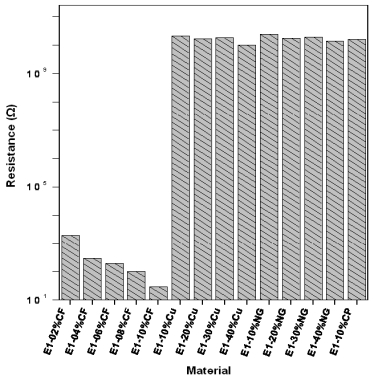
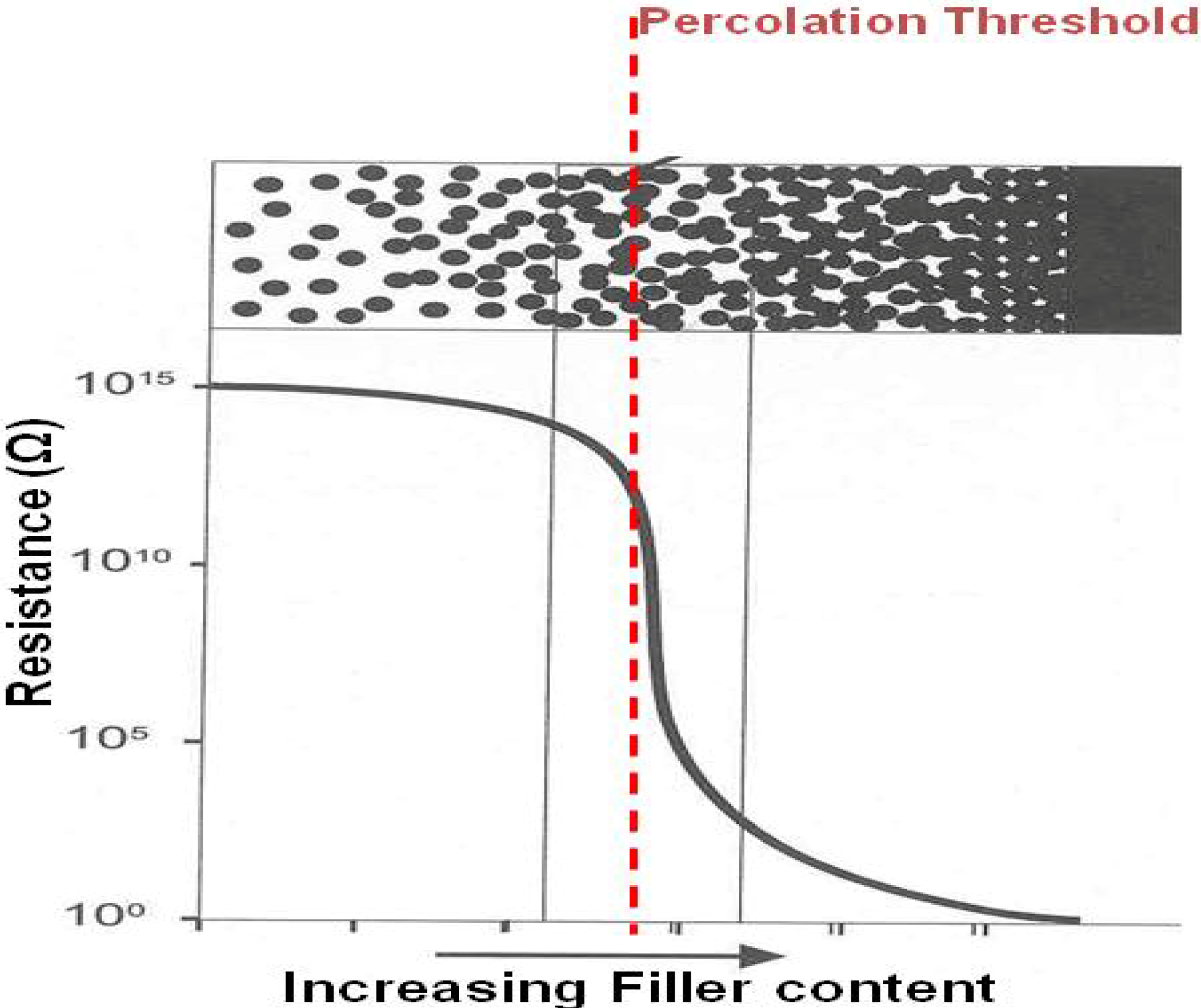
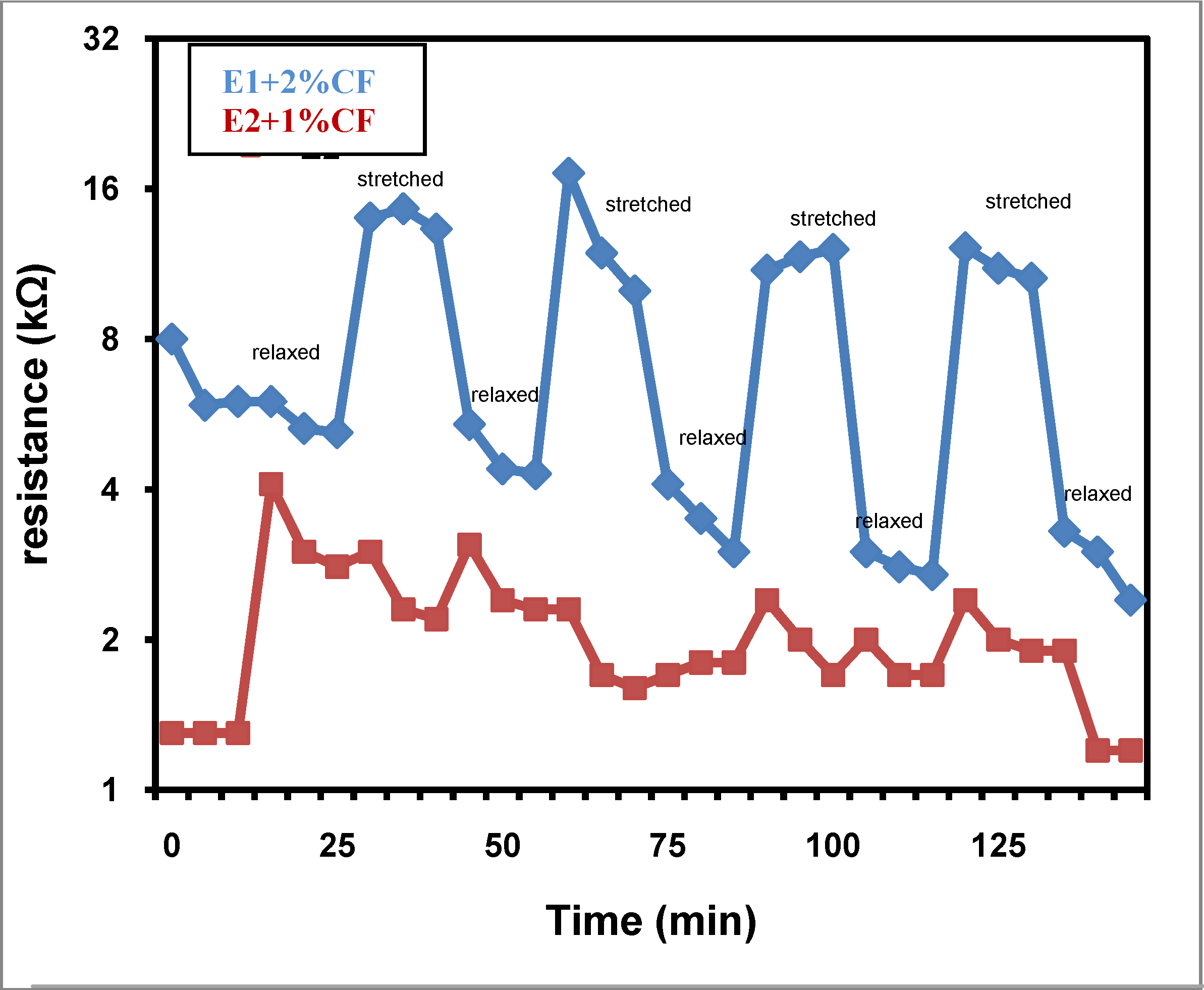
2.1. Electrical Resistance
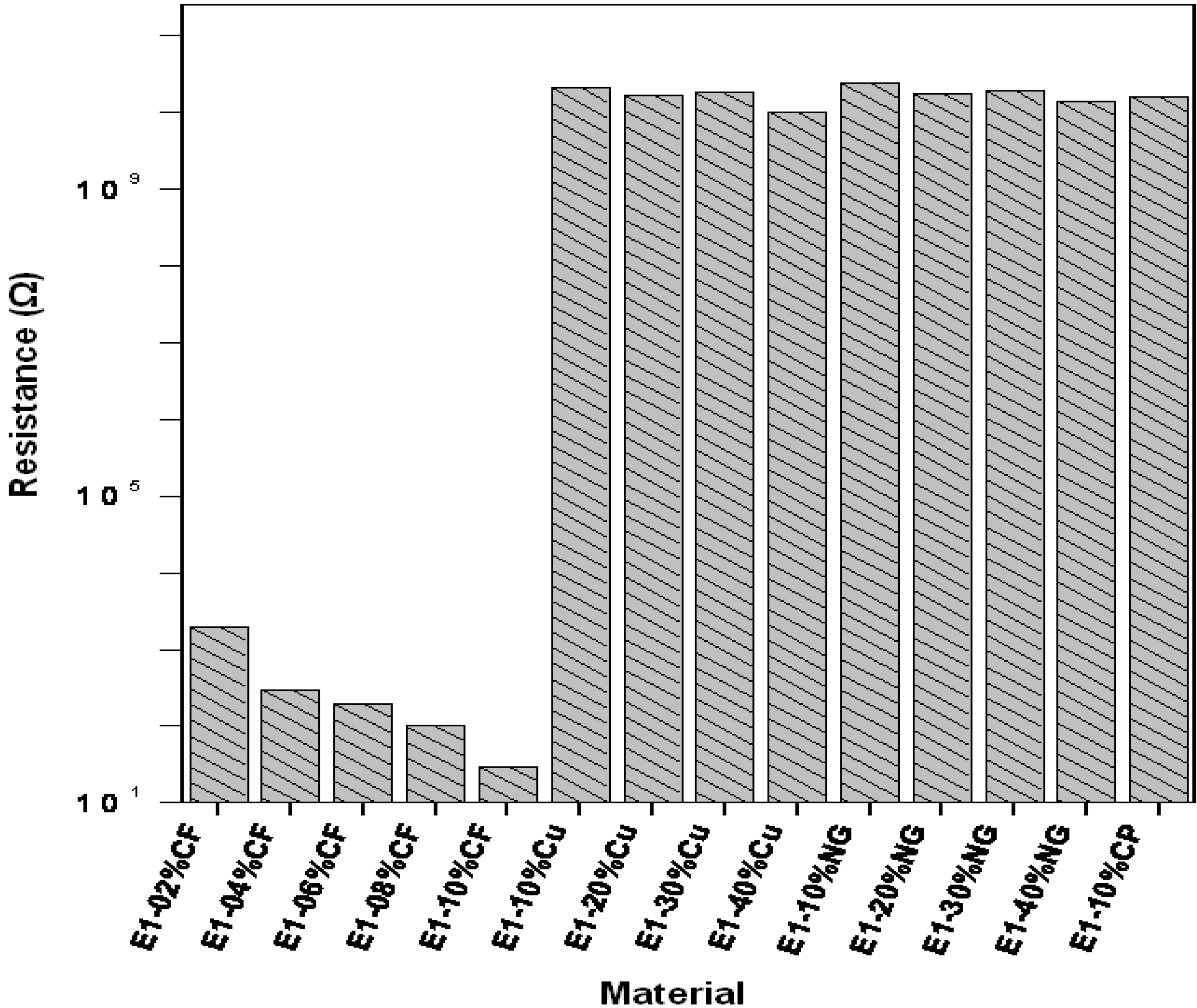

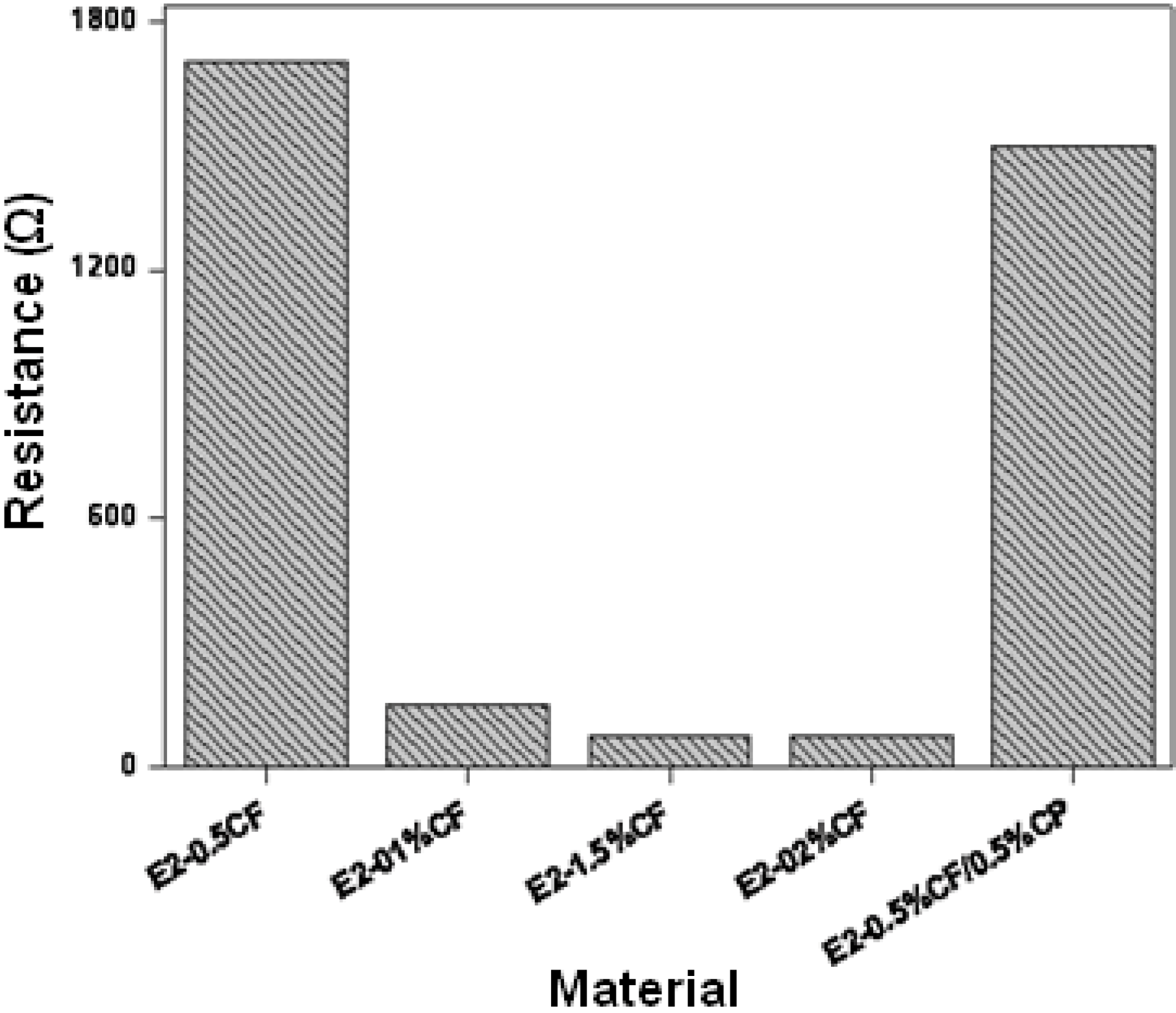
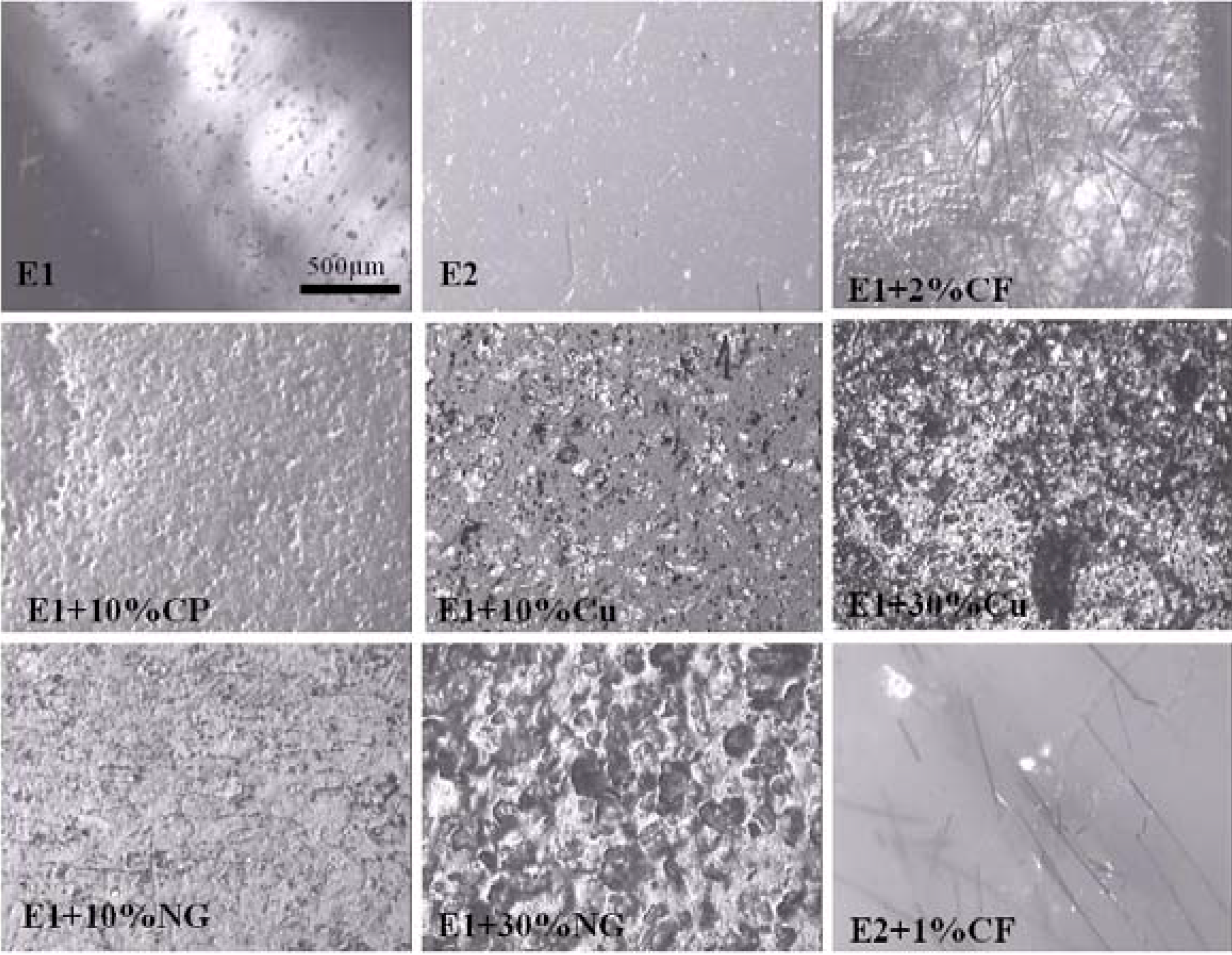
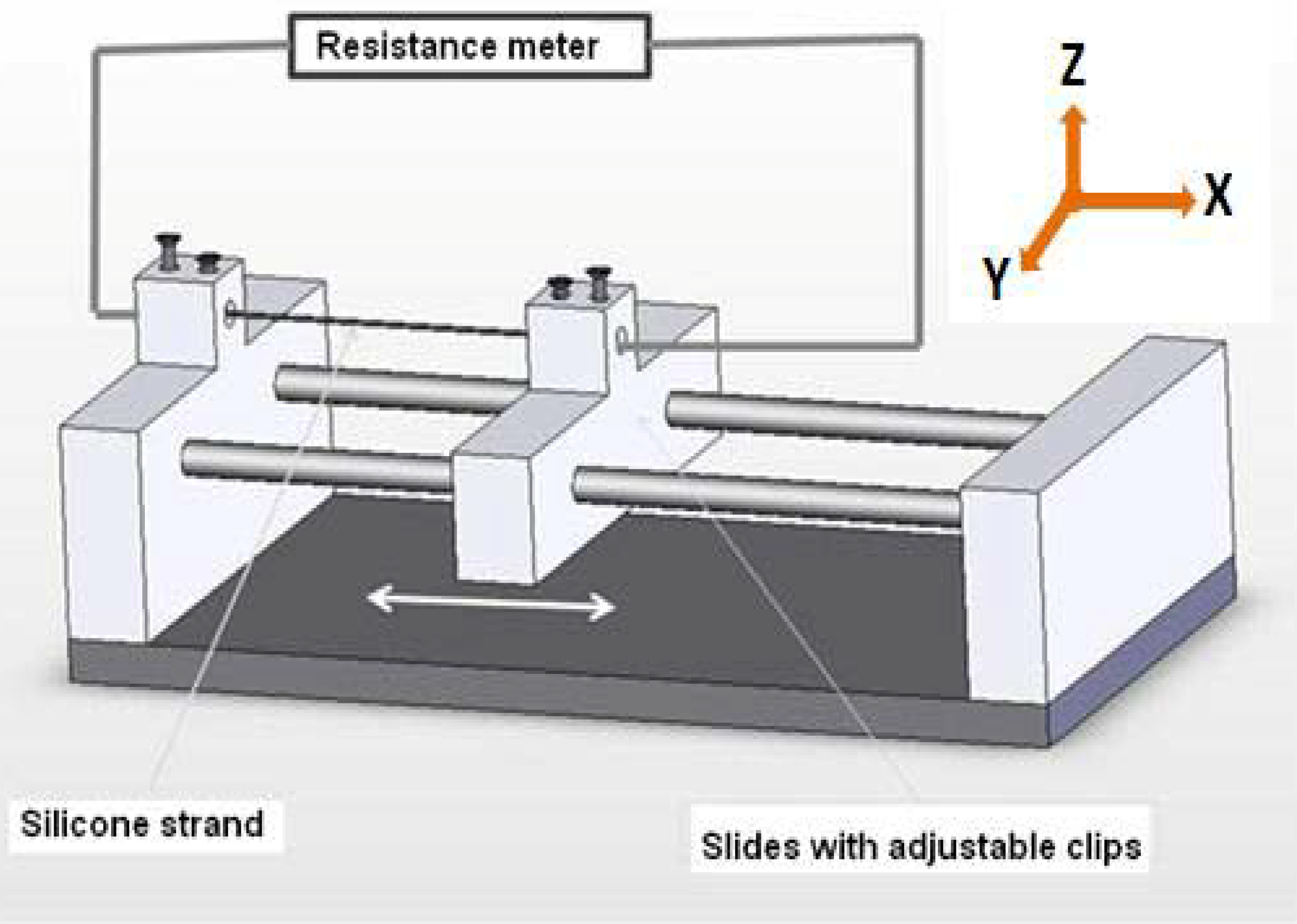
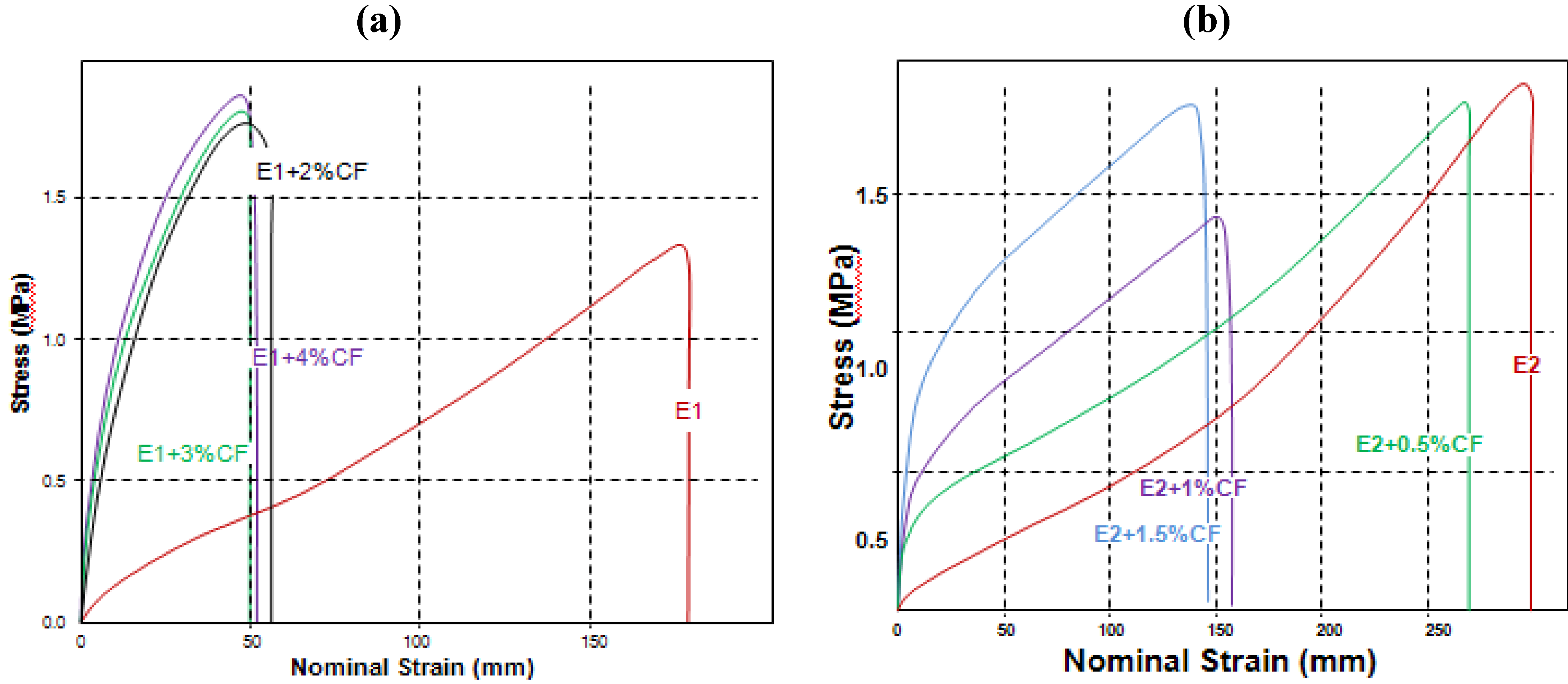
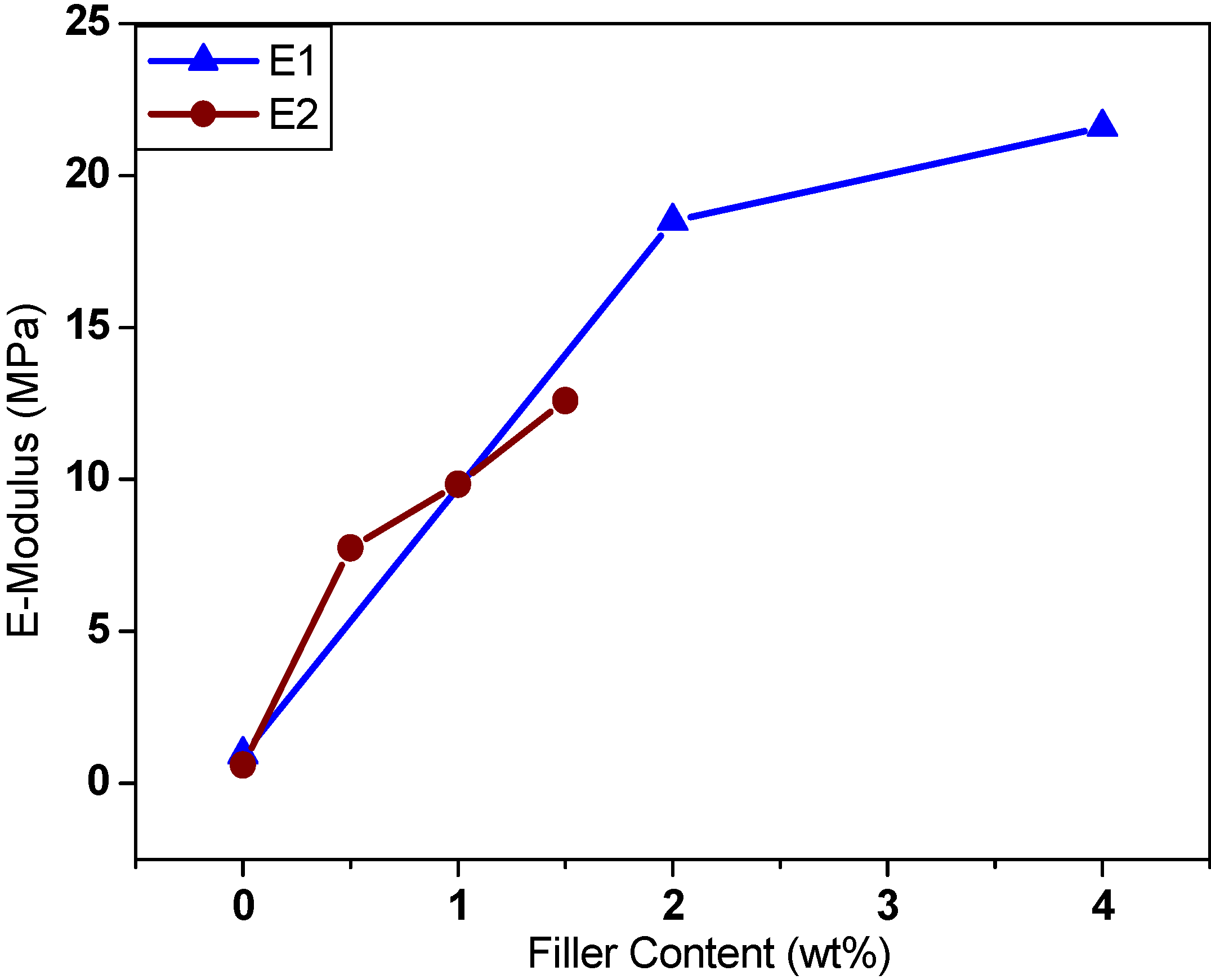
2.2. Mechanical Analysis

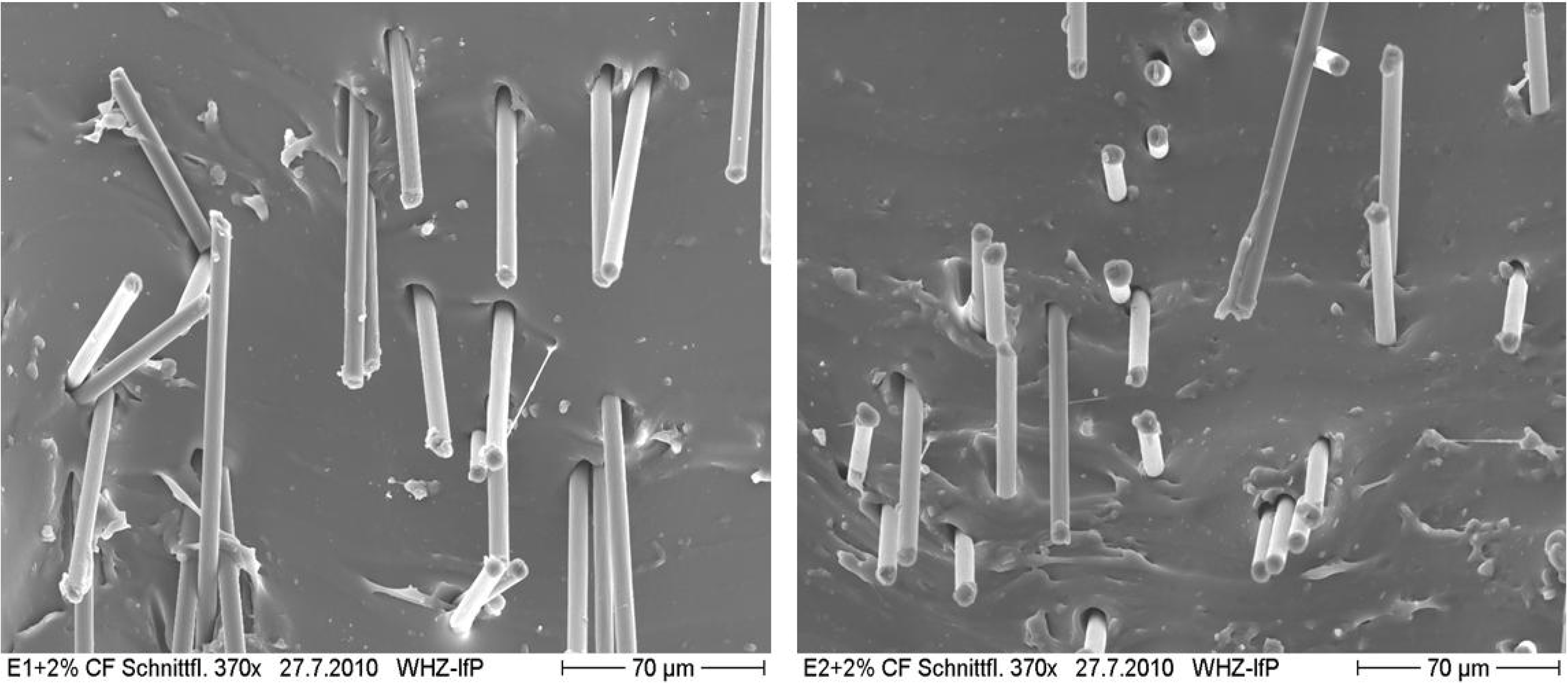
3. Experimental
3.1. Material
3.1.1. Silicone Rubbers

| Material | Abb. | Density (g/cm3) | Hardness | Heat Resistance (°C) | Elongation at Break | Mixing Ratio | Curing Time (h) |
|---|---|---|---|---|---|---|---|
| Elastosil M4641 | E1 | 1.07 | Shore A 43 | Up to 180 | 300% | 10:1 Silicone:hardener | 15 |
| Elastosil M4503 | E2 | 1.17 | Shore A 25 | 180 | 350 | 100:5 | 15 |
3.1.2. Electrically Conductive Fillers
| Filler | Abb. | Trade Name | Manufacturer | Density (g/cm3) | Length (mm) | Diameter (µm) | Particle Size (µm) |
|---|---|---|---|---|---|---|---|
| Carbon Fibers | CF | HTA 5131 | Toho-Tenax Europe GmbH | 1.8 | 6 | 7 | – |
| Carbon black | CP | Norit SA Super | Norit, Netherlands | 0.25 (tamped) | – | – | >150 |
| Nickel coated graphite | NG | E-fill 2701 | Sulzer Metco Ltd. | 1.25 to 1.35 | – | – | 60 |
| Copper Fibers | Cu | E-Cu58 | Stax, Deutsches metallfaserwerk GmbHCo. | – | 0.8 | 60 | – |
3.2. Fabrication of Conductive Silicone Rubbers
4. Conclusions
Acknowledgements
References
- Charles, E. Virtual Chembook; Elmhurst College: Elmhurst, IL, USA, 2003. [Google Scholar]
- British Encyclopaedia. In Science & Technology: Inorganic polymers; Encyclopædia Britannica Inc.: Chicago, IL, USA, 2010.
- Mittal, K.M.; Pizzi, A. Handbook of Sealant Technology; Taylor & Francis Group: Boca Raton, FL, USA, 2009; pp. 27–28. [Google Scholar]
- Manchester, H. Silicones. The Rotarian 1945, 66, 37–40. [Google Scholar]
- Busfeld, J.; Thomas, A.G.; Yamaguchi, K. Electrical and Mechanical Behaviour of filled Elastomers. J. Polym. Sci. B 2005, 43, 2161–2167. [Google Scholar] [CrossRef]
- Wang, P.; Ding, T. Creep of Electrical Resistance under Uniaxial Pressures for Carbon Black Silicone Rubber Composites. J. Mater. Sci. 2010, 45, 3595–3601. [Google Scholar] [CrossRef]
- Mclanchlan, D.S.; Wu, J. Percolation exponents and thresholds obtained from the nearly ideal continuum percolation system graphite-boron nitride. Phys. Rev. B 1997, 20, 1236–1248. [Google Scholar]
- Li, Y.; Lu, D.; Wong, C.P. Electrically Conductive Adhesives with Nanotechnologies; Springer: New York, NY, USA, 2010; pp. 15–19. [Google Scholar]
- Vyas, N. Electrically Conductive Gel. U.S. Patent 5,348,686, 20 September 1994. [Google Scholar]
- Joyce, J., Jr.; Jones, W.; Rowlette, J., Sr.; Macinnes, D., Jr.; Vyas, N. Extrinsically/Intrinsically Conductive Gels. U.S. Patent 5,182,050, 26 January 1993. [Google Scholar]
- Azechi, S.; Nakamura, T. Electrically Conductive Silicone Rubber Composition. U.S. Patent 6,734,250, 11 May 2004. [Google Scholar]
- Chung, D.D.L. Electromagnetic interference shielding effectiveness of carbon materials. Carbon 2001, 39, 279–285. [Google Scholar] [CrossRef]
- Annadurai, P.; Mallick, A.K.; Tripathy, D.K. Studies on microwave shielding materials based on ferrite- and carbon black-filled EPDM rubber in the X-band frequency. J. Appl. Polym. Sci. 2002, 83, 145–150. [Google Scholar] [CrossRef]
- R&G Faserverbundwerkstoffe GmbH. Safety Data Sheet, according to Regulation No. 1907/2006; R&G Faserverbundwerkstoffe GmbH: Waldenbuch, Germany, 2008. [Google Scholar]
- Jan Chan, H. Carbon black filled conducting polymers and polymer blends. Adv. Poly. Tech. 2002, 21, 299–313. [Google Scholar] [CrossRef]
- Saleem, A.; Frormann, L.; Iqbal, A. High performance thermoplastic composites: Study on the mechanical, thermal, and electrical resistivity properties of carbon fiber-reinforced polyetherether-ketone and polyethersulphone. Polym. Composite. 2007, 28, 785–796. [Google Scholar] [CrossRef]
- Saleem, A.; Frormann, L.; Iqbal, A. Mechanical, Thermal and Electrical Resisitivity Properties of Thermoplastic Composites Filled with Carbon Fibers and Carbon black. J. Polym. Res. 2007, 14, 121–127. [Google Scholar] [CrossRef]
- The materials information society. Atlas of Stress-Strain Curves, 2nd ed.; ASM International: Materials Park, OH, USA, 2002; pp. 1–4.
- Beer, F.; Johnston, E.R.; Wolf, T.J. Mechanics of Materials; McGraw–Hill: New York, NY, USA, 2004; pp. 56–58. [Google Scholar]
© 2010 by the authors; licensee MDPI, Basel, Switzerland. This article is an Open Access article distributed under the terms and conditions of the Creative Commons Attribution license (http://creativecommons.org/licenses/by/3.0/).
Share and Cite
Saleem, A.; Frormann, L.; Soever, A. Fabrication of Extrinsically Conductive Silicone Rubbers with High Elasticity and Analysis of Their Mechanical and Electrical Characteristics. Polymers 2010, 2, 200-210. https://doi.org/10.3390/polym2030200
Saleem A, Frormann L, Soever A. Fabrication of Extrinsically Conductive Silicone Rubbers with High Elasticity and Analysis of Their Mechanical and Electrical Characteristics. Polymers. 2010; 2(3):200-210. https://doi.org/10.3390/polym2030200
Chicago/Turabian StyleSaleem, Anjum, Lars Frormann, and Alexandru Soever. 2010. "Fabrication of Extrinsically Conductive Silicone Rubbers with High Elasticity and Analysis of Their Mechanical and Electrical Characteristics" Polymers 2, no. 3: 200-210. https://doi.org/10.3390/polym2030200