


Abstract
Oxidative degradation of commercial grade ABS (Acrylonitrile-butadiene-styrene) resin powders was studied by thermal analysis. The instabilities of ABS containing different polybutadiene (PB) contents with respect to temperature were studied by Differential Scanning Calorimeter (DSC). Thermograms of isothermal test and dynamic scanning were performed. Three exothermic peaks were observed and related to auto-oxidation, degradation and oxidative decomposition, respectively. Onset temperature of the auto-oxidation was determined to be around 193 °C. However, threshold temperature of oxidation was found to be as low as 140 °C by DSC isothermal testing. Another scan of the powder after degeneration in air showed an onset temperature of 127 °C. Reactive hazards of ABS powders were verified to be the exothermic oxidation of unsaturated PB domains, not the SAN (poly(styrene-acrylonitrile)) matrix. Heat of oxidation was first determined to be 2,800 ± 40 J per gram of ABS or 4,720 ± 20 J per gram of PB. Thermal hazards of processing ABS powder are assessed by adiabatic temperature rise at process conditions. IR spectroscopy associated with heat of oxidation verified the oxidative mechanism, and these evidences excluded the heat source from the degradation of SAN. A specially prepared powder of ABS without adding anti-oxidant was analyzed by DSC for comparing the exothermic behaviors. Exothermic onset temperatures were determined to be 120 °C and 80 °C by dynamic scanning and isothermal test, respectively. The assessment successfully explained fires and explosions in an ABS powder dryer and an ABS extruder.
1. Introduction
Acrylonitrile-butadiene-styrene (ABS) copolymer is one of the most common used engineering plastics containing rubber. ABS resin is almost the most important product in the polymer industry in Taiwan. It has been characterized to be a two phase system with a glassy SAN (poly(styrene-acrylonitrile)) copolymer and a rubbery polybutadiene (PB) domain [1,2]. The PB latex is usually produced from emulsion polymerization of 1,3-butadiene. The rubbery segment of polybutadiene constitutes a rubber phase and exists as a spherical particle in the glassy matrix of SAN [3]. Styrene and Acrylonitrile are grafted into the PB by emulsion polymerization in order to enhance impact resistance. The glassy copolymer can be varied in composition and become tougher as the acrylonitrile (AN) or styrene content is increased. However, copolymer containing PB is vulnerable to both photo-induced and oxidative degradation. The oxidative degradation results in not only the degeneratively mechanical property but also a potential hazard for processing the ABS powder.
Previous studies have shown that the thermo-oxidation of ABS occurred in the PB phase of the terpolymer [4,5]. The rubber segment has been demonstrated to be the initial vulnerability under the attack of oxygen, giving rise to an allylic hydroperoxide [6,7,8]. In addition, cross-linking destroys the elastic property of the rubber phase with less impact resistance of ABS polymer in photo- or thermal- oxidation of PB [9,10]. IR spectroscopic studies on the degeneration of ABS with aging between 70 and 90 °C under UV irradiation were performed by Shimada and Kabukii [11]. They concluded that only the PB was susceptible to oxidation, not the nitrile or phenyl groups within SAN. Moreover, the thermal processing induced oxidation mainly occurred within the polymer phase of the ABS copolymer when studied by chemiluminescence (CL); the results pointed out the BD phases were the degrading units [12,13]. Adeniyi has proposed the chemical transformations involve in thermal and photo-oxidative degradation of ABS [14]. The conclusion of the oxidative degradation of ABS solely controlled by the chemistry of the three isometric units, vinyl-1,2 ,cis-1,4 and trans-1,4 present in PB was drawn [14].
Some previous studies on ABS stability focused on the effectiveness of the anti-oxidant. Processing of ABS powder, in particular drying, is considered as a safe process since the operating temperature of the dryer, normally below 100 °C, which is usually lower than the degradation or decomposition temperature as measured by dynamic DSC. Shapi studied the thermal stability of ABS film by using DSC and TG and found no significant decomposition change at temperature below 200 °C [15]. Ciupitoiu and Vuluga analyzed the thermo-oxidative stability of ABS film with various ratios of anti-oxidant by determining the starting temperature, maximum temperature, activation energy, and induction time of the oxidation reaction [16]. They reported that the lowest temperature of onset of oxidation is 151 °C for non-stabilized ABS film. Weight fraction of PB in their ABS sample was 15%.
In this study, complete thermal analyses were performed for ABS powders with different PB contents. Thermal data such as exothermic onset temperature, heat of reaction, adiabatic temperature rise, etc. were used to assess the reactive hazards of ABS powder under process conditions e.g., an ABS latex dryer or a compounding extruder. Case histories that related exothermic oxidation of ABS were also discussed. A disastrous incident concerned a fire-induced explosion at an ABS compounding unit which killed 17 people and injured 13 people. Another accident revealed a fire at an ABS fluidized bed dryer by the operation of changing from 25% PB content to 60% PB content in the formulation of ABS basic powder.
In short, these engineering objectives are:
- to characterize the exothermic auto-oxidation of ABS powder,
- to identify the intrinsic hazards of ABS powder in existing processes,
- to apply the results of thermal analysis to related incidents for the change from lower PB content (25%) to higher PB content (60%) that occurred in the dryer.
2. Experimental Section
The ABS powders studied in this work were supplied from the Grand Pacific Petrochemicals, Taiwan. They were classified into No. 10, 112, 114 and 60R with PB weight fractions of 25%, 40%, 50% and 60%, respectively. All samples had been stabilized with 0.25–0.5 wt% di-tert-butyl-p-cresol. Particle sizes of 80% of the ABS powders were in the ranges of 50 to 200 mesh. Sample weights from 1 mg to 10 mg were chosen to ensure perfect contact of sample particles with air. The screening and isothermal experiments were carried out on a Mettler TA4000 system coupled with a DSC25 measuring cell. The system was connected to an IBM compatible PC where the data were stored and analyzed. Disposable aluminum crucible (ME-27731) was used for determining thermograms, isothermal trace, and heat capacity. Time constant of aluminum crucible is about 6 seconds. Transient time data was recorded and analyzed without further deconvolution. The heat capacity measurement method was checked by temperature function of aluminum oxide (α-Al2O3) with the data provided by the National Bureau of Standard (NBS). A typical powder without adding anti-oxidant was also supplied for conducting comparative experiments.
3. Results of Thermal Analysis
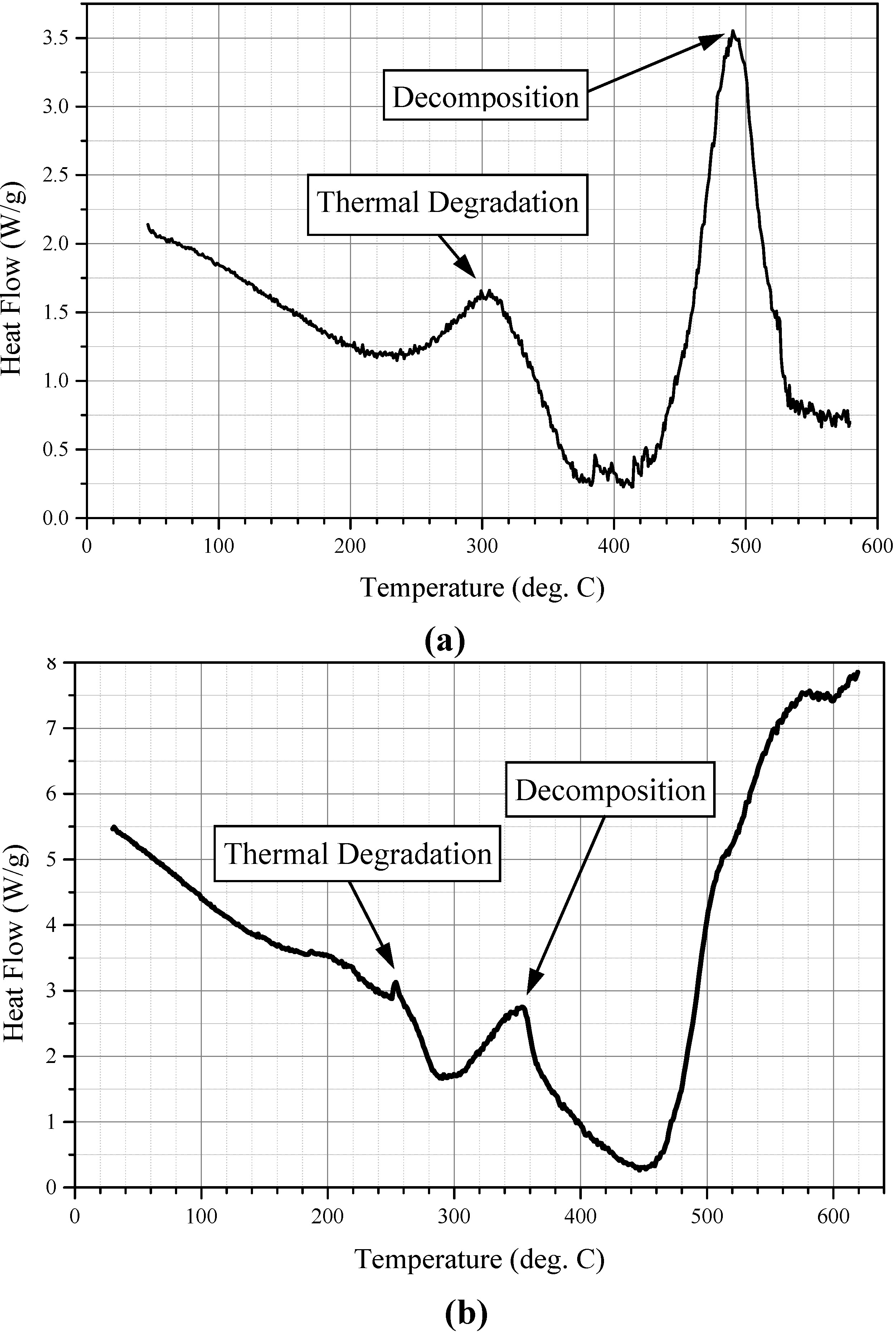
ABS basic powders with different PB fractions were first screened in DSC dynamic temperature programming. Scanning rate of 2, 5 and 10 °C/min have been used. Thermograms of the ABS powder containing 60% PB with scanning rate of 2 °C/min are shown in Figure 1. The initial onset temperature, enthalpy change, and peak heat rate were identified. Three exothermic peaks were found at around 210, 310 and 490 °C. Onset temperatures for all samples were around 193 ± 2 °C disregarded of PB contents. The sharpness of first peak appeared to be a strong function related to PB fraction while the second and third peaks remain unchanged for various PB constitutions. The first peak is attributed to oxidative reaction of PB and the second and third ones are attributed to thermal degradation and decomposition of the matrix phase in ABS, which were almost the same with the characteristic thermograms from SAN copolymer. Data for thermal analysis related PB contents and ratios of anti-oxidant are displayed in Table 1. Onset temperatures detected by scanning of various ABS powders were strongly influenced by anti-oxidant not by the contents of PB. Peak power and heat of reaction revealed that the highest exothermic peak and adiabatic temperature rise of the oxidation was greatest for the ABS powder containing 60% PB. Scanning of the residual from the isothermal test showed disappearance of the first peak, which was related to the auto-oxidation of PB segment in the ABS copolymer. The two residual peaks remain unchanged as shown in Figure 2. By comparing the disappeared peak in these thermograms, the first peak in Figure 1 is exactly the oxidation of polybutadiene phase grafted in SAN. The onset temperature of 193 °C determined by scanning is much lower than the decomposition temperature of 280 °C reported in dust explosion of an ABS compounding plant [17].
Figure 1.
Dynamic DSC thermograms for ABS powders containing 60% PB.
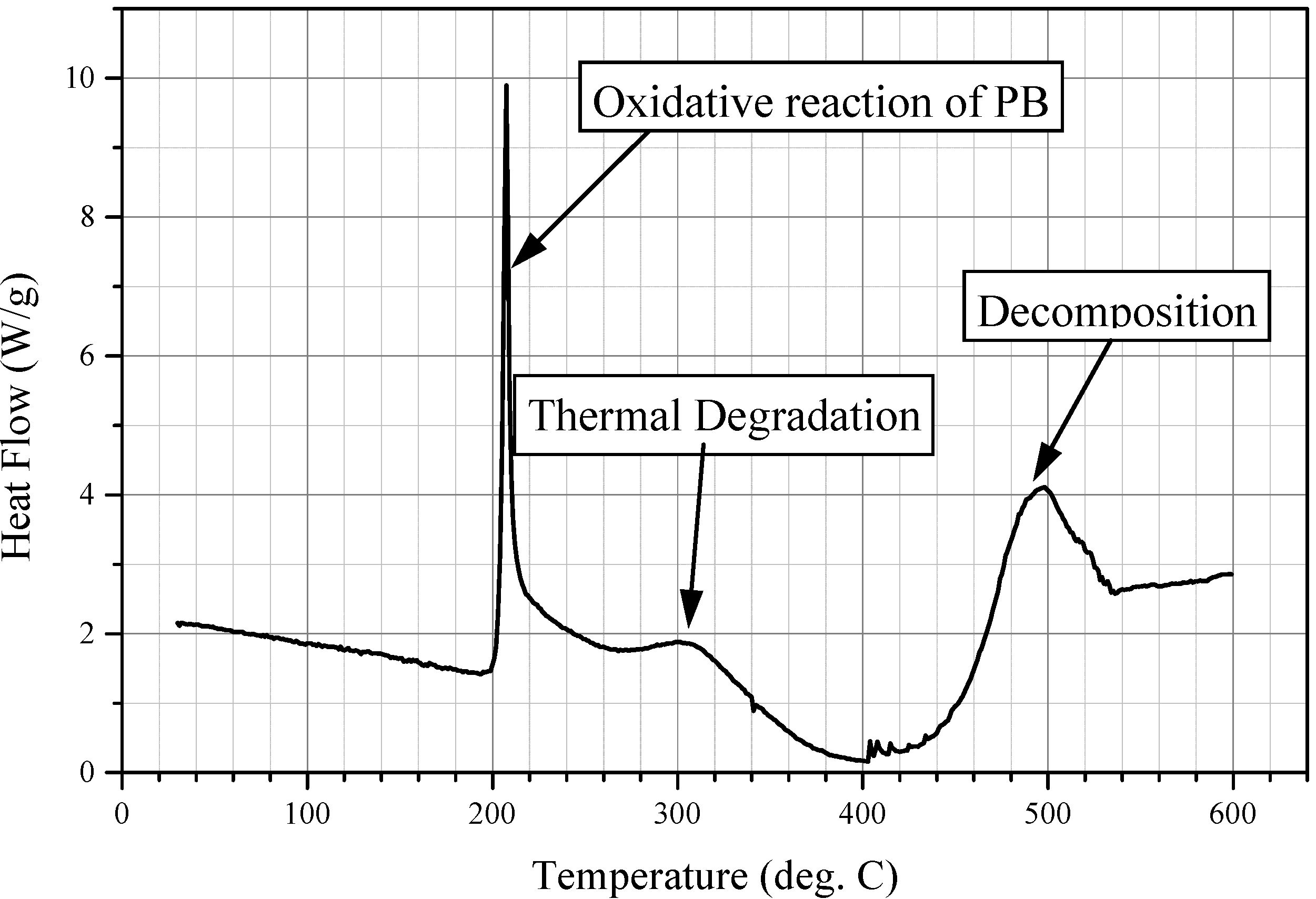
Table 1.
Thermal analysis data of ABS powders.
Figure 2.
(a) Thermogram of ABS powder with 60% PB after isothermal test. (b) Thermogram of SAN copolymer powder.
Phenomenon of exothermic auto-oxidation was also determined in this study by isothermal test of DSC. Heat-releasing power was recorded versus time for temperature from 190 °C to 140 °C in every 10 °C interval. A typical isothermal aging curve with auto-catalytic oxidation was detected and verified by the characteristics of a long induction period, an acceleration period and a decay time [18]. Self-accelerating effects of ABS basic powder in static air environment were presented in these temperature conditions. Figure 3 depicts the isothermal trace of sample containing 60% PB. Collected data of time to induction (Tind), time to maximum rate at isothermal environment (TMRiso), peak power, and enthalpy change are presented in Table 2. Heat of oxidation of the first peak in the thermogram of the ABS powder was novel determined and normalized to be 2,800 ± 40 J per gram of ABS or 4,720 ± 20 J per gram of PB.
It is interesting and noted from Table 2 that the enthalpy of change for all isothermal tests at different temperatures exhibited a consistent result of 2,800 ± 40 J/g ABS. The heats of auto-oxidation for other ABS samples with different PB contents are determined by isothermal tests at 180 °C and list in Table 3. It is clear from Table 3 that the heats of oxidation for different ABS samples are consistent if these values were converted into the unit of J per gram of PB. Therefore, it is further assured that the isothermal heat release and first peak in dynamic scanning are dominated by the PB oxidation.
Figure 3.
Exothermic behavior observed in isothermal test for ABS powder containing 60% PB.
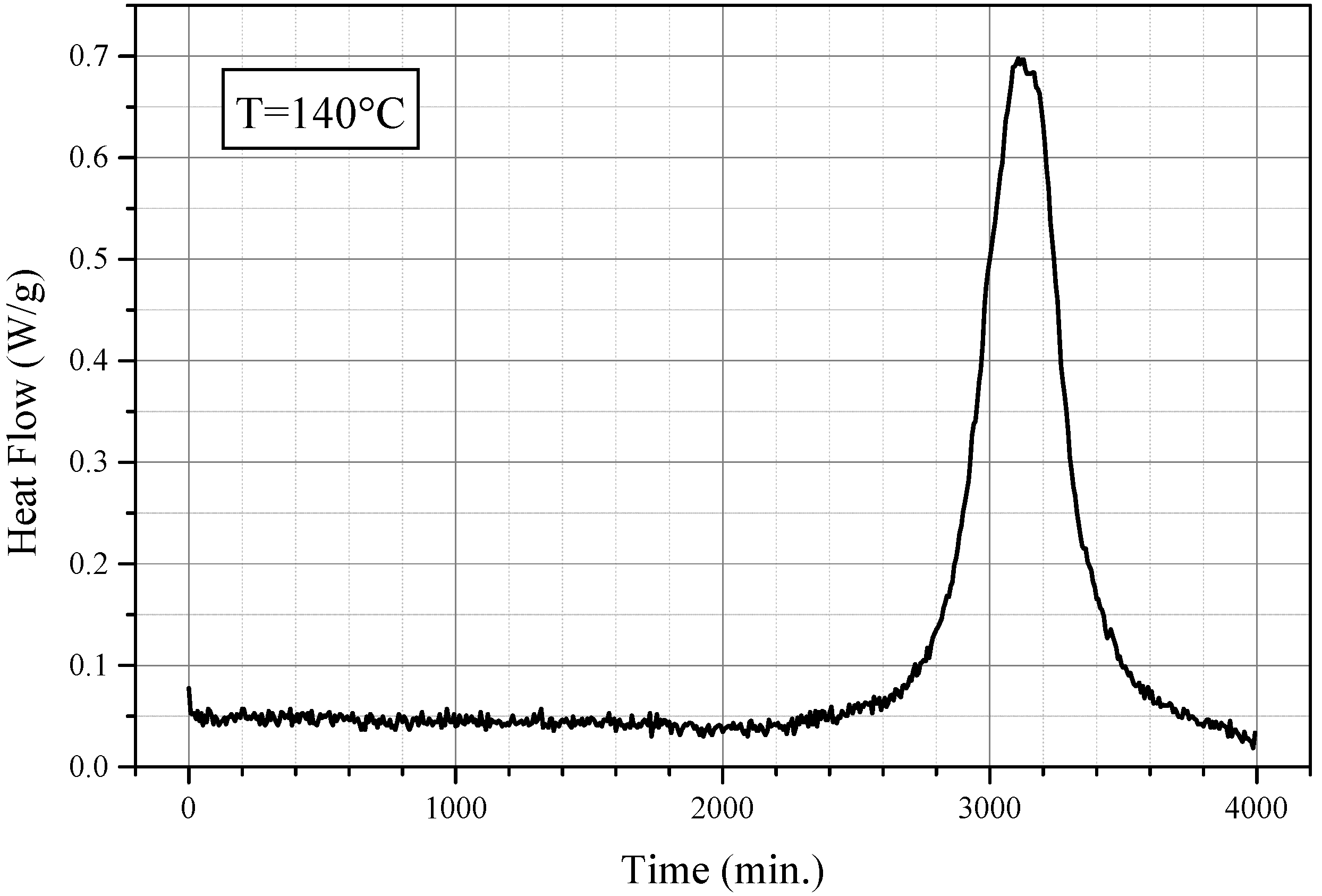
Table 2.
Isothermal exothermic data of ABS powder with 60% PB.
Table 3.
Heat of auto-oxidation of ABS by 180 °C isothermal test.
The hazard from the exothermic oxidation of PB in ABS can be assessed by computing the adiabatic temperature rise (ΔTad).
ΔTad = ΔH/Cp
Cp(T) = a + bT
Adiabatic temperature rise can be determined by Equation 1 with the Cp directly measured by using DSC. The parameters a and b expressed in Cp were obtained from the linear regression of experimental measurements. Data of heat capacities are listed in Table 4. All the adiabatic temperature rises for different samples are found to be greater than 500 °C as shown in Table 1, which is sufficient to trigger the successive decomposition. Because of the combustibility combined with the fire and explosion characteristics of ABS powder (such as minimum ignition energy, minimum explosive concentration, maximum explosive pressure, etc.), in case of abnormal overheating or long time contact of powder with extruder heater will ignite fire or explosion in the compound extruder. Hence, the hazard of fire and explosion of ABS powder possessed intrinsically in its auto-oxidation reaction or thermal hazard feature in this case. The key point of safety operation of an ABS dryer or compounding extruder must be stressed in the temperature control. Been exposed to a higher temperature environment, temperature rise from heat auto-oxidation would accelerate oxidation reaction or raise the reactant to a degenerative complex or to an auto-ignition stage. Even a bulk thermal explosion does not arise due to heat loss or failure of heater in a real process, a local hot spot with sufficient temperature rise can also ignite the ABS dust and results in a severe dust explosion. The higher PB content in ABS powder will possess higher potentially thermal hazards due to its higher heat-releasing rate or heat of oxidation.
Table 4.
Heat capacities of various ABS powders.
3.1. Thermal Oxidation of PB Phase in ABS
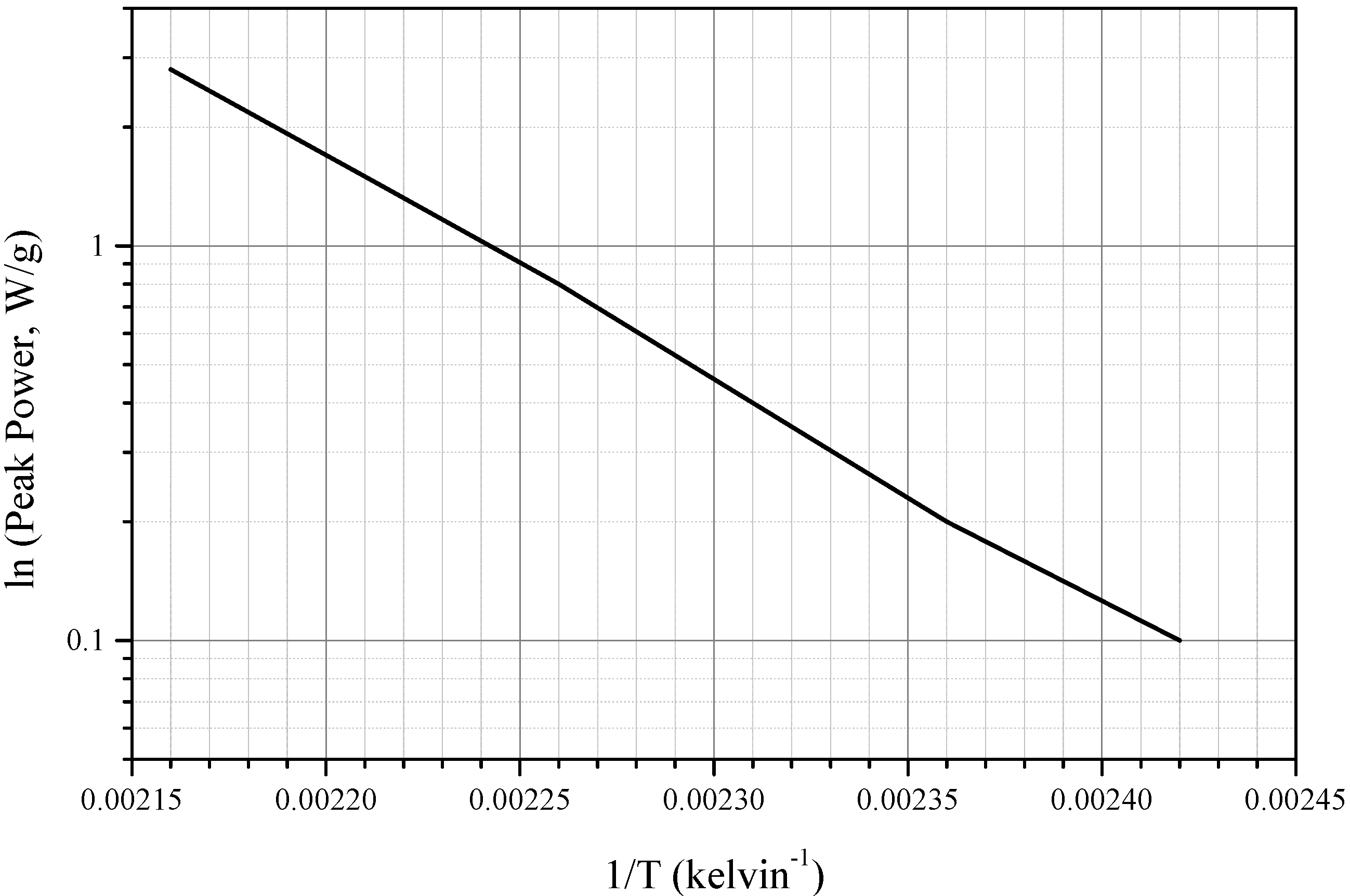
To assure the auto-oxidation reaction to be ascribed to first peak observed at thermogram, the residual after isothermal test was scanned and compared by using methods of thermal analysis. The first exothermic peak disappeared in residual analysis after isothermal aging. Consequently, the first peak in scanning or tracing of exotherm in isothermal experiment was exactly the oxidation of polybutadiene phase grafted in SAN. Auto-oxidation kinetics is essential for basic design of ABS powder dryer and compounding temperature control. Exothermic trace can be used for establishing auto-catalytic model. Figure 3 exhibits a typical exothermic auto-oxidation behavior of ABS powder in isothermal test. This isothermal DSC curve showed a self-accelerating phenomenon. The induction time depends on the concentration of catalytic product or the value of the rate constant in related reaction. Besides, Figure 3 also presents the experimental data of the induction time with respect to temperature, which could be used to be the design or safety data in handling ABS powders. Activation energy of auto-oxidation is conducted from peak powers in Table 1 by Arrhenius plot and determined to be 106 kJmol−1. This low value of activation energy meant that the ABS powder is an active, labile and hazardous material even being added with anti-oxidant. Figure 4 displays the Arrhenius plot of exothermic peak powers. From a symmetrically auto-catalytic model, induction time was chosen as reaction from the beginning to the conversion at about two percent (α = 0.02).
Figure 4.
Arrhenius plot of peak power vs. 1/T of ABS powder containing 60% PB.
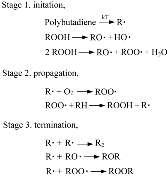
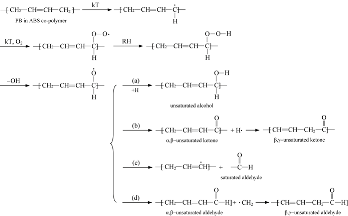
The auto-oxidation reaction schemes have been proposed and discussed in the literature concerning the thermal oxidation and degradation of polybutadiene and ABS [5,6,7,8,11]. The oxidation mechanism consisted of the initiation, propagation and termination. Initiation involved the breaking of π-bonding of PB or hydrogen abstraction by oxygen to produce allyl radical, which combined with oxygen to produce alkylperoxyl radical and further the alkyl hydroperoxide. Shimada and Kabuki suggested that hydrogen abstraction by oxygen predominated in the initiation [11]. Due to the high reactivity of alkylperoxyl groups with labile hydrogen, hydroperoxides gradually accumulated in the polymer. Decomposition of alkyl hydroperoxides into reactive radicals resulted in successive degradations. Auto-catalytic oxidation in lower temperature (such as 140 °C or even lower) needs a long induction time. We proposed that initiation stage characterizes the induction period, which is a combination of complex chemistry of structural transformations. Thermolysis of PB, hydrogen abstraction by oxygen, oxygen penetration into polymer, radical transformation and mechanical shearing of polymer and effect of anti-oxidant are essential factors for the explanation on auto-oxidation kinetics.
The IR spectra of raw ABS powder and residual after thermal oxidation were performed and compared to each other. Results of specific absorptions in IR spectra characterized thermal oxidation observed on the PB structures: (a) Disappearance of the poly-1,2-butadiene (910 cm−1)and poly-1,4-butadiene (965 cm−1) unsaturations in PB polymer blend of ABS powder, these peaks came from the out-of-plane motions of unsaturated –C-H groups. (b) Formation of –O-H stretching at 3,450 cm−1, it was a very broaden absorption due to the effect of hydrogen-bonding occurred between the –O-H groups. (c) Formation of carbonyl absorptions, Absorption of carbonyl groups are always centered at 1,720 cm−1 with a shoulder at 1,730 cm−1, and broadening below 1,710 cm−1. Bandwidth (full width of half maximum, FWHM) was about 40 cm−1, this can be inferred by the mixed products of α,β-unsaturated ketone (1,699 cm−1); α,β-unsaturated aldehyde (1,720 cm−1); saturated ketone (1,720 cm−1); saturated aldehyde (1,731 cm−1); ester group (1,739 cm−1) [14]. These spectral characteristics were the directly evidences for the oxidation and transformation of PB into hydroperoxides and carbonyl complexes.
Thermal oxidations of PB have been proved to be self-accelerating and that the related carbonyl groups and hydroxyl groups are formed with the simultaneous loss of unsaturation. Three isometric units (cis-1,4 unit (45%), trans-1,4 unit (45%), and 1,2-vinyl unit (10%) of PB degrade by the similar mechanism and chemical transformations, but the differences be in the rate of reactions. Besides the spectroscopic observations, heat of reaction is a preeminent way to verify reaction pathway or mechanism of PB oxidation. Been studied in the temperature range from 70 °C to 500 °C of these powders, diverse products may be found, these are due to the oxidative pathways would be different because of unequal average kinetic energies in PB molecules and differently potential energy surfaces. In this study, the same heat of oxidation was novel determined from 140 °C to 190 °C, even in various PB contents of ABS samples. This means the same pathway and final state of PB auto-oxidation under these conditions. Enthalpy change of oxidation in unsaturated polybutadiene which was measured to be 255 kJmol−1 and could be compliant compared to the thermal oxidation mechanisms proposed in the previous study [14]. Heat of oxidation in these schemes was calculated in whole to have an average value of 324 kJ/mol according to the proportion of three isometric units [14]. Heat of reaction implies that the oxidative destruction by air diffused into the double bond of rubber particle is about 80%.
4. Cases of Incidents in ABS Processing Units
The authors came across to knowing at least two incidents in ABS processing units [19]. The first case concerned an explosion at an ABS compounding unit [17] and it was shown in Figure 5. At the morning of accident day, fire occurred at extruder heater and burned canvas. During the fire fighting, a severe explosion happened and resulted in a bigger fire spread out to second and third floor of the plant. In the same time of big fire spreading, two base hoppers located at drying region were also exploded. The compounding plant was completely burnt out. In this accident, 17 people were killed and 13 people were injured.
Figure 5.
Layout of the compounding plant. (a) The simplified layout of the whole plant; (b) The layout of the compounding region.
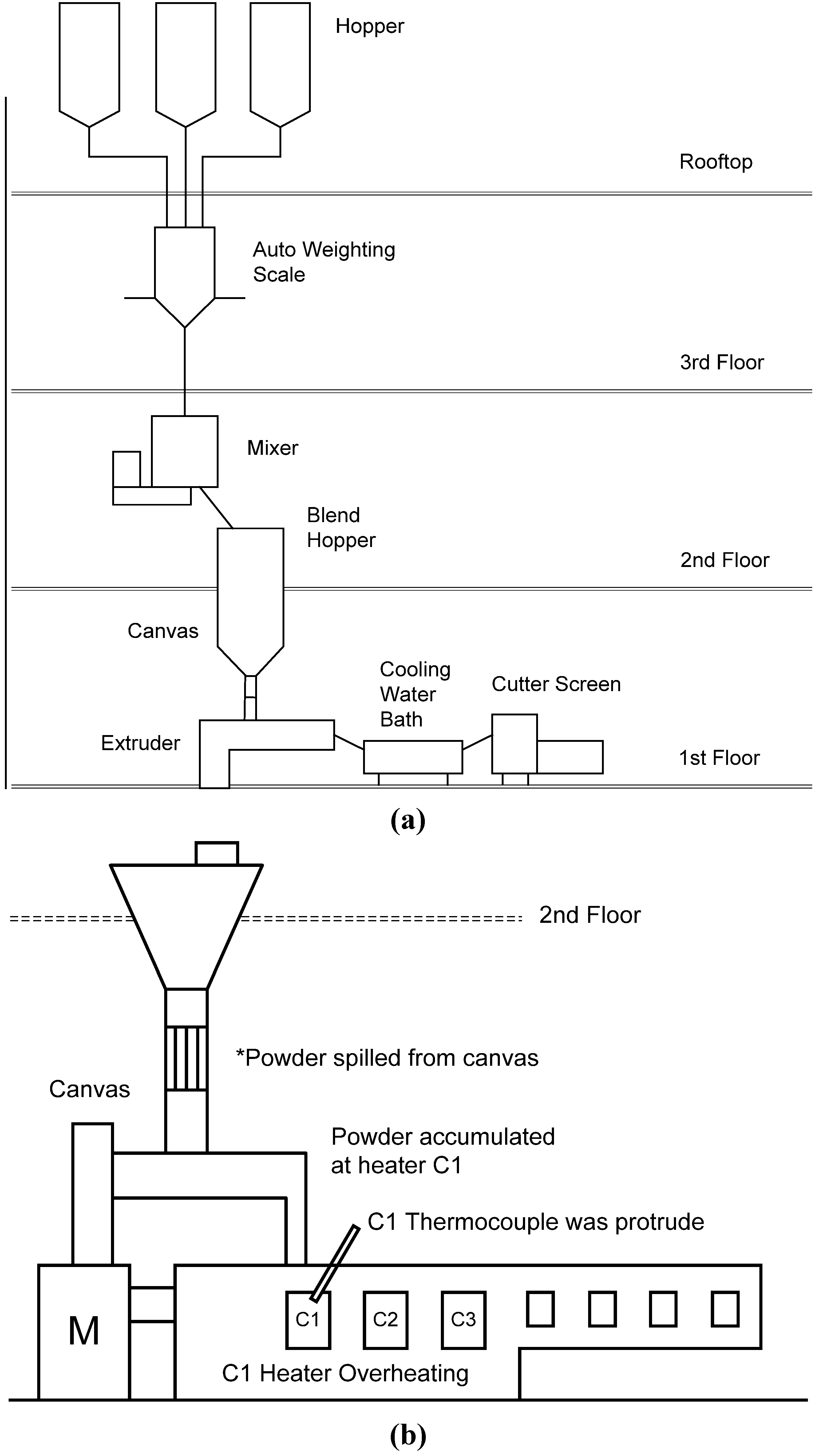
Investigation of the incident found that ABS powder was spilled and deposited on the heater of the extruder. The heater was also superheated to over 450 °C. It is clear that the deposited ABS powder in contact with the heater reached not only the PB auto-oxidation temperature but also the SAN decomposition temperature and directly ignited fire or thermal-induced explosion in the extruder. First fire or explosion could shake the building, equipment, and structure. This dispersed the deposited dust into air and then resulted in a secondary dust explosion, which was always much more worse than the first one. Good housekeeping and stringent temperature control are the key ingredients for safe operation of the extruder.
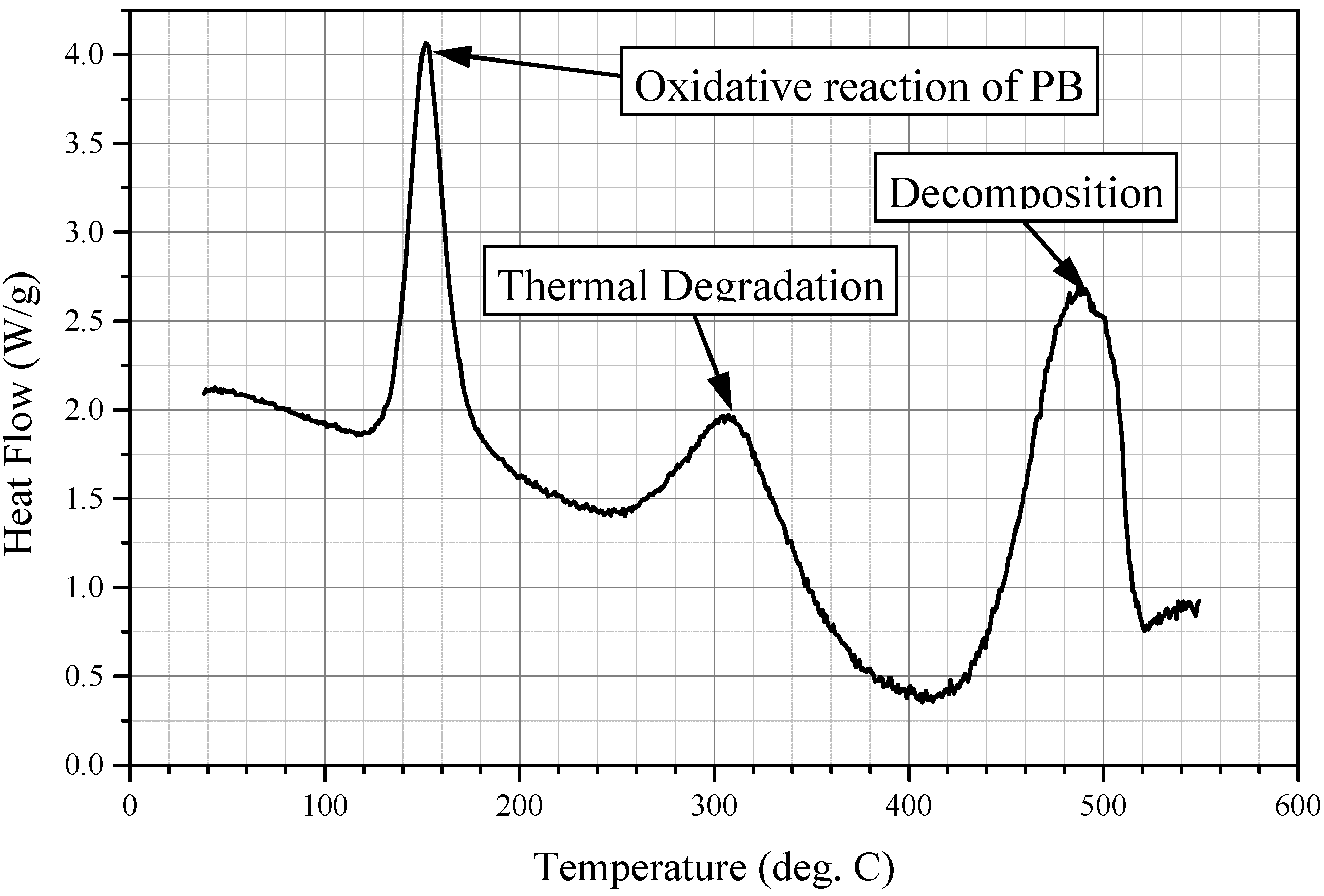
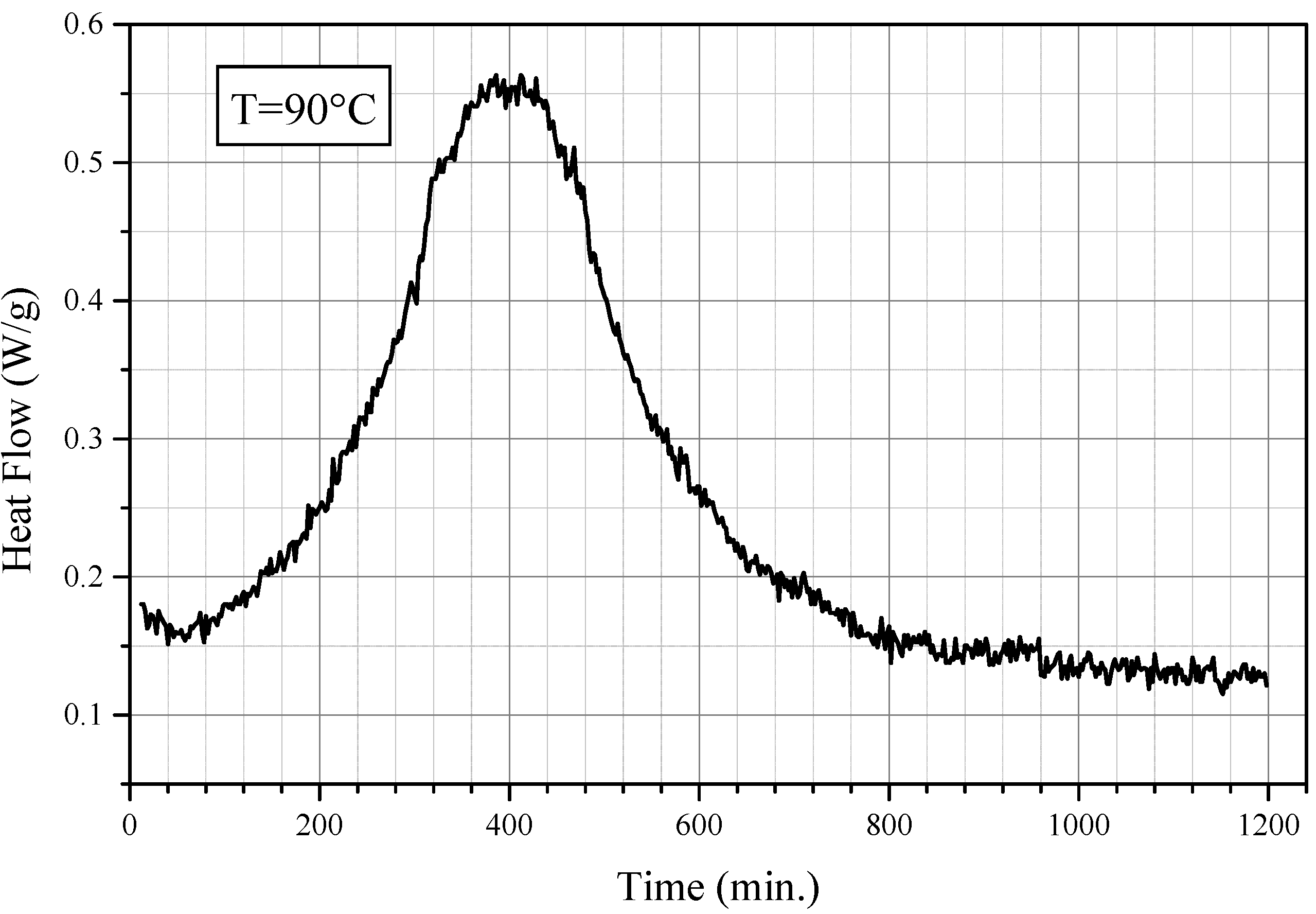
The second case resulted in a fire at an ABS fluidized bed dryer. The ABS powder feed to the dryer has been shifted from 25% PB content to 60% PB content without through cleaning of the dryer internal. An explosion occurred at 13 hours after the feed shift and resulted in rupture of the explosion vent and a fire around the dryer. The heating coil of the dryer is maintained at a temperature at about 88°C, which was controlled well below the onset temperature of PB auto-oxidation. It is interesting to see if there is any possibility that onset temperature of ABS powder containing anti-oxidant can be reduced to close to 90 °C. A test was performed by baking the powder (with adding anti-oxidant) in DSC at 90 °C for 1,500 minutes. No significant change in the dynamic DSC thermogram was found. A further test was performed by leaving the powder at room temperature with good exposure of air for two months. The resulted dynamic DSC thermogram, showed a remarkably low onset temperature of 127 °C. This value is even lower than the onset temperature of 151 °C for un-stabilized ABS powder reported by Ciupitoiu and Vuluga [16]. The change of shape of the thermogram indicated exhausted ABS powder and anti-oxidant possibly changed some molecular structure and relative property. The exact mechanism remains to be investigated. Moreover, an ABS powder without adding anti-oxidant was also performed by thermal analysis. Both dynamic method and isothermal test gave rise to the onset temperature as low as 120 °C and 80 °C, respectively. The exothermic behaviors changed apparently and are displayed in Figure 6 and Figure 7, respectively. Under the isothermal environment at 90 °C and full contact with air, the TMRiso(isothermal time to maximum rate or induction time) is about 400 min, this is consistent with the second case for an induction time of 13 hours inside the dryer maintained at 88 °C.
Figure 6.
Thermogram of an ABS powder without adding anti-oxidant.
The first plausible cause of this explosion is therefore postulated as follows. The old ABS powder plugged between heating coil gave rise to local hot spots from isothermal aging. Previous feed of ABS powder with 25% PB did not give rise to ignition point due to low temperature rise or heat of reaction. The second reason is the newly feeding ABS powder without adding the needed anti-oxidant. The feed change resulted in a much higher temperature rise and triggered the decomposition of SAN matrix and then ignited the powder. The best practices for safe operations would be both the regular cleaning of the dryer internal to avoid any powder deposited on the surface of heating coil and the delicate process control for adding anti-oxidant with certainty.
Figure 7.
Isothermal test of an ABS powder without adding anti-oxidant.
5. Conclusions
Newly exothermic phenomena of auto-oxidation or self-accelerating oxidation on grafted polybutadiene of ABS basic powder are discovered and manifested by thermal analysis. Analyses of ABS samples by DSC calorimetry have shown that these plastics deteriorate most readily through the PB components. Thermal oxidation of ABS is basically come from its PB component as a result of hydroperoxide or carbonyl complex. Oxidation of the PB segment phase in ABS leads to an exothermic and self-accelerating effect at moderate temperature, which can be a potential hazard in an ABS plant. Onset temperature of exothermic oxidation can be both checked and assessed by dynamic and isothermal techniques. Being of a self-accelerating effect, initiation temperature of oxidation would lower in isothermal experiment than in dynamic method. From the viewpoint of loss or disaster prevention, self-accelerating or auto-catalytic reaction that possesses exothermic behavior should have to be implemented by isothermal test. Case studies are given for two incidents in ABS processing units. Besides verification of the intrinsic properties of hazardous materials, process control also played an important role in preventing the thermal hazards of ABS basic powders.
Nomenclature
| A | pre-exponential factor (sec−1 M1−n) |
| a,b | parameters |
| ΔTad | adiabatic temperature rise (K) |
| Cp | heat capacity at constant pressure (Jg−1K−1) |
| ΔH | heat of oxidation (Jg−1) |
| dQ/dt | heat releasing rate (W) |
| k | rate constant (sec−1 M1−n) |
| n,m | reaction order |
| Ea | activation energy (kJmol−1) |
| T | absolute temperature (K) |
| Tind | induction time (min) |
Acknowledgements
The authors would like to thank the National Science Council of R.O.C. for financial support of this study under Contract No. NSC 95-2221-E-407-MY2. Finally, the authors are very grateful to the valuable helps from Cathy Wu of the National United University in Taiwan.
References
- Audouin, L.; Achimsky, L.; Verdu, J.I. Kinetic modeling of low-tempature oxidation of hydrocarbon polymers. In Handbook of Polymer Degradation, 2nd ed.; Hamid, S.H., Ed.; Marcel Inc.: New York, NY, USA, 2000. [Google Scholar]
- Xu, X.F.; Wang, R.; Tan, Z.Y.; Yang, H.D.; Zhang, M.Y.; Zhang, H.X.; Matsuo, M. Effect of polybutadiene-g-san impact modifiers on the morphology and mechanical behaviors of abs blends. Eur. Polym. J. 2005, 41, 1919–1926. [Google Scholar] [CrossRef]
- Bair, H.E.; Boyle, D.J.; Kelleher, P.G. The effect of light and heat on the rubber content and impact strength of acrylonitrile-butadiene-styrene. Polym. Eng. Sci. 1980, 20, 995–1001. [Google Scholar] [CrossRef]
- Adeniyi, J.B.; Kolawole, E.G. Thermal and photo-degradation of unstabilized ABS. Eur. Polym. J. 1984, 20, 43–47. [Google Scholar] [CrossRef]
- Suzuki, M.; Wilkie, C.A. The thermal degradation of acrylonitrile-butadiene-styrene terpolymer as studied by TGA/FTIR. Polym. Degrad. Stabil. 1995, 47, 217–221. [Google Scholar] [CrossRef]
- Coquillat, M.; Verdu, J.; Colin, X.; Audouin, L.; Neviere, R. Thermal oxidation of polybutadiene. Part 1: Effect of temperature, oxygen pressure, and sample thickness on the thermal oxidation of hydroxyl-terminated polybutadiene. Polym. Degrad. Stabil. 2007, 92, 1326–1333. [Google Scholar] [CrossRef]
- Coquillat, M.; Verdu, J.; Colin, X.; Audouin, L.; Neviere, R. Thermal oxidation of polybutadiene. Part 2: Mechanistic and kinetic schemes for additive-free non-crosslinked polybutadiene. Polym. Degrad. Stabil. 2007, 92, 1334–1342. [Google Scholar] [CrossRef]
- Piton, M.; Rivaton, A. Photo-oxidation of ABS at long wavelengths (>300 nm). Polym. Degrad. Stabil. 1997, 55, 147–157. [Google Scholar] [CrossRef]
- Tiganis, B.E.; Burn, L.S.; Davis, P.; Hill, A.J. Thermal degradation of acrylonitrile-butadiene-styrene (ABS) Blends. Polym. Degrad. Stabil. 2002, 76, 425–434. [Google Scholar] [CrossRef]
- Yang, S.; Castilleja, J.R.; Barrera, E.V.; Lozano, K. Thermal analysis of an acrylonitrile-butadiene-styrene/SWNT composite. Polym. Degrad. Stabil. 2004, 83, 383–388. [Google Scholar] [CrossRef]
- Shimada, J.; Kabuki, K. The mechanism of oxidative degradation of ABS resin. Part I. The mechanism of thermooxidative degradation. J. Appl. Polym. Sci. 1968, 12, 655–669. [Google Scholar] [CrossRef]
- Zlatkevich, L. Chemiluminescence apparatus and method for studying thermal oxidative stability of polymers. Polym. Eng. Sci. 1984, 24, 1421–1428. [Google Scholar] [CrossRef]
- Memetea, T.; Vuluga, Z.; Hagiopol, C. The thermal-oxidative degradation of acrylonitrile-butadiene-styrene copolymers during processing as studied by chemiluminescence. J. Appl. Polym. Sci. 1992, 45, 1229–1237. [Google Scholar] [CrossRef]
- Adeniyi, J.B. Clarification and discussion of chemical transformations involved in thermal and photo-oxidative degradation of ABS. Eur. Polym. J. 1984, 20, 291–299. [Google Scholar] [CrossRef]
- Shapi, M.M. TG and DSC studies of some thermal properties and stability aspects of poly(Acrylonitrile-butadiene-styrene), polystyrene and poly(Acrylonitrile-styrene) plastics. Thermochim. Acta. 1991, 175, 25–34. [Google Scholar] [CrossRef]
- Ciupitoiu, A.; Vuluga, Z. Stabilitatea la termooxidare a ABS prin calorimetrie diferenţială cu baleiaj(DSC). Mat. Plast. 1990, 27, 198–201. [Google Scholar]
- Dust Explosion in ABS Compound Plant; Technical Report for Lucky Yeochun Plant; Grand Pacifit Petrochemical Corporation: Taibei, Taiwan, 1990.
- Waters, D.N.; Paddy, J.L. Equations for isothermal differential scanning calorimetric curves. Anal. Chem. 1988, 60, 53–57. [Google Scholar] [CrossRef]
- Kao, C.-S.; Duh, Y.-S. Accident investigation of an ABS plant. J. Loss Prevent. Proc. Ind. 2002, 15, 223–232. [Google Scholar] [CrossRef]
Appendices: Mechanism and reaction schemes on auto-oxidation of PB component in ABS copolymer
I. Simple schemes regarding chain reactions [11]
II. Delicate mechanism associated with transformation of functional groups [6,7]
© 2010 by the authors; licensee MDPI, Basel, Switzerland. This article is an Open Access article distributed under the terms and conditions of the Creative Commons Attribution license (http://creativecommons.org/licenses/by/3.0/).