

Advantages of the Biomimetic Nanostructured Films as an Immobilization Method vs. the Carbon Paste Classical Method




Abstract
:1. Introduction
2. Results and Discussion
2.1. Electrochemical Response towards Phenols
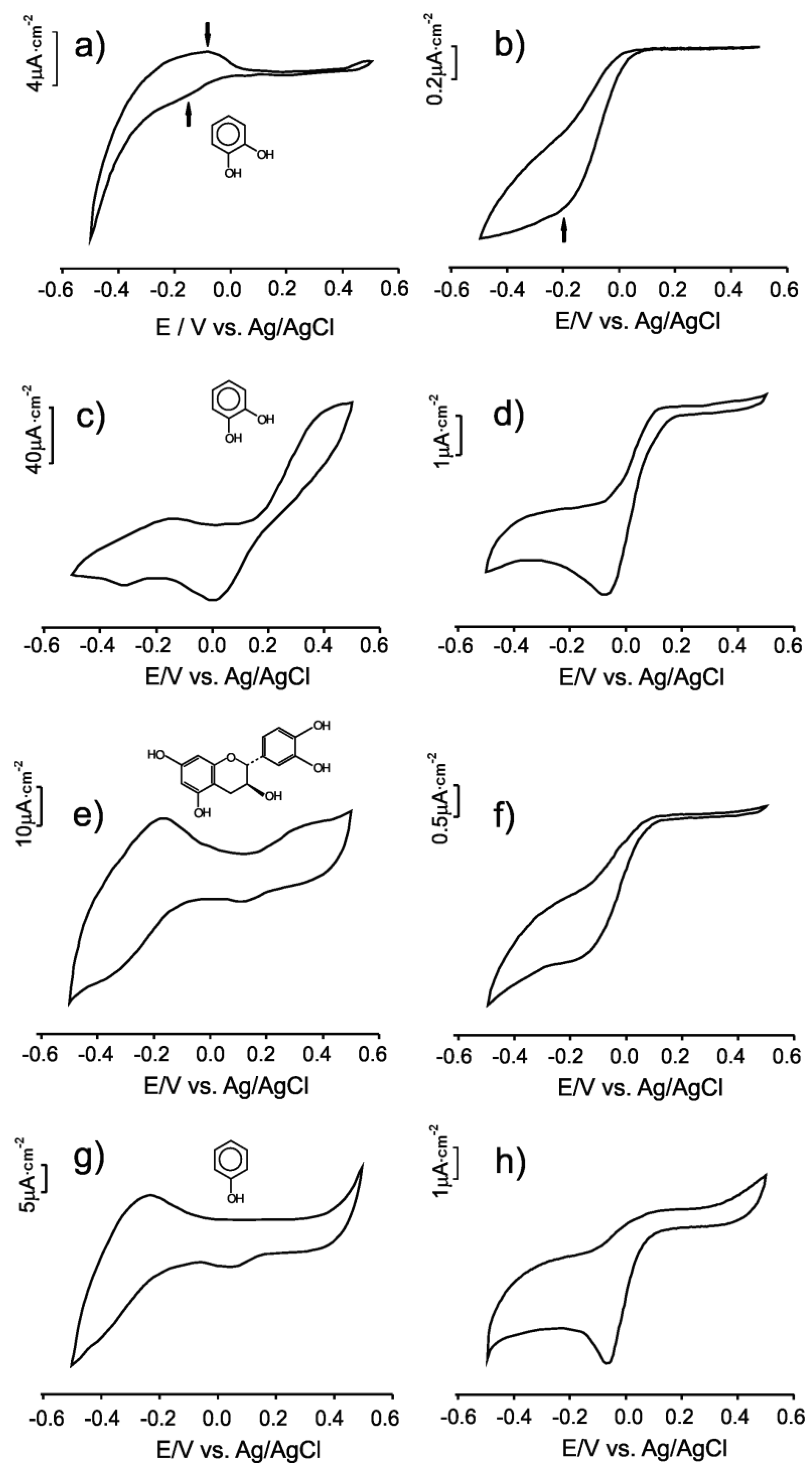
2.2. Influence of Scan Rate in Biosensors Response
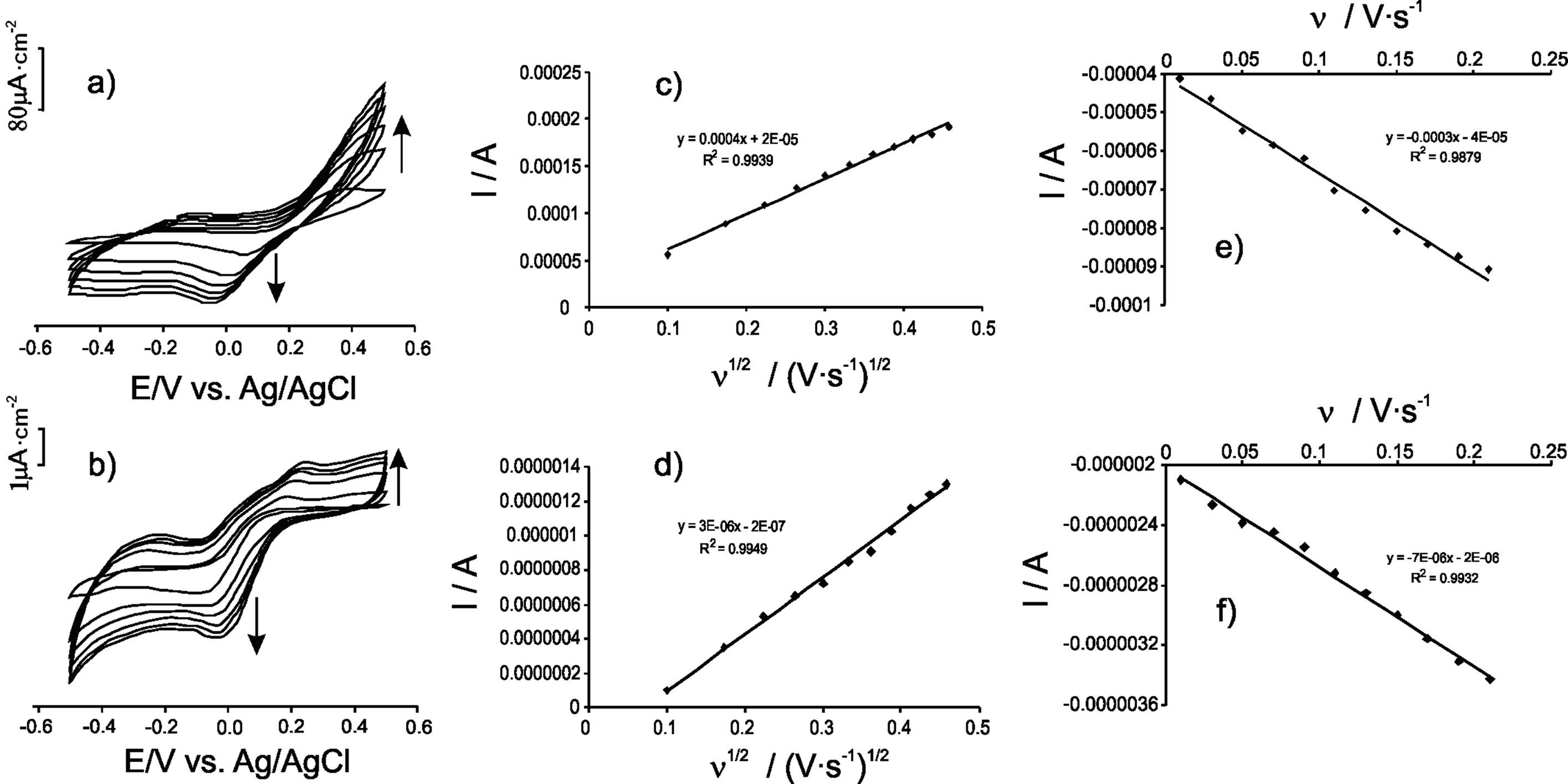

| Phenolic compound | Ty/LuPc2-LB | ||
| m/A·s·V−1 | R2 | Γ/mol·cm−2 | |
| Catechol | −3 ×·10-4 | 0.9879 | 7.98·× 10−11 |
| Catechin | −7·× 10-5 | 0.9987 | 1.86·× 10−11 |
| Phenol | −4·× 10-5 | 0.9788 | 1.12·× 10−11 |
| Ty/LuPc2-CPE | |||
| m/A·s·V−1 | R2 | Γ/mol·cm−2 | |
| Catechol | −7·× 10−6 | 0.9932 | 2.64·× 10−12 |
| Catechin | −9·× 10−7 | 0.9868 | 3.39·× 10−12 |
| Phenol | −7·×10−7 | 0.9798 | 2.75·× 10−12 |
| Phenolic compound | Ty/LuPc2-LB | ||
| m/A·s1/2·V−1/2 | R2 | D/cm2·s−1 | |
| Catechol | 4·× 10−4 | 0.9939 | 1.73·× 10−6 |
| Catechin | 9·× 10−5 | 0.9932 | 8.76·× 10−8 |
| Phenol | - | - | - |
| Ty/LuPc2-CPE | |||
| m/A·s1/2·V−1/2 | R2 | D/cm2·s−1 | |
| Catechol | 3·× 10−6 | 0.9949 | 1.95 ×·10−8 |
| Catechin | 7·× 10−7 | 0.9848 | 1.06·× 10−9 |
| Phenol | - | - | - |
2.3. Effect of the Concentration. Detection Limit
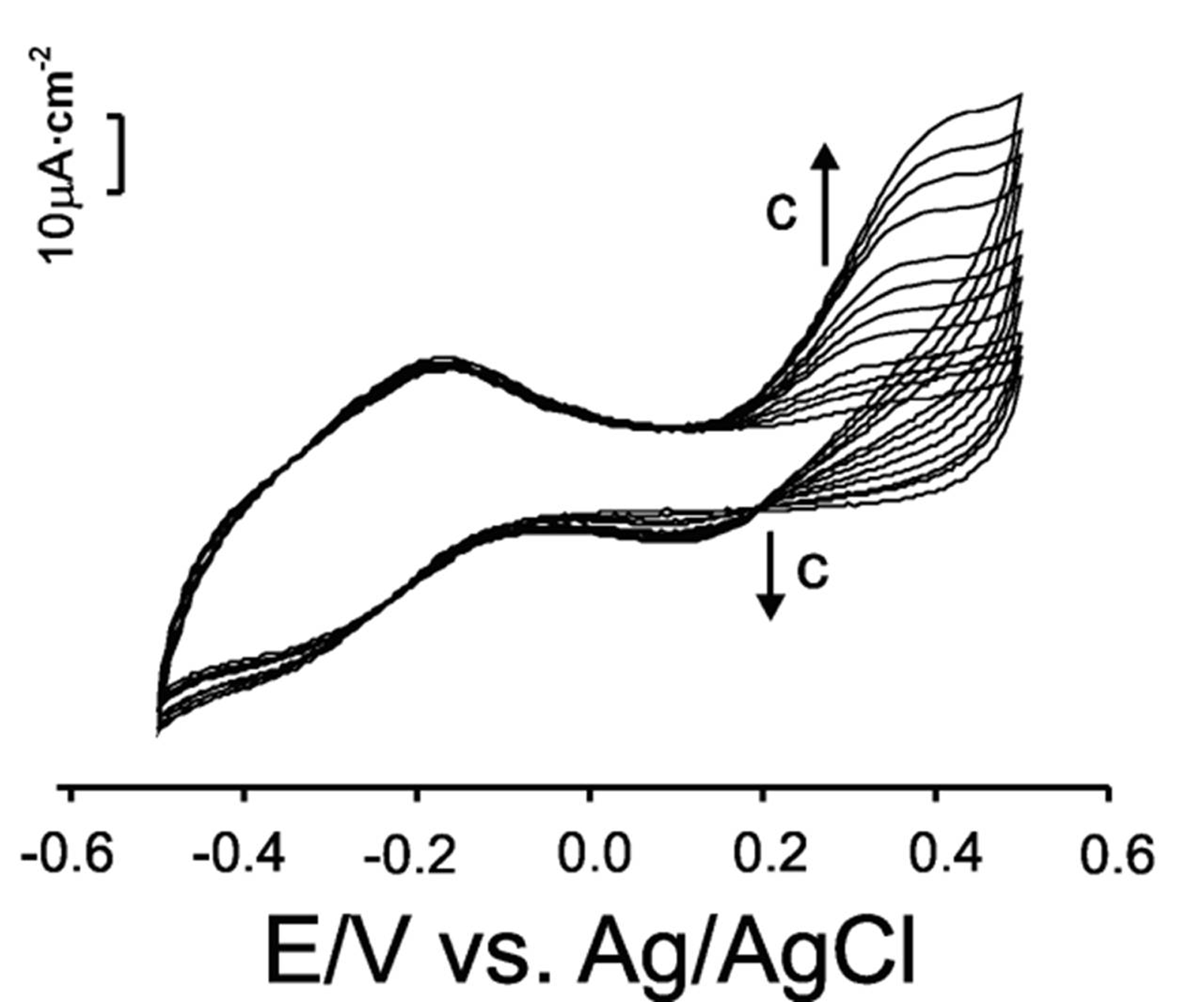
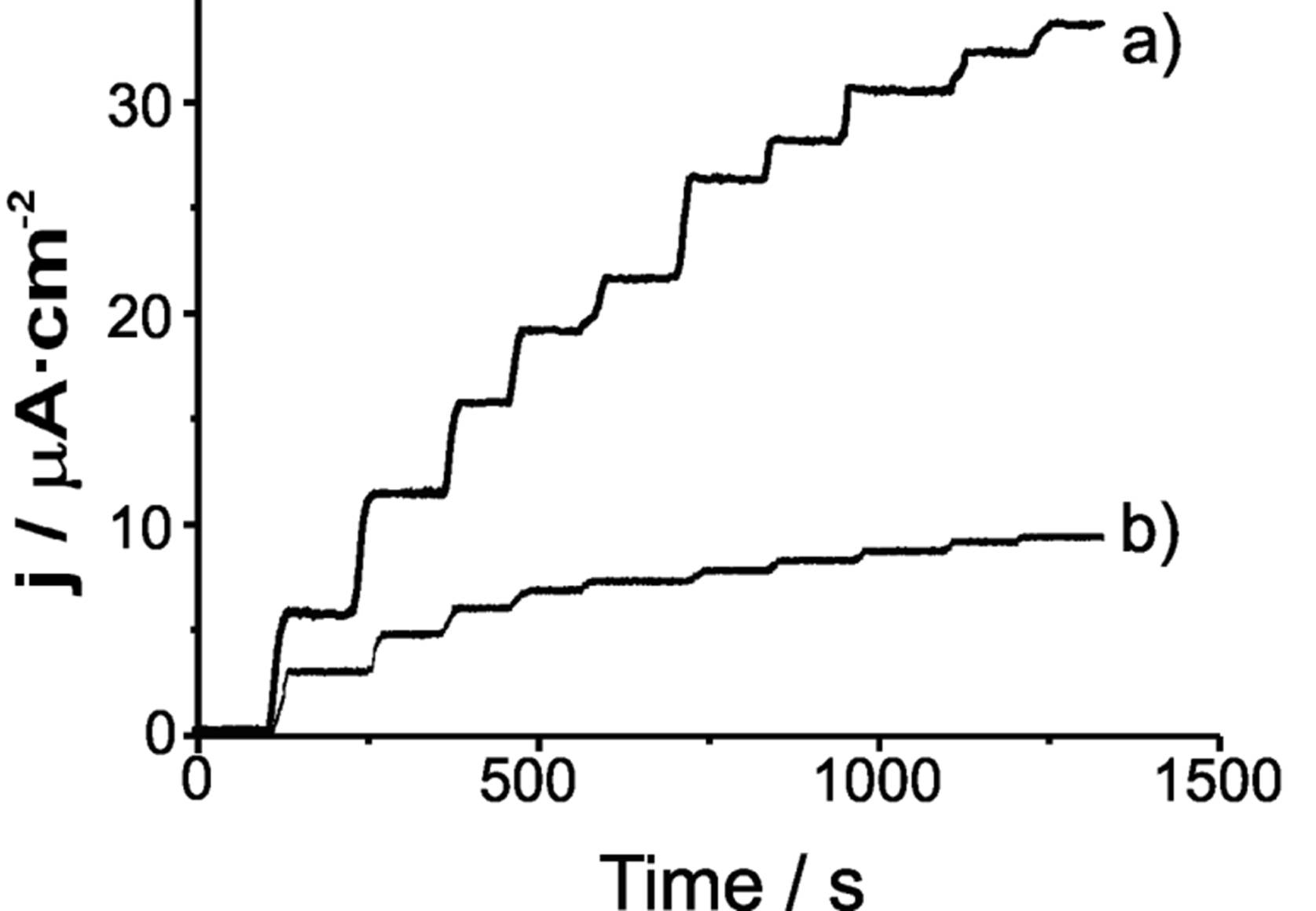
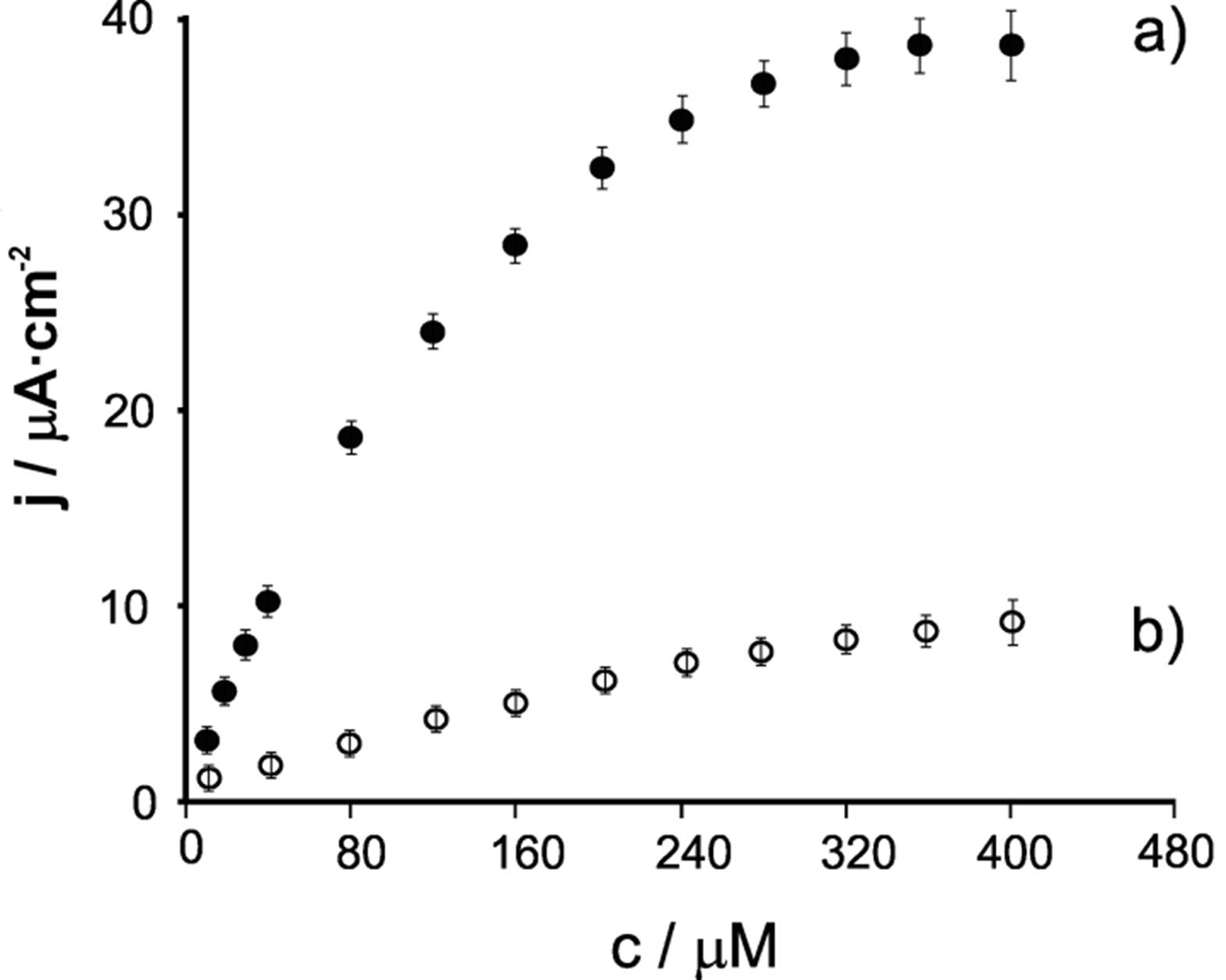
 ) was calculated for the immobilized Ty by using the linearization of Lineweaver-Burk expressed by Equation 3. /(Imax × [S])
is the apparent Michaelis-Menten constant and [S] is the concentration of substrate.
) was calculated for the immobilized Ty by using the linearization of Lineweaver-Burk expressed by Equation 3. /(Imax × [S])
is the apparent Michaelis-Menten constant and [S] is the concentration of substrate.| Phenolic compound | Ty/LuPc2-LB | |||
| h | LD/μM | Imax/μA | KM/μM | |
| Catechol | 1.03 ± 0.03 | 1.80 | 45.65 | 24.56 |
| Catechin | 1.04 ± 0.03 | 5.24 | 38.53 | 70.34 |
| Phenol | 1.09 ± 0.03 | 5.40 | 39.11 | 81.52 |
| Ty/LuPc2-CPE | ||||
| h | LD/μM | Imax/μA | KM/μM | |
| Catechol | 0.96 ± 0.03 | 8.19 | 11.61 | 92.42 |
| Catechin | 0.91 ± 0.03 | 8.24 | 8.54 | 200.65 |
| Phenol | 0.94 ± 0.03 | 8.57 | 9.31 | 241.93 |
and lowest Imax. 2.4. Sensor Stability and Storage Conditions
3. Experimental Section
3.1. Reagents and Solutions
3.2. Carbon Paste (CPE) based Biosensor
3.3. Langmuir-Blodgett (LB) based Biosensor
3.4. Electrochemical Measurements
4. Conclusions
Acknowledgment
Conflict of Interest
References
- Haarstad, K.; Bavor, H.; Maehlum, T. Organic and metallic pollutants in water treatment and natural wetlands: a review. Water Sci. Technol. 2012, 65, 76–99. [Google Scholar]
- Hill, M.K. Understanding Environmental Pollution; Cambridge University Press: Cambridge, UK, 2004. [Google Scholar]
- Kalpna, R.; Mital, K.; Sumitra, C. Vegetable and fruit peels as a novel source of antioxidants. J. Med. Plants Res. 2011, 5, 63–71. [Google Scholar]
- Apetrei, I.M.; Rodríguez-Méndez, M.L.; Apetrei, C.; Nevares, I.; del Alamo, M.; de Saja, J.A. Monitoring of evolution during red wine aging in oak barrels and alternative method by means of an electronic panel test. Food Res. Int. 2012, 45, 244–249. [Google Scholar] [CrossRef]
- Baruah, J.B. Chemistry of Phenolic Compounds: State of the Art; Nova Publishers: New York, NY, USA, 2011. [Google Scholar]
- Smirnoff, N. Antioxidants and Reactive Oxygen Species in Plants; Blackwell Publishing Ltd.: Oxford, UK, 2007. [Google Scholar]
- Shahidi, F. Natural Antioxidants: Chemistry,Health Effects,and Applications; The American Oil Chemists Society: Urbana, IL, USA, 1997. [Google Scholar]
- Di Majo, D.; la Guardia, M.; Giammanco, S.; la Neve, L.; Giammanco, M. The antioxidant capacity of red wine in relationship with its polyphenolic constituents. Food Chem. 2008, 111, 45–49. [Google Scholar] [CrossRef]
- Anesini, C.; Ferraro, G.E.; Filip, R. Total polyphenol content and antioxidant capacity of commercially available tea (Camellia sinensis) in Argentina. J. Agric. Food Chem. 2008, 56, 9225–9229. [Google Scholar] [CrossRef]
- Ballesteros, O.; Zafra, A.; Navalon, A.; Vilchez, J.L. Sensitive gas chromatographic-mass spectrometric method for the determination of phthalate esters, alkylphenols, bisphenol A and their chlorinated derivatives in wastewater sample. J. Chromatogr. A 2006, 1121, 154–162. [Google Scholar] [CrossRef]
- Naczk, M.; Shahidi, F. Extraction and analysis of phenolics in food. J. Chromatogr. A 2004, 1054, 95–111. [Google Scholar]
- Kronholm, J.; Revilla-Ruiz, P.; Porras, S.P.; Hartonen, K.; Carabias-Martinez, R.; Riekkola, M.L. Comparison of gas chromatography-mass spectrometry and capillary electrophoresis in analysis of phenolic compounds extracted from solid matrices with pressurized hot water. J. Chromatogr. A 2004, 1022, 9–16. [Google Scholar] [CrossRef]
- Rama, M.J.R.; Medina, A.R.; Diaz, A.M. A simple and straightforward procedure for monitoring phenol compounds in waters by using UV solid phase transduction integrated in a continuous flow system. Microchim. Acta 2003, 141, 143–148. [Google Scholar] [CrossRef]
- Rodríguez-Méndez, M.L.; Apetrei, C.; de Saja, J.A. Evaluation of the polyphenolic content of extra virgin olive oils using an array of voltammetric sensors. Electrochim. Acta 2008, 53, 5867–5872. [Google Scholar] [CrossRef]
- Markhotkina, O.; Kilmartin, P.A. The use of cyclic voltammetry for wine analysis: Determination of polyphenols and free surfur dioxide. Anal. Chim. Acta 2010, 668, 155–165. [Google Scholar] [CrossRef]
- Kilmartin, P.A.; Zou, H.; Waterhouse, A.L. A cyclic voltammetry method suitable for characterizing antioxidant properties of wine and wine phenolics. J. Agric. Food Chem. 2001, 49, 1957–1965. [Google Scholar] [CrossRef]
- Ferreira, M.; Varela, H.; Torresi, R.M.; Tremiliosi-Filho, G. Electrode passivation caused by polymerization of different phenolic compounds. Electrochim. Acta 2006, 52, 434–442. [Google Scholar] [CrossRef]
- Ziyatdinova, G.; Gainetdinova, A.; Morozov, M.; Budnikov, H.; Grazhulene, S.; Red'kin, A. A Voltammetric detection of synthetic water-soluble phenolic antioxidants using carbon nanotube based electrodes. J. Solid State Electrochem. 2012, 16, 127–134. [Google Scholar] [CrossRef]
- Liu, X.Q.; Feng, H.Q.; Liu, X.H.; Wong, D.K.Y. Electrocatalytic detection of phenolic estrogenic compounds at NiTPPS vertical bar carbon nanotube composite electrodes. Anal. Chim. Acta 2011, 689, 212–218. [Google Scholar] [CrossRef]
- Zagal, J.H.; Griveau, S.; Silva, J.F.; Nyokong, T.; Bedioui, F. Metallophthalocyanine-based molecular materials as catalysts for electrochemical reactions. Coord. Chem. Rev 2010, 254, 2755–2791. [Google Scholar]
- Matemadombo, F.; Apetrei, C.; Nyokong, T.; Rodríguez-Méndez, M.L.; de Saja, J.A. Comparison of carbon screen printed and disk electrodes in the detection of antioxidants using CoPc derivatives. Sens. Actuators B 2012, 166-167, 457–466. [Google Scholar] [CrossRef]
- Rodríguez-Méndez, M.L.; Gay, M.; Apetrei, C.; de Saja, J.A. Biogenic amines and fish freshness assessment using a multisensor system based on voltammetric electrodes. Comparison between CPE and screen-printed electrodes. Electrochim. Acta 2009, 54, 7033–7041. [Google Scholar] [CrossRef]
- Diaz-Diaz, G.; Blanco-Lopez, M.C.; Lobo-Castanon, M.J.; Miranda-Ordieres, A.J.; Tunon-Blanco, P. Chloroperoxidase modified electrode for amperometric determination of 2,4,6-trichlorophenol. Electroanalysis 2009, 21, 1348–1353. [Google Scholar] [CrossRef]
- Franzoi, A.C.; Dupont, J.; Spinelli, A.; Vieira, I.C. Biosensor based on laccase and an ionic liquid for determination of rosmarinic acid in plant extracts. Talanta 2009, 77, 1322–1327. [Google Scholar] [CrossRef]
- Portaccio, M.; di Martino, S.; Maiuri, P.; Durante, D.; de Luca, P.; Lepore, M.; Bencivenga, U.; Rossi, S.; de Maio, A.; Mita, D.G. Biosensors for phenolic compounds: The catechol as a substrate model. J. Mol. Catal. B 2006, 41, 97–102. [Google Scholar] [CrossRef]
- Song, S.; Wang, L.; Li, J.; Zhao, J.; Fan, C. Aptamer-based biosensors. Trends Anal. Chem. 2008, 27, 108–117. [Google Scholar] [CrossRef]
- Huang, T.H.; Kuwana, T.; Warsinke, A. Analysis of thiols with tyrosinase-modified carbon paste electrodes based on blocking of substrate recycling. Biosens. Bioelectron. 2002, 17, 1107–1113. [Google Scholar] [CrossRef]
- Apetrei, C.; Rodriguez-Mendez, M.L.; de Saja, J.A. Amperometric tyrosinase based biosensor using an electropolymerized phosphate-doped polypyrrole film as an immobilization support. Application for detection of phenolic compounds. Electrochim. Acta 2011, 56, 8919–8925. [Google Scholar] [CrossRef]
- Kaneto, K. A new tyrosinase biosensor based on covalent immobilization of enzyme on N-(3-aminopropyl) pyrrole polymer film. Curr. Appl. Phys. 2005, 5, 178–183. [Google Scholar] [CrossRef]
- Liu, Z.; Deng, J.; Li, D. A new tyrosinase biosensor based on tailoring the porosity of Al(2)O(3) sol-gel to co-immobilize tyrosinase and the mediator. Anal. Chim. Acta 2000, 407, 87–96. [Google Scholar] [CrossRef]
- Apetrei, C.; Alessio, P.; Constantino, C.J.L.; de Saja, J.A.; Rodriguez-Mendez, M.L.; Pavinatto, F.J.; Fernandes, E.G.; Zucolotto, V.; Oliveira, O.N. Biomimetic biosensor based on lipidic layers containing tyrosinase and lutetium bisphthalocyanine for the detection of antioxidants. Biosens. Bioelectron. 2011, 26, 2513–2519. [Google Scholar] [Green Version]
- Pavinatto, F.J.; Fernandes, E.G.R.; Alessio, P.; Constantino, C.J.L.; de Saja, J.A.; Zucolotto, V.; Apetrei, C.; Oliveira, O.N., Jr.; Rodriguez-Mendez, M.L. Optimized architecture for Tyrosinase-containing Langmuir-Blodgett films to detect pyrogallol. J. Mater. Chem. 2011, 21, 4995–5003. [Google Scholar]
- Cabaj, J.; Sołoducho, J.; Nowakowska-Oleksy, A. Langmuir-Blodgett film based biosensor for estimation of phenol derivatives. Sens. Actuators B 2010, 143, 508–515. [Google Scholar] [CrossRef]
- Iost, R.M.; Madurro, J.M.; Brito-Madurro, A.G.; Nantes, I.L.; Caseli, L.; Crespilho, F.N. Strategies of Nano-Manipulation for Application in Electrochemical Biosensors. Int. J. Electrochem. Sci. 2011, 6, 2965–2997. [Google Scholar]
- Campuzano, S.; Serra, B.; Pedrero, M.; Villena, J.M.; Pingarron, J.M. Amperometric flow-injection determination of phenolic compounds at self-assembled monolayer-based tyrosinase biosensors. Anal. Chim. Acta 2003, 494, 187–197. [Google Scholar] [CrossRef]
- Schmidt, T.F.; Caseli, L.; Viitala, T.; Oliveira, O.N., Jr. Enhanced activity of horseradish peroxidase in Langmuir-Blodgett films of phospholipids. Biochim. Biophys. Acta 2008, 1778, 2291–2297. [Google Scholar] [CrossRef]
- Apetrei, C.; Casilli, S.; de Luca, M.; Valli, L.; Jiang, J.; Rodríguez-Méndez, M.L.; de Saja, J.A. Spectroelectrochemical characterisation of Langmuir-Schaefer films of heteroleptic phthalocyanine complexes. Potential applications. Colloids Surf. A 2006, 284-285, 574–582. [Google Scholar]
- de Saja, J.A.; Rodríguez-Méndez, M.L. Sensors based on double-decker rare earth phthalocyanines. Adv. Colloid Interf. Sci. 2005, 116, 1–11. [Google Scholar] [CrossRef]
- Bard, A.J.; Faulkner, L.R. Electrochemical Methods; John Wiley and Sons: New York, NY, USA, 2001. [Google Scholar]
- Albery, W.; Craston, D. Amperometric Enzyme Electrodes: Theory and Experiment. Biosensors: Fundamentals and Applications. In Turner, A., Karube, I., Wilson, G.; Oxford University Press: Oxford, UK, 1987; pp. 180–210. [Google Scholar]
- Tembe, S.; Karve, M.; Inamdar, S.; Haram, S.; Melo, J.; D’Souza, S.F. Development of electrochemical biosensor based on tyrosinase immobilized in composite biopolymeric film. Anal. Biochem. 2006, 349, 72–77. [Google Scholar]
- Kiralp, S.; Toppare, L. Polyphenol content in selected Turkish wines, an alternative method of detection of phenolics. Process Biochem. 2006, 41, 236–239. [Google Scholar]
- Kim, M.A.; Lee, W.Y. Amperometric phenol biosensor based on sol-gel silicate/nafion composite film. Anal. Chim. Acta 2003, 479, 143–150. [Google Scholar]
- Linaje, M.; Quintanilla, M.C.; Gonzalez, A.; del Valle, J.L.; Alcaide, G.; Rodriguez-Mendez, M.L. Improvment of the synthesis of Lutetium Bisphthalocyanine using the Taguchi method. Analyst 2000, 125, 341–346. [Google Scholar] [CrossRef]
- Ghasemi-Vamankhasti, M.; Rodríguez-Méndez, M.L.; Mohtasebi, S.S.; Apetrei, C.; Lozano, J.; Razavi, S.H.; Ahmadi, H.; de Saja, J.A. Monitoring the aging of beers using a bioelectronic tongue. Food Control 2012, 25, 216–224. [Google Scholar] [CrossRef]
© 2012 by the authors; licensee MDPI, Basel, Switzerland. This article is an open-access article distributed under the terms and conditions of the Creative Commons Attribution license (http://creativecommons.org/licenses/by/3.0/).
Share and Cite
Apetrei, C.; Saja, J.A.d.; Zurro, J.; Rodríguez-Méndez, M.L. Advantages of the Biomimetic Nanostructured Films as an Immobilization Method vs. the Carbon Paste Classical Method. Catalysts 2012, 2, 517-531. https://doi.org/10.3390/catal2040517
Apetrei C, Saja JAd, Zurro J, Rodríguez-Méndez ML. Advantages of the Biomimetic Nanostructured Films as an Immobilization Method vs. the Carbon Paste Classical Method. Catalysts. 2012; 2(4):517-531. https://doi.org/10.3390/catal2040517
Chicago/Turabian StyleApetrei, Constantin, Jose Antonio de Saja, Javier Zurro, and Maria Luz Rodríguez-Méndez. 2012. "Advantages of the Biomimetic Nanostructured Films as an Immobilization Method vs. the Carbon Paste Classical Method" Catalysts 2, no. 4: 517-531. https://doi.org/10.3390/catal2040517