
Article

Models of Talik, Permafrost and Gas Hydrate Histories—Beaufort Mackenzie Basin, Canada

1
Northern Geothermal Consult, 105 Carlson Close, Edmonton, AB T6R 2J8, Canada
2
Containment and Monitoring Institute (CaMI), CMC Research Institutes Inc., 3535 Research Road NW, Calgary, AB T2L 2K8, Canada
3
Institute of Geophysics, Czech Academy of Science, Prague 14131, Czech Republic
*
Author to whom correspondence should be addressed.
These authors contributed equally to this work.
Energies 2015, 8(7), 6738-6764; https://doi.org/10.3390/en8076738
Submission received: 17 March 2015 / Revised: 17 June 2015 / Accepted: 23 June 2015 / Published: 30 June 2015

Abstract

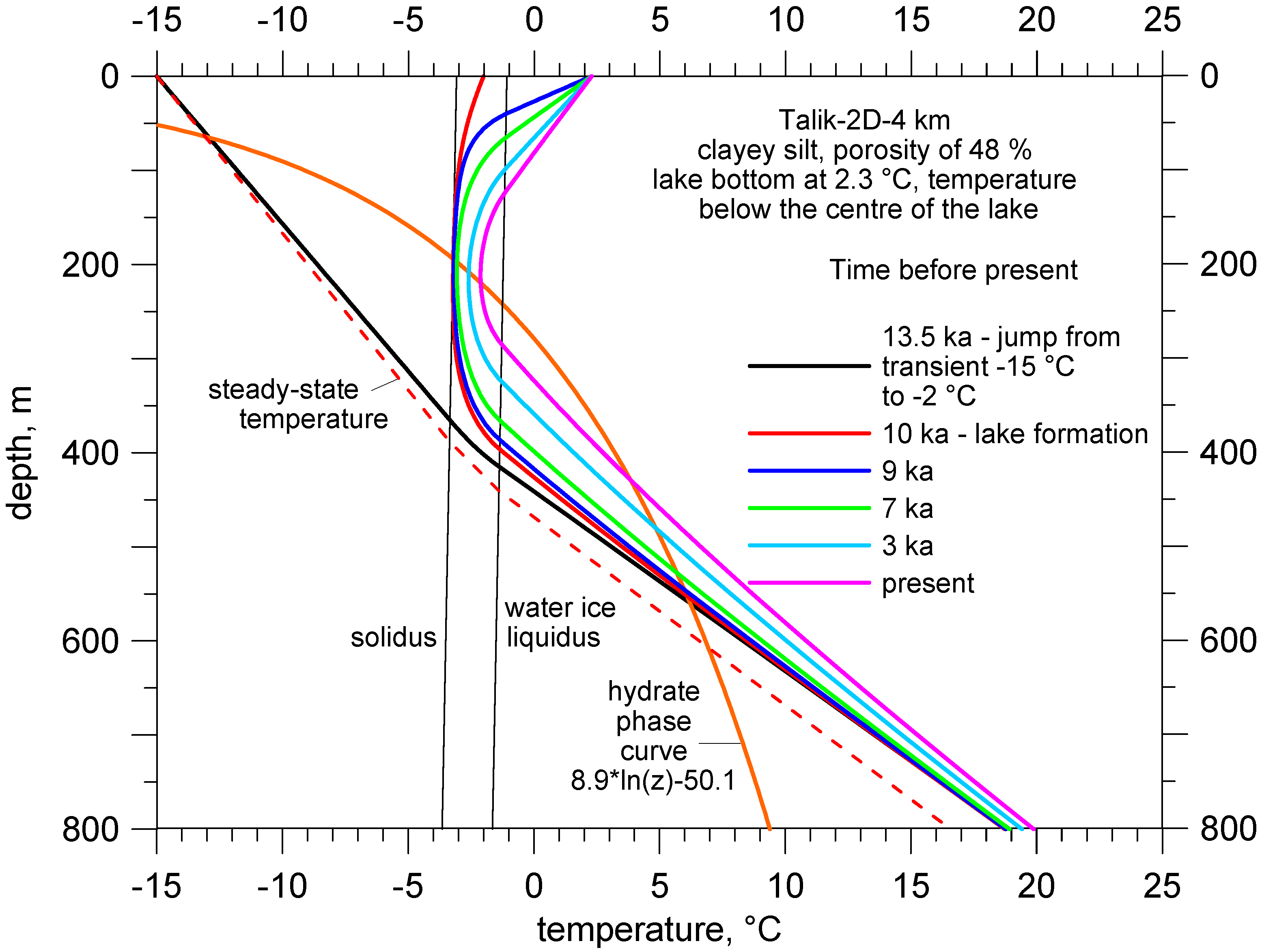
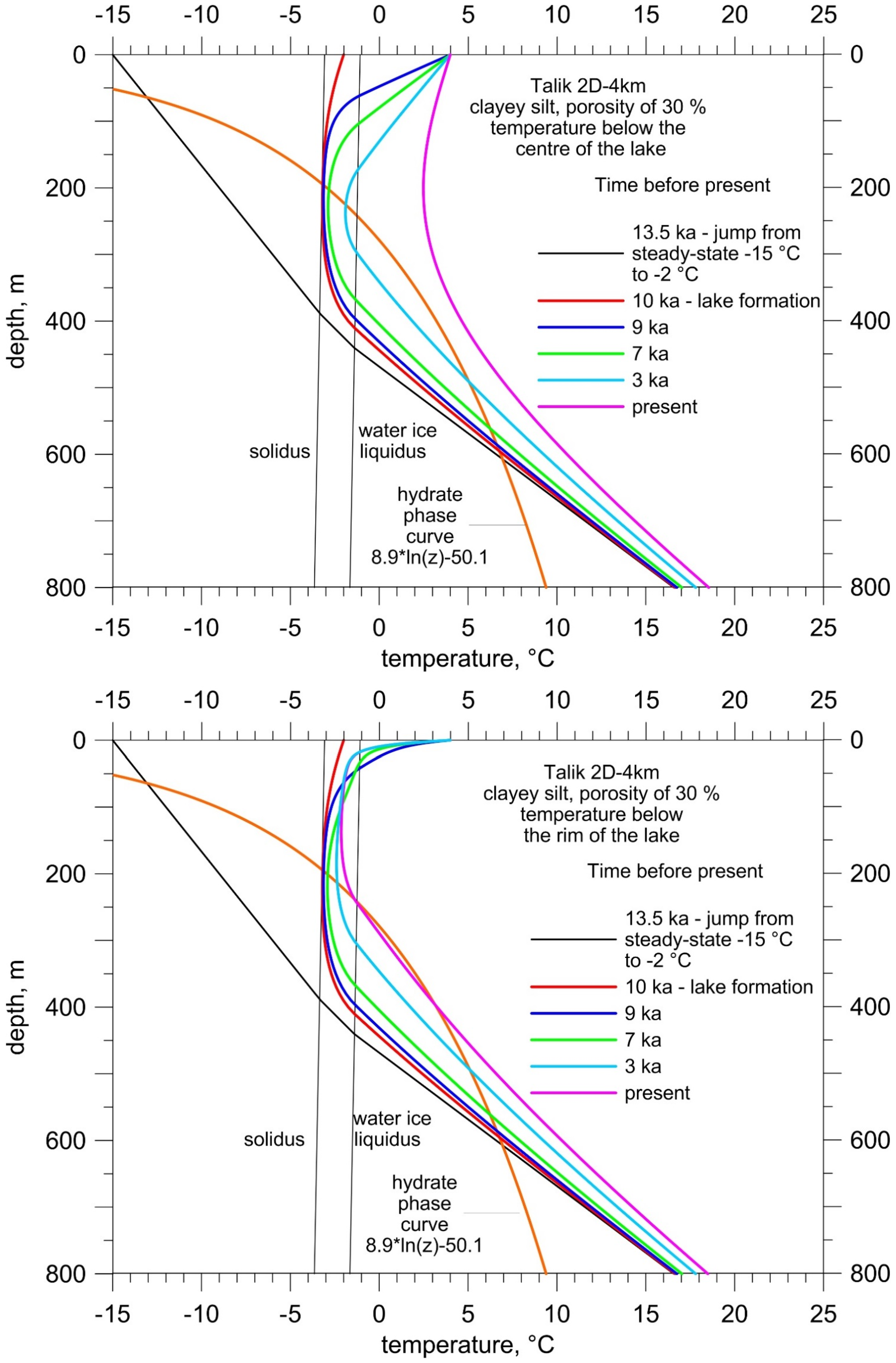
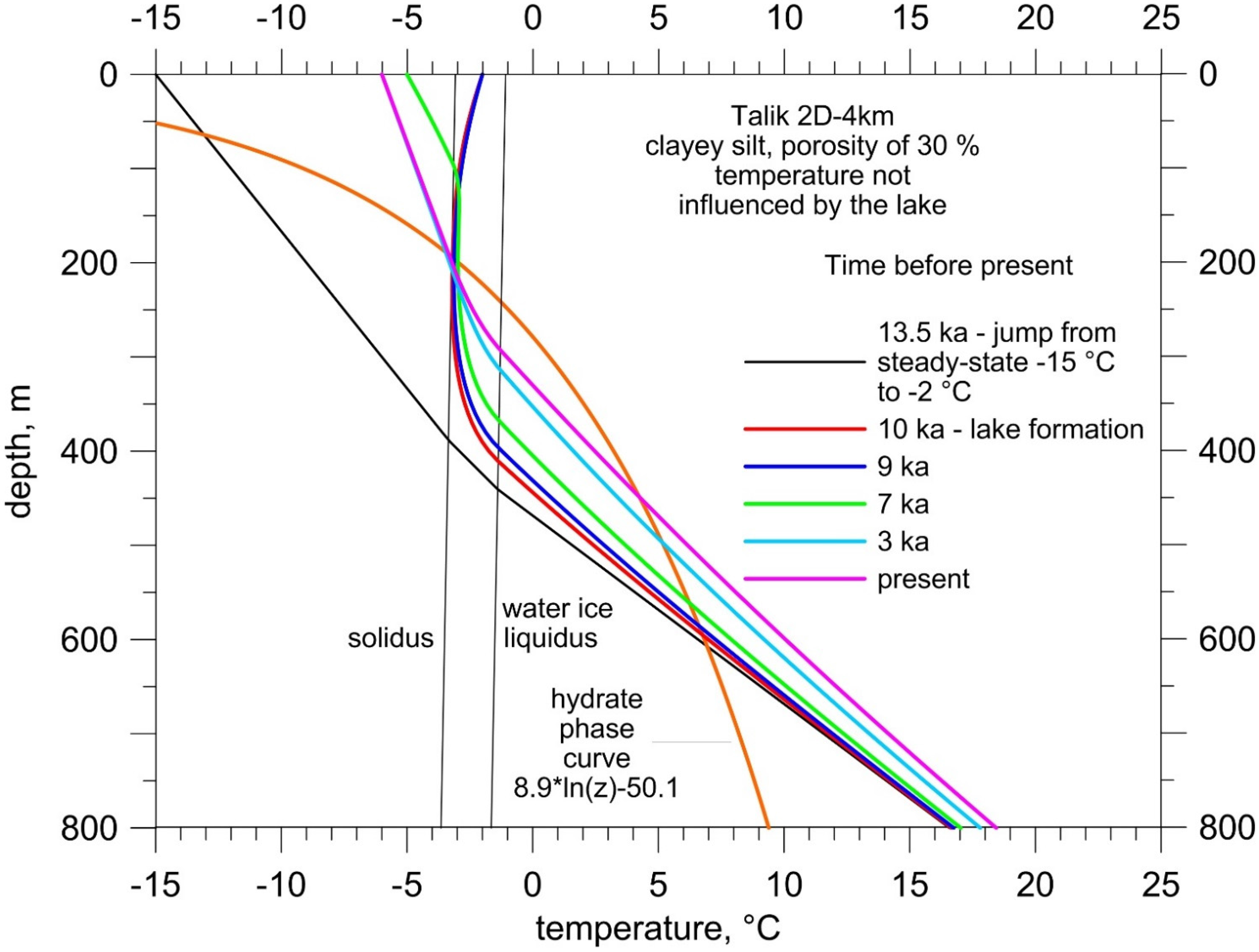
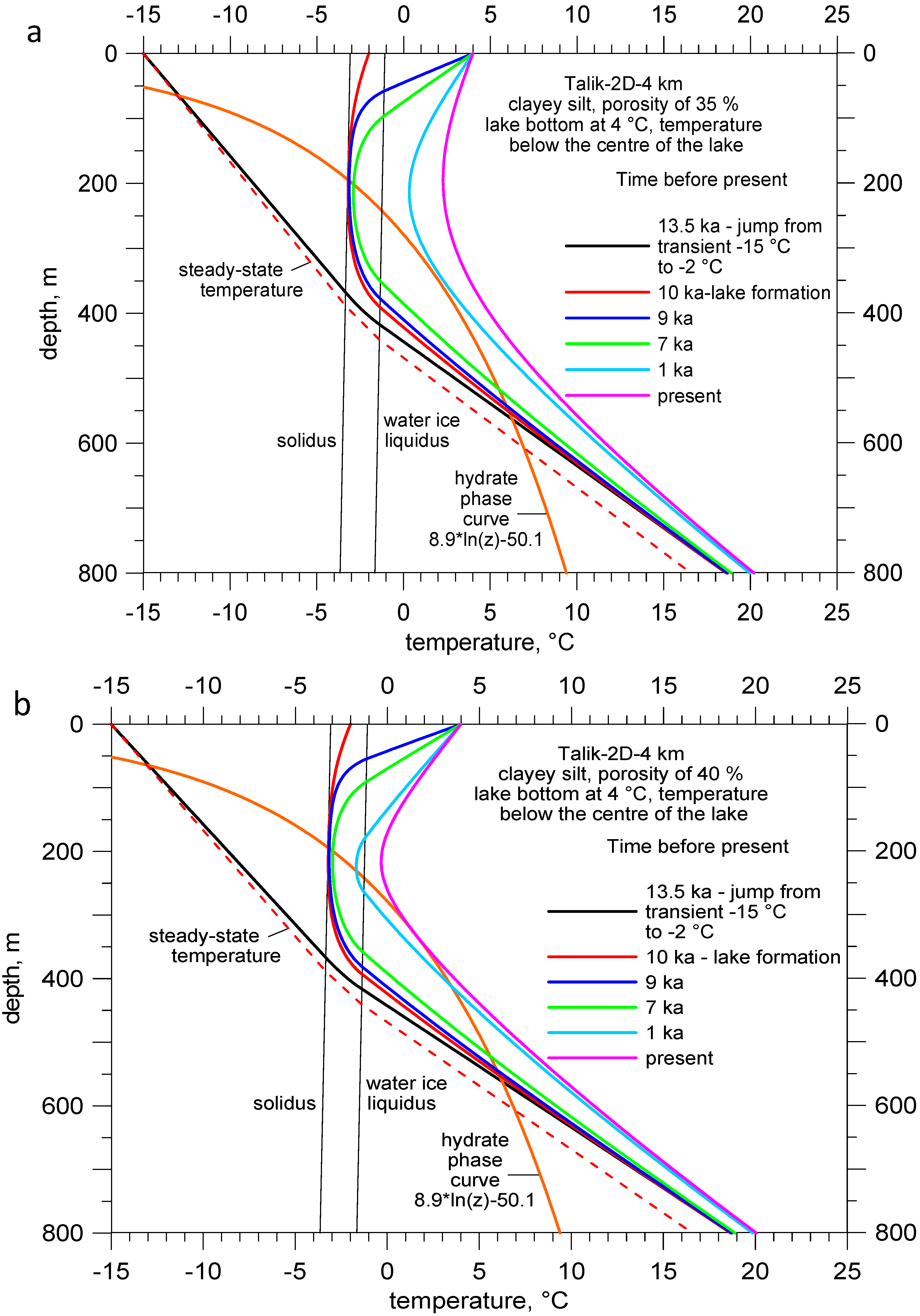
Models of talik, permafrost and gas hydrate (GH) histories below shallow lakes are investigated and compared to models of Beaufort Mackenzie Basin (BMB) GH occurrences to describe lacustrine inundation effects, which are compared against factors controlling the variations among Mackenzie Delta (MD) permafrost, GH and talik occurrence. Models using a 2–4 °C boundary temperature range indicate that geological setting, specifically underlying lithology and porosity, are the primary controls in talik formation below lakes. Below a lake of any size, where the underlying lithology is sandy it is practically impossible to produce a pervasive talik or to completely degrade significant GH accumulations in response to the boundary condition thermal effects alone. Models predict that talik formation is, in such cases, restricted to the upper few tens of meters below the lake. Permafrost degradation appears common where porosities are <40% and water bottom temperatures reach 2–4 °C, in both marine and lacustrine settings. Where porosities are higher a thin GH stability zone can persist, even where deep taliks have formed.
Keywords: gas hydrates; permafrost; Beaufort-Mackenzie Basin; taliks gas hydrates; permafrost; Beaufort-Mackenzie Basin; taliks