
More Wind Power Integration with Adjusted Energy Carriers for Space Heating in Northern China

Abstract
:1. Introduction
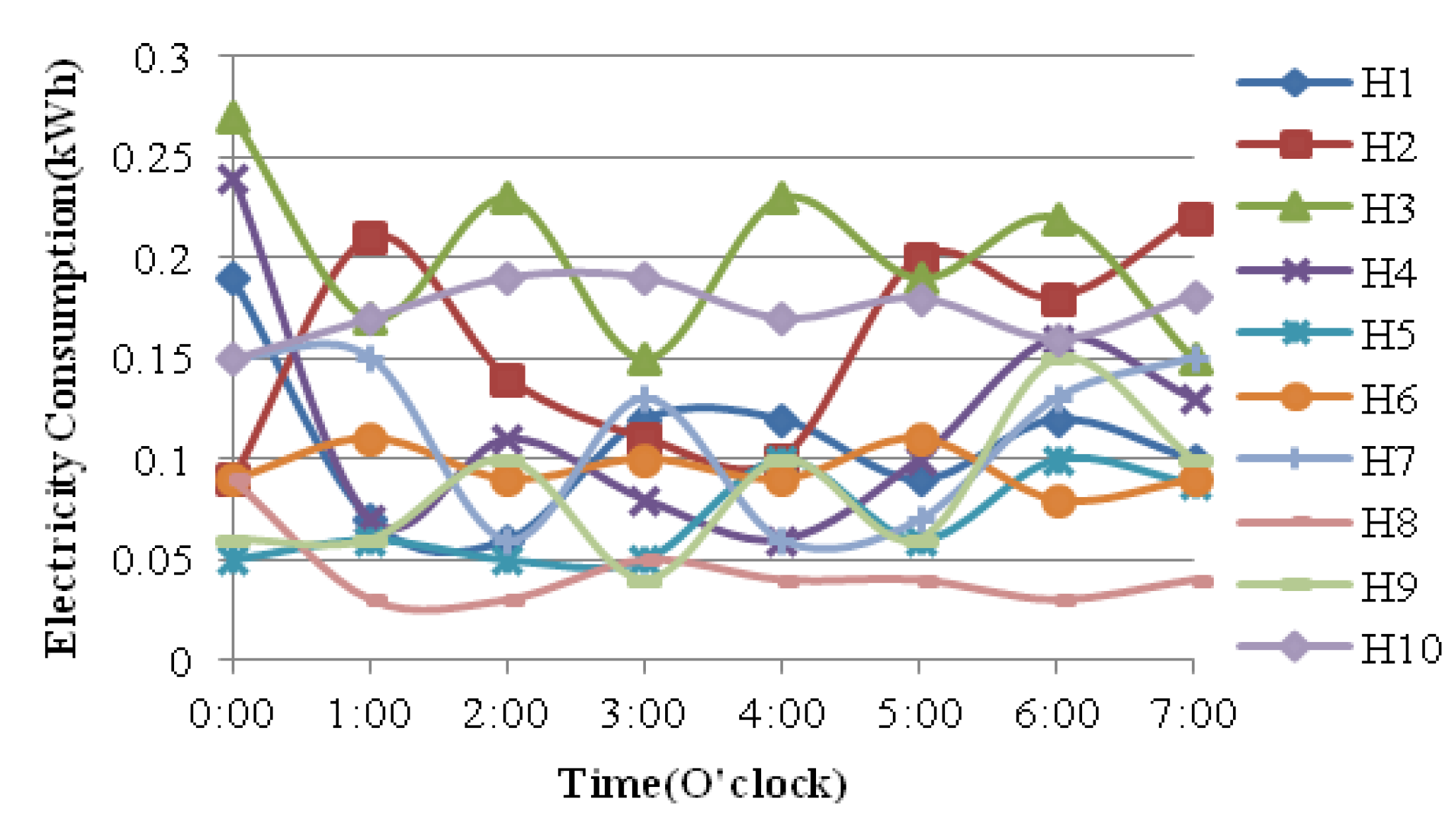
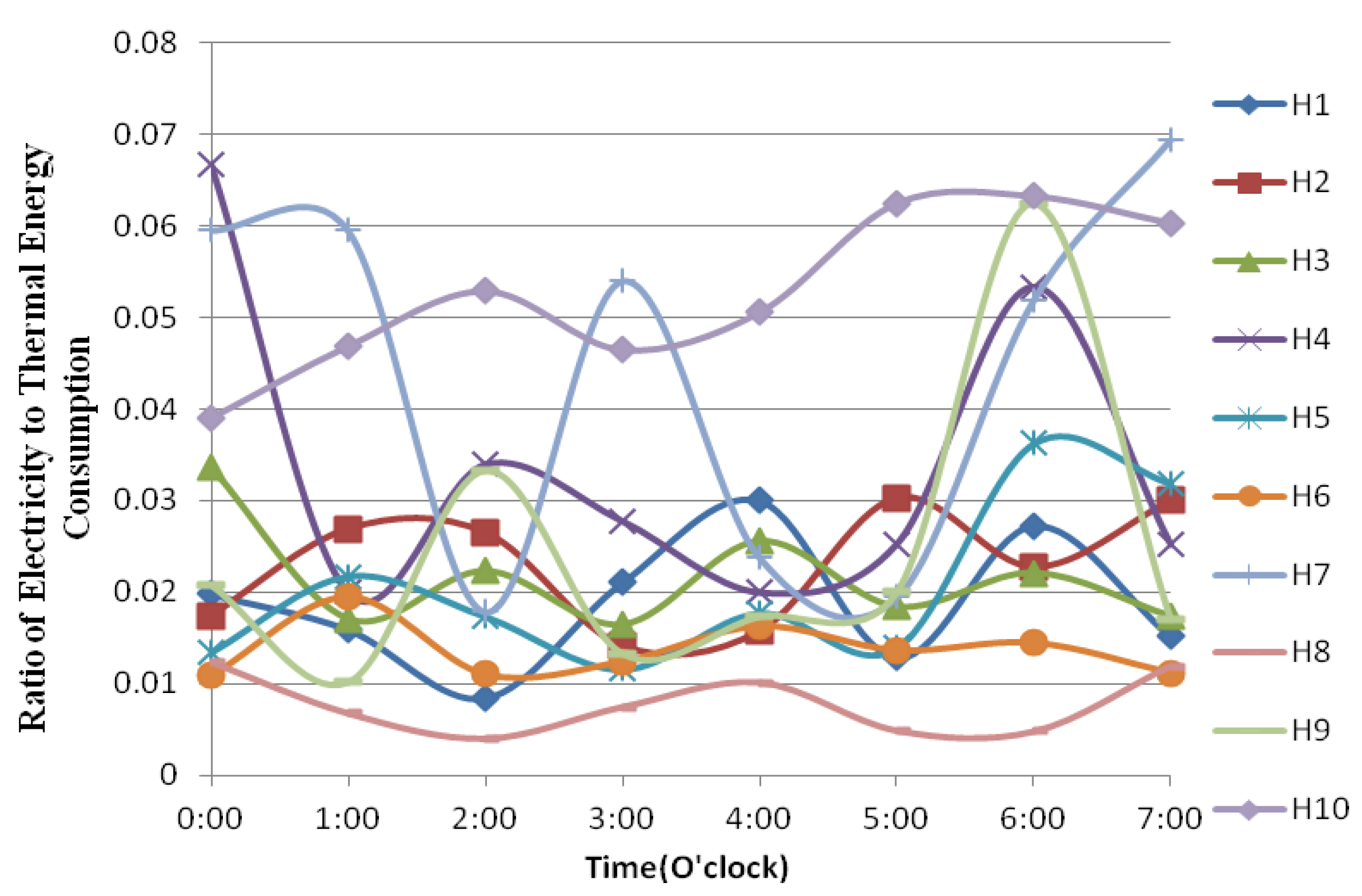
2. Performance of End Users and Cogenerations
2.1. End Users’ Load

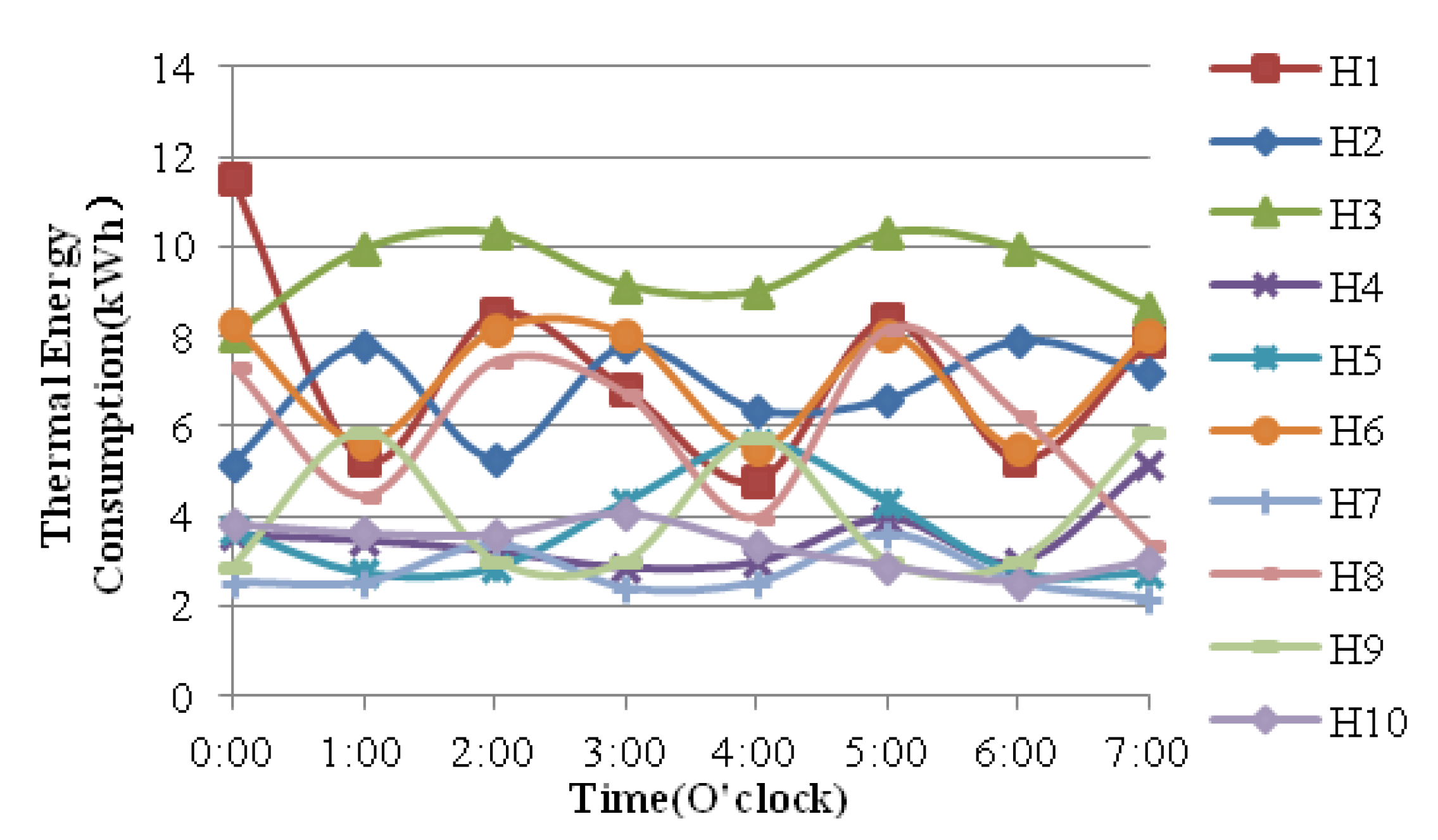

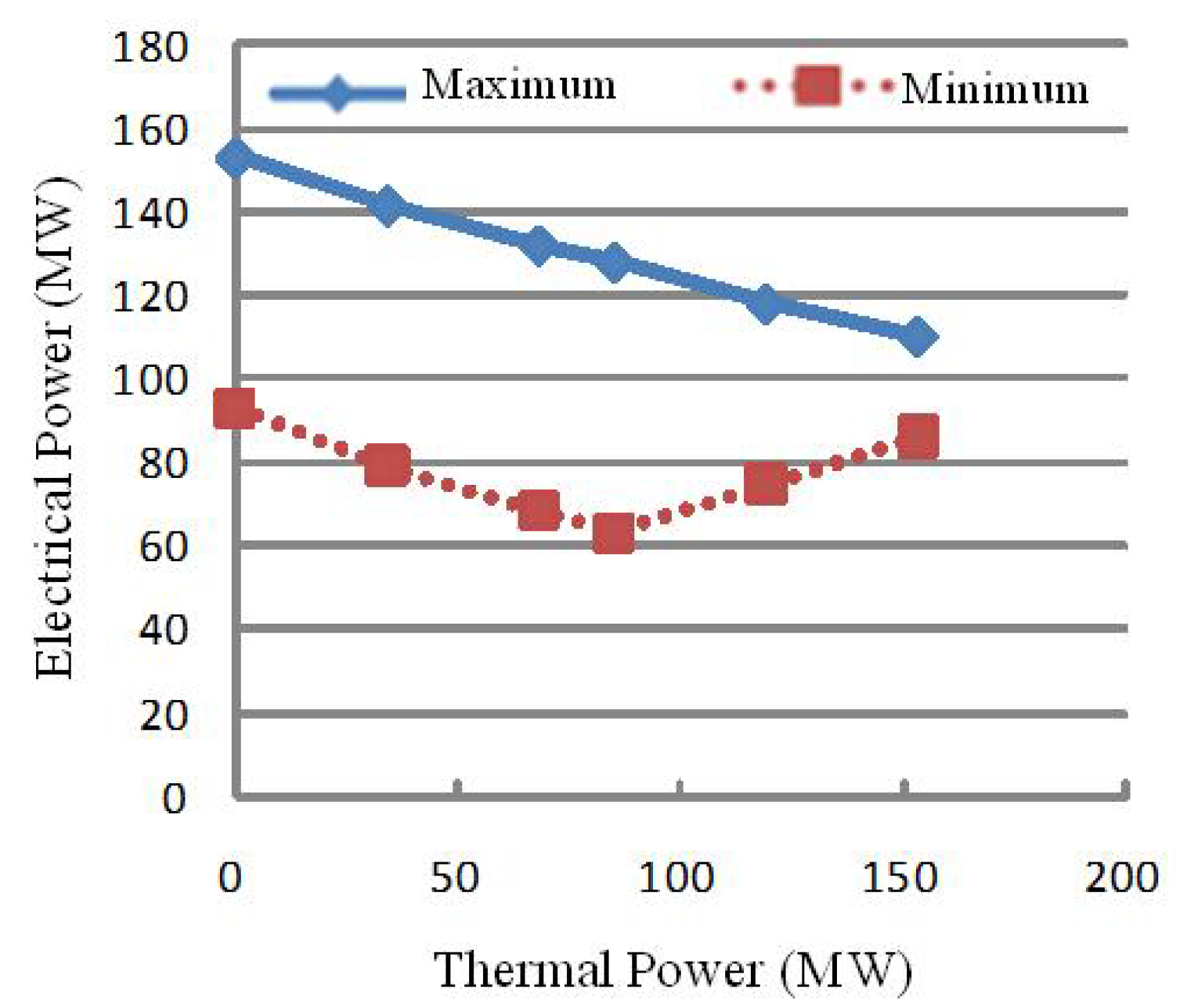
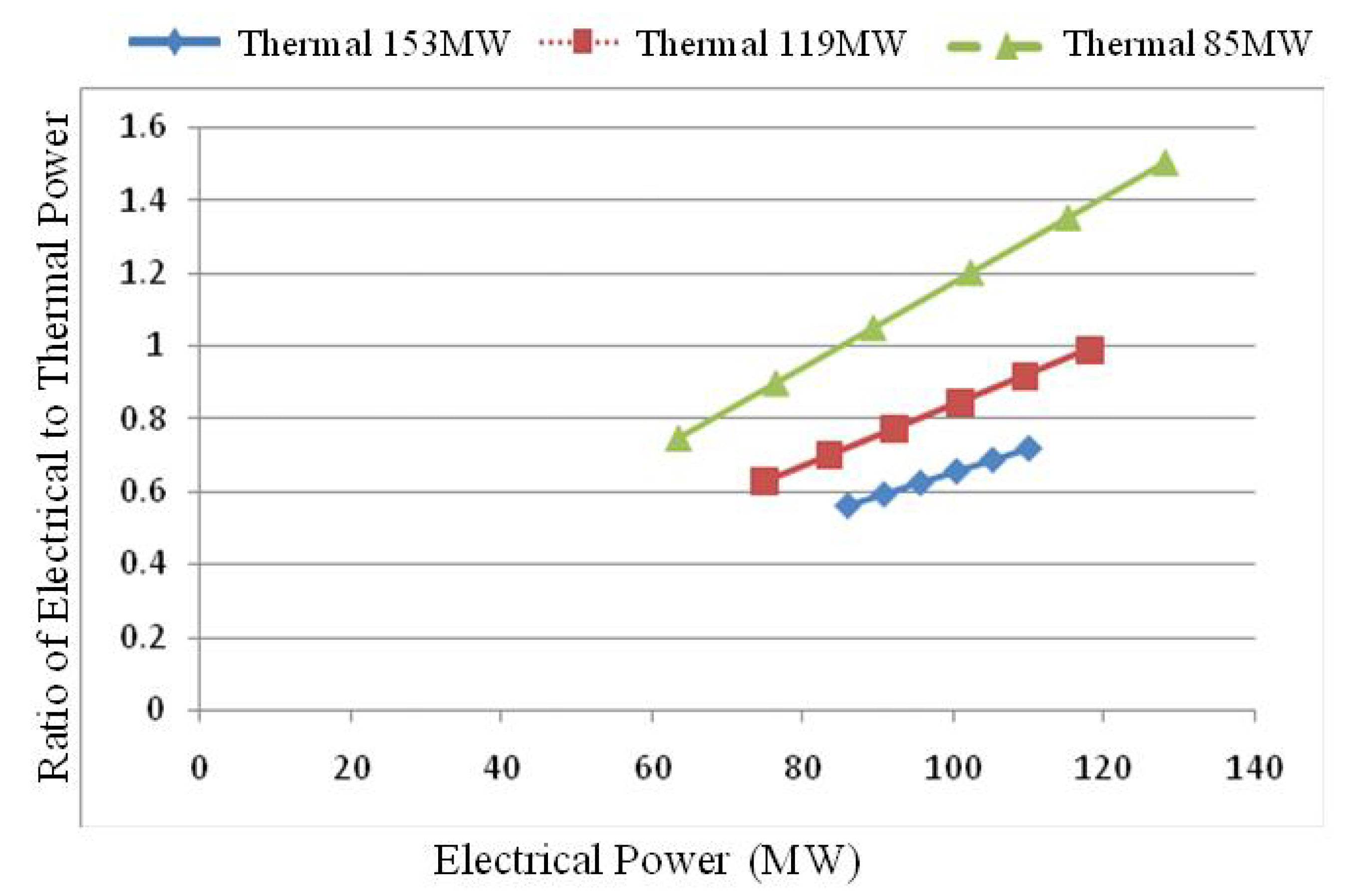
2.2. Cogenerations’ Production
3. Proposal
- Is it technically feasible according to the COP of present EHPs?
- In 3.1, the authors formulate one optimization problem for a critical COP of EHPs cooperating with a single cogeneration to serve space heating, beyond which fuel conservation is achieved.
- Is it of fuel conservation while introducing EHPs?
- In 3.2, the authors formulate the other new optimization problem so as to calculate the fuel conservation from more wind power integration while COP is in the range of 1.0~6.0. This is separated from the optimization problem for a critical COP of EHPs abovementioned.
- Is it economically feasible?
3.1. Mathematic Model Regarding Critical COP of EHPs
3.2. Mathematic Model for Fuel Conservation
3.3. Mathematic Model Regarding Economy
4. Numerical Simulation

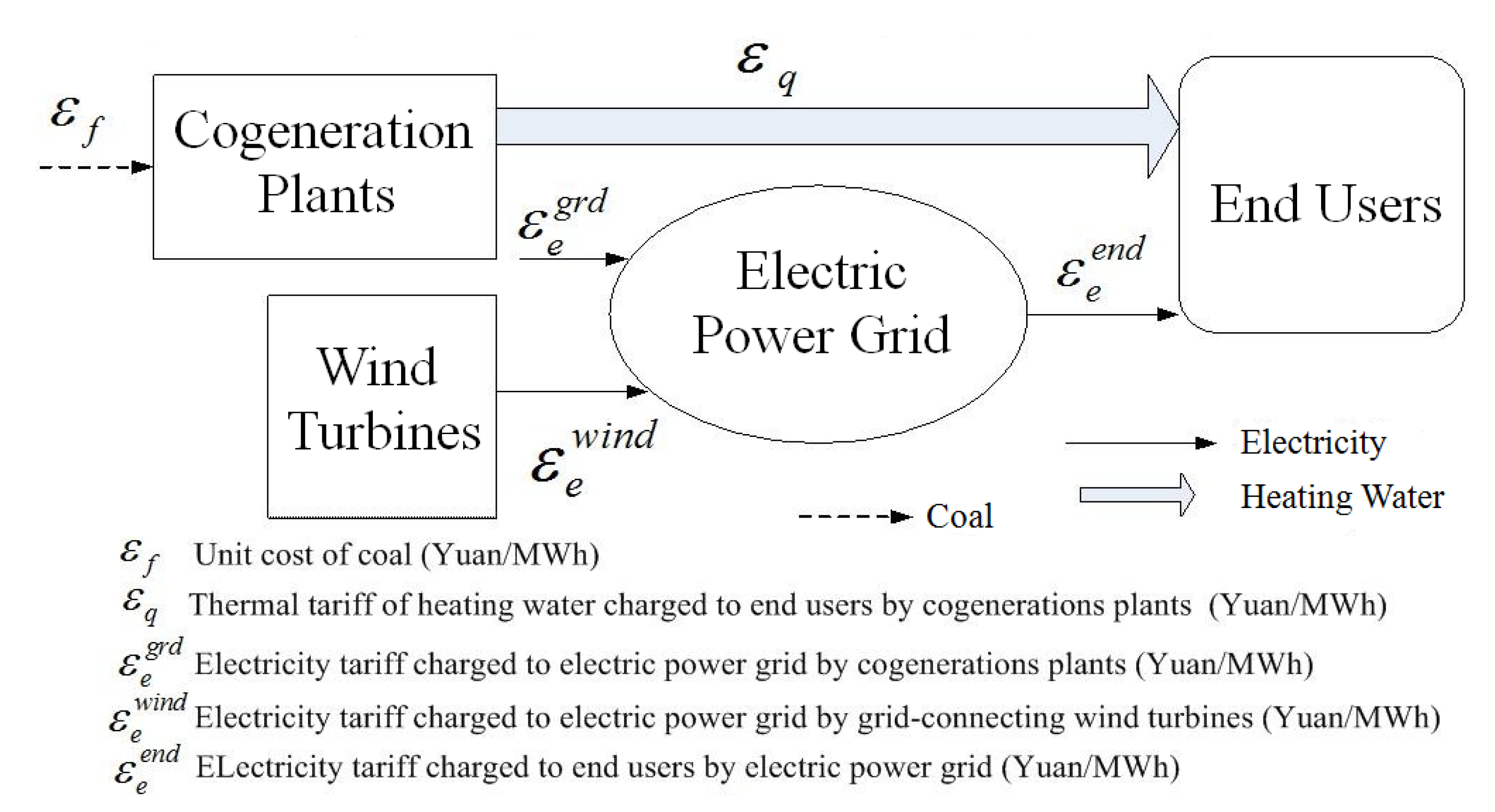
| Tariff (Yuan/MWh) | 500 | 300 | 100 | 100 |
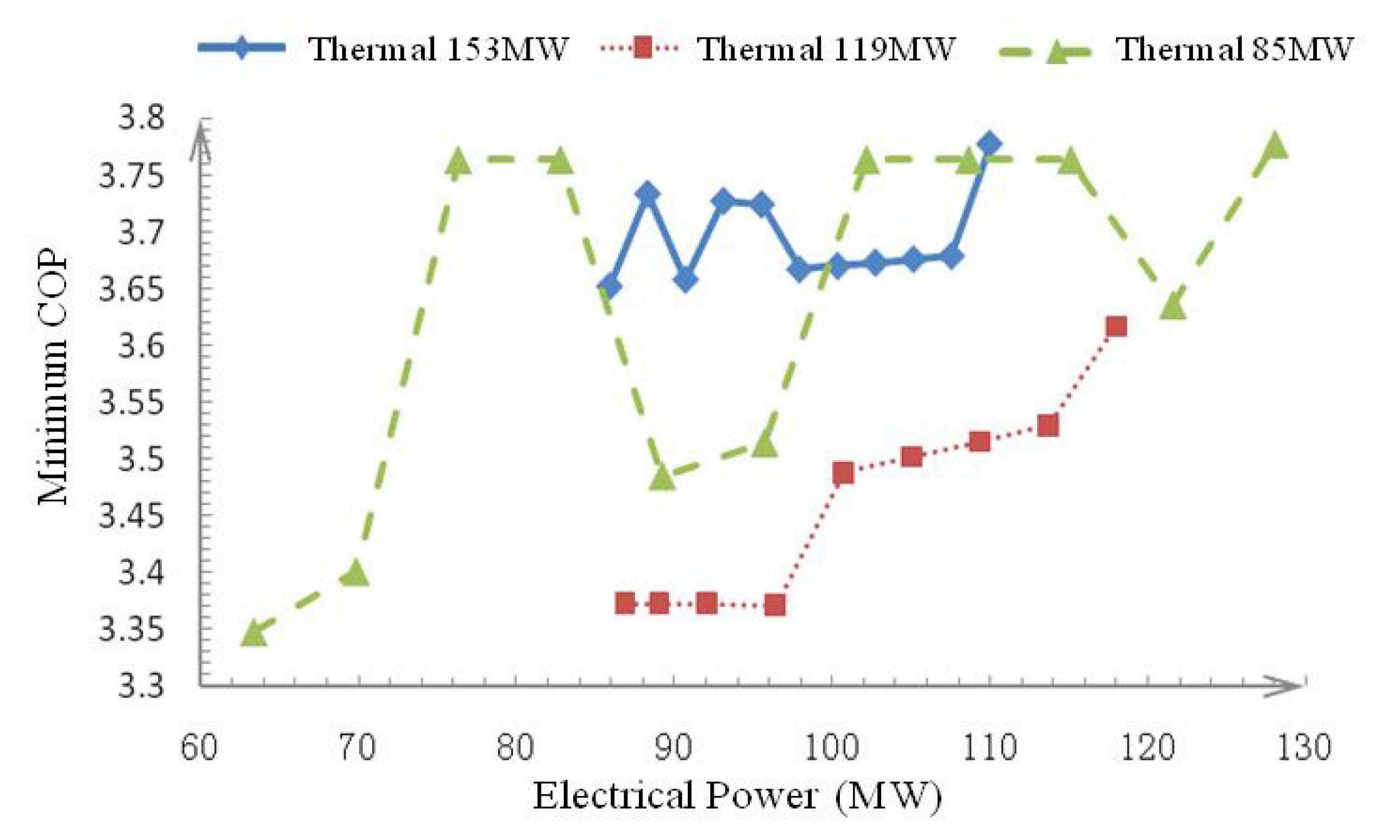
- COPcri is calculated in the cases of a single cogeneration being available, so that economic dispatch influence can be avoided. For calculating COPcri, the thermal load is set as 153 MW, 119 MW and 85 MW, respectively. In addition, the electrical load is set as various values between the allowed minimum and maximum electrical power generated under a certain , T = 1 (h).
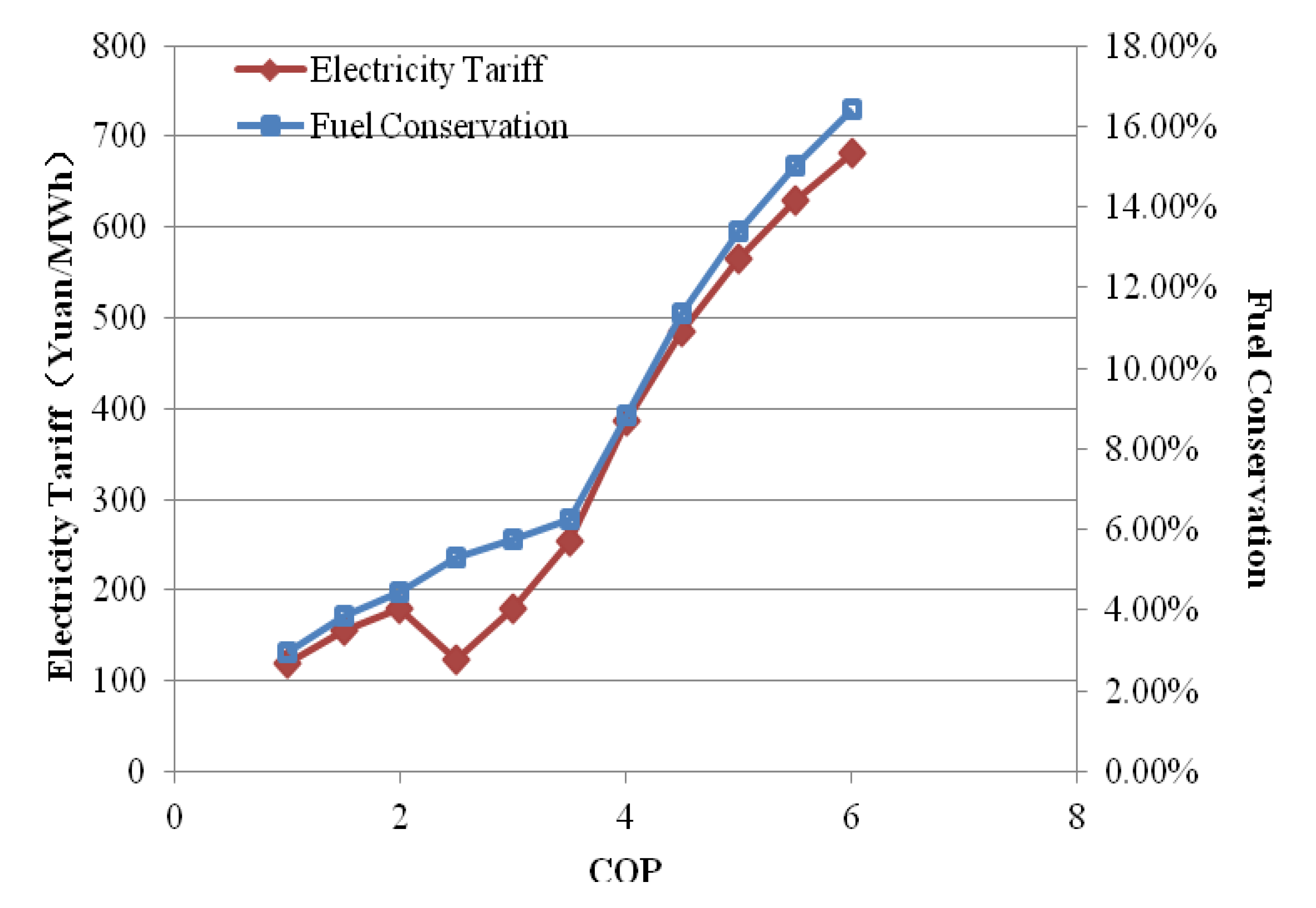
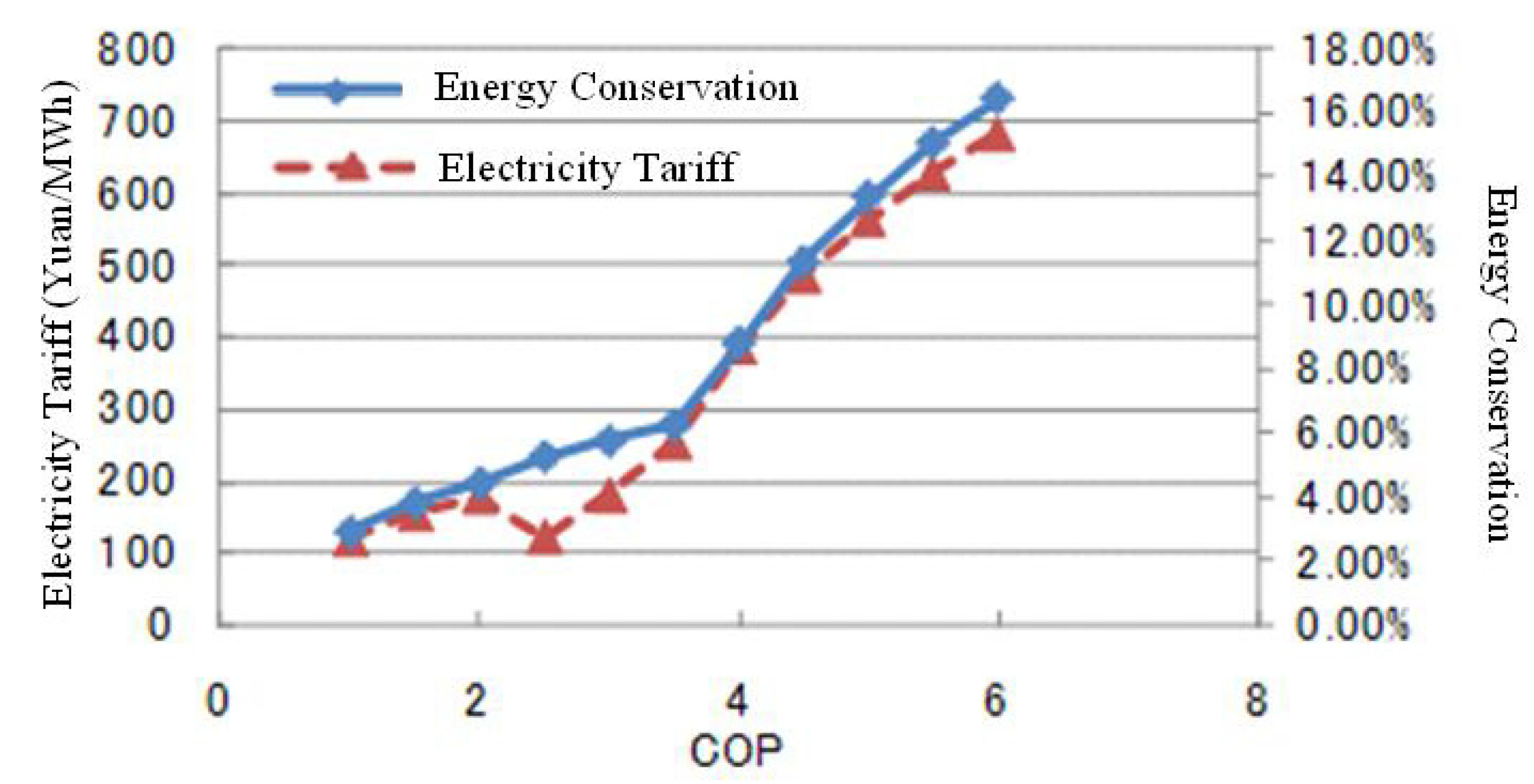
- The results of , , , and are calculated in the case assuming there are 100 MW of surplus wind power and twelve C135/N150-13.24 extraction-condensing cogeneration units available. Original electrical load is set as 878 MW, original thermal load is set as 1781 MW, and T = 1 (h). Under the original operation mode, 153 MW heating water and 85.9 MW electricity are supposed to be generated from each cogeneration unit, all of which meet the and . 100 MW wind power is abandoned. Nonlinear Programming (NLP) is performed with GAMS©. It is explained that during off-peak load at night 0:00~7:00 o’clock, 100 MW wind power is about 11.3% of 878 MW electrical load, which is a rational assumption in the practical electric power grid of Northern China [3]. In addition, COP of EHPs is set 1.0~6.0 for numerical simulation.
5. Results and Discussion
5.1. Critical COP of EHPs
5.2. Fuel Conservation and Economic Feasibility
5.2.1. Delta Benefits of Participants
5.2.2. Fuel Conservation and Tariff of More Wind Power Integrated

6. Conclusions
- While single cogeneration itself and EHPs cooperate to serve space heating, there exists a critical COP of EHPs, beyond which fuel conservation is achieved. For a C135/N150-13.24 extraction-condensing cogeneration, this critical COP () is around 3.3~3.8.
- If COP of EHPs is set as 1.0~6.0, while COP is below , fuel conservation arises from more wind power integration only, it is about 3.0%~6.2%; while COP is beyond , additional fuel conservation can be achieved due to the cooperation of CHP and EHPs besides wind power, it is about 8.8%~16.4%.
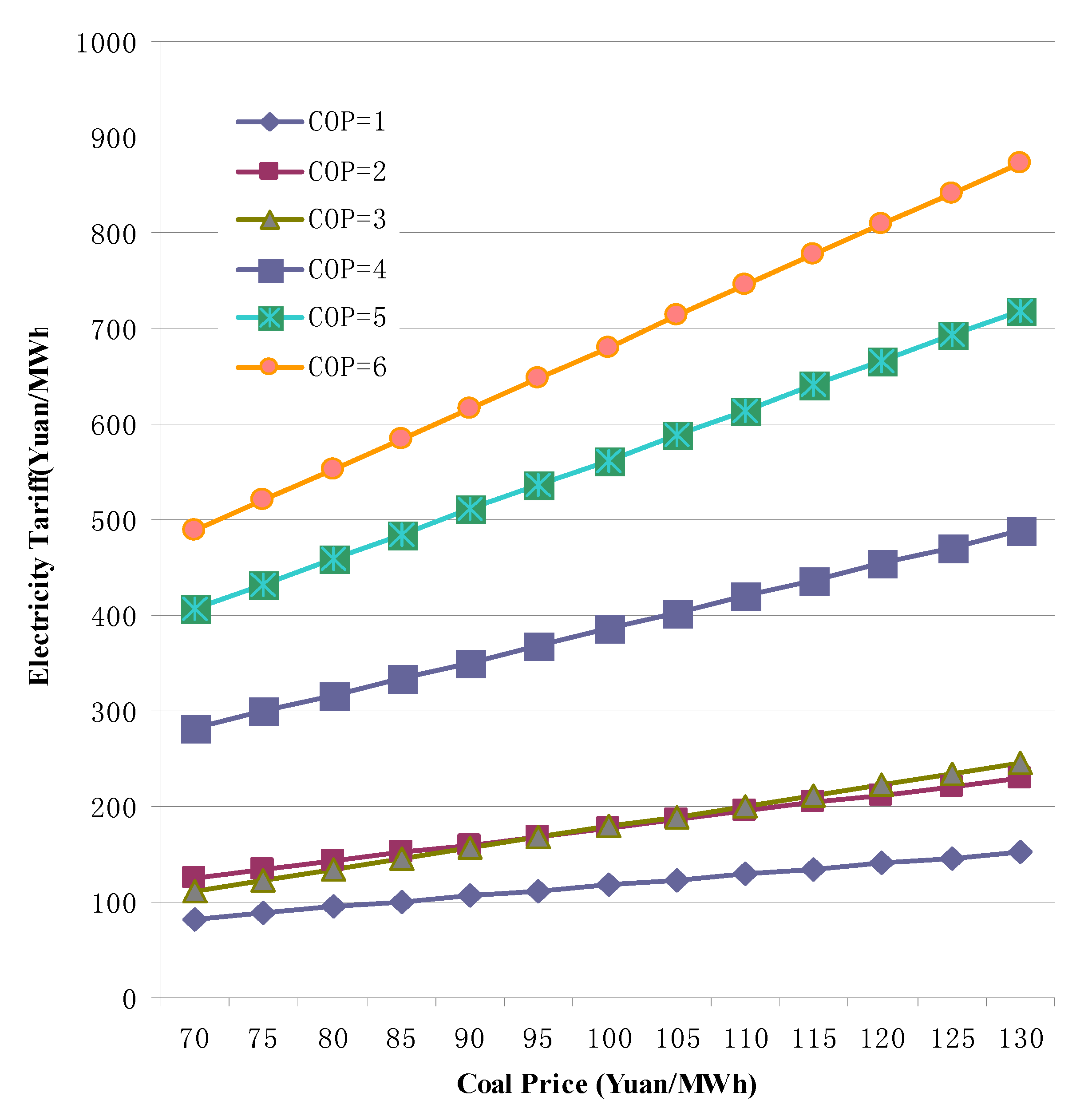
- While EHPs are introduced for space heating, the end users are charged more if COP is below 5, and charged less if COP is above 5. In addition, the economic benefits of both cogeneration facilities and the electric grid change following the authors’ proposal. It is also observed that if all participants’ economy benefits are kept unchanged, positive and competitive electricity tariff of wind power is achievable, which is about 119.3~682.5 (Yuan/MWh).
Acknowledgments
References
- Cai, W.G.; Wu, Y.; Zhong, Y.; Ren, H. China building energy consumption: Situation, challenges and corresponding measures. Energy Policy 2009, 37, 2054–2059. [Google Scholar] [CrossRef]
- Li, Y.; Fu, L.; Zhang, S.G.; Jiang, Y.; Zhao, X.L. A new type of district heating method with co-generation based on absorptionheat exchange (co-ah cycle). Energy Convers. Manag. 2011, 52, 1200–1207. [Google Scholar] [CrossRef]
- Liu, W.; Lund, H.; Mathiesen, B.V. Large-Scale integration of wind power into the existing Chinese energy system. Energy 2011, 36, 4753–4760. [Google Scholar] [CrossRef]
- Energy Research Institute. Technology Roadmaps—China Wind Energy Development Roadmap 2050. Available online: http://www.iea.org/publications/freepublications/publication/china_wind.pdf (accessed on 27 August 2012).
- Kat, C. Integration of Renewables-Status and Challenges in China. Available online: http://www.iea.org/publications/freepublications/publication/Integration_of_Renewables.pdf (accessed on 27 August 2012).
- Mircea, C.; Mavina, B. Regarding the greenhouse gas emissions of thermopower plants. Energy Convers. Manag. 2002, 43, 2135–2144. [Google Scholar] [CrossRef]
- Cai, W.J.; Wang, C.; Liu, W.L.; Mao, Z.W.; Yu, H.C.; Chen, J.N. Sectoral analysis for international technology development and transfer: Cases of coal-fired power generation, cement and aluminium in China. Energy Policy 2009, 37, 2283–2291. [Google Scholar] [CrossRef]
- Partridge, I.; Gamkhar, S. The role of offsets in a post-Kyoto climate agreement: The power sector in China. Energy Policy 2010, 8, 4457–4466. [Google Scholar] [CrossRef]
- Liu, L.B.; Fu, L.; Jiang, Y.; Guo, S. Major issues and solutions in the heat-metering reform in China. Renew. Sust. Energy Rev. 2010, 15, 673–680. [Google Scholar] [CrossRef]
- Liu, L.B.; Fu, L.; Jiang, Y.; Guo, S. Maintaining uniform hydraulic conditions with intelligent on-off regulation. Build. Environ. 2010, 45, 2817–2822. [Google Scholar] [CrossRef]
- Lin, F.; Yi, J. Optimal operation of a CHP plant for space heating as a peak load regulating plant. Energy 2000, 25, 283–298. [Google Scholar] [CrossRef]
- Ummels, B.C.; Gibescu, M.; Pelgrum, E.; Wil, L.; Kling, M.; Brand, A.J. Impacts of wind power on thermal generation unit commitment and dispatch. IEEE Trans. Energy Convers. 2007, 22, 44–51. [Google Scholar] [CrossRef]
- Li, L.; Tan, Z.F.; Wang, J.H.; Xu, J.; Cai, C.K.; Hou, Y. Energy conservation and emission reduction policies for the electric power industry in China. Energy Policy 2011, 39, 3669–3679. [Google Scholar] [CrossRef]
- Yu, D.Y.; Liang, J.; Han, X.S.; Zhao, J.G. Profiling the regional wind power fluctuation in China. Energy Policy 2011, 39, 299–306. [Google Scholar] [CrossRef]
- Yu, D.Y.; Zhang, B.; Liang, J.; Han, X.S. The influence of generation mix on the wind integrating capability of North China power grids: A modeling interpretation and potential solutions. Energy Policy 2011, 39, 7455–7463. [Google Scholar] [CrossRef]
- Mathiesen, B.V.; Lund, H. Comparative analyses of seven technologies to facilitate the integration of fluctuating renewable energy sources. IET Renew. Power Gener. 2009, 32, 190–204. [Google Scholar] [CrossRef]
- Tuohy, A.; O’Malley, M. Pumped storage in systems with very high wind penetration. Energy Policy 2011, 39, 1965–1974. [Google Scholar] [CrossRef]
- Kiviluoma, J.; Meibom, P. Influence of wind power, plug-in electric vehicles, and heat storages on power system investments. Energy 2009, 35, 1244–1255. [Google Scholar] [CrossRef]
- Meibom, P.; Kiviluoma, J.; Barth, R.; Brand, H.; Weber, C.; Larsen, H.V. Value of electric heat boilers and heat pumps for wind power integration. Wind Energy 2007, 10, 321–337. [Google Scholar] [CrossRef]
- Connolly, D.; Lund, H.; Mathiesen, B.V.; Leahy, M. A review of computer tools for analysing the integration of renewable energy into various energy systems. Appl. Energy 2010, 87, 1059–1082. [Google Scholar] [CrossRef]
- Jebaraj, S.; Iniyan, S. A review of energy models. Renew. Sust. Energy Rev. 2006, 10, 281–311. [Google Scholar] [CrossRef]
- Foley, A.M.; ÓGallachóir, B.P.; Hur, J.; Baldick, R.; McKeogh, E.J. A strategic review of electricity systems models. Energy 2010, 35, 4522–4530. [Google Scholar] [CrossRef]
- Shigeru, B.; Hiroki, W.; Hiroshi, A. Impact of various characteristics of electricity and heat demand on the optimal configuration of a microgrid. Electr. Eng. Jpn. 2009, 169, 6–13. [Google Scholar] [CrossRef]
- Mancarella, P. Cogeneration systems with electric heat pumps: Energy-Shifting properties and equivalent plant modelling. Energy Convers. Manag. 2009, 50, 1991–1999. [Google Scholar] [CrossRef]
- Torekov, M.S.; Bahnsen, N.; Qvale, B. The relative competitive positions of the alternative means for domestic heating. Energy 2007, 32, 627–633. [Google Scholar] [CrossRef]
- Chua, K.J.; Chou, S.K.; Yang, W.M. Advances in heat pump systems: A review. Appl. Energy 2010, 87, 3611–3624. [Google Scholar] [CrossRef]
- Blarke, M.B.; Lund, H. Large-Scale heat pumps in sustainable energy systems: System and project perspectives. Therm. Sci. 2007, 11, 143–152. [Google Scholar] [CrossRef]
- Cockroft, J.; Kelly, N. A comparative assessment of future heat and power sources for the UK domestic sector. Energy Convers. Manag. 2006, 47, 2349–2360. [Google Scholar] [CrossRef]
- Minagata, A.; Kato, T.; Suzuoki, Y. A study on reverse power flow from home co-generation system. Trans. Inst. Electr. Eng. Jpn. B 2008, 91, 479–485. [Google Scholar]
- Sugihara, H.; Tsuji, K. Energy conservation in urban areas. IEEJ Trans. Electr. Electron. Eng. 2008, 3, 10–14. [Google Scholar] [CrossRef]
- Long, H.Y.; Wu, K.; Zhao, Y.; Ma, J.W. An infrastructure and methodology for energy saving dispatch between wind turbines and cogenerations. China Patent 201010261188.7, 24 August 2010. [Google Scholar]
- Long, H.Y.; Xu, R.L.; He, J.J. Incorporating the variability of wind power with electric heat pumps-energies. Energies 2011, 10, 1748–1762. [Google Scholar] [CrossRef]
- Lin, J.; Rosenquist, G. Stay cool with less work: China’s new energy-efficiency standards for air conditioners. Energy Policy 2008, 36, 1090–1095. [Google Scholar] [CrossRef]
- Measurement & Assessment for Energy Efficiency of Residential Buildings in China [in Chinese]. Available online: http://www.mohurd.gov.cn/zcfg/jsbwj_0/jsbwjjskj/200807/P020080703605488120121.doc (accessed on 27 August 2012).
- Han, J.Y.; Mol, A.P.J.; Lu, Y.L.; Zhang, L. Onshore wind power development in China: Challenges behind a successful story. Energy Policy 2009, 37, 2941–2951. [Google Scholar] [CrossRef]
- Liu, Y.Q.; Kokko, A. Wind power in China: Policy and development challenges. Energy Policy 2010, 38, 5520–5529. [Google Scholar] [CrossRef]
- Ma, C.; Cherni, J.A.; Kentish, J. Renewable energy policy and electricity market reforms in China. Energy Policy 2007, 35, 3616–3629. [Google Scholar] [CrossRef]
- Ngan, H.W. Electricity regulation and electricity market reforms in China. Energy Policy 2010, 38, 2142–2148. [Google Scholar] [CrossRef]
© 2012 by the authors; licensee MDPI, Basel, Switzerland. This article is an open access article distributed under the terms and conditions of the Creative Commons Attribution license (http://creativecommons.org/licenses/by/3.0/).
Share and Cite
Long, H.; Xu, K.; Xu, R.; He, J. More Wind Power Integration with Adjusted Energy Carriers for Space Heating in Northern China. Energies 2012, 5, 3279-3294. https://doi.org/10.3390/en5093279
Long H, Xu K, Xu R, He J. More Wind Power Integration with Adjusted Energy Carriers for Space Heating in Northern China. Energies. 2012; 5(9):3279-3294. https://doi.org/10.3390/en5093279
Chicago/Turabian StyleLong, Hongyu, Kunyao Xu, Ruilin Xu, and Jianjun He. 2012. "More Wind Power Integration with Adjusted Energy Carriers for Space Heating in Northern China" Energies 5, no. 9: 3279-3294. https://doi.org/10.3390/en5093279