<?xml version="1.0" encoding="UTF-8"?>
<!DOCTYPE article PUBLIC "-//NLM//DTD Journal Publishing DTD v2.3 20070202//EN" "journalpublishing.dtd">
<article xmlns:xlink="http://www.w3.org/1999/xlink" xml:lang="en" article-type="research-article">
<front>
<journal-meta>
<journal-id journal-id-type="publisher-id">101238455</journal-id>
<journal-title>International Journal of Environmental Research and Public Health</journal-title>
<issn pub-type="epub">1660-4601</issn>
<publisher>
<publisher-name>Molecular Diversity Preservation International (MDPI)</publisher-name></publisher></journal-meta>
<article-meta>
<article-id pub-id-type="doi">10.3390/ijerph6010349</article-id>
<article-id pub-id-type="publisher-id">ijerph-06-00349</article-id>
<article-categories>
<subj-group>
<subject>Article</subject></subj-group></article-categories>
<title-group>
<article-title>Ethyl Carbamate in Alcoholic Beverages from Mexico (Tequila, Mezcal, Bacanora, Sotol) and Guatemala (Cuxa): Market Survey and Risk Assessment</article-title></title-group>
<contrib-group>
<contrib contrib-type="author">
<name><surname>Lachenmeier</surname><given-names>Dirk W.</given-names></name><xref ref-type="aff" rid="af1-ijerph-06-00349">1</xref><xref ref-type="corresp" rid="C1">*</xref></contrib>
<contrib contrib-type="author">
<name><surname>Kanteres</surname><given-names>Fotis</given-names></name><xref ref-type="aff" rid="af2-ijerph-06-00349">2</xref></contrib>
<contrib contrib-type="author">
<name><surname>Kuballa</surname><given-names>Thomas</given-names></name><xref ref-type="aff" rid="af1-ijerph-06-00349">1</xref></contrib>
<contrib contrib-type="author">
<name><surname>López</surname><given-names>Mercedes G.</given-names></name><xref ref-type="aff" rid="af3-ijerph-06-00349">3</xref></contrib>
<contrib contrib-type="author">
<name><surname>Rehm</surname><given-names>Jürgen</given-names></name><xref ref-type="aff" rid="af2-ijerph-06-00349">2</xref><xref ref-type="aff" rid="af4-ijerph-06-00349">4</xref><xref ref-type="aff" rid="af5-ijerph-06-00349">5</xref></contrib></contrib-group>
<aff id="af1-ijerph-06-00349">
<label>1</label> Chemisches und Veterinäruntersuchungsamt (CVUA) Karlsruhe, Weissenburger Strasse 3, 76187 Karlsruhe, Germany; E-Mail:
<email>thomas.kuballa@cvuaka.bwl.de</email> (T. K.)</aff>
<aff id="af2-ijerph-06-00349">
<label>2</label> Centre for Addiction and Mental Health (CAMH), 33 Russell Street, Toronto, ON, M5S 2S1, Canada; E-Mail:
<email>fotis@fotiskanteres.com</email> (F. K.)</aff>
<aff id="af3-ijerph-06-00349">
<label>3</label> Unidad de Biotecnología e Ingeniería Genética de Plantas, Centro de Investigación y Estudios Avanzados del IPN, 36500 Irapuato, Gto., Mexico; E-Mail:
<email>mlopez@ira.cinvestav.mx</email> (M. G. L.)</aff>
<aff id="af4-ijerph-06-00349">
<label>4</label> Dalla Lana School of Public Health, University of Toronto, 55 College Street, Toronto, ON, M5T3M7, Canada; E-Mail:
<email>jtrehm@aol.com</email> (J. R.)</aff>
<aff id="af5-ijerph-06-00349">
<label>5</label> Institute for Clinical Psychology and Psychotherapy, TU Dresden, Chemnitzer Strasse 46, 01187 Dresden, Germany</aff>
<author-notes>
<corresp id="C1"><sup>*</sup> Author to whom correspondence should be addressed; E-Mail: lachenmeier@web.de; Tel.: +49-721-926-5434; Fax: +49-721-926-5539</corresp></author-notes>
<pub-date pub-type="ppub">
<month>1</month>
<year>2009</year></pub-date>
<pub-date pub-type="epub">
<day>20</day>
<month>1</month>
<year>2009</year></pub-date>
<volume>6</volume>
<issue>1</issue>
<fpage>349</fpage>
<lpage>360</lpage>
<history>
<date date-type="received">
<day>19</day>
<month>12</month>
<year>2008</year></date>
<date date-type="accepted">
<day>16</day>
<month>1</month>
<year>2009</year></date></history>
<copyright-statement>© 2009 by the authors; licensee Molecular Diversity Preservation International, Basel, Switzerland.</copyright-statement>
<copyright-year>2009</copyright-year>
<license license-type="open-access" xlink:href="http://creativecommons.org/licenses/by/3.0">
<p>This article is an open-access article distributed under the terms and conditions of the Creative Commons Attribution license (http://creativecommons.org/licenses/by/3.0/).</p></license>
<abstract>
<p>Ethyl carbamate (EC) is a recognized genotoxic carcinogen, with widespread occurrence in fermented foods and beverages. No data on its occurrence in alcoholic beverages from Mexico or Central America is available. Samples of agave spirits including tequila, mezcal, bacanora and sotol (n=110), and of the sugarcane spirit cuxa (n=16) were purchased in Mexico and Guatemala, respectively, and analyzed for EC. The incidence of EC contamination was higher in Mexico than in Guatemala, however, concentrations were below international guideline levels (&lt;0.15 mg/L). Risk assessment found the Margin of Exposure (MOE) in line with that of European spirits. It is therefore unlikely that EC plays a role in high rates of liver cirrhosis reported in Mexico.</p></abstract>
<kwd-group>
<kwd>Ethyl carbamate</kwd>
<kwd>urethane</kwd>
<kwd>alcoholic beverages</kwd>
<kwd>risk assessment</kwd>
<kwd>Mexico</kwd>
<kwd>Guatemala</kwd>
<kwd>carcinogens</kwd>
<kwd>gas chromatography</kwd>
<kwd>mass spectrometry</kwd>
<kwd>food contamination</kwd>
<kwd>food analysis</kwd>
<kwd>sugarcane</kwd>
<kwd>agave</kwd>
<kwd>tequila</kwd>
<kwd>mezcal</kwd>
<kwd>cuxa</kwd>
<kwd>unrecorded alcohol</kwd></kwd-group></article-meta></front>
<body>
<sec sec-type="intro">
<label>1.</label>
<title>Introduction</title>
<p>Ethyl carbamate (urethane, C<sub>2</sub>H<sub>5</sub>OCONH<sub>2</sub>, CAS # 51-79-6) is a recognized genotoxic carcinogen, of widespread occurrence in fermented foods and beverages [<xref ref-type="bibr" rid="b1-ijerph-06-00349">1</xref>–<xref ref-type="bibr" rid="b6-ijerph-06-00349">6</xref>]. Public health concerns about the presence of this substance in alcoholic beverages began in 1985, when relatively high levels were detected by Canadian authorities in imported alcohol products, including German fruit spirits [<xref ref-type="bibr" rid="b7-ijerph-06-00349">7</xref>]. Canada proceeded to establish an upper limit of 0.15 mg/L for ethyl carbamate in distilled spirits and 0.4 mg/L for ethyl carbamate in fruit spirits [<xref ref-type="bibr" rid="b8-ijerph-06-00349">8</xref>]. However, currently there are no harmonised maximum levels for ethyl carbamate provided by the Codex Alimentarius, the European Union, nor the two countries under study.</p>
<p>The International Agency for Research on Cancer (IARC) recently upgraded its classification of ethyl carbamate to group 2A (probably carcinogenic to humans). This reflects increasing evidence on the significant similarities between rodents and humans regarding the metabolic pathways of the activation of ethyl carbamate, whereby the formation of proximate DNA-reactive carcinogens, hypothesized to play a major role in ethyl carbamate-induced carcinogenesis in rodent cells, is also likely to occur in humans [<xref ref-type="bibr" rid="b9-ijerph-06-00349">9</xref>].</p>
<p>The Joint FAO/WHO Expert Committee on Food Additives (JECFA) has concluded that exposure to ethyl carbamate in food is of low concern [<xref ref-type="bibr" rid="b10-ijerph-06-00349">10</xref>]. However, the inclusion of alcoholic beverages into this model sets the estimated Margin of Exposure (MOE) to 3,800, a value of concern that necessitates mitigative measures for the reduction of ethyl carbamate concentrations in certain alcoholic beverages (for summary of mitigation measures see Ref. [<xref ref-type="bibr" rid="b9-ijerph-06-00349">9</xref>]). The European Food Safety Authority (EFSA) recently confirmed this evaluation, also noting that the MOE for high consumers of fruit spirits was less than 600, indicating an even greater public health concern [<xref ref-type="bibr" rid="b8-ijerph-06-00349">8</xref>]. The JECFA evaluation was based on data from the USA, the UK and Japan, whereas the EFSA evaluated data from Europe and North America. Evidence in the international literature (as summarized in Ref. [<xref ref-type="bibr" rid="b9-ijerph-06-00349">9</xref>]), which is generally restricted to European-style alcoholic beverages, indicates that the ethyl carbamate problem may be limited to certain fruit spirits (mainly stone-fruit spirits).</p>
<p>The alcohol market in Mexico ranges from international commercial alcohol including spirits and beer, to locally produced alcohol such as tequila, mezcal, and pulque (all agave based). While the Mexican Tequila Regulatory Council (TRC) monitors tequila, there are many small-scale independent and unrecorded alcohol operations producing mezcal and other local spirits (see 2.1).</p>
<p>There is currently no systematic data available on ethyl carbamate levels in locally produced alcoholic beverages from Mexico and Central America, including Guatemala. Our interest in ethyl carbamate in alcoholic beverages in this region comes from evidence of high rates of liver cirrhosis in Mexico [<xref ref-type="bibr" rid="b11-ijerph-06-00349">11</xref>]. This public health concern cannot be accounted for by volume of alcohol consumption, which is lower in Mexico when compared to many other countries with markedly lower liver cirrhosis rates, nor alternative explanations [<xref ref-type="bibr" rid="b11-ijerph-06-00349">11</xref>, <xref ref-type="bibr" rid="b12-ijerph-06-00349">12</xref>]. An exception is limited evidence pointing to water contamination in locally produced alcohol pulque (fermented agave juice) [<xref ref-type="bibr" rid="b13-ijerph-06-00349">13</xref>]. Liver cirrhosis rates have been found to vary with consumption of pulque [<xref ref-type="bibr" rid="b14-ijerph-06-00349">14</xref>, <xref ref-type="bibr" rid="b15-ijerph-06-00349">15</xref>].</p>
<p>Ethyl carbamate is not only carcinogenic but also a known liver toxic agent in humans [<xref ref-type="bibr" rid="b16-ijerph-06-00349">16</xref>]. Animal experiments point to complex interactions between ethanol and ethyl carbamate, e.g. in decreased first-pass hepatic clearance [<xref ref-type="bibr" rid="b17-ijerph-06-00349">17</xref>]. This study investigates ethyl carbamate in agave spirits from Mexico and sugarcane spirits from Guatemala and the possible risk to public health with special regard to liver damage.</p></sec>
<sec sec-type="materials|methods">
<label>2.</label>
<title>Materials and Methods</title>
<sec>
<label>2.1.</label>
<title>Samples</title>
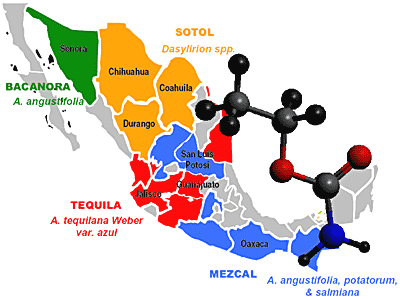
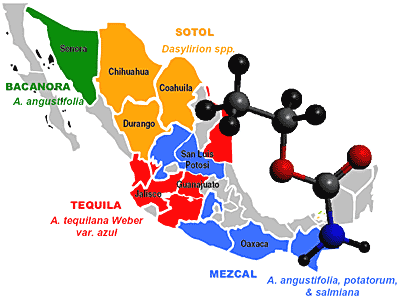
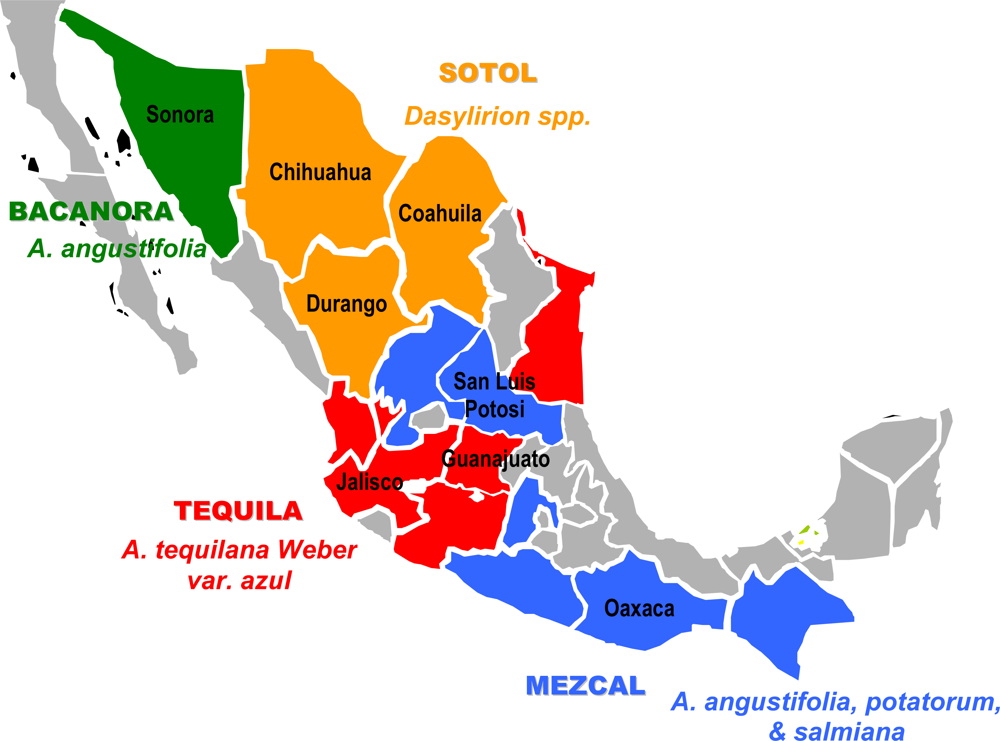
<p>The Mexican alcohol samples were purchased between 2005 and 2008 from local shops, markets and distilleries. Authentic tequila samples of “100% agave” and “mixed” categories were available from controlled tequila production facilities (n=32). Tequila is the most well known agave derived mezcal (<italic>Agave tequilana</italic> Weber var. azul, Agavaceae)<italic>,</italic> and is from a strictly defined geographic region of the Mexican State of Jalisco, in West-Central Mexico. Tequilas were purchased in Jalisco and Guanajuato. Sotol came from the States of Chihuahua, Coahuila and Durango (n=16) and bacanora from Sonora (n=13). Mezcal (n=35) came from the states of Oaxaca (including samples from distilleries in the town of Santiago Matatlan, the self proclaimed ‘Mezcal capital of the world’), San Luis Potosi, and Guanajuato. The sampling regions in Mexico and the different agave species used for production of the spirits are shown in <xref ref-type="fig" rid="f1-ijerph-06-00349">Figure 1</xref>. Imported tequila products available for regular retail in Germany were also included in the study (n=14). Previously, a sub-group of the Mexican samples was characterized in more detail in regards to volatile and anionic composition [<xref ref-type="bibr" rid="b18-ijerph-06-00349">18</xref>].</p>
<p>The Guatemala sampling was restricted to cuxa, a distilled sugarcane alcohol produced and distributed both commercially and clandestinely in Nahualá, an indigenous Mayan municipality located in the western highlands of Guatemala. Sampling occurred between November 2007 and April 2008 in the urban center of the municipality and nearby outlying settlements (10 km radius). Within the study area we identified thirteen cuxa distribution points, three of which were also production operations; twelve were visited for sampling. The samples included both clandestinely (n=11) and commercially (n=5) produced cuxa. Alcohol in Mayan Guatemala was previously described in greater detail [<xref ref-type="bibr" rid="b19-ijerph-06-00349">19</xref>].</p></sec>
<sec sec-type="methods">
<label>2.2.</label>
<title>Analysis of Ethyl Carbamate</title>
<p>The analysis of ethyl carbamate involved the combination of previously published procedures of the Extrelut<sup>®</sup> extraction procedure of Baumann and Zimmerli [<xref ref-type="bibr" rid="b20-ijerph-06-00349">20</xref>] with the modifications of Mildau <italic>et al</italic>. [<xref ref-type="bibr" rid="b21-ijerph-06-00349">21</xref>], and tandem mass spectrometry (GC/MS/MS) according to Lachenmeier <italic>et al</italic>. [<xref ref-type="bibr" rid="b22-ijerph-06-00349">22</xref>]. For sample preparation, spirit (20 mL) was mixed with ethyl carbamate-d<sub>5</sub> (1 mg/mL, 50 μL) that was synthesized according to Funch and Lisbjerg [<xref ref-type="bibr" rid="b23-ijerph-06-00349">23</xref>], and directly applied to the extraction column. The Extrelut<sup>®</sup> column was wrapped in aluminium foil to eliminate the possibility of light-induced ethyl carbamate formation during extraction. After 15 min of equilibration, the column was washed with <italic>n</italic>-pentane (2 x 20 mL). The analytes were then extracted using dichloromethane (3 x 30 mL), and the eluates combined in a brown flask and reduced to 2–3 mL in a rotary evaporator (30°C, 300 mbar). After which, the solution was adjusted to 10 mL with ethanol in a measuring flask and directly injected into the GC/MS/MS system. The recovery of ethyl carbamate was 100.4±9.4%. The limits of detection (LOD) and quantitation (LOQ) were 0.01 and 0.04 mg/L of ethyl carbamate, respectively. The precision (expressed as coefficient of variation) and the trueness (expressed as bias) did not exceed 7.8% (intraday) and 10.1% (interday), and 11.3% (intraday) and 12.2% (interday) respectively [<xref ref-type="bibr" rid="b22-ijerph-06-00349">22</xref>].</p></sec>
<sec>
<label>2.3.</label>
<title>Statistics</title>
<p>The survey data were evaluated using Origin Pro v7.5 (OriginLab Corporation, Northampton, MA, USA). Statistical significance was assumed at below the 0.05 probability level. Groups of two cases were compared using t-tests. One-way ANOVA was used to test whether three or more cases had the same mean, including the Bonferroni <italic>post hoc</italic> means comparison.</p></sec>
<sec>
<label>2.4.</label>
<title>Approach for Risk Assessment</title>
<p>Analysis was conducted according to the European Food Safety Authority (EFSA) harmonised approach for the risk assessment of substances which are genotoxic and carcinogenic [<xref ref-type="bibr" rid="b24-ijerph-06-00349">24</xref>]. The EFSA has developed and recommends an approach known as the Margin of Exposure (MOE). This approach uses the value of doses of substances that have been observed to cause low but measurably harmful responses in animals as a reference point, and compares this with relevant substance-specific dietary intake estimates in humans, taking into account differences in consumption amounts and patterns.</p>
<p>To obtain the MOE, the Benchmark Dose Lower Confidence Limit (BMDL) of 10% is suggested. The BMDL value for ethyl carbamate obtained by JECFA for the incidence of alveolar and bronchiolar neoplasms (the most sensitive endpoints) in male and female mice is 0.3 mg/kg bw/day [<xref ref-type="bibr" rid="b10-ijerph-06-00349">10</xref>]. The EFSA used the same BMDL value for their risk assessment of ethyl carbamate [<xref ref-type="bibr" rid="b8-ijerph-06-00349">8</xref>]. We chose to also use this internationally established BMDL value for the risk assessment presented in this study. Data on consumption of spirits in Mexico for the population older than 15 was obtained from the Global Information System on Alcohol and Health for the year 2004 [<xref ref-type="bibr" rid="b25-ijerph-06-00349">25</xref>].</p></sec></sec>
<sec sec-type="results">
<label>3.</label>
<title>Results</title>
<p>The incidence of ethyl carbamate in different types of spirits from Mexico and Guatemala is detailed in <xref ref-type="table" rid="t1-ijerph-06-00349">Table 1</xref>. There were no statistically significant differences in ethyl carbamate between the different categories in the Mexican samples (p=0.589), nor between clandestinely and commercially produced cuxa from Guatemala (p=0.775). The estimated exposure for agave spirit drinkers in Mexico and cuxa drinkers in Guatemala based on the ethyl carbamate concentrations for the entire collection of samples is summarized in <xref ref-type="table" rid="t2-ijerph-06-00349">Table 2</xref>.</p>
<p>The number of tequila samples allowed us to investigate its categories and sub-groups in greater detail. First, tequila sampled in Germany did not show significant differences from the tequila purchased on the domestic Mexican market (p=0.214). Second, “100% agave” tequila did not differ from “mixto” tequila (mixed, less than 100% agave) (p=0.580). Finally, there were no differences between “blanco”, “joven u oro”, “reposado” and “añejo” tequila (p=0.192) (for details on the tequila categories, see Refs. [<xref ref-type="bibr" rid="b18-ijerph-06-00349">18</xref>, <xref ref-type="bibr" rid="b26-ijerph-06-00349">26</xref>, <xref ref-type="bibr" rid="b27-ijerph-06-00349">27</xref>]). Because of the evident absence of differences in sub-groups of tequila, we did not make a distinction between categories in <xref ref-type="table" rid="t1-ijerph-06-00349">Table 1</xref>.</p>
<p>The incidence for ethyl carbamate contamination was higher in Mexico than in Guatemala. However, only four samples in total (two mezcals, one tequila, one bacanora) were above the Canadian limit of 0.15 mg/L for distilled spirits. None of the samples were above the limit for fruit spirits of 0.4 mg/L. The larger number of Mexican samples along with the sampling in different states allowed for a more detailed exposure estimation for drinkers of this category of spirits. Based on an average per capita consumption of 1 litre of pure alcohol in the form of spirits, with the assumption that only agave spirits are consumed, we provide a whole population exposure scenario in <xref ref-type="table" rid="t3-ijerph-06-00349">Table 3</xref>. Here, the average exposure is 6 ng/kg bw/day with a corresponding MOE of 52,560. Additionally, we provide exposure scenarios for individual drinkers, showing exposures for different numbers of drinks per day and for different ethyl carbamate concentrations (<xref ref-type="table" rid="t4-ijerph-06-00349">Table 4</xref>). The corresponding MOEs for these exposures are shown in <xref ref-type="table" rid="t5-ijerph-06-00349">Table 5</xref>. For mean ethyl carbamate content in the beverages, the MOE ranges between 14,400 for one drink per day and 2,880 for five drinks per day.</p>
<p>The ethyl carbamate concentrations in all Guatemalan beverages were below the Canadian limit of 0.15 mg/L for distilled spirits. In twelve of the samples, no ethyl carbamate was detected. Three samples were below the limit of quantitation, and only one had a quantifiable content of ethyl carbamate detected (0.06 mg/L). The focus of our study on one Mayan town in Guatemala did not allow us to assess the public health risk of ethyl carbamate on a countrywide scale. Of significance, in cases of daily consumption of one drink (125 mL at 18% vol) of the sample with the highest concentration would result in an exposure of 125 ng/kg bw/day and a MOE of 2,400.</p></sec>
<sec sec-type="discussion">
<label>4.</label>
<title>Discussion</title>
<sec>
<label>4.1.</label>
<title>Mexico</title>
<p>The results of our sampling of 110 Mexican agave spirits are in agreement with the very limited data available in the literature. This includes two studies that evaluated single samples of tequila exported to Australia and Korea, which contained relatively low concentrations of ethyl carbamate (below 0.01 mg/L) [<xref ref-type="bibr" rid="b28-ijerph-06-00349">28</xref>, <xref ref-type="bibr" rid="b29-ijerph-06-00349">29</xref>].</p>
<p>The incidence and concentration of ethyl carbamate in Mexican agave spirits appear to be of a magnitude similar to that of distilled alcoholic beverages on the European market. The EFSA has described an average content of 0.07 mg/L and 95<sup>th</sup> percentile of 0.29 mg/L for European spirits [<xref ref-type="bibr" rid="b8-ijerph-06-00349">8</xref>]. This compares well with our average of 0.05 mg/L and 95<sup>th</sup> percentile of 0.14 mg/L. Interestingly, some European fruit spirits contain significantly higher values of 0.75 mg/L (average) and 3.18 mg/L (95<sup>th</sup> percentile) [<xref ref-type="bibr" rid="b8-ijerph-06-00349">8</xref>]. In contrast to certain fruits and sugarcane [<xref ref-type="bibr" rid="b30-ijerph-06-00349">30</xref>], and taking into consideration the fact the genus has not yet been systematically studied, agave appears to be a non-cyanogenic plant species [<xref ref-type="bibr" rid="b31-ijerph-06-00349">31</xref>]. For this reason, only the minor ethyl carbamate formation mechanism, which is dependent on yeast strain and urea as a by-product of arginine catabolism [<xref ref-type="bibr" rid="b32-ijerph-06-00349">32</xref>, <xref ref-type="bibr" rid="b33-ijerph-06-00349">33</xref>], appears to be relevant in agave spirits.</p>
<p>In general, a MOE of 10,000 or higher, if based on a BMDL from an animal study, is considered a low public health concern and subsequently a low priority for risk management action [<xref ref-type="bibr" rid="b24-ijerph-06-00349">24</xref>]. In the case of the whole population risk assessment, the MOEs were above 10,000 for all scenarios (<xref ref-type="table" rid="t3-ijerph-06-00349">Table 3</xref>). The MOEs were only below this threshold for individuals consuming more than two drinks per day. The proportion of Mexicans in 2002 with more than 20 g pure alcohol (about two drinks) per day based on a triangulation of survey and per capita information [<xref ref-type="bibr" rid="b34-ijerph-06-00349">34</xref>] was estimated to be 20.5% overall, 36.4% in men and 5.8% in women [<xref ref-type="bibr" rid="b35-ijerph-06-00349">35</xref>].</p>
<p>The limitations of this assessment include sampling in only a sub-group of Mexican States. We focused our sampling on the major production sites (i.e. Jalisco for tequila and Oaxaca for mezcal). However, we deem it to be unlikely that agave alcohol production in other Mexican states would be significantly different from our sample. A further limitation is that we did not include pulque, beer, wine or other spirits from the Mexican market for ethyl carbamate analysis. Our rationale for the exclusion of pulque is the fact that non-distilled fermented beverages with relatively low alcohol content (e.g. beer, wine) generally contain significantly lower ethyl carbamate concentrations than their distilled spirit counterparts [<xref ref-type="bibr" rid="b4-ijerph-06-00349">4</xref>, <xref ref-type="bibr" rid="b8-ijerph-06-00349">8</xref>]. As such, we find it extremely unlikely that higher ethyl carbamate concentrations occur in pulque than in agave spirits, both of which are essentially manufactured from the same raw material. We did not include the other types of alcoholic beverages, as the literature thus far shows a lack of regional dependence for ethyl carbamate contamination in the standard types of alcoholic beverages (beer, wine, international spirits) (see e.g. [<xref ref-type="bibr" rid="b4-ijerph-06-00349">4</xref>, <xref ref-type="bibr" rid="b8-ijerph-06-00349">8</xref>]).</p></sec>
<sec>
<label>4.2.</label>
<title>Guatemala</title>
<p>The risk of ethyl carbamate for drinkers of cuxa in our study region of Nahualá appears to be comparably low. The incidence of ethyl carbamate in cuxa, as well as its concentrations were lower than that described by the EFSA for international spirits, e.g. the average ethyl carbamate content in spirits (excluding fruit spirits) from Europe is 0.07 mg/L [<xref ref-type="bibr" rid="b8-ijerph-06-00349">8</xref>]. The incidence was also lower than in sugarcane spirits (cachaça) from Brazil [<xref ref-type="bibr" rid="b36-ijerph-06-00349">36</xref>]. This difference may be due to the complete use of sugarcane juice in cachaça production [<xref ref-type="bibr" rid="b37-ijerph-06-00349">37</xref>], as opposed to partially refined raw sugar in cuxa production [<xref ref-type="bibr" rid="b19-ijerph-06-00349">19</xref>]. Cyanide is the major precursor for significant ethyl carbamate formation in fruit spirits [<xref ref-type="bibr" rid="b6-ijerph-06-00349">6</xref>] and cyanogenic substances in sugarcane have also been discussed as precursors of ethyl carbamate during cachaça production [<xref ref-type="bibr" rid="b33-ijerph-06-00349">33</xref>, <xref ref-type="bibr" rid="b36-ijerph-06-00349">36</xref>]. As such, the refined sugarcane material used in cuxa production, which lacks cyanogenic compounds, is a likely explanation for the lowered incidence of ethyl carbamate in this alcohol.</p>
<p>It should be noted that alcohol consumption is a major problem in this community. Liver cirrhosis was the third leading cause of adult death, and first for men in the year 2007 [<xref ref-type="bibr" rid="b19-ijerph-06-00349">19</xref>]. With a drinking culture characterized by irregular heavy drinking, especially around town market days, alcohol consumption appears to play a major role in cases of violence and domestic abuse, and is linked with street habitation, which is associated with exposure to violence (i.e. assaults) and severe weather, health problems and street inhabiting drinkers [<xref ref-type="bibr" rid="b19-ijerph-06-00349">19</xref>]. Cuxa, a popular clandestinely produced alcohol, contributes to these problems. Of note, we also sampled this alcohol with the finding of significantly high levels of acetaldehyde [<xref ref-type="bibr" rid="b19-ijerph-06-00349">19</xref>], a metabolite of ethanol, demonstrated as carcinogenic to animals, and possibly so for humans (classified as IARC Group 2B) [<xref ref-type="bibr" rid="b38-ijerph-06-00349">38</xref>]. The authors conclude that ethyl carbamate is not a particular health concern for the drinkers of cuxa in Nahualá, nor are reduction measures for this contaminant required. More pressing problems appear to be volume of alcohol consumption along with the patterns of drinking. The prevalent acetaldehyde contamination in cuxa also appears to be a problem of higher priority than ethyl carbamate contamination [<xref ref-type="bibr" rid="b19-ijerph-06-00349">19</xref>].</p></sec></sec>
<sec sec-type="conclusions">
<label>5.</label>
<title>Conclusions</title>
<p>Our risk assessment is in line with the estimates of the EFSA for Europe [<xref ref-type="bibr" rid="b8-ijerph-06-00349">8</xref>]. For example, an ethyl carbamate exposure of 60 ng/kg bw/day was estimated for spirit consumers in Europe resulting in a MOE of 5,000 [<xref ref-type="bibr" rid="b8-ijerph-06-00349">8</xref>]. Comparatively, the ethyl carbamate intake from the consumption of the beverages under study does not differ from that in other countries where the incidence of cirrhosis of the liver is lower, therefore, it seems unlikely that ethyl carbamate is a contributing factor. The ethyl carbamate exposure due to alcoholic beverages in the ng-range was also considerably lower than dosages (2.5–7.6 g/day) known to lead to liver damage, based on instances when ethyl carbamate was used as medicine [<xref ref-type="bibr" rid="b16-ijerph-06-00349">16</xref>].</p>
<p>For these reasons, the author’s are inclined to reject the hypothesis that ethyl carbamate is a likely cause for the more pronounced incidence of liver diseases in Mexico than in other parts of the world. Ethyl carbamate may also not be a major health factor in alcohols produced using completely or partially refined sugarcane materials.</p>
<p>Future research should focus on studying a larger range of constituents and contaminants to explain liver disease incidence in Mexico. Several likely candidates for this line of research were recently pointed out in our pilot study in Lithuania and Hungary [<xref ref-type="bibr" rid="b39-ijerph-06-00349">39</xref>]. Acetaldehyde, is a particularly interesting research topic, as we found this compound in relatively high concentrations in our earlier study of Mexican agave spirits [<xref ref-type="bibr" rid="b18-ijerph-06-00349">18</xref>], and a recent risk assessment has shown that acetaldehyde constitutes a potential public health risk - even without consideration for the metabolically produced acetaldehyde [<xref ref-type="bibr" rid="b40-ijerph-06-00349">40</xref>].</p></sec></body>
<back>
<ack>
<title>Acknowledgments</title>
<p>No funding was obtained specific to the production of this manuscript. The salaries for authors were provided by the affiliated organizations. The authors declare no conflicts of interest. The skillful technical assistance of Hannelore Heger, Hana Havel, and Horst Mann is gratefully acknowledged. We thank Casa Herradura S.A. de C.V. (Mexico) for providing some of the tequila samples as well as all of the independent distilleries in Santiago Matatlan (Mexico) for their informative interviews and John Rexer and Earl Fish for their facilitation of them, and in the community of Nahualá (Guatemala), Pascualino Tahay Ixtos for his guidance and consultation in sampling, Dr. Miguel Rodas and the Nahualá Health Centre staff for their assistance, and the producers and distributors for their participation.</p></ack>
<ref-list>
<title>References</title>
<ref id="b1-ijerph-06-00349"><label>1.</label><citation citation-type="journal"><person-group person-group-type="author"><name><surname>Dennis</surname><given-names>MJ</given-names></name><name><surname>Howarth</surname><given-names>N</given-names></name><name><surname>Key</surname><given-names>PE</given-names></name><name><surname>Pointer</surname><given-names>M</given-names></name><name><surname>Massey</surname><given-names>RC</given-names></name></person-group><article-title>Investigation of ethyl carbamate levels in some fermented foods and alcoholic beverages</article-title><source>Food Addit. Contam</source><year>1989</year><volume>6</volume><fpage>383</fpage><lpage>389</lpage><pub-id pub-id-type="doi">10.1080/02652038909373794</pub-id><pub-id pub-id-type="pmid">2721787</pub-id></citation></ref>
<ref id="b2-ijerph-06-00349"><label>2.</label><citation citation-type="journal"><person-group person-group-type="author"><name><surname>Battaglia</surname><given-names>R</given-names></name><name><surname>Conacher</surname><given-names>HBS</given-names></name><name><surname>Page</surname><given-names>BD</given-names></name></person-group><article-title>Ethyl carbamate (urethane) in alcoholic beverages and foods: a review</article-title><source>Food Addit. Contam</source><year>1990</year><volume>7</volume><fpage>477</fpage><lpage>496</lpage><pub-id pub-id-type="doi">10.1080/02652039009373910</pub-id><pub-id pub-id-type="pmid">2203651</pub-id></citation></ref>
<ref id="b3-ijerph-06-00349"><label>3.</label><citation citation-type="journal"><person-group person-group-type="author"><name><surname>Schlatter</surname><given-names>J</given-names></name><name><surname>Lutz</surname><given-names>WK</given-names></name></person-group><article-title>The carcinogenic potential of ethyl carbamate (urethane): risk assessment at human dietary exposure levels</article-title><source>Food Chem. Toxicol</source><year>1990</year><volume>28</volume><fpage>205</fpage><lpage>211</lpage><pub-id pub-id-type="doi">10.1016/0278-6915(90)90008-B</pub-id><pub-id pub-id-type="pmid">2188890</pub-id></citation></ref>
<ref id="b4-ijerph-06-00349"><label>4.</label><citation citation-type="journal"><person-group person-group-type="author"><name><surname>Zimmerli</surname><given-names>B</given-names></name><name><surname>Schlatter</surname><given-names>J</given-names></name></person-group><article-title>Ethyl carbamate: analytical methodology, occurrence, formation, biological activity and risk assessment</article-title><source>Mutat. Res</source><year>1991</year><volume>259</volume><fpage>325</fpage><lpage>350</lpage><pub-id pub-id-type="doi">10.1016/0165-1218(91)90126-7</pub-id><pub-id pub-id-type="pmid">2017216</pub-id></citation></ref>
<ref id="b5-ijerph-06-00349"><label>5.</label><citation citation-type="journal"><person-group person-group-type="author"><name><surname>Sen</surname><given-names>NP</given-names></name><name><surname>Seaman</surname><given-names>SW</given-names></name><name><surname>Boyle</surname><given-names>M</given-names></name><name><surname>Weber</surname><given-names>D</given-names></name></person-group><article-title>Methyl carbamate and ethyl carbamate in alcoholic beverages and other fermented foods</article-title><source>Food Chem</source><year>1993</year><volume>48</volume><fpage>359</fpage><lpage>366</lpage><pub-id pub-id-type="doi">10.1016/0308-8146(93)90318-A</pub-id></citation></ref>
<ref id="b6-ijerph-06-00349"><label>6.</label><citation citation-type="journal"><person-group person-group-type="author"><name><surname>Lachenmeier</surname><given-names>DW</given-names></name><name><surname>Schehl</surname><given-names>B</given-names></name><name><surname>Kuballa</surname><given-names>T</given-names></name><name><surname>Frank</surname><given-names>W</given-names></name><name><surname>Senn</surname><given-names>T</given-names></name></person-group><article-title>Retrospective trends and current status of ethyl carbamate in German stone-fruit spirits</article-title><source>Food Addit. Contam</source><year>2005</year><volume>22</volume><fpage>397</fpage><lpage>405</lpage><pub-id pub-id-type="doi">10.1080/02652030500073360</pub-id><pub-id pub-id-type="pmid">16019810</pub-id></citation></ref>
<ref id="b7-ijerph-06-00349"><label>7.</label><citation citation-type="book"><person-group person-group-type="author"><name><surname>Conacher</surname><given-names>HBS</given-names></name><name><surname>Page</surname><given-names>BD</given-names></name></person-group><article-title>Ethyl carbamate in alcoholic beverages: a canadian case history</article-title>Proceedings of Euro Food Tox II. <publisher-name>European Society of Toxicology</publisher-name><publisher-loc>Schwerzenbach, Switzerland</publisher-loc><year>1986</year><fpage>237</fpage><lpage>242</lpage></citation></ref>
<ref id="b8-ijerph-06-00349"><label>8.</label><citation citation-type="journal"><collab>EFSA</collab><article-title>Ethyl carbamate and hydrocyanic acid in food and beverages</article-title><source>EFSA J</source><year>2007</year><volume>551</volume><fpage>1</fpage><lpage>44</lpage></citation></ref>
<ref id="b9-ijerph-06-00349"><label>9.</label><citation citation-type="book"><collab>IARC Alcoholic Beverage Consumption and Ethyl Carbamate (Urethane)</collab><source>In Monographs on the Evaluation of Carcinogenic Risks to Humans</source><publisher-name>IARC</publisher-name><publisher-loc>Lyon, France</publisher-loc>in press.</citation></ref>
<ref id="b10-ijerph-06-00349"><label>10.</label><citation citation-type="book"><person-group person-group-type="author"><name><surname>Vavasour</surname><given-names>E</given-names></name><name><surname>Renwick</surname><given-names>AG</given-names></name><name><surname>Engeli</surname><given-names>B</given-names></name><name><surname>Barlow</surname><given-names>S</given-names></name><name><surname>Castle</surname><given-names>L</given-names></name><name><surname>DiNovi</surname><given-names>M</given-names></name><name><surname>Slob</surname><given-names>W</given-names></name><name><surname>Schlatter</surname><given-names>J</given-names></name><name><surname>Bolger</surname><given-names>M</given-names></name></person-group><article-title>Ethyl carbamate. WHO Food Additives Series 55. Safety evaluation of certain contaminants in food</article-title><source>Prepared by the sixty-fourth meeting of the Joint FAO/WHO Expert Committee on Food Additives (JECFA)</source><publisher-name>WHO and FAO</publisher-name><publisher-loc>Geneva, Switzerland</publisher-loc><year>2006</year><fpage>205</fpage><lpage>316</lpage></citation></ref>
<ref id="b11-ijerph-06-00349"><label>11.</label><citation citation-type="journal"><person-group person-group-type="author"><name><surname>Stevens</surname><given-names>G</given-names></name><name><surname>Dias</surname><given-names>RH</given-names></name><name><surname>Thomas</surname><given-names>KJ</given-names></name><name><surname>Rivera</surname><given-names>JA</given-names></name><name><surname>Carvalho</surname><given-names>N</given-names></name><name><surname>Barquera</surname><given-names>S</given-names></name><name><surname>Hill</surname><given-names>K</given-names></name><name><surname>Ezzati</surname><given-names>M</given-names></name></person-group><article-title>Characterizing the epidemiological transition in Mexico: national and subnational burden of diseases, injuries, and risk factors</article-title><source>PLoS Med</source><year>2008</year><volume>5</volume><fpage>e125</fpage><pub-id pub-id-type="doi">10.1371/journal.pmed.0050125</pub-id><pub-id pub-id-type="pmid">18563960</pub-id></citation></ref>
<ref id="b12-ijerph-06-00349"><label>12.</label><citation citation-type="book"><person-group person-group-type="author"><name><surname>Rehm</surname><given-names>J</given-names></name><name><surname>Room</surname><given-names>R</given-names></name><name><surname>Monteiro</surname><given-names>M</given-names></name><name><surname>Gmel</surname><given-names>G</given-names></name><name><surname>Graham</surname><given-names>K</given-names></name><name><surname>Rehn</surname><given-names>N</given-names></name><name><surname>Sempos</surname><given-names>CT</given-names></name><name><surname>Frick</surname><given-names>U</given-names></name><name><surname>Jernigan</surname><given-names>D</given-names></name></person-group><article-title>Alcohol use</article-title><source>Comparative Quantification of Health Risks. Global and Regional Burden of Disease Attributable to Selected Major Risk Factors. Volume 1</source><person-group person-group-type="editor"><name><surname>Ezzati</surname><given-names>M</given-names></name><name><surname>Lopez</surname><given-names>AD</given-names></name><name><surname>Rodgers</surname><given-names>A</given-names></name><name><surname>Murray</surname><given-names>CJL</given-names></name></person-group><publisher-name>World Health Organization</publisher-name><publisher-loc>Geneva</publisher-loc><year>2004</year><fpage>959</fpage><lpage>1108</lpage></citation></ref>
<ref id="b13-ijerph-06-00349"><label>13.</label><citation citation-type="book"><person-group person-group-type="author"><name><surname>Room</surname><given-names>R</given-names></name><name><surname>Jernigan</surname><given-names>D</given-names></name><name><surname>Carlini-Marlatt</surname><given-names>B</given-names></name><name><surname>Gureje</surname><given-names>O</given-names></name><name><surname>Mäkelä</surname><given-names>K</given-names></name><name><surname>Marshall</surname><given-names>M</given-names></name><name><surname>Medina-Mora</surname><given-names>ME</given-names></name><name><surname>Monteiro</surname><given-names>M</given-names></name><name><surname>Parry</surname><given-names>C</given-names></name><name><surname>Partanen</surname><given-names>J</given-names></name><name><surname>Riley</surname><given-names>L</given-names></name><name><surname>Saxena</surname><given-names>S</given-names></name></person-group><source>Alcohol in developing societies: a public health approach</source><publisher-name>Finnish Foundation for Alcohol Studies in collaboration with World Health Organization</publisher-name><publisher-loc>Helsinki, Finland</publisher-loc><year>2002</year><fpage>121</fpage></citation></ref>
<ref id="b14-ijerph-06-00349"><label>14.</label><citation citation-type="journal"><person-group person-group-type="author"><name><surname>Narro-Robles</surname><given-names>J</given-names></name><name><surname>Gutiérrez-Avila</surname><given-names>JH</given-names></name><name><surname>Lopez-Cervantes</surname><given-names>M</given-names></name><name><surname>Borges</surname><given-names>G</given-names></name><name><surname>Rosovsky</surname><given-names>H</given-names></name></person-group><article-title>Liver cirrhosis mortality in Mexico. II. Excess mortality and pulque consumption</article-title><source>Salud Publica Mex</source><year>1992</year><volume>34</volume><fpage>388</fpage><lpage>405</lpage><pub-id pub-id-type="pmid">1502659</pub-id></citation></ref>
<ref id="b15-ijerph-06-00349"><label>15.</label><citation citation-type="journal"><person-group person-group-type="author"><name><surname>Narro-Robles</surname><given-names>J</given-names></name><name><surname>Gutiérrez-Avila</surname><given-names>JH</given-names></name></person-group><article-title>Ecological correlation between consumption of alcoholic beverages and liver cirrhosis mortality in Mexico</article-title><source>Salud Publica Mex</source><year>1997</year><volume>39</volume><fpage>217</fpage><lpage>220</lpage><pub-id pub-id-type="pmid">9304225</pub-id></citation></ref>
<ref id="b16-ijerph-06-00349"><label>16.</label><citation citation-type="journal"><person-group person-group-type="author"><name><surname>Cadranel</surname><given-names>JF</given-names></name><name><surname>Legendre</surname><given-names>C</given-names></name><name><surname>Desaint</surname><given-names>B</given-names></name><name><surname>Delamarre</surname><given-names>N</given-names></name><name><surname>Florent</surname><given-names>C</given-names></name><name><surname>Levy</surname><given-names>VG</given-names></name></person-group><article-title>Liver disease from surreptitious administration of urethane</article-title><source>J. Clin. Gastroenterol</source><year>1993</year><volume>17</volume><fpage>52</fpage><lpage>56</lpage><pub-id pub-id-type="doi">10.1097/00004836-199307000-00015</pub-id><pub-id pub-id-type="pmid">8409301</pub-id></citation></ref>
<ref id="b17-ijerph-06-00349"><label>17.</label><citation citation-type="journal"><person-group person-group-type="author"><name><surname>Beland</surname><given-names>FA</given-names></name><name><surname>Benson</surname><given-names>RW</given-names></name><name><surname>Mellick</surname><given-names>PW</given-names></name><name><surname>Kovatch</surname><given-names>RM</given-names></name><name><surname>Roberts</surname><given-names>DW</given-names></name><name><surname>Fang</surname><given-names>JL</given-names></name><name><surname>Doerge</surname><given-names>DR</given-names></name></person-group><article-title>Effect of ethanol on the tumorigenicity of urethane (ethyl carbamate) in B6C3F1 mice</article-title><source>Food. Chem. Toxicol</source><year>2005</year><volume>43</volume><fpage>1</fpage><lpage>19</lpage><pub-id pub-id-type="doi">10.1016/j.fct.2004.07.018</pub-id><pub-id pub-id-type="pmid">15582191</pub-id></citation></ref>
<ref id="b18-ijerph-06-00349"><label>18.</label><citation citation-type="journal"><person-group person-group-type="author"><name><surname>Lachenmeier</surname><given-names>DW</given-names></name><name><surname>Sohnius</surname><given-names>E-M</given-names></name><name><surname>Attig</surname><given-names>R</given-names></name><name><surname>López</surname><given-names>MG</given-names></name></person-group><article-title>Quantification of selected volatile constituents and anions in Mexican Agave spirits (Tequila, Mezcal, Sotol, Bacanora)</article-title><source>J. Agric. Food Chem</source><year>2006</year><volume>54</volume><fpage>3911</fpage><lpage>3915</lpage><pub-id pub-id-type="doi">10.1021/jf060094h</pub-id><pub-id pub-id-type="pmid">16719514</pub-id></citation></ref>
<ref id="b19-ijerph-06-00349"><label>19.</label><citation citation-type="other"><person-group person-group-type="author"><name><surname>Kanteres</surname><given-names>F</given-names></name><name><surname>Lachenmeier</surname><given-names>DW</given-names></name><name><surname>Rehm</surname><given-names>J</given-names></name></person-group><article-title>Alcohol in Mayan Guatemala: Consumption, distribution, production and composition of cuxa</article-title><source>Addiction</source>in press.</citation></ref>
<ref id="b20-ijerph-06-00349"><label>20.</label><citation citation-type="journal"><person-group person-group-type="author"><name><surname>Baumann</surname><given-names>U</given-names></name><name><surname>Zimmerli</surname><given-names>B</given-names></name></person-group><article-title>Gas chromatographic determination of urethane (ethyl carbamate) in alcoholic beverages</article-title><source>Mitt. Geb. Lebensmittelunters. Hyg</source><year>1986</year><volume>77</volume><fpage>327</fpage><lpage>332</lpage></citation></ref>
<ref id="b21-ijerph-06-00349"><label>21.</label><citation citation-type="journal"><person-group person-group-type="author"><name><surname>Mildau</surname><given-names>G</given-names></name><name><surname>Preuß</surname><given-names>A</given-names></name><name><surname>Frank</surname><given-names>W</given-names></name><name><surname>Heering</surname><given-names>W</given-names></name></person-group><article-title>Ethyl carbamate (urethane) in alcoholic beverages: improved analysis and light-dependent formation</article-title><source>Deut. Lebensm. Rundsch</source><year>1987</year><volume>83</volume><fpage>69</fpage><lpage>74</lpage></citation></ref>
<ref id="b22-ijerph-06-00349"><label>22.</label><citation citation-type="journal"><person-group person-group-type="author"><name><surname>Lachenmeier</surname><given-names>DW</given-names></name><name><surname>Frank</surname><given-names>W</given-names></name><name><surname>Kuballa</surname><given-names>T</given-names></name></person-group><article-title>Application of tandem mass spectrometry combined with gas chromatography to the routine analysis of ethyl carbamate in stone-fruit spirits</article-title><source>Rapid Commun. Mass Spectrom</source><year>2005</year><volume>19</volume><fpage>108</fpage><lpage>112</lpage><pub-id pub-id-type="doi">10.1002/rcm.1755</pub-id><pub-id pub-id-type="pmid">15593063</pub-id></citation></ref>
<ref id="b23-ijerph-06-00349"><label>23.</label><citation citation-type="journal"><person-group person-group-type="author"><name><surname>Funch</surname><given-names>F</given-names></name><name><surname>Lisbjerg</surname><given-names>S</given-names></name></person-group><article-title>Analysis of ethyl carbamate in alcoholic beverages</article-title><source>Z. Lebensmittelunters. Forsch</source><year>1988</year><volume>186</volume><fpage>29</fpage><lpage>32</lpage><pub-id pub-id-type="doi">10.1007/BF01027176</pub-id></citation></ref>
<ref id="b24-ijerph-06-00349"><label>24.</label><citation citation-type="journal"><collab>EFSA</collab><article-title>Opinion of the Scientific Committee on a request from EFSA related to a harmonised approach for risk assessment of substances which are both genotoxic and carcinogenic</article-title><source>EFSA J</source><year>2005</year><volume>282</volume><fpage>1</fpage><lpage>31</lpage></citation></ref>
<ref id="b25-ijerph-06-00349"><label>25.</label><citation citation-type="web"><collab>WHO. Global Information System on Alcohol and Health</collab><ext-link xlink:href="www.who.int/globalatlas/default.asp" ext-link-type="uri">www.who.int/globalatlas/default.asp</ext-link> (accessed September 5, 2008).</citation></ref>
<ref id="b26-ijerph-06-00349"><label>26.</label><citation citation-type="journal"><person-group person-group-type="author"><name><surname>Lachenmeier</surname><given-names>DW</given-names></name><name><surname>Richling</surname><given-names>E</given-names></name><name><surname>López</surname><given-names>MG</given-names></name><name><surname>Frank</surname><given-names>W</given-names></name><name><surname>Schreier</surname><given-names>P</given-names></name></person-group><article-title>Multivariate analysis of FTIR and ion chromatographic data for the quality control of tequila</article-title><source>J. Agric. Food Chem</source><year>2005</year><volume>53</volume><fpage>2151</fpage><lpage>2157</lpage><pub-id pub-id-type="doi">10.1021/jf048637f</pub-id><pub-id pub-id-type="pmid">15769149</pub-id></citation></ref>
<ref id="b27-ijerph-06-00349"><label>27.</label><citation citation-type="journal"><person-group person-group-type="author"><name><surname>Lachenmeier</surname><given-names>DW</given-names></name></person-group><article-title>Evaluation of Tequila’s quality categories using sensory analysis</article-title><source>Deut. Lebensm. Rundsch</source><year>2006</year><volume>102</volume><fpage>400</fpage><lpage>404</lpage></citation></ref>
<ref id="b28-ijerph-06-00349"><label>28.</label><citation citation-type="book"><collab>FSANZ</collab><source>Ethyl carbamate in Australian foods. Survey of sampling and analysis conducted 2007</source><publisher-name>Food Standards Australia New Zealand</publisher-name><publisher-loc>Canberra, Australia</publisher-loc><year>2007</year></citation></ref>
<ref id="b29-ijerph-06-00349"><label>29.</label><citation citation-type="journal"><person-group person-group-type="author"><name><surname>Hong</surname><given-names>KP</given-names></name><name><surname>Kang</surname><given-names>YS</given-names></name><name><surname>Jung</surname><given-names>DC</given-names></name><name><surname>Park</surname><given-names>SR</given-names></name><name><surname>Yoon</surname><given-names>JH</given-names></name><name><surname>Lee</surname><given-names>SY</given-names></name><name><surname>Ko</surname><given-names>YS</given-names></name><name><surname>Kim</surname><given-names>SH</given-names></name><name><surname>Ha</surname><given-names>SD</given-names></name><name><surname>Park</surname><given-names>SK</given-names></name><name><surname>Bae</surname><given-names>DH</given-names></name></person-group><article-title>Exposure to ethyl carbamate by consumption of alcoholic beverages imported in Korea</article-title><source>Food Sci. Biotechnol</source><year>2007</year><volume>16</volume><fpage>975</fpage><lpage>980</lpage></citation></ref>
<ref id="b30-ijerph-06-00349"><label>30.</label><citation citation-type="journal"><person-group person-group-type="author"><name><surname>Jones</surname><given-names>DA</given-names></name></person-group><article-title>Why are so many food plants cyanogenic?</article-title><source>Phytochemistry</source><year>1998</year><volume>47</volume><fpage>155</fpage><lpage>162</lpage><pub-id pub-id-type="doi">10.1016/S0031-9422(97)00425-1</pub-id><pub-id pub-id-type="pmid">9431670</pub-id></citation></ref>
<ref id="b31-ijerph-06-00349"><label>31.</label><citation citation-type="journal"><person-group person-group-type="author"><name><surname>Sotelo</surname><given-names>A</given-names></name><name><surname>Lopez-Garcia</surname><given-names>S</given-names></name><name><surname>Basurto-Pena</surname><given-names>F</given-names></name></person-group><article-title>Content of nutrient and antinutrient in edible flowers of wild plants in Mexico</article-title><source>Plant Foods Hum. Nutr</source><year>2007</year><volume>62</volume><fpage>133</fpage><lpage>138</lpage><pub-id pub-id-type="doi">10.1007/s11130-007-0053-9</pub-id><pub-id pub-id-type="pmid">17768684</pub-id></citation></ref>
<ref id="b32-ijerph-06-00349"><label>32.</label><citation citation-type="journal"><person-group person-group-type="author"><name><surname>Schehl</surname><given-names>B</given-names></name><name><surname>Senn</surname><given-names>T</given-names></name><name><surname>Lachenmeier</surname><given-names>DW</given-names></name><name><surname>Rodicio</surname><given-names>R</given-names></name><name><surname>Heinisch</surname><given-names>JJ</given-names></name></person-group><article-title>Contribution of the fermenting yeast strain to ethyl carbamate generation in stone fruit spirits</article-title><source>Appl. Microbiol. Biotechnol</source><year>2007</year><volume>74</volume><fpage>843</fpage><lpage>850</lpage><pub-id pub-id-type="doi">10.1007/s00253-006-0736-4</pub-id><pub-id pub-id-type="pmid">17216464</pub-id></citation></ref>
<ref id="b33-ijerph-06-00349"><label>33.</label><citation citation-type="journal"><person-group person-group-type="author"><name><surname>Aresta</surname><given-names>M</given-names></name><name><surname>Boscolo</surname><given-names>M</given-names></name><name><surname>Franco</surname><given-names>DW</given-names></name></person-group><article-title>Copper(II) catalysis in cyanide conversion into ethyl carbamate in spirits and relevant reactions</article-title><source>J. Agric. Food Chem</source><year>2001</year><volume>49</volume><fpage>2819</fpage><lpage>2824</lpage><pub-id pub-id-type="doi">10.1021/jf001346w</pub-id><pub-id pub-id-type="pmid">11409971</pub-id></citation></ref>
<ref id="b34-ijerph-06-00349"><label>34.</label><citation citation-type="journal"><person-group person-group-type="author"><name><surname>Rehm</surname><given-names>J</given-names></name><name><surname>Klotsche</surname><given-names>J</given-names></name><name><surname>Patra</surname><given-names>J</given-names></name></person-group><article-title>Comparative quantification of alcohol exposure as risk factor for global burden of disease</article-title><source>Int. J. Methods Psychiatr. Res</source><year>2007</year><volume>16</volume><fpage>66</fpage><lpage>76</lpage><pub-id pub-id-type="doi">10.1002/mpr.204</pub-id><pub-id pub-id-type="pmid">17623386</pub-id></citation></ref>
<ref id="b35-ijerph-06-00349"><label>35.</label><citation citation-type="book"><person-group person-group-type="author"><name><surname>Rehm</surname><given-names>J</given-names></name><name><surname>Patra</surname><given-names>J</given-names></name><name><surname>Baliunas</surname><given-names>D</given-names></name><name><surname>Popova</surname><given-names>S</given-names></name><name><surname>Roerecke</surname><given-names>M</given-names></name><name><surname>Taylor</surname><given-names>B</given-names></name></person-group><source>Alcohol consumption and the global burden of disease 2002</source><publisher-name>WHO, Department of Mental Health and Substance Abuse, Management of Substance Abuse (Internal document for the meeting of the WHO Technical Advisory Group on Alcohol Epidemiology)</publisher-name><publisher-loc>Geneva, Switzerland</publisher-loc><year>2006</year></citation></ref>
<ref id="b36-ijerph-06-00349"><label>36.</label><citation citation-type="journal"><person-group person-group-type="author"><name><surname>Bruno</surname><given-names>SNF</given-names></name><name><surname>Vaitsman</surname><given-names>DS</given-names></name><name><surname>Kunigami</surname><given-names>CN</given-names></name><name><surname>Brasil</surname><given-names>MG</given-names></name></person-group><article-title>Influence of the distillation processes from Rio de Janeiro in the ethyl carbamate formation in Brazilian sugar cane spirits</article-title><source>Food Chem</source><year>2007</year><volume>104</volume><fpage>1345</fpage><lpage>1352</lpage><pub-id pub-id-type="doi">10.1016/j.foodchem.2007.01.048</pub-id></citation></ref>
<ref id="b37-ijerph-06-00349"><label>37.</label><citation citation-type="book"><person-group person-group-type="author"><name><surname>Faria</surname><given-names>JB</given-names></name><name><surname>Loyola</surname><given-names>E</given-names></name><name><surname>López</surname><given-names>MG</given-names></name><name><surname>Dufour</surname><given-names>JP</given-names></name></person-group><article-title>Cachaça, pisco and tequila</article-title><source>Fermented Beverage Production</source><person-group person-group-type="editor"><name><surname>Lea</surname><given-names>AGH</given-names></name><name><surname>Piggott</surname><given-names>JR</given-names></name></person-group><publisher-name>Kluwer Academic/Plenum Publishers</publisher-name><publisher-loc>New York, USA</publisher-loc><year>2003</year><fpage>335</fpage><lpage>363</lpage></citation></ref>
<ref id="b38-ijerph-06-00349"><label>38.</label><citation citation-type="book"><collab>Acetaldehyde</collab><source>IARC Monographs on the Evaluation of Carcinogenic Risks to Humans, Vol. 71, Re-Evaluation of Some Organic Chemicals, Hydrazine and Hydrogen Peroxide</source><publisher-name>International Agency for Research on Cancer</publisher-name><publisher-loc>Lyon, France</publisher-loc><year>1999</year><fpage>319</fpage><lpage>335</lpage></citation></ref>
<ref id="b39-ijerph-06-00349"><label>39.</label><citation citation-type="journal"><person-group person-group-type="author"><name><surname>Lachenmeier</surname><given-names>DW</given-names></name><name><surname>Sarsh</surname><given-names>B</given-names></name><name><surname>Rehm</surname><given-names>J</given-names></name></person-group><article-title>The composition of alcohol products from markets in Lithuania and Hungary, and potential health consequences: A pilot study</article-title><source>Alcohol Alcohol</source><year>2009</year><volume>44</volume><fpage>93</fpage><lpage>102</lpage><pub-id pub-id-type="pmid">19033379</pub-id></citation></ref>
<ref id="b40-ijerph-06-00349"><label>40.</label><citation citation-type="other"><person-group person-group-type="author"><name><surname>Lachenmeier</surname><given-names>DW</given-names></name><name><surname>Kanteres</surname><given-names>F</given-names></name><name><surname>Rehm</surname><given-names>J</given-names></name></person-group><article-title>Carcinogenicity of acetaldehyde in alcoholic beverages: risk assessment outside of ethanol metabolism</article-title><source>Addiction</source>in press.</citation></ref></ref-list>
<sec sec-type="display-objects">
<title>Figure and Tables</title>
<fig id="f1-ijerph-06-00349" position="float">
<label>Figure 1</label>
<caption>
<p>Sampling regions of Mexican agave spirits.</p></caption>
<graphic xlink:href="ijerph-06-00349f1.gif"/></fig>
<table-wrap id="t1-ijerph-06-00349" position="float">
<label>Table 1</label>
<caption>
<p>Incidence of ethyl carbamate contamination in alcoholic beverages from Mexico and Guatemala.</p></caption>
<table frame="box" rules="cols">
<thead>
<tr>
<th align="center" rowspan="2">Country</th>
<th align="center" rowspan="2">Category</th>
<th align="center" colspan="6">Numbers of samples in the range [mg/L]
<hr/></th></tr>
<tr>
<th align="left">&lt; LOD (0.01)</th>
<th align="left">&lt; LOQ (0.04)</th>
<th align="left">0.04–0.1</th>
<th align="left">0.1–0.2</th>
<th align="left">0.2–0.3</th>
<th align="left">0.3–0.4</th></tr></thead>
<tbody>
<tr>
<td align="center">Mexico</td>
<td align="center">Tequila</td>
<td align="center">9</td>
<td align="center">12</td>
<td align="center">18</td>
<td align="center">7</td>
<td align="center">0</td>
<td align="center">0</td></tr>
<tr>
<td align="center">Mexico</td>
<td align="center">Mezcal</td>
<td align="center">5</td>
<td align="center">0</td>
<td align="center">27</td>
<td align="center">2</td>
<td align="center">1</td>
<td align="center">0</td></tr>
<tr>
<td align="center">Mexico</td>
<td align="center">Sotol</td>
<td align="center">5</td>
<td align="center">1</td>
<td align="center">9</td>
<td align="center">1</td>
<td align="center">0</td>
<td align="center">0</td></tr>
<tr>
<td align="center">Mexico</td>
<td align="center">Bacanora</td>
<td align="center">5</td>
<td align="center">0</td>
<td align="center">7</td>
<td align="center">0</td>
<td align="center">1</td></tr>
<tr>
<td align="center">Guatemala</td>
<td align="center">Clandestine Cuxa</td>
<td align="center">9</td>
<td align="center">1</td>
<td align="center">0</td>
<td align="center">0</td></tr>
<tr>
<td align="center">Guatemala</td>
<td align="center">Commercial Cuxa</td>
<td align="center">3</td>
<td align="center">2</td>
<td align="center">0</td>
<td align="center">0</td></tr></tbody></table></table-wrap>
<table-wrap id="t2-ijerph-06-00349" position="float">
<label>Table 2</label>
<caption>
<p>Ethyl carbamate concentrations in alcoholic beverages from Mexico and Guatemala.</p></caption>
<table frame="hsides" rules="cols">
<thead>
<tr>
<th align="center" rowspan="2">Country</th>
<th align="center" rowspan="2">N</th>
<th align="center" colspan="6">Ethyl carbamate [mg/L] <xref ref-type="table-fn" rid="tfn1-ijerph-06-00349">a</xref>
<hr/></th></tr>
<tr>
<th align="center">Mean</th>
<th align="center">Median</th>
<th align="center">90<sup>th</sup> percentile</th>
<th align="center">95<sup>th</sup> percentile</th>
<th align="center">99<sup>th</sup> percentile</th>
<th align="center">Maximum</th></tr></thead>
<tbody>
<tr>
<td align="left">Mexico, different states (agave spirits)</td>
<td align="center">110</td>
<td align="center">0.05</td>
<td align="center">0.04</td>
<td align="center">0.10</td>
<td align="center">0.14</td>
<td align="center">0.22</td>
<td align="center">0.39</td></tr>
<tr>
<td align="left">Guatemala, Nahualá (cuxa)</td>
<td align="center">16</td>
<td align="center">0.01</td>
<td align="center">0.00</td>
<td align="center">0.03</td>
<td align="center">0.04</td>
<td align="center">0.06</td>
<td align="center">0.06</td></tr></tbody></table>
<table-wrap-foot><fn id="tfn1-ijerph-06-00349">
<p><sup>a</sup> Samples below LOD were calculated as zero</p></fn></table-wrap-foot></table-wrap>
<table-wrap id="t3-ijerph-06-00349" position="float">
<label>Table 3</label>
<caption>
<p>Whole population risk assessment of ethyl carbamate in Mexico. Assumptions: annual per capita consumption of 1 litre of pure alcohol in the form of agave spirits; alcoholic strength of 40% vol; 60 kg person.</p></caption>
<table frame="box" rules="cols">
<thead>
<tr>
<th align="left" rowspan="2"/>
<th align="left" colspan="5">Scenarios for different ethyl carbamate concentrations</th></tr>
<tr>
<th align="center">Mean</th>
<th align="center">Median</th>
<th align="center">90th percentile</th>
<th align="center">95th percentile</th>
<th align="center">99th percentile</th></tr></thead>
<tbody>
<tr>
<td align="center">Exposure [ng/kg bw/day]</td>
<td align="center">6</td>
<td align="center">5</td>
<td align="center">11</td>
<td align="center">16</td>
<td align="center">25</td></tr>
<tr>
<td align="center">Margin of Exposure (MOE)</td>
<td align="center">52,560</td>
<td align="center">65,700</td>
<td align="center">26,280</td>
<td align="center">18,771</td>
<td align="center">11,945</td></tr></tbody></table></table-wrap>
<table-wrap id="t4-ijerph-06-00349" position="float">
<label>Table 4</label>
<caption>
<p>Exposure to ethyl carbamate from agave spirits in Mexico (calculated for a 60 kg person)</p></caption>
<table frame="box" rules="cols">
<thead>
<tr>
<th align="center" colspan="2">Intake scenarios</th>
<th align="center" colspan="5">Exposure for different ethyl carbamate concentration scenarios in spirits [ng/kg bw/day]</th></tr>
<tr>
<th align="center">Drinks per day</th>
<th align="center">Volume of spirit consumed [mL]</th>
<th align="center">Mean</th>
<th align="center">Median</th>
<th align="center">90th percentile</th>
<th align="center">95th percentile</th>
<th align="center">99th percentile</th></tr></thead>
<tbody>
<tr>
<td align="center">1</td>
<td align="center">25</td>
<td align="center">21</td>
<td align="center">17</td>
<td align="center">42</td>
<td align="center">58</td>
<td align="center">92</td></tr>
<tr>
<td align="center">2</td>
<td align="center">50</td>
<td align="center">42</td>
<td align="center">33</td>
<td align="center">83</td>
<td align="center">117</td>
<td align="center">183</td></tr>
<tr>
<td align="center">3</td>
<td align="center">75</td>
<td align="center">63</td>
<td align="center">50</td>
<td align="center">125</td>
<td align="center">175</td>
<td align="center">275</td></tr>
<tr>
<td align="center">4</td>
<td align="center">100</td>
<td align="center">83</td>
<td align="center">67</td>
<td align="center">167</td>
<td align="center">233</td>
<td align="center">367</td></tr>
<tr>
<td align="center">5</td>
<td align="center">125</td>
<td align="center">104</td>
<td align="center">83</td>
<td align="center">208</td>
<td align="center">292</td>
<td align="center">458</td></tr></tbody></table></table-wrap>
<table-wrap id="t5-ijerph-06-00349" position="float">
<label>Table 5</label>
<caption>
<p>Margin of Exposure (MOE) for ethyl carbamate due to agave spirits consumption in Mexico. Calculated with BMDL of 0.3 mg/kg bw/day (MOE = BMDL / Exposure).</p></caption>
<table frame="box" rules="cols">
<thead>
<tr>
<th align="center" colspan="2">Intake scenarios</th>
<th align="center" colspan="5">MOE for different exposure scenarios</th></tr>
<tr>
<th align="center">Drinks per day</th>
<th align="center">Volume of spirit consumed [ml]</th>
<th align="center">Mean</th>
<th align="center">Median</th>
<th align="center">90th percentile</th>
<th align="center">95th percentile</th>
<th align="center">99th percentile</th></tr></thead>
<tbody>
<tr>
<td align="center">1</td>
<td align="center">25</td>
<td align="center">14,400</td>
<td align="center">18,000</td>
<td align="center">7,200</td>
<td align="center">5,143</td>
<td align="center">3,273</td></tr>
<tr>
<td align="center">2</td>
<td align="center">50</td>
<td align="center">7,200</td>
<td align="center">9,000</td>
<td align="center">3,600</td>
<td align="center">2,571</td>
<td align="center">1,636</td></tr>
<tr>
<td align="center">3</td>
<td align="center">75</td>
<td align="center">4,800</td>
<td align="center">6,000</td>
<td align="center">2,400</td>
<td align="center">1,714</td>
<td align="center">1,091</td></tr>
<tr>
<td align="center">4</td>
<td align="center">100</td>
<td align="center">3,600</td>
<td align="center">4,500</td>
<td align="center">1,800</td>
<td align="center">1,286</td>
<td align="center">818</td></tr>
<tr>
<td align="center">5</td>
<td align="center">125</td>
<td align="center">2,880</td>
<td align="center">3,600</td>
<td align="center">1,440</td>
<td align="center">1,029</td>
<td align="center">655</td></tr></tbody></table></table-wrap></sec></back></article>