


Abstract
Increasing evidence indicates that cigarette smoking is a strong predictor of electronic cigarettes (e-cigarettes) use, particularly in adolescents, yet the effects has not be systematically reviewed and quantified. Relevant studies were retrieved by searching three databases up to June 2015. The meta-analysis results were presented as pooled odds ratios (ORs) with 95% confidence intervals (CIs) calculated by a random-effects model. Current smokers were more likely to use e-cigarette currently (OR: 14.89, 95% CI: 7.70–28.78) and the probability was greater in adolescents than in adults (39.13 vs. 7.51). The probability of ever e-cigarettes use was significantly increased in smokers (OR: 14.67, 95% CI: 11.04–19.49). Compared with ever smokers and adults, the probabilities were much greater in current smokers (16.10 vs. 9.47) and adolescents (15.19 vs. 14.30), respectively. Cigarette smoking increases the probability of e-cigarettes use, especially in current smokers and adolescents.
1. Introduction
Electronic cigarettes (e-cigarettes) are battery-operated devices that do not burn or use tobacco leaves but instead vaporize a solution the user then inhales [1]. Since they were invented in 2003, e-cigarettes have captured considerable attention with huge controversy. On the one hand, e-cigarettes are supported as safer than conventional cigarettes and effective as smoking cessation aids [2,3]. On the other hand, there are a host of concerns about the potential health problems [4,5,6] and some reports do not support their efficacy for smoking cessation [7,8]. While the issues of safety and efficacy for cessation are under heated debate, e-cigarettes have gained popularity among both adolescents and adults. During the period of 2011–2012, the lifetime e-cigarettes use prevalence in US adolescents doubled from 3.3% to 6.8%, and the similar rising trend in e-cigarettes use also emerged in adults [9,10,11]. Additionally, findings from the International Tobacco Control (ITC) Surveys covering 10 countries further indicate that the use of e-cigarettes has increased substantially globally [12].
Various potential factors have been reported to be associated with e-cigarettes use, including gender [13,14], socio-economic status [14,15], parental or friends smoking [14,15,16], and e-cigarettes harm perception [14,16] and, most importantly, the cigarette smoking status. Although e-cigarettes may be used as a gateway to cigarette smoking by non-smokers, considerable studies have revealed that most e-cigarettes users are or were cigarette smokers in both adolescents and adults [10,13,17,18]. The relevant literature is increasing rapidly, but to date the effect of cigarette smoking on e-cigarettes use has not be systematically reviewed and quantified. Therefore, we retrieve the available literature and conduct a meta-analysis to provide the summary estimates of the effects.
2. Materials and Methods
2.1. Literature Search Strategy
We performed comprehensive searches of three databases (PubMed, Springer Link, Elsevier) from 2003 to June, 2015 to identify epidemiological studies on the association between cigarette smoking and e-cigarettes use. There were no language restrictions in the procedure of literature search, but only English papers were included in the meta-analysis. Ever use of e-cigarette was defined as “I have tried one” or “I have tried one, but do not smoke one in the past month”; current use of e-cigarette was defined as “I have smoked one in the past month”. Ever and current cigarette smoking followed the above definitions. Detailed definitions were shown in Table A1 in the Appendix. The main search terms included “electronic cigarette”, “e-cigarette”, “electronic nicotine delivery systems”, “vaping”, “vaper”, “vapor”, “smoking”, “cigarette smoking”, “tobacco smoking”, and “tobacco use”. Reference lists of retrieved literature were also screened. The current study was carried out followed the Meta-analysis of Observational Studies in Epidemiology (MOOSE) guidelines [19].
2.2. Eligibility Criteria and Data Extraction
We selected studies that: (1) reported the association between cigarette smoking and e-cigarettes use (2) provided the odds ratios (ORs) with 95% confidence intervals (CIs) for highest vs. lowest status of cigarette smoking or raw data to calculate these. Eligibility of studies was assessed and relevant information was extracted from each eligible study independently by two authors. The information included author”s name, year of publication, data source, location where the study conducted, sample size, study type, smoking status classification, and variables adjusted. The quality of each eligible study was assessed by the 9-star Newcastle-Ottawa Scale [20], a validated technique for assessing the quality of observational studies.
2.3. Statistical Analysis
A random effects model was used to calculate the pooled ORs with 95% CIs for cigarette smoking. Heterogeneity between studies was assessed using Q-test and the I2 statistic [21]. To explore the possible sources of heterogeneity, subgroup analyses were conducted based on cigarette smoking (ever and current smoking) and age group [adolescents (mean age < 18 years) and adults (mean age ≥ 18 years)], respectively. However, owing to the lack of data, analysis on the effect of ever smoking on current e-cigarettes use was not feasible. To test robustness of the current meta-analysis results, sensitivity analyses were also performed with excluding outliers. Publication bias was assessed by Egger′s regression asymmetry test [22] and Begg′s rank correlation test [23] (p values < 0.05 were considered statistically significant). All the statistical analyses were conducted with STATA Version 11 software (StataCorp LP: College Station, TX, USA).
3. Results
3.1. Overview of Included Studies
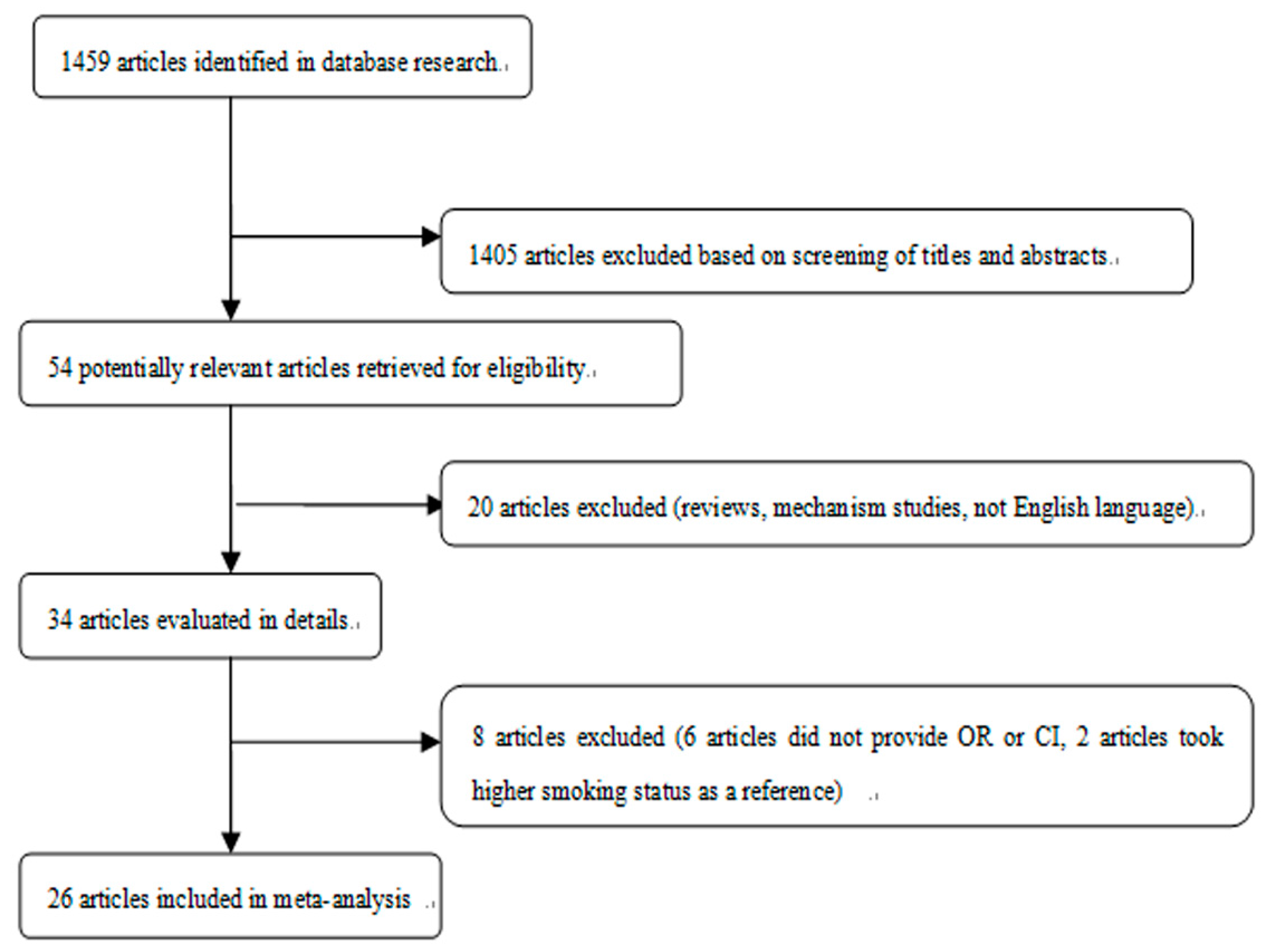
Figure 1 showed the detailed procedures of study selection for this meta-analysis. Among the 54 potentially eligible studies, 20 articles were excluded because they were reviews, studies on mechanism or published without English language. A further eight studies not providing or providing unsuitable ORs and CIs for meta-analysis were also excluded. The detailed information of studies was shown in the Appendix, Table A2. Briefly, we identified 26 studies published between 2011 and 2015 for this meta-analysis. Most of studies were from the USA and Europe. The majority of included studies adjusted potential confounders for the final estimates, except for only three studies [11,24,25]. In the publication of Barnett et al. [26], results were respectively shown for middle and high school students, and were treated as two independent studies. As with the publication of Barnett et al., different results in the publications of Camenga et al. [27], King et al. [28], Ramo et al. [25] and Moore et al. [24] were also included in the current meta-analysis as independent studies. The quality score of studies ranged from 3 stars to 8 stars according to the 9-star Newcastle-Ottawa Scale.
Figure 1.
Study selection process.
3.2. Meta-Analysis of Association between Current Smoking and Current E-Cigarettes Use
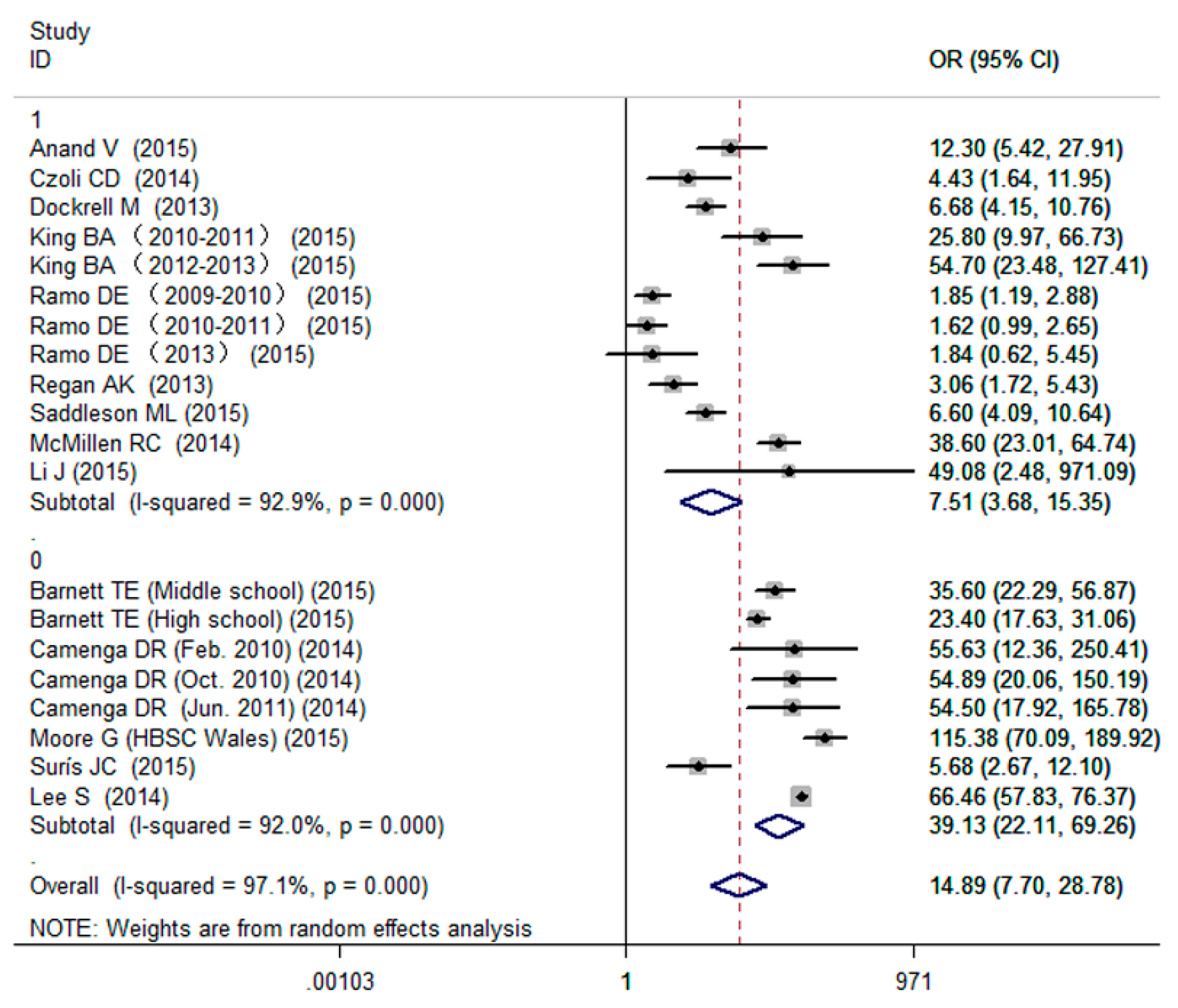
The pooled analysis found that individuals with a status of current smoking had a great probability of current e-cigarettes use (OR = 14.89, 95% CI: 7.70–28.78; Figure 2), although the formal test for heterogeneity gave a significant result (I2 = 97.1%). Subgroup analysis based on age group was conducted and indicated that the effects of current smoking on current e-cigarettes use were greater in adolescents (OR = 39.13, 95% CI: 22.11–69.26; Figure 2) than in adults (OR = 7.51, 95% CI: 3.68–15.35; Figure 2). After excluding the outlier, the sensitivity analysis result of pooled OR was 13.27 (95% CI: 6.71–26.24).
Figure 2.
Effects of current smoking on current e-cigarettes use among adolescents and adults (0: adolescent 1: adult).
3.3. Meta-Analysis of Association between Cigarette Smoking and Ever E-Cigarettes Use
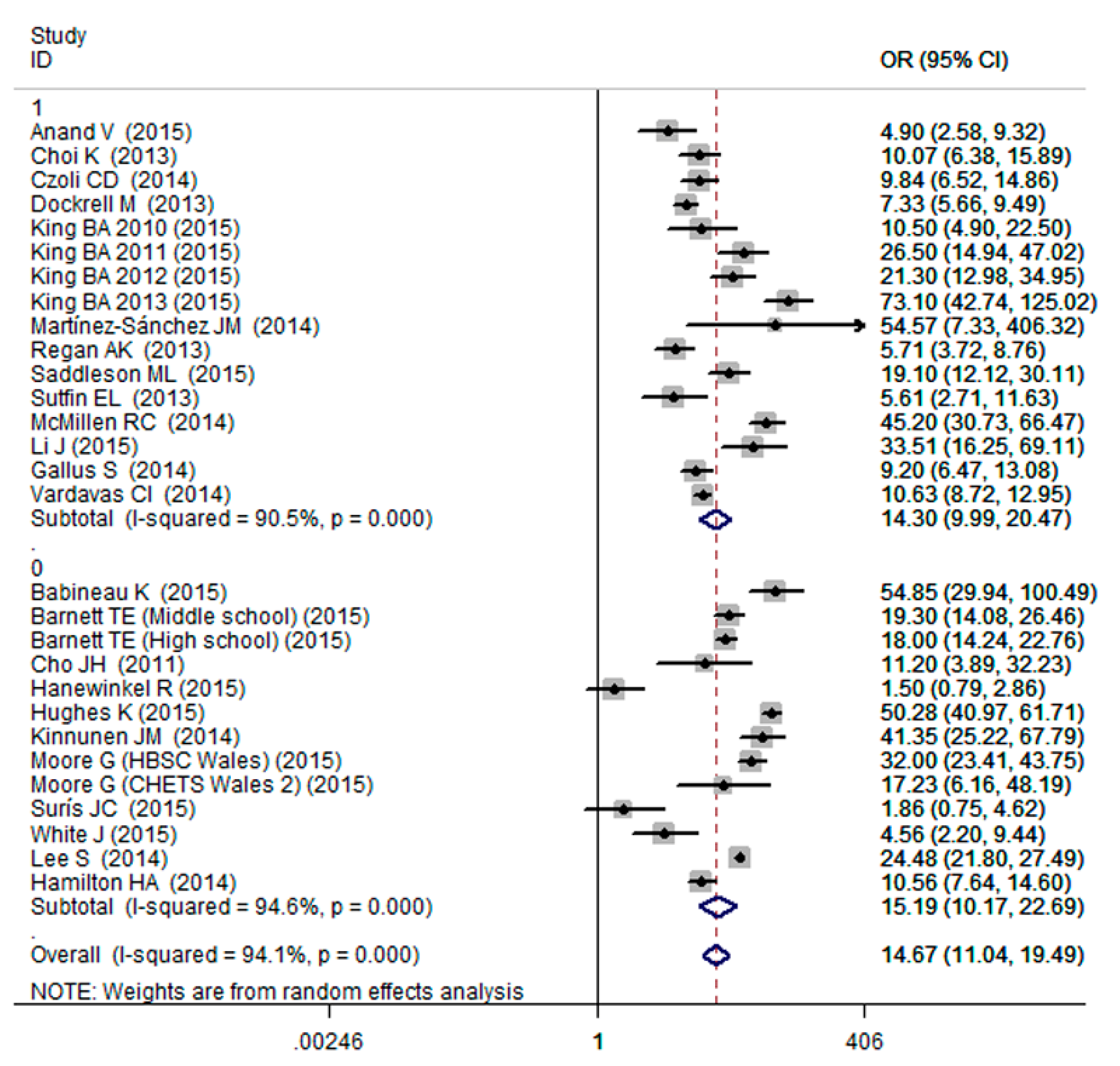
The results of meta-analysis showed that cigarette smoking was associated with increased probability of ever e-cigarettes use (OR = 14.67, 95% CI: 11.04–19.49; Figure 3), with a high evidence of between-study heterogeneity (I2 = 94.1%; Figure 3). To further explore the possible sources of heterogeneity, subgroup analyses were conducted based on cigarette smoking status and age group. When subgroup analysis was conducted based on cigarette smoking status, we observed the pooled ORs were 16.10 (95% CI: 11.68–22.19; Figure 3), 9.47 (95% CI: 4.88–18.37; Figure 3) for the current smoking and ever smoking, respectively. When subgroup analysis was conducted based on age group, the pooled ORs were 14.30 (95% CI: 9.99–20.47; Figure 4), 15.19 (95% CI: 10.17–22.69; Figure 4) for the adults and adolescents, respectively. After excluding the outlier, the sensitivity analysis result of pooled OR was 13.84 (95% CI: 10.41–18.40).
Figure 3.
Effects of ever and current cigarette smoking on ever e-cigarettes use (0: ever smoking; 1: current smoking).
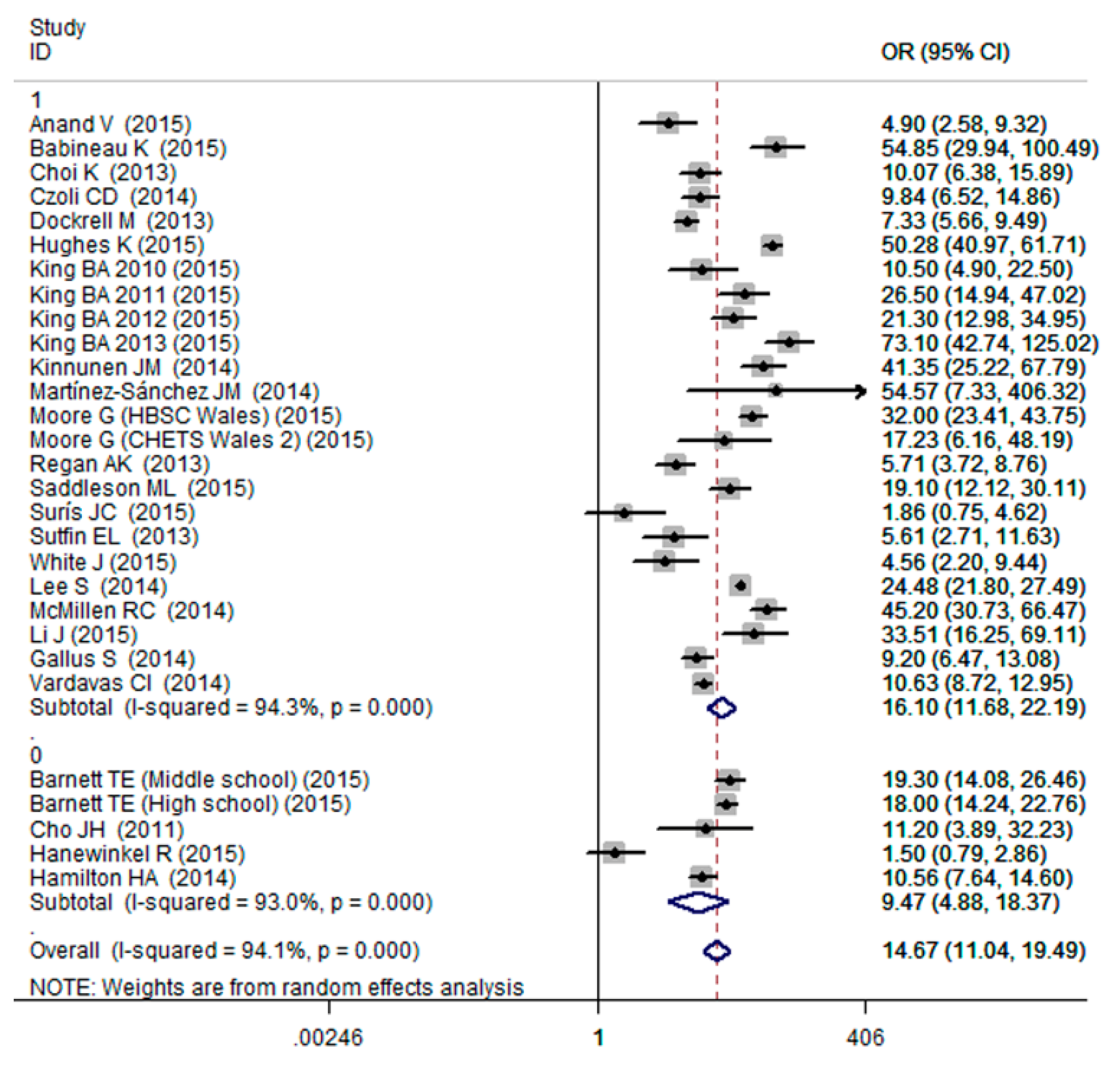
Figure 4.
Effects of cigarette smoking on ever e-cigarettes use among adolescents and adults (0: adolescent; 1: adult).
3.4. Publication Bias
No evidence of publication bias was detected in the analysis of the associations between smoking and either current e-cigarettes use or ever e-cigarettes use (data not shown).
4. Discussion
This paper presents findings from the first meta-analysis to synthesize summary estimates of the effect of cigarette smoking on e-cigarettes use. Overall, our analysis results provided evidence that cigarette smoking, especially current smoking, was associated with great probability of current and ever e-cigarettes use. Recently, Wu et al. conducted a review on e-cigarettes prevalence and correlates of use, which came to the consistent conclusion that cigarette smoking was the only common correlate of e-cigarettes use in both adolescents and adults [18]. Furthermore, in the subgroup analyses, our observations suggested that the effect of cigarette smoking on e-cigarettes use was greater in adolescents than in adults. Similarly, Vardavas et al. performed a second analysis of Eurobarometer data of 26,566 youth and adults from 27 countries, with the finding that ever e-cigarettes use was more likely among younger current smokers [29]. Considering the facts that the safety information and the cessation properties of e-cigarettes are sparse and inconsistent, more solid public health evidence on e-cigarettes” long-term safety and smoking cessation efficacy are urgently needed.
Although the mechanisms by which cigarette smoking increased the probability of e-cigarettes use, especially in adolescents, were complicated, we advocated that smokers tend to accept e-cigarettes. First, previous study indicated that being a smoker was the strongest predictor of the willingness to try an e-cigarette [30]. Second, cigarette smokers were more likely to be susceptible to the e-cigarettes ads than non-smokers. Smith et al. conducted a web-based survey and the results indicated that exposure to e-cigarettes ads might enhance interest in e-cigarettes trial, particularly among cigarette smokers [31]. Since e-cigarettes were mostly advertised through the Internet, a study by Regan et al. further suggested that younger people were more exposed to e-cigarettes ads than older adults [11], which provided a possible interpretation of the greater effect of cigarette smoking on e-cigarettes use among adolescents. Additionally, according to previous literature, sensation seeking and the willingness to try new also contributed to the adolescent smokers” susceptibility to e-cigarettes use [18,30,32]. Third, e-cigarettes users generally perceived e-cigarettes were healthier than conventional cigarettes [7,33,34] and studies suggested that those perceiving e-cigarettes as less harmful than cigarettes were more likely to use them [7,16,29,35]. To current and ever smokers, there was no exception. Evidence indicated that majority of cigarette smokers believed that e-cigarettes were safer than conventional cigarettes with the potential benefits for aiding to quit smoking [34,36,37].
The results from our meta-analysis study were subject to several limitations. One limitation was that high levels of heterogeneity were observed in the summary estimates, suggesting unexplained factors for variation still exist. As for the possible sources of heterogeneity, we attempted to speculate from the following aspects. First, most studies we assessed relied on the self-reported e-cigarettes use, which might underestimate the observed effects and contribute to the high levels of heterogeneity. Second, smaller estimates with narrow confidence interval were seen in studies conducted before 2013, while the effect seemed to be more pronounced with larger estimates in recent years of 2013 and 2014. Considering the e-cigarettes were newly sprouted things, which promoted and spread as aids for smoking cessation among smokers, we speculated that the year of the study explained part of heterogeneity. Third, different cultures, regulations on e-cigarettes, and source populations between the studies might be also responsible for the heterogeneity. Another limitation of our study was that most studies included in the current meta-analysis are cross-sectional studies, and we cannot identify the causality and rule out the residual confounding in some or all of the studies. Besides, most studies included in the meta-analysis defined “past 30-days use” as current use, which may include those who simply tried once in the last month.
5. Conclusions
In summary, this meta-analysis study indicates that cigarette smoking increases the probability of e-cigarettes use, especially in current smokers and adolescents. Given that our study is mostly based on cross-sectional studies, more evidence from longitudinal researches is needed.
Acknowledgments
The study was sponsored by “Clinical Medicine Research Special Fund of Chinese Medical Association” (Grant number: 13040530438).
Author Contributions
Meng Wang designed the study and collected, analyzed the data with Jian-Wei Wang, Shuang-Shuang Cao and Hui-Qin Wang. Ru-Ying Hu gave much advice and directions in both study design and preparing of the manuscript. All the authors have read and approved the final submitted version.
Conflicts of Interest
The authors declare no conflict of interest.
Appendix
Table A1.
Definition of the e-cigarettes and cigarettes smoking status in studies included in the meta-analysis.
Table A2.
Information of the studies included in the mata-analysis.
References
- World Health Organization (WHO). Electronic Cigarettes (E-Cigarettes) or Electronic Nicotine Delivery Systems. Available online: http://www.who.int/tobacco/communications/statements/eletronic_cigarettes/en/ (accessed on 21 October 2015).
- Goniewicz, M.L.; Knysak, J.; Gawron, M.; Kosmider, L.; Sobczak, A.; Kurek, J.; Prokopowicz, A.; Jablonska-Czapla, M.; Rosik-Dulewska, C.; Havel, C.; et al. Levels of selected carcinogens and toxicants in vapour from electronic cigarettes. Tob. Control 2014, 23, 133–139. [Google Scholar] [CrossRef] [PubMed]
- Bullen, C.; Howe, C.; Laugesen, M.; McRobbie, H.; Parag, V.; Williman, J.; Walker, N. Electronic cigarettes for smoking cessation: A randomised controlled trial. Lancet 2013, 382, 1629–1637. [Google Scholar] [CrossRef]
- Vardavas, C.I.; Anagnostopoulos, N.; Kougias, M.; Evangelopoulou, V.; Connolly, G.N.; Behrakis, P.K. Short-term pulmonary effects of using an electronic cigarette: Impact on respiratory flow resistance, impedance, and exhaled nitric oxide. Chest 2012, 141, 1400–1406. [Google Scholar] [CrossRef] [PubMed]
- Czogala, J.; Goniewicz, M.L.; Fidelus, B.; Zielinska-Danch, W.; Travers, M.J.; Sobczak, A. Secondhand exposure to vapors from electronic cigarettes. Nicotine Tob. Res. 2014, 16, 655–662. [Google Scholar] [CrossRef] [PubMed]
- Grana, R.; Benowitz, N.; Glantz, S.A. E-cigarettes: A scientific review. Circulation 2014, 129, 1972–1986. [Google Scholar] [CrossRef] [PubMed]
- Adkison, S.E.; O’Connor, R.J.; Bansal-Travers, M.; Hyland, A.; Borland, R.; Yong, H.H.; Cummings, K.M.; McNeill, A.; Thrasher, J.F.; Hammond, D.; et al. Electronic nicotine delivery systems: International tobacco control four-country survey. Am. J. Prev. Med. 2013, 44, 207–215. [Google Scholar] [CrossRef] [PubMed]
- Manzoli, L.; Flacco, M.E.; Fiore, M.; la Vecchia, C.; Marzuillo, C.; Gualano, M.R.; Ligurori, G.; Cicolini, G.; Capasso, L.; D’Amario, C.; et al. Electronic Cigarettes Efficacy and Safety at 12 Months: Cohort Study. PLoS ONE 2015, 10, e0129443. [Google Scholar] [CrossRef] [PubMed]
- Centers for Disease Control and Prevention (CDC). Tobacco product use among middle and high school students—United States, 2011 and 2012. MMWR Morb. Mortal. Wkly. Rep. 2013, 62, 893–897. [Google Scholar]
- Pearson, J.L.; Richardson, A.; Niaura, R.S.; Vallone, D.M.; Abrams, D.B. E-Cigarette awareness, use, and harm perceptions in US adults. Am. J. Public Health 2012, 102, 1758–1766. [Google Scholar] [CrossRef] [PubMed]
- Regan, A.K.; Promoff, G.; Dube, S.R.; Arrazola, R. Electronic nicotine delivery systems: Adult use and awareness of the “e-cigarette” in the USA. Tob. Control 2013, 22, 19–23. [Google Scholar] [CrossRef] [PubMed]
- Gravely, S.; Fong, G.T.; Cummings, K.M.; Yan, M.; Quah, A.C.; Borland, R.; Yong, H.H.; Hitchman, S.C.; Mc Neill, A.; Hammond, D.; et al. Awareness, trial, and current use of electronic cigarettes in 10 countries: Findings from the ITC project. Int. J. Environ. Res. Public Health 2014, 11, 11691–11704. [Google Scholar] [CrossRef] [PubMed]
- Goniewicz, M.L.; Zielinska-Danch, W. Electronic cigarette use among teenagers and young adults in Poland. Pediatrics 2012, 130, e879–e885. [Google Scholar] [CrossRef] [PubMed]
- Lotrean, L.M. Use of electronic cigarettes among Romanian university students: A cross-sectional study. BMC Public Health 2015, 15. [Google Scholar] [CrossRef] [PubMed]
- Kinnunen, J.M.; Ollila, H.; EI-Amin, S.E.; Pere, L.A.; Lindfors, P.L.; Rimpelä, A.H. Awareness and determinants of electronic cigarette use among Finnish adolescents in 2013: A population-based study. Tob. Control 2015, 24. [Google Scholar] [CrossRef] [PubMed]
- Choi, K.; Forster, J. Characteristics associated with awareness, perceptions, and use of electronic nicotine delivery systems among young US Midwestern adults. Am. J. Public Health 2013, 103, 556–561. [Google Scholar] [CrossRef] [PubMed]
- Pepper, J.K.; Brewer, N.T. Electronic nicotine delivery system (electronic cigarette) awareness, use, reactions and beliefs: A systematic review. Tob. Control 2014, 23, 375–384. [Google Scholar] [CrossRef] [PubMed]
- Carroll Chapman, S.L.; Wu, L.T. E-cigarette prevalence and correlates of use among adolescents versus adults: A review and comparison. J. Psychiatr. Res. 2014, 54, 43–54. [Google Scholar] [CrossRef] [PubMed]
- Stroup, D.F.; Berilin, J.A.; Morton, S.C.; Olkin, I.; Williamson, G.D.; Rennie, D.; Moher, D.; Becker, B.J.; Sipe, T.A.; Thacker, S.B. Meta-analysis of observational studies in epidemiology: A proposal for reporting. Meta-analysis of Observational Studies in Epidemiology (MOOSE) group. JAMA 2000, 283, 2008–2012. [Google Scholar] [CrossRef] [PubMed]
- Wells, G.A.; Shea, B.; O’Connell, D.; Peterson, J.; Welch, V.; Losos, M.; Tugwell, P. The Newcastle-Ottawa Scale (NOS) for Assessing The Quality of Nonrandomised Studies in Meta-Analyses. Available online: http://www.ohri.ca/programs/clinical_epidemiology/oxford.asp (accessed on 21 October 2015).
- Higgins, J.P.; Thompson, S.G.; Deeks, J.J.; Altman, D.G. Measuring inconsistency in meta-analyses. BMJ 2013, 327, 557–560. [Google Scholar] [CrossRef] [PubMed]
- Egger, M.; Davey Smith, G.; Schneider, M.; Minder, C. Bias in meta-analysis detected by a simple, graphical test. BMJ 1997, 315, 629–634. [Google Scholar] [CrossRef] [PubMed]
- Begg, C.B.; Mazumdar, M. Operating characteristics of a rank correlation test for publication bias. Biometrics 1994, 50, 1088–1101. [Google Scholar] [CrossRef] [PubMed]
- Moore, G.; Hewitt, G.; Evans, J.; Littlecott, H.J.; Holiday, J.; Ahmed, N.; Moore, L.; Murphy, S.; Fletcher, A. Electronic-cigarette use among young people in Wales: Evidence from two cross-sectional surveys. BMJ Open 2015, 5, e007072. [Google Scholar] [CrossRef] [PubMed]
- Ramo, D.E.; Young-Wolff, K.C.; Prochaska, J.J. Prevalence and correlates of electronic-cigarette use in young adults: Findings from three studies over five years. Addict. Behav. 2015, 41, 142–147. [Google Scholar] [CrossRef] [PubMed]
- Barnett, T.E.; Soule, E.K.; Forrest, J.R.; Porter, L.; Tomar, S.L. Adolescent Electronic Cigarette Use: Associations with Conventional Cigarette and Hookah Smoking. Am. J. Prev. Med. 2015, 49, 199–206. [Google Scholar] [CrossRef] [PubMed]
- Camenga, D.R.; Delmerico, J.; Kong, G.; Cavallo, D.; Hyland, A.; Cummings, K.M.; Krishnan-Sarin, S. Trends in use of electronic nicotine delivery systems by adolescents. Addict. Behav. 2014, 39, 338–340. [Google Scholar] [CrossRef] [PubMed]
- King, B.A.; Patel, R.; Nguyen, K.H.; Dube, S.R. Trends in awareness and use of electronic cigarettes among US adults, 2010–2013. Nicotine Tob. Res. 2015, 17, 219–227. [Google Scholar] [CrossRef] [PubMed]
- Vardavas, C.I.; Filippidis, F.T.; Agaku, I.T. Determinants and prevalence of e-cigarette use throughout the European Union: A secondary analysis of 26,566 youth and adults from 27 countries. Tob. Control 2015, 24, 442–448. [Google Scholar] [CrossRef] [PubMed]
- Pepper, J.K.; Reiter, P.L.; McRee, A.L.; Cameron, L.D.; Gilkey, M.B.; Brewer, N.T. Adolescent males’ awareness of and willingness to try electronic cigarettes. J. Adolesc. Health 2013, 52, 144–150. [Google Scholar] [CrossRef] [PubMed]
- Smith, D.M.; Bansal-Travers, M.; O’Connor, R.J.; Goniewicz, M.L.; Hyland, A. Associations between perceptions of e-cigarette advertising and interest in product trial amongst US adult smokers and non-smokers: Results from an internet-based pilot survey. Tob. Induc. Dis. 2015, 13. [Google Scholar] [CrossRef] [PubMed]
- Frankenberger, K.D. Adolescent egocentrism: A comparison among adolescents and adults. J. Adolesc. 2000, 23, 343–354. [Google Scholar] [CrossRef] [PubMed]
- Etter, J.F.; Bullen, C. Electronic cigarette: Users profile, utilization, satisfaction and perceived efficacy. Addition 2011, 106, 2017–2028. [Google Scholar] [CrossRef] [PubMed]
- Ambrose, B.K.; Rostron, B.L.; Johnson, S.E.; Portnoy, D.B.; Apelberg, B.J.; Kaufman, A.R.; Choiniere, C.J. Perceptions of the relative harm of cigarettes and e-cigarettes among U.S. youth. Am. J. Prev. Med. 2014, 47, S53–S60. [Google Scholar] [CrossRef] [PubMed]
- Twyman, L.; Bonevski, B.; Paul, C.; Bryant, J.; Gartner, C.; Guillaumier, A. Electronic Cigarettes: Awareness, Recent Use, and Attitudes within a Sample of Socioeconomically Disadvantaged Australian Smokers. Available online: http://ntr.oxfordjournals.org/content/early/2015/09/16/ntr.ntv183.abstract (accessed on 21 October 2015).
- Dockrell, M.; Morrison, R.; Bauld, L.; McNeill, A. E-cigarettes: Prevalence and attitudes in Great Britain. Nicotine Tob. Res. 2013, 15, 1737–1744. [Google Scholar] [CrossRef] [PubMed]
- Brown, J.; West, R.; Beard, E.; Michie, S.; Shahab, L.; McNeill, A. Prevalence and characteristics of e-cigarette users in Great Britain: Findings from a general population survey of smokers. Addict. Behav. 2014, 39, 1120–1125. [Google Scholar] [CrossRef] [PubMed]
- Guillet, S.; Sicard, S.; Meynard, J.B.; Mayet, A. Electronic cigarette: Use and perceptions among French military nurses in 2013. Swiss Med. Wkly. 2015, 145. [Google Scholar] [CrossRef]
- Babineau, K.; Taylor, K.; Clancy, L. Electronic Cigarette Use among Irish Youth: A Cross Sectional Study of Prevalence and Associated Factors. PLoS ONE 2015, 10, e0126419. [Google Scholar] [CrossRef] [PubMed]
- Cho, J.H.; Shin, E.; Moon, S.S. Electronic-cigarette smoking experience among adolescents. J. Adolesc. Health 2011, 49, 542–546. [Google Scholar] [CrossRef] [PubMed]
- Czoli, C.D.; Hammond, D.; White, C.M. Electronic cigarettes in Canada: prevalence of use and perceptions among youth and young adults. Can. J. Public Health 2014, 105, e97–e102. [Google Scholar] [PubMed]
- Hanewinkel, R.; Isensee, B. Risk factors for e-cigarette, conventional cigarette, and dual use in German adolescents: a cohort study. Prev. Med. 2015, 74, 59–62. [Google Scholar] [CrossRef] [PubMed]
- Hughes, K.; Bellis, M.A.; Hardcastle, K.A.; McHale, P.; Bennett, A.; Ireland, R.; Pike, K. Associations between e-cigarette access and smoking and drinking behaviours in teenagers. BMC Public Health 2015, 15. [Google Scholar] [CrossRef] [PubMed]
- Martínez-Sánchez, J.M.; Ballbè, M.; Fu, M.; Martín-Sánchez, J.C.; Saltó, E.; Gottlieb, M.; Daynard, R.; Connolly, G.N.; Fernández, E. Electronic cigarette use among adult population: A cross-sectional study in Barcelona, Spain (2013–2014). BMJ Open 2014, 4, e005894. [Google Scholar] [CrossRef] [PubMed]
- Saddleson, M.L.; Kozlowski, L.T.; Giovino, G.A.; Hawk, L.W.; Murphy, J.M.; MacLean, M.G.; Goniewicz, M.L.; Homish, G.G.; Wrotniak, B.H.; Mahoney, M.C. Risky behaviors, e-cigarette use and susceptibility of use among college students. Drug Alcohol. Depend. 2015, 149, 25–30. [Google Scholar] [CrossRef] [PubMed]
- Surís, J.C.; Berchtold, A.; Akre, C. Reasons to use e-cigarettes and associations with other substances among adolescents in Switzerland. Drug Alcohol. Depend. 2015, 153, 140–144. [Google Scholar] [CrossRef] [PubMed]
- Sutfin, E.L.; McCoy, T.P.; Morrell, H.E.; Hoeppner, B.B.; Wolfson, M. Electronic cigarette use by college students. Drug Alcohol Depend. 2013, 131, 214–221. [Google Scholar] [CrossRef] [PubMed]
- White, J.; Newcombe, R.; Walton, D. Tripling use of electronic cigarettes among New Zealand adolescents between 2012 and 2014. J. Adolesc. Health 2015, 56, 522–528. [Google Scholar] [CrossRef] [PubMed]
- Lee, S.; Grana, R.A.; Glantz, S.A. Electronic cigarette use among Korean adolescents: A cross-sectional study of market penetration, dual use, and relationship to quit attempts and former smoking. J. Adolesc. Health 2014, 54, 684–690. [Google Scholar] [CrossRef] [PubMed]
- McMillen, R.C.; Gottlieb, M.A.; Shaefer, R.M.; Winickoff, J.P.; Klein, J.D. Trends in Electronic Cigarette Use Among U.S. Adults: Use is Increasing in Both Smokers and Nonsmokers. Nicotine Tob. Res. 2015, 17, 1195–1202. [Google Scholar] [CrossRef] [PubMed]
- Li, J.; Newcombe, R.; Walton, D. The prevalence, correlates and reasons for using electronic cigarettes among New Zealand adults. Addict. Behav. 2015, 45, 245–251. [Google Scholar] [CrossRef] [PubMed]
- Gallus, S.; Lugo, A.; Pacifici, R.; Pichini, S.; Colombo, P.; Garattini, S.; la Vecchia, C. E-cigarette awareness, use, and harm perceptions in Italy: A national representative survey. Nicotine Tob. Res. 2014, 16, 1541–1548. [Google Scholar] [CrossRef] [PubMed]
- Hamilton, H.A.; Ferrence, R.; Boak, A.; Schwartz, R.; Mann, R.E.; O’Connor, S.; Adlaf, E.M. Ever Use of Nicotine and Nonnicotine Electronic Cigarettes among High School Students in Ontario, Canada. Nicotine Tob. Res. 2015, 17, 1212–1218. [Google Scholar] [CrossRef] [PubMed]
© 2016 by the authors; licensee MDPI, Basel, Switzerland. This article is an open access article distributed under the terms and conditions of the Creative Commons by Attribution (CC-BY) license (http://creativecommons.org/licenses/by/4.0/).