
Fabricating an Amperometric Cholesterol Biosensor by a Covalent Linkage between Poly(3-thiopheneacetic acid) and Cholesterol Oxidase

Abstract
:1. Introduction
2. Results and Discussion
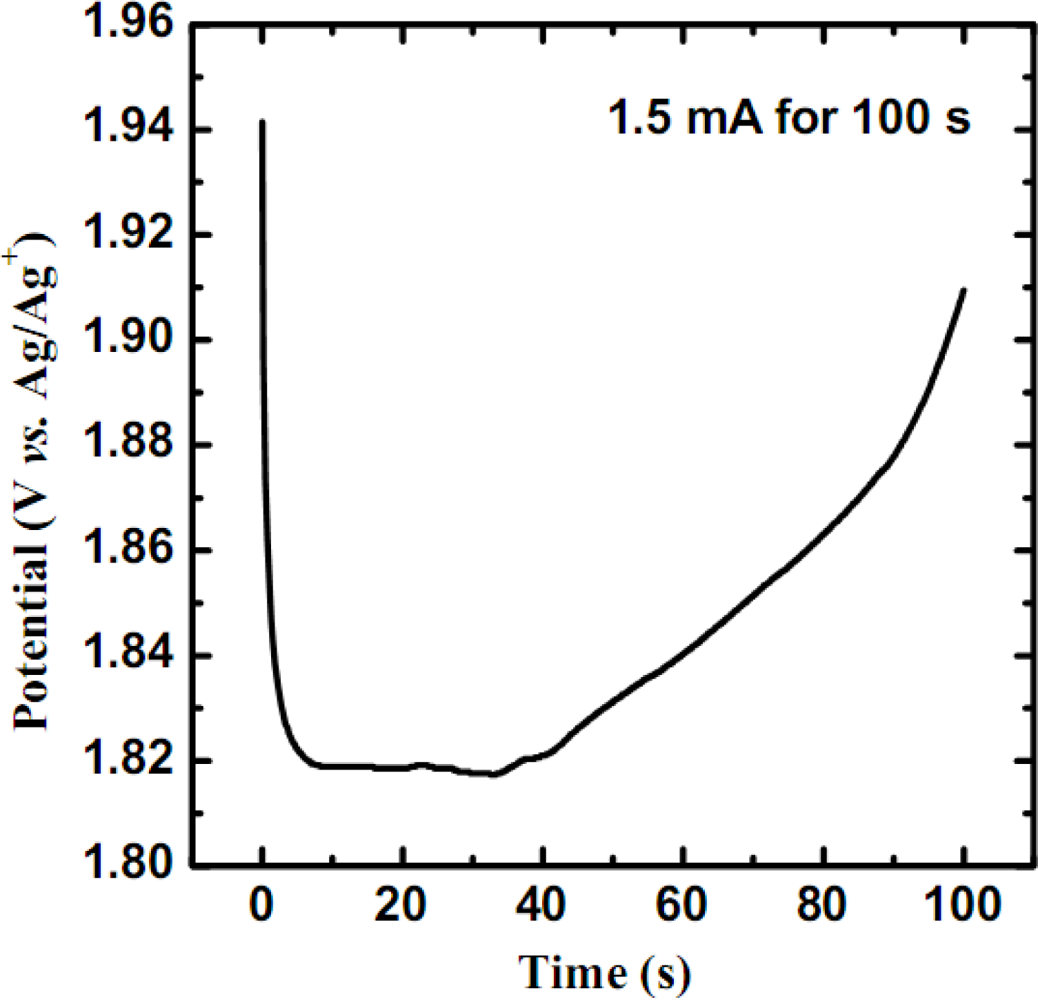
2.1. Electropolymerization of Poly(3-TPAA) Film
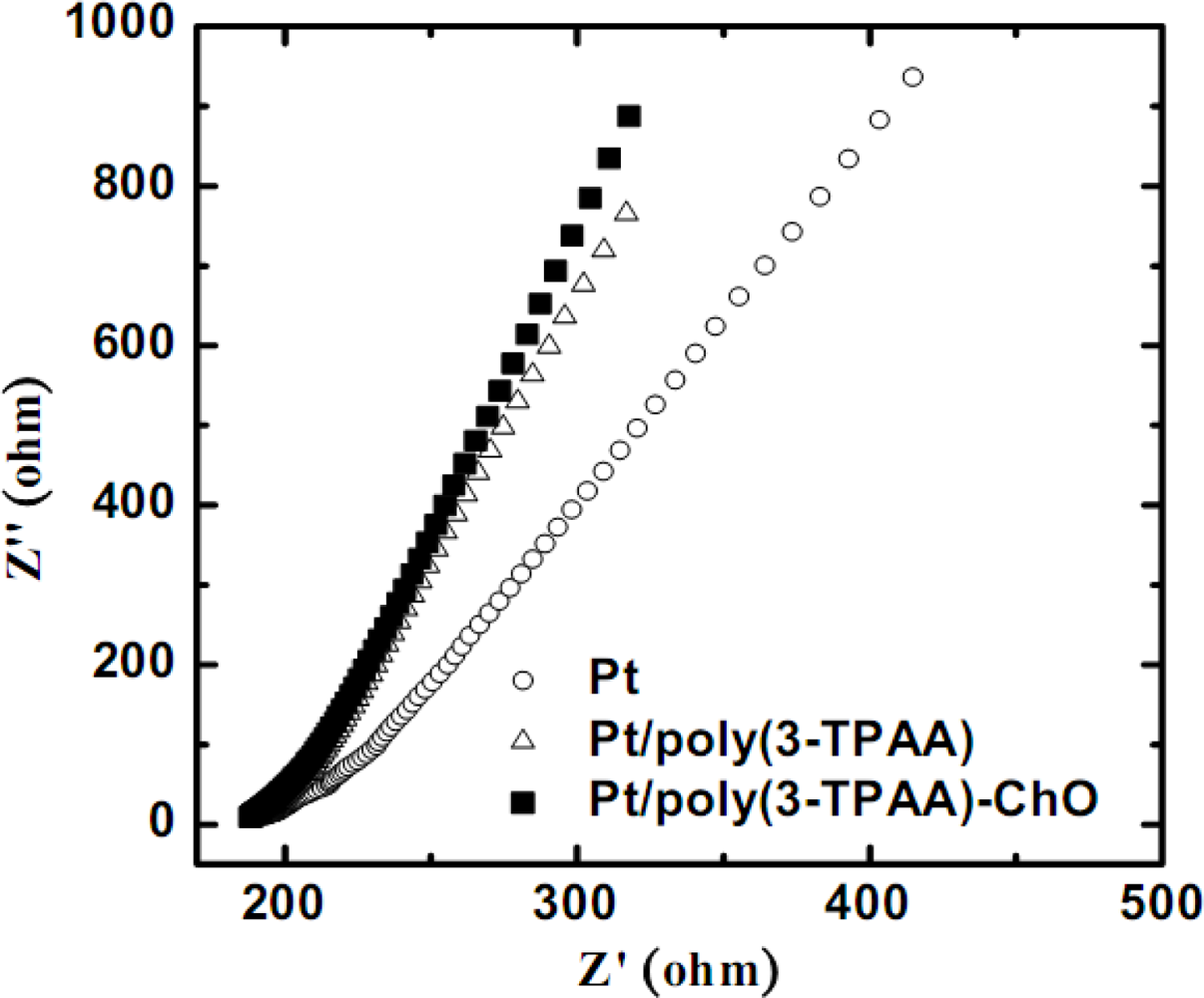
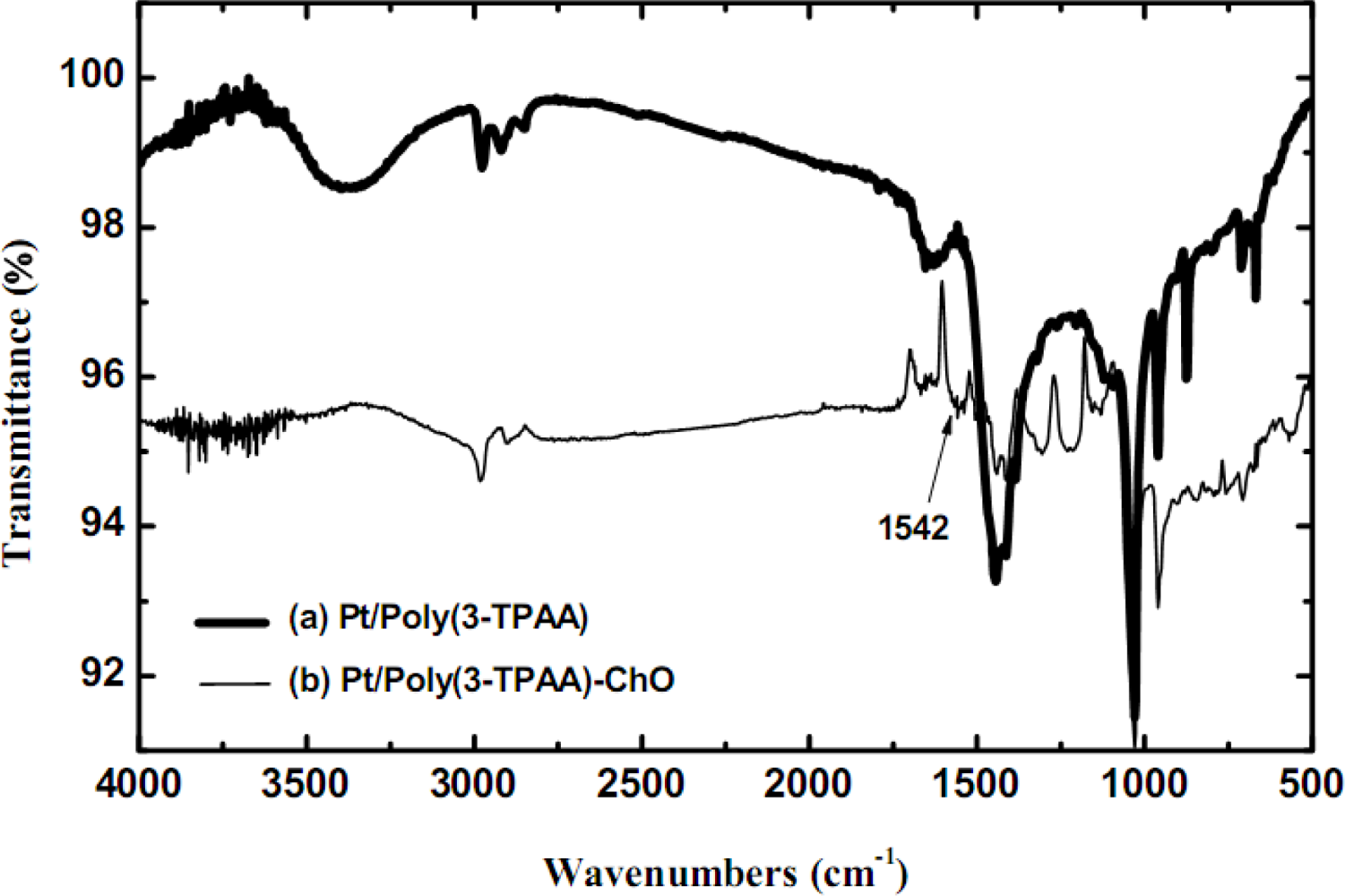
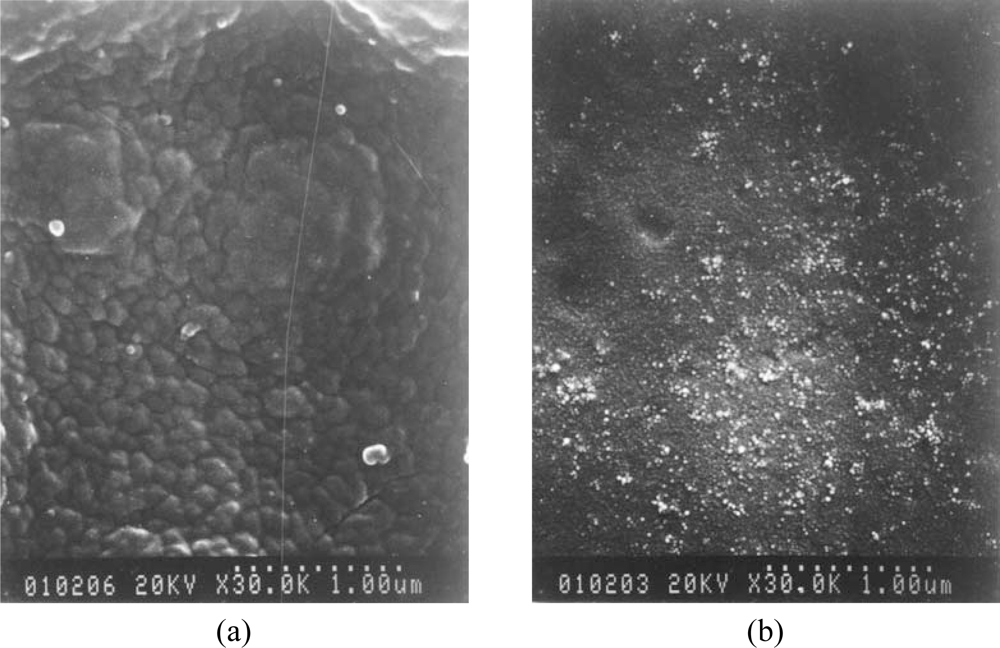
2.2. FTIR Spectrum, SEM Morphology and EIS Analysis
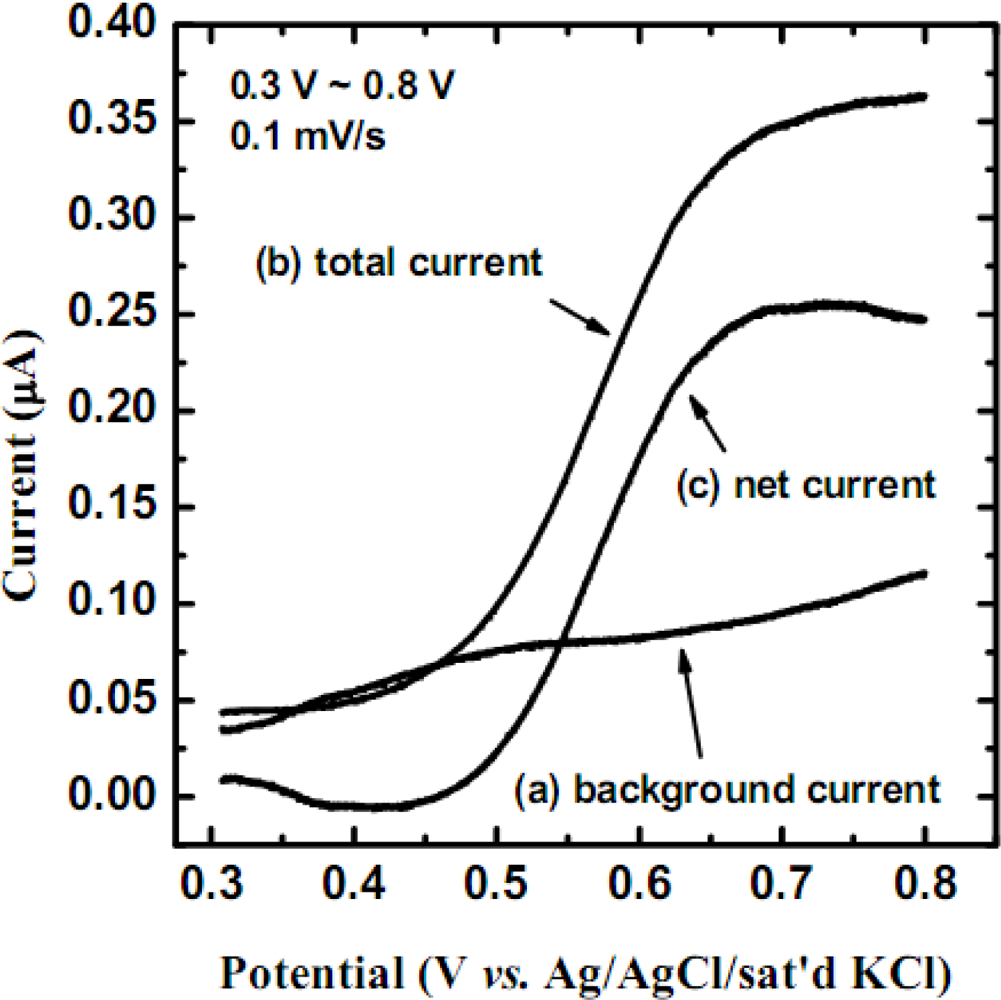
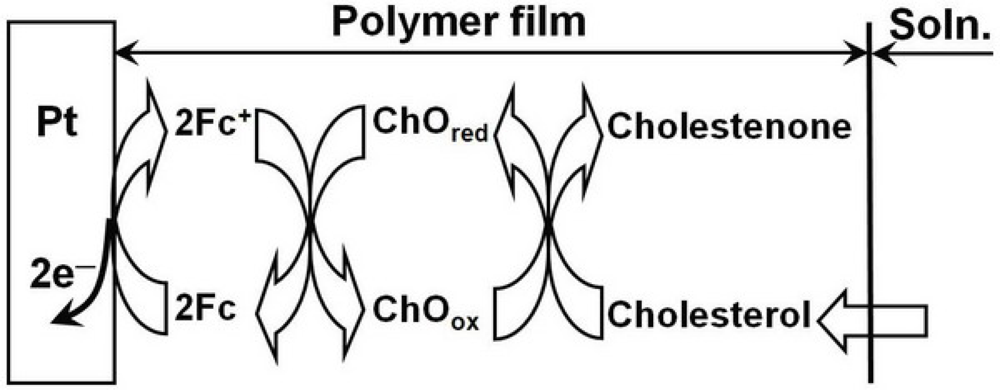
2.3. Limiting Current Plateau and Electron Transfer
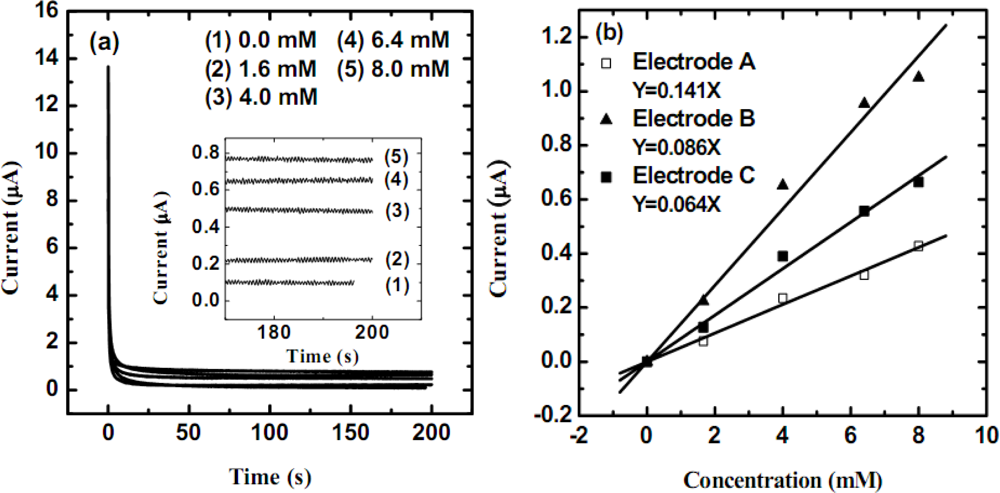
2.4. The Calibration Curve of the Cholesterol and the Performances of the Biosensor
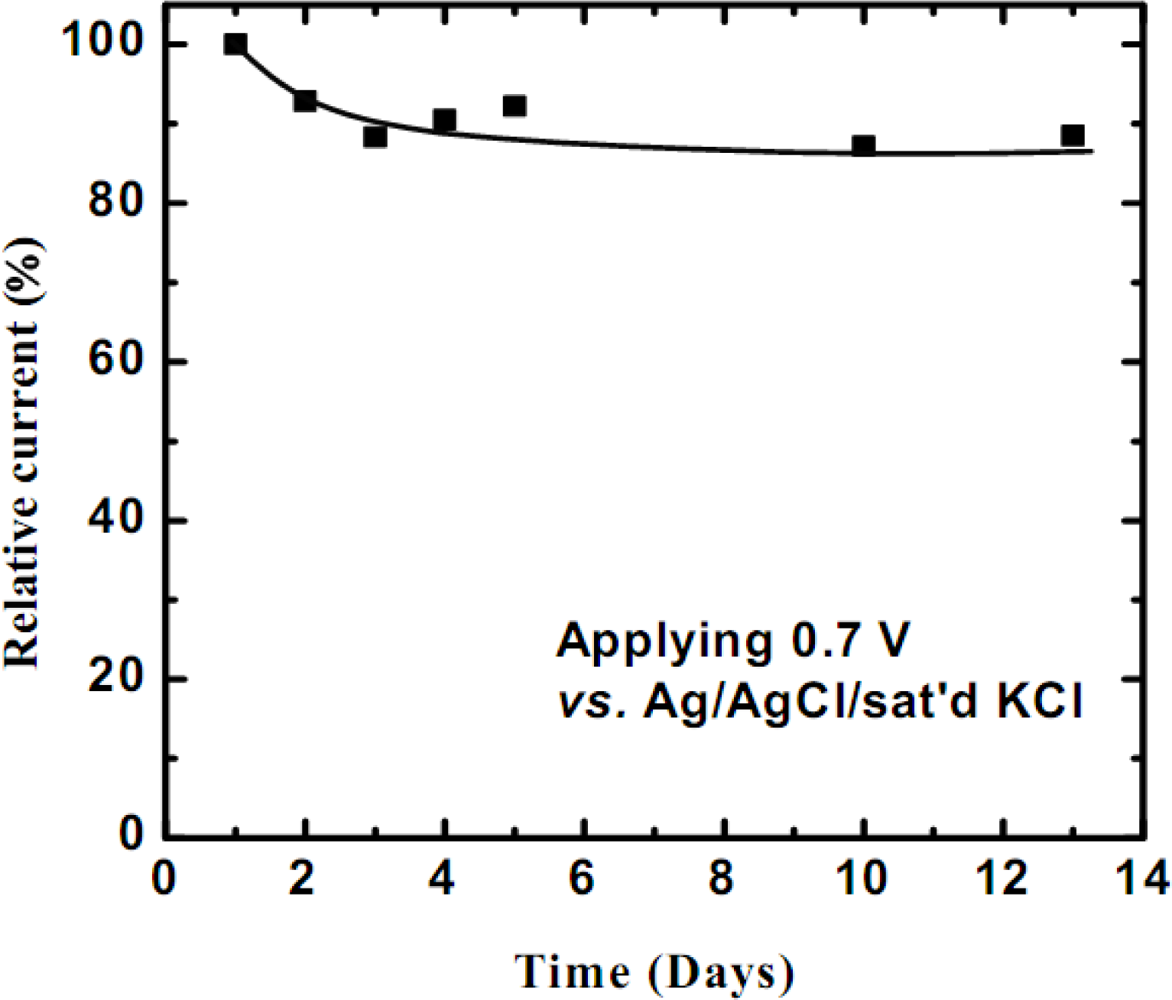
2.5. The Long-term Stability and Discussion on the Sensor Performance
3. Experimental
3.1. Chemicals and Instruments
3.2. Preparation of Cholesterol Solution
3.3. Fabrication of the Enzyme Electrode
3.4. Determination of the Sensing Potential and Performance Test
4. Conclusions
Acknowledgments
References
- White, A.; Handler, P.; Smith, E.L.; Hill, R.L.; Lehman, I.R. Principles of Biochemistry, 6th Ed ed; McGraw-Hill Book: New York, 1987; p. 903. [Google Scholar]
- Zak, B. Simple rapid microtechnic for serum total cholesterol. Am. J. Clin. Pathol 1957, 27, 583–588. [Google Scholar]
- Zak, B.; Dickenman, R.C.; White, E.G.; Burnett, H.; Cherney, P.J. Rapid estimation of free and total cholesterol. Am. J. Clin. Pathol 1954, 24, 1307–1315. [Google Scholar]
- Cunningham, A.J. Introduction to Bioanalytical Sensors; John Wiley & Sons Inc: New York, 1998; pp. 167–192. [Google Scholar]
- Yang, M.H.; Li, C.X.; Yang, Y.H.; Shen, G.L.; Yu, R.Q. Hydrogen peroxide biosensor based on enzyme multilayers through electrostatic adsorption. Acta Chim. Sin 2004, 62, 502–507. [Google Scholar]
- Singh, S.; Chaubey, A.; Malhotra, B.D. Amperometric cholesterol biosensor based on immobilized cholesterol esterase and cholesterol oxidase on conducting polypyrrole films. Anal. Chim. Acta 2004, 502, 229–234. [Google Scholar]
- Brahim, S.; Narinesingh, D.; Guiseppi-Elie, A. Amperometric determination of cholesterol in serum using a biosensor of cholesterol oxidase contained within a polypyrrole-hydrogel membrane. Anal. Chim. Acta 2001, 448, 27–36. [Google Scholar]
- Wang, H.Y.; Mu, S.L. Bioelectrochemical characteristics of cholesterol oxidase immobilized in a polyaniline film. Sensor. Actuator. B-Chem 1999, 56, 22–30. [Google Scholar]
- Tamiya, E.; Sugiura, Y.; Akiyama, A.; Karube, I. Ultramicro-H2O2 electrode for fabrication of the invivo biosensor. Ann. N.Y. Acad. Sci 1990, 613, 396–400. [Google Scholar]
- Rajesh; Bisht, V.; Takashima, W.; Kaneto, K. An amperometric urea biosensor based on covalent immobilization of urease onto an electrochemically prepared copolymer poly (N-3-aminopropyl pyrrole-co-pyrrole) film. Biomaterials 2005, 26, 3683–3690. [Google Scholar]
- Dhand, C.; Arya, S.K.; Datta, M.; Malhotra, B.D. Polyaniline-carbon nanotube composite film for cholesterol biosensor. Anal. Biochem 2008, 383, 194–199. [Google Scholar]
- Schuhmann, W.; Huber, J.; Mirlach, A.; Daub, J. Polyazulenes. 5. covalent binding of glucose-oxidase to functionalized polyazulenes - The 1st application of polyazulenes in amperometric biosensors. Adv. Mater 1993, 5, 124–126. [Google Scholar]
- Welzel, H.P.; Kossmehl, G.; Schneider, J.; Plieth, W. Reactive groups on polymer-covered electrodes. 2. Functionalized thiophene polymer by electrochemical polymerization and their application polymeric reagents. Macromolecules 1995, 28, 5575–5580. [Google Scholar]
- Willner, I.; Katz, E.; Lapidot, N.; Bauerle, P. Bioelectrocatalyzed reduction of nitrate utilizing polythiophene bipyridinium enzyme electrodes. Bioelectrochem. Bioenerg 1992, 29, 29–45. [Google Scholar]
- Welzel, H.P.; Kossmehl, G.; Engelmann, G.; Neumann, B.; Wollenberger, U.; Scheller, F.; Schroder, W. Reactive groups on polymer covered electrodes. 4. Lactate-oxidase-biosensor based on electrodes modified by polythiophene. Macromol. Chem. Phys 1996, 197, 3355–3363. [Google Scholar]
- Liaw, D.J.; Liaw, B.Y.; Gong, J.P.; Osada, Y. Synthesis and properties of poly(3-thiopheneacetic acid) and its networks via electropolymerization. Synth. Met 1999, 99, 53–59. [Google Scholar]
- Kumar, A.; Malhotra, R.; Malhotra, B.D.; Grover, S.K. Co-immobilization of cholesterol oxidase and horseradish peroxidase in a sol-gel film. Anal. Chim. Acta 2000, 414, 43–50. [Google Scholar]
- Vidal, J.C.; Garcia, E.; Castillo, J.R. In situ preparation of overoxidized PPy/oPPD bilayer biosensors for the determination of glucose and cholesterol in serum. Sens. Actuat. B-Chem 1999, 57, 219–226. [Google Scholar]
- Yao, T.; Takashima, K. Amperometric biosensor with a composite membrane of sol-gel derived enzyme film and electrochemically generated poly(1,2-diaminobenzene) film. Biosens. Bioelectron 1998, 13, 67–73. [Google Scholar]
- Gobi, K.V.; Mizutani, F. Layer-by-layer construction of an active multilayer enzyme electrode applicable for direct amperometric determination of cholesterol. Sens. Actuat. B-Chem 2001, 80, 272–277. [Google Scholar]
- Vidal, J.C.; Garcia-Ruiz, E.; Castillo, J.R. Strategies for the improvement of an amperometric cholesterol biosensor based on electropolymerization in flow systems: use of charge-transfer mediators and platinization of the electrode. J. Pharm. Biomed. Anal 2000, 24, 51–63. [Google Scholar]
- Situmorang, M.; Alexander, P.W.; Hibbert, D.B. Flow injection potentiometry for enzymatic assay of cholesterol with a tungsten electrode sensor. Talanta 1999, 49, 639–649. [Google Scholar]
- Charpentier, L.; ElMurr, N. Amperometric determination of cholesterol in serum with use of a renewable surface peroxidase electrode. Anal. Chim. Acta 1995, 318, 89–93. [Google Scholar]
- Besombes, J.L.; Cosnier, S.; Labbe, P.; Reverdy, G. Improvement of the analytical characteristics of an enzyme electrode for free and total cholesterol via laponite clay additives. Anal. Chim. Acta 1995, 317, 275–280. [Google Scholar]




| Enzyme Electrode | Linear range (mM) | SEN (mAcm−2M−1) | LOD (M) | Response time (s) | Stability (days) | [Ref.] |
|---|---|---|---|---|---|---|
| Pt/P(HEMA)1/PPy2-ChO | 0.5–15 | 0.02 | 120 | 30 | >360 (75%) | [7] |
| GC/TEOS3 sol-gel/HRP/ChO | 2–10 | 0.48 | - | - | - | [17] |
| Pt/PPy-ChO/o-PPD4 | 0–0.3 | 50.62 | 1.35 | 7.5 | 16 (70%) | [18] |
| Pt/TMOS5 sol-gel/ChOx/p(DB)6 | 0.06–3 | 0.58 | - | 51 | 32 (50%) | [19] |
| Pt/PAn7/ChO | 0.01–0.1 | 2.22 | - | - | - | [8] |
| Au/AET8+TP9/MP-1110/ChO | 0.2–3 | 0.09 | - | <20 | - | [20] |
| Pt/Pt/PPy/ChO | 0–0.4 | 1.1 | 14 | 6.3 | >35 (70%) | [21] |
| W/ferrocyanide/[ChO/ChEt] | 0.05–3 | - | 10 | 30 | - | [22] |
| CPE/HMF11/POD/[ChO/ChEt] | 0.001–0.15 | 9.5 | - | - | - | [23] |
| GC/PPy/laponite/[ChO/ChEt] | 0–0.025 | 13.2 | 0.5 | 50 | 10 (70%) | [24] |
| Pt/Poly(3-TPAA)/ChO | 0–8 | 4.49 | 420 | 70 ∼ 90 | >13 (88%) | This work |
© 2009 by the authors; licensee MDPI, Basel, Switzerland This article is an open-access article distributed under the terms and conditions of the Creative Commons Attribution license (http://creativecommons.org/licenses/by/3.0/).
Share and Cite
Nien, P.-C.; Chen, P.-Y.; Ho, K.-C. Fabricating an Amperometric Cholesterol Biosensor by a Covalent Linkage between Poly(3-thiopheneacetic acid) and Cholesterol Oxidase. Sensors 2009, 9, 1794-1806. https://doi.org/10.3390/s90301794
Nien P-C, Chen P-Y, Ho K-C. Fabricating an Amperometric Cholesterol Biosensor by a Covalent Linkage between Poly(3-thiopheneacetic acid) and Cholesterol Oxidase. Sensors. 2009; 9(3):1794-1806. https://doi.org/10.3390/s90301794
Chicago/Turabian StyleNien, Po-Chin, Po-Yen Chen, and Kuo-Chuan Ho. 2009. "Fabricating an Amperometric Cholesterol Biosensor by a Covalent Linkage between Poly(3-thiopheneacetic acid) and Cholesterol Oxidase" Sensors 9, no. 3: 1794-1806. https://doi.org/10.3390/s90301794