<?xml version="1.0" encoding="UTF-8"?>
<!DOCTYPE article PUBLIC "-//NLM//DTD Journal Publishing DTD v2.3 20070202//EN" "journalpublishing.dtd">
<article xmlns:xlink="http://www.w3.org/1999/xlink" xml:lang="en" article-type="research-article">
<front>
<journal-meta>
<journal-id journal-id-type="publisher-id">ijms</journal-id>
<journal-title>International Journal of Molecular Sciences</journal-title>
<abbrev-journal-title>Int. J. Mol. Sci.</abbrev-journal-title>
<issn pub-type="epub">1422-0067</issn>
<publisher>
<publisher-name>Molecular Diversity Preservation International (MDPI)</publisher-name></publisher></journal-meta>
<article-meta>
<article-id pub-id-type="publisher-id">ijms-09-00571</article-id>
<article-categories>
<subj-group>
<subject>Full Research Paper</subject></subj-group></article-categories>
<title-group>
<article-title>Extraction of Glycyrrhizic Acid and Glabridin from Licorice</article-title></title-group>
<contrib-group>
<contrib contrib-type="author">
<name><surname>Tian</surname><given-names>Minglei</given-names></name></contrib>
<contrib contrib-type="author">
<name><surname>Yan</surname><given-names>Hongyuan</given-names></name></contrib>
<contrib contrib-type="author">
<name><surname>Row</surname><given-names>Kyung Ho</given-names></name><xref ref-type="corresp" rid="c1-ijms-09-00571">*</xref></contrib>
<aff id="af1-ijms-09-00571">Center for Advanced Bioseperation Technology, Department of Chemical Engineering, Inha University, Incheon 402-751, Korea</aff></contrib-group>
<author-notes>
<corresp id="c1-ijms-09-00571">
<label>*</label>Author to whom correspondence should be addressed: Tel. +82-32-860-7470; Fax: +82-32-872-0959; E-mail:
<email>rowkho@inha.ac.kr</email></corresp></author-notes>
<pub-date pub-type="epub">
<day>16</day>
<month>4</month>
<year>2008</year></pub-date>
<pub-date pub-type="collection">
<month>4</month>
<year>2008</year></pub-date>
<volume>9</volume>
<issue>4</issue>
<fpage>571</fpage>
<lpage>577</lpage>
<history>
<date date-type="received">
<day>25</day>
<month>1</month>
<year>2008</year></date>
<date date-type="rev-recd">
<day>18</day>
<month>2</month>
<year>2008</year></date>
<date date-type="accepted">
<day>12</day>
<month>3</month>
<year>2008</year></date></history>
<copyright-statement>© 2008 by MDPI</copyright-statement>
<copyright-year>2008</copyright-year>
<abstract>
<p>The extraction and separation conditions of glycyrrhizic acid and glabridin from licorice were investigated. By changing the different extraction solvents, procedures, times and temperature, the optimum extraction condition was established: the used of ethanol/water (30:70, v/v) as an extraction solvent, and 60 min dipping time under 50°C. The extracts of licorice were separated and determined by reversed-phase high performance liquid chromatography with a methanol/water (70:30, v/v, containing 1% acetic acid) as the mobile phase. Under the optimum extraction condition, 2.39 mg/g of glycyrrhizic acid and 0.92 mg/g of glabridin were extracted from Chinese licorice and the recoveries were 89.7% and 72.5% respectively.</p></abstract>
<kwd-group>
<kwd>glycyrrhizic acid</kwd>
<kwd>glabridin</kwd>
<kwd>licorice</kwd>
<kwd>extraction</kwd>
<kwd>high-performance liquid chromatography</kwd></kwd-group></article-meta></front>
<body>
<sec sec-type="intro">
<title>1. Introduction</title>
<p>Licorice, the root of the <italic>glycyrrhiza</italic> plant species, has been used medicinally for more than 4000 years [<xref ref-type="bibr" rid="b1-ijms-09-00571">1</xref>]. The genus <italic>glycyrrhiza</italic> consists of approximately 30 species, in which six species produce a sweet saponin glycyrrhizic acid (GA), and they are widely used in Asia countries [<xref ref-type="bibr" rid="b2-ijms-09-00571">2</xref>]. These medicinal plants were used as flavorings, sweeteners and as herbal medicine, and they were also used for improving health, detoxification and cures for injury [<xref ref-type="bibr" rid="b3-ijms-09-00571">3</xref>].</p>
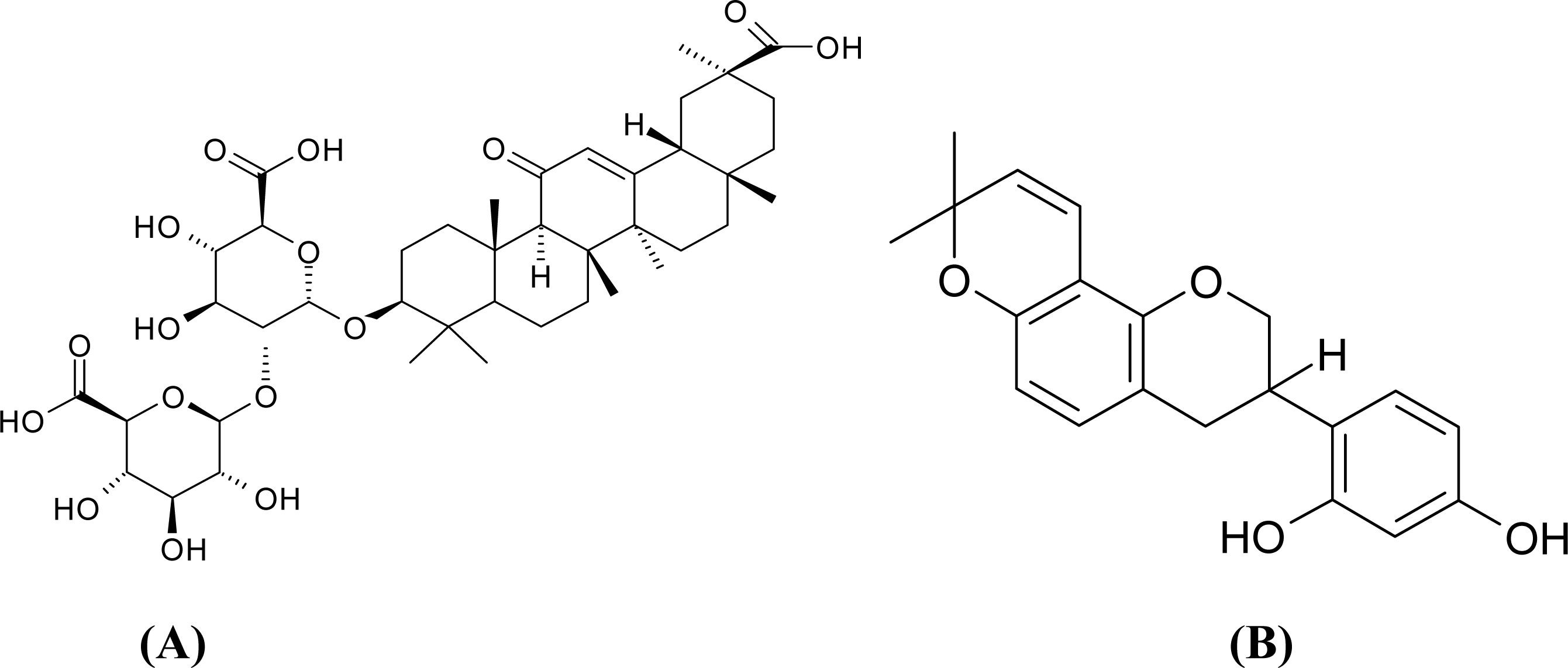
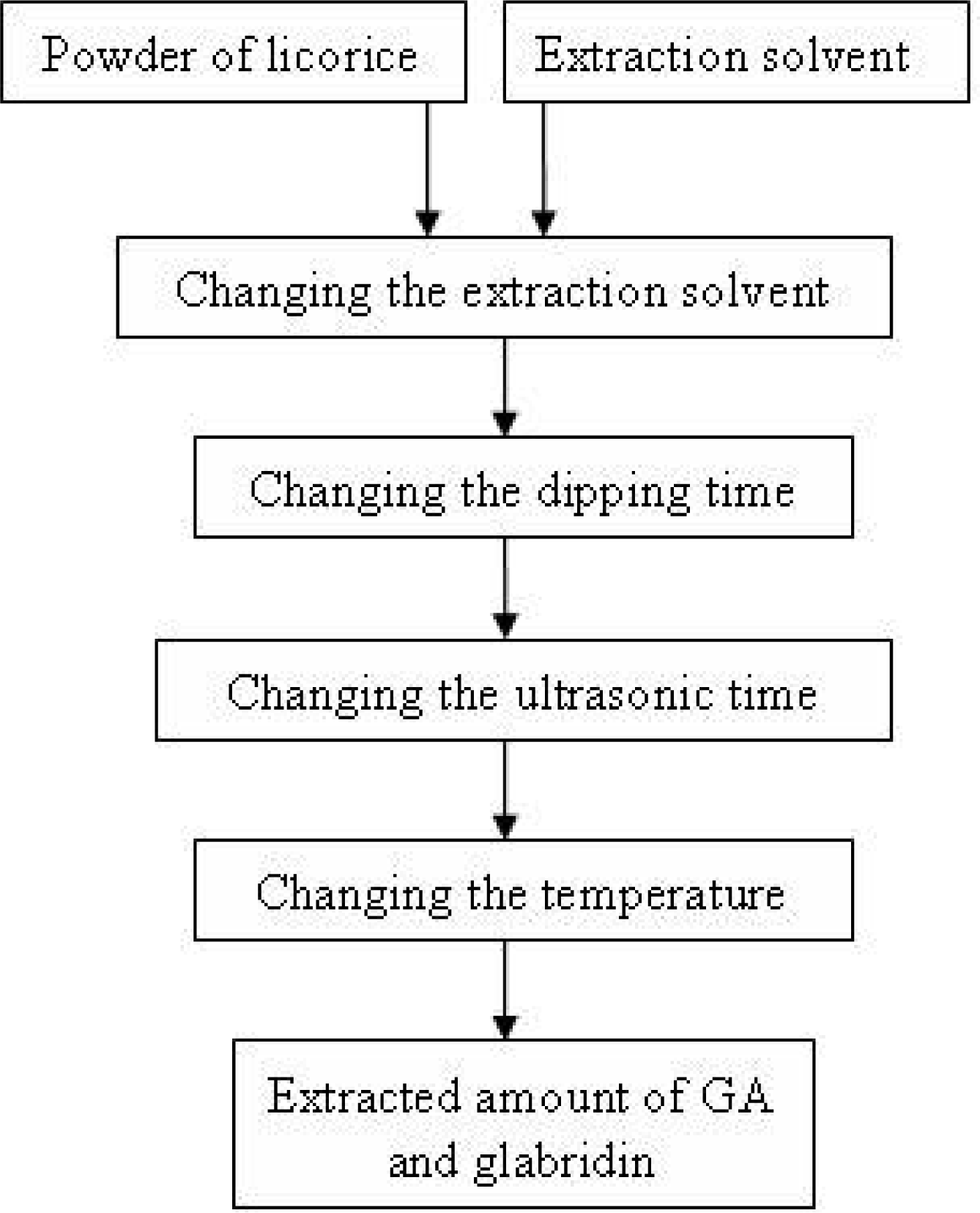
<p>Glycyrrhizic acid (GA) (<xref ref-type="fig" rid="f1-ijms-09-00571">Figure 1</xref> (A)), the most studied active constituent of licorice, is a sweet-tasting material. The constituent is 50 times sweeter than sugar, making it a widely used as a sweetening additive in the food industry [<xref ref-type="bibr" rid="b4-ijms-09-00571">4</xref>]. In many countries, GA is used as a major therapeutic agent to treat chronic viral hepatitis and allergic dermatitis [<xref ref-type="bibr" rid="b5-ijms-09-00571">5</xref>]. It is also known to have anti-inflammation [<xref ref-type="bibr" rid="b6-ijms-09-00571">6</xref>], anti-ulcer [<xref ref-type="bibr" rid="b7-ijms-09-00571">7</xref>], anti-hepatotoxic [<xref ref-type="bibr" rid="b8-ijms-09-00571">8</xref>] and antivirus activities [<xref ref-type="bibr" rid="b9-ijms-09-00571">9</xref>, <xref ref-type="bibr" rid="b10-ijms-09-00571">10</xref>].</p>
<p>Glabridin (<xref ref-type="fig" rid="f1-ijms-09-00571">Figure 1</xref> (B)) has been reported to exhibit multiple pharmacological activities, such as cytotoxic activity, antimicrobial activity, estrogenic and anti-proliferative activity against human breast cancer cells. It also affects melanogenesis, inflammation, low-density lipoprotein oxidation and protection of mitochondrial functions from oxidative stresses [<xref ref-type="bibr" rid="b11-ijms-09-00571">11</xref>].</p>
<p>There have been some reports on the separation of GA and glabridin [<xref ref-type="bibr" rid="b2-ijms-09-00571">2</xref>, <xref ref-type="bibr" rid="b9-ijms-09-00571">9</xref>] but the methods were about respectively extraction, the method about the simultaneously extraction of these two compounds was still not established. The purpose of this study is to establish a simple and convenient extraction process of GA and glabridin from licorice by liquid-liquid extraction followed with RP-HPLC analysis. By changing extraction solvents, methods, times and temperatures, the optimum extraction condition was established. 2.39 mg/g of GA and 0.92 mg/g of glabridin were successfully extracted from 1.0g Chinese licorice.</p></sec>
<sec sec-type="results|discussion">
<title>2. Results and Discussion</title>
<sec>
<title>2.1. Effect of different extraction solvents</title>
<p>The different extraction solvents used in the experiment for the extraction of GA and glabridin from licorice were water, methanol, ethanol, acetonitrile and chloroform. 50 mLs of each solvent was used to extract 1.0 g licorice for 240 min under room temperature respectively. <xref ref-type="table" rid="t1-ijms-09-00571">Table 1</xref> show that both of two compounds can be extracted by polar solvents and GA showed the highest extracted amount by water. Furthermore, glabridin was easily extracted by methanol and ethanol and it showed higher extracted amount by ethanol. So water and ethanol were obtained as the extraction solvent for the following experiment.</p>
<p>In order to determine the effect of different compositions of ethanol/water, 50 mL different compositions of ethanol/water (90:10, 70:30, 50:50, 30:70, 10:90, v/v) were mixed with 1.0 g licorice for 240 min respectively. <xref ref-type="table" rid="t2-ijms-09-00571">Table 2</xref> indicates ethanol/water (30:70, v/v) was the optimum extraction solvent in this work.</p></sec>
<sec>
<title>2.2. Effect of different extraction method</title>
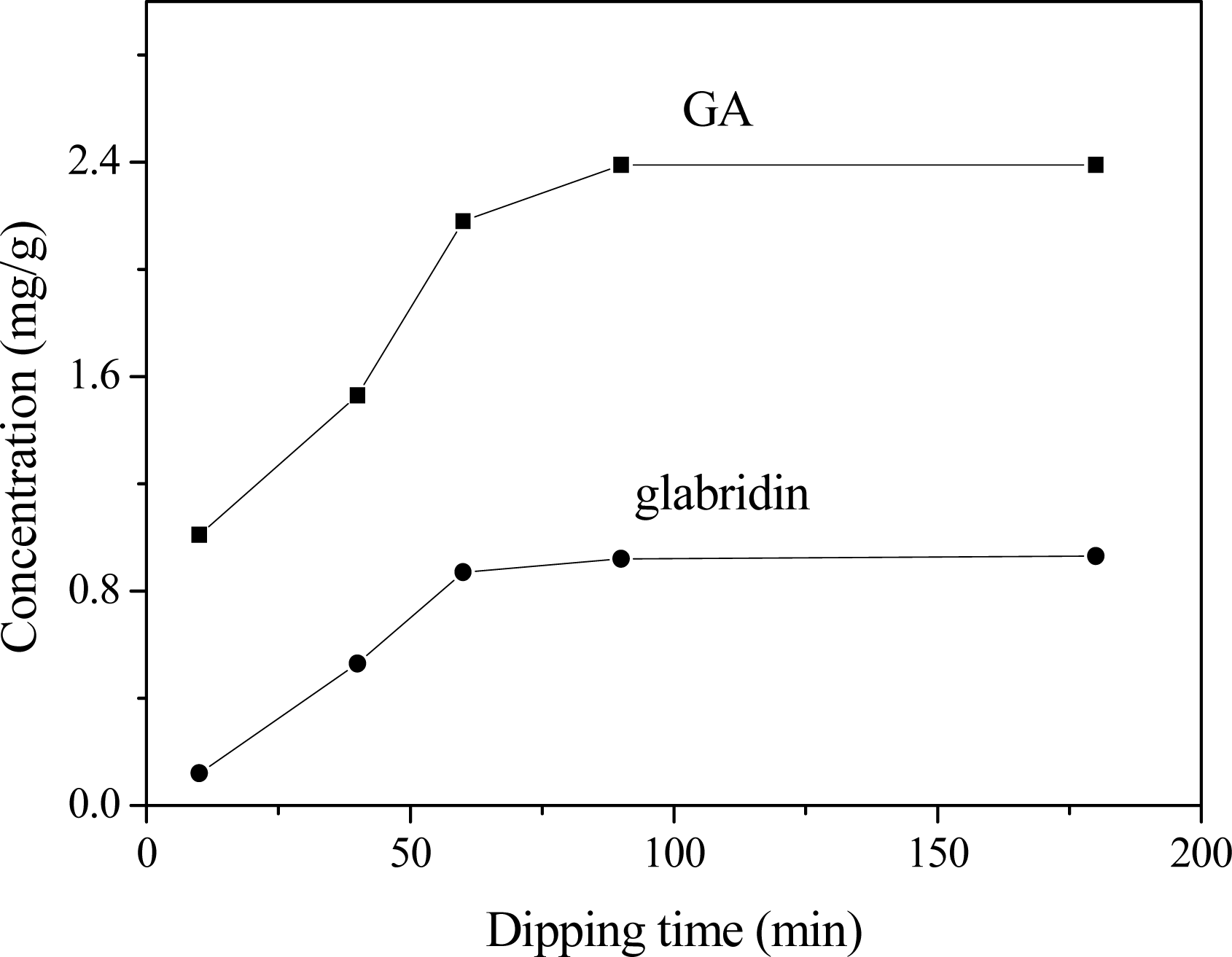
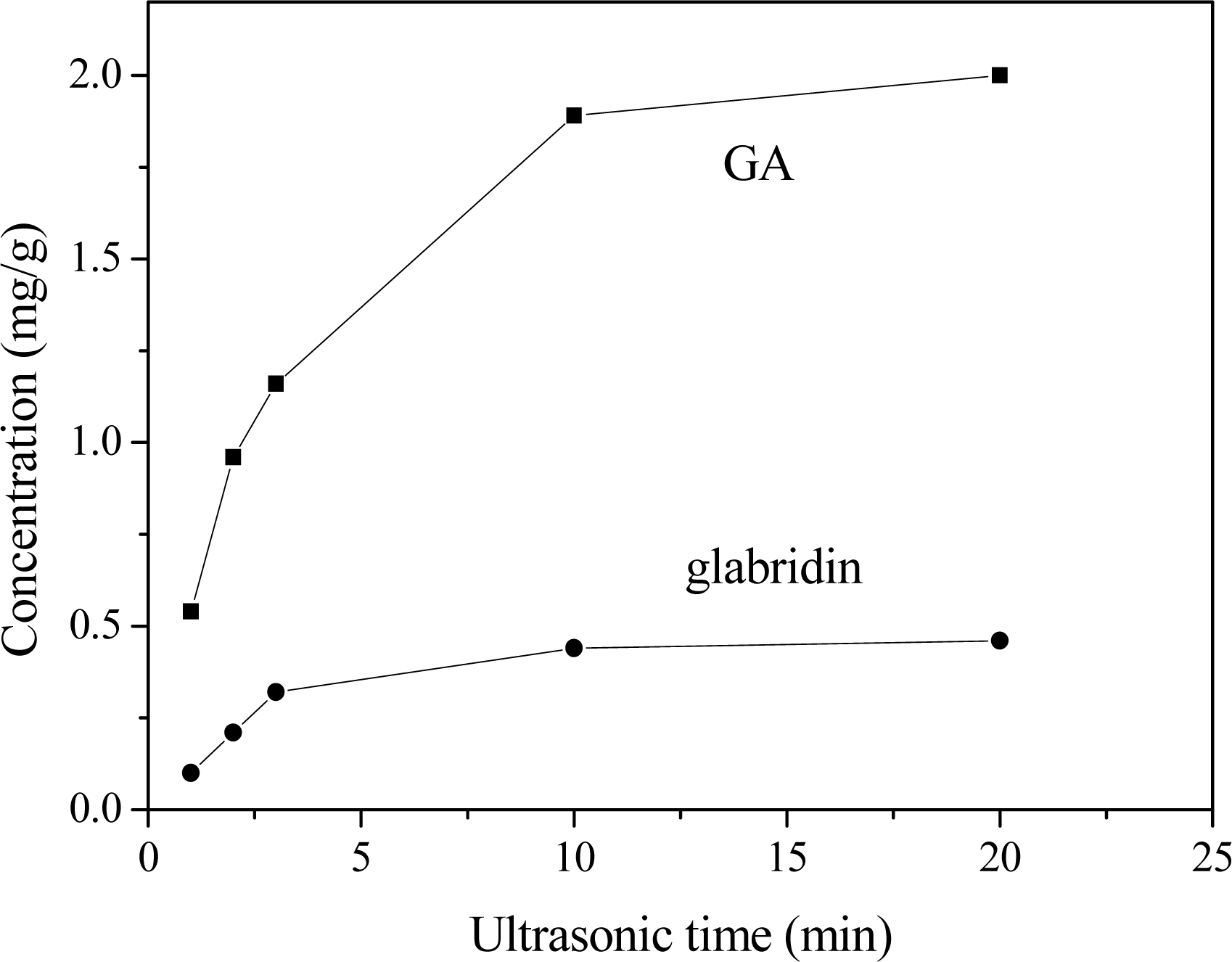
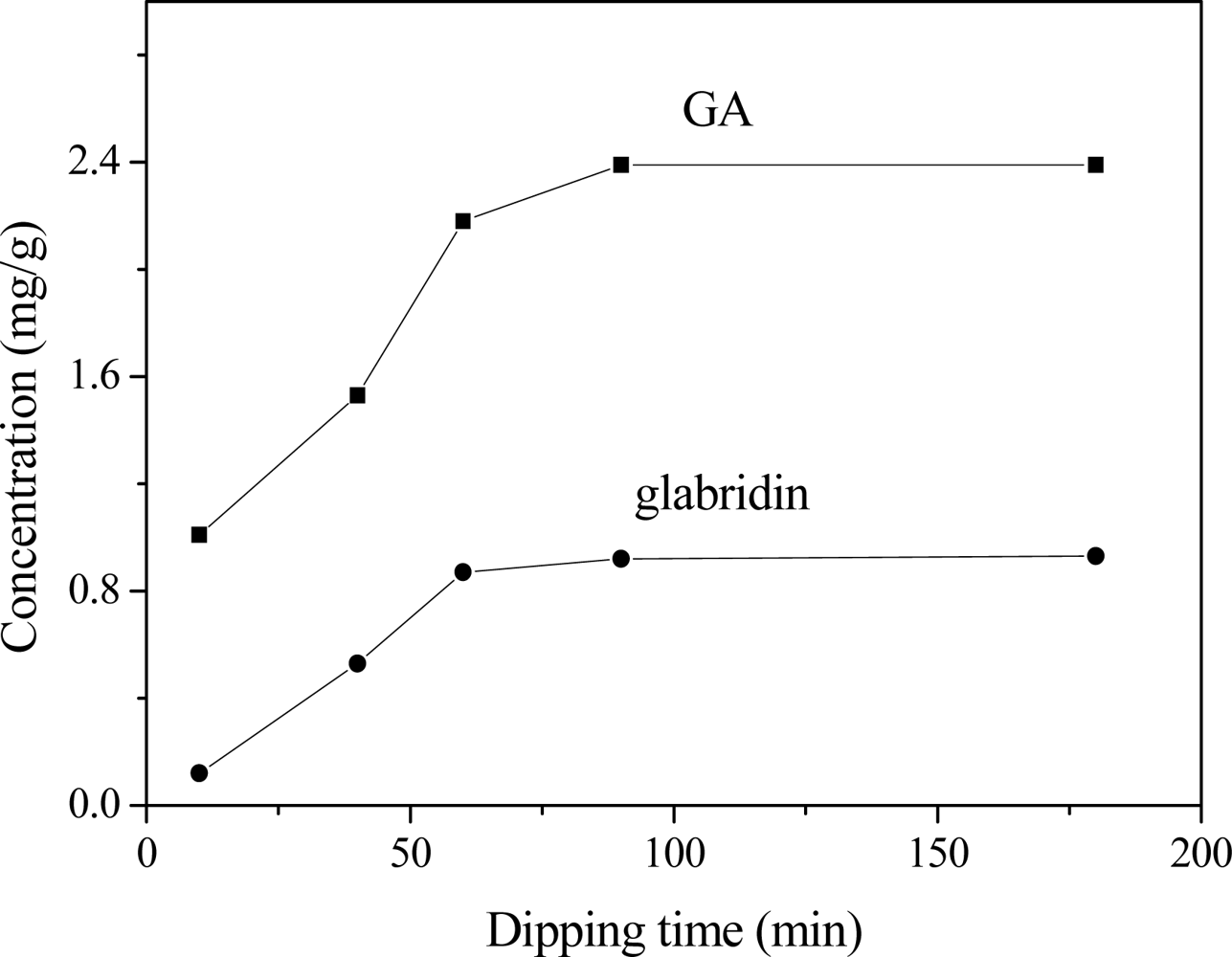
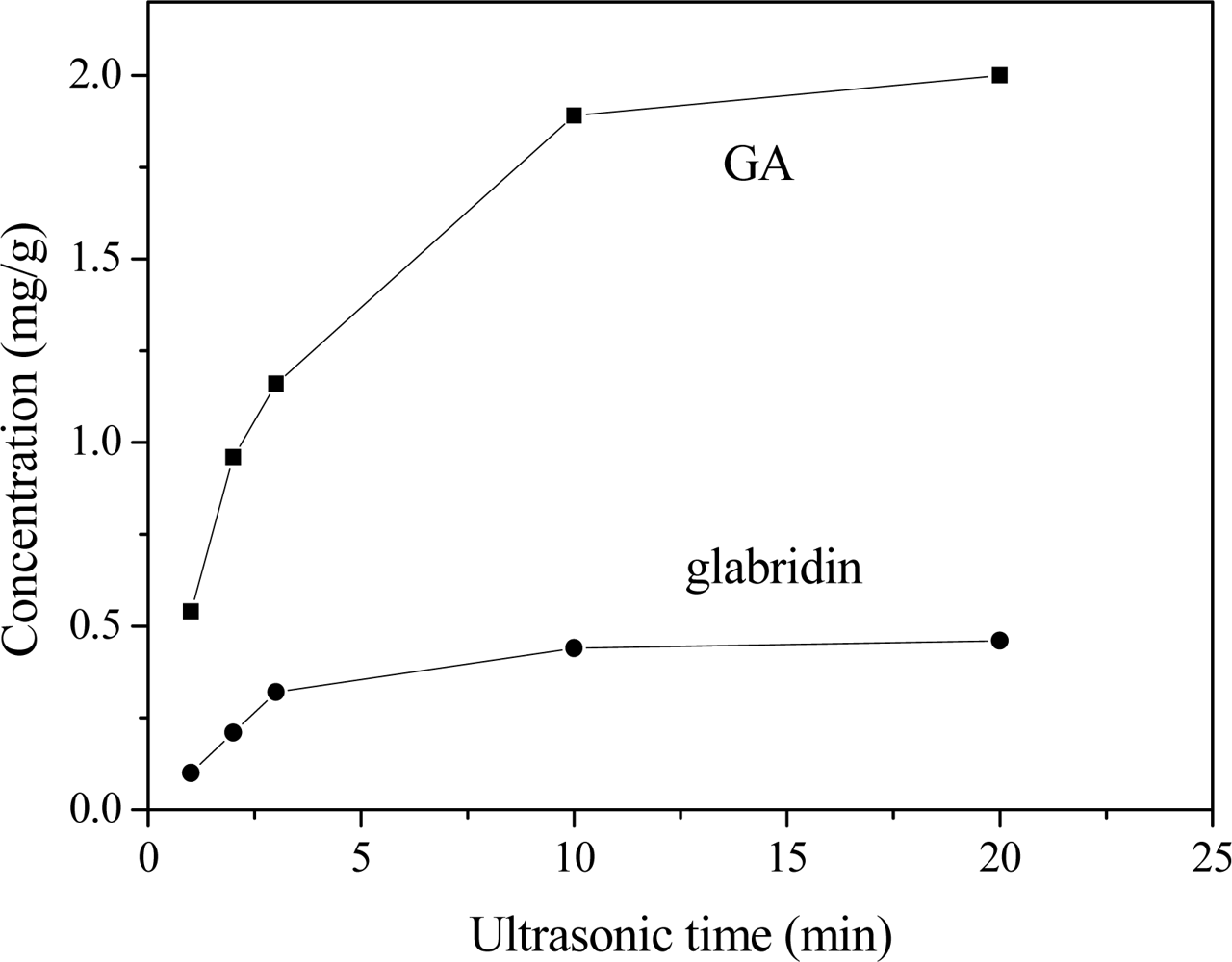
<p>The different extraction methods such as dipping extraction and ultrasonic extraction were investigated by 1.0 g licorice powder extracted with 50 mL ethanol/water (30:70, v/v). In dipping extraction, the powder of licorice was mixed and stirred with solvent for different times. In <xref ref-type="fig" rid="f2-ijms-09-00571">Figure 2</xref>, the extracted amounts of GA and glabridin increased as the dipping times was increased from 10 min to 90 min and no obvious increased after further prolong extraction time. Equivalent samples were then prepared by an ultrasonic method without dipping time. <xref ref-type="fig" rid="f3-ijms-09-00571">Figure 3</xref> shows that the extracted amounts of GA and glabridin increased with an increase of ultrasonic time. However, comparing the results of the two methods, it was found that the amounts extracted via the ultrasonic method were lower, while more energy was required in the experiments. Thus, it was determined that the ultrasonic method was not appropriate for this approach.</p></sec>
<sec>
<title>2.3. The optimum extraction temperature</title>
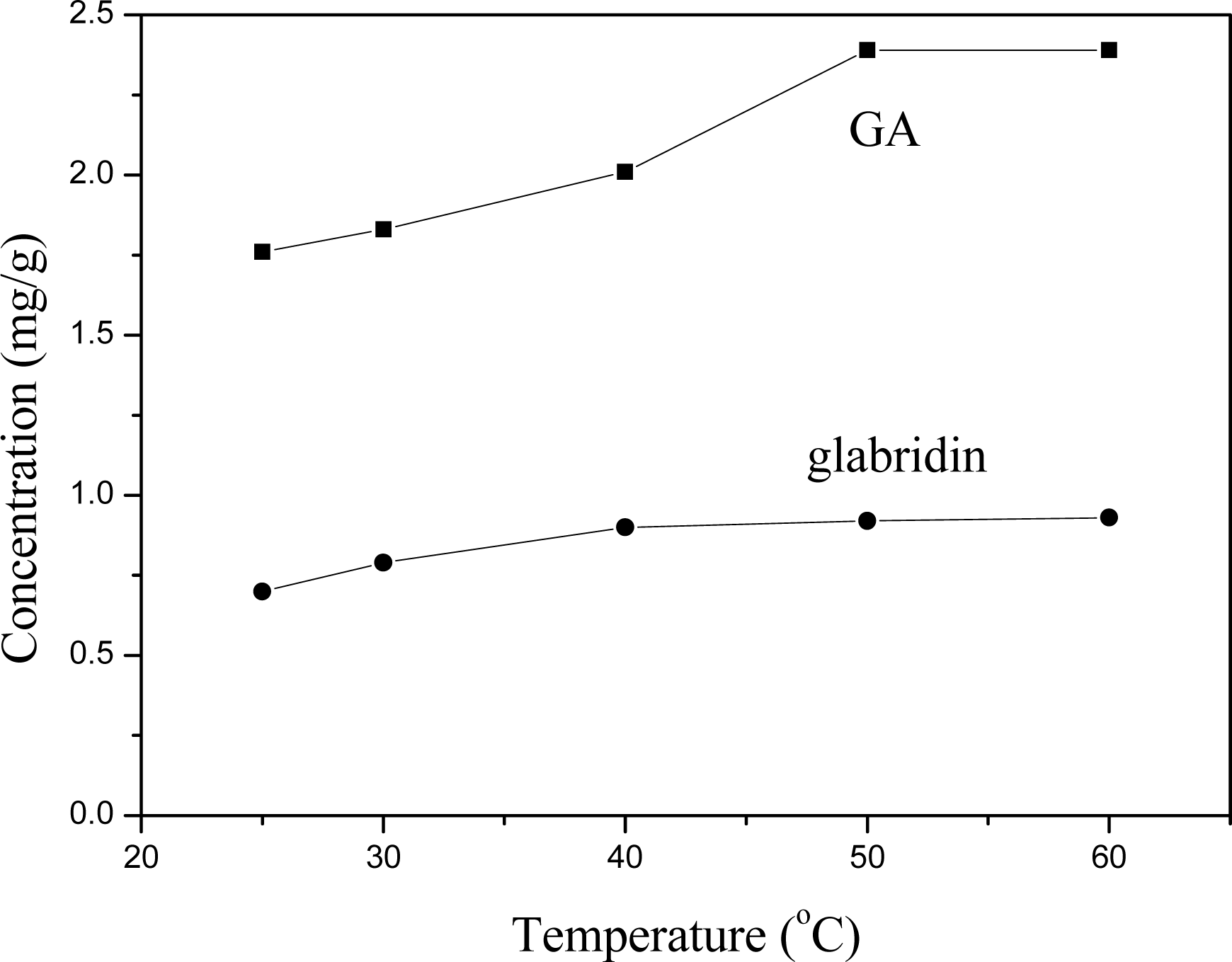
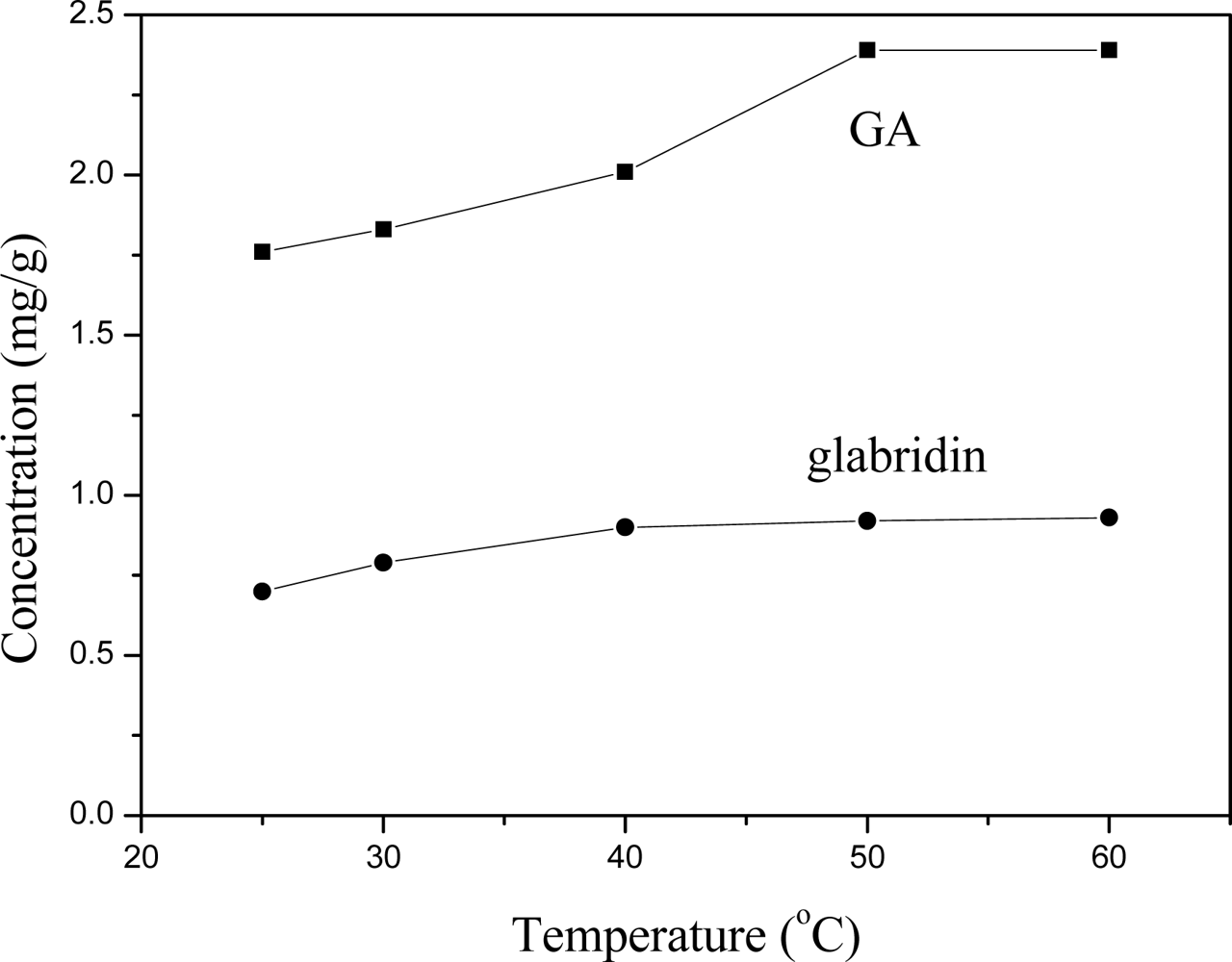
<p>Different dipping temperatures ranged from 25°C to 60°C were evaluated, the dipping time was 60 min and the results were shown in <xref ref-type="fig" rid="f4-ijms-09-00571">Figure 4</xref>. The extracted amounts of GA and glabridin increased quickly with the temperature increasing from 20°C to 50°C and almost constant when temperature higher than 50°C. Compared the results with dipping method, the extracted amounts of GA and glabridin from licorice by 90 min dipping under room temperature were the almost same as 60 min dipping under 50°C. The results indicated shorter dipping time with higher temperature and 50°C was the optimized temperature for licorice extraction in this work.</p></sec>
<sec>
<title>2.4. Method validations</title>
<p>The analyte peak area values were plotted against the corresponding concentrations of the analytes and the calibration curves were constructed by means of the least-square method. Concentrations of 0.1, 0.2, 0.4, 0.8, and 1.0 mg/mL for standards solutions of GA and glabridin were used, and each concentration was injected 3 times. Calibration curves of the two compounds show good linearity and the regression equations of GA and glabridin were Y=6623.7x+18.794 and Y= 7593.6x+89.523 with r<sup>2</sup> &gt; 0.9996, respectively. The intra-day and inter-day repeatability of the method evaluated as relative standard deviations (RSDs) were performed by injecting 0.5mg/mL of GA and glabridin in quintet in 5-day period.</p>
<p>The mean recoveries of GA and glabridin from licorice were evaluated by spiking three different levels of GA (0.5, 0.6, 0.8 mg/mL) and glabridin (0.05, 0.06, 0.07 mg/mL) to sample in replicates of three. The measured concentrations were compared with the theoretical concentration to calculate the recovery rates. The recoveries, RSDs, and the limit of detections (LOD) are persented in <xref ref-type="table" rid="t3-ijms-09-00571">Table 3</xref>. Comparison with the real sample analysis, verified that the values noted above were of acceptable precision and accuracy.</p></sec></sec>
<sec>
<title>3. Experimental Section</title>
<sec sec-type="materials">
<title>3.1. Materials</title>
<p>Licorice was purchased from China. Glycyrrhizic acid (mono-ammonium salt hydrate) was obtained from Sigma Chemical Co. (St. Louis, MO). Glabridin was purchased from Wako Pure Chemical Industries, Ltd. (Japan). Methanol, ethanol, acetonitrile and chloroform (HPLC Grade) were from Duksan Pure Chemical. Co., Ltd. (Korea). Water was twice distilled and filtered (FH-0.45 μm, Advantec MFS, Inc., Japan) by using a decompressing pump (Division of Millipore, Waters, USA).</p></sec>
<sec sec-type="methods">
<title>3.2. HPLC analysis</title>
<p>The HPLC system in this study is comprised of a M930 solvent delivery pump (Young Lin Co. Korea), a UV detector (M 720 Absorbance Detector, Young-In Scientific Co., Korea) and an integrated data system (Autochrowin. Ver. 1.42, Young Lin Co., Korea). The Reodyne injection valve with 25 μL sample loop was used. The flow rate was 1.0 mL/min and UV wavelength was set at 252 nm. All the solvents were filtered by Disposable Syringe Filter Unit (0.2 μm) for further HPLC analysis. GA and glabridin were analyzed by a column (C<sub>18</sub>, 5μm, 150×4.6 mm, RStech Corporation, Korea) with a mobile phase consisting of methanol-water (70:30, v/v, containing 1% acetic acid).</p></sec>
<sec>
<title>3.3. Samples preparation</title>
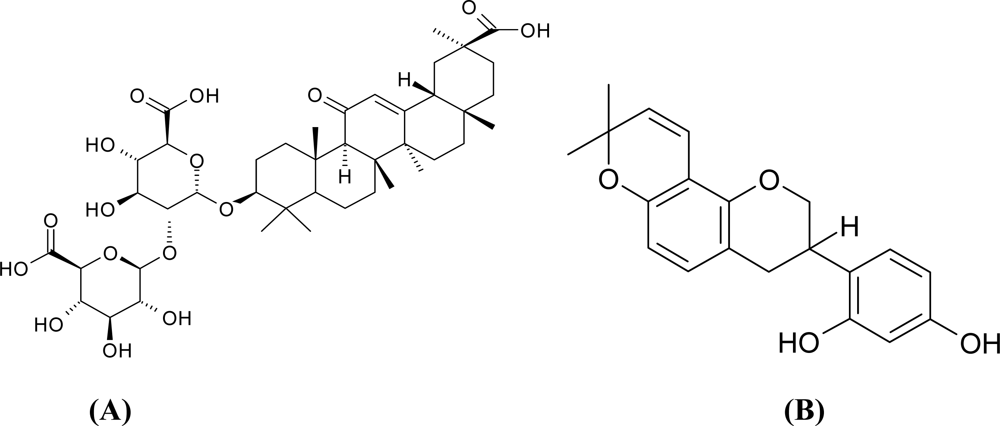
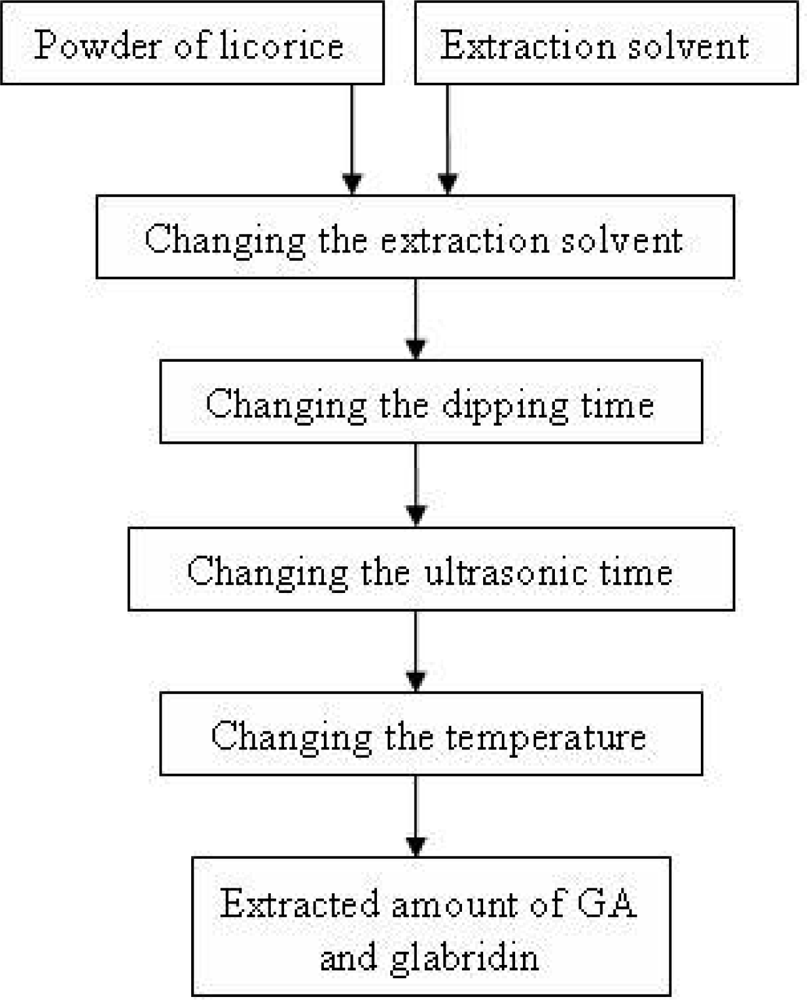
<p>The licorice roots were oven-dried, sliced and crushed into powder for the extraction experiments. Extraction procedures of GA and glabridin are shown in <xref ref-type="fig" rid="f5-ijms-09-00571">Figure 5</xref>. The stocked standards of GA and glabridin were dissolved in methanol and further diluted to different working standard solution.</p></sec></sec>
<sec>
<title>4. Conclusion</title>
<p>In this study, a simple and convenient method for the extraction of glycyrrhizic acid and glabridin from licorice is developed and validated. Mixture of ethanol/water (30:70, v/v) and extraction time 60 min under 50°C is the optimum condition to extract GA and glabridin from licorice. The extracted amounts are 2.39 and 0.92 mg/g and recoveries are 89.7% and 72.5% respectively.</p></sec></body>
<back>
<ack>
<title>Acknowledgments</title>
<p>The authors gratefully appreciate the financial support by the Center for Advanced Bioseparation Technology and Inha University, Korea.</p></ack>
<ref-list>
<title>References and Notes</title>
<ref id="b1-ijms-09-00571"><label>1</label><citation citation-type="journal"><person-group person-group-type="author"><name><surname>Aoki</surname><given-names>F</given-names></name><name><surname>Nakagawa</surname><given-names>K</given-names></name><name><surname>Tanaka</surname><given-names>A</given-names></name></person-group><article-title>Determination of glabridin in human plasma by solid-phase extraction and LC-MS/MS</article-title><source>J Chrom B</source><year>2005</year><volume>828</volume><fpage>70</fpage><lpage>74</lpage><pub-id pub-id-type="doi">10.1016/j.jchromb.2005.09.012</pub-id></citation></ref>
<ref id="b2-ijms-09-00571"><label>2</label><citation citation-type="journal"><person-group person-group-type="author"><name><surname>Fukai</surname><given-names>T</given-names></name><name><surname>Satoh</surname><given-names>K</given-names></name><name><surname>Nomura</surname><given-names>T</given-names></name></person-group><article-title>Preliminary evaluation of antinephritis and radical scavenging activities of glabridin from Glycyrrhiza glabra</article-title><source>Fitoterapia</source><year>2003</year><volume>74</volume><fpage>624</fpage><lpage>629</lpage><pub-id pub-id-type="doi">10.1016/S0367-326X(03)00164-3</pub-id><pub-id pub-id-type="pmid">14630165</pub-id></citation></ref>
<ref id="b3-ijms-09-00571"><label>3</label><citation citation-type="journal"><person-group person-group-type="author"><name><surname>Cherng</surname><given-names>JM</given-names></name><name><surname>Lin</surname><given-names>HJ</given-names></name><name><surname>Hung</surname><given-names>MS</given-names></name></person-group><article-title>Inhibition of nuclear factor kB is associated with neuroprotective effects of glycyrrhizic acid on glutamate-induced excitotoxicity in primary neurons</article-title><source>Eur J Pharm</source><year>2006</year><volume>547</volume><fpage>10</fpage><lpage>21</lpage><pub-id pub-id-type="doi">10.1016/j.ejphar.2006.06.080</pub-id></citation></ref>
<ref id="b4-ijms-09-00571"><label>4</label><citation citation-type="journal"><person-group person-group-type="author"><name><surname>Acharya</surname><given-names>SK</given-names></name><name><surname>Dasarathy</surname><given-names>S</given-names></name><name><surname>Tandon</surname><given-names>A</given-names></name></person-group><article-title>A preliminary open trial on interferon stimulator (SNMC) derived from glycyrrhiza-glabra in the treatment of subacute hepatic-failure</article-title><source>Indian J Med Res B, Biomed Res Infect Dis</source><year>1993</year><volume>98</volume><fpage>69</fpage><lpage>74</lpage></citation></ref>
<ref id="b5-ijms-09-00571"><label>5</label><citation citation-type="journal"><person-group person-group-type="author"><name><surname>Tanahashi</surname><given-names>T</given-names></name><name><surname>Mune</surname><given-names>T</given-names></name><name><surname>Morita</surname><given-names>H</given-names></name></person-group><article-title>Glycyrrhizic acid suppresses type 2 11 β-hydroxysteroid dehydrogenase expression in vino</article-title><source>J Ster Biochem &amp; Mol Biol</source><year>2002</year><volume>80</volume><fpage>441</fpage><lpage>447</lpage><pub-id pub-id-type="doi">10.1016/S0960-0760(02)00033-X</pub-id></citation></ref>
<ref id="b6-ijms-09-00571"><label>6</label><citation citation-type="journal"><person-group person-group-type="author"><name><surname>Fujisawa</surname><given-names>Y</given-names></name><name><surname>Sakamoto</surname><given-names>M</given-names></name><name><surname>Matsushita</surname><given-names>M</given-names></name></person-group><article-title>Glycyrrhizin inhibits the lytic pathway of complement: possible mechanism of its anti-inflammatory effect on liver</article-title><source>Microbiol Immunol</source><year>2000</year><volume>44</volume><fpage>799</fpage><lpage>804</lpage><pub-id pub-id-type="pmid">11092245</pub-id></citation></ref>
<ref id="b7-ijms-09-00571"><label>7</label><citation citation-type="journal"><person-group person-group-type="author"><name><surname>Dehpour</surname><given-names>AR</given-names></name></person-group><article-title>Zolfaghari, M.E.; Samadian, T. Antiulcer activities of liquorice and its derivatives in experimental gastric lesion induced by ibuprofen in rats</article-title><source>Int J Pharm</source><year>1995</year><volume>119</volume><fpage>133</fpage><lpage>138</lpage><pub-id pub-id-type="doi">10.1016/0378-5173(94)00377-H</pub-id></citation></ref>
<ref id="b8-ijms-09-00571"><label>8</label><citation citation-type="journal"><person-group person-group-type="author"><name><surname>Akihiko</surname><given-names>I</given-names></name><name><surname>Norio</surname><given-names>H</given-names></name><name><surname>Kazuhiro</surname><given-names>K</given-names></name></person-group><article-title>Effect of glycyrrhizin on viral replication and quasispecies in patients with type C chronic hepatitis</article-title><source>Int Hepatol Commun</source><year>1997</year><volume>50</volume><fpage>233</fpage><lpage>238</lpage></citation></ref>
<ref id="b9-ijms-09-00571"><label>9</label><citation citation-type="journal"><person-group person-group-type="author"><name><surname>Cinatl</surname><given-names>J</given-names></name><name><surname>Morgenstern</surname><given-names>B</given-names></name><name><surname>Bauer</surname><given-names>G</given-names></name></person-group><article-title>Glycyrrhizin, an active component of liquorice roots, and replication of SARS-associated coronavirus</article-title><source>Lancet</source><year>2003</year><volume>361</volume><fpage>2045</fpage><lpage>2046</lpage><pub-id pub-id-type="doi">10.1016/S0140-6736(03)13615-X</pub-id><pub-id pub-id-type="pmid">12814717</pub-id></citation></ref>
<ref id="b10-ijms-09-00571"><label>10</label><citation citation-type="journal"><person-group person-group-type="author"><name><surname>Fu</surname><given-names>B</given-names></name><name><surname>Liu</surname><given-names>J</given-names></name><name><surname>Li</surname><given-names>H</given-names></name></person-group><article-title>The application of macroporous resins in the separation of licorice flavonoids and glycyrrhizic acid</article-title><source>J Chrom A</source><year>2005</year><volume>1089</volume><fpage>18</fpage><lpage>24</lpage><pub-id pub-id-type="doi">10.1016/j.chroma.2005.06.051</pub-id></citation></ref>
<ref id="b11-ijms-09-00571"><label>11</label><citation citation-type="journal"><person-group person-group-type="author"><name><surname>Choi</surname><given-names>E</given-names></name></person-group><article-title>The licorice root derived isoflavan glabridin increases the function of osteoblastic MC3T3-E1 cells</article-title><source>Biochem Pharm</source><year>2005</year><volume>70</volume><fpage>363</fpage><lpage>368</lpage><pub-id pub-id-type="doi">10.1016/j.bcp.2005.04.019</pub-id><pub-id pub-id-type="pmid">15922308</pub-id></citation></ref></ref-list>
<sec sec-type="display-objects">
<title>Figures and Tables</title>
<fig id="f1-ijms-09-00571" position="float">
<label>Figure 1.</label>
<caption>
<p>Molecular structures of glycyrrhizic acid (A) and glabridin (B).</p></caption>
<graphic xlink:href="ijms-09-00571f1.png"/></fig>
<fig id="f2-ijms-09-00571" position="float">
<label>Figure 2.</label>
<caption>
<p>Effect of different dipping times on extracted amounts of licorice.</p></caption>
<graphic xlink:href="ijms-09-00571f2.png"/></fig>
<fig id="f3-ijms-09-00571" position="float">
<label>Figure 3.</label>
<caption>
<p>Effect of different ultrasonic times on extracted amounts of licorice.</p></caption>
<graphic xlink:href="ijms-09-00571f3.png"/></fig>
<fig id="f4-ijms-09-00571" position="float">
<label>Figure 4.</label>
<caption>
<p>Effect of different extraction temperatures on extracted amounts of licorice.</p></caption>
<graphic xlink:href="ijms-09-00571f4.png"/></fig>
<fig id="f5-ijms-09-00571" position="float">
<label>Figure 5.</label>
<caption>
<p>Extraction procedures of GA and glabridin.</p></caption>
<graphic xlink:href="ijms-09-00571f5.png"/></fig>
<table-wrap id="t1-ijms-09-00571" position="float">
<label>Table 1.</label>
<caption>
<p>Extracted amounts of GA and glabridin with different solvents.</p></caption>
<table frame="hsides" rules="groups">
<thead>
<tr>
<th align="left">Compounds (mg/g) Solvents</th>
<th align="center">GA</th>
<th align="center">glabridin</th></tr></thead>
<tbody>
<tr>
<td align="left">water</td>
<td align="center">2.44</td>
<td align="center">0.18</td></tr>
<tr>
<td align="left">methanol</td>
<td align="center">0.86</td>
<td align="center">0.72</td></tr>
<tr>
<td align="left">ethanol</td>
<td align="center">0.86</td>
<td align="center">0.93</td></tr>
<tr>
<td align="left">acetonitrile</td>
<td align="center"><xref ref-type="table-fn" rid="tfn1-ijms-09-00571">*</xref></td>
<td align="center">0.006</td></tr>
<tr>
<td align="left">chloroform</td>
<td align="center"><xref ref-type="table-fn" rid="tfn1-ijms-09-00571">*</xref></td>
<td align="center"><xref ref-type="table-fn" rid="tfn1-ijms-09-00571">*</xref></td></tr></tbody></table>
<table-wrap-foot><fn id="tfn1-ijms-09-00571">
<label>*</label>
<p>not detected</p></fn></table-wrap-foot></table-wrap>
<table-wrap id="t2-ijms-09-00571" position="float">
<label>Table 2.</label>
<caption>
<p>Extracted amounts of GA and glabridin with different compositions of ethanol/water.</p></caption>
<table frame="hsides" rules="groups">
<thead>
<tr>
<th align="left">Compounds (mg/g) Ethanol/water (v: v)</th>
<th align="center">GA</th>
<th align="center">glabridin</th></tr></thead>
<tbody>
<tr>
<td align="left">10:90</td>
<td align="center">2.44</td>
<td align="center">0.82</td></tr>
<tr>
<td align="left">30:70</td>
<td align="center">2.39</td>
<td align="center">0.92</td></tr>
<tr>
<td align="left">50:50</td>
<td align="center">2.01</td>
<td align="center">0.92</td></tr>
<tr>
<td align="left">70:30</td>
<td align="center">1.53</td>
<td align="center">0.93</td></tr>
<tr>
<td align="left">90:10</td>
<td align="center">1.09</td>
<td align="center">0.93</td></tr></tbody></table></table-wrap>
<table-wrap id="t3-ijms-09-00571" position="float">
<label>Table 3.</label>
<caption>
<p>RSDs, Recovery rates and LODs of the two compounds from licorice</p></caption>
<table frame="hsides" rules="groups">
<thead>
<tr>
<th align="left" rowspan="2" valign="middle">Compounds</th>
<th align="center" colspan="2">RSD (%)
<hr/></th>
<th align="center" colspan="3">Recovery rate
<hr/></th>
<th align="center" rowspan="2" valign="middle">LOD (ng/mL)</th></tr>
<tr>
<th align="left">Intra-day</th>
<th align="center">Inter-day</th>
<th align="center">Added (mg/mL)</th>
<th align="center">Recovery (%)</th>
<th align="center">RSD (%)</th></tr></thead>
<tbody>
<tr>
<td align="left">GA</td>
<td align="center">0.54</td>
<td align="center">0.59</td>
<td align="center">0.5</td>
<td align="center">88.7%</td>
<td align="center">0.66</td>
<td align="center">464</td></tr>
<tr>
<td align="left"/>
<td align="center"/>
<td align="center">0.6</td>
<td align="center">90.1%</td>
<td align="center"/>
<td align="center"/></tr>
<tr>
<td align="left"/>
<td align="center"/>
<td align="center">0.8</td>
<td align="center">90.3%</td>
<td align="center"/>
<td align="center"/></tr>
<tr>
<td align="left">glabridin</td>
<td align="center">0.83</td>
<td align="center">0.90</td>
<td align="center">0.05</td>
<td align="center">74.5%</td>
<td align="center">0.77</td>
<td align="center">229</td></tr>
<tr>
<td align="left"/>
<td align="center"/>
<td align="center">0.06</td>
<td align="center">69.9%</td>
<td align="center"/>
<td align="center"/></tr>
<tr>
<td align="center"/>
<td align="center">0.07</td>
<td align="center">73.3%</td>
<td align="center"/>
<td align="center"/></tr></tbody></table></table-wrap></sec></back></article>