
Development of Collagen/Demineralized Bone Powder Scaffolds and Periosteum-Derived Cells for Bone Tissue Engineering Application


Abstract
:1. Introduction
2. Results and Discussion
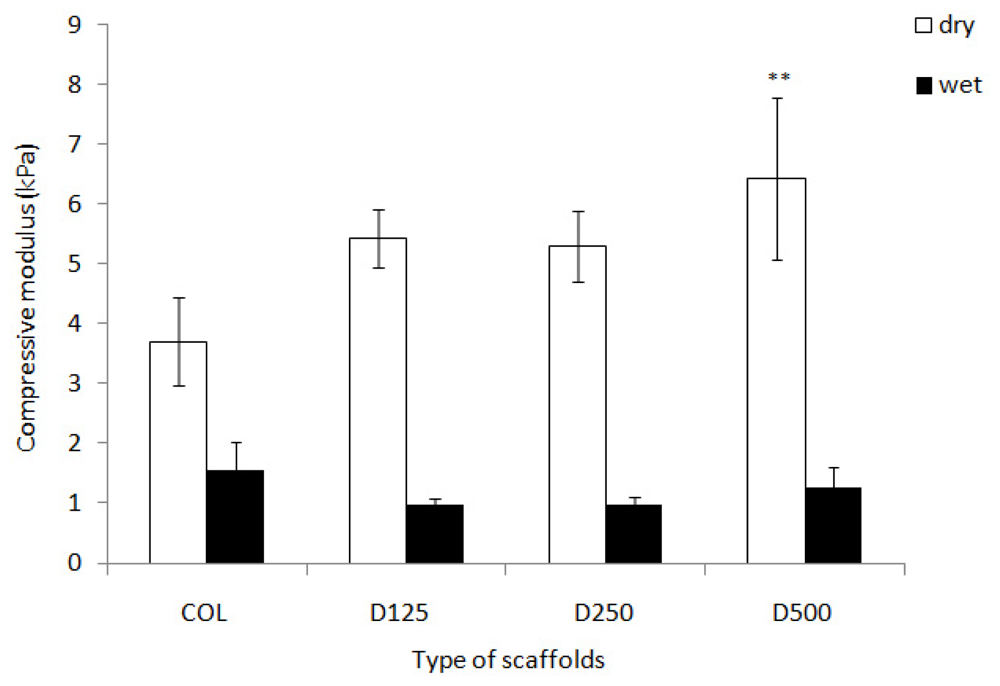
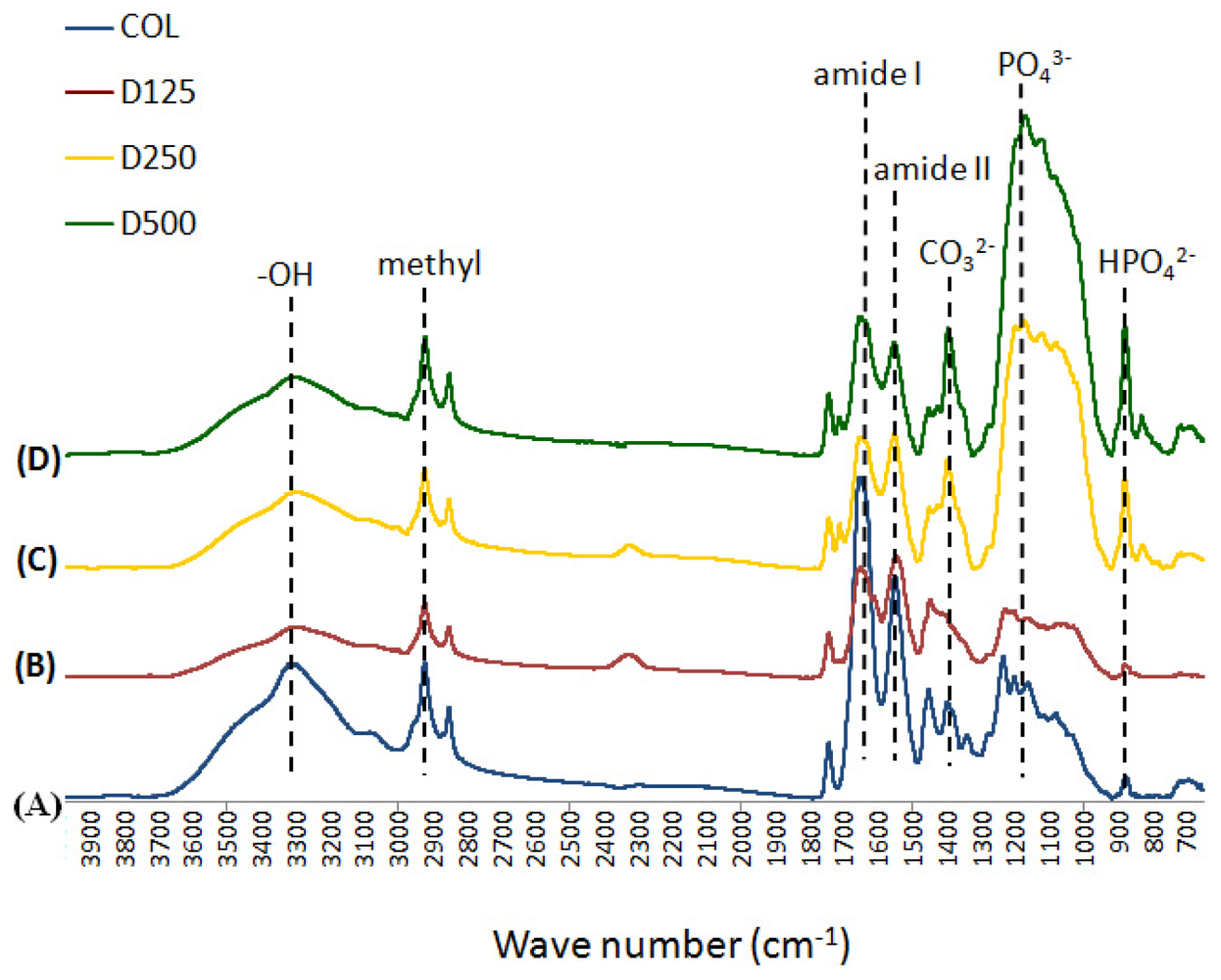
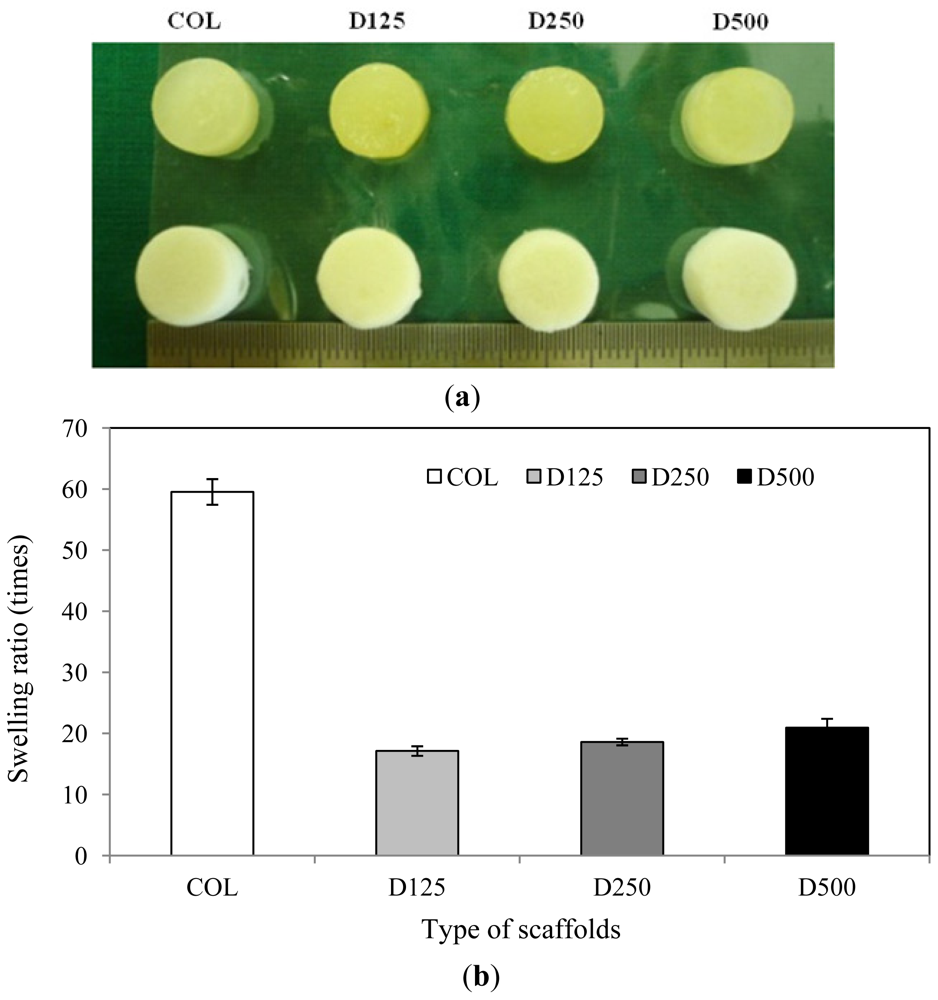
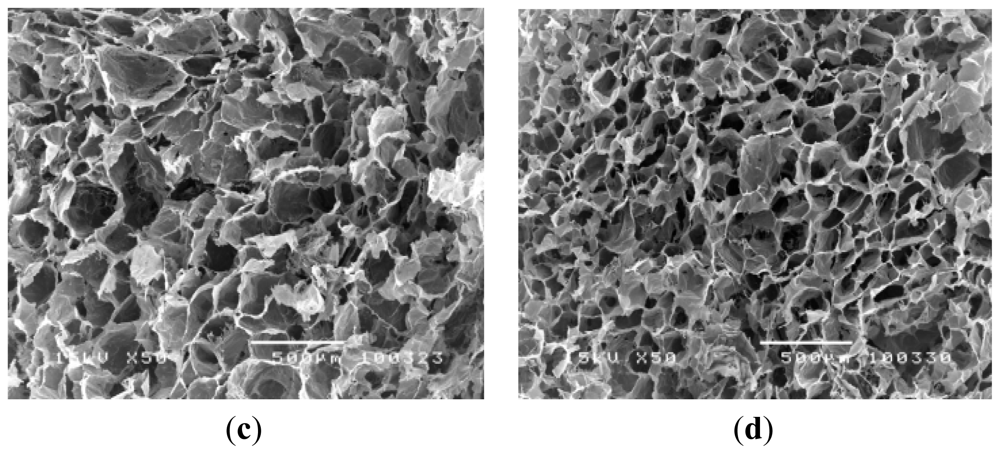
2.1. Characteristics of Collagen/Demineralized Bone Powder Scaffolds
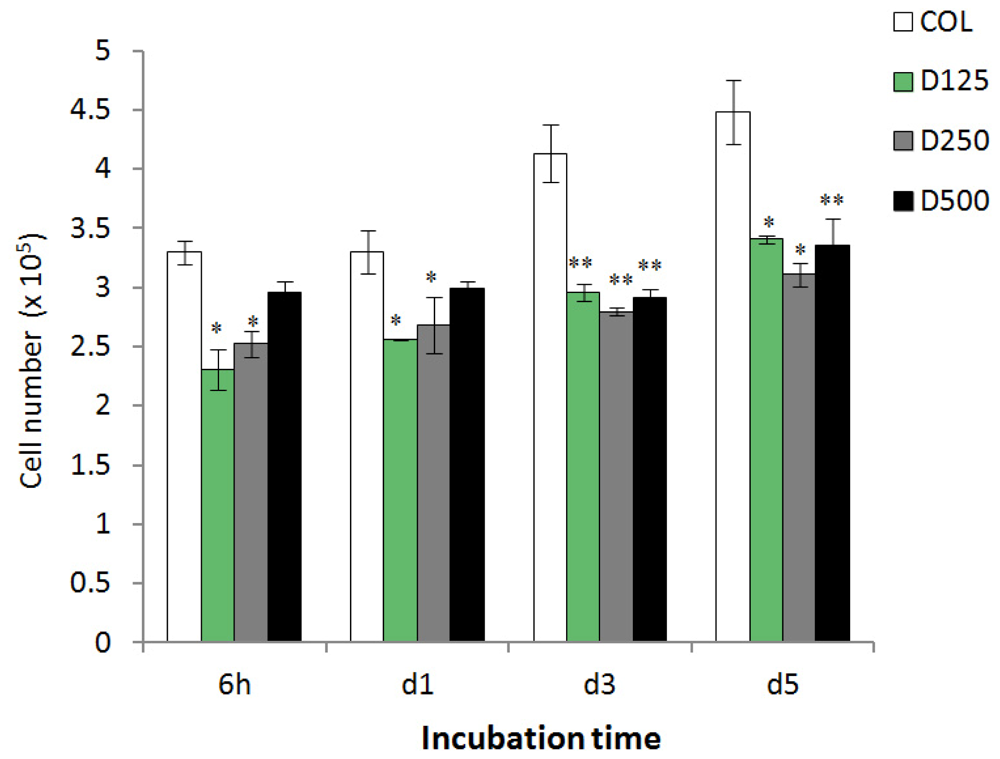
2.2. Cell Attachment and Proliferation of PD Cells Cultured on Scaffolds
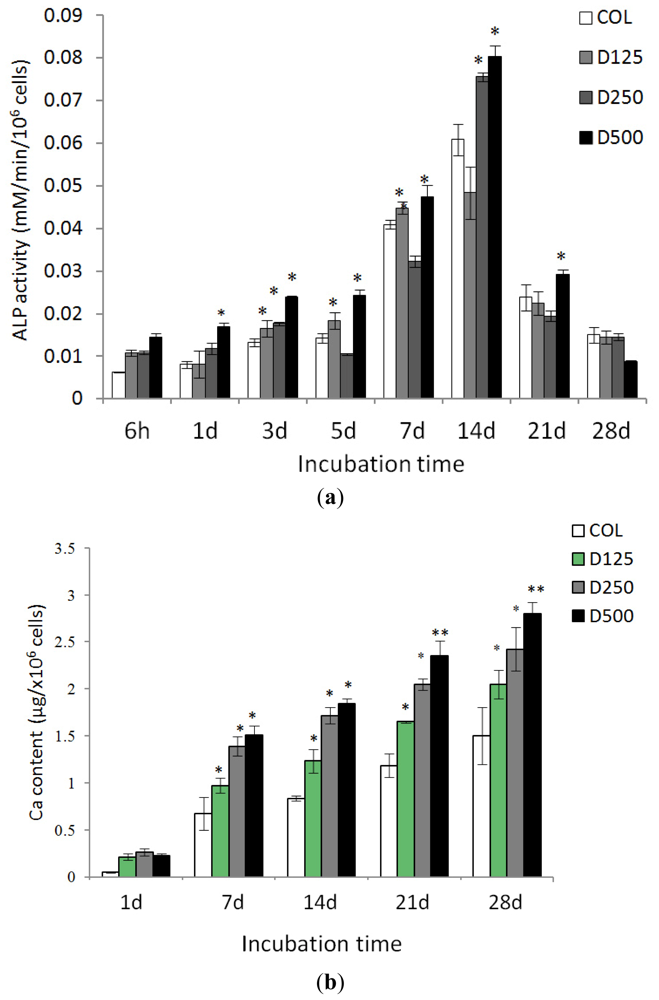
2.3. Osteoblast Differentiation of PD Cells Cultured on Scaffolds
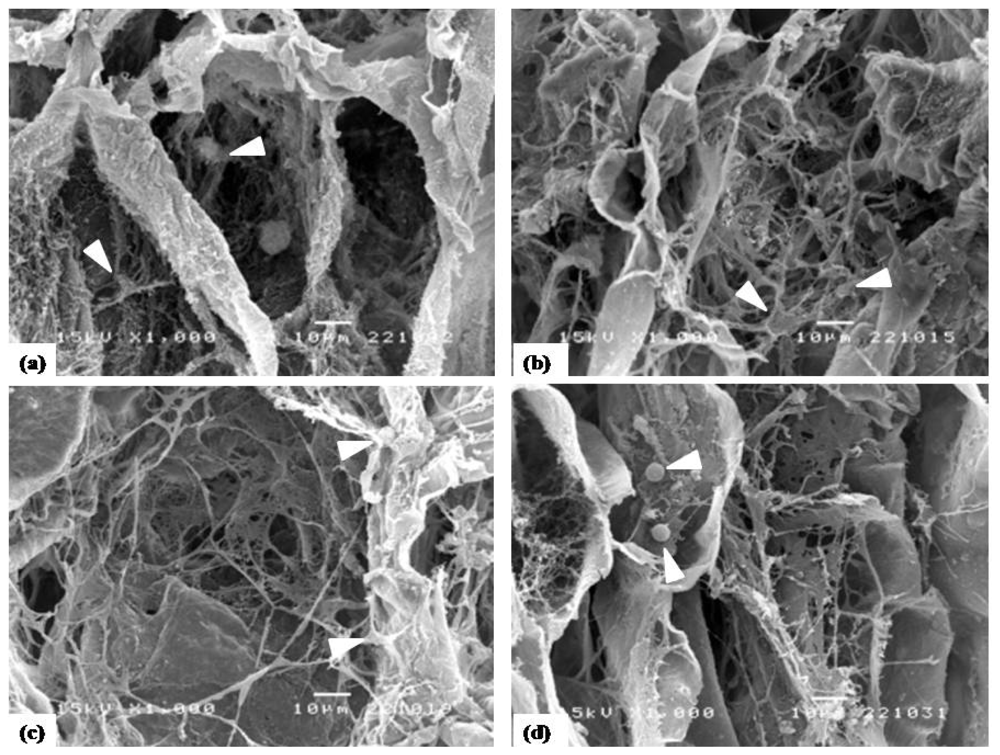
2.4. Morphology Analysis of PD Cells Cultured on Scaffolds
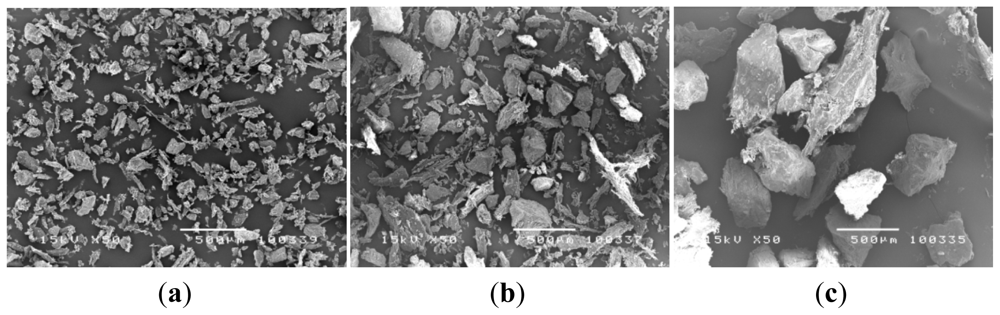
2.5. Chemical Composition of PD Cells Cultured with Scaffolds
2.6. Discussion
3. Experimental Section
3.1. Preparation of Biomaterials
3.2. Fabrication of Three-Dimensional Scaffolds
3.3. Morphology Observation and Pore Diameter Measurement
3.4. Mechanical Strength Analysis
3.5. Swelling Ability
3.6. Cultivation of Periosteum-Derived cells
3.7. Initial Cell Attachment and Proliferation Assay
3.8. Osteogenic Differentiation of PD Cells on Scaffolds
3.9. Elemental Analysis of Cell Surface Cultured Scaffolds
3.10. Statistical Analysis
4. Conclusions
Acknowledgments
- Conflict of InterestThe authors declare no conflict of interest.
References
- Murugan, R.; Ramakrishna, S. Modification of demineralized bone matrix by a chemical route. J. Mater. Chem 2004, 14, 2041–2045. [Google Scholar]
- Reddi, A.; Anderson, W.A. Collagenous bone matrix-induced endochondral ossification and hemopoiesis. J. Cell Biol 1976, 69, 557–572. [Google Scholar]
- Chen, P.; Carrington, J.L.; Hammonds, R.; Reddi, A. Stimulation of chondrogenesis in limb bud mesoderm cells by recombinant human bone morphogenetic protein 2B (BMP-2B) and modulation by transforming growth factor β and BMP-2. Exp. Cell Res 1991, 195, 509–515. [Google Scholar]
- Honsawek, S.; Powers, R.M.; Wolfinbarger, L. Extractable bone morphogenetic protein and correlation with induced new bone formation in an in vivo assay in the athymic mouse model. Cell Tissue Bank 2005, 6, 13–23. [Google Scholar]
- Urist, M.R. Bone: Formation by autoinduction. Science 1965, 150, 893–899. [Google Scholar]
- Honsawek, S.; Dhitiseith, D. Content of bone morphogenetic protein-4 in human demineralized bone: Relationship to donor age and ability to induce new bone formation. J. Med. Assoc. Thai 2005, 88, S260–S265. [Google Scholar]
- Chow, D.; Nunalee, M.L.; Lim, D.W.; Simnick, A.J.; Chilkoti, A. Peptide-based biopolymers in biomedicine and biotechnology. Mater. Sci. Eng. R Rep 2008, 62, 125–155. [Google Scholar]
- Honsawek, S.; Dhitiseith, D.; Phupong, V. Effects of demineralized bone matrix on proliferation and osteogenic differentiation of mesenchymal stem cells from human umbilical cord. J. Med. Assoc. Thai 2006, 89, S189–S195. [Google Scholar]
- Mizuno, S.; Glowacki, J. Three-dimensional composite of demineralized bone powder and collagen for in vitro analysis of chondroinduction of human dermal fibroblasts. Biomaterials 1996, 17, 1819–1825. [Google Scholar]
- Lasa, C., Jr; Hollinger, J.; Drohan, W.; MacPhee, M. Delivery of demineralized bone powder by fibrin sealant. Plast. Reconstr. Surg. 1995, 96, 1409–1417. [Google Scholar]
- Solheim, E. Osteoinduction by demineralised bone. Int. Orthop 1998, 22, 335–342. [Google Scholar]
- Centrella, M.; Horowitz, M.C.; Wozney, J.M.; Mccarthy, T.L. Transforming growth factor-β gene family members and bone. Endocr. Rev 1994, 15, 27–39. [Google Scholar]
- Mohan, S.; Baylink, D.J. Bone growth factors. Clin. Orthop. Relat. Res 1991, 263, 30–48. [Google Scholar]
- Roelen, B.A.J.; Dijke, P. Controlling mesenchymal stem cell differentiation by TGFB family members. J. Orthop. Sci 2003, 8, 740–748. [Google Scholar]
- Datta, N.; Holtorf, H.L.; Sikavitsas, V.I.; Jansen, J.A.; Mikos, A.G. Effect of bone extracellular matrix synthesized in vitro on the osteoblastic differentiation of marrow stromal cells. Biomaterials 2005, 26, 971–977. [Google Scholar]
- Aubin, J.; Liu, F.; Malaval, L.; Gupta, A. Osteoblast and chondroblast differentiation. Bone 1995, 17, S77–S83. [Google Scholar]
- Kasten, P.; Luginbühl, R.; van Griensven, M.; Barkhausen, T.; Krettek, C.; Bohner, M.; Bosch, U. Comparison of human bone marrow stromal cells seeded on calcium-deficient hydroxyapatite, β-tricalcium phosphate and demineralized bone matrix. Biomaterials 2003, 24, 2593–2603. [Google Scholar]
- Mauney, J.R.; Jaquiéry, C.; Volloch, V.; Heberer, M.; Martin, I.; Kaplan, D.L. In vitro and in vivo evaluation of differentially demineralized cancellous bone scaffolds combined with human bone marrow stromal cells for tissue engineering. Biomaterials 2005, 26, 3173–3185. [Google Scholar]
- Zhou, S.; Yates, K.E.; Eid, K.; Glowacki, J. Demineralized bone promotes chondrocyte or osteoblast differentiation of human marrow stromal cells cultured in collagen sponges. Cell Tissue Bank 2005, 6, 33–44. [Google Scholar]
- Zhang, M.; Powers, R.M., Jr; Wolfinbarger, L., Jr. Effect(s) of the demineralization process on the osteoinductivity of demineralized bone matrix. J. Periodontol. 1997, 68, 1085–1092. [Google Scholar]
- Vail, T.B.; Trotter, G.W.; Powers, B.E. Equine Demineralized bone matrix: Relationship between particle size and osteoinduction. Vet. Surg 1994, 23, 386–395. [Google Scholar]
- Thitiset, T.; Buranapraditkul, S.; Damrongsakkul, S.; Honsawek, S. Isolation and cellular properties of mesenchymal stem cells from human periosteum. Asian Biomed. 2013, in press. [Google Scholar]




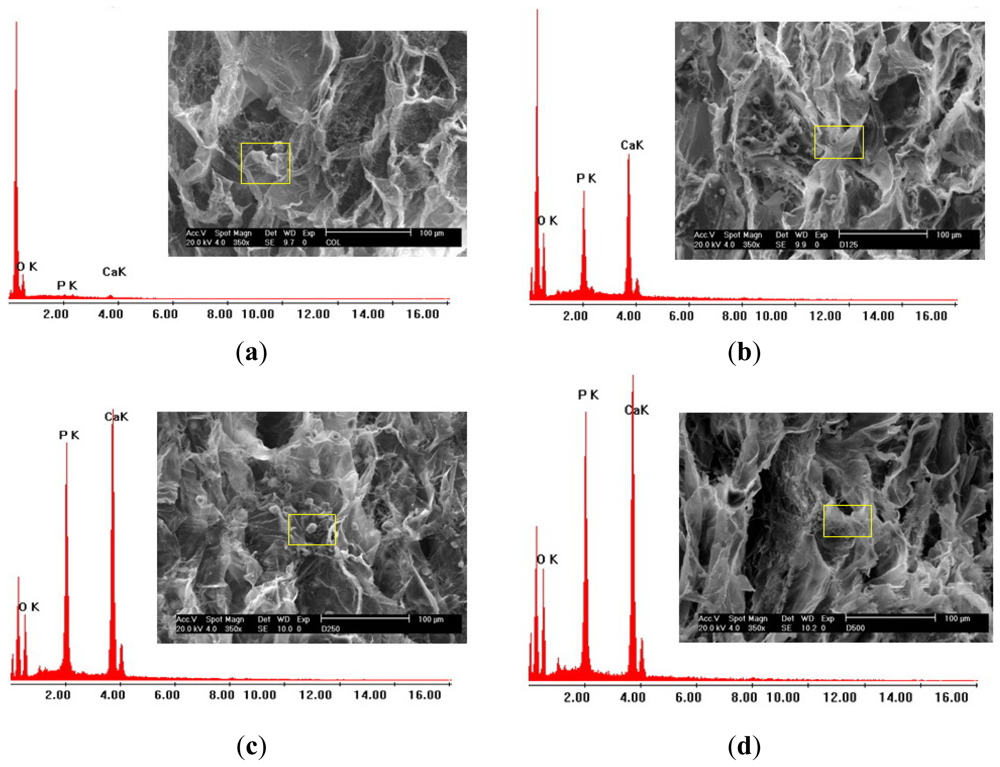

| Type of scaffolds | O (%) | Ca (%) | P (%) | Ca/P ratio |
|---|---|---|---|---|
| COL | 71–90 | 6–15 | 4–14 | 1.04–1.47 |
| D125 | 15–52 | 29–57 | 19–28 | 1.53–2.01 |
| D250 | 38–82 | 14–39 | 9–23 | 1.32–1.61 |
| D500 | 51–63 | 22–31 | 14–18 | 1.58–1.74 |
© 2013 by the authors; licensee Molecular Diversity Preservation International, Basel, Switzerland. This article is an open-access article distributed under the terms and conditions of the Creative Commons Attribution license (http://creativecommons.org/licenses/by/3.0/).
Share and Cite
Thitiset, T.; Damrongsakkul, S.; Bunaprasert, T.; Leeanansaksiri, W.; Honsawek, S. Development of Collagen/Demineralized Bone Powder Scaffolds and Periosteum-Derived Cells for Bone Tissue Engineering Application. Int. J. Mol. Sci. 2013, 14, 2056-2071. https://doi.org/10.3390/ijms14012056
Thitiset T, Damrongsakkul S, Bunaprasert T, Leeanansaksiri W, Honsawek S. Development of Collagen/Demineralized Bone Powder Scaffolds and Periosteum-Derived Cells for Bone Tissue Engineering Application. International Journal of Molecular Sciences. 2013; 14(1):2056-2071. https://doi.org/10.3390/ijms14012056
Chicago/Turabian StyleThitiset, Thakoon, Siriporn Damrongsakkul, Tanom Bunaprasert, Wilairat Leeanansaksiri, and Sittisak Honsawek. 2013. "Development of Collagen/Demineralized Bone Powder Scaffolds and Periosteum-Derived Cells for Bone Tissue Engineering Application" International Journal of Molecular Sciences 14, no. 1: 2056-2071. https://doi.org/10.3390/ijms14012056