<?xml version="1.0" encoding="UTF-8"?>
<!DOCTYPE article PUBLIC "-//NLM//DTD Journal Publishing DTD v2.3 20070202//EN" "journalpublishing.dtd">
<article xmlns:xlink="http://www.w3.org/1999/xlink" xml:lang="en" article-type="review-article">
<front>
<journal-meta>
<journal-id journal-id-type="publisher-id">ijms</journal-id>
<journal-title>International Journal of Molecular Sciences</journal-title>
<abbrev-journal-title>Int. J. Mol. Sci.</abbrev-journal-title>
<issn pub-type="epub">1422-0067</issn>
<publisher>
<publisher-name>Molecular Diversity Preservation International (MDPI)</publisher-name></publisher></journal-meta>
<article-meta>
<article-id pub-id-type="doi">10.3390/ijms130810608</article-id>
<article-id pub-id-type="publisher-id">ijms-13-10608</article-id>
<article-categories>
<subj-group>
<subject>Review</subject></subj-group></article-categories>
<title-group>
<article-title>Recent Advances on the Neuroprotective Potential of Antioxidants in Experimental Models of Parkinson’s Disease</article-title></title-group>
<contrib-group>
<contrib contrib-type="author">
<name><surname>Koppula</surname><given-names>Sushruta</given-names></name></contrib>
<contrib contrib-type="author">
<name><surname>Kumar</surname><given-names>Hemant</given-names></name></contrib>
<contrib contrib-type="author">
<name><surname>More</surname><given-names>Sandeep Vasant</given-names></name></contrib>
<contrib contrib-type="author">
<name><surname>Kim</surname><given-names>Byung Wook</given-names></name></contrib>
<contrib contrib-type="author">
<name><surname>Kim</surname><given-names>In Su</given-names></name></contrib>
<contrib contrib-type="author">
<name><surname>Choi</surname><given-names>Dong Kug</given-names></name><xref ref-type="corresp" rid="c1-ijms-13-10608">*</xref></contrib>
<aff id="af1-ijms-13-10608">Department of Biotechnology, Konkuk University, Chungju 380, Korea; E-Mails: <email>sushrutak@gmail.com</email> (S.K.); <email>hemantbhave@gmail.com</email> (H.K.); <email>sandeepbcp@gmail.com</email> (S.V.M.); <email>kb62@lycos.co.kr</email> (B.W.K.); <email>kis5497@hanmail.net</email> (I.S.K.)</aff></contrib-group>
<author-notes>
<corresp id="c1-ijms-13-10608">
<label>*</label>Author to whom correspondence should be addressed; E-Mail: <email>choidk@kku.ac.kr</email>; Tel.: +82-43-840-3610; Fax: +82-43-840-3872.</corresp></author-notes>
<pub-date pub-type="collection">
<year>2012</year></pub-date>
<pub-date pub-type="epub">
<day>23</day>
<month>08</month>
<year>2012</year></pub-date>
<volume>13</volume>
<issue>8</issue>
<fpage>10608</fpage>
<lpage>10629</lpage>
<history>
<date date-type="rev-recd">
<day>13</day>
<month>08</month>
<year>2012</year></date>
<date date-type="accepted">
<day>14</day>
<month>08</month>
<year>2012</year></date></history>
<permissions>
<copyright-statement>© 2012 by the authors; licensee Molecular Diversity Preservation International, Basel, Switzerland.</copyright-statement>
<copyright-year>2012</copyright-year>
<license license-type="open-access" xlink:href="http://creativecommons.org/licenses/by/3.0">
<p>This article is an open-access article distributed under the terms and conditions of the Creative Commons Attribution license (http://creativecommons.org/licenses/by/3.0/).</p></license></permissions>
<abstract>
<p>Parkinson’s disease (PD), a neurodegenerative movement disorder of the central nervous system (CNS) is characterized by a progressive loss of dopaminergic neurons in the <italic>substantia nigra pars compacta</italic> region of the midbrain. Although the etiology of PD is not completely understood and is believed to be multifactorial, oxidative stress and mitochondrial dysfunction are widely considered major consequences, which provide important clues to the disease mechanisms. Studies have explored the role of free radicals and oxidative stress that contributes to the cascade of events leading to dopamine cell degeneration in PD. In general, in-built protective mechanisms consisting of enzymatic and non-enzymatic antioxidants in the CNS play decisive roles in preventing neuronal cell loss due to free radicals. But the ability to produce these antioxidants decreases with aging. Therefore, antioxidant therapy alone or in combination with current treatment methods may represent an attractive strategy for treating or preventing the neurodegeneration seen in PD. Here we summarize the recent discoveries of potential antioxidant compounds for modulating free radical mediated oxidative stress leading to neurotoxicity in PD.</p></abstract>
<kwd-group>
<kwd>Parkinson’s disease</kwd>
<kwd>oxidative stress</kwd>
<kwd>free radicals</kwd>
<kwd>antioxidants</kwd>
<kwd>neuroprotection</kwd></kwd-group></article-meta></front>
<body>
<sec sec-type="intro">
<title>1. Introduction</title>
<p>Parkinson’s disease (PD) is a progressive and age-related neurodegenerative disease characterized by degeneration of dopaminergic (DAergic) neurons originating in the <italic>substantia nigra pars compacta</italic> (SNpc) of the basal ganglia [<xref ref-type="bibr" rid="b1-ijms-13-10608">1</xref>,<xref ref-type="bibr" rid="b2-ijms-13-10608">2</xref>]. Despite major advances in the current understanding of PD pathology, the exact details of the neurodegenerative cascade remain unknown. Experimental observations suggest that excessive generation of reactive oxygen species (ROS), which cause oxidative stress, plays a central role in the neuropathology of PD. This theory of oxidative stress is supported by both postmortem studies and by studies demonstrating the capacity of oxidative stress and oxidizing toxins to nigral cell degeneration [<xref ref-type="bibr" rid="b3-ijms-13-10608">3</xref>,<xref ref-type="bibr" rid="b4-ijms-13-10608">4</xref>]. Excessive formation of ROS leading to increased lipid peroxidation [<xref ref-type="bibr" rid="b5-ijms-13-10608">5</xref>], oxidative damage of DNA [<xref ref-type="bibr" rid="b6-ijms-13-10608">6</xref>], glutathione (GSH) depletion [<xref ref-type="bibr" rid="b7-ijms-13-10608">7</xref>], enhanced superoxide activity [<xref ref-type="bibr" rid="b8-ijms-13-10608">8</xref>], increased levels of iron [<xref ref-type="bibr" rid="b9-ijms-13-10608">9</xref>] and subsequent cellular apoptosis are considered leading factors in the oxidative metabolism of DA observed in PD pathology. Mitochondrial dysfunction by ROS can also give rise to DAergic neurodegeneration [<xref ref-type="bibr" rid="b10-ijms-13-10608">10</xref>], as DNA is particularly sensitive to hydroxyl radical-induced damage.</p>
<p>Treatment of PD with the drug of choice, <sc>l</sc>-dopa, is limited only to the relief of symptoms, and long-term use may further add to the oxidative load by producing free radicals during normal metabolism and play a role in disease progression [<xref ref-type="bibr" rid="b11-ijms-13-10608">11</xref>–<xref ref-type="bibr" rid="b17-ijms-13-10608">17</xref>]. Although other classes of drugs such as DA agonists, monoamine oxidase (MAO) inhibitors, catechol-O-methyltransferase inhibitors, and anticholinergic agents may be used in the early stages of the disease to relieve PD symptoms, none prevent the disease from progressing, and show debilitating side-effects with prolonged use. Therefore, it is of utmost importance to develop new agents that show or halt the rate of PD progression. The key therapy to ameliorate oxidative stress seen in PD is to repair the damage caused by free radicals before it is too late and to protect DAergic cells. Therefore, antioxidants might be one of the ideal agents to prevent free radical-mediated tissue destruction and inhibit some of the early degenerative events trafficking in the central nervous system that lead to neurodegeneration in PD and its experimental models.</p>
<p>The protective effects of various antioxidants to modulate oxidative stress in experimental animal models of PD have been clearly shown, indicating that antioxidant therapy may be an attractive therapeutic approach to PD. The source of ROS production and evidence for ROS and oxidative stress in PD has been reviewed extensively [<xref ref-type="bibr" rid="b18-ijms-13-10608">18</xref>,<xref ref-type="bibr" rid="b19-ijms-13-10608">19</xref>]. In this review, we provide recent discoveries of neuroprotective antioxidant compounds as a therapeutic strategy for inhibiting free radicals and oxidative damage in experimental models of PD.</p></sec>
<sec>
<title>2. PD and ROS</title>
<p>Normal cellular functions and reactions involve the continuous production of free radicals, mainly ROS. Some ROS, such as superoxide anion, nitric oxide, and hydrogen peroxide (H<sub>2</sub>O<sub>2</sub>) are physiological species essential for redox signaling and cellular functions. In-built protective mechanisms consisting of enzymatic and non-enzymatic antioxidants scavenge these radicals. However, uncontrolled production of ROS may threaten homeostasis, as the required endogenous antioxidants are insufficient and may decrease with aging. This imbalance may lead to excessive production of non-physiological and toxic ROS levels in a process referred to as oxidative stress.</p>
<p>The brain’s neuronal biochemical composition is mainly susceptible to ROS, as it involves a pool of unsaturated lipids that are labile to peroxidation and oxidative modification. Furthermore, the brain is not particularly enriched in antioxidant defenses compared to those in other tissues [<xref ref-type="bibr" rid="b20-ijms-13-10608">20</xref>]. Irregular cellular functions in the brain may produce enormous concentrations of ROS that promote the neuronal damage seen in PD [<xref ref-type="bibr" rid="b21-ijms-13-10608">21</xref>]. The premise of this hypothesis is based on landmark studies demonstrating the potential for generating H<sub>2</sub>O<sub>2</sub> and other ROS during the oxidative metabolism of DA [<xref ref-type="bibr" rid="b11-ijms-13-10608">11</xref>], which exposes DAergic neurons of the SNpc to chronic oxidative stress compared to other regions of the brain. Other major factors responsible for non-physiological ROS production and their importance in PD are transitional metals, including iron [<xref ref-type="bibr" rid="b22-ijms-13-10608">22</xref>,<xref ref-type="bibr" rid="b23-ijms-13-10608">23</xref>], mitochondrial abnormalities [<xref ref-type="bibr" rid="b10-ijms-13-10608">10</xref>,<xref ref-type="bibr" rid="b24-ijms-13-10608">24</xref>,<xref ref-type="bibr" rid="b25-ijms-13-10608">25</xref>], alpha-synuclein (SNCA) gene expression [<xref ref-type="bibr" rid="b26-ijms-13-10608">26</xref>–<xref ref-type="bibr" rid="b28-ijms-13-10608">28</xref>], inflammation mediated by microglial activation [<xref ref-type="bibr" rid="b29-ijms-13-10608">29</xref>], reduced levels of endogenous antioxidant nutrients (glutathione [GSH] and ascorbic acid), and antioxidant enzymes (catalase [CAT] and GSH peroxidase).</p>
<p>To study the role of free radical damage in PD, it is essential to develop suitable animal models that can be used for the screening and testing of new therapeutic strategies targeting the actual pathogenic process as opposed to merely developing symptomatic therapies. Several PD models, including genetic and toxin-induced models, have been developed to understand the intrinsic mechanisms to gain insight into PD pathogenesis. <italic>In vitro</italic> utilization of various toxin-induced cell lines such as PC12, SH-SY5Y, and MN9D mimic many aspects of DAergic neuron death observed in PD. The <italic>in vivo</italic> classical animal models of PD rely on the systemic or intracerebral administration of neurotoxins such as reserpine, haloperidol, 1-methyl 4-phenyl-1,2,3,6-tetrahydropyridine (MPTP), 6-OHDA, and, more recently, the pesticides rotenone, maneb, and paraquat, which have the ability to generate ROS in neurons and induce oxidative damage in the nigrostriatal DAergic system [<xref ref-type="bibr" rid="b1-ijms-13-10608">1</xref>,<xref ref-type="bibr" rid="b30-ijms-13-10608">30</xref>–<xref ref-type="bibr" rid="b37-ijms-13-10608">37</xref>]. Several genes associated with PD, including SNCA, parkin, DJ-1, PINK1, and LRRK2 are linked with mitochondrial dysfunction and oxidative stress [<xref ref-type="bibr" rid="b38-ijms-13-10608">38</xref>,<xref ref-type="bibr" rid="b39-ijms-13-10608">39</xref>]. Although genetics has generated tremendous excitement and new energy in PD research, it is important to realize that only 10%–20% of PD is due to genetic causes [<xref ref-type="bibr" rid="b40-ijms-13-10608">40</xref>]. These critical data provide us with immense evidence that ROS and oxidative stress play a major role in the development of PD.</p></sec>
<sec>
<title>3. Role of Neuroprotective Antioxidant Compounds and Recent Discoveries in Experimental Models of PD</title>
<p>Antioxidants are widely discussed in both the lay press and the scientific literature as health promoting agents that may protect against various age-related diseases. Antioxidants are exogenous or endogenous molecules that act against any form of oxidative stress and its associated ill effects on cellular systems. The state of oxidative imbalance found during neurodegenerative processes is triggered by one or more factors such as brain aging, genetic predisposition, mitochondrial dysfunction, free radical production, and environmental toxins [<xref ref-type="bibr" rid="b41-ijms-13-10608">41</xref>–<xref ref-type="bibr" rid="b43-ijms-13-10608">43</xref>]. To overcome free radical-mediated consequences of disease processes and drug therapies, antioxidants are now being looked upon as persuasive therapeutics against neuronal loss, as they have the capability to neutralize free radicals.</p>
<p>Antioxidants could provide a significant therapeutic breakthrough in the treatment of PD. Reports have revealed that neurodegeneration in PD is linked to dietary habits in which a deficiency of antioxidant compounds such as folic acid [<xref ref-type="bibr" rid="b44-ijms-13-10608">44</xref>], vitamins (A, C, E, and niacin), and selenium in the body increase the risk for PD [<xref ref-type="bibr" rid="b45-ijms-13-10608">45</xref>,<xref ref-type="bibr" rid="b46-ijms-13-10608">46</xref>]. The therapeutic approach to PD treatment should include modulation of oxidative stress using antioxidants. In the following sections we discuss the recent antioxidant compounds reported during the last five years that show beneficial effects in neuroprotection and in experimental models of PD.</p></sec>
<sec>
<title>4. Antioxidant Compounds in Experimental Models of PD</title>
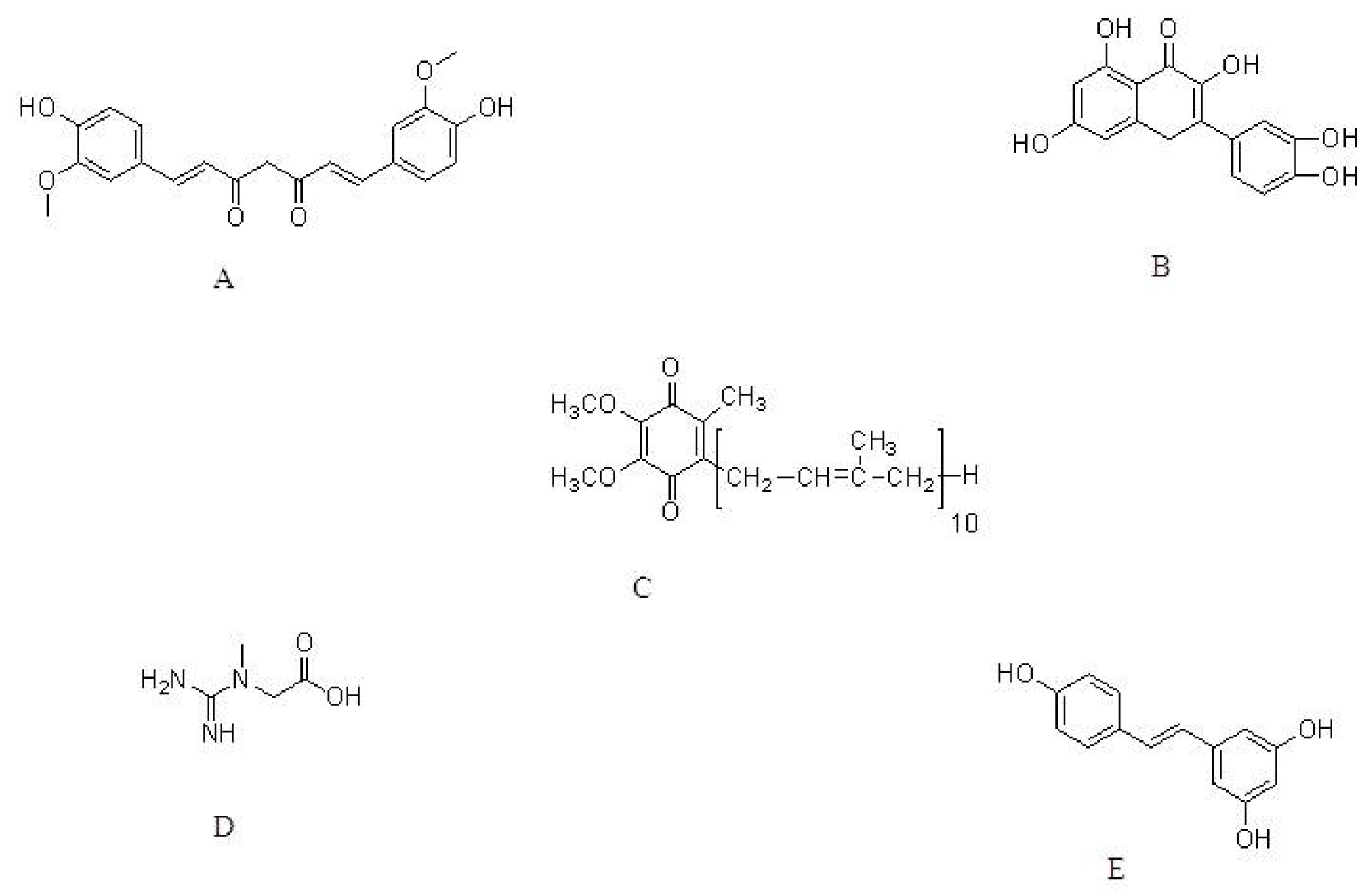
<p>Curcumin, the well-known component of yellow curry spice (<xref ref-type="fig" rid="f1-ijms-13-10608">Figure 1A</xref>) derived from turmeric, has been used as a food preservative and herbal medicine in India for hundreds of years [<xref ref-type="bibr" rid="b47-ijms-13-10608">47</xref>,<xref ref-type="bibr" rid="b48-ijms-13-10608">48</xref>]. Curcumin possesses therapeutic properties against a variety of diseases ranging from cancer to cystic fibrosis [<xref ref-type="bibr" rid="b49-ijms-13-10608">49</xref>]. Curcumin exhibits antioxidative and antiinflammatory activities [<xref ref-type="bibr" rid="b50-ijms-13-10608">50</xref>,<xref ref-type="bibr" rid="b51-ijms-13-10608">51</xref>]. Earlier pharmacological studies showed that curcumin has cholesterol-lowering and hemostatic properties. Several studies in cellular and animal models also indicate that curcumin is a neuroprotective agent in neurodegenerative disorders such as Alzheimer’s disease (AD) [<xref ref-type="bibr" rid="b52-ijms-13-10608">52</xref>–<xref ref-type="bibr" rid="b54-ijms-13-10608">54</xref>] and PD [<xref ref-type="bibr" rid="b52-ijms-13-10608">52</xref>,<xref ref-type="bibr" rid="b55-ijms-13-10608">55</xref>,<xref ref-type="bibr" rid="b56-ijms-13-10608">56</xref>]. In a recent study conducted by Mythri <italic>et al.</italic> (2011) [<xref ref-type="bibr" rid="b57-ijms-13-10608">57</xref>], chronic dietary supplementation with turmeric protected against MPTP-mediated neurotoxicity <italic>in vivo</italic> in a mice model of PD. Mice were subjected to dietary supplementation with aqueous suspensions of turmeric for three months, mimicking chronic consumption, and were then challenged <italic>in vivo</italic> with MPTP. The authors showed that chronic turmeric supplementation increased GSH levels and protected against peroxynitrite-mediated inhibition of brain mitochondrial complex I. In another study, Liu <italic>et al.</italic> (2011) explored the protective effects of curcumin against A53T SNCA-induced toxicity in PC12 cells. Those authors showed that curcumin administration (0.1, 0.5, and 1.0 μM) protected against A53T SNCA-induced cell death in a dose-dependent manner by reducing the mutant SNCA-induced intracellular ROS levels, mitochondrial depolarization, cytochrome <italic>c</italic> release, and caspase-9 and caspase-3 activation [<xref ref-type="bibr" rid="b58-ijms-13-10608">58</xref>]. The strong antioxidant activity of curcumin makes it an interesting neuroprotective candidate for counteracting the toxin-induced oxidative stress and damage seen in experimental PD models. However the potential risks and side effects of curcumin need to be addressed and seem to be necessary to establish the benefit/risk profile of curcumin as a neuroprotective agent [<xref ref-type="bibr" rid="b59-ijms-13-10608">59</xref>].</p>
<p>Quercetin (<xref ref-type="fig" rid="f1-ijms-13-10608">Figure 1B</xref>), a major flavonoid, deserves attention because of its beneficial effects observed in various <italic>in vitro</italic> and <italic>in vivo</italic> neural damage models. Quercetin possesses anti-tumoral, anti-thrombotic, anti-inflammatory, anti-apoptotic, and antioxidant effects [<xref ref-type="bibr" rid="b60-ijms-13-10608">60</xref>–<xref ref-type="bibr" rid="b63-ijms-13-10608">63</xref>]. In a recent study by Zhang <italic>et al</italic>. (2011) the neuroprotective effects of quercetin in PC12 cells and in a zebrafish model were investigated. 6-OHDA was used to induce neural damage in PC12 cells and zebrafish. Quercetin at 25, 50, and 100 μM prevented 6-OHDA-induced PC12 cell apoptosis. In the zebrafish model, pretreatment with quercetin at 6 and 12 μM significantly attenuated 6-OHDA-stimulated DAergic neuron loss leading to its development as an effective therapeutic agent for treating PD [<xref ref-type="bibr" rid="b64-ijms-13-10608">64</xref>]. In addition, new roles for quercetin in hypoxia and ischemia-induced neuroprotection in relation to suppression of oxidative stress, improvement in behavioral function, reduction in infarct volume, brain swelling, and cellular injury in both <italic>in vivo</italic> and <italic>in vitro</italic> models based on its antioxidant functions are also well studied [<xref ref-type="bibr" rid="b65-ijms-13-10608">65</xref>]. Although quercetin is regarded as a safe agent, care should be taken when administering in combination with other drugs clinically as it was known to interact with some antibiotics and alter the serum levels [<xref ref-type="bibr" rid="b66-ijms-13-10608">66</xref>].</p>
<p>Coenzyme Q10 (CoQ10, <xref ref-type="fig" rid="f1-ijms-13-10608">Figure 1C</xref>) is a key component of the electron transport chain and plays an essential role in ATP production. CoQ10, also called ubiquinone, is absorbed in brain fluids and is a very powerful antioxidant in both mitochondria and lipid membranes [<xref ref-type="bibr" rid="b67-ijms-13-10608">67</xref>,<xref ref-type="bibr" rid="b68-ijms-13-10608">68</xref>]. Earlier research has shown that the CoQ10 content of mitochondria in the brain declines rapidly when PD is induced in monkeys. This reduction in CoQ10 level leads to a detrimental increase in free radical destructive reactions [<xref ref-type="bibr" rid="b69-ijms-13-10608">69</xref>]. CoQ10 possesses neuroprotective properties as observed in different models of neurodegenerative diseases [<xref ref-type="bibr" rid="b10-ijms-13-10608">10</xref>,<xref ref-type="bibr" rid="b70-ijms-13-10608">70</xref>–<xref ref-type="bibr" rid="b72-ijms-13-10608">72</xref>]. CoQ10 also attenuates ATP and GSH depletion and protects against loss of hippocampal neurons in experimental ischemia [<xref ref-type="bibr" rid="b73-ijms-13-10608">73</xref>]. CoQ10 significantly decreases lipid peroxidation markers in plasma, erythrocytes, liver, and the brain of mice [<xref ref-type="bibr" rid="b74-ijms-13-10608">74</xref>]. In a recent study by Cleren <italic>et al</italic>. (2008) [<xref ref-type="bibr" rid="b75-ijms-13-10608">75</xref>] the therapeutic effects of CoQ10 and reduced CoQ10 in the MPTP model of Parkinsonism mice was studied. CoQ10 administered at 1600 mg/kg/day resulted in significant protection against loss of DA induced by MPTP treatment (10 mg/kg, i.p., each 2 h × 3 doses), which was accompanied by a marked increase in plasma concentrations of CoQ10. In a chronic MPTP model (40 mg/kg per day for 1 month), CoQ10 treatment at 1600 mg/kg/day in the diet also showed excellent therapeutic effects by significantly inhibiting striatal DA depletion, loss of dopaminergic neurons in the SNpc, and the formation of SNCA aggregates in the dopaminergic neurons of mice. Results from this study provide further evidence that administering CoQ10 may be a useful therapeutic strategy for treating PD. Because of the paucity of side-effects seen with CoQ10, this powerful antioxidant is now under clinical trial [<xref ref-type="bibr" rid="b76-ijms-13-10608">76</xref>].</p>
<p>CoQ10 and creatine (<xref ref-type="fig" rid="f1-ijms-13-10608">Figure 1D</xref>) combination therapy has been investigated in a MPTP mouse model of PD [<xref ref-type="bibr" rid="b77-ijms-13-10608">77</xref>]. Earlier reports indicated that creatine exerts neuroprotective effects both <italic>in vitro</italic> and <italic>in vivo</italic> in animal models of neurodegenerative diseases [<xref ref-type="bibr" rid="b78-ijms-13-10608">78</xref>]. Those authors showed that supplementation with these combined agents in mice through a diet with 2% creatine and 1% CoQ10 for one week before MPTP treatment (40 mg/kg body weight daily for 28 days through osmotic pumps) produced additive neuroprotective effects against dopamine depletion in the striatum and loss of tyrosine hydroxylase (TH) neurons in the SNpc, reduced lipid peroxidation and pathologic SNCA accumulation in SNpc neurons, and loss of DAergic neurons. They suggested that the combination of the two compounds is a promising approach to PD pathology, as clinical trials of both CoQ10 and creatine are promising and well-tolerated with few side-effects.</p>
<p>Resveratrol (<xref ref-type="fig" rid="f1-ijms-13-10608">Figure 1E</xref>) is a well known antioxidant that exerts extensive pharmacological effects including anti-inflammatory, anti-mutation, anti-tumor and blood fat regulatory functions [<xref ref-type="bibr" rid="b79-ijms-13-10608">79</xref>–<xref ref-type="bibr" rid="b81-ijms-13-10608">81</xref>]. Resveratrol and a resveratrol liposome were evaluated for their neuroprotective effects in PD [<xref ref-type="bibr" rid="b82-ijms-13-10608">82</xref>]. The parameters, including behavior, TH-positive cells, apoptotic cells, ROS level, and total antioxidant capacity were determined in 6-OHDA-induced rats. Oral treatment with resveratrol or a resveratrol liposome (20 mg/kg per day) for 14 days protected DAergic neurons in PD rats. The levels of total ROS decreased markedly, and the total antioxidant capability of nigral tissues improved significantly. Furthermore, the resveratrol liposome exerted more potent protection when compared to that of resveratrol. The authors concluded that the radical scavenging ability and antioxidant properties of resveratrol may contribute to its potent neuroprotection in PD. Further, a single dose of up to 5 g of resveratrol caused no serious adverse effects in healthy volunteers in clinical studies owing to its safe use for neuroprotection [<xref ref-type="bibr" rid="b83-ijms-13-10608">83</xref>].</p>
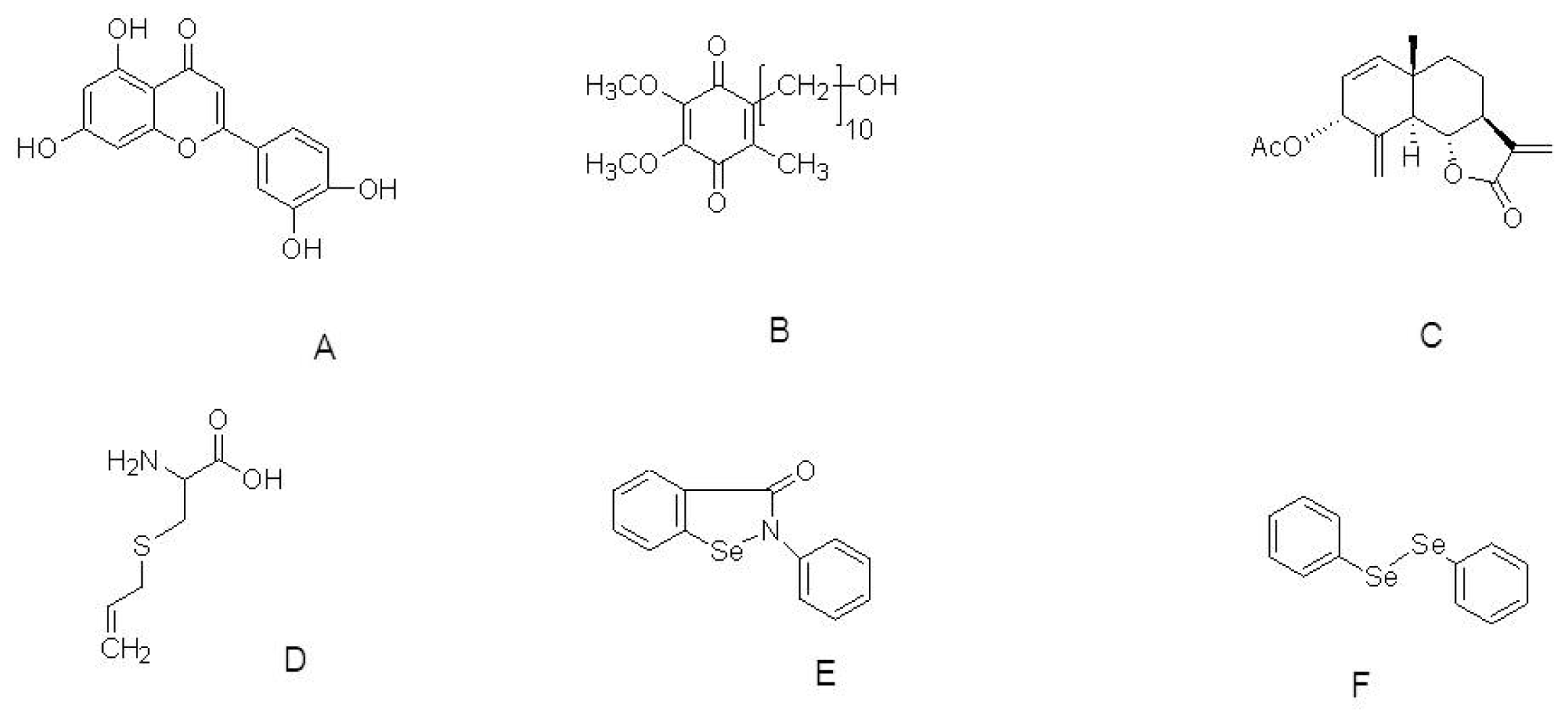
<p>Luteolin (<xref ref-type="fig" rid="f2-ijms-13-10608">Figure 2A</xref>) is a polyphenolic compound found in many foods including peanut shells, parsley, artichoke leaves, celery, peppers, olive oil, rosemary, lemons, peppermint, sage, and thyme. This food-derived compound is also one of the dominant active constituents of purple Perilla fruit. Luteolin possesses anti-inflammatory, anti-allergic, anti-carcinogenic, and immune-modulating properties [<xref ref-type="bibr" rid="b84-ijms-13-10608">84</xref>]. In a recent study, luteolin derived from <italic>Perilla frutescens</italic> (L) Britt, was investigated for its neuroprotective tendency towards ROS-insulted neural cells. Luteolin concentration-dependently enhances neuronal cell survival with an efficacy higher than and a potency similar to vitamin E when cells were insulted with ROS. Luteolin (5, 10, and 20 μM) significantly attenuated the increase in ROS production and prevented decreases in activities of mitochondria, CAT, and GSH in ROS-insulted primary neurons. That study indicated that the neuroprotection exerted by luteolin in ROS-insulted primary neurons might occur through a rebalancing of pro-oxidant-antioxidant status [<xref ref-type="bibr" rid="b85-ijms-13-10608">85</xref>].</p>
<p>Brassinosteroids (BRs) are highly oxygenated steroids isolated from several vegetables, including <italic>Vicia faba</italic> seeds and pollen [<xref ref-type="bibr" rid="b86-ijms-13-10608">86</xref>,<xref ref-type="bibr" rid="b87-ijms-13-10608">87</xref>]. BRs exert antioxidative actions by enhancing the activity of the enzymatic antioxidant superoxide dismutase (SOD), CAT and peroxidase, to reduce lipid peroxidation [<xref ref-type="bibr" rid="b88-ijms-13-10608">88</xref>–<xref ref-type="bibr" rid="b90-ijms-13-10608">90</xref>]. In a recent study, two natural BRs and five synthetic analogs were synthesized and evaluated for their neuroprotective actions against MPP<sup>+</sup>-induced neuronal PC12 cells. The authors suggested that selected BRs and analogs protected neuronal PC12 cells against MPP<sup>+</sup> toxicity and exerted neuroprotective effects derived from their antioxidative properties. In addition, they reported that the steroid B-ring and lateral chain play an important antioxidative role in the neuroprotective action and further research on <italic>in vivo</italic> animal models of PD should be conducted [<xref ref-type="bibr" rid="b91-ijms-13-10608">91</xref>].</p>
<p>Gerhardt <italic>et al</italic>. (2011) explored the compound idebenone (<xref ref-type="fig" rid="f2-ijms-13-10608">Figure 2B</xref>) to extend lifespan and improve motor function in HtrA2 knockout mice. Feeding HtrA2 knockout mice with idebenone (500 mg/kg body weight/day orally) extended lifespan and delayed worsening of the motor phenotype. Experiments conducted in cell culture and on brain tissue of mice revealed that idebenone acts by down-regulating the integrated stress response. Earlier reports indicated that idebenone has antioxidant properties similar to CoQ10, which is in use as an anti-aging product based on the free-radical theory [<xref ref-type="bibr" rid="b92-ijms-13-10608">92</xref>]. The authors reported that idebenone ameliorates disease symptoms in HtrA2 knockout mice indicating that antioxidants might delay neuronal degeneration in the striata of these mice. This result illustrates the potential of idebenone for treating neurodegenerative diseases including PD [<xref ref-type="bibr" rid="b93-ijms-13-10608">93</xref>].</p>
<p>3α-acetoxyeudesma-1,4(15),11(13)-trien-12,6a-olide (AETO, <xref ref-type="fig" rid="f2-ijms-13-10608">Figure 2C</xref>), is a compound isolated from the leaves of <italic>Laurus nobilis</italic> L., The inhibitory effects of AETO on DA-induced apoptosis and SNCA formation in DAergic SH-SY5Y cells have been evaluated. AETO (0.4, 2, and 10 μM) decreases the active form of caspase-3 and the levels of p53, which were accompanied by increased levels of Bcl-2 in a dose-dependent manner. Flow cytometry and Western blot analyses showed that AETO significantly inhibits DA-induced apoptosis and suppresses intracellular tyrosinase activity, ROS generation, quinoprotein, and SNCA formation. These results indicate that AETO inhibits DA-induced apoptosis, which is closely related to the suppression of intracellular tyrosinase activity and the formation of α-syn, ROS, and quinoprotein in SH-SY5Y cells [<xref ref-type="bibr" rid="b94-ijms-13-10608">94</xref>].</p>
<p>The sulfur-containing compounds derived from garlic have various biological actions. <italic>S</italic>-allylcysteine (SAC, <xref ref-type="fig" rid="f2-ijms-13-10608">Figure 2D</xref>), the most abundant organosulfur compound in aged garlic extracts, has been evaluated for its protective actions against oxidative stress induced by MPP<sup>+</sup> in the striatum of C57BL/6J mice. Pretreatment with SAC (125 mg/kg i.p.) daily for 17 days, followed by administration of MPP<sup>+</sup> (0.72 mg/kg i.c.v.), significantly attenuates MPP<sup>+</sup>-induced loss of striatal DA levels (32%). SAC significantly blocks (100% of protection) lipid peroxidation and reduction of superoxide radical production indicated by up-regulation of Cu-Zn-superoxide dismutase activity in MPP<sup>+</sup>-induced mice. Behavioral analyses showed that SAC improves MPP<sup>+</sup>-induced impairment of locomotion (35%). These findings suggest that SAC attenuates MPP<sup>+</sup>-induced neurotoxicity in the striatum of mice through its potent antioxidant effect against oxidative stress induced by MPP<sup>+</sup> [<xref ref-type="bibr" rid="b95-ijms-13-10608">95</xref>].</p>
<p>The neuroprotective role of organoselenides using a differentiated human neuroblastoma SH-SY5Y cell line challenged with 6-OHDA has been investigated [<xref ref-type="bibr" rid="b96-ijms-13-10608">96</xref>]. Ebselen is a synthetic organoselenide that mimics the activity of glutathione peroxidase both <italic>in vitro</italic> and <italic>in vivo</italic> [<xref ref-type="bibr" rid="b97-ijms-13-10608">97</xref>,<xref ref-type="bibr" rid="b98-ijms-13-10608">98</xref>]. Due to its antioxidant function, it can neutralize free radical damage and also has neuroprotective effects against brain injuries involving the glutamatergic system [<xref ref-type="bibr" rid="b99-ijms-13-10608">99</xref>]. Ebselen inspired several research groups to synthesize other low-molecular-weight compounds with high availability. In addition, the ebselen analog diphenyl diselenide 2 inhibits glutamate uptake in rat hippocampus [<xref ref-type="bibr" rid="b100-ijms-13-10608">100</xref>], and also confers neuroprotection in hippocampus slices through antioxidant mechanisms [<xref ref-type="bibr" rid="b101-ijms-13-10608">101</xref>]. Lopes <italic>et al</italic>. (2012) screened several organoselenides investigating their antioxidant potential, and two organoselenides namely, ebselen and diphenyl diselenide (<xref ref-type="fig" rid="f2-ijms-13-10608">Figure 2E,F</xref>), at 3 μM concentrations showed neuroprotective potential in differentiated human neuroblastoma SH-SY5Y cells challenged with 6-OHDA. The authors indicated that these selected organoselenium molecules could be further developed as potential pharmacological and therapeutic drugs to treat PD.</p>
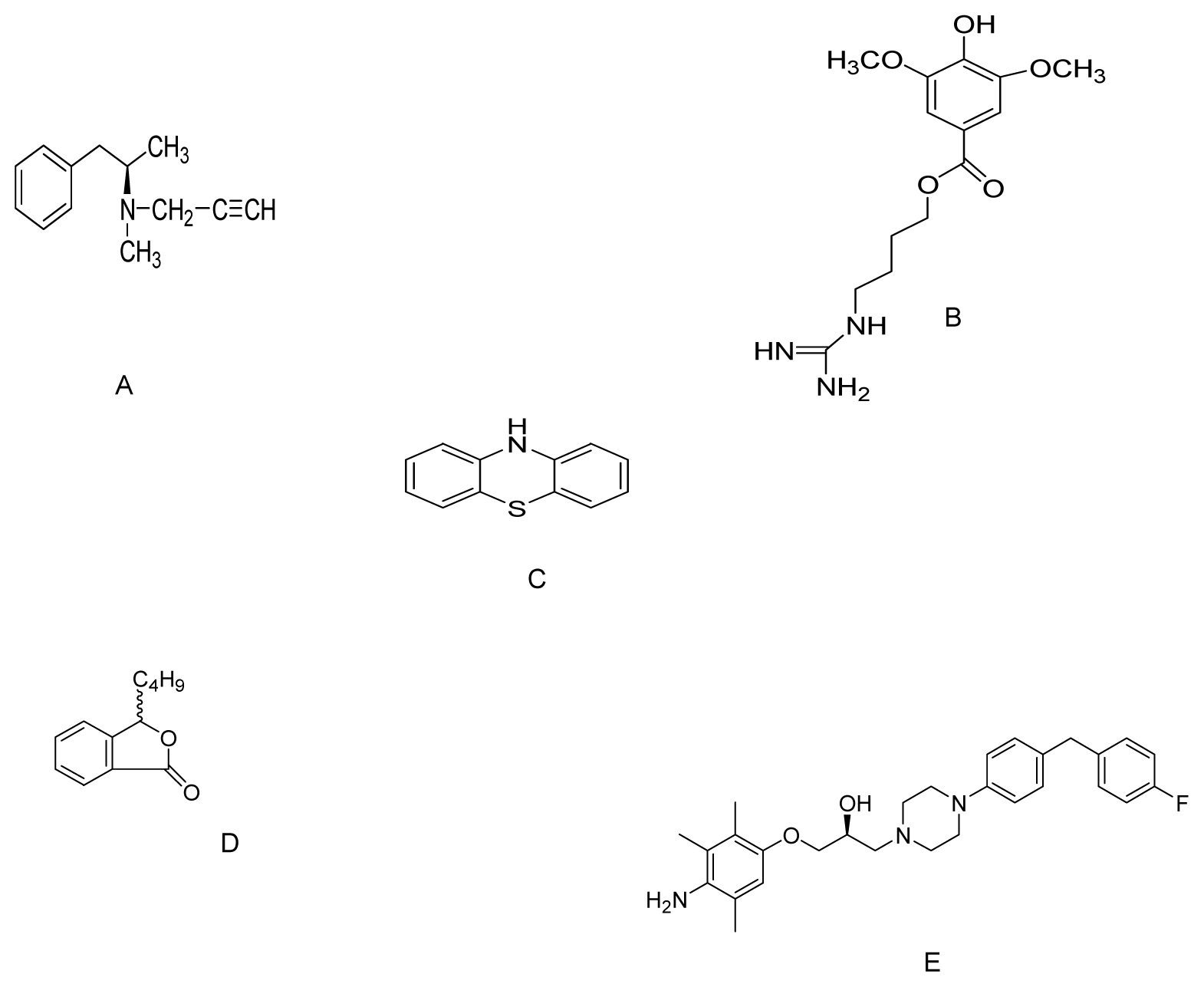
<p>Deprenyl is a selective MAO-B inhibitor (<xref ref-type="fig" rid="f3-ijms-13-10608">Figure 3A</xref>) used in clinics to slow the progression of symptoms in patients with PD. Activation of nuclear factor-E2-related factor-2 (Nrf2) has been identified as an alternative mechanism by which deprenyl slows PD progression [<xref ref-type="bibr" rid="b102-ijms-13-10608">102</xref>]. Furthermore, chronic treatment with deprenyl induces indirect antioxidant activity by enhancing the expression of antioxidative enzymes such as SOD1, SOD2, and CAT [<xref ref-type="bibr" rid="b103-ijms-13-10608">103</xref>]. In a recent study, deprenyl (10, 20, 50 and 100 μM) up-regulated NQO1 expression and activity, attenuated the increase in quinoprotein levels in MPP<sup>+</sup>-treated PC12 cells, and protected against oxidative damage by triggering the Nrf2/ARE pathway. Moreover, its effect on NQO1 upregulation was greatly attenuated in Nrf2 siRNA transfected cells. Activation of Nrf2/ARE signaling by deprenyl in PC12 cells is independent of MAO-B inhibition [<xref ref-type="bibr" rid="b104-ijms-13-10608">104</xref>].</p>
<p>SCM198 (4-guanidino-<italic>n</italic>-butyl syringate, <xref ref-type="fig" rid="f3-ijms-13-10608">Figure 3B</xref>) is a chemically synthesized compound that exhibits cardioprotective effects in myocardial infarction models [<xref ref-type="bibr" rid="b105-ijms-13-10608">105</xref>] as well as neuroprotective effects on middle cerebral artery occluded rats [<xref ref-type="bibr" rid="b106-ijms-13-10608">106</xref>–<xref ref-type="bibr" rid="b108-ijms-13-10608">108</xref>]. Shi <italic>et al</italic>. (2011) investigated the neuroprotective effects of SCM198 on 6-OHDA-induced behavioral deficits in rats and cytotoxicity in neuronal SH-SY5Y cells. Pretreatment with SCM198 (0.1, 1, and 10 mM) significantly increased SOD activity, ameliorated intracellular ROS generation, prevented the dissipation of mitochondrial membrane potential, decreased apoptotic cell death, down-regulated Bax, and up-regulated Bcl-2 mRNA and protein levels compared with those in 6-OHDA damaged cells. Intragastric administration of SCM198 at 18 or 60 mg/kg/day for four weeks significantly ameliorated apomorphine-induced contralateral rotations in 6-OHDA-lesioned rats. The authors indicated that the underlying mechanisms of SCM198 for delivering potent neuroprotective effects against 6-OHDA-induced toxicity both <italic>in vivo</italic> and <italic>in vitro</italic> might be by inhibiting oxidative stress and apoptosis [<xref ref-type="bibr" rid="b109-ijms-13-10608">109</xref>].</p>
<p>Phenothiazine (<xref ref-type="fig" rid="f3-ijms-13-10608">Figure 3C</xref>) is an organic compound that occurs in various anti-psychotic and antihistaminic drugs. A number of clinically used phenothiazine derivatives, acting as histamine and DA receptor antagonists, exert antioxidant effects <italic>in vitro</italic> [<xref ref-type="bibr" rid="b110-ijms-13-10608">110</xref>]. Phenothiazine possesses an exceptionally high antioxidant efficacy against MPP<sup>+</sup> and rotenone neurotoxicity <italic>in vitro</italic> [<xref ref-type="bibr" rid="b111-ijms-13-10608">111</xref>]. Mocko <italic>et al</italic>. (2010) developed the MPP<sup>+</sup>- and rotenone-based <italic>C. elegans</italic> model of DAergic neurotoxicity to perform a systematic analysis of the neuroprotective and behavioral effects of the phenothiazines. They found that 500 nM phenothiazine exerts strong neuroprotective effects at the cellular level and results in better performance on behavioral assays. Thus, chain-breaking agents such as phenothiazine can be developed as therapeutic agents for PD as they rescue DAergic toxicity <italic>in vivo</italic> at nanomolar concentrations based on potent antioxidant properties [<xref ref-type="bibr" rid="b112-ijms-13-10608">112</xref>]. Although the doses tested <italic>in vitro</italic> and <italic>in vivo</italic> in PD models are far below the toxic level, side effects such as extrapyramidal symptoms including akathisia and tardive dyskinesia, hyperprolactinaemia, neuroleptic malignant syndrome and as well as substantial weight gain need to be addressed [<xref ref-type="bibr" rid="b113-ijms-13-10608">113</xref>,<xref ref-type="bibr" rid="b114-ijms-13-10608">114</xref>].</p>
<p>Huang <italic>et al</italic>. (2010) evaluated the therapeutic potential of dl-3n-butylphthalide (NBP, <xref ref-type="fig" rid="f3-ijms-13-10608">Figure 3D</xref>) for treating PD. NBP is safe and currently used in clinical trials for patients with stroke. NBP (0.1, 1.0 and 10 μM) reduces MPP<sup>+</sup> cytotoxicity by suppressing the mitochondrial permeability transition, reducing oxidative stress, and increasing cellular GSH content in MPP<sup>+</sup>-treated PC12 cells. Moreover, NBP also reduces accumulation of SNCA, the main component of Lewy bodies [<xref ref-type="bibr" rid="b115-ijms-13-10608">115</xref>].</p>
<p>Another novel antioxidant, SUN N8075 (<xref ref-type="fig" rid="f3-ijms-13-10608">Figure 3E</xref>), is currently in clinical trials for patients suffering from stroke [<xref ref-type="bibr" rid="b116-ijms-13-10608">116</xref>]. Previous studies have revealed a potent neuroprotective activity of this agent in an <italic>in vivo</italic> transient middle cerebral artery occlusion model. The authors suggested that the underlying neuroprotective mechanism might partly involve protection against oxidative stress [<xref ref-type="bibr" rid="b117-ijms-13-10608">117</xref>]. The same group investigated the neuroprotective effects of SUNN8075 <italic>in vitro</italic> on both H<sub>2</sub>O<sub>2</sub>-induced ROS production and 6-OHDA-induced cell death in human neuroblastoma SH-SY5Y cells. They also evaluated its putative neuroprotective effects on MPTP-induced neurotoxicity in an <italic>in vivo</italic> mouse model of PD. SUNN8075 treatment at micromolar concentrations significantly decreased the H<sub>2</sub>O<sub>2</sub>-induced production of ROS and protected against 6-OHDA-induced cell death. Intraperitoneal injections of SUNN8075 (30 mg/kg, twice with a 5 h interval) inhibited lipid peroxidation in the mouse forebrain <italic>in vivo</italic>. Moreover, SUN N8075 (10 and 30 mg/kg i.p., twice) exhibited significant protective effects against the MPTP-induced decrease in TH-positive cells in the <italic>substantia nigra</italic>. The authors concluded that the protective effects of SUN N8075 in experimental PD models was, at least in part, via an anti-oxidation mechanism [<xref ref-type="bibr" rid="b118-ijms-13-10608">118</xref>].</p>
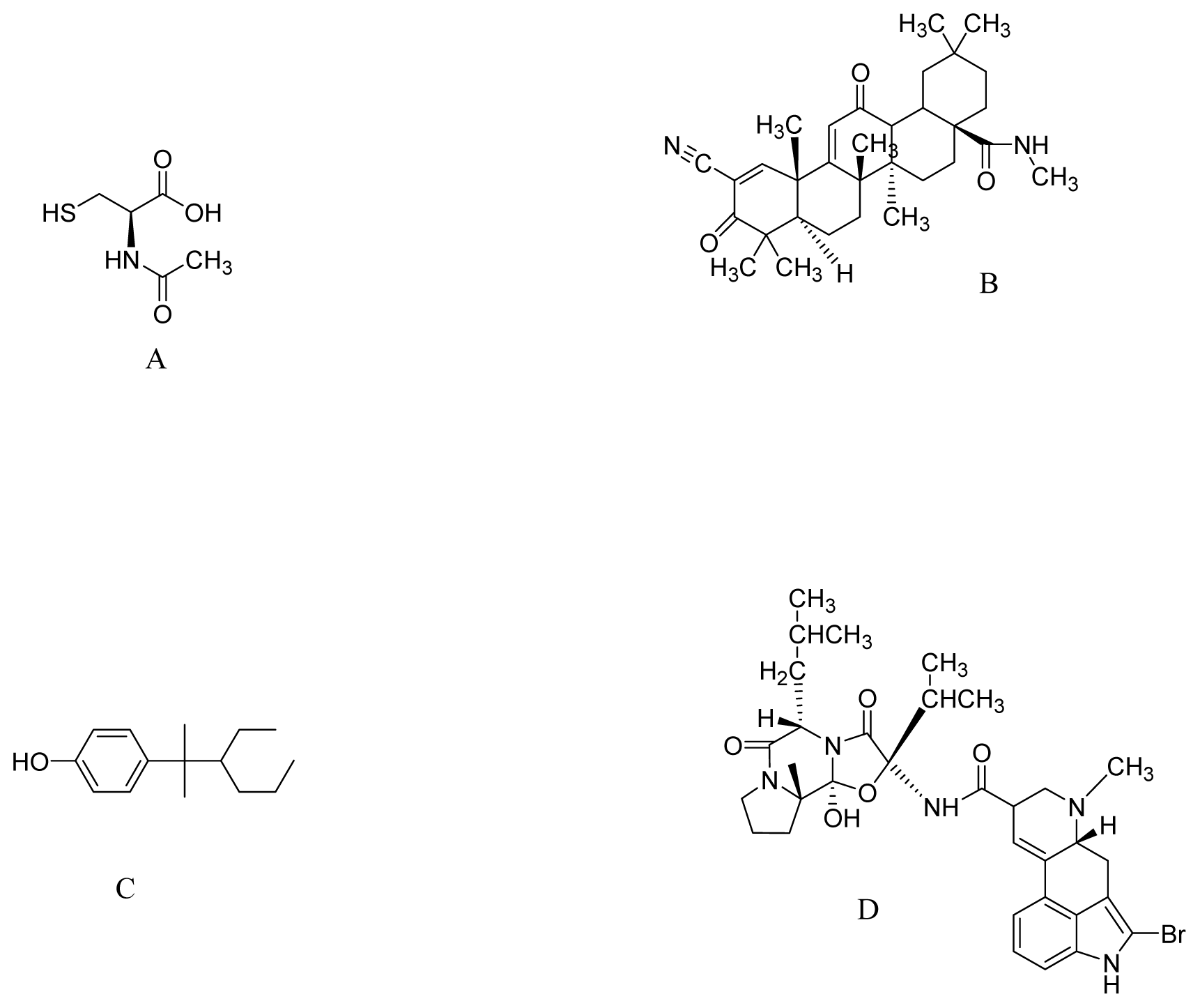
<p><italic>N</italic>-acetyl-<sc>l</sc>-cysteine (NAC, <xref ref-type="fig" rid="f4-ijms-13-10608">Figure 4A</xref>), is a pharmaceutical drug and nutritional supplement used primarily as a mucolytic agent and in the management of paracetamol overdose. Recently, Clark <italic>et al</italic>. (2010) hypothesized that NAC supplementation in drinking water (40 mM) protects against SNCA toxicity. Oxidative stress may increase the accumulation of toxic forms of SNCA in a DA-dependent manner [<xref ref-type="bibr" rid="b119-ijms-13-10608">119</xref>]. Transgenic mice over-expressing wild-type human SNCA drank water supplemented with NAC from ages six weeks to one year. As a result, NAC increased SN levels of GSH within five to seven weeks of treatment. The authors found that the loss of DAergic terminals at one year associated with SNCA over-expression was significantly attenuated by NAC supplementation. Furthermore, NAC significantly decreased the levels of human SNCA in the brains of PDGFb-SNCA transgenic mice compared to those in controls. The authors suggested that increased oxidative stress due to early GSH deficiency in the SN may lead to enhanced toxicity of SNCA in DAergic SN neurons, suggesting that strategies to increase GSH or to block oxidative stress by NAC may protect against the SNCA toxicity seen in PD [<xref ref-type="bibr" rid="b120-ijms-13-10608">120</xref>].</p>
<p>Oleanolic acid is a triterpenoid, which has been used for centuries in Asian medicine, due to its anti-inflammatory activity. Synthetic triterpenoids are potent inducers of Nrf2 transcriptional activity, resulting in marked induction of NADPH quinone oxidoreductase-1 (NQO-1), hemeoxygenase-1, GSH transferases, and other cytoprotective enzymes. Yang <italic>et al</italic>. (2009) investigated the synthetic triterpenoid, CDDO-methyl amide (2-cyano-<italic>N</italic>-methyl-3,12-dioxooleana-1,9(11)-dien-28 amide; CDDO-MA) (<xref ref-type="fig" rid="f4-ijms-13-10608">Figure 4B</xref>), which is at least 200,000 times more potent than its naturally occurring distant parent, oleanolic acid, as an inducer of NQO-1. CDDO-MA (800 mg/kg of diet) exerted profound neuroprotective effects against MPTP and 3-nitropropionic acid neurotoxicity. The authors showed that the neuroprotective effects were due to its antioxidant effects, caused by induction of pathways known to be regulated through the Nrf2/antioxidant response element (ARE) signaling pathway, such as GSH synthesis [<xref ref-type="bibr" rid="b121-ijms-13-10608">121</xref>].</p>
<p>NP7 (<xref ref-type="fig" rid="f4-ijms-13-10608">Figure 4C</xref>) is a new marine derived antioxidant, with a different chemical molecular structure than that of classic phytochemicals, obtained by lead optimization system from <italic>Streptomyces</italic> spp. NP7 has profound free radical scavenging properties in the sub μM–nM range and easily crosses the blood brain barrier of mammals [<xref ref-type="bibr" rid="b122-ijms-13-10608">122</xref>]. Meena <italic>et al</italic>. (2009) studied the protective effects of NP7 on cell death induced by oxidative stress in neuronal and glial midbrain cultures from parkin null mice (PK-KO). NP7 (5–10 μM) prevented H<sub>2</sub>O<sub>2</sub>-induced apoptosis and necrosis of midbrain neuronal and glial cultures from wild type and PK-KO mice. NP7 suppressed microglial activation and the H<sub>2</sub>O<sub>2</sub>-induced dropout of DA neurons. The authors indicated that NP7 might be a promising neuroprotecting agent against oxidative stress in PD [<xref ref-type="bibr" rid="b123-ijms-13-10608">123</xref>].</p>
<p>Bromocriptine, a DA agonist (<xref ref-type="fig" rid="f4-ijms-13-10608">Figure 4D</xref>) has been widely used in PD clinics since 1974 to delay and minimize deleterious motor fluctuations after long-term <sc>l</sc>-dopa treatment [<xref ref-type="bibr" rid="b124-ijms-13-10608">124</xref>]. In addition to its action as a DA receptor agonist, it reduces the formation of oxygen radicals during the course of normal levodopa and DA metabolism [<xref ref-type="bibr" rid="b125-ijms-13-10608">125</xref>]. Recent observations suggest that bromocriptine is a free radical scavenger that scavenges hydroxyl and superoxide radicals <italic>in vitro</italic> and acts as an antioxidant that inhibits free radical formation [<xref ref-type="bibr" rid="b126-ijms-13-10608">126</xref>]. Based on these properties, Lim <italic>et al</italic>. (2008) studied the cytoprotective mechanism of bromocriptine against oxidative damage in H<sub>2</sub>O<sub>2</sub>-treated PC12 cells. Bromocriptine (5 μM) up-regulated the expression and activity of the antioxidant enzyme NQO1, attenuated the increase in the protein-bound quinone in H<sub>2</sub>O<sub>2</sub>-treated PC12 cells, protected PC12 cells against oxidative damage, and increased the expression and nuclear translocation of Nrf2. The Nrf2-related cytoprotective and antioxidative effects of bromocriptine are independent of DA receptor activation [<xref ref-type="bibr" rid="b127-ijms-13-10608">127</xref>].</p>
<p>Several other synthetic compounds such as selenium [<xref ref-type="bibr" rid="b128-ijms-13-10608">128</xref>], <italic>R</italic>-alpha-lipoic acid [<xref ref-type="bibr" rid="b129-ijms-13-10608">129</xref>], rosmarinic acid [<xref ref-type="bibr" rid="b130-ijms-13-10608">130</xref>], eugenol [<xref ref-type="bibr" rid="b131-ijms-13-10608">131</xref>] isoborneol [<xref ref-type="bibr" rid="b132-ijms-13-10608">132</xref>], melatonin [<xref ref-type="bibr" rid="b133-ijms-13-10608">133</xref>], metalloporphryins compounds, and metal ion chelators [<xref ref-type="bibr" rid="b134-ijms-13-10608">134</xref>] have neuroprotective effects in PD models based on their antioxidative properties. The antioxidant synthetic compounds reviewed are summarized and represented in <xref ref-type="table" rid="t1-ijms-13-10608">Table 1</xref>.</p></sec>
<sec sec-type="conclusions">
<title>5. Conclusions</title>
<p>Despite the availability of many drug classes such as <sc>l</sc>-dopa, DA agonists, monoamine oxidase inhibitors, catechol-O-methyltransferase inhibitors and anticholinergic agents for the symptomatic treatment of PD, a cure remains elusive. Although the exact nature of mechanism that involves neurodegeneration in PD is not well understood, oxidative stress is one of the major risk factors that could initiate and/or promote degeneration of DA neurons. Therefore, antioxidant therapy could prevent or reduce the rate of progression of this disease. It has been demonstrated that antioxidant compounds are able to protect neuronal cells by scavenging free radicals or activating the antioxidant mechanisms. Numerous <italic>in vitro</italic> and <italic>in vivo</italic> animal studies reported during the last five years centered on oxidative stress and ROS mediated mechanisms such as radical scavenging, metal chelating and/or regulation of antioxidant enzymes. However experimental evidence also showed that oxidative stress is not the sole deleterious factor implicated in the death of DAergic neurons and other mechanisms involving modulatory effects on signal transduction pathways and gene expression may also play key roles in the neuroprotection of progressive PD. The compounds discussed in this review may also act by regulating these pathways along with antioxidative mechanisms, which may be synergistic for delivering beneficial effects in PD. In addition, combination therapy with antioxidants and existing drugs might also be beneficial and enhance the efficacy of standard therapy in the treatment of PD. Various types of free radicals are produced, and antioxidants vary in their ability to quench these different free radicals, therefore supplementation with multiple antioxidants and relying on a cocktail of agents, each specifically targeting one aspect of the degenerative mechanism in the correct time frame and dose, may provide better results to achieve promising clinical effects. However, examining the critical factors including the optimum concentrations required, what biologically active forms are needed and crossing of these agents into blood brain barrier to exert potential therapeutic benefits are indeed essential. A complete understanding of the molecular mechanisms of the ROS specificities in PD, and larger studies, both epidemiologic and randomized clinical trials in humans, as well as animal studies, are urgently needed to confirm these findings for delivering beneficial effects in the treatment of PD.</p></sec></body>
<back>
<ack>
<title>Acknowledgments</title>
<p>This work was supported by Basic Science Research Program through the National Research Foundation of Korea (NRF), funded by the Ministry of Education, Science and Technology (2011-0014923) and also supported by the Regional Innovation Center (RIC) Program of the Ministry of Knowledge Economy through the Bio-Food &amp; Drug Research Center at Konkuk University, Korea.</p></ack>
<ref-list>
<title>References</title>
<ref id="b1-ijms-13-10608"><label>1</label><citation citation-type="journal"><person-group person-group-type="author"><name><surname>Przedborski</surname><given-names>S.</given-names></name><name><surname>Ischiropoulos</surname><given-names>H.</given-names></name></person-group><article-title>Reactive oxygen and nitrogen species: Weapons of neuronal destruction in models of Parkinson’s disease</article-title><source>Antioxid. Redox Signal</source><year>2005</year><volume>7</volume><fpage>685</fpage><lpage>693</lpage><pub-id pub-id-type="doi">10.1089/ars.2005.7.685</pub-id><pub-id pub-id-type="pmid">15890013</pub-id></citation></ref>
<ref id="b2-ijms-13-10608"><label>2</label><citation citation-type="journal"><person-group person-group-type="author"><name><surname>Schapira</surname><given-names>A.H.</given-names></name></person-group><article-title>Pathogenesis of Parkinson’s disease</article-title><source>Baillieres Clin. Neurol</source><year>1997</year><volume>6</volume><fpage>15</fpage><lpage>36</lpage><pub-id pub-id-type="pmid">9426866</pub-id></citation></ref>
<ref id="b3-ijms-13-10608"><label>3</label><citation citation-type="journal"><person-group person-group-type="author"><name><surname>Olanow</surname><given-names>C.W.</given-names></name><name><surname>Tatton</surname><given-names>W.G.</given-names></name></person-group><article-title>Etiology and pathogenesis of Parkinson’s disease</article-title><source>Annu. Rev. Neurosci</source><year>1999</year><volume>22</volume><fpage>123</fpage><lpage>144</lpage><pub-id pub-id-type="doi">10.1146/annurev.neuro.22.1.123</pub-id><pub-id pub-id-type="pmid">10202534</pub-id></citation></ref>
<ref id="b4-ijms-13-10608"><label>4</label><citation citation-type="book"><person-group person-group-type="author"><name><surname>Jankovic</surname><given-names>J.</given-names></name><name><surname>Tolosa</surname><given-names>E</given-names></name></person-group><source>Parkinson’s Disease and Movement Disorders</source><publisher-name>Williams &amp; Wilkins</publisher-name><publisher-loc>Baltimore, MD, USA</publisher-loc><year>1998</year><fpage>67</fpage><lpage>103</lpage></citation></ref>
<ref id="b5-ijms-13-10608"><label>5</label><citation citation-type="journal"><person-group person-group-type="author"><name><surname>Retz</surname><given-names>W.</given-names></name><name><surname>Gsell</surname><given-names>W.</given-names></name><name><surname>Münch</surname><given-names>G.</given-names></name><name><surname>Rosler</surname><given-names>M.</given-names></name><name><surname>Riederer</surname><given-names>P.</given-names></name></person-group><article-title>Free radicals in Alzheimer’s disease</article-title><source>J. Neural. Transm. Suppl</source><year>1998</year><volume>54</volume><fpage>221</fpage><lpage>236</lpage><pub-id pub-id-type="pmid">9850931</pub-id></citation></ref>
<ref id="b6-ijms-13-10608"><label>6</label><citation citation-type="journal"><person-group person-group-type="author"><name><surname>Pappolla</surname><given-names>M.A.</given-names></name><name><surname>Chyan</surname><given-names>Y.-J.</given-names></name><name><surname>Poeggeler</surname><given-names>B.</given-names></name><name><surname>Bozner</surname><given-names>P.</given-names></name><name><surname>Ghiso</surname><given-names>J.</given-names></name><name><surname>LeDoux</surname><given-names>S.P.</given-names></name><name><surname>Wilson</surname><given-names>G.L.</given-names></name></person-group><article-title>Alzheimer β protein mediated oxidative damage of mitochondrial DNA: Prevention by melatonin</article-title><source>J. Pineal Res</source><year>1999</year><volume>27</volume><fpage>226</fpage><lpage>229</lpage><pub-id pub-id-type="doi">10.1111/j.1600-079X.1999.tb00619.x</pub-id><pub-id pub-id-type="pmid">10551770</pub-id></citation></ref>
<ref id="b7-ijms-13-10608"><label>7</label><citation citation-type="journal"><person-group person-group-type="author"><name><surname>Sofic</surname><given-names>E.</given-names></name><name><surname>Lange</surname><given-names>K.W.</given-names></name><name><surname>Jellinger</surname><given-names>K.</given-names></name><name><surname>Riederer</surname><given-names>P.</given-names></name></person-group><article-title>Reduced and oxidized glutathione in the substantia nigra of patients with Parkinson’s disease</article-title><source>Neurosci. Lett</source><year>1992</year><volume>142</volume><fpage>128</fpage><lpage>130</lpage><pub-id pub-id-type="doi">10.1016/0304-3940(92)90355-B</pub-id><pub-id pub-id-type="pmid">1454205</pub-id></citation></ref>
<ref id="b8-ijms-13-10608"><label>8</label><citation citation-type="journal"><person-group person-group-type="author"><name><surname>Saggu</surname><given-names>H.</given-names></name><name><surname>Cooksey</surname><given-names>J.</given-names></name><name><surname>Dexter</surname><given-names>D.</given-names></name><name><surname>Wells</surname><given-names>F.R.</given-names></name><name><surname>Lees</surname><given-names>A.</given-names></name><name><surname>Jenner</surname><given-names>P.</given-names></name><name><surname>Marsden</surname><given-names>C.D.</given-names></name></person-group><article-title>A selective increase in particulate superoxide dismutase activity in parkinsonian substantia nigra</article-title><source>J. Neurochem</source><year>1989</year><volume>53</volume><fpage>692</fpage><lpage>697</lpage><pub-id pub-id-type="doi">10.1111/j.1471-4159.1989.tb11759.x</pub-id><pub-id pub-id-type="pmid">2760616</pub-id></citation></ref>
<ref id="b9-ijms-13-10608"><label>9</label><citation citation-type="journal"><person-group person-group-type="author"><name><surname>Dexter</surname><given-names>D.T.</given-names></name><name><surname>Wells</surname><given-names>F.R.</given-names></name><name><surname>Lees</surname><given-names>A.J.</given-names></name><name><surname>Agid</surname><given-names>F.</given-names></name><name><surname>Agid</surname><given-names>Y.</given-names></name><name><surname>Jenner</surname><given-names>P.</given-names></name><name><surname>Marsden</surname><given-names>C.D.</given-names></name></person-group><article-title>Increased nigral iron content and alterations in other metal ions occurring in brain in Parkinson’s disease</article-title><source>J. Neurochem</source><year>1989</year><volume>52</volume><fpage>1830</fpage><lpage>1836</lpage><pub-id pub-id-type="doi">10.1111/j.1471-4159.1989.tb07264.x</pub-id><pub-id pub-id-type="pmid">2723638</pub-id></citation></ref>
<ref id="b10-ijms-13-10608"><label>10</label><citation citation-type="journal"><person-group person-group-type="author"><name><surname>Beal</surname><given-names>M.F.</given-names></name></person-group><article-title>Mitochondrial dysfunction and oxidative damage in Alzheimer’s and Parkinson’s diseases and coenzyme Q10 as a potential treatment</article-title><source>J. Bioenerg. Biomembr</source><year>2004</year><volume>36</volume><fpage>381</fpage><lpage>386</lpage><pub-id pub-id-type="doi">10.1023/B:JOBB.0000041772.74810.92</pub-id><pub-id pub-id-type="pmid">15377876</pub-id></citation></ref>
<ref id="b11-ijms-13-10608"><label>11</label><citation citation-type="journal"><person-group person-group-type="author"><name><surname>Graham</surname><given-names>D.G.</given-names></name></person-group><article-title>Oxidative pathways for catecholamines in the genesis of neuromelanin and cytotoxic quinones</article-title><source>Mol. Pharmacol</source><year>1978</year><volume>14</volume><fpage>633</fpage><lpage>643</lpage><pub-id pub-id-type="pmid">98706</pub-id></citation></ref>
<ref id="b12-ijms-13-10608"><label>12</label><citation citation-type="journal"><person-group person-group-type="author"><name><surname>Weiner</surname><given-names>W.J.</given-names></name></person-group><article-title>Is levodopa toxic?</article-title><source>Arch. Neurol</source><year>2000</year><volume>57</volume><fpage>408</fpage><lpage>410</lpage><pub-id pub-id-type="doi">10.1001/archneur.57.3.408</pub-id><pub-id pub-id-type="pmid">10714671</pub-id></citation></ref>
<ref id="b13-ijms-13-10608"><label>13</label><citation citation-type="journal"><person-group person-group-type="author"><name><surname>Shulman</surname><given-names>L.M.</given-names></name></person-group><article-title>Levodopa toxicity in Parkinson disease: Reality or myth? Reality-practice patterns should change</article-title><source>Arch. Neurol</source><year>2000</year><volume>57</volume><fpage>406</fpage><lpage>408</lpage><pub-id pub-id-type="doi">10.1001/archneur.57.3.406</pub-id><pub-id pub-id-type="pmid">10714670</pub-id></citation></ref>
<ref id="b14-ijms-13-10608"><label>14</label><citation citation-type="journal"><person-group person-group-type="author"><name><surname>Fahn</surname><given-names>S.</given-names></name></person-group><article-title>Levodopa-induced neurotoxicity: Does it represent a problem for the treatment of Parkinson’s disease?</article-title><source>CNS Drug</source><year>1997</year><volume>8</volume><fpage>376</fpage><lpage>393</lpage><pub-id pub-id-type="doi">10.2165/00023210-199708050-00004</pub-id></citation></ref>
<ref id="b15-ijms-13-10608"><label>15</label><citation citation-type="journal"><person-group person-group-type="author"><name><surname>Smith</surname><given-names>T.S.</given-names></name><name><surname>Parker</surname><given-names>W.D.</given-names><suffix>Jr</suffix></name><name><surname>Bennett</surname><given-names>J.P.</given-names><suffix>Jr</suffix></name></person-group><article-title>l-dopa increases nigral production of hydroxyl radicals <italic>in vivo</italic>: Potential l-dopa toxicity?</article-title><source>Neuroreport</source><year>1994</year><volume>5</volume><fpage>1009</fpage><lpage>1011</lpage><pub-id pub-id-type="doi">10.1097/00001756-199404000-00039</pub-id><pub-id pub-id-type="pmid">8061280</pub-id></citation></ref>
<ref id="b16-ijms-13-10608"><label>16</label><citation citation-type="journal"><person-group person-group-type="author"><name><surname>Ogawa</surname><given-names>N.</given-names></name><name><surname>Asanuma</surname><given-names>M.</given-names></name><name><surname>Kondo</surname><given-names>Y.</given-names></name><name><surname>Kawada</surname><given-names>Y.</given-names></name><name><surname>Yamamoto</surname><given-names>M.</given-names></name><name><surname>Mori</surname><given-names>A.</given-names></name></person-group><article-title>Differential effects of chronic l-dopa treatment on lipid peroxidation in the mouse brain with or without pretreatment with 6-hydroxydopamine</article-title><source>Neurosci. Lett</source><year>1994</year><volume>171</volume><fpage>55</fpage><lpage>58</lpage><pub-id pub-id-type="doi">10.1016/0304-3940(94)90603-3</pub-id><pub-id pub-id-type="pmid">8084500</pub-id></citation></ref>
<ref id="b17-ijms-13-10608"><label>17</label><citation citation-type="journal"><person-group person-group-type="author"><name><surname>Spencer</surname><given-names>J.P.</given-names></name><name><surname>Jenner</surname><given-names>A.</given-names></name><name><surname>Aruoma</surname><given-names>O.I.</given-names></name><name><surname>Evans</surname><given-names>P.J.</given-names></name><name><surname>Kaur</surname><given-names>H.</given-names></name><name><surname>Dexter</surname><given-names>D.T.</given-names></name><name><surname>Jenner</surname><given-names>P.</given-names></name><name><surname>Lees</surname><given-names>A.J.</given-names></name><name><surname>Marsden</surname><given-names>D.C.</given-names></name><name><surname>Halliwell</surname><given-names>B.</given-names></name></person-group><article-title>Intense oxidative DNA damage promoted by l-dopa and its metabolites. Implications for neurodegenerative disease</article-title><source>FEBS Lett</source><year>1994</year><volume>353</volume><fpage>246</fpage><lpage>250</lpage><pub-id pub-id-type="doi">10.1016/0014-5793(94)01056-0</pub-id><pub-id pub-id-type="pmid">7957867</pub-id></citation></ref>
<ref id="b18-ijms-13-10608"><label>18</label><citation citation-type="journal"><person-group person-group-type="author"><name><surname>Uttara</surname><given-names>B.</given-names></name><name><surname>Singh</surname><given-names>A.V.</given-names></name><name><surname>Zamboni</surname><given-names>P.</given-names></name><name><surname>Mahajan</surname><given-names>R.T.</given-names></name></person-group><article-title>Oxidative stress and neurodegenerative diseases: A review of upstream and downstream antioxidant therapeutic options</article-title><source>Curr. Neuropharmacol</source><year>2009</year><volume>7</volume><fpage>65</fpage><lpage>74</lpage><pub-id pub-id-type="doi">10.2174/157015909787602823</pub-id><pub-id pub-id-type="pmid">19721819</pub-id></citation></ref>
<ref id="b19-ijms-13-10608"><label>19</label><citation citation-type="journal"><person-group person-group-type="author"><name><surname>Ebadi</surname><given-names>M.</given-names></name><name><surname>Srinivasan</surname><given-names>S.K.</given-names></name><name><surname>Baxi</surname><given-names>M.D.</given-names></name></person-group><article-title>Oxidative stress and antioxidant therapy in Parkinson’s disease</article-title><source>Prog. Neurobiol</source><year>1996</year><volume>48</volume><fpage>1</fpage><lpage>19</lpage><pub-id pub-id-type="doi">10.1016/0301-0082(95)00029-1</pub-id><pub-id pub-id-type="pmid">8830346</pub-id></citation></ref>
<ref id="b20-ijms-13-10608"><label>20</label><citation citation-type="journal"><person-group person-group-type="author"><name><surname>Floyd</surname><given-names>R.A.</given-names></name><name><surname>Carney</surname><given-names>J.M.</given-names></name></person-group><article-title>Free radical damage to protein and DNA: Mechanisms involved and relevant observations on brain undergoing oxidative stress</article-title><source>Ann. Neurol</source><year>1992</year><volume>32</volume><fpage>S22</fpage><lpage>S27</lpage><pub-id pub-id-type="doi">10.1002/ana.410320706</pub-id><pub-id pub-id-type="pmid">1510377</pub-id></citation></ref>
<ref id="b21-ijms-13-10608"><label>21</label><citation citation-type="journal"><person-group person-group-type="author"><name><surname>Hald</surname><given-names>A.</given-names></name><name><surname>Lotharius</surname><given-names>J.</given-names></name></person-group><article-title>Oxidative stress and inflammation in Parkinson’s disease: Is there a causal link?</article-title><source>Exp. Neurol</source><year>2005</year><volume>193</volume><fpage>279</fpage><lpage>290</lpage><pub-id pub-id-type="doi">10.1016/j.expneurol.2005.01.013</pub-id><pub-id pub-id-type="pmid">15869932</pub-id></citation></ref>
<ref id="b22-ijms-13-10608"><label>22</label><citation citation-type="journal"><person-group person-group-type="author"><name><surname>Gutteridge</surname><given-names>J.M.</given-names></name><name><surname>Halliwell</surname><given-names>B.</given-names></name></person-group><article-title>Iron toxicity and oxygen radicals</article-title><source>Baillieres Clin. Haematol</source><year>1989</year><volume>2</volume><fpage>195</fpage><lpage>256</lpage><pub-id pub-id-type="doi">10.1016/S0950-3536(89)80017-4</pub-id><pub-id pub-id-type="pmid">2736311</pub-id></citation></ref>
<ref id="b23-ijms-13-10608"><label>23</label><citation citation-type="journal"><person-group person-group-type="author"><name><surname>Halliwell</surname><given-names>B.</given-names></name><name><surname>Gutteridge</surname><given-names>J.M.</given-names></name></person-group><article-title>Oxygen toxicity, oxygen radicals, transition metals and disease</article-title><source>Biochem. J</source><year>1984</year><volume>219</volume><fpage>1</fpage><lpage>14</lpage><pub-id pub-id-type="pmid">6326753</pub-id></citation></ref>
<ref id="b24-ijms-13-10608"><label>24</label><citation citation-type="journal"><person-group person-group-type="author"><name><surname>Schapira</surname><given-names>A.H.</given-names></name></person-group><article-title>Mitochondria in the aetiology and pathogenesis of Parkinson’s disease</article-title><source>Lancet Neurol</source><year>2008</year><volume>7</volume><fpage>97</fpage><lpage>109</lpage><pub-id pub-id-type="doi">10.1016/S1474-4422(07)70327-7</pub-id><pub-id pub-id-type="pmid">18093566</pub-id></citation></ref>
<ref id="b25-ijms-13-10608"><label>25</label><citation citation-type="journal"><person-group person-group-type="author"><name><surname>Schapira</surname><given-names>A.H.V.</given-names></name><name><surname>Cooper</surname><given-names>J.M.</given-names></name><name><surname>Dexter</surname><given-names>D.</given-names></name><name><surname>Jenner</surname><given-names>P.</given-names></name><name><surname>Clark</surname><given-names>J.B.</given-names></name><name><surname>Marsden</surname><given-names>C.D.</given-names></name></person-group><article-title>Mitochondrial complex I deficiency in Parkinson’s disease</article-title><source>Lancet</source><year>1989</year><volume>333</volume><fpage>1269</fpage><pub-id pub-id-type="doi">10.1016/S0140-6736(89)92366-0</pub-id></citation></ref>
<ref id="b26-ijms-13-10608"><label>26</label><citation citation-type="journal"><person-group person-group-type="author"><name><surname>Uéda</surname><given-names>K.</given-names></name><name><surname>Fukushima</surname><given-names>H.</given-names></name><name><surname>Masliah</surname><given-names>E.</given-names></name><name><surname>Xia</surname><given-names>Y.</given-names></name><name><surname>Iwai</surname><given-names>A.</given-names></name><name><surname>Yoshimoto</surname><given-names>M.</given-names></name><name><surname>Otero</surname><given-names>D.A.</given-names></name><name><surname>Kondo</surname><given-names>J.</given-names></name><name><surname>Ihara</surname><given-names>Y.</given-names></name><name><surname>Saitoh</surname><given-names>T.</given-names></name></person-group><article-title>Molecular cloning of cDNA encoding an unrecognized component of amyloid in Alzheimer disease</article-title><source>Proc. Natl. Acad. Sci. USA</source><year>1993</year><volume>90</volume><fpage>11282</fpage><lpage>11286</lpage><pub-id pub-id-type="doi">10.1073/pnas.90.23.11282</pub-id><pub-id pub-id-type="pmid">8248242</pub-id></citation></ref>
<ref id="b27-ijms-13-10608"><label>27</label><citation citation-type="journal"><person-group person-group-type="author"><name><surname>Trojanowski</surname><given-names>J.Q.</given-names></name><name><surname>Lee</surname><given-names>V.M.-Y.</given-names></name></person-group><article-title>Parkinson’s disease and related α-synucleinopathies are brain amyloidoses</article-title><source>Ann. N. Y. Acad. Sci</source><year>2003</year><volume>991</volume><fpage>107</fpage><lpage>110</lpage><pub-id pub-id-type="pmid">12846979</pub-id></citation></ref>
<ref id="b28-ijms-13-10608"><label>28</label><citation citation-type="journal"><person-group person-group-type="author"><name><surname>Xia</surname><given-names>Y.</given-names></name><name><surname>Saitoh</surname><given-names>T.</given-names></name><name><surname>Uéda</surname><given-names>K.</given-names></name><name><surname>Tanaka</surname><given-names>S.</given-names></name><name><surname>Chen</surname><given-names>X.</given-names></name><name><surname>Hashimoto</surname><given-names>M.</given-names></name><name><surname>Hsu</surname><given-names>L.</given-names></name><name><surname>Conrad</surname><given-names>C.</given-names></name><name><surname>Sundsmo</surname><given-names>M.</given-names></name><name><surname>Yoshimoto</surname><given-names>M.</given-names></name><name><surname>Thal</surname><given-names>L.</given-names></name><name><surname>Katzman</surname><given-names>R.</given-names></name><name><surname>Masliah</surname><given-names>E.</given-names></name></person-group><article-title>Characterization of the human alpha-synuclein gene: Genomic structure, transcription start site, promoter region and polymorphisms</article-title><source>J. Alzheimers Dis</source><year>2001</year><volume>3</volume><fpage>485</fpage><lpage>494</lpage><pub-id pub-id-type="pmid">12214035</pub-id></citation></ref>
<ref id="b29-ijms-13-10608"><label>29</label><citation citation-type="journal"><person-group person-group-type="author"><name><surname>McGeer</surname><given-names>P.L.</given-names></name><name><surname>Itagaki</surname><given-names>S.</given-names></name><name><surname>Boyes</surname><given-names>B.E.</given-names></name><name><surname>McGeer</surname><given-names>E.G.</given-names></name></person-group><article-title>Reactive microglia are positive for HLA-DR in the substantia nigra of Parkinson’s and Alzheimer Parkinson’s disease brains</article-title><source>Neurology</source><year>1988</year><volume>38</volume><fpage>1285</fpage><lpage>1291</lpage><pub-id pub-id-type="doi">10.1212/WNL.38.8.1285</pub-id><pub-id pub-id-type="pmid">3399080</pub-id></citation></ref>
<ref id="b30-ijms-13-10608"><label>30</label><citation citation-type="journal"><person-group person-group-type="author"><name><surname>Jonsson</surname><given-names>G.</given-names></name><name><surname>Sachs</surname><given-names>C.</given-names></name></person-group><article-title>Actions of 6-hydroxydopamine quinones on catecholamine neurons</article-title><source>J. Neurochem</source><year>1975</year><volume>25</volume><fpage>509</fpage><lpage>516</lpage><pub-id pub-id-type="doi">10.1111/j.1471-4159.1975.tb04357.x</pub-id><pub-id pub-id-type="pmid">1173817</pub-id></citation></ref>
<ref id="b31-ijms-13-10608"><label>31</label><citation citation-type="journal"><person-group person-group-type="author"><name><surname>Ungerstedt</surname><given-names>U.</given-names></name></person-group><article-title>6-Hydroxy-dopamine induced degeneration of central monoamine neurons</article-title><source>Eur. J. Pharmacol</source><year>1968</year><volume>5</volume><fpage>107</fpage><lpage>110</lpage><pub-id pub-id-type="doi">10.1016/0014-2999(68)90164-7</pub-id><pub-id pub-id-type="pmid">5718510</pub-id></citation></ref>
<ref id="b32-ijms-13-10608"><label>32</label><citation citation-type="journal"><person-group person-group-type="author"><name><surname>Nicklas</surname><given-names>W.J.</given-names></name><name><surname>Vyas</surname><given-names>I.</given-names></name><name><surname>Heikkila</surname><given-names>R.E.</given-names></name></person-group><article-title>Inhibition of NADH-linked oxidation in brain mitochondria by 1-methyl-4-phenyl-pyridine, a metabolite of the neurotoxin, 1-methyl-4-phenyl-1,2,5,6-tetrahydropyridine</article-title><source>Life Sci</source><year>1985</year><volume>36</volume><fpage>2503</fpage><lpage>2508</lpage><pub-id pub-id-type="doi">10.1016/0024-3205(85)90146-8</pub-id><pub-id pub-id-type="pmid">2861548</pub-id></citation></ref>
<ref id="b33-ijms-13-10608"><label>33</label><citation citation-type="journal"><person-group person-group-type="author"><name><surname>Hasegawa</surname><given-names>E.</given-names></name><name><surname>Takeshige</surname><given-names>K.</given-names></name><name><surname>Oishi</surname><given-names>T.</given-names></name><name><surname>Murai</surname><given-names>Y.</given-names></name><name><surname>Minakami</surname><given-names>S.</given-names></name></person-group><article-title>1-Methyl-4-phenylpyridinium (MPP+) induces NADH-dependent superoxide formation and enhances NADH-dependent lipid peroxidation in bovine heart submitochondrial particles</article-title><source>Biochem. Biophys. Res. Commun</source><year>1990</year><volume>170</volume><fpage>1049</fpage><lpage>1055</lpage><pub-id pub-id-type="doi">10.1016/0006-291X(90)90498-C</pub-id><pub-id pub-id-type="pmid">2167668</pub-id></citation></ref>
<ref id="b34-ijms-13-10608"><label>34</label><citation citation-type="journal"><person-group person-group-type="author"><name><surname>Cleeter</surname><given-names>M.W.</given-names></name><name><surname>Cooper</surname><given-names>J.M.</given-names></name><name><surname>Schapira</surname><given-names>A.H.</given-names></name></person-group><article-title>Irreversible inhibition of mitochondrial complex I by 1-methyl-4-phenylpyridinium: Evidence for free radical involvement</article-title><source>J. Neurochem</source><year>1992</year><volume>58</volume><fpage>786</fpage><lpage>789</lpage><pub-id pub-id-type="doi">10.1111/j.1471-4159.1992.tb09789.x</pub-id><pub-id pub-id-type="pmid">1729421</pub-id></citation></ref>
<ref id="b35-ijms-13-10608"><label>35</label><citation citation-type="journal"><person-group person-group-type="author"><name><surname>Liou</surname><given-names>H.H.</given-names></name><name><surname>Tsai</surname><given-names>M.C.</given-names></name><name><surname>Chen</surname><given-names>C.J.</given-names></name><name><surname>Jeng</surname><given-names>J.S.</given-names></name><name><surname>Chang</surname><given-names>Y.C.</given-names></name><name><surname>Chen</surname><given-names>S.Y.</given-names></name><name><surname>Chen</surname><given-names>R.C.</given-names></name></person-group><article-title>Environmental risk factors and Parkinson’s disease: A case-control study in Taiwan</article-title><source>Neurology</source><year>1997</year><volume>48</volume><fpage>1583</fpage><lpage>1588</lpage><pub-id pub-id-type="doi">10.1212/WNL.48.6.1583</pub-id><pub-id pub-id-type="pmid">9191770</pub-id></citation></ref>
<ref id="b36-ijms-13-10608"><label>36</label><citation citation-type="journal"><person-group person-group-type="author"><name><surname>Meco</surname><given-names>G.</given-names></name><name><surname>Bonifati</surname><given-names>V.</given-names></name><name><surname>Vanacore</surname><given-names>N.</given-names></name><name><surname>Fabrizio</surname><given-names>E.</given-names></name></person-group><article-title>Parkinsonism after chronic exposure to the fungicide maneb (manganese ethylene-bis-dithiocarbamate)</article-title><source>Scand. J. Work Environ. Health</source><year>1994</year><volume>20</volume><fpage>301</fpage><lpage>305</lpage><pub-id pub-id-type="doi">10.5271/sjweh.1394</pub-id><pub-id pub-id-type="pmid">7801076</pub-id></citation></ref>
<ref id="b37-ijms-13-10608"><label>37</label><citation citation-type="journal"><person-group person-group-type="author"><name><surname>Hertzman</surname><given-names>C.</given-names></name><name><surname>Wiens</surname><given-names>M.</given-names></name><name><surname>Bowering</surname><given-names>D.</given-names></name><name><surname>Snow</surname><given-names>B.</given-names></name><name><surname>Calne</surname><given-names>D.</given-names></name></person-group><article-title>Parkinson’s disease: A case-control study of occupational and environmental risk factors</article-title><source>Am. J. Ind. Med</source><year>1990</year><volume>17</volume><fpage>349</fpage><lpage>355</lpage><pub-id pub-id-type="doi">10.1002/ajim.4700170307</pub-id><pub-id pub-id-type="pmid">2305814</pub-id></citation></ref>
<ref id="b38-ijms-13-10608"><label>38</label><citation citation-type="journal"><person-group person-group-type="author"><name><surname>Savitt</surname><given-names>J.M.</given-names></name><name><surname>Dawson</surname><given-names>V.L.</given-names></name><name><surname>Dawson</surname><given-names>T.M.</given-names></name></person-group><article-title>Diagnosis and treatment of Parkinson disease: Molecules to medicine</article-title><source>J. Clin. Invest</source><year>2006</year><volume>116</volume><fpage>1744</fpage><lpage>1754</lpage><pub-id pub-id-type="doi">10.1172/JCI29178</pub-id><pub-id pub-id-type="pmid">16823471</pub-id></citation></ref>
<ref id="b39-ijms-13-10608"><label>39</label><citation citation-type="journal"><person-group person-group-type="author"><name><surname>Thomas</surname><given-names>B.</given-names></name><name><surname>Beal</surname><given-names>M.F.</given-names></name></person-group><article-title>Parkinson’s disease</article-title><source>Hum. Mol. Genet</source><year>2007</year><volume>16</volume><fpage>R183</fpage><lpage>R194</lpage><pub-id pub-id-type="doi">10.1093/hmg/ddm159</pub-id><pub-id pub-id-type="pmid">17911161</pub-id></citation></ref>
<ref id="b40-ijms-13-10608"><label>40</label><citation citation-type="journal"><person-group person-group-type="author"><name><surname>Banerjee</surname><given-names>R.</given-names></name><name><surname>Starkov</surname><given-names>A.A.</given-names></name><name><surname>Beal</surname><given-names>M.F.</given-names></name><name><surname>Thomas</surname><given-names>B.</given-names></name></person-group><article-title>Mitochondrial dysfunction in the limelight of Parkinson’s disease pathogenesis</article-title><source>Biochim. Biophys. Acta</source><year>2009</year><volume>1792</volume><fpage>651</fpage><lpage>663</lpage><pub-id pub-id-type="doi">10.1016/j.bbadis.2008.11.007</pub-id><pub-id pub-id-type="pmid">19059336</pub-id></citation></ref>
<ref id="b41-ijms-13-10608"><label>41</label><citation citation-type="journal"><person-group person-group-type="author"><name><surname>Moreira</surname><given-names>E.L.G.</given-names></name><name><surname>Rial</surname><given-names>D.</given-names></name><name><surname>Aguiar</surname><given-names>A.S.</given-names><suffix>Jr</suffix></name><name><surname>Figueiredo</surname><given-names>C.P.</given-names></name><name><surname>Siqueira</surname><given-names>J.M.</given-names></name><name><surname>DalBó</surname><given-names>S.</given-names></name><name><surname>Horst</surname><given-names>H.</given-names></name><name><surname>de Oliveira</surname><given-names>J.</given-names></name><name><surname>Mancini</surname><given-names>G.</given-names></name><name><surname>dos Santos</surname><given-names>T.S.</given-names></name><etal/></person-group><article-title>Proanthocyanidin-rich fraction from Croton celtidifolius Baill confers neuroprotection in the intranasal 1-methyl-4-phenyl-1,2,3,6-tetrahydropyridine rat model of Parkinson’s disease</article-title><source>J. Neural Transm.</source><year>2010</year><volume>117</volume><fpage>1337</fpage><lpage>1351</lpage><pub-id pub-id-type="doi">10.1007/s00702-010-0464-x</pub-id><pub-id pub-id-type="pmid">20931248</pub-id></citation></ref>
<ref id="b42-ijms-13-10608"><label>42</label><citation citation-type="journal"><person-group person-group-type="author"><name><surname>Zhou</surname><given-names>C.</given-names></name><name><surname>Huang</surname><given-names>Y.</given-names></name><name><surname>Przedborski</surname><given-names>S.</given-names></name></person-group><article-title>Oxidative stress in Parkinson’s disease: A mechanism of pathogenic and therapeutic significance</article-title><source>Ann. N. Y. Acad. Sci</source><year>2008</year><volume>1147</volume><fpage>93</fpage><lpage>104</lpage><pub-id pub-id-type="doi">10.1196/annals.1427.023</pub-id><pub-id pub-id-type="pmid">19076434</pub-id></citation></ref>
<ref id="b43-ijms-13-10608"><label>43</label><citation citation-type="journal"><person-group person-group-type="author"><name><surname>Fukae</surname><given-names>J.</given-names></name><name><surname>Mizuno</surname><given-names>Y.</given-names></name><name><surname>Hattori</surname><given-names>N.</given-names></name></person-group><article-title>Mitochondrial dysfunction in Parkinson’s disease</article-title><source>Mitochondrion</source><year>2007</year><volume>7</volume><fpage>58</fpage><lpage>62</lpage><pub-id pub-id-type="doi">10.1016/j.mito.2006.12.002</pub-id><pub-id pub-id-type="pmid">17300997</pub-id></citation></ref>
<ref id="b44-ijms-13-10608"><label>44</label><citation citation-type="journal"><person-group person-group-type="author"><name><surname>Zhu</surname><given-names>B.T.</given-names></name></person-group><article-title>CNS dopamine oxidation and catechol-O-methyltransferase: Importance in the etiology, pharmacotherapy, and dietary prevention of Parkinson’s disease</article-title><source>Int. J. Mol. Med</source><year>2004</year><volume>13</volume><fpage>343</fpage><lpage>353</lpage><pub-id pub-id-type="pmid">14767563</pub-id></citation></ref>
<ref id="b45-ijms-13-10608"><label>45</label><citation citation-type="journal"><person-group person-group-type="author"><name><surname>Chaturvedi</surname><given-names>R.K.</given-names></name><name><surname>Shukla</surname><given-names>S.</given-names></name><name><surname>Seth</surname><given-names>K.</given-names></name><name><surname>Chauhan</surname><given-names>S.</given-names></name><name><surname>Sinha</surname><given-names>C.</given-names></name><name><surname>Shukla</surname><given-names>Y.</given-names></name><name><surname>Agrawal</surname><given-names>A.K.</given-names></name></person-group><article-title>Neuroprotective and neurorescue effect of black tea extract in 6-hydroxydopamine-lesioned rat model of Parkinson’s disease</article-title><source>Neurobiol. Dis</source><year>2006</year><volume>22</volume><fpage>421</fpage><lpage>434</lpage><pub-id pub-id-type="doi">10.1016/j.nbd.2005.12.008</pub-id><pub-id pub-id-type="pmid">16480889</pub-id></citation></ref>
<ref id="b46-ijms-13-10608"><label>46</label><citation citation-type="journal"><person-group person-group-type="author"><name><surname>Paraskevas</surname><given-names>G.P.</given-names></name><name><surname>Kapaki</surname><given-names>E.</given-names></name><name><surname>Petropoulou</surname><given-names>O.</given-names></name><name><surname>Anagnostouli</surname><given-names>M.</given-names></name><name><surname>Vagenas</surname><given-names>V.</given-names></name><name><surname>Papageorgiou</surname><given-names>C.</given-names></name></person-group><article-title>Plasma levels of antioxidant vitamins C and E are decreased in vascular parkinsonism</article-title><source>J. Neurol. Sci</source><year>2003</year><volume>215</volume><fpage>51</fpage><lpage>55</lpage><pub-id pub-id-type="doi">10.1016/S0022-510X(03)00184-9</pub-id><pub-id pub-id-type="pmid">14568128</pub-id></citation></ref>
<ref id="b47-ijms-13-10608"><label>47</label><citation citation-type="journal"><person-group person-group-type="author"><name><surname>Kelloff</surname><given-names>G.J.</given-names></name><name><surname>Crowell</surname><given-names>J.A.</given-names></name><name><surname>Steele</surname><given-names>V.E.</given-names></name><name><surname>Lubet</surname><given-names>R.A.</given-names></name><name><surname>Malone</surname><given-names>W.A.</given-names></name><name><surname>Boone</surname><given-names>C.W.</given-names></name><name><surname>Kopelovich</surname><given-names>L.</given-names></name><name><surname>Hawk</surname><given-names>E.T.</given-names></name><name><surname>Lieberman</surname><given-names>R.</given-names></name><name><surname>Lawrence</surname><given-names>J.A.</given-names></name><etal/></person-group><article-title>Progress in cancer chemoprevention: Development of diet-derived chemopreventive agents</article-title><source>J. Nutr</source><year>2000</year><volume>130</volume><fpage>467S</fpage><lpage>471S</lpage><pub-id pub-id-type="pmid">10721931</pub-id></citation></ref>
<ref id="b48-ijms-13-10608"><label>48</label><citation citation-type="journal"><person-group person-group-type="author"><name><surname>Goel</surname><given-names>A.</given-names></name><name><surname>Kunnumakkara</surname><given-names>A.B.</given-names></name><name><surname>Aggarwal</surname><given-names>B.B.</given-names></name></person-group><article-title>Curcumin as “Curecumin”: From kitchen to clinic</article-title><source>Biochem. Pharmacol</source><year>2008</year><volume>75</volume><fpage>787</fpage><lpage>809</lpage><pub-id pub-id-type="doi">10.1016/j.bcp.2007.08.016</pub-id><pub-id pub-id-type="pmid">17900536</pub-id></citation></ref>
<ref id="b49-ijms-13-10608"><label>49</label><citation citation-type="journal"><person-group person-group-type="author"><name><surname>Liu</surname><given-names>F.</given-names></name><name><surname>Fung</surname><given-names>M.C.</given-names></name><name><surname>Ooi</surname><given-names>V.E.C.</given-names></name><name><surname>Chang</surname><given-names>S.T.</given-names></name></person-group><article-title>Induction in the mouse of gene expression of immunomodulating cytokines by mushroom polysaccharide-protein complexes</article-title><source>Life Sci</source><year>1996</year><volume>58</volume><fpage>1795</fpage><lpage>1803</lpage><pub-id pub-id-type="doi">10.1016/0024-3205(96)00163-4</pub-id><pub-id pub-id-type="pmid">8637405</pub-id></citation></ref>
<ref id="b50-ijms-13-10608"><label>50</label><citation citation-type="journal"><person-group person-group-type="author"><name><surname>Sreejayana</surname><given-names>N.</given-names></name><name><surname>Rao</surname><given-names>M.N.A.</given-names></name><name><surname>Priyadarsini</surname><given-names>K.I.</given-names></name><name><surname>Devasagayam</surname><given-names>T.P.A.</given-names></name></person-group><article-title>Inhibition of radiation-induced lipid peroxidation by curcumin</article-title><source>Int. J. Pharm</source><year>1997</year><volume>151</volume><fpage>127</fpage><lpage>130</lpage><pub-id pub-id-type="doi">10.1016/S0378-5173(97)04900-4</pub-id></citation></ref>
<ref id="b51-ijms-13-10608"><label>51</label><citation citation-type="journal"><person-group person-group-type="author"><name><surname>Wei</surname><given-names>Q.Y.</given-names></name><name><surname>Chen</surname><given-names>W.F.</given-names></name><name><surname>Zhou</surname><given-names>B.</given-names></name><name><surname>Yang</surname><given-names>L.</given-names></name><name><surname>Liu</surname><given-names>Z.L.</given-names></name></person-group><article-title>Inhibition of lipid peroxidation and protein oxidation in rat liver mitochondria by curcumin and its analogues</article-title><source>Biochim. Biophys. Acta</source><year>2006</year><volume>1760</volume><fpage>70</fpage><lpage>77</lpage><pub-id pub-id-type="doi">10.1016/j.bbagen.2005.09.008</pub-id><pub-id pub-id-type="pmid">16236451</pub-id></citation></ref>
<ref id="b52-ijms-13-10608"><label>52</label><citation citation-type="journal"><person-group person-group-type="author"><name><surname>Cole</surname><given-names>G.M.</given-names></name><name><surname>Teter</surname><given-names>B.</given-names></name><name><surname>Frautschy</surname><given-names>S.A.</given-names></name></person-group><article-title>Neuroprotective effects of curcumin</article-title><source>Adv. Exp. Med. Biol</source><year>2007</year><volume>595</volume><fpage>197</fpage><lpage>212</lpage><pub-id pub-id-type="pmid">17569212</pub-id></citation></ref>
<ref id="b53-ijms-13-10608"><label>53</label><citation citation-type="journal"><person-group person-group-type="author"><name><surname>Thomas</surname><given-names>P.</given-names></name><name><surname>Wang</surname><given-names>Y.J.</given-names></name><name><surname>Zhong</surname><given-names>J.-H.</given-names></name><name><surname>Kosaraju</surname><given-names>S.</given-names></name><name><surname>O’Callaghan</surname><given-names>N.J.</given-names></name><name><surname>Zhou</surname><given-names>X.-F.</given-names></name><name><surname>Fenech</surname><given-names>M.</given-names></name></person-group><article-title>Grape seed polyphenols and curcumin reduce genomic instability events in a transgenic mouse model for Alzheimer’s disease</article-title><source>Mutat. Res.-Fund Mol. Mech</source><year>2009</year><volume>661</volume><fpage>25</fpage><lpage>34</lpage><pub-id pub-id-type="doi">10.1016/j.mrfmmm.2008.10.016</pub-id></citation></ref>
<ref id="b54-ijms-13-10608"><label>54</label><citation citation-type="journal"><person-group person-group-type="author"><name><surname>Ma</surname><given-names>Q.L.</given-names></name><name><surname>Yang</surname><given-names>F.</given-names></name><name><surname>Rosario</surname><given-names>E.R.</given-names></name><name><surname>Ubeda</surname><given-names>O.J.</given-names></name><name><surname>Beech</surname><given-names>W.</given-names></name><name><surname>Gant</surname><given-names>D.J.</given-names></name><name><surname>Chen</surname><given-names>P.P.</given-names></name><name><surname>Hudspeth</surname><given-names>B.</given-names></name><name><surname>Chen</surname><given-names>C.</given-names></name><name><surname>Zhao</surname><given-names>Y.</given-names></name><etal/></person-group><article-title>β-amyloid oligomers induce phosphorylation of tau and inactivation of insulin receptor substrate via c-Jun <italic>N</italic>-terminal kinase signaling: Suppression by omega-3 fatty acids and curcumin</article-title><source>J. Neurosci</source><year>2009</year><volume>29</volume><fpage>9078</fpage><lpage>9089</lpage><pub-id pub-id-type="doi">10.1523/JNEUROSCI.1071-09.2009</pub-id><pub-id pub-id-type="pmid">19605645</pub-id></citation></ref>
<ref id="b55-ijms-13-10608"><label>55</label><citation citation-type="journal"><person-group person-group-type="author"><name><surname>Rajeswari</surname><given-names>A.</given-names></name><name><surname>Sabesan</surname><given-names>M.</given-names></name></person-group><article-title>Inhibition of monoamine oxidase-B by the polyphenolic compound, curcumin and its metabolite tetrahydrocurcumin, in a model of Parkinson’s disease induced by MPTP neurodegeneration in mice</article-title><source>Inflammopharmacology</source><year>2008</year><volume>16</volume><fpage>96</fpage><lpage>99</lpage><pub-id pub-id-type="doi">10.1007/s10787-007-1614-0</pub-id><pub-id pub-id-type="pmid">18408903</pub-id></citation></ref>
<ref id="b56-ijms-13-10608"><label>56</label><citation citation-type="journal"><person-group person-group-type="author"><name><surname>Jagatha</surname><given-names>B.</given-names></name><name><surname>Mythri</surname><given-names>R.B.</given-names></name><name><surname>Vali</surname><given-names>S.</given-names></name><name><surname>Bharath</surname><given-names>M.M.</given-names></name></person-group><article-title>Curcumin treatment alleviates the effects of glutathione depletion <italic>in vitro</italic> and <italic>in vivo</italic>: Therapeutic implications for Parkinson’s disease explained via <italic>in silico</italic> studies</article-title><source>Free Radic. Biol. Med</source><year>2008</year><volume>44</volume><fpage>907</fpage><lpage>917</lpage><pub-id pub-id-type="doi">10.1016/j.freeradbiomed.2007.11.011</pub-id><pub-id pub-id-type="pmid">18166164</pub-id></citation></ref>
<ref id="b57-ijms-13-10608"><label>57</label><citation citation-type="journal"><person-group person-group-type="author"><name><surname>Mythri</surname><given-names>R.B.</given-names></name><name><surname>Veena</surname><given-names>J.</given-names></name><name><surname>Harish</surname><given-names>G.</given-names></name><name><surname>Rao</surname><given-names>B.S.S.</given-names></name><name><surname>Bharath</surname><given-names>M.M.S.</given-names></name></person-group><article-title>Chronic dietary supplementation with turmeric protects against 1-methyl-4-phenyl-1,2,3,6-tetrahydropyridine-mediated neurotoxicity <italic>in vivo</italic>: Implications for Parkinson’s disease</article-title><source>Br. J. Nutr</source><year>2011</year><volume>106</volume><fpage>63</fpage><lpage>72</lpage><pub-id pub-id-type="doi">10.1017/S0007114510005817</pub-id><pub-id pub-id-type="pmid">21473798</pub-id></citation></ref>
<ref id="b58-ijms-13-10608"><label>58</label><citation citation-type="journal"><person-group person-group-type="author"><name><surname>Liu</surname><given-names>Z.</given-names></name><name><surname>Yu</surname><given-names>Y.</given-names></name><name><surname>Li</surname><given-names>X.</given-names></name><name><surname>Ross</surname><given-names>C.A.</given-names></name><name><surname>Smith</surname><given-names>W.W.</given-names></name></person-group><article-title>Curcumin protects against A53T alpha-synuclein-induced toxicity in a PC12 inducible cell model for Parkinsonism</article-title><source>Pharmacol. Res</source><year>2011</year><volume>63</volume><fpage>439</fpage><lpage>444</lpage><pub-id pub-id-type="doi">10.1016/j.phrs.2011.01.004</pub-id><pub-id pub-id-type="pmid">21237271</pub-id></citation></ref>
<ref id="b59-ijms-13-10608"><label>59</label><citation citation-type="journal"><person-group person-group-type="author"><name><surname>Kawanishi</surname><given-names>S.</given-names></name><name><surname>Oikawa</surname><given-names>S.</given-names></name><name><surname>Murata</surname><given-names>M.</given-names></name></person-group><article-title>Evaluation for safety of antioxidant chemopreventive agents</article-title><source>Antioxid. Redox Signal</source><year>2005</year><volume>7</volume><fpage>1728</fpage><lpage>1739</lpage><pub-id pub-id-type="doi">10.1089/ars.2005.7.1728</pub-id><pub-id pub-id-type="pmid">16356133</pub-id></citation></ref>
<ref id="b60-ijms-13-10608"><label>60</label><citation citation-type="journal"><person-group person-group-type="author"><name><surname>Shan</surname><given-names>B.E.</given-names></name><name><surname>Wang</surname><given-names>M.X.</given-names></name><name><surname>Li</surname><given-names>R.Q.</given-names></name></person-group><article-title>Quercetin inhibit human SW480 colon cancer growth in association with inhibition of cyclin D<sub>1</sub> and survivin expression through Wnt/β-catenin signaling pathway</article-title><source>Cancer Invest</source><year>2009</year><volume>27</volume><fpage>604</fpage><lpage>612</lpage><pub-id pub-id-type="doi">10.1080/07357900802337191</pub-id><pub-id pub-id-type="pmid">19440933</pub-id></citation></ref>
<ref id="b61-ijms-13-10608"><label>61</label><citation citation-type="journal"><person-group person-group-type="author"><name><surname>Choi</surname><given-names>E.J.</given-names></name><name><surname>Lee</surname><given-names>B.H.</given-names></name><name><surname>Lee</surname><given-names>K.</given-names></name><name><surname>Chee</surname><given-names>K.M.</given-names></name></person-group><article-title>Long-term combined administration of quercetin and daidzein inhibits quercetin-induced suppression of glutathione antioxidant defenses</article-title><source>Food Chem. Toxicol</source><year>2005</year><volume>43</volume><fpage>793</fpage><lpage>798</lpage><pub-id pub-id-type="doi">10.1016/j.fct.2004.12.012</pub-id><pub-id pub-id-type="pmid">15778020</pub-id></citation></ref>
<ref id="b62-ijms-13-10608"><label>62</label><citation citation-type="journal"><person-group person-group-type="author"><name><surname>Kaur</surname><given-names>R.</given-names></name><name><surname>Chopra</surname><given-names>K.</given-names></name><name><surname>Singh</surname><given-names>D.</given-names></name></person-group><article-title>Role of α<sub>2</sub> receptors in quercetin-induced behavioral despair in mice</article-title><source>J. Med. Food</source><year>2007</year><volume>10</volume><fpage>165</fpage><lpage>168</lpage><pub-id pub-id-type="doi">10.1089/jmf.2005.063</pub-id><pub-id pub-id-type="pmid">17472482</pub-id></citation></ref>
<ref id="b63-ijms-13-10608"><label>63</label><citation citation-type="journal"><person-group person-group-type="author"><name><surname>Ruiz</surname><given-names>P.A.</given-names></name><name><surname>Braune</surname><given-names>A.</given-names></name><name><surname>Holzlwimmer</surname><given-names>G.</given-names></name><name><surname>Quintanilla-Fend</surname><given-names>L.</given-names></name><name><surname>Haller</surname><given-names>D.</given-names></name></person-group><article-title>Quercetin inhibits TNF-induced NF-κB transcription factor recruitment to proinflammatory gene promoters in murine intestinal epithelial cells</article-title><source>J. Nutr</source><year>2007</year><volume>137</volume><fpage>1208</fpage><lpage>1215</lpage><pub-id pub-id-type="pmid">17449583</pub-id></citation></ref>
<ref id="b64-ijms-13-10608"><label>64</label><citation citation-type="journal"><person-group person-group-type="author"><name><surname>Zhang</surname><given-names>Z.-J.</given-names></name><name><surname>Cheang</surname><given-names>L.C.V.</given-names></name><name><surname>Wang</surname><given-names>M.-W.</given-names></name><name><surname>Li</surname><given-names>G.H.</given-names></name><name><surname>Chu</surname><given-names>I.K.</given-names></name><name><surname>Lin</surname><given-names>Z.-X.</given-names></name><name><surname>Lee</surname><given-names>S.M.Y.</given-names></name></person-group><article-title>Ethanolic extract of fructus Alpinia oxyphylla protects against 6-hydroxydopamine-induced damage of PC12 cells <italic>in vitro</italic> and dopaminergic neurons in zebrafish</article-title><source>Cell. Mol. Neurobiol</source><year>2012</year><volume>32</volume><fpage>27</fpage><lpage>40</lpage><pub-id pub-id-type="doi">10.1007/s10571-011-9731-0</pub-id><pub-id pub-id-type="pmid">21744117</pub-id></citation></ref>
<ref id="b65-ijms-13-10608"><label>65</label><citation citation-type="journal"><person-group person-group-type="author"><name><surname>Pandey</surname><given-names>A.K.</given-names></name><name><surname>Verma</surname><given-names>S.</given-names></name><name><surname>Bhattacharya</surname><given-names>P.</given-names></name><name><surname>Paul</surname><given-names>S.</given-names></name><name><surname>Mishra</surname><given-names>A.</given-names></name><name><surname>Patnaik</surname><given-names>R.</given-names></name></person-group><article-title>An <italic>in-silico</italic> strategy to explore neuroprotection by quercetin in cerebral ischemia: A novel hypothesis based on inhibition of matrix metalloproteinase (MMPs) and acid sensing ion channel 1a (ASIC1a)</article-title><source>Med. Hypotheses</source><year>2012</year><volume>79</volume><fpage>76</fpage><lpage>81</lpage><pub-id pub-id-type="doi">10.1016/j.mehy.2012.04.005</pub-id><pub-id pub-id-type="pmid">22543073</pub-id></citation></ref>
<ref id="b66-ijms-13-10608"><label>66</label><citation citation-type="journal"><person-group person-group-type="author"><name><surname>Hilliard</surname><given-names>J.J.</given-names></name><name><surname>Krause</surname><given-names>H.M.</given-names></name><name><surname>Bernstein</surname><given-names>J.I.</given-names></name><name><surname>Fernandez</surname><given-names>J.A.</given-names></name><name><surname>Nguyen</surname><given-names>V.</given-names></name><name><surname>Ohemeng</surname><given-names>K.A.</given-names></name><name><surname>Barrett</surname><given-names>J.F.</given-names></name></person-group><article-title>A comparison of active site binding of 4-quinolones and novel flavone gyrase inhibitors to DNA gyrase</article-title><source>Adv. Exp. Med. Biol</source><year>1995</year><volume>390</volume><fpage>59</fpage><lpage>69</lpage><pub-id pub-id-type="pmid">8718602</pub-id></citation></ref>
<ref id="b67-ijms-13-10608"><label>67</label><citation citation-type="journal"><person-group person-group-type="author"><name><surname>Noack</surname><given-names>H.</given-names></name><name><surname>Kube</surname><given-names>U.</given-names></name><name><surname>Augustin</surname><given-names>W.</given-names></name></person-group><article-title>Relations between tocopherol depletion and coenzyme Q during lipid peroxidation in rat liver mitochondria</article-title><source>Free Radic. Res</source><year>1994</year><volume>20</volume><fpage>375</fpage><lpage>386</lpage><pub-id pub-id-type="doi">10.3109/10715769409145637</pub-id><pub-id pub-id-type="pmid">8081453</pub-id></citation></ref>
<ref id="b68-ijms-13-10608"><label>68</label><citation citation-type="journal"><person-group person-group-type="author"><name><surname>Forsmark-Andrée</surname><given-names>P.</given-names></name><name><surname>Lee</surname><given-names>C.P.</given-names></name><name><surname>Dallner</surname><given-names>G.</given-names></name><name><surname>Ernster</surname><given-names>L.</given-names></name></person-group><article-title>Lipid peroxidation and changes in the ubiquinone content and the respiratory chain enzymes of submitochondrial particles</article-title><source>Free Radic. Biol. Med</source><year>1997</year><volume>22</volume><fpage>391</fpage><lpage>400</lpage><pub-id pub-id-type="doi">10.1016/S0891-5849(96)00330-9</pub-id><pub-id pub-id-type="pmid">8981030</pub-id></citation></ref>
<ref id="b69-ijms-13-10608"><label>69</label><citation citation-type="journal"><person-group person-group-type="author"><name><surname>Battino</surname><given-names>M.</given-names></name><name><surname>Littarru</surname><given-names>G.P.</given-names></name><name><surname>Gorini</surname><given-names>A.</given-names></name><name><surname>Villa</surname><given-names>R.F.</given-names></name></person-group><article-title>Coenzyme Q, peroxidation and cytochrome oxidase features after Parkinson’s-like disease by MPTP toxicity in intra-synaptic and non-synaptic mitochondria from Macaca fascicularis cerebral cortex and hippocampus: Action of dihydroergocriptine</article-title><source>Neurochem. Res</source><year>1996</year><volume>21</volume><fpage>1505</fpage><lpage>1514</lpage><pub-id pub-id-type="doi">10.1007/BF02533098</pub-id><pub-id pub-id-type="pmid">8953566</pub-id></citation></ref>
<ref id="b70-ijms-13-10608"><label>70</label><citation citation-type="journal"><person-group person-group-type="author"><name><surname>Chaturvedi</surname><given-names>R.K.</given-names></name><name><surname>Beal</surname><given-names>M.F.</given-names></name></person-group><article-title>Mitochondrial approaches for neuroprotection</article-title><source>Ann. N. Y. Acad. Sci</source><year>2008</year><volume>1147</volume><fpage>395</fpage><lpage>412</lpage><pub-id pub-id-type="doi">10.1196/annals.1427.027</pub-id><pub-id pub-id-type="pmid">19076459</pub-id></citation></ref>
<ref id="b71-ijms-13-10608"><label>71</label><citation citation-type="journal"><person-group person-group-type="author"><name><surname>Mancuso</surname><given-names>M.</given-names></name><name><surname>Orsucci</surname><given-names>D.</given-names></name><name><surname>Volpi</surname><given-names>L.</given-names></name><name><surname>Calsolaro</surname><given-names>V.</given-names></name><name><surname>Siciliano</surname><given-names>G.</given-names></name></person-group><article-title>Coenzyme Q10 in neuromuscular and neurodegenerative disorders</article-title><source>Curr. Drug Targets</source><year>2010</year><volume>11</volume><fpage>111</fpage><lpage>121</lpage><pub-id pub-id-type="doi">10.2174/138945010790031018</pub-id><pub-id pub-id-type="pmid">20017723</pub-id></citation></ref>
<ref id="b72-ijms-13-10608"><label>72</label><citation citation-type="journal"><person-group person-group-type="author"><name><surname>Young</surname><given-names>A.J.</given-names></name><name><surname>Johnson</surname><given-names>S.</given-names></name><name><surname>Steffens</surname><given-names>D.C.</given-names></name><name><surname>Doraiswamy</surname><given-names>P.M.</given-names></name></person-group><article-title>Coenzyme Q10: A review of its promise as a neuroprotectant</article-title><source>CNS Spectr</source><year>2007</year><volume>12</volume><fpage>62</fpage><lpage>68</lpage><pub-id pub-id-type="pmid">17192765</pub-id></citation></ref>
<ref id="b73-ijms-13-10608"><label>73</label><citation citation-type="journal"><person-group person-group-type="author"><name><surname>Ostrowski</surname><given-names>R.P.</given-names></name></person-group><article-title>Effect of coenzyme Q(10) on biochemical and morphological changes in experimental ischemia in the rat brain</article-title><source>Brain Res. Bull</source><year>2000</year><volume>53</volume><fpage>399</fpage><lpage>407</lpage><pub-id pub-id-type="doi">10.1016/S0361-9230(00)00406-8</pub-id><pub-id pub-id-type="pmid">11136995</pub-id></citation></ref>
<ref id="b74-ijms-13-10608"><label>74</label><citation citation-type="journal"><person-group person-group-type="author"><name><surname>Yoshida</surname><given-names>Y.</given-names></name><name><surname>Hayakawa</surname><given-names>M.</given-names></name><name><surname>Habuchi</surname><given-names>Y.</given-names></name><name><surname>Niki</surname><given-names>E.</given-names></name></person-group><article-title>Evaluation of the dietary effects of coenzyme Q <italic>in vivo</italic> by the oxidative stress marker, hydroxyoctadecadienoic acid and its stereoisomer ratio</article-title><source>Biochim. Biophys. Acta</source><year>2006</year><volume>1760</volume><fpage>1558</fpage><lpage>1568</lpage><pub-id pub-id-type="doi">10.1016/j.bbagen.2006.06.007</pub-id><pub-id pub-id-type="pmid">16908102</pub-id></citation></ref>
<ref id="b75-ijms-13-10608"><label>75</label><citation citation-type="journal"><person-group person-group-type="author"><name><surname>Cleren</surname><given-names>C.</given-names></name><name><surname>Yang</surname><given-names>L.</given-names></name><name><surname>Lorenzo</surname><given-names>B.</given-names></name><name><surname>Calingasan</surname><given-names>N.Y.</given-names></name><name><surname>Schomer</surname><given-names>A.</given-names></name><name><surname>Sireci</surname><given-names>A.</given-names></name><name><surname>Wille</surname><given-names>E.J.</given-names></name><name><surname>Beal</surname><given-names>M.F.</given-names></name></person-group><article-title>Therapeutic effects of coenzyme Q10 (CoQ10) and reduced CoQ10 in the MPTP model of Parkinsonism</article-title><source>J. Neurochem</source><year>2008</year><volume>104</volume><fpage>1613</fpage><lpage>1621</lpage><pub-id pub-id-type="doi">10.1111/j.1471-4159.2007.05097.x</pub-id><pub-id pub-id-type="pmid">17973981</pub-id></citation></ref>
<ref id="b76-ijms-13-10608"><label>76</label><citation citation-type="journal"><person-group person-group-type="author"><name><surname>Shults</surname><given-names>C.W.</given-names></name><name><surname>Oakes</surname><given-names>D.</given-names></name><name><surname>Kieburtz</surname><given-names>K.</given-names></name><name><surname>Beal</surname><given-names>M.F.</given-names></name><name><surname>Haas</surname><given-names>R.</given-names></name><name><surname>Plumb</surname><given-names>S.</given-names></name><name><surname>Juncos</surname><given-names>J.L.</given-names></name><name><surname>Nutt</surname><given-names>J.</given-names></name><name><surname>Shoulson</surname><given-names>I.</given-names></name><name><surname>Carter</surname><given-names>J.</given-names></name><etal/></person-group><article-title>Effects of coenzyme Q10 in early Parkinson disease: Evidence of slowing of the functional decline</article-title><source>Arch. Neurol</source><year>2002</year><volume>59</volume><fpage>1541</fpage><lpage>1550</lpage><pub-id pub-id-type="doi">10.1001/archneur.59.10.1541</pub-id><pub-id pub-id-type="pmid">12374491</pub-id></citation></ref>
<ref id="b77-ijms-13-10608"><label>77</label><citation citation-type="journal"><person-group person-group-type="author"><name><surname>Yang</surname><given-names>L.</given-names></name><name><surname>Calingasan</surname><given-names>N.Y.</given-names></name><name><surname>Wille</surname><given-names>E.J.</given-names></name><name><surname>Cormier</surname><given-names>K.</given-names></name><name><surname>Smith</surname><given-names>K.</given-names></name><name><surname>Ferrante</surname><given-names>R.J.</given-names></name><name><surname>Beal</surname><given-names>M.F.</given-names></name></person-group><article-title>Combination therapy with coenzyme Q10 and creatine produces additive neuroprotective effects in models of Parkinson’s and Huntington’s diseases</article-title><source>J. Neurochem</source><year>2009</year><volume>109</volume><fpage>1427</fpage><lpage>1439</lpage><pub-id pub-id-type="doi">10.1111/j.1471-4159.2009.06074.x</pub-id><pub-id pub-id-type="pmid">19476553</pub-id></citation></ref>
<ref id="b78-ijms-13-10608"><label>78</label><citation citation-type="journal"><person-group person-group-type="author"><name><surname>Beal</surname><given-names>M.F.</given-names></name><name><surname>Shults</surname><given-names>C.W.</given-names></name></person-group><article-title>Effects of Coenzyme Q10 in Huntington’s disease and early Parkinson’s disease</article-title><source>Biofactors</source><year>2003</year><volume>18</volume><fpage>153</fpage><lpage>161</lpage><pub-id pub-id-type="doi">10.1002/biof.5520180218</pub-id><pub-id pub-id-type="pmid">14695931</pub-id></citation></ref>
<ref id="b79-ijms-13-10608"><label>79</label><citation citation-type="journal"><person-group person-group-type="author"><name><surname>Jang</surname><given-names>M.</given-names></name><name><surname>Cai</surname><given-names>L.</given-names></name><name><surname>Udeani</surname><given-names>G.O.</given-names></name><name><surname>Slowing</surname><given-names>K.V.</given-names></name><name><surname>Thomas</surname><given-names>C.F.</given-names></name><name><surname>Beecher</surname><given-names>C.W.</given-names></name><name><surname>Fong</surname><given-names>H.H.</given-names></name><name><surname>Farnsworth</surname><given-names>N.R.</given-names></name><name><surname>Kinghorn</surname><given-names>A.D.</given-names></name><name><surname>Mehta</surname><given-names>R.G.</given-names></name><etal/></person-group><article-title>Cancer chemopreventive activity of resveratrol, a natural product derived from grapes</article-title><source>Science</source><year>1997</year><volume>275</volume><fpage>218</fpage><lpage>220</lpage><pub-id pub-id-type="doi">10.1126/science.275.5297.218</pub-id><pub-id pub-id-type="pmid">8985016</pub-id></citation></ref>
<ref id="b80-ijms-13-10608"><label>80</label><citation citation-type="journal"><person-group person-group-type="author"><name><surname>Soleas</surname><given-names>G.J.</given-names></name><name><surname>Diamandis</surname><given-names>E.P.</given-names></name><name><surname>Goldberg</surname><given-names>D.M.</given-names></name></person-group><article-title>Resveratrol: A molecule whose time has come? And gone?</article-title><source>Clin. Biochem</source><year>1997</year><volume>30</volume><fpage>91</fpage><lpage>113</lpage><pub-id pub-id-type="doi">10.1016/S0009-9120(96)00155-5</pub-id><pub-id pub-id-type="pmid">9127691</pub-id></citation></ref>
<ref id="b81-ijms-13-10608"><label>81</label><citation citation-type="journal"><person-group person-group-type="author"><name><surname>Surh</surname><given-names>Y.</given-names></name></person-group><article-title>Molecular mechanisms of chemopreventive effects of selected dietary and medicinal phenolic substances</article-title><source>Mutat. Res</source><year>1999</year><volume>428</volume><fpage>305</fpage><lpage>327</lpage><pub-id pub-id-type="doi">10.1016/S1383-5742(99)00057-5</pub-id><pub-id pub-id-type="pmid">10518003</pub-id></citation></ref>
<ref id="b82-ijms-13-10608"><label>82</label><citation citation-type="journal"><person-group person-group-type="author"><name><surname>Wang</surname><given-names>Y.</given-names></name><name><surname>Xu</surname><given-names>H.</given-names></name><name><surname>Fu</surname><given-names>Q.</given-names></name><name><surname>Ma</surname><given-names>R.</given-names></name><name><surname>Xiang</surname><given-names>J.</given-names></name></person-group><article-title>Protective effect of resveratrol derived from Polygonum cuspidatum and its liposomal form on nigral cells in parkinsonian rats</article-title><source>J. Neurol. Sci</source><year>2011</year><volume>304</volume><fpage>29</fpage><lpage>34</lpage><pub-id pub-id-type="doi">10.1016/j.jns.2011.02.025</pub-id><pub-id pub-id-type="pmid">21376343</pub-id></citation></ref>
<ref id="b83-ijms-13-10608"><label>83</label><citation citation-type="journal"><person-group person-group-type="author"><name><surname>Boocock</surname><given-names>D.J.</given-names></name><name><surname>Faust</surname><given-names>G.E.S.</given-names></name><name><surname>Patel</surname><given-names>K.R.</given-names></name><name><surname>Schinas</surname><given-names>A.M.</given-names></name><name><surname>Brown</surname><given-names>V.A.</given-names></name><name><surname>Ducharme</surname><given-names>M.P.</given-names></name><name><surname>Booth</surname><given-names>T.D.</given-names></name><name><surname>Crowell</surname><given-names>J.A.</given-names></name><name><surname>Perloff</surname><given-names>M.</given-names></name><name><surname>Gescher</surname><given-names>A.J.</given-names></name><etal/></person-group><article-title>Phase I dose escalation pharmacokinetic study in healthy volunteers of resveratrol, a potential cancer chemopreventive agent</article-title><source>Cancer Epidemiol. Biomarker. Prev</source><year>2007</year><volume>16</volume><fpage>1246</fpage><lpage>1252</lpage><pub-id pub-id-type="doi">10.1158/1055-9965.EPI-07-0022</pub-id></citation></ref>
<ref id="b84-ijms-13-10608"><label>84</label><citation citation-type="journal"><person-group person-group-type="author"><name><surname>Van Zanden</surname><given-names>J.J.</given-names></name><name><surname>Geraets</surname><given-names>L.</given-names></name><name><surname>Wortelboer</surname><given-names>H.M.</given-names></name><name><surname>van Bladeren</surname><given-names>P.J.</given-names></name><name><surname>Rietjens</surname><given-names>I.M.C.M.</given-names></name><name><surname>Cnubben</surname><given-names>N.H.P.</given-names></name></person-group><article-title>Structural requirements for the flavonoid-mediated modulation of glutathione <italic>S</italic>-transferase P1-1 and GS-X pump activity in MCF7 breast cancer cells</article-title><source>Biochem. Pharmacol</source><year>2004</year><volume>67</volume><fpage>1607</fpage><lpage>1617</lpage><pub-id pub-id-type="doi">10.1016/j.bcp.2003.12.032</pub-id><pub-id pub-id-type="pmid">15041478</pub-id></citation></ref>
<ref id="b85-ijms-13-10608"><label>85</label><citation citation-type="journal"><person-group person-group-type="author"><name><surname>Zhao</surname><given-names>G.</given-names></name><name><surname>Yao-Yue</surname><given-names>C.</given-names></name><name><surname>Qin</surname><given-names>G.W.</given-names></name><name><surname>Guo</surname><given-names>L.-H.</given-names></name></person-group><article-title>Luteolin from Purple Perilla mitigates ROS insult particularly in primary neurons</article-title><source>Neurobiol. Aging</source><year>2012</year><volume>33</volume><fpage>176</fpage><lpage>186</lpage><pub-id pub-id-type="doi">10.1016/j.neurobiolaging.2010.02.013</pub-id><pub-id pub-id-type="pmid">20382451</pub-id></citation></ref>
<ref id="b86-ijms-13-10608"><label>86</label><citation citation-type="journal"><person-group person-group-type="author"><name><surname>Park</surname><given-names>K.-H.</given-names></name><name><surname>Yokota</surname><given-names>T.</given-names></name><name><surname>Sakurai</surname><given-names>A.</given-names></name><name><surname>Takahashi</surname><given-names>N.</given-names></name></person-group><article-title>Occurence of castasterone, brassinolide and methyl 4-chloroindole-3-acetate in immature Vicia faba seeds</article-title><source>Agric. Biol. Chem</source><year>1987</year><volume>51</volume><fpage>3081</fpage><lpage>3086</lpage><pub-id pub-id-type="doi">10.1271/bbb1961.51.3081</pub-id></citation></ref>
<ref id="b87-ijms-13-10608"><label>87</label><citation citation-type="journal"><person-group person-group-type="author"><name><surname>Ikekawa</surname><given-names>N.</given-names></name><name><surname>Nishiyama</surname><given-names>F.</given-names></name><name><surname>Fujimoto</surname><given-names>Y.</given-names></name></person-group><article-title>Identification of 24-epibrassinolide in bee pollen of the broad bean, <italic>Vicia faba</italic> L</article-title><source>Chem. Pharm. Bull</source><year>1988</year><volume>36</volume><fpage>405</fpage><lpage>407</lpage><pub-id pub-id-type="doi">10.1248/cpb.36.405</pub-id></citation></ref>
<ref id="b88-ijms-13-10608"><label>88</label><citation citation-type="journal"><person-group person-group-type="author"><name><surname>Mazorra</surname><given-names>L.M.</given-names></name><name><surname>Núňez</surname><given-names>M.</given-names></name><name><surname>Hechavarria</surname><given-names>M.</given-names></name><name><surname>Coll</surname><given-names>F.</given-names></name><name><surname>Sánchez-Blanco</surname><given-names>M.J.</given-names></name></person-group><article-title>Influence of brassinosteroids on antioxidant enzymes activity in tomato under different temperatures</article-title><source>Biol. Plant</source><year>2002</year><volume>45</volume><fpage>593</fpage><lpage>596</lpage><pub-id pub-id-type="doi">10.1023/A:1022390917656</pub-id></citation></ref>
<ref id="b89-ijms-13-10608"><label>89</label><citation citation-type="journal"><person-group person-group-type="author"><name><surname>Ali</surname><given-names>B.</given-names></name><name><surname>Hasan</surname><given-names>S.A.</given-names></name><name><surname>Hayat</surname><given-names>S.</given-names></name><name><surname>Hayat</surname><given-names>Q.</given-names></name><name><surname>Yadav</surname><given-names>S.</given-names></name><name><surname>Fariduddin</surname><given-names>Q.</given-names></name><name><surname>Ahmad</surname><given-names>A.</given-names></name></person-group><article-title>A role for brassinosteroids in the amelioration of aluminium stress through antioxidant system in mung bean (<italic>Vigna radiata</italic> L. Wilczek)</article-title><source>Environ. Exp. Bot</source><year>2008</year><volume>62</volume><fpage>153</fpage><lpage>159</lpage><pub-id pub-id-type="doi">10.1016/j.envexpbot.2007.07.014</pub-id></citation></ref>
<ref id="b90-ijms-13-10608"><label>90</label><citation citation-type="journal"><person-group person-group-type="author"><name><surname>Arora</surname><given-names>N.</given-names></name><name><surname>Bhardwaj</surname><given-names>R.</given-names></name><name><surname>Sharma</surname><given-names>P.</given-names></name><name><surname>Arora</surname><given-names>H.K.</given-names></name></person-group><article-title>Effect of 28-homobrassinolide on growth, lipid peroxidation and antioxidative enzyme activities in seedlings of <italic>Zea mays</italic> L. under salinity stress</article-title><source>Acta Physiol. Plant</source><year>2008</year><volume>30</volume><fpage>833</fpage><lpage>839</lpage><pub-id pub-id-type="doi">10.1007/s11738-008-0188-9</pub-id></citation></ref>
<ref id="b91-ijms-13-10608"><label>91</label><citation citation-type="journal"><person-group person-group-type="author"><name><surname>Ismaili</surname><given-names>J.</given-names></name><name><surname>Boisvert</surname><given-names>M.</given-names></name><name><surname>Longpre</surname><given-names>F.</given-names></name><name><surname>Carange</surname><given-names>J.</given-names></name><name><surname>Le Gall</surname><given-names>C.</given-names></name><name><surname>Martinoli</surname><given-names>M.-G.</given-names></name><name><surname>Daoust</surname><given-names>B.</given-names></name></person-group><article-title>Brassinosteroids and analogs as neuroprotectors: Synthesis and structure-activity relationships</article-title><source>Steroids</source><year>2012</year><volume>77</volume><fpage>91</fpage><lpage>99</lpage><pub-id pub-id-type="doi">10.1016/j.steroids.2011.10.009</pub-id><pub-id pub-id-type="pmid">22064216</pub-id></citation></ref>
<ref id="b92-ijms-13-10608"><label>92</label><citation citation-type="journal"><person-group person-group-type="author"><name><surname>Geromel</surname><given-names>V.</given-names></name><name><surname>Darin</surname><given-names>N.</given-names></name><name><surname>Chrétien</surname><given-names>D.</given-names></name><name><surname>Bénit</surname><given-names>P.</given-names></name><name><surname>DeLonlay</surname><given-names>P.</given-names></name><name><surname>Rötig</surname><given-names>A.</given-names></name><name><surname>Munnich</surname><given-names>A.</given-names></name><name><surname>Rustin</surname><given-names>P.</given-names></name></person-group><article-title>Coenzyme Q(10) and idebenone in the therapy of respiratory chain diseases: Rationale and comparative benefits</article-title><source>Mol. Genet. Metab</source><year>2002</year><volume>77</volume><fpage>21</fpage><lpage>30</lpage><pub-id pub-id-type="doi">10.1016/S1096-7192(02)00145-2</pub-id><pub-id pub-id-type="pmid">12359126</pub-id></citation></ref>
<ref id="b93-ijms-13-10608"><label>93</label><citation citation-type="journal"><person-group person-group-type="author"><name><surname>Gerhardt</surname><given-names>E.</given-names></name><name><surname>Gräber</surname><given-names>S.</given-names></name><name><surname>Szegő</surname><given-names>É.M.</given-names></name><name><surname>Moisoi</surname><given-names>N.</given-names></name><name><surname>Martins</surname><given-names>L.M.</given-names></name><name><surname>Outeiro</surname><given-names>T.F.</given-names></name><name><surname>Kermer</surname><given-names>P.</given-names></name></person-group><article-title>Idebenone and resveratrol extend lifespan and improve motor function of HtrA2 knockout mice</article-title><source>PLoS One</source><year>2011</year><volume>6</volume><fpage>e28855</fpage><pub-id pub-id-type="doi">10.1371/journal.pone.0028855</pub-id><pub-id pub-id-type="pmid">22205977</pub-id></citation></ref>
<ref id="b94-ijms-13-10608"><label>94</label><citation citation-type="journal"><person-group person-group-type="author"><name><surname>Koo</surname><given-names>U.</given-names></name><name><surname>Nam</surname><given-names>K.-W.</given-names></name><name><surname>Ham</surname><given-names>A.</given-names></name><name><surname>Lyu</surname><given-names>D.</given-names></name><name><surname>Kim</surname><given-names>B.</given-names></name><name><surname>Lee</surname><given-names>S.-J.</given-names></name><name><surname>Kim</surname><given-names>K.H.</given-names></name><name><surname>Oh</surname><given-names>K.-B.</given-names></name><name><surname>Mar</surname><given-names>W.</given-names></name><name><surname>Shin</surname><given-names>J.</given-names></name></person-group><article-title>Neuroprotective effects of 3alpha-acetoxyeudesma-1,4(15),11(13)-trien-12,6alpha-olide against dopamine-induced apoptosis in the human neuroblastoma SH-SY5Y cell line</article-title><source>Neurochem. Res</source><year>2011</year><volume>36</volume><fpage>1991</fpage><lpage>2001</lpage><pub-id pub-id-type="doi">10.1007/s11064-011-0523-1</pub-id><pub-id pub-id-type="pmid">21688047</pub-id></citation></ref>
<ref id="b95-ijms-13-10608"><label>95</label><citation citation-type="journal"><person-group person-group-type="author"><name><surname>Rojas</surname><given-names>P.</given-names></name><name><surname>Serrano-García</surname><given-names>N.</given-names></name><name><surname>Medina-Campos</surname><given-names>O.N.</given-names></name><name><surname>Pedraza-Chaverri</surname><given-names>J.</given-names></name><name><surname>Maldonado</surname><given-names>P.D.</given-names></name><name><surname>Ruiz-Sánchez</surname><given-names>E.</given-names></name></person-group><article-title><italic>S</italic>-Allylcysteine, a garlic compound, protects against oxidative stress in 1-methyl-4-phenylpyridinium-induced parkinsonism in mice</article-title><source>J. Nutr. Biochem</source><year>2011</year><volume>22</volume><fpage>937</fpage><lpage>944</lpage><pub-id pub-id-type="doi">10.1016/j.jnutbio.2010.08.005</pub-id><pub-id pub-id-type="pmid">21190833</pub-id></citation></ref>
<ref id="b96-ijms-13-10608"><label>96</label><citation citation-type="journal"><person-group person-group-type="author"><name><surname>Lopes</surname><given-names>F.M.</given-names></name><name><surname>Londero</surname><given-names>G.F.</given-names></name><name><surname>de Medeiros</surname><given-names>L.M.</given-names></name><name><surname>da Motta</surname><given-names>L.L.</given-names></name><name><surname>Behr</surname><given-names>G.A.</given-names></name><name><surname>de Oliveira</surname><given-names>V.A.</given-names></name><name><surname>Ibrahim</surname><given-names>M.</given-names></name><name><surname>Moreira</surname><given-names>J.C.F.</given-names></name><name><surname>de Oliveira Porciuncula</surname><given-names>L.</given-names></name><name><surname>da Rocha</surname><given-names>J.B.</given-names></name><etal/></person-group><article-title>Evaluation of the neurotoxic/neuroprotective role of organoselenides using differentiated human neuroblastoma SH-SY5Y cell line challenged with 6-hydroxydopamine</article-title><source>Neurotox. Res</source><year>2012</year><volume>22</volume><fpage>138</fpage><lpage>149</lpage><pub-id pub-id-type="doi">10.1007/s12640-012-9311-1</pub-id><pub-id pub-id-type="pmid">22271527</pub-id></citation></ref>
<ref id="b97-ijms-13-10608"><label>97</label><citation citation-type="journal"><person-group person-group-type="author"><name><surname>Müller</surname><given-names>A.</given-names></name><name><surname>Cadenas</surname><given-names>E.</given-names></name><name><surname>Graf</surname><given-names>P.</given-names></name><name><surname>Sies</surname><given-names>H.</given-names></name></person-group><article-title>A novel biologically active seleno-organic compound-I. Glutathione peroxidase-like activity <italic>in vitro</italic> and antioxidant capacity of PZ 51 (Ebselen)</article-title><source>Biochem. Pharmacol</source><year>1984</year><volume>33</volume><fpage>3235</fpage><lpage>3239</lpage><pub-id pub-id-type="doi">10.1016/0006-2952(84)90083-2</pub-id><pub-id pub-id-type="pmid">6487370</pub-id></citation></ref>
<ref id="b98-ijms-13-10608"><label>98</label><citation citation-type="journal"><person-group person-group-type="author"><name><surname>Bhabak</surname><given-names>K.P.</given-names></name><name><surname>Mugesh</surname><given-names>G.</given-names></name></person-group><article-title>Synthesis, characterization, and antioxidant activity of some ebselen analogues</article-title><source>Chemistry</source><year>2007</year><volume>13</volume><fpage>4594</fpage><lpage>4601</lpage><pub-id pub-id-type="doi">10.1002/chem.200601584</pub-id><pub-id pub-id-type="pmid">17299817</pub-id></citation></ref>
<ref id="b99-ijms-13-10608"><label>99</label><citation citation-type="journal"><person-group person-group-type="author"><name><surname>Porciuncúla</surname><given-names>L.O.</given-names></name><name><surname>Rocha</surname><given-names>J.B.T.</given-names></name><name><surname>Cimarosti</surname><given-names>H.</given-names></name><name><surname>Vinadé</surname><given-names>L.</given-names></name><name><surname>Ghisleni</surname><given-names>G.</given-names></name><name><surname>Salbego</surname><given-names>C.G.</given-names></name><name><surname>Souza</surname><given-names>D.O.</given-names></name></person-group><article-title>Neuroprotective effect of ebselen on rat hippocampal slices submitted to oxygen-glucose deprivation: Correlation with immunocontent of inducible nitric oxide synthase</article-title><source>Neurosci. Lett</source><year>2003</year><volume>346</volume><fpage>101</fpage><lpage>104</lpage><pub-id pub-id-type="doi">10.1016/S0304-3940(03)00580-9</pub-id><pub-id pub-id-type="pmid">12850558</pub-id></citation></ref>
<ref id="b100-ijms-13-10608"><label>100</label><citation citation-type="journal"><person-group person-group-type="author"><name><surname>Ardais</surname><given-names>A.P.</given-names></name><name><surname>Viola</surname><given-names>G.G.</given-names></name><name><surname>Costa</surname><given-names>M.S.</given-names></name><name><surname>Nunes</surname><given-names>F.</given-names></name><name><surname>Behr</surname><given-names>G.A.</given-names></name><name><surname>Klamt</surname><given-names>F.</given-names></name><name><surname>Moreira</surname><given-names>J.C.F.</given-names></name><name><surname>Souza</surname><given-names>D.O.</given-names></name><name><surname>Rocha</surname><given-names>J.B.T</given-names></name><name><surname>Porciuncula</surname><given-names>L.O.</given-names></name></person-group><article-title>Acute treatment with diphenyl diselenide inhibits glutamate uptake into rat hippocampal slices and modifies glutamate transporters, SNAP-25, and GFAP immunocontent</article-title><source>Toxicol. Sci.</source><year>2010</year><volume>113</volume><fpage>434</fpage><lpage>443</lpage><pub-id pub-id-type="doi">10.1093/toxsci/kfp282</pub-id><pub-id pub-id-type="pmid">19926633</pub-id></citation></ref>
<ref id="b101-ijms-13-10608"><label>101</label><citation citation-type="journal"><person-group person-group-type="author"><name><surname>Posser</surname><given-names>T.</given-names></name><name><surname>Franco</surname><given-names>J.L.</given-names></name><name><surname>dos Santos</surname><given-names>D.A.</given-names></name><name><surname>Rigon</surname><given-names>A.P.</given-names></name><name><surname>Farina</surname><given-names>M.</given-names></name><name><surname>Dafré</surname><given-names>A.L.</given-names></name><name><surname>Teixeira Rocha</surname><given-names>J.B.</given-names></name><name><surname>Leal</surname><given-names>R.B.</given-names></name></person-group><article-title>Diphenyl diselenide confers neuroprotection against hydrogen peroxide toxicity in hippocampal slices</article-title><source>Brain Res</source><year>2008</year><volume>1199</volume><fpage>138</fpage><lpage>147</lpage><pub-id pub-id-type="doi">10.1016/j.brainres.2008.01.004</pub-id><pub-id pub-id-type="pmid">18272143</pub-id></citation></ref>
<ref id="b102-ijms-13-10608"><label>102</label><citation citation-type="journal"><person-group person-group-type="author"><name><surname>Nakaso</surname><given-names>K.</given-names></name><name><surname>Nakamura</surname><given-names>C.</given-names></name><name><surname>Sato</surname><given-names>H.</given-names></name><name><surname>Imamura</surname><given-names>K.</given-names></name><name><surname>Takeshima</surname><given-names>T.</given-names></name><name><surname>Nakashima</surname><given-names>K.</given-names></name></person-group><article-title>Novel cytoprotective mechanism of anti-parkinsonian drug deprenyl: PI3K and Nrf2-derived induction of antioxidative proteins</article-title><source>Biochem. Biophys. Res. Commun</source><year>2006</year><volume>339</volume><fpage>915</fpage><lpage>922</lpage><pub-id pub-id-type="doi">10.1016/j.bbrc.2005.11.095</pub-id><pub-id pub-id-type="pmid">16325767</pub-id></citation></ref>
<ref id="b103-ijms-13-10608"><label>103</label><citation citation-type="journal"><person-group person-group-type="author"><name><surname>Carrillo</surname><given-names>M.-C.</given-names></name><name><surname>Kanai</surname><given-names>S.</given-names></name><name><surname>Nokubo</surname><given-names>M.</given-names></name><name><surname>Kitani</surname><given-names>K.</given-names></name></person-group><article-title>(−) deprenyl induces activities of both superoxide dismutase and catalase but not of glutathione peroxidase in the striatum of young male rats</article-title><source>Life Sci.</source><year>1991</year><volume>48</volume><fpage>517</fpage><lpage>521</lpage><pub-id pub-id-type="doi">10.1016/0024-3205(91)90466-O</pub-id><pub-id pub-id-type="pmid">1899460</pub-id></citation></ref>
<ref id="b104-ijms-13-10608"><label>104</label><citation citation-type="journal"><person-group person-group-type="author"><name><surname>Xiao</surname><given-names>H.</given-names></name><name><surname>Lv</surname><given-names>F.</given-names></name><name><surname>Xu</surname><given-names>W.</given-names></name><name><surname>Zhang</surname><given-names>L.</given-names></name><name><surname>Jing</surname><given-names>P.</given-names></name><name><surname>Cao</surname><given-names>X.</given-names></name></person-group><article-title>Deprenyl prevents MPP<sup>+</sup>-induced oxidative damage in PC12 cells by the upregulation of Nrf2-mediated NQO1 expression through the activation of PI3K/Akt and Erk</article-title><source>Toxicology</source><year>2011</year><volume>290</volume><fpage>287</fpage><lpage>295</lpage></citation></ref>
<ref id="b105-ijms-13-10608"><label>105</label><citation citation-type="journal"><person-group person-group-type="author"><name><surname>Liu</surname><given-names>X.-H.</given-names></name><name><surname>Xin</surname><given-names>H.</given-names></name><name><surname>Hou</surname><given-names>A.-J.</given-names></name><name><surname>Zhu</surname><given-names>Y.-Z.</given-names></name></person-group><article-title>Protective effects of leonurine in neonatal rat hypoxic cardiomyocytes and rat infarcted heart</article-title><source>Clin. Exp. Pharmacol. Physiol</source><year>2009</year><volume>36</volume><fpage>696</fpage><lpage>703</lpage><pub-id pub-id-type="doi">10.1111/j.1440-1681.2008.05135.x</pub-id><pub-id pub-id-type="pmid">19594556</pub-id></citation></ref>
<ref id="b106-ijms-13-10608"><label>106</label><citation citation-type="journal"><person-group person-group-type="author"><name><surname>Loh</surname><given-names>K.P.</given-names></name><name><surname>Huang</surname><given-names>S.H.</given-names></name><name><surname>Tan</surname><given-names>B.K.H.</given-names></name><name><surname>Zhu</surname><given-names>Y.Z.</given-names></name></person-group><article-title>Cerebral protection of purified Herba Leonuri extract on middle cerebral artery occluded rats</article-title><source>J. Ethnopharmacol</source><year>2009</year><volume>125</volume><fpage>337</fpage><lpage>343</lpage><pub-id pub-id-type="doi">10.1016/j.jep.2009.05.025</pub-id><pub-id pub-id-type="pmid">19497358</pub-id></citation></ref>
<ref id="b107-ijms-13-10608"><label>107</label><citation citation-type="journal"><person-group person-group-type="author"><name><surname>Loh</surname><given-names>K.P.</given-names></name><name><surname>Qi</surname><given-names>J.</given-names></name><name><surname>Tan</surname><given-names>B.K.H.</given-names></name><name><surname>Liu</surname><given-names>X.H.</given-names></name><name><surname>Wei</surname><given-names>B.G.</given-names></name><name><surname>Zhu</surname><given-names>Y.Z.</given-names></name></person-group><article-title>Leonurine protects middle cerebral artery occluded rats through antioxidant effect and regulation of mitochondrial function</article-title><source>Stroke</source><year>2010</year><volume>41</volume><fpage>2661</fpage><lpage>2668</lpage><pub-id pub-id-type="doi">10.1161/STROKEAHA.110.589895</pub-id><pub-id pub-id-type="pmid">20947850</pub-id></citation></ref>
<ref id="b108-ijms-13-10608"><label>108</label><citation citation-type="journal"><person-group person-group-type="author"><name><surname>Sun</surname><given-names>J.</given-names></name><name><surname>Huang</surname><given-names>S.H.</given-names></name><name><surname>Zhu</surname><given-names>Y.C.</given-names></name><name><surname>Whiteman</surname><given-names>M.</given-names></name><name><surname>Wang</surname><given-names>M.J.</given-names></name><name><surname>Tan</surname><given-names>B.K.-H.</given-names></name><name><surname>Zhu</surname><given-names>Y.Z.</given-names></name></person-group><article-title>Anti-oxidative stress effects of Herba leonuri on ischemic rat hearts</article-title><source>Life Sci</source><year>2005</year><volume>76</volume><fpage>3043</fpage><lpage>3056</lpage><pub-id pub-id-type="doi">10.1016/j.lfs.2004.11.024</pub-id><pub-id pub-id-type="pmid">15850597</pub-id></citation></ref>
<ref id="b109-ijms-13-10608"><label>109</label><citation citation-type="journal"><person-group person-group-type="author"><name><surname>Shi</surname><given-names>X.R.</given-names></name><name><surname>Hong</surname><given-names>Z.Y.</given-names></name><name><surname>Liu</surname><given-names>H.R.</given-names></name><name><surname>Zhang</surname><given-names>Y.C.</given-names></name><name><surname>Zhu</surname><given-names>Y.Z.</given-names></name></person-group><article-title>Neuroprotective effects of SCM198 on 6-hydroxydopamine-induced behavioral deficit in rats and cytotoxicity in neuronal SH-SY5Y cells</article-title><source>Neurochem. Int</source><year>2011</year><volume>58</volume><fpage>851</fpage><lpage>860</lpage><pub-id pub-id-type="doi">10.1016/j.neuint.2010.11.007</pub-id><pub-id pub-id-type="pmid">21093517</pub-id></citation></ref>
<ref id="b110-ijms-13-10608"><label>110</label><citation citation-type="journal"><person-group person-group-type="author"><name><surname>Jeding</surname><given-names>I.</given-names></name><name><surname>Evans</surname><given-names>P.J.</given-names></name><name><surname>Akanmu</surname><given-names>D.</given-names></name><name><surname>Dexter</surname><given-names>D.</given-names></name><name><surname>Spencer</surname><given-names>J.D.</given-names></name><name><surname>Aruoma</surname><given-names>O.I.</given-names></name><name><surname>Jenner</surname><given-names>P.</given-names></name><name><surname>Halliwell</surname><given-names>B.</given-names></name></person-group><article-title>Characterization of the potential antioxidant and pro-oxidant actions of some neuroleptic drugs</article-title><source>Biochem. Pharmacol</source><year>1995</year><volume>49</volume><fpage>359</fpage><lpage>365</lpage><pub-id pub-id-type="doi">10.1016/0006-2952(94)00424-K</pub-id><pub-id pub-id-type="pmid">7857323</pub-id></citation></ref>
<ref id="b111-ijms-13-10608"><label>111</label><citation citation-type="journal"><person-group person-group-type="author"><name><surname>Hajieva</surname><given-names>P.</given-names></name><name><surname>Mocko</surname><given-names>J.B.</given-names></name><name><surname>Moosmann</surname><given-names>B.</given-names></name><name><surname>Behl</surname><given-names>C.</given-names></name></person-group><article-title>Novel imine antioxidants at low nanomolar concentrations protect dopaminergic cells from oxidative neurotoxicity</article-title><source>J. Neurochem</source><year>2009</year><volume>110</volume><fpage>118</fpage><lpage>132</lpage><pub-id pub-id-type="doi">10.1111/j.1471-4159.2009.06114.x</pub-id><pub-id pub-id-type="pmid">19486265</pub-id></citation></ref>
<ref id="b112-ijms-13-10608"><label>112</label><citation citation-type="journal"><person-group person-group-type="author"><name><surname>Mocko</surname><given-names>J.B.</given-names></name><name><surname>Kern</surname><given-names>A.</given-names></name><name><surname>Moosmann</surname><given-names>B.</given-names></name><name><surname>Behl</surname><given-names>C.</given-names></name><name><surname>Hajieva</surname><given-names>P.</given-names></name></person-group><article-title>Phenothiazines interfere with dopaminergic neurodegeneration in Caenorhabditis elegans models of Parkinson’s disease</article-title><source>Neurobiol. Dis</source><year>2010</year><volume>40</volume><fpage>120</fpage><lpage>129</lpage><pub-id pub-id-type="doi">10.1016/j.nbd.2010.03.019</pub-id><pub-id pub-id-type="pmid">20403440</pub-id></citation></ref>
<ref id="b113-ijms-13-10608"><label>113</label><citation citation-type="journal"><person-group person-group-type="author"><name><surname>Martin</surname><given-names>I.C.A.</given-names></name></person-group><article-title>Implications of phenothiazine side effects: A study of antiparkinsonian agents in an older population</article-title><source>Acta Psychiatr. Scand</source><year>1975</year><volume>51</volume><fpage>110</fpage><lpage>118</lpage><pub-id pub-id-type="pmid">235189</pub-id></citation></ref>
<ref id="b114-ijms-13-10608"><label>114</label><citation citation-type="journal"><person-group person-group-type="author"><name><surname>Terry</surname><given-names>P.M.</given-names></name></person-group><article-title>Side-effects of phenothiazines</article-title><source>Br. Med. J</source><year>1967</year><volume>2</volume><fpage>55</fpage><pub-id pub-id-type="pmid">6021008</pub-id></citation></ref>
<ref id="b115-ijms-13-10608"><label>115</label><citation citation-type="journal"><person-group person-group-type="author"><name><surname>Huang</surname><given-names>J.-Z.</given-names></name><name><surname>Chen</surname><given-names>Y.-Z.</given-names></name><name><surname>Su</surname><given-names>M.</given-names></name><name><surname>Zheng</surname><given-names>H.-F.</given-names></name><name><surname>Yang</surname><given-names>Y.-P.</given-names></name><name><surname>Chen</surname><given-names>J.</given-names></name><name><surname>Liu</surname><given-names>C.-F.</given-names></name></person-group><article-title>dl-3-<italic>n</italic>-Butylphthalide prevents oxidative damage and reduces mitochondrial dysfunction in an MPP(+)-induced cellular model of Parkinson’s disease</article-title><source>Neurosci. Lett</source><year>2010</year><volume>475</volume><fpage>89</fpage><lpage>94</lpage><pub-id pub-id-type="doi">10.1016/j.neulet.2010.03.053</pub-id><pub-id pub-id-type="pmid">20347933</pub-id></citation></ref>
<ref id="b116-ijms-13-10608"><label>116</label><citation citation-type="journal"><person-group person-group-type="author"><name><surname>Annoura</surname><given-names>H.</given-names></name><name><surname>Nakanishi</surname><given-names>K.</given-names></name><name><surname>Toba</surname><given-names>T.</given-names></name><name><surname>Takemoto</surname><given-names>N.</given-names></name><name><surname>Imajo</surname><given-names>S.</given-names></name><name><surname>Miyajima</surname><given-names>A.</given-names></name><name><surname>Tamura-Horikawa</surname><given-names>Y.</given-names></name><name><surname>Tamura</surname><given-names>S.</given-names></name></person-group><article-title>Discovery of (2<italic>S</italic>)-1-(4-amino-2,3,5-trimethylphenoxy)-3-[4-[4-(4-fluorobenzyl)phenyl]-1-piperazinyl]-2-propanol dimethanesulfonate (SUN N8075): A dual Na(+) and Ca(2+) channel blocker with antioxidant activity</article-title><source>J. Med. Chem</source><year>2000</year><volume>43</volume><fpage>3372</fpage><lpage>3376</lpage><pub-id pub-id-type="doi">10.1021/jm000143w</pub-id><pub-id pub-id-type="pmid">10978184</pub-id></citation></ref>
<ref id="b117-ijms-13-10608"><label>117</label><citation citation-type="journal"><person-group person-group-type="author"><name><surname>Kotani</surname><given-names>Y.</given-names></name><name><surname>Morimoto</surname><given-names>N.</given-names></name><name><surname>Oida</surname><given-names>Y.</given-names></name><name><surname>Tamura</surname><given-names>Y.</given-names></name><name><surname>Tamura</surname><given-names>S.</given-names></name><name><surname>Inoue</surname><given-names>T.</given-names></name><name><surname>Shimazawa</surname><given-names>M.</given-names></name><name><surname>Yoshimura</surname><given-names>S.</given-names></name><name><surname>Iwama</surname><given-names>T.</given-names></name><name><surname>Hara</surname><given-names>H.</given-names></name></person-group><article-title>Prevention of <italic>in vitro</italic> and <italic>in vivo</italic> acute ischemic neuronal damage by (2<italic>S</italic>)-1-(4-amino-2,3,5-trimethylphenoxy)-3-{4-[4-(4-fluorobenzyl) phenyl]-1-piperazinyl}-2-propanol dimethanesulfonate (SUN N8075), a novel neuroprotective agent with antioxidant properties</article-title><source>Neuroscience</source><year>2007</year><volume>149</volume><fpage>779</fpage><lpage>788</lpage><pub-id pub-id-type="doi">10.1016/j.neuroscience.2007.08.029</pub-id><pub-id pub-id-type="pmid">17945433</pub-id></citation></ref>
<ref id="b118-ijms-13-10608"><label>118</label><citation citation-type="journal"><person-group person-group-type="author"><name><surname>Oyagi</surname><given-names>A.</given-names></name><name><surname>Oida</surname><given-names>Y.</given-names></name><name><surname>Hara</surname><given-names>H.</given-names></name><name><surname>Izuta</surname><given-names>H.</given-names></name><name><surname>Shimazawa</surname><given-names>M.</given-names></name><name><surname>Matsunaga</surname><given-names>N.</given-names></name><name><surname>Adachi</surname><given-names>T.</given-names></name></person-group><article-title>Protective effects of SUN N8075, a novel agent with antioxidant properties, in <italic>in vitro</italic> and <italic>in vivo</italic> models of Parkinson’s disease</article-title><source>Brain Res</source><year>2008</year><volume>1214</volume><fpage>169</fpage><lpage>176</lpage><pub-id pub-id-type="doi">10.1016/j.brainres.2008.02.073</pub-id><pub-id pub-id-type="pmid">18457816</pub-id></citation></ref>
<ref id="b119-ijms-13-10608"><label>119</label><citation citation-type="journal"><person-group person-group-type="author"><name><surname>Xu</surname><given-names>J.</given-names></name><name><surname>Kao</surname><given-names>S.-Y.</given-names></name><name><surname>Lee</surname><given-names>F.J.S.</given-names></name><name><surname>Song</surname><given-names>W.</given-names></name><name><surname>Jin</surname><given-names>L.-W.</given-names></name><name><surname>Yankner</surname><given-names>B.A.</given-names></name></person-group><article-title>Dopamine-dependent neurotoxicity of alpha-synuclein: A mechanism for selective neurodegeneration in Parkinson disease</article-title><source>Nat. Med</source><year>2002</year><volume>8</volume><fpage>600</fpage><lpage>606</lpage><pub-id pub-id-type="doi">10.1038/nm0602-600</pub-id><pub-id pub-id-type="pmid">12042811</pub-id></citation></ref>
<ref id="b120-ijms-13-10608"><label>120</label><citation citation-type="journal"><person-group person-group-type="author"><name><surname>Clark</surname><given-names>J.</given-names></name><name><surname>Clore</surname><given-names>E.L.</given-names></name><name><surname>Zheng</surname><given-names>K.</given-names></name><name><surname>Adame</surname><given-names>A.</given-names></name><name><surname>Masliah</surname><given-names>E.</given-names></name><name><surname>Simon</surname><given-names>D.K.</given-names></name></person-group><article-title>Oral <italic>N</italic>-acetyl-cysteine attenuates loss of dopaminergic terminals in alpha-synuclein overexpressing mice</article-title><source>PLoS One</source><year>2010</year><volume>5</volume><fpage>e12333</fpage><pub-id pub-id-type="doi">10.1371/journal.pone.0012333</pub-id><pub-id pub-id-type="pmid">20808797</pub-id></citation></ref>
<ref id="b121-ijms-13-10608"><label>121</label><citation citation-type="journal"><person-group person-group-type="author"><name><surname>Yang</surname><given-names>L.</given-names></name><name><surname>Zhao</surname><given-names>K.</given-names></name><name><surname>Calingasan</surname><given-names>N.Y.</given-names></name><name><surname>Luo</surname><given-names>G.</given-names></name><name><surname>Szeto</surname><given-names>H.H.</given-names></name><name><surname>Beal</surname><given-names>M.F.</given-names></name></person-group><article-title>Mitochondria targeted peptides protect against 1-methyl-4-phenyl-1,2,3,6-tetrahydropyridine neurotoxicity</article-title><source>Antioxid. Redox Signal</source><year>2009</year><volume>11</volume><fpage>2095</fpage><lpage>2104</lpage><pub-id pub-id-type="doi">10.1089/ars.2009.2445</pub-id><pub-id pub-id-type="pmid">19203217</pub-id></citation></ref>
<ref id="b122-ijms-13-10608"><label>122</label><citation citation-type="book"><person-group person-group-type="author"><name><surname>García-Palomero</surname><given-names>E.</given-names></name><name><surname>Usán</surname><given-names>P.</given-names></name><name><surname>Pérez-Baz</surname><given-names>J.</given-names></name><name><surname>Fernández</surname><given-names>R.I.</given-names></name><name><surname>Martínez</surname><given-names>A.</given-names></name><name><surname>Fernández</surname><given-names>A.</given-names></name><name><surname>Medina</surname><given-names>M</given-names></name></person-group><article-title>Therapeutic Potential of Potent Marine Neuroprotectants</article-title><source>New Trends in Alzheimer and Parkinson Related Disorders: ADPD</source><person-group person-group-type="editor"><name><surname>Hanin</surname><given-names>I.</given-names></name><name><surname>Windisch</surname><given-names>M.</given-names></name><name><surname>Poewe</surname><given-names>W.</given-names></name><name><surname>Fisher</surname><given-names>A.</given-names></name></person-group><publisher-name>Medimond S.r.l-Monduzzi Editore International Proceedings Division</publisher-name><publisher-loc>Salzburg, Austria</publisher-loc><year>2007</year><fpage>289</fpage><lpage>294</lpage></citation></ref>
<ref id="b123-ijms-13-10608"><label>123</label><citation citation-type="journal"><person-group person-group-type="author"><name><surname>Mena</surname><given-names>M.A.</given-names></name><name><surname>Casarejos</surname><given-names>M.J.</given-names></name><name><surname>Solano</surname><given-names>R.</given-names></name><name><surname>Rodríguez-Navarro</surname><given-names>J.A.</given-names></name><name><surname>Gómez</surname><given-names>A.</given-names></name><name><surname>Rodal</surname><given-names>I.</given-names></name><name><surname>Medina</surname><given-names>M.</given-names></name><name><surname>de Yebenes</surname><given-names>J.G.</given-names></name></person-group><article-title>NP7 protects from cell death induced by oxidative stress in neuronal and glial midbrain cultures from parkin null mice</article-title><source>FEBS Lett</source><year>2009</year><volume>583</volume><fpage>168</fpage><lpage>174</lpage><pub-id pub-id-type="doi">10.1016/j.febslet.2008.11.051</pub-id><pub-id pub-id-type="pmid">19084014</pub-id></citation></ref>
<ref id="b124-ijms-13-10608"><label>124</label><citation citation-type="journal"><person-group person-group-type="author"><name><surname>Radad</surname><given-names>K.</given-names></name><name><surname>Gabriele</surname><given-names>G.</given-names></name><name><surname>Rausch</surname><given-names>W.D.</given-names></name></person-group><article-title>Short review on dopamine agonists: Insight into clinical and research studies relevant to Parkinson’s disease</article-title><source>Pharmacological. Rep</source><year>2005</year><volume>57</volume><fpage>701</fpage><lpage>712</lpage></citation></ref>
<ref id="b125-ijms-13-10608"><label>125</label><citation citation-type="journal"><person-group person-group-type="author"><name><surname>Schapira</surname><given-names>A.H.V.</given-names></name></person-group><article-title>The clinical relevance of levodopa toxicity in the treatment of Parkinson’s disease</article-title><source>Mov. Disord</source><year>2008</year><volume>23</volume><fpage>S515</fpage><lpage>S520</lpage><pub-id pub-id-type="doi">10.1002/mds.22146</pub-id><pub-id pub-id-type="pmid">18781678</pub-id></citation></ref>
<ref id="b126-ijms-13-10608"><label>126</label><citation citation-type="journal"><person-group person-group-type="author"><name><surname>Yoshikawa</surname><given-names>T.</given-names></name><name><surname>Minamiyama</surname><given-names>Y.</given-names></name><name><surname>Naito</surname><given-names>Y.</given-names></name><name><surname>Kondo</surname><given-names>M.</given-names></name></person-group><article-title>Antioxidant properties of bromocriptine, a dopamine agonist</article-title><source>J. Neurochem</source><year>1994</year><volume>62</volume><fpage>1034</fpage><lpage>1038</lpage><pub-id pub-id-type="pmid">8113789</pub-id></citation></ref>
<ref id="b127-ijms-13-10608"><label>127</label><citation citation-type="journal"><person-group person-group-type="author"><name><surname>Lim</surname><given-names>J.H.</given-names></name><name><surname>Kim</surname><given-names>K.-M.</given-names></name><name><surname>Kim</surname><given-names>S.W.</given-names></name><name><surname>Hwang</surname><given-names>O.</given-names></name><name><surname>Choi</surname><given-names>H.J.</given-names></name></person-group><article-title>Bromocriptine activates NQO1 via Nrf2-PI3K/Akt signaling: Novel cytoprotective mechanism against oxidative damage</article-title><source>Pharmacol. Res</source><year>2008</year><volume>57</volume><fpage>325</fpage><lpage>331</lpage><pub-id pub-id-type="doi">10.1016/j.phrs.2008.03.004</pub-id><pub-id pub-id-type="pmid">18455424</pub-id></citation></ref>
<ref id="b128-ijms-13-10608"><label>128</label><citation citation-type="journal"><person-group person-group-type="author"><name><surname>Aslam</surname><given-names>F.</given-names></name><name><surname>Khan</surname><given-names>A.</given-names></name><name><surname>Khan</surname><given-names>M.Z.</given-names></name><name><surname>Sharaf</surname><given-names>S.</given-names></name><name><surname>Gul</surname><given-names>S.T.</given-names></name><name><surname>Saleemi</surname><given-names>M.K.</given-names></name></person-group><article-title>Toxico-pathological changes induced by cypermethrin in broiler chicks: Their attenuation with Vitamin E and selenium</article-title><source>Exp. Toxicol. Pathol</source><year>2010</year><volume>62</volume><fpage>441</fpage><lpage>450</lpage><pub-id pub-id-type="doi">10.1016/j.etp.2009.06.004</pub-id><pub-id pub-id-type="pmid">19581076</pub-id></citation></ref>
<ref id="b129-ijms-13-10608"><label>129</label><citation citation-type="journal"><person-group person-group-type="author"><name><surname>Zhang</surname><given-names>H.</given-names></name><name><surname>Jia</surname><given-names>H.</given-names></name><name><surname>Liu</surname><given-names>J.</given-names></name><name><surname>Ao</surname><given-names>N.</given-names></name><name><surname>Yan</surname><given-names>B.</given-names></name><name><surname>Shen</surname><given-names>W.</given-names></name><name><surname>Wang</surname><given-names>X.</given-names></name><name><surname>Li</surname><given-names>X.</given-names></name><name><surname>Luo</surname><given-names>C.</given-names></name></person-group><article-title>Combined <italic>R</italic>-alpha-lipoic acid and acetyl-l-carnitine exerts efficient preventative effects in a cellular model of Parkinson’s disease</article-title><source>J. Cell. Mol. Med</source><year>2010</year><volume>14</volume><fpage>215</fpage><lpage>225</lpage><pub-id pub-id-type="doi">10.1111/j.1582-4934.2008.00390.x</pub-id><pub-id pub-id-type="pmid">20414966</pub-id></citation></ref>
<ref id="b130-ijms-13-10608"><label>130</label><citation citation-type="journal"><person-group person-group-type="author"><name><surname>Du</surname><given-names>T.</given-names></name><name><surname>Li</surname><given-names>L.</given-names></name><name><surname>Song</surname><given-names>N.</given-names></name><name><surname>Xie</surname><given-names>J.</given-names></name><name><surname>Jiang</surname><given-names>H.</given-names></name></person-group><article-title>Rosmarinic acid antagonized 1-methyl-4-phenylpyridinium (MPP+)-induced neurotoxicity in MES23.5 dopaminergic cells</article-title><source>Int. J. Toxicol</source><year>2010</year><volume>29</volume><fpage>625</fpage><lpage>633</lpage><pub-id pub-id-type="doi">10.1177/1091581810383705</pub-id><pub-id pub-id-type="pmid">20966113</pub-id></citation></ref>
<ref id="b131-ijms-13-10608"><label>131</label><citation citation-type="journal"><person-group person-group-type="author"><name><surname>Kabuto</surname><given-names>H.</given-names></name><name><surname>Tada</surname><given-names>M.</given-names></name><name><surname>Kohno</surname><given-names>M.</given-names></name></person-group><article-title>Eugenol [2-methoxy-4-(2-propenyl)phenol] prevents 6-hydroxydopamine-induced dopamine depression and lipid peroxidation inductivity in mouse striatum</article-title><source>Biol. Pharm. Bull</source><year>2007</year><volume>30</volume><fpage>423</fpage><lpage>427</lpage><pub-id pub-id-type="doi">10.1248/bpb.30.423</pub-id><pub-id pub-id-type="pmid">17329831</pub-id></citation></ref>
<ref id="b132-ijms-13-10608"><label>132</label><citation citation-type="journal"><person-group person-group-type="author"><name><surname>Tian</surname><given-names>L.-L.</given-names></name><name><surname>Zhou</surname><given-names>Z.</given-names></name><name><surname>Zhang</surname><given-names>Q.</given-names></name><name><surname>Sun</surname><given-names>Y.-N.</given-names></name><name><surname>Li</surname><given-names>C.R.</given-names></name><name><surname>Cheng</surname><given-names>C.-H.</given-names></name><name><surname>Zhong</surname><given-names>Z.-Y.</given-names></name><name><surname>Wang</surname><given-names>S.-Q.</given-names></name></person-group><article-title>Protective effect of (+/−) isoborneol against 6-OHDA-induced apoptosis in SH-SY5Y cells</article-title><source>Cell Physiol. Biochem</source><year>2007</year><volume>20</volume><fpage>1019</fpage><lpage>1032</lpage><pub-id pub-id-type="doi">10.1159/000110682</pub-id><pub-id pub-id-type="pmid">17975304</pub-id></citation></ref>
<ref id="b133-ijms-13-10608"><label>133</label><citation citation-type="journal"><person-group person-group-type="author"><name><surname>Suzen</surname><given-names>S.</given-names></name></person-group><article-title>Recent developments of melatonin related antioxidant compounds</article-title><source>Comb. Chem. High Throughput Screen</source><year>2006</year><volume>9</volume><fpage>409</fpage><lpage>419</lpage><pub-id pub-id-type="doi">10.2174/138620706777698553</pub-id><pub-id pub-id-type="pmid">16842222</pub-id></citation></ref>
<ref id="b134-ijms-13-10608"><label>134</label><citation citation-type="journal"><person-group person-group-type="author"><name><surname>Hague</surname><given-names>T.</given-names></name><name><surname>Andrews</surname><given-names>P.L.R.</given-names></name><name><surname>Barker</surname><given-names>J.</given-names></name><name><surname>Naughton</surname><given-names>D.P.</given-names></name></person-group><article-title>Dietary chelators as antioxidant enzyme mimetics: Implications for dietary intervention in neurodegenerative diseases</article-title><source>Behav. Pharmacol</source><year>2006</year><volume>17</volume><fpage>425</fpage><lpage>430</lpage><pub-id pub-id-type="doi">10.1097/00008877-200609000-00008</pub-id><pub-id pub-id-type="pmid">16940763</pub-id></citation></ref></ref-list>
<sec sec-type="display-objects">
<title>Figures and Table</title>
<fig id="f1-ijms-13-10608" position="float">
<label>Figure 1</label>
<caption>
<p>The molecular structure of Curcumin (<bold>A</bold>); Quercetin (<bold>B</bold>); Coenzyme Q10 (<bold>C</bold>); Creatine (<bold>D</bold>) and Resveratrol (<bold>E</bold>).</p></caption>
<graphic xlink:href="ijms-13-10608f1.gif"/></fig>
<fig id="f2-ijms-13-10608" position="float">
<label>Figure 2</label>
<caption>
<p>The molecular structure of Luteolin (<bold>A</bold>); Idebenone (<bold>B</bold>); 3α-acetoxyeudesma-1,4(15),11(13)-trien-12,6a-olide (<bold>C</bold>); <italic>S</italic>-Allylcysteine (<bold>D</bold>); Ebselen (<bold>E</bold>) and Diphenyl diselenide (<bold>F</bold>).</p></caption>
<graphic xlink:href="ijms-13-10608f2.gif"/></fig>
<fig id="f3-ijms-13-10608" position="float">
<label>Figure 3</label>
<caption>
<p>The molecular structure of Deprenyl (<bold>A</bold>); SCM198 (<bold>B</bold>); Phenothiazine (<bold>C</bold>); dl-3<italic>n</italic>-Butylphthalide (<bold>D</bold>) and SUN N8075 (<bold>E</bold>).</p></caption>
<graphic xlink:href="ijms-13-10608f3.gif"/></fig>
<fig id="f4-ijms-13-10608" position="float">
<label>Figure 4</label>
<caption>
<p>The molecular structure of <italic>N</italic>-acetyl-<sc>l</sc>-cysteine (<bold>A</bold>); CDDO-methyl amide (<bold>B</bold>); NP7 (<bold>C</bold>); Bromocriptine (<bold>D</bold>).</p></caption>
<graphic xlink:href="ijms-13-10608f4.gif"/></fig>
<table-wrap id="t1-ijms-13-10608" position="float">
<label>Table 1</label>
<caption>
<p>Summary of recent antioxidant compounds exhibiting neuroprotection in experimental models of PD.</p></caption>
<table frame="hsides" rules="groups">
<thead>
<tr>
<th align="left" valign="bottom">Compound</th>
<th align="left" valign="bottom">Model</th>
<th align="left" valign="bottom">Effective dose</th>
<th align="left" valign="bottom">Antioxidant activity</th>
<th align="left" valign="bottom">Ref.</th></tr></thead>
<tbody>
<tr>
<td align="left" valign="top">Curcumin</td>
<td align="left" valign="top">MPTP mouse model</td>
<td align="left" valign="top">Dietary supplementation</td>
<td align="left" valign="top">Increase in GSH levels and protected against peroxynitrite-mediated inhibition of brain mitochondrial complex I.</td>
<td align="left" valign="top">[<xref ref-type="bibr" rid="b57-ijms-13-10608">57</xref>]</td></tr>
<tr>
<td align="left" valign="top"/>
<td align="left" valign="top">A53T SNCA-induced toxicity in PC12 cells</td>
<td align="left" valign="top">0.1, 0.5 and 1.0 μM</td>
<td align="left" valign="top">Decrease in oxidative stress and apoptosis</td>
<td align="left" valign="top">[<xref ref-type="bibr" rid="b58-ijms-13-10608">58</xref>]</td></tr>
<tr>
<td colspan="5" align="left" valign="top">
<hr/></td></tr>
<tr>
<td align="left" valign="top">Quercetin</td>
<td align="left" valign="top">6-OHDA-induced toxicity to PC12 cell</td>
<td align="left" valign="top">25, 50 and 100 μM</td>
<td align="left" valign="top">Suppression of oxidative stress.</td>
<td align="left" valign="top">[<xref ref-type="bibr" rid="b54-ijms-13-10608">54</xref>]</td></tr>
<tr>
<td align="left" valign="top"/>
<td align="left" valign="top">6-OHDA-induced toxicity to zebrafish</td>
<td align="left" valign="top">6 and 12 μM</td>
<td align="left" valign="top">Protect against 6-OHDA-induced apoptosis. Decrease in dopaminergic neuron loss.</td>
<td align="left" valign="top">[<xref ref-type="bibr" rid="b65-ijms-13-10608">65</xref>]</td></tr>
<tr>
<td colspan="5" align="left" valign="top">
<hr/></td></tr>
<tr>
<td align="left" valign="top">Coenzyme Q10</td>
<td align="left" valign="top">Acute MPTP model</td>
<td align="left" valign="top">1600 mg/kg/day</td>
<td align="left" valign="top">Protection against dopamine loss.</td>
<td align="left" valign="top">[<xref ref-type="bibr" rid="b75-ijms-13-10608">75</xref>]</td></tr>
<tr>
<td align="left" valign="top"/>
<td align="left" valign="top">Chronic MPTP model</td>
<td align="left" valign="top">1600 mg/kg/day, via diet</td>
<td align="left" valign="top">Increase in CoQ10 plasma concentration</td>
<td align="left" valign="top"/></tr>
<tr>
<td colspan="5" align="left" valign="top">
<hr/></td></tr>
<tr>
<td align="left" valign="top">Creatine with CoQ10</td>
<td align="left" valign="top">MPTP mouse model</td>
<td align="left" valign="top">2% Creatine &amp; 1% CoQ10 in diet</td>
<td align="left" valign="top">Reduced lipid peroxidation and alpha-synuclein accumulation.</td>
<td align="left" valign="top">[<xref ref-type="bibr" rid="b77-ijms-13-10608">77</xref>]</td></tr>
<tr>
<td colspan="5" align="left" valign="top">
<hr/></td></tr>
<tr>
<td align="left" valign="top">Resveratrol</td>
<td align="left" valign="top">6-OHDA model</td>
<td align="left" valign="top">20 mg/kg per day</td>
<td align="left" valign="top">Decrease in ROS. Increase in antioxidant capability of nigral tissues.</td>
<td align="left" valign="top">[<xref ref-type="bibr" rid="b82-ijms-13-10608">82</xref>]</td></tr>
<tr>
<td colspan="5" align="left" valign="top">
<hr/></td></tr>
<tr>
<td align="left" valign="top">Luteolin</td>
<td align="left" valign="top">ROS insult to neural cells</td>
<td align="left" valign="top">5, 10, and 20 μM</td>
<td align="left" valign="top">Decrease in ROS production and increase the activities of catalase and glutathione.</td>
<td align="left" valign="top">[<xref ref-type="bibr" rid="b85-ijms-13-10608">85</xref>]</td></tr>
<tr>
<td colspan="5" align="left" valign="top">
<hr/></td></tr>
<tr>
<td align="left" valign="top">Idebenone</td>
<td align="left" valign="top">HtrA2 knockout mice</td>
<td align="left" valign="top">500 mg/kg body weight/day orally</td>
<td align="left" valign="top">Extends lifespan and improves motor symptoms. Regulation of apoptotic pathway</td>
<td align="left" valign="top">[<xref ref-type="bibr" rid="b93-ijms-13-10608">93</xref>]</td></tr>
<tr>
<td colspan="5" align="left" valign="top">
<hr/></td></tr>
<tr>
<td align="left" valign="top">AETO</td>
<td align="left" valign="top">SH-SY5Y cells</td>
<td align="left" valign="top">0.4, 2, and 10 μM</td>
<td align="left" valign="top">Suppression of ROS &amp; DA-induced apoptosis</td>
<td align="left" valign="top">[<xref ref-type="bibr" rid="b94-ijms-13-10608">94</xref>]</td></tr>
<tr>
<td colspan="5" align="left" valign="top">
<hr/></td></tr>
<tr>
<td align="left" valign="top"><italic>S</italic>-allylcysteine</td>
<td align="left" valign="top">MPTP mouse Model</td>
<td align="left" valign="top">125 mg/kg; i.p.</td>
<td align="left" valign="top">Blocks lipid peroxidation and reduction of superoxide production</td>
<td align="left" valign="top">[<xref ref-type="bibr" rid="b95-ijms-13-10608">95</xref>]</td></tr>
<tr>
<td colspan="5" align="left" valign="top">
<hr/></td></tr>
<tr>
<td align="left" valign="top">Ebselen &amp; Diphenyl diselenide</td>
<td align="left" valign="top">6-OHDA-induced toxicity to SH-SY5Y cell</td>
<td align="left" valign="top">3 μM each</td>
<td align="left" valign="top">Peroxyl radical scavenging. Increase the GPx activity and SOD activity.</td>
<td align="left" valign="top">[<xref ref-type="bibr" rid="b96-ijms-13-10608">96</xref>]</td></tr>
<tr>
<td colspan="5" align="left" valign="top">
<hr/></td></tr>
<tr>
<td align="left" valign="top">Deprenyl</td>
<td align="left" valign="top">MPP<sup>+</sup> treated PC12 cells</td>
<td align="left" valign="top">10, 20, 50 and 100 μM</td>
<td align="left" valign="top">Nrf2/ARE pathway</td>
<td align="left" valign="top">[<xref ref-type="bibr" rid="b104-ijms-13-10608">104</xref>]</td></tr>
<tr>
<td colspan="5" align="left" valign="top">
<hr/></td></tr>
<tr>
<td align="left" valign="top">SCM198</td>
<td align="left" valign="top">6-OHDA-induced toxicity to SH-SY5Y cells</td>
<td align="left" valign="top">0.1, 1, and 10 mM</td>
<td align="left" valign="top">Increase in SOD activity. Suppression of apoptosis</td>
<td align="left" valign="top">[<xref ref-type="bibr" rid="b109-ijms-13-10608">109</xref>]</td></tr>
<tr>
<td colspan="5" align="left" valign="top">
<hr/></td></tr>
<tr>
<td align="left" valign="top">Phenothiazine</td>
<td align="left" valign="top">MPP<sup>+</sup> and rotenone toxicity to <italic>C. elegans</italic></td>
<td align="left" valign="top">500 nM</td>
<td align="left" valign="top">Increase free radical scavenging effects</td>
<td align="left" valign="top">[<xref ref-type="bibr" rid="b112-ijms-13-10608">112</xref>]</td></tr>
<tr>
<td colspan="5" align="left" valign="top">
<hr/></td></tr>
<tr>
<td align="left" valign="top">dl-3<italic>n</italic>-Butylphthalide</td>
<td align="left" valign="top">MPP<sup>+</sup> treated PC12 cells</td>
<td align="left" valign="top">0.1, 1.0 and 10 μM</td>
<td align="left" valign="top">Reducing oxidative stress &amp; increasing cellular GSH content</td>
<td align="left" valign="top">[<xref ref-type="bibr" rid="b115-ijms-13-10608">115</xref>]</td></tr>
<tr>
<td colspan="5" align="left" valign="top">
<hr/></td></tr>
<tr>
<td align="left" valign="top">SUN N8075</td>
<td align="left" valign="top">MPTP mouse model</td>
<td align="left" valign="top">10 and 30 mg/kg i.p</td>
<td align="left" valign="top">Inhibited lipid peroxidation and H<sub>2</sub>O<sub>2</sub>-induced ROS.</td>
<td align="left" valign="top">[<xref ref-type="bibr" rid="b118-ijms-13-10608">118</xref>]</td></tr>
<tr>
<td colspan="5" align="left" valign="top">
<hr/></td></tr>
<tr>
<td align="left" valign="top"><italic>N</italic>-acetyl-<sc>l</sc>-cysteine</td>
<td align="left" valign="top">Transgenic mice overexpressing α-synuclein</td>
<td align="left" valign="top">Drinking water supplemented with 40 mM</td>
<td align="left" valign="top">Increase of GSH levels in SN.</td>
<td align="left" valign="top">[<xref ref-type="bibr" rid="b120-ijms-13-10608">120</xref>]</td></tr>
<tr>
<td colspan="5" align="left" valign="top">
<hr/></td></tr>
<tr>
<td align="left" valign="top">CDDO-methyl amide</td>
<td align="left" valign="top">MPTP and 3-nitropropionic acid induced neurotoxicity</td>
<td align="left" valign="top">800 mg/kg of diet</td>
<td align="left" valign="top">Nrf2/ARE pathway</td>
<td align="left" valign="top">[<xref ref-type="bibr" rid="b77-ijms-13-10608">77</xref>]</td></tr>
<tr>
<td colspan="5" align="left" valign="top">
<hr/></td></tr>
<tr>
<td align="left" valign="top">NP7</td>
<td align="left" valign="top">Parkin null mice</td>
<td align="left" valign="top">5–10 μM</td>
<td align="left" valign="top">Inhibits H<sub>2</sub>O<sub>2</sub>-induced apoptosis</td>
<td align="left" valign="top">[<xref ref-type="bibr" rid="b123-ijms-13-10608">123</xref>]</td></tr>
<tr>
<td colspan="5" align="left" valign="top">
<hr/></td></tr>
<tr>
<td align="left" valign="top">Bromocriptine</td>
<td align="left" valign="top">H<sub>2</sub>O<sub>2</sub>-treated PC12 cells</td>
<td align="left" valign="top">5 μM</td>
<td align="left" valign="top">Increase activity of NQO1 and Nrf2 signaling</td>
<td align="left" valign="top">[<xref ref-type="bibr" rid="b127-ijms-13-10608">127</xref>]</td></tr></tbody></table></table-wrap></sec></back></article>