
<?xml version="1.0" encoding="UTF-8"?>
<!DOCTYPE article PUBLIC "-//NLM//DTD Journal Publishing DTD v2.3 20070202//EN" "journalpublishing.dtd">
<article xmlns:mml="http://www.w3.org/1998/Math/MathML" xmlns:xlink="http://www.w3.org/1999/xlink" xml:lang="en" article-type="research-article">
<front>
<journal-meta>
<journal-id journal-id-type="publisher-id">ijms</journal-id>
<journal-title>International Journal of Molecular Sciences</journal-title>
<abbrev-journal-title>Int. J. Mol. Sci.</abbrev-journal-title>
<issn pub-type="epub">1422-0067</issn>
<publisher>
<publisher-name>Molecular Diversity Preservation International (MDPI)</publisher-name></publisher></journal-meta>
<article-meta>
<article-id pub-id-type="doi">10.3390/ijms13079194</article-id>
<article-id pub-id-type="publisher-id">ijms-13-09194</article-id>
<article-categories>
<subj-group>
<subject>Article</subject></subj-group></article-categories>
<title-group>
<article-title>Antioxidative Properties of Crude Polysaccharides from <italic>Inonotus obliquus</italic></article-title></title-group>
<contrib-group>
<contrib contrib-type="author">
<name><surname>Mu</surname><given-names>Haibo</given-names></name><xref ref-type="aff" rid="af1-ijms-13-09194">1</xref><xref ref-type="aff" rid="af2-ijms-13-09194">2</xref></contrib>
<contrib contrib-type="author">
<name><surname>Zhang</surname><given-names>Amin</given-names></name><xref ref-type="aff" rid="af1-ijms-13-09194">1</xref></contrib>
<contrib contrib-type="author">
<name><surname>Zhang</surname><given-names>Wuxia</given-names></name><xref ref-type="aff" rid="af1-ijms-13-09194">1</xref></contrib>
<contrib contrib-type="author">
<name><surname>Cui</surname><given-names>Guoting</given-names></name><xref ref-type="aff" rid="af1-ijms-13-09194">1</xref></contrib>
<contrib contrib-type="author">
<name><surname>Wang</surname><given-names>Shunchun</given-names></name><xref ref-type="aff" rid="af2-ijms-13-09194">2</xref><xref ref-type="corresp" rid="c1-ijms-13-09194">*</xref></contrib>
<contrib contrib-type="author">
<name><surname>Duan</surname><given-names>Jinyou</given-names></name><xref ref-type="aff" rid="af1-ijms-13-09194">1</xref><xref ref-type="corresp" rid="c1-ijms-13-09194">*</xref></contrib></contrib-group>
<aff id="af1-ijms-13-09194">
<label>1</label>College of Science, Northwest A&amp;F University, Yangling, Shaanxi 712100, China; E-Mails: <email>mhb1025@sina.com</email> (H.M.); <email>wmyzyqyybfk@126.com</email> (A.Z.); <email>wuxia200758@163.com</email> (W.Z.); <email>moohybo@yahoo.cn</email> (G.C.)</aff>
<aff id="af2-ijms-13-09194">
<label>2</label>Shanghai University of Traditional Chinese Medicine, Shanghai 201203, China</aff>
<author-notes>
<corresp id="c1-ijms-13-09194">
<label>*</label>Authors to whom correspondence should be addressed; E-Mails: <email>shunchunwang@126.com</email> (S.W.); <email>jduan@nwsuaf.edu.cn</email> (J.D.); Tel.: +86-21-51322511 (S.W.); +86-29-87092226 (J.D.); Fax: +86-21-51322519 (S.W.); +86-29-87092226 (J.D.).</corresp></author-notes>
<pub-date pub-type="collection">
<year>2012</year></pub-date>
<pub-date pub-type="epub">
<day>23</day>
<month>07</month>
<year>2012</year></pub-date>
<volume>13</volume>
<issue>7</issue>
<fpage>9194</fpage>
<lpage>9206</lpage>
<history>
<date date-type="received">
<day>22</day>
<month>05</month>
<year>2012</year></date>
<date date-type="rev-recd">
<day>04</day>
<month>07</month>
<year>2012</year></date>
<date date-type="accepted">
<day>16</day>
<month>07</month>
<year>2012</year></date></history>
<permissions>
<copyright-statement>© 2012 by the authors; licensee Molecular Diversity Preservation International, Basel, Switzerland.</copyright-statement>
<copyright-year>2012</copyright-year>
<license license-type="open-access" xlink:href="http://creativecommons.org/licenses/by/3.0">
<p>This article is an open-access article distributed under the terms and conditions of the Creative Commons Attribution license (http://creativecommons.org/licenses/by/3.0/).</p></license></permissions>
<abstract>
<p>The mushroom <italic>Inonotus obliquus</italic> has been widely used as a folk medicine in Russia, Poland and most of the Baltic countries. In this study, water-soluble and alkali-soluble crude polysaccharides (IOW and IOA) were isolated from <italic>I. obliquus</italic>, and the carbohydrate-rich fractions IOW-1 and IOA-1 were obtained respectively after deproteination and depigmentation. Their contents, such as neutral carbohydrate, uronic acid and protein, were measured. Their antioxidant properties against chemicals-induced reactive species (ROS) including 1,1′-Diphenyl-2-picrylhydrazyl (DPPH) radical, hydroxyl radical and superoxide anion radical, as well as their protective effects on H<sub>2</sub>O<sub>2</sub>-induced PC12 cell death were investigated. Results showed that <italic>I. obliquus</italic> polysaccharides can scavenge all ROS tested above in a dose-dependent manner. IOA and its product IOA-1 could rescue PC12 cell viability from 38.6% to 79.8% and 83.0% at a concentration of 20μg/mL. Similarly, IOW and its product IOW-1 at the same dose, can also increase cell viability to 84.9% and 88.6% respectively. The antioxidative activities of water-soluble and alkali-soluble polysaccharide constituents from <italic>I. obliquus</italic> might contribute to diverse medicinal and nutritional values of this mushroom.</p></abstract>
<kwd-group>
<kwd><italic>Inonotus obliquus</italic></kwd>
<kwd>polysaccharide</kwd>
<kwd>antioxidant</kwd>
<kwd>reactive oxygen species</kwd></kwd-group></article-meta></front>
<body>
<sec sec-type="intro">
<title>1. Introduction</title>
<p>The mushroom <italic>Inonotus obliquus</italic> (<italic>I. obliquus</italic>), belonging to the Hymenochaetaceae family of Basidiomycetes, is a black parasitic fungus that grows on living trunks of the mature birch and is mainly found at latitudes of 45°N–50°N [<xref ref-type="bibr" rid="b1-ijms-13-09194">1</xref>,<xref ref-type="bibr" rid="b2-ijms-13-09194">2</xref>]. As early as in the sixteenth century, <italic>I. obliquus</italic> was used as an effective folk medicine in Russia and Northern Europe to treat several human malicious tumors such as breast cancer, liver cancer, uterine cancer and gastric cancer and other diseases like hypertension and diabetes [<xref ref-type="bibr" rid="b3-ijms-13-09194">3</xref>], with little toxic side effects [<xref ref-type="bibr" rid="b4-ijms-13-09194">4</xref>]. Recently, many polyphenolic compounds, triterpenoids [<xref ref-type="bibr" rid="b5-ijms-13-09194">5</xref>], and steroids, such as lanosterol, inotodiol [<xref ref-type="bibr" rid="b6-ijms-13-09194">6</xref>], trametenolic acids, and ergosterol peroxide [<xref ref-type="bibr" rid="b7-ijms-13-09194">7</xref>] from this fungus have been identified and their biological activities, including hypoglycemic [<xref ref-type="bibr" rid="b1-ijms-13-09194">1</xref>], hepato-protective [<xref ref-type="bibr" rid="b8-ijms-13-09194">8</xref>] have been demonstrated. Polysaccharides are one of the main components of <italic>I. obliquus</italic> and they have been shown to exhibit many biological activities including anti-tumor [<xref ref-type="bibr" rid="b9-ijms-13-09194">9</xref>], antioxidant, hypoglycemic and immune-stimulating effects [<xref ref-type="bibr" rid="b10-ijms-13-09194">10</xref>,<xref ref-type="bibr" rid="b11-ijms-13-09194">11</xref>].</p>
<p>Reactive oxygen species (ROS) is defined as chemically active products generated by partial reduction in oxygen, including free radicals such as hydroxyl and superoxide as well as non-free radicals such as hydrogen peroxide. In living organisms, prolonged elevated levels of ROS can cause intense oxidative stress, which is considered to play a very important role in the pathogenesis of several degenerative diseases [<xref ref-type="bibr" rid="b12-ijms-13-09194">12</xref>] and pathological effects such as causing DNA damage, carcinogenesis and cellular degeneration related to aging [<xref ref-type="bibr" rid="b13-ijms-13-09194">13</xref>]. To help defend against oxidative damage, synthetic antioxidants such as butylated hydroxytoluene (BHT), butylated hydroxyanisole (BHA) and tert-butylated hydroxyquinone (TBHQ) are commonly used. However, there has been growing concern over their safety and toxicity [<xref ref-type="bibr" rid="b14-ijms-13-09194">14</xref>,<xref ref-type="bibr" rid="b15-ijms-13-09194">15</xref>]. Thus, natural antioxidants, for example, fucoidan [<xref ref-type="bibr" rid="b16-ijms-13-09194">16</xref>], chitosan [<xref ref-type="bibr" rid="b17-ijms-13-09194">17</xref>], tea polysaccharide [<xref ref-type="bibr" rid="b18-ijms-13-09194">18</xref>], Lycium barbarum polysaccharide [<xref ref-type="bibr" rid="b19-ijms-13-09194">19</xref>], which can scavenge ROS <italic>in vitro</italic> and <italic>in vivo</italic> attract more attention.</p>
<p>Herein, we reported antioxidative effects of water-soluble and alkali-soluble crude polysaccharides from <italic>I. obliquus</italic> on chemicals-induced ROS, as well as the protective effects on H<sub>2</sub>O<sub>2</sub>-induced PC12 cell death.</p></sec>
<sec sec-type="results|discussion">
<title>2. Results and Discussion</title>
<sec>
<title>2.1. Major Chemical Contents</title>
<p>As shown in <xref ref-type="table" rid="t1-ijms-13-09194">Table 1</xref>, the water-soluble and alkali-soluble crude polysaccharides IOW and IOA from <italic>I. obliquus</italic> contain both neutral carbohydrates and proteins with small amount of uronic acid (&lt;5%). After deproteinization and depigmentation procedures, as expected, both IOW-1 and IOA-1 were predominantly composed of neutral carbohydrates (&gt;50%). The rigorous deproteinization process through the sevag method didn’t get rid of protein in IOW and IOA completely, implying that some proteins in IOW-1 and IOA-1 might be existed as polysaccharide-protein conjugates.</p></sec>
<sec>
<title>2.2. Antioxidative Effects on Chemicals-Induced ROS</title>
<p>The antioxidative activities of antioxidants have been attributed to various mechanisms, including prevention of chain reaction, binding of transition metal ion catalysts, decomposition of peroxides, prevention of continued proton abstraction, reductive capacity and radical scavenging [<xref ref-type="bibr" rid="b20-ijms-13-09194">20</xref>]. Due to the complexity of the oxidation-antioxidation processes, one test is normally not enough to evaluate precisely the antioxidant activity of the potential antioxidant [<xref ref-type="bibr" rid="b21-ijms-13-09194">21</xref>]. Therefore, the following four assays were applied to evaluate the antioxidant capacity of the crude polysaccharides from <italic>I. obliquus.</italic></p>
<sec>
<title>2.2.1. DPPH Radical Scavenging Capability</title>
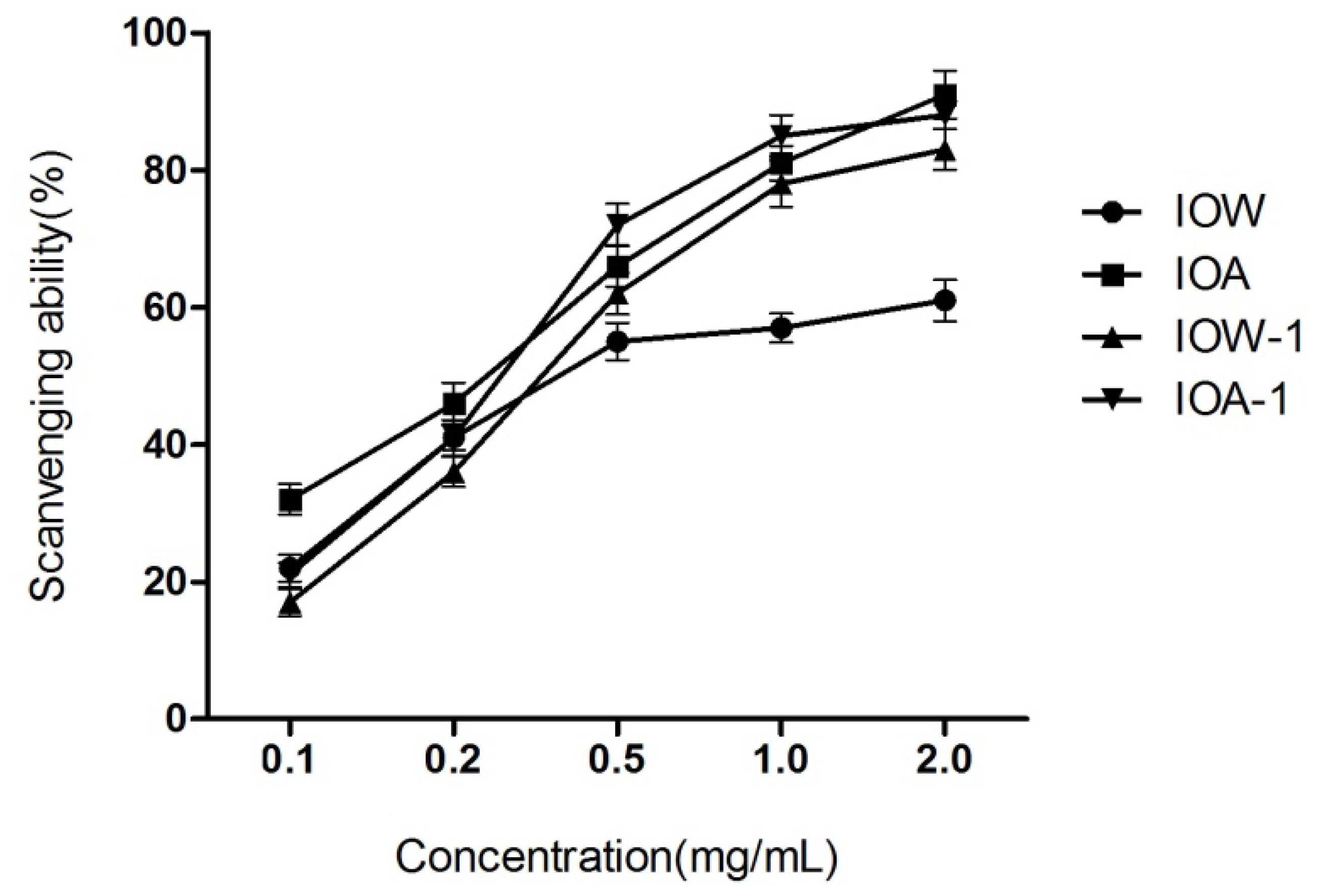
<p>DPPH is a well-known radical which demonstrates a strong absorption band centered at about 520 nm, and it becomes colorless or pale yellow when neutralized. DPPH radical is scavenged by antioxidants through the donation of proton forming the reduced DPPH, and is commonly used to evaluate the radical scavenging capacity of antioxidants [<xref ref-type="bibr" rid="b22-ijms-13-09194">22</xref>]. The scavenging activities of IOW, IOW-1, IOA and IOA-1 against the DPPH radical were shown in <xref ref-type="fig" rid="f1-ijms-13-09194">Figure 1</xref>. As observed, all four samples could neutralize the DPPH radical, and this activity was concentration-dependent at the range of 0.1–2.0 mg/mL. In contrast to that in IOA, the existence of protein and pigment in IOW significantly decreased its DPPH radical scavenging activity at a high concentration (&gt;0.5 mg/mL).</p></sec>
<sec>
<title>2.2.2. Hydroxyl Radical Scavenging Activity</title>
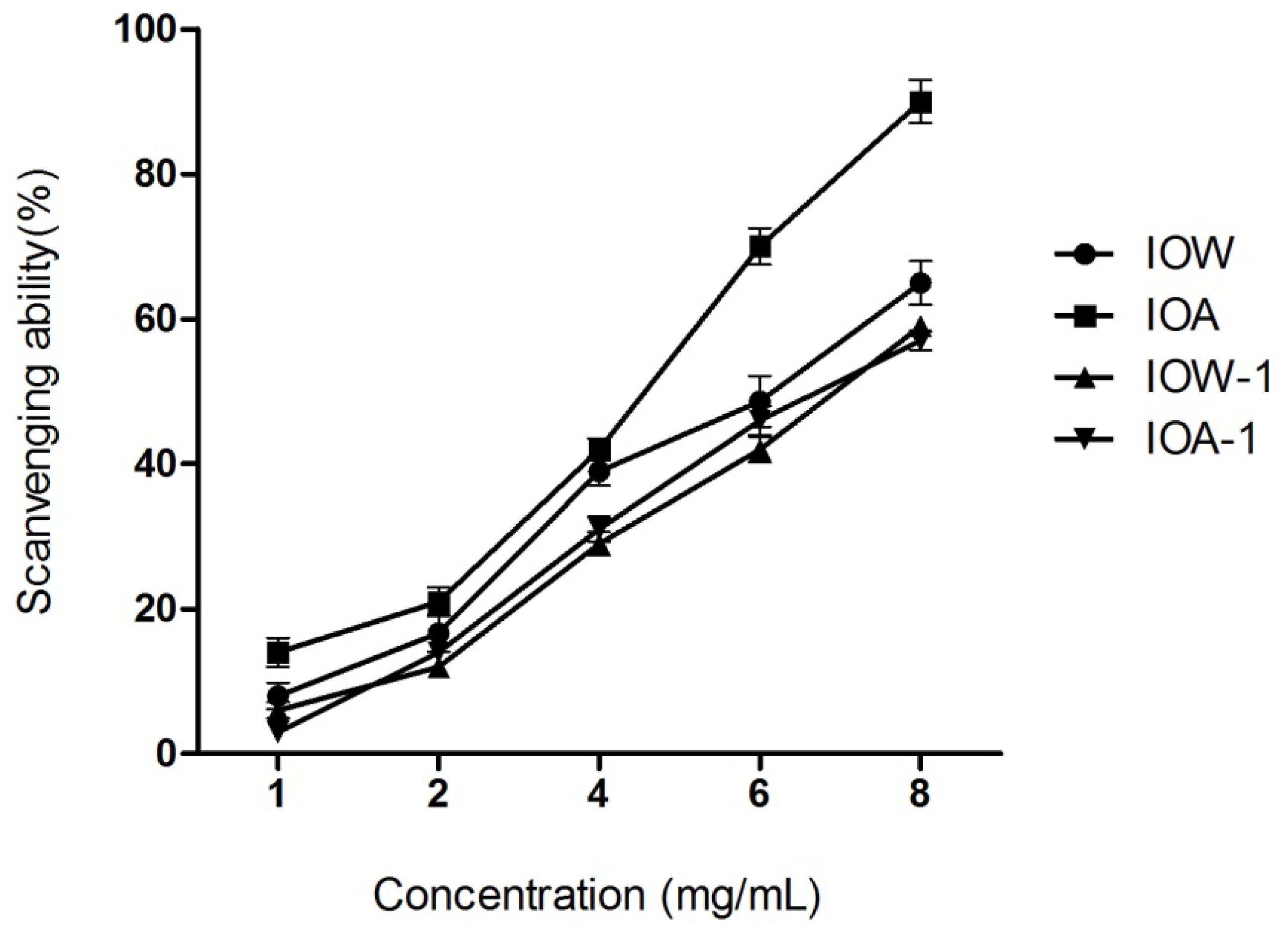
<p>The hydroxyl radical, more likely to be produced <italic>in vivo</italic>, is considered to be the most reactive and poisonous free radical in living organisms. This radical can damage virtually all types of macromolecules including carbohydrates, lipids, proteins, and nucleic acids [<xref ref-type="bibr" rid="b23-ijms-13-09194">23</xref>]. As for carbohydrates, this radical can abstract hydrogen atoms at all ring C–H bonds of aldoses, uronic acids, and other sites on carbohydrates except C-2 of <italic>N</italic>-acetyl hexosamine [<xref ref-type="bibr" rid="b24-ijms-13-09194">24</xref>]. The hydroxyl radical in the cells can easily cross cell membranes at specific sites and cause tissue damage and cell death. Thus, removing hydroxyl radical is very important for the protection of living systems [<xref ref-type="bibr" rid="b25-ijms-13-09194">25</xref>]. As shown in <xref ref-type="fig" rid="f2-ijms-13-09194">Figure 2</xref>, all four samples exhibited obvious scavenging activity on hydroxyl radical in a concentration-dependent pattern. Deproteinization and depigmentation of IOW, but not IOA decreased its hydroxyl radical scavenging effects at the range of 4–8 mg/mL.</p></sec>
<sec>
<title>2.2.3. Superoxide Anion Scavenging Capacity</title>
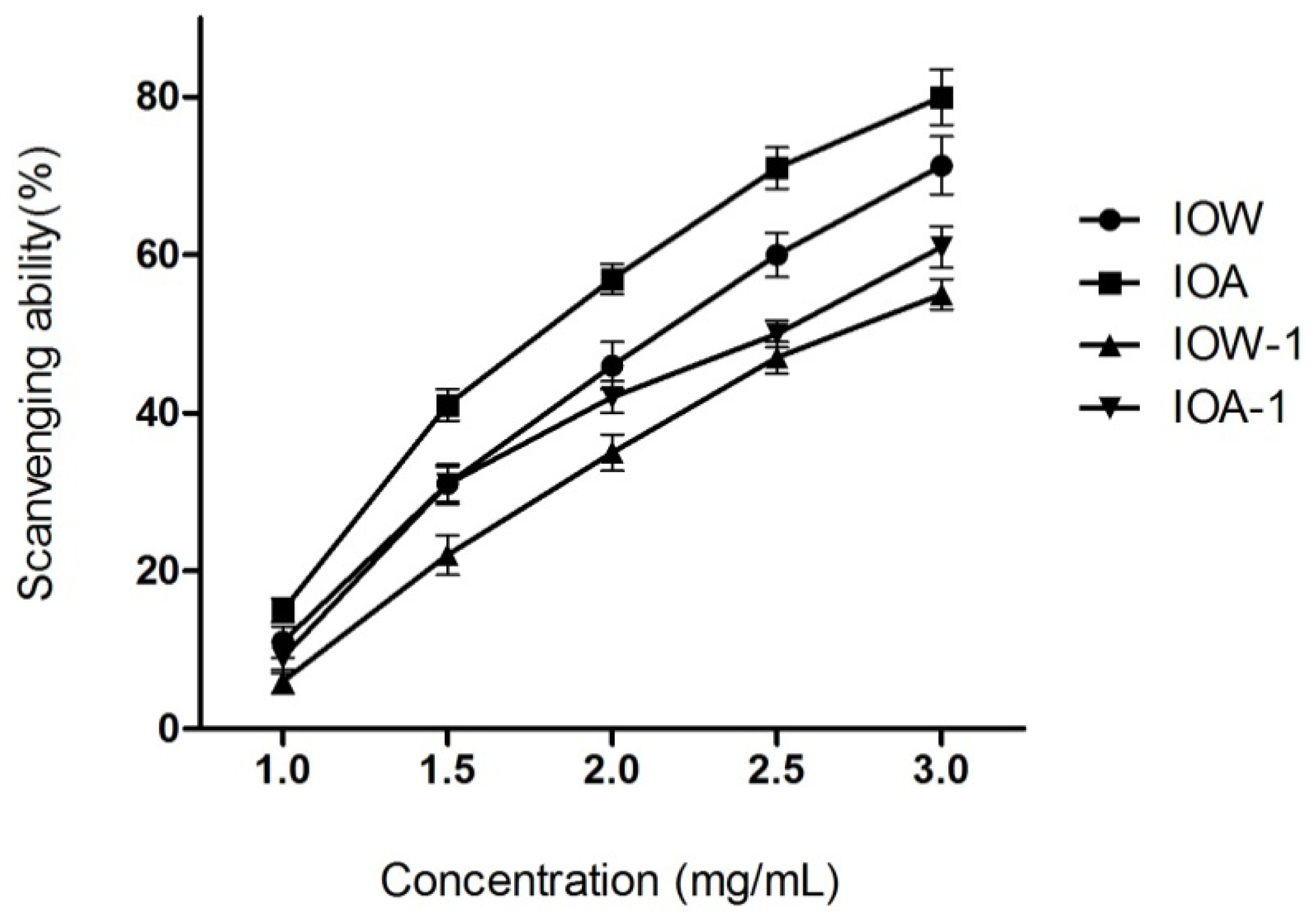
<p>Superoxide anion (O<sub>2</sub><sup>−</sup>), known to be produced <italic>in vivo</italic>, plays important roles in the formation of ROS such as hydrogen peroxide, hydroxyl radical and singlet oxygen, which induces oxidative damage in lipids, proteins and DNA [<xref ref-type="bibr" rid="b26-ijms-13-09194">26</xref>]. All four samples elicited the O<sub>2</sub><sup>−</sup> scavenging activity which followed a dose dependent manner (<xref ref-type="fig" rid="f3-ijms-13-09194">Figure 3</xref>). Furthermore, the protein and pigment in both IOW and IOA increased this scavenging capacity.</p></sec>
<sec>
<title>2.2.4. EC<sub>50</sub> Values</title>
<p>The results above from three different assays indicated that four polysaccharide fractions tested exhibited a noticeable capacity of scavenging DPPH radicals, hydroxyl radicals and superoxide anion. The antioxidant properties assayed herein were summarized in <xref ref-type="table" rid="t2-ijms-13-09194">Table 2</xref> and the results were normalized and expressed as EC<sub>50</sub> values (mg/mL).</p></sec></sec>
<sec>
<title>2.3. Ferric Reducing Power Assay</title>
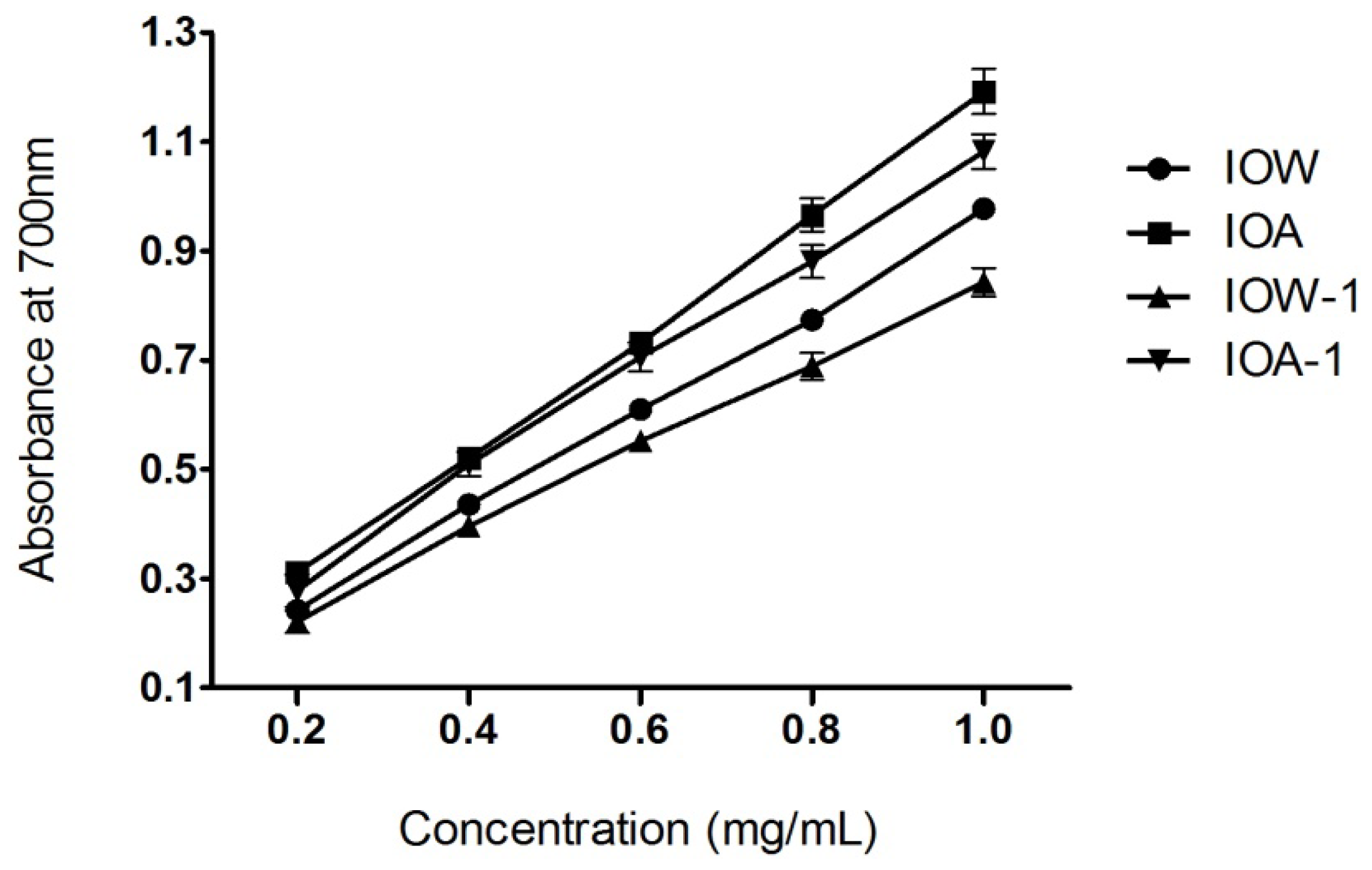
<p>The FRAP (ferric-reducing antioxidant power) assay treats antioxidants contained in the samples as reductants in a redox-linked colormetric reaction, and the value reflects the reducing power of the antioxidants [<xref ref-type="bibr" rid="b27-ijms-13-09194">27</xref>]. The assay is also commonly used for the routine analysis of single antioxidants and total antioxidant activity of plant extracts by measuring Fe<sup>3+</sup>-Fe<sup>2+</sup> conversion. The dose-response curve for the reducing activity of four samples was shown in <xref ref-type="fig" rid="f4-ijms-13-09194">Figure 4</xref>. In addition, the alkali-soluble crude polysaccharide IOA demonstrated a stronger reducing activity than the water soluble crude polysaccharide IOW. This trend still remained after the deproteinization and depigmentation procedure.</p></sec>
<sec>
<title>2.4. Protective Effects on H<sub>2</sub>O<sub>2</sub>-Induced PC12 Cell Death</title>
<p>H<sub>2</sub>O<sub>2</sub> is able to penetrate biological membranes, and plays a radical forming role as an intermediate in the production of more reactive ROS molecules including formation of hydroxyl radical via oxidation of transition metals, and hypochlorous acid by the action of myeloperoxidase, an enzyme present in the phagosomes of neutrophils [<xref ref-type="bibr" rid="b28-ijms-13-09194">28</xref>], H<sub>2</sub>O<sub>2</sub> has been used in many studies to trigger cell apoptosis [<xref ref-type="bibr" rid="b29-ijms-13-09194">29</xref>,<xref ref-type="bibr" rid="b30-ijms-13-09194">30</xref>].</p>
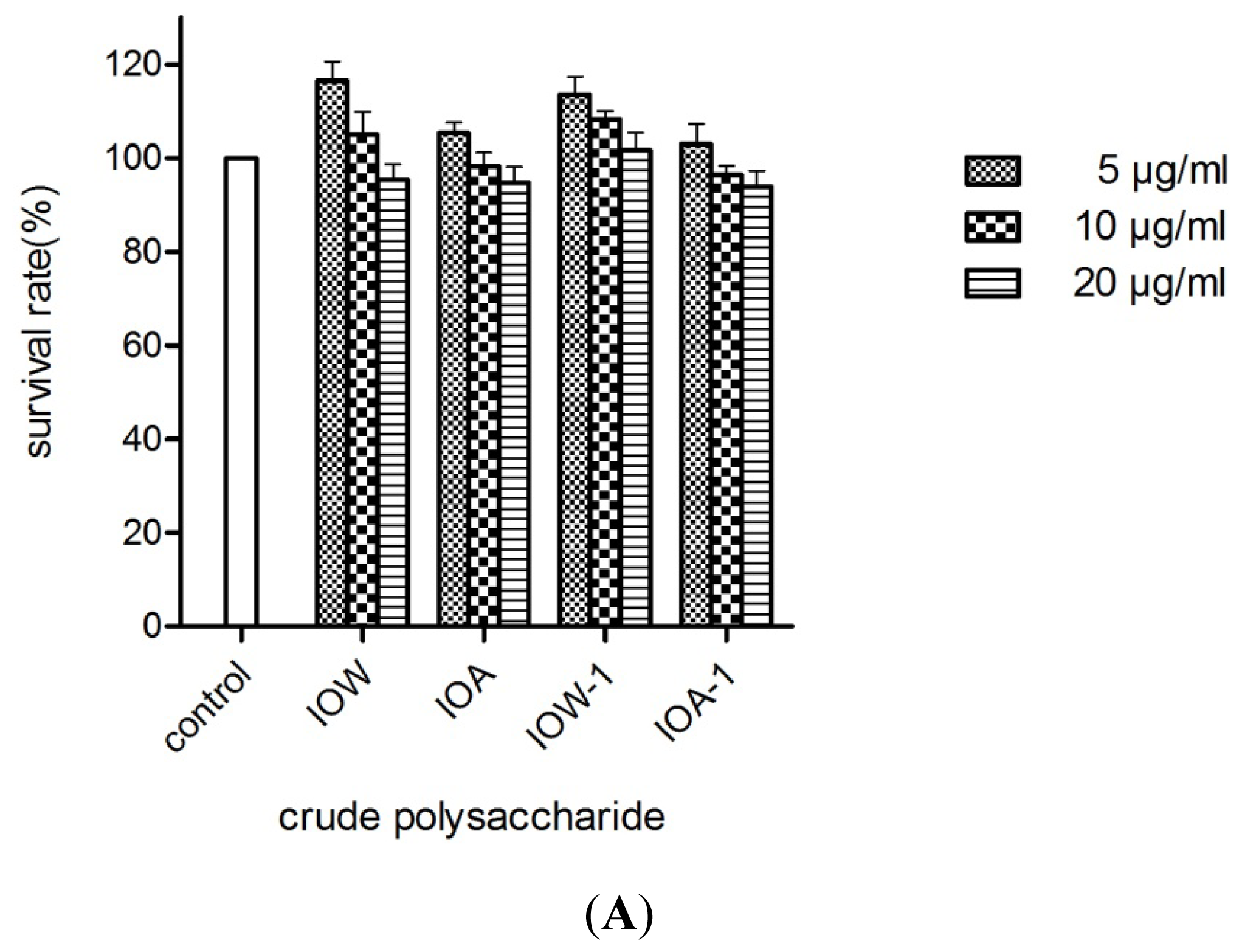
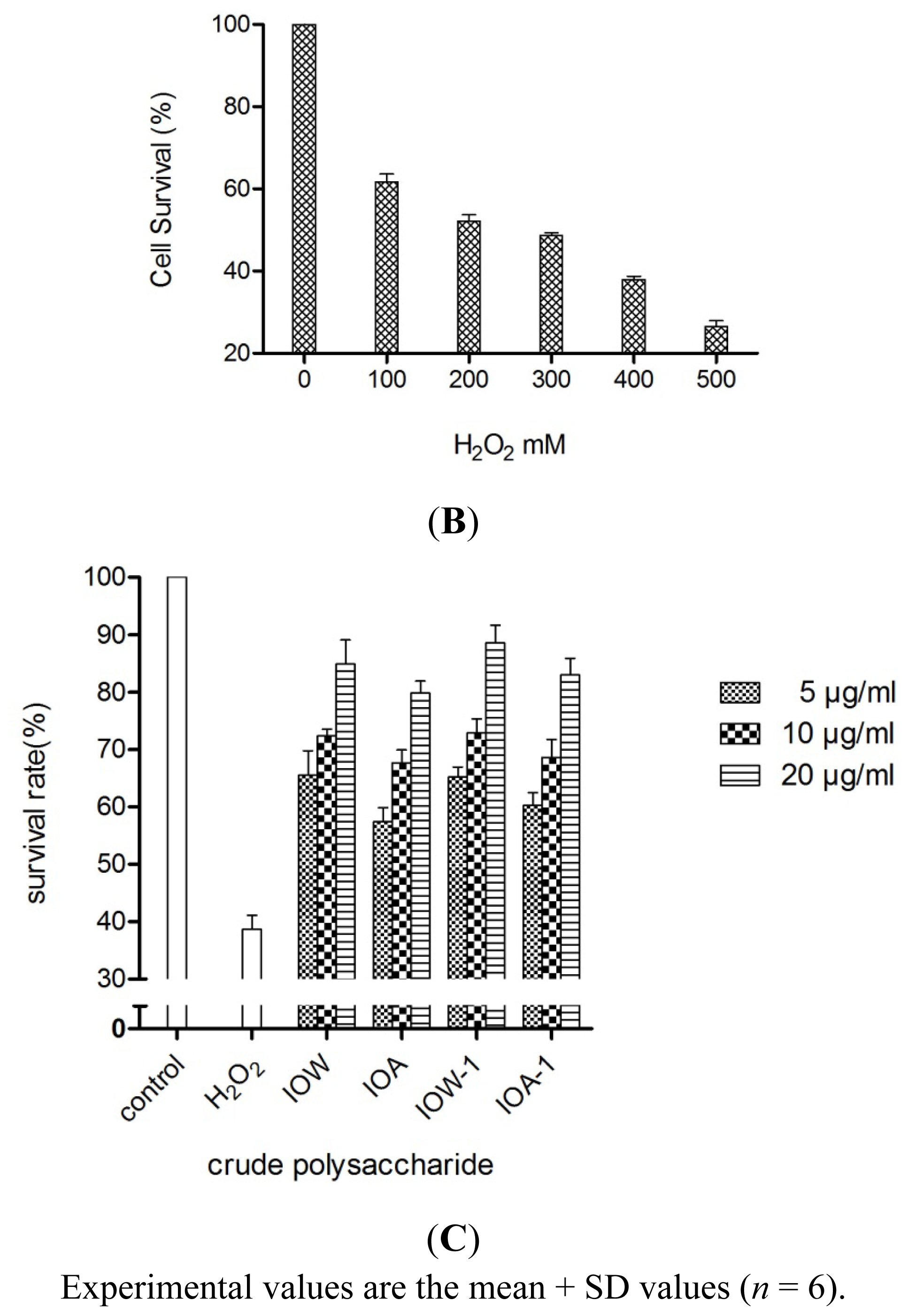
<p>Antioxidants could prevent PC12 cell death through the suppression of H<sub>2</sub>O<sub>2</sub>-induced ROS formation [<xref ref-type="bibr" rid="b30-ijms-13-09194">30</xref>], the regulation of the endogenous oxidant–antioxidant balance [<xref ref-type="bibr" rid="b31-ijms-13-09194">31</xref>], and the alterations in a variety of intracellular signaling pathways such as PI3K/Akt pathway [<xref ref-type="bibr" rid="b32-ijms-13-09194">32</xref>], <italic>etc.</italic> PC12 cells is derived from a pheochromocytoma of the rat adrenal medulla and widely used as a model cell line to assess the protective effects of an antioxidant on H<sub>2</sub>O<sub>2</sub>-induced cell death. Four samples, IOW, IOW-1, IOA or IOA-1 at the dose of 5–20 μg/mL had no significant toxic effects on PC12 cells (<xref ref-type="fig" rid="f5-ijms-13-09194">Figure 5A</xref>). The MTT assay showed that 100–500 μM of H<sub>2</sub>O<sub>2</sub> could result in the PC12 cell death dramatically (<xref ref-type="fig" rid="f5-ijms-13-09194">Figure 5B</xref>). For instance, the incubation of PC12 cells with 400 μM H<sub>2</sub>O<sub>2</sub> for 6 h resulted in a cell viability rate of 38.6% compared to the control (<xref ref-type="fig" rid="f5-ijms-13-09194">Figure 5C</xref>). However, when pretreating the cells with three different concentrations (5, 10, 20 μg/mL) of IOW, IOW-1, IOA or IOA-1, the cell viability was significantly increased by 19–50% (<xref ref-type="fig" rid="f5-ijms-13-09194">Figure 5C</xref>).</p></sec></sec>
<sec sec-type="materials|methods">
<title>3. Materials and Methods</title>
<sec sec-type="materials">
<title>3.1. Materials and Chemicals</title>
<p>The sclerotia of <italic>I. obliquus</italic> were purchased from Heilongjiang Beiqishen High-Tech Health Products Co., Ltd, Helongjiang Province, China. Dulbecco’s modified Eagle’s medium (DMEM) was purchased from Gibco Ltd. (Grand Island, NY, USA) and fetal bovine serum (FBS) was from Hyclone (Logan, UT, USA). 1,1′-Diphenyl-2-picrylhydrazyl (DPPH) and MTT (3-(4,5-dimethylthiazol-2-yl)-2,5-diphenyl tetrazolium bromide) were obtained from Sigma Co.(St. Louis, MO, USA). All other chemicals and reagents were of analytical grade as available.</p></sec>
<sec>
<title>3.2. Preparation of Crude Polysaccharides from <italic>I. obliquus</italic></title>
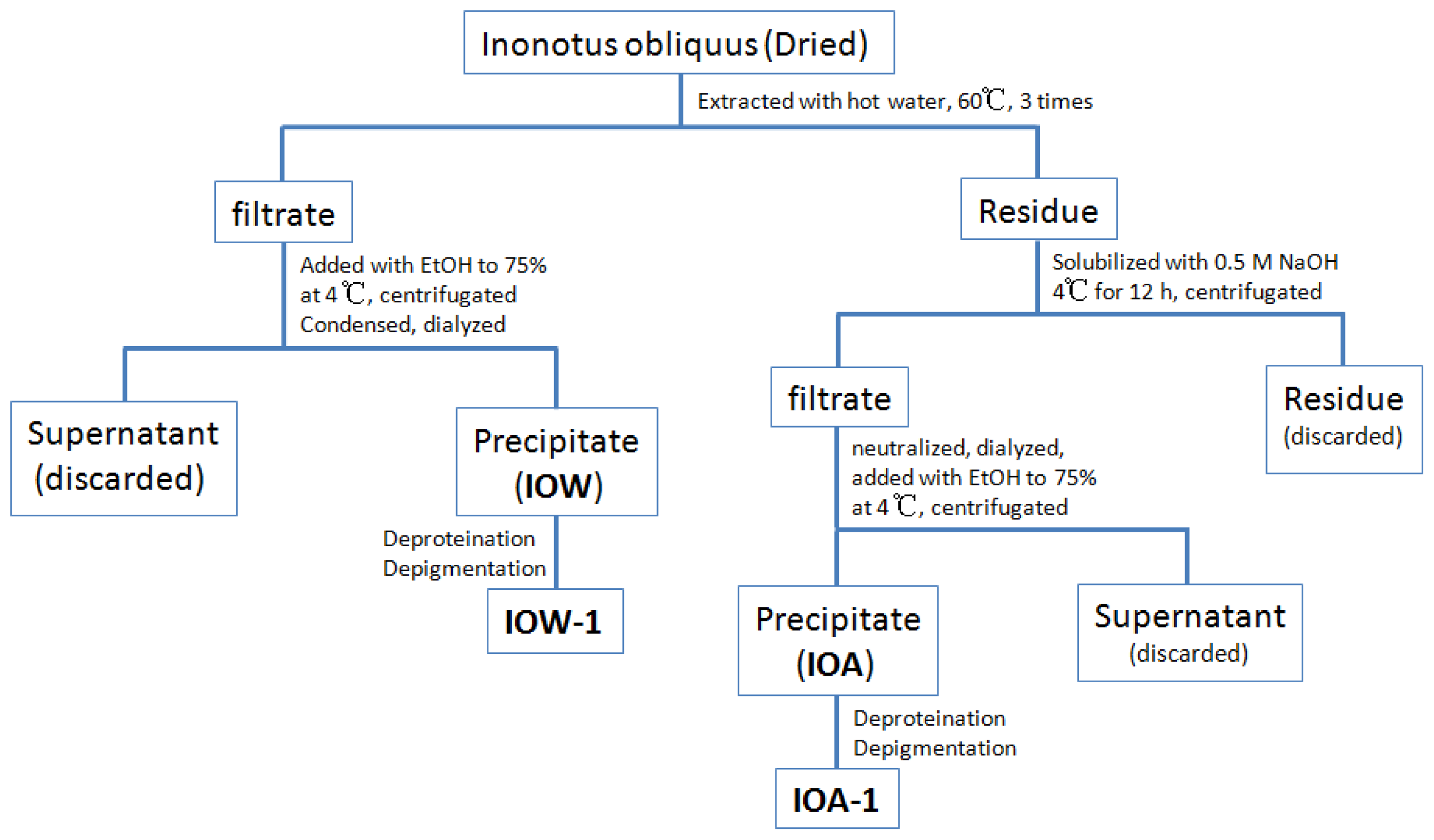
<p>As shown in <xref ref-type="fig" rid="f6-ijms-13-09194">Figure 6</xref>, the powder of <italic>I. obliquus</italic> was extracted three times with water at 60 °C for 4 h. The extract was centrifuged at 4000 r/min for 20 min, and the supernatant was combined, dialyzed (Spectra/Por RC dialysis membrane, MW cutoff 3500 Da), and then concentrated. Three volumes of 95% ethanol were added to precipitate polysaccharides at 4 °C overnight. The precipitate was collected after centrifugation at 4000 r/min for 10min, washed with absolute acetone and then air dried (35 °C) to yield the water soluble polysaccharide designed as IOW. The residue after water extraction was extracted with 0.5 M NaOH at 4 °C for 12 h. After the supernatant was neutralized with HCl, the alkali-soluble polysaccharide IOA was finally obtained according to the similar procedures as described above.</p>
<p>The polysaccharides (IOW and IOA) were dealt with deproteinization and depigmentation, yielding IOW-1 and IOA-1. Sevag reagent as a chemical method was used in the deproteinization and hydrogen peroxide in depigmentation. In brief, IOW and IOA were treated by Sevag reagent (the ratio of IOW and IOA to Sevag reagent was 3:1) CHCl<sub>3</sub>−nBuOH (v/v = 4:1) seven times to deproteinize.</p></sec>
<sec>
<title>3.3. Properties of Crude Polysaccharides</title>
<sec>
<title>3.3.1. Determination of Total Neutral Carbohydrate Contents</title>
<p>The carbohydrate contents were determined with a slightly modified phenol-sulphuric acid method [<xref ref-type="bibr" rid="b33-ijms-13-09194">33</xref>]. Briefly, 400 μL of sample solution, 400 μL 5% phenol, and 2mL of concentrated sulphuric acid were mixed and shaken. After the mixture was kept at room temperature for 30 min, the absorbance was measured at 490 nm. The total carbohydrate content was calculated with D-glucose as standard.</p></sec>
<sec>
<title>3.3.2. Determination of Uronic Acid Contents</title>
<p>This was determined according to the method of Blumenkrantz [<xref ref-type="bibr" rid="b34-ijms-13-09194">34</xref>] using <sc>d</sc>-galacturonic acid as standard.</p></sec>
<sec>
<title>3.3.3. Determination of Protein Contents</title>
<p>The total protein content was measured by the method of Bradford [<xref ref-type="bibr" rid="b35-ijms-13-09194">35</xref>], with bovine serum albumin as standard.</p></sec></sec>
<sec>
<title>3.4. Antioxidant Activity Assay</title>
<sec>
<title>3.4.1. DPPH Radical Scavenging Assay</title>
<p>The radical scavenging effects of samples on DPPH radical were estimated as described [<xref ref-type="bibr" rid="b36-ijms-13-09194">36</xref>]. Briefly, sample solution (2 mL) at different concentrations was added to equivalent aliquot DPPH (0.1 mM) in 95% ethanol. The reaction solution was shaken vigorously and incubated at room temperature for 30 min, and the absorbance at 517 nm was measured. Ascorbic acid was used as a positive control.</p>
<p>The DPPH radical scavenging percenta (P) was calculated as follows:</p>
<disp-formula id="FD1">
<mml:math id="mm1" display="block">
<mml:semantics id="sm1">
<mml:mrow>
<mml:mtext>P</mml:mtext>
<mml:mo stretchy="false">(</mml:mo>
<mml:mo>%</mml:mo>
<mml:mo stretchy="false">)</mml:mo>
<mml:mo>=</mml:mo>
<mml:mo stretchy="false">[</mml:mo>
<mml:mn>1</mml:mn>
<mml:mo>-</mml:mo>
<mml:mfrac>
<mml:mrow>
<mml:mtext>Abs</mml:mtext>
<mml:mo stretchy="false">(</mml:mo>
<mml:mtext>sample</mml:mtext>
<mml:mo stretchy="false">)</mml:mo>
<mml:mo>-</mml:mo>
<mml:mtext>Abs</mml:mtext>
<mml:mo stretchy="false">(</mml:mo>
<mml:mtext>control</mml:mtext>
<mml:mo stretchy="false">)</mml:mo></mml:mrow>
<mml:mrow>
<mml:mtext>Abs</mml:mtext>
<mml:mo stretchy="false">(</mml:mo>
<mml:mtext>blank</mml:mtext>
<mml:mo stretchy="false">)</mml:mo></mml:mrow></mml:mfrac>
<mml:mo stretchy="false">]</mml:mo>
<mml:mo>×</mml:mo>
<mml:mn>100</mml:mn></mml:mrow></mml:semantics></mml:math></disp-formula>
<p>where the control solution contains equivalent distilled water instead of the DPPH solution, while distilled water instead of sample was used for the blank. All tests were performed in triplicate and the mean of Abs was used in the equation above.</p></sec>
<sec>
<title>3.4.2. Hydroxyl Radical Scavenging Assay</title>
<p>This was determined according to the literature [<xref ref-type="bibr" rid="b37-ijms-13-09194">37</xref>]. 0.5 mL of salicylic acid-ethanol solution (9.1 mM), 0.5 mL of sample solution at different concentrations, 0.5 mL of FeSO<sub>4</sub> solution (9.1 mM) and 3.0 mL of distilled water were successively mixed in a tube. The reaction was initiated by the addition of 3.0 mL H<sub>2</sub>O<sub>2</sub> (8.8 mM) to the mixture above, and the absorbance at 510 nm was read. The hydroxyl radical scavenging activity percentage (P) was calculated as follows:</p>
<disp-formula id="FD2">
<mml:math id="mm2" display="block">
<mml:semantics id="sm2">
<mml:mrow>
<mml:mtext>P</mml:mtext>
<mml:mo stretchy="false">(</mml:mo>
<mml:mo>%</mml:mo>
<mml:mo stretchy="false">)</mml:mo>
<mml:mo>=</mml:mo>
<mml:mo stretchy="false">[</mml:mo>
<mml:mn>1</mml:mn>
<mml:mo>-</mml:mo>
<mml:mfrac>
<mml:mrow>
<mml:mtext>Abs</mml:mtext>
<mml:mo stretchy="false">(</mml:mo>
<mml:mtext>sample</mml:mtext>
<mml:mo stretchy="false">)</mml:mo>
<mml:mo>-</mml:mo>
<mml:mtext>Abs</mml:mtext>
<mml:mo stretchy="false">(</mml:mo>
<mml:mtext>control</mml:mtext>
<mml:mo stretchy="false">)</mml:mo></mml:mrow>
<mml:mrow>
<mml:mtext>Abs</mml:mtext>
<mml:mo stretchy="false">(</mml:mo>
<mml:mtext>blank</mml:mtext>
<mml:mo stretchy="false">)</mml:mo></mml:mrow></mml:mfrac>
<mml:mo stretchy="false">]</mml:mo>
<mml:mo>×</mml:mo>
<mml:mn>100</mml:mn></mml:mrow></mml:semantics></mml:math></disp-formula>
<p>where the distilled water instead of H<sub>2</sub>O<sub>2</sub> was used for the control, while distilled water instead of sample was used for the blank. All tests were performed in triplicate and the mean of Abs was used in the equation above.</p></sec>
<sec>
<title>3.4.3. Superoxide Anion Scavenging Capacity</title>
<p>Pyrogallol (1,2,3-benzenetriol) can autoxidize rapidly, especially in alkaline solution, and produce superoxide anion [<xref ref-type="bibr" rid="b38-ijms-13-09194">38</xref>]. The scavenging capabilities of all samples were determined according to the method of Marklund [<xref ref-type="bibr" rid="b39-ijms-13-09194">39</xref>]. Different concentrations of sample solution (0.1 mL) were mixed with 2.5 mL of Tris-HCl buffer (pH 7.8, 50 mM) containing 1 mM EDTA. After 20 min at room temperature, 0.4 mL of pyrogallol (7 mM) was added and the mixture was shaken rapidly. The absorbance of the mixture was measured at 420 nm per 30 s for 4 min, and the slope was calculated as k (abs/min). The scavenging activity was calculated as follows:</p>
<disp-formula id="FD3">
<mml:math id="mm3" display="block">
<mml:semantics id="sm3">
<mml:mrow>
<mml:mtext>P</mml:mtext>
<mml:mo stretchy="false">(</mml:mo>
<mml:mo>%</mml:mo>
<mml:mo stretchy="false">)</mml:mo>
<mml:mo>=</mml:mo>
<mml:mn>1</mml:mn>
<mml:mo>-</mml:mo>
<mml:mfrac>
<mml:mrow>
<mml:mtext>k</mml:mtext>
<mml:mo stretchy="false">(</mml:mo>
<mml:mtext>sample</mml:mtext>
<mml:mo stretchy="false">)</mml:mo>
<mml:mo>-</mml:mo>
<mml:mtext>k</mml:mtext>
<mml:mo stretchy="false">(</mml:mo>
<mml:mtext>blank</mml:mtext>
<mml:mo stretchy="false">)</mml:mo></mml:mrow>
<mml:mrow>
<mml:mtext>k</mml:mtext>
<mml:mo stretchy="false">(</mml:mo>
<mml:mtext>control</mml:mtext>
<mml:mo stretchy="false">)</mml:mo></mml:mrow></mml:mfrac>
<mml:mo stretchy="false">]</mml:mo>
<mml:mo>×</mml:mo>
<mml:mn>100</mml:mn></mml:mrow></mml:semantics></mml:math></disp-formula>
<p>where the mixture without samples was the control and the mixture without pyrogallol was the blank. Ascorbic acid was used as the positive control.</p></sec>
<sec>
<title>3.4.4. Ferric Reducing Power Assay</title>
<p>The reducing power was determined as described [<xref ref-type="bibr" rid="b40-ijms-13-09194">40</xref>] with a slight modification. 0.5 mL of sample solutions at different concentration were mixed with 0.5 mL of phosphate buffer (0.2 M, pH 6.6) and 0.5 mL of potassium ferricyanide (1%, w/v). The mixture was incubated at 50 °C for 20 min, and then 0.5 mL of trichloroacetic acid (10%, w/v) was added. After centrifuged at 3000 rpm for 10 min, the upper layer (1 mL) was mixed with deionized water (1 mL) and ferric chloride (0.2 mL, 0.1%), and the absorbance was measured at 700 nm.</p></sec></sec>
<sec>
<title>3.5. Cell Cytotoxicity and Protective Effects on H<sub>2</sub>O<sub>2</sub>-Induced PC12 Cell Death</title>
<p>These were evaluated <italic>in vitro</italic> using the MTT assay [<xref ref-type="bibr" rid="b41-ijms-13-09194">41</xref>]. PC12 cells were cultured in DMEM (High Glucose) medium supplemented with 10% fetal bovine serum (FBS), 100 U/mL penicillin and 100 μg/mL streptomycin. To check the cell cytotoxicity, cell suspensions were seeded in 96-well plates (1 × 10<sup>5</sup> /well), and incubated at 37 °C for 12 h, and the sample was added. After 6 h, 20 μL of the MTT stock solution (5 mg/mL) were added into each well and the plate was further incubated for 4 h. Finally, the medium was removed and DMSO (200 μL) was added to each well to dissolve the formazan. After 10 min, the absorbance was measured at 570 nm in a microtitre plate reader. For protective assay, samples were added to the cultured cells and incubated for 30 min before the addition of H<sub>2</sub>O<sub>2</sub> (final concentration 400 μM, 6 h), other procedures were same as above. Assays were performed in quadruplet wells for each sample. Data were expressed as the percent of cell viability compared with control (mean ± SD).</p></sec></sec>
<sec sec-type="conclusions">
<title>4. Conclusions</title>
<p>In this study, the water-soluble and alkali-soluble polysaccharides, IOW and IOA were isolated from <italic>I. obliquus.</italic> After deproteination and depigmatation, the carbohydrate-rich fractions IOW-1 and IOA-1 were obtained. Their chemical compositions were determined by colorimetric methods, and their antioxidative properties were evaluated by chemicals-induced ROS assays including radical-scavenging activity (DPPH, hydroxyl radical superoxide anion) and ferric-reducing antioxidant power assay. In addition, their protective effects on H<sub>2</sub>O<sub>2</sub>-induced PC12 cell death were explored. Results indicated that <italic>I. obliquus</italic> polysaccharides possess multiple radical scavenging activities in a dose-dependent manner and protect PC12 cells from H<sub>2</sub>O<sub>2</sub>-induced death. These antioxidant activities might account, at least in part, for the pharmaceutical effects of <italic>I. obliquus.</italic></p></sec></body>
<back>
<ack>
<title>Acknowledgments</title>
<p>This work was supported by special talent recruitment fund of Northwest A&amp;F University and the Fundamental Research Funds for the Central Universities (to J.D). Sincere thanks to Meng Zhao for help with some experiments.</p></ack>
<fn-group><fn id="fn1-ijms-13-09194">
<p><bold>Conflict of Interest</bold></p>
<p>The authors declare no conflict of interest.</p></fn></fn-group>
<ref-list>
<title>References</title>
<ref id="b1-ijms-13-09194"><label>1</label><citation citation-type="journal"><person-group person-group-type="author"><name><surname>Kim</surname><given-names>Y.O.</given-names></name><name><surname>Park</surname><given-names>H.W.</given-names></name><name><surname>Kim</surname><given-names>J.H.</given-names></name><name><surname>Lee</surname><given-names>J.Y.</given-names></name><name><surname>Moon</surname><given-names>S.H.</given-names></name><name><surname>Shin</surname><given-names>C.S.</given-names></name></person-group><article-title>Anti-cancer effect and structural characterization of endo-polysaccharide from cultivated mycelia of Inonotus obliquus</article-title><source>Life Sci</source><year>2006</year><volume>79</volume><fpage>72</fpage><lpage>80</lpage><pub-id pub-id-type="doi">10.1016/j.lfs.2005.12.047</pub-id><pub-id pub-id-type="pmid">16458328</pub-id></citation></ref>
<ref id="b2-ijms-13-09194"><label>2</label><citation citation-type="journal"><person-group person-group-type="author"><name><surname>Sun</surname><given-names>J.E.</given-names></name><name><surname>Ao</surname><given-names>Z.H.</given-names></name><name><surname>Lu</surname><given-names>Z.M.</given-names></name><name><surname>Xu</surname><given-names>H.Y.</given-names></name><name><surname>Zhang</surname><given-names>X.M.</given-names></name><name><surname>Dou</surname><given-names>W.F.</given-names></name><name><surname>Xu</surname><given-names>Z.H.</given-names></name></person-group><article-title>Antihyperglycemic and antilipidperoxidative effects of dry matter of culture broth of Inonotus obliquus in submerged culture on normal and alloxan-diabetes mice</article-title><source>J. Ethnopharmacol</source><year>2008</year><volume>118</volume><fpage>7</fpage><lpage>13</lpage><pub-id pub-id-type="doi">10.1016/j.jep.2008.02.030</pub-id><pub-id pub-id-type="pmid">18434051</pub-id></citation></ref>
<ref id="b3-ijms-13-09194"><label>3</label><citation citation-type="journal"><person-group person-group-type="author"><name><surname>Lindequist</surname><given-names>U.</given-names></name><name><surname>Niedermeyer</surname><given-names>T.H.J.</given-names></name><name><surname>Jülich</surname><given-names>W.-D.</given-names></name></person-group><article-title>The pharmacological potential of mushrooms</article-title><source>Evid. Based Complement. Altern. Med</source><year>2005</year><volume>2</volume><fpage>285</fpage><lpage>299</lpage><pub-id pub-id-type="doi">10.1093/ecam/neh107</pub-id></citation></ref>
<ref id="b4-ijms-13-09194"><label>4</label><citation citation-type="journal"><person-group person-group-type="author"><name><surname>Chen</surname><given-names>Y.</given-names></name><name><surname>Gu</surname><given-names>X.</given-names></name><name><surname>Huang</surname><given-names>S.-Q.</given-names></name><name><surname>Li</surname><given-names>J.</given-names></name><name><surname>Wang</surname><given-names>X.</given-names></name><name><surname>Tang</surname><given-names>J.</given-names></name></person-group><article-title>Optimization of ultrasonic/microwave assisted extraction (UMAE) of polysaccharides from Inonotus obliquus and evaluation of its anti-tumor activities</article-title><source>Int. J. Biol. Macromol</source><year>2010</year><volume>46</volume><fpage>429</fpage><lpage>435</lpage><pub-id pub-id-type="doi">10.1016/j.ijbiomac.2010.02.003</pub-id><pub-id pub-id-type="pmid">20149817</pub-id></citation></ref>
<ref id="b5-ijms-13-09194"><label>5</label><citation citation-type="journal"><person-group person-group-type="author"><name><surname>Rzymowska</surname><given-names>J.</given-names></name></person-group><article-title>The effect of aqueous extracts from Inonotus obliquus on the mitotic index and enzyme activities</article-title><source>Boll. Chim. Farm</source><year>1998</year><volume>137</volume><fpage>13</fpage><lpage>15</lpage><pub-id pub-id-type="pmid">9595828</pub-id></citation></ref>
<ref id="b6-ijms-13-09194"><label>6</label><citation citation-type="journal"><person-group person-group-type="author"><name><surname>Song</surname><given-names>Y.</given-names></name><name><surname>Hui</surname><given-names>J.</given-names></name><name><surname>Kou</surname><given-names>W.</given-names></name><name><surname>Xin</surname><given-names>R.</given-names></name><name><surname>Jia</surname><given-names>F.</given-names></name><name><surname>Wang</surname><given-names>N.</given-names></name><name><surname>Hu</surname><given-names>F.</given-names></name><name><surname>Zhang</surname><given-names>H.</given-names></name><name><surname>Liu</surname><given-names>H.</given-names></name></person-group><article-title>Identification of inonotus obliquus and analysis of antioxidation and antitumor activities of polysaccharides</article-title><source>Curr. Microbiol</source><year>2008</year><volume>57</volume><fpage>454</fpage><lpage>462</lpage><pub-id pub-id-type="doi">10.1007/s00284-008-9233-6</pub-id><pub-id pub-id-type="pmid">18795365</pub-id></citation></ref>
<ref id="b7-ijms-13-09194"><label>7</label><citation citation-type="journal"><person-group person-group-type="author"><name><surname>Kukulyanskaya</surname><given-names>T.A.</given-names></name><name><surname>Kurchenko</surname><given-names>N.V.</given-names></name><name><surname>Kurchenko</surname><given-names>V.P.</given-names></name><name><surname>Babitskaya</surname><given-names>V.G.</given-names></name></person-group><article-title>Physicochemical properties of melanins produced by the sterile form of inonotus obliquus(“chaga”) in natural and cultivated fungus</article-title><source>Appl. Biochem. Microbiol</source><year>2002</year><volume>38</volume><fpage>58</fpage><lpage>61</lpage><pub-id pub-id-type="doi">10.1023/A:1013204706055</pub-id></citation></ref>
<ref id="b8-ijms-13-09194"><label>8</label><citation citation-type="journal"><person-group person-group-type="author"><name><surname>Wasser</surname><given-names>S.P.</given-names></name><name><surname>Weis</surname><given-names>A.L.</given-names></name></person-group><article-title>Therapeutic effects of substances occurring in higher Basidiomycetes mushrooms: A modern perspective</article-title><source>Crit. Rev. Immunol</source><year>1999</year><volume>19</volume><fpage>65</fpage><lpage>96</lpage><pub-id pub-id-type="pmid">9987601</pub-id></citation></ref>
<ref id="b9-ijms-13-09194"><label>9</label><citation citation-type="journal"><person-group person-group-type="author"><name><surname>Park</surname><given-names>E.</given-names></name><name><surname>Jeon</surname><given-names>K.-.I.</given-names></name><name><surname>Byun</surname><given-names>B.-H.</given-names></name></person-group><article-title>Ethanol extract of Chaga shows antigenotoxic effect on hydrogen peroxide induced DNA damage in human lymphocytes</article-title><source>Cancer Prev. Res</source><year>2005</year><volume>10</volume><fpage>54</fpage><lpage>59</lpage></citation></ref>
<ref id="b10-ijms-13-09194"><label>10</label><citation citation-type="journal"><person-group person-group-type="author"><name><surname>Fu</surname><given-names>L.</given-names></name><name><surname>Chen</surname><given-names>H.</given-names></name><name><surname>Dong</surname><given-names>P.</given-names></name><name><surname>Zhang</surname><given-names>X.</given-names></name><name><surname>Zhang</surname><given-names>M.</given-names></name></person-group><article-title>Effects of ultrasonic treatment on the physicochemical properties and DPPH radical scavenging activity of polysaccharides from mushroom Inonotus obliquus</article-title><source>J. Food Sci</source><year>2010</year><volume>75</volume><fpage>C322</fpage><lpage>C327</lpage><pub-id pub-id-type="doi">10.1111/j.1750-3841.2010.01590.x</pub-id><pub-id pub-id-type="pmid">20546389</pub-id></citation></ref>
<ref id="b11-ijms-13-09194"><label>11</label><citation citation-type="journal"><person-group person-group-type="author"><name><surname>Kim</surname><given-names>Y.O.</given-names></name><name><surname>Han</surname><given-names>S.B.</given-names></name><name><surname>Lee</surname><given-names>H.W.</given-names></name><name><surname>Ahn</surname><given-names>H.J.</given-names></name><name><surname>Yoon</surname><given-names>Y.D.</given-names></name><name><surname>Jung</surname><given-names>J.K.</given-names></name><name><surname>Kim</surname><given-names>H.M.</given-names></name><name><surname>Shin</surname><given-names>C.S.</given-names></name></person-group><article-title>Immuno-stimulating effect of the endo-polysaccharide produced by submerged culture of Inonotus obliquus</article-title><source>Life Sci</source><year>2005</year><volume>77</volume><fpage>2438</fpage><lpage>2456</lpage><pub-id pub-id-type="doi">10.1016/j.lfs.2005.02.023</pub-id><pub-id pub-id-type="pmid">15970296</pub-id></citation></ref>
<ref id="b12-ijms-13-09194"><label>12</label><citation citation-type="journal"><person-group person-group-type="author"><name><surname>Duan</surname><given-names>J.</given-names></name><name><surname>Kasper</surname><given-names>D.L.</given-names></name></person-group><article-title>Oxidative depolymerization of polysaccharides by reactive oxygen/nitrogen species</article-title><source>Glycobiology</source><year>2010</year><volume>21</volume><fpage>401</fpage><lpage>409</lpage><pub-id pub-id-type="pmid">21030538</pub-id></citation></ref>
<ref id="b13-ijms-13-09194"><label>13</label><citation citation-type="journal"><person-group person-group-type="author"><name><surname>Liu</surname><given-names>F.</given-names></name><name><surname>Ng</surname><given-names>T.B.</given-names></name></person-group><article-title>Antioxidative and free radical scavenging activities of selected medicinal herbs</article-title><source>Life Sci</source><year>2000</year><volume>66</volume><fpage>725</fpage><lpage>735</lpage><pub-id pub-id-type="doi">10.1016/S0024-3205(99)00643-8</pub-id><pub-id pub-id-type="pmid">10680580</pub-id></citation></ref>
<ref id="b14-ijms-13-09194"><label>14</label><citation citation-type="journal"><person-group person-group-type="author"><name><surname>Valentao</surname><given-names>P.</given-names></name><name><surname>Fernandes</surname><given-names>E.</given-names></name><name><surname>Carvalho</surname><given-names>F.</given-names></name><name><surname>Andrade</surname><given-names>P.B.</given-names></name><name><surname>Seabra</surname><given-names>R.M.</given-names></name><name><surname>Bastos</surname><given-names>M.L.</given-names></name></person-group><article-title>Antioxidative properties of cardoon (<italic>Cynara cardunculus</italic> L.) infusion against superoxide radical, hydroxyl radical, and hypochlorous acid</article-title><source>J. Agric. Food Chem</source><year>2002</year><volume>50</volume><fpage>4989</fpage><lpage>4993</lpage><pub-id pub-id-type="doi">10.1021/jf020225o</pub-id><pub-id pub-id-type="pmid">12166995</pub-id></citation></ref>
<ref id="b15-ijms-13-09194"><label>15</label><citation citation-type="journal"><person-group person-group-type="author"><name><surname>Luo</surname><given-names>D.</given-names></name></person-group><article-title>Identification of structure and antioxidant activity of a fraction of polysaccharide purified from Dioscorea nipponica Makino</article-title><source>Carbohydr. Polym</source><year>2008</year><volume>71</volume><fpage>544</fpage><lpage>549</lpage><pub-id pub-id-type="doi">10.1016/j.carbpol.2007.06.023</pub-id></citation></ref>
<ref id="b16-ijms-13-09194"><label>16</label><citation citation-type="journal"><person-group person-group-type="author"><name><surname>Wang</surname><given-names>J.</given-names></name><name><surname>Zhang</surname><given-names>Q.</given-names></name><name><surname>Zhang</surname><given-names>Z.</given-names></name><name><surname>Li</surname><given-names>Z.</given-names></name></person-group><article-title>Antioxidant activity of sulfated polysaccharide fractions extracted from Laminaria japonica</article-title><source>Int. J. Biol. Macromol</source><year>2008</year><volume>42</volume><fpage>127</fpage><lpage>132</lpage><pub-id pub-id-type="doi">10.1016/j.ijbiomac.2007.10.003</pub-id><pub-id pub-id-type="pmid">18023861</pub-id></citation></ref>
<ref id="b17-ijms-13-09194"><label>17</label><citation citation-type="journal"><person-group person-group-type="author"><name><surname>Pasanphan</surname><given-names>W.</given-names></name><name><surname>Buettner</surname><given-names>G.R.</given-names></name><name><surname>Chirachanchai</surname><given-names>S.</given-names></name></person-group><article-title>Chitosan gallate as a novel potential polysaccharide antioxidant: an EPR study</article-title><source>Carbohydr. Res</source><year>2010</year><volume>345</volume><fpage>132</fpage><lpage>140</lpage><pub-id pub-id-type="doi">10.1016/j.carres.2009.09.038</pub-id><pub-id pub-id-type="pmid">19889400</pub-id></citation></ref>
<ref id="b18-ijms-13-09194"><label>18</label><citation citation-type="journal"><person-group person-group-type="author"><name><surname>Hongmei</surname><given-names>S.</given-names></name></person-group><article-title>Evaluation of antioxidant activity of polysaccharides isolated from Camellia sinensis (tea) in exhausting training mice</article-title><source>J. Med. Plants Res</source><year>2011</year><volume>5</volume><fpage>791</fpage><lpage>795</lpage></citation></ref>
<ref id="b19-ijms-13-09194"><label>19</label><citation citation-type="journal"><person-group person-group-type="author"><name><surname>Li</surname><given-names>X.M.</given-names></name><name><surname>Ma</surname><given-names>Y.L.</given-names></name><name><surname>Liu</surname><given-names>X.J.</given-names></name></person-group><article-title>Effect of the Lycium barbarum polysaccharides on age-related oxidative stress in aged mice</article-title><source>J. Ethnopharmacol</source><year>2007</year><volume>111</volume><fpage>504</fpage><lpage>511</lpage><pub-id pub-id-type="doi">10.1016/j.jep.2006.12.024</pub-id><pub-id pub-id-type="pmid">17224253</pub-id></citation></ref>
<ref id="b20-ijms-13-09194"><label>20</label><citation citation-type="journal"><person-group person-group-type="author"><name><surname>Diplock</surname><given-names>A.T.</given-names></name></person-group><article-title>Will the “good fairies” please prove to us that vitamin E lessens human degenerative disease?</article-title><source>Free Radic. Res</source><year>1997</year><volume>27</volume><fpage>511</fpage><lpage>532</lpage><pub-id pub-id-type="pmid">9518068</pub-id></citation></ref>
<ref id="b21-ijms-13-09194"><label>21</label><citation citation-type="journal"><person-group person-group-type="author"><name><surname>Xu</surname><given-names>X.</given-names></name><name><surname>Wu</surname><given-names>Y.</given-names></name><name><surname>Chen</surname><given-names>H.</given-names></name></person-group><article-title>Comparative antioxidative characteristics of polysaccharide-enriched extracts from natural sclerotia and cultured mycelia in submerged fermentation of Inonotus obliquus</article-title><source>Food Chem</source><year>2011</year><volume>127</volume><fpage>74</fpage><lpage>79</lpage><pub-id pub-id-type="doi">10.1016/j.foodchem.2010.12.090</pub-id></citation></ref>
<ref id="b22-ijms-13-09194"><label>22</label><citation citation-type="journal"><person-group person-group-type="author"><name><surname>Matthäus</surname><given-names>B.</given-names></name></person-group><article-title>Antioxidant activity of extracts obtained from residues of different oilseeds</article-title><source>J. Agric. Food Chem</source><year>2002</year><volume>50</volume><fpage>3444</fpage><lpage>3452</lpage><pub-id pub-id-type="doi">10.1021/jf011440s</pub-id><pub-id pub-id-type="pmid">12033809</pub-id></citation></ref>
<ref id="b23-ijms-13-09194"><label>23</label><citation citation-type="journal"><person-group person-group-type="author"><name><surname>Reiter</surname><given-names>R.J.</given-names></name><name><surname>Melchiorri</surname><given-names>D.</given-names></name><name><surname>Sewerynek</surname><given-names>E.</given-names></name><name><surname>Poeggeler</surname><given-names>B.</given-names></name><name><surname>Barlow-Walden</surname><given-names>L.</given-names></name><name><surname>Chuang</surname><given-names>J.</given-names></name><name><surname>Ortiz</surname><given-names>G.G.</given-names></name><name><surname>AcuñaCastroviejo</surname><given-names>D.</given-names></name></person-group><article-title>A review of the evidence supporting melatonin’s role as an antioxidant</article-title><source>J. Pineal Res</source><year>1995</year><volume>18</volume><fpage>1</fpage><lpage>11</lpage><pub-id pub-id-type="doi">10.1111/j.1600-079X.1995.tb00133.x</pub-id><pub-id pub-id-type="pmid">7776173</pub-id></citation></ref>
<ref id="b24-ijms-13-09194"><label>24</label><citation citation-type="journal"><person-group person-group-type="author"><name><surname>Duan</surname><given-names>J.</given-names></name><name><surname>Kasper</surname><given-names>D.L.</given-names></name></person-group><article-title>Regulation of T cells by gut commensal microbiota</article-title><source>Curr. Opin. Rheumatol</source><year>2011</year><volume>23</volume><fpage>372</fpage><lpage>376</lpage><pub-id pub-id-type="doi">10.1097/BOR.0b013e3283476d3e</pub-id><pub-id pub-id-type="pmid">21577116</pub-id></citation></ref>
<ref id="b25-ijms-13-09194"><label>25</label><citation citation-type="journal"><person-group person-group-type="author"><name><surname>Luo</surname><given-names>A.</given-names></name><name><surname>Fan</surname><given-names>Y.</given-names></name><name><surname>Luo</surname><given-names>A.</given-names></name></person-group><article-title><italic>In vitro</italic> free radicals scavenging activities of polysaccharide from Polygonum Multiflorum Thunb</article-title><source>J. Med. Plants Res</source><year>2011</year><volume>5</volume><fpage>966</fpage><lpage>972</lpage></citation></ref>
<ref id="b26-ijms-13-09194"><label>26</label><citation citation-type="journal"><person-group person-group-type="author"><name><surname>Muller</surname><given-names>F.L.</given-names></name><name><surname>Lustgarten</surname><given-names>M.S.</given-names></name><name><surname>Jang</surname><given-names>Y.</given-names></name><name><surname>Richardson</surname><given-names>A.</given-names></name><name><surname>van Remmen</surname><given-names>H.</given-names></name></person-group><article-title>Trends in oxidative aging theories</article-title><source>Free Radic. Biol. Med</source><year>2007</year><volume>43</volume><fpage>477</fpage><lpage>503</lpage><pub-id pub-id-type="doi">10.1016/j.freeradbiomed.2007.03.034</pub-id><pub-id pub-id-type="pmid">17640558</pub-id></citation></ref>
<ref id="b27-ijms-13-09194"><label>27</label><citation citation-type="journal"><person-group person-group-type="author"><name><surname>Benzie</surname><given-names>I.F.F.</given-names></name><name><surname>Strain</surname><given-names>J.J.</given-names></name></person-group><article-title>The ferric reducing ability of plasma (FRAP) as a measure of “antioxidant power”: The FRAP assay</article-title><source>Anal. Biochem</source><year>1996</year><volume>239</volume><fpage>70</fpage><lpage>76</lpage><pub-id pub-id-type="doi">10.1006/abio.1996.0292</pub-id><pub-id pub-id-type="pmid">8660627</pub-id></citation></ref>
<ref id="b28-ijms-13-09194"><label>28</label><citation citation-type="journal"><person-group person-group-type="author"><name><surname>Nordberg</surname><given-names>J.</given-names></name><name><surname>Arnér</surname><given-names>E.S.</given-names></name></person-group><article-title>Reactive oxygen species, antioxidants, and the mammalian thioredoxin system</article-title><source>Free Radic. Biol. Med</source><year>2001</year><volume>31</volume><fpage>1287</fpage><lpage>1312</lpage><pub-id pub-id-type="doi">10.1016/S0891-5849(01)00724-9</pub-id><pub-id pub-id-type="pmid">11728801</pub-id></citation></ref>
<ref id="b29-ijms-13-09194"><label>29</label><citation citation-type="journal"><person-group person-group-type="author"><name><surname>Tang</surname><given-names>X.-Q.</given-names></name><name><surname>Feng</surname><given-names>J.-Q.</given-names></name><name><surname>Chen</surname><given-names>J.</given-names></name><name><surname>Chen</surname><given-names>P.-X.</given-names></name><name><surname>Zhi</surname><given-names>J.-L.</given-names></name><name><surname>Cui</surname><given-names>Y.</given-names></name><name><surname>Guo</surname><given-names>R.-X.</given-names></name><name><surname>Yu</surname><given-names>H.-M.</given-names></name></person-group><article-title>Protection of oxidative preconditioning against apoptosis induced by H2O2 in PC12 cells: Mechanisms via MMP, ROS, and Bcl-2</article-title><source>Brain Res</source><year>2005</year><volume>1057</volume><fpage>57</fpage><lpage>64</lpage><pub-id pub-id-type="doi">10.1016/j.brainres.2005.07.072</pub-id><pub-id pub-id-type="pmid">16129420</pub-id></citation></ref>
<ref id="b30-ijms-13-09194"><label>30</label><citation citation-type="journal"><person-group person-group-type="author"><name><surname>Shui</surname><given-names>G.</given-names></name><name><surname>Bao</surname><given-names>Y.-M.</given-names></name><name><surname>Bo</surname><given-names>J.</given-names></name><name><surname>An</surname><given-names>L.-J.</given-names></name></person-group><article-title>Protective effect of protocatechuic acid from Alpinia oxyphylla on hydrogen peroxide-induced oxidative PC12 cell death</article-title><source>Eur. J. Pharmacol</source><year>2006</year><volume>538</volume><fpage>73</fpage><lpage>79</lpage><pub-id pub-id-type="doi">10.1016/j.ejphar.2006.03.065</pub-id><pub-id pub-id-type="pmid">16678817</pub-id></citation></ref>
<ref id="b31-ijms-13-09194"><label>31</label><citation citation-type="journal"><person-group person-group-type="author"><name><surname>Xue</surname><given-names>H.-Y.</given-names></name><name><surname>Gao</surname><given-names>G.-Z.</given-names></name><name><surname>Lin</surname><given-names>Q.-Y.</given-names></name><name><surname>Jin</surname><given-names>L.-J.</given-names></name><name><surname>Xu</surname><given-names>Y.-P.</given-names></name></person-group><article-title>Protective effects of aucubin on H2O2-induced apoptosis in PC12 cells</article-title><source>Phytother. Res</source><year>2012</year><volume>26</volume><fpage>369</fpage><lpage>374</lpage><pub-id pub-id-type="pmid">21728203</pub-id></citation></ref>
<ref id="b32-ijms-13-09194"><label>32</label><citation citation-type="journal"><person-group person-group-type="author"><name><surname>Crispo</surname><given-names>J.A.G.</given-names></name><name><surname>Piché</surname><given-names>M.</given-names></name><name><surname>Ansell</surname><given-names>D.R.</given-names></name><name><surname>Eibl</surname><given-names>J.K.</given-names></name><name><surname>Tai</surname><given-names>I.T.</given-names></name><name><surname>Kumar</surname><given-names>A.</given-names></name><name><surname>Ross</surname><given-names>G.M.</given-names></name><name><surname>Tai</surname><given-names>T.C.</given-names></name></person-group><article-title>Protective effects of methyl gallate on H2O2-induced apoptosis in PC12 cells</article-title><source>Biochem. Biophys. Res. Commun</source><year>2010</year><volume>393</volume><fpage>773</fpage><lpage>778</lpage><pub-id pub-id-type="doi">10.1016/j.bbrc.2010.02.079</pub-id><pub-id pub-id-type="pmid">20171161</pub-id></citation></ref>
<ref id="b33-ijms-13-09194"><label>33</label><citation citation-type="journal"><person-group person-group-type="author"><name><surname>Masuko</surname><given-names>T.</given-names></name><name><surname>Minami</surname><given-names>A.</given-names></name><name><surname>Iwasaki</surname><given-names>N.</given-names></name><name><surname>Majima</surname><given-names>T.</given-names></name><name><surname>Nishimura</surname><given-names>S.</given-names></name><name><surname>Lee</surname><given-names>Y.C.</given-names></name></person-group><article-title>Carbohydrate analysis by a phenol-sulfuric acid method in microplate format</article-title><source>Anal. Biochem</source><year>2005</year><volume>339</volume><fpage>69</fpage><lpage>72</lpage><pub-id pub-id-type="doi">10.1016/j.ab.2004.12.001</pub-id><pub-id pub-id-type="pmid">15766712</pub-id></citation></ref>
<ref id="b34-ijms-13-09194"><label>34</label><citation citation-type="journal"><person-group person-group-type="author"><name><surname>Blumenkrantz</surname><given-names>N.</given-names></name><name><surname>Asboe-Hansen</surname><given-names>G.</given-names></name></person-group><article-title>New method for quantitative determination of uronic acids</article-title><source>Anal. Biochem</source><year>1973</year><volume>54</volume><fpage>484</fpage><lpage>489</lpage><pub-id pub-id-type="doi">10.1016/0003-2697(73)90377-1</pub-id><pub-id pub-id-type="pmid">4269305</pub-id></citation></ref>
<ref id="b35-ijms-13-09194"><label>35</label><citation citation-type="journal"><person-group person-group-type="author"><name><surname>Bradford</surname><given-names>M.M.</given-names></name></person-group><article-title>A rapid and sensitive method for the quantitation of microgram quantities of protein utilizing the principle of protein-dye binding</article-title><source>Anal. Biochem</source><year>1976</year><volume>72</volume><fpage>248</fpage><lpage>254</lpage><pub-id pub-id-type="doi">10.1016/0003-2697(76)90527-3</pub-id><pub-id pub-id-type="pmid">942051</pub-id></citation></ref>
<ref id="b36-ijms-13-09194"><label>36</label><citation citation-type="journal"><person-group person-group-type="author"><name><surname>Xu</surname><given-names>W.</given-names></name><name><surname>Zhang</surname><given-names>F.</given-names></name><name><surname>Luo</surname><given-names>Y.</given-names></name><name><surname>Ma</surname><given-names>L.</given-names></name><name><surname>Kou</surname><given-names>X.</given-names></name><name><surname>Huang</surname><given-names>K.</given-names></name></person-group><article-title>Antioxidant activity of a water-soluble polysaccharide purified from Pteridium aquilinum</article-title><source>Carbohydr. Res</source><year>2009</year><volume>344</volume><fpage>217</fpage><lpage>222</lpage><pub-id pub-id-type="doi">10.1016/j.carres.2008.10.021</pub-id><pub-id pub-id-type="pmid">19036355</pub-id></citation></ref>
<ref id="b37-ijms-13-09194"><label>37</label><citation citation-type="journal"><person-group person-group-type="author"><name><surname>Xiong</surname><given-names>S.L.</given-names></name><name><surname>Li</surname><given-names>A.</given-names></name><name><surname>Huang</surname><given-names>N.</given-names></name><name><surname>Lu</surname><given-names>F.</given-names></name><name><surname>Hou</surname><given-names>D.</given-names></name></person-group><article-title>Antioxidant and immunoregulatory activity of different polysaccharide fractions from tuber of Ophiopogon japonicus</article-title><source>Carbohydr. Polym</source><year>2011</year><volume>86</volume><fpage>1273</fpage><lpage>1280</lpage><pub-id pub-id-type="doi">10.1016/j.carbpol.2011.06.025</pub-id></citation></ref>
<ref id="b38-ijms-13-09194"><label>38</label><citation citation-type="journal"><person-group person-group-type="author"><name><surname>Li</surname><given-names>B.</given-names></name><name><surname>Lu</surname><given-names>F.</given-names></name><name><surname>Suo</surname><given-names>X.</given-names></name><name><surname>Nan</surname><given-names>H.</given-names></name><name><surname>Li</surname><given-names>B.</given-names></name></person-group><article-title>Antioxidant properties of cap and stipe from coprinus comatus</article-title><source>Molecules</source><year>2010</year><volume>15</volume><fpage>1473</fpage><lpage>1486</lpage><pub-id pub-id-type="doi">10.3390/molecules15031473</pub-id><pub-id pub-id-type="pmid">20335995</pub-id></citation></ref>
<ref id="b39-ijms-13-09194"><label>39</label><citation citation-type="journal"><person-group person-group-type="author"><name><surname>Marklund</surname><given-names>S.</given-names></name><name><surname>Marklund</surname><given-names>G.</given-names></name></person-group><article-title>Involvement of the superoxide anion radical in the autoxidation of pyrogallol and a convenient assay for superoxide dismutase</article-title><source>Eur. J. Biochem</source><year>1974</year><volume>47</volume><fpage>469</fpage><lpage>474</lpage><pub-id pub-id-type="doi">10.1111/j.1432-1033.1974.tb03714.x</pub-id><pub-id pub-id-type="pmid">4215654</pub-id></citation></ref>
<ref id="b40-ijms-13-09194"><label>40</label><citation citation-type="journal"><person-group person-group-type="author"><name><surname>Yen</surname><given-names>W.-J.</given-names></name><name><surname>Chang</surname><given-names>L.-W.</given-names></name><name><surname>Duh</surname><given-names>P.-D.</given-names></name></person-group><article-title>Antioxidant activity of peanut seed testa and its antioxidative component, ethyl protocatechuate</article-title><source>LWT Food Sci. Technol</source><year>2005</year><volume>38</volume><fpage>193</fpage><lpage>200</lpage><pub-id pub-id-type="doi">10.1016/j.lwt.2004.06.004</pub-id></citation></ref>
<ref id="b41-ijms-13-09194"><label>41</label><citation citation-type="journal"><person-group person-group-type="author"><name><surname>Lee</surname><given-names>S.-M.</given-names></name><name><surname>Yoon</surname><given-names>M.-Y.</given-names></name><name><surname>Park</surname><given-names>H.-R.</given-names></name></person-group><article-title>Protective effects of paeonia lactiflora pall on hydrogen peroxide-induced apoptosis in PC12 cells</article-title><source>Biosci. Biotechnol. Biochem</source><year>2008</year><volume>72</volume><fpage>1272</fpage><lpage>1277</lpage><pub-id pub-id-type="doi">10.1271/bbb.70756</pub-id><pub-id pub-id-type="pmid">18460804</pub-id></citation></ref></ref-list>
<sec sec-type="display-objects">
<title>Figures and Tables</title>
<fig id="f1-ijms-13-09194" position="float">
<label>Figure 1</label>
<caption>
<p>Scavenging ability on DPPH radicals.</p></caption>
<graphic xlink:href="ijms-13-09194f1.gif"/></fig>
<fig id="f2-ijms-13-09194" position="float">
<label>Figure 2</label>
<caption>
<p>Scavenging ability on hydroxyl radicals.</p></caption>
<graphic xlink:href="ijms-13-09194f2.gif"/></fig>
<fig id="f3-ijms-13-09194" position="float">
<label>Figure 3</label>
<caption>
<p>Scavenging ability on superoxide radicals.</p></caption>
<graphic xlink:href="ijms-13-09194f3.gif"/></fig>
<fig id="f4-ijms-13-09194" position="float">
<label>Figure 4</label>
<caption>
<p>Reducing power.</p></caption>
<graphic xlink:href="ijms-13-09194f4.gif"/></fig>
<fig id="f5-ijms-13-09194" position="float">
<label>Figure 5</label>
<caption>
<p>(<bold>A</bold>) Viability percentages of PC12 cells treated with crude polysaccharides; (<bold>B</bold>) MTT reduction assay of H<sub>2</sub>O<sub>2</sub> cytotoxicity; (<bold>C</bold>) Cell viability of crude polysaccharides on H<sub>2</sub>O<sub>2</sub>-induced death in PC12 cells.</p></caption>
<graphic xlink:href="ijms-13-09194f5a.gif"/>
<graphic xlink:href="ijms-13-09194f5b.gif"/></fig>
<fig id="f6-ijms-13-09194" position="float">
<label>Figure 6</label>
<caption>
<p>Preparation of crude polysaccharides from <italic>I. obliquus</italic>.</p></caption>
<graphic xlink:href="ijms-13-09194f6.gif"/></fig>
<table-wrap id="t1-ijms-13-09194" position="float">
<label>Table 1</label>
<caption>
<p>Major chemical content of the alkaline and water extracts.</p></caption>
<table frame="hsides" rules="groups">
<thead>
<tr>
<th align="left" valign="bottom"/>
<th align="center" valign="bottom">IOA</th>
<th align="center" valign="bottom">IOA-1</th>
<th align="center" valign="bottom">IOW</th>
<th align="center" valign="bottom">IOW-1</th></tr></thead>
<tbody>
<tr>
<td align="left" valign="top">Carbohydrate content (wt.%)</td>
<td align="right" valign="top">22.28 ± 0.31</td>
<td align="right" valign="top">50.13 ± 0.47</td>
<td align="right" valign="top">21.23 ± 0.42</td>
<td align="right" valign="top">61.21 ± 0.29</td></tr>
<tr>
<td align="left" valign="top">Protein content (wt.%)</td>
<td align="right" valign="top">10.60 ± 0.92</td>
<td align="right" valign="top">6.28 ± 0.84</td>
<td align="right" valign="top">14.07 ± 1.05</td>
<td align="right" valign="top">7.69 ± 0.81</td></tr>
<tr>
<td align="left" valign="top">Uronic acid content (wt.%)</td>
<td align="right" valign="top">3.79 ± 0.43</td>
<td align="right" valign="top">4.12 ± 0.51</td>
<td align="right" valign="top">4.60 ± 0.36</td>
<td align="right" valign="top">4.51 ± 0.20</td></tr></tbody></table>
<table-wrap-foot><fn id="tfn1-ijms-13-09194">
<p>Each value is expressed as mean ± SD (<italic>n</italic> = 3).</p></fn></table-wrap-foot></table-wrap>
<table-wrap id="t2-ijms-13-09194" position="float">
<label>Table 2</label>
<caption>
<p>EC<sub>50</sub> values of the extracts from <italic>I. obliquus</italic> in radical scavenging ability.</p></caption>
<table frame="hsides" rules="groups">
<thead>
<tr>
<th colspan="5" align="center" valign="bottom">EC<sub>50</sub> (mg/mL)</th></tr>
<tr>
<th colspan="5" align="left" valign="bottom">
<hr/></th></tr>
<tr>
<th align="left" valign="bottom"/>
<th align="left" valign="bottom">IOW</th>
<th align="left" valign="bottom">IOA</th>
<th align="left" valign="bottom">IOW-1</th>
<th align="left" valign="bottom">IOA-1</th></tr></thead>
<tbody>
<tr>
<td align="left" valign="top">DPPH radicals</td>
<td align="left" valign="top">0.56 ± 0.06</td>
<td align="left" valign="top">0.23 ± 0.03</td>
<td align="left" valign="top">0.37 ± 0.05</td>
<td align="left" valign="top">0.27 ± 0.04</td></tr>
<tr>
<td align="left" valign="top">Hydroxyl radicals</td>
<td align="left" valign="top">5.66 ± 0.34</td>
<td align="left" valign="top">3.44 ± 0.31</td>
<td align="left" valign="top">7.00 ± 0.22</td>
<td align="left" valign="top">6.45 ± 0.17</td></tr>
<tr>
<td align="left" valign="top">Superoxide anion</td>
<td align="left" valign="top">2.12 ± 0.12</td>
<td align="left" valign="top">1.80 ± 0.08</td>
<td align="left" valign="top">2.62 ± 0.07</td>
<td align="left" valign="top">2.39 ± 0.09</td></tr></tbody></table>
<table-wrap-foot><fn id="tfn2-ijms-13-09194">
<p>EC<sub>50</sub> value: The effective concentration at which the antioxidant activity was 50%; Each value is expressed as mean ± SD (<italic>n</italic> = 3).</p></fn></table-wrap-foot></table-wrap></sec></back></article>