
Acidic Polysaccharide Extracts from Gastrodia Rhizomes Suppress the Atherosclerosis Risk Index through Inhibition of the Serum Cholesterol Composition in Sprague Dawley Rats Fed a High-Fat Diet



Abstract
:1. Introduction
2. Results and Discussion
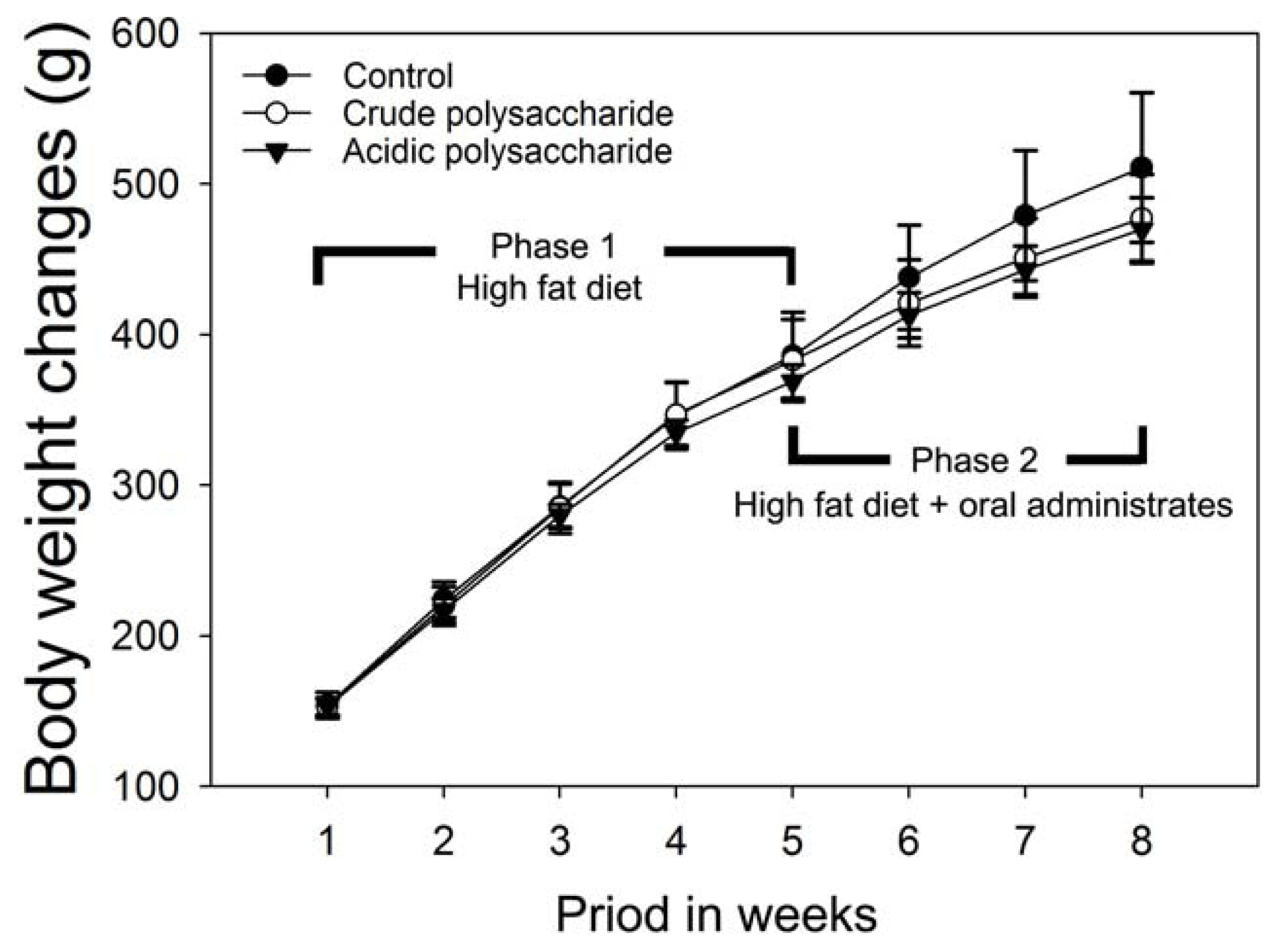
2.1. Body Weights and Food Intake
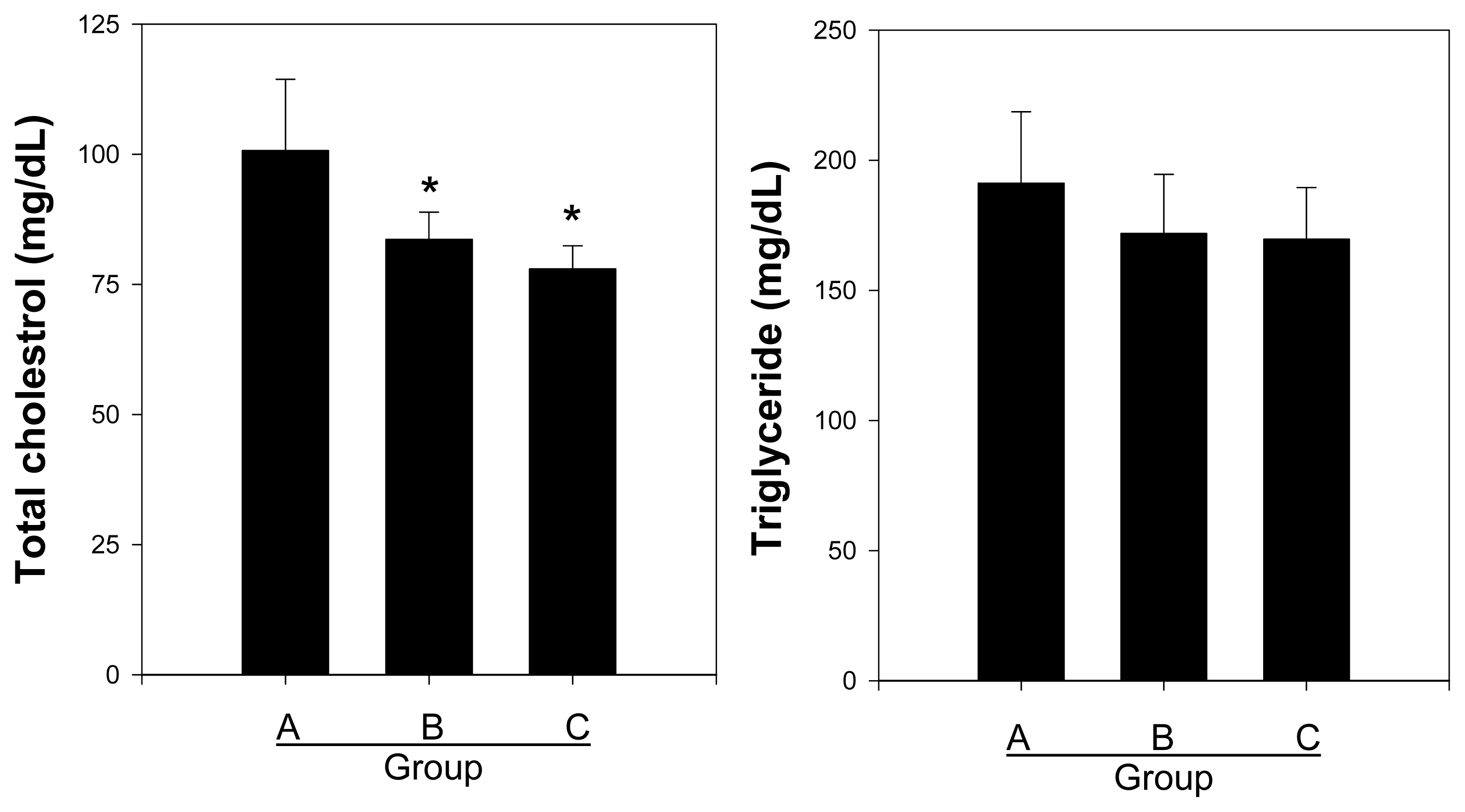
2.2. Effects of the Crude and Acidic Polysaccharides of Gastrodia Rhizomes on the Total Cholesterol and Triglyceride Contents
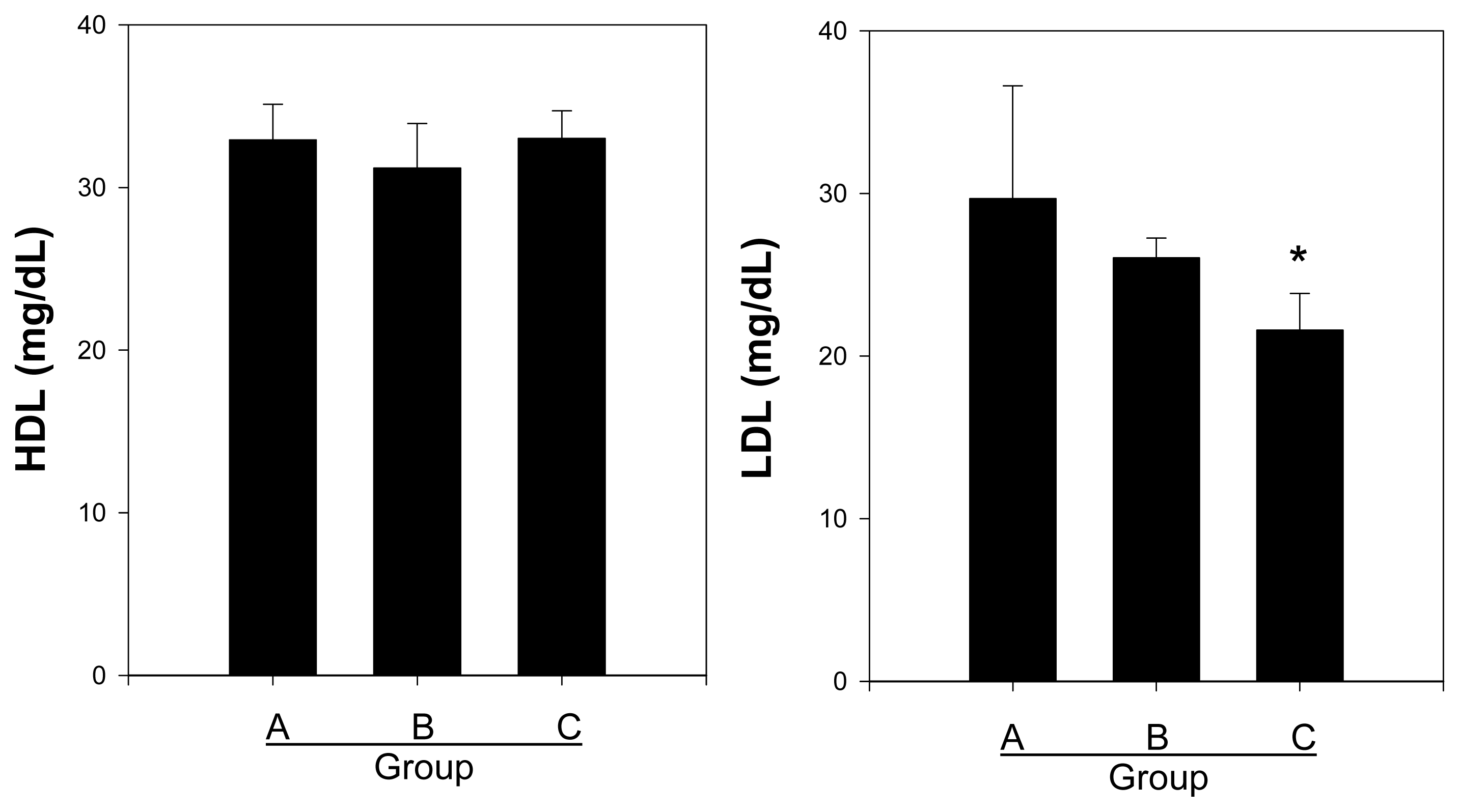
2.3. Effects of Crude and Acidic Polysaccharides of Gastrodia Rhizomes on HDL and LDL
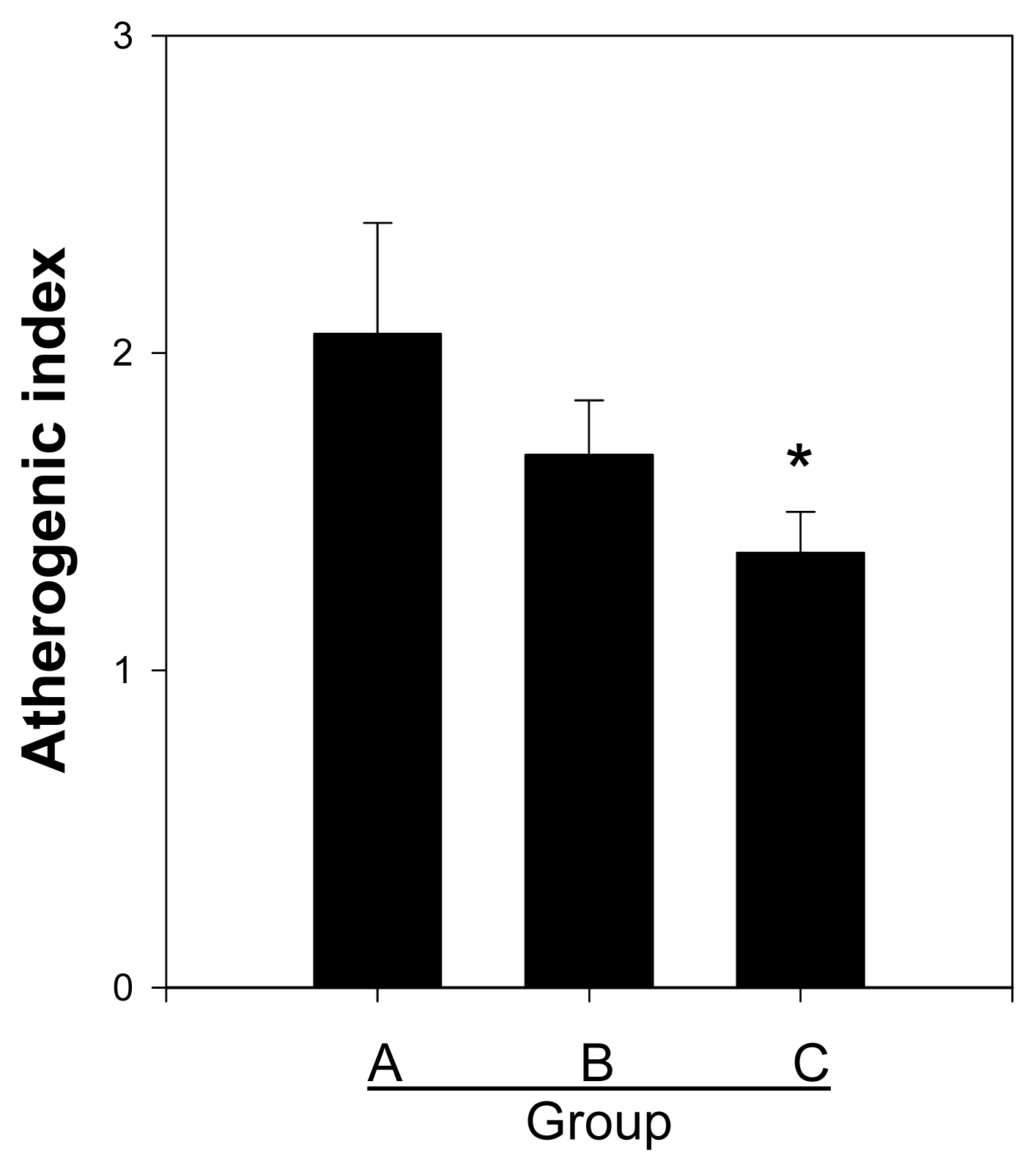
2.4. Effects of Crude and Acidic Polysaccharides of Gastrodia Rhizomes on the Atherogenic Index
3. Experimental Section
3.1. Materials
3.2. Animal Experiments and Diet
3.3. Body Weight, Food Intake and Water Consumption
3.4. Blood Chemistry
3.5. Statistical Analysis
4. Conclusions
Acknowledgments
References
- Flegal, K.M.; Carroll, M.D.; Ogden, C.L.; Curtin, L.R. Prevalence and trends in obesity among US adults, 1999–2008. JAMA 2010, 303, 235–241. [Google Scholar]
- Larsson, B.; Svardsudd, K.; Welin, L.; Wilhelmsen, L.; Bjorntorp, P.; Tibblin, G. Abdominal adipose tissue distribution, obesity, and risk of cardiovascular disease and death: 13 year follow up of participants in the study of men born in 1913. Br. Med. J. (Clin. Res. Ed.) 1984, 288, 1401–1404. [Google Scholar]
- Kahn, S.E.; Hull, R.L.; Utzschneider, K.M. Mechanisms linking obesity to insulin resistance and type 2 diabetes. Nature 2006, 444, 840–846. [Google Scholar]
- Purkayastha, S.; Zhang, G.; Cai, D. Uncoupling the mechanisms of obesity and hypertension by targeting hypothalamic IKK-β and NF-κB. Nat. Med 2011, 17, 883–887. [Google Scholar]
- Rocha, V.Z.; Libby, P. Obesity, inflammation, and atherosclerosis. Nat. Rev. Cardiol 2009, 6, 399–409. [Google Scholar]
- Beveridge, J.M.; Connell, W.F.; Mayer, G.A.; Firstbrook, J.B.; Dewolfe, M.S. The effects of certain vegetable and animal fats on the plasma lipids of humans. J. Nutr 1955, 56, 311–320. [Google Scholar]
- Ahrens, E.H., Jr; Insull, W., Jr; Blomstrand, R.; Hirsch, J.; Tsaltas, T.T.; Peterson, M.L. The influence of dietary fats on serum-lipid levels in man. Lancet 1957, 272, 943–953. [Google Scholar]
- Ballantyne, C.M.; Olsson, A.G.; Cook, T.J.; Mercuri, M.F.; Pedersen, T.R.; Kjekshus, J. Influence of low high-density lipoprotein cholesterol and elevated triglyceride on coronary heart disease events and response to simvastatin therapy in 4S. Circulation 2001, 104, 3046–3051. [Google Scholar]
- Obarzanek, E.; Sacks, F.M.; Vollmer, W.M.; Bray, G.A.; Miller, E.R., III; Lin, P.H.; Karanja, N.M.; Most-Windhauser, M.M.; Moore, T.J.; Swain, J.F.; et al. Effects on blood lipids of a blood pressure-lowering diet: the dietary approaches to stop hypertension (dash) trial. Am. J. Clin. Nutr 2001, 74, 80–89. [Google Scholar]
- Cassidy, A.; O’Reilly, E.J.; Kay, C.; Sampson, L.; Franz, M.; Forman, J.P.; Curhan, G.; Rimm, E.B. Habitual intake of flavonoid subclasses and incident hypertension in adults. Am. J. Clin. Nutr 2011, 93, 338–347. [Google Scholar]
- Dohadwala, M.M.; Hamburg, N.M.; Holbrook, M.; Kim, B.H.; Duess, M.A.; Levit, A.; Titas, M.; Chung, W.B.; Vincent, F.B.; Caiano, T.L.; et al. Effects of Concord grape juice on ambulatory blood pressure in prehypertension and stage 1 hypertension. Am. J. Clin. Nutr 2011, 92, 1052–1059. [Google Scholar]
- Hooper, L.; Kroon, P.A.; Rimm, E.B.; Cohn, J.S.; Harvey, I.; le Cornu, K.A.; Ryder, J.J.; Hall, W.L.; Cassidy, A. Flavonoids, flavonoid-rich foods, and cardiovascular risk: A meta-analysis of randomized controlled trials. Am. J. Clin. Nutr 2008, 88, 38–50. [Google Scholar]
- Chen, C.C.; Hsu, J.D.; Wang, S.F.; Chiang, H.C.; Yang, M.Y.; Kao, E.S.; Ho, Y.C.; Wang, C.J. Hibiscus sabdariffa extract inhibits the development of atherosclerosis in cholesterol-fed rabbits. J. Agric. Food. Chem 2003, 51, 5472–5477. [Google Scholar]
- Lin, W.Y.; Chiu, T.Y.; Lee, L.T.; Lin, C.C.; Huang, C.Y.; Huang, K.C. Betel nut chewing is associated with increased risk of cardiovascular disease and all-cause mortality in Taiwanese men. Am. J. Clin. Nutr 2008, 87, 1204–1211. [Google Scholar]
- Al-Awwadi, N.A.; Araiz, C.; Bornet, A.; Delbosc, S.; Cristol, J.P.; Linck, N.; Azay, J.; Teissedre, P.L.; Cros, G. Extracts enriched in different polyphenolic families normalize increased cardiac NADPH oxidase expression while having differential effects on insulin resistance, hypertension, and cardiac hypertrophy in high-fructose-fed rats. J. Agric. Food. Chem 2005, 53, 151–157. [Google Scholar]
- Tang, W.; Eisenbrand, G. Chinese Drugs of Plant Origin. In Chemistry, Pharmacology, and Use in Traditional and Modern Medicine; Springer Verlag: Berlin, Heidelberg, Germany, 1992; pp. 545–547. [Google Scholar]
- Ding, C.S.; Shen, Y.S.; Li, G.; Wei, Z.; Wei, F. Study of a glycoprotein from Gastrodia elata: Its effects of anticoagulation and antithrombosis. Zhong Guo Zhong Yao Za Zhi 2007, 32, 1060–1064. [Google Scholar]
- Gutiiérrez, R.M.P. Orchids: A review of uses in traditional medicine, its phytochemistry and pharmacology. J. Med. Plants Res 2010, 4, 592–638. [Google Scholar]
- Lu, W.B.; Zhang, B.E.; Wang, J.; Lu, R.X.; Li, R.L.; Chen, W.W. Screening of anti-diarrhea effective fractions from guava leaf. Zhong Yao Cai 2010, 33, 732–735. [Google Scholar]
- Lee, O.H.; Kim, K.I.; Han, C.K.; Kim, Y.C.; Hong, H.D. Effects of acidic polysaccharides from Gastrodia rhizome on systolic blood pressure and serum lipid concentrations in spontaneously hypertensive rats fed a high-fat diet. Int. J. Mol. Sci 2012, 13, 698–709. [Google Scholar]
- Kim, H.J.; Moon, K.D.; Lee, D.S.; Lee, S.H. Ethyl ether fraction of Gastrodia elata Blume protects amyloid β peptide-induced cell death. J. Ethnopharmacol 2003, 84, 95–98. [Google Scholar]
- Xu, X.; Lu, Y.; Bie, X. Protective effects of gastrodin on hypoxia-induced toxicity in primary cultures of rat cortical neurons. Planta Med 2007, 73, 650–654. [Google Scholar]
- Kwak, Y.S.; Kyung, J.S.; Kim, J.S.; Cho, J.Y.; Rhee, M.H. Anti-hyperlipidemic effects of red ginseng acidic polysaccharide from Korean red ginseng. Biol. Pharm. Bull 2010, 33, 468–472. [Google Scholar]
- Zhou, J. Bioactive glycosides from Chinese medicines. Mem. Inst. Oswaldo Cruz 1991, 86, 231–234. [Google Scholar]
- Park, S.; Kim, D.S.; Kang, S. Gastrodia elata Blume water extracts improve insulin resistance by decreasing body fat in diet-induced obese rats: Vanillin and 4-hydroxybenzaldehyde are the bioactive candidates. Eur. J. Nutr 2011, 50, 107–118. [Google Scholar]
- Hong, H.D.; Shin, E.J.; Kim, K.I.; Choi, S.Y.; Han, C.K. Effect of Gastrodia elata Blume components on systolic blood pressure and serum lipid concentrations in spontaneously hypertensive rats fed high fat diet. J. Korean Soc. Food Sci. Nutr 2007, 36, 174–179. [Google Scholar]
- Pearson, T.A. Coronary arteriography in the study of the epidemiology of coronary artery disease. Epidemiol. Rev 1984, 6, 140–166. [Google Scholar]
- Armstrong, V.W.; Cremer, P.; Eberle, E.; Manke, A.; Schulze, F.; Wieland, H.; Kreuzer, H.; Seidel, D. The association between serum Lp(a) concentrations and angiographically assessed coronary atherosclerosis. Dependence on serum LDL levels. Atherosclerosis 1986, 62, 249–257. [Google Scholar]
- Ashen, M.D.; Blumenthal, R.S. Low HDL cholesterol levels. New Engl. J. Med 2005, 353, 1252–1260. [Google Scholar]
- Pittler, M.H.; Ernst, E. Dietary supplements for body-weight reduction: A systematic review. Am. J. Clin. Nutr 2004, 79, 529–536. [Google Scholar]
- Hsu, C.H.; Tsai, T.H.; Kao, Y.H.; Hwang, K.C.; Tseng, T.Y.; Chou, P. Effect of green tea extract on obese women: A randomized, double-blind, placebo-controlled clinical trial. Clin. Nutr 2008, 27, 363–370. [Google Scholar]
- Devi, K.S.; Kurup, P.A. Hypolipidaemic activity of Phaseolus mungo (blackgram) in rats fed a high-fat-high-cholesterol diet. Isolation of a protein and polysaccharide fraction. Atherosclerosis 1972, 15, 223–230. [Google Scholar]
- SPSS, version 10; the statistical software SPSS for windows; IBM: Chicago, IL, USA, 2005.



| Group (n = 10) | Food Intake (g/weeks) | |||||||
|---|---|---|---|---|---|---|---|---|
| 1 | 2 | 3 | 4 | 5 | 6 | 7 | 8 | |
| A | 14.64 ± 0.50 | 22.26 ± 1.29 | 22.58 ± 1.57 | 24.59 ± 2.21 | 26.22 ± 1.83 | 27.15 ± 2.08 | 28.96 ± 2.94 | 25.46 ± 2.25 |
| B | 14.57 ± 0.53 | 21.22 ± 1.76 | 21.51 ± 1.36 | 23.43 ± 1.54 | 25.72 ± 0.82 | 25.30 ± 1.32 | 26.87 ± 1.62 | 26.23 ± 6.23 |
| C | 14.76 ± 0.28 | 20.82 ± 1.17 | 23.20 ± 3.11 | 24.41 ± 1.39 | 24.04 ± 1.24 | 25.28 ± 1.24 | 25.37 ± 1.81 | 27.41 ± 1.29 |
| Ingredients | Content (%) |
|---|---|
| Casein (feed grade CP 85%) | 20.00 |
| Corn starch | 39.75 |
| Dextrinized corn starch | 13.20 |
| Sucrose | 10.00 |
| Soybean oil | 7.00 |
| Cellulose (fiber) | 5.00 |
| Mineral mixture 1 | 3.50 |
| Vitamin mixture 2 | 1.00 |
| l-Cysteine | 0.30 |
| Choline bitartrate | 0.25 |
| Group (n = 12) | Phase 1 (4 weeks) | Phase 2 (4 weeks) |
|---|---|---|
| A1 | HFD2 | HFD |
| B | HFD | HFD + Crude polysaccharides |
| C | HFD | HFD + Acidic polysaccharides |
© 2012 by the authors; licensee Molecular Diversity Preservation International, Basel, Switzerland. This article is an open-access article distributed under the terms and conditions of the Creative Commons Attribution license (http://creativecommons.org/licenses/by/3.0/).
Share and Cite
Kim, K.-J.; Lee, O.-H.; Han, C.-K.; Kim, Y.-C.; Hong, H.-D. Acidic Polysaccharide Extracts from Gastrodia Rhizomes Suppress the Atherosclerosis Risk Index through Inhibition of the Serum Cholesterol Composition in Sprague Dawley Rats Fed a High-Fat Diet. Int. J. Mol. Sci. 2012, 13, 1620-1631. https://doi.org/10.3390/ijms13021620
Kim K-J, Lee O-H, Han C-K, Kim Y-C, Hong H-D. Acidic Polysaccharide Extracts from Gastrodia Rhizomes Suppress the Atherosclerosis Risk Index through Inhibition of the Serum Cholesterol Composition in Sprague Dawley Rats Fed a High-Fat Diet. International Journal of Molecular Sciences. 2012; 13(2):1620-1631. https://doi.org/10.3390/ijms13021620
Chicago/Turabian StyleKim, Kui-Jin, Ok-Hwan Lee, Chan-Kyu Han, Young-Chan Kim, and Hee-Do Hong. 2012. "Acidic Polysaccharide Extracts from Gastrodia Rhizomes Suppress the Atherosclerosis Risk Index through Inhibition of the Serum Cholesterol Composition in Sprague Dawley Rats Fed a High-Fat Diet" International Journal of Molecular Sciences 13, no. 2: 1620-1631. https://doi.org/10.3390/ijms13021620
APA StyleKim, K.-J., Lee, O.-H., Han, C.-K., Kim, Y.-C., & Hong, H.-D. (2012). Acidic Polysaccharide Extracts from Gastrodia Rhizomes Suppress the Atherosclerosis Risk Index through Inhibition of the Serum Cholesterol Composition in Sprague Dawley Rats Fed a High-Fat Diet. International Journal of Molecular Sciences, 13(2), 1620-1631. https://doi.org/10.3390/ijms13021620