
Phosphoproteomics and Lung Cancer Research



Abstract
:1. Introduction
1.1. PTMs
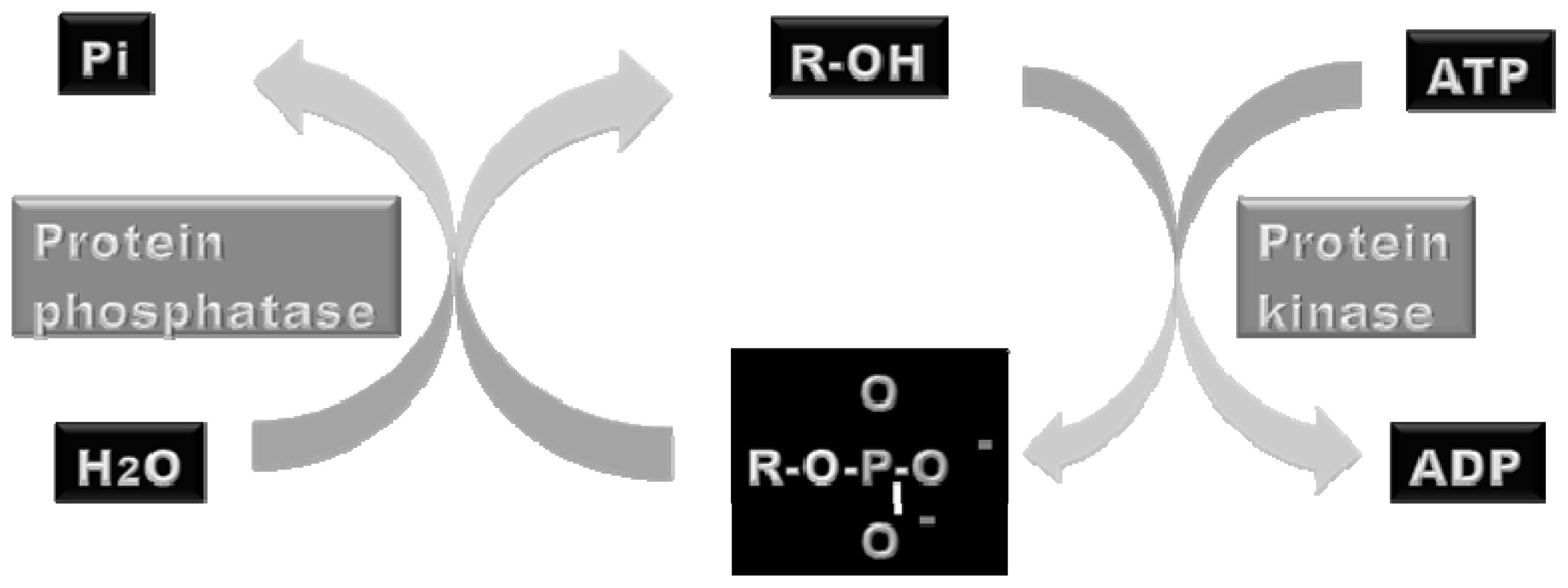
1.2. Phosphorylated Proteins
1.3. Phosphoproteomics: Useful in Signaling Pathways Research Studies
1.4. Clues to Sample Preparation for Efficient Clinical Phosphoproteomic Studies
1.5. MS and Phosphorylation Analysis of Proteins
1.6. Validation of Phosphorylated Peptides/Proteins
1.7. Quantitative MS Methods that Rely on Stable Isotope Incorporation for Phosphorylated Peptides/Proteins Measurements
1.7.1. SILAC
1.7.2. iTRAQ
1.7.3. AQUA
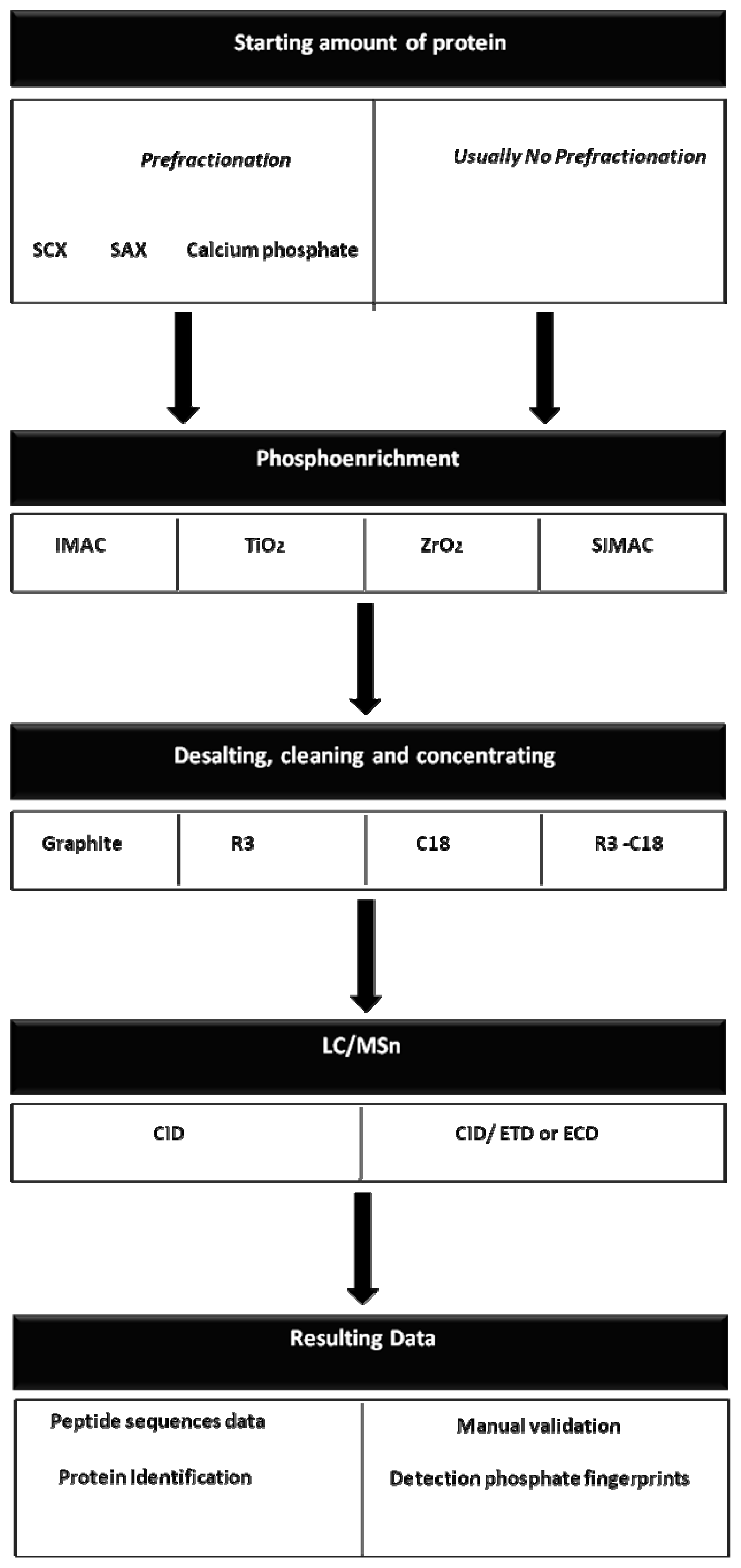
2. Phosphoproteomic Technologies and Platforms
3. Phosphoproteomic Studies of Signaling Pathways and Kinase Inhibitors
4. Lung Cancer Phosphoproteomic Studies
5. Conclusions and Future Perspectives
- Conflict of InterestThe authors declare no conflict of interest.
References
- Jemal, A.; Bray, F.; Center, M.M.; Ferlay, J.; Word, E.; Forman, D. Global cancer statistics. CA Cancer J. Clin 2011, 61, 69–90. [Google Scholar]
- Cho, W.C.; Yip, T.T.; Cheng, W.W.; Au, J.S. Serum amyloid A is elevated in the serum of lung cancer patients with poor prognosis. Br. J. Cancer 2010, 102, 1731–1735. [Google Scholar]
- Cho, W.C. Proteomics and translational medicine: Molecular biomarkers for cancer diagnosis, prognosis and prediction of therapy outcome. Expert Rev. Proteomics 2011, 8, 1–4. [Google Scholar]
- Tan, F.; Jiang, Y.; Sun, N.; Chen, Z.; Lv, Y.; Shao, K.; Li, N.; Qiu, B.; Gao, Y.; Li, B.; et al. Identification of isocitrate dehydrogenase 1 as a potential diagnostic and prognostic biomarker for non-small cell lung cancer by proteomic analysis. Mol. Cell Proteomics 2012, 11. [Google Scholar] [CrossRef]
- Wang, C.I.; Chien, K.Y.; Wang, C.L.; Liu, H.P.; Cheng, C.C.; Chang, Y.S.; Yu, J.S.; Yu, C.J. Quantitative proteomics reveals regulation of KPNA2 and its potential novel cargo proteins in non-small cell lung cancer. Mol. Cell Proteomics 2012. [Google Scholar] [CrossRef]
- Kettenbach, A.N.; Gerber, S.A. Rapid and reproducible single-stage phosphopeptide enrichment of complex peptide mixtures: Application to general and phosphotyrosine-specific phosphoproteomics experiments. Anal. Chem 2011, 83, 7635–7644. [Google Scholar]
- Wright, P.C.; Noirel, J.; Ow, S.Y.; Fazeli, A. A review of current proteomics technologies with a survey on their widespread use in reproductive biology investigations. Theriogenology 2012, 77, 738–765. [Google Scholar]
- Zhong, Y.; Hyung, S.J.; Ruotolo, B.T. Ion mobility-mass spectrometry for structural proteomics. Expert Rev. Proteomics 2012, 9, 47–58. [Google Scholar]
- Schirle, M.; Bantscheff, M.; Kuster, B. Mass spectrometry-based proteomics in preclinical drug discovery. Chem. Biol 2012, 19, 72–84. [Google Scholar]
- Bouwman, J.; Vogels, J.T.; Wopereis, S.; Rubingh, C.M.; Bijlsma, S.; van Ommen, B. Visualization and identification of health space, based on personalized molecular phenotype and treatment response to relevant underlying biological processes. BMC Med. Genomics 2012, 5. [Google Scholar] [CrossRef]
- Catusse, J.; Meinhard, J.; Job, C.; Strub, J.M.; Fischer, U.; Pestsova, E.; Westhoff, P.; van Dorsselaer, A.; Job, D. Proteomics reveals potential biomarkers of seed vigor in sugarbeet. Proteomics 2011, 11, 1569–1580. [Google Scholar]
- López, E.; Wesselink, J.J.; López, I.; Mendieta, J.; Gómez-Puertas, P.; Munoz, S.R. Technical phosphoproteomic and bioinformatic tools useful in cancer research. J. Clin. Bioinforma 2011, 1. [Google Scholar] [CrossRef] [Green Version]
- López, E.; López, I.; Sequí, J.; Ferreira, A. Discovering and validating unknown phospho-sites from p38 and HuR protein kinases in vitro by phosphoproteomic and bioinformatic tools. J. Clin. Bioinforma 2011, 1. [Google Scholar] [CrossRef]
- López, E.; López, I.; Ferreira, A.; Sequí, J. Clinical and technical phosphoproteomic research. Proteome Sci 2011, 9. [Google Scholar] [CrossRef]
- Lodish, H.; Berk, A.; Zipursky, S.L.; Matsudaira, P.; Baltimore, D.; Darnell, J. Company. In Molecular Cell Biology, 4th ed; W.H. Freeman: New York, NY, USA, 2002. [Google Scholar]
- Stryer, L. Biochemistry, 4th ed; W.H. Freeman: New York, NY, USA, 1995. [Google Scholar]
- Bauer, U.T.; Daujat, S.; Nielsen, S.J.; Nightingale, K.; Kouzarides, T. Methylation at arginine 17 of histone H3 is linked to gene activation. EMBO Rep 2002, 33, 39–44. [Google Scholar]
- Huang, W.J.; Wang, Y.C.; Chao, S.W.; Yang, C.Y.; Chen, L.C.; Lin, M.H.; Hou, W.C.; Chen, M.Y.; Lee, T.L.; Yang, P.; et al. Synthesis and biological evaluation of ortho-Aryl N-Hydroxycinnamides as potent histone deacetylase (HDAC) 8 isoform-selective inhibitors. ChemMedChem 2012. [Google Scholar] [CrossRef]
- Song, J.S.; Kim, Y.S.; Kim, D.K.; Park, S.I.; Jang, S.J. Global histone modification pattern associated with recurrence and disease-free survival in non-small cell lung cancer patients. Pathol. Int 2012, 62, 182–190. [Google Scholar]
- Shah, A.; Singh, H.; Sachdev, V.; Lee, J.; Yotsukura, S.; Salgia, R.; Bharti, A. Differential serum level of specific haptoglobin isoforms in small cell lung cancer. Curr. Proteomics 2010, 7, 49–65. [Google Scholar]
- Greulich, H.; Kaplan, B.; Mertins, P.; Chen, T.H.; Tanaka, K.E.; Yun, C.H.; Zhang, X.; Lee, S.H.; Cho, J.; Ambrogio, L.; et al. Functional analysis of receptor tyrosine kinase mutations in lung cancer identifies oncogenic extracellular domain mutations of ERBB2. Proc. Natl. Acad. Sci. USA 2012, 109, 14476–14481. [Google Scholar]
- Vasseur, J.A.; Goetz, J.A.; Alley, W.R., Jr.; Novotny, M.V. Smoking and lung cancer-induced changes in N-glycosylation of blood serum proteins. Glycobiology 2012. [Google Scholar] [CrossRef]
- Andreeva, A.V.; Kutuzov, M.A. Cadherin 13 in cancer. Genes Chromosomes Cancer 2010, 49, 775–790. [Google Scholar]
- Scherf, D.B.; Sarkisyan, N.; Jacobsson, H.; Claus, R.; Bermejo, J.L.; Peil, B.; Gu, L.; Muley, T.; Meister, M.; Dienemann, H.; et al. Epigenetic screen identifies genotype-specific promoter DNA methylation and oncogenic potential of CHRNB4. Oncogene 2012. [Google Scholar] [CrossRef]
- Takezawa, K.; Pirazzoli, V.; Arcila, M.E.; Nebhan, C.A.; Song, X.; de Stanchina, E.; Ohashi, K.; Janjigian, Y.Y.; Spitzler, P.J.; Melnick, M.A.; et al. HER2 amplification: A potential mechanism of acquired resistance to EGFR inhibition in EGFR mutant lung cancers that lack the second-site EGFR T790M mutation. Cancer Discov 2012. [Google Scholar] [CrossRef]
- Neumann, H.; Hazen, J.L.; Weinstein, J.; Mehl, R.A.; Chin, J.W. Genetically encoding protein oxidative damage. J. Am. Chem. Soc 2008, 130, 4028–4033. [Google Scholar]
- Liu, Z.; Zanata, S.M.; Kim, J.; Peterson, M.A.; di Vizio, D.; Chirieac, L.R.; Pyne, S.; Agostini, M.; Freeman, M.R.; Loda, M. The ubiquitin-specific protease USP2a prevents endocytosis-mediated EGFR degradation. Oncogene 2012. [Google Scholar] [CrossRef]
- Lopez, E.; Wang, X.; Madero, L. Functional phosphoproteomic mass spectrometry-based approaches. Clin. Transl. Med 2012, 1. [Google Scholar] [CrossRef]
- Hubbard, M.J.; Cohen, P. On target with a new mechanism for the regulation of protein-phosphorylation trends. Biochem. Sci 1993, 18, 172–177. [Google Scholar]
- Lenaz, G.; Genova, M.L. Supramolecular organisation of the mitochondrial respiratory chain: A new challenge for the mechanism and control of oxidative phosphorylation. Adv. Exp. Med. Biol 2012, 748, 107–144. [Google Scholar]
- Mann, M.; Ong, S.E.; Grønborg, M.; Steen, H.; Jensen, O.N.; Pandey, A. Analysis of protein phosphorylation using mass spectrometry: Deciphering the phosphoproteome. Trends Biotechnol 2002, 20, 261–268. [Google Scholar]
- Mann, M.; Jensen, O.N. Proteomic analysis of post-translational modifications. Nat. Biotechnol 2003, 21, 255–261. [Google Scholar]
- Yarbro, J.W. Oncogenes and cancer suppressor genes. Semin. Oncol. Nurs 1992, 8, 30–39. [Google Scholar]
- Martin, K.K.; Pilkington, G.J. Nm23: An invasion suppressor gene in CNS tumours? Anticancer Res 1998, 18, 919–926. [Google Scholar]
- Senderowicz, A.M. Cell cycle modulators for the treatment of lung malignancies. Clin. Lung Cancer 2003, 5, 158–168. [Google Scholar]
- Ha, G.H.; Baek, K.H.; Kim, H.S.; Jeong, S.J.; Kim, C.M.; McKeon, F.; Lee, C.W. p53 activation in response to mitotic spindle damage requires signaling via BubR1-mediated phosphorylation. Cancer Res 2007, 67, 7155–7164. [Google Scholar]
- Reddy, E.P.; Korapati, A.; Chaturvedi, P.; Rane, S. IL-3 signaling and the role of Src kinases, JAKs and STATs: A covert liaison unveiled. Oncogene 2000, 19, 2532–2547. [Google Scholar]
- Rane, S.G.; Reddy, E.P. JAKs, STATs and Src kinases in hematopoiesis. Oncogene 2002, 21, 3334–3358. [Google Scholar]
- Ralph, S.J. An update on malignant melanoma vaccine research: Insights into mechanisms for improving the design and potency of melanoma therapeutic vaccines. Am. J. Clin. Dermatol 2007, 8, 123–141. [Google Scholar]
- Gaestel, M.; Mengel, A.; Bothe, U.; Asadullah, K. Protein kinases as small molecule inhibitor targets in inflammation. Curr. Med. Chem 2007, 14, 2214–2234. [Google Scholar]
- Giamas, G.; Stebbing, J.; Vorgias, C.E.; Knippschild, U. Protein kinases as targets for cancer treatment. Pharmacogenomics 2007, 8, 1005–1016. [Google Scholar]
- Knowles, M.A. Novel therapeutic targets in bladder cancer: Mutation and expression of FGF receptors. Future Oncol 2008, 4, 71–83. [Google Scholar]
- Jensen, O.N. Modification-specific proteomics: Characterization of post-translational modifications by mass spectrometry. Curr. Opin. Chem. Biol 2004, 8, 33–41. [Google Scholar]
- Delom, F.; Chevet, E. Phosphoprotein analysis: From proteins to proteomes. Proteome Sci 2006, 4. [Google Scholar] [CrossRef]
- Ficarro, S.B.; McCleland, M.L.; Stukenberg, P.T.; Burke, D.J.; Ross, M.M.; Shabanowitz, J.; Hunt, D.F.; White, F.M. Phosphoproteome analysis by mass spectrometry and its application to Saccharomyces cerevisiae. Nat. Biotechnol 2002, 20, 301–305. [Google Scholar]
- Gruhler, A.; Olsen, J.V.; Mohammed, S.; Mortensen, P.; Faergeman, N.J.; Mann, M.; Jensen, O.N. Quantitative phosphoproteomics applied to the yeast pheromone signaling pathway. Mol. Cell. Proteomics 2005, 4, 310–327. [Google Scholar]
- Li, X.; Gerber, S.A.; Rudner, A.D.; Beausoleil, S.A.; Haas, W.; Villén, J.; Elias, J.E.; Gygi, S.P. Large-scale phosphorylation analysis of α-factor-arrested Saccharomyces cerevisiae. J. Proteome Res 2007, 6, 1190–1197. [Google Scholar]
- Larsen, M.R.; Thingholm, T.E.; Jensen, O.N.; Roepstorff, P.; Jorgensen, T.J. Highly selective enrichment of phosphorylated peptides from peptide mixtures using titanium dioxide microcolumns. Mol. Cell Proteomics 2005, 4, 873–886. [Google Scholar]
- Zhang, X.; Ye, J.; Jensen, O.N.; Roepstorff, P. Highly efficient phosphopeptide enrichment by calcium phosphate precipitation combined with subsequent IMAC enrichment. Mol. Cell. Proteomics 2007, 6, 2032–2042. [Google Scholar]
- Thingholm, T.E.; Jensen, O.N.; Robinson, P.J.; Larsen, M.R. SIMAC (sequential elution from IMAC), a phosphoproteomics strategy for the rapid separation of monophosphorylated from multiply phosphorylated peptides. Mol. Cell. Proteomics 2008, 7, 661–671. [Google Scholar]
- Kjeldsen, F.; Giessing, A.M.; Ingrell, C.R.; Jensen, O.N. Peptide sequencing and characterization of post-translational modifications by enhanced ion-charging and liquid chromatography electron-transfer dissociation tandem mass spectrometry. Anal. Chem 2007, 79, 9243–9252. [Google Scholar]
- Gafken, P.R.; Lampe, P.D. Methodologies for characterizing phosphoproteins by mass spectrometry. Cell Commun. Adhes 2006, 13, 249–262. [Google Scholar]
- Larsen, M.R.; Graham, M.E.; Robinson, P.J.; Roepstorff, P. Improved detection of hydrophilic phosphopeptides using graphite powder microcolumns and mass spectrometry: Evidence for in vivo doubly phosphorylated dynamin I and dynamin III. Mol. Cell. Proteomics 2004, 3, 456–465. [Google Scholar]
- Gobom, J.; Nordhoff, E.; Mirgorodskaya, E.; Ekman, R.; Roepstorff, P. Sample purification and preparation technique based on nano-scale reversed-phase columns for the sensitive analysis of complex peptide mixtures by matrix-assisted laser desorption/ionization mass spectrometry. J. Mass Spectrom 1999, 34, 105–116. [Google Scholar]
- Jensen, S.S.; Larsen, M.R. Evaluation of the impact of some experimental procedures on different phosphopeptide enrichment techniques. Rapid Commun. Mass Spectrom 2007, 21, 3635–3645. [Google Scholar]
- Engholm-Keller, K.; Larsen, M.R. Titanium dioxide as chemo-affinity chromatographic sorbent of biomolecular compounds—Applications in acidic modification-specific proteomics. J. Proteomics 2011, 75, 317–328. [Google Scholar]
- Thingholm, T.E.; Jensen, O.N.; Larsen, M.R. Analytical strategies for phosphoproteomics. Proteomics 2009, 9, 1451–1468. [Google Scholar]
- Thingholm, T.E.; Jensen, O.N.; Larsen, M.R. Enrichment and separation of mono- and multiply phosphorylated peptides using sequential elution from IMAC prior to mass spectrometric analysis. Methods Mol. Biol 2009, 527, 67–78. [Google Scholar]
- Gruhler, A.; Schulze, W.X.; Matthiesen, R.; Mann, M.; Jensen, O.N. Stable isotope labeling of Arabidopsis thaliana cells and quantitative proteomics by mass spectrometry. Mol. Cell Proteomics 2005, 4, 1697–1709. [Google Scholar]
- Ye, J.; Zhang, X.; Young, C.; Zhao, X.; Hao, Q.; Cheng, L.; Jensen, O.N. Optimized IMAC-IMAC protocol for phosphopeptide recovery from complex biological samples. J. Proteome Res 2010, 9, 3561–3573. [Google Scholar]
- Sugiyama, N.; Masuda, T.; Shinoda, K.; Nakamura, A.; Tomita, M.; Ishihama, Y. Phosphopeptide enrichment by aliphatic hydroxy acid-modified metal oxide chromatography for nano-LC-MS/MS in proteomics applications. Mol. Cell. Proteomics 2007, 6, 1103–1109. [Google Scholar]
- Gobom, J.; Mirgorodskaya, E.; Nordhoff, E.; Hojrup, P.; Roepstorff, P. Use of vapor-phase acid hydrolysis for mass spectrometric peptide mapping and protein identification. Anal. Chem 1999, 71, 919–927. [Google Scholar]
- Larsen, M.R.; Højrup, P.; Roepstorff, P. Characterization of gel-separated glycoproteins using two-step proteolytic digestion combined with sequential microcolumns and mass spectrometry. Mol. Cell. Proteomics 2005, 4, 107–119. [Google Scholar]
- Shevchenko, A.; Wilm, M.; Vorm, O.; Mann, M. Mass spectrometric sequencing of proteins silver-stained polyacrylamide gels. Anal. Chem 1996, 68, 850–858. [Google Scholar]
- Larsen, M.R. Mass spectrometric characterization of posttranslationally modified proteins-phosphorylation. Methods Mol. Biol 2004, 251, 245–262. [Google Scholar]
- Song, C.; Ye, M.; Liu, Z.; Cheng, H.; Jiang, X.; Han, G.; Songyang, Z.; Tan, Y.; Wang, H.; Ren, J.; et al. Systematic analysis of protein phosphorylation networks from phosphoproteomic data. Mol. Cell. Proteomics 2012. [Google Scholar] [CrossRef]
- Han, G.; Ye, M.; Liu, H.; Song, C.; Sun, D.; Wu, Y.; Jiang, X.; Chen, R.; Wang, C.; Wang, L.; et al. Phosphoproteome analysis of human liver tissue by long-gradient nanoflow LC coupled with multiple stage MS analysis. Electrophoresis 2010, 31, 1080–1089. [Google Scholar]
- Worthington, J.; Cutillas, P.R.; Timms, J.F. IMAC/TiO(2) enrich for peptide modifications other than phosphorylation: Implications for chromatographic choice and database searching in phosphoproteomics. Proteomics 2011, 11, 4583–4587. [Google Scholar]
- Speicher, K.D.; Kolbas, O.; Harper, S.; Speicher, D.W. Systematic analysis of peptide recoveries from in-gel digestions for protein identifications in proteome studies. J. Biomol. Tech 2000, 11, 74–86. [Google Scholar]
- Corthals, G.L.; Wasinger, V.C.; Hochstrasser, D.F.; Sanchez, J.C. The dynamic range of protein expression: A challenge for proteomic research. Electrophoresis 2000, 21, 1104–1115. [Google Scholar]
- Grønborg, M.; Kristiansen, T.Z.; Stensballe, A.; Andersen, J.S.; Ohara, O.; Mann, M.; Jensen, O.N.; Pandey, A. A mass spectrometry-based proteomic approach for identification of serine/threonine-phosphorylated proteins by enrichment with phospho-specific antibodies: identification of a novel protein, Frigg, as a protein kinase A substrate. Mol. Cell. Proteomics 2002, 1, 517–527. [Google Scholar]
- Zhang, Z.Y. Functional studies of protein tyrosine phosphatases with chemical approaches. Biochim. Biophys. Acta 2005, 1754, 100–107. [Google Scholar]
- Klumpp, S.; Krieglstein, J. Phosphorylation and dephosphorylation of histidine residues in proteins. Eur. J. Biochem 2002, 269, 1067–1071. [Google Scholar]
- Raggiaschi, R.; Gotta, S.; Terstappen, G.C. Phosphoproteome analysis. Biosci. Rep 2005, 25, 33–44. [Google Scholar]
- Karas, M.; Hillenkamp, F. Laser desorption ionization of proteins with molecular masses exceeding 10000 daltons. Anal. Chem 1988, 60, 2299–2301. [Google Scholar]
- Fenn, J.B.; Mann, M.; Meng, C.K.; Wong, S.F.; Whitehouse, C.M. Electrospray ionization for mass spectrometry of large biomolecules. Science 1989, 246, 64–72. [Google Scholar]
- Annan, R.S.; Carr, S.A. Phosphopeptide analysis by matrix-assisted laser desorption time-of-flight mass spectrometry. Anal. Chem 1996, 68, 3413–3421. [Google Scholar]
- Steen, H.; Kuster, B.; Mann, M. Quadrupole time-of-flight versus triple quadrupole mass spectrometry for the determination of phosphopeptides by precursor ion scanning. J. Mass Spectrom 2001, 36, 782–790. [Google Scholar]
- Cooper, H.J.; Håkansson, K.; Marshall, A.G. The role of electron capture dissociation in biomolecular analysis. Mass Spectrom. Rev 2005, 24, 201–222. [Google Scholar]
- Wu, S.L.; Hühmer, A.F.; Hao, Z.; Karger, B.L. On-line LC-MS approach combining collision-induced dissociation (CID), electron-transfer dissociation (ETD), and CID of an isolated charge-reduced species for the trace-level characterization of proteins with post-translational modifications. J. Proteome Res 2007, 6, 4230–4244. [Google Scholar]
- Manning, G.; Whyte, D.B.; Martinez, R.; Hunter, T.; Sudarsanam, S. The protein kinase complement of the human genome. Science 2002, 298, 1912–1934. [Google Scholar]
- Beausoleil, S.A.; Jedrychowski, M.; Schwartz, D.; Elias, J.E.; Villén, J.; Li, J.; Cohn, M.A.; Cantley, L.C.; Gygi, S.P. Large-scale characterization of HeLa cell nuclear phosphoproteins. Proc. Natl. Acad. Sci. USA 2004, 101, 12130–12135. [Google Scholar]
- Biemann, K. Contribution of mass-spectrometry to peptide and protein-structure. Biomed. Environ. Mass Spectrom 1988, 16, 99–111. [Google Scholar]
- Roepstorff, P.; Fohlman, J. Proposal for a common nomenclature for sequence ions in mass spectra of peptides. Biomed. Mass Spectrom 1984, 11. [Google Scholar] [CrossRef]
- Ong, S.E.; Mann, M. Mass spectrometry-based proteomics turns quantitative. Nat. Chem. Biol 2005, 1, 252–262. [Google Scholar]
- Ong, S.E.; Blagoev, B.; Kratchmarova, I.; Kristensen, D.B.; Steen, H.; Pandey, A.; Mann, M. Stable isotope labeling by amino acids in cell culture, SILAC, as a simple and accurate approach to expression proteomics. Mol. Cell. Proteomics 2002, 1, 376–386. [Google Scholar]
- Gruhler, S.; Kratchmarova, I. Stable isotope labeling by amino acids in cell culture (SILAC). Methods Mol. Biol 2008, 424, 101–111. [Google Scholar]
- Ballif, B.A.; Roux, P.P.; Gerber, S.A.; MacKeigan, J.P.; Blenis, J.; Gygi, S.P. Quantitative phosphorylation profiling of the ERK/p90 ribosomal S6 kinase-signaling cassette and its targets, the tuberous sclerosis tumor suppressors. Proc. Natl. Acad. Sci. USA 2005, 102, 667–672. [Google Scholar]
- Ross, P.L.; Huang, Y.N.; Marchese, J.N.; Williamson, B.; Parker, K.; Hattan, S.; Khainovski, N.; Pillai, S.; Dey, S.; Daniels, S.; et al. Multiplexed protein quantitation in Saccharomyces cerevisiae using amine-reactive isobaric tagging reagents. Mol. Cell. Proteomics 2004, 3, 1154–1169. [Google Scholar]
- Sachon, E.; Mohammed, S.; Bache, N.; Jensen, O.N. Phosphopeptide quantitation using amine-reactive isobaric tagging reagents and tandem mass spectrometry: Application to proteins isolated by gel electrophoresis. Rapid Commun. Mass Spectrom 2006, 20, 1127–1134. [Google Scholar]
- Zhang, Z.Y. Mechanistic studies on protein tyrosine phosphatases. Prog. Nucleic Acid Res. Mol. Biol 2003, 73, 171–220. [Google Scholar]
- Huang, P.H.; Cavenee, W.K.; Furnari, F.B.; White, F.M. Uncovering therapeutic targets for glioblastoma: A systems biology approach. Cell Cycle 2007, 6, 2750–2754. [Google Scholar]
- Kirkpatrick, D.S.; Gerber, S.A.; Gygi, S.P. The absolute quantification strategy: A general procedure for the quantification of proteins and post-translational modifications. Methods 2005, 35, 265–273. [Google Scholar]
- Wang, G.; Wu, W.W.; Zeng, W.; Chou, C.L.; Shen, R.F. Label-free protein quantification using LC-coupled ion trap or FT mass spectrometry: Reproducibility, linearity, and application with complex proteomes. J. Proteome Res 2006, 5, 1214–1223. [Google Scholar]
- Bailey, J.L.; Tardif, S.; Dubé, C.; Beaulieu, M.; Reyes-Moreno, C.; Lefièvre, L.; Leclerc, P. Use of phosphoproteomics to study tyrosine kinase activity in capacitating boar sperm. Kinase activity and capacitation. Theriogenology 2005, 63, 599–614. [Google Scholar]
- Bridon, G.; Bonneil, E.; Muratore-Schroeder, T.; Caron-Lizotte, O.; Thibault, P. Improvement of phosphoproteome analyses using FAIMS and decision tree fragmentation. Application to the insulin signaling pathway in Drosophila melanogaster S2 cells. J. Proteome Res 2012, 11, 927–940. [Google Scholar]
- Masuda, T.; Sugiyama, N.; Tomita, M.; Ishihama, Y. Microscale phosphoproteome analysis of 10000 cells from human cancer cell lines. Anal. Chem 2011, 83, 7698–7703. [Google Scholar]
- Sudhir, P.R.; Chen, C.H.; Kumari, M.P.; Wang, M.J.; Tsou, C.C.; Sung, T.Y.; Chen, J.Y.; Chen, C.H. Label-free quantitative proteomics and N-glycoproteomics analysis of KRAS-activated human bronchial epithelial cells. Mol. Cell. Proteomics 2012. [Google Scholar] [CrossRef]
- Gámez-Pozo, A.; Sánchez-Navarro, I.; Calvo, E.; Díaz, E.; Miguel-Martín, M.; López, R.; Agulló, T.; Camafeita, E.; Espinosa, E.; López, J.A.; et al. Protein phosphorylation analysis in archival clinical cancer samples by shotgun and targeted proteomics approaches. Mol. Biosyst 2011, 7, 2368–2374. [Google Scholar]
- Pierobon, M.; Belluco, C.; Liotta, L.A.; Petricoin, E.F., III. Reverse phase protein microarrays for clinical applications. Methods Mol. Biol. 2011, 785, 3–12. [Google Scholar]
- Courcelles, M.; Lemieux, S.; Voisin, L.; Meloche, S.; Thibault, P. ProteoConnections: A bioinformatics platform to facilitate proteome and phosphoproteome analyses. Proteomics 2011, 11, 2654–2671. [Google Scholar]
- Wojcechowskyj, J.A.; Lee, J.Y.; Seeholzer, S.H.; Doms, R.W. Quantitative phosphoproteomics of CXCL12 (SDF-1) signaling. PLoS One 2011, 6, e24918. [Google Scholar]
- Pan, C.; Olsen, J.V.; Daub, H.; Mann, M. Global effects of kinase inhibitors on signaling networks revealed by quantitative phosphoproteomics. Mol. Cell. Proteomics 2009, 8, 2796–2808. [Google Scholar]
- Li, J.; Rix, U.; Fang, B.; Bai, Y.; Edwards, A.; Colinge, J.; Bennett, K.L.; Gao, J.; Song, L.; Eschrich, S.; et al. A chemical and phosphoproteomic characterization of dasatinib action in lung cancer. Nat. Chem. Biol 2010, 6, 291–299. [Google Scholar]
- Mueller, C.; Edmiston, K.H.; Carpenter, C.; Gaffney, E.; Ryan, C.; Ward, R.; White, S.; Memeo, L.; Colarossi, C.; Petricoin, E.F., III; et al. One-step preservation of phosphoproteins and tissue morphology at room temperature for diagnostic and research specimens. PLoS One 2011, 6, e23780. [Google Scholar]
- Huang, P.H. Phosphoproteomic studies of receptor tyrosine kinases: Future perspectives. Mol. Biosyst 2012, 8, 1100–1107. [Google Scholar]
- Gámez-Pozo, A.; Sánchez-Navarro, I.; Calvo, E.; Agulló-Ortuño, M.T.; López-Vacas, R.; Díaz, E.; Camafeita, E.; Nistal, M.; Madero, R.; Espinosa, E.; et al. PTRF/cavin-1 and MIF proteins are identified as NSCLC biomarkers by label-free proteomics. PLoS One 2012, 7, e33752. [Google Scholar]
- Nanjundan, M.; Byers, L.A.; Carey, M.S.; Siwak, D.R.; Raso, M.G.; Diao, L.; Wang, J.; Coombes, K.R.; Roth, J.A.; Mills, G.B.; et al. Proteomic profiling identifies pathways dysregulated in non-small cell lung cancer and an inverse association of AMPK and adhesion pathways with recurrence. J. Thorac. Oncol 2010, 5, 1894–1904. [Google Scholar]
- Jun, H.J.; Johnson, H.; Bronson, R.T.; de Feraudy, S.; White, F.; Charest, A. The oncogenic lung cancer fusion kinase CD74-ROS activates a novel invasiveness pathway through E-Syt1 phosphorylation. Cancer Res 2012, 72, 3764–3774. [Google Scholar]
- Huerta-Yepez, S.; Yoon, N.K.; Hernandez-Cueto, A.; Mah, V.; Rivera-Pazos, C.M.; Chatterjee, D.; Vega, M.I.; Maresh, E.L.; Horvath, S.; Chia, D.; et al. Expression of phosphorylated raf kinase inhibitor protein (pRKIP) is a predictor of lung cancer survival. BMC Cancer 2011, 11, 259. [Google Scholar]
- Cho, W.C. Omics Approaches in Cancer Research. In An Omics Perspective on Cancer Research; Cho, W.C., Ed.; Springer: Heidelberg, Germany, 2010; pp. 1–9. [Google Scholar]
- Harsha, H.C.; Pandey, A. Phosphoproteomics in cancer. Mol. Oncol 2010, 4, 482–495. [Google Scholar]
- Trost, M.; Bridon, G.; Desjardins, M.; Thibault, P. Subcellular phosphoproteomics. Mass Spectrom. Rev 2010, 29, 962–990. [Google Scholar]
- Zhou, H.; Albuquerque, C.P.; Liang, J.; Suhandynata, R.T.; Weng, S. Quantitative phosphoproteomics: New technologies and applications in the DNA damage response. Cell Cycle 2010, 9, 3479–3484. [Google Scholar]
- Schaab, C. Analysis of phosphoproteomics data. Methods Mol. Biol 2011, 696, 41–57. [Google Scholar]
- López, E.; Munoz, S.; Pascual, J.; Madero, L. Relevant phosphoproteomic and mass spectrometry: Approaches useful in clinical research. Clin. Transl. Med 2012. [Google Scholar] [CrossRef]
- Lopez, E.; Madero, L.; Lopez-Pascual, J.; Latterich, M. Clinical proteomics and OMICS clues useful in translational medicine research. Proteome Sci 2012, 10. [Google Scholar] [CrossRef]
- Cho, W.C.; Cheng, C.H. Oncoproteomics: Current trends and future perspectives. Expert Rev. Proteomics 2007, 4, 401–410. [Google Scholar]



| Types of PTMs | Functions and roles | References |
|---|---|---|
| Acetylation | Protein stability, protection of N terminus, regulation of protein/DNA interactions (histones) | [18] |
| Acylation | Cellular localization and targeting signals, membrane tethering, mediator of protein/protein interactions | [19] |
| Deamidation | Possible regulator of protein/protein and receptor/ligand interactions | [20] |
| Disulfide-bond formation | Intramolecular and intermolecular crosslink, protein stability | [21] |
| Glycosylation (N-linked, O-linked) | Excreted proteins, membrane proteins, cell-cell recognition/signaling O-GlcNAc, reversible, regulatory functions | [22] |
| GPI anchor | Glycosylphosphatidylinositol anchor, membrane tethering of enzymes/receptors | [23] |
| Methylation | Regulation of gene expression | [24] |
| Phosphorylation (Tyr and Ser/Thr) | Reversible, activation of enzyme activity, modulation of molecular interactions, signaling | [25] |
| Nitration of tyrosine | Oxidative damage during inflammation | [26] |
| Ubiquitination | Signal of degradation | [27] |
| Mainly * | Phosphoenrichments | |
|---|---|---|
| Binding | Monophosphorylated | TiO2 ≈ ZrO2 > IMAC |
| Multiphosphorylated | TiO2 ≥ ZrO2 > IMAC | |
| Eluting | Monophosphorylated | TiO2 ≈ ZrO2 > IMAC |
| Multiphosphorylated | TiO2 ≤ ZrO2 < IMAC |
| Different phosphoenrichment combinations | Binding and eluting with high yield |
|---|---|
| SIMAC (IMAC coupled to TiO2) | Mono and multiphosphorylated |
| SCX coupled to IMAC and TIO2 | Mono and multiphosphorylated |
| SAX coupled to IMAC and TiO2 | Mono and multiphosphorylated |
| Ti4+-IMAC microspheres | Mono and multiphosphorylated |
| Calcium phosphate precipitation coupled to IMAC and TiO2 | Mono and multiphosphorylated |
| Cons | Pros |
|---|---|
| Lyophilization | Phosphatase inhibitors |
| Salts | Correct adjustment of the peptides sample amount according to the material/beads which captures the phosphopeptides |
| Detergents | |
| Phosphate buffers |
© 2012 by the authors; licensee Molecular Diversity Preservation International, Basel, Switzerland. This article is an open-access article distributed under the terms and conditions of the Creative Commons Attribution license (http://creativecommons.org/licenses/by/3.0/).
Share and Cite
López, E.; Cho, W.C.S. Phosphoproteomics and Lung Cancer Research. Int. J. Mol. Sci. 2012, 13, 12287-12314. https://doi.org/10.3390/ijms131012287
López E, Cho WCS. Phosphoproteomics and Lung Cancer Research. International Journal of Molecular Sciences. 2012; 13(10):12287-12314. https://doi.org/10.3390/ijms131012287
Chicago/Turabian StyleLópez, Elena, and William C. S. Cho. 2012. "Phosphoproteomics and Lung Cancer Research" International Journal of Molecular Sciences 13, no. 10: 12287-12314. https://doi.org/10.3390/ijms131012287