<?xml version="1.0" encoding="UTF-8"?>
<!DOCTYPE article PUBLIC "-//NLM//DTD Journal Publishing DTD v2.3 20070202//EN" "journalpublishing.dtd">
<article xmlns:xlink="http://www.w3.org/1999/xlink" xml:lang="en" article-type="research-article">
<front>
<journal-meta>
<journal-id journal-id-type="publisher-id">ijms</journal-id>
<journal-title>International Journal of Molecular Sciences</journal-title>
<abbrev-journal-title>Int. J. Mol. Sci.</abbrev-journal-title>
<issn pub-type="epub">1422-0067</issn>
<publisher>
<publisher-name>Molecular Diversity Preservation International (MDPI)</publisher-name></publisher></journal-meta>
<article-meta>
<article-id pub-id-type="doi">10.3390/ijms11125109</article-id>
<article-id pub-id-type="publisher-id">ijms-11-05109</article-id>
<article-categories>
<subj-group>
<subject>Article</subject></subj-group></article-categories>
<title-group>
<article-title>Astaxanthin Improves Stem Cell Potency via an Increase in the Proliferation of Neural Progenitor Cells</article-title></title-group>
<contrib-group>
<contrib contrib-type="author">
<name><surname>Kim</surname><given-names>Jeong-Hwan</given-names></name><xref ref-type="aff" rid="af1-ijms-11-05109">1</xref></contrib>
<contrib contrib-type="author">
<name><surname>Nam</surname><given-names>Soo-Wan</given-names></name><xref ref-type="aff" rid="af1-ijms-11-05109">1</xref><xref ref-type="aff" rid="af2-ijms-11-05109">2</xref><xref ref-type="aff" rid="af3-ijms-11-05109">3</xref><xref ref-type="corresp" rid="c1-ijms-11-05109">*</xref></contrib>
<contrib contrib-type="author">
<name><surname>Kim</surname><given-names>Byung-Woo</given-names></name><xref ref-type="aff" rid="af1-ijms-11-05109">1</xref><xref ref-type="aff" rid="af3-ijms-11-05109">3</xref><xref ref-type="aff" rid="af4-ijms-11-05109">4</xref></contrib>
<contrib contrib-type="author">
<name><surname>Choi</surname><given-names>Woobong</given-names></name><xref ref-type="aff" rid="af1-ijms-11-05109">1</xref><xref ref-type="aff" rid="af2-ijms-11-05109">2</xref><xref ref-type="aff" rid="af3-ijms-11-05109">3</xref></contrib>
<contrib contrib-type="author">
<name><surname>Lee</surname><given-names>Jong-Hwan</given-names></name><xref ref-type="aff" rid="af1-ijms-11-05109">1</xref><xref ref-type="aff" rid="af2-ijms-11-05109">2</xref><xref ref-type="aff" rid="af3-ijms-11-05109">3</xref></contrib>
<contrib contrib-type="author">
<name><surname>Kim</surname><given-names>Wun-Jae</given-names></name><xref ref-type="aff" rid="af5-ijms-11-05109">5</xref></contrib>
<contrib contrib-type="author">
<name><surname>Choi</surname><given-names>Yung-Hyun</given-names></name><xref ref-type="aff" rid="af1-ijms-11-05109">1</xref><xref ref-type="aff" rid="af3-ijms-11-05109">3</xref><xref ref-type="aff" rid="af6-ijms-11-05109">6</xref><xref ref-type="corresp" rid="c1-ijms-11-05109">*</xref></contrib></contrib-group>
<aff id="af1-ijms-11-05109">
<label>1</label> Department of Biomaterial Control, Dong-Eui University, Busan, 614-714, Korea; E-Mails: <email>12845@deu.ac.kr</email> (J.-H.K.); <email>bwkim@deu.ac.kr</email> (B.-W.K.); <email>wbchoi@deu.ac.kr</email> (W.C.); <email>jonghwanlee@deu.ac.kr</email> (J.-H.L.)</aff>
<aff id="af2-ijms-11-05109">
<label>2</label> Department of Biotechnology and Bioengineering, Dong-Eui University, Busan 614-714, Korea</aff>
<aff id="af3-ijms-11-05109">
<label>3</label> Department of Blue-Bio Industry RIC, Dong-Eui University, Busan 614-714, Korea</aff>
<aff id="af4-ijms-11-05109">
<label>4</label> Department of Life Science &amp; Biotechnology, Dong-Eui University, Busan 614-714, Korea</aff>
<aff id="af5-ijms-11-05109">
<label>5</label> Department of Urology, College of Medicine, Chungbuk National University, Cheongju, 361-763, Korea; E-Mail: <email>wjkim@chungbuk.ac.kr</email> (W.-J.K.)</aff>
<aff id="af6-ijms-11-05109">
<label>6</label> Department of Biochemistry and Research Institute of Oriental Medicine, Dong-Eui University College of Oriental Medicine, Busan 614-052, Korea</aff>
<author-notes>
<corresp id="c1-ijms-11-05109">
<label>*</label>Authors to whom correspondence should be addressed; E-Mails: <email>swnam@deu.ac.kr</email> (S.-W.N.); <email>choiyh@deu.ac.kr</email> (Y.-H.C.); Tel.: +82-51-850-7413; Fax: +82-51-853-4036.</corresp></author-notes>
<pub-date pub-type="collection">
<year>2010</year></pub-date>
<pub-date pub-type="epub">
<day>9</day>
<month>12</month>
<year>2010</year></pub-date>
<volume>11</volume>
<issue>12</issue>
<fpage>5109</fpage>
<lpage>5119</lpage>
<history>
<date date-type="received">
<day>20</day>
<month>10</month>
<year>2010</year></date>
<date date-type="rev-recd">
<day>15</day>
<month>11</month>
<year>2010</year></date>
<date date-type="accepted">
<day>7</day>
<month>12</month>
<year>2010</year></date></history>
<permissions>
<copyright-statement>© 2010 by the authors; licensee MDPI, Basel, Switzerland.</copyright-statement>
<copyright-year>2010</copyright-year>
<license license-type="open-access" xlink:href="http://creativecommons.org/licenses/by/3.0">
<p>This article is an open-access article distributed under the terms and conditions of the Creative Commons Attribution license (http://creativecommons.org/licenses/by/3.0/).</p></license></permissions>
<abstract>
<p>The present study was designed to investigate the question of whether or not astaxanthin improves stem cell potency via an increase in proliferation of neural progenitor cells (NPCs). Treatment with astaxanthin significantly increased proliferation and colony formation of NPCs. For identification of possible activated signaling molecules involved in active cell proliferation occurring after astaxanthin treatment, total protein levels of several proliferation-related proteins, and expression levels of proliferation-related transcription factors, were assessed in NPCs. In Western blot analysis, astaxanthin induced significant activation of phosphatidylinositol 3-kinase (PI3K) and its downstream mediators in a time-dependent manner. Results of RT-PCR analysis showed upregulation of proliferation-related transcription factors and stemness genes. To estimate the relevance of PI3K and mitogen-activated protein, or extracellular signal-regulated kinase kinase (MEK) signaling pathways in cell growth of astaxanthin-treated NPCs, inhibition assays were performed with LY294002, a specific inhibitor of PI3K, and PD98059, a specific inhibitor of MEK, respectively. These results clearly showed that astaxanthin induces proliferation of NPCs via activation of the PI3K and MEK signaling pathways and improves stem cell potency via stemness acting signals.</p></abstract>
<kwd-group>
<kwd>astaxanthin</kwd>
<kwd>neural progenitor cells</kwd>
<kwd>PI3K</kwd>
<kwd>proliferation</kwd>
<kwd>stem cell</kwd></kwd-group></article-meta></front>
<body>
<sec sec-type="intro">
<label>1.</label>
<title>Introduction</title>
<p>A stem cell is a special kind of cell, with a unique capacity to renew itself, to give rise to specialized cell types and for migration, proliferation, and cell survival [<xref ref-type="bibr" rid="b1-ijms-11-05109">1</xref>]. Although most cells of the body, such as heart cells or skin cells, are committed to conduct specific functions, a stem cell is uncommitted and remains uncommitted until it receives a signal to develop into a specialized cell. Its proliferative capacity, combined with the ability to obtain active self renewal and to become specialized, ensures stem cells’ unique survival [<xref ref-type="bibr" rid="b1-ijms-11-05109">1</xref>]. Neural progenitor cells (NPCs) have evoked great interest, given their expected capacity for self renewal resulting in expansion of the cell population. They also differentiate into desired cell types, thus representing new sources for cell replacement therapy [<xref ref-type="bibr" rid="b2-ijms-11-05109">2</xref>,<xref ref-type="bibr" rid="b3-ijms-11-05109">3</xref>]. To orchestrate self renewal via an increase in proliferation of NPCs, multiple signaling networks are activated by various intracellular and extracellular factors. Here, we illustrate the role of astaxanthin as an extracellular factor that induces improvement of self renewal via increased proliferation of NPCs.</p>
<p>Astaxanthin is widely distributed in nature, and is the principal pigment in crustaceans, salmonoids, and many other organisms [<xref ref-type="bibr" rid="b4-ijms-11-05109">4</xref>–<xref ref-type="bibr" rid="b6-ijms-11-05109">6</xref>]. It provides attractive pigmentation to many farm animals and also contributes to consumer appeal in the marketplace. In aquaculture, it is employed as a source of natural pigmentation and as a dietary supplement for trout and salmon [<xref ref-type="bibr" rid="b7-ijms-11-05109">7</xref>,<xref ref-type="bibr" rid="b8-ijms-11-05109">8</xref>]. This compound has important metabolic functions in animals, including neuroprotective actions [<xref ref-type="bibr" rid="b9-ijms-11-05109">9</xref>–<xref ref-type="bibr" rid="b13-ijms-11-05109">13</xref>], enhancement of immune response [<xref ref-type="bibr" rid="b14-ijms-11-05109">14</xref>,<xref ref-type="bibr" rid="b15-ijms-11-05109">15</xref>], and protection against diseases such as cancer [<xref ref-type="bibr" rid="b16-ijms-11-05109">16</xref>,<xref ref-type="bibr" rid="b17-ijms-11-05109">17</xref>] and antral ulcer [<xref ref-type="bibr" rid="b18-ijms-11-05109">18</xref>,<xref ref-type="bibr" rid="b19-ijms-11-05109">19</xref>] by scavenging of oxygen radicals. Antioxidant activity of astaxanthin has been reported to be approximately 10 times stronger than that of other carotenoids tested, including zeaxanthin, lutein, canthaxanthin, and β-carotene, and 100 times greater than that of α-tocopherol [<xref ref-type="bibr" rid="b20-ijms-11-05109">20</xref>,<xref ref-type="bibr" rid="b21-ijms-11-05109">21</xref>]. These effects are considered to be defense mechanisms against attack by reactive oxygen species. Astaxanthin also shows a strong activity as an inhibitor of oxygen radical-mediated lipid peroxidation [<xref ref-type="bibr" rid="b22-ijms-11-05109">22</xref>,<xref ref-type="bibr" rid="b23-ijms-11-05109">23</xref>] and inhibits hydrogen peroxide (H<sub>2</sub>O<sub>2</sub>)-mediated apoptotic cell death [<xref ref-type="bibr" rid="b24-ijms-11-05109">24</xref>]. Therefore, astaxanthin has attracted commercial interest, not only as a pigmentation source, but also as a potent antioxidative reagent.</p>
<p>In the present study, we hypothesized that astaxanthin can improve stem cell potency via an increase in the proliferation potential of NPCs. To estimate this hypothesis, this study explored the ability of astaxanthin and signaling mechanisms that increase proliferation of NPCs.</p></sec>
<sec sec-type="results|discussion">
<label>2.</label>
<title>Results and Discussion</title>
<sec>
<label>2.1.</label>
<title>Astaxanthin Induces Active Cell Proliferation and Improves Stem Cell Potency in NPCs via Stemness Acting Signals</title>
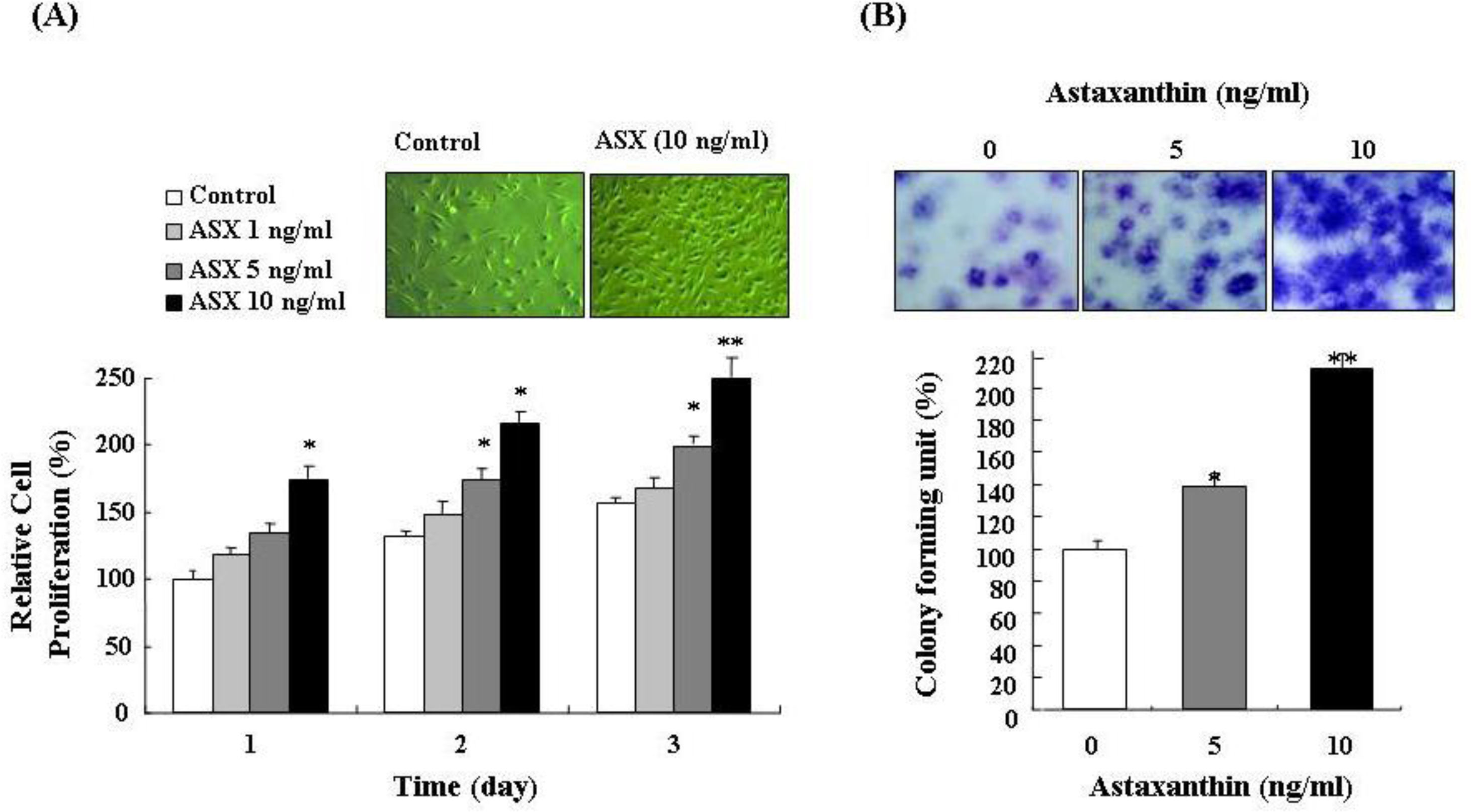
<p>To confirm the effect of astaxanthin on cell growth, proliferation of NPCs treated with different concentrations (1, 5, and 10 ng/mL) of astaxanthin for three days was evaluated by trypan blue exclusion. As shown in <xref ref-type="fig" rid="f1-ijms-11-05109">Figure 1A</xref>, this treatment significantly increased proliferation of NPCs in a dose-dependent and time-dependent manner. In particular, 10 ng/mL astaxanthin showed the highest proliferation of NPCs. Therefore, 10 ng/mL was determined to be the optimal treatment for the study of NPCs. A clonogenic assay was also performed to estimate the proliferation efficiency of astaxanthin-treated NPCs. Because colony-forming units (CFU) are single cell populations, increases in CFU values show that astaxanthin can actively stimulate proliferation of NPCs. Proliferation efficiency of CFU in astaxanthin-treated cells was assessed via visual colony counts. In the CFU assay, astaxanthin-treated NPCs showed increased colony formation compared with control NPCs (<xref ref-type="fig" rid="f1-ijms-11-05109">Figure 1B</xref>). In particular, 10 ng/mL astaxanthin-treated NPCs showed an approximately two-fold increase in colony formation (<xref ref-type="fig" rid="f1-ijms-11-05109">Figure 1B</xref>).</p>
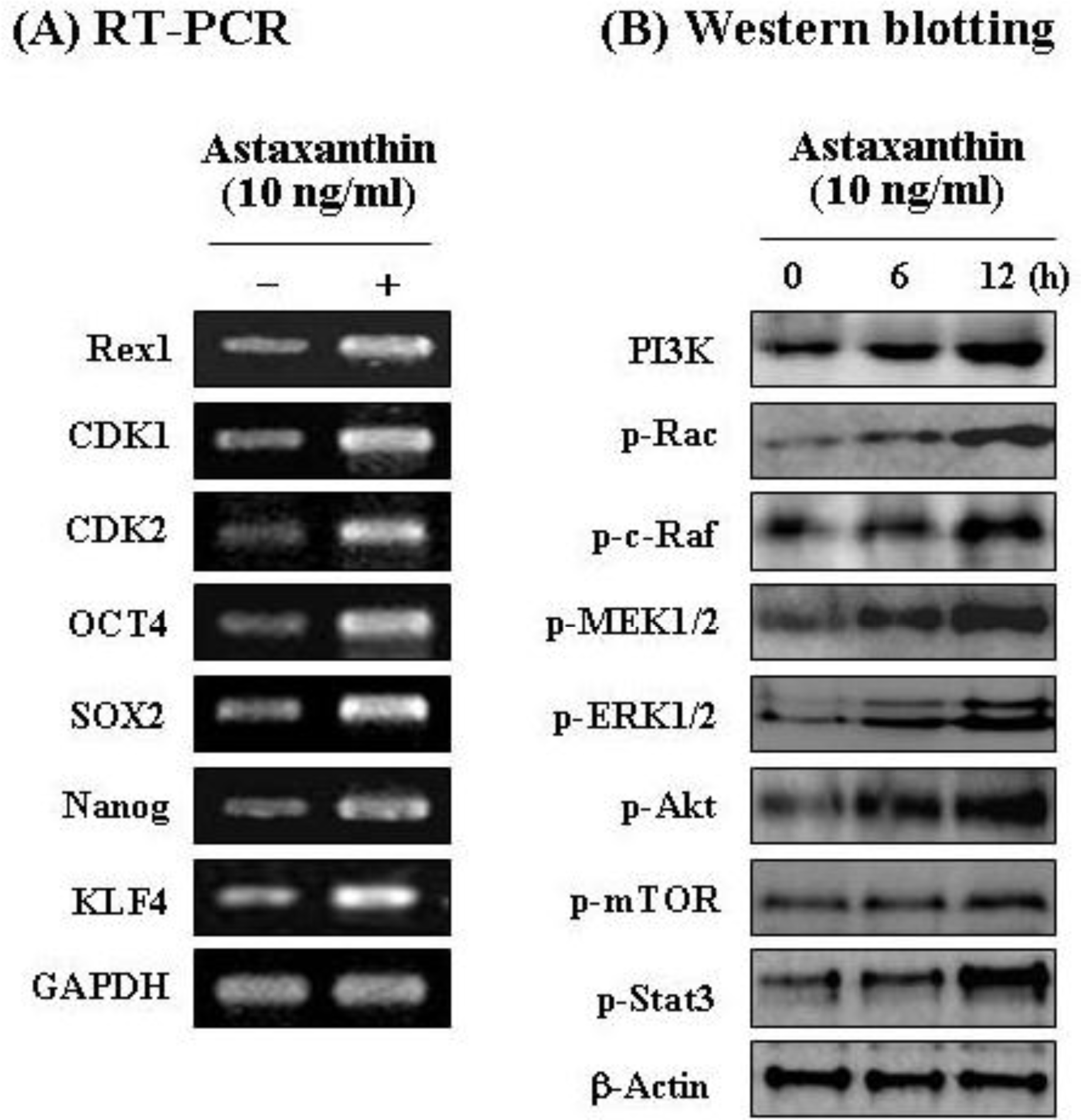
<p>In both control NPCs and astaxanthin-treated cells, expression of molecular markers, including proliferation-related transcription factors and stemness genes, was assessed via RT-PCR. As shown in <xref ref-type="fig" rid="f2-ijms-11-05109">Figure 2A</xref>, 10 ng/mL astaxanthin applied for three days significantly induced upregulation of proliferation-related transcription factors (Rex1, CDK1, and CDK2), coupled with overexpression of stemness genes (OCT4, SOX2, Nanog, and KLF4) [<xref ref-type="bibr" rid="b25-ijms-11-05109">25</xref>,<xref ref-type="bibr" rid="b26-ijms-11-05109">26</xref>]. In particular, Rex1 expression was markedly increased in astaxanthin-treated cells. This result revealed that Rex1 expression is closely associated with proliferation of NPCs. In a recent study, we showed that Rex1 is a major gene, the expression of which is closely associated with proliferation of adipose tissue stromal cells [<xref ref-type="bibr" rid="b27-ijms-11-05109">27</xref>]. Our present results are consistent with a recent report in which enhancement of Rex1 expression caused increased efficiency of cell proliferation. According to a recent report, four transcription factors (Oct4, Sox2, Klf4, and c-Myc) have been shown to reprogram primary mouse fibroblasts in culture [<xref ref-type="bibr" rid="b28-ijms-11-05109">28</xref>]. Also, a balance between Klf4 and c-Myc is, in all likelihood, necessary for stable reprogramming in induced pluripotent stem cells [<xref ref-type="bibr" rid="b28-ijms-11-05109">28</xref>]. In this study, astaxanthin-treated NPCs were shown to overexpress not only Oct4, Sox2, Nanog, and Rex1, but also Klf4 for the acquisition of active self-renewal activity (<xref ref-type="fig" rid="f2-ijms-11-05109">Figure 2A</xref>). Therefore, these results show that astaxanthin can induce active cell proliferation and that it improves stem cell potency in NPCs via stemness acting signals.</p></sec>
<sec>
<label>2.2.</label>
<title>Astaxanthin Induces Proliferation of NPCs via PI3K and MEK Signaling Pathways</title>
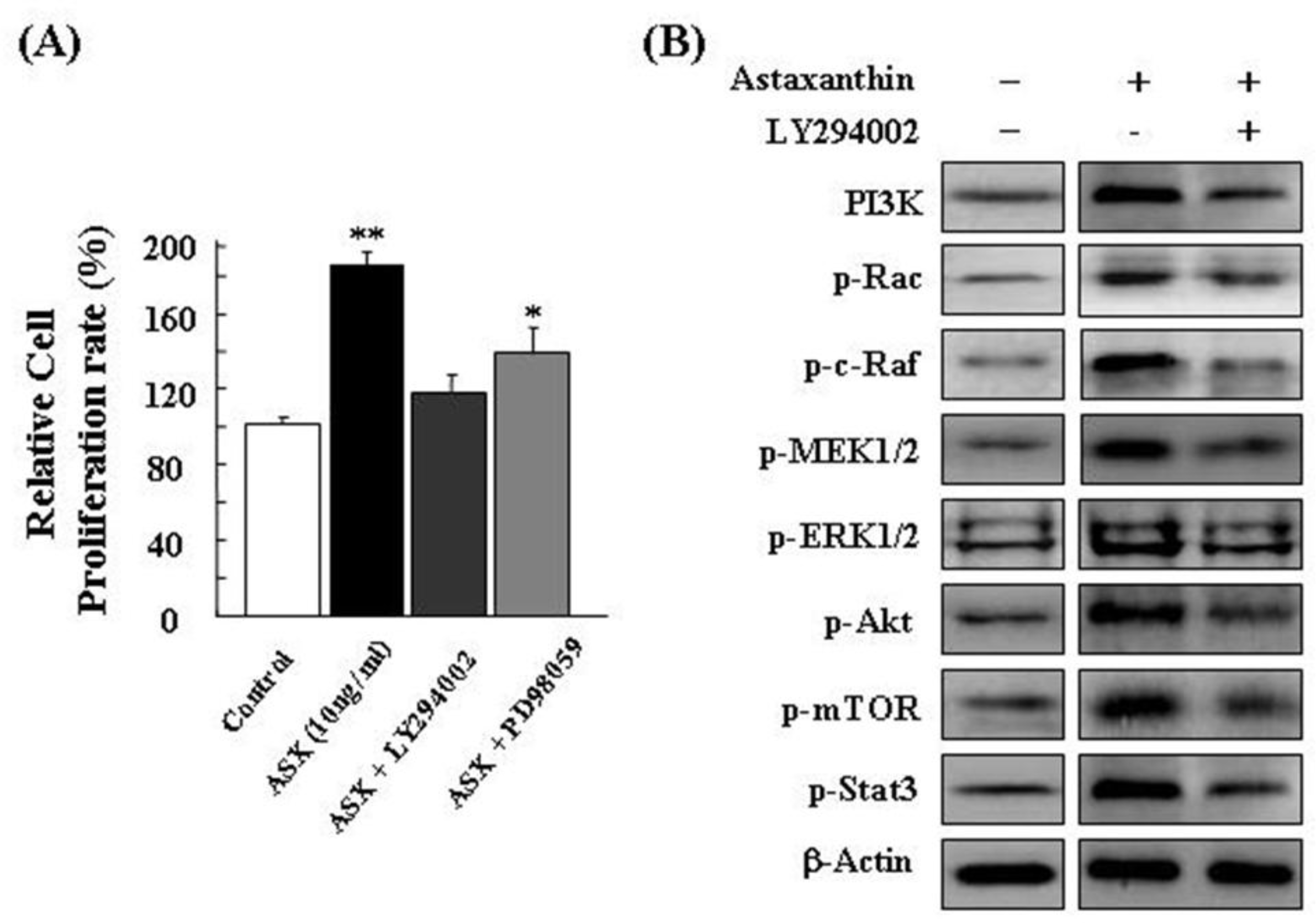
<p>For identification of possible activated signaling molecules involved in active cell proliferation occurring after astaxanthin treatment, total protein levels of several proliferation-related proteins were assessed in NPCs by Western blot analysis. <xref ref-type="fig" rid="f2-ijms-11-05109">Figure 2B</xref> shows the results of Western blot in astaxanthin-treated NPCs for different lengths of time (0, 6, and 12 h). In Western blot analysis, astaxanthin induced significant activation of PI3K and its downstream mediators, p-Rac, p-c-Raf, p-MEK, p-ERK, p-Akt, p-mTOR, and p-Stat3 [<xref ref-type="bibr" rid="b29-ijms-11-05109">29</xref>] in a time-dependent manner. This study then examined the relevance of the PI3K and MEK signaling pathways in cell growth in astaxanthin-treated NPCs. For these studies, inhibition assays were performed with specific inhibitors, LY294002 (a specific inhibitor of PI3K) and PD98059 (a specific inhibitor of MEK). Astaxanthin-treated NPCs were treated with LY294002 or PD98059, or were left untreated. After LY294002 and PD98059 treatment respectively, the relative cell proliferation rate of astaxanthin-treated NPCs was assessed by trypan blue exclusion: Results are shown in <xref ref-type="fig" rid="f3-ijms-11-05109">Figure 3A</xref>. PI3K and MEK inhibition have been shown to cause inhibition of cell growth in astaxanthin-treated NPCs <italic>in vitro.</italic> As shown in <xref ref-type="fig" rid="f3-ijms-11-05109">Figure 3B</xref>, the results of Western blot analysis indicated that LY294002 significantly induced downregulation of PI3K, p-Rac, p-c-Raf, p-MEK, p-ERK, p-Akt, p-mTOR, and p-Stat3 proteins.</p>
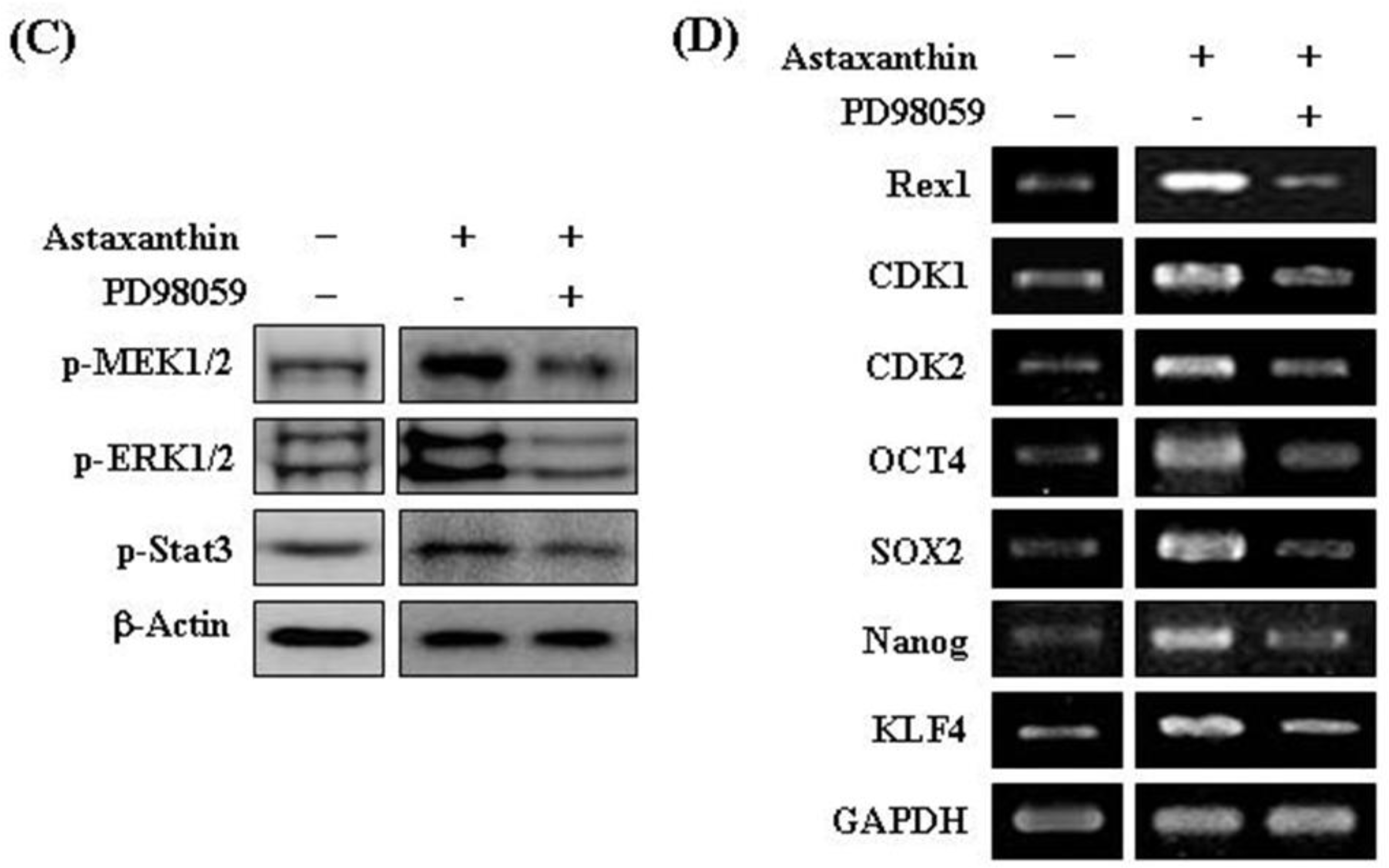
<p>In addition, PD98059 significantly induced reduction of p-MEK, p-ERK, and p-Stat3 proteins (<xref ref-type="fig" rid="f3-ijms-11-05109">Figure 3C</xref>). Results of RT-PCR also indicated that PD98059 caused downregulation of proliferation-related transcription factors (Rex1, CDK1, and CDK2) and stemness genes (OCT4, SOX2, Nanog, and KLF4) (<xref ref-type="fig" rid="f3-ijms-11-05109">Figure 3D</xref>). In this study, the activation of p-ERK in the astaxanthin-treated NPCs resulted in the induction of stemness transcription factor expression, particularly Rex1 expression (<xref ref-type="fig" rid="f3-ijms-11-05109">Figure 3</xref>). Conversely, inhibition of PI3K and MEK in NPCs induced a reduction in cell proliferation (<xref ref-type="fig" rid="f3-ijms-11-05109">Figure 3A</xref>) and stemness transcription factor expression (<xref ref-type="fig" rid="f3-ijms-11-05109">Figure 3D</xref>). Therefore, the upregulation of Rex1 production by astaxanthin is clearly required for cell proliferation. This result indicated that Rex1 is a major gene, the expression of which is closely associated with the proliferation of NPCs, and that astaxanthin increases NPCs proliferation efficiency via an enhancement of Rex1 expression. In conclusion, these results clearly showed that astaxanthin induces proliferation of NPCs via activation of the PI3K and MEK signaling pathways.</p>
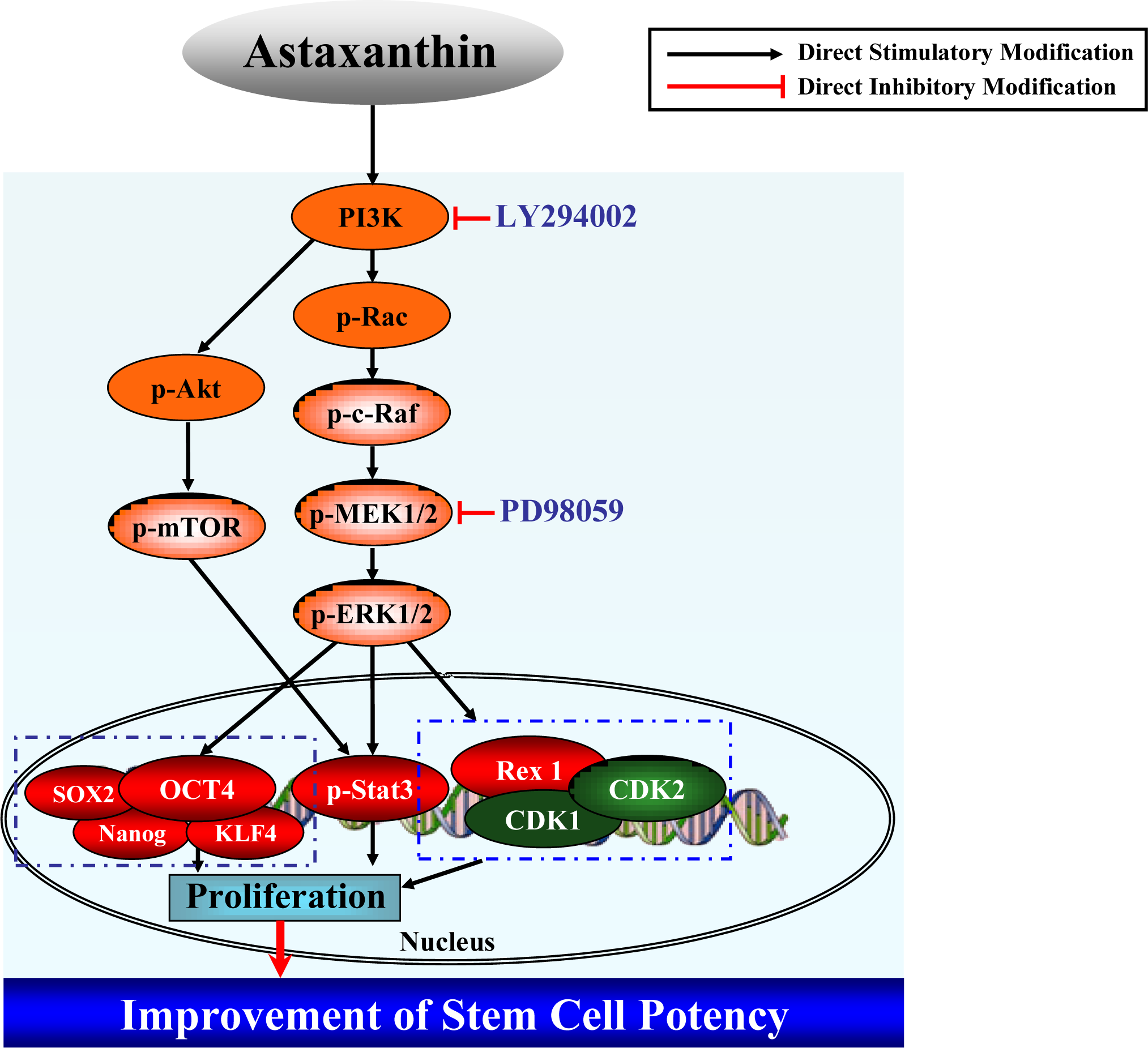
<p>Based on our present data, we suggest a model, shown in <xref ref-type="fig" rid="f4-ijms-11-05109">Figure 4</xref>, for explanation of the astaxanthin-induced cell proliferation mechanism through activation of the PI3K and MEK signaling pathways.</p></sec></sec>
<sec>
<label>3.</label>
<title>Experimental Section</title>
<sec>
<label>3.1.</label>
<title>Astaxanthin Reagent</title>
<p>Astaxanthin (3,3′-dihydroxy-β,β-carotene-4,4′-dione) was purchased from Sigma Chemicals (St. Louis, MO, U.S.) and used in all of the cell culture experiments. A stock solution of astaxanthin was made with dimethyl sulfoxide (DMSO) and stored at 4 °C. The stock solution was diluted to working concentrations prior to use.</p></sec>
<sec>
<label>3.2.</label>
<title>Mouse Neural Progenitor Cells (NPCs) Culture</title>
<p>For preparation of NPCs, mice were anesthetized deeply using a pentobarbital in 0.9% sterile saline solution and sacrificed by decapitation. To obtain NPCs, the region of complete cervical enlargement (spinal cord level C3 through T1) was dissected out. The tissue was minced, washed in sterile Dulbecco’s phosphate buffered saline (DPBS), and digested in a solution of 0.125% of trypsin, DNase (0.01%, Sigma) in Hank’s balanced salt solution (HBSS) for 30 min at 37 °C. Cells were transferred to culture dishes containing serum free growth medium, which consists of neurobasal (NB) medium with B27 supplement, basic fibroblast growth factor (bFGF, 20 ng/mL), and epidermal growth factor (EGF, 20 ng/mL).</p></sec>
<sec sec-type="methods">
<label>3.3.</label>
<title>Selenium Treatment in NPCs and Analysis of Cell Viability</title>
<p>Cultured NPCs were seeded in 10 cm dishes at a density of 5 × 10<sup>5</sup> and cultured in NB media at 37 °C in a CO<sub>2</sub> incubator. Cells were then treated with astaxanthin at various concentrations (1, 5, and 10 ng/mL) for 3 days. Cell viability was assessed by visual cell counts in conjunction with trypan blue exclusion. In all viability assays, triplicate wells were used for each condition, and each experiment was repeated at least three times.</p></sec>
<sec>
<label>3.4.</label>
<title>Colony-Forming Cell (CFU) Assay</title>
<p>Proliferation efficiency of colony-forming units (CFU) in astaxanthin-treated cells was assessed. Cultured NPCs were seeded in 10 cm dishes at a density of 5 × 10<sup>5</sup> and cultured in NB media at 37 °C in a CO<sub>2</sub> incubator. Cells were then treated with astaxanthin (10 ng/mL) for 3 days. For the CFU assay, control NPCs and astaxanthin-treated NPCs were seeded in 10-cm dishes at a density of 2 × 10<sup>2</sup> and cultured in NB media at 37 °C in a CO<sub>2</sub> incubator. After 15 days, cells were fixed with 4% paraformaldehyde (PFA) for 30 min at room temperature and stained with 0.1% toluidine blue in 1% PFA. Proliferation efficiency of the CFU was assessed via visual colony counts [<xref ref-type="bibr" rid="b30-ijms-11-05109">30</xref>].</p></sec>
<sec sec-type="methods">
<label>3.5.</label>
<title>Western Blot Analysis</title>
<p>For confirmation of differentially expressed proteins after astaxanthin (10 ng/mL) treatment in cultured NPCs, NPCs and astaxanthin-treated cells were lysed in 500 μL of lysis buffer (20 mM Tris-HCl [pH 7.5], 150 mM NaCl, 1 mM EDTA, 1% Triton X-100, 2.5 mM sodium pyrophosphate, 1 mM EGTA, 1 mM glycerophosphate, 1 mM Na<sub>3</sub>VO<sub>4</sub>, and 1 mM PMSF. Lysates were clarified by centrifugation at 15,000 × g for 10 min, and the total protein content was determined using a Bio-Rad (Millan, Italy) protein assay kit. For Western blotting, equal amounts (40 μg) of protein extracts in a lysis buffer were subjected to 10% SDS-PAGE analysis and transferred to a nitrocellulose membrane [<xref ref-type="bibr" rid="b31-ijms-11-05109">31</xref>]; anti-phosphatidylinositol 3-kinase (PI3K; 1:1000), anti-p-Rac (1:1000), anti-p-c-Raf (1:1000), anti-p-mitogen-activated protein or extracellular signal-regulated kinase kinase (MEK; 1:1000), anti-p-extracellular signal-regulated kinase (ERK; 1:1000), anti-p-Stat3 (1:1000), anti-p-Akt (1:1000), p-mTOR (Cell Signaling Technology, Danvers, MA, U.S.; 1:1000), and anti-β-Actin (Sigma) antibodies were then incubated with membranes. Relative band intensities were determined using Quality-one 1-D analysis software (Bio-Rad).</p></sec>
<sec>
<label>3.6.</label>
<title>Reverse Transcription-Polymerase Chain Reaction (RT-PCR)</title>
<p>Total cellular RNA was extracted with Trizol (Life Technologies, Frederick, MD, U.S.). Concentration of RNA was determined spectrophotometrically, and concentration and integrity were further evaluated by agarose gel electrophoresis. Residual DNA, if any, was eliminated from the samples using DNase I (RNase-free, Takara Bio Inc, Kyoto, Japan). cDNA was synthesized from the RNA using an oligo-dT primer amplified by 35 cycles (94 °C, 1 min; 55 °C, 1 min; 72 °C, 1 min) of PCR using 20 pM of specific primers. PCR amplification was performed using the primer sets. Duplicate PCR reactions were amplified using primer designed glyceraldehyde-3-phosphate dehydrogenase (GAPDH) as a control for assessment of PCR efficiency and for subsequent analysis by 1.5% agarose gel electrophoresis. PCR products were stained with ethidium bromide [<xref ref-type="bibr" rid="b32-ijms-11-05109">32</xref>].</p></sec>
<sec>
<label>3.7.</label>
<title>Inhibition Assays</title>
<p>To confirm the relevance of the PI3K and MEK signaling pathways in controlling the growth of astaxanthin-treated NPCs, cells were seeded in 10 cm dishes at a density of 5 × 10<sup>5</sup> and cultured in NB media at 37 °C in a CO<sub>2</sub> incubator. Cells were then treated with astaxanthin (10 ng/mL) for 1 day. Astaxanthin-treated NPCs were treated with PI3K inhibitor LY294002 (10 μM; Promega, Madison, WI, U.S.), MEK inhibitor PD98059 (10 μM; Sigma), or were left untreated. Cells were analyzed by Western blot and RT-PCR [<xref ref-type="bibr" rid="b27-ijms-11-05109">27</xref>].</p></sec>
<sec sec-type="methods">
<label>3.8.</label>
<title>Statistical Analysis</title>
<p>All data were presented as mean ± S.E.M from five or more independent experiments. Statistical significance of the differences between groups was calculated by using the Student’s two tailed <italic>t</italic>-test.</p></sec></sec>
<sec sec-type="conclusions">
<label>4.</label>
<title>Conclusions</title>
<p>In the present study, astaxanthin significantly increased proliferation of NPCs in a dose-dependent and time-dependent manner. Also astaxanthin markedly induced upregulation of proliferation-related transcription factors (Rex1, CDK1, and CDK2), coupled with overexpression of stemness genes (OCT4, SOX2, Nanog, and KLF4) for the acquisition of active self-renewal activity. In particular, astaxanthin increased NPCs proliferation efficiency via an enhancement of Rex1 expression. Results of the CFU assay clearly indicated that astaxanthin can actively improve proliferation of NPCs, which was associated with significant activation of PI3K and its downstream mediators, p-Rac, p-c-Raf, p-MEK, p-ERK, p-Akt, p-mTOR, and p-Stat3 in a time-dependent manner. Results from inhibition assays clearly showed that astaxanthin effectively induces proliferation of NPCs via activation of the PI3K and MEK signaling pathways. In conclusion, our data indicated that astaxanthin can improve stem cell potency via increased proliferation of NPCs.</p></sec></body>
<back>
<ack>
<p>This work was supported by a grant from the Personalized Tumor Engineering Research Center (PT-ERC, R11-2008-014-00001-0) and the Korea Science and Engineering Foundation (KOSEF) and Blue-Bio Industry RIC at Dong-Eui University as a RIC (08-06-07) program of KIAT under Ministry of Knowledge Economy, South Korea.</p></ack>
<ref-list>
<title>References</title>
<ref id="b1-ijms-11-05109"><label>1.</label><citation citation-type="journal"><person-group person-group-type="author"><name><surname>Gokhale</surname><given-names>PJ</given-names></name><name><surname>Andrews</surname><given-names>PW</given-names></name></person-group><article-title>Human embryonic stem cells: 10 years on</article-title><source>Lab. Invest</source><year>2009</year><volume>89</volume><fpage>259</fpage><lpage>262</lpage><pub-id pub-id-type="doi">10.1038/labinvest.2008.162</pub-id><pub-id pub-id-type="pmid">19153556</pub-id></citation></ref>
<ref id="b2-ijms-11-05109"><label>2.</label><citation citation-type="journal"><person-group person-group-type="author"><name><surname>Lui</surname><given-names>KO</given-names></name><name><surname>Waldmann</surname><given-names>H</given-names></name><name><surname>Fairchild</surname><given-names>PJ</given-names></name></person-group><article-title>Embryonic stem cells: overcoming the immunological barriers to cell replacement therapy</article-title><source>Curr. Stem Cell Res. Ther</source><year>2009</year><volume>4</volume><fpage>70</fpage><lpage>80</lpage><pub-id pub-id-type="doi">10.2174/157488809787169093</pub-id><pub-id pub-id-type="pmid">19149632</pub-id></citation></ref>
<ref id="b3-ijms-11-05109"><label>3.</label><citation citation-type="journal"><person-group person-group-type="author"><name><surname>Singh</surname><given-names>SR</given-names></name><name><surname>Hou</surname><given-names>SX</given-names></name></person-group><article-title>Multipotent stem cells in the Malpighian tubules of adult <italic>Drosophila</italic></article-title><source>J. Exp. Biol</source><year>2009</year><volume>212</volume><fpage>413</fpage><lpage>423</lpage><pub-id pub-id-type="doi">10.1242/jeb.024216</pub-id><pub-id pub-id-type="pmid">19151216</pub-id></citation></ref>
<ref id="b4-ijms-11-05109"><label>4.</label><citation citation-type="journal"><person-group person-group-type="author"><name><surname>Andrew</surname><given-names>AG</given-names></name><name><surname>Phaff</surname><given-names>HJ</given-names></name><name><surname>Starr</surname><given-names>MP</given-names></name></person-group><article-title>Carotenoids of <italic>Phaffia rhodozyma</italic>, a red pigmented fermenting yeast</article-title><source>Phytochemistry</source><year>1976</year><volume>15</volume><fpage>1003</fpage><lpage>1007</lpage><pub-id pub-id-type="doi">10.1016/S0031-9422(00)84390-3</pub-id></citation></ref>
<ref id="b5-ijms-11-05109"><label>5.</label><citation citation-type="journal"><person-group person-group-type="author"><name><surname>Johnson</surname><given-names>EA</given-names></name><name><surname>An</surname><given-names>GH</given-names></name></person-group><article-title>Astaxanthin from microbial sources</article-title><source>Crit. Rev. Biotechnol</source><year>1991</year><volume>11</volume><fpage>297</fpage><lpage>326</lpage><pub-id pub-id-type="doi">10.3109/07388559109040622</pub-id></citation></ref>
<ref id="b6-ijms-11-05109"><label>6.</label><citation citation-type="journal"><person-group person-group-type="author"><name><surname>Johnson</surname><given-names>EA</given-names></name><name><surname>Schroeder</surname><given-names>WA</given-names></name></person-group><article-title>Microbial carotenoids</article-title><source>Adv. Biochem. Eng</source><year>1995</year><volume>53</volume><fpage>119</fpage><lpage>178</lpage></citation></ref>
<ref id="b7-ijms-11-05109"><label>7.</label><citation citation-type="journal"><person-group person-group-type="author"><name><surname>Johnson</surname><given-names>EA</given-names></name><name><surname>Conklin</surname><given-names>DE</given-names></name><name><surname>Lewis</surname><given-names>MJ</given-names></name></person-group><article-title>The yeast <italic>Phaffia rhodozyma</italic> as a dietary pigment source for salmonoids and crustaceans</article-title><source>J. Fish. Res. Board Can</source><year>1997</year><volume>34</volume><fpage>2417</fpage><lpage>2421</lpage></citation></ref>
<ref id="b8-ijms-11-05109"><label>8.</label><citation citation-type="journal"><person-group person-group-type="author"><name><surname>Johnson</surname><given-names>EA</given-names></name><name><surname>Lewis</surname><given-names>MJ</given-names></name></person-group><article-title>Astaxanthin formation by the yeast <italic>Phaffia rhodozyma</italic></article-title><source>J. Gen. Microbiol</source><year>1979</year><volume>115</volume><fpage>173</fpage><lpage>183</lpage></citation></ref>
<ref id="b9-ijms-11-05109"><label>9.</label><citation citation-type="journal"><person-group person-group-type="author"><name><surname>Lu</surname><given-names>YP</given-names></name><name><surname>Liu</surname><given-names>SY</given-names></name><name><surname>Sun</surname><given-names>H</given-names></name><name><surname>Wu</surname><given-names>XM</given-names></name><name><surname>Li</surname><given-names>JJ</given-names></name><name><surname>Zhu</surname><given-names>L</given-names></name></person-group><article-title>Neuroprotective effect of astaxanthin on H<sub>2</sub>O<sub>2</sub>-induced neurotoxicity <italic>in vitro</italic> and on focal cerebral ischemia <italic>in vivo</italic></article-title><source>Brain Res</source><year>2010</year><volume>11</volume><fpage>40</fpage><lpage>48</lpage></citation></ref>
<ref id="b10-ijms-11-05109"><label>10.</label><citation citation-type="journal"><person-group person-group-type="author"><name><surname>Lee</surname><given-names>DH</given-names></name><name><surname>Lee</surname><given-names>YJ</given-names></name><name><surname>Kwon</surname><given-names>KH</given-names></name></person-group><article-title>Neuroprotective effects of astaxanthin in oxygen-glucose deprivation in SH-SY5Y cells and global cerebral ischemia in rat</article-title><source>J. Clin. Biochem. Nutr</source><year>2010</year><volume>47</volume><fpage>121</fpage><lpage>129</lpage><pub-id pub-id-type="doi">10.3164/jcbn.10-29</pub-id><pub-id pub-id-type="pmid">20838567</pub-id></citation></ref>
<ref id="b11-ijms-11-05109"><label>11.</label><citation citation-type="journal"><person-group person-group-type="author"><name><surname>Kim</surname><given-names>JH</given-names></name><name><surname>Choi</surname><given-names>W</given-names></name><name><surname>Lee</surname><given-names>JH</given-names></name><name><surname>Jeon</surname><given-names>SJ</given-names></name><name><surname>Choi</surname><given-names>YH</given-names></name><name><surname>Kim</surname><given-names>BW</given-names></name><name><surname>Chang</surname><given-names>HI</given-names></name><name><surname>Nam</surname><given-names>SW</given-names></name></person-group><article-title>Astaxanthin inhibits H<sub>2</sub>O<sub>2</sub>-mediated apoptotic cell death in mouse neural progenitor cells via modulation of P38 and MEK signaling pathways</article-title><source>J. Microbiol. Biotechnol</source><year>2009</year><volume>19</volume><fpage>1355</fpage><lpage>1363</lpage><pub-id pub-id-type="pmid">19996687</pub-id></citation></ref>
<ref id="b12-ijms-11-05109"><label>12.</label><citation citation-type="journal"><person-group person-group-type="author"><name><surname>Chan</surname><given-names>KC</given-names></name><name><surname>Mong</surname><given-names>MC</given-names></name><name><surname>Yin</surname><given-names>MC</given-names></name></person-group><article-title>Antioxidative and anti-inflammatory neuroprotective effects of astaxanthin and canthaxanthin in nerve growth factor differentiated PC12 cells</article-title><source>J. Food Sci</source><year>2009</year><volume>74</volume><fpage>H225</fpage><lpage>H231</lpage><pub-id pub-id-type="doi">10.1111/j.1750-3841.2009.01274.x</pub-id><pub-id pub-id-type="pmid">19895474</pub-id></citation></ref>
<ref id="b13-ijms-11-05109"><label>13.</label><citation citation-type="journal"><person-group person-group-type="author"><name><surname>Shen</surname><given-names>H</given-names></name><name><surname>Kuo</surname><given-names>CC</given-names></name><name><surname>Chou</surname><given-names>J</given-names></name><name><surname>Delvolve</surname><given-names>A</given-names></name><name><surname>Jackson</surname><given-names>SN</given-names></name><name><surname>Post</surname><given-names>J</given-names></name><name><surname>Woods</surname><given-names>AS</given-names></name><name><surname>Hoffer</surname><given-names>BJ</given-names></name><name><surname>Wang</surname><given-names>Y</given-names></name><name><surname>Harvey</surname><given-names>BK</given-names></name></person-group><article-title>Astaxanthin reduces ischemic brain injury in adult rats</article-title><source>FASEB J</source><year>2009</year><volume>23</volume><fpage>1958</fpage><lpage>1968</lpage><pub-id pub-id-type="doi">10.1096/fj.08-123281</pub-id><pub-id pub-id-type="pmid">19218497</pub-id></citation></ref>
<ref id="b14-ijms-11-05109"><label>14.</label><citation citation-type="journal"><person-group person-group-type="author"><name><surname>Jyonouchi</surname><given-names>H</given-names></name><name><surname>Zhang</surname><given-names>L</given-names></name><name><surname>Gross</surname><given-names>M</given-names></name><name><surname>Tomita</surname><given-names>Y</given-names></name></person-group><article-title>Immunomodulating actions of carotenoids: enhancement of <italic>in vivo</italic> and <italic>in vitro</italic> antibody production to T-dependent antigens</article-title><source>Nutr. Cancer</source><year>1994</year><volume>21</volume><fpage>47</fpage><lpage>58</lpage><pub-id pub-id-type="doi">10.1080/01635589409514303</pub-id><pub-id pub-id-type="pmid">8183722</pub-id></citation></ref>
<ref id="b15-ijms-11-05109"><label>15.</label><citation citation-type="journal"><person-group person-group-type="author"><name><surname>Okai</surname><given-names>Y</given-names></name><name><surname>Higashi-Okai</surname><given-names>K</given-names></name></person-group><article-title>Possible immunomodulating activities of carotenoids in <italic>in vitro</italic> cell culture experiments</article-title><source>Int. J. Immunopharmacol</source><year>1996</year><volume>8</volume><fpage>753</fpage><lpage>758</lpage></citation></ref>
<ref id="b16-ijms-11-05109"><label>16.</label><citation citation-type="journal"><person-group person-group-type="author"><name><surname>Tanaka</surname><given-names>T</given-names></name><name><surname>Morishita</surname><given-names>Y</given-names></name><name><surname>Suzuki</surname><given-names>M</given-names></name><name><surname>Kojima</surname><given-names>T</given-names></name><name><surname>Okumura</surname><given-names>A</given-names></name><name><surname>Mori</surname><given-names>H</given-names></name></person-group><article-title>Chemoprevension of mouse urinary bladder carcinogenesis by the naturally occurring carotenoid astaxanthin</article-title><source>Carcinogenesis</source><year>1994</year><volume>15</volume><fpage>15</fpage><lpage>19</lpage><pub-id pub-id-type="doi">10.1093/carcin/15.1.15</pub-id><pub-id pub-id-type="pmid">8293542</pub-id></citation></ref>
<ref id="b17-ijms-11-05109"><label>17.</label><citation citation-type="journal"><person-group person-group-type="author"><name><surname>Jyonouchi</surname><given-names>H</given-names></name><name><surname>Sun</surname><given-names>S</given-names></name><name><surname>Lijima</surname><given-names>K</given-names></name><name><surname>Gross</surname><given-names>MD</given-names></name></person-group><article-title>Antitumor activity of astaxanthin and its mode of action</article-title><source>Nutr. Cancer</source><year>2000</year><volume>36</volume><fpage>59</fpage><lpage>65</lpage><pub-id pub-id-type="doi">10.1207/S15327914NC3601_9</pub-id><pub-id pub-id-type="pmid">10798217</pub-id></citation></ref>
<ref id="b18-ijms-11-05109"><label>18.</label><citation citation-type="journal"><person-group person-group-type="author"><name><surname>Kim</surname><given-names>JH</given-names></name><name><surname>Choi</surname><given-names>SK</given-names></name><name><surname>Choi</surname><given-names>SY</given-names></name><name><surname>Kim</surname><given-names>HK</given-names></name><name><surname>Chang</surname><given-names>HI</given-names></name></person-group><article-title>Suppressive effect of astaxanthin isolated from the <italic>Xanthophyllomyces dendrorhous</italic> mutant on ethanol-induced gastric mucosal injury in rats</article-title><source>Biosci. Biotechnol. Biochem</source><year>2005</year><volume>69</volume><fpage>1300</fpage><lpage>1305</lpage><pub-id pub-id-type="doi">10.1271/bbb.69.1300</pub-id><pub-id pub-id-type="pmid">16041134</pub-id></citation></ref>
<ref id="b19-ijms-11-05109"><label>19.</label><citation citation-type="journal"><person-group person-group-type="author"><name><surname>Kim</surname><given-names>JH</given-names></name><name><surname>Kim</surname><given-names>YS</given-names></name><name><surname>Song</surname><given-names>GG</given-names></name><name><surname>Park</surname><given-names>JJ</given-names></name><name><surname>Chang</surname><given-names>HI</given-names></name></person-group><article-title>Protective effect of astaxanthin on naproxen-induced gastric antral ulceration in rats</article-title><source>Eur. J. Pharmacol</source><year>2005</year><volume>514</volume><fpage>53</fpage><lpage>59</lpage><pub-id pub-id-type="doi">10.1016/j.ejphar.2005.03.034</pub-id><pub-id pub-id-type="pmid">15878324</pub-id></citation></ref>
<ref id="b20-ijms-11-05109"><label>20.</label><citation citation-type="journal"><person-group person-group-type="author"><name><surname>Kurashige</surname><given-names>M</given-names></name><name><surname>Okimasu</surname><given-names>E</given-names></name><name><surname>Inoue</surname><given-names>M</given-names></name><name><surname>Utsumi</surname><given-names>K</given-names></name></person-group><article-title>Inhibition of oxidative injury of biological membranes by astaxanthin</article-title><source>Physiol. Chem. Phys. Med. NMR</source><year>1990</year><volume>22</volume><fpage>27</fpage><lpage>38</lpage><pub-id pub-id-type="pmid">2084711</pub-id></citation></ref>
<ref id="b21-ijms-11-05109"><label>21.</label><citation citation-type="journal"><person-group person-group-type="author"><name><surname>Naguib</surname><given-names>YM</given-names></name></person-group><article-title>Antioxidant activities of astaxanthin and related carotenoids</article-title><source>J. Agric. Food. Chem</source><year>2000</year><volume>48</volume><fpage>1150</fpage><lpage>1154</lpage><pub-id pub-id-type="doi">10.1021/jf991106k</pub-id><pub-id pub-id-type="pmid">10775364</pub-id></citation></ref>
<ref id="b22-ijms-11-05109"><label>22.</label><citation citation-type="journal"><person-group person-group-type="author"><name><surname>Lim</surname><given-names>BP</given-names></name><name><surname>Nagao</surname><given-names>A</given-names></name><name><surname>Terao</surname><given-names>J</given-names></name><name><surname>Tanaka</surname><given-names>K</given-names></name><name><surname>Suzuki</surname><given-names>T</given-names></name><name><surname>Takama</surname><given-names>K</given-names></name></person-group><article-title>Antioxidant activity of xanthophylls on peroxyl radical mediated phospholipid peroxidation</article-title><source>Biochim. Biophys. Acta</source><year>1992</year><volume>1126</volume><fpage>178</fpage><lpage>184</lpage><pub-id pub-id-type="doi">10.1016/0005-2760(92)90288-7</pub-id><pub-id pub-id-type="pmid">1627620</pub-id></citation></ref>
<ref id="b23-ijms-11-05109"><label>23.</label><citation citation-type="journal"><person-group person-group-type="author"><name><surname>Palozza</surname><given-names>P</given-names></name><name><surname>Krinsky</surname><given-names>NI</given-names></name></person-group><article-title>Astaxanthin and canthaxanthin are potent antioxidants in a membrane model</article-title><source>Arch. Biochem. Biophys</source><year>1992</year><volume>297</volume><fpage>291</fpage><lpage>295</lpage><pub-id pub-id-type="doi">10.1016/0003-9861(92)90675-M</pub-id><pub-id pub-id-type="pmid">1497349</pub-id></citation></ref>
<ref id="b24-ijms-11-05109"><label>24.</label><citation citation-type="journal"><person-group person-group-type="author"><name><surname>Nakajima</surname><given-names>Y</given-names></name><name><surname>Inokuchi</surname><given-names>Y</given-names></name><name><surname>Shimazawa</surname><given-names>M</given-names></name><name><surname>Otsubo</surname><given-names>K</given-names></name><name><surname>Ishibashi</surname><given-names>T</given-names></name><name><surname>Hara</surname><given-names>H</given-names></name></person-group><article-title>Astaxanthin, a dietary carotenoid, protects retinal cells against oxidative stress <italic>in vitro</italic> and in mice <italic>in vivo</italic></article-title><source>J. Pharm. Pharmacol</source><year>2008</year><volume>60</volume><fpage>1365</fpage><lpage>1374</lpage><pub-id pub-id-type="doi">10.1211/jpp.60.10.0013</pub-id><pub-id pub-id-type="pmid">18812030</pub-id></citation></ref>
<ref id="b25-ijms-11-05109"><label>25.</label><citation citation-type="journal"><person-group person-group-type="author"><name><surname>Forte</surname><given-names>A</given-names></name><name><surname>Schettino</surname><given-names>MT</given-names></name><name><surname>Finicelli</surname><given-names>M</given-names></name><name><surname>Cipollaro</surname><given-names>M</given-names></name><name><surname>Colacurci</surname><given-names>N</given-names></name><name><surname>Cobellis</surname><given-names>L</given-names></name><name><surname>Galderisi</surname><given-names>U</given-names></name></person-group><article-title>Expression pattern of stemness-related genes in human endometrial and endometriotic tissues</article-title><source>Mol. Med</source><year>2009</year><volume>15</volume><fpage>392</fpage><lpage>401</lpage><pub-id pub-id-type="pmid">19690622</pub-id></citation></ref>
<ref id="b26-ijms-11-05109"><label>26.</label><citation citation-type="journal"><person-group person-group-type="author"><name><surname>Dhodapkar</surname><given-names>MV</given-names></name></person-group><article-title>Immunity to stemness genes in human cancer</article-title><source>Curr. Opin. Immunol</source><year>2010</year><volume>22</volume><fpage>245</fpage><lpage>250</lpage><pub-id pub-id-type="doi">10.1016/j.coi.2010.01.011</pub-id><pub-id pub-id-type="pmid">20144857</pub-id></citation></ref>
<ref id="b27-ijms-11-05109"><label>27.</label><citation citation-type="journal"><person-group person-group-type="author"><name><surname>Kim</surname><given-names>JH</given-names></name><name><surname>Lee</surname><given-names>MR</given-names></name><name><surname>Kim</surname><given-names>JH</given-names></name><name><surname>Jee</surname><given-names>MK</given-names></name><name><surname>Kang</surname><given-names>SK</given-names></name></person-group><article-title>Selenium induces improvement of stem cell behaviors in human adipose-tissue stromal cells via SAPK/JNK and stemness acting signals</article-title><source>Stem Cells</source><year>2008</year><volume>26</volume><fpage>2724</fpage><lpage>2734</lpage><pub-id pub-id-type="doi">10.1634/stemcells.2008-0184</pub-id><pub-id pub-id-type="pmid">18583539</pub-id></citation></ref>
<ref id="b28-ijms-11-05109"><label>28.</label><citation citation-type="journal"><person-group person-group-type="author"><name><surname>Lin</surname><given-names>T</given-names></name><name><surname>Chao</surname><given-names>C</given-names></name><name><surname>Saito</surname><given-names>S</given-names></name></person-group><article-title>p53 induces differentiation of mouse embryonic stem cells by suppressing Nanog expression</article-title><source>Nat. Cell. Biol</source><year>2005</year><volume>7</volume><fpage>165</fpage><lpage>171</lpage><pub-id pub-id-type="doi">10.1038/ncb1211</pub-id><pub-id pub-id-type="pmid">15619621</pub-id></citation></ref>
<ref id="b29-ijms-11-05109"><label>29.</label><citation citation-type="journal"><person-group person-group-type="author"><name><surname>Chan</surname><given-names>S</given-names></name></person-group><article-title>Targeting the mammalian target of rapamycin (mTOR): a new approach to treating cancer</article-title><source>Br. J. Cancer</source><year>2004</year><volume>91</volume><fpage>1420</fpage><lpage>1424</lpage><pub-id pub-id-type="doi">10.1038/sj.bjc.6602162</pub-id><pub-id pub-id-type="pmid">15365568</pub-id></citation></ref>
<ref id="b30-ijms-11-05109"><label>30.</label><citation citation-type="journal"><person-group person-group-type="author"><name><surname>Castro-Malaspina</surname><given-names>H</given-names></name><name><surname>Gay</surname><given-names>RE</given-names></name><name><surname>Resnick</surname><given-names>G</given-names></name><name><surname>Kapoor</surname><given-names>N</given-names></name><name><surname>Meyers</surname><given-names>P</given-names></name><name><surname>Chiarieri</surname><given-names>D</given-names></name><name><surname>McKenzie</surname><given-names>S</given-names></name><name><surname>Broxmeyer</surname><given-names>HE</given-names></name><name><surname>Moore</surname><given-names>MA</given-names></name></person-group><article-title>Characterization of human bone marrow fibroblast colony-forming cells (CFU-F) and their progeny</article-title><source>Blood</source><year>1980</year><volume>56</volume><fpage>289</fpage><lpage>301</lpage><pub-id pub-id-type="pmid">6994839</pub-id></citation></ref>
<ref id="b31-ijms-11-05109"><label>31.</label><citation citation-type="journal"><person-group person-group-type="author"><name><surname>Jang</surname><given-names>KJ</given-names></name><name><surname>Han</surname><given-names>MH</given-names></name><name><surname>Lee</surname><given-names>BH</given-names></name><name><surname>Kim</surname><given-names>BW</given-names></name><name><surname>Kim</surname><given-names>CH</given-names></name><name><surname>Yoon</surname><given-names>HM</given-names></name><name><surname>Choi</surname><given-names>YH</given-names></name></person-group><article-title>Induction of apoptosis by ethanol extracts of <italic>Ganoderma lucidum</italic> in human gastric carcinoma cells</article-title><source>J. Acupunct. Meridian Stud</source><year>2010</year><volume>3</volume><fpage>24</fpage><lpage>31</lpage><pub-id pub-id-type="doi">10.1016/S2005-2901(10)60004-0</pub-id><pub-id pub-id-type="pmid">20633512</pub-id></citation></ref>
<ref id="b32-ijms-11-05109"><label>32.</label><citation citation-type="journal"><person-group person-group-type="author"><name><surname>Kim</surname><given-names>KO</given-names></name><name><surname>Park</surname><given-names>SY</given-names></name><name><surname>Han</surname><given-names>CW</given-names></name><name><surname>Chung</surname><given-names>HK</given-names></name><name><surname>Ryu</surname><given-names>DH</given-names></name><name><surname>Han</surname><given-names>JS</given-names></name></person-group><article-title>Effect of sildenafil citrate on interleukin-1-induced nitric oxide synthesis and iNOS expression in SW982 cells</article-title><source>Exp. Mol. Med</source><year>2008</year><volume>40</volume><fpage>286</fpage><lpage>293</lpage><pub-id pub-id-type="doi">10.3858/emm.2008.40.3.286</pub-id><pub-id pub-id-type="pmid">18587266</pub-id></citation></ref></ref-list>
<sec sec-type="display-objects">
<title>Figures</title>
<fig id="f1-ijms-11-05109" position="float">
<label>Figure 1.</label>
<caption>
<p>Astaxanthin stimulates cell proliferation of NPCs. (<bold>A</bold>) Proliferation of NPCs treated with different concentrations of astaxanthin (ASX) for 3 days were assessed by trypan blue exclusion. Application of astaxanthin for 3 days significantly increased proliferation of NPCs in a dose-dependent and time-dependent manner. Data were analyzed using analysis of variance with the Fisher test or <italic>t</italic>-test (* <italic>P</italic> &lt; 0.05, ** <italic>P</italic> &lt; 0.01); (<bold>B</bold>) A clonogenic (CFU) assay was performed to estimate proliferation efficiency of astaxanthin-treated NPCs. In the CFU assay, 10 ng/mL astaxanthin-treated NPCs showed an approximately 2-fold increase in colony formation compared with control NPCs. Data were analyzed using analysis of variance with the Fisher test or <italic>t</italic>-test (* <italic>P</italic> &lt; 0.05, ** <italic>P</italic> &lt; 0.01).</p></caption><graphic xlink:href="ijms-11-05109f1.gif"/></fig>
<fig id="f2-ijms-11-05109" position="float">
<label>Figure 2.</label>
<caption>
<p>Astaxanthin induces active expression of several functional genes and stemness genes, and proliferation-related signal proteins in NPCs. (<bold>A</bold>) Astaxanthin induced upregulation of proliferation-related transcription factors (Rex1, CDK1, and CDK2), coupled with overexpression of stemness genes (OCT4, SOX2, Nanog, and KLF4); (<bold>B</bold>) Astaxanthin induced significant activation of PI3K and its downstream mediators, p-Rac, p-c-Raf, p-MEK, p-ERK, p-Akt, p-mTOR, and p-Stat3 in a time-dependent manner.</p></caption><graphic xlink:href="ijms-11-05109f2.gif"/></fig>
<fig id="f3-ijms-11-05109" position="float">
<label>Figure 3.</label>
<caption>
<p>Astaxanthin induces proliferation of NPCs via the PI3K and MEK signaling pathways. To estimate the relevance of the PI3K and MEK signaling pathways in cell growth in astaxanthin-treated NPCs, inhibition assays were performed with LY294002 (10 μM) and PD98059 (10 μM). (<bold>A</bold>) Inhibition of PI3K and MEK has been shown to cause inhibition of cell growth in astaxanthin-treated NPCs <italic>in vitro</italic>; (<bold>B</bold>) LY294002 induced downregulation of PI3K, p-Rac, p-c-Raf, p-MEK, p-ERK, p-Akt, p-mTOR, and p-Stat3 proteins; (<bold>C</bold>) PD98059 significantly induced reduction of p-MEK, p-ERK, and p-Stat3; (<bold>D</bold>) PD98059 caused downregulation of proliferation-related transcription factors and stemness genes.</p></caption><graphic xlink:href="ijms-11-05109f3a.gif"/><graphic xlink:href="ijms-11-05109f3b.gif"/></fig>
<fig id="f4-ijms-11-05109" position="float">
<label>Figure 4.</label>
<caption>
<p>Putative cell proliferation mechanism induced by astaxanthin treatment. Astaxanthin induces proliferation of NPCs via activation of the PI3K and MEK signaling pathways.</p></caption><graphic xlink:href="ijms-11-05109f4.gif"/></fig></sec></back></article>