


Adamantane-Isothiourea Hybrid Derivatives: Synthesis, Characterization, In Vitro Antimicrobial, and In Vivo Hypoglycemic Activities
 and
and
Abstract
1. Introduction
2. Results and Discussion
2.1. Chemical Synthesis
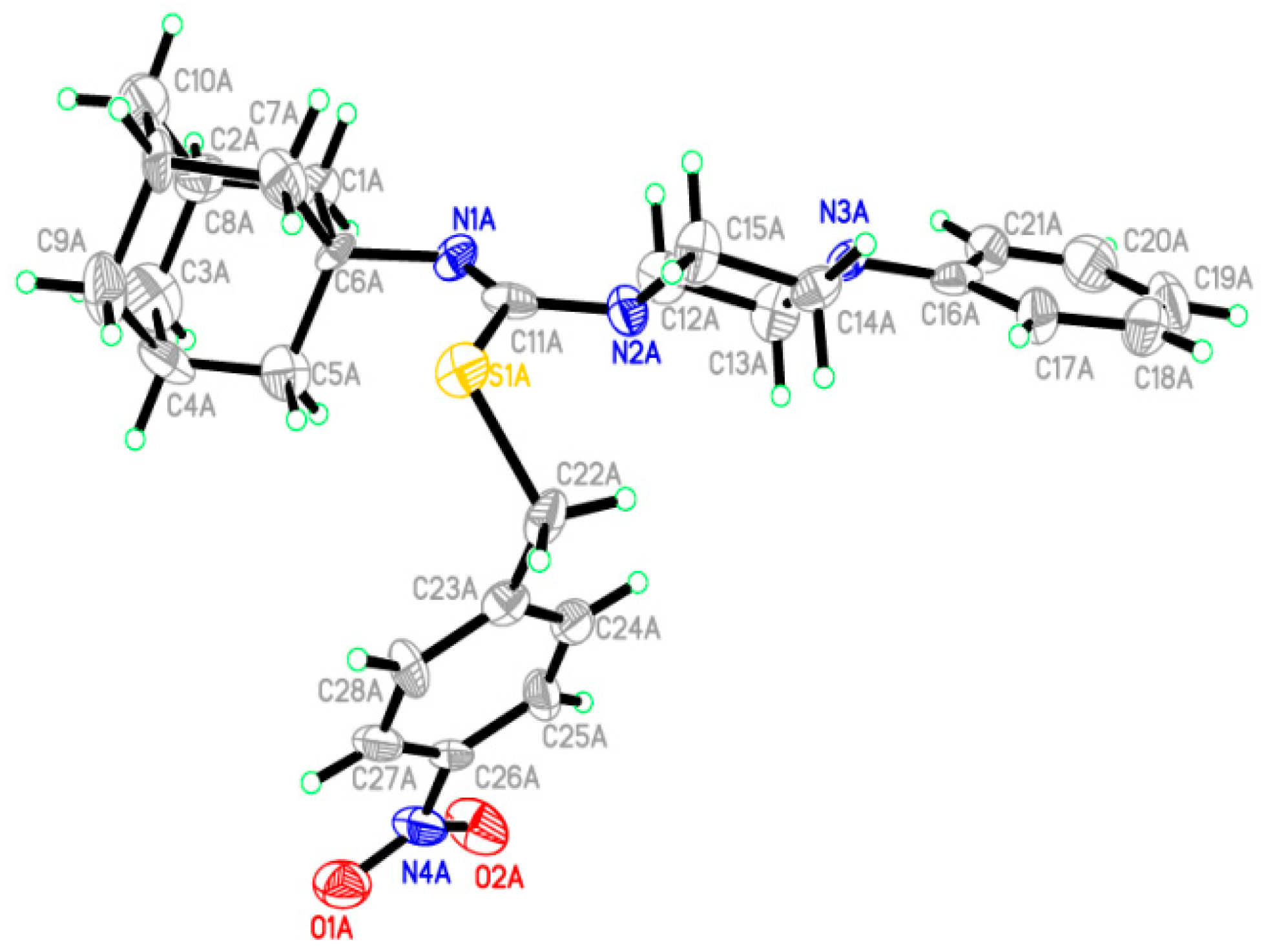
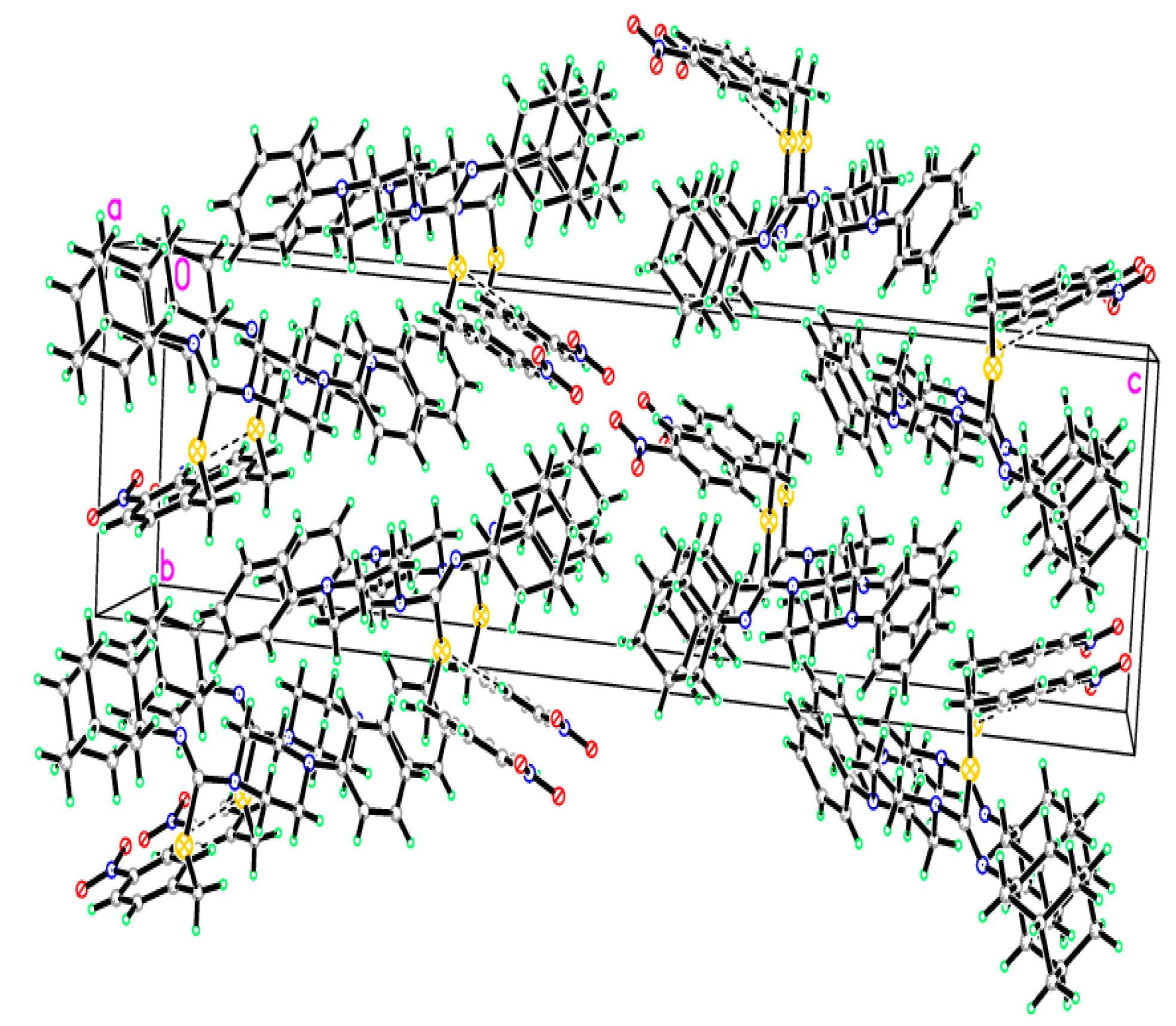
2.2. Crystallographic Studies
2.3. In Vitro Antimicrobial Activity
2.4. In Vivo Hypoglycemic Activity
3. Materials and Methods
3.1. General
3.2. Synthesis of 4-Arylmethyl (Z)-N′-(Adamantan-1-yl)-Morpholine-4-Carbothioimidates 7a–e and 4-Arylmethyl (Z)-N′-(Adamantan-1-yl)-4-Phenylpiperazine-1-Carbothioimidates 8a–e
3.3. Crystal Growth and Single Crystal X-ray Study
4. Conclusions
Supplementary Materials
Acknowledgments
Author Contributions
Conflicts of Interest
References
- Liu, J.; Obando, D.; Liao, V.; Lifa, T.; Codd, R. The many faces of the adamantyl group in drug design. Eur. J. Med. Chem. 2011, 46, 1949–1963. [Google Scholar] [CrossRef] [Scilit] [PubMed]
- Lamoureux, G.; Artavia, G. Use of the adamantane structure in medicinal chemistry. Curr. Med. Chem. 2010, 17, 2967–2978. [Google Scholar] [CrossRef] [Scilit] [PubMed]
- Davies, W.L.; Grunnert, R.R.; Haff, R.F.; McGahen, J.W.; Neumeyer, E.M.; Paulshock, M.; Watts, J.C.; Wood, T.R.; Hermann, E.C.; Hoffmann, C.E. Antiviral activity of 1-adamantamine (amantadine). Science 1964, 144, 862–863. [Google Scholar] [CrossRef] [Scilit] [PubMed]
- Togo, Y.; Hornick, R.B.; Dawkins, A.T. Studies on induced influenza in man. I. Double blind studies designed to assess prophylactic efficacy of amantadine hydrochloride against A2/Rockville/1/65 strain. J. Am. Med. Assoc. 1968, 203, 1089–1094. [Google Scholar] [CrossRef] [Scilit]
- Wendel, H.A.; Snyder, M.T.; Pell, S. Trial of amantadine in epidemic influenza. Clin. Pharmacol. Ther. 1966, 7, 38–43. [Google Scholar] [CrossRef] [Scilit]
- Schwab, R.S.; England, A.C.; Poskanzer, D.C.; Young, R.R. Amantadine in the treatment of Parkinson’s disease. J. Am. Med. Assoc. 1969, 208, 1168–1170. [Google Scholar] [CrossRef] [Scilit]
- Rabinovich, S.; Baldini, J.T.; Bannister, R. Treatment of influenza. The therapeutic efficacy of rimantadine HCl in a naturally occurring influenza A2 outbreak. Am. J. Med. Sci. 1969, 257, 328–335. [Google Scholar] [CrossRef] [Scilit] [PubMed]
- Rosenthal, K.S.; Sokol, M.S.; Ingram, R.L.; Subramanian, R.; Fort, R.C. Tromantadine: Inhibitor of early and late events in herpes simplex virus replication. Antimicrob. Agents Chemother. 1982, 22, 1031–1036. [Google Scholar] [CrossRef] [Scilit] [PubMed]
- Burstein, M.E.; Serbin, A.V.; Khakhulina, T.V.; Alymova, I.V.; Stotskaya, L.L.; Bogdan, O.P.; Manukchina, E.E.; Jdanov, V.V.; Sharova, N.K. Inhibition of HIV-1 replication by newly developed adamantane-containing polyanionic agents. Antiviral Res. 1999, 41, 135–144. [Google Scholar] [CrossRef] [Scilit]
- El-Emam, A.A.; Al-Deeb, O.A.; Al-Omar, M.A.; Lehmann, J. Synthesis, antimicrobial, and anti-HIV-1 activity of certain 5-(1-adamantyl)-2-substituted thio-1,3,4-oxadiazoles and 5-(1-adamantyl)-3-substituted aminomethyl-1,3,4-oxadiazoline-2-thiones. Bioorg. Med. Chem. 2004, 12, 5107–5113. [Google Scholar] [CrossRef] [Scilit] [PubMed]
- Balzarini, J.; Orzeszko, B.; Mauri, J.K.; Orzeszko, A. Synthesis and anti-HIV studies of 2-adamantyl-substituted thiazolidin-4-ones. Eur. J. Med. Chem. 2007, 42, 993–1003. [Google Scholar] [CrossRef] [Scilit] [PubMed]
- Balzarini, J.; Orzeszko-Krzesińska, B.; Maurin, J.K.; Orzeszko, A. Synthesis and anti-HIV studies of 2- and 3-adamantyl-substituted thiazolidin-4-ones. Eur. J. Med. Chem. 2009, 44, 303–311. [Google Scholar] [CrossRef] [Scilit] [PubMed]
- Sun, S.Y.; Yue, P.; Chen, X.; Hong, W.K.; Lotan, R. The synthetic retinoid CD437 selectively induces apoptosis in human lung cancer cells while sparing normal human lung epithelial cells. Cancer Res. 2002, 62, 2430–2436. [Google Scholar] [PubMed]
- Jia, L.; Tomaszewski, J.E.; Hanrahan, C.; Coward, L.; Noker, P.; Gorman, G.; Nikonenko, B.; Protopopova, M. Pharmacodynamics and pharmacokinetics of SQ109, a new diamine-based antitubercular drug. Br. J. Pharmacol. 2005, 144, 80–87. [Google Scholar] [CrossRef] [Scilit] [PubMed]
- Protopopova, M.; Hanrahan, C.; Nikonenko, B.; Samala, R.; Chen, P.; Gearhart, J.; Einck, L.; Nacy, C.A. Identification of a new antitubercular drug candidate, SQ109, from a combinatorial library of 1,2-ethylenediamines. J. Antimicrob. Chemother. 2005, 56, 968–974. [Google Scholar] [CrossRef] [Scilit] [PubMed]
- Villhauer, E.B.; Brinkman, J.A.; Naderi, G.B.; Burkey, B.F.; Dunning, B.E.; Prasad, K.; Mangold, B.L.; Russell, M.E.; Hughes, T.E. 1-(3-Hydroxy-1-adamantyl)aminoacetyl-2-cyano-(S)-pyrrolidine: A potent, selective, and orally bioavailable dipeptidyl peptidase IV inhibitor with antihyperglycemic properties. J. Med. Chem. 2003, 46, 2774–2789. [Google Scholar] [CrossRef] [Scilit] [PubMed]
- Augeri, D.J.; Robl, J.A.; Betebenner, D.A.; Magnin, D.R.; Khanna, A.; Robertson, J.G.; Wang, A.; Simpkins, L.M.; Taunk, P.; Huang, Q.; et al. Discovery and preclinical profile of saxagliptin (BMS-477118): A highly potent, long-acting, orally active dipeptidyl peptidase IV inhibitor for the treatment of type 2 diabetes. J. Med. Chem. 2005, 48, 5025–5037. [Google Scholar] [CrossRef] [Scilit] [PubMed]
- Anagnostis, P.; Katsiki, N.; Adamidou, F.; Athyros, V.G.; Karagiann, A.; Kita, M.; Mikhailidis, D.P. 11-Beta-Hydroxysteroid dehydrogenase type 1 inhibitors: Novel agents for the treatment of metabolic syndrome and obesity-related disorders. Metabolism 2013, 62, 21–33. [Google Scholar] [CrossRef] [Scilit] [PubMed]
- Olson, S.; Aster, S.D.; Brown, K.; Carbin, L.; Graham, D.W.; Hermanowski-Vosatka, A.; LeGrand, C.B.; Mundt, S.S.; Robbins, M.A.; Schaeffer, J.M.; et al. Adamantyl triazoles as selective inhibitors of 11β-hydroxysteroid dehydrogenase type 1. Bioorg. Med. Chem. Lett. 2005, 15, 4359–4362. [Google Scholar] [CrossRef] [Scilit] [PubMed]
- Cheng, H.; Hoffman, J.; Le, P.; Nair, S.K.; Cripps, S.; Matthews, J.; Smith, C.; Yang, M.; Kupchinsky, S.; Dress, K.; et al. The development and SAR of pyrrolidine carboxamide 11β-HSD1 inhibitors. Bioorg. Med. Chem. Lett. 2010, 20, 2897–2902. [Google Scholar] [CrossRef] [Scilit] [PubMed]
- Cott, J.S.; Choormun, J. 11β-Hydroxysteroid dehydrogenase Type 1 (11β-HSD-1) inhibitors in development. In New Therapeutic Strategies for Type-2 Diabetes, Small Molecule Approaches; Jones, R.N., Ed.; RSC: Cambridge, UK, 2012; pp. 109–133. [Google Scholar]
- Thoma, G.; Streiff, M.B.; Kovarik, J.; Glickman, F.; Wagner, T.; Beerli, C.; Zerwes, H. Orally bioavailable isothioureas block function of the chemokine receptor CXCR4 in vitro and in vivo. J. Med. Chem. 2008, 51, 7915–7920. [Google Scholar] [CrossRef] [Scilit] [PubMed]
- Berlin, M.; Boyce, C.W.; Ruiz, M.L. Histamine H3 receptor as a drug discovery target. J. Med. Chem. 2011, 54, 26–53. [Google Scholar] [CrossRef] [Scilit] [PubMed]
- Dai, H.; Fu, Q.; Shen, Y.; Hu, W.; Zhang, Z.; Timmerman, H.; Leurs, R.; Chen, Z. The histamine H3 receptor antagonist clobenpropit enhances GABA release to protect against NMDA-induced excitotoxicity through the cAMP/protein kinase A pathway in cultured cortical neurons. Eur. J. Pharmacol. 2007, 563, 117–123. [Google Scholar] [CrossRef] [Scilit] [PubMed]
- Barrientos, G.; Bose, D.D.; Feng, W.; Padilla, I.; Pessah, I.N. The Na+/Ca2+ exchange inhibitor 2-(2-(4-(4-nitrobenzyloxy)phenyl)ethyl)isothiourea methane-sulfonate (KBR7943) also blocks ryanodine receptors type 1 (RyR1) and type 2 (RyR2) Channels. Mol. Pharmacol. 2009, 76, 560–568. [Google Scholar] [CrossRef] [Scilit] [PubMed]
- Koronkiewicz, M.; Romiszewska, A.; Chilmonczyk, Z.; Kazimierczuk, Z. New benzimidazole-derived isothioureas as potential antileukemic agents—Studies in vitro. Med. Chem. 2015, 11, 364–372. [Google Scholar] [CrossRef] [Scilit] [PubMed]
- Nicholson, A.; Perry, J.D.; James, A.L.; Stanforth, S.P.; Carnell, S.; Wilkinson, K.; Anjam Khan, C.M.; De Soyza, A.; Gould, F.K. In vitro activity of S-(3,4-dichlorobenzyl)isothiourea hydrochloride and novel structurally related compounds against multidrug-resistant bacteria, including Pseudomonas aeruginosa and Burkholderia cepacia complex. Int. J. Antimicrob. Agents 2012, 39, 27–32. [Google Scholar] [CrossRef] [Scilit] [PubMed]
- Shearer, B.G.; Lee, S.; Oplinger, J.A.; Frick, L.W.; Garvey, E.P.; Furfine, E.S. Substituted N-phenylisothioureas: Potent inhibitors of human nitric oxide synthase with neuronal isoform selectivity. J. Med. Chem. 1997, 40, 1901–1905. [Google Scholar] [CrossRef] [Scilit] [PubMed]
- Castaño, T.; Encinas, A.; Pérez, C.; Castro, A.; Campillo, N.E.; Gil, C. Design, synthesis, and evaluation of potential inhibitors of nitric oxide synthase. Bioorg. Med. Chem. 2008, 16, 6193–6206. [Google Scholar] [CrossRef] [Scilit] [PubMed]
- El-Emam, A.A.; Al-Tamimi, A.-M.S.; Al-Omar, M.A.; Alrashood, K.A.; Habib, E.E. Synthesis and antimicrobial activity of novel 5-(1-adamantyl)-2-aminomethyl-4-substituted-1,2,4-triazoline-3-thiones. Eur. J. Med. Chem. 2013, 68, 96–102. [Google Scholar] [CrossRef] [Scilit] [PubMed]
- Al-Abdullah, E.S.; Asiri, H.H.; Lahsasni, S.; Habib, E.E.; Ibrahim, T.M.; El-Emam, A.A. Synthesis, antimicrobial, and anti-inflammatory activity, of novel S-substituted and N-substituted 5-(1-adamantyl)-1,2,4-triazole-3-thiols. Drug Des. Dev. Ther. 2014, 8, 505–518. [Google Scholar]
- Al-Abdullah, E.S.; Al-Tuwaijri, H.M.; Hassan, H.M.; Haiba, M.E.; Habib, E.E.; El-Emam, A.A. Antimicrobial and hypoglycemic activities of novel N-Mannich bases derived from 5-(1-adamantyl)-4-substituted-1,2,4- triazoline-3-thiones. Int. J. Mol. Sci. 2014, 15, 22995–23010. [Google Scholar] [CrossRef] [Scilit] [PubMed]
- Al-Abdullah, E.S.; Al-Tuwaijri, H.M.; Hassan, H.M.; Al-Alshaikh, M.A.; Habib, E.E.; El-Emam, A.A. Synthesis, antimicrobial and hypoglycemic activities of novel N-(1-adamantyl)carbothioamide derivatives. Molecules 2015, 20, 8125–8143. [Google Scholar] [CrossRef] [Scilit] [PubMed]
- Woods, G.L.; Washington, J.A. Antibacterial susceptibility tests: Dilution and disk diffusion methods. In Manual of Clinical Microbiology; Murray, P.R., Baron, E.J., Pfaller, M.A., Tenover, F.C., Yolken, R.H., Eds.; American Society of Microbiology: Washington, DC, USA, 1995. [Google Scholar]
- National Committee for Clinical Laboratory Standards. Approved Standard Document M-7A; NCCS: Villanova, PA, USA, 1985.
- Olajide, O.A.; Awe, S.O.; Makinde, J.M.; Morebise, O. Evaluation of the antidiabetic property of Morinda lucida leaves in streptozotocin diabetes rats. J. Pharm. Pharmacol. 1999, 51, 1321–1324. [Google Scholar] [CrossRef] [Scilit] [PubMed]
- Rossini, A.A.; Like, A.A.; Chick, W.L.; Appel, M.C.; Cahill, G.F. Studies of streptozotocin-induced insulitis and diabetes. Proc. Natl. Acad. Sci. USA 1977, 74, 2485–2489. [Google Scholar] [CrossRef] [Scilit] [PubMed]
- Al-Wahaibi, L.H.; Hassan, H.M.; Abo-Kamar, A.M.; Ghabbour, H.A.; El-Emam, A.A. Crystal structure of 4-bromobenzyl (Z)-N′-(adamantan-1-yl)-4-phenylpiperazine-1-carbothioimidate, C28H34BrN3S. Z. Krist. New Cryst. Struct. 2017, 232, 189–191. [Google Scholar] [CrossRef] [Scilit]
- Apex2, Version 2 User Manual, M86-E01078; Bruker Analytical X-ray Systems: Madison, WI, USA, 2006.
- Siemens. SMART System, Siemens Analytical X-ray Instruments Inc.: Madison, WI, USA, 1997.
- Sheldrick, G.M. Short history of SHELX. Acta Crystallogr A. 2008, 64, 112–122. [Google Scholar] [CrossRef] [Scilit] [PubMed]
- Sheldrick, G.M. SADABS, Bruker AXS Inc.: Madison, WI, USA, 2007.
- Macrae, C.F.; Bruno, I.J.; Chisholm, J.A.; Edgington, P.R.; McCabe, P.; Pidcock, E.; Rodriguez-Monge, L.; Taylor, R.; van de Streek, J.; Wood, P.A. Mercury CSD 2.0—New features for the visualization and investigation of crystal structures. J. Appl. Cryst. 2008, 41, 466–470. [Google Scholar] [CrossRef] [Scilit]
Sample Availability: Samples of all compounds are available from the correspondent author. |

| Comp. No. | R | Cryst. Solv. | M.p. (°C) | Yield (%) | Mol. Formula (Mol. Wt.) |
|---|---|---|---|---|---|
| 7a | H | EtOH/H2O | 108–110 | 91 | C22H30N2OS (370.55) |
| 7b | 4-Cl | EtOH | 92–94 | 76 | C22H29ClN2OS (405.0) |
| 7c | 4-Br | EtOH | 98–100 | 85 | C22H29BrN2OS (449.45) |
| 7d | 4-NO2 | EtOH | 118–120 | 95 | C22H29N3O3S (415.55) |
| 7e | 3,5-(CF3)2 | EtOH/H2O | 106–108 | 72 | C24H28F6N2OS (506.55) |
| 8a | H | EtOH/H2O | 137–139 | 88 | C28H35N3S (445.66) |
| 8b | 4-Cl | EtOH | 153–155 | 90 | C28H34ClN3S (480.11) |
| 8c | 4-Br | EtOH | 140–142 | 92 | C28H34BrN3S (524.56) |
| 8d | 4-NO2 | EtOH | 145–147 | 96 | C28H34N4O2S (490.66) |
| 8e | 3,5-(CF3)2 | EtOH/H2O | 113–115 | 75 | C30H33F6N3S (581.66) |
| Data | Compound 7d | Compound 8d |
|---|---|---|
| Formula | C22H29N3O3S | C28H34N4O2S |
| Formula weight | 415.55 | 490.66 |
| Temperature (K) | 293 | 293 |
| Wavelength (Å) | 0.71073 | 0.71073 |
| Crystal system | Monoclinic | Orthorhombi |
| Space group | P21/c | P212121 |
| a, b, c (Å) | 6.9204 (5), 29.775 (3), 10.2725 (10) | 6.9426 (9), 9.6472 (12), 39.086 (5) |
| V (Å3) | 2116.7 (3) | 2617.8 (6) |
| Z | 4 | 4 |
| Radiation type | Mo Kα | Mo Kα |
| μ (mm−1) | 0.18 | 0.16 |
| No. of reflections | 11033 | 25091 |
| No. of unique reflections/obs. reflections | 3718/2253 | 4609/1447 |
| No. of parameters | 262 | 318 |
| No. of restraints | 0 | 0 |
| Δρmax, Δρmin (e Å−3) | 0.28, −0.21 | 0.44, −0.40 |
| Tmin, Tmax | 0.939, 0.989 | 0.924, 0.957 |
| Rint | 0.073 | 0.526 |
| Crystal size (mm) | 0.35 × 0.11 × 0.06 | 0.85 × 0.21 × 0.05 |
| R[F2 > 2σ(F2)], wR(F2), S | 0.052, 0.192, 0.65 | 0.128, 0.296, 1.02 |
| CCDC number | 1525183 | 1523432 |
| Comp. No. | Clog P | Diameter of Growth Inhibition Zone (mm) a | |||||
|---|---|---|---|---|---|---|---|
| SA | BS | ML | EC | PA | CA | ||
| 7a | 5.584 | 22 (2) b | 21 (4) b | 20 (4) b | 18 (16) b | 14 (64) b | - |
| 7b | 6.297 | 24 (4) b | 28 (0.5) b | 22 (4) b | 22 (20) b | 15 (32) | 11 (>128) b |
| 7c | 6.447 | 22 (4) b | 18 (16) b | 14 (64) b | 13 (128) b | 12 (128) b | - |
| 7d | 5.327 | 31 (0.5) b | 32 (0.25) b | 28 (0.5) b | 22 (1) b | 18 (4) b | 14 (32) b |
| 7e | 7.350 | 33 (0.25) b | 34 (0.25) b | 28 (1) b | 24 (2) b | 20 (4) b | - |
| 8a | 7.130 | 18 (8) b | 18 (8) b | 14 (128) b | 12 (>128) b | 10 (>128) b | 10 (>128) b |
| 8b | 7.843 | 21 (8) b | 24 (2) b | 16 (32) b | 16 (64) b | 12 (>128) b | 13 (64) b |
| 8c | 7.993 | 17 (32) b | 19 (8) b | 14 (64) b | 11 (>128) b | 10 (>128) b | 12 (128) b |
| 8d | 6.873 | 24 (1) b | 28 (1) b | 20 (2) b | 18 (2) b | 14 (4) b | 16 (16) b |
| 8e | 8.896 | 28 (1) b | 31 (0.5) b | 22 (2) b | 19 (4) b | 18 (8) b | 14 (64) b |
| Gentamicin sulfate | 27 (1) b | 26 (2) b | 20 (2) b | 22 (0.5) b | 21 (0.5) b | NT | |
| Ampicillin trihydrate | 22 (2) b | 23 (1) b | 20 (2) b | 16 (8) b | 16 (8) b | NT | |
| Clotrimazole | NT | NT | NT | NT | NT | 21 (4) b | |
| Treatment | Results | ||
|---|---|---|---|
| C0 (mg/dL) a | C24 (mg/dL) a | % Glucose Reduction b | |
| Group 1 c | 302.8 ± 11.64 | 290.2 ± 18.22 | 4.16% |
| Group 1 d | 299.2 ± 16.50 | 171.6 ± 12.32 * | 42.65% |
| 7a (10 mg/kg) | 304.8 ± 13.26 | 212.4 ± 12.16 * | 30.31% (71.08) |
| 7a (20 mg/kg) | 300.6 ± 11.65 | 134.6 ± 9.75 * | 55.22% (64.74) |
| 7b (10 mg/kg) | 288.9 ± 12.15 | 245.2 ± 19.25 * | 15.13% (35.47) |
| 7b (20 mg/kg) | 294.8 ± 9.08 | 201.5 ± 9.60 * | 31.65% (37.13) |
| 7c (10 mg/kg) | 284.8 ± 19.55 | 281.2 ± 7.19 | 1.26% (2.69) |
| 7c (20 mg/kg) | 290.2 ± 21.64 | 286.8 ± 19.02 | 2.75% (1.37) |
| 7d (10 mg/kg) | 278.1 ± 16.24 | 282.2 ± 27.20 | −1.47% |
| 7d (20 mg/kg) | 302.6 ± 22.25 | 299.8 ± 18.80 | 0.93% (1.08) |
| 7e (10 mg/kg) | 306.2 ± 15.20 | 198.7 ± 19.10 * | 35.12 (82.32) |
| 7e (20 mg/kg) | Toxic | ||
| 8a (10 mg/kg) | 294.6 ± 11.30 | 200.2 ± 9.88 * | 32.04% (75.13) |
| 8a (20 mg/kg) | 290.6 ± 8.60 | 108.4 ± 11.05 * | 62.70% (73.50) |
| 8b (10 mg/kg) | 301.4 ± 9.06 | 199.8 ± 10.01 * | 33.71% (79.04) |
| 8b (20 mg/kg) | 296.0 ± 11.02 | 144.6 ± 10.01 * | 51.15% (59.96) |
| 8c (10 mg/kg) | 320.5 ± 22.05 | 277.6 ± 16.20 | 13.39% (31.38) |
| 8c (20 mg/kg) | 313.5 ± 18.60 | 269.9 ± 20.12 | 13.91% (16.30) |
| 8d (10 mg/kg) | 295.0 ± 22.45 | 289.2 ± 25.28 | 1.97% (4.61) |
| 8d (20 mg/kg) | 304.5 ± 27.50 | 309.0 ± 25.95 | −1.48 |
| 8e (10 mg/kg) | 286.6 ± 13.22 | 178.2 ± 16.04 * | 37.82% (88.68) |
| 8e (20 mg/kg) | Toxic | ||
© 2017 by the authors. Licensee MDPI, Basel, Switzerland. This article is an open access article distributed under the terms and conditions of the Creative Commons Attribution (CC BY) license (http://creativecommons.org/licenses/by/4.0/).
Share and Cite
Al-Wahaibi, L.H.; Hassan, H.M.; Abo-Kamar, A.M.; Ghabbour, H.A.; El-Emam, A.A. Adamantane-Isothiourea Hybrid Derivatives: Synthesis, Characterization, In Vitro Antimicrobial, and In Vivo Hypoglycemic Activities. Molecules 2017, 22, 710. https://doi.org/10.3390/molecules22050710
Al-Wahaibi LH, Hassan HM, Abo-Kamar AM, Ghabbour HA, El-Emam AA. Adamantane-Isothiourea Hybrid Derivatives: Synthesis, Characterization, In Vitro Antimicrobial, and In Vivo Hypoglycemic Activities. Molecules. 2017; 22(5):710. https://doi.org/10.3390/molecules22050710
Chicago/Turabian StyleAl-Wahaibi, Lamya H., Hanan M. Hassan, Amal M. Abo-Kamar, Hazem A. Ghabbour, and Ali A. El-Emam. 2017. "Adamantane-Isothiourea Hybrid Derivatives: Synthesis, Characterization, In Vitro Antimicrobial, and In Vivo Hypoglycemic Activities" Molecules 22, no. 5: 710. https://doi.org/10.3390/molecules22050710
APA StyleAl-Wahaibi, L. H., Hassan, H. M., Abo-Kamar, A. M., Ghabbour, H. A., & El-Emam, A. A. (2017). Adamantane-Isothiourea Hybrid Derivatives: Synthesis, Characterization, In Vitro Antimicrobial, and In Vivo Hypoglycemic Activities. Molecules, 22(5), 710. https://doi.org/10.3390/molecules22050710

