<?xml version="1.0" encoding="UTF-8"?>
<!DOCTYPE article PUBLIC "-//NLM//DTD Journal Publishing DTD v2.3 20070202//EN" "journalpublishing.dtd">
<article xmlns:mml="http://www.w3.org/1998/Math/MathML" xmlns:xlink="http://www.w3.org/1999/xlink" xml:lang="en" article-type="review-article">
  <front>
    <journal-meta>
      <journal-id journal-id-type="publisher-id">molecules</journal-id>
      <journal-title>Molecules</journal-title>
      <abbrev-journal-title abbrev-type="publisher">Molecules</abbrev-journal-title>
      <abbrev-journal-title abbrev-type="pubmed">Molecules</abbrev-journal-title>
      <issn pub-type="epub">1420-3049</issn>
      <publisher>
        <publisher-name>MDPI</publisher-name>
      </publisher>
    </journal-meta>
    <article-meta>
      <article-id pub-id-type="doi">10.3390/molecules171113132</article-id>
      <article-id pub-id-type="publisher-id">molecules-17-13132</article-id>
      <article-categories>
        <subj-group>
          <subject>Review</subject>
        </subj-group>
      </article-categories>
      <title-group>
        <article-title><italic>Ipomea hederacea</italic> Jacq.: A Medicinal Herb with Promising Health Benefits</article-title>
      </title-group>
      
      <contrib-group>
        <contrib contrib-type="author">
          <name>
            <surname>Zia-Ul-Haq</surname>
            <given-names>Muhammad</given-names>
          </name>
          <xref rid="af1-molecules-17-13132" ref-type="aff">1</xref>
        </contrib>
        <contrib contrib-type="author">
          <name>
            <surname>Riaz</surname>
            <given-names>Muhammad</given-names>
          </name>
          <xref rid="af1-molecules-17-13132" ref-type="aff">1</xref>
        </contrib>
        <contrib contrib-type="author">
          <name>
            <surname>Feo</surname>
            <given-names>Vincenzo De</given-names>
          </name>
          <xref rid="af2-molecules-17-13132" ref-type="aff">2</xref>
          <xref rid="c1-molecules-17-13132" ref-type="corresp">*</xref>
        </contrib>
      </contrib-group>
      <aff id="af1-molecules-17-13132"><label>1 </label>Department of Pharmacognosy, University of Karachi, Karachi-75270, Pakistan; Email: <email>ahirzia@gmail.com</email> (M.Z.-U.-H.); <email>pharmariaz@gmail.com</email> (M.R.)</aff>
      <aff id="af2-molecules-17-13132"><label>2 </label>Department of Pharmaceutical and Biomedical Sciences, University of Salerno, Salerno 84100, Italy</aff>
	  <author-notes>
        <corresp id="c1-molecules-17-13132"><label>*</label> Author to whom correspondence should be addressed; Email: <email>defeo@unisa.it</email>; Tel.: +39-089-959-751; Fax: +39-089-969-602.</corresp>
      </author-notes>
      <pub-date pub-type="epub">
        <day>05</day>
        <month>11</month>
        <year>2012</year>
      </pub-date>
      <pub-date pub-type="collection"> <month>11</month>
        <year>2012</year>
      </pub-date>
      <volume>17</volume>
      <issue>11</issue>
      <fpage>13132</fpage>
      <lpage>13145</lpage>
      <history>
        <date date-type="received">
          <day>22</day>
          <month>10</month>
          <year>2012</year>
        </date>
        <date date-type="rev-recd">
          <day>30</day>
          <month>10</month>
          <year>2012</year>
        </date>
        <date date-type="accepted">
          <day>31</day>
          <month>10</month>
          <year>2012</year>
        </date>
      </history>
      <permissions>
        <copyright-statement>© 2012 by the authors; licensee MDPI, Basel, Switzerland.</copyright-statement>
        <copyright-year>2012</copyright-year>
        <license xmlns:xlink="http://www.w3.org/1999/xlink" license-type="open-access" xlink:href="http://creativecommons.org/licenses/by/3.0/">
          <p>This article is an open-access article distributed under the terms and conditions of the Creative Commons Attribution license (http://creativecommons.org/licenses/by/3.0/).</p>
        </license>
      </permissions>
      <abstract>
        <p><italic>Ipomea hederacea</italic> Jacq. (kaladana or ivy leaf morning-glory), a member of the family <italic>Convolvulaceae</italic>, is used primarily for its seeds and recognized for its medicinal properties, especially in Asian countries. This medicinal herb contains various valuable chemical constituents such as ecdysteriods, steroidal glycosides, aromatic acids, triterpenes, amino acids, organic acids, mineral elements and vitamins. A number of pharmacological properties such as diuretic, anthelmintic, blood purifier, deobstruent, laxative, carminative and anti-inflammatory actions have been ascribed to this plant, besides its use to treat abdominal diseases, fevers, headache and bronchitis. This review focuses on compositional, medicinal and therapeutic properties of this plant, as a potential sources of bioactive molecules for medicinal and nutraceutical applications.</p>
      </abstract>
      <kwd-group>
        <kwd>
          <italic>Ipomea hederacea</italic>
        </kwd>
        <kwd>phytochemistry</kwd>
        <kwd>pharmacology</kwd>
        <kwd>compositional studies</kwd>
      </kwd-group>
    </article-meta>
  </front>
  <body>
    <sec sec-type="intro">
      <title>1. Introduction</title>
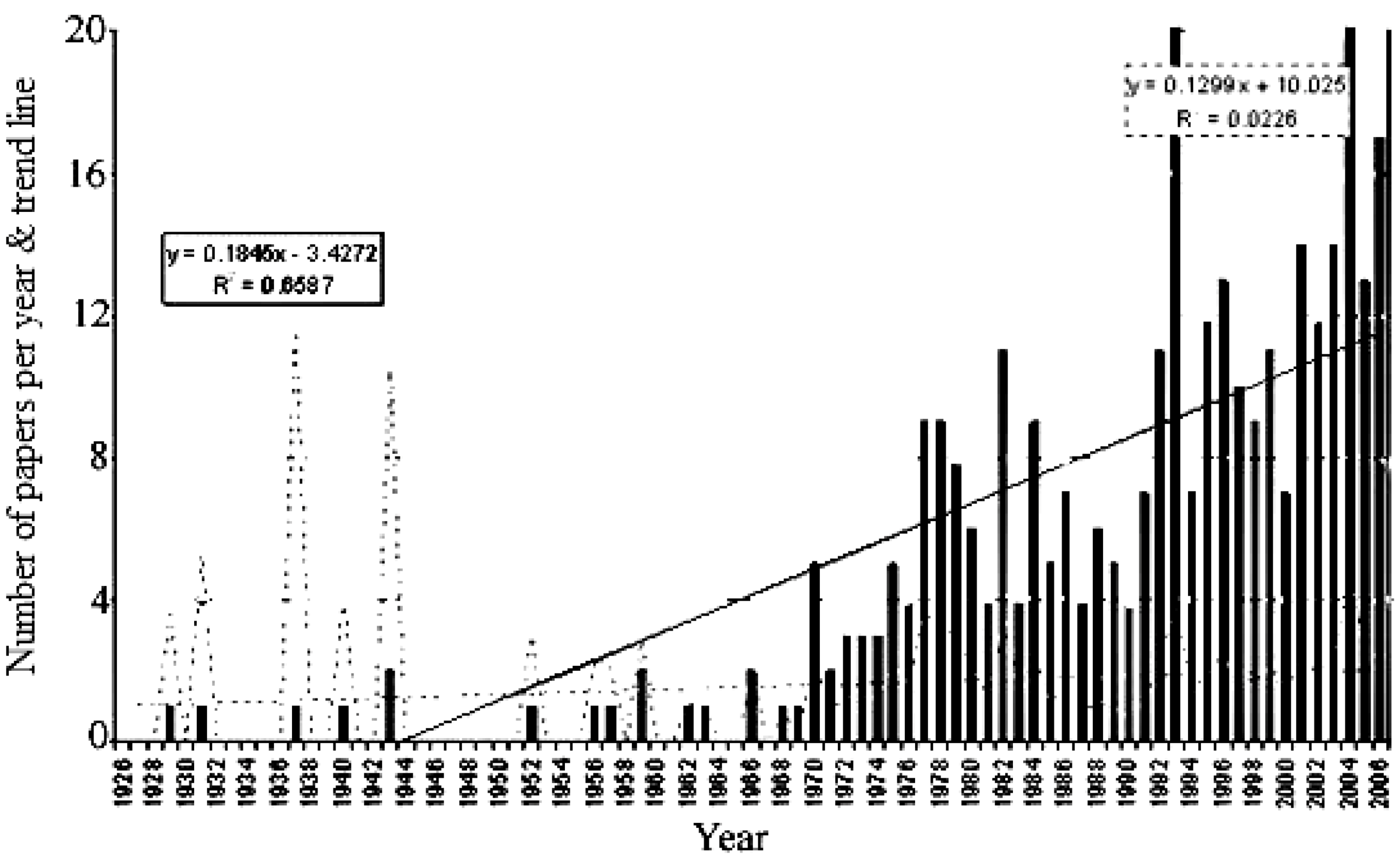
      <p>Plants are old friends of humans who rely on plants directly or indirectly for food, shelter, aesthetic purposes and for the treatment of diseases. Plants can considered as biological factories for the production of various medicinal compounds. Hence plants enjoy the attraction of common man as well as of the scientific community for investigation, authentication and rationalization of their food and therapeutic effects. As a part of our continuous efforts to explore the medicinal flora of Pakistan [<xref ref-type="bibr" rid="B1-molecules-17-13132">1</xref>,<xref ref-type="bibr" rid="B2-molecules-17-13132">2</xref>,<xref ref-type="bibr" rid="B3-molecules-17-13132">3</xref>] we focused on a member of the family <italic>Convolvulaceae</italic> that comprises nearly 1,650 predominantly tropical species. The genus <italic>Ipomoea</italic>, with approximately 500–600 species, is the largest in the family [<xref ref-type="bibr" rid="B4-molecules-17-13132">4</xref>] and twenty species are found in Pakistan [<xref ref-type="bibr" rid="B5-molecules-17-13132">5</xref>]. Plants of this genus have been in continuous use since immemorial time for different nutritional, medicinal, ritual and agricultural purposes. Various species of <italic>Ipomoea</italic> have been extensively used in local traditional medicine in many countries for the treatment of several diseases [<xref ref-type="bibr" rid="B6-molecules-17-13132">6</xref>]. <italic>Ipomoea hederacea</italic> Jacq. is known in the flora of Pakistan not only for its medicinal and therapeutic attributes (<xref ref-type="fig" rid="molecules-17-13132-f001">Figure 1</xref>), but it is frequently grown in gardens for its ornamental flowers and often runs wild in hedges and wastelands [<xref ref-type="bibr" rid="B7-molecules-17-13132">7</xref>,<xref ref-type="bibr" rid="B8-molecules-17-13132">8</xref>,<xref ref-type="bibr" rid="B9-molecules-17-13132">9</xref>,<xref ref-type="bibr" rid="B10-molecules-17-13132">10</xref>]. In light of its phytochemical, medicinal and therapeutic importance, this review focuses on its botanical description, traditional uses, phytochemical studies, toxicological and pharmacological aspects.</p>
      <fig id="molecules-17-13132-f001" position="float">
        <label>Figure 1</label>
        <caption>
          <p>Popularity of <italic>Ipomea hederacea</italic> over time [<xref ref-type="bibr" rid="B11-molecules-17-13132">11</xref>].</p>
        </caption>
        <graphic xmlns:xlink="http://www.w3.org/1999/xlink" xlink:href="molecules-17-13132-g001.tif"/>
      </fig>
    </sec>
    <sec>
      <title>2. Botanical Description</title>
      <sec>
        <title>2.1. Scientific Name</title>
        <p><italic>Ipomoea hederacea</italic> Jacq.: <italic>Ipomoea</italic>: from Greek <italic>Ips</italic> which means “a worm,” and <italic>homoios</italic> which means “like,” thus <italic>Ipomoea</italic> means “like a worm”, referring to the twining habit of the plant’s growth; <italic>hederacea</italic>: of or pertaining to ivy [<xref ref-type="bibr" rid="B12-molecules-17-13132">12</xref>].</p>
      </sec>
      <sec>
        <title>2.2. Common Names</title>
        <p>Ivy leaf morning-glory, Woolly morning-glory (as flowers wilt after one day).</p>
      </sec>
      <sec>
        <title>2.3. Local Names in Pakistan</title>
        <p>Habbun-nil (due to the blue color of its corolla <italic>nil</italic> is used for blue color in Pakistan); Kaladana (due to the black color of the seeds <italic>kala</italic> means black and <italic>dana</italic> means seed).</p>
      </sec>
      <sec>
        <title>2.4. Habitat and Distribution</title>
        <p>Habitats include abandoned fields, areas along roadsides and rail<italic>roads</italic>, gardens and miscellaneous waste areas. <italic>I. hederacea</italic> is frost intolerant and is commonly found in warmer climates. This species frequently occurs in flower beds and cultivated areas. Because this species is now found throughout the World there is some confusion about its origin. It seems the this species orginates from the American tropics and it pertains to the flora of the south east of United States [<xref ref-type="bibr" rid="B5-molecules-17-13132">5</xref>,<xref ref-type="bibr" rid="B12-molecules-17-13132">12</xref>,<xref ref-type="bibr" rid="B13-molecules-17-13132">13</xref>]. It is also distributed in Pakistan, Kashmir and India [<xref ref-type="bibr" rid="B14-molecules-17-13132">14</xref>,<xref ref-type="bibr" rid="B15-molecules-17-13132">15</xref>,<xref ref-type="bibr" rid="B16-molecules-17-13132">16</xref>].</p>
      </sec>
      <sec>
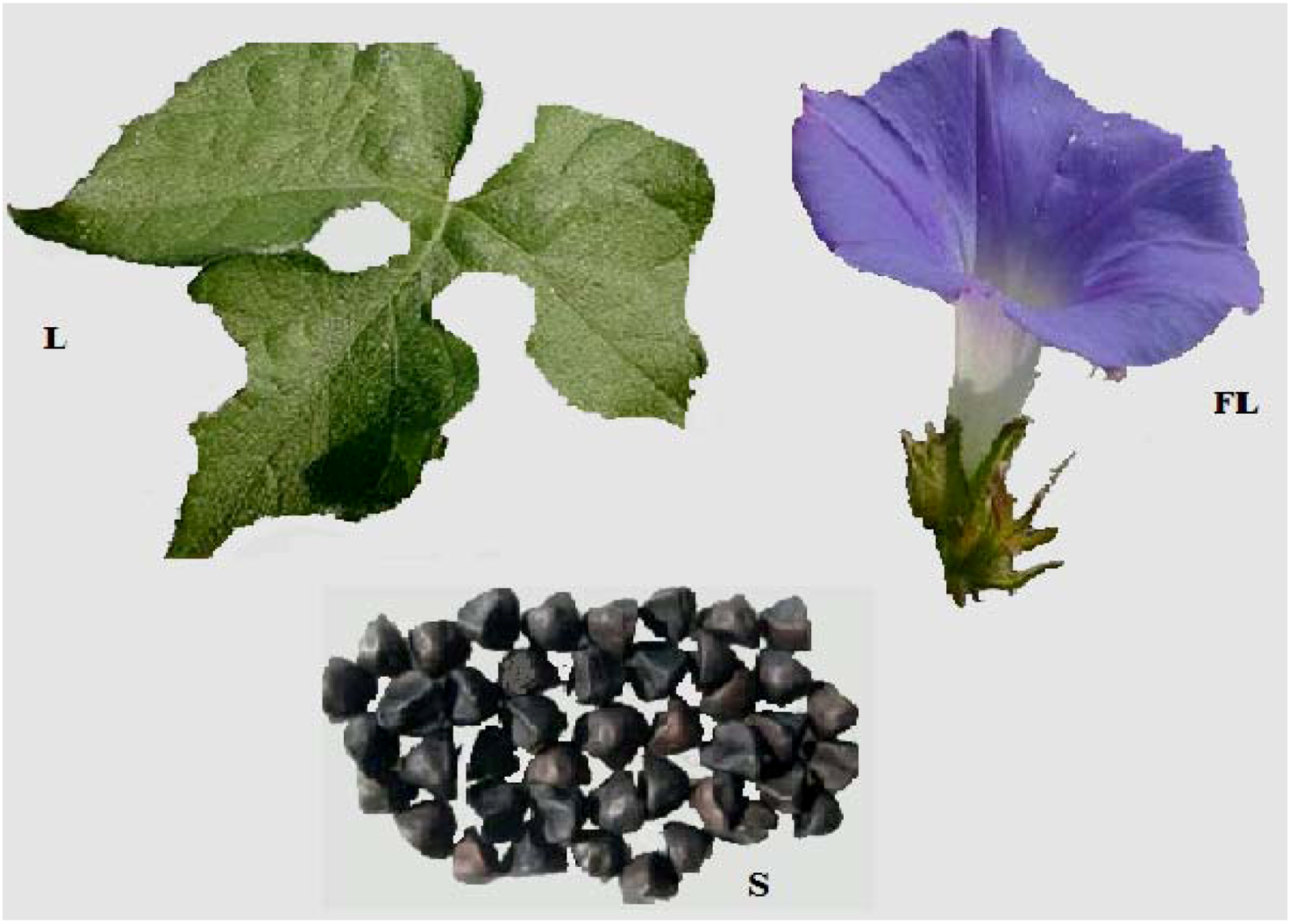
        <title>2.5. Plant Description (<xref ref-type="fig" rid="molecules-17-13132-f002">Figure 2</xref>)</title>
        <p>Ivy-leaved morning-glory is an annual trailing vine (6–8 feet tall), branching occasionally and flowering from July to September. The preference is full or partial sun, mesic conditions, and fertile soil. The seeds don’t germinate until the soil becomes warm during early summer. This plant can be aggressive and it is quite common in disturbed areas, especially cultivated fields, where it can be a major pest. This is both an attractive vine and common weed of agronomic, horticultural, and nursery crops, and can be tough to get rid of once established [<xref ref-type="bibr" rid="B17-molecules-17-13132">17</xref>,<xref ref-type="bibr" rid="B18-molecules-17-13132">18</xref>]. The 2 inch (5 cm) wide, funnel-shaped flowers open only in the morning and have five hairy sepals. The bases of the flowers are densely hairy. The flowers are pollinated by bumblebees and other long-tongued bees. These are generally blue, but can show traces of purple, magenta, or white. The flowering stalks develop from the axils of the leaves and are quite short (¼" or less), producing 1–3 flowers. The flowers are about 2" across and bloom primarily during the mornings on sunny days. The throat of the corolla is white, where the reproductive organs of the flower form a white column with a knobby tip. The hairy green calyx is divided into five lobes that are linear-lanceolate and about ¾" long. These lobes often curl outward at their tips. Each flower is replaced by a 3-celled rounded capsule containing 4–6 seeds. The rather large seeds are brown to black and wedge-shaped. They have a dull surface [<xref ref-type="bibr" rid="B19-molecules-17-13132">19</xref>,<xref ref-type="bibr" rid="B20-molecules-17-13132">20</xref>]. The leaves are alternate, and indented at the base. They are three-lobed but they are quite variable and can also be five-lobed or heart-shaped, even on the same plant. Each lobe is widest in the middle and tapers to a blunt tip. The margins of the leaves are smooth and somewhat undulating, while the upper surface is more or less hairy. The petioles are hairy and almost as long as the leaves. The leaves are usually up to 4" long and are hairy [<xref ref-type="bibr" rid="B21-molecules-17-13132">21</xref>,<xref ref-type="bibr" rid="B22-molecules-17-13132">22</xref>]. The round stems are light green to dull red, and more or less covered with white hair. Stem twines about surrounding vegetation with their apex in a dextral fashion, or sprawl about haphazardly or more commonly climbing, reaching 10 feet in length. Stems also have hairs that are erect. The root system consists of a taproot. This plant spreads by reseeding itself [<xref ref-type="bibr" rid="B23-molecules-17-13132">23</xref>,<xref ref-type="bibr" rid="B24-molecules-17-13132">24</xref>]. Cotyledons are notched at the apex, and this notch forms an angle between the lobes that is less than 90 degrees. The cotyledons are only shallowly or moderately indented, and the lobes are usually rounded or only slightly pointed. Cotyledons are also notched at the base, and are close to square in outline, with only a slight flare outwards. The first true leaf is unlobed [<xref ref-type="bibr" rid="B25-molecules-17-13132">25</xref>,<xref ref-type="bibr" rid="B26-molecules-17-13132">26</xref>]. The seeds resemble in shape the “quarter” of an orange, there being two flat sides meeting at an acute angle and an arched back. They are dull black, about 5 mm long and 3 mm wide, weight about 34 mg; the hilum is distinct as a brown, slightly hairy, depressed spot. A transverse section shows plaited cotyledons in which small, slightly darker resin cells may be seen. The taste is at first not marked, but is subsequently acrid [<xref ref-type="bibr" rid="B27-molecules-17-13132">27</xref>,<xref ref-type="bibr" rid="B28-molecules-17-13132">28</xref>,<xref ref-type="bibr" rid="B29-molecules-17-13132">29</xref>]. </p>
		<fig id="molecules-17-13132-f002" position="float">
        <label>Figure 2</label>
        <caption>
          <p><italic>Ipomea hederacea</italic> Jacq., FL, flower; L, leaf, S, seed.</p>
        </caption>
        <graphic xmlns:xlink="http://www.w3.org/1999/xlink" xlink:href="molecules-17-13132-g002.tif"/>
      </fig>
      </sec>
      <sec>
        <title>2.6. Traditional Uses</title>
        <p><italic>I. hederacea</italic> seeds and the resin extracted from them are used as medicines. The seeds have cathartic properties like those of jalap (<italic>Ipomoea jalapa</italic> (L.). Besides the resin, an extract, a tincture, and a compound powder have been introduced into the Pharmacopoeia of India. The resin, which has been introduced into medical practice in India under the name of “Pharbitisin”, has a nauseous, acrid taste and an unpleasant odor, especially when heated [<xref ref-type="bibr" rid="B30-molecules-17-13132">30</xref>,<xref ref-type="bibr" rid="B31-molecules-17-13132">31</xref>]. The seeds are regarded as diuretics, anthelmintics, aphrodisiacs, blood purifiers and deobstruents, and that they are prescribed in dropsy and constipation, to promote menstruation, and to produce abortion. They are claimed to be laxative, carminative, and useful in treatment of inflammations, abdominal diseases, fevers, headache and bronchitis. The juice of the leaves is used to treat eye inflammations, cataracts and films over the eyes; in the ear, the juice helps hearing, and cures ear noises. The herb is considered useful in oedema, ascites, fever, constipation, flatulence and epistaxis. Seeds are also useful in skin diseases like leucoderma and scabies, gout, cephalalgia, hepatopathy and splenopathy [<xref ref-type="bibr" rid="B32-molecules-17-13132">32</xref>,<xref ref-type="bibr" rid="B33-molecules-17-13132">33</xref>]. The seeds are rubbed on the male genitals to treat erectile dysfunction and on female genitals for lubrication purposes and to increase sexual desire. Paste of seeds is applied topically for cosmetic purposes as it removes dry skin and freckles. The topical application is also believed to be associated with weight loss.</p>
      </sec>
    </sec>
    <sec>
      <title>3. Phytochemistry</title>
      <p><italic>I. hederacea</italic> contains a greater amount (15.78%) of crude resin than <italic>I. muricata</italic> Jacq (10.6%). Similarly the saponification number of the crude resin of <italic>I. hederacea</italic> was also greater (144.7) than that of <italic>I. muricata</italic> (116.7), while the acid numbers of both are fairly uniform [<xref ref-type="bibr" rid="B34-molecules-17-13132">34</xref>]. Kathpalia and co-workers analyzed the seeds of <italic>I. hederacea</italic> and reported a fixed oil content of 9.38% with d<sub>20</sub> = 0.918, n<sub>20</sub> = 1.474, viscosity at 20° = 0.2938, saponification no. = 190.48, acetyl no. = 5.19, acid no. = 3.45, I. no. = 121.5, unsaponifiable = 1.98%; the mixed fat acids fraction had a neutralization value of 190.90, I no. 126.5 [<xref ref-type="bibr" rid="B35-molecules-17-13132">35</xref>]. Seeds contain 4%–15% crude resinous matter; a fixed oil (12.4%) and small amount of saponins, mucilage and tannins [<xref ref-type="bibr" rid="B36-molecules-17-13132">36</xref>]. Ahmad and co-workers confirmed the presence of saponins, tannins, terpenes, alkaloids and proteins in an ethanolic extract of seeds [<xref ref-type="bibr" rid="B37-molecules-17-13132">37</xref>]. Alkaloids, reducing sugars, terpenoids, flavonoids, saponins and tannins were also reported [<xref ref-type="bibr" rid="B16-molecules-17-13132">16</xref>]. The seed oil of <italic>I. hederacea</italic> was evaluated for color, refractive index, acid value, saponification value and unsaponifiable matter by standard IUPAC methods for the analysis of oils (<xref ref-type="table" rid="molecules-17-13132-t001">Table 1</xref>) [<xref ref-type="bibr" rid="B38-molecules-17-13132">38</xref>].</p>
      <table-wrap id="molecules-17-13132-t001" position="float">
        <object-id pub-id-type="pii">molecules-17-13132-t001_Table 1</object-id>
        <label>Table 1</label>
        <caption>
          <p>Physico-chemical parameters of the seed oil of <italic>I. hederacea</italic>.</p>
        </caption>
        <table>
          <thead>
            <tr align="center">
              <th valign="middle">Parameter</th>
              <th valign="middle">Property/Content</th>
            </tr>
          </thead>
          <tbody>
            <tr align="center">
              <td valign="middle">Color </td>
              <td valign="middle">Light yellow</td>
            </tr>
            <tr align="center">
              <td valign="middle">Refractive index </td>
              <td valign="middle">1.47 </td>
            </tr>
            <tr align="center">
              <td valign="middle">Specific gravity</td>
              <td valign="middle">0.92 </td>
            </tr>
            <tr align="center">
              <td valign="middle">Unsaponifiable matter</td>
              <td valign="middle">1.73 </td>
            </tr>
            <tr align="center">
              <td valign="middle">Acid value</td>
              <td valign="middle">2.98 </td>
            </tr>
            <tr align="center">
              <td valign="middle">Saponification value</td>
              <td valign="middle">190.48 </td>
            </tr>
          </tbody>
        </table>
		</table-wrap>
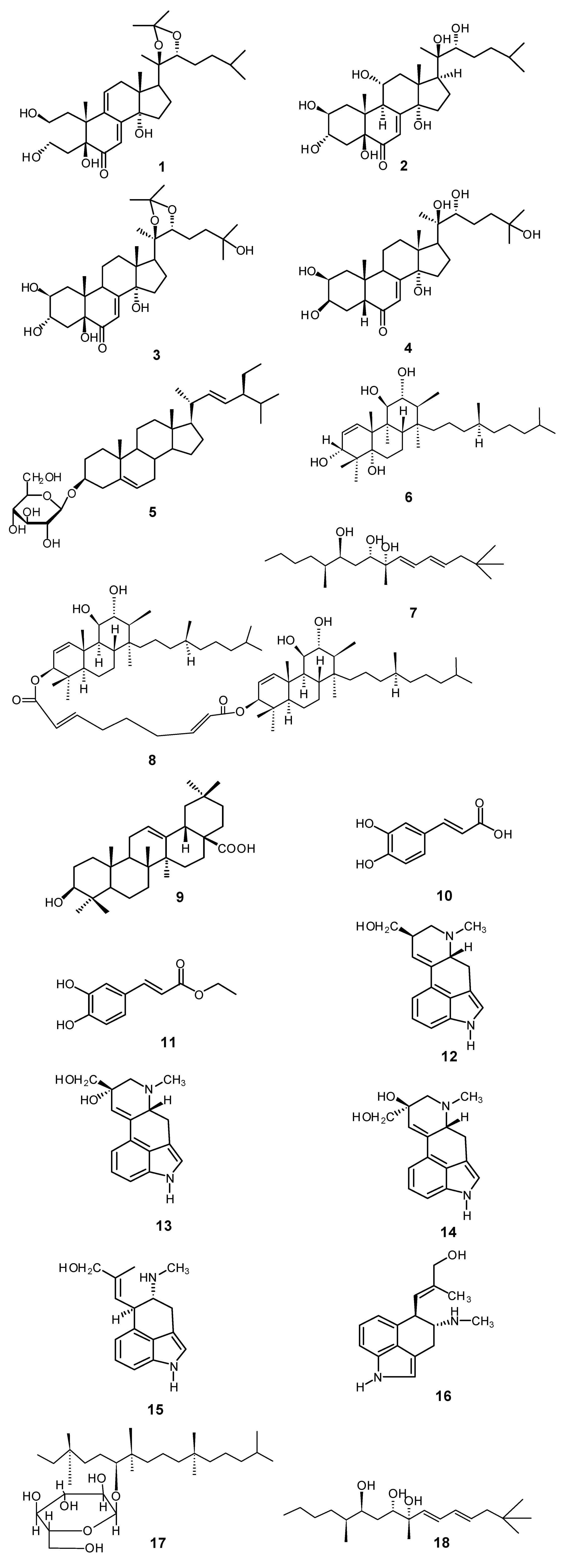
      <p>Phytochemical studies on <italic>I. hederacea</italic> have been conducted since the mid 1960s and one of the early studies reported the isolation of the alkaloids lysergol, chanoclavine, penniclavine, isopeniclavine and elymoclavine from seeds. Chanoclavine, elymoclavine, lysergol and penniclavine were known to be psychoactive [<xref ref-type="bibr" rid="B36-molecules-17-13132">36</xref>]. Isopenniclavine was reported to be psychotomimetic, while penniclavine, lysergol and elymoclavine were reported to be psychotropic [<xref ref-type="bibr" rid="B6-molecules-17-13132">6</xref>]. Ahmad and co-workers reported the presence of tiglic acid, methyl ethyl acetic acid and α-methyl-β-oxybutyric acid in an ether soluble portion of a glycosidal fraction in the resin of <italic>I. hederacea</italic> seeds and the presence of pharbitinic acid, phytoecdysone, a plytosteratin, lysergol and chanoclavine [<xref ref-type="bibr" rid="B7-molecules-17-13132">7</xref>]. Five ecdysteriods, two steroidal glycosides, one triterpene and two aromatic acids have also been isolated. Among ecdysteriods, hederasterone A, hederasterone A-20,22 monoacetonide and hedersterone B were reported for the first time from this plant [<xref ref-type="bibr" rid="B18-molecules-17-13132">18</xref>]. Other reported compounds were 20-hydroxyecdysone, stigmasterol 3-O-β-<sc>D</sc>-glucoside, β-sitosterol-3-<italic>O</italic>-β-<sc>D</sc>-glucoside, oleanolic acid, caffeic acid, ethylcaffeate. In a butyryl-cholinesterase enzyme inhibitory assay, only hedersterone B exhibited inhibition and caffeic acid and ethylcaffeate showed antioxidant and lipoxygenase inhibition activity [<xref ref-type="bibr" rid="B18-molecules-17-13132">18</xref>]. The most recent phytochemical investigation of the seeds of <italic>I. hederacea</italic> resulted in the isolation of hederaceterpenol, hederacetriol, hederaterpenoside, hederacyl triterpenoid and stigmast-5-en-3-<italic>O</italic>-β-<sc>D</sc>-glucopyranoside [<xref ref-type="bibr" rid="B7-molecules-17-13132">7</xref>] (<xref ref-type="fig" rid="molecules-17-13132-f003">Figure 3</xref>). Compositional studies of <italic>I. hederacea</italic> seed and seed oil have been carried out by Kathpalia and Dutt [<xref ref-type="bibr" rid="B35-molecules-17-13132">35</xref>] and later by Zia-Ul-Haq and co-workers [<xref ref-type="bibr" rid="B38-molecules-17-13132">38</xref>]. (<xref ref-type="table" rid="molecules-17-13132-t002">Table 2</xref>, <xref ref-type="table" rid="molecules-17-13132-t003">Table 3</xref>, <xref ref-type="table" rid="molecules-17-13132-t004">Table 4</xref>, <xref ref-type="table" rid="molecules-17-13132-t005">Table 5</xref>, <xref ref-type="table" rid="molecules-17-13132-t006">Table 6</xref>, <xref ref-type="table" rid="molecules-17-13132-t007">Table 7</xref>). According to these studies, the proximate chemical composition (<xref ref-type="table" rid="molecules-17-13132-t002">Table 2</xref>), the percent composition of amino acids in seeds (<xref ref-type="table" rid="molecules-17-13132-t003">Table 3</xref>), their mineral content (<xref ref-type="table" rid="molecules-17-13132-t004">Table 4</xref>), the percent composition of the oil (<xref ref-type="table" rid="molecules-17-13132-t005">Table 5</xref>) the fatty acid (<xref ref-type="table" rid="molecules-17-13132-t006">Table 6</xref>) and the tocopherol profiles (<xref ref-type="table" rid="molecules-17-13132-t007">Table 7</xref>) indicated that the plant oil can be considered a substantial source of essential nutrients and may be used as food once its toxicity profile is established.</p>
      <fig id="molecules-17-13132-f003" position="float">
        <label>Figure 3</label>
        <caption>
          <p>Phytochemicals isolated from <italic>I. hederacea</italic>: hederasterone A-20,22-monoacetonide (<bold>1</bold>), hedrasterone B (<bold>2</bold>), 20-hydroxyecdysone-20,22-monoacetonide (<bold>3</bold>), 20-hydroxyecdysone (<bold>4</bold>), stigmasterol-3-o-β-<sc>D</sc>-glucoside (<bold>5</bold>), hederaceterpenol (<bold>6</bold>), oleanolic acid (<bold>7</bold>), caffeic acid (<bold>8</bold>), ethyl caffeate (<bold>9</bold>), lysergol (<bold>10</bold>), penniclavine (<bold>11</bold>), hederacetriol (<bold>12</bold>), isopenniclavine (<bold>13</bold>), chanoclavine (<bold>14</bold>), hanoclavine (<bold>15</bold>), elymoclavine (<bold>16</bold>), hederaterpenoside (<bold>17</bold>), hederacyl triterpenoid (<bold>18</bold>).</p>
        </caption>
        <graphic xmlns:xlink="http://www.w3.org/1999/xlink" xlink:href="molecules-17-13132-g003.tif"/>
      </fig>
      
	  <table-wrap id="molecules-17-13132-t002" position="float">
        <object-id pub-id-type="pii">molecules-17-13132-t002_Table 2</object-id>
        <label>Table 2</label>
        <caption>
          <p>Percent proximate composition of <italic>I. hederacea</italic> seeds.</p>
        </caption>
        <table>
          <thead>
            <tr align="center">
              <th valign="middle">Component</th>
              <th valign="middle">Content</th>
            </tr>
          </thead>
          <tbody>
            <tr align="center">
              <td valign="middle">Crude protein</td>
              <td valign="middle">23.36 </td>
            </tr>
            <tr align="center">
              <td valign="middle">Total lipids</td>
              <td valign="middle">14.09 </td>
            </tr>
            <tr align="center">
              <td valign="middle">Total carbohydrates</td>
              <td valign="middle">37.06 </td>
            </tr>
            <tr align="center">
              <td valign="middle">Crude fiber</td>
              <td valign="middle">16.55 </td>
            </tr>
            <tr align="center">
              <td valign="middle">Moisture</td>
              <td valign="middle">5.29 </td>
            </tr>
            <tr align="center">
              <td valign="middle">Ash</td>
              <td valign="middle">3.65 </td>
            </tr>
          </tbody>
        </table>
		</table-wrap>
     
	 <table-wrap id="molecules-17-13132-t003" position="float">
        <object-id pub-id-type="pii">molecules-17-13132-t003_Table 3</object-id>
        <label>Table 3</label>
        <caption>
          <p>Percent composition of amino acids in <italic>I. hederacea</italic> seeds. </p>
        </caption>
        <table>
          <thead>
            <tr align="center">
              <th valign="middle">Amino acid</th>
              <th valign="middle">Content</th>
            </tr>
          </thead>
          <tbody>
            <tr align="center">
              <td valign="middle">Isoleucine</td>
              <td valign="middle">5.03</td>
            </tr>
            <tr align="center">
              <td valign="middle">Leucine</td>
              <td valign="middle">6.59 </td>
            </tr>
            <tr align="center">
              <td valign="middle">Lysine</td>
              <td valign="middle">4.25 </td>
            </tr>
            <tr align="center">
              <td valign="middle">Methionine</td>
              <td valign="middle">1.17 </td>
            </tr>
            <tr align="center">
              <td valign="middle">Phenylaniline</td>
              <td valign="middle">6.24 </td>
            </tr>
            <tr align="center">
              <td valign="middle">Threonine</td>
              <td valign="middle">3.07 </td>
            </tr>
            <tr align="center">
              <td valign="middle">Tryptophan</td>
              <td valign="middle">1.88 </td>
            </tr>
            <tr align="center">
              <td valign="middle">Valine</td>
              <td valign="middle">7.10 </td>
            </tr>
            <tr align="center">
              <td valign="middle">Arginine</td>
              <td valign="middle">5.50 </td>
            </tr>
            <tr align="center">
              <td valign="middle">Histidine</td>
              <td valign="middle">3.55 </td>
            </tr>
            <tr align="center">
              <td valign="middle">Alanine</td>
              <td valign="middle">3.99 </td>
            </tr>
            <tr align="center">
              <td valign="middle">Aspartic acid</td>
              <td valign="middle">10.82 </td>
            </tr>
            <tr align="center">
              <td valign="middle">Cystine</td>
              <td valign="middle">0.90 </td>
            </tr>
            <tr align="center">
              <td valign="middle">Glutamic acid</td>
              <td valign="middle">22.71 </td>
            </tr>
            <tr align="center">
              <td valign="middle">Glycine</td>
              <td valign="middle">5. 36 </td>
            </tr>
            <tr align="center">
              <td valign="middle">Proline</td>
              <td valign="middle">4.46 </td>
            </tr>
            <tr align="center">
              <td valign="middle">Serine</td>
              <td valign="middle">4.02 </td>
            </tr>
            <tr align="center">
              <td valign="middle">Tyrosine</td>
              <td valign="middle">2.58 </td>
            </tr>
          </tbody>
        </table>
		</table-wrap>
      
	  <table-wrap id="molecules-17-13132-t004" position="float">
        <object-id pub-id-type="pii">molecules-17-13132-t004_Table 4</object-id>
        <label>Table 4</label>
        <caption>
          <p>Mineral content (mg/100 g) of <italic>I. hederacea</italic> seeds.</p>
        </caption>
        <table>
          <thead>
            <tr>
              <th align="center" valign="middle">Metals</th>
              <th align="center" valign="middle">Content</th>
            </tr>
          </thead>
          <tbody>
            <tr>
              <td align="center" valign="middle">Calcium</td>
              <td align="center" valign="middle">317.41 </td>
            </tr>
            <tr>
              <td align="center" valign="middle">Copper</td>
              <td align="center" valign="middle">4.62 </td>
            </tr>
            <tr>
              <td align="center" valign="middle">Iron</td>
              <td align="center" valign="middle">9.85 </td>
            </tr>
            <tr>
              <td align="center" valign="middle">Magnesium</td>
              <td align="center" valign="middle">179.14 </td>
            </tr>
            <tr>
              <td align="center" valign="middle">Manganese</td>
              <td align="center" valign="middle">6.37 </td>
            </tr>
            <tr>
              <td align="center" valign="middle">Phosphorus</td>
              <td align="center" valign="middle">596.19 </td>
            </tr>
            <tr>
              <td align="center" valign="middle">Potassium</td>
              <td align="center" valign="middle">978.46 </td>
            </tr>
            <tr>
              <td align="center" valign="middle">Sodium</td>
              <td align="center" valign="middle">106.32 </td>
            </tr>
            <tr>
              <td align="center" valign="middle">Zinc</td>
              <td align="center" valign="middle">4.01 </td>
            </tr>
            <tr>
              <td align="center" valign="middle">Na:K</td>
              <td align="center" valign="middle">0.11</td>
            </tr>
            <tr>
              <td align="center" valign="middle">Ca:P</td>
              <td align="center" valign="middle">0.53</td>
            </tr>
          </tbody>
        </table>
		</table-wrap>
      
	  <table-wrap id="molecules-17-13132-t005" position="float">
        <object-id pub-id-type="pii">molecules-17-13132-t005_Table 5</object-id>
        <label>Table 5</label>
        <caption>
          <p>Percent composition of <italic>I. hederacea</italic> seed oil.</p>
        </caption>
        <table>
          <thead>
            <tr>
              <th align="center" valign="middle">Oil class</th>
              <th align="center" valign="middle">Composition</th>
            </tr>
          </thead>
          <tbody>
            <tr>
              <td align="center" valign="middle">Hydrocarbons + waxes</td>
              <td align="center" valign="middle">0.40</td>
            </tr>
            <tr>
              <td align="center" valign="middle">Steryl esters</td>
              <td align="center" valign="middle">0.60</td>
            </tr>
            <tr>
              <td align="center" valign="middle">Triacylglycerols</td>
              <td align="center" valign="middle">80.20</td>
            </tr>
            <tr>
              <td align="center" valign="middle">Free fatty acid</td>
              <td align="center" valign="middle">1.20</td>
            </tr>
            <tr>
              <td align="center" valign="middle">Diglycerols</td>
              <td align="center" valign="middle">0.70</td>
            </tr>
            <tr>
              <td align="center" valign="middle">Monoglycerols</td>
              <td align="center" valign="middle">1.00</td>
            </tr>
            <tr>
              <td align="center" valign="middle">Polar lipids</td>
              <td align="center" valign="middle">6.50</td>
            </tr>
            <tr>
              <td align="center" valign="middle">Phospholipids</td>
              <td align="center" valign="middle">4.80</td>
            </tr>
            <tr>
              <td align="center" valign="middle">Unidentified</td>
              <td align="center" valign="middle">4.60</td>
            </tr>
          </tbody>
        </table>
		</table-wrap>
      
	  <table-wrap id="molecules-17-13132-t006" position="float">
        <object-id pub-id-type="pii">molecules-17-13132-t006_Table 6</object-id>
        <label>Table 6</label>
        <caption>
          <p>Fatty acid profile (%) of <italic>I. hederacea</italic> seed oil.</p>
        </caption>
        <table>
          <thead>
            <tr>
              <th align="center" valign="middle">Fatty acid</th>
              <th align="center" valign="middle"><italic>Ipomoea hederacea</italic> [<xref ref-type="bibr" rid="B38-molecules-17-13132">38</xref>] </th>
              <th align="center" valign="middle"><italic>Ipomoea hederacea</italic> [<xref ref-type="bibr" rid="B35-molecules-17-13132">35</xref>] </th>
            </tr>
          </thead>
          <tbody>
            <tr>
              <td align="center" valign="middle">Palmitic acid (16:0)</td>
              <td align="center" valign="middle">17.03 </td>
              <td align="center" valign="middle">5.93</td>
            </tr>
            <tr>
              <td align="center" valign="middle">Palmitoleic acid (16:1)</td>
              <td align="center" valign="middle">1.10 </td>
              <td align="center" valign="middle">-</td>
            </tr>
            <tr>
              <td align="center" valign="middle">Stearic acid (18:0)</td>
              <td align="center" valign="middle">6.00 </td>
              <td align="center" valign="middle">20.37</td>
            </tr>
            <tr>
              <td align="center" valign="middle">Oleic acid (18:1)</td>
              <td align="center" valign="middle">19.50 </td>
              <td align="center" valign="middle">43.98</td>
            </tr>
            <tr>
              <td align="center" valign="middle">Linoleic acid (18:2)</td>
              <td align="center" valign="middle">52.09 </td>
              <td align="center" valign="middle">14.54</td>
            </tr>
            <tr>
              <td align="center" valign="middle">α-Linolenic acid (18:3)</td>
              <td align="center" valign="middle">4.28 </td>
              <td align="center" valign="middle">5.99</td>
            </tr>
            <tr>
              <td align="center" valign="middle">Arachidic acid (20:0)</td>
              <td align="center" valign="middle">-</td>
              <td align="center" valign="middle">7.79</td>
            </tr>
            <tr>
              <td align="center" valign="middle">Eicosaenoic acid (20:1)</td>
              <td align="center" valign="middle">-</td>
              <td align="center" valign="middle">-</td>
            </tr>
            <tr>
              <td align="center" valign="middle">Behenic acid</td>
              <td align="center" valign="middle">-</td>
              <td align="center" valign="middle">1.29</td>
            </tr>
          </tbody>
        </table>
		</table-wrap>
      
	  <table-wrap id="molecules-17-13132-t007" position="float">
        <object-id pub-id-type="pii">molecules-17-13132-t007_Table 7</object-id>
        <label>Table 7</label>
        <caption>
          <p>Tocopherol profile (mg/100g) of <italic>I. hederacea</italic> seed oil.</p>
        </caption>
        <table>
          <thead>
            <tr align="center">
              <th valign="middle">Tocopherol</th>
              <th valign="middle">
                <italic>Ipomoea hederacea</italic>
              </th>
            </tr>
          </thead>
          <tbody>
            <tr align="center">
              <td valign="middle">α-Tocopherol</td>
              <td valign="middle">0.50</td>
            </tr>
            <tr align="center">
              <td valign="middle">β-Tocopherol</td>
              <td valign="middle">1.60</td>
            </tr>
            <tr align="center">
              <td valign="middle">γ-Tocopherol</td>
              <td valign="middle">28.70</td>
            </tr>
            <tr align="center">
              <td valign="middle">δ-Tocopherol</td>
              <td valign="middle">2.30</td>
            </tr>
            <tr align="center">
              <td valign="middle">Total</td>
              <td valign="middle">33.10</td>
            </tr>
          </tbody>
        </table>
		</table-wrap>
      
	  <p>Various phenols like erulic acid, coumaric acid-hexoside, ferulic acid-hexoside and sinapic acid-hexoside were tentatively identified in <italic>I. hederacea</italic> seeds, based on their mass spectral characteristics [<xref ref-type="bibr" rid="B38-molecules-17-13132">38</xref>].</p>
    </sec>
    <sec>
      <title>4. Pharmacological activities of <italic>I. hederacea</italic></title>
      <sec>
        <title>4.1. Antioxidant Activity</title>
        <p>The antioxidant activity of different extracts of <italic>I. hederacea</italic> was evaluated by Rehman and co-workers by four methods, 1,1-diphenyl-2-picrylhydrazyl (DPPH) free radical scavenging activity, ferric reducing antioxidant power (FRAP) assay, total antioxidant activity and Folin-Ciocalteau reagent assay for the determination of total phenolics. It was reported that an ethyl acetate soluble fraction showed the highest value of percent inhibition of DPPH (83.26%) at a concentration of 125 µg/mL, with an IC<sub>50</sub> of 60.28 µg/mL. This fraction also displayed the highest FRAP value (80 µg TE/mL), the higher total antioxidant activity (0.25 ± 0.31) as well as highest total phenolic contents (62.35 µg GAE/g) as compared to other fractions [<xref ref-type="bibr" rid="B16-molecules-17-13132">16</xref>]. Some extracts of <italic>I. hederacea</italic> showed good antioxidant capacity, reducing different types of radicals [<xref ref-type="bibr" rid="B16-molecules-17-13132">16</xref>]. The differences found among the previous and recent studies (<xref ref-type="table" rid="molecules-17-13132-t008">Table 8</xref>) were explained in terms of difference in genotype, growing condition, agronomic practices employed, season, maturity, post-harvest storage and processing conditions and solvent used for extraction [<xref ref-type="bibr" rid="B38-molecules-17-13132">38</xref>]. </p>
        <table-wrap id="molecules-17-13132-t008" position="float">
          <object-id pub-id-type="pii">molecules-17-13132-t008_Table 8</object-id>
          <label>Table 8</label>
          <caption>
            <p>Antioxidant activity of <italic>I. hederacea</italic>.</p>
          </caption>
          <table>
            <thead>
              <tr align="center">
                <th valign="middle">Antioxidant Assay</th>
                <th valign="middle">Content</th>
              </tr>
            </thead>
            <tbody>
              <tr align="center">
                <td valign="middle">Total phenol content (mg CAE/g)</td>
                <td valign="middle">14.33</td>
              </tr>
              <tr align="center">
                <td valign="middle">TEAC (µmol TE/g)</td>
                <td valign="middle">93.57</td>
              </tr>
              <tr align="center">
                <td valign="middle">FRAP (µmol Fe++/g)</td>
                <td valign="middle">278.24</td>
              </tr>
              <tr align="center">
                <td valign="middle">TRAP (µmol TE/g)</td>
                <td valign="middle">69.02</td>
              </tr>
            </tbody>
          </table>
		  </table-wrap>
      </sec>
      <sec>
        <title>4.2. Hepatoprotective Activity</title>
        <p>An ethanolic extract of the plant showed significant hepatoprotection in carbon tetrachloride treated rats [<xref ref-type="bibr" rid="B39-molecules-17-13132">39</xref>].</p>
      </sec>
      <sec>
        <title>4.3. Antibacterial Activity</title>
        <p>The disk diffusion assay was employed in the study by Zia-Ul-Haq and co-workers to investigate the antibacterial potency of <italic>I. hederacea</italic>. The bacterial strains studied included <italic>Escherichia coli</italic>, <italic>Citrobacter</italic> sp., <italic>Staphylococcus aureus</italic>, <italic>Pseudomonas aeruginosa</italic>, <italic>Salmonella typhi</italic>, <italic>Micrococcus luteus</italic>, <italic>Proteus mirabilis</italic> and <italic>Bacillus subtilis</italic>. The resultsindicated that <italic>I. hederacea</italic> had potent activity against all the tested microorganisms, being <italic>B. subtilis</italic> the most sensitive strain [<xref ref-type="bibr" rid="B40-molecules-17-13132">40</xref>]. Singh and co-workers [<xref ref-type="bibr" rid="B41-molecules-17-13132">41</xref>] also reported antimicrobial properties of various extracts of the plant. A methanol extracts of seeds of <italic>I. hederacea</italic> exhibited antibacterial activity, with minimum inhibitory concentration (MIC) of 2 mg/mL against <italic>Escherichia coli</italic> and <italic>Pseudomonas aeruginosa</italic>. The methanol extract was found to be more active than the other extracts.</p>
      </sec>
      <sec>
        <title>4.4. Antifungal Activity</title>
        <p>The antifungal activity of <italic>I. hederacea</italic> extracts was evaluated against nine fungal strains, viz., <italic>Aspergillus parasiticus</italic>, <italic>A. niger</italic>, <italic>A. effusus</italic>, <italic>Yersinia aldovae</italic>, <italic>Candida albicans</italic>, <italic>Fusarium solani</italic>, <italic>Macrophomina phaseolina</italic>, <italic>Saccharomyces cerevisiae</italic> and <italic>Trichophyton rubrum</italic> by the disk diffusion assay. The extracts showed significant activity against these strains [<xref ref-type="bibr" rid="B40-molecules-17-13132">40</xref>]. The antifungal activity of was also performed against <italic>Alternaria brassica</italic>, <italic>A. braceacola</italic> and <italic>Aspergillus niger</italic>. The methanol and chloroform extracts showed moderated as well as significant activity against the strains [<xref ref-type="bibr" rid="B41-molecules-17-13132">41</xref>].</p>
      </sec>
      <sec>
        <title>4.5. Nematicidal Activity</title>
        <p>An ethanolic extract of the seeds of <italic>I. hederacea</italic> was evaluated for nematicidal activity against larvae of <italic>Meloidogyne incognita</italic>, <italic>Meloidogyne javanica</italic> and <italic>Cephelobus litoralis.</italic> Moderate time- and concentration-dependent activity was reported [<xref ref-type="bibr" rid="B42-molecules-17-13132">42</xref>].</p>
      </sec>
      <sec>
        <title>4.6. Insecticidal Activity</title>
        <p>Different doses of a crude methanol extract of the plant showed insecticidal activities against <italic>Tribolium castaneum</italic>. At the dose of 0.01 to 300 mg/kg mortality was 100%, while at 0.001 mg/kg no mortality was observed; all these results are time dependant [<xref ref-type="bibr" rid="B37-molecules-17-13132">37</xref>].</p>
      </sec>
      <sec>
        <title>4.7. Cytotoxic Activity</title>
        <p>In order to discover novel antitumor agents, Nam and Lee approximately screened 180 methanol extracts of medicinal plants for their cytotoxicity in cultured human lung (A549) and colon (Col 2) cancer cells. As a result, 17 natural product extracts were found to be active in the criteria of IC<sub>50</sub> &lt; 20 μg/mL. <italic>I. hederacea</italic> also showed cytotoxic potential [<xref ref-type="bibr" rid="B43-molecules-17-13132">43</xref>].</p>
      </sec>
      <sec>
        <title>4.8. Analgesic Activity</title>
        <p>Analgesic activity was investigated using Writhing test and hot plate method. <italic>I. hederacea</italic> extract inhibited acetic acid induced writhing in mice and increased the pain threshold according to the hot plate method. The methanol extract showed a promising analgesic action at lower doses. Analgesic effect was significant at 1, 0.025 and 0.0125 mg/kg doses [<xref ref-type="bibr" rid="B37-molecules-17-13132">37</xref>].</p>
      </sec>
      <sec>
        <title>4.9. Toxicological Studies</title>
        <p>The result of oral toxicity of a crude methanol extract of <italic>I. hederacea</italic> was observed in mice at a dose range of 0.0125–300 mg/kg. The start of lethal effects was recorded at the dose of 300 mg/kg. Oral acute toxicity indicated that there was 50% mortality at higher doses. Dose dependent toxic effects in mice behaviour included convulsions, tremors, unsteady gait and respiratory distress to death. The LD<sub>50</sub> value was found 229.2 mg/kg, while the ED<sub>50</sub> was found to be 0.0125–1 mg/kg [<xref ref-type="bibr" rid="B37-molecules-17-13132">37</xref>].</p>
      </sec>
      <sec>
        <title>4.10. Other Activities</title>
        <p>A crude methanol extract of <italic>I. hederacea</italic> at low dose showed a promising CNS stimulant activity and potential towards improvement of muscles activity. Neuropharmacological activities were significant at 1, 0.025 and 0.0125 mg/kg doses [<xref ref-type="bibr" rid="B37-molecules-17-13132">37</xref>].</p>
      </sec>
    </sec>
    <sec>
      <title>5. <italic>Ipomea hederacea</italic> in Patents</title>
      <p>An important health food for treating rheumatoid arthritis, degenerative arthritis and osteoporosis was developed and the major part of this formulation was constituted by <italic>I. hederacea</italic> [<xref ref-type="bibr" rid="B44-molecules-17-13132">44</xref>]. The plant is also a part of a skin-whitening composition along with several other medicinal plants, this composition being recommended for treating skin diseases such as fleck on the face [<xref ref-type="bibr" rid="B45-molecules-17-13132">45</xref>].</p>
    </sec>
    <sec sec-type="conclusions">
      <title>6. Conclusions</title>
      <p><italic>Ipomoea hederacea</italic> is a medicinal herb currently gaining popularity among researchers due to its potential health benefits. The information presented in this review shows the potential nutritional importance of this plant and its role in improved nutrition and health. It is an affordable source of protein, carbohydrates, minerals and vitamins and health-promoting fatty acids. However <italic>in vivo</italic> toxicological studies should be performed before inclusion of its seeds in foods. The survey of the literature revealed the presence of alkaloids and triterpenoids. The plant may be exploited as a source for seed gums and may serve as a renewable reservoir of industrial gums. It has also revealed a broad spectrum of pharmacological activities. More advanced techniques should be used to further explore high-value bioactive constituents responsible for tagged bioactivities.</p>
      
    </sec>
  </body>
  <back>
    <ref-list>
      <title>References</title>
      <ref id="B1-molecules-17-13132">
        <label>1.</label>
        <citation citation-type="journal">
          <person-group person-group-type="author">
            <name>
              <surname>Zia-Ul-Haq</surname>
              <given-names>M.</given-names>
            </name>
            <name>
              <surname>Ahmad</surname>
              <given-names>S.</given-names>
            </name>
            <name>
              <surname>Shad</surname>
              <given-names>M.A.</given-names>
            </name>
            <name>
              <surname>Iqbal</surname>
              <given-names>S.</given-names>
            </name>
            <name>
              <surname>Qayum</surname>
              <given-names>M.</given-names>
            </name>
            <name>
              <surname>Ahmad</surname>
              <given-names>A.</given-names>
            </name>
            <name>
              <surname>Luthria</surname>
              <given-names>D.L.</given-names>
            </name>
            <name>
              <surname>Amarowicz</surname>
              <given-names>R.</given-names>
            </name>
          </person-group>
          <article-title>Compositional studies of some of lentil cultivars commonly consumed in Pakistan</article-title>
          <source>Pak. J. Bot.</source>
          <year>2011</year>
          <volume>43</volume>
          <fpage>1563</fpage>
          <lpage>1567</lpage>
        </citation>
      </ref>
      <ref id="B2-molecules-17-13132">
        <label>2.</label>
        <citation citation-type="journal">
          <person-group person-group-type="author">
            <name>
              <surname>Zia-Ul-Haq</surname>
              <given-names>M.</given-names>
            </name>
            <name>
              <surname>Ahmad</surname>
              <given-names>S.</given-names>
            </name>
            <name>
              <surname>Iqbal</surname>
              <given-names>S.</given-names>
            </name>
            <name>
              <surname>Luthria</surname>
              <given-names>D.L.</given-names>
            </name>
            <name>
              <surname>Amarowicz</surname>
              <given-names>R.</given-names>
            </name>
          </person-group>
          <article-title>Antioxidant potential of lentil cultivars commonly consumed in Pakistan</article-title>
          <source>Oxid. Commun.</source>
          <year>2011</year>
          <volume>34</volume>
          <fpage>819</fpage>
          <lpage>831</lpage>
        </citation>
      </ref>
      <ref id="B3-molecules-17-13132">
        <label>3.</label>
        <citation citation-type="journal">
          <person-group person-group-type="author">
            <name>
              <surname>Zia-Ul-Haq</surname>
              <given-names>M.</given-names>
            </name>
            <name>
              <surname>Cavar</surname>
              <given-names>S.</given-names>
            </name>
            <name>
              <surname>Qayum</surname>
              <given-names>M.</given-names>
            </name>
            <name>
              <surname>Imran</surname>
              <given-names>I.</given-names>
            </name>
            <name>
              <surname>De Feo</surname>
              <given-names>V.</given-names>
            </name>
          </person-group>
          <article-title>Compositional studies, antioxidant and antidiabetic activities of <italic>Capparis decidua</italic> (Forsk.) Edgew</article-title>
          <source>Int. J. Mol. Sci.</source>
          <year>2011</year>
          <volume>12</volume>
          <fpage>8846</fpage>
          <lpage>8861</lpage>
        <pub-id pub-id-type="doi">10.3390/ijms12128846</pub-id><pub-id pub-id-type="pmid">22272107</pub-id></citation>
      </ref>
      <ref id="B4-molecules-17-13132">
        <label>4.</label>
        <citation citation-type="journal">
          <person-group person-group-type="author">
            <name>
              <surname>Austin</surname>
              <given-names>D.F.</given-names>
            </name>
          </person-group>
          <article-title><italic>Convolvulaceae</italic> (Morning glory family)</article-title>
          <source>J. Arizona Nevada Acad. Sci.</source>
          <year>1998</year>
          <volume>30</volume>
          <fpage>69</fpage>
          <lpage>70</lpage>
        </citation>
      </ref>
      <ref id="B5-molecules-17-13132">
        <label>5.</label>
        <citation citation-type="book">
          <person-group person-group-type="author">
            <name>
              <surname>Nasir</surname>
              <given-names>E.</given-names>
            </name>
            <name>
              <surname>Ali</surname>
              <given-names>S.I.</given-names>
            </name>
          </person-group>
          <source>Flora of Pakistan</source>
          <publisher-name>Shamim Printing Press</publisher-name>
          <publisher-loc>Karachi, Pakistan</publisher-loc>
          <year>1995</year>
        </citation>
      </ref>
      <ref id="B6-molecules-17-13132">
        <label>6.</label>
        <citation citation-type="journal">
          <person-group person-group-type="author">
            <name>
              <surname>Meira</surname>
              <given-names>M.</given-names>
            </name>
            <name>
              <surname>da Silva</surname>
              <given-names>E.P.</given-names>
            </name>
            <name>
              <surname>David</surname>
              <given-names>J.M.</given-names>
            </name>
            <name>
              <surname>David</surname>
              <given-names>J.P.</given-names>
            </name>
          </person-group>
          <article-title>Review of the genus <italic>Ipomoea</italic>: Traditional uses, chemistry and biological activities</article-title>
          <source>Braz. J. Pharmacog.</source>
          <year>2012</year>
          <volume>22</volume>
          <fpage>682</fpage>
          <lpage>713</lpage>
        </citation>
      </ref>
      <ref id="B7-molecules-17-13132">
        <label>7.</label>
        <citation citation-type="journal">
          <person-group person-group-type="author">
            <name>
              <surname>Zaman</surname>
              <given-names>M.K.</given-names>
            </name>
            <name>
              <surname>Ali</surname>
              <given-names>M.</given-names>
            </name>
            <name>
              <surname>Siddiqui</surname>
              <given-names>A.W.</given-names>
            </name>
            <name>
              <surname>Rafiullah</surname>
              <given-names>M.R.M.</given-names>
            </name>
          </person-group>
          <article-title>New di- and triterpenic compounds from <italic>Ipomoea hederacea</italic> seeds</article-title>
          <source>J. Saudi Chem. Soc.</source>
          <year>2005</year>
          <volume>9</volume>
          <fpage>161</fpage>
          <lpage>170</lpage>
        </citation>
      </ref>
      <ref id="B8-molecules-17-13132">
        <label>8.</label>
        <citation citation-type="book">
          <source>The Wealth of India, Raw Materials</source>
          <publisher-name>Council of Scientific and Industrial Research</publisher-name>
          <publisher-loc>New Delhi, India</publisher-loc>
          <year>1992</year>
          <fpage>249</fpage>
          <lpage>251</lpage>
        </citation>
      </ref>
      <ref id="B9-molecules-17-13132">
        <label>9.</label>
        <citation citation-type="book">
          <person-group person-group-type="author">
            <name>
              <surname>Kritikar</surname>
              <given-names>K.R.</given-names>
            </name>
            <name>
              <surname>Basu</surname>
              <given-names>B.D.</given-names>
            </name>
          </person-group>
          <source>Indian Medicinal Plants (Illustrated)</source>
          <edition>3rd</edition>
          <publisher-name>Sri Satguru Publication</publisher-name>
          <publisher-loc>Delhi, India</publisher-loc>
          <year>2000</year>
          <fpage>2368</fpage>
          <lpage>3269</lpage>
        </citation>
      </ref>
      <ref id="B10-molecules-17-13132">
        <label>10.</label>
        <citation citation-type="book">
          <person-group person-group-type="author">
            <name>
              <surname>Nadkarni</surname>
              <given-names>K.M.</given-names>
            </name>
          </person-group>
          <source>Indian Plants and Drugs</source>
          <publisher-name>Asiatic Publishing House</publisher-name>
          <publisher-loc>New Delhi, India</publisher-loc>
          <year>1985</year>
          <fpage>202</fpage>
          <lpage>203</lpage>
        </citation>
      </ref>
      <ref id="B11-molecules-17-13132">
        <label>11.</label>
        <citation citation-type="web">
          <collab>Australian NewCrops Website</collab>
          <source>Ipomoea hederacea.</source>
          <access-date>(accessed on 5 November 2012)</access-date>
          <comment>Available online:<ext-link xmlns:xlink="http://www.w3.org/1999/xlink" xlink:href="http://www.newcrops.uq.edu.au/listing/species_pages_I/Ipomoea_hederacea.htm/" ext-link-type="uri">http://www.newcrops.uq.edu.au/listing/species_pages_I/Ipomoea_hederacea.htm/</ext-link></comment>
        </citation>
      </ref>
      <ref id="B12-molecules-17-13132">
        <label>12.</label>
        <citation citation-type="book">
          <person-group person-group-type="author">
            <name>
              <surname>Radford</surname>
              <given-names>A.E.</given-names>
            </name>
            <name>
              <surname>Ahles</surname>
              <given-names>H.E.</given-names>
            </name>
            <name>
              <surname>Bell</surname>
              <given-names>C.R.</given-names>
            </name>
          </person-group>
          <source>Manual of the Vascular Flora of the Carolinas</source>
          <publisher-name>The University of North Carolina Press</publisher-name>
          <publisher-loc>Chapel Hill, NC, USA</publisher-loc>
          <year>1968</year>
        </citation>
      </ref>
      <ref id="B13-molecules-17-13132">
        <label>13.</label>
        <citation citation-type="book">
          <person-group person-group-type="author">
            <name>
              <surname>Miller</surname>
              <given-names>J.H.</given-names>
            </name>
            <name>
              <surname>Miller</surname>
              <given-names>K.V.</given-names>
            </name>
          </person-group>
          <source>Forest Plants of the Southeast and Their Wildlife Uses</source>
          <publisher-name>Southern Weed Science Society</publisher-name>
          <publisher-loc>Champaign, IL, USA</publisher-loc>
          <year>1999</year>
        </citation>
      </ref>
      <ref id="B14-molecules-17-13132">
        <label>14.</label>
        <citation citation-type="journal">
          <person-group person-group-type="author">
            <name>
              <surname>Locher</surname>
              <given-names>C.P.</given-names>
            </name>
            <name>
              <surname>Burch</surname>
              <given-names>M.</given-names>
            </name>
            <name>
              <surname>Mower</surname>
              <given-names>H.F.</given-names>
            </name>
            <name>
              <surname>Berestecky</surname>
              <given-names>J.</given-names>
            </name>
            <name>
              <surname>Davis</surname>
              <given-names>H.</given-names>
            </name>
            <name>
              <surname>Van-Poel</surname>
              <given-names>B.</given-names>
            </name>
            <name>
              <surname>Lasure</surname>
              <given-names>A.</given-names>
            </name>
            <name>
              <surname>Vanden-Berghe</surname>
              <given-names>D.A.</given-names>
            </name>
            <name>
              <surname>Vlietinck</surname>
              <given-names>A.J.</given-names>
            </name>
          </person-group>
          <article-title>Antimicrobial activity of extracts obtained from selected Hawaiian medicinal plants</article-title>
          <source>J. Ethnopharmacol.</source>
          <year>1995</year>
          <volume>49</volume>
          <fpage>23</fpage>
          <lpage>32</lpage>
          <pub-id pub-id-type="doi">10.1016/0378-8741(95)01299-0</pub-id>
        </citation>
      </ref>
      <ref id="B15-molecules-17-13132">
        <label>15.</label>
        <citation citation-type="journal">
          <person-group person-group-type="author">
            <name>
              <surname>Souza</surname>
              <given-names>M.M.</given-names>
            </name>
            <name>
              <surname>Oliveira</surname>
              <given-names>A.M.</given-names>
            </name>
            <name>
              <surname>Filho</surname>
              <given-names>V.C.</given-names>
            </name>
            <name>
              <surname>Berti</surname>
              <given-names>C.</given-names>
            </name>
            <name>
              <surname>Yunes</surname>
              <given-names>R.A.</given-names>
            </name>
            <name>
              <surname>Krogh</surname>
              <given-names>R.</given-names>
            </name>
          </person-group>
          <article-title>Estudos preliminares da propriedade antinociceptiva de <italic>Ipomoea pes-caprae</italic> em modelos farmacologicos especificos</article-title>
          <source>Alcance</source>
          <year>1998</year>
          <volume>5</volume>
          <fpage>53</fpage>
          <lpage>57</lpage>
        </citation>
      </ref>
      <ref id="B16-molecules-17-13132">
        <label>16.</label>
        <citation citation-type="journal">
          <person-group person-group-type="author">
            <name>
              <surname>Rehman</surname>
              <given-names>A.</given-names>
            </name>
            <name>
              <surname>Abbas</surname>
              <given-names>A.</given-names>
            </name>
            <name>
              <surname>Riaz</surname>
              <given-names>T.</given-names>
            </name>
            <name>
              <surname>Ahmad</surname>
              <given-names>S.</given-names>
            </name>
            <name>
              <surname>Zaman</surname>
              <given-names>S.</given-names>
            </name>
            <name>
              <surname>Abbasi</surname>
              <given-names>M.A.</given-names>
            </name>
            <name>
              <surname>Siddiqui</surname>
              <given-names>S.Z.</given-names>
            </name>
            <name>
              <surname>Ajaib</surname>
              <given-names>M.</given-names>
            </name>
          </person-group>
          <article-title><italic>Ipomoea hederacea</italic>: An imperative source for natural antioxidants</article-title>
          <source>Asian J. Pharm. Biol. Res.</source>
          <year>2011</year>
          <volume>1</volume>
          <fpage>2231</fpage>
          <lpage>2218</lpage>
        </citation>
      </ref>
      <ref id="B17-molecules-17-13132">
        <label>17.</label>
        <citation citation-type="journal">
          <person-group person-group-type="author">
            <name>
              <surname>Austin</surname>
              <given-names>D.F.</given-names>
            </name>
            <name>
              <surname>Huaman</surname>
              <given-names>Z.</given-names>
            </name>
          </person-group>
          <article-title>A synopsis of <italic>Ipomoea</italic> (<italic>Convolvulaceae</italic>) in the Americas</article-title>
          <source>Taxon</source>
          <year>1996</year>
          <volume>45</volume>
          <fpage>30</fpage>
          <lpage>38</lpage>
        </citation>
      </ref>
      <ref id="B18-molecules-17-13132">
        <label>18.</label>
        <citation citation-type="thesis">
          <person-group person-group-type="author">
            <name>
              <surname>Sumayya</surname>
              <given-names>S.</given-names>
            </name>
          </person-group>
          <article-title>Studies in the chemical constituents of <italic>Murraya paniculata</italic> and <italic>Ipomoea hederacea</italic></article-title>
          <source>Ph.D. Thesis</source>
          <publisher-name>University of Karachi</publisher-name>
          <publisher-loc>Pakistan</publisher-loc>
          <year>2005</year>
        </citation>
      </ref>
      <ref id="B19-molecules-17-13132">
        <label>19.</label>
        <citation citation-type="book">
          <person-group person-group-type="author">
            <name>
              <surname>Bhattacharjee</surname>
              <given-names>S.K.</given-names>
            </name>
          </person-group>
          <source>Handbook of Medicinal Plants</source>
          <publisher-name>Pointer Publishers</publisher-name>
          <publisher-loc>Jaipur, India</publisher-loc>
          <year>2004</year>
          <fpage>191</fpage>
          <lpage>192</lpage>
        </citation>
      </ref>
      <ref id="B20-molecules-17-13132">
        <label>20.</label>
        <citation citation-type="web">
          <article-title>Southeastern Arizona Wildflowers and the Plants of the Sonoran Desert</article-title>
          <access-date>(accessed on 1 November 2012)</access-date>
          <comment>Available online:<ext-link xmlns:xlink="http://www.w3.org/1999/xlink" xlink:href="http://www.fireflyforest.com/flowers/violets/violet09.html/" ext-link-type="uri">http://www.fireflyforest.com/flowers/violets/violet09.html/</ext-link></comment>
        </citation>
      </ref>
      <ref id="B21-molecules-17-13132">
        <label>21.</label>
        <citation citation-type="web">
          <article-title>Healing the World with Pure Green Earth Herbs</article-title>
          <access-date>(accessed on 1 November 2012)</access-date>
          <comment>Available online:<ext-link xmlns:xlink="http://www.w3.org/1999/xlink" xlink:href="http://www.greenearthproducts.net/ipecac-root.html/" ext-link-type="uri">http://www.greenearthproducts.net/ipecac-root.html/</ext-link></comment>
        </citation>
      </ref>
      <ref id="B22-molecules-17-13132">
        <label>22.</label>
        <citation citation-type="web">
          <article-title>Kansas Wildflowers and Grasses</article-title>
          <access-date>(accessed on 1 November 2012)</access-date>
          <comment>Available online:<ext-link xmlns:xlink="http://www.w3.org/1999/xlink" xlink:href="http://www.kswildflower.org/" ext-link-type="uri">http://www.kswildflower.org/</ext-link></comment>
        </citation>
      </ref>
      <ref id="B23-molecules-17-13132">
        <label>23.</label>
        <citation citation-type="web">
          <article-title>Vascular Plants of the Gila Wilderness</article-title>
          <access-date>(accessed on 1 November 2012)</access-date>
          <comment>Available online:<ext-link xmlns:xlink="http://www.w3.org/1999/xlink" xlink:href="http://www.wnmu.edu/academic/nspages2/gilaflora/ipomoea_hederacea.html/" ext-link-type="uri">http://www.wnmu.edu/academic/nspages2/gilaflora/ipomoea_hederacea.html/</ext-link></comment>
        </citation>
      </ref>
      <ref id="B24-molecules-17-13132">
        <label>24.</label>
        <citation citation-type="book">
          <person-group person-group-type="author">
            <name>
              <surname>Shreve</surname>
              <given-names>F.</given-names>
            </name>
            <name>
              <surname>Wiggins</surname>
              <given-names>I.L.</given-names>
            </name>
          </person-group>
          <source>Vegetation and Flora of the Sonoran Desert</source>
          <publisher-name>Stanford University Press</publisher-name>
          <publisher-loc>London, UK</publisher-loc>
          <year>1964</year>
        </citation>
      </ref>
      <ref id="B25-molecules-17-13132">
        <label>25.</label>
        <citation citation-type="book">
          <person-group person-group-type="author">
            <name>
              <surname>Mcdougall</surname>
              <given-names>W.B.</given-names>
            </name>
          </person-group>
          <source>Seed Plants of Northern Arizona</source>
          <publisher-name>Museum of Northern Arizona</publisher-name>
          <publisher-loc>Flagstaff, AZ, USA</publisher-loc>
          <year>1973</year>
        </citation>
      </ref>
      <ref id="B26-molecules-17-13132">
        <label>26.</label>
        <citation citation-type="book">
          <person-group person-group-type="author">
            <name>
              <surname>Fluckiger</surname>
              <given-names>F.A.</given-names>
            </name>
            <name>
              <surname>Hanbury</surname>
              <given-names>D.</given-names>
            </name>
          </person-group>
          <source>Pharmacographia</source>
          <publisher-name>Macmillan and Co.</publisher-name>
          <publisher-loc>London, UK</publisher-loc>
          <year>1874</year>
        </citation>
      </ref>
      <ref id="B27-molecules-17-13132">
        <label>27.</label>
        <citation citation-type="book">
          <person-group person-group-type="author">
            <name>
              <surname>Voss</surname>
              <given-names>E.G.</given-names>
            </name>
          </person-group>
          <source>Michigan Flora Part III: Dicots Concluded</source>
          <publisher-name>Cranbrook Institute of Science</publisher-name>
          <publisher-loc>Ann Arbor, MI, USA</publisher-loc>
          <year>2004</year>
        </citation>
      </ref>
      <ref id="B28-molecules-17-13132">
        <label>28.</label>
        <citation citation-type="web">
          <person-group person-group-type="author">
            <name>
              <surname>Kendall</surname>
              <given-names>W.T.</given-names>
            </name>
          </person-group>
          <article-title>KES species distribution list for township 16 south, range 12 east, Pima County Arizona. Gila and Salt River baseline and meridian</article-title>
          <access-date>(accessed on 1 November 2012)</access-date>
          <comment>Available online:<ext-link xmlns:xlink="http://www.w3.org/1999/xlink" xlink:href="http://www.pima.gov/cmo/sdcp/species/TR/T16S_R12E.htm/" ext-link-type="uri">http://www.pima.gov/cmo/sdcp/species/TR/T16S_R12E.htm/</ext-link></comment>
        </citation>
      </ref>
      <ref id="B29-molecules-17-13132">
        <label>29.</label>
        <citation citation-type="journal">
          <person-group person-group-type="author">
            <name>
              <surname>McConnaughay</surname>
              <given-names>K.D.M.</given-names>
            </name>
            <name>
              <surname>Bazzaz</surname>
              <given-names>F.A.</given-names>
            </name>
          </person-group>
          <article-title>The relationship between gap size and performance of several colonizing annuals</article-title>
          <source>Ecology</source>
          <year>1987</year>
          <volume>68</volume>
          <fpage>411</fpage>
          <lpage>416</lpage>
          <pub-id pub-id-type="doi">10.2307/1939272</pub-id>
        </citation>
      </ref>
      <ref id="B30-molecules-17-13132">
        <label>30.</label>
        <citation citation-type="web">
          <article-title>Bureau of Plant Industry Home Page</article-title>
          <access-date>(accessed on 1 November 2012)</access-date>
          <comment>Available online:<ext-link xmlns:xlink="http://www.w3.org/1999/xlink" xlink:href="http://www.bpi.da.gov.ph/medicinalplant_k.php/" ext-link-type="uri">http://www.bpi.da.gov.ph/medicinalplant_k.php/</ext-link></comment>
        </citation>
      </ref>
      <ref id="B31-molecules-17-13132">
        <label>31.</label>
        <citation citation-type="web">
          <article-title>Kamokamotihan</article-title>
          <access-date>(accessed on 1 November 2012)</access-date>
          <comment>Available online:<ext-link xmlns:xlink="http://www.w3.org/1999/xlink" xlink:href="http://www.stuartxchange.org/Kamokamotihan.html/" ext-link-type="uri">http://www.stuartxchange.org/Kamokamotihan.html/</ext-link></comment>
        </citation>
      </ref>
      <ref id="B32-molecules-17-13132">
        <label>32.</label>
        <citation citation-type="book">
          <person-group person-group-type="author">
            <name>
              <surname>Chopra</surname>
              <given-names>R.N.</given-names>
            </name>
            <name>
              <surname>Nayar</surname>
              <given-names>S.L.</given-names>
            </name>
            <name>
              <surname>Chopra</surname>
              <given-names>I.C.</given-names>
            </name>
          </person-group>
          <source>Glossary of Indian Medicinal Plants (Including the Supplement)</source>
          <publisher-name>Council of Scientific and Industrial Research</publisher-name>
          <publisher-loc>New Delhi, India</publisher-loc>
          <year>1986</year>
        </citation>
      </ref>
      <ref id="B33-molecules-17-13132">
        <label>33.</label>
        <citation citation-type="book">
          <person-group person-group-type="author">
            <name>
              <surname>Joshi</surname>
              <given-names>S.G.</given-names>
            </name>
          </person-group>
          <source>Medicinal Plants</source>
          <publisher-name>Oxford and IBH Publishing Co. Ltd</publisher-name>
          <publisher-loc>New Delhi, India</publisher-loc>
          <year>2000</year>
        </citation>
      </ref>
      <ref id="B34-molecules-17-13132">
        <label>34.</label>
        <citation citation-type="journal">
          <person-group person-group-type="author">
            <name>
              <surname>Kassner</surname>
              <given-names>H.C.</given-names>
            </name>
          </person-group>
          <article-title>Histological and chemical examination of the seeds of <italic>Ipomoea hederacea</italic> Jacquin, and other species of <italic>Ipomoea</italic></article-title>
          <source>Pharmaceut. J.</source>
          <year>1924</year>
          <volume>112</volume>
          <fpage>155</fpage>
          <lpage>359</lpage>
        </citation>
      </ref>
      <ref id="B35-molecules-17-13132">
        <label>35.</label>
        <citation citation-type="journal">
          <person-group person-group-type="author">
            <name>
              <surname>Kathpalia</surname>
              <given-names>Y.</given-names>
            </name>
            <name>
              <surname>Dutt</surname>
              <given-names>S.</given-names>
            </name>
          </person-group>
          <article-title>Chemical examination of the fixed oil from the seeds of <italic>Ipomoea hederacea</italic></article-title>
          <source>Ind. Soap J.</source>
          <year>1947</year>
          <volume>13</volume>
          <fpage>77</fpage>
          <lpage>80</lpage>
        </citation>
      </ref>
      <ref id="B36-molecules-17-13132">
        <label>36.</label>
        <citation citation-type="journal">
          <person-group person-group-type="author">
            <name>
              <surname>Abou-Chaar</surname>
              <given-names>C.I.</given-names>
            </name>
          </person-group>
          <article-title>Alkaloids of an <italic>Ipomoea</italic> seed</article-title>
          <source>Lebanese Pharm. J.</source>
          <year>1967</year>
          <volume>9</volume>
          <fpage>93</fpage>
          <lpage>109</lpage>
        </citation>
      </ref>
      <ref id="B37-molecules-17-13132">
        <label>37.</label>
        <citation citation-type="journal">
          <person-group person-group-type="author">
            <name>
              <surname>Ahmad</surname>
              <given-names>M.</given-names>
            </name>
            <name>
              <surname>Mehjabeen</surname>
            </name>
            <name>
              <surname>Zia-Ul-Haq</surname>
              <given-names>M.</given-names>
            </name>
            <name>
              <surname>Jahan</surname>
              <given-names>N.</given-names>
            </name>
          </person-group>
          <article-title>Determination of LD<sub>50</sub> and ED<sub>50</sub> by dose response relationship and assessment of toxicological and non toxicological behaviour of <italic>Ipomoea hederacea</italic></article-title>
          <source>J. Pharm. Res.</source>
          <year>2011</year>
          <volume>4</volume>
          <fpage>1176</fpage>
          <lpage>1178</lpage>
        </citation>
      </ref>
      <ref id="B38-molecules-17-13132">
        <label>38.</label>
        <citation citation-type="journal">
          <person-group person-group-type="author">
            <name>
              <surname>Zia-Ul-Haq</surname>
              <given-names>M.</given-names>
            </name>
            <name>
              <surname>Ahmad</surname>
              <given-names>S.</given-names>
            </name>
            <name>
              <surname>Calani</surname>
              <given-names>L.</given-names>
            </name>
            <name>
              <surname>Mazzeo</surname>
              <given-names>T.</given-names>
            </name>
            <name>
              <surname>Del Rio</surname>
              <given-names>D.</given-names>
            </name>
            <name>
              <surname>Pellegrini</surname>
              <given-names>N.</given-names>
            </name>
            <name>
              <surname>De Feo</surname>
              <given-names>V.</given-names>
            </name>
          </person-group>
          <article-title>Compositional study and antioxidant potential of <italic>Ipomoea hederacea</italic> Jacq. and <italic>Lepidium sativum</italic> L. seeds</article-title>
          <source>Molecules</source>
          <year>2012</year>
          <volume>17</volume>
          <fpage>10306</fpage>
          <lpage>10321</lpage>
          <pub-id pub-id-type="doi">10.3390/molecules170910306</pub-id>
        </citation>
      </ref>
      <ref id="B39-molecules-17-13132">
        <label>39.</label>
        <citation citation-type="journal">
          <person-group person-group-type="author">
            <name>
              <surname>Ruckmani</surname>
              <given-names>D.S.</given-names>
            </name>
            <name>
              <surname>Chitra</surname>
              <given-names>M.</given-names>
            </name>
            <name>
              <surname>Jayamathi</surname>
              <given-names>P.</given-names>
            </name>
          </person-group>
          <article-title>Hepatoprotectivity and an antioxidant study of <italic>Ipomoea hederacea</italic> on experimentally induced hepatotoxic rats</article-title>
          <source>Rec. Res. Sci. Tech.</source>
          <year>2010</year>
          <volume>2</volume>
          <fpage>17</fpage>
          <lpage>19</lpage>
        </citation>
      </ref>
      <ref id="B40-molecules-17-13132">
        <label>40.</label>
        <citation citation-type="journal">
          <person-group person-group-type="author">
            <name>
              <surname>Zia-Ul-Haq</surname>
              <given-names>M.</given-names>
            </name>
            <name>
              <surname>Ahmad</surname>
              <given-names>M.</given-names>
            </name>
            <name>
              <surname>Mehjabeen</surname>
            </name>
            <name>
              <surname>Jehan</surname>
              <given-names>N.</given-names>
            </name>
            <name>
              <surname>Ahmad</surname>
              <given-names>S.</given-names>
            </name>
            <name>
              <surname>Qayum</surname>
              <given-names>M.</given-names>
            </name>
            <name>
              <surname>Inamullah</surname>
              <given-names>K.M.</given-names>
            </name>
          </person-group>
          <article-title>Antimicrobial screening of selected flora of Pakistan</article-title>
          <source>Arch. Biol. Sci.</source>
          <year>2011</year>
          <volume>63</volume>
          <fpage>691</fpage>
          <lpage>695</lpage>
          <pub-id pub-id-type="doi">10.2298/ABS1103691Z</pub-id>
        </citation>
      </ref>
      <ref id="B41-molecules-17-13132">
        <label>41.</label>
        <citation citation-type="journal">
          <person-group person-group-type="author">
            <name>
              <surname>Singh</surname>
              <given-names>B.P.</given-names>
            </name>
            <name>
              <surname>Singh</surname>
              <given-names>S.</given-names>
            </name>
          </person-group>
          <article-title>Chemical investigation of seed of <italic>Ipomoea hederacea</italic> and its biological activity</article-title>
          <source>J. Chem. Pharm. Res.</source>
          <year>2012</year>
          <volume>4</volume>
          <fpage>1441</fpage>
          <lpage>1448</lpage>
        </citation>
      </ref>
      <ref id="B42-molecules-17-13132">
        <label>42.</label>
        <citation citation-type="journal">
          <person-group person-group-type="author">
            <name>
              <surname>Zia-Ul-Haq</surname>
              <given-names>M.</given-names>
            </name>
            <name>
              <surname>Ahmad</surname>
              <given-names>M.</given-names>
            </name>
            <name>
              <surname>Akhter</surname>
              <given-names>M.</given-names>
            </name>
          </person-group>
          <article-title>Nematicidal activity of selected flora of Pakistan</article-title>
          <source>Pak. J. Bot.</source>
          <year>2010</year>
          <volume>42</volume>
          <fpage>2119</fpage>
          <lpage>2123</lpage>
        </citation>
      </ref>
      <ref id="B43-molecules-17-13132">
        <label>43.</label>
        <citation citation-type="journal">
          <person-group person-group-type="author">
            <name>
              <surname>Nam</surname>
              <given-names>K.A.</given-names>
            </name>
            <name>
              <surname>Lee</surname>
              <given-names>S.K.</given-names>
            </name>
          </person-group>
          <article-title>Evaluation of cytotoxic potential of natural products in cultured human cancer cells</article-title>
          <source>Nat. Prod. Sci.</source>
          <year>2000</year>
          <volume>6</volume>
          <fpage>183</fpage>
          <lpage>188</lpage>
        </citation>
      </ref>
      <ref id="B44-molecules-17-13132">
        <label>44.</label>
        <citation citation-type="patent">
          <person-group person-group-type="author">
            <name>
              <surname>Bae</surname>
              <given-names>L.J.</given-names>
            </name>
            <name>
              <surname>Ha</surname>
              <given-names>G.S.</given-names>
            </name>
            <name>
              <surname>Lim</surname>
              <given-names>J.Y.</given-names>
            </name>
          </person-group>
          <article-title>A Health Food</article-title>
          <source>KR Patent</source>
          <patent>2001002311 A 20010115</patent>
          <year>2001</year>
        </citation>
      </ref>
      <ref id="B45-molecules-17-13132">
        <label>45.</label>
        <citation citation-type="patent">
          <person-group person-group-type="author">
            <name>
              <surname>Kim</surname>
              <given-names>B.S.</given-names>
            </name>
            <name>
              <surname>Lee</surname>
              <given-names>B.G.</given-names>
            </name>
            <name>
              <surname>Lee</surname>
              <given-names>B.S.</given-names>
            </name>
            <name>
              <surname>Lee</surname>
              <given-names>H.J.</given-names>
            </name>
          </person-group>
          <article-title>A Composition for Whitening Skin</article-title>
          <source>KR Patent</source>
          <patent>2001000396 A 20010105</patent>
          <year>2001</year>
        </citation>
      </ref>
    </ref-list>
	<fn-group>
	<fn>
	<p><italic>Sample Availability</italic>: Samples of the compounds are available from the authors.</p>
	</fn>
 </fn-group>
  </back>
</article>