
Effect of Sugars on Artemisinin Production in Artemisia annua L.: Transcription and Metabolite Measurements

Abstract
:Introduction

Results and Discussion
Changes in relative gene expression


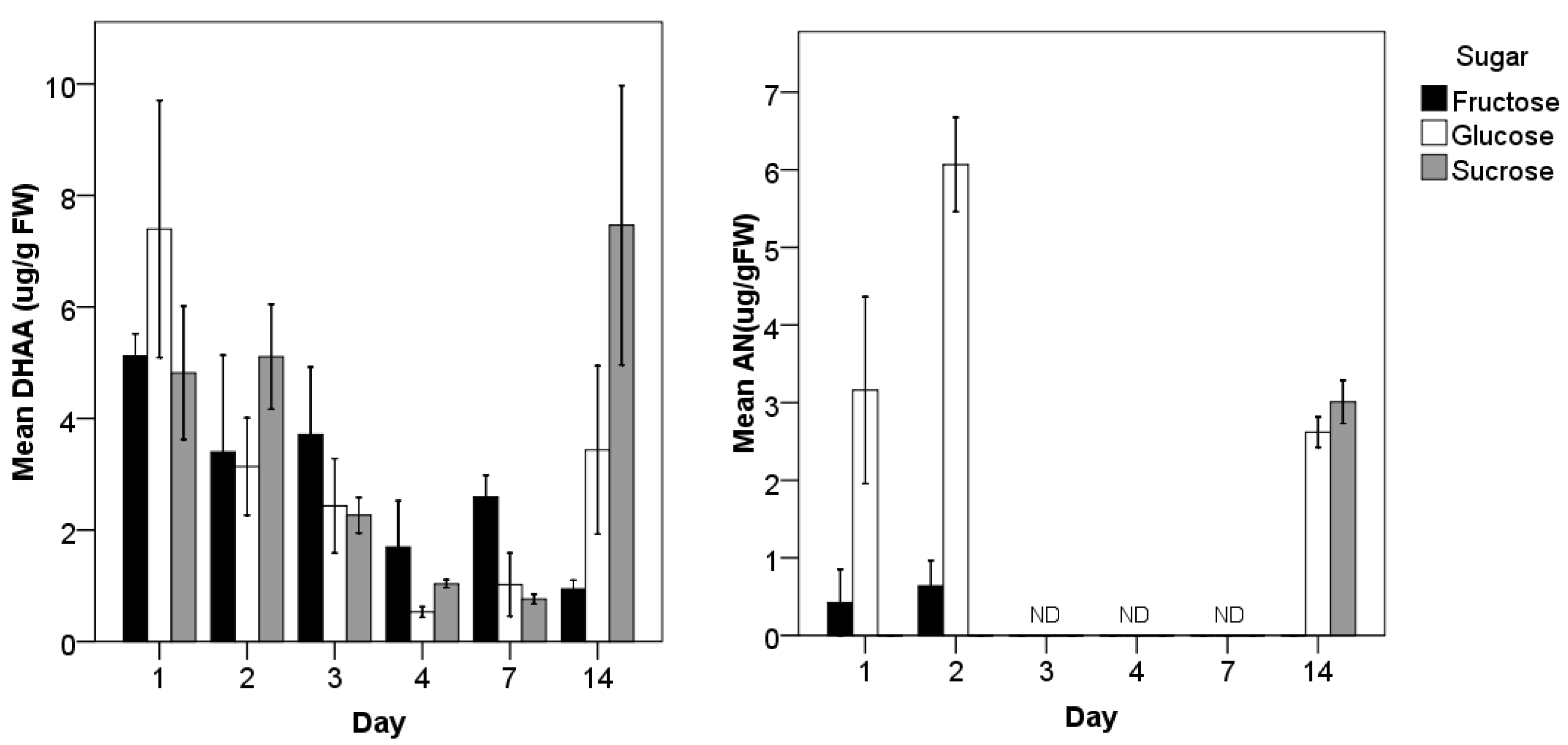
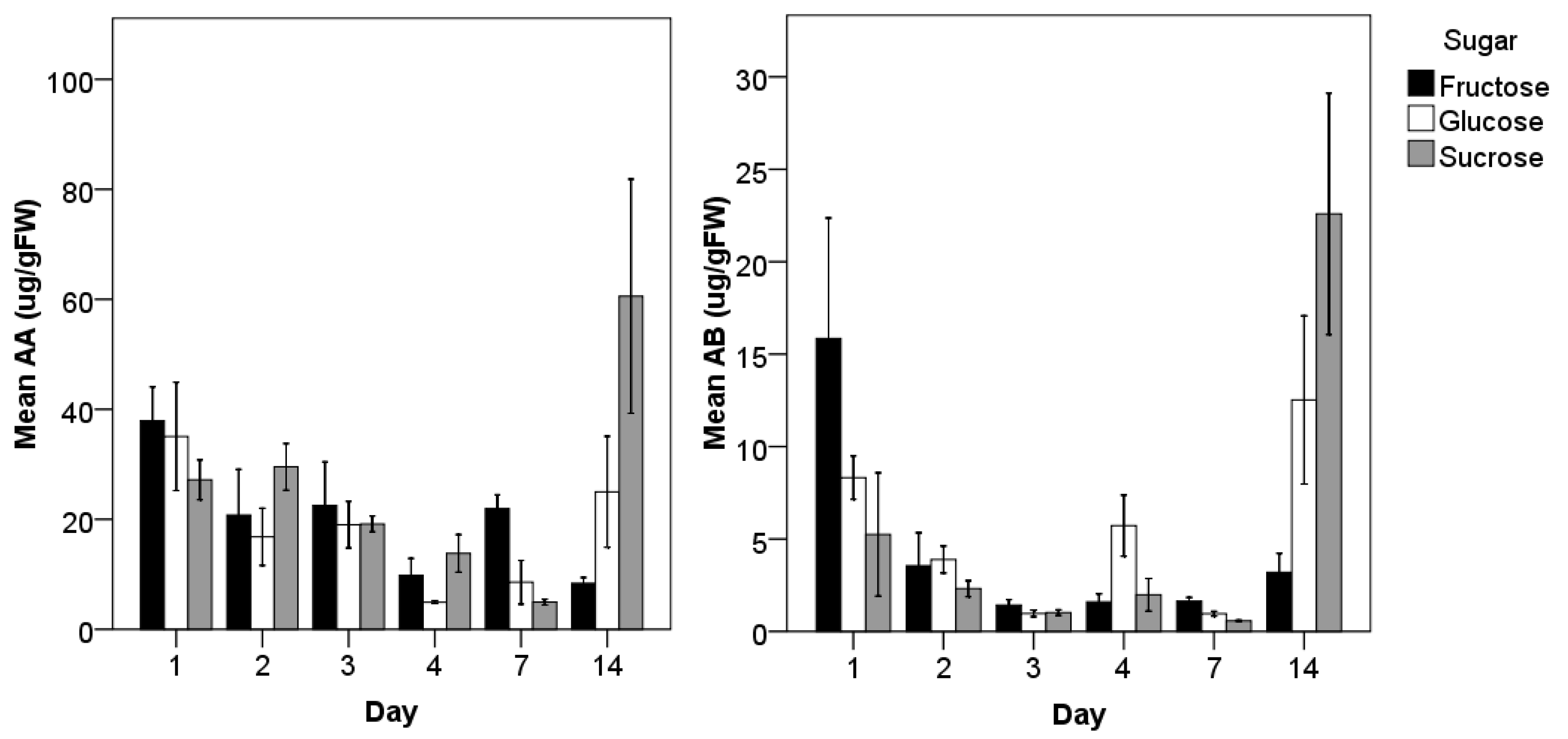
Changes in artemisinic metabolite levels


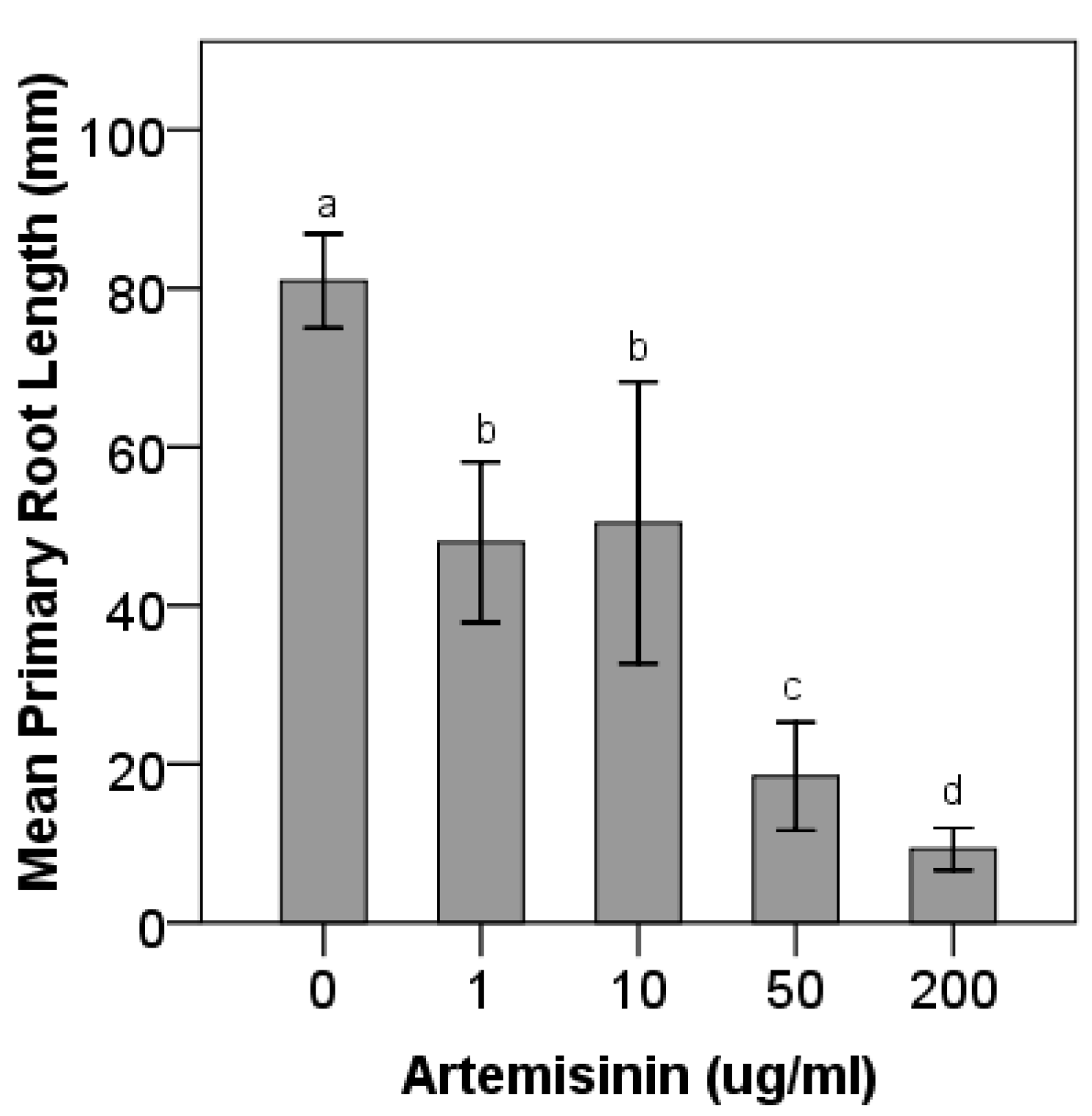
Response of seedlings to exogenous AN

Correlation between transcript and metabolite levels
Materials and Methods
Seed sterilization and culture conditions
RNA isolation and real-time RT-PCR
Artemisinin and artemisinic precursor quantification

| Gene | Direction | Sequence (5' => 3') | Base Pairs | Product Length |
|---|---|---|---|---|
| ADS | Forward | ATACAACGGGCACTAAAGCAACC | 23 | 297 bp |
| ADS | Reverse | GAAAACTCTAGCCCGGGAATACTG | 24 | 297 bp |
| CYP | Forward | GGGGTTAGGGATTTAGCCAGAA | 22 | 218 bp |
| CYP | Reverse | AATTGCCTCCAGTACTCACCATAA | 24 | 218 bp |
| DXR | Forward | ATTGCTGGCGGTCCCTTTGTTCTT | 24 | 237 bp |
| DXR | Reverse | CTTTTCTCCCCATGCTCAGTTAGG | 24 | 237 bp |
| DXS | Forward | ATGGGTTGGCGGGATTCAC | 19 | 274 bp |
| DXS | Reverse | CCGTCAAGATTGGCAGTAGGTAAA | 24 | 274 bp |
| FPS | Forward | GTATGATTGCTGCGAACGATGGA | 23 | 211 bp |
| FPS | Reverse | CGGCGGTGAATAGACAATGAATAC | 24 | 211 bp |
| HMGR | Forward | GGTCAGGATCCGGCCCAAAACATT | 24 | 251 bp |
| HMGR | Reverse | CCAGCCAACACCGAACCAGCAACT | 24 | 251 bp |
| 18S | Forward | TCCGCCGGCACCTTATGAGAAATC | 24 | 219 bp |
| 18S | Reverse | CTAAGAACGGCCATGCACCACCAC | 24 | 219 bp |
Statistical analysis
Conclusions
Acknowledgements
- Sample Availability: Not available.
References and Notes
- Bhattarai, A.; Ali, A.S.; Kachur, S.P.; Martensson, A.; Abbas, A.K.; Khatib, R.; Al-Mafazy, A.W.; Ramsan, M.; Rotllant, G.; Gerstenmaier, J.F.; Molteni, F.; Abdulla, S.; Montgomery, S.M.; Kaneko, A.; Bjorkman, A. Impact of artemisinin-based combination therapy and insecticide-treated nets on malaria burden in Zanzibar. PLoS Med. 2007, 4, e309. [Google Scholar]
- Hsu, E. The history of qing hao in the Chinese materia medica. Trans. Royal. Soc. Trop. Med. Hyg. 2006, 100, 505–508. [Google Scholar] [CrossRef]
- Romero, M.R.; Efferth, T.; Serrano, M.A.; Castano, B.; Macias, R.I.; Briz, O.; Marin, J.J. Effect of artemisinin/artesunate as inhibitors of hepatitis B virus production in an "in vitro" replicative system. Antiviral. Res. 2005, 68, 75–83. [Google Scholar] [CrossRef]
- Borrmann, S.; Szlezák, N.; Faucher, J.; Matsiegui, P.; Neubauer, R.; Binder, R.; Lell, B.; Kremsner, P. Artesunate and praziquantel for the treatment of Schistosoma haematobium infections: A double-blind, randomized, placebo-controlled study. J. Infect. Dis. 2001, 184, 1363–1366. [Google Scholar] [CrossRef]
- Efferth, T. Willmar Schwabe Award 2006: Antiplasmodial and antitumor activity of artemisinin--from bench to bedside. Planta Med. 2007, 73, 299–309. [Google Scholar] [CrossRef]
- Abdin, M.Z.; Israr, M.; Rehman, R.U.; Jain, S.K. Artemisinin, a novel antimalarial drug: Biochemical and molecular approach for enhanced production. Planta Med. 2003, 68, 289–299. [Google Scholar]
- Bouwmeester, H.J.; Wallaart, T.E.; Janssen, M.H.; van Loo, B.; Jansen, B.J.; Posthumus, M.A.; Schmidt, C.O.; De Kraker, J.W.; Konig, W.A.; Franssen, M.C. Amorpha-4, 11-diene synthase catalyses the first probable step in artemisinin biosynthesis. Phytochem 1999, 52, 843–854. [Google Scholar]
- Covello, P.S.; Teoh, K.H.; Polichuk, D.R.; Reed, D.W. Functional genomics and the biosynthesis of artemisinin. Phytochem 2007, 68, 1864–1871. [Google Scholar] [CrossRef]
- Towler, M.J.; Weathers, P.J. Evidence of artemisinin production from IPP stemming from both the mevalonate and the nonmevalonate pathways. Plant Cell Rep. 2007, 26, 2129–2136. [Google Scholar] [CrossRef]
- Laule, O.; Furholz, A.; Chang, H.S.; Zhu, T.; Wang, X.; Heifetz, P.B.; Gruissem, W.; Lange, M. Crosstalk between cytosolic and plastidial pathways of isoprenoid biosynthesis in Arabidopsis thaliana. Proc. Natl. Acad. Sci. USA 2003, 100, 6866–6871. [Google Scholar]
- Hemmerlin, A.; Hoeffler, J.F.; Meyer, O.; Tritsch, D.; Kagan, I.A.; Grosdemange-Billiard, C.; Rohmer, M.; Bach, T.J. Cross-talk between the cytosolic mevalonate and the plastidial methylerythritol phosphate pathways in tobacco bright yellow-2 cells. J. Biol. Chem. 2003, 278, 26666–26676. [Google Scholar]
- Wu, S.; Schalk, M.; Clark, A.; Miles, R.B.; Coates, R.; Chappell, J. Redirection of cytosolic or plastidic isoprenoid precursors elevates terpene production in plants. Nat. Biotechnol. 2006, 24, 1441–1417. [Google Scholar] [CrossRef]
- Kim, S.H.; Heo, K.; Chang, Y.J.; Park, S.H.; Rhee, S.K.; Kim, S.U. Cyclization mechanism of amorpha-4,11-diene synthase, a key enzyme in artemisinin biosynthesis. J. Nat. Prod. 2006, 69, 758–762. [Google Scholar] [CrossRef]
- Kim, S.H.; Chang, Y.J.; Kim, S.U. Tissue specificity and developmental pattern of amorpha-4,11-diene synthase (ADS) proved by ADS promoter-driven GUS expression in the heterologous plant, Arabidopsis thaliana. Planta Med. 2008, 74, 188–193. [Google Scholar]
- Wallaart, T.E.; Bouwmeester, H.J.; Hille, J.; Poppinga, L.; Maijers, N.C. Amorpha-4,11-diene synthase: Cloning and functional expression of a key enzyme in the biosynthetic pathway of the novel antimalarial drug artemisinin. Planta 2001, 212, 460–465. [Google Scholar] [CrossRef]
- Teoh, K.H.; Polichuk, D.R.; Reed, D.W.; Nowak, G.; Covello, P.S. Artemisia annua L. (Asteraceae) trichome-specific cDNAs reveal CYP71AV1, a cytochrome P450 with a key role in the biosynthesis of the antimalarial sesquiterpene lactone artemisinin. FEBS Lett. 2006, 580, 1411–1416. [Google Scholar] [CrossRef]
- Zhang, Y.; Teoh, K.H.; Reed, D.W.; Maes, L.; Goossens, A.; Olson, D.J.H.; Ross, A.R.S.; Covello, P.S. The molecular cloning of artemisinic aldehyde ∆11(13) reductase and its role in glandular trichome-dependent biosynthesis of artemisinin in Artemisia annua. J. Biol. Chem. 2008, 283, 20501–21508. [Google Scholar]
- Brown, G.D.; Sy, L.-K. In vivo transformations of dihydroartemisinic acid in Artemisia annua plants. Tetrahedron 2004, 60, 1139–1159. [Google Scholar] [CrossRef]
- Mercer, A.E.; Maggs, J.L.; Sun, X.M.; Cohen, G.M.; Chadwick, J.; O'Neill, P.M.; Park, B.K. Evidence for the involvement of carbon-centered radicals in the induction of apoptotic cell death by artemisinin compounds. J. Biol. Chem. 2007, 282, 9372–9382. [Google Scholar]
- Graham, I.A.; Denby, K.J.; Leaver, C.J. Carbon catabolite repression regulates glyoxylate cycle gene expression in cucumber. Plant Cell 1994, 6, 761–772. [Google Scholar]
- Vitrac, X.; Larronde, F.; Krisa, S.; Decendit, A.; Deffieux, G.; Merillon, J.M. Sugar sensing and Ca2+-calmodulin requirement in Vitis vinifera cells producing anthocyanins. Phytochem 2000, 53, 659–665. [Google Scholar] [CrossRef]
- Wang, Y.; Weathers, P.J. Sugars proportionately affect artemisinin production. Plant Cell Rep. 2007, 26, 1073–1081. [Google Scholar]
- Gollop, R.; Even, S.; Colova-Tsolova, V.; Perl, A. Expression of the grape dihydroflavonol reductase gene and analysis of its promoter region. J. Exp. Bot. 2002, 53, 1397–1409. [Google Scholar] [CrossRef]
- Solfanelli, C.; Poggi, A.; Loreti, E.; Alpi, A.; Perata, P. Sucrose-specific induction of the anthocyanin biosynthetic pathway in Arabidopsis. Plant Physiol. 2006, 140, 637–646. [Google Scholar] [CrossRef] [Green Version]
- Rolland, F.; Baena-Gonzalez, E.; Sheen, J. Sugar sensing and signaling in plants: Conserved and novel mechanisms. Ann. Rev. Plant Biol. 2006, 57, 675–709. [Google Scholar] [CrossRef]
- Yanagisawa, S.; Yoo, S.; Sheen, J. Differential regulation of EIN3 stability by glucose and ethylene signalling in plants. Nature 2003, 425, 521–525. [Google Scholar] [CrossRef]
- Hummel, M.; Rahmani, F.; Smeekens, S.; Hanson, J. Sucrose-mediated translational control. Ann. Bot. 2009, 104, 1–7. [Google Scholar] [CrossRef]
- Gibson, S.I. Control of plant development and gene expression by sugar signaling. Curr. Opin. Plant Biol. 2005, 8, 93–102. [Google Scholar] [CrossRef]
- Roldan, M.; Gomez-Mena, C.; Ruiz-Garcia, L.; Salinas, J.; Martinez-Zapater, J.M. Sucrose availability on the aerial part of the plant promotes morphogenesis and flowering of Arabidopsis in the dark. Plant J. 1999, 20, 581–90. [Google Scholar] [CrossRef]
- Zhou, L.; Jang, J.C.; Jones, T.L.; Sheen, J. Glucose and ethylene signal transduction crosstalk revealed by an Arabidopsis glucose-insensitive mutant. Proc. Natl. Acad. Sci. USA 1998, 95, 10294–10299. [Google Scholar] [CrossRef]
- Duke, S.O.; Vaughn, K.C.; Croom, E.M.; El Sohly, H.N. Artemisinin, a constituent of annual wormwood (Artemisia annua) is a selective phytotoxin. Weed Sci. 1987, 35, 499–505. [Google Scholar]
- Laughlin, J.C. Post-harvest drying treatment effects on antimalarial constituents of Artemisia annua. L. Acta Hort. 2002, 576, 315–320. [Google Scholar]
- Wallaart, T.E.; Pras, N.; Beekman, A.C.; Quax, W.J. Seasonal variation of artemisinin and its biosynthetic precursors in plants of Artemisia annua of different geographical origin: Proof for the existence of chemotypes. Planta Med. 2000, 66, 57–62. [Google Scholar] [CrossRef]
- Wallaart, T.E.; Pras, N.; Quax, W.J. Isolation and identification of dihydroartemisinic acid hydroperoxide from Artemisia annua: A novel biosynthetic precursor of artemisinin. J. Nat. Prod. 1999, 62, 1160–1162. [Google Scholar] [CrossRef]
- Kim, Y.; Wyslouzil, B.E.; Weathers, P.J. A comparative study of mist and bubble column reactors in the in vitro production of artemisinin. Plant Cell Rep. 2001, 20, 451–455. [Google Scholar] [CrossRef]
- op den Camp, R.G.; Przybyla, D.; Ochsenbein, C.; Laloi, C.; Kim, C.; Danon, A.; Wagner, D.; Hideg, E.; Gobel, C.; Feussner, I.; Nater, M.; Apel, K. Rapid induction of distinct stress responses after the release of singlet oxygen in Arabidopsis. Plant Cell 2003, 15, 2320–2332. [Google Scholar] [CrossRef]
- Wagner, D.; Przybyla, D.; Op den Camp, R.; Kim, C.; Landgraf, F.; Lee, K.P.; Wursch, M.; Laloi, C.; Nater, M.; Hideg, E.; Apel, K. The genetic basis of singlet oxygen-induced stress responses of Arabidopsis thaliana. Science 2004, 306, 1183–1185. [Google Scholar] [CrossRef]
- Mittler, R.; Vanderauwera, S.; Gollery, M.; Van Breusegem, F. Reactive oxygen gene network of plants. Trends Plant Sci. 2004, 9, 490–498. [Google Scholar] [CrossRef]
- Couée, I.; Sulmon, C.; Gouesbet, G.; El Amrani, A. Involvement of soluble suugars in reactive oxygen species balance and responses to oxidative stress in plants. J. Exp. Bot. 2006, 57, 449–459. [Google Scholar] [CrossRef]
- Mannan, A.; Liu, C.; Arsenault, P.; Towler, M.; Vail, D.; Lorence, A.; Weathers, P. DMSO triggers the generation of ROS leading to an increase in artemisinin and dihydroartemisinic acid in Artemisia annua shoot cultures. Plant Cell Rep. 2009, 29, 143–152. [Google Scholar]
- Apel, K.; Hirt, H. Reactive Oxygen Species: Metabolism, oxidative stress, and signal transduction. Ann. Rev. Plant. Biol. 2004, 55, 373–99. [Google Scholar] [CrossRef]
- Asada, K. The Water-Water cycle in chloroplasts: Scavenging of Active oxygens and dissipation of excess photons. Ann. Rev. Plant Phys. Plant Mol. Biol. 1999, 50, 601–39. [Google Scholar] [CrossRef]
- Kolbe, A.; Tiessen, A.; Schluepmann, H.; Paul, M.; Ulrich, S.; Gelgenberger, P. Trehalose 6-phosphate regulates starch synthesis via posttranslational redox activation ofADP-glucose pyrophosphorylase. Proc. Natl. Acad. Sci. USA 2005, 102, 11118–11123. [Google Scholar] [CrossRef]
- Chen, D.H.; Ye, H.C.; Li, G.F. Expression of a chimeric farnesyl diphosphate synthase gene in Artemisia annua L. transgenic plants via Agrobacterium tumefaciens-mediated transformation. Plant Sci. 2000, 155, 179–185. [Google Scholar] [CrossRef]
- Ma, C.; Wang, H.; Lu, X.; Xu, G.; Liu, B. Metabolic fingerprinting investigation of Artemisia annua L. in different stages of development by gas chromatography and gas chromatography-mass spectrometry. J. Chromatog. A 2008, 1186, 412–419. [Google Scholar] [CrossRef]
- Gamborg, O.L.; Miller, R.A.; Ojima, K. Nutrient requirements of suspension cultures of soybean root cells. Exp Cell Res. 1968, 50, 151–158. [Google Scholar] [CrossRef]
- Livak, K.J.; Schmittgen, T.D. Analysis of relative gene expression data using real-time quantitative PCR and the 2(-Delta Delta C(T)) Method. Methods 2001, 25, 402–408. [Google Scholar] [CrossRef]
- Sehringer, B.; Zahradnik, H.P.; Deppert, W.R.; Simon, M.; Noethling, C.; Schaefer, W.R. Evaluation of different strategies for real-time RT-PCR expression analysis of corticotropin-releasing hormone and related proteins in human gestational tissues. Anal. Bioanal. Chem. 2005, 383, 768–75. [Google Scholar] [CrossRef]
- Cikos, S.; Bukovska, A.; Koppel, J. Relative quantification of mRNA: Comparison of methods currently used for real-time PCR data analysis. BMC Mol. Biol. 2007, 20, 113. [Google Scholar]
- Yuan, J.S.; Reed, A.; Chen, F.; Stewart, C.N.J. Statistical analysis of real-time PCR data. Bioinform 2006, 7, 85–90. [Google Scholar]
© 2010 by the authors; licensee Molecular Diversity Preservation International, Basel, Switzerland. This article is an open-access article distributed under the terms and conditions of the Creative Commons Attribution license (http://creativecommons.org/licenses/by/3.0/).
Share and Cite
Arsenault, P.R.; Vail, D.R.; Wobbe, K.K.; Weathers, P.J. Effect of Sugars on Artemisinin Production in Artemisia annua L.: Transcription and Metabolite Measurements. Molecules 2010, 15, 2302-2318. https://doi.org/10.3390/molecules15042302
Arsenault PR, Vail DR, Wobbe KK, Weathers PJ. Effect of Sugars on Artemisinin Production in Artemisia annua L.: Transcription and Metabolite Measurements. Molecules. 2010; 15(4):2302-2318. https://doi.org/10.3390/molecules15042302
Chicago/Turabian StyleArsenault, Patrick R., Daniel R. Vail, Kristin K. Wobbe, and Pamela J. Weathers. 2010. "Effect of Sugars on Artemisinin Production in Artemisia annua L.: Transcription and Metabolite Measurements" Molecules 15, no. 4: 2302-2318. https://doi.org/10.3390/molecules15042302