Journal Description
Physical Sciences Forum
is an open access journal dedicated to publishing findings resulting from academic conferences, workshops and similar events in the area of physical sciences. Each conference proceeding can be individually indexed, is citable via a digital object identifier (DOI) and freely available under an open access license. The conference organizers and proceedings editors are responsible for managing the peer-review process and selecting papers for conference proceedings.
Latest Articles
Fourier Transform Infrared Emission Spectroscopy of Si ii
Phys. Sci. Forum 2026, 13(1), 7; https://doi.org/10.3390/psf2026013007 (registering DOI) - 29 May 2026
Abstract
Accurate and precise spectral data for singly ionized silicon (Si ii) are important for numerous applications. In this work, we present high-resolution Fourier transform IR emission spectroscopy of Si ii, using spectra recorded with the 1 m FTS at the Kitt
[...] Read more.
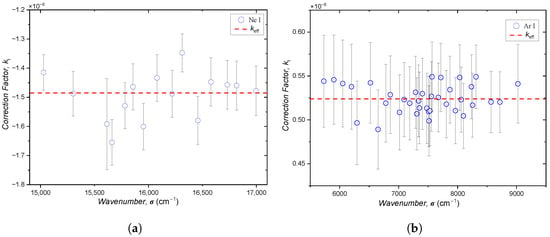
Accurate and precise spectral data for singly ionized silicon (Si ii) are important for numerous applications. In this work, we present high-resolution Fourier transform IR emission spectroscopy of Si ii, using spectra recorded with the 1 m FTS at the Kitt Peak National Observatory. A total of 18 lines were measured in the region 780 nm to 4000 nm, and an immediate comparison of our data with the NIST ASD shows that our measurements offer at least a tenfold improvement in precision.
Full article
(This article belongs to the Proceedings of The 1st International Online Conference on Atoms)
►
Show Figures
Open AccessConference Report
Abstracts of the 3rd International Online Conference on Universe, 4–6 March 2026
by
Lorenzo Iorio
Phys. Sci. Forum 2026, 14(1), 1; https://doi.org/10.3390/psf2026014001 - 18 May 2026
Abstract
The 3rd International Online Conference on Universe, organized by the journal Universe, was held from 4 to 6 March 2026. It collected distinguished researchers from all over the world who showcased their latest researches on topics like Gravitation and Cosmology, Field Theory,
[...] Read more.
The 3rd International Online Conference on Universe, organized by the journal Universe, was held from 4 to 6 March 2026. It collected distinguished researchers from all over the world who showcased their latest researches on topics like Gravitation and Cosmology, Field Theory, Quantum Gravity, High Energy, Nuclei and Particle Physics, Foundation of Quantum Mechanics, Astrophysics and Compact Objects, Solar and Stellar Physics, and Astroparticle Physics. Both posters and talks were at the forefront of the current research, and the discussions were often vibrant and penetrating with several talks that attracted many stimulating inquiries. This report, collecting the extended abstracts of the participants, gives an idea of the tone of the conference.
Full article
(This article belongs to the Proceedings of The 3rd International Online Conference on Universe)
Open AccessProceeding Paper
Atomic Structure Analysis and Radiative Properties with Einstein Coefficients for Ne-like Se (Se XXV)
by
Malvika Singh, Richa Paijwar and Rinku Sharma
Phys. Sci. Forum 2026, 13(1), 6; https://doi.org/10.3390/psf2026013006 - 13 May 2026
Abstract
We present a detailed study of the atomic structure and radiative properties of highly charged neon-like selenium (Se XXV), motivated by its importance in plasma diagnostics, fusion research, and astrophysical spectroscopy. We calculated excitation energies and radiative parameters for the 50 lowest levels
[...] Read more.
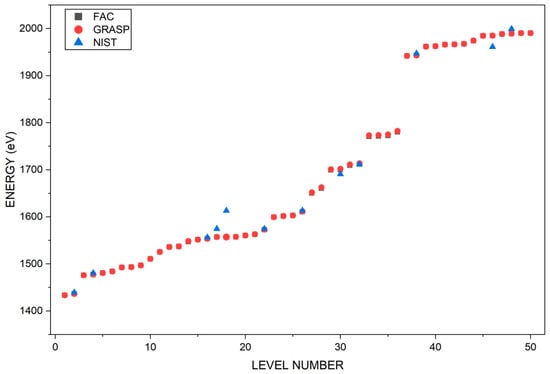
We present a detailed study of the atomic structure and radiative properties of highly charged neon-like selenium (Se XXV), motivated by its importance in plasma diagnostics, fusion research, and astrophysical spectroscopy. We calculated excitation energies and radiative parameters for the 50 lowest levels of fine structure using a fully relativistic multiconfiguration Dirac–Fock approach. We calculated transition wavelengths, radiative transition rates, oscillator strengths, and line strengths for electric dipole, magnetic dipole, electric quadrupole, and magnetic quadrupole transitions among the specified levels. We also evaluated Einstein coefficients for spontaneous and stimulated emission, transition dipole moments, and radiative lifetimes of the low-lying states. To validate the results, we performed independent relativistic calculations using an alternative theoretical method and compared the datasets to examine internal consistency. The calculated excitation energies and radiative parameters agree well with values reported in the National Institute of Standards and Technology database (NIST) and other published theoretical results. The agreement between the independent approaches confirms the consistency of the present dataset. These results provide reliable atomic data for spectral line identification and quantitative plasma modeling in laboratory and astrophysical environments and support ongoing experimental and diagnostic studies of highly charged ions.
Full article
(This article belongs to the Proceedings of The 1st International Online Conference on Atoms)
►▼
Show Figures

Figure 1
Open AccessProceeding Paper
Resonant Excitation in r-Process Collision Strengths for Non-LTE Kilonova Modelling
by
Ricardo Ferreira da Silva, Luis Leitão, Andreas Flörs, Tomás Campante, Daniel Garcia, Jorge Sampaio, Gabriel Martínez-Pinedo and José Pires Marques
Phys. Sci. Forum 2026, 13(1), 5; https://doi.org/10.3390/psf2026013005 (registering DOI) - 11 May 2026
Abstract
The modelling of kilonova spectra, particularly in the late-time nebular phase, relies heavily on accurate atomic data. While significant progress has been made regarding energy levels and radiative transition rates for r-process elements, data for collisional processes remains scarce. Current models often
[...] Read more.
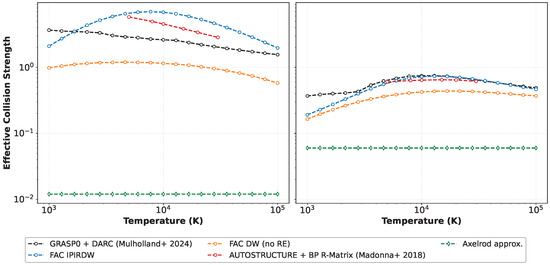
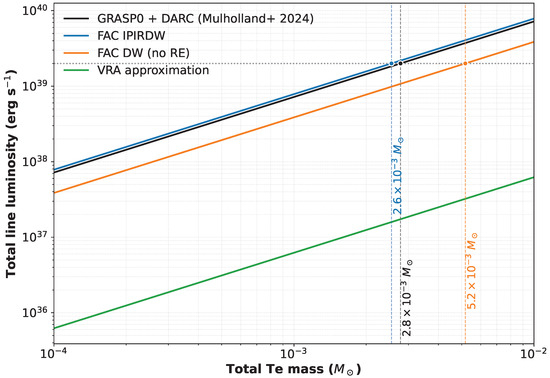
The modelling of kilonova spectra, particularly in the late-time nebular phase, relies heavily on accurate atomic data. While significant progress has been made regarding energy levels and radiative transition rates for r-process elements, data for collisional processes remains scarce. Current models often rely on the Van Regemorter and Axelrod approximations for effective collision strengths. In this work we present the calculation of electron-impact excitation (EIE) collision strengths for relevant r-process elements. We employ the Independent-Process, Isolated-Resonance Distorted-Wave (IPIRDW) approximation to account for the contribution of resonant excitation, which is crucial at the low temperatures characteristic of kilonovae. We demonstrate the validity of our method by benchmarking against R-Matrix calculations for Te iii, finding good agreement while maintaining a significantly lower computational cost. We focus on the relevant 2.1 μm feature and estimate a mass of
2.6 ×
10
−
3
M
⊙
using our IPIRDW data for EIE effective collision strengths, compatible with other recent estimations using R-Matrix data.
Full article
(This article belongs to the Proceedings of The 1st International Online Conference on Atoms)
►▼
Show Figures

Figure 1
Open AccessProceeding Paper
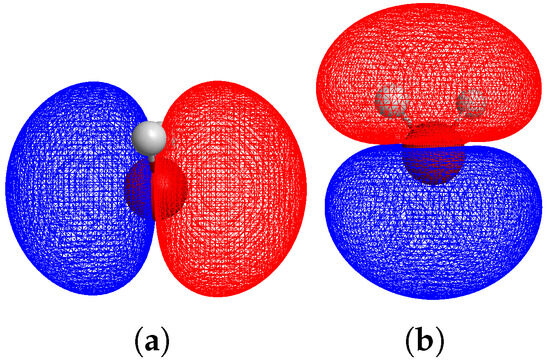
Electron-Impact Single Ionization of Molecules: Orientation-Resolved Fully Differential Cross Sections
by
Emiliano Acebal and Sebastian Otranto
Phys. Sci. Forum 2026, 13(1), 2; https://doi.org/10.3390/psf2026013002 - 30 Apr 2026
Abstract
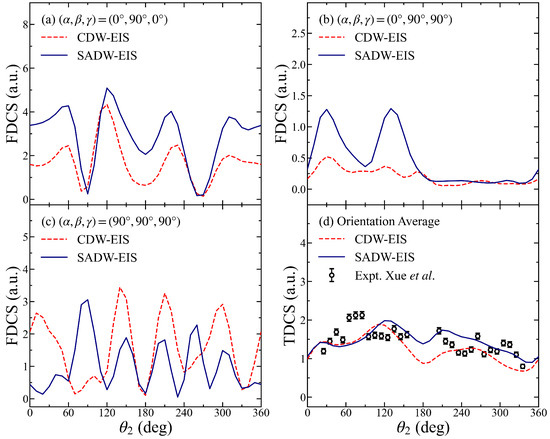
In this work, we study the single ionization of H2O and C4H8O by electron impact. Fully differential cross sections are calculated by means of two distorted wave models which vary in the single-centre approximation applied to the
[...] Read more.
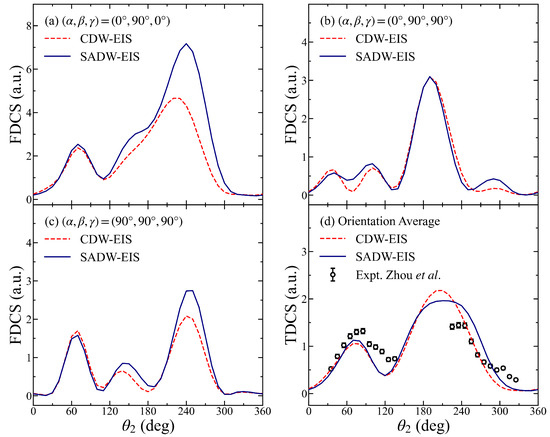
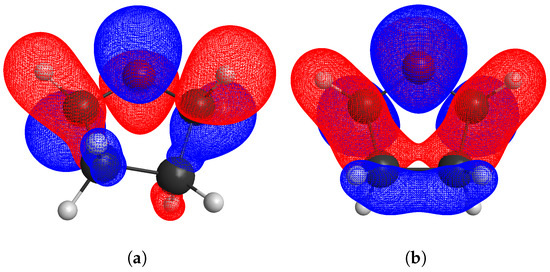
In this work, we study the single ionization of H2O and C4H8O by electron impact. Fully differential cross sections are calculated by means of two distorted wave models which vary in the single-centre approximation applied to the interaction of the continuum electrons with the residual molecular ion. Dependence on the molecular target orientation is analyzed before performing an average procedure to benchmark with experimental data. The present results suggest that structures in non-oriented triple differential cross sections do not directly reflect the patterns inferred from a limited set of particular orientations, demanding an extensive averaging procedure.
Full article
(This article belongs to the Proceedings of The 1st International Online Conference on Atoms)
►▼
Show Figures

Figure 1
Open AccessProceeding Paper
State-Selective Charge Exchange in Collisions of Multiply Charged Ions with H2
by
Nelson D. Cariatore and Sebastian Otranto
Phys. Sci. Forum 2026, 13(1), 4; https://doi.org/10.3390/psf2026013004 (registering DOI) - 28 Apr 2026
Abstract
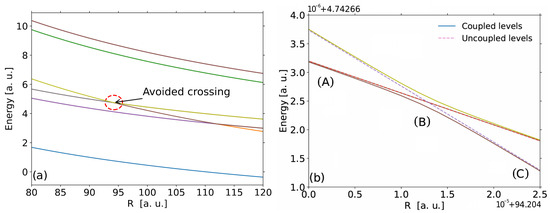
We report an enhanced Classical Trajectory Monte Carlo (CTMC) approach developed to study state-selective charge exchange in collisions between multiply charged ions and H2 molecules. The model combines two hydrogenic three-body formulations—originally designed to improve the H(
) radial distribution—within
[...] Read more.
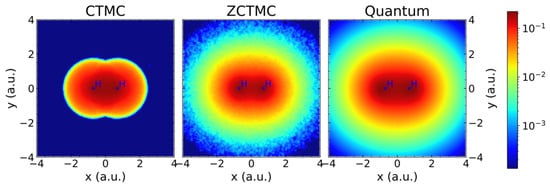
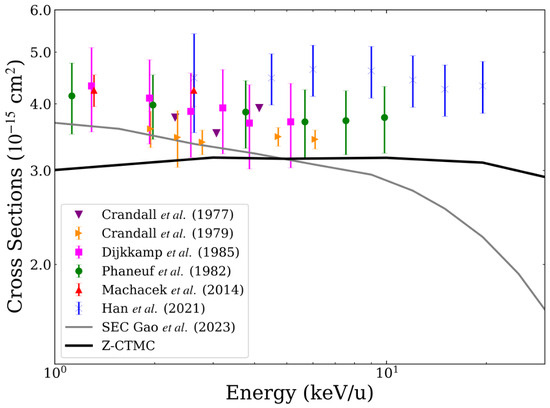
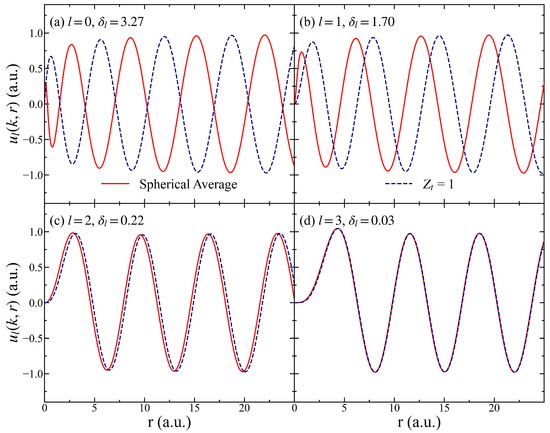
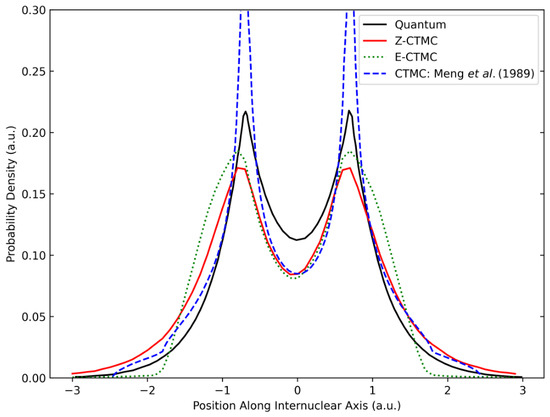
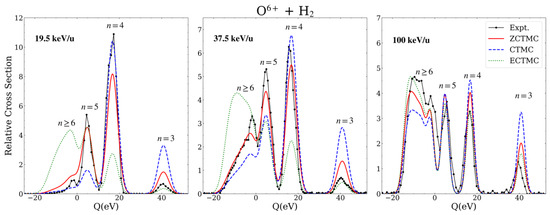
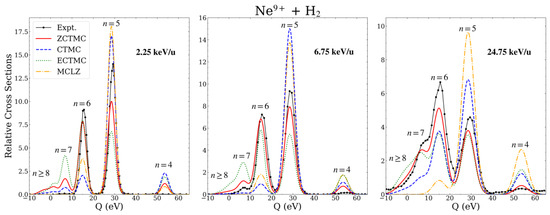
We report an enhanced Classical Trajectory Monte Carlo (CTMC) approach developed to study state-selective charge exchange in collisions between multiply charged ions and H2 molecules. The model combines two hydrogenic three-body formulations—originally designed to improve the H(
1
s
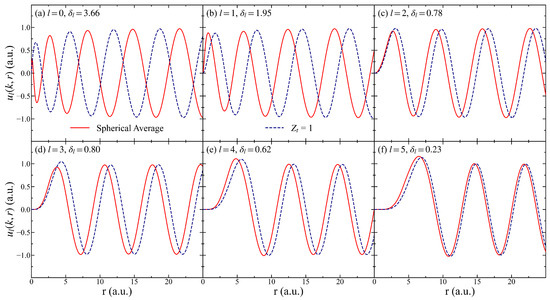
) radial distribution—within the five-body CTMC framework introduced by Wood and Olson. The new schemes, termed E-CTMC and Z-CTMC, extend the electronic density of the target to larger distances, providing a more accurate representation of the molecular system. Calculations for 2 to 100 keV/u Ne9+ and O6+ projectiles at low and intermediate impact energies are benchmarked against recent laboratory data and the Multichannel Landau–Zener method. The Z-CTMC approach reproduces the observed energy-dependent shift of the most populated n levels, showing the closest overall agreement with the experiments. Complementary simulations for different projectiles show that discrepancies among the CTMC variants grow with increasing projectile charge and lower impact energies, emphasizing the need for further experimental measurements involving highly charged ions. The present formulation offers a consistent framework for analyzing charge-exchange processes relevant to laboratory and astrophysical plasmas.
Full article
(This article belongs to the Proceedings of The 1st International Online Conference on Atoms)
►▼
Show Figures

Figure 1
Open AccessProceeding Paper
Atomic Energy Level Calculations for Lanthanides with AUTOSTRUCTURE
by
Tomás Campante, Ricardo Ferreira da Silva, Luís Leitão, Daniel Garcia, Jorge Miguel Sampaio and José Manuel Pires Marques
Phys. Sci. Forum 2026, 13(1), 3; https://doi.org/10.3390/psf2026013003 (registering DOI) - 27 Apr 2026
Abstract
With the detection of kilonova AT2017gfo, (binary) neutron star mergers emerged as possible astrophysical sites for heavy element nucleosynthesis via r-process. To verify this claim, it is key to identify elements such as lanthanides and actinides in kilonovae spectra. Theoretical calculations arise
[...] Read more.
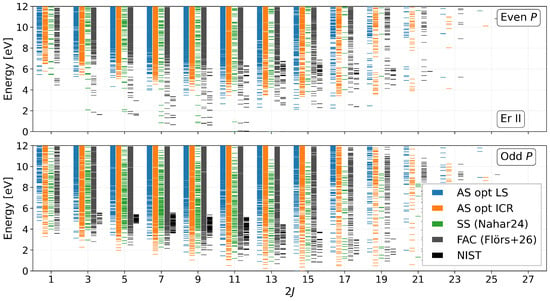
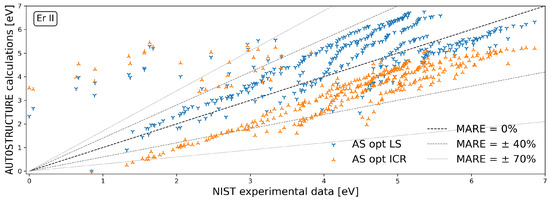
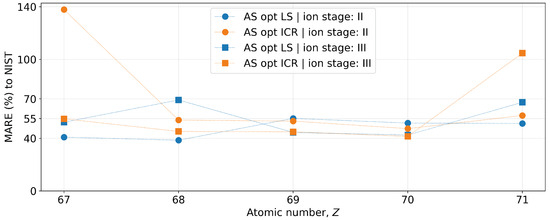
With the detection of kilonova AT2017gfo, (binary) neutron star mergers emerged as possible astrophysical sites for heavy element nucleosynthesis via r-process. To verify this claim, it is key to identify elements such as lanthanides and actinides in kilonovae spectra. Theoretical calculations arise as a solution to fill the scarcity of experimental atomic data to perform this identification. This work presents theoretical calculations with the AUTOSTRUCTURE atomic code for Ho, Er, Tm, Yb and Lu singly and doubly ionised, and benchmarks them against experimental data. The similarity between these theoretical calculations and experimental data was quantified via a mean absolute relative error (MARE), which showed that the calculations yield an average MARE of
58.7 %
and
56.7 %
for the singly and doubly ionised species, respectively.
Full article
(This article belongs to the Proceedings of The 1st International Online Conference on Atoms)
►▼
Show Figures

Figure 1
Open AccessProceeding Paper
QED Coupling of Image States in Spherical Cavities
by
Blake Gerardo Pérez, Renata Della Picca and Juan Martín Randazzo
Phys. Sci. Forum 2026, 13(1), 1; https://doi.org/10.3390/psf2026013001 - 17 Apr 2026
Abstract
In this work, we address the study of a confined atom in spherical cavities through the Pauli–Fierz Hamiltonian. In this approximation the spherical transverse modes of the field are considered in the Coulomb gauge and in the second quantization formalism. In the present
[...] Read more.
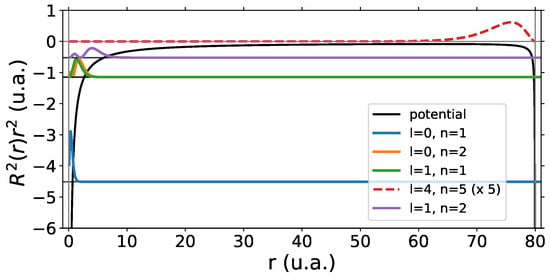
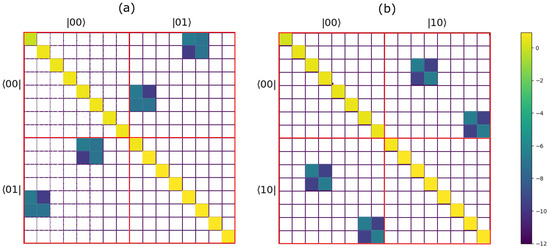
In this work, we address the study of a confined atom in spherical cavities through the Pauli–Fierz Hamiltonian. In this approximation the spherical transverse modes of the field are considered in the Coulomb gauge and in the second quantization formalism. In the present contribution, the longitudinal field is considered through the Hartree potential, an interaction between particles and between the particles and the conductive walls, obtained from the electrostatic energy density and consistent with the boundary conditions imposed to the transversal components. The self-energy states of the coupled system are written in terms of a series of separable field–matter orbitals, in a configuration interaction scheme.
Full article
(This article belongs to the Proceedings of The 1st International Online Conference on Atoms)
►▼
Show Figures

Figure 1
Open AccessEditorial
Preface and Statement of Peer Review: 43rd International Workshop on Bayesian Inference and Maximum Entropy Methods in Science and Engineering (MaxEnt 2024)
by
Geert Verdoolaege
Phys. Sci. Forum 2025, 12(1), 19; https://doi.org/10.3390/psf2025012019 - 10 Dec 2025
Abstract
n/a
Full article
(This article belongs to the Proceedings of The 43rd International Workshop on Bayesian Inference and Maximum Entropy Methods in Science and Engineering)
Open AccessProceeding Paper
Approaching the Quantum Limit in Axion Detection at IBS-CAPP and IBS-DMAG
by
Sergey V. Uchaikin, Boris I. Ivanov, Arjan F. van Loo, Yasunobu Nakamura, MinSu Ko, Jinmyeong Kim, Saebyeok Ahn, Seonjeong Oh, Yannis K. Semertzidis and SungWoo Youn
Phys. Sci. Forum 2025, 11(1), 5; https://doi.org/10.3390/psf2025011005 - 26 Nov 2025
Abstract
We present the development of two complementary amplifier architectures for axion haloscope experiments, based on two types of Josephson Parametric Amplifiers (JPAs). The first employs a multi-chip module of flux-driven JPAs in a parallel–series configuration, enabling near quantum-limited amplification over an extended tunable
[...] Read more.
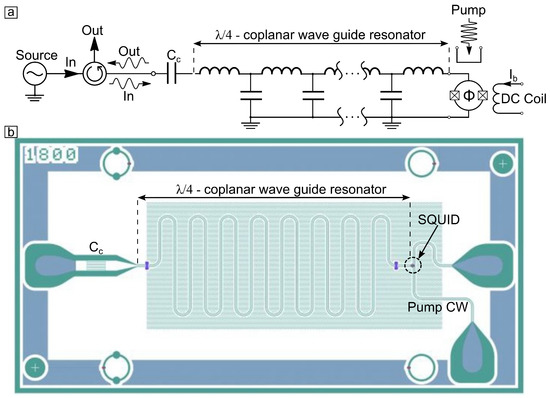
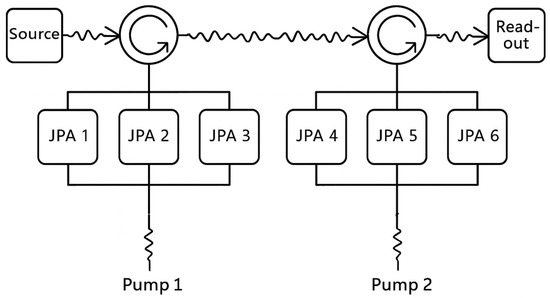
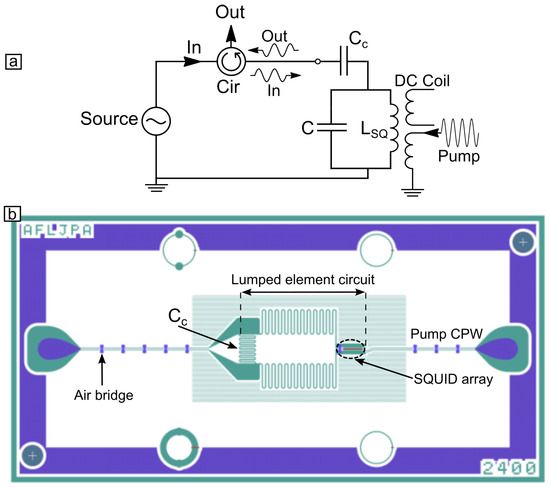
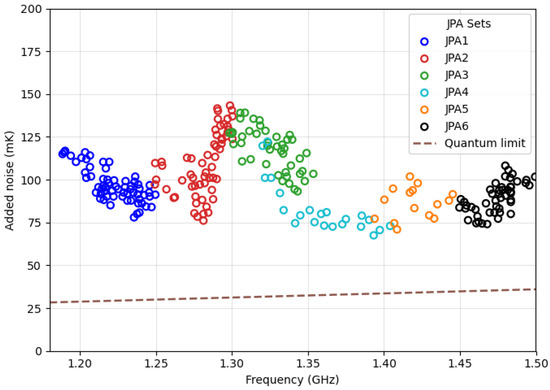
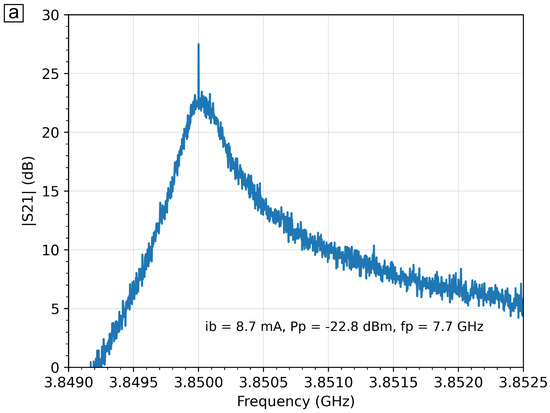
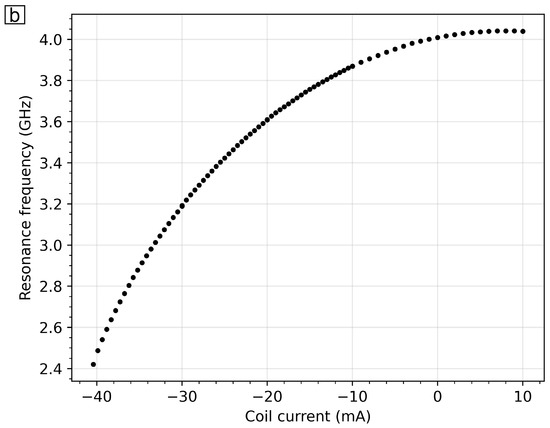
We present the development of two complementary amplifier architectures for axion haloscope experiments, based on two types of Josephson Parametric Amplifiers (JPAs). The first employs a multi-chip module of flux-driven JPAs in a parallel–series configuration, enabling near quantum-limited amplification over an extended tunable range of between 1.2 and 1.5 GHz. The second design features a lumped-element JPA, offering continuous tunability across a wide frequency range from 2.4 to 4 GHz. Both approaches demonstrate near-quantum-limited noise performance and are compatible with operation in cryogenic environments. These amplifiers significantly enhance the sensitivity and frequency coverage of axion search experiments, and also provide new opportunities for broadband quantum sensing applications.
Full article
(This article belongs to the Proceedings of The 19th Patras Workshop on Axions, WIMPs and WISPs)
►▼
Show Figures

Figure 1
Open AccessProceeding Paper
Determination of Uncertainty Model of a Particle-Reflection-Distribution
by
Roland Preuss and Udo von Toussaint
Phys. Sci. Forum 2025, 12(1), 18; https://doi.org/10.3390/psf2025012018 - 24 Nov 2025
Abstract
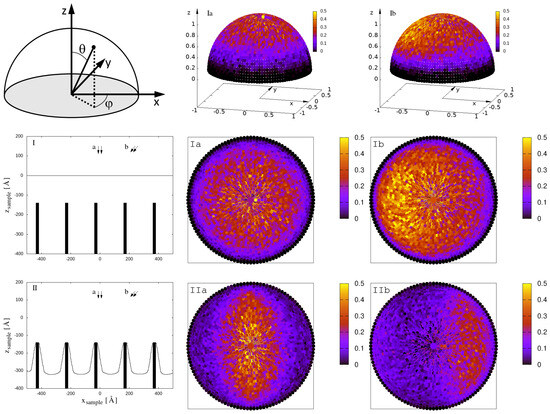
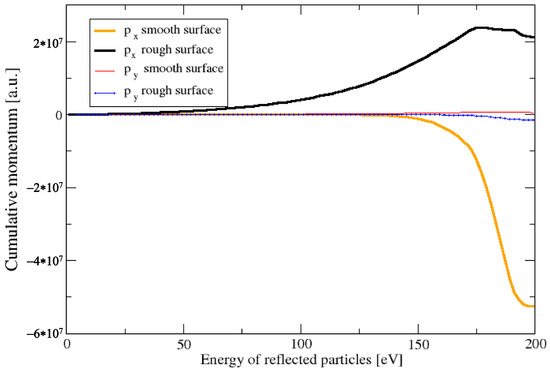
The modelling of plasma–wall interactions (PWIs) depends on distributions describing the angle and energy distribution of particles scattered at the first wall of fusion devices. Most PWI codes rely on extensive tables based on data from reflection simulations, employing a Monte Carlo method.
[...] Read more.
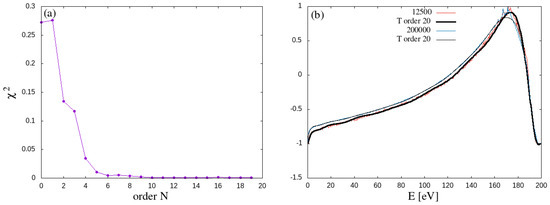
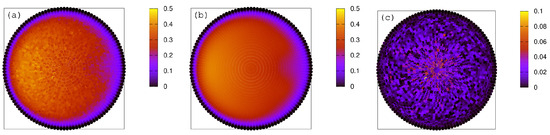
The modelling of plasma–wall interactions (PWIs) depends on distributions describing the angle and energy distribution of particles scattered at the first wall of fusion devices. Most PWI codes rely on extensive tables based on data from reflection simulations, employing a Monte Carlo method. At first glance, the uncertainty distribution of the data should be assumed Gaussian. However, in order to obtain the resulting particle distribution, the reflected ions are counted within angle sections of the upper hemisphere, which hints to a Poisson uncertainty distribution. In this paper, we let Bayesian model comparison decide which uncertainty model should be taken.
Full article
(This article belongs to the Proceedings of The 43rd International Workshop on Bayesian Inference and Maximum Entropy Methods in Science and Engineering)
►▼
Show Figures

Figure 1
Open AccessProceeding Paper
Maximum Entropy Production for Optimizing Carbon Catalysis: An Active-Matter-Inspired Approach
by
Klaus Regenauer-Lieb, Manman Hu, Hui Tong Chua, Victor Calo, Boris Yakobson, Evgeny P. Zemskov and
Phys. Sci. Forum 2025, 12(1), 16; https://doi.org/10.3390/psf2025012016 - 15 Nov 2025
Abstract
The static topology of surface characteristics and active sites in catalysis overlooks a crucial element: the dynamic processes of optimal pattern formation over time and the creation of intermediate structures that enhance reactions. Nature’s principle of coupling reaction and motion in catalytic processes
[...] Read more.
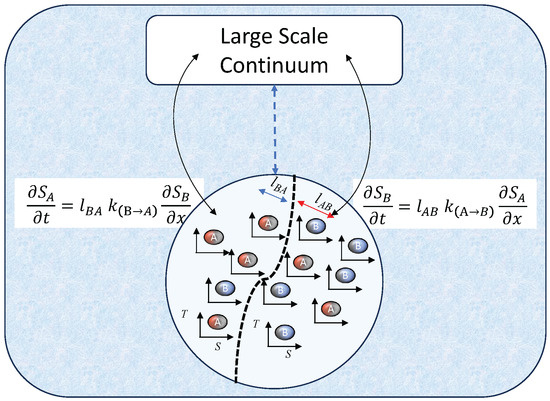
The static topology of surface characteristics and active sites in catalysis overlooks a crucial element: the dynamic processes of optimal pattern formation over time and the creation of intermediate structures that enhance reactions. Nature’s principle of coupling reaction and motion in catalytic processes by enzymes or higher organisms offers a new perspective. This work explores a novel theoretical approach by adding the time dimension to optimise topological variations using the Maximum Entropy Production (MEP) assumption. This approach recognises that the catalyst surface is not an unchanging energy landscape but can change dynamically. The time-dependent transport problem of molecules is here interpreted by a non-equilibrium model used for modelling and predicting dynamic pattern formation in excitable media, a class of active matter requiring an activation threshold. We present a nonlocal reaction–cross-diffusion (RXD) formulation of catalytic reactions that can capture the catalyst’s interaction with the target molecule in space and time. The approach provides a theoretical basis for future deep learning models and multiphysics upscaling of catalysts and their support structures across multiphysics fields. The particular advantage of the RXD approach is that it allows each scale to investigate dynamic pattern-forming processes using linear and nonlinear stability analysis, thus establishing a rule base for developing new catalysts.
Full article
(This article belongs to the Proceedings of The 43rd International Workshop on Bayesian Inference and Maximum Entropy Methods in Science and Engineering)
►▼
Show Figures

Figure 1
Open AccessProceeding Paper
Bayesian Regularization for Dynamical System Identification: Additive Noise Models
by
Robert K. Niven, Laurent Cordier, Ali Mohammad-Djafari, Markus Abel and Markus Quade
Phys. Sci. Forum 2025, 12(1), 17; https://doi.org/10.3390/psf2025012017 - 14 Nov 2025
Abstract
Consider the dynamical system
, where
is the state vector,
is the time or spatial derivative, and f is the system model. We wish to identify unknown f from its
[...] Read more.
Consider the dynamical system
x
˙
=
f
(
x
)
, where
x
∈
R
n
is the state vector,
x
˙
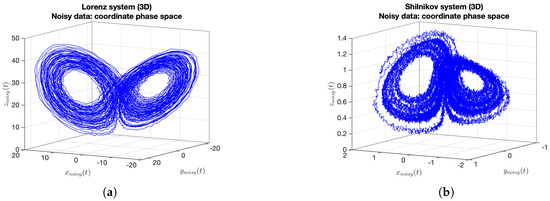
is the time or spatial derivative, and f is the system model. We wish to identify unknown f from its time-series or spatial data. For this, we propose a Bayesian framework based on the maximum a posteriori (MAP) point estimate, to give a generalized Tikhonov regularization method with the residual and regularization terms identified, respectively, with the negative logarithms of the likelihood and prior distributions. As well as estimates of the model coefficients, the Bayesian interpretation provides access to the full Bayesian apparatus, including the ranking of models, the quantification of model uncertainties, and the estimation of unknown (nuisance) hyperparameters. For multivariate Gaussian likelihood and prior distributions, the Bayesian formulation gives a Gaussian posterior distribution, in which the numerator contains a Mahalanobis distance or “Gaussian norm”. In this study, two Bayesian algorithms for the estimation of hyperparameters—the joint maximum a posteriori (JMAP) and variational Bayesian approximation (VBA)—are compared to the popular SINDy, LASSO, and ridge regression algorithms for the analysis of several dynamical systems with additive noise. We consider two dynamical systems, the Lorenz convection system and the Shil’nikov cubic system, with four choices of noise model: symmetric Gaussian or Laplace noise and skewed Rayleigh or Erlang noise, with different magnitudes. The posterior Gaussian norm is found to provide a robust metric for quantitative model selection—with quantification of the model uncertainties—across all dynamical systems and noise models examined.
Full article
(This article belongs to the Proceedings of The 43rd International Workshop on Bayesian Inference and Maximum Entropy Methods in Science and Engineering)
►▼
Show Figures

Figure 1
Open AccessProceeding Paper
Automatic Modeling and Object Identification in Radio Astronomy
by
Richard Fuchs, Jakob Knollmüller and Lukas Heinrich
Phys. Sci. Forum 2025, 12(1), 15; https://doi.org/10.3390/psf2025012015 - 5 Nov 2025
Abstract
Building appropriate models is crucial for imaging tasks in many fields but often challenging due to the richness of the systems. In radio astronomy, for example, wide-field observations can contain various and superposed structures that require different descriptions, such as filaments, point sources
[...] Read more.
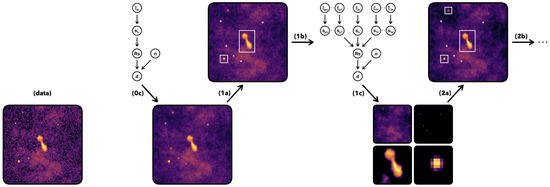
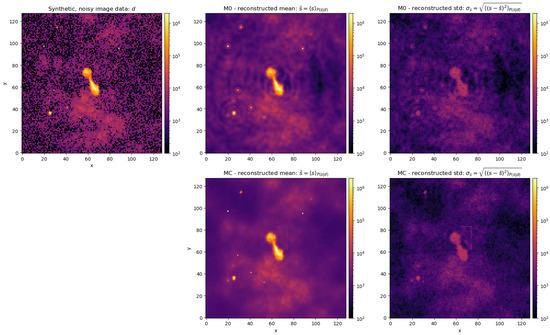
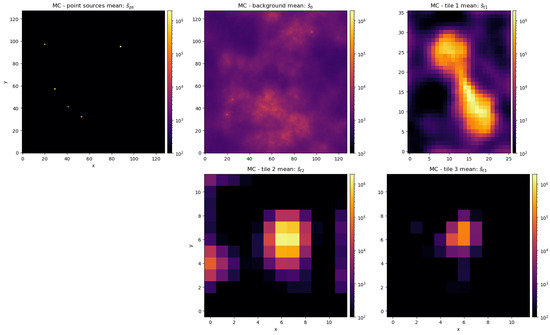
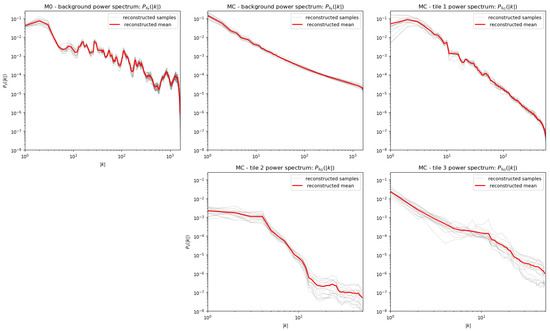
Building appropriate models is crucial for imaging tasks in many fields but often challenging due to the richness of the systems. In radio astronomy, for example, wide-field observations can contain various and superposed structures that require different descriptions, such as filaments, point sources or compact objects. This work presents an automatic pipeline that iteratively adapts probabilistic models for such complex systems in order to improve the reconstructed images. It uses the Bayesian imaging library NIFTy, which is formulated in the language of information field theory. Starting with a preliminary reconstruction using a simple and flexible model, the pipeline employs deep learning and clustering methods to identify and separate different objects. In a further step, these objects are described by adding new building blocks to the model, allowing for a component separation in the next reconstruction step. This procedure can be repeated several times for refinement to iteratively improve the overall reconstruction. In addition, the individual components can be modeled at different resolutions allowing us to focus on important parts of the emission field without getting computationally too expensive.
Full article
(This article belongs to the Proceedings of The 43rd International Workshop on Bayesian Inference and Maximum Entropy Methods in Science and Engineering)
►▼
Show Figures

Figure 1
Open AccessProceeding Paper
Inverse Bayesian Methods for Groundwater Vulnerability Assessment
by
Nasrin Taghavi, Robert K. Niven, Matthias Kramer and David J. Paull
Phys. Sci. Forum 2025, 12(1), 14; https://doi.org/10.3390/psf2025012014 - 5 Nov 2025
Cited by 1
Abstract
Groundwater vulnerability assessment (GVA) is critical for understanding contaminant migration into groundwater systems, yet conventional methods often overlook its probabilistic nature. Bayesian inference offers a robust framework using Bayes’ rule to enhance decision-making through posterior probability calculations. This study introduces inverse Bayesian methods
[...] Read more.
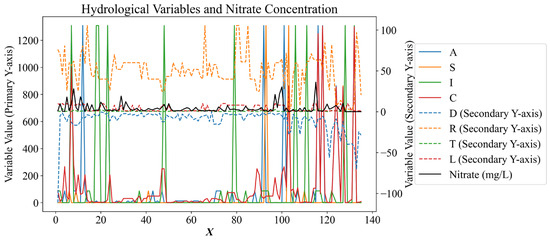
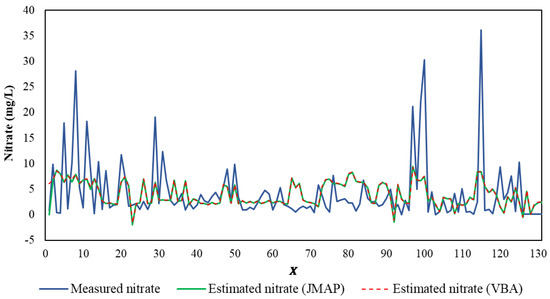
Groundwater vulnerability assessment (GVA) is critical for understanding contaminant migration into groundwater systems, yet conventional methods often overlook its probabilistic nature. Bayesian inference offers a robust framework using Bayes’ rule to enhance decision-making through posterior probability calculations. This study introduces inverse Bayesian methods for GVA using spatial-series data, focusing on nitrate concentrations in groundwater as an indicator of groundwater vulnerability in agricultural catchments. Using the joint maximum a-posteriori (JMAP) and variational Bayesian approximation (VBA) algorithms, the advantages of the Bayesian framework over traditional index-based methods are demonstrated for GVA of the Burdekin Basin, Queensland, Australia. This provides an evidence-based methodology for GVA which enables model ranking, parameter estimation, and uncertainty quantification.
Full article
(This article belongs to the Proceedings of The 43rd International Workshop on Bayesian Inference and Maximum Entropy Methods in Science and Engineering)
►▼
Show Figures

Figure 1
Open AccessProceeding Paper
Bayesian Integrated Data Analysis and Experimental Design for External Magnetic Plasma Diagnostics in DEMO
by
Jeffrey De Rycke, Alfredo Pironti, Marco Ariola, Antonio Quercia and Geert Verdoolaege
Phys. Sci. Forum 2025, 12(1), 13; https://doi.org/10.3390/psf2025012013 - 4 Nov 2025
Abstract
Magnetic confinement nuclear fusion offers a promising solution to the world’s growing energy demands. The DEMO reactor presented here aims to bridge the gap between laboratory fusion experiments and practical electricity generation, posing unique challenges for magnetic plasma diagnostics due to limited space
[...] Read more.
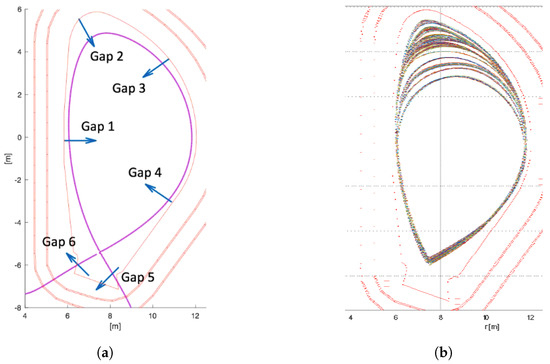
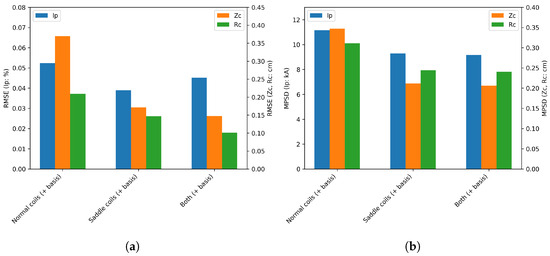
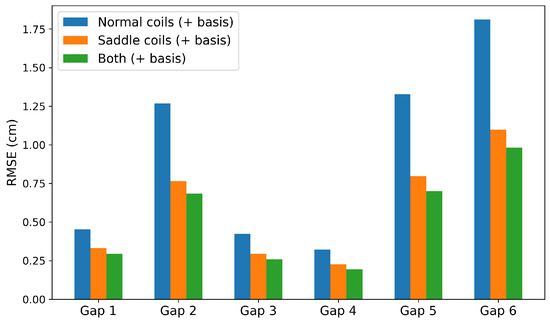
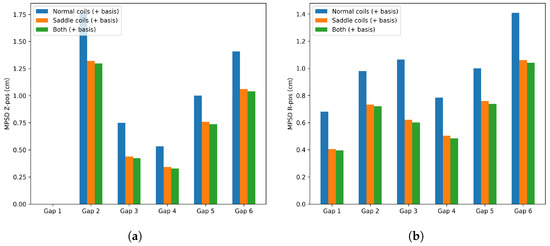
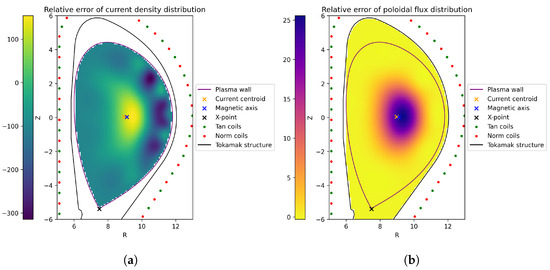
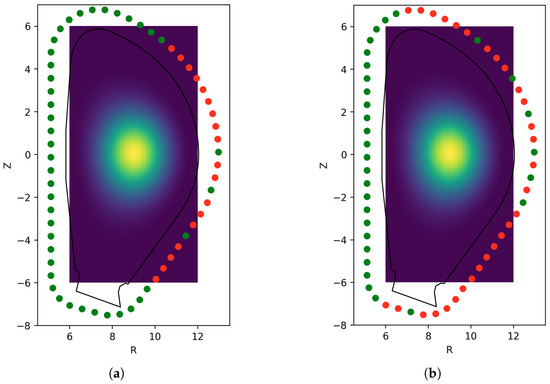
Magnetic confinement nuclear fusion offers a promising solution to the world’s growing energy demands. The DEMO reactor presented here aims to bridge the gap between laboratory fusion experiments and practical electricity generation, posing unique challenges for magnetic plasma diagnostics due to limited space for diagnostic equipment. This study employs Bayesian inference and Gaussian process modeling to integrate data from pick-up coils, flux loops, and saddle coils, enabling a qualitative estimation of the plasma current density distribution relying on only external magnetic measurements. The methodology successfully infers total plasma current, plasma centroid position, and six plasma–wall gap positions, while adhering to DEMO’s stringent accuracy standards. Additionally, the interchangeability between normal pick-up coils and saddle coils was assessed, revealing a clear preference for saddle coils. Initial steps were taken to utilize Bayesian experimental design for optimizing the orientation (normal or tangential) of pick-up coils within DEMO’s design constraints to improve the diagnostic setup’s inference precision. Our approach indicates the feasibility of Bayesian integrated data analysis in achieving precise and accurate probability distributions of plasma parameter crucial for the successful operation of DEMO.
Full article
(This article belongs to the Proceedings of The 43rd International Workshop on Bayesian Inference and Maximum Entropy Methods in Science and Engineering)
►▼
Show Figures

Figure 1
Open AccessProceeding Paper
Bayesian Functional Data Analysis in Astronomy
by
Thomas Loredo, Tamás Budavári, David Kent and David Ruppert
Phys. Sci. Forum 2025, 12(1), 12; https://doi.org/10.3390/psf2025012012 - 4 Nov 2025
Abstract
Cosmic demographics—the statistical study of populations of astrophysical objects—has long relied on tools from multivariate statistics for analyzing data comprising fixed-length vectors of properties of objects, as might be compiled in a tabular astronomical catalog (say, with sky coordinates, and brightness measurements in
[...] Read more.
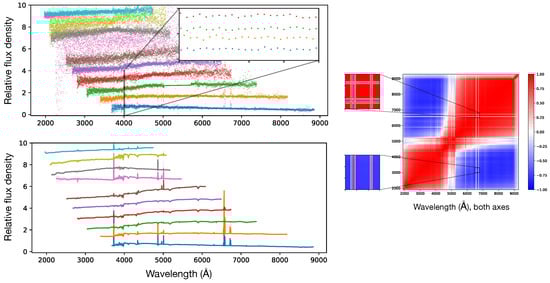
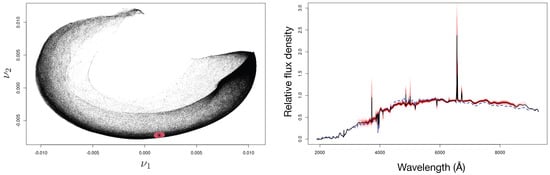
Cosmic demographics—the statistical study of populations of astrophysical objects—has long relied on tools from multivariate statistics for analyzing data comprising fixed-length vectors of properties of objects, as might be compiled in a tabular astronomical catalog (say, with sky coordinates, and brightness measurements in a fixed number of spectral passbands). But beginning with the emergence of automated digital sky surveys, ca. 2000, astronomers began producing large collections of data with more complex structures: light curves (brightness time series) and spectra (brightness vs. wavelength). These comprise what statisticians call functional data—measurements of populations of functions. Upcoming automated sky surveys will soon provide astronomers with a flood of functional data. New methods are needed to accurately and optimally analyze large ensembles of light curves and spectra, accumulating information both along individual measured functions and across a population of such functions. Functional data analysis (FDA) provides tools for statistical modeling of functional data. Astronomical data presents several challenges for FDA methodology, e.g., sparse, irregular, and asynchronous sampling, and heteroscedastic measurement error. Bayesian FDA uses hierarchical Bayesian models for function populations, and is well suited to addressing these challenges. We provide an overview of astronomical functional data and some key Bayesian FDA modeling approaches, including functional mixed effects models, and stochastic process models. We briefly describe a Bayesian FDA framework combining FDA and machine learning methods to build low-dimensional parametric models for galaxy spectra.
Full article
(This article belongs to the Proceedings of The 43rd International Workshop on Bayesian Inference and Maximum Entropy Methods in Science and Engineering)
►▼
Show Figures

Figure 1
Open AccessProceeding Paper
WISPFI Experiment: Prototype Development
by
Josep Maria Batllori, Michael H. Frosz, Dieter Horns and Marios Maroudas
Phys. Sci. Forum 2025, 11(1), 4; https://doi.org/10.3390/psf2025011004 - 31 Oct 2025
Abstract
Axions and axion-like particles (ALPs) are well-motivated dark matter (DM) candidates that couple with photons in external magnetic fields. The parameter space around
meV remains largely unexplored by haloscope experiments. We present the first prototype of Weakly Interacting Sub-eV
[...] Read more.
Axions and axion-like particles (ALPs) are well-motivated dark matter (DM) candidates that couple with photons in external magnetic fields. The parameter space around
m
a
∼
50
meV remains largely unexplored by haloscope experiments. We present the first prototype of Weakly Interacting Sub-eV Particles (WISP) Searches on a Fiber Interferometer (WISPFI), a table-top, model-independent scheme based on resonant photon–axion conversion in a hollow-core photonic crystal fiber (HC-PCF) integrated into a Mach–Zehnder interferometer (MZI). Operating near a dark fringe with active phase-locking, combined with amplitude modulation, the interferometer converts axion-induced photon disappearance into a measurable signal. A 2 W, 1550 nm laser is coupled with a 1 m-long HC-PCF placed inside a ∼2 T permanent magnet array, probing a fixed axion mass of
m
a
≃
49
meV with a projected sensitivity of
g
a
γ
γ
≳
1.3 ×
10
−
9
GeV−1 for a measurement time of 30 days. Future upgrades, including pressure tuning of the effective refractive index and implementation of a Fabry–Pérot cavity, could extend the accessible mass range and improve sensitivity, establishing WISPFI as a scalable platform to explore previously inaccessible regions of the axion parameter space.
Full article
(This article belongs to the Proceedings of The 19th Patras Workshop on Axions, WIMPs and WISPs)
►▼
Show Figures

Figure 1
Open AccessProceeding Paper
Progress in GrAHal-CAPP/DMAG for Axion Dark Matter Search in the 1–3 μeV Range
by
Pierre Pugnat, Rafik Ballou, Philippe Camus, Guillaume Donnier-Valentin, Thierry Grenet, Ohjoon Kwon, Jérôme Lacipière, Mickaël Pelloux, Rolf Pfister, Yannis K. Semertzidis, Arthur Talarmin, Jérémy Vessaire and SungWoo Youn
Phys. Sci. Forum 2025, 11(1), 3; https://doi.org/10.3390/psf2025011003 - 24 Oct 2025
Abstract
Two outstanding problems of particle physics and cosmology, namely the strong-CP problem and the nature of dark matter, can be solved with the discovery of a single new particle, the axion. The modular high magnetic field and flux hybrid magnet platform of LNCMI-Grenoble,
[...] Read more.
Two outstanding problems of particle physics and cosmology, namely the strong-CP problem and the nature of dark matter, can be solved with the discovery of a single new particle, the axion. The modular high magnetic field and flux hybrid magnet platform of LNCMI-Grenoble, which was recently put in operation up to 42 T, offers unique opportunities for axion/axion-like particle search using Sikivie-type haloscopes. In this paper, the focus will be on the 350–600 MHz frequency range corresponding to the 1–3 μeV axion mass range requiring a large-bore RF-cavity. It will be built by DMAG and integrated within the large-bore superconducting hybrid magnet outsert, providing a central magnetic field up to 9 T in 812 mm warm bore diameter. The progress achieved by Néel Institute in the design of the complex cryostat with its double dilution refrigerators to cooldown below 50 mK the ultra-light Cu RF-cavity of 650 mm inner diameter and the first stage of the RF measurement chain are presented. Perspectives for the targeted sensitivity, assuming less than 2-year integration time, are recalled.
Full article
(This article belongs to the Proceedings of The 19th Patras Workshop on Axions, WIMPs and WISPs)
►▼
Show Figures

Figure 1
Open AccessProceeding Paper
Nonparametric Full Bayesian Significance Testing for Bayesian Histograms
by
Fernando Corrêa, Julio Michael Stern and Rafael Bassi Stern
Phys. Sci. Forum 2025, 12(1), 11; https://doi.org/10.3390/psf2025012011 - 20 Oct 2025
Abstract
In this article, we present an extension of the Full Bayesian Significance Test (FBST) for nonparametric settings, termed NP-FBST, which is constructed using the limit of finite dimension histograms. The test statistics for NP-FBST are based on a plug-in estimate of the cross-entropy
[...] Read more.
In this article, we present an extension of the Full Bayesian Significance Test (FBST) for nonparametric settings, termed NP-FBST, which is constructed using the limit of finite dimension histograms. The test statistics for NP-FBST are based on a plug-in estimate of the cross-entropy between the null hypothesis and a histogram. This method shares similarities with Kullback–Leibler and entropy-based goodness-of-fit tests, but it can be applied to a broader range of hypotheses and is generally less computationally intensive. We demonstrate that when the number of histogram bins increases slowly with the sample size, the NP-FBST is consistent for Lipschitz continuous data-generating densities. Additionally, we propose an algorithm to optimize the NP-FBST. Through simulations, we compare the performance of the NP-FBST to traditional methods for testing uniformity. Our results indicate that the NP-FBST is competitive in terms of power, even surpassing the most powerful likelihood-ratio-based procedures for very small sample sizes.
Full article
(This article belongs to the Proceedings of The 43rd International Workshop on Bayesian Inference and Maximum Entropy Methods in Science and Engineering)
►▼
Show Figures

Figure 1
Highly Accessed Articles
Latest Books
E-Mail Alert
News
5 June 2026
MDPI Canada | Summary of the MDPI Subject Workshop—Crossing Boundaries: Transdisciplinarity in the Humanities
Topics
Conferences
30 October–3 November 2026
Meet Us at the 1st International Conference on Modern Mathematical Physics, 30 October–3 November 2026, Hangzhou, China

30 October–3 November 2026
The 1st International Conference on Modern Mathematical Physics (ICMMP 2026)