



Journal Description
Humanities
Humanities
is an international, peer-reviewed, open access journal on the meaning of cultural expression and perceptions as seen through different interpretative lenses. Humanities is published monthly online by MDPI.
- Open Access— free for readers, with article processing charges (APC) paid by authors or their institutions.
- High Visibility: indexed within Scopus, ESCI (Web of Science), ERIH Plus, and other databases.
- Rapid Publication: manuscripts are peer-reviewed and a first decision is provided to authors approximately 34.6 days after submission; acceptance to publication is undertaken in 4.6 days (median values for papers published in this journal in the first half of 2026).
- Recognition of Reviewers: reviewers who provide timely, thorough peer-review reports receive vouchers entitling them to a discount on the APC of their next publication in any MDPI journal, in appreciation of the work done.
- Journal Cluster of Human Thought and Cultural Expression: Culture, Histories, Humanities, Languages, Literature and Religions.
Impact Factor:
0.3 (2025)
Latest Articles
Nampo Joshi: Reconstructing the Life of the Woman Artist Behind Whistler’s Old Battersea Bridge
Humanities 2026, 15(8), 106; https://doi.org/10.3390/h15080106 - 3 Aug 2026
Abstract
This paper investigates the identity and circumstances of Nampo Joshi (南芳女史) (Ōzawa Nampo 大澤南芳, b. 1845; born Takei Tsuru), the woman artist who painted the kachō-ga (bird-and-flower painting) affixed to the reverse of James McNeill Whistler’s Blue and Silver: Old Battersea Bridge (1871/1873,
[...] Read more.
This paper investigates the identity and circumstances of Nampo Joshi (南芳女史) (Ōzawa Nampo 大澤南芳, b. 1845; born Takei Tsuru), the woman artist who painted the kachō-ga (bird-and-flower painting) affixed to the reverse of James McNeill Whistler’s Blue and Silver: Old Battersea Bridge (1871/1873, The Hunterian, University of Glasgow). Completed in 1867, as the Edo period ended, Nampo’s work reached Europe with remarkable speed, raising the question of how a painting by a Japanese woman came into Whistler’s possession. Few historical documents directly pertaining to Nampo survive. However, she was the wife of the painter Ōzawa Nankoku (大澤南谷, 1844–?), and a systematic examination of records related to him—land registers, official gazettes, periodicals, exhibition catalogues, and diaries—reveals that the couple established themselves in Nihonbashi, the commercial centre of Tokyo. This broader archival investigation reconstructs who Nampo was: the socio-economic standing she and her husband achieved and the ways in which they extended their endeavours well beyond the traditional boundaries of their craft—participating energetically in the civic life of the new capital, in the exhibition culture of the Meiji period, and in educational and philanthropic activities. Crucially, the study demonstrates that masters deeply involved in Rangaku (Dutch Studies) networks advocating Japan’s opening to the world trained both artists and argues that this progressive intellectual milieu may provide essential context for understanding the swift acceptance of Nampo’s work in Europe.
Full article
(This article belongs to the Special Issue Space Between: Landscape, Mindscape, Architecture)
Open AccessArticle
“Norman… I Hate to Talk About Norman”: The Art of the Insult and Literary Friendship, Circa 1960
by
Florian Sedlmeier
Humanities 2026, 15(8), 105; https://doi.org/10.3390/h15080105 - 3 Aug 2026
Abstract
The essay rereads the literary field of the mid-twentieth century as structured by “the art of the insult”—a game the literati, exemplified by James Baldwin and Norman Mailer, are invested in. In essays and interviews, these writers engage in ad hominem verbal attacks
[...] Read more.
The essay rereads the literary field of the mid-twentieth century as structured by “the art of the insult”—a game the literati, exemplified by James Baldwin and Norman Mailer, are invested in. In essays and interviews, these writers engage in ad hominem verbal attacks to test the limits of the socially sayable, which are also the limits of personal friendship. Existing scholarship has shown how the fraught relation between Baldwin and Mailer was marked by gender, race, and sexuality. Drawing on under-researched and newly accessible material, the article makes the case that these differences are superseded by the shared identity as literati who ground literary innovation in social provocation. The alliance culminates in their closing ranks to censor and legitimize the underlying scandal: Mailer’s physical assault against his wife Adele, whose autobiography the article considers in closing.
Full article
(This article belongs to the Special Issue Scandal and Censorship)
Open AccessArticle
What Is Left After Memory: Love, the Body, and the Unconscious in Little Fish
by
Paul Longley Arthur and Isabel Smith
Humanities 2026, 15(8), 104; https://doi.org/10.3390/h15080104 - 3 Aug 2026
Abstract
Chad Hartigan’s science fiction romantic drama Little Fish was released in 2020, soon after the start of the COVID-19 pandemic. However, the disease plaguing communities in Little Fish is not affecting people’s bodies but their minds—those who have contracted Neuroinflammatory Affliction (NIA) are
[...] Read more.
Chad Hartigan’s science fiction romantic drama Little Fish was released in 2020, soon after the start of the COVID-19 pandemic. However, the disease plaguing communities in Little Fish is not affecting people’s bodies but their minds—those who have contracted Neuroinflammatory Affliction (NIA) are losing their memories. The story centres upon the experiences of one young couple as they anxiously witness the disease take hold of their community, loved ones, and eventually one another. The film explores relationships between memory and identity, and poses questions about the ways these processes interact with those of love and loss. Who are we once we begin to lose memories of our histories and ourselves? Who do we then become to our loved ones, with whom we have shared these memories and selves? What binds us together? The paper examines the film using concepts from memory studies, in particular psychoanalysis and philosophy, to argue that after conscious memory is gone, aspects of memory and identity remain through the body, the unconscious, and love.
Full article
(This article belongs to the Section Film, Television, and Media Studies in the Humanities)
Open AccessArticle
Graphic Music Memoir, Memory, and the Mixtape: The Hauntological Format of the Mixtape in Summer Pierre’s All the Sad Songs
by
Amy McCarthy
Humanities 2026, 15(8), 103; https://doi.org/10.3390/h15080103 - 27 Jul 2026
Abstract
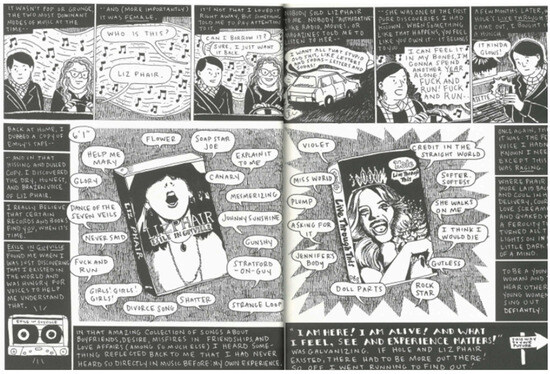
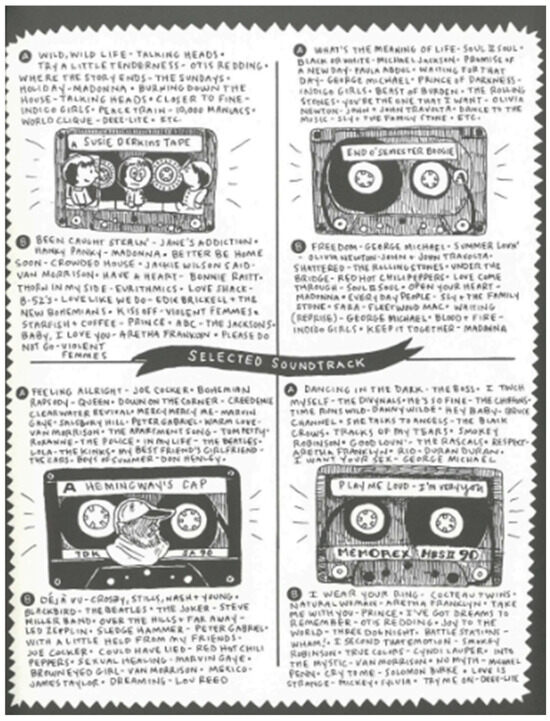
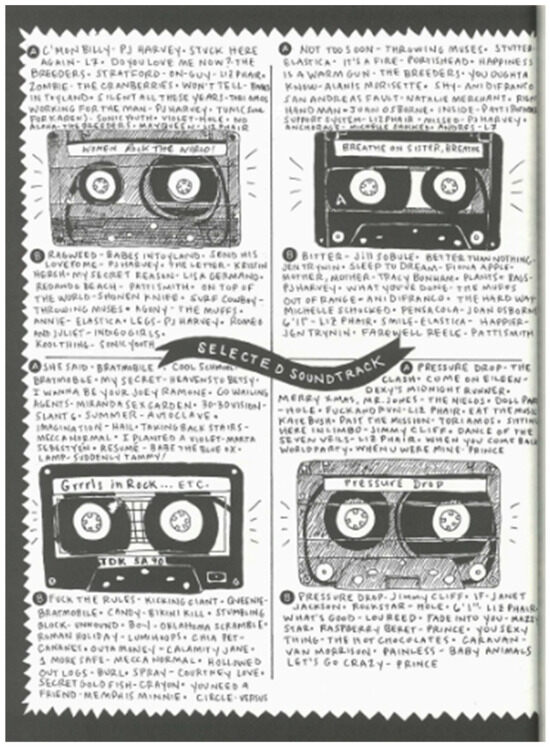
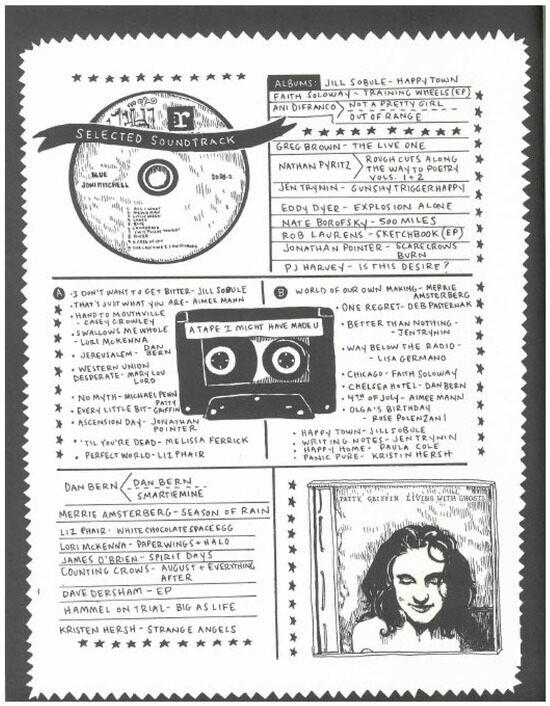
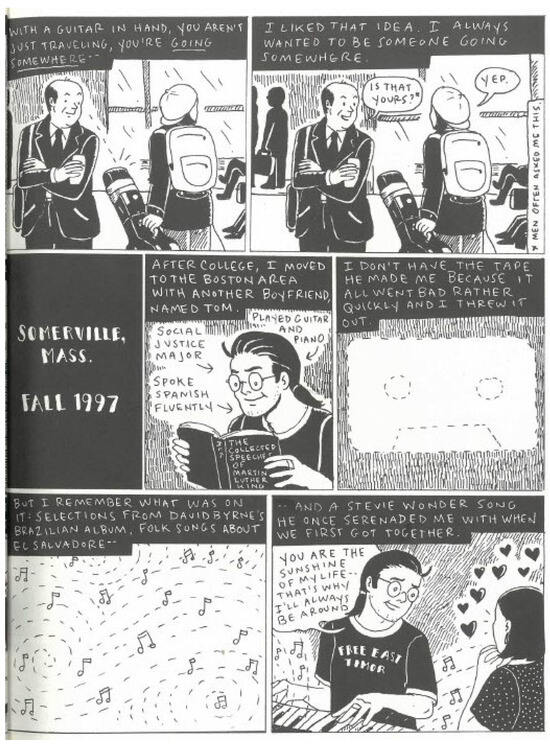
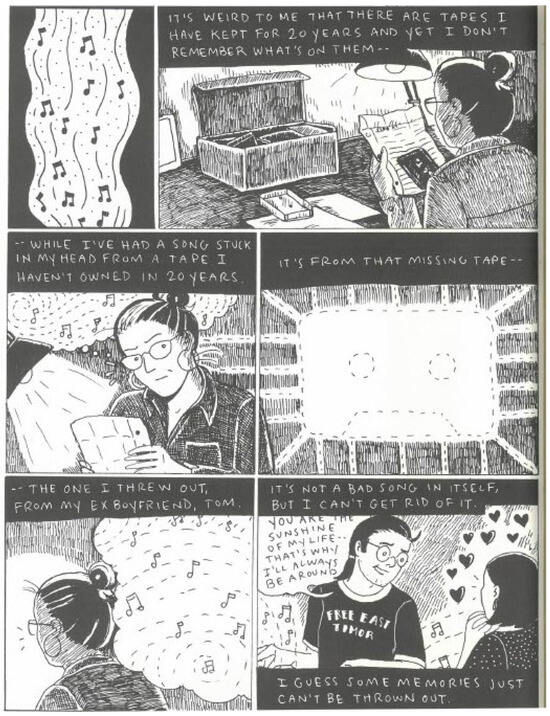
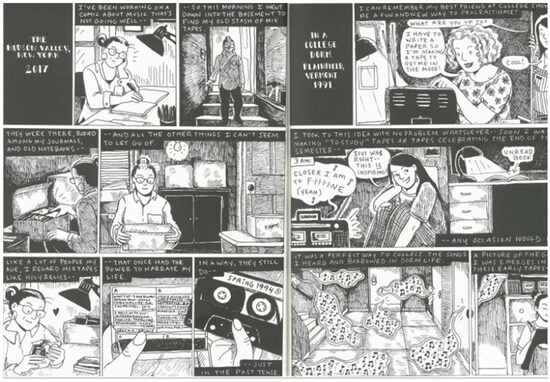
Mixtapes are a form of autobiography and are a tool for storytelling. Summer Pierre’s graphic music memoir All the Sad Songs uses the mixtape to curate and deconstruct memories. Through a series of mixtapes discarded in her basement, Pierre details her relationships through
[...] Read more.
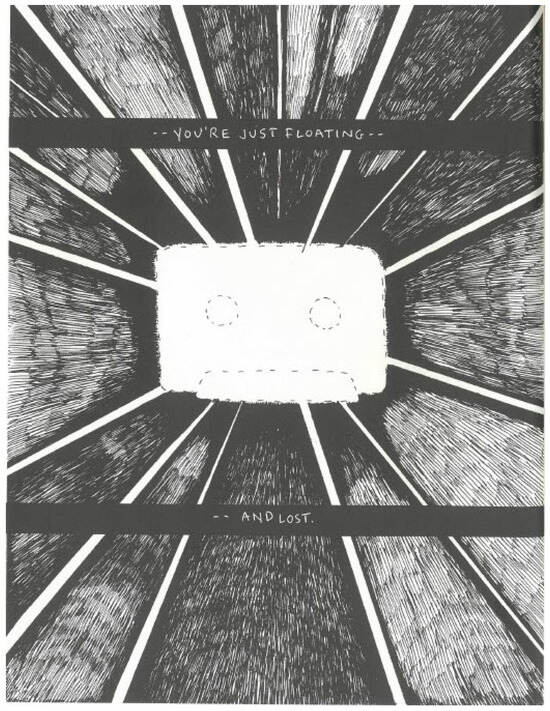
Mixtapes are a form of autobiography and are a tool for storytelling. Summer Pierre’s graphic music memoir All the Sad Songs uses the mixtape to curate and deconstruct memories. Through a series of mixtapes discarded in her basement, Pierre details her relationships through music. The absence and presence of mixtapes haunt the narrative and create the scaffolding of Pierre’s memoir. This article explores how the hauntological nature of cassette tapes structures narrative in graphic music memoirs. Music memoirs are about identity building for the music memoirist and the reader. The graphic memoir differs from the traditional memoir format as the author must show as well as tell. Pierre’s graphic memoir demonstrates Pierre’s changing music identity through both text and illustrations. Memoir writing is a performative act, and the author, similar to the mixtape creator, is the curator of the narrative the memoir presents. By using a ‘dead media’ to aid life writing, Pierre presents her journey as a musician through a lifetime soundtrack.
Full article
(This article belongs to the Special Issue Media, Cultural Memory and Hauntology)
►▼
Show Figures

Figure 1
Open AccessArticle
Virtual Worlds and Imagined Communities: Digital Folklore and Globalgothic in The Witcher 3
by
Yongyu Quan
Humanities 2026, 15(8), 102; https://doi.org/10.3390/h15080102 - 24 Jul 2026
Abstract
The Witcher 3: Wild Hunt (2015), a role-playing game developed by CD Projekt RED, exhibits enduring appeal even ten years after its release. The game features European folkloric and Gothic aesthetics that highlight its uniqueness and gained good reception among global players. Yet,
[...] Read more.
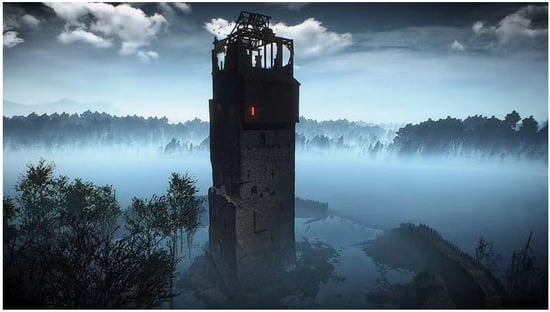
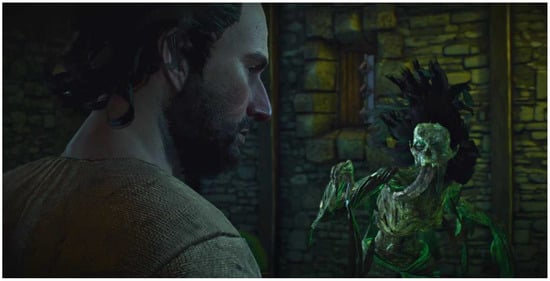
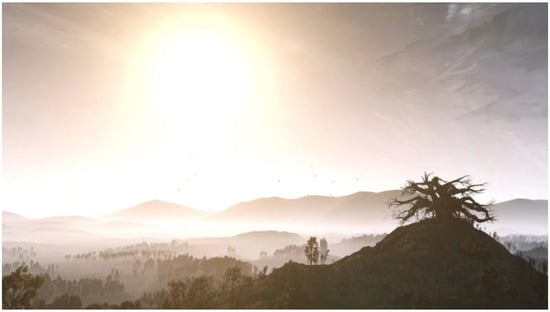
The Witcher 3: Wild Hunt (2015), a role-playing game developed by CD Projekt RED, exhibits enduring appeal even ten years after its release. The game features European folkloric and Gothic aesthetics that highlight its uniqueness and gained good reception among global players. Yet, the mechanism of this transnational and transcultural appeal is still insufficiently researched. This article challenges debates about the ephemeral nature of internet trends as digital folklore, analysing how regional folk traditions converge into cultural globalisation through interactive media such as video games. The main approach of this study is literary and cultural, adopting digital folklore theory, Globalgothic theory, and Benedict Anderson’s imagined communities. This article also examines in-game quests and landscape aesthetics as part of gameplay through close reading. This study finds that the game interprets regional folk traditions into universal Gothic themes through players’ participatory performance, decontextualised narrative design, and virtual world construction. A new form of digital folklore emerges in the Witcher Universe as an imagined community forms in the virtualised reality. At the same time, longstanding folkloric and literary traditions function as an anchor for this rejuvenated digital folklore and community.
Full article
(This article belongs to the Section Transdisciplinary Humanities)
►▼
Show Figures

Figure 1
Open AccessArticle
Representing the Racial and Social “Other”: Portraits of Young Blacks at the Danish Court, 1650–1700
by
Marina Vidas
Humanities 2026, 15(7), 101; https://doi.org/10.3390/h15070101 - 22 Jul 2026
Abstract
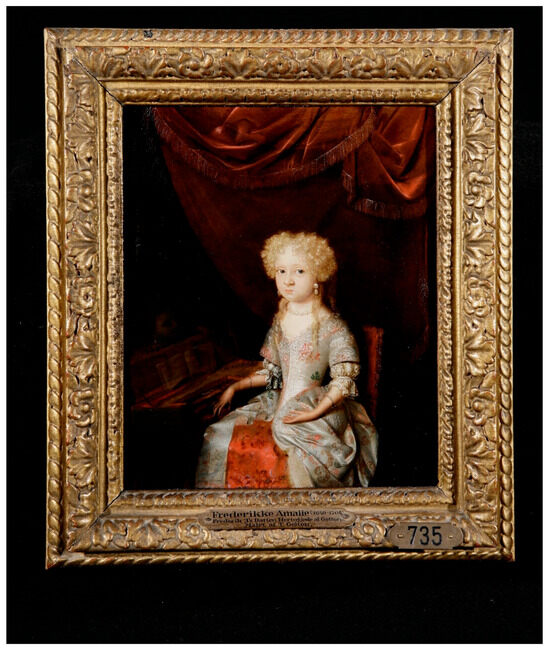
The article analyzes the constructions of the racial and social “other” in portraits of or for members of the Danish royal family held in The Royal Danish Collection at Rosenborg Castle and the Museum of National History at Frederiksborg Castle. More specifically, it
[...] Read more.
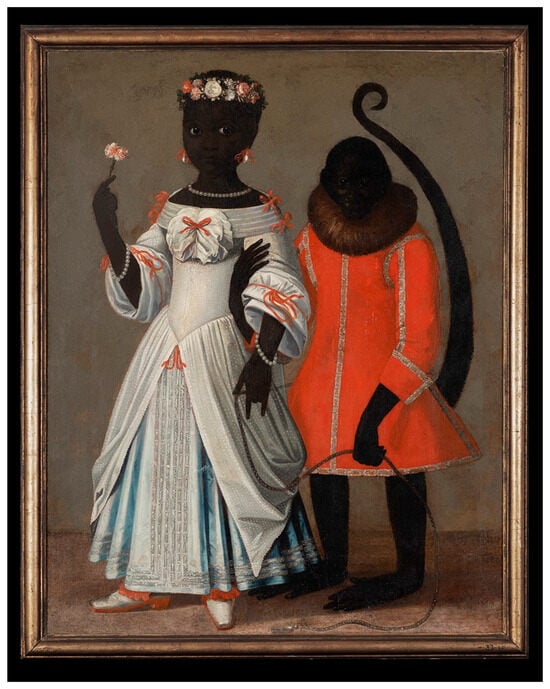
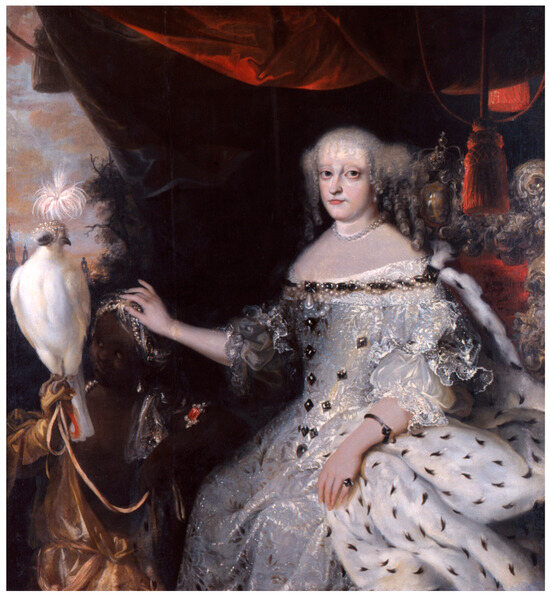
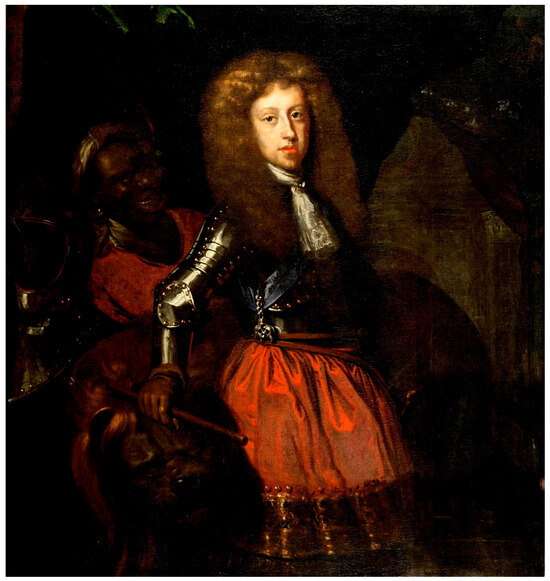
The article analyzes the constructions of the racial and social “other” in portraits of or for members of the Danish royal family held in The Royal Danish Collection at Rosenborg Castle and the Museum of National History at Frederiksborg Castle. More specifically, it examines portraits of young Blacks who served at the Danish court and who were painted by Northern European artists in the second half of the seventeenth century. In these paintings, the young people are posed with Danish royals, or with animals with whom they are contrasted or likened. The first section interrogates primary documents dating from the second half of the seventeenth century for information concerning the status and various aspects of the lives of young Blacks at the Danish court, as well as the language used to describe them. These written sources provide a frame of reference for the subsequent interpretation of four paintings in the second section. It is argued that all four paintings convey the performative nature of Black servitude and exemplify how enslaved individuals were expected to appear and behave. When displayed within royal residences, it is put forth that these works functioned to promote the “othering” of court Blacks, reinforce the boundaries separating the Danish royal family from their attendants, and visually assert the monarchy’s superiority, authority, and control.
Full article
(This article belongs to the Special Issue Gender and Otherness in the Humanities)
►▼
Show Figures

Figure 1
Open AccessArticle
Monuments and National Identity During the Single-Party Era in Türkiye (1923–1946)
by
Recep Baydemir
Humanities 2026, 15(7), 100; https://doi.org/10.3390/h15070100 - 16 Jul 2026
Abstract
►▼
Show Figures
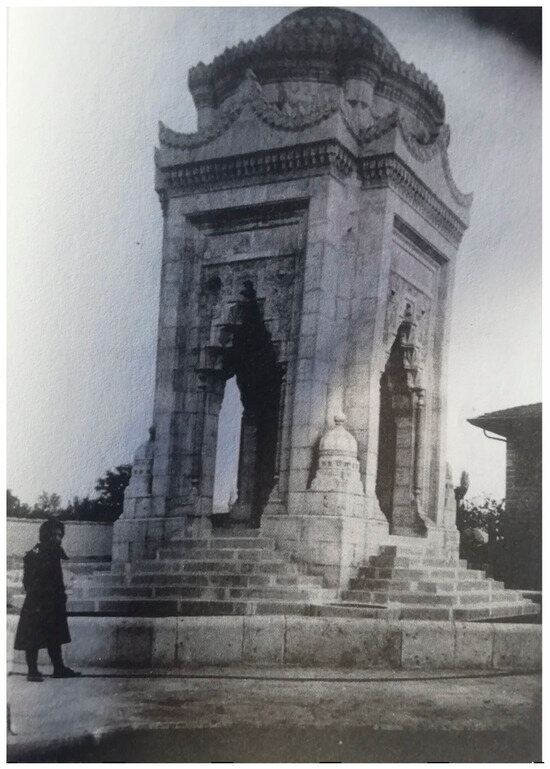
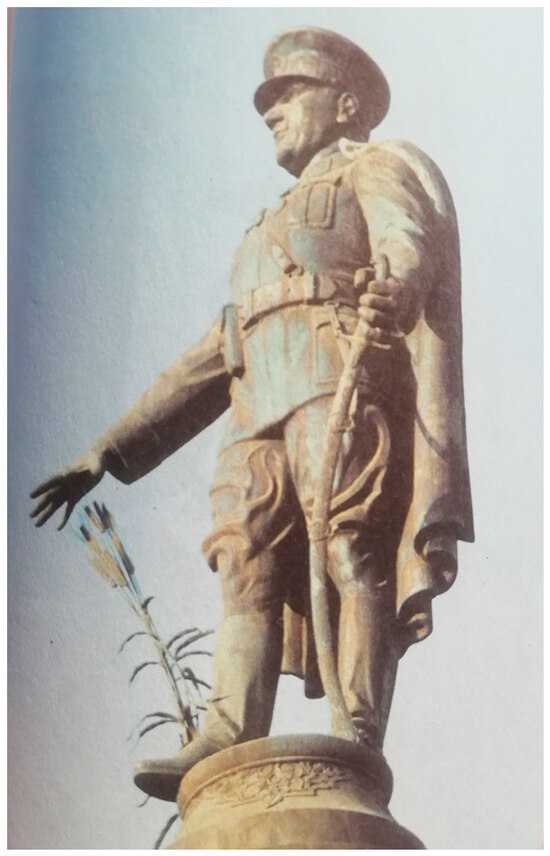
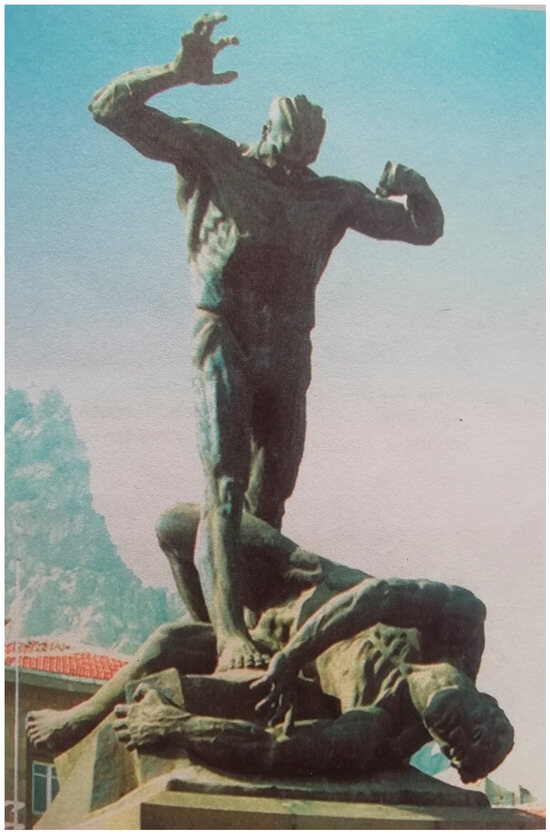
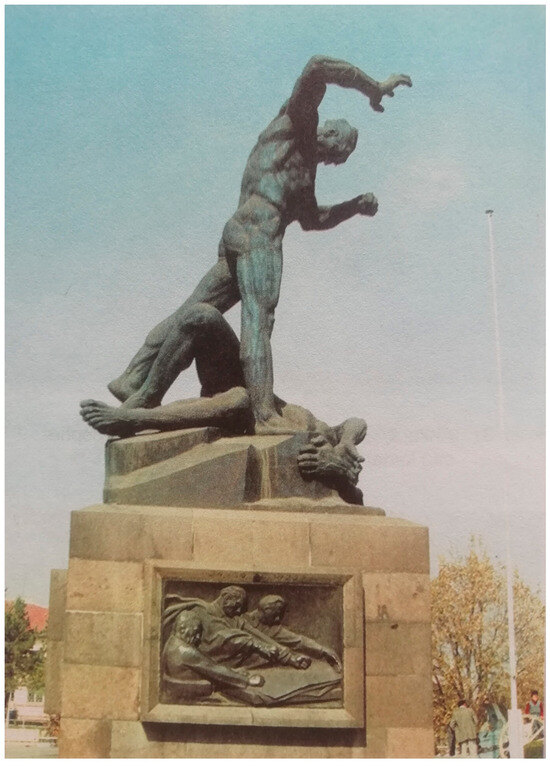
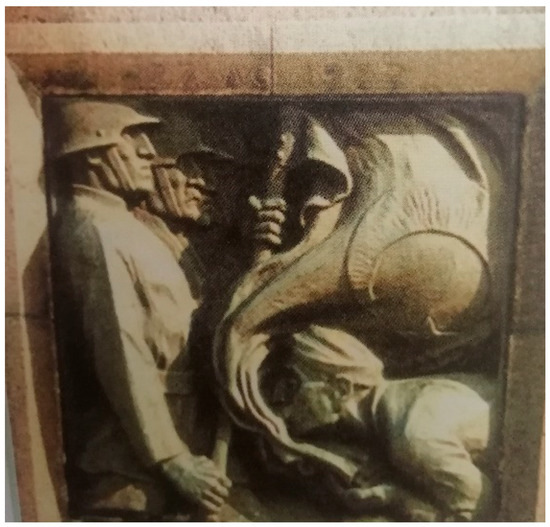
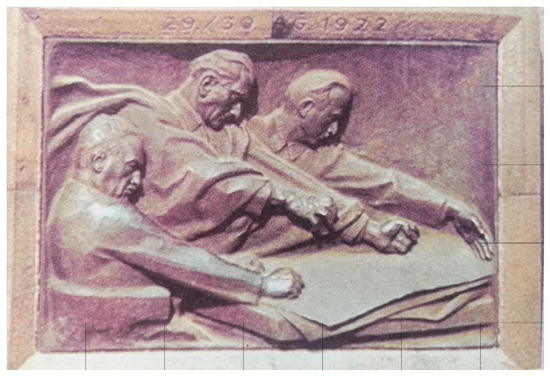
Türkiye’s Early Republican Era (1923–1946) was a period marked by profound ideological shifts, during which social values and national identity were reshaped. During this time, monuments and statues was utilized by Republican intellectuals as a ‘strategic tool for diffusion’ to instill the ideology
[...] Read more.
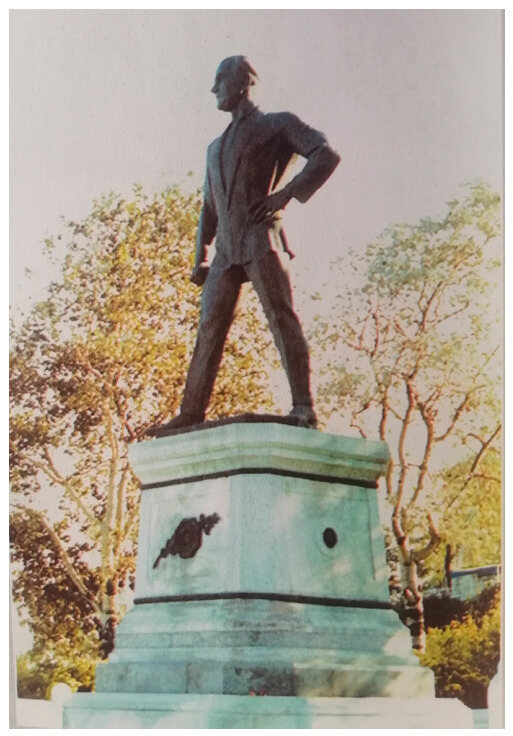
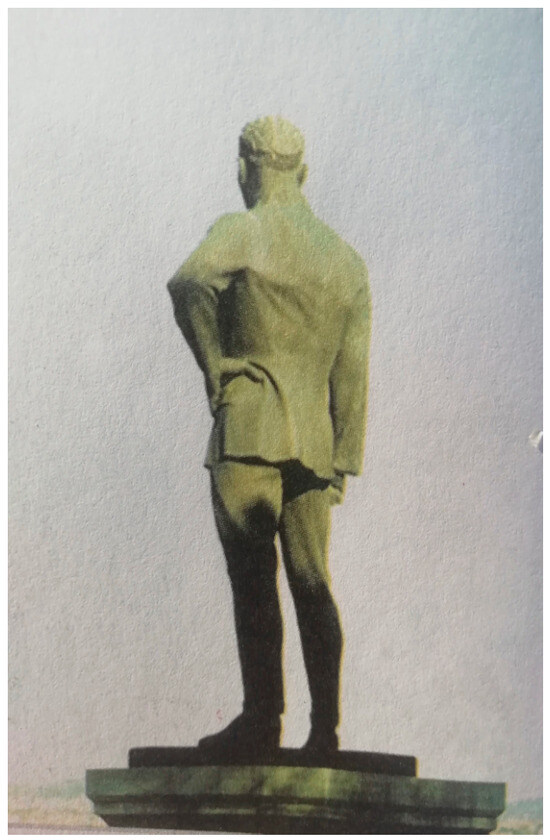
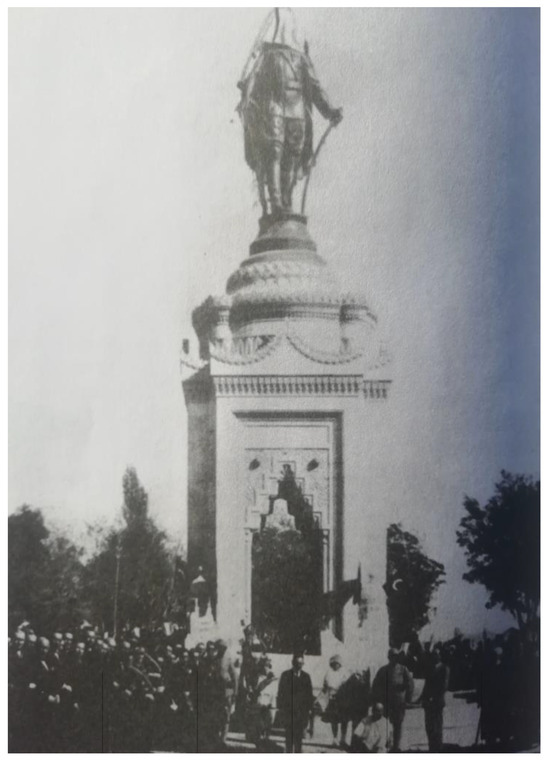
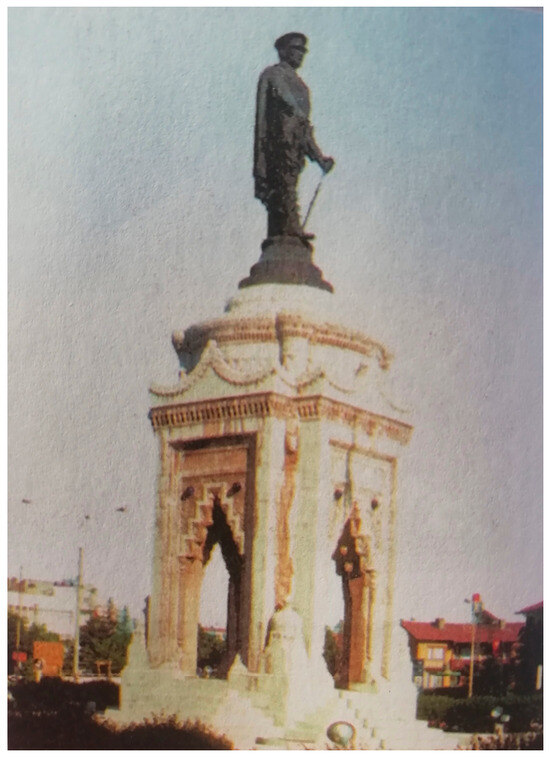
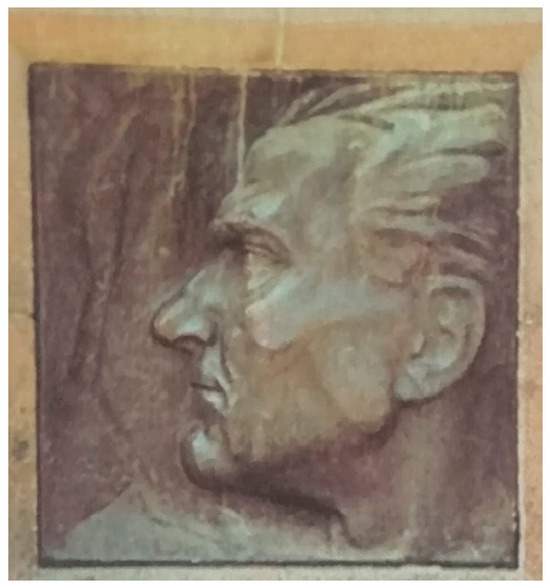
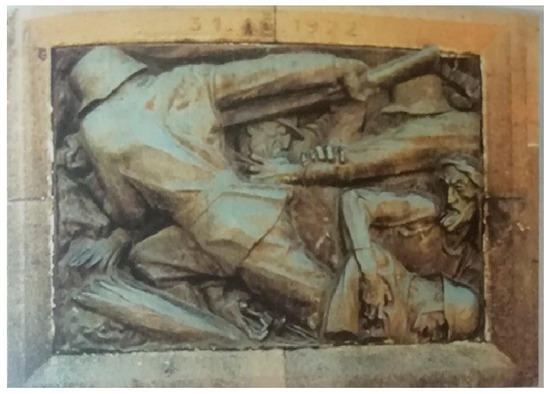
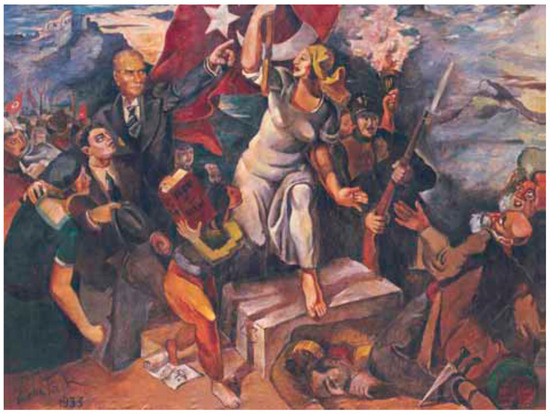
Türkiye’s Early Republican Era (1923–1946) was a period marked by profound ideological shifts, during which social values and national identity were reshaped. During this time, monuments and statues was utilized by Republican intellectuals as a ‘strategic tool for diffusion’ to instill the ideology of the Republic among the public. The monuments and statues of this period were designed to reflect revolutionary changes, forge a national identity, and emphasize the new values of the Republic. Questions such as: How did the figures in the monuments and statues of this period convey new Republican values like modernization, secularism, and nationalism to the public? What aspects of society did Republican elites aim to transform, and how did they represent this transformation through monuments and statues? What role did monuments play in the construction of national identity? remain to be answered. This study aims to shed light on the political and social context of the era by analyzing certain monuments produced during Türkiye’s Single-Party Era, thereby seeking to understand how Republican ideology was reflected in art and the role/impact of art in the construction of national identity. To this end, three monuments and one painting—considered to best reflect the era and to best convey the ideology of the Republic—have been selected as examples. While these monuments are subjected to in-depth analysis to decipher the explicit and implicit ideological messages they contain, the examples’ dimensions of meaning are also examined within the context of Althusser’s Ideology and the Ideological State Apparatuses and Sennett’s concepts of nakedness and the political/sovereign body.
Full article

Figure 1
Open AccessArticle
Autoethnographic Orientalism and Intersectional Complicity in The Kabul Beauty School
by
Anitha Merin Vincent and V. Karunanithi
Humanities 2026, 15(7), 99; https://doi.org/10.3390/h15070099 - 14 Jul 2026
Abstract
Deborah Rodriguez’s The Kabul Beauty School belongs to the body of Western humanitarian literature produced post-9/11 portraying the significant role of America in the reconstruction of Afghanistan. This study analyzes how the memoir embodies what is conceptualized as ‘autoethnographic orientalism’, a critical framework
[...] Read more.
Deborah Rodriguez’s The Kabul Beauty School belongs to the body of Western humanitarian literature produced post-9/11 portraying the significant role of America in the reconstruction of Afghanistan. This study analyzes how the memoir embodies what is conceptualized as ‘autoethnographic orientalism’, a critical framework that identifies how the Western subject constructs knowledge of the Orient through personal narratives that prioritize self-discovery by using autoethnographic conventions of reflexivity, participant observation, personal disclosure and affective engagement. Integrating intersectional complicity into the framework reveals the reproduction of orientalist hierarchies while claiming feminist solidarity with Afghan women. The close reading and qualitative analysis of the memoir identifies five dimensions of representational politics—memoir as an orientalist form, the autoethnographic gaze, intersectional complicity, rescue narratives and agential empowerment, and narrative blind spots. The study demonstrates how Rodriguez’s observation and documentation of cultural practices reinforce colonial discourse of perceived differences and deficiencies rather than arriving at a deeper cultural understanding. The findings suggest that post-9/11 humanitarian memoirs need to employ a critical reading practice that will engage with both the empathetic dimensions of the text as well as the structural complicity embedded in them.
Full article
(This article belongs to the Section Literature in the Humanities)
Open AccessArticle
The Long Continuity: Assamese Popular Science Writing as a Vernacular Knowledge Ecosystem, 1846–2018
by
Arabinda Rajkhowa, Munmi Dutta, Ashim Chutia, Brojen Sarmah, Paresh Khanikar and Chandan Jyoti Chutia
Humanities 2026, 15(7), 98; https://doi.org/10.3390/h15070098 - 13 Jul 2026
Abstract
This article presents a sociohistorical analysis of Assamese popular science writing (bigyan sahitya) over nearly two centuries (1846–2018), arguing that what has often been described as a regional literary tradition is more usefully understood as a durable vernacular knowledge ecosystem—a sustained
[...] Read more.
This article presents a sociohistorical analysis of Assamese popular science writing (bigyan sahitya) over nearly two centuries (1846–2018), arguing that what has often been described as a regional literary tradition is more usefully understood as a durable vernacular knowledge ecosystem—a sustained institutional, periodical, and discursive infrastructure through which scientific modernity has been linguistically mediated, socially circulated, and culturally embedded in Assamese-speaking publics. Drawing on Assamese-language archival sources and engaging international scholarship on the public understanding of science, vernacular modernity, and postcolonial knowledge circulation, the article reconstructs three interlocking structures through which the ecosystem has operated: the print public sphere consolidated by the missionary newspaper Arunodoy from 1846; the civic-scientific institutional architecture of Pashupalan (1925), the Asom Bigyan Samiti and Bigyan Jeuti (launched in 1961), and the Asom Bigyan Lekhak Sangstha (1999); and the literary-scientific mediation that produced the science-fiction tradition (kalpabijnan). The ecosystem has reproduced itself through workshops, handbooks, and terminology projects, navigating four political–economic ruptures without institutional collapse. The case offers a productive empirical basis for theorising how societies vernacularise scientific knowledge over the long term.
Full article
Open AccessArticle
Stage Image, Presence, and Meaning in Mo Yan’s Crocodile
by
Tianzhi Zhang
Humanities 2026, 15(7), 97; https://doi.org/10.3390/h15070097 - 11 Jul 2026
Abstract
Mo Yan’s stage play Crocodile (Eyu) marks a shift away from novel-centered scholarship in Mo Yan studies. Centered on a continually fed, ever-growing crocodile, the play moves the animal from a textual symbol to a stage image. Existing studies emphasize theme,
[...] Read more.
Mo Yan’s stage play Crocodile (Eyu) marks a shift away from novel-centered scholarship in Mo Yan studies. Centered on a continually fed, ever-growing crocodile, the play moves the animal from a textual symbol to a stage image. Existing studies emphasize theme, symbolism, or genre but say less about how stage procedures establish the crocodile’s presence as a publicly perceptible fact and generate meanings around power, desire, and judgment. This article addresses that gap through a script-based, stage-oriented semiotic analysis. Drawing on Barthes’s denotation and connotation together with Hjelmslev’s expression and content planes, it analyzes how stage images organize perception and meaning. It argues that presence in Crocodile is produced through linked sensory, spatial, and verbal cues: at moments of concealment and disclosure, expansion, threshold, and loss of control, the play turns the crocodile into a collectively witnessable event rather than a mere symbol, while repeated cues consolidate associations around power, desire, and judgment, reorienting spectatorship toward the conditions of witnessing. By treating the stage image as an operative mechanism rather than a symbol to be decoded, the article shows how the play, through stage procedures, establishes the crocodile as a perceptible and witnessable stage presence that generates meaning.
Full article
(This article belongs to the Section Literature in the Humanities)
Open AccessArticle
Bernard Shaw, Richard Rorty, and the Utopian Vision They Shared: Hope, Pragmatism, and the Quest for Something Approaching a Jesusian Kingdom of Heaven on Earth
by
Howard Ira Einsohn
Humanities 2026, 15(7), 96; https://doi.org/10.3390/h15070096 - 11 Jul 2026
Abstract
This essay argues that Bernard Shaw and Richard Rorty, two of the most accomplished figures of the modernist age in their respective vocations—one an Anglo-Irish dramatist and polemicist; the other, an American philosopher and university professor—were similar in ways that merit our close
[...] Read more.
This essay argues that Bernard Shaw and Richard Rorty, two of the most accomplished figures of the modernist age in their respective vocations—one an Anglo-Irish dramatist and polemicist; the other, an American philosopher and university professor—were similar in ways that merit our close attention. The focus here is on their mutual quest for a global civilization that would come as close as humanly possible to achieving a Jesusian kingdom of heaven on earth. Neither believed in the otherworldly supernaturalism of orthodox Christianity and the absolutist church dogmas that went with it, but both contended that the Nazarene’s social-gospel values were salvational. In addition to their hopeful Jesusianism, Shaw and Rorty held four associated attributes in common that are especially noteworthy: their antifoundationalism; their pragmatism; their utopianism; and their liberal, social democratic commitments. Collectively, these symmetries show that Shaw and Rorty shared substantive views about how humans ought to live, in order that they not just survive by the skin of their teeth, but that they perhaps one day flourish and do so for all the generations that would follow.
Full article
Open AccessArticle
Sexual “Non-Occurrence”: Celibacy in Elizabeth Bowen’s Interwar Fiction
by
Iva Dimovska
Humanities 2026, 15(7), 95; https://doi.org/10.3390/h15070095 - 10 Jul 2026
Abstract
This article examines the structuring tension between the occurrence and non-occurrence of sexual events in Elizabeth Bowen’s novels Friends and Relations (1931) and The House in Paris (1935), arguing that the conflict between sex and celibacy operates as a central narrative motor in
[...] Read more.
This article examines the structuring tension between the occurrence and non-occurrence of sexual events in Elizabeth Bowen’s novels Friends and Relations (1931) and The House in Paris (1935), arguing that the conflict between sex and celibacy operates as a central narrative motor in her interwar fiction. Reframing this dynamic through the related distinction between occurrence, non-occurrence, and event, I suggest that Bowen’s novels are organized not simply around sexual acts or their absence, but around the question of whether sexual possibility is allowed to consolidate into narrative event or withheld within a structure of suspension. In Friends and Relations, sexual possibility remains imminent yet is repeatedly deferred, producing a narrative governed by a “non-occurrence” rather than event. In The House in Paris, by contrast, sexual occurrence is permitted but emerges as catastrophe, consequence, and irreversible temporal rupture. This opposition is represented through Janet (Friends and Relations) and Karen (The House in Paris), who embody two regimes of narrative temporality: one in which sexual possibility is withheld from event, and one in which it becomes an irreversible event. Across both novels, celibacy and sexuality are interdependent forces determining the passage, or refusal of passage, from occurrence to event.
Full article
(This article belongs to the Special Issue Celibacy in Irish Women’s Writing)
Open AccessFeature PaperArticle
Vindicating Communism Against Postcolonialism and Postmodernism: Reimagining Class, Caste, and Gender Solidarities in Meena Kandasamy’s The Gypsy Goddess (2014)
by
Debayudh Chatterjee
Humanities 2026, 15(7), 94; https://doi.org/10.3390/h15070094 - 9 Jul 2026
Abstract
In The Gypsy Goddess (2014), Meena Kandasamy offers a searing retelling of the 1968 Kilvenmani Massacre, in which at least forty-four lower-caste agricultural workers, including women and children, were brutally murdered while mobilizing for better living conditions under the Communist Party of India
[...] Read more.
In The Gypsy Goddess (2014), Meena Kandasamy offers a searing retelling of the 1968 Kilvenmani Massacre, in which at least forty-four lower-caste agricultural workers, including women and children, were brutally murdered while mobilizing for better living conditions under the Communist Party of India (Marxist). Distinguishing her novel from earlier representations, Kandasamy employs a non-linear and self-reflexive narrative that satirically draws on multiple voices and genres. My paper argues that the novel’s summoning of Kilvenmani’s specters serves a dual function. First, it exposes the limits of Western postcolonial and postmodern academic discourses in the neoliberal era. Second, by resurrecting a foundational episode in post-colonial India’s communist movement, it advances a case for reimagining communism as a credible alternative to intertwined structures of caste, class, and gender oppression. I demonstrate that Kandasamy accomplishes this through an inward critique of her own postmodern form deployed in The Gypsy Goddess, ultimately gesturing toward solidarities later articulated as Social Reproduction Theory.
Full article
(This article belongs to the Section Literature in the Humanities)
Open AccessFeature PaperArticle
Virtuality versus Spectrality: Epistolarity and the Problematics of Truth-Telling in J. M. Coetzee’s Age of Iron
by
Samim Reza
Humanities 2026, 15(7), 93; https://doi.org/10.3390/h15070093 - 8 Jul 2026
Abstract
This contribution to the Special Issue on J. M. Coetzee’s use of epistolary forms examines the unique and unconventional deployment of epistolarity in Age of Iron (1990). It argues that, instead of following traditional epistolary conventions, Age of Iron uses the protagonist’s letter
[...] Read more.
This contribution to the Special Issue on J. M. Coetzee’s use of epistolary forms examines the unique and unconventional deployment of epistolarity in Age of Iron (1990). It argues that, instead of following traditional epistolary conventions, Age of Iron uses the protagonist’s letter as an investigative tool to probe the inherent problematics of truth-telling from a precarious and complex subject position. The article highlights absence as the central motif that underpins the urgency of communicating the truth. Central to this investigation is the distinction between virtuality and spectrality, approached through the critical philosophies of Bergson, Deleuze, Lyotard, and Derrida. It shows how shifting dimensions of narrative imagination (Coetzee and Kurtz), moving from virtuality to spectrality within an epistolary framework, restrain the otherwise endless interplay of binaries, restrict the arbitrary construction of meanings, and foreground the importance of authorial intent (Coetzee) in the author’s exercise of authority to speak the truth. It further argues that, through the use of epistolary discourse, the novel endorses a performative mode of engagement that seeks to establish the authenticity and legitimacy of the truth (Lyotard), instead of speaking it.
Full article
(This article belongs to the Special Issue Uses and Forms of Epistolarity in J.M. Coetzee’s Work)
Open AccessArticle
The Marriage Bar in Irish Life
by
Deirdre Foley
Humanities 2026, 15(7), 92; https://doi.org/10.3390/h15070092 - 8 Jul 2026
Abstract
The marriage bar was a widespread rule requiring women to give up their jobs upon marriage. It is generally familiar to many as a peculiarity of Ireland’s past. However, the precise details and history of its operation are frequently misunderstood and incorrectly attributed.
[...] Read more.
The marriage bar was a widespread rule requiring women to give up their jobs upon marriage. It is generally familiar to many as a peculiarity of Ireland’s past. However, the precise details and history of its operation are frequently misunderstood and incorrectly attributed. The bar applied culturally to most aspects of employment for many years and was not exclusive to the civil service, which was governed by legislation reinforcing the bar. After introducing the intricacies of this topic, this article takes a closer look at the cultural aspects of the bar across family, archival and oral history sources. In doing so, I frame the research as a deeply personal encounter with history. Combining oral history with manuscript sources and bookended by a personal history of the marriage bar, this article considers its impact across generations. The marriage bar is also discussed in terms of Irish culture, social class, and marital status. Finally, the adjustments and ongoing limitations experienced by Irish women in the labour market after the marriage bar was gradually eradicated are discussed. I argue that the marriage bar has had a profound socio-cultural impact on Irish society across generations; its effect has never been limited to married women. While the policy caused an incalculable loss of personal fulfilment and remuneration to generations of married women, it simultaneously stymied the promotion prospects of many single women.
Full article
(This article belongs to the Special Issue Celibacy in Irish Women’s Writing)
Open AccessArticle
The Dragon Imagery in Chinese Satirical Fiction: A Study of The Scholars and Late Qing Novels of Exposure
by
Jianwei Gong
Humanities 2026, 15(7), 91; https://doi.org/10.3390/h15070091 - 7 Jul 2026
Abstract
Since ancient times, interpretations of the dragon image in China have followed two distinct yet intertwined paths: one official and one popular. As seen in The Scholars and the late Qing novels of exposure, the dragon is often used to refer to officials
[...] Read more.
Since ancient times, interpretations of the dragon image in China have followed two distinct yet intertwined paths: one official and one popular. As seen in The Scholars and the late Qing novels of exposure, the dragon is often used to refer to officials and objects associated with imperial power. At the same time, because holding office required a high level of cultural attainment, those likened to dragons were also expected to possess considerable scholarly refinement. Satirical depictions of dragons in everyday life reveal just how deeply embedded the dragon image was in traditional Chinese society. Moreover, the distinctive nature of satirical fiction enables it to direct irony at the official, imperial-centered version of the dragon. The dragon imagery in The Scholars and late Qing condemnatory fiction takes on these characteristics because of the very nature of satirical literature. Rooted in reality, such works inevitably reflect the dragon as it actually existed in society. During the Ming–Qing period, and especially within the examination system, the dragon image was indeed marked by this kind of complexity. Furthermore, it was impossible for imperial power to monopolize the dragon symbol. The dragon inevitably permeated all corners of popular life, beyond the reach of imperial control. This in turn reveals the free, worldly orientation of satirical fiction and its resonance with the early stirrings of enlightenment thought.
Full article
(This article belongs to the Section Literature in the Humanities)
Open AccessArticle
Historical Migration and Contemporary Displacement: Space, Memory and Witnessing in Bir Göçmen Kuştu O and Huzursuzluk
by
Ceyhun Kaçmaz
Humanities 2026, 15(7), 90; https://doi.org/10.3390/h15070090 - 7 Jul 2026
Abstract
This article offers a comparative reading of Ayla Kutlu’s Bir Göçmen Kuştu O and Zülfü Livaneli’s Huzursuzluk, examining how the two novels represent historical migration and contemporary displacement. It argues that, in both texts, migration cannot be reduced to physical movement from
[...] Read more.
This article offers a comparative reading of Ayla Kutlu’s Bir Göçmen Kuştu O and Zülfü Livaneli’s Huzursuzluk, examining how the two novels represent historical migration and contemporary displacement. It argues that, in both texts, migration cannot be reduced to physical movement from one place to another. Rather, it functions as a cultural rupture that reorders space, identity, belonging, memory, witnessing and alienation. Bir Göçmen Kuştu O frames forced migration from the Caucasus to Türkiye through homeland loss, family memory, genealogical continuity and the search for settlement. Huzursuzluk, by contrast, locates the Syrian war, the persecution of Yazidis, refugeehood, trauma and witnessing within the wider violence of the contemporary Middle East, tracing their effects on individual and cultural memory. Its central argument is that the two novels stage witnessing in two distinct modes. Read through Marianne Hirsch’s notion of postmemory, Kutlu’s novel renders witnessing as the intergenerational inheritance of homeland loss, whereas Livaneli’s stages the synchronic implication of a contemporary listener in another’s suffering; on this reading, migration fiction holds these two configurations together as simultaneous ethical possibilities rather than as successive literary phases.
Full article
(This article belongs to the Section Literature in the Humanities)
Open AccessArticle
The Comic Mask of Socrates: Irony, Initiation, and the Pedagogy of Laughter in Plato’s Symposium
by
Shlomy Mualem
Humanities 2026, 15(7), 89; https://doi.org/10.3390/h15070089 - 6 Jul 2026
Abstract
Nietzsche claimed, in The Birth of Tragedy, that the Platonic dialogues are the lifeboat on which Socrates rescues older poetry, only to finish off comedy. This article contests that claim. Distinguishing comedy (a mode organized around to geloion, whose object Plato
[...] Read more.
Nietzsche claimed, in The Birth of Tragedy, that the Platonic dialogues are the lifeboat on which Socrates rescues older poetry, only to finish off comedy. This article contests that claim. Distinguishing comedy (a mode organized around to geloion, whose object Plato himself defines in the Philebus as self-ignorance) from irony (a two-level device of meaning), it argues that Socratic irony in Plato is comic in a precise threefold sense: genealogically, as the inheritance of the eirōn-mask from the Aristophanic Clouds; structurally, wherever the dialogues frame it for staged laughter; and thematically, as the instrument of the laughing exposure of doxosophia. Drawing on Kierkegaard’s reading of the Socratic maieutic as ‘indirect communication’ and Vlastos’s concept of ‘complex irony,’ the article offers a close reading of Alcibiades’ speech in the Symposium within the generic frame Plato himself names at 222d: the satyr-play, ‘tragedy at play,’ in which tragic material is held inside a laughing form. The speech’s mythological imagery (Silenus, Marsyas, Corybants, Sirens) carries a coordinated dark sub-text that reverses its overt meaning—the satyric signature, not a departure from the comic. Against Vlastos, who locates pedagogical failure in Alcibiades’ self-deception, and Lane, who finds complex irony’s deliberate indeterminacy ethically indefensible, the article proposes a meta-ironic resolution: Plato stages both positions simultaneously, performing at the authorial level the very pharmakon-logic the speech describes—a seriocomic philosophical method grounded in the mythological ambivalence of the theatre of Dionysus.
Full article
(This article belongs to the Special Issue Comedy and Platonic Interpretation)
Open AccessArticle
Radical Interiors: Elizabeth Keckley’s Behind the Scenes and Literary Rebellion in the Nineteenth Century
by
La-Toya Scott
Humanities 2026, 15(7), 88; https://doi.org/10.3390/h15070088 - 6 Jul 2026
Abstract
This article examines Elizabeth Keckley’s Behind the Scenes (1868) to explore how memoirs written by Black women become literary spaces of rebellion. Writing from within elite white domestic interiors as a dressmaker and confidante to Mary Todd Lincoln, Keckley challenges the racialized structures
[...] Read more.
This article examines Elizabeth Keckley’s Behind the Scenes (1868) to explore how memoirs written by Black women become literary spaces of rebellion. Writing from within elite white domestic interiors as a dressmaker and confidante to Mary Todd Lincoln, Keckley challenges the racialized structures that sought to confine Black women to silence, labor, and invisibility. Using a Black feminist literary methodology grounded in close reading, historical contextualization, and the concepts of radical interiority and Reflexive Identity Narration (RIN), this article analyzes how Keckley converts domestic labor, witnessing, and narrative self-definition into acts of insurgent authorship. The analysis demonstrates that Keckley’s narrative exposes the contradictions of white domesticity, asserts Black women’s intellectual and emotional autonomy, and transforms the domestic interior into a site of political critique. By claiming narrative authority and strategically shaping what is revealed and withheld, Keckley enacts a form of rebellion rooted in self-authorship and witnessing. This article concludes that Behind the Scenes offers an early blueprint for Black feminist rebellion, expanding conventional structures of the genre of slave narratives.
Full article
(This article belongs to the Special Issue Rebellion and Revolution in African American Literature)
Open AccessArticle
Martha Graham’s Radical Reception of the Women of Greek Tragedy
by
Nina Papathanasopoulou
Humanities 2026, 15(7), 87; https://doi.org/10.3390/h15070087 - 30 Jun 2026
Abstract
This article examines Martha Graham’s radical reception of the women of Greek tragedy across her performing career, from the early 1930s to her retirement from the stage in 1969. I argue that Graham repeatedly turned to Greek tragic heroines—Electra, Medea, Jocasta, Clytemnestra, Alcestis,
[...] Read more.
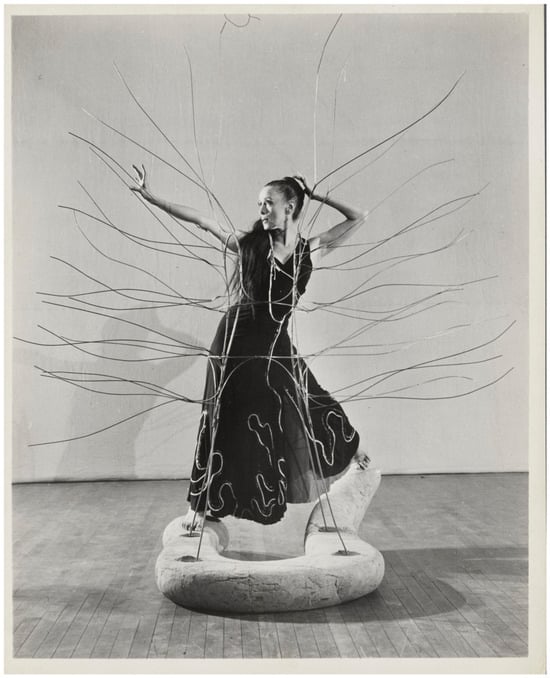
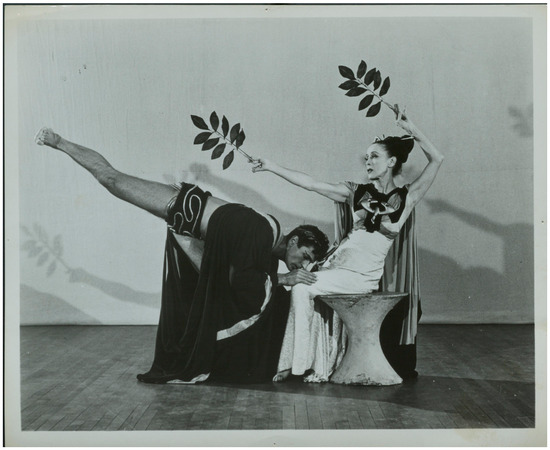
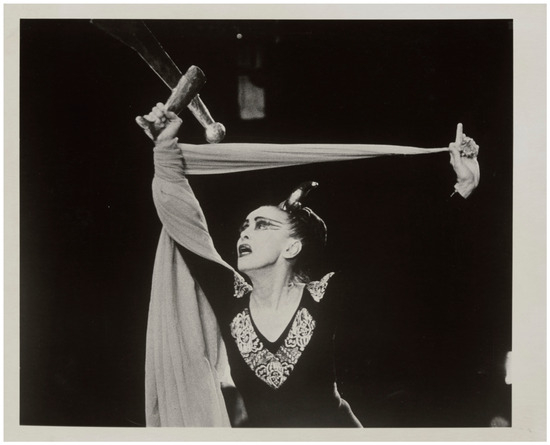
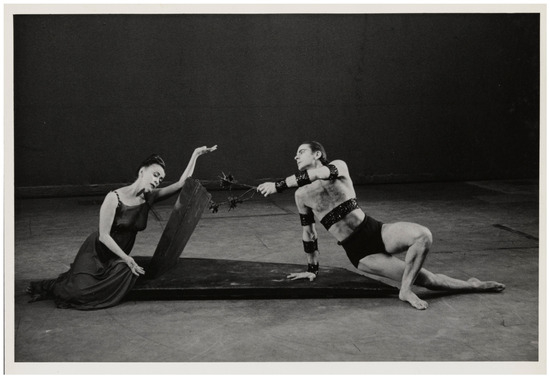
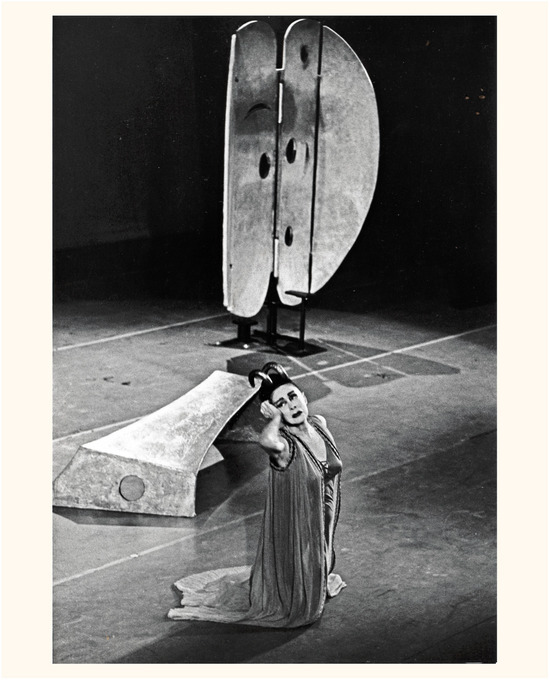
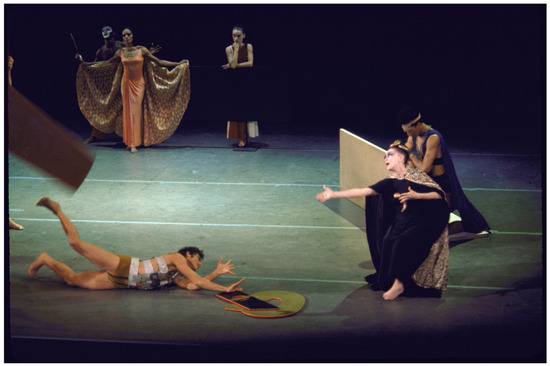
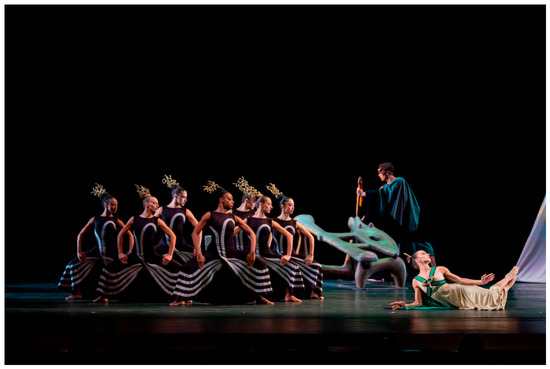
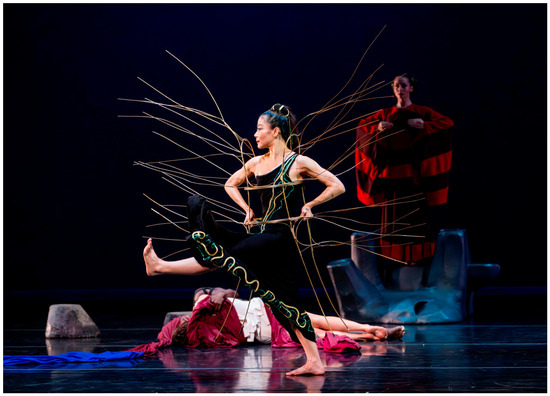
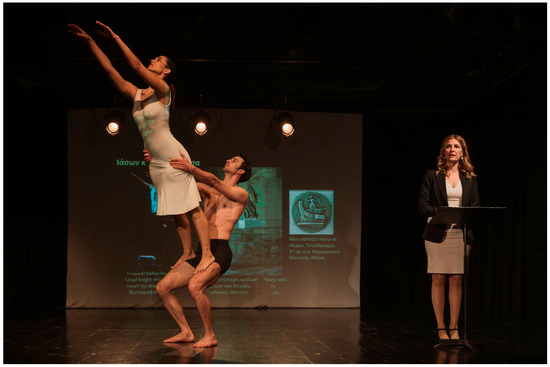
This article examines Martha Graham’s radical reception of the women of Greek tragedy across her performing career, from the early 1930s to her retirement from the stage in 1969. I argue that Graham repeatedly turned to Greek tragic heroines—Electra, Medea, Jocasta, Clytemnestra, Alcestis, Phaedra, and Hecuba—with two interlocking aims: to stage archetypal human emotion, and to confront and make sense of her own personal experiences of love, jealousy, aging, and loss. Inspired by psychoanalysis, Jungian archetypes, and the abstract art of collaborator Isamu Noguchi, Graham was drawn to Greek tragedy’s direct engagement with human suffering. What makes her reception radical is its consistent relocation of tragic conflict from the civic sphere to the psyche: rather than framing female transgression through public judgment, Graham turns the drama inward, giving visible form to what ancient texts leave unstaged—Jocasta’s embodied reckoning with unbearable knowledge, Clytemnestra’s interior logic of injury and justice, Phaedra’s unruly desire brought into full view. The article also introduces the public-facing initiative “Martha Graham & Greek Myth,” which extends this scholarship to broader audiences through presentations that integrate live dance with scholarly discussion, making Graham’s reception of these tragic women accessible beyond the academy.
Full article
(This article belongs to the Special Issue Receptions of Women in Ancient Greek Literature)
►▼
Show Figures

Figure 1
Highly Accessed Articles
Latest Books
E-Mail Alert
News
Topics
Topic in
Histories, Humanities, Humans, Religions, Genealogy
Mysticism and Spiritual Syncretism in Ancestral Andean Cultures
Topic Editors: Edgar Gutiérrez-Gómez, Aldo Bazán-RamírezDeadline: 1 June 2027
Special Issues
Special Issue in
Humanities
Literature and Sound
Guest Editors: Vincent Barletta, Luca BacchiniDeadline: 30 August 2026
Special Issue in
Humanities
Writing in the Backlash
Guest Editors: Maggie Tonkin, Brydie KosminaDeadline: 31 August 2026
Special Issue in
Humanities
Crossing Oceans of Time and Space in Transpacific Asian American Literature
Guest Editor: Marie-Therese C. SulitDeadline: 31 August 2026
Special Issue in
Humanities
How Has the Outer World Engaged Chinese Literature and Culture?
Guest Editor: Robert KiblerDeadline: 1 September 2026