

You are currently viewing a new version of our website. To view the old version click .

Catalysts

Catalysts is an international, peer-reviewed, open access journal of catalysts and catalyzed reactions, published monthly online by MDPI.
The Romanian Catalysis Society (RCS) is affiliated with Catalysts and its members receive discounts on the article processing charges.
Quartile Ranking JCR - Q2 (Chemistry, Physical)

All Articles (11,062)

Metalloporphyrin-based covalent organic frameworks (MPor-COFs) are emerging porous crystalline materials that combine the optoelectronic properties of metalloporphyrins with the highly ordered structure of COFs. Such a combination not only extends the light absorption spectrum of COFs by incorporating porphyrins but also improves the separation and transport capabilities of photo-generated electrons and holes by leveraging the structural advantages of organic frameworks. At the same time, the metal ions embedded in the porphyrin ring provide abundant active sites and optimize charge transfer channels, showing particular advantages in photocatalysis. The molecular design, construction, and photocatalytic application of MPor-COFs were reviewed in this paper. The intrinsic relationship among the structure, optoelectronic properties, and specific photocatalytic application received special attention. First, the role of the metal center in regulating the electronic structure and photophysical property of porphyrin monomers was introduced, as well as the impact of bond type on framework stability and charge transport efficiency. Then, the synthesis strategies for MPor-COFs were summarized. Finally, the applications of these materials in photocatalysis were critically reviewed, and their prospects and challenges in energy conversion and environmental remediation were also discussed.

8 January 2026

(a) Graphical representation of the formation of phycobilisome by the co-assembly of protein scaffolds and bilins; (b) Chemical structures of the anionic metalloporphyrins used as the photosensitizer (Ps-M, green) and catalysts (Cat-M, red) as well as PDDA used as a counterion polyelectrolyte; (c) Graphical representation of the co-assembly of the metalloporphyrins and PDDA into hierarchical supramolecular nanostructures for photocatalytic H2 production in water; (d) HOMO and LUMO energy levels of the metalloporphyrins as photosensitizers and catalysts in water (M = Mg2+, Zn2+, Mn3+, Fe3+, Ni2+, Cu2+, Co2+, [M] = 2 mM); (e) Graphical representation for the dissipation mechanism of the donor excitation energy. Reproduced with permission [85].

This work is based on our previous research on sulfur-assisted graphitization of biopitch by focusing on catalyst-driven optimization of biomass-derived pitch (BDP) composites as sustainable alternatives to coal tar pitch (CTP). Biomass from eucalyptus sawdust was pyrolyzed to produce BDP, which was used as a binder for carbon–carbon composites. The properties of BDP/graphite and CTP/graphite composites, including bending strength, electrical conductivity, hardness, density, porosity, mass loss, and shrinkage, were compared. Furthermore, the influence of catalysts (NiSO4, K2SO4, CuSO4, FeSO4, and KOH) on composite performance was systematically investigated. Results show that catalyst selection significantly enhances structural, electrical, and mechanical properties, demonstrating the potential of combining eco-friendly materials with strategic catalyst engineering to develop high-performance, sustainable composites.

8 January 2026

TGA (a) and FT-IR (b) of pure CTP and BDP samples [32].

Deciphering the Promoter Aspects of Potassium for Green Methanol Fuel Synthesis by Catalytic CO2 Conversion

  • Israf Ud Din,
  • Abdulrahman I. Alharthi and
  • Mshari A. Alotaibi
  • + 5 authors

Continuous excessive CO2 emissions have a negative impact on the environment. In order to address the issue of CO2 emission control, its conversion to some valuable commodities is the way forward in dealing with this issue. Additionally, the conversion of CO2 to some valuable product such as methanol fuel will not only tackle the issue but also result in producing energy. Here, the co-precipitation method was used to synthesize Cu-ZnO bimetallic catalysts based on TiO2 support to be applied for CO2 conversion to methanol fuel. To elucidate the role of potassium (K) as a promoter, varied concentrations of K were added to parent Cu-ZnO/TiO2 catalysts. A number of analytical techniques were used to scrutinize the physico-chemical properties of calcined Cu-ZnO/TiO2 catalysts. The crystalline nature of TiO2 catalyst support with high metal oxide dispersion were the major findings disclosed based on X-ray diffraction examinations. The combination of the mesoporous and microporous character of the K-promoted Cu-ZnO/TiO2 catalysts was discovered using the N2 adsorption–desorption technique. Similarly, N2 adsorption–desorption studies also revealed surface defects by K-promotion. The creation of surface defects was also endorsed by X-ray photoelectron spectroscopy (XPS) by showing additional XPS peaks for O1s in higher binding energy (BE) regions. XPS also showed the oxidation states of K-promoted Cu-ZnO/TiO2 catalysts as well as metal–support interactions. Activity results demonstrated the active profile of K-promoted Cu-ZnO/TiO2 catalysts for methanol synthesis via CO2 reduction in a liquid phase slurry reactor. The methanol synthesis rate was accelerated from 35 to 53 g.MeOH/kg.cat.h by incorporating of K to parent Cu-ZnO/TiO2 catalysts at reaction temperature and pressure of 210 °C and 30 bar, respectively. Structure–activity investigations revealed a promoting role of K by facilitating Cu reduction as well metal–support interaction. The comparative study further revealed the importance of K promotion for the title reaction.

8 January 2026

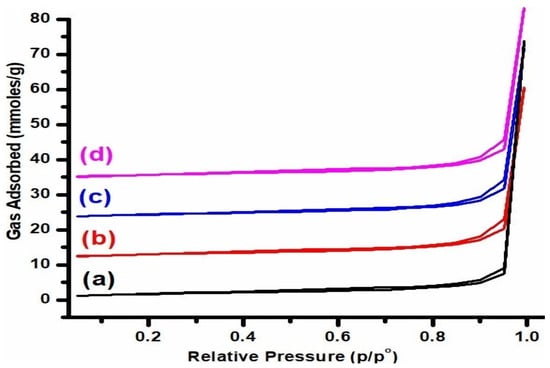
BET isotherms of (a) K1, (b) K2, (c) K3, and (d) K4 catalysts.
  • Feature Paper
  • Article
  • Open Access

The development of efficient and stable oxygen evolution reaction (OER) electrocatalysts based on non-precious metals is pivotal for advancing sustainable energy conversion technologies. We present a facile and green strategy for synthesizing a high-performance HO-CDs-FeOOH/NF(D) composite catalyst by leveraging a synergistic system of FeCl3/urea deep eutectic solvent (DES) and hydroxyl-functionalized carbon dots (HO-CDs). This system orchestrates the rapid, in situ growth of FeOOH on nickel foam (NF) via simple immersion, wherein the DES acts as both an etchant and an iron source, while the HO-CDs induce a morphological transformation from sheet-like to granular stacking, thereby constructing highly active interfaces and increasing the density of accessible catalytic sites. The optimized catalyst exhibits exceptional OER performance, requiring an overpotential of only 251 mV to achieve 50 mA cm−2, with a Tafel slope of 55.4 mV dec−1. Moreover, it demonstrates outstanding stability, maintaining 98% of its initial current density after 24 h of continuous operation and showing negligible performance decay after 3000 cycles. This work presents a straightforward approach for designing high-performance Fe-based electrocatalysts through carbon dot-mediated morphology control via a facile DES-based impregnation strategy.

8 January 2026

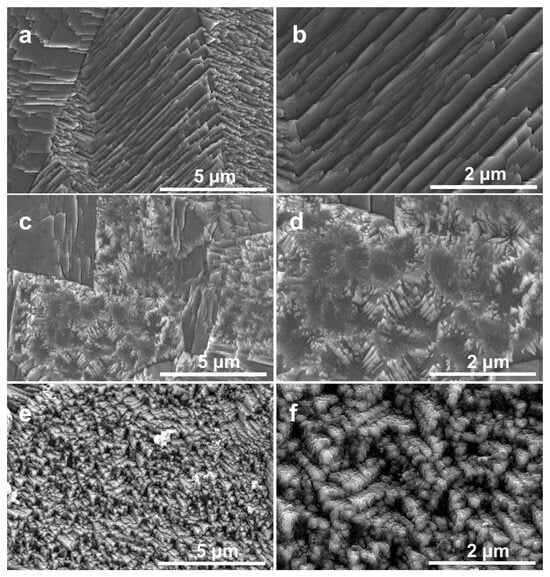
SEM images of (a,b) FeOOH/NF(D), (c,d) HO-CDs-FeOOH/NF, and (e,f) HO-CDs-FeOOH/NF(D).

News & Conferences

Issues

Open for Submission

Editor's Choice

Get Alerted

Add your email address to receive forthcoming issues of this journal.

XFacebookLinkedIn
Catalysts - ISSN 2073-4344