


Topical Advisory Panel applications are now closed. Please contact the Editorial Office with any queries.
Journal Description
Biomimetics
Biomimetics
is an international, peer-reviewed, open access journal on biomimicry and bionics, published monthly online by MDPI.
- Open Access— free for readers, with article processing charges (APC) paid by authors or their institutions.
- High Visibility: indexed within Scopus, SCIE (Web of Science), PubMed, PMC, Ei Compendex, CAPlus / SciFinder, and other databases.
- Journal Rank: JCR - Q1 (Engineering, Multidisciplinary) / CiteScore - Q2 (Biomedical Engineering)
- Rapid Publication: manuscripts are peer-reviewed and a first decision is provided to authors approximately 13.5 days after submission; acceptance to publication is undertaken in 3.5 days (median values for papers published in this journal in the first half of 2026).
- Recognition of Reviewers: Reviewers whose reports are timely and of high quality receive an APC discount voucher for a future publication in an MDPI journal. Become a reviewer.
Impact Factor:
4.2 (2025);
5-Year Impact Factor:
4.3 (2025)
Latest Articles
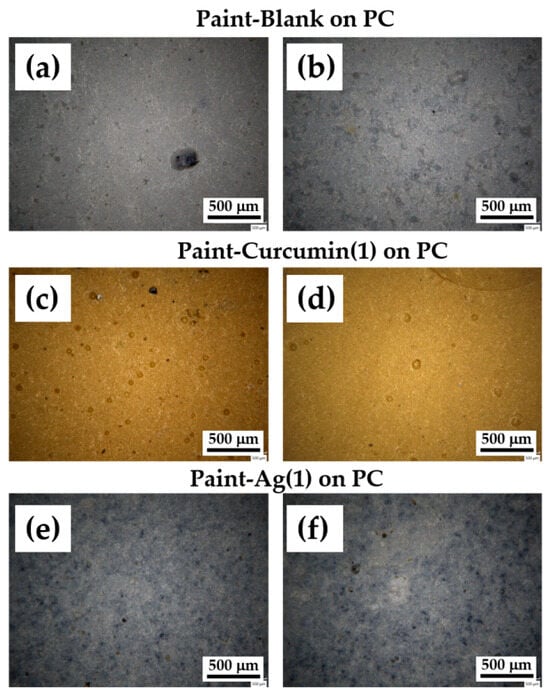
Development of Antimicrobial Coatings by Incorporating Curcumin and Silver-Based Additive into a Commercial Water-Based Paint
Biomimetics 2026, 11(9), 659; https://doi.org/10.3390/biomimetics11090659 (registering DOI) - 12 Sep 2026
Abstract
Antibacterial coatings are essential for preventing infections and maintaining adequate hygiene standards in high-density and high-risk environments, such as public spaces, public transportation systems, schools, and healthcare facilities. In this context, it is essential that such coatings are easy to apply and compatible
[...] Read more.
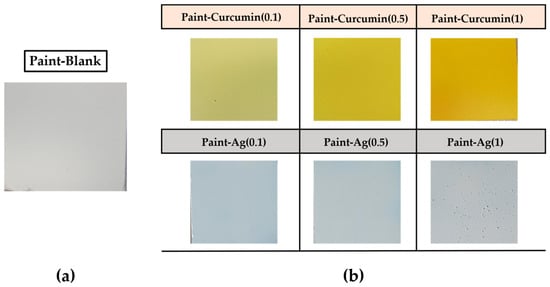
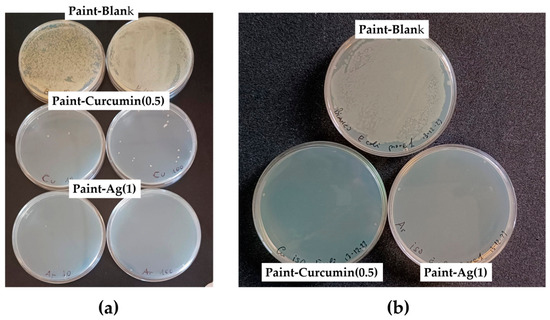
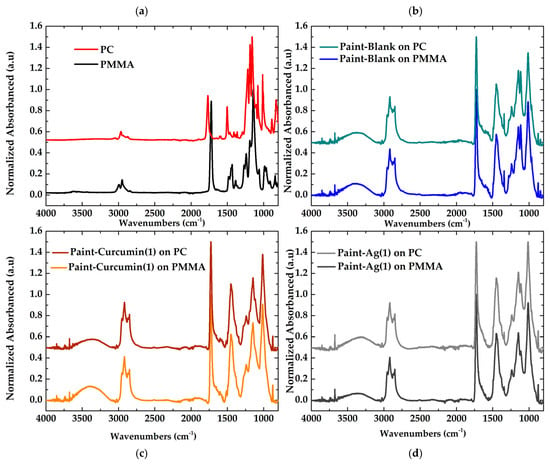
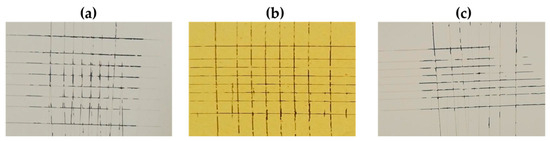
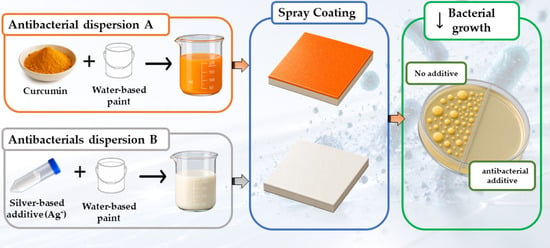
Antibacterial coatings are essential for preventing infections and maintaining adequate hygiene standards in high-density and high-risk environments, such as public spaces, public transportation systems, schools, and healthcare facilities. In this context, it is essential that such coatings are easy to apply and compatible with large-scale production processes. Among the various strategies for developing antimicrobial surfaces, the incorporation of antibacterial agents into paints represents a particularly practical and versatile approach. In this work, antimicrobial coatings were developed by incorporating curcumin, a naturally derived antibacterial compound, into a commercially available water-based paint. For comparison, coatings were also developed by incorporating a commercially available silver-ion-based additive, a well-established antibacterial agent, into the same paint. Antimicrobial dispersions were deposited onto polycarbonate (PC) and polymethyl methacrylate (PMMA) substrates using a spray coating technique. The produced coatings were evaluated in terms of adhesion and hardness according to the ASTM D3359 and ASTM D3363 standards, respectively, achieving ratings of 4B for adhesion and 4B/5B for hardness. Moreover, after five days of continuous water immersion, no visible signs of cracking, delamination, or discoloration were observed. The resulting curcumin- and silver-based coatings, under the tested surface-contact assay conditions, markedly reduced viable bacterial recovery against both S. aureus and E. coli, with no colonies recovered at the dilution range used for comparison with the Paint-Blank control. These results support the potential of curcumin as a naturally derived antibacterial additive for the development of water-based antibacterial coatings and provide a basis for further investigation of their long-term stability, durability, and practical applicability.
Full article
(This article belongs to the Section Biomimetics of Materials and Structures)
►
Show Figures
Open AccessArticle
A Muscle Fiber-Based Soft Hand Exoskeleton Control Strategy for Fine Manipulation: A Preliminary Investigation
by
Jia Yang, Chunyang Zhang, Ning Li, Jie Wen, Wenguang Yang and Wenyuan Chen
Biomimetics 2026, 11(9), 658; https://doi.org/10.3390/biomimetics11090658 (registering DOI) - 12 Sep 2026
Abstract
While soft hand exoskeleton robots have approached human-level dexterity in terms of degrees of freedom, precise control methods for fine motor movements remain a significant challenge. Surface electromyography (sEMG) is widely employed in gesture recognition to enable patients to independently control a soft
[...] Read more.
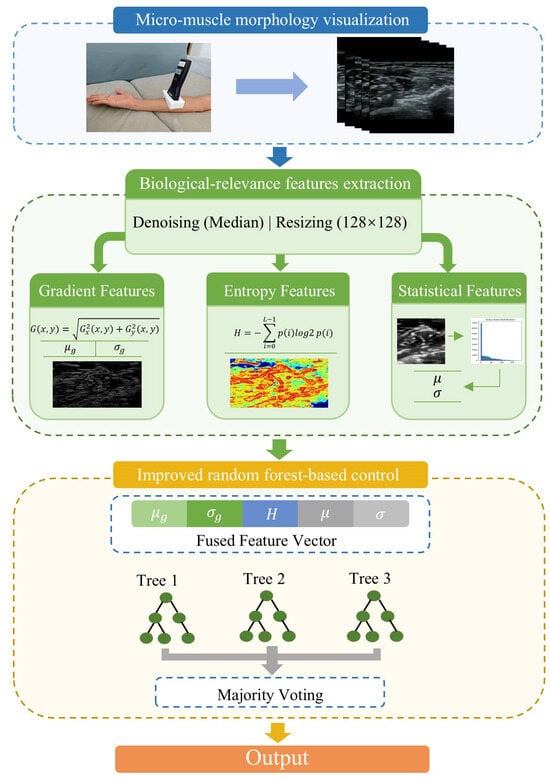
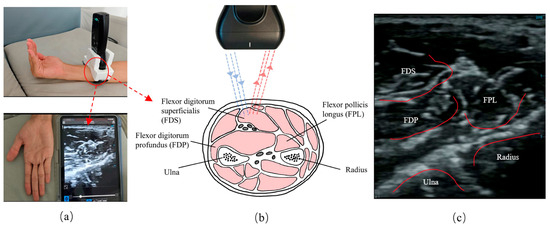
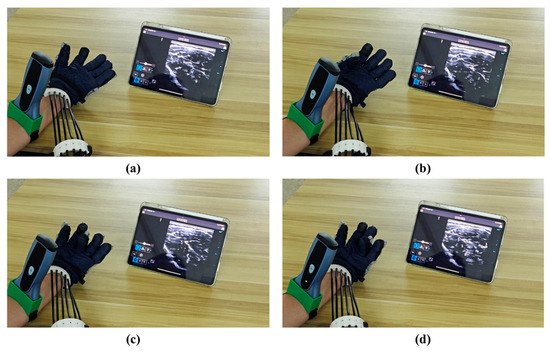
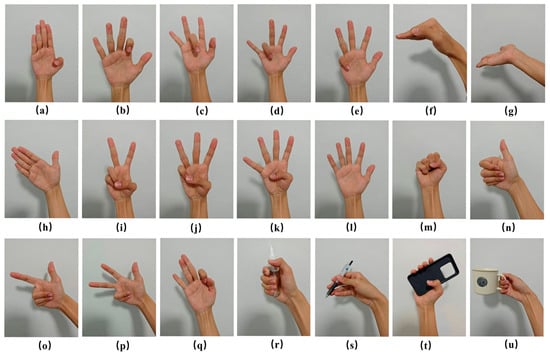
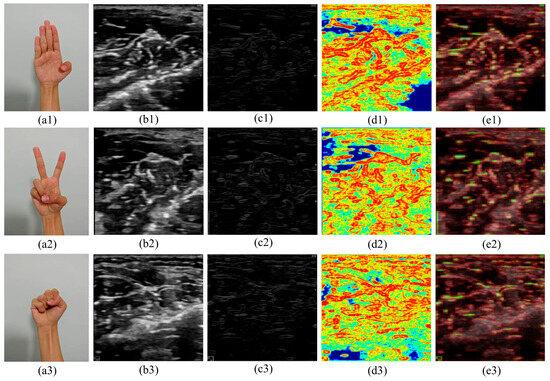
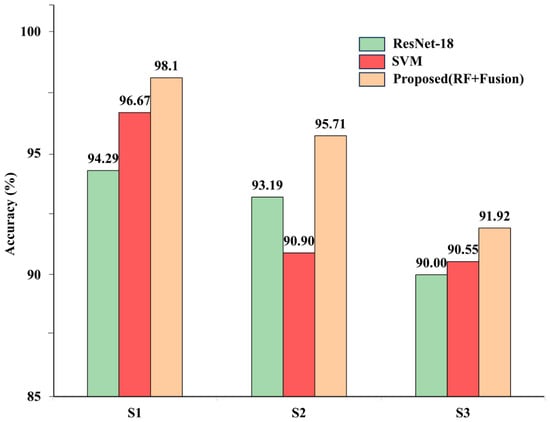
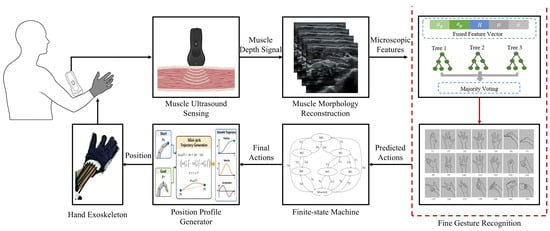
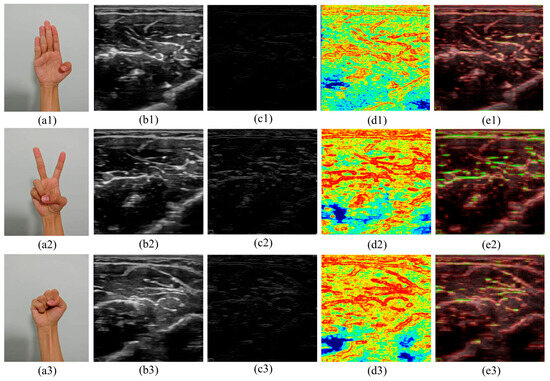
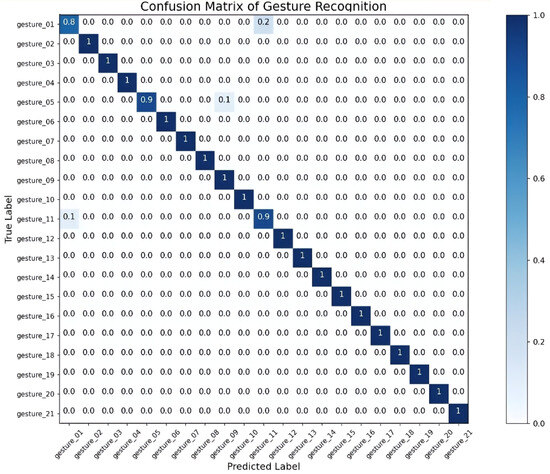
While soft hand exoskeleton robots have approached human-level dexterity in terms of degrees of freedom, precise control methods for fine motor movements remain a significant challenge. Surface electromyography (sEMG) is widely employed in gesture recognition to enable patients to independently control a soft hand exoskeleton. However, individual finger control remains challenging through sEMG-based control due to the complexity of decoupling synergistic muscle activities. In this study, we propose a muscle fiber-based ultrasound perception strategy for fine hand motion recognition and soft hand exoskeleton control. Ultrasound imaging enables non-invasive visualization of forearm muscle morphology and provides information associated with underlying muscle-fiber activity. By reconstructing muscle morphology from ultrasound images, biologically relevant muscle-fiber features are extracted and fused to characterize fine hand movements. A lightweight Random Forest classifier is subsequently employed to map these biologically informed features to discrete hand actions, providing a computationally efficient recognition module for real-time control. To the best of our knowledge, publicly available ultrasound image datasets specifically designed for fine hand gesture recognition in rehabilitation applications remain limited. In the experiments, a dataset containing 21 hand gestures based on muscle ultrasound images was constructed to evaluate the proposed method. All data were collected from healthy participants as a preliminary proof-of-concept investigation. The results show that the proposed approach achieves an average recognition accuracy of 95.24% across three subjects in finger motion recognition. This preliminary study demonstrates the potential of machine learning-based ultrasound perception for improving fine hand gesture recognition and providing an intuitive control interface for soft hand exoskeletons, thereby enhancing their applicability in hand rehabilitation scenarios.
Full article
(This article belongs to the Special Issue Smart Materials and Multi-Field Responsive Bio-Inspired Soft Robotics)
►▼
Show Figures

Figure 1
Open AccessArticle
Operating-Condition Residual Normalization: A Bio-Inspired Operator for Sensor Integrity Monitoring in Automated Vehicles
by
Mehmet Bilban and Onur İnan
Biomimetics 2026, 11(9), 657; https://doi.org/10.3390/biomimetics11090657 (registering DOI) - 12 Sep 2026
Abstract
Bio-inspired integrity monitors for automated vehicles are reported as single pooled detection figures, which conflates algorithmic performance with evaluation protocol. Transferring the reafference principle to inertial-channel integrity, we identify what actually governs the reported figure. A single-track forward model is identified from the
[...] Read more.
Bio-inspired integrity monitors for automated vehicles are reported as single pooled detection figures, which conflates algorithmic performance with evaluation protocol. Transferring the reafference principle to inertial-channel integrity, we identify what actually governs the reported figure. A single-track forward model is identified from the data, and its residual is standardized by Operating-Condition Residual Normalization (OCRN), a bin-wise operator conditioned on an observable operating point; the design is resolved by an exhaustive constrained search and each component is isolated using ablation. Across 224,638 samples spanning five towns and four friction levels, the residual scale varies by a factor of 158, and OCRN recovers 21.8 F1 points, more than the detection rule, the encoder, and the biological attenuation gate combined. A cross-comparison confirms this: changing the detection rule moves the result by 0.09 points, while changing the normalization moves this by 15 to 19. The monitor attains 97.34% precision, 76.35% recall, and 85.57% F1 at a 0.76% false-alarm rate when counting every injection, and 97.30/93.99/95.62% above a 3σ detectability floor when covering 80.1% of them. The floor scales with forward-model error, which is correlated with but not determined by the road friction, and the gate, the most explicitly biological element, is not selected once the residual is conditionally normalized, with its best setting gaining at most one F1 point at nearly twice the false-alarm rate.
Full article
(This article belongs to the Special Issue Next-Generation Bio-Inspired Algorithms: Theory, Design, and Performance)
Open AccessArticle
Bio-Inspired PSO Optimization of Fuzzy Membership Boundaries and PI Gains for a 48 V Synchronous Boost Converter
by
Teoman Karadag, Emre Gozkaya, Arif Basgumus and Mustafa Namdar
Biomimetics 2026, 11(9), 656; https://doi.org/10.3390/biomimetics11090656 (registering DOI) - 12 Sep 2026
Abstract
48 V bus modules must stay regulated under wide input-voltage swings and fast load transients. A proportional-integral (PI) controller and a fuzzy logic controller (FLC) are tuned by the same Particle Swarm Optimization (PSO), a swarm metaheuristic modeled on bird-flock foraging, under an
[...] Read more.
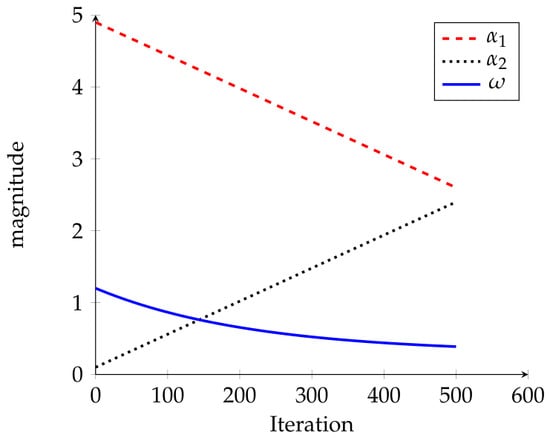
48 V bus modules must stay regulated under wide input-voltage swings and fast load transients. A proportional-integral (PI) controller and a fuzzy logic controller (FLC) are tuned by the same Particle Swarm Optimization (PSO), a swarm metaheuristic modeled on bird-flock foraging, under an Integral of Time-weighted Absolute Error (ITAE) objective. The novelty is PSO-based membership-boundary optimization: the membership-function limits, analogues of biological decision thresholds, are shaped directly rather than only the scaling gains. A 153 W, 225 kHz synchronous boost converter is simulated with non-ideal parasitics. For input-voltage transitions the PSO-FLC shortens settling time by up to 70.5% (118 versus 400 ms), whereas the PSO-PI gives smaller peak deviation (26.2% versus 40.0%) and faster load-step recovery. Unconstrained, both controllers draw 58–62 A on the worst input-voltage step; a 10 A cycle-by-cycle limit removes these excursions. Under an identical budget and parameter count, boundary tuning attains 12.3% lower ITAE cost and roughly 40% shorter large-signal settling than scaling-gain tuning. Across ten runs the cost varies by under 1.5% of its mean, and the ranking holds at a realizable update rate (4.44 s, zero-order hold) and under the current limit. The findings are simulation-only comparative design guidance.
Full article
(This article belongs to the Special Issue Next-Generation Bio-Inspired Algorithms: Theory, Design, and Performance)
Open AccessArticle
Lotus Leaf-Inspired Low-Adhesion Surface for a Droplet-Based Electricity Generator
by
Huachen Su and Yuying Yan
Biomimetics 2026, 11(9), 655; https://doi.org/10.3390/biomimetics11090655 (registering DOI) - 12 Sep 2026
Abstract
Droplet-based electricity generators (DEGs) are usually characterised under dry conditions, although retained water can alter their electrical boundary. We compared blank, bottom-wetted, top-wetted, wetted-and-dried, and partially immersed states using 40 mm × 40 mm FEP/ITO devices. Four separately assembled devices per condition were
[...] Read more.
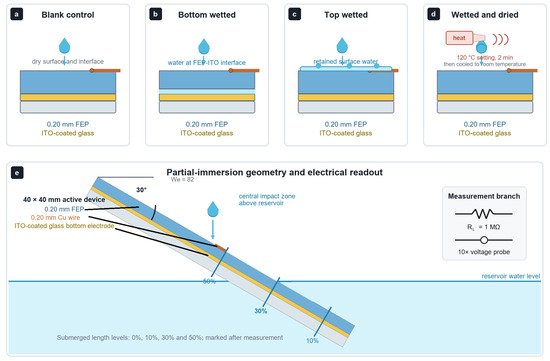
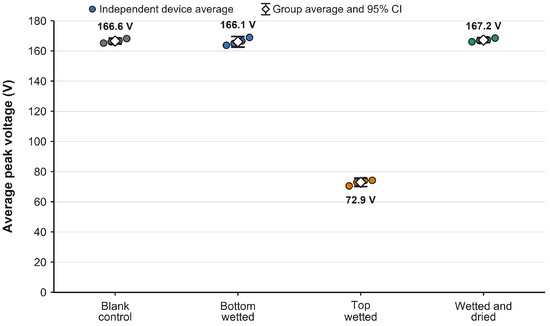
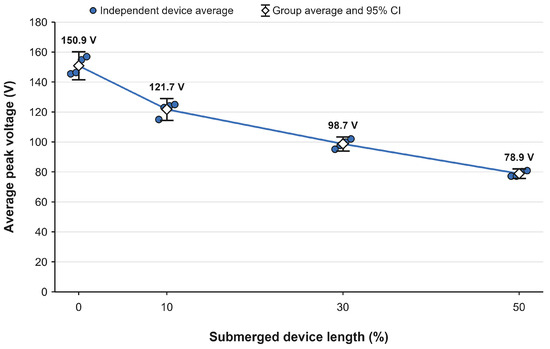
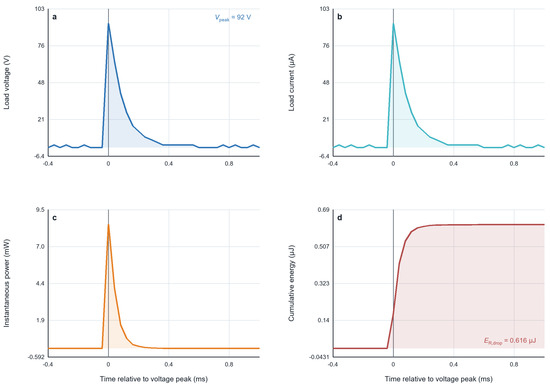
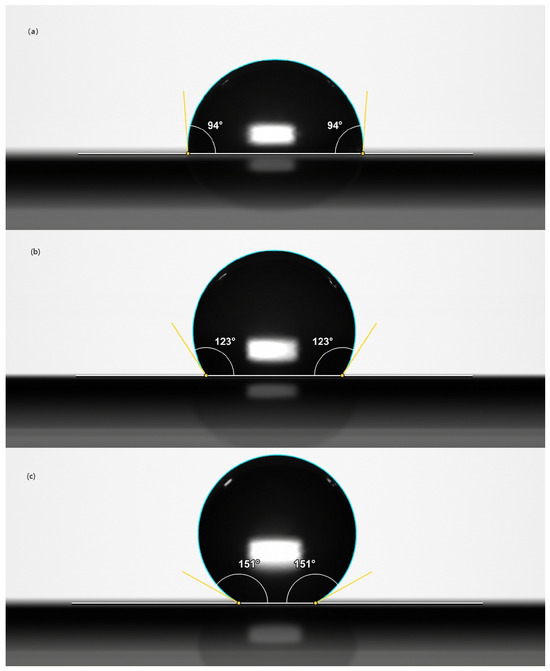
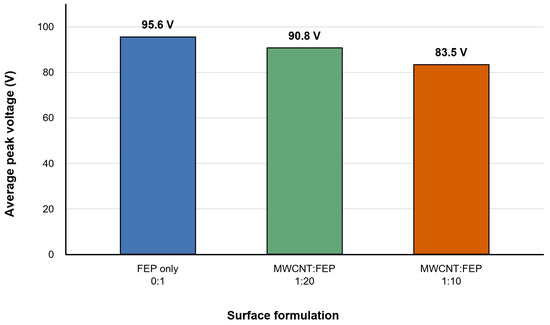
Droplet-based electricity generators (DEGs) are usually characterised under dry conditions, although retained water can alter their electrical boundary. We compared blank, bottom-wetted, top-wetted, wetted-and-dried, and partially immersed states using 40 mm × 40 mm FEP/ITO devices. Four separately assembled devices per condition were tested on a separate apparatus, with 100 droplet events per device. The device averages were analysed by Welch’s ANOVA and Holm-adjusted contrasts. Bottom wetting changed the average peak voltage by −0.30% relative to the blank (adjusted p = 0.960), whereas top wetting reduced it by 56.21% (adjusted p = 2.62 × 10⁻⁹). The dried-state average was within 0.38% of the blank (adjusted p = 0.960), indicating electrical recovery under the stated protocol without establishing equivalence or complete drying. Immersing 10%, 30%, and 50% of the device length reduced the average by 19.31%, 34.59%, and 47.73%, respectively. The common-state averages agreed within 1.49% with an earlier apparatus series. A process-matched MWCNT:FEP surface reached an apparent contact angle of 151° and a 6° sliding angle while retaining 87.3% of the FEP-only average. These results identify the exposed top surface, rather than the bottom-interface water, as the principal wetting-state sensitivity under the tested conditions and support a lotus-inspired low-adhesion design target.
Full article
(This article belongs to the Special Issue Advances in Biomimetics: 10th Anniversary)
►▼
Show Figures

Figure 1
Open AccessArticle
Toward Dynamic Biomimetic Biomaterials: Temporal Coupling of Flavonoid-Induced Cellular Responses and 3D-Printed PLA Scaffold Evolution
by
Diana V. Portan, Panagiotis Zoumpoulakis, Vassilis Kostopoulos, Ioanna Pitterou, Konstantinos Tsiantas, Efstathios Michalopoulos and Leonard Azamfirei
Biomimetics 2026, 11(9), 654; https://doi.org/10.3390/biomimetics11090654 - 11 Sep 2026
Abstract
Background/Objectives: Biomimetic biomaterials should be evaluated not only through their initial properties but also through their interaction with biological environments over time. This study investigated a human cell-based approach integrating flavonoid-induced cellular responses with the temporal evolution of 3D-printed polylactic acid (PLA)
[...] Read more.
Background/Objectives: Biomimetic biomaterials should be evaluated not only through their initial properties but also through their interaction with biological environments over time. This study investigated a human cell-based approach integrating flavonoid-induced cellular responses with the temporal evolution of 3D-printed polylactic acid (PLA) scaffolds under physiological-like conditions. Methods: Human Wharton’s Jelly mesenchymal stem cells (WJ-MSCs) were exposed to naringin and hesperidin (250 µg/mL) and evaluated after 3, 7, and 10 days using ALP, TP, OPN, and OC. In parallel, PLA scaffolds’ biodegradation was studied under static and dynamic conditions. Results: Naringin produced a more pronounced early/intermediate osteogenic-related response, whereas hesperidin showed comparatively more sustained ALP- and OPN-related activity at later stages. Dynamic scaffolds exhibited progressive temporal changes, with weight variations ranging from −0.384% to +0.127% at days 1, 3, 7, and 10, respectively, accompanied by progressive morphological modification. Initial AFM analysis showed an average RMS roughness of 22.1 nm. Conclusions: The distinct temporal profiles of the flavonoids, together with the evolving scaffold–medium interface, support a biomimetic strategy based on temporal coordination of biochemical cues. These findings provide a rationale for future experimentally validated sequential delivery systems designed to promote early osteogenic activation followed by sustained cellular and matrix-associated activity.
Full article
(This article belongs to the Special Issue Biomimetic Three-Dimensional (3D) Scaffolds from Sustainable Biomaterials)
Open AccessArticle
Bioinspired Adaptive-Depth Neural Growth for Deepfake Video Forensics: An Entropy-Guided State-Space Framework
by
Muhammad Hussain, Fahman Saeed and Sultan Aldera
Biomimetics 2026, 11(9), 653; https://doi.org/10.3390/biomimetics11090653 - 11 Sep 2026
Abstract
Deepfake videos currently facilitate extensive financial deception, political misinformation, and unauthorized imagery, with anticipated U.S. losses from deepfake-related fraud surpassing $40 billion by 2027; human evaluators accurately recognize high-quality forgeries merely 25% of the time, highlighting the pressing necessity for automated, widely applicable
[...] Read more.
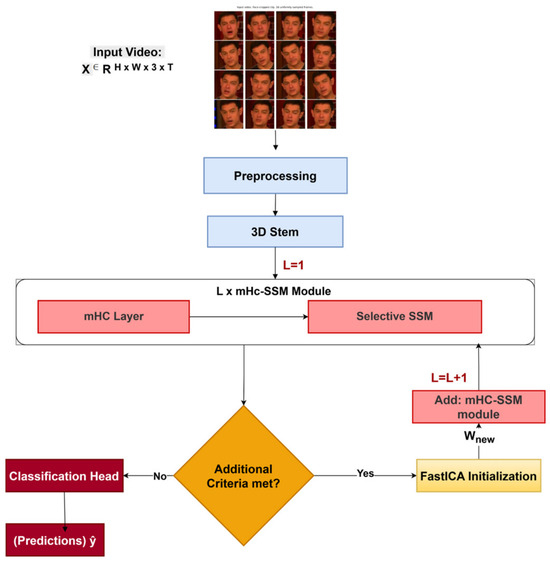
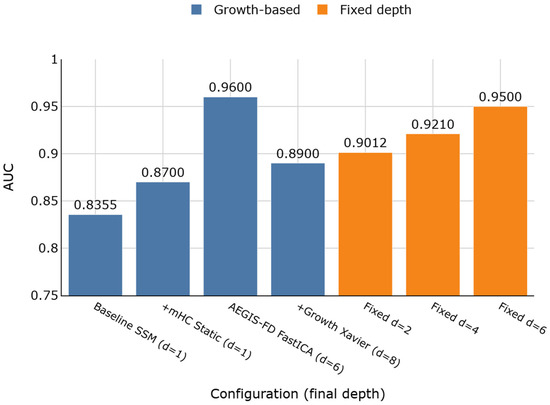
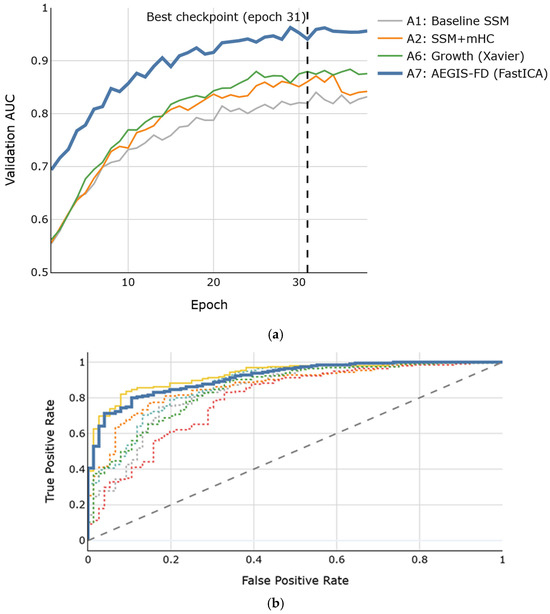
Deepfake videos currently facilitate extensive financial deception, political misinformation, and unauthorized imagery, with anticipated U.S. losses from deepfake-related fraud surpassing $40 billion by 2027; human evaluators accurately recognize high-quality forgeries merely 25% of the time, highlighting the pressing necessity for automated, widely applicable detection mechanisms. Adaptive-depth architectures offer an intriguing alternative to fixed-depth deepfake detectors when the optimal model capacity is indeterminate in advance. This study presents the Adaptive Entropy-Guided ICA State-Space Model Forgery Detector (AEGIS-FD), a deepfake detection framework at the video level that progressively increases its depth from one to eight layers via an entropy-driven growth mechanism, attaining peak validation performance at a depth of six. The design incorporates a three-dimensional spatiotemporal stem, Sinkhorn-normalized manifold-constrained hyper-coupling (mHC) layers for balanced temporal integration, a selected state-space temporal block for sequence depiction, and FastICA-based initialization for newly introduced layers. Evaluated using Celeb-DF v2, AEGIS-FD achieves a test AUC of 0.9600 and a validation AUC of 0.9607, above the performance of a single-layer Mamba SSM baseline (AUC = 0.8355). In comparison to a fixed-depth-6 baseline, the model demonstrates consistent improvements over five random seeds (96.12 ± 0.28 vs. 94.84 ± 0.44 AUC; p = 0.0022), suggesting that adaptive development provides advantages that exceed mere depth. In a zero-shot cross-dataset evaluation—trained on Celeb-DF v2 and assessed without fine-tuning on a FaceForensics++ (FF++) C23 subset comprising 1000 original and 1000 FaceSwap videos—AEGIS-FD achieves an AUC of 89.2 compared to 88.4 for the corresponding baseline (+0.8 AUC), providing initial proof of cross-dataset transferability. These findings suggest that adaptive-depth growth presents a viable approach for detecting deepfakes at the video level, while further validation across various datasets and modification techniques is essential.
Full article
(This article belongs to the Special Issue Exploration of Bioinspired Computer Vision and Pattern Recognition: 2nd Edition)
►▼
Show Figures

Figure 1
Open AccessArticle
Full-Thickness Regeneration of the Hard Palate Using Bioengineered Mucoperiosteal Scaffolds in a Porcine Model
by
Maria Ida Rizzo, Maria Emiliana Caristo, Chiara Ribaldone, Simone Faustino Maria Marino, Giorgio Spuntarelli, Anna Chiara Contini, Luigi Dall’Oglio, Luigi Tomao, Mattia Algeri, Stefano Tedesco, Gianantonio Pozzato, Cristiano De Stefanis, Antonello Cardoni, Lorenzo Lupoi, Camilla Codazzi, Lucia Leone, Mario Zama and Massimiliano Raponi
Biomimetics 2026, 11(9), 652; https://doi.org/10.3390/biomimetics11090652 - 10 Sep 2026
Abstract
Cleft palate is a congenital anomaly that causes functional and esthetic challenges, and the hard palate is essential for feeding, speech, and separation of the oral and nasal cavities. Yet, current reconstructive techniques do not restore its bony component. Building on previous in
[...] Read more.
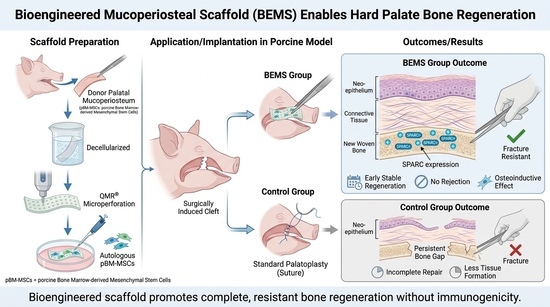
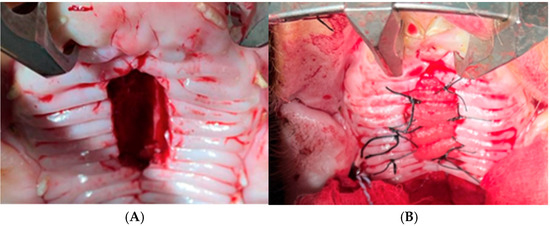
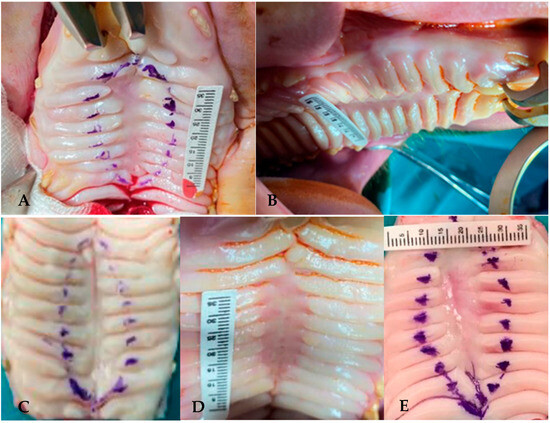
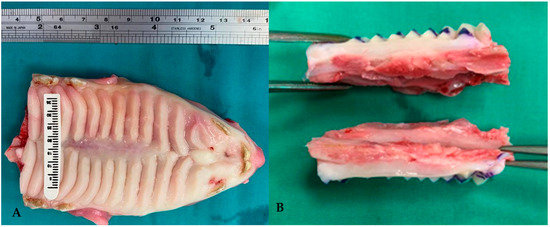
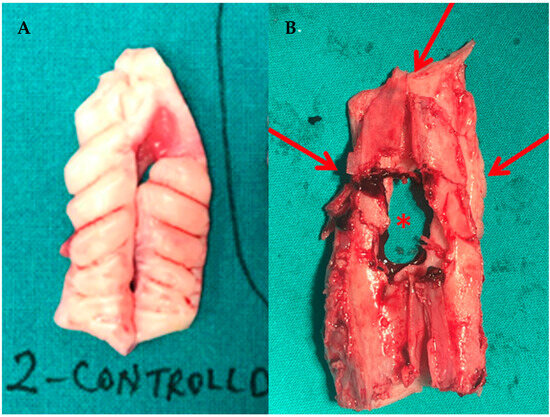
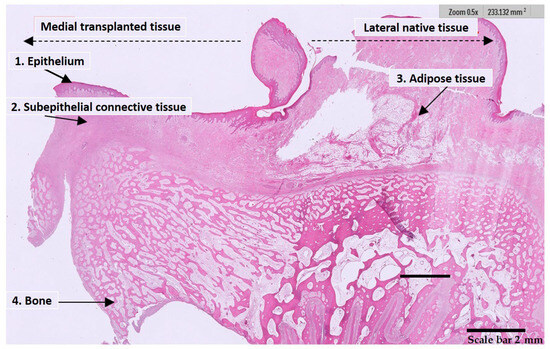
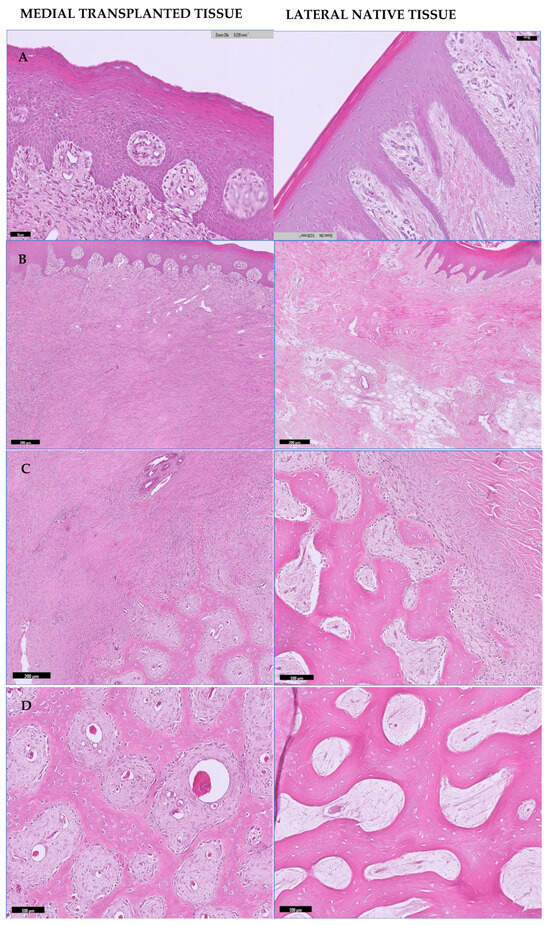
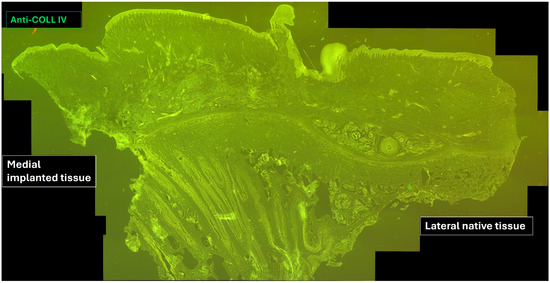
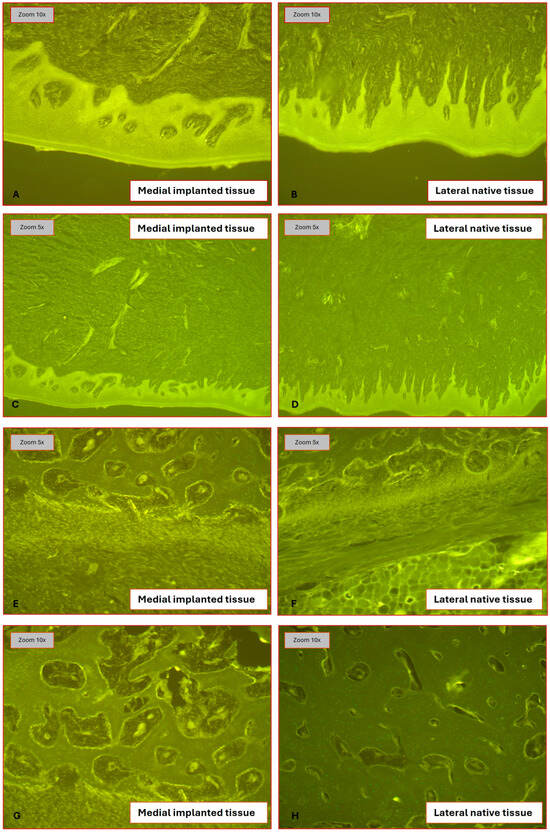
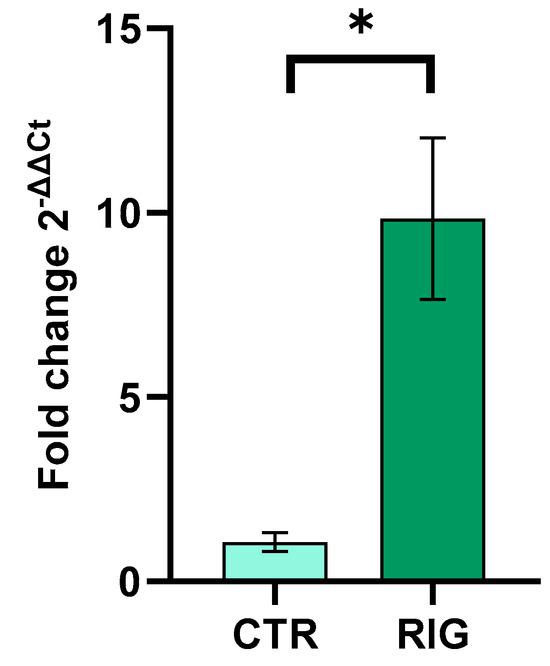
Cleft palate is a congenital anomaly that causes functional and esthetic challenges, and the hard palate is essential for feeding, speech, and separation of the oral and nasal cavities. Yet, current reconstructive techniques do not restore its bony component. Building on previous in vitro work showing that decellularized palatal mucoperiosteum, microperforated with Quantum Molecular Resonance (QMR®) technology and recellularized with mesenchymal stem cells, preserves the collagen microenvironment, supports engraftment, and shows osteoinductive potential, this study evaluated the early feasibility and regenerative potential of bioengineered mucoperiosteal scaffolds (BEMS) in Landrace pigs model. Bone marrow was collected from recipient pigs to isolate pBM-MSCs. Donor palatal mucoperiosteum was decellularized, microperforated, and recellularized with these cells to generate BEMS. After surgical creation of a cleft palate, four pigs received BEMS, and two controls underwent standard palatoplasty. At one month, scaffold-treated animals showed early mucosal and osseous regeneration, including neo-epithelium, connective tissue, and new bone formation, without clinical or routine histological signs of acute rejection. SPARC (Secreted protein acidic and rich in cysteine) expression supported osteogenic activity. Regenerated palates were stable and fracture-resistant, whereas controls showed incomplete repair and fractures. These findings suggest that BEMS may address limitations of conventional palatal reconstruction and support further investigation for human palatal bone regeneration.
Full article
(This article belongs to the Special Issue Next-Generation Biomaterials and Bio-Inspired Strategies for Oral and Maxillofacial Regeneration)
►▼
Show Figures

Graphical abstract
Open AccessArticle
A Bio-Inspired Multi-Scale Adaptive Particle Filter for Scalar Gravity Matching Navigation in GNSS-Denied Underwater Environments
by
Xu Xia, Ningfang Song, Tianze Wang, Jian Guo, Jingchao Ban and Zhenpeng Wang
Biomimetics 2026, 11(9), 651; https://doi.org/10.3390/biomimetics11090651 - 9 Sep 2026
Abstract
In Global Navigation Satellite System (GNSS)-denied deep-sea environments, traditional scalar gravity matching navigation methods frequently suffer severe performance degradation in weak-feature, highly repetitive gravity anomaly regions. Inspired by the hippocampal spatial memory mechanism and natural graded foraging behavior of benthic marine organisms, this
[...] Read more.
In Global Navigation Satellite System (GNSS)-denied deep-sea environments, traditional scalar gravity matching navigation methods frequently suffer severe performance degradation in weak-feature, highly repetitive gravity anomaly regions. Inspired by the hippocampal spatial memory mechanism and natural graded foraging behavior of benthic marine organisms, this paper proposes a full-chain bionic framework named the Physics-Consistent Multi-Scale Adaptive Particle Filter for Gravity Matching Navigation (PC-MAPF-GM). This method endows the particle filter with four layers of biologically mimicked autonomous regulation capabilities: quantitative gravity field local suitability assessment, dynamically adjusted time-varying search scope, three-level multi-scale stepwise matching, and along-track trajectory motion physics consistency constraint. The verification of long-term shipborne lake experiments confirms that the proposed method reduces the final gravity matching positioning root mean square error (RMSE) to only 528.2 m, which is more than 41% lower than the classical terrain contour matching (TERCOM) benchmark and 31% lower than iterative closest contour point (ICCP). This biomimetic full-design-chain solution provides a robust new practical navigation paradigm for long-endurance fully autonomous underwater vehicles operating without any external auxiliary positioning information.
Full article
(This article belongs to the Special Issue Bioinspired Robot Sensing and Navigation)
►▼
Show Figures

Figure 1
Open AccessArticle
A Hybrid Giza Pyramids Construction–Crow Search Algorithm–Particle Swarm Optimization (HGPC-CSA-PSO) Framework for Simulating Dynamic Collaborative Grouping in Interpreting Education: A Simulation-Based Exploratory Study
by
Juan Yu, Ping Li and Xi Hu
Biomimetics 2026, 11(9), 650; https://doi.org/10.3390/biomimetics11090650 - 9 Sep 2026
Abstract
This simulation-based exploratory study examines HGPC-CSA-PSO, a hybrid biomimetic optimization framework integrating the Giza Pyramids Construction Algorithm (GPC), Crow Search Algorithm (CSA), and Particle Swarm Optimization (PSO) for dynamic collaborative grouping in interpreting education. The educational scenario and initialization values are modeling assumptions;
[...] Read more.
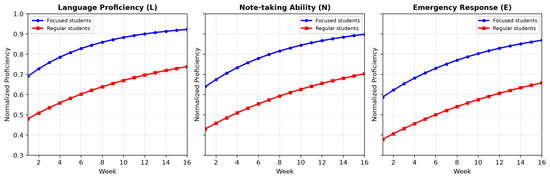
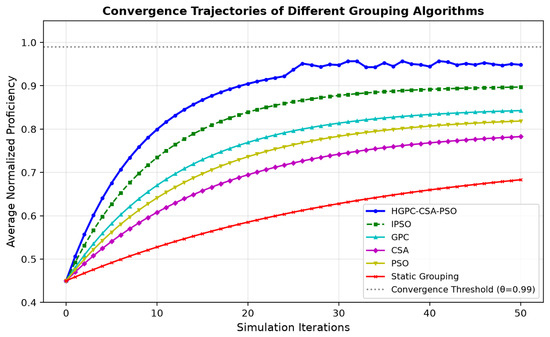
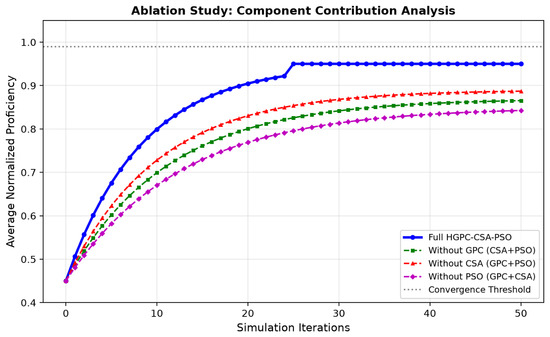
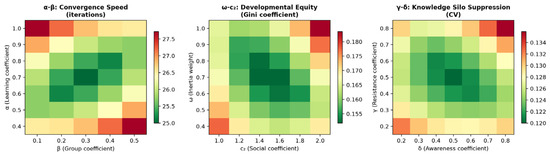
This simulation-based exploratory study examines HGPC-CSA-PSO, a hybrid biomimetic optimization framework integrating the Giza Pyramids Construction Algorithm (GPC), Crow Search Algorithm (CSA), and Particle Swarm Optimization (PSO) for dynamic collaborative grouping in interpreting education. The educational scenario and initialization values are modeling assumptions; no classroom intervention, causal teaching experiment, or independently auditable empirical validation is reported. The scalar proficiency index Qi is used as an education-oriented evaluation-layer measure, whereas the checked-in algorithms optimize their original unweighted coordinate-mean fitness. An illustrative educational-model trajectory reaches its stated scalar threshold after 29 simulated interaction updates. Separately, under the standardized repository configuration, 30 paired runs use the implementation-level termination rule that every coordinate of every simulated student must reach 0.99. Under that configuration, HGPC-CSA-PSO converges in 16.367 ± 1.974 updates and is faster than GPC and CSA (Holm-adjusted p < 0.001 for both), but not significantly different from PSO (Holm-adjusted p = 0.194). These two result layers are not interchangeable and provide model-level computational evidence only.
Full article
(This article belongs to the Special Issue Bionics in Engineering Practice: Innovations and Applications)
►▼
Show Figures

Figure 1
Open AccessArticle
Intelligent Visual Prioritization for Retinal Prostheses via Context-Aware Object Ranking and Depth-Aware Phosphene Generation
by
Xinwei Li, Irshad Khalil, Faisal Rahman and Muhammad Nawaz Khan
Biomimetics 2026, 11(9), 649; https://doi.org/10.3390/biomimetics11090649 - 9 Sep 2026
Abstract
Images from high-resolution cameras are mapped onto a sparse pattern of low spatial resolution and intensity in the retina, which limits visual perception in retinal prosthetic vision. When the entire scene is converted into phosphenes, it may allow unnecessary background information to be
[...] Read more.
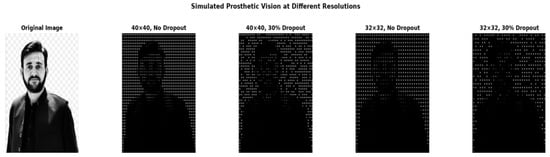
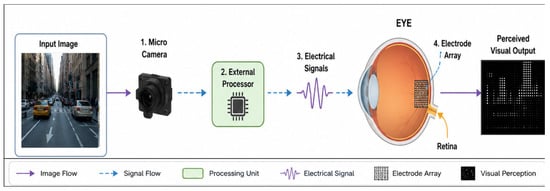
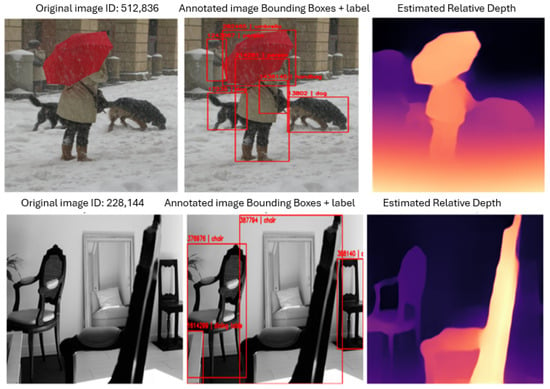
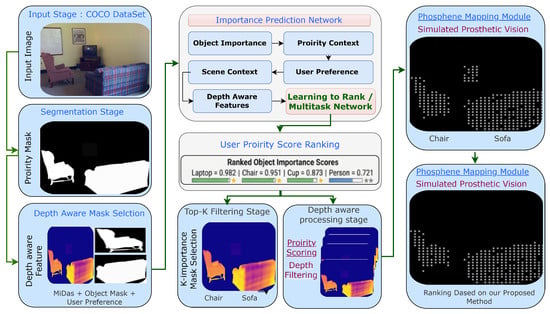
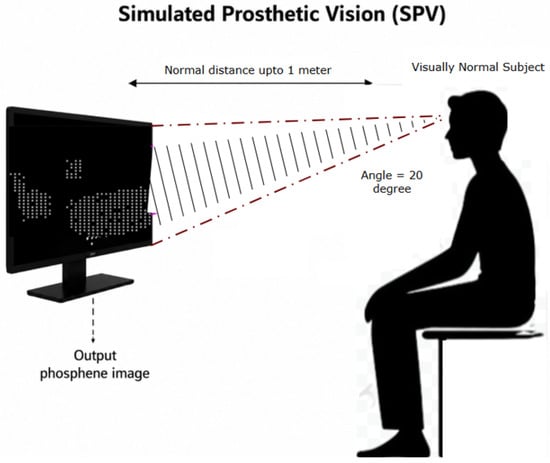
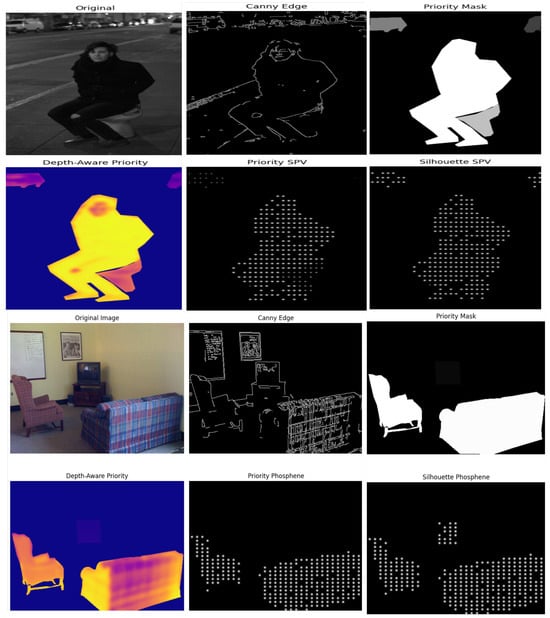
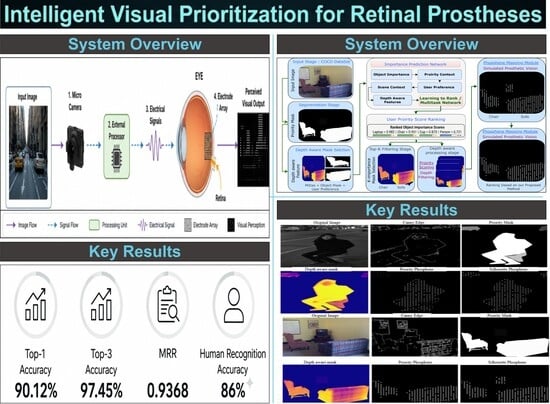
Images from high-resolution cameras are mapped onto a sparse pattern of low spatial resolution and intensity in the retina, which limits visual perception in retinal prosthetic vision. When the entire scene is converted into phosphenes, it may allow unnecessary background information to be retained and may cause visual clutter, which may make it hard for prosthetic vision users to interpret the scene. In order to tackle this issue, this paper presents a context-, depth-, and user-preference-aware method for selecting the objects of interest in the generation of phosphene images. The proposed method does not show all the objects equally but learns to sort the objects according to their relevance to prosthetic vision. Manual annotation of a subset of COCO images was conducted where the most salient object was selected based on environment type, scene type, user mode, safety, navigation relevance, task importance, and distance. All of the candidate objects are described by full-scene visual features, object-crop features, handcrafted priority features, context embeddings, and monocular depth features. To predict object-level importance scores and identify the Top-1 and Top-4 important objects in unseen scenes, a hybrid deep learning model combining twin ResNet-18 backbones for scene and object feature extraction with embedding-based context encoding was trained. Priority maps and phosphene images were then created using the selected object masks and were depth-weighted. Two types of phosphene representations were also produced: Canny-edge-based and direct full images. The proposed framework is designed to suppress irrelevant background areas and improve important and closer objects in order to obtain a simplified and informative prosthetic-vision representation of the scene. The experimental evaluation, including Top-1 accuracy, Top-3 accuracy, mean reciprocal rank (MRR), and visual comparison, demonstrates the effectiveness of the proposed framework, achieving a Top-1 accuracy of 90.12%, a Top-3 accuracy of 97.45%, and an MRR of 0.9368. Furthermore, the proposed Canny-priority phosphene representation achieved an average human-participant recognition accuracy of approximately 86%. The proposed method offers a user-adaptive strategy for selecting and visualizing the information of a scene under the severe constraint of the bandwidth of retinal prosthetic vision.
Full article
(This article belongs to the Special Issue Exploration of Bioinspired Computer Vision and Pattern Recognition: 2nd Edition)
►▼
Show Figures

Graphical abstract
Open AccessArticle
Host Response Impairs Tissue Integration of a Fibrin Hydrogel Scaffold Containing Poly(ε-caprolactone) Nanofibers for Peripheral Nerve Repair
by
Haktan Altinova, Dorothee Hodde, José L. Gerardo-Nava, Axel Dievernich, Lmar Arman, Melissa Büchler, Andreas Kriebel, Jörg Mey, Hans Clusmann, Joachim Weis, Gary A. Brook and Pascal Achenbach
Biomimetics 2026, 11(9), 648; https://doi.org/10.3390/biomimetics11090648 - 9 Sep 2026
Abstract
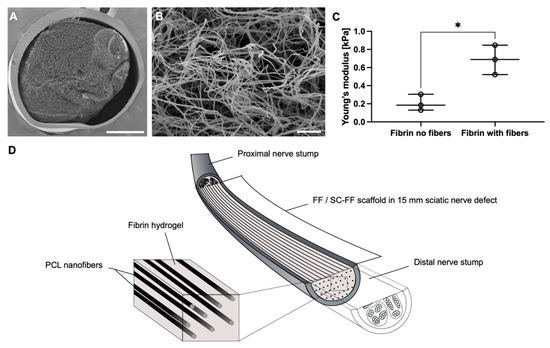
The development of bioengineered conduits for the repair of large peripheral nerve defects remains challenging. Here, we introduce a biomimetic fibrin hydrogel scaffold containing stacked arrays of aligned poly(ε-caprolactone) (PCL) nanofibers that mimics the naturally forming fibrin cable seen in transection injuries. We
[...] Read more.
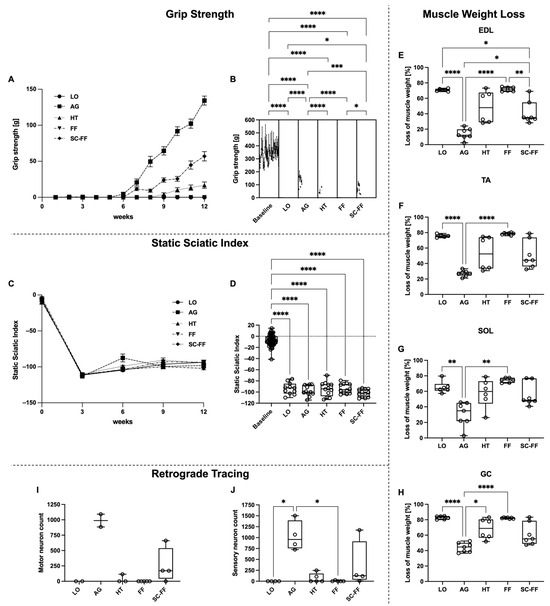
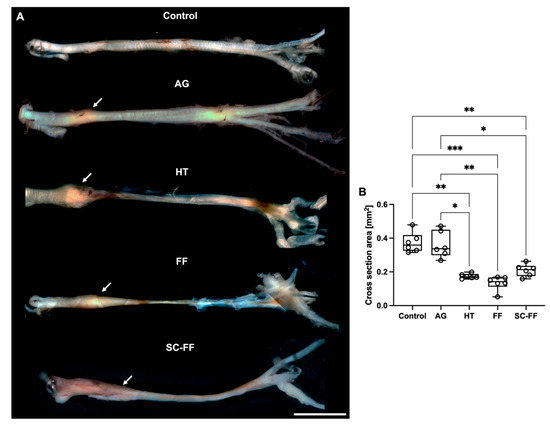
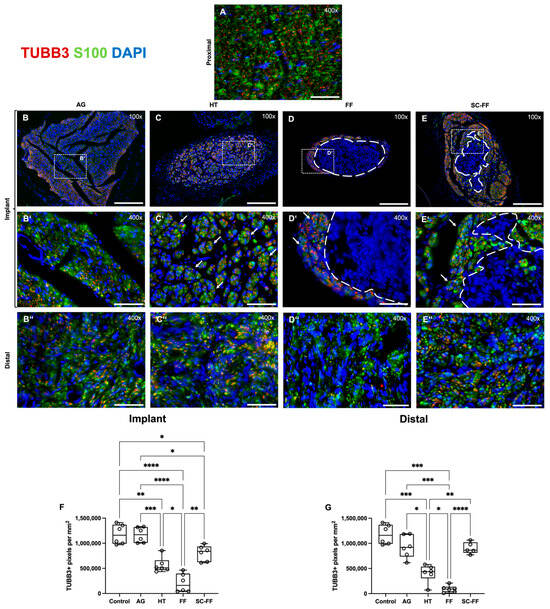
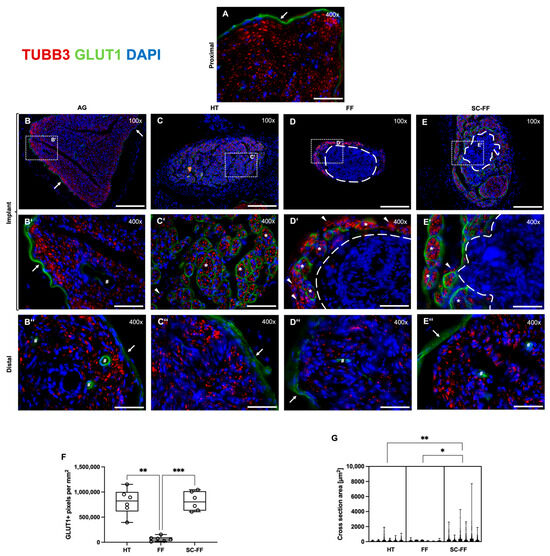
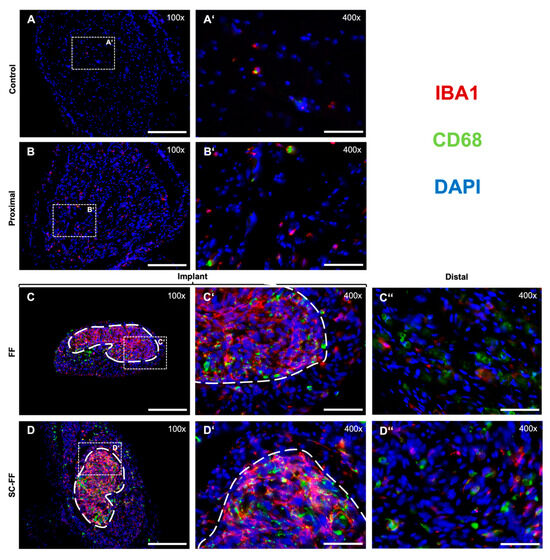
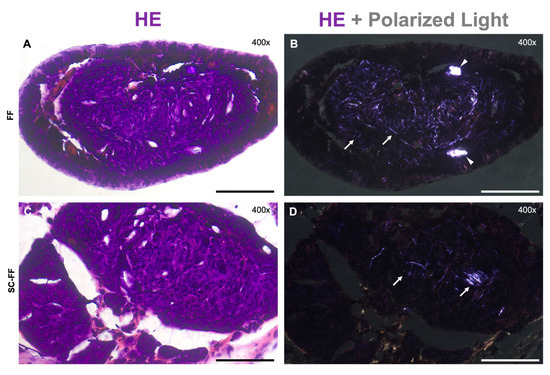
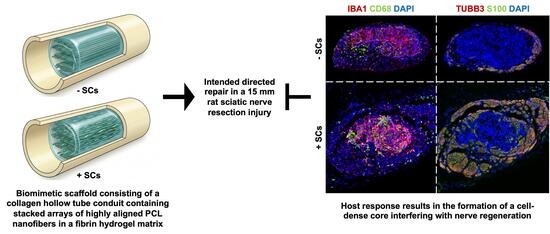
The development of bioengineered conduits for the repair of large peripheral nerve defects remains challenging. Here, we introduce a biomimetic fibrin hydrogel scaffold containing stacked arrays of aligned poly(ε-caprolactone) (PCL) nanofibers that mimics the naturally forming fibrin cable seen in transection injuries. We further evaluated the additional encapsulation of Schwann cells (SCs) into the fibrin hydrogel. Nerve regeneration was examined in a 15 mm rat sciatic nerve resection model over a period of 12 weeks, comparing our scaffolds against the autograft, a collagen hollow tube, and a lesion-only control group. Functional and morphometric analyses revealed that the autograft supported the strongest regeneration, followed by the SC-seeded fibrin-nanofiber scaffold and the hollow tube. Unexpectedly, a macrophage-rich core devoid of SCs and regenerated axons formed within both fibrin-nanofiber scaffolds around persisting PCL nanofibers. This core impaired the regenerative potential of the non-SC-seeded fibrin-nanofiber scaffold to the extent that functional regeneration was comparable to that of the lesion-only control group. While the scaffolds were designed to closely mimic and support the natural regenerative environment following nerve transection, our results reveal that these theoretical considerations do not necessarily translate into practice.
Full article
(This article belongs to the Section Biomimetics of Materials and Structures)
►▼
Show Figures

Graphical abstract
Open AccessReview
Biomimetic Coacervate Coatings: From Phase Separation Fundamentals to Advanced Biomedical Applications
by
Ki Ha Min, Yi-Rang Jeong, Jong Won Mun, Kyu Ho Jeon and Seung Pil Pack
Biomimetics 2026, 11(9), 647; https://doi.org/10.3390/biomimetics11090647 - 9 Sep 2026
Abstract
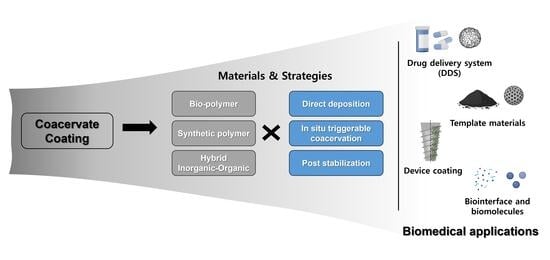
This review systematically elucidates the rapidly evolving field of biomimetic coacervate coatings, bridging the fundamental thermodynamic principles of liquid–liquid phase separation (LLPS) with advanced biomedical translations. While conventional surface modifications for medical implants frequently fail to maintain structural and functional integrity within dynamic,
[...] Read more.
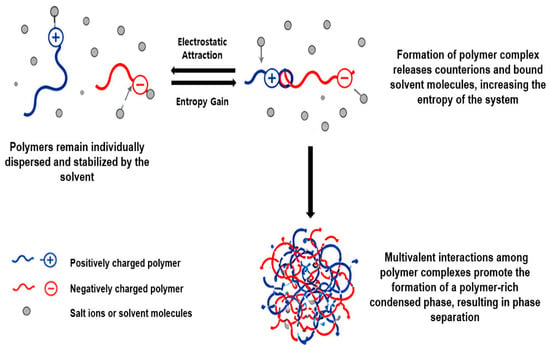
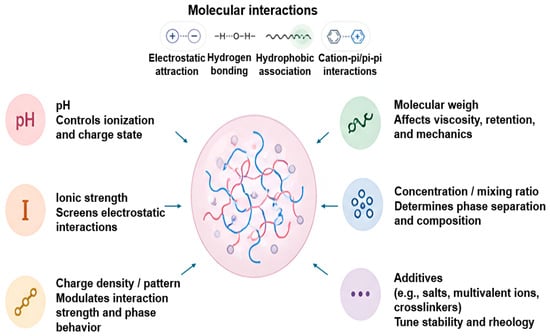
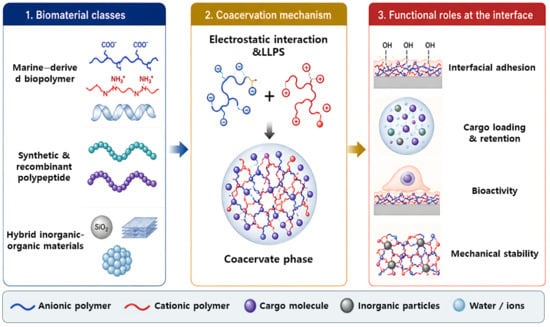
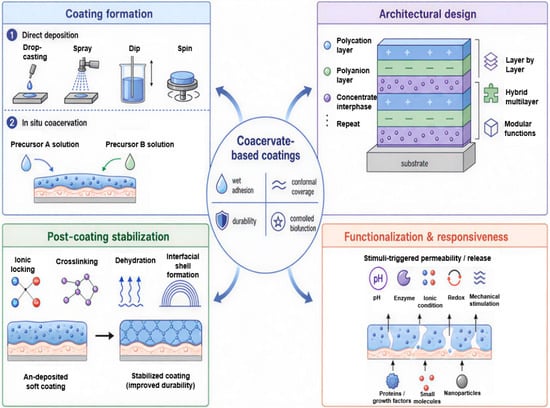
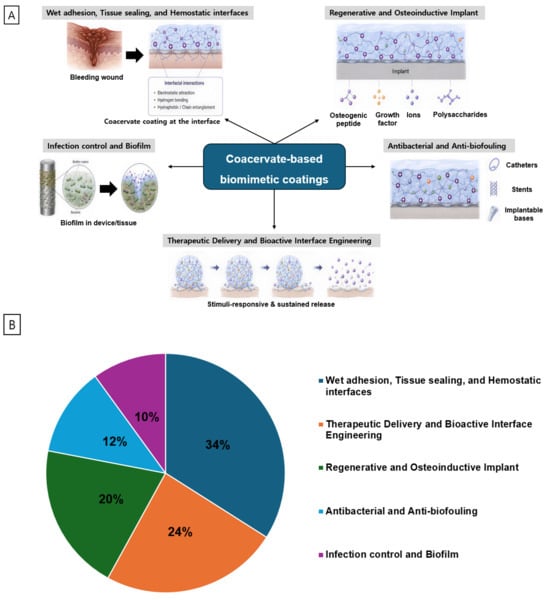
This review systematically elucidates the rapidly evolving field of biomimetic coacervate coatings, bridging the fundamental thermodynamic principles of liquid–liquid phase separation (LLPS) with advanced biomedical translations. While conventional surface modifications for medical implants frequently fail to maintain structural and functional integrity within dynamic, wet physiological environments, biomimetic coacervation inspired by natural underwater adhesive mechanisms offers a highly versatile, conformable, and robust interfacial strategy. Here, we analyze the critical physicochemical driving forces governing coacervate formation, emphasizing the synergistic interplay of electrostatic, hydrophobic, hydrogen-bonding, and cation– interactions. We comprehensively discuss diverse macromolecular design principles utilizing marine-derived biopolymers, synthetic or recombinant polypeptides, and hybrid organic–inorganic condensates, alongside key architectural orchestration methodologies including direct deposition, in situ triggerable coacervation, and layer-by-layer (LbL) assembly. Furthermore, we evaluate multi-functional clinical translations, highlighting breakthroughs in wet tissue sealing, bone repair, localized stimuli-responsive drug or nucleic acid delivery, anti-biofouling medical device coatings, and regenerative cell–material interfaces. Ultimately, this review underscores the profound potential of biomimetic coacervates as a cornerstone platform for next-generation multifunctional medical devices and personalized regenerative medicine.
Full article
(This article belongs to the Special Issue Biomimetic Coating Technologies and Biomaterials for Medical Applications)
►▼
Show Figures

Graphical abstract
Open AccessArticle
A Modified Biogeography-Based Optimization Approach for Visual Position-Based Inverse Kinematics of Robotic Arms
by
Liancheng Zheng, Mohammad Soleimani Amiri, Rizauddin Ramli, Sharifah Sakinah Syed Ahmad and Xiaotian Ma
Biomimetics 2026, 11(9), 646; https://doi.org/10.3390/biomimetics11090646 - 9 Sep 2026
Abstract
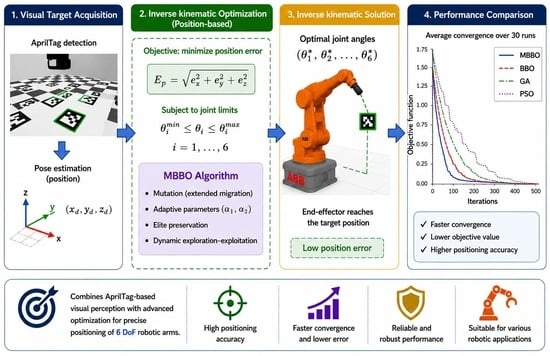
Precise end-effector positioning of a robotic arm is critical for accurate performance in robotics, which directly impacts the system’s performance in applications requiring high precision. This paper presents an optimized tag-based inverse kinematics approach for a 6 DoF robotic arm using a Modified
[...] Read more.
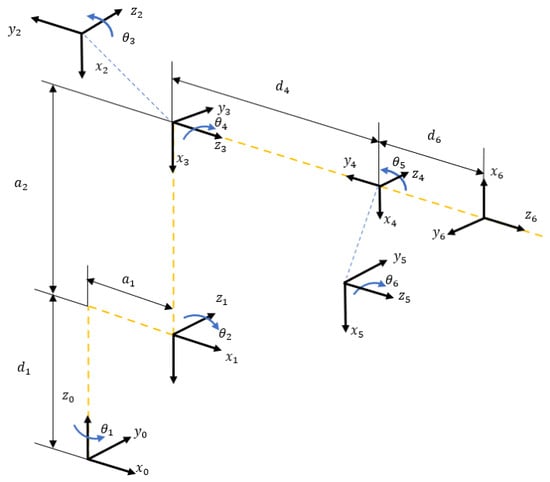
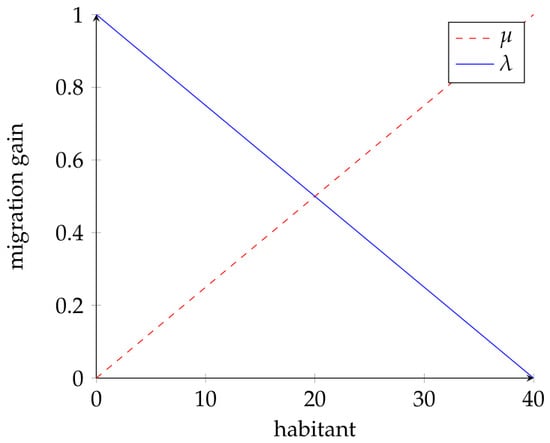
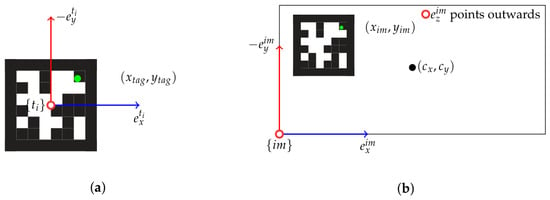
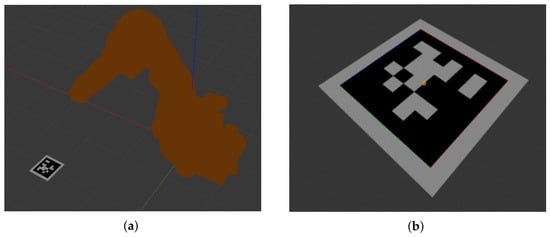
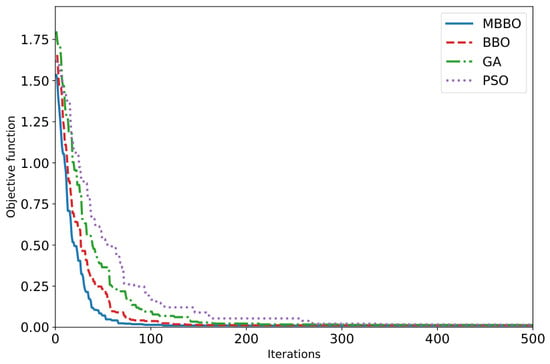
Precise end-effector positioning of a robotic arm is critical for accurate performance in robotics, which directly impacts the system’s performance in applications requiring high precision. This paper presents an optimized tag-based inverse kinematics approach for a 6 DoF robotic arm using a Modified Biogeography-Based Optimization (MBBO) algorithm, which is an enhanced version of the original Biogeography-Based Optimization (BBO), a population-based evolutionary algorithm inspired by the natural distribution of species across habitats. The target position is identified via AprilTag visual fiducial markers and integrated into the inverse kinematics solver. Performance was evaluated against Genetic Algorithm (GA), Particle Swarm Optimization (PSO), and BBO through 3-dimensional simulations involving ten target points. Results show that MBBO achieves reduced positioning error compared to GA, PSO, and BBO, resulting in lower end-effector position errors. The findings highlight the effectiveness of combining visual tag detection with advanced optimization for precise robotic arm control.
Full article
(This article belongs to the Special Issue Sustainable Soft Robotics: Innovations and Advances in Soft Manipulators and Grippers 2026)
►▼
Show Figures

Graphical abstract

Open AccessArticle
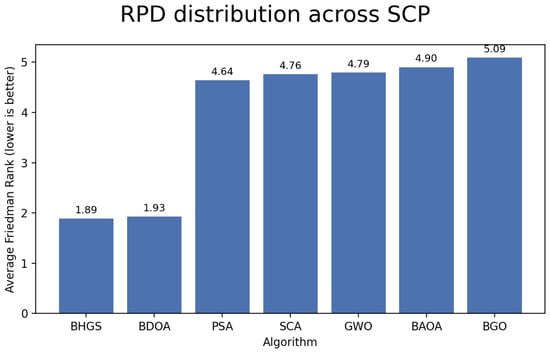
A Novel Binary Hunger Games Search Algorithm with Data-Driven Repair for the Set Covering Problem
by
Broderick Crawford, Hugo Caballero, Gino Astorga, Felipe Cisternas-Caneo, Alan Baeza, Pablo Puga Lucero, Giovanni Giachetti and Ricardo Soto
Biomimetics 2026, 11(9), 645; https://doi.org/10.3390/biomimetics11090645 - 8 Sep 2026
Abstract
Solving problems associated with the efficient distribution and organization of resources has generated increasing interest in the scientific community. One of the most commonly used approaches consists of approximate solution techniques, which have been able to solve complex covering problems within acceptable computational
[...] Read more.
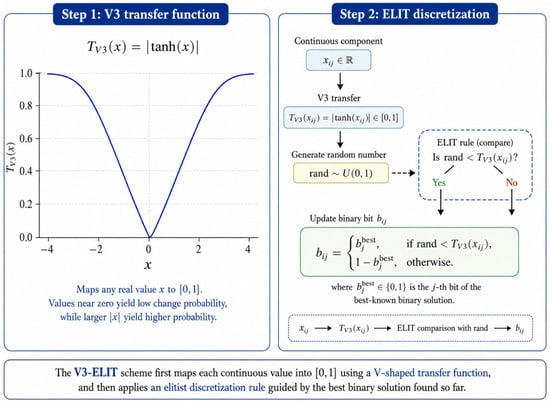
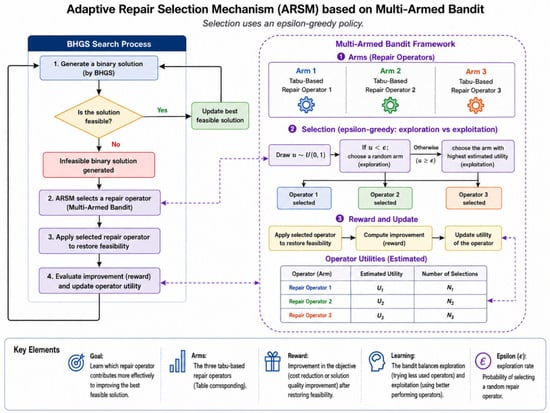
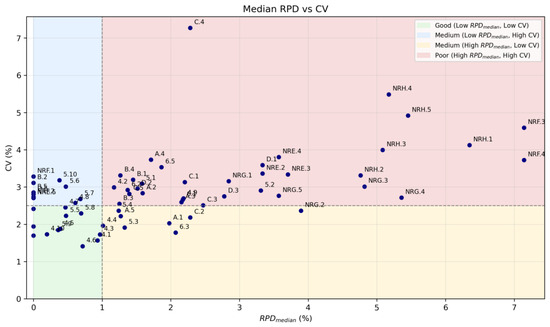
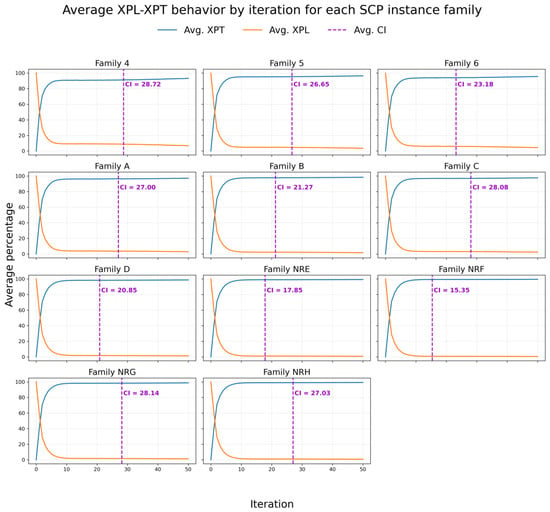
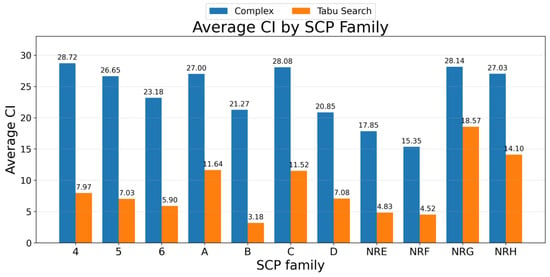
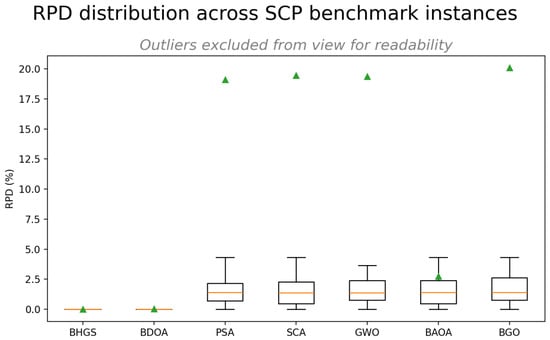
Solving problems associated with the efficient distribution and organization of resources has generated increasing interest in the scientific community. One of the most commonly used approaches consists of approximate solution techniques, which have been able to solve complex covering problems within acceptable computational time and cost. One of the benchmarks used to evaluate these approaches is the Set Covering Problem, which is an NP-hard combinatorial optimization problem. Among the techniques that have been investigated, metaheuristics play an important role. These methods are commonly developed for continuous search spaces and, in order to be applied to covering problems, must be modified to operate in discrete domains. This modification presents an important challenge: finding an appropriate transformation method that translates continuous solutions into binary solutions. This issue has been addressed through two main strategies: binarization using two-step schemes, and, in our proposal, the use of repair operators orchestrated according to their performance through an Adaptive Repair Selection Mechanism based on the multi-armed bandit framework. To evaluate our proposal, we selected the Binary Hunger Games Search metaheuristic because the relative quality of each individual determines its hunger level, which in turn regulates the movement of the population and the influence of the best solution found. Infeasible solutions are handled through a set of Tabu Search-based repair operators. Instead of applying a single repair rule throughout the entire execution, the proposed approach dynamically selects among these operators according to their observed contribution during the search. Each repair operator also incorporates Tabu memory to discourage repetitive decisions during feasibility restoration. The experiments were conducted using the classical Beasley benchmark instances for the Set Covering Problem.
Full article
(This article belongs to the Special Issue Next-Generation Bio-Inspired Algorithms: Theory, Design, and Performance)
►▼
Show Figures

Graphical abstract
Open AccessArticle
Passive–Active Cooperative Design Method for Fall Protection in Humanoid Robot
by
Tian Mu, Junyao Gao, Weilong Zuo and Leilei Xie
Biomimetics 2026, 11(9), 644; https://doi.org/10.3390/biomimetics11090644 - 8 Sep 2026
Abstract
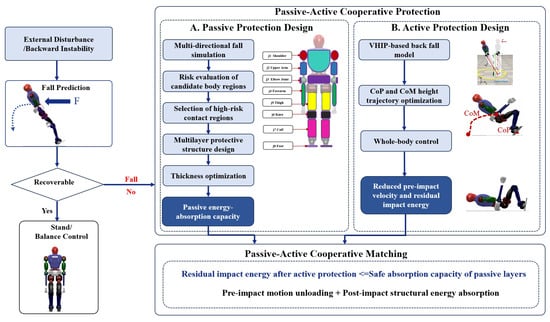
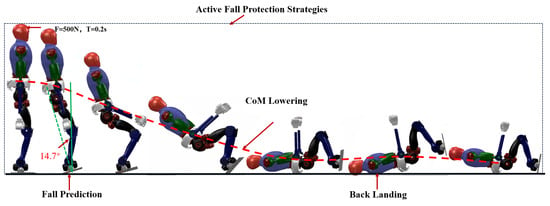
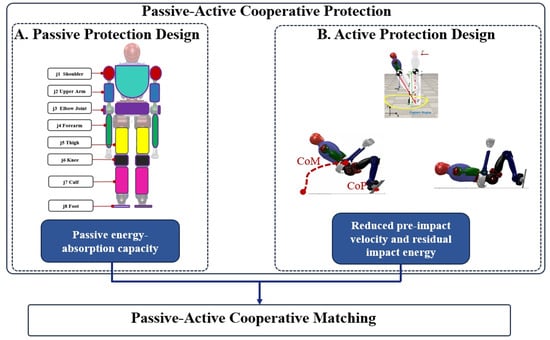
Humanoid robots are highly susceptible to structural damage during irrecoverable falls due to high landing velocity, short impact duration, and high peak impact force. Inspired by human protective strategies, namely instinctive postural adjustment and soft-tissue energy absorption, this paper proposes a passive–active cooperative
[...] Read more.
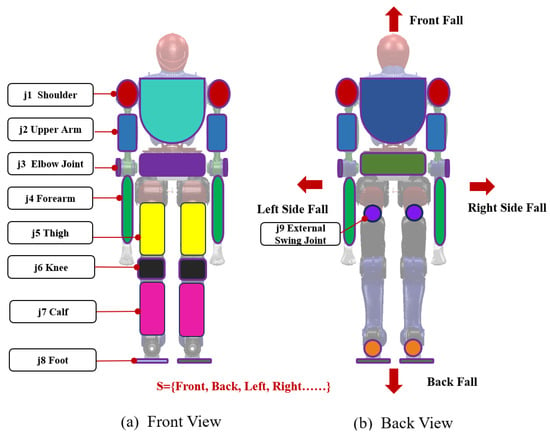
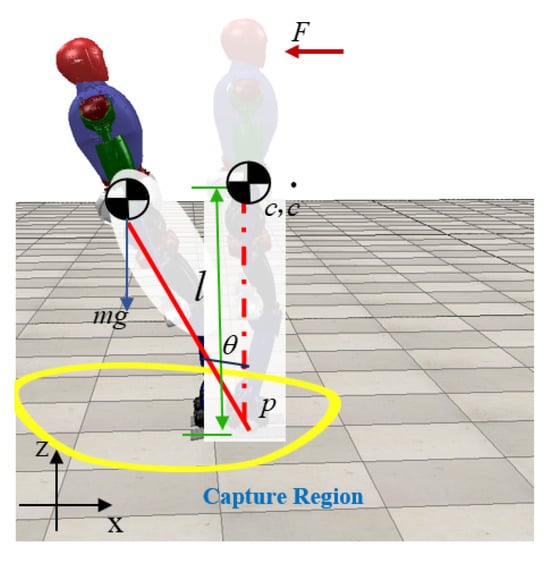
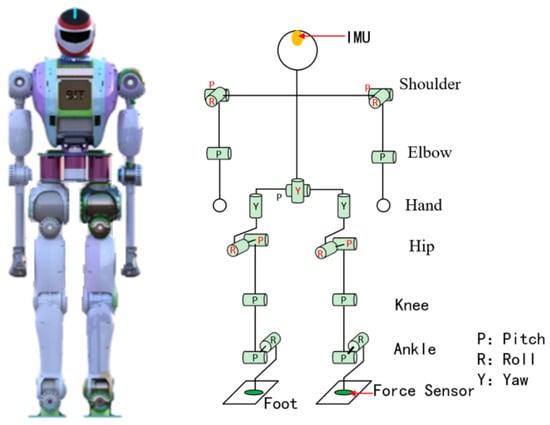
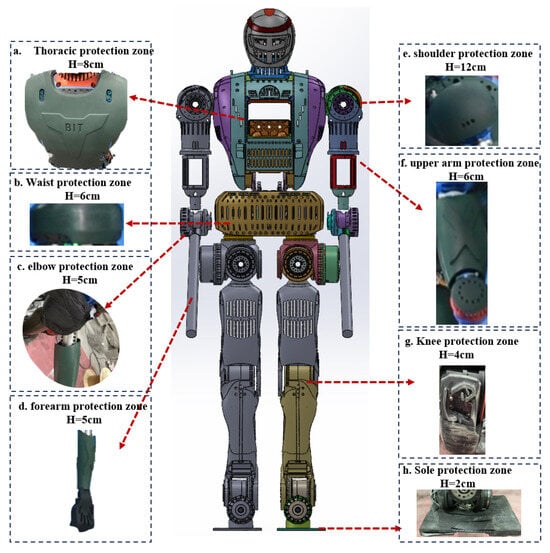
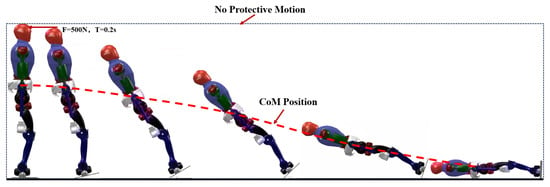
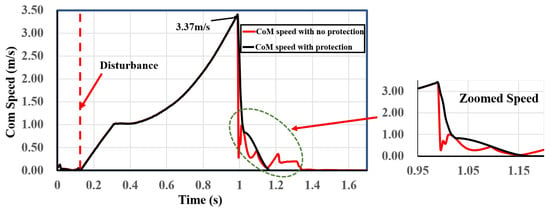
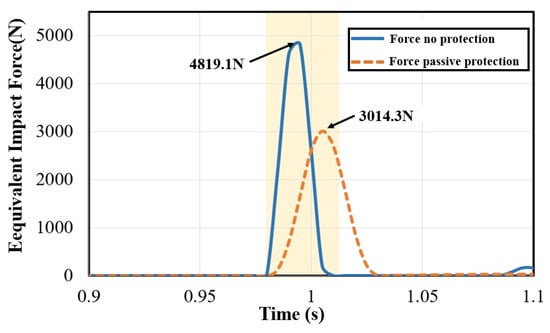
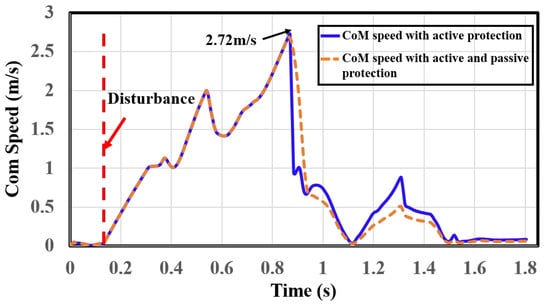
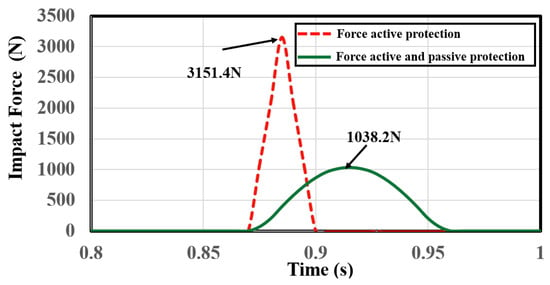
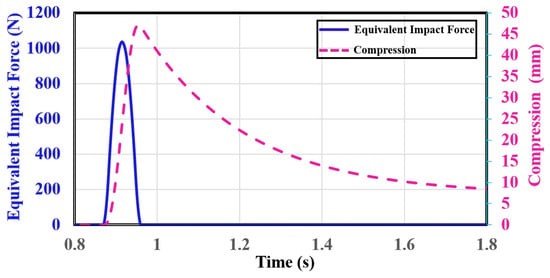
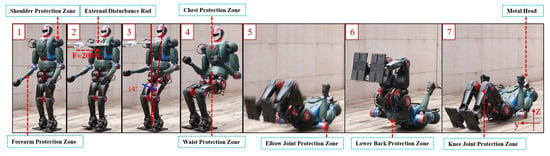
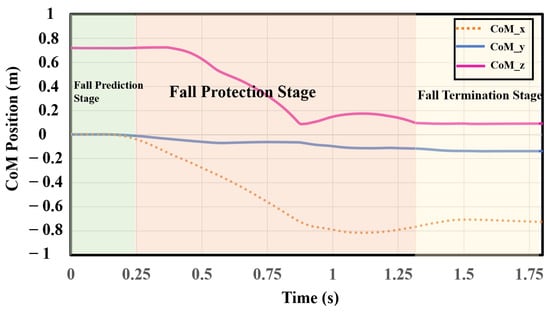
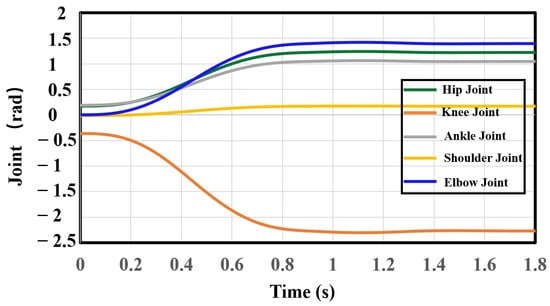
Humanoid robots are highly susceptible to structural damage during irrecoverable falls due to high landing velocity, short impact duration, and high peak impact force. Inspired by human protective strategies, namely instinctive postural adjustment and soft-tissue energy absorption, this paper proposes a passive–active cooperative fall-protection method that combines pre-impact motion regulation with post-impact structural energy absorption. On the passive protection side, high-risk contact regions are identified through multi-directional fall simulations, and a multi-region, multilayer protective suit is optimized considering impact energy absorption, peak-force reduction, anti-bottoming safety, added mass, and thickness constraints. On the active protection side, a variable height inverted pendulum (VHIP) model is used to optimize the center of pressure and center of mass trajectories, reducing the terminal impact energy before ground contact. The residual impact energy is then matched with the absorption capacity of the passive protective layers, forming a unified framework that integrates pre-impact motion unloading and post-impact energy absorption. Numerical validation is performed on a MATLAB–CoppeliaSim co-simulation platform, and physical experiments are conducted on the FCR humanoid robot (approx. 50 kg, 1.65 m, 22 DOF). Compared with the unprotected case, the proposed method reduces the peak equivalent impact force from 4819.1 N to 1038.2 N, i.e., a reduction of 78.5%, demonstrating its effectiveness in attenuating impact loads and enhancing protection capability.
Full article
(This article belongs to the Special Issue Bionic Intelligent Robots)
►▼
Show Figures

Graphical abstract
Open AccessArticle
A Comparative Study of PID and Bio-Inspired Fuzzy Controllers for Speed Regulation of Low-Cost Geared DC Motors
by
Ionel Petrescu, Valentina-Daniela Băjenaru, Daniel-Mircea Popescu, Viorel Vulturescu and Liviu Marian Ungureanu
Biomimetics 2026, 11(9), 643; https://doi.org/10.3390/biomimetics11090643 - 8 Sep 2026
Abstract
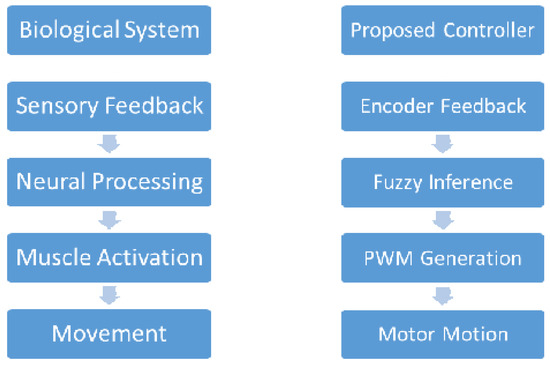
Low-cost geared DC motors are widely used in mobile robotics and embedded mechatronic systems; however, their control remains challenging due to dead-zone nonlinearities, friction, low encoder resolution, motor asymmetry, and supply voltage variations. Biological organisms routinely perform motor control in the presence of
[...] Read more.
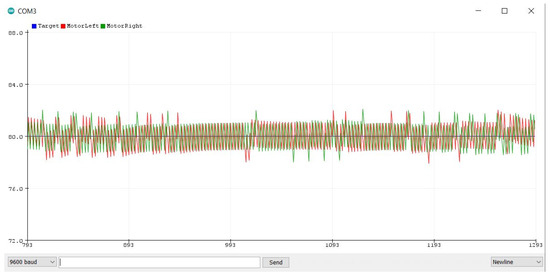
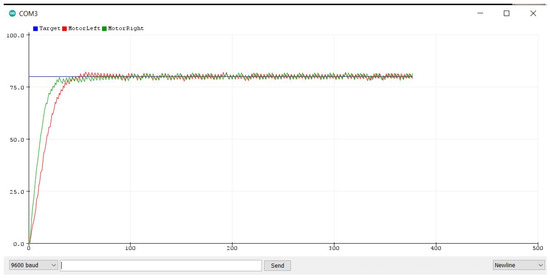
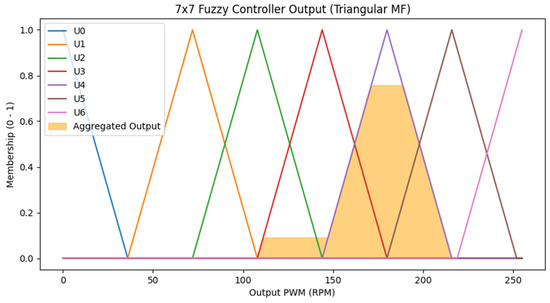
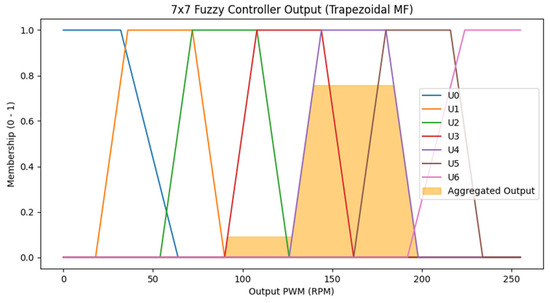
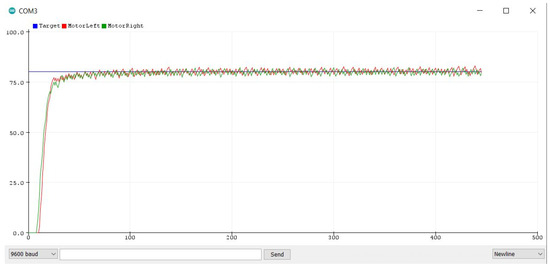
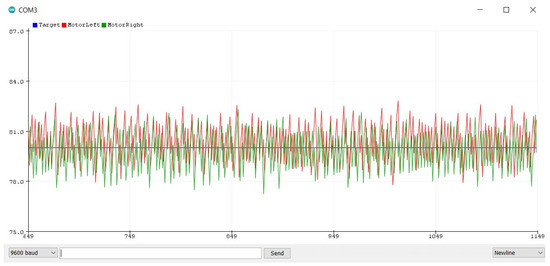
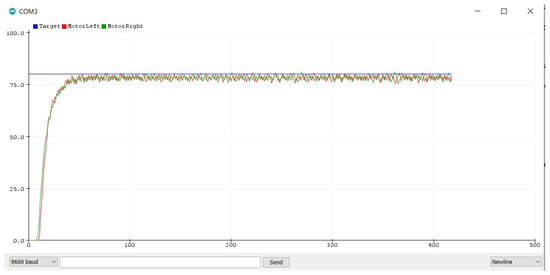
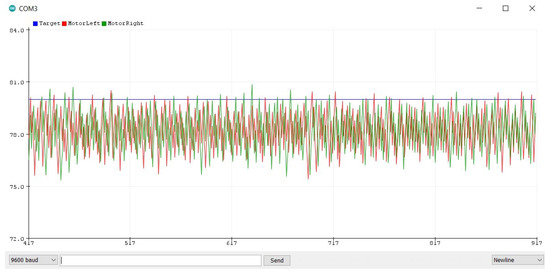
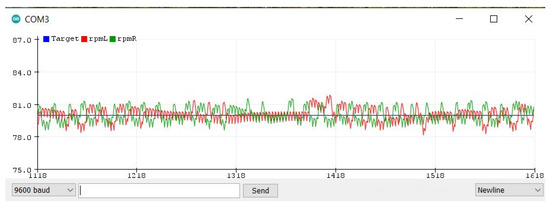
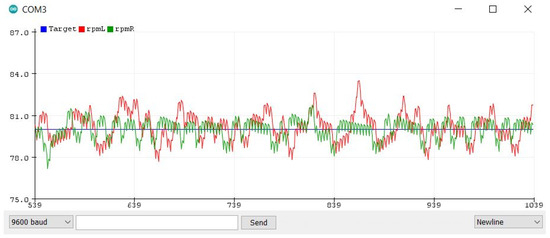
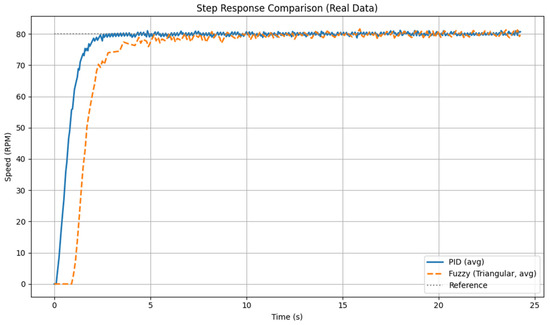
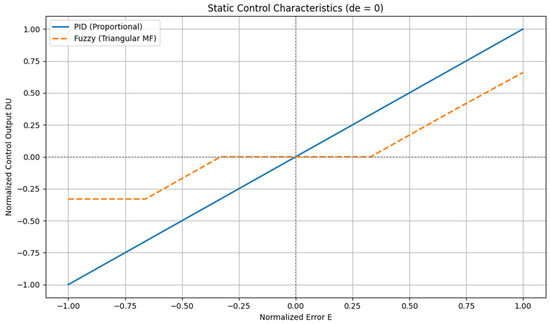
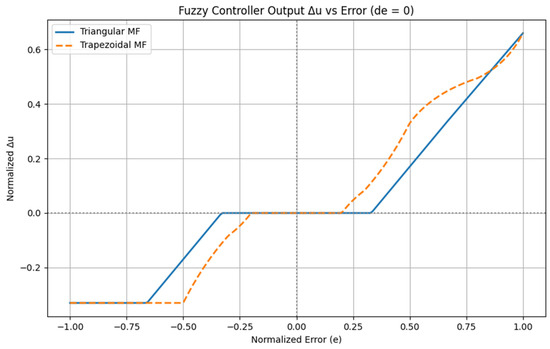
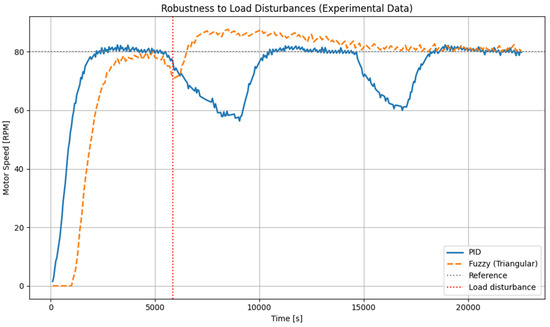
Low-cost geared DC motors are widely used in mobile robotics and embedded mechatronic systems; however, their control remains challenging due to dead-zone nonlinearities, friction, low encoder resolution, motor asymmetry, and supply voltage variations. Biological organisms routinely perform motor control in the presence of similar uncertainties by relying on approximate reasoning and adaptive responses rather than precise mathematical models. This paper develops and experimentally validates a practical bio-inspired control architecture for low-cost geared DC motors operating under severe sensing and actuator limitations. The proposed controller combines fuzzy inference, dead-zone compensation, and a ramp-start mechanism to emulate the gradual and adaptive nature of biological motor responses. Instead of relying on an accurate plant model, control actions are generated through linguistic rules that mimic human-like decision-making based on speed error and error variation. The controller is implemented on an Arduino-based differential-drive robotic platform equipped with low-resolution optical encoders. Experimental results demonstrate that the proposed bio-inspired approach effectively mitigates startup stall, reduces oscillatory behavior caused by measurement quantization, and maintains stable speed regulation despite actuator variability and battery voltage fluctuations. The study shows that biologically inspired fuzzy control provides a practical and computationally efficient alternative to conventional PID methods for low-cost robotic systems characterized by significant uncertainty and nonlinear behavior.
Full article
(This article belongs to the Special Issue Theory and Application of Bioinspired Robotics and Intelligent Control)
►▼
Show Figures

Figure 1
Open AccessArticle
A Sobol-Driven Multi-Objective Whale Migration Algorithm for Engineering Optimization
by
Lizhen Du, Dahongnian Zhou, Xiaoshuang Xiong, Min Shen, Hongtao Tang, Lianqing Yu and Fei Fan
Biomimetics 2026, 11(9), 642; https://doi.org/10.3390/biomimetics11090642 - 7 Sep 2026
Abstract
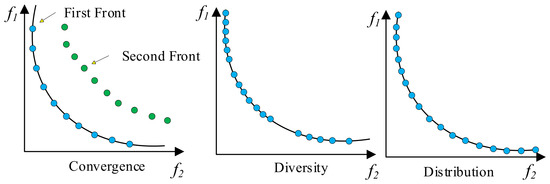
Multi-objective optimization plays an important role in modern design and complex engineering applications. However, achieving an effective balance between the convergence and diversity of Pareto-optimal solutions remains challenging. This paper proposes a Sobol-driven Multi-objective Whale Migration Algorithm (SMOWMA), which extends the Whale Migration
[...] Read more.
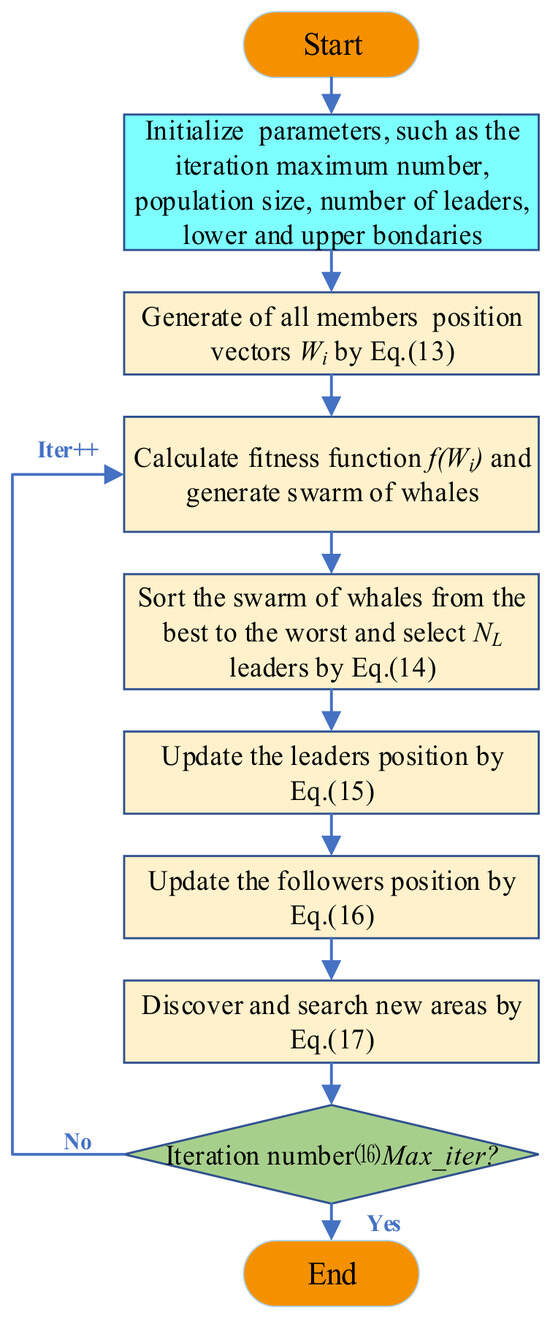
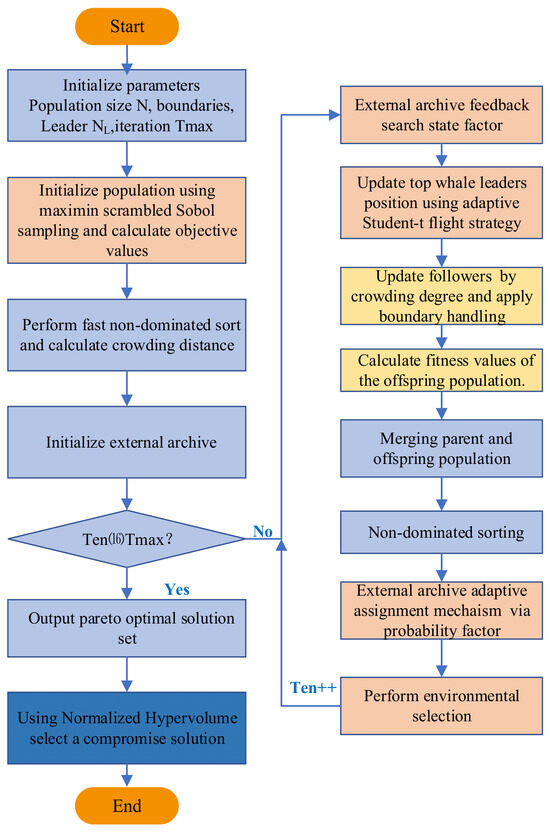
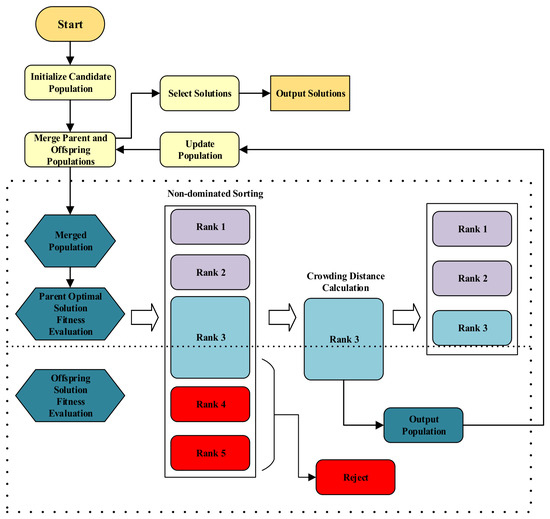
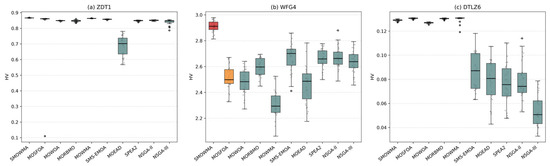
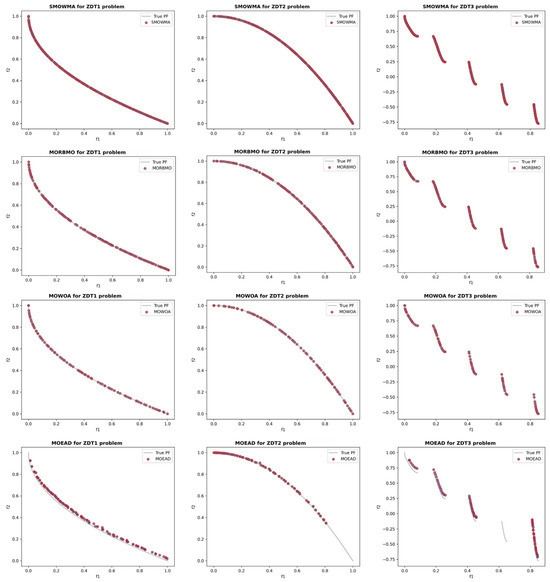
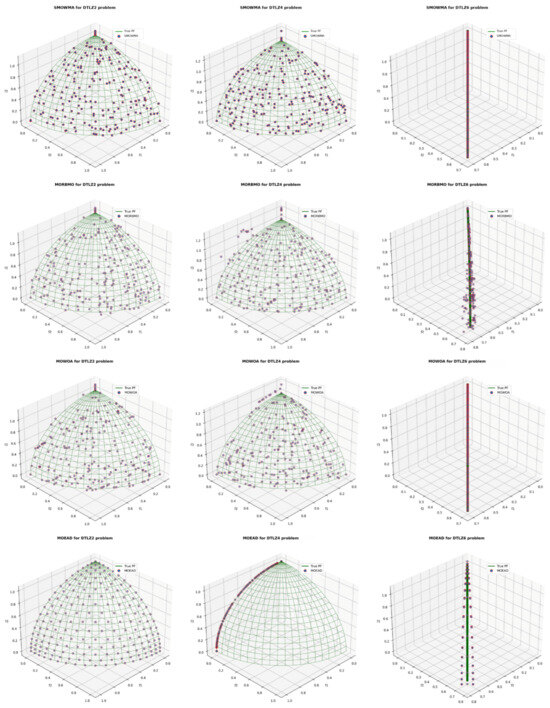
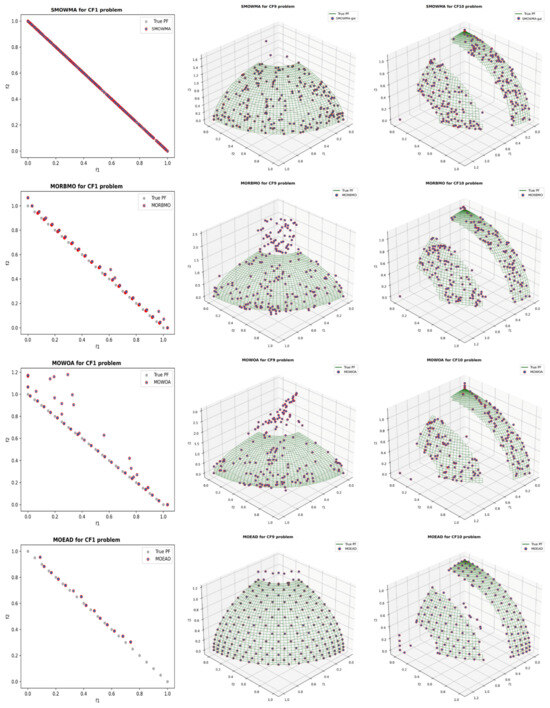
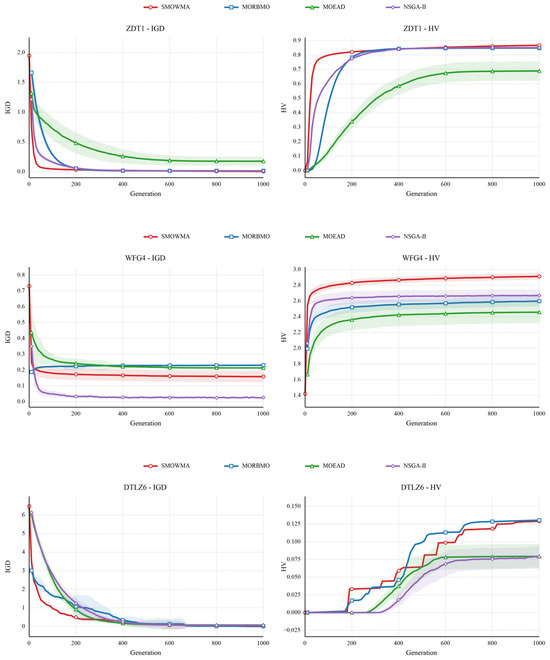
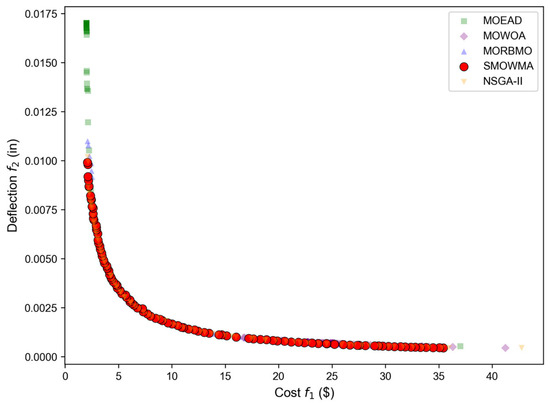
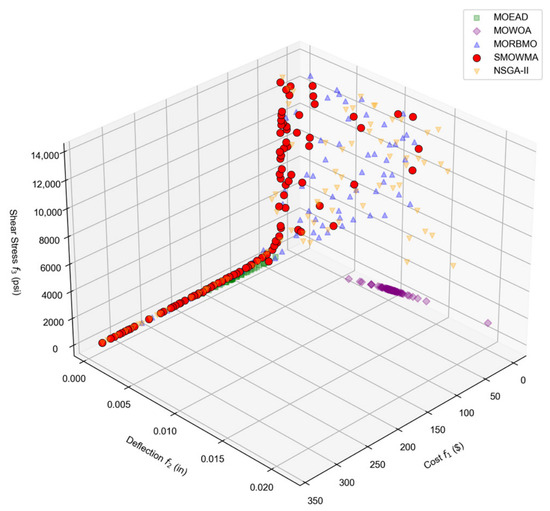
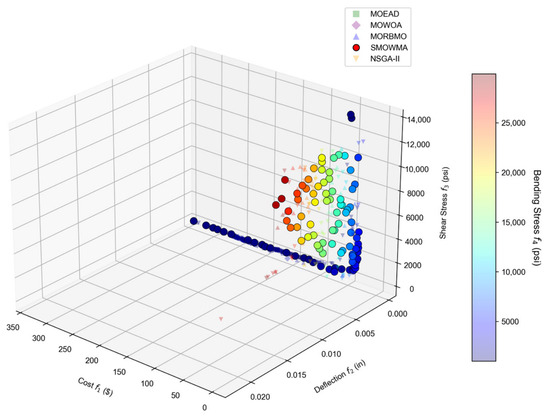
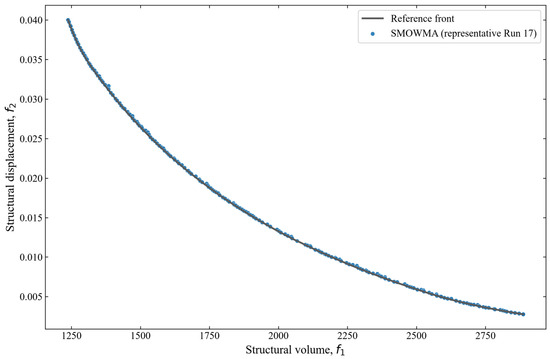
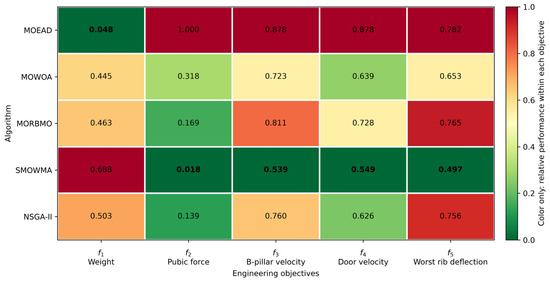
Multi-objective optimization plays an important role in modern design and complex engineering applications. However, achieving an effective balance between the convergence and diversity of Pareto-optimal solutions remains challenging. This paper proposes a Sobol-driven Multi-objective Whale Migration Algorithm (SMOWMA), which extends the Whale Migration Algorithm within a non-dominated sorting and elite-selection framework. A maximin scrambled Sobol initialization scheme is first employed to improve the distribution of the initial population. An archive-guided adaptive Student-t flight mechanism is then incorporated into the leader-whale position update to dynamically balance global exploration and local exploitation. In addition, archive crowding information and archive-entry success feedback are jointly used to adjust the search behavior according to both environmental diversity and recent search performance. SMOWMA is evaluated on five widely used multi-objective benchmark suites, namely ZDT, DTLZ, WFG, UF, and CF, using four performance indicators: generational distance (GD), inverted generational distance (IGD), spacing (SP), and hypervolume (HV). The results, together with Friedman tests and Holm-adjusted Wilcoxon tests, demonstrate that SMOWMA achieves competitive overall performance in terms of convergence, diversity, and objective-space coverage, although its relative advantage remains problem-dependent. The practical applicability of SMOWMA is further examined using multi-objective welded-beam design formulations, a bi-objective four-bar truss design problem, and a five-objective car side-impact design problem. The engineering results show that SMOWMA can obtain competitive and stable approximation sets for constrained design problems with different numbers of objectives, supporting its effectiveness and applicability in multi-objective engineering optimization.
Full article
(This article belongs to the Special Issue Bioinspired Computational Intelligence and Optimization in Engineering Systems)
►▼
Show Figures

Figure 1
Open AccessArticle
Online GP-MPC Command Supervision for Robust Reinforcement Learning-Based Quadruped Locomotion
by
Seungyeon Lee and Hyunseok Yang
Biomimetics 2026, 11(9), 641; https://doi.org/10.3390/biomimetics11090641 - 7 Sep 2026
Abstract
Reinforcement learning-based quadruped locomotion policies can exhibit command-tracking errors under terrain variations and unmodeled dynamics. This study proposes an online bounded Gaussian Process-enhanced model predictive control framework, termed Gaussian Process–Model Predictive Control–Reinforcement Learning(GP-MPC-RL), for command-level supervision of a pretrained locomotion policy. A frozen
[...] Read more.
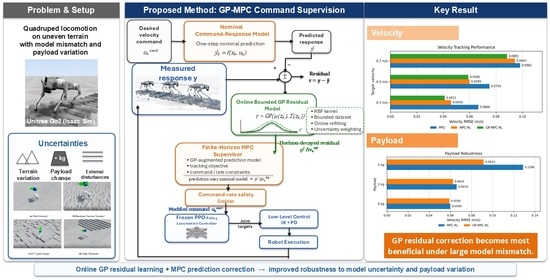
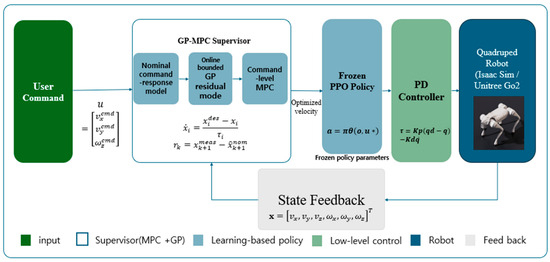
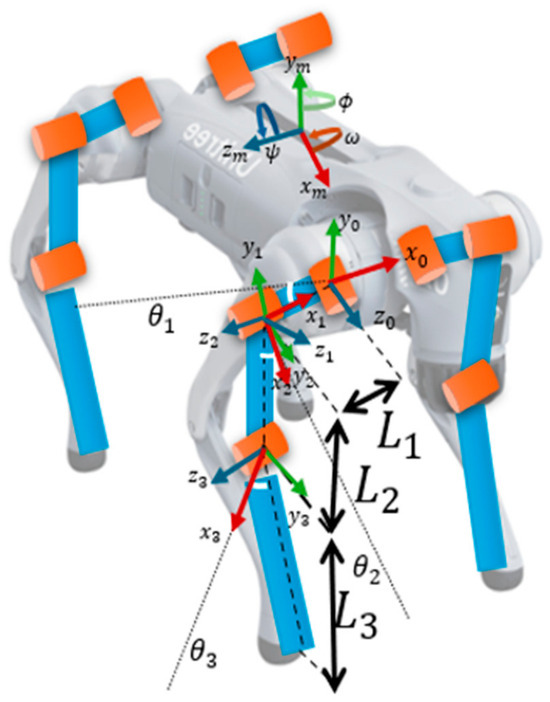
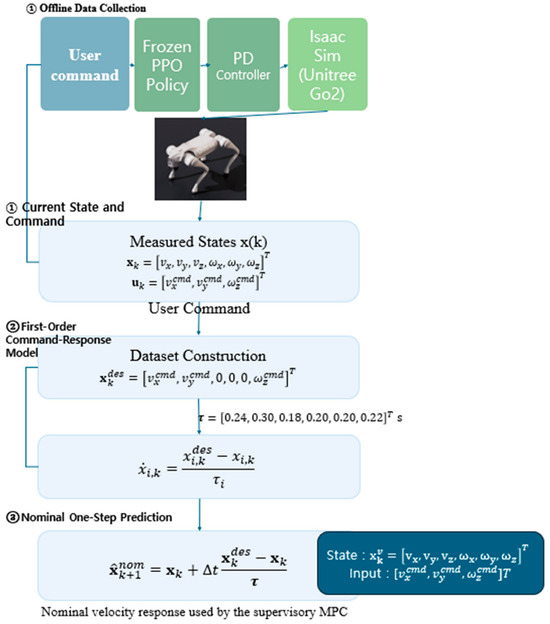
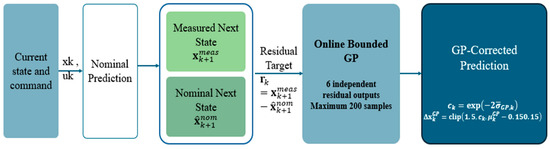
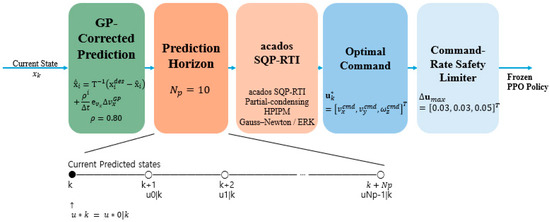
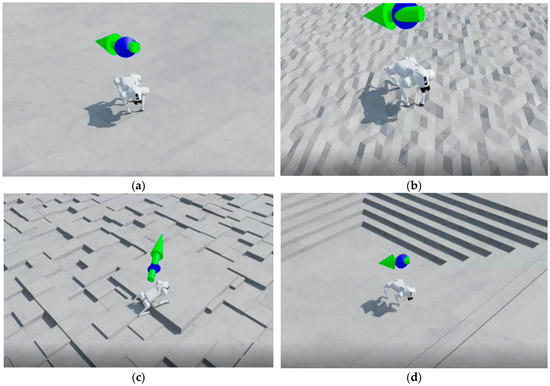
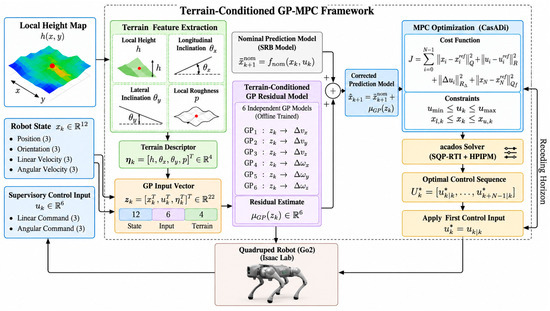
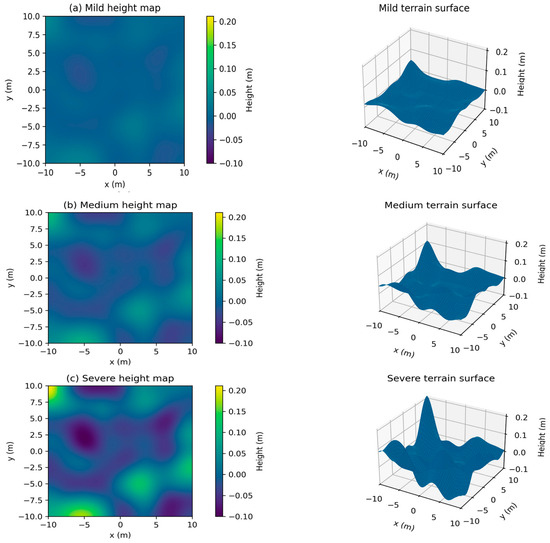
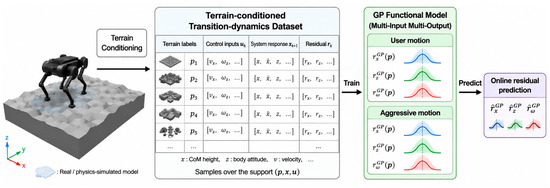
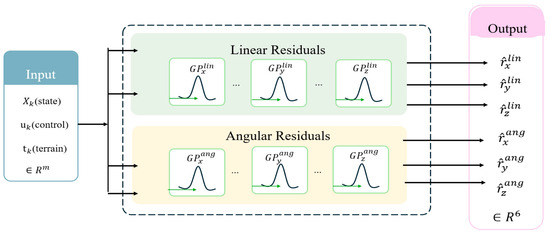
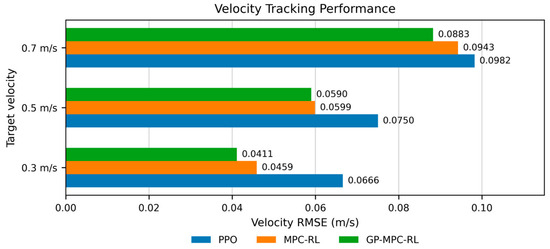
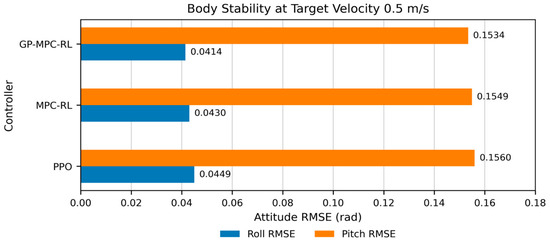
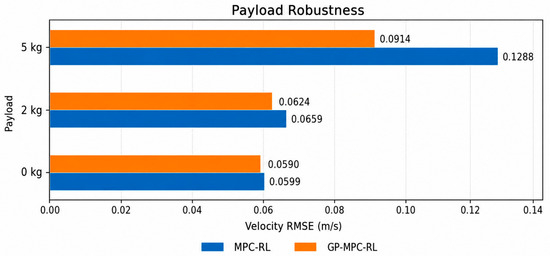
Reinforcement learning-based quadruped locomotion policies can exhibit command-tracking errors under terrain variations and unmodeled dynamics. This study proposes an online bounded Gaussian Process-enhanced model predictive control framework, termed Gaussian Process–Model Predictive Control–Reinforcement Learning(GP-MPC-RL), for command-level supervision of a pretrained locomotion policy. A frozen PPO policy generates the low-level locomotion behavior, while an acados-based MPC supervisor adjusts the velocity command using a nominal command-response model. An online Gaussian Process learns the one-step residual between the nominal prediction and measured robot response, and its uncertainty-weighted forward-velocity correction is incorporated into the MPC prediction. The framework was evaluated in Isaac Lab using a Unitree Go2 quadruped robot model over 20 paired rough-terrain trials at target velocities of 0.3, 0.5, and 0.7 m/s; GP-MPC-RL reduced the mean forward-velocity root mean square error (RMSE) relative to PPO by 38.3%, 21.3%, and 10.1%, respectively. Under a 5 kg payload, GP-MPC-RL reduced velocity RMSE by 29.0% relative to MPC-RL and reduced the 0–5 kg payload-induced degradation by 53.0% (p = 0.019). The average supervisor computation time was 0.112 ms. These results indicate that GP residual adaptation is particularly effective when the nominal command-response model becomes inaccurate, improving robustness without retraining the underlying locomotion policy.
Full article
(This article belongs to the Special Issue Bio-Inspired Artificial Intelligence and Autonomous Robots)
►▼
Show Figures

Graphical abstract
Open AccessArticle
On the (In)Equality of Droplet Rebound Dynamics at Fixed Weber Number
by
Jure Berce and Iztok Golobič
Biomimetics 2026, 11(9), 640; https://doi.org/10.3390/biomimetics11090640 - 6 Sep 2026
Abstract
The similarity of droplet impacts on nature-mimicking superhydrophobic surfaces is traditionally compared using the dimensionless Weber number. Yet, maintaining a constant We by decoupling droplet diameter and impact velocity influences secondary forces, challenging this assumption of similarity. In this work, we investigate water
[...] Read more.
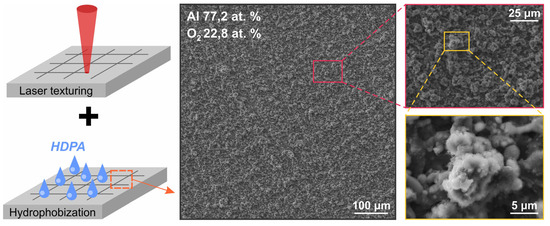
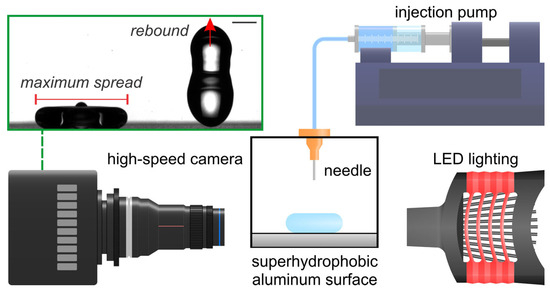
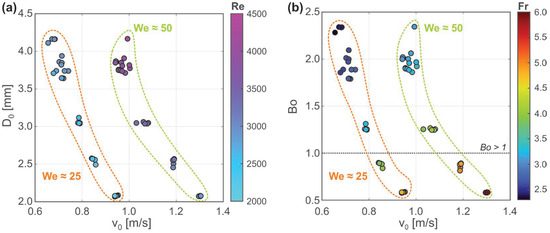
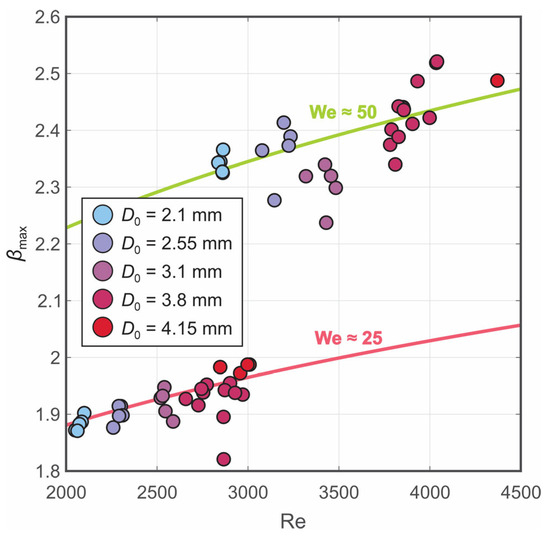
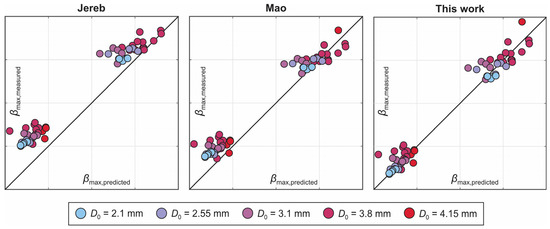
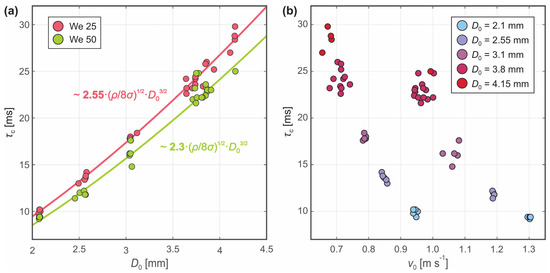
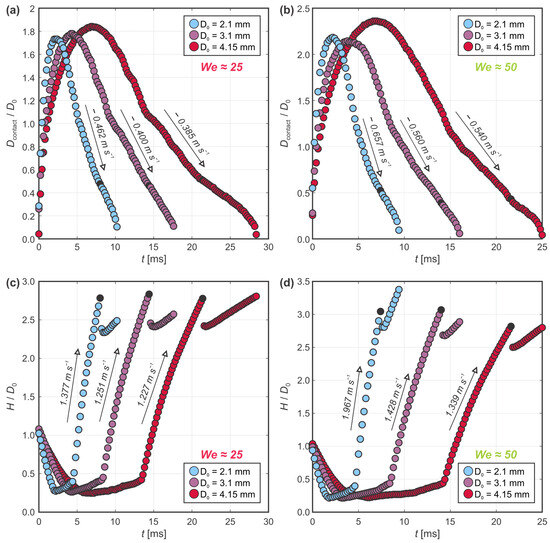
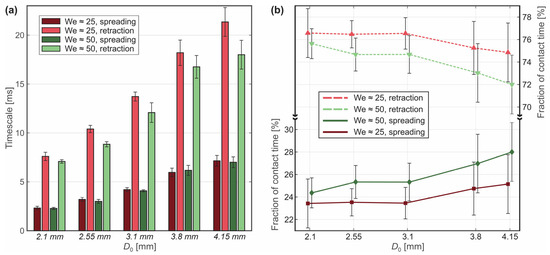
The similarity of droplet impacts on nature-mimicking superhydrophobic surfaces is traditionally compared using the dimensionless Weber number. Yet, maintaining a constant We by decoupling droplet diameter and impact velocity influences secondary forces, challenging this assumption of similarity. In this work, we investigate water droplet impacts on a lotus-leaf-mimicking laser-textured superhydrophobic aluminum surface at two constant Weber number levels (25 and 50), varying droplet diameter from 2.1 to 4.15 mm. Our results confirm that maximum spreading depends on the Reynolds number at a fixed We, as smaller, faster droplets spread less due to increased relative viscous dissipation. We propose a modified empirical scaling model that describes our data with high accuracy and generalizes successfully to external datasets. Crucially, we demonstrate that the contact time of a droplet of a given size is not strictly velocity-independent, unveiling a Weber number-dependent inertia-capillary scaling. We show that this is driven by a shift in rebound dynamics, where the relative timescale of spreading increases over retraction for larger droplets. These findings demonstrate that We is insufficient to characterize droplet rebound across varying scales and that accounting for size-dependent deviations is critical for the precise design of technologies that leverage droplet-surface interactions.
Full article
(This article belongs to the Special Issue Biomimetic Engineering for Fluid Manipulation and Flow Control)
►▼
Show Figures

Figure 1
Journal Menu
► ▼ Journal Menu-
- Biomimetics Home
- Aims & Scope
- Editorial Board
- Topical Advisory Panel
- Early Career Editorial Board
- Instructions for Authors
- Special Issues
- Topics
- Sections
- Article Processing Charge
- Indexing & Archiving
- Editor’s Choice Articles
- Most Cited & Viewed
- Journal Statistics
- Journal History
- Journal Awards
- Society Collaborations
- Conferences
- Editorial Office
- 10th Anniversary
Journal Browser
► ▼ Journal BrowserHighly Accessed Articles
Latest Books
E-Mail Alert
News
19 August 2026
The 2nd International Conference on Bioengineering: Bioengineering in an Era of AI (BIOENG 2026) Announces Distinguished Speakers Lineup and Late-Breaking Poster Submission Opportunity
Topics
Topic in
Molecules, Biomimetics, Chemosensors, Life, AI, Sci
Recent Advances in Chemical Artificial Intelligence
Topic Editors: Pier Luigi Gentili, Jerzy Górecki, David C Magri, Pasquale StanoDeadline: 15 October 2026
Topic in
Biophysica, Cells, IJMS, Materials, Micro, Biomimetics, Biomolecules
Biofabrication Technologies for Tissue Repair and Regeneration
Topic Editors: Lorenzo Vannozzi, Eugenio Redolfi RivaDeadline: 20 February 2027
Topic in
ASI, Bioengineering, C, Healthcare, Biomimetics, Processes
Biomedical Engineering, Healthcare and Sustainability, 2nd Edition
Topic Editors: Teen-Hang Meen, Chun-Yen Chang, Charles Tijus, Po-Lei Lee, Yi-Chun DuDeadline: 30 April 2027
Topic in
Animals, Biomechanics, Biomimetics
Animal Biomechanics
Topic Editors: Stanislav N. Gorb, Wencke KringsDeadline: 31 July 2027
Conferences
Special Issues
Special Issue in
Biomimetics
Biomimetic 3D Printing Materials
Guest Editor: Erina Baynojir JoyeeDeadline: 20 September 2026
Special Issue in
Biomimetics
Biomimetic Approach to Dental Implants: Third Edition
Guest Editors: Dijana Mitic, Jelena CarkicDeadline: 20 September 2026
Special Issue in
Biomimetics
Biomimetic Nanotechnology: Advances in Biomimetic Nanotechnology, Fifth Edition
Guest Editor: Ille C. GebeshuberDeadline: 20 September 2026
Special Issue in
Biomimetics
Bioinspired Engineered Systems: 2nd Edition
Guest Editors: Parvez Alam, Ateeq Ur RehmanDeadline: 25 September 2026