
Fluids 2026, 11(4), 88; https://doi.org/10.3390/fluids11040088 - 27 Mar 2026
Abstract
Shark skin grooves, known to reduce hydrodynamic drag, have inspired riblet structures for flow control. This study investigates their application to airfoils, where flow separation at high angles of attack (AOA) compromises aerodynamic stability and wind turbine performance. Numerical simulations were conducted using
[...] Read more.
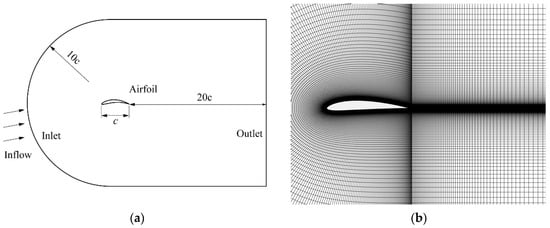
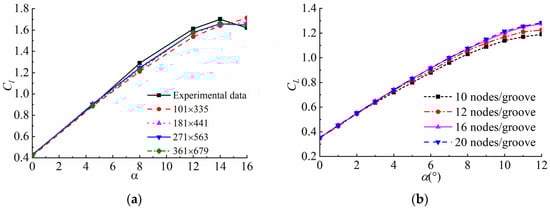
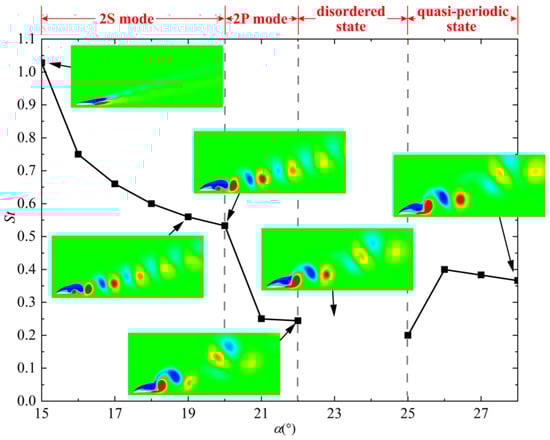
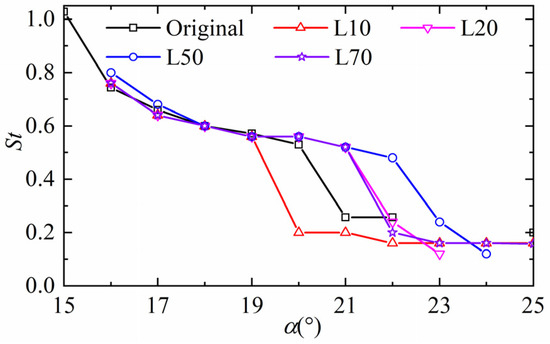
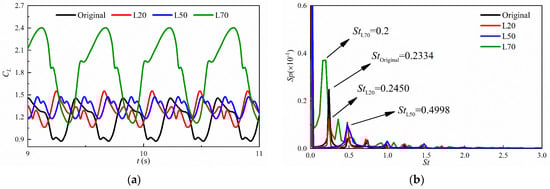
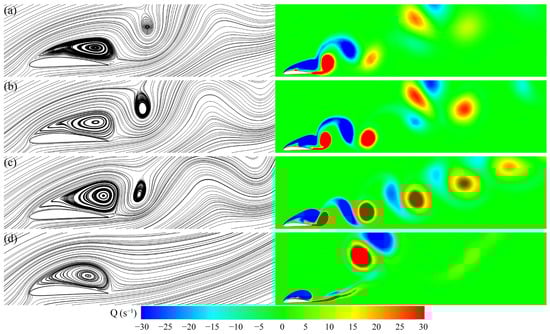
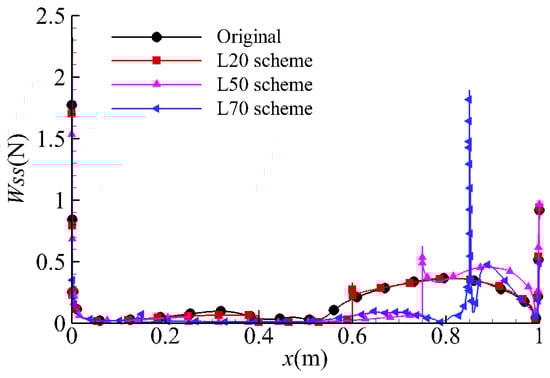
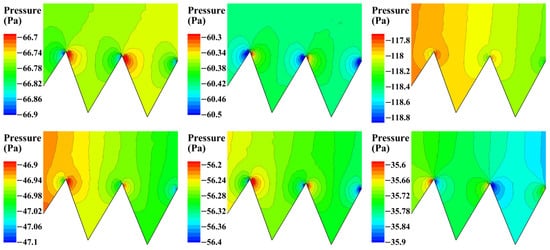
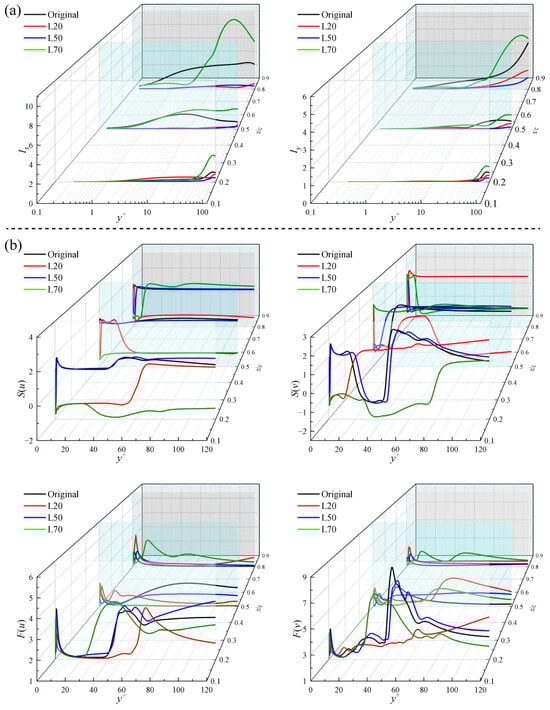
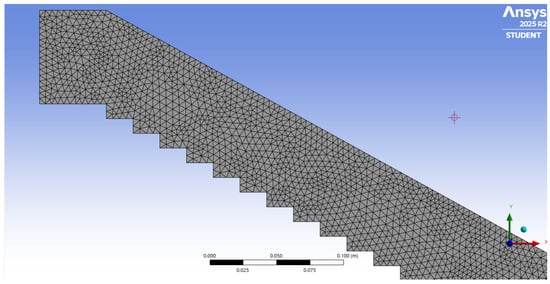
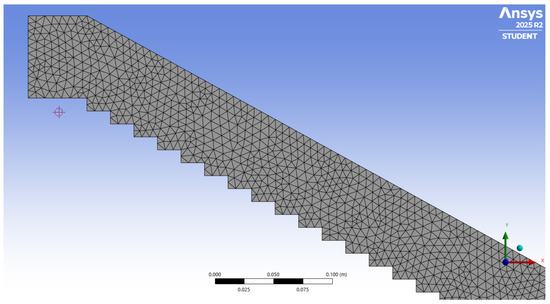
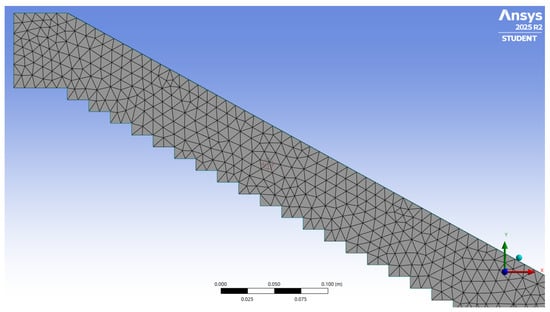
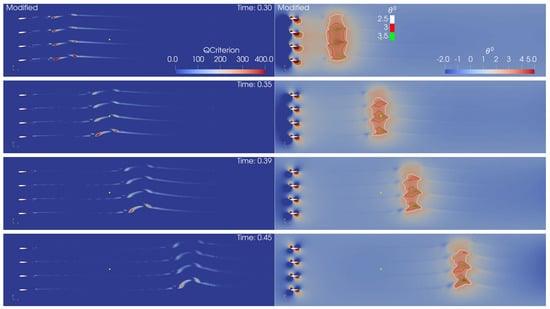
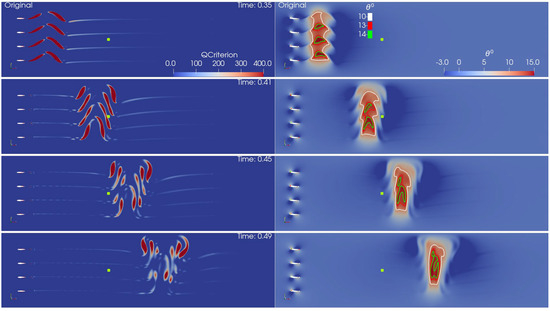
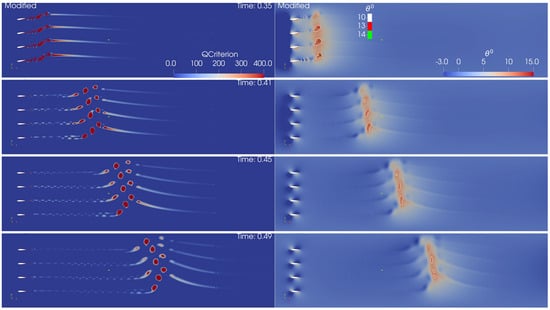
Shark skin grooves, known to reduce hydrodynamic drag, have inspired riblet structures for flow control. This study investigates their application to airfoils, where flow separation at high angles of attack (AOA) compromises aerodynamic stability and wind turbine performance. Numerical simulations were conducted using the SST k–ω model in ANSYS Fluent to analyze riblets placed on the suction surface (SS) of an airfoil. The riblets—oriented perpendicular to the flow—have a fixed height and width of 1 mm, with total lengths varying from 0.1, 0.2, 0.5, and 0.7 of the chord length. The influence of riblet geometry on trailing-edge (TE) vortex shedding and drag reduction under stall conditions is examined in detail. The results indicate that appropriately sized riblets suppress secondary vortex formation and extend the 2S vortex-shedding regime. Conversely, poorly dimensioned riblets can advance Hopf bifurcation in the wake. Analysis of the transient boundary layer structure reveals that the suppression of vortex shedding is primarily due to riblets attenuating fluid pulsation and Reynolds stresses caused by turbulent bursts.
Full article
(This article belongs to the Special Issue Vortex Dynamics)
►
Show Figures
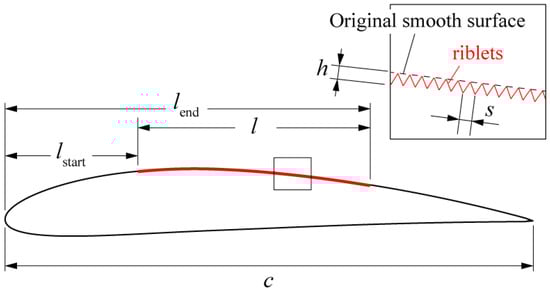
Figure 1