


Abstract
This article aims to explore, investigate, and determine the prerequisites that learners (students) should possess for participating in and being adequately benefitted from digital (robotics-enabled) K–12 STEM education offered through intuitive human–robot interaction. We selected 23 middle school mathematics and science teachers who received training on how to design, develop, and implement robotics-enabled lessons. The teachers then implemented robotics-enabled lessons in actual classroom settings, and separately responded to a survey based on their training, classroom experiences and observations, and self-brainstorming. We derived a set of prerequisite knowledge, skills, and abilities, including their relative importance for the students by analyzing the survey responses. The results showed that the students should not only possess prerequisite knowledge in the subject matter, but also possess behavioral, social, scientific, cognitive, and intellectual skills and abilities to participate in and receive benefits from robotics-enabled human–robot interactive digital STEM education. Out of the many prerequisites, the computational thinking ability of students was identified as one of the most required prerequisites to participate in robotics-enabled digital STEM education. To validate the derived prerequisites, teachers separately assessed the fulfillment of prerequisites by 38 participating students, and the results showed user acceptance, effectiveness, and suitability of the derived prerequisites set. We also identified a set of limitations of the studies and proposed action plans to enable students to meet the prerequisites. The results presented herein can help determine required instructional efforts and scaffolds before implementing robotics-enabled digital STEM lessons, and thus foster incorporating technology-enhanced (robotics-enabled) digital STEM education into K–12 curricula.
1. Introduction
Students of STEM (Science, Technology, Engineering, and Mathematics) subjects, especially K–12 STEM students, may face problems in comprehending abstract STEM concepts, such as abstract mathematics (math) and science concepts. To address this problem, researchers have been advocating for the use of robotics as an experiential–digital pedagogical and learning tool to teach and learn STEM concepts in K–12 levels [1,2,3]. Currently, there is increasing utilization of robotics as a pedagogical and kinesthetic learning tool in this area [1,2,3]. Prior studies illustrate that robotics frameworks can offer a plethora of advantages to students; for example, it can transform STEM knowledge content into visible concrete representations, offer classroom-based tasks to support experiential (or active) learning, increase student engagement [2,4], provide motivation to learners [5], and improve the overall learning environment. Furthermore, this approach can provide opportunities to examine, investigate, refine, and validate various educational research concepts; for example, cognitive apprenticeships [6], situated cognitions [7], collaborative learning [8], etc. As a result, this approach is gaining popularity though it has not been considered greatly for incorporation into STEM curricula in K–12 classes yet [9,10,11,12,13,14,15,16,17,18].
It is realized that a lot of activities should be completed beforehand for robotics-enabled STEM curriculum [9,10,11,18]; for example: (i) identify appropriate STEM-related illustrations and scenarios, considering situated cognitions for illustrating STEM topics using robotics kits [7,9,10,11]; (ii) examine and investigate robot behaviors, illustrations, and scenarios used in the developed STEM lessons to be sure that (a) these developments do not create any misunderstandings and misconceptions in teachers and students, (b) the developments are safe enough for students and they do not do any harm to students, and (c) the developments are cost-effective, easy, and less time-consuming to be developed and implemented in actual classroom settings; (iii) develop robotics-enabled STEM lessons, including appropriate teaching and learning materials [9,10,11]; and (iv) consider anticipated impacts of robotics-enabled STEM lessons on students’ performance evaluations and periodic evaluations of performances and contributions of teachers [10,11]. For STEM teachers, the following requirements may need to be fulfilled: (i) provide appropriate professional development (PD) trainings to selected STEM teachers for their successful involvement in teaching robotics-enabled lessons, and (ii) consider instructional supports for selected STEM teachers; for example, allocations of necessary classrooms, class periods, and students, and troubleshooting facilities for robotics kits, etc. [9,10]. In addition, the robotics kits packages should include required hardware and software components to develop necessary STEM teaching and learning scenarios and environments [9,10,11].
In addition to the issues pertaining to robotics-enabled K–12 STEM education, students should possess some level of prerequisite knowledge, skills, and abilities beforehand to take part in and receive the full benefits from robotics-enabled STEM lessons comfortably and confidently [18]. Among all K–12 levels, students in middle schools (grades 6–8) are in transitional stages in terms of their ages and maturity, and thus middle school students may be treated as the representatives of all K–12 levels and be targeted first [9,10,11]. As part of the STEM curricula suggested by the Next Generation Science Standards (NGSS) [19], the Common Core Math Standards [20] and state Standards, students in middle schools learn general mathematics and science topics without using robotics. As a result, the state-of-the-art STEM curricula in middle schools may not include the necessary scope and opportunities for learners to participate in robotics-enabled STEM lessons [9]. Thus, if robotics-enabled STEM lessons are implemented in middle schools, it may cause unpredicted impacts on the classroom activities of students, students may not be fully prepared to learn STEM using robots, and they may feel hesitant to use robots in their STEM learning activities [9,10,11]. Therefore, it is highly important that we systematically explore and investigate prerequisite backgrounds such as knowledge, skills, abilities, attitudes, and aptitudes that students should possess beforehand to comfortably participate in and sufficiently benefit from robotics-enabled STEM lessons [18]. The status of whether prospective students meet the prerequisite knowledge, skills, abilities, attitudes, and aptitudes is critical for teachers to anticipate the physical, mental, and psychological readiness of their students. Using the information about whether students meet the prerequisites, teachers may make them ready to overcome potential circumstances and crises that they may experience in the classrooms while implementing robotics-enabled lessons [18]. Therefore, it seems to be important to examine and investigate the prerequisite knowledge, skills, and abilities. However, such investigations are not reported in the literature, except the preliminary work presented by the author in [18], and thus it still needs attention, review, and expansion.
Computational thinking (CT) is a broad concept discussed by J. Wing and other researchers [18,21,22,23,24]. This concept is especially important for robotics-enabled STEM education. It is believed that a predefined level of CT abilities of target students is important for this purpose. In addition, the application of robotics in STEM learning can also be an effective mechanism of developing, fostering, and assessing CT abilities of students [21,22]. The required levels of CT abilities of students to successfully participate in robotics-enabled K–12 STEM lessons have not been investigated and are not known yet. Mechanisms for developing and fostering CT abilities of K–12 students through applications of robotics in STEM lessons are also not very clear [22]. It is anticipated that an investigation of CT abilities of students centering around robotics-enabled STEM lessons can bring transformative changes in learning, pedagogy, and curricular development in STEM education, especially in K–12 STEM education [18]. However, such initiatives are yet to be observed.
Hence, being inspired by the state-of-the-art achievements in robotics-enabled STEM education and being advised of the necessity of removing or reducing the gaps or limitations regarding further improvements in such education, we decided the objective of the research presented herein is to further explore, expand, and investigate prerequisite qualifications of K–12 learners for participating in STEM education enabled by robots [18]. Among different prospective prerequisites, computational thinking abilities of students required to participate in robotics-enabled STEM education have been given a special focus. The results presented herein can help determine required instructional efforts and scaffolds before implementing robotics-enabled STEM lessons, and thus foster incorporating technology-enhanced (robotics-enabled) STEM education into K–12 curricula. While STEM includes science, technology, engineering, and mathematics, due to the middle school focus, we in this article predominantly considered teaching math and science concepts using robotics through intuitive human (student, teacher)–robot interaction.
2. Related Work and Theoretical Framework
2.1. Related Work
The CCSSM [20] proposed standards for mathematics education that can specify different math topics that students should learn within different K–12 grades. Similarly, the NGSS [19] proposed standards for science education that can specify different science topics that students should learn within different K–12 grades. The math and science topics taught in a specific grade may be considered as the prerequisites for the next grade. However, the additional knowledge and skills that students should gain beforehand if they are directed to learn math and science topics using robotics are not available in the literature.
The literature shows definitions, notions, concepts, misconceptions, ideas, fundamental principles, elements, understandings, misunderstandings, characteristics, scope, opportunities, significance, importance, application frameworks, challenges, prospects, possibilities, and evaluations of CT [21,22,25,26,27,28,29,30,31,32,33,34,35]. The general definition is that the cognitive process used by human beings to find concepts to solve problems is called Computational Thinking (CT) [31]. Finding these concepts can improve the capacity of reasoning and problem solving by the way of metacognitive learning processes that are considered essential for human intelligence [31]. Ribeiro et al. in their article presented the importance and significance of CT. They also explained various methods of increasing CT abilities in K–12 classes [31]. Pane and Wiedenbeck analyzed the advantages of CT for diverse learners and discussed how learning environments can support enhancing CT abilities [30].
Barr and Stephenson [25] tried to introduce CT in K–12 levels through the education of computer science. They proposed effective incorporation of CT into K–12 STEM curricula through improvements in educational policies and resources for teachers [25]. Braaten and Perez investigated CT dispositions of teachers by aligning STEM and computer science education together [26]. Dasgupta et al. analyzed CT practices of kindergarten students through examining students’ works [27]. Ehsan and Cardella investigated CT characteristics in young students and children through their daily experiences (e.g., game-like activities), and examined how CT varied for different environmental settings [28]. Sengupta et al. proposed incorporating CT into K–12 science education through the application of agent-based computational or digital methods [32]. Werner et al. suggested a model for assessing CT through game-like programming practices in middle schools [33]. Weese and Feldhausen suggested a method of assessing CT through applications of microcontroller devices and computer programs [34]. Yasar et al. proposed a set of tools centering around CT to promote STEM education in K–12 levels [35]. The NGSS also realized the importance of CT [18]. However, the efforts discussed above did not consider investigations of CT associated with robotics-enabled STEM education scenarios in K–12 levels.
2.2. Theoretical Framework
Relevant theories on prerequisites for STEM subjects for K–12 levels are not directly specified in the literature. However, through a literature review, it is realized that the math and science prerequisites for a grade should be able to specify the required foundations for students that can enable them to comprehend the math and science topics to be taught in that grade. In addition, the prerequisites should be age-appropriate [36]. Theoretical and conceptual perspectives about computational thinking are discussed below. In this article, we specifically focus on Wing [21] and Grover and Pea’s work [22] related to CT. Furthermore, Grover and Pea [22] pointed out the prospects of robots and related digital methods for assessing and improving CT of K–12 STEM students, though the detailed framework was not proposed.
As proposed by Wing [21], CT is a universal concept and ability that anyone can pursue (i.e., CT is never reserved only for computing people). Computational thinking may be conceived via system designing (e.g., perceiving the relative importance of different system components or system parameters, estimating the levels of impact on the system performance due to specific levels of changes in system parameters, etc.), humans’ thought process in problem solving (e.g., amount or levels of efforts required to solve a desired percentage of a problem), understanding difficulty levels of problems to be solved, understanding the quality levels of proposed solutions to given problems, performing systematic assessment and selection, perceiving the rationality of mathematics, estimating the status of the findings for reaching or exceeding the targeted findings, understanding human behaviors, especially understanding the levels (e.g., severity, importance, openness, and ambiguity levels) of human behaviors, etc. [21,22]. Computational thinking is recursive and parallel thinking, which means that one item may be thought repeatedly and each time the outcomes may be different, and several items may be thought simultaneously. Moreover, computational thinking is evaluating for correctness, efficiency, user acceptance, and perceived aesthetic levels. Computational thinking enables a person to perceive true representations and digital models of problems, making them tractable. CT may enable people to solve problems, demonstrating confidence in solutions, and anticipating and predicting consequences of solutions. In addition to problem solving and decision-making abilities, CT may reflect the speeds of solving problems and making decisions (i.e., the speed of a solution or decision-making can reflect the computational thinking ability of a person). Computational thinking may entail thinking, figuring out an amount, a level, cognitively, and it may not be simply programming, computing, or digitalizing related formulas and activities. It may involve cognitive processes of computing/digitalizing and may not address only the skills and procedures of computing.
Grover and Pea [22] also proposed CT as mathematical thoughts, science thinking, engineering thinking, system thinking and design thinking. Grover and Pea highlighted the prospects of robotics kits and manifold digital methods for assessing and fostering the CT of young students. However, Grover and Pea’s ideas have yet to be implemented and evaluated in the actual learning environment utilizing digital methods such as robotics.
3. Research Materials, Resources, and Methods
3.1. PD Program for Teachers
We designed and implemented a 3-week long (5 days in a week, 8 h in a day) professional development (PD) program for middle school STEM teachers. Twenty-four educators (teachers) from 12 middle schools (1 pair of teachers from each school where 1 science teacher and 1 mathematics teacher made a pair of teachers) of a school district volunteered for the PD program. The teachers were selected based on a publicly circulated application and interviewing process. In this PD program, the selected teachers received opportunities to learn the development and implementation details of robotics-enabled STEM lessons, as follows. We formed a team of 5 members (engineering and education researchers) to facilitate the PD program activities (each member of the team was called a facilitator). Each of the facilitation team members was also called the instructor of the program. The author was termed as the researcher. Another team of engineering and education graduate students were termed as field researchers.
We developed a schedule to execute the robotics-enabled PD program activities. We deigned the PD program in such a way that it combined instructions and activities on relevant education theories and concepts, robotics hardware and software details, and developments of robotics-enabled STEM lessons, especially mathematics and science lessons for middle school grade six students. The instructors facilitated all the instructional and activity sessions during the PD program. During the sessions, each instructor also conducted brainstorming, co-generation, and questioning and answering with the teachers, and arranged competitions and challenges for the teachers relevant to robotics-enabled lesson design and implementation. We developed an online feedback collection and reflection system to collect feedback from teachers/educators during the PD program.
3.2. Robotic Kits
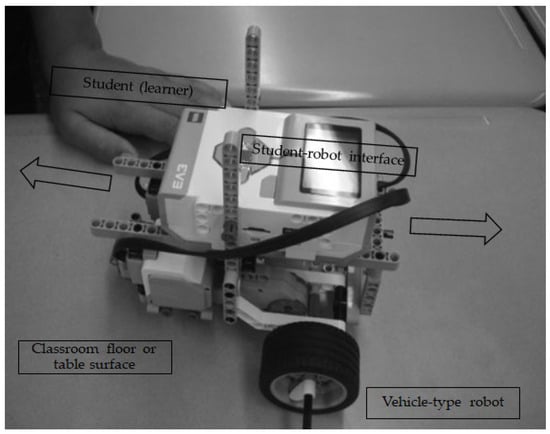
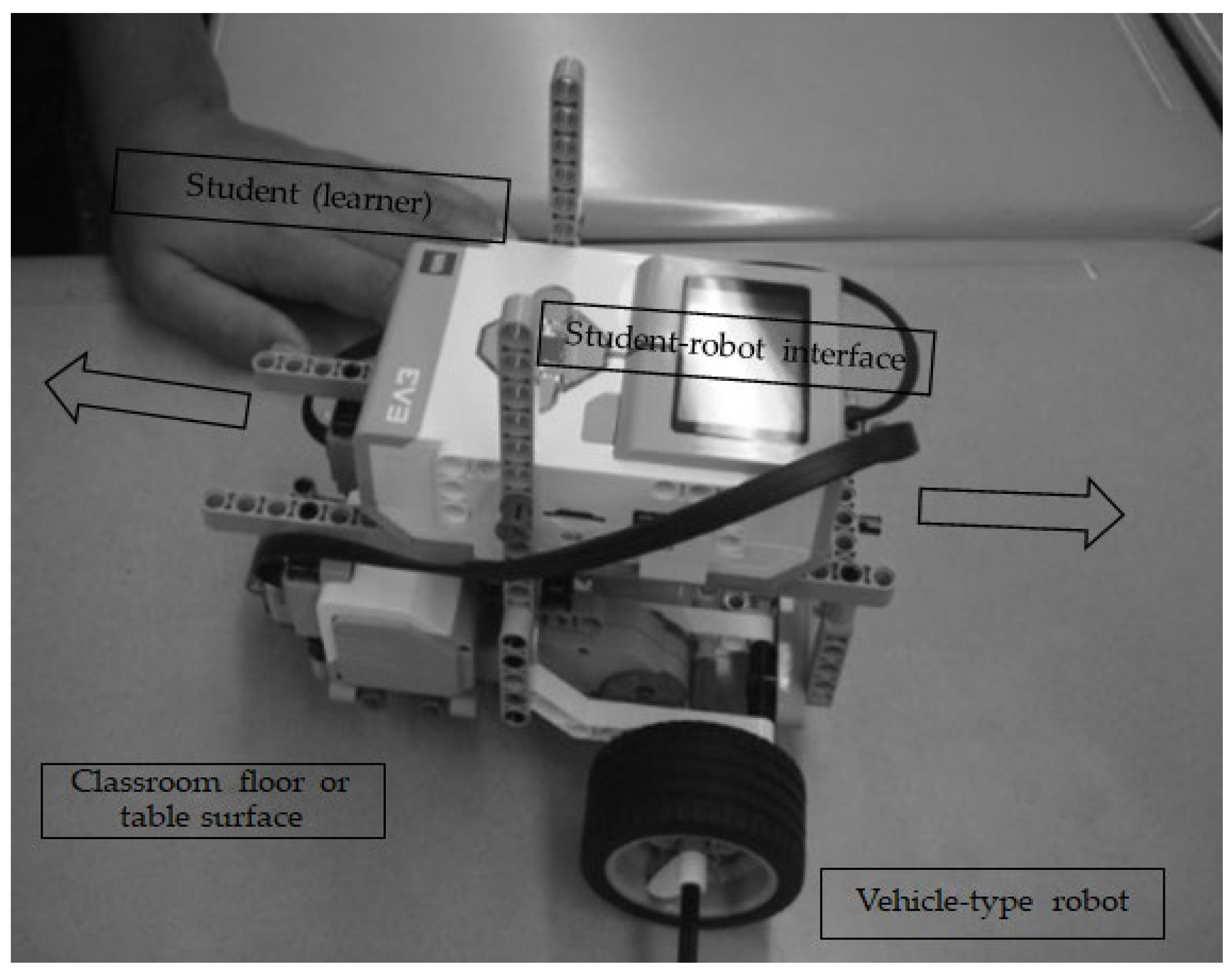
The methods for developing and operating a vehicle-type LEGO base robot, as shown in Figure 1, were instructed in the program [37]. The developed robotics kits consisted of: (i) a controller, LCD screen (display), and power supply, while a graphical-user interface (GUI) was used to program and command the robot; (ii) two electric-type servomotors for creating actions and motions for the robot vehicle using suitable computer programming and control methods; (iii) different types of robot sensors (e.g., ultrasonic type position and distance/proximity sensors, and pressure, force, touch, color, temperature, and gyroscope sensors); and (iv) cables of different types, wheels, gears, and various building components and accessories to build the vehicle-type robot. We were motivated to use LEGO robotics kits due to its relatively ease in programming, operating, troubleshooting, assembling, configuring, reconfiguring, and supplying power. In addition, we were motivated by its easy storage possibility, cost-effectiveness, as well as its suitability and flexibility for being used in developing STEM lessons, keeping connections with real-world scenarios [2,3,9,10,11,37].
Figure 1.
The LEGO Mindstorms EV3 robotics kits (a vehicle-type base robot) developed and used to teach STEM (mathematics and science) lessons to middle school students.
3.3. Developing Robotics-Enabled Digital STEM Lessons
The facilitators developed 5 science and 5 math digital lessons enabled with LEGO robotics activities. The science lessons they developed addressed various topics suitable for middle school standards, especially grade six standards. For example, the science lessons included various topics, such as mass, velocity, force, speed, torque, environment, friction, energy, moment, displacement, acceleration, gravity, design and design optimization, cell division or mitosis, biological adaptations, osmosis, diffusions, etc. [9,10,11]. The mathematics lessons the facilitators developed addressed various topics of grade six standards. For example, functions, number line, data analysis and interpretation, ratios, proportions, least common multiples, statistics, expressions, equations, etc. [9,10,11]. Various relevant educational research theories and standards were considered while developing the digital lessons [5,6,7,19,20,29,38,39,40,41,42,43,44]. The following subsection illustrates a robotics-enabled digital math lesson and a robotics-enabled digital science lesson that were developed for grade six students. The teachers selected for the PD program were taught how to design and develop robotics-enabled math and science lessons during the PD program. It was expected that the teachers trained in the PD program would teach robotics-enabled digital lessons in actual classroom settings at their schools and help collect relevant data for research and analyses.
Robotics-Enabled Digital Math and Science Lesson Illustrations
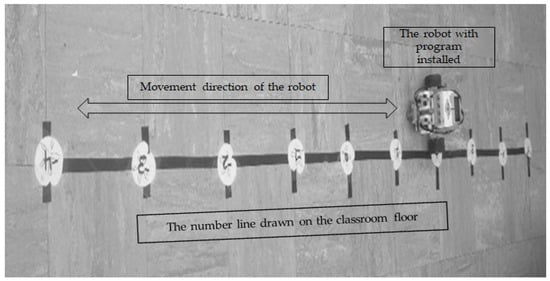
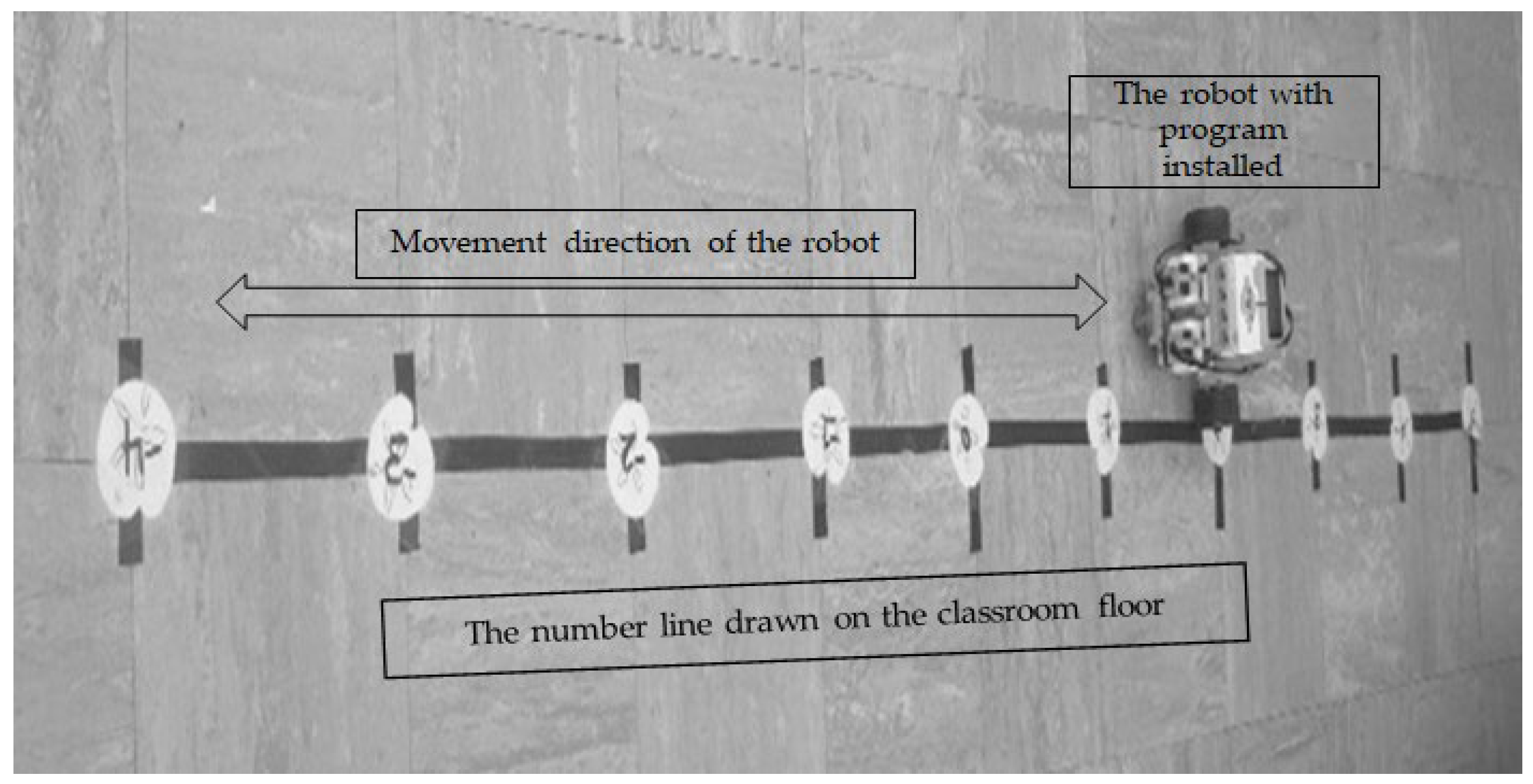
The developed robotics-enabled math and science lessons are described below. For the math lesson, the facilitators and the teachers used LEGO robots to create illustrations to teach the number line to middle school students of grade six, as exhibited in Figure 2. A number line was drawn on the classroom floor. The entire number line was divided into positive and negative digits. The space between two adjacent digits had a value of |1|. A LEGO robot vehicle was programmed to move along the number line. The touch buttons were used to give addition and subtraction commands to the robot. The robot illustrated the addition or the subtraction results through its movement along the number line. For example, if it was commanded to subtract 2 from 4 (i.e., 4 − 2), then the robot started to move from ‘0’, then moved forward up to ‘+4’, and then moved backward for 2 spaces, and stopped at ‘+2’. Thus, the robot wanted to illustrate that 4 − 2 = 2.
Figure 2.
The robot moves along a number line according to the addition or subtraction commands to illustrate addition or subtraction. The robot screen acts as a GUI, and the GUI and the buttons act as the digital control unit of the robot for STEM lessons.
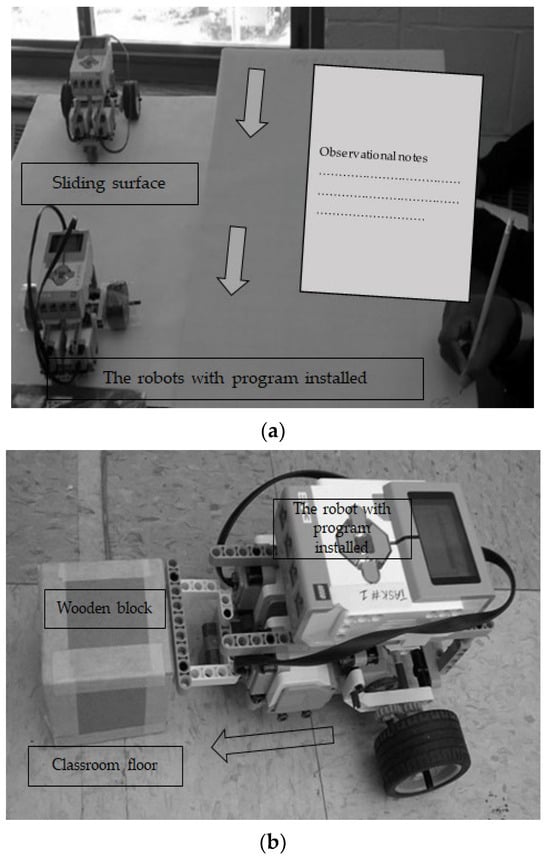
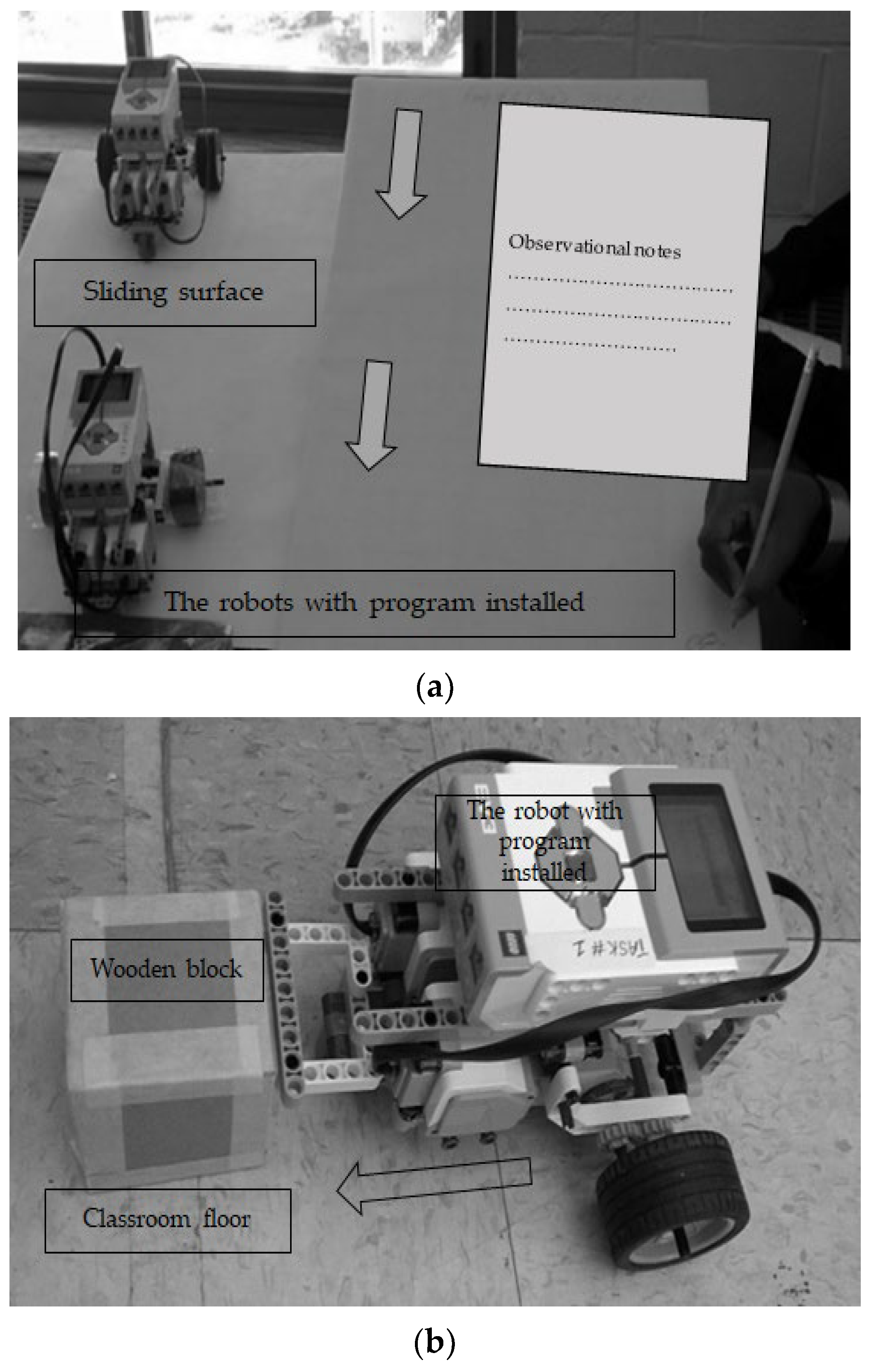
For the science lesson, the facilitators and the teachers put the LEGO robot vehicles at different locations on a sliding surface so that the robots could come down from higher positions to lower positions along the sliding surface as illustrated in Figure 3a. Similarly, they programmed a robot to move a wooden block on the floor as illustrated in Figure 3b.
Figure 3.
Robotics-based illustrations where (a) robots slide down along a surface, and (b) a robot moves a rectangular block on a floor to illustrate science concepts such as friction, gravity, force, etc. in a classroom setting.
These illustrations could teach middle school students, especially students of grade six, the fundamentals of friction, mass, force, torque, momentum, acceleration, displacement, velocity, speed, etc. For both math and science lessons, students needed to observe robot activities related to their lessons in teams, interact with robots, conduct experiments and activities following activity sheets, prepare reports, etc., during robotics-enabled digital lessons in actual classroom settings.
3.4. Research Design
Based on the literature review and the theoretical framework mentioned above, we determined research questions (R.Q.) as follows:
R.Q.1: (i) What may be the prerequisites (e.g., knowledge, skills, attitudes, etc.) that middle school students (grade six) should achieve beforehand for their successful and effective participation in robotics-enabled digital math and science lessons, and (ii) how can we create themes of different categories of prerequisites?
R.Q.2: (i) What may be the way(s) to compare the developed prerequisite themes? and (ii) can the CT abilities of students be used to form/develop a separate theme of prerequisites, and what may be the level of importance of CT abilities compared to other themes for students to successfully participate in robotics-enabled digital math and science lessons?
R.Q.3: How can we validate or verify the effectiveness of the set of derived prerequisites?
We addressed the above research questions in the following ways:
Research Study 1: In study 1, the selected teachers and field researchers (researchers who had to perform field research at selected middle schools and conduct required data analysis) answered a set of questionnaires. They participated in a collaborative brainstorming session, and then answered the questionnaires included in the survey separately. Then, the researcher analyzed the responses critically and determined a set of prerequisites for the selected middle school students. R.Q.1 and R.Q.2 were also investigated in this study.
Research Study 2: In study 2, the researcher engaged himself/herself to train selected middle school teachers and the field researchers to make them capable of observing and rating the prerequisite levels of their students for their participation in robotics-enabled mathematics and science lessons. Based on those ratings and observations, and on brainstorming with the teachers, field researchers, and students, the rest of the research questions (i.e., R.Q.3) in this study were addressed.
4. Research Study 1
4.1. Procedures
The developed STEM lessons (mainly math and science lessons) were tested in schools using robotics in some pilot studies. Each teacher randomly selected a section from his/her students to implement the robotics-enabled lessons. The students completed the activity sheets to record their observations of activities with the robots. The field researchers travelled to the schools to observe how the robotics-enabled lessons were implemented in the classrooms. Thus, we ensured the teachers and field researchers gained experiences in developing science and mathematics lessons and ensured the students performed and interacted with the robots during the lessons. The above involvements of field researchers, teachers, and students with robotics-enabled lessons were used to identify the prerequisites of robotics-enabled digital STEM learning.
We conducted a survey (see Appendix A) to collect the responses to a few research questions (R.Q.1, R.Q.2). R.Q.1 was used to explore the prerequisites (e.g., knowledge, qualifications, skills, abilities, attitudes, aptitudes) that the field researchers and teachers believed that the students should possess to effectively participate in robotics-enabled STEM lessons. The survey responders (field researchers and teachers) brainstormed in a brainstorming session and separately responded to the survey, self-reflecting their experiences of planning, developing, and implementing robotics-enabled lessons, and of observing classroom activities. The second question (R.Q.2) was used to collect the ratings, reflecting the levels of necessity or importance of the prerequisites proposed by the responders. The responders followed the standard brainstorming procedures and a 5-point Likert-type rating scale [10,45]. Appendix A shows further details of the rating method and of the scale. The researcher explained the survey procedures to each responder separately before they responded to the survey. The responders were given an ample amount of time to think about each survey question critically and to respond to the questions carefully based on their well-thought opinions, ideas, and inputs.
4.2. Research Results
We developed a wholistic (raw) list of all the prerequisites opined (proposed) by the responders, taking the responses to R.Q.1 of Appendix A into account. We determined the frequency counts for all similar prerequisites. We then developed a summary of the results as shown in Table 1 in its first three columns. Table 1 presents a full list of all the prerequisites proposed by field researchers and teachers, including the frequency of each prerequisite [9,10,11,18]. Here, the frequency meant the number of counts in total that the responders proposed each prerequisite. Based on the R.Q.2 answers (see Appendix A), we calculated the mean scores in MATLAB, reflecting the necessity or importance level of each prerequisite perceived by the responders as presented in Table 1.
Table 1.
The wholistic (raw) list of the prerequisites with frequencies and importance.
Then, we formed two teams—one consisting of two and another consisting of three field researchers. The teams determined the different categories and themes of the derived prerequisites [46]. We then determined the final categories and themes of the prerequisites as shown in Table 2 [9,10,11,18], crosschecking the results (categories and themes) proposed by each team. While developing the themes of prerequisites, we relied upon the basic concepts, different aspects, and fundamental theories of computational thinking [21,22]. For example, sharing a concept or an idea with others in an organized manner fell under the theme of computational thinking (CT) [21,22], but providing a piece of general information to others fell under the theme of basic managerial skills (R.Q.1).
Table 2.
Determining categories and themes of the proposed prerequisites.
The table shows the number of students and the proposed/derived prerequisites.
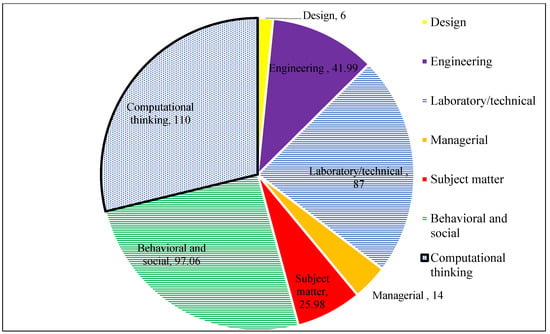
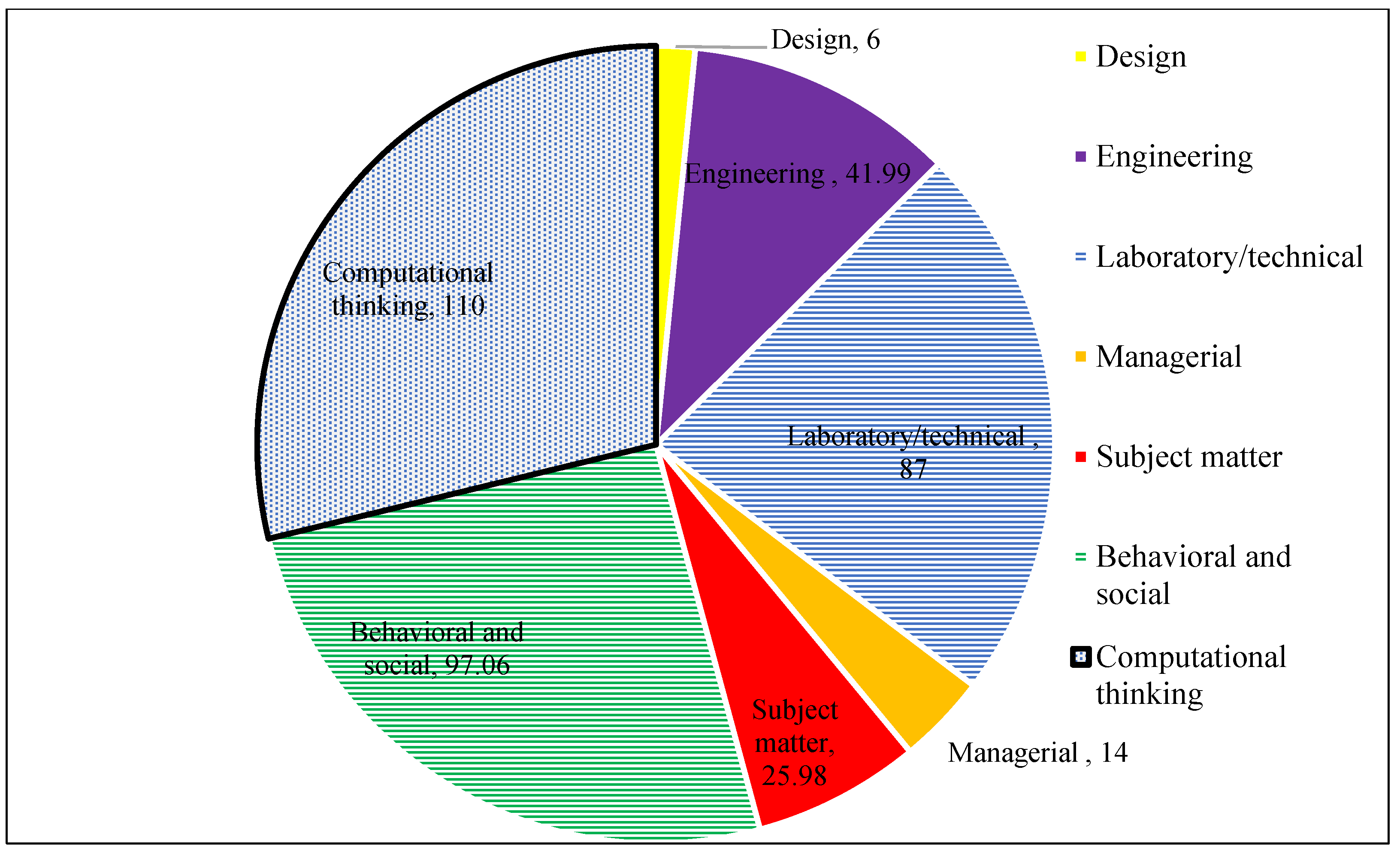
The relative importance/necessities of the prerequisite themes were computed using Equation (1), where is necessity level, is frequency of each prerequisite, and Vprereq is the ‘computed total prerequisite value’ for each theme. Results are shown in Figure 4 (response to R.Q.2).
Figure 4.
The thematic analysis results. The results show the relative importance of different themes of prerequisites that students should achieve before they participate in robotics-enabled digital learning. The digit for each theme indicates the total rating scores (computed total prerequisite value) for each theme of prerequisite.
4.3. Analyses of the Research Results
The thematic analysis results (how different prerequisites can be grouped into different themes, considering their importance perceived by the survey responders) are demonstrated in Figure 4. As follows, we discuss each prerequisite theme of Figure 4 briefly:
- (i)
- Computational thinking (CT) was found to be the prerequisite with the highest importance, as the figure shows, because the students might not be able to receive complete learning benefits from their robotics-enabled lessons without having necessary CT abilities.
- (ii)
- Behavioral and social skills were found to be an important prerequisite qualification for the students, as the figure shows, because robotics is considered an innovative digital pedagogical and learning tool, and the inclusion of such an innovative tool may not be able to provide expected benefits to the students (learners) if the students cannot achieve necessary levels of behavioral and social skills and social relationships, especially when the students work in teams for learning from robotics-enabled lessons.
- (iii)
- Managerial skills of students are required because students need to work on projects as part of the robotics-enabled lessons. The managerial skills may include project management, change management, resource management, etc.
- (iv)
- Engineering prerequisite set includes engineering-related terminologies that students should know before they can use robots as learning tools. These engineering terms may include gear, motor, sensor, wheel, control, wire, communication, shaft, power, monitor, troubleshooting, etc., which seem to be necessary for students when using robots as an aid to learn STEM, as the figure shows.
- (v)
- Lab/tech skill sets and qualifications are necessary to perform tasks for their robotics-enabled STEM lessons. Such skills may include operations of common laboratory equipment, instruments, and facilities [47].
- (vi)
- Design skills, particularly skills of assembling and re-assembling robotic systems, are important for students aiming to participate in robotics-enabled lessons [47]. These skills may include applications of structural components, gripping devices, sensing instruments, etc. Therefore, students should have the skills to be able to design and build these items following the instructions of their teachers.
- (vii)
- Subject matter or content knowledge is the knowledge that students should possess to learn from STEM lessons to be implemented using robotics [47]. However, students should possess other allied skills and qualifications as discussed above for enhancing overall learning outcomes and effectiveness and upgrading students’ overall attitudes and aptitudes.
Students should satisfy prerequisites with the required importance/necessity levels as presented Table 1. It is expected that they may get chances to achieve some of the prerequisites inherently, indirectly, and naturally in various ways; for example, through their traditional middle school lessons based on their existing curricula, daily life and social activities, informal learning events, etc. [18]. The teachers implementing robotics-enabled STEM lessons may split the student population into different sections (e.g., a student group that highly fulfill the prerequisites, and a student group that does not highly satisfy the prerequisites) and determine the scaffolding requirements for different sections.
5. Research Study 2
5.1. Procedures
The field researchers visited the schools of the trained teachers to observe the implementation of the robotics-enabled teaching and learning in an actual class environment. Each prerequisite identified in Table 1 was assessed using appropriate assessment methods and metrics [48]. The ideal assessment methods and metrics might not be available in the literature for some of the prerequisites. In those cases, new instruments might need to be developed and validated to assess such prerequisites [49]. However, in this article, as a preliminary effort, we attempted to assess each prerequisite subjectively using a Likert scale after conducting formal observations of robotics-enabled lesson activities in actual classroom settings [11]. The field researchers collaborated with each teacher and assessed a selected number of students (38 randomly selected students) for each prerequisite using a Likert-type rating scheme between 1 and 5 (1 was used to indicate the least qualified and 5 was used to indicate the most qualified for a prerequisite) [45]. The above-mentioned 38 students were selected randomly from grade six students who attended robotics-enabled lessons. More specifically, 3 students were assessed randomly from each of the 10 schools (3 10 30 students) and 4 students were assessed randomly from each of the 2 schools (4 2 8 students), which totalled 38 students. A sample consisting of 38 students seemed to be small, but we believe that the 38 students could be enough to get an idea about the effectiveness of the proposed prerequisites set. However, assessments of more students might enhance the reliability of the study and of the decisions made on the study results, as follows.
The assessment was carried out by the teachers and the field researchers based on their observations of each student performing robotics-enabled lesson activities, responses to short questionnaires, and the completion of activity sheets by students. Note that the assessment was carried out for each student for his/her first lesson taught using robotics. The first lesson was chosen to avoid the learning effects for the prerequisites that the students might learn through repeated applications of robotics in a series of lessons taught using robotics. This strategy could reflect the true status of the students regarding their abilities to fulfil the prerequisites for participating in robotics-enabled lessons. A brief training was arranged for the teachers that included explanations on the meanings of each criterion in Table 1 and discussions on reference documents and materials such as past examination results and student attendance records, etc., which might help the teachers decide the assessment scores. After receiving the training, individual teachers in collaboration with the visiting field researcher(s) performed assessments of each participating student for the fulfilment of the prerequisites.
We then conducted surveys with the participating teachers as a validation or verification study to (i) assess the manageability, user-friendliness, and significance of the proposed prerequisite sets based on a 5-point rating scale, (ii) identify the limitations of the proposed prerequisite sets, and (iii) determine action plans for enabling students to meet the prerequisites. We used the three evaluation criteria (manageability, user-friendliness, and significance) based on our field experiences because those criteria were helpful to prove the prerequisites suitable for applications in a real environment.
5.2. Analyzing the Findings/Results
The importance levels presented in Table 1 were considered as the required levels of skills and qualifications (i.e., the minimum levels of requirements) for different prerequisites. We then analyzed the results of assessments of the selected 38 students, examining whether they were able to satisfy the requirements (prerequisites). The summary of the results is presented in Table 3 [9,10,11,18]. The table shows the number of students meeting the prerequisites (the number n, mean , std σ) and the number of students who could not meet the prerequisites (the number nc, mean std σc). Such results occurred because the students were not provided with any formal training on learning robotics-enabled lessons before they participated in the lessons. Despite that, they were able to fulfill many prerequisite qualifications due to their general aptitudes and maturity that they might have gained informally in their daily life activities such as household activities, use of the internet, studying science fictions, playing games, use of media, visiting museums, etc., and previous education, previous practice sessions with robotic assemblies, etc. The students might be able to learn laboratory and technical skills based on their traditional laboratory practices without applications of robotics under their traditional STEM curricula.
Table 3.
The findings for assessing students on fulfilling prerequisites.
The results showed that the students demonstrated low qualifications and skills in the engineering prerequisites. It might have happened because they were not formally taught the engineering terms as part of their traditional lessons. The students demonstrated poor aptitudes in computational thinking as well. As the literature shows, the computational thinking abilities of students might be enhanced if the students could conduct regular problem-solving practices with appropriate artifacts and their computational thinking abilities could be assessed continuously using appropriate assessment methods [21,27,33]. Therefore, the poor status of computational thinking abilities of the students and their inability to fulfill the required level of computational thinking for robotics-enabled STEM lessons might have happened as they did not participate in any formal computational thinking ability enhancement events in their traditional curricula [21,22].
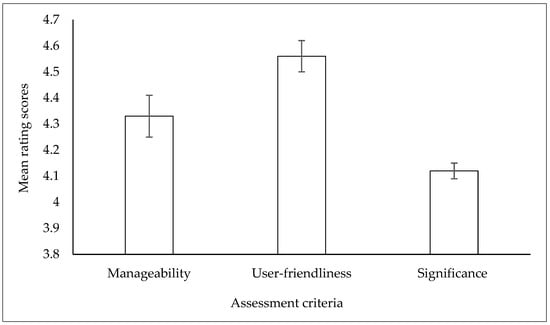
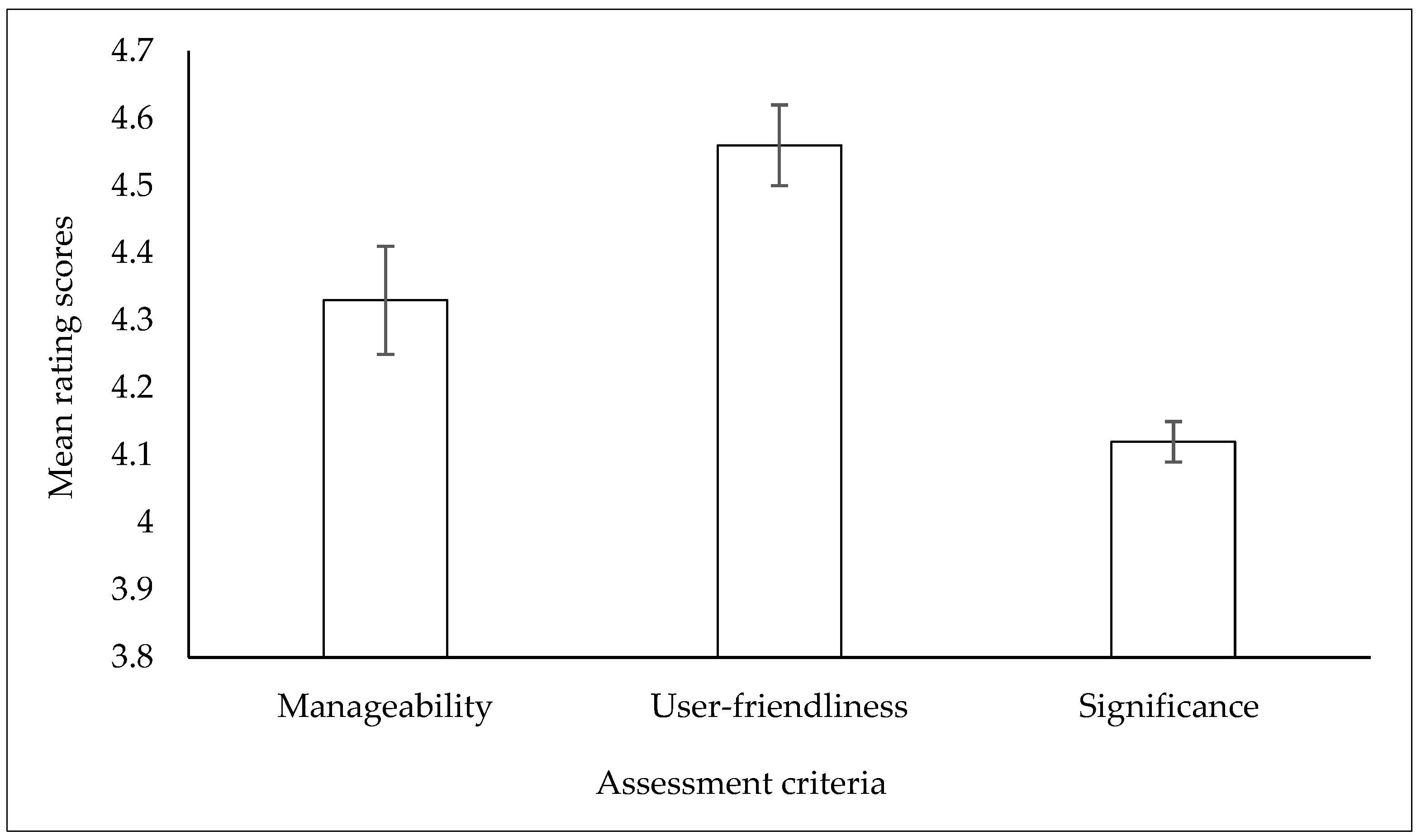
Figure 5 shows how the participating teachers perceived the manageability and user-friendliness of the proposed approach (the developed prerequisite set), as well as the significance of the assessment results for the students. The mean rating scores in the scale between 1 and 5 indicated the effectiveness of the proposed approach. Table 4 summarizes the limitations of the proposed approach identified by the participating teachers, where the frequency means the number of teachers identifying each of the mentioned limitations. For example, “Applicable to only middle school grades” was a limitation of the presented study, and 20 teachers out of 24 pointed out this limitation in the survey. The higher frequency indicated higher importance or severity of the limitation. Table 5 shows the action plans proposed by the teachers to enable students to meet the proposed prerequisites. The overall results and findings showed tremendous prospects of the proposed approach and its acceptance by the participating teachers.
Figure 5.
Assessment results toward verifying the effectiveness of the proposed approach (prerequisite sets).
Table 4.
Limitations of the approach.
Table 5.
Proposed actions plan to remove or reduce the limitations.
6. Discussion
This article presents an innovative approach to K–12 STEM education via human–robot interaction as a means of digital technology-enhanced experiential learning [1]. We, in this article, focused on determining a set of prerequisites that participating students should meet before they learn STEM via a robotics-enabled digital learning approach [18]. Such a set of prerequisites is required to make the robotics-enabled learning approach effective because the selection of appropriate participants is a key factor to prove this approach effective and the proposed set of prerequisites can help determine the appropriate segments of participating students for robotics-enabled digital STEM lessons [18].
The studies followed a systematic approach for determining, analyzing, and validating the prerequisites [9]. The systematic approach consisted of brainstorming sessions, survey questionnaires, frequency analysis, and thematic analysis. We followed the standard procedures of the research instruments such as survey, brainstorming, application of the Likert scale in surveys and thematic analysis. These research instruments are well-validated and standard. Therefore, the results obtained in our studies should be reliable, replicable, transparent, and transferable [45,46,49].
The systematic approach, with its roots in systems engineering, was deployed to open a new paradigm of educational research through human–robot interaction, which could add objectivity to analyzing outcomes of STEM education offered through robotics-based digital platforms [9]. As part of the systems approach, we used survey questions in Appendix A to collect information regarding prerequisites, and then analyzed the survey findings using the Likert scale, thematic analysis, etc. The questionnaires were set up considering the requirements of the study. We did not find a similar study in the literature that could help us use or adapt a set of survey questionnaires for our purpose. Therefore, we determined the questionnaires that were necessary to collect the information used in the research. The approach was subsequently evaluated in Table 3 and Figure 5, and the limitations of the study, as well as the actions plan to reduce the limitations, were identified in Table 4 and Table 5, respectively. The evaluation results proved the effectiveness and prospects of the approach presented herein.
We adopted three research questions. We believe that R.Q.1 and R.Q.2 have been successfully answered through the results of Study 1, and R.Q.3 has been successfully answered through the results of Study 2. The Study 1 results impacted the Study 2 results, and the Study 2 results validated the Study 1 results. In Study 2, we briefly assessed whether the prerequisites set proposed in Study 1 was effective or not for a real-world setting. The Study 2 results justified that the proposed prerequisites set was practical and implementable and thus those were effective for the mentioned purpose. Study 2 also justified other aspects of the Study 1 results. For example, in Study 2, we conducted surveys with the participating teachers as a validation or verification study to (i) assess the manageability, user-friendliness, and significance of the proposed prerequisite sets of Study 1 based on a 5-point Likert-type rating scale, (ii) identify the limitations of the proposed prerequisite sets of Study 1, and (iii) determine action plans for enabling students meeting the prerequisites proposed in Study 1. Therefore, the Study 2 results were meaningful, those results contributed to support the results of Study 1 as well, and thus validated the effectiveness of the results obtained in Study 1.
Table 1 shows that the students needed to fulfil a huge list of prerequisites to be able to participate in and get adequate benefits from robotics-enabled STEM lessons. Figure 4 shows that all the prerequisites were not equally important. Table 3 shows that the students under the current curriculum were not able to fulfill all the prerequisites. The survey results in Table 1 and the assessment results in Table 3 were determined based on a limited number of students in the mentioned study environments. It seems that the results of Table 1 were open-ended. Therefore, the results of Table 1 and Table 3 might not be the general findings for robotics-enabled K–12 STEM education. However, the results created a baseline for determining and benchmarking the prerequisites required for participating in robotics-enabled STEM education and provided strong guidelines to the state-of-the-art efforts toward implementing robotics-enabled STEM education in actual classroom settings [9,10,11]. We note that despite having an exhaustive list of prerequisites, Figure 5 proved the manageability, user-friendliness, and significance of the proposed approach. Table 3 and Figure 5 jointly validated the proposed approach. It is thus expected that the proposed approach (set of prerequisites) may be useful for digitalizing STEM learning in general with some adjustments in the presented approach as required to specific situations [18].
The research enhances the scope of human–robot interaction via its applications to digitalized STEM education. We here used a vehicle-type robot for STEM education via a human–robot interaction. However, the psychological impacts on students might be different if humanoid-type anthropomorphic robots were used for this purpose [12,13,14]. It is assumed that configurations and embodiment of robots may need to be adjusted for different levels of STEM education enabled by robotics for students of different grades and subjects [14].
The presented approach is a digital learning approach because the robot was used to digitalize the implementation of STEM lessons. However, digitalizing STEM lessons does not necessarily mean an approach toward computational thinking. This article clearly differentiates between digital or computational learning and computational thinking. Computational learning may be an approach that expresses learning through computational or digital or quantifiable objective methods [1]. However, computational thinking creates a perception of objective measures of a phenomenon in students’ minds [21,22]. Nonetheless, computational learning may foster computational thinking, and vice versa.
7. Conclusions and Extension of the Research
Professional development was implemented for STEM (mainly mathematics and science) teachers working in middle schools to train them on how to develop and conduct mathematics and science lessons within actual classroom settings using cost-effective LEGO robotics kits. The teachers then got opportunities to implement a few representative robotics-enabled digital mathematics and science lessons in actual school environments. Following a well-designed survey questionnaires approach, we identified a set of prerequisites that specified the qualifications that the grade six students should achieve before they might be able to participate in any robotics-enabled math and science lessons. We also specified the importance level of each prerequisite qualification we identified based on a Likert scale type rating method. The thematic analysis results showed that the CT ability of students emerged as one of the most important themes of prerequisites implying that robotics-enabled digital STEM lessons needed high level of CT abilities of students. The analysis revealed that the robotics-enabled digital STEM lessons had the potential to enhance CT abilities of students as well. We then conducted assessments on selected grade six students to illustrate how the proposed sets of prerequisites would be used as a set of standards to decide the participating students in robotics-enabled digital lessons. The assessment results showed that the selected students were able to fulfill a portion of the prerequisites. We then proposed action plans helpful for making students able to fulfill the mentioned prerequisites. We then evaluated the overall approach for its manageability, user-friendliness, and significance, and obtained satisfactory results. The overall results might help K–12 teachers, educational policy makers, and educational administrative authorities decide on robotics as a novel experiential pedagogical digital tool for teaching STEM topics and to develop K–12 STEM curriculum centering around a robotics-enabled digital STEM education.
In the near future, we will further improve the survey methods presented herein by collecting more input from a higher number of respondents, such as middle school teachers and field researchers. We plan to develop a short and handy list of prerequisites. Games-like programs [33] and self-efficacy-based assessments in solving problems [34] may be used to determine if selected students are able to meet required prerequisites. We will investigate whether middle school students can gain the mentioned prerequisites through their daily life activities. We will propose an innovative method to assess the CT abilities of students and examine if the robotics-enabled digital STEM lessons can enhance CT abilities. We will present prerequisites for mathematics, technology, engineering, and science topics for different grades of students (e.g., six, seven, eight grades) separately.
Funding
The specific research presented herein received no external funding.
Institutional Review Board Statement
The study was guided by ethics. The author had IRB certification for this research.
Data Availability Statement
Available if needed.
Acknowledgments
The author thanks the field researchers, teachers, and students who participated in the research.
Conflicts of Interest
The author declares no conflict of interest.
Appendix A. The Survey
Teacher’s Code: Teaching Subjects: Math, Science, Engineering, Technology (Circle only one)
Instructions: You are trained on how to design, develop, and teach science/math/engineering/technology lessons using robotics, and you have some preliminary experiences of implementing robotics-enabled science/math/engineering/technology lessons with students in small pilot studies. Based on this, respond to the following questionnaires:
Question#1: What may be the prerequisites (knowledge, qualifications, skills, attitudes, abilities, aptitudes), in your opinion, that a student should possess for successfully participating in your robotics-enabled/focused lesson(s)?
Question#2: Write anticipated levels of importance of different prerequisites. As a responder, you are asked to use a 5-point Likert-type scale between 1 and 5, 1 indicating the least necessary/important and 5 indicating the most necessary/important prerequisite. You are also asked to indicate/write the anticipated level of necessity/importance between 1 and 5 for each mentioned/identified prerequisite.
Record (note down) the above responses using the table shown below. You may add as many rows to the table as you feel necessary.
| Necessary/important prerequisites (e.g., knowledge, qualifications, skills, attitudes, abilities, aptitudes) (Response to Question#1) | Perceived/anticipated level of necessity/importance (between 1 and 5) (Response to Question#2) |
References
- Chen, N.S.; Quadir, B.; Teng, D.C. Integrating book, digital content and robot for enhancing elementary school students’ learning of English. Australas. J. Educ. Technol. 2011, 27, 546–561. [Google Scholar] [CrossRef] [Scilit]
- Mosley, P.; Kline, R. Engaging students: A framework using LEGO robotics to teach problem solving. Inf. Technol. Learn. Perform. J. 2006, 24, 39–45. [Google Scholar]
- Whitman, L.; Witherspoon, T. Using LEGOs to interest high school students and improve K12 STEM education. In Proceedings of the 33rd ASEE/IEEE Frontiers in Education Conference (2003), Westminster, CO, USA, 5–8 November 2023; pp. F3A6–F3A10. [Google Scholar]
- Subramaniam, P.R. Motivational effects of interest on student engagement and learning in physical education: A review. Int. J. Phys. Educ. 2009, 46, 11–19. [Google Scholar]
- Ryan, R.M.; Deci, E.L. Intrinsic and extrinsic motivations: Classic definitions and new directions. Contemp. Educ. Psychol. 2000, 25, 54–67. [Google Scholar] [CrossRef] [Scilit] [PubMed]
- Collins, A. Cognitive apprenticeship and instructional technology. In Educational Values and Cognitive Instruction: Implications for Reform; Routledge: New York, NY, USA, 1991; pp. 121–138. [Google Scholar]
- Brown, J.S.; Collins, A.; Duguid, P. Situated cognition and the culture of learning. Educ. Res. 1989, 18, 32–42. [Google Scholar] [CrossRef] [Scilit]
- Gibson, H.L.; Chase, C. Longitudinal impact of an inquiry-based science program on middle school students’ attitudes toward science. Sci. Educ. 2002, 86, 693–705. [Google Scholar] [CrossRef] [Scilit]
- Rahman, S.M.M.; Kapila, V. A systems approach to analyzing design-based research in robotics-focused middle school STEM lessons through cognitive apprenticeship. In Proceedings of the ASEE Annual Conference & Exposition, Columbus, OH, USA, 25–28 June 2017. [Google Scholar]
- Rahman, S.M.M.; Krishnan, V.J.; Kapila, V. Exploring the dynamic nature of TPACK framework in teaching STEM using robotics in middle school classrooms. In Proceedings of the ASEE Annual Conference & Exposition, Columbus, OH, USA, 25–28 June 2017. [Google Scholar]
- Rahman, S.M.M.; Chacko, S.M.; Kapila, V. Building trust in robots in robotics-focused STEM education under TPACK framework in middle schools. In Proceedings of the ASEE Annual Conference & Exposition, Columbus, OH, USA, 25–28 June 2017. [Google Scholar]
- Armstrong, L.; Tawfik, A. The history of robotics and implications for K-12 STEM education. TechTrends 2023, 67, 14–16. [Google Scholar] [CrossRef] [Scilit]
- Hughes, C.E.; Dieker, L.A.; Glavey, E.M.; Hines, R.A.; Wilkins, I.; Ingraham, K.; Bukaty, C.A.; Ali, K.; Shah, S.; Murphy, J.; et al. RAISE: Robotics & AI to improve STEM and social skills for elementary school students. Front. Virtual Real. 2022, 3, 968312. [Google Scholar] [CrossRef] [Scilit]
- Tselegkaridis, S.; Sapounidis, T. Exploring the features of educational robotics and STEM research in primary education: A systematic literature review. Educ. Sci. 2022, 12, 305. [Google Scholar] [CrossRef] [Scilit]
- Mallik, A.; Liu, D.; Kapila, V. Analyzing the outcomes of a robotics workshop on the self-efficacy, familiarity, and content knowledge of participants and examining their designs for end-of-year robotics contests. Educ. Inf. Technol. 2022, 28, 7225–7264. [Google Scholar] [CrossRef] [Scilit]
- Graffin, M.; Sheffield, R.; Koul, R. More than robots’: Reviewing the impact of the FIRST® LEGO® league challenge robotics competition on school students’ STEM attitudes, learning, and twenty-first century skill development. J. STEM Educ. Res. 2022, 5, 322–343. [Google Scholar] [CrossRef] [Scilit]
- Üçgül, M.; Altıok, S. You are an astroneer: The effects of robotics camps on secondary school students’ perceptions and attitudes towards STEM. Int. J. Technol. Des. Educ. 2022, 32, 1679–1699. [Google Scholar] [CrossRef] [Scilit]
- Rahman, S.M.M.; Chacko, S.M.; Rajguru, S.B.; Kapila, V. Determining prerequisites for middle school students to participate in robotics-based STEM lessons: A computational thinking approach. In Proceedings of the 2018 ASEE Annual Conference & Exposition, Salt Lake City, Utah, USA, 24–27 June 2018; pp. 1–27. [Google Scholar]
- NGSS. Next Generation Science Standards (NGSS): For States, by States; The National Academies Press: Washington, DC, USA, 2013; Available online: http://www.nextgenscience.org/ (accessed on 25 December 2023).
- CCSSM. Common Core State Standards for Mathematics. Common Core Standards Initiative. 2010. Available online: http://www.corestandards.org/assets/CCSSI_Math%20Standards.pdf (accessed on 25 December 2023).
- Wing, J.M. Computational thinking. Commun. ACM 2006, 49, 33–35. [Google Scholar] [CrossRef] [Scilit]
- Grover, S.; Pea, R. Computational thinking in K-12: A review of the state of the field. Educ. Res. 2013, 42, 38–43. [Google Scholar] [CrossRef] [Scilit]
- Wawan, C.; Fenyvesi, K.; Lathifah, A.; Ari, R. Computational thinking development: Benefiting from educational robotics in STEM teaching. Eur. J. Educ. Res. 2022, 11, 1997–2012. [Google Scholar] [CrossRef] [Scilit]
- Chen, H.E.; Sun, D.; Hsu, T.C.; Yang, Y.; Sun, J. Visualizing trends in computational thinking research from 2012 to 2021: A bibliometric analysis. Think. Ski. Creat. 2023, 47, 101224. [Google Scholar] [CrossRef] [Scilit]
- Barr, V.; Stephenson, C. Bringing computational thinking to K-12: What is involved and what is the role of the computer science education community? ACM Inroads 2011, 2, 48–54. [Google Scholar] [CrossRef] [Scilit]
- Braaten, B.; Perez, A. Integrating STEM and computer science in algebra: Teachers’ computational thinking dispositions. In Proceedings of the ASEE Annual Conference & Exposition, Columbus, OH, USA, 25–28 June 2017. [Google Scholar]
- Dasgupta, A.; Rynearson, A.M.; Purzer, S.; Ehsan, H.; Cardella, M.E. Computational thinking in kindergarten: Evidence from student artifacts. In Proceedings of the ASEE Annual Conference & Exposition, Columbus, OH, USA, 25–28 June 2017. [Google Scholar]
- Ehsan, H.; Cardella, M.E. Capturing the computational thinking of families with young children in out-of-school environments. In Proceedings of the ASEE Annual Conference & Exposition, Columbus, OH, USA, 25–28 June 2017. [Google Scholar]
- National Research Council (NRC). A Framework for K-12 Science Education; National Academies Press: Washington, DC, USA, 2012. [Google Scholar]
- Pane, J.F.; Wiedenbeck, S. Expanding the benefits of computational thinking to diverse populations: Graduate student consortium. In Proceedings of the IEEE Symposium on Visual Languages and Human-Centric Computing, Herrsching, Germany, 15–19 September 2008; p. 253. [Google Scholar]
- Ribeiro, L.; Nunes, D.J.; da Cruz, M.K.; de Souza Matos, E. Computational thinking: Possibilities and challenges. In Proceedings of the 2nd Workshop-School on Theoretical Computer Science, Rio Grande, RS, Brazil, 15–17 October 2013; pp. 22–25. [Google Scholar]
- Sengupta, P.; Kinnebrew, J.S.; Basu, S.; Biswas, G.; Clark, D. Integrating computational thinking with K-12 science education using agent-based computation: A theoretical framework. Educ. Inf. Technol. 2013, 18, 351–380. [Google Scholar] [CrossRef] [Scilit]
- Werner, L.L.; Denner, J.; Campe, S.; Kawamoto, D.C. The fairy performance assessment: Measuring computational thinking in middle school. In Proceedings of the 43rd ACM Technical Symposium on Computer Science Education, Raleigh, NC, USA, 29 February–3 March 2012; pp. 215–220. [Google Scholar]
- Weese, J.L.; Feldhausen, R. STEM Outreach: Assessing computational thinking and problem solving. In Proceedings of the ASEE Annual Conference & Exposition, Columbus, OH, USA, 25–28 June 2017. [Google Scholar]
- Yasar, O.; Maliekal, J.; Veronesi, P.; Little, L.J. The essence of computational thinking and tools to promote it. In Proceedings of the ASEE Annual Conference & Exposition, Columbus, OH, USA, 25–28 June 2017. [Google Scholar]
- Fouad, A.; Smith, P. A test of a social cognitive model for middle school students: Math and science. J. Couns. Psychol. 1996, 43, 338–346. [Google Scholar] [CrossRef]
- Available online: https://education.lego.com/en-us (accessed on 19 December 2023).
- Blumenfeld, P.C.; Soloway, E.; Marx, R.W.; Krajcik, J.S.; Guzdial, M.; Palincsar, A. Motivating project-based learning: Sustaining the doing, supporting the learning. Educ. Psychol. 1991, 26, 369–398. [Google Scholar] [CrossRef] [Scilit]
- Bransford, J.D.; Sherwood, R.D.; Hasselbring, T.S.; Kinzer, C.K.; Williams, S.M. Anchored instruction: Why we need it and how technology can help. In Cognition, Education, and Multimedia: Exploring Ideas in High Technology; Routledge: New York, NY, USA, 1990; pp. 115–141. [Google Scholar]
- Brown, J.S.; Collins, A.; Newman, S.E. Cognitive apprenticeship: Teaching the crafts of reading, writing, and mathematics. In Knowing, Learning, and Instruction: Essays in Honor of Robert Glaser; Psychology Press: London, UK, 1989; p. 487. [Google Scholar]
- Lave, J.; Wenger, E. Situated Learning: Legitimate Peripheral Participation; Cambridge University Press: Cambridge, UK, 1991. [Google Scholar]
- Savery, J.R.; Duffy, T.M. Problem based learning: An instructional model and its constructivist framework. Educ. Technol. 1995, 35, 31–38. [Google Scholar]
- The Cognition and Technology Group at Vanderbilt. Anchored instruction and its relationship to situated cognition. Educ. Res. 1990, 19, 2–10. [Google Scholar] [CrossRef]
- Young, M.F.; Kulikowich, J.M. Anchored instruction and anchored assessment: An ecological approach to measuring situated learning. In Proceedings of the American Educational Research Association Annual Meeting, ERIC No. ED 354 269, San Francisco, CA, USA, 20–24 April 1992. [Google Scholar]
- Janssen, C.G.C.; Docter, H.J. Quantitative subjective assessment of fatigue in static muscle effort. Eur. J. Appl. Physiol. Occup. Physiol. 1973, 32, 81–86. [Google Scholar] [CrossRef] [Scilit]
- Wen, X.; Katina, Z. Applying thematic analysis to education: A hybrid approach to interpreting data in practitioner research. Int. J. Qual. Methods 2020, 19, 1609406920918810. [Google Scholar]
- Akins, L.; Burghardt, D. Work in progress: Improving K-12 mathematics understanding with engineering design projects. In Proceedings of the 36th Annual Conference on Frontiers in Education, San Diego, CA, USA, 28–31 October 2006; pp. 13–14. [Google Scholar]
- Leite, A.; Soares, D.; Sousa, H.; Vidal, D.; Dinis, M.; Dias, D. For a healthy (and) higher education: Evidences from learning outcomes in health sciences. Educ. Sci. 2020, 10, 168. [Google Scholar] [CrossRef] [Scilit]
- Zhuang, T.; Cheung, A.C.K.; Lau, W.W.F.; Tang, Y. Development and validation of an instrument to measure STEM undergraduate students’ comprehensive educational process. Front. Educ. China 2019, 14, 575–611. [Google Scholar] [CrossRef] [Scilit]
- Takriff, M.S.; Abdullah, S.R.S.; Mohammad, A.B.; Anuar, N. Students’ feedback in the continuous quality improvement cycle of engineering education. In Proceedings of the IEEE Global Engineering Education Conference (EDUCON), Amman, Jordan, 4–6 April 2011; pp. 374–377. [Google Scholar]

Disclaimer/Publisher’s Note: The statements, opinions and data contained in all publications are solely those of the individual author(s) and contributor(s) and not of MDPI and/or the editor(s). MDPI and/or the editor(s) disclaim responsibility for any injury to people or property resulting from any ideas, methods, instructions or products referred to in the content. |
© 2024 by the author. Licensee MDPI, Basel, Switzerland. This article is an open access article distributed under the terms and conditions of the Creative Commons Attribution (CC BY) license (https://creativecommons.org/licenses/by/4.0/).