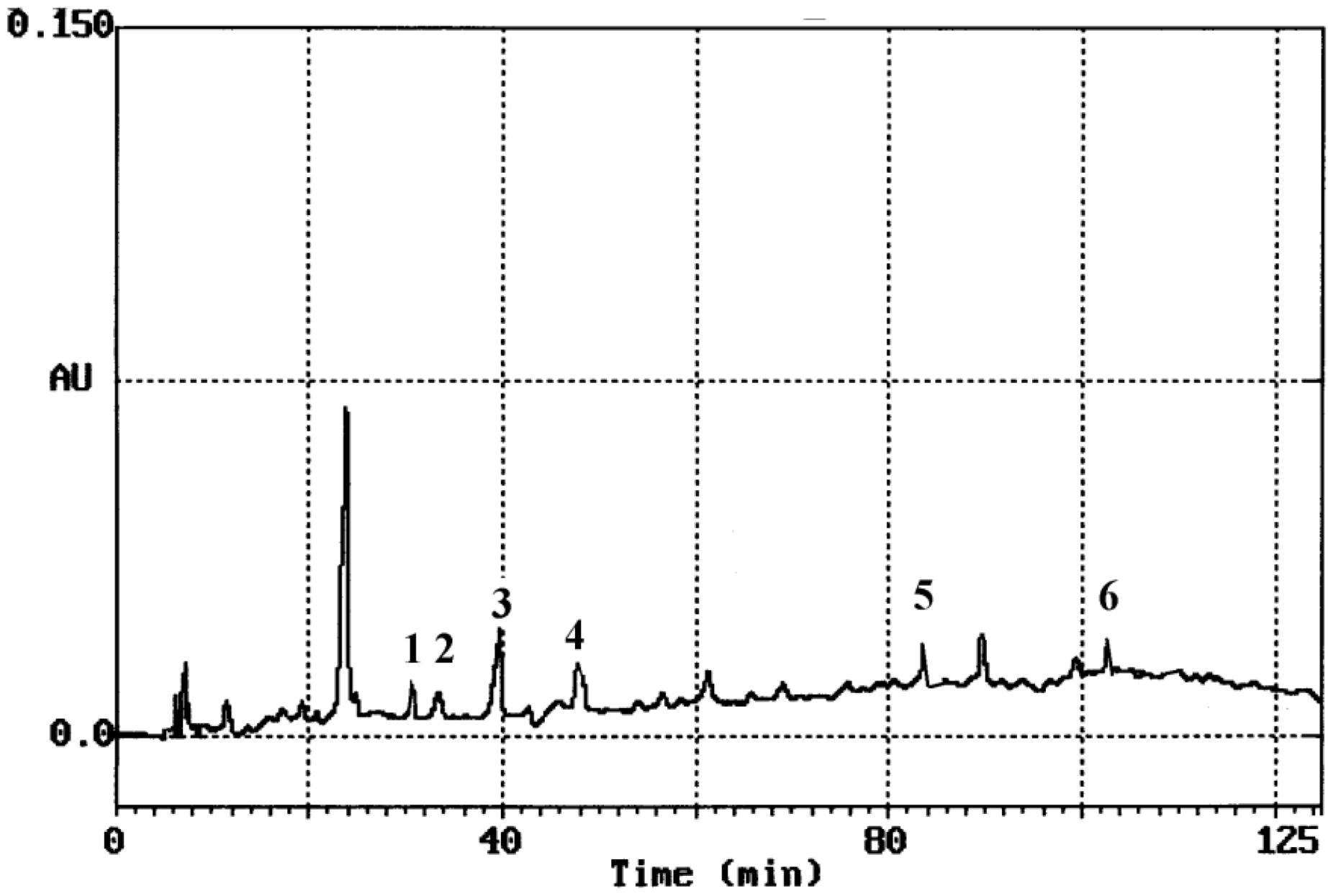
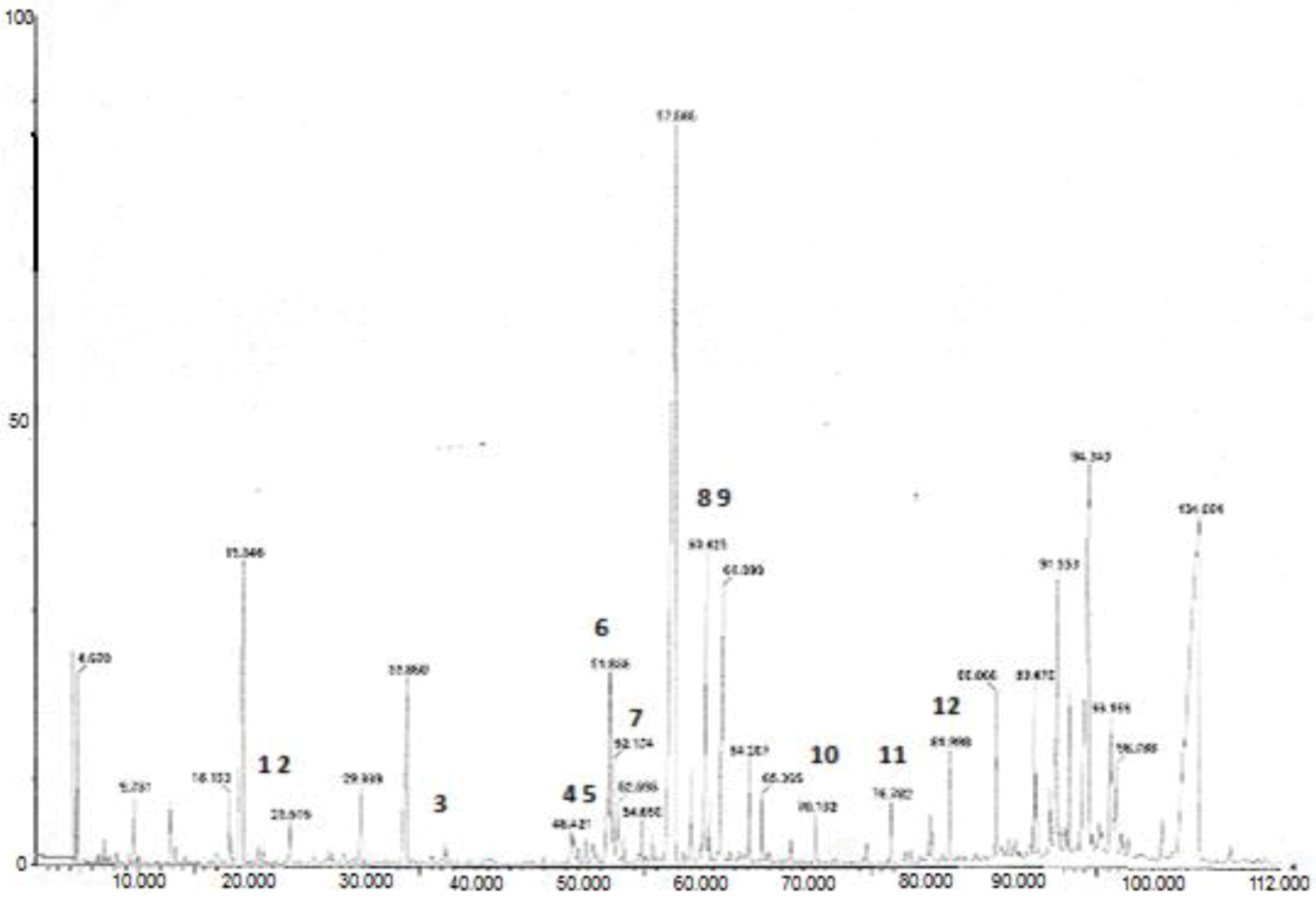
Analysis of Naturally Occurring Phenolic Compounds in Aromatic Plants by RP-HPLC Coupled to Diode Array Detector (DAD) and GC-MS after Silylation



Abstract
Share and Cite
Proestos, C.; Komaitis, M. Analysis of Naturally Occurring Phenolic Compounds in Aromatic Plants by RP-HPLC Coupled to Diode Array Detector (DAD) and GC-MS after Silylation. Foods 2013, 2, 90-99. https://doi.org/10.3390/foods2010090
Proestos C, Komaitis M. Analysis of Naturally Occurring Phenolic Compounds in Aromatic Plants by RP-HPLC Coupled to Diode Array Detector (DAD) and GC-MS after Silylation. Foods. 2013; 2(1):90-99. https://doi.org/10.3390/foods2010090
Chicago/Turabian StyleProestos, Charalampos, and Michael Komaitis. 2013. "Analysis of Naturally Occurring Phenolic Compounds in Aromatic Plants by RP-HPLC Coupled to Diode Array Detector (DAD) and GC-MS after Silylation" Foods 2, no. 1: 90-99. https://doi.org/10.3390/foods2010090
APA StyleProestos, C., & Komaitis, M. (2013). Analysis of Naturally Occurring Phenolic Compounds in Aromatic Plants by RP-HPLC Coupled to Diode Array Detector (DAD) and GC-MS after Silylation. Foods, 2(1), 90-99. https://doi.org/10.3390/foods2010090