<?xml version="1.0" encoding="UTF-8"?>
<!DOCTYPE article PUBLIC "-//NLM//DTD Journal Publishing DTD v2.3 20070202//EN" "journalpublishing.dtd">
<article xmlns:mml="http://www.w3.org/1998/Math/MathML" xmlns:xlink="http://www.w3.org/1999/xlink" xml:lang="en" article-type="review-article">
  <front>
    <journal-meta>
      <journal-id journal-id-type="publisher-id">biology</journal-id>
      <journal-title>Biology</journal-title>
      <abbrev-journal-title abbrev-type="publisher">Biology</abbrev-journal-title>
      <abbrev-journal-title abbrev-type="pubmed">Biology</abbrev-journal-title>
      <issn pub-type="epub">2079-7737</issn>
      <publisher>
        <publisher-name>MDPI</publisher-name>
      </publisher>
    </journal-meta>
    <article-meta>
      <article-id pub-id-type="doi">10.3390/biology1030542</article-id>
      <article-id pub-id-type="publisher-id">biology-01-00542</article-id>
      <article-categories>
        <subj-group>
          <subject>Review</subject>
        </subj-group>
      </article-categories>
      <title-group>
        <article-title>Recent Advances and Future Perspectives in Microbial Phototrophy in Antarctic Sea Ice</article-title>
      </title-group>
      <contrib-group>
        <contrib contrib-type="author">
          <name>
            <surname>Koh</surname>
            <given-names>Eileen Y.</given-names>
          </name>
          <xref rid="af1-biology-01-00542" ref-type="aff">1</xref>
          <xref rid="fn1-biology-01-00542" ref-type="fn">†</xref>
        </contrib>
        <contrib contrib-type="author">
          <name>
            <surname>Martin</surname>
            <given-names>Andrew R.</given-names>
          </name>
          <xref rid="af2-biology-01-00542" ref-type="aff">2</xref>
        </contrib>
        <contrib contrib-type="author">
          <name>
            <surname>McMinn</surname>
            <given-names>Andrew</given-names>
          </name>
          <xref rid="af2-biology-01-00542" ref-type="aff">2</xref>
        </contrib>
        <contrib contrib-type="author">
          <name>
            <surname>Ryan</surname>
            <given-names>Ken G.</given-names>
          </name>
          <xref rid="af1-biology-01-00542" ref-type="aff">1</xref>
          <xref rid="c1-biology-01-00542" ref-type="corresp">*</xref>
        </contrib>
      </contrib-group>
      <aff id="af1-biology-01-00542"><label>1</label> School of Biological Sciences, Victoria University of Wellington, PO Box 600, Wellington 6140, New Zealand; Email: <email>mickye@nus.edu.sg</email></aff>
      <aff id="af2-biology-01-00542"><label>2</label> Institute for Marine and Antarctic Studies, University of Tasmania, Hobart 7001, Australia; Email: <email>andrew.martin@utas.edu.au</email> (A.R.M.); <email>andrew.mcminn@utas.edu.au</email> (A.M.)</aff>
      <author-notes>
        <fn id="fn1-biology-01-00542">
          <label>† </label>
          <p>Current address: Department of Microbiology, Yong Loo Lin-School of Medicine, National University of Singapore, Singapore 117579, Singapore.</p>
        </fn>
        <corresp id="c1-biology-01-00542"><label>*</label> Author  to whom correspondence should be addressed; Email: <email>ken.ryan@vuw.ac.nz</email>; Tel.: +64-4-463-6083; Fax: +64-4-463-5331.</corresp>
      </author-notes>
      <pub-date pub-type="epub">
        <day>22</day>
        <month>10</month>
        <year>2012</year>
      </pub-date>
      <pub-date pub-type="collection"><month>12</month>
        <year>2012</year>
      </pub-date>
      <volume>1</volume>
      <issue>3</issue>
      <fpage>542</fpage>
      <lpage>556</lpage>
      <history>
        <date date-type="received">
          <day>17</day>
          <month>09</month>
          <year>2012</year>
        </date>
        <date date-type="rev-recd">
          <day>10</day>
          <month>10</month>
          <year>2012</year>
        </date>
        <date date-type="accepted">
          <day>11</day>
          <month>10</month>
          <year>2012</year>
        </date>
      </history>
      <permissions>
        <copyright-statement>©  2012 by the authors; licensee MDPI, Basel, Switzerland.</copyright-statement>
        <copyright-year>2012</copyright-year>
        <license xmlns:xlink="http://www.w3.org/1999/xlink" license-type="open-access" xlink:href="http://creativecommons.org/licenses/by/3.0/">
          <p>This article is an open-access article distributed under the terms and conditions of the Creative Commons Attribution license (http://creativecommons.org/licenses/by/3.0/).</p>
        </license>
      </permissions>
      <abstract>
        <p>Bacteria that utilize sunlight to supplement metabolic activity are now being described in a range of ecosystems. While it is likely that phototrophy provides an important competitive advantage, the contribution that these microorganisms make to the bioenergetics of polar marine ecosystems is unknown. In this minireview, we discuss recent advances in our understanding of phototrophic bacteria and highlight the need for future research.</p>
      </abstract>
      <kwd-group>
        <kwd>phototrophic bacteria</kwd>
        <kwd>cyanobacteria</kwd>
        <kwd>aerobic anoxygenic phototrophic bacteria</kwd>
        <kwd>proteorhodopsin</kwd>
        <kwd>Antarctic sea ice</kwd>
      </kwd-group>
    </article-meta>
  </front>
  <body>
    <sec sec-type="intro">
      <title>1. Introduction</title>
      <p>Microorganisms have been fundamentally important to the history and function of life on Earth. They have played a central role in the climatic, geological, and biological evolution of the planet [<xref ref-type="bibr" rid="B1-biology-01-00542">1</xref>]. They are found in every conceivable ecological niche, from the tropics to the poles, from underground mines and oil fields to the stratosphere and mountain ranges, from deserts to the Dead Sea and from hot springs to underwater hydrothermal vents [<xref ref-type="bibr" rid="B2-biology-01-00542">2</xref>,<xref ref-type="bibr" rid="B3-biology-01-00542">3</xref>,<xref ref-type="bibr" rid="B4-biology-01-00542">4</xref>,<xref ref-type="bibr" rid="B5-biology-01-00542">5</xref>]. Microbes dominate the flux of energy and biologically important chemical elements in the world’s oceans and, as a result, are estimated to be five to ten times the mass of all multicellular marine organisms [<xref ref-type="bibr" rid="B6-biology-01-00542">6</xref>]. Bacteria harbor a potential reservoir of useful genes for medicine and biotechnology, and unraveling their complex taxonomic diversity is considered the key to understanding the process of evolution [<xref ref-type="bibr" rid="B7-biology-01-00542">7</xref>,<xref ref-type="bibr" rid="B8-biology-01-00542">8</xref>].</p>
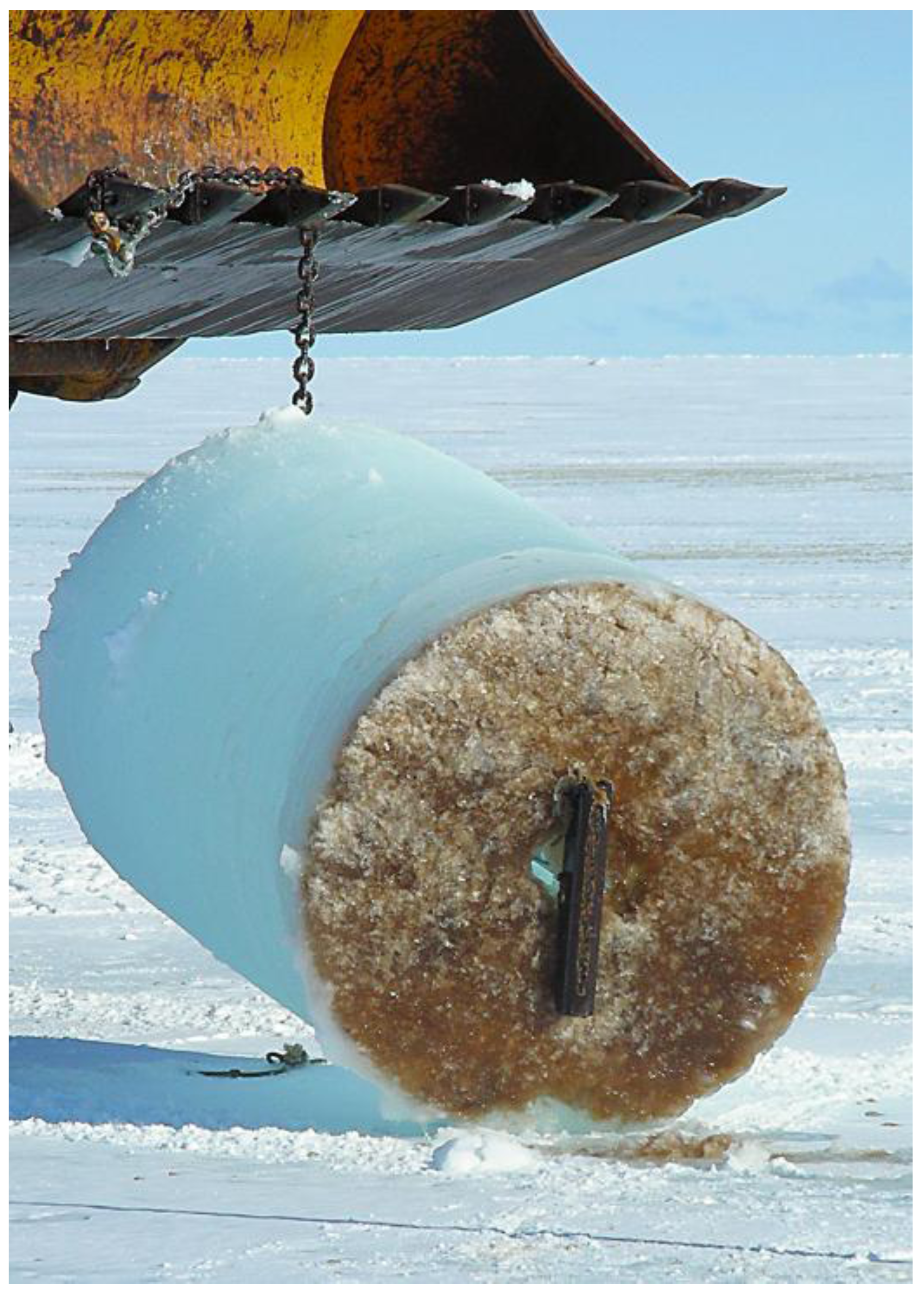
      <p>Sea ice is one of the most seasonally dynamic ecosystems on Earth. An important driver of the global climate system, annual sea ice at polar latitudes influences both physical and biological processes; particularly in modulating the exchange of heat and moisture between the atmosphere and ocean, and restricting the penetration of solar radiation. Importantly, sea ice also provides a stable platform for the colonization and growth of marine microbes [<xref ref-type="bibr" rid="B9-biology-01-00542">9</xref>,<xref ref-type="bibr" rid="B10-biology-01-00542">10</xref>]. Although a range of microbial taxa are initially scavenged from the water column during ice formation, only some are able to adapt to the physicochemical variability that characterizes the brine inclusions and interstices of the ice matrix. The most conspicuous ice-bound organisms are microalgae and research efforts have historically focused on the composition, physiology, and ecology of the diatoms that dominate sea ice assemblages [<xref ref-type="bibr" rid="B11-biology-01-00542">11</xref>,<xref ref-type="bibr" rid="B12-biology-01-00542">12</xref>,<xref ref-type="bibr" rid="B13-biology-01-00542">13</xref>,<xref ref-type="bibr" rid="B14-biology-01-00542">14</xref>,<xref ref-type="bibr" rid="B15-biology-01-00542">15</xref>]. Sea ice algae contribute between 10%–28% of the total primary production in ice-covered regions of the Southern Ocean [<xref ref-type="bibr" rid="B10-biology-01-00542">10</xref>,<xref ref-type="bibr" rid="B16-biology-01-00542">16</xref>] and over 90% of this biogenic carbon is produced within first-year ice and approximately 60% during the austral spring (November-December) when the algal cells typically discolor the bottom 1–20 cm of the ice [<xref ref-type="bibr" rid="B16-biology-01-00542">16</xref>] (<xref ref-type="fig" rid="biology-01-00542-f001">Figure 1</xref>). Microalgae provide a crucial source of winter nutrition for juvenile zooplankton such as the Antarctic krill <italic>Euphausia superba</italic> [<xref ref-type="bibr" rid="B17-biology-01-00542">17</xref>,<xref ref-type="bibr" rid="B18-biology-01-00542">18</xref>], and may provide inocula for bloom events at the receding ice edge in the austral summer [<xref ref-type="bibr" rid="B11-biology-01-00542">11</xref>,<xref ref-type="bibr" rid="B16-biology-01-00542">16</xref>,<xref ref-type="bibr" rid="B19-biology-01-00542">19</xref>,<xref ref-type="bibr" rid="B20-biology-01-00542">20</xref>].</p>
      <fig id="biology-01-00542-f001" position="anchor">
        <label>Figure 1</label>
        <caption>
          <p>Cross-section of sea ice. A distinct brown coloration is present at the bottom 20 cm of a 1 m diameter section of sea ice. This is due to the high concentration of bacteria and microalgae within the sea ice.</p>
        </caption>
        <graphic xmlns:xlink="http://www.w3.org/1999/xlink" xlink:href="biology-01-00542-g001.tif"/>
      </fig>
      <p>While bacteria are now recognized as a major biological component of the oceanic carbon cycle and ecosystem structure [<xref ref-type="bibr" rid="B21-biology-01-00542">21</xref>,<xref ref-type="bibr" rid="B22-biology-01-00542">22</xref>], an understanding of the phylogenetic diversity and functional capabilities of ice-associated bacteria remains fragmentary [<xref ref-type="bibr" rid="B23-biology-01-00542">23</xref>]. Evidence that bacteria actively grow within the ice dates back to only the 1980’s when Sullivan and Palmisano [<xref ref-type="bibr" rid="B24-biology-01-00542">24</xref>] observed large and morphologically distinct bacteria undergoing cell division in fast-ice within McMurdo Sound, Antarctica. This initial observation indicated an active heterotrophic community, and the subsequent microautoradiographic uptake of radiolabeled compounds such as <sup>14</sup>C-L-serine, <sup>3</sup>H-serine, <sup>3</sup>H-glucose and <sup>3</sup>H-thymidine confirmed community-level activity in the form of DNA synthesis [<xref ref-type="bibr" rid="B24-biology-01-00542">24</xref>,<xref ref-type="bibr" rid="B25-biology-01-00542">25</xref>]. More recent single-cell analyses, including the use of tetrazolium chloride (CTC) and fluorescence <italic>in situ</italic> hybridization (FISH), have shown that ~80% of the bacteria present in the bottom of Antarctic sea ice have a probe-positive cellular rRNA content and &gt;30% of the cells have an electron transport system that is capable of reducing CTC [<xref ref-type="bibr" rid="B26-biology-01-00542">26</xref>,<xref ref-type="bibr" rid="B27-biology-01-00542">27</xref>]. Most of these cells appear to be heterotrophic bacteria, which either live freely or attached to microalgae or detritus [<xref ref-type="bibr" rid="B28-biology-01-00542">28</xref>,<xref ref-type="bibr" rid="B29-biology-01-00542">29</xref>]. Molecular-based surveys of SSU rRNA gene diversity typically reveal psychrophilic and halotolerant members of the Proteobacteria, Bacteroidetes (previously known as the Cytophaga-Flavobacteria-Bacteroides (CFB) cluster) and Gram-positive bacteria [<xref ref-type="bibr" rid="B23-biology-01-00542">23</xref>,<xref ref-type="bibr" rid="B28-biology-01-00542">28</xref>,<xref ref-type="bibr" rid="B30-biology-01-00542">30</xref>].</p>
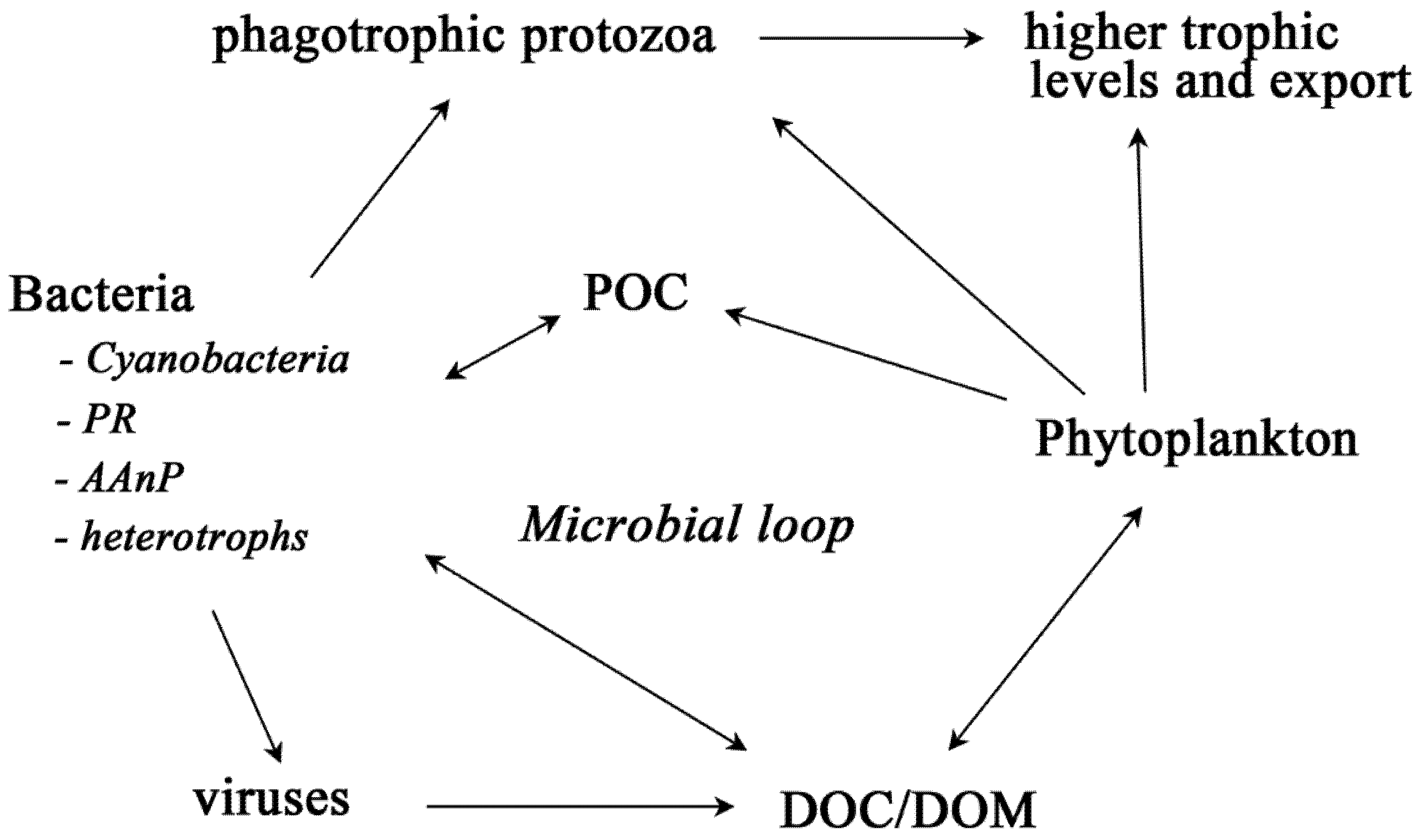
      <p>Following a decade of seminal research conducted within McMurdo Sound, Antarctica, Sullivan [<xref ref-type="bibr" rid="B25-biology-01-00542">25</xref>] suggested that sea ice bacteria might play an important role in secondary microbial production mediated through the microbial loop and remineralisation and recycling of ice-associated organic matter (<xref ref-type="fig" rid="biology-01-00542-f002">Figure 2</xref>). Sullivan [<xref ref-type="bibr" rid="B25-biology-01-00542">25</xref>] also postulated that these bacteria maintain a balance of oxygen concentration in the ice microenvironment through their respiration and may be involved in ice nucleation and early stages of sea ice formation although these ideas remain largely unsubstantiated.</p>
      <fig id="biology-01-00542-f002" position="anchor">
        <label>Figure 2</label>
        <caption>
          <p>Sea ice food web and the microbial loop. The microbial loop re-drawn and abridged from Azam <italic>et al.</italic> (1983) and Fenchel (2008). Only the bacteria discussed in this review are presented; the other bacteria are grouped as heterotrophs. AAnP = aerobic anaerobic phototroph, DOC = dissolved organic carbon, DOM = dissolved organic matter, POC = particulate organic carbon, PR = proteorhodopsins.</p>
        </caption>
        <graphic xmlns:xlink="http://www.w3.org/1999/xlink" xlink:href="biology-01-00542-g002.tif"/>
      </fig>
    </sec>
    <sec>
      <title>2. Bacteria with Light-Harvesting Capabilities</title>
      <p>The energy to support life in the sea is ultimately derived from phototrophy in the euphotic zone [<xref ref-type="bibr" rid="B31-biology-01-00542">31</xref>]. The most significant contribution from prokaryotic life forms is from cyanobacteria, which utilize chlorophyll-based phototrophy and contribute 30% of all globally fixed carbon [<xref ref-type="bibr" rid="B32-biology-01-00542">32</xref>]. However, in recent years, non-cultivation-based studies of bacteria have led to the discovery of novel genes, proteins and phototrophic mechanisms that are rapidly gaining scientific interest [<xref ref-type="bibr" rid="B33-biology-01-00542">33</xref>,<xref ref-type="bibr" rid="B34-biology-01-00542">34</xref>,<xref ref-type="bibr" rid="B35-biology-01-00542">35</xref>,<xref ref-type="bibr" rid="B36-biology-01-00542">36</xref>,<xref ref-type="bibr" rid="B37-biology-01-00542">37</xref>]. In particular, widespread reports of bacteriochlorophyll (bchl) and proteorhodopsin (PR) in planktonic marine prokaryotes are challenging the assumption that chl-<italic>a</italic> is the only light-capturing pigment of ecological importance. It remains to be seen whether these metabolic pathways will require a significant revision of oceanic energy budgets [<xref ref-type="bibr" rid="B22-biology-01-00542">22</xref>,<xref ref-type="bibr" rid="B38-biology-01-00542">38</xref>], but alternative light-based metabolic strategies are now being described in aquatic ecosystems that range from the deep-sea biosphere to high-altitude glaciers [<xref ref-type="bibr" rid="B39-biology-01-00542">39</xref>,<xref ref-type="bibr" rid="B40-biology-01-00542">40</xref>].</p>
      <sec>
        <title>2.1. Cyanobacteria</title>
        <p>Cyanobacteria colonize a variety of polar terrestrial ecospheres including rocks, glaciers, ice shelves, streams, ponds and lakes [<xref ref-type="bibr" rid="B41-biology-01-00542">41</xref>,<xref ref-type="bibr" rid="B42-biology-01-00542">42</xref>,<xref ref-type="bibr" rid="B43-biology-01-00542">43</xref>,<xref ref-type="bibr" rid="B44-biology-01-00542">44</xref>,<xref ref-type="bibr" rid="B45-biology-01-00542">45</xref>]. Phototrophs in these environments are generally psychrotolerant and exhibit an assortment of cold-protection mechanisms and slow growth rates to endure freeze-thaw cycles. The intracellular accumulation of salts to sustain osmotic balance, variation in DNA repair mechanisms and the use of photo-complexes are additional strategies that terrestrial cyanobacteria employ in extreme cold environments [<xref ref-type="bibr" rid="B44-biology-01-00542">44</xref>,<xref ref-type="bibr" rid="B46-biology-01-00542">46</xref>,<xref ref-type="bibr" rid="B47-biology-01-00542">47</xref>]. Picocyanobacteria such as <italic>Synechococcus</italic> and <italic>Prochlorococcus</italic> are the most abundant phototropic cells in the World’s oceans [<xref ref-type="bibr" rid="B48-biology-01-00542">48</xref>]. Despite this significant contribution to primary production, these cells are small, 0.5–1.5 µm and, in the case of <italic>Prochlorococcus</italic>, remained undetected until 1986 when they were discovered using flow cytometry [<xref ref-type="bibr" rid="B49-biology-01-00542">49</xref>]. Importantly, the abundance of marine cyanobacteria decreases rapidly south of latitude 40° [<xref ref-type="bibr" rid="B50-biology-01-00542">50</xref>,<xref ref-type="bibr" rid="B51-biology-01-00542">51</xref>,<xref ref-type="bibr" rid="B52-biology-01-00542">52</xref>] and this has been attributed to eco-physiological factors such as temperature, salinity and nutrient requirements [<xref ref-type="bibr" rid="B44-biology-01-00542">44</xref>].</p>
        <p>Considering their prevalence in cold terrestrial environments, the apparent absence of cyanobacteria within sea ice is, however, unexpected. Interestingly, <italic>Synechococcus</italic> was detected from coastal waters off East Antarctica in 1989 using microscopy and pigment chemistry [<xref ref-type="bibr" rid="B53-biology-01-00542">53</xref>] and a decade later, cyanobacterial-like pigments (phycoerythrin and phycocyanin) were detected for the first time within the ice matrix using flow cytometry [<xref ref-type="bibr" rid="B54-biology-01-00542">54</xref>]. Pigment-based confirmation is questionable however as phycoerythrin and phycocyanin are also present in other algae including Cryptophytes which are common during Antarctic coastal blooms [<xref ref-type="bibr" rid="B54-biology-01-00542">54</xref>]. To potentially validate these earlier findings, a multi-method molecular analysis was recently carried out on fast-ice cores extracted from sites spanning 300 km in the Ross Sea region of Antarctica [<xref ref-type="bibr" rid="B55-biology-01-00542">55</xref>]. Clone libraries were constructed from the 16S rDNA gene, the internal transcribed sequence (ITS) region and the cyanobacterial core RNA polymerase (<italic>rpo</italic>C). Analysis of all sections of extracted ice did not reveal the presence of <italic>Synechococcus </italic>sp.<italic>, Prochlorococcus </italic>sp., or any other marine cyanobacteria-related species. Additional screening was carried out using ligation detection reaction-based microarray, which can detect as little as 1 <italic>f</italic>mol of DNA [<xref ref-type="bibr" rid="B56-biology-01-00542">56</xref>]. Data from the ITS and microarray analysis of these sea ice samples showed close affiliation to the freshwater cyanobacteria <italic>Phormidium</italic> sp. and <italic>Cylindrospermopsis</italic> sp., respectively [<xref ref-type="bibr" rid="B55-biology-01-00542">55</xref>], but the closest Antarctic relative was an uncultured cyanobacteria clone from the nearby meromictic Lake Fryxell [<xref ref-type="bibr" rid="B42-biology-01-00542">42</xref>]. Aerobiology studies conducted in the Antarctic [<xref ref-type="bibr" rid="B57-biology-01-00542">57</xref>,<xref ref-type="bibr" rid="B58-biology-01-00542">58</xref>] and the Arctic [<xref ref-type="bibr" rid="B59-biology-01-00542">59</xref>] suggested that much of the biological material present in the air originates locally. Harding <italic>et al.</italic> [<xref ref-type="bibr" rid="B59-biology-01-00542">59</xref>] observed that &gt;47% of the operational taxonomic units (OTUs) in Arctic snow samples were from previously reported local cyanobacteria [<xref ref-type="bibr" rid="B45-biology-01-00542">45</xref>,<xref ref-type="bibr" rid="B60-biology-01-00542">60</xref>]. Given that Terra Nova Bay is situated in a katabatic wind cross-zone [<xref ref-type="bibr" rid="B61-biology-01-00542">61</xref>], it is likely that the cyanobacterial propagules identified by Koh <italic>et al</italic>. [<xref ref-type="bibr" rid="B55-biology-01-00542">55</xref>] were wind-transported from nearby freshwater ponds or terrestrial soil and incorporated into the ice during seasonal formation. Despite earlier anecdotal findings, molecular-based evidence now confirms that cyanobacteria do not play a significant role in sea ice ecosystem dynamics.</p>
      </sec>
      <sec>
        <title>2.2. Bacteriochlorophyll</title>
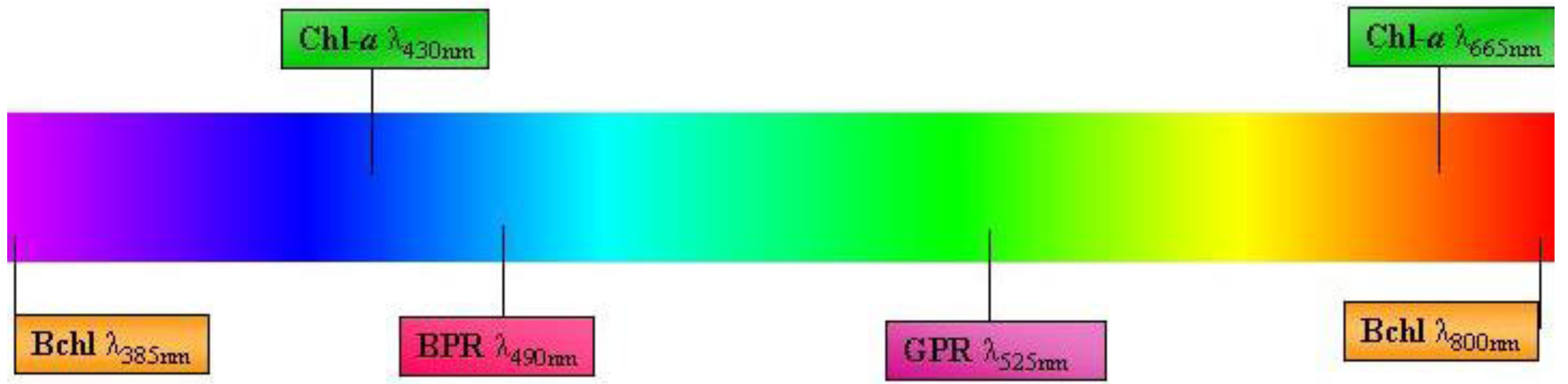
        <p>Phototropic metabolism is a feature of four other eubacterial phyla (<italic>i.e.</italic>, Proteobacteria, Chlorobi, Chloroflexi and Firmicutes). Unlike cyanobacteria, these phototrophs utilize the most ancient form of photosynthesis: anoxygenic photosynthesis [<xref ref-type="bibr" rid="B62-biology-01-00542">62</xref>]. This pathway is important for nitrogen-fixation, and cells with bacteriochlorophyll (bchl) also play an important role in the microbial loop [<xref ref-type="bibr" rid="B63-biology-01-00542">63</xref>,<xref ref-type="bibr" rid="B64-biology-01-00542">64</xref>]. The presence of highly diverse anoxygenic phototrophic bacterial communities in marine environments now suggests that non-chlorophyll-<italic>a</italic> phototrophy may be a more common life history strategy than previously realized. For example, the Proteobacteria contain the largest group of anoxyphototrophs [<xref ref-type="bibr" rid="B65-biology-01-00542">65</xref>], which were thought to be strictly anaerobic until three decades ago when the first aerobic representative was identified [<xref ref-type="bibr" rid="B66-biology-01-00542">66</xref>]. In both aerobic and anaerobic taxa, bchl-<italic>a</italic> is the primary light-harvesting pigment and absorbs red light at 770 to 880 nm and blue light at ~385nm [<xref ref-type="bibr" rid="B67-biology-01-00542">67</xref>,<xref ref-type="bibr" rid="B68-biology-01-00542">68</xref>,<xref ref-type="bibr" rid="B69-biology-01-00542">69</xref>]. This provides a useful contrast to the chlorophyll-<italic>a</italic> present in cyanobacteria and algae, which absorbs at 430 nm and 665 nm (<xref ref-type="fig" rid="biology-01-00542-f003">Figure 3</xref>).</p>
        <fig id="biology-01-00542-f003" position="anchor">
          <label>Figure 3</label>
          <caption>
            <p>Schematic diagram of light pigments/proteins of sea ice phototrophic bacteria. Bchl = bacteriochlorophyll; Chl-<italic>a</italic> = Chlorophyll-<italic>a</italic>; BPR = Blue proteorhodopsin; GPR = Green proteorhodopsin. Diagram not drawn to scale.</p>
          </caption>
          <graphic xmlns:xlink="http://www.w3.org/1999/xlink" xlink:href="biology-01-00542-g003.tif"/>
        </fig>
        <p>The aerobic anoxygenic phototrophic (AAnP) bacteria are a diverse group of prokaryotes with respect to their functionality, physiology, and morphology [<xref ref-type="bibr" rid="B69-biology-01-00542">69</xref>]. These are obligate aerobes with unusually high concentrations of carotenoids, low cellular contents of bchl-<italic>a </italic>and a distinct lack of the light-harvesting complex II [<xref ref-type="bibr" rid="B38-biology-01-00542">38</xref>,<xref ref-type="bibr" rid="B39-biology-01-00542">39</xref>]. In the anaerobic phototrophic bacteria (AnPB), the <italic>puf </italic>operon coding for the bchl is repressed by both oxygen and high light [<xref ref-type="bibr" rid="B70-biology-01-00542">70</xref>]. However, in the AAnP, the expression of the <italic>puf</italic> operon is not limited by oxygen, but it is still repressed by strong light [<xref ref-type="bibr" rid="B37-biology-01-00542">37</xref>,<xref ref-type="bibr" rid="B71-biology-01-00542">71</xref>,<xref ref-type="bibr" rid="B72-biology-01-00542">72</xref>]. Despite these physiological differences, both AnPB and AAnPs have a similar photosynthetic apparatus and similar electron carriers and structural polypeptides [<xref ref-type="bibr" rid="B73-biology-01-00542">73</xref>]. The close correlation between AAnPs and oxygenic phototrophs in the euphotic zone may indicate that these cells contribute to a light-controlled component of the microbial redox cycle [<xref ref-type="bibr" rid="B38-biology-01-00542">38</xref>]. Several molecular studies based on the genes of the <italic>puf</italic> operon have been carried out in tropical, temperate and polar marine environments [<xref ref-type="bibr" rid="B74-biology-01-00542">74</xref>,<xref ref-type="bibr" rid="B75-biology-01-00542">75</xref>,<xref ref-type="bibr" rid="B76-biology-01-00542">76</xref>,<xref ref-type="bibr" rid="B77-biology-01-00542">77</xref>,<xref ref-type="bibr" rid="B78-biology-01-00542">78</xref>,<xref ref-type="bibr" rid="B79-biology-01-00542">79</xref>] and these organisms have been estimated to account for up to 10% of the energy production in the upper layers of the water column [<xref ref-type="bibr" rid="B38-biology-01-00542">38</xref>,<xref ref-type="bibr" rid="B80-biology-01-00542">80</xref>] in most temperate and tropical oceans. </p>
        <p>There is some evidence to suggest that AAnP bacteria are absent at high latitudes [<xref ref-type="bibr" rid="B81-biology-01-00542">81</xref>] and are genetically distinct from their freshwater counterparts [<xref ref-type="bibr" rid="B82-biology-01-00542">82</xref>,<xref ref-type="bibr" rid="B83-biology-01-00542">83</xref>]. However, positive <italic>puf</italic>M [<xref ref-type="bibr" rid="B64-biology-01-00542">64</xref>,<xref ref-type="bibr" rid="B73-biology-01-00542">73</xref>] clonal sequences were detected from extracted DNA and messenger RNA transcripts from the lower sections of Antarctic annual fast-ice as well as the underlying water column [<xref ref-type="bibr" rid="B84-biology-01-00542">84</xref>]. All clones grouped with the cultured α-Proteobacteria [<xref ref-type="bibr" rid="B39-biology-01-00542">39</xref>,<xref ref-type="bibr" rid="B74-biology-01-00542">74</xref>]. No β- and δ-Proteobacteria AAnPs were detected in the sea ice, matching the observations of Karr <italic>et al.</italic> [<xref ref-type="bibr" rid="B82-biology-01-00542">82</xref>] at Lake Fryxell. In fact, all the sea ice and seawater clones were likely α-Proteobacteria <italic>Roseobacter</italic>-clade affiliated [<xref ref-type="bibr" rid="B84-biology-01-00542">84</xref>], which could constitute ~20% of the Southern Ocean bacterial community [<xref ref-type="bibr" rid="B85-biology-01-00542">85</xref>,<xref ref-type="bibr" rid="B86-biology-01-00542">86</xref>], given that <italic>Roseobacter denitrificans </italic>is able to illicit specific defence systems against photo-oxidative stress [<xref ref-type="bibr" rid="B87-biology-01-00542">87</xref>]. More importantly, their presence in RNA extracts indicates that bacteria within the sea ice are actively expressing the gene for bchl synthesis. </p>
        <p>AAnPs may constitute only ~0.05% of the prokaryotic abundance in the Western Antarctic waters [<xref ref-type="bibr" rid="B80-biology-01-00542">80</xref>], however the ease with which AAnPs were found within sea ice suggests that their relative proportion may be higher in ice-associated microbial communities. Results obtained by quantitative PCR suggest that Bchl OTUs may comprise up to 10% of the sea ice bacterial community [<xref ref-type="bibr" rid="B88-biology-01-00542">88</xref>], although further work is clearly needed to ascertain the ecological significance of this metabolic pathway. </p>
      </sec>
      <sec>
        <title>2.3. Proteorhodopsin</title>
        <p>The discovery of phototrophic energy generated via proteorhodopsin (PR) was a major finding in microbial ecology [<xref ref-type="bibr" rid="B89-biology-01-00542">89</xref>]. PRs are retinal binding bacterial integral membrane proteins that belong to the microbial rhodopsin super-family of proteins and function as light-driven proton pumps [<xref ref-type="bibr" rid="B89-biology-01-00542">89</xref>,<xref ref-type="bibr" rid="B90-biology-01-00542">90</xref>]. Unlike Bchl, PR cells do not generate cellular reducing power through NADPH, however ATP is produced upon light stimulation without the evolution of oxygen or fixation of inorganic carbon. Since the first reported PR sequence was obtained in 2000 [<xref ref-type="bibr" rid="B89-biology-01-00542">89</xref>], many other PR-bearing bacteria have been identified in environments ranging from freshwater lakes to the deep marine biosphere [<xref ref-type="bibr" rid="B91-biology-01-00542">91</xref>,<xref ref-type="bibr" rid="B92-biology-01-00542">92</xref>,<xref ref-type="bibr" rid="B93-biology-01-00542">93</xref>,<xref ref-type="bibr" rid="B94-biology-01-00542">94</xref>,<xref ref-type="bibr" rid="B95-biology-01-00542">95</xref>,<xref ref-type="bibr" rid="B96-biology-01-00542">96</xref>]. PR genes appear to be abundant in the genomes of oceanic bacteria [<xref ref-type="bibr" rid="B95-biology-01-00542">95</xref>], accounting for 13% of the prokaryotic community in the Mediterranean Sea and Red Sea and 70% in the Sargasso Sea [<xref ref-type="bibr" rid="B94-biology-01-00542">94</xref>,<xref ref-type="bibr" rid="B95-biology-01-00542">95</xref>,<xref ref-type="bibr" rid="B97-biology-01-00542">97</xref>,<xref ref-type="bibr" rid="B98-biology-01-00542">98</xref>]. Importantly, <italic>in vitro</italic> studies have demonstrated proton pumping and increased growth rates of PR-bearing bacteria under illuminated conditions [<xref ref-type="bibr" rid="B99-biology-01-00542">99</xref>,<xref ref-type="bibr" rid="B100-biology-01-00542">100</xref>,<xref ref-type="bibr" rid="B101-biology-01-00542">101</xref>,<xref ref-type="bibr" rid="B102-biology-01-00542">102</xref>]. Recently, PR in <italic>Candidatus</italic> Pelagibacter ubique was reported to play a critical role in a cellular response that maintains cell function during periods of carbon starvation [<xref ref-type="bibr" rid="B102-biology-01-00542">102</xref>]. These observations suggest that harvesting light energy via PR may be important in marine environments [<xref ref-type="bibr" rid="B103-biology-01-00542">103</xref>], but again the ecological significance of this metabolic pathway is currently unknown.</p>
        <p>Sea ice bacteria that express the PR gene were described for the first time in 2010 [<xref ref-type="bibr" rid="B104-biology-01-00542">104</xref>]. PR-bearing representatives from the classes α-Proteobacteria, γ-Proteobacteria and Flavobacteria were present throughout the fast-ice in the Ross Sea region of Antarctica. Complementary DNA (cDNA) generated from RNA samples suggested that PR bacteria were metabolically active at the time of sampling. The bulk of the positive cDNA samples were collected from the middle and bottom part of the ice matrix, which possibly indicates that PR bacteria favor the lower light intensity and relatively stable temperatures found in the bottom half of the ice. Essentially, as light penetrates deeper into the ice matrix, the more energetic blue light predominates [<xref ref-type="bibr" rid="B105-biology-01-00542">105</xref>]. A stratified distribution of different forms of PR-bacteria in marine waters has been observed previously [<xref ref-type="bibr" rid="B106-biology-01-00542">106</xref>,<xref ref-type="bibr" rid="B107-biology-01-00542">107</xref>], and this has been attributed to a single-residue switch mechanism whereby the presence of leucine or glutamine at amino acid position 105 determines whether the protein absorbs in the green or blue wavelength [<xref ref-type="bibr" rid="B106-biology-01-00542">106</xref>]. Koh <italic>et al.</italic> [<xref ref-type="bibr" rid="B104-biology-01-00542">104</xref>] found both blue-absorbing (BPR) and green-absorbing (GPR) forms, but BPR were found primarily in the middle of the ice where red and green wavelengths of the solar spectrum are relatively low [<xref ref-type="bibr" rid="B105-biology-01-00542">105</xref>]. Conversely, GPR appear to be distributed throughout the ice, but their highest concentrations were at the ice/water interface [<xref ref-type="bibr" rid="B104-biology-01-00542">104</xref>], where, due to the presence of eukaryotic chl-<italic>a</italic>, the only available light is green. </p>
      </sec>
    </sec>
    <sec>
      <title>3. Future Research and the Significance of Light-Harvesting Pigments for Antarctic Sea Ice</title>
      <p>Research-to-date has confirmed that some of the bacteria present in Antarctic sea ice are capable of phototrophic metabolism, most likely as a supplement to an otherwise heterotrophic lifestyle. A mechanistic understanding of the diversity, ecophysiology, and functionality of marine photoheterotrophs is therefore a worthy goal, but one that is extremely challenging [<xref ref-type="bibr" rid="B108-biology-01-00542">108</xref>].</p>
      <p>Logistic and weather constraints are the primary reasons that polar studies are conducted during the summer months. As a result, insight into ice-associated light-harvesting bacteria has thus far come from cores extracted during the austral summer. In the future, it will be particularly important to contrast the light-driven energy flux with the metabolic processes and activity level that take place during the dark polar winter. Only a handful of over-winter studies have been reported in the more accessible Arctic [<xref ref-type="bibr" rid="B78-biology-01-00542">78</xref>,<xref ref-type="bibr" rid="B109-biology-01-00542">109</xref>,<xref ref-type="bibr" rid="B110-biology-01-00542">110</xref>], however microorganisms are more active during summer months compared with winter.</p>
      <p>Next generation pyrosequencing [<xref ref-type="bibr" rid="B111-biology-01-00542">111</xref>,<xref ref-type="bibr" rid="B112-biology-01-00542">112</xref>], microfluidics [<xref ref-type="bibr" rid="B113-biology-01-00542">113</xref>] and microarray analysis [<xref ref-type="bibr" rid="B114-biology-01-00542">114</xref>,<xref ref-type="bibr" rid="B115-biology-01-00542">115</xref>,<xref ref-type="bibr" rid="B116-biology-01-00542">116</xref>] are rapidly changing the way microbial communities are studied. These high-throughput methods could be employed to elucidate more phototrophic bacteria from Antarctic sea ice and accurately determine their <italic>in situ</italic> distribution and abundance. Techniques such as catalyzed reporter deposition (CARD)-FISH [<xref ref-type="bibr" rid="B117-biology-01-00542">117</xref>] and quantitative PCR [<xref ref-type="bibr" rid="B80-biology-01-00542">80</xref>,<xref ref-type="bibr" rid="B118-biology-01-00542">118</xref>] will enable functional gene expression to be quantified at the single-cell level of resolution. In addition, metatranscriptomics and proteomics would provide a valuable tool with which to link <italic>in situ</italic> expression dynamics with environmental stress [<xref ref-type="bibr" rid="B99-biology-01-00542">99</xref>,<xref ref-type="bibr" rid="B119-biology-01-00542">119</xref>,<xref ref-type="bibr" rid="B120-biology-01-00542">120</xref>]. Coupled with the chromatin immune-precipitation (ChIP) procedure, it is now possible to characterize both the genome-wide location and function of novel energy-binding proteins [<xref ref-type="bibr" rid="B120-biology-01-00542">120</xref>,<xref ref-type="bibr" rid="B121-biology-01-00542">121</xref>,<xref ref-type="bibr" rid="B122-biology-01-00542">122</xref>].</p>
    </sec>
    <sec>
      <title>4. Concluding Remarks</title>
      <p>Sea ice represents one of the most ephemeral habitats on Earth and the ice-associated microbial communities are integral to the energy base of the Southern Ocean ecosystem. The specific physiological roles and adaptive strategies of phototrophic bacteria within this ecosystem have yet to be elucidated; however, the future looks promising given the expanding range of technologies that may be used to explore the bioenergetics of light-harvesting pathways. There is also a growing need to quantify the resilience of sea ice microbes to increased environmental stress and to provide a real-time biological response to climate change. Considering the variety of genetic, physiological and environmental contexts in which light-harvesting bacteria are found, the diversity observed to date may reflect only a subset of the organisms present and more light-dependent adaptive strategies are likely to exist in the microbial world. The combined sequencing of cultivated and uncultivated organisms will undoubtedly reveal more microbial groups with known, or even novel, photosynthetic abilities.</p>
    </sec>
  </body>
  <back>
    <ack>
      <title>Acknowledgments</title>
      <p>This work was supported by grant VICX0706 from the New Zealand Foundation of Research Science and Technology and Victoria University of Wellington Faculty Strategic Research Grants 103167/2585 and 96429/2661.</p>
    </ack>
    <ref-list>
      <title>References</title>
      <ref id="B1-biology-01-00542">
        <label>1.</label>
        <citation citation-type="journal">
          <person-group person-group-type="author">
            <name>
              <surname>Xu</surname>
              <given-names>J.</given-names>
            </name>
          </person-group>
          <article-title>Microbial ecology in the age of genomics and metagenomics: Concepts, tools, and recent advances</article-title>
          <source>Mol. Ecol.</source>
          <year>2006</year>
          <volume>15</volume>
          <fpage>1713</fpage>
          <lpage>1731</lpage>
          <pub-id pub-id-type="doi">10.1111/j.1365-294X.2006.02882.x</pub-id>
        </citation>
      </ref>
      <ref id="B2-biology-01-00542">
        <label>2.</label>
        <citation citation-type="journal">
          <person-group person-group-type="author">
            <name>
              <surname>Junge</surname>
              <given-names>K.</given-names>
            </name>
            <name>
              <surname>Imhoff</surname>
              <given-names>F.</given-names>
            </name>
            <name>
              <surname>Staley</surname>
              <given-names>T.</given-names>
            </name>
            <name>
              <surname>Deming</surname>
              <given-names>J.W.</given-names>
            </name>
          </person-group>
          <article-title>Phylogenetic diversity of numerically important Arctic sea-ice bacteria cultured at subzero temperature</article-title>
          <source>Microb. Ecol.</source>
          <year>2002</year>
          <volume>43</volume>
          <fpage>315</fpage>
          <lpage>328</lpage>
          <pub-id pub-id-type="doi">10.1007/s00248-001-1026-4</pub-id>
        </citation>
      </ref>
      <ref id="B3-biology-01-00542">
        <label>3.</label>
        <citation citation-type="journal">
          <person-group person-group-type="author">
            <name>
              <surname>Nagy</surname>
              <given-names>M.L.</given-names>
            </name>
            <name>
              <surname>Pérez</surname>
              <given-names>A.</given-names>
            </name>
            <name>
              <surname>Garcia-Pichel</surname>
              <given-names>F.</given-names>
            </name>
          </person-group>
          <article-title>The prokaryotic diversity of biological soil crusts in the Sonoran Desert (Organ Pipe Cactus National Monument, AZ)</article-title>
          <source>FEMS Microb. Ecol.</source>
          <year>2005</year>
          <volume>54</volume>
          <fpage>233</fpage>
          <lpage>245</lpage>
        <pub-id pub-id-type="doi">10.1016/j.femsec.2005.03.011</pub-id></citation>
      </ref>
      <ref id="B4-biology-01-00542">
        <label>4.</label>
        <citation citation-type="journal">
          <person-group person-group-type="author">
            <name>
              <surname>McCliment</surname>
              <given-names>E.A.</given-names>
            </name>
            <name>
              <surname>Voglesonger</surname>
              <given-names>K.M.</given-names>
            </name>
            <name>
              <surname>O’Day</surname>
              <given-names>P.A.</given-names>
            </name>
            <name>
              <surname>Dunn</surname>
              <given-names>E.E.</given-names>
            </name>
            <name>
              <surname>Holloway</surname>
              <given-names>J.R.</given-names>
            </name>
            <name>
              <surname>Cary</surname>
              <given-names>S.C.</given-names>
            </name>
          </person-group>
          <article-title>Colonization of nascent, deep-sea hydrothermal vents by a novel Archaeal and Nanoarchaeal assemblage</article-title>
          <source>Environ. Microbiol.</source>
          <year>2006</year>
          <volume>8</volume>
          <fpage>114</fpage>
          <lpage>125</lpage>
          <pub-id pub-id-type="doi">10.1111/j.1462-2920.2005.00874.x</pub-id>
        </citation>
      </ref>
      <ref id="B5-biology-01-00542">
        <label>5.</label>
        <citation citation-type="journal">
          <person-group person-group-type="author">
            <name>
              <surname>Soo</surname>
              <given-names>R.M.</given-names>
            </name>
            <name>
              <surname>Wood</surname>
              <given-names>S.A.</given-names>
            </name>
            <name>
              <surname>Grzymski</surname>
              <given-names>J.J.</given-names>
            </name>
            <name>
              <surname>McDonald</surname>
              <given-names>I.R.</given-names>
            </name>
            <name>
              <surname>Cary</surname>
              <given-names>S.C.</given-names>
            </name>
          </person-group>
          <article-title>Microbial biodiversity of thermophilic communities in hot mineral soils of Tramway Ridge, Mount Erebus, Antarctica</article-title>
          <source>Environ. Microbiol.</source>
          <year>2009</year>
          <volume>11</volume>
          <fpage>715</fpage>
          <lpage>728</lpage>
          <pub-id pub-id-type="doi">10.1111/j.1462-2920.2009.01859.x</pub-id>
        </citation>
      </ref>
      <ref id="B6-biology-01-00542">
        <label>6.</label>
        <citation citation-type="journal">
          <person-group person-group-type="author">
            <name>
              <surname>Pomeroy</surname>
              <given-names>L.R.</given-names>
            </name>
            <name>
              <surname>Williams</surname>
              <given-names>P.J.I.</given-names>
            </name>
            <name>
              <surname>Azam</surname>
              <given-names>F.</given-names>
            </name>
            <name>
              <surname>Hobbie</surname>
              <given-names>J.E.</given-names>
            </name>
          </person-group>
          <article-title>The microbial loop</article-title>
          <source>Oceanography</source>
          <year>2007</year>
          <volume>20</volume>
          <fpage>28</fpage>
          <lpage>33</lpage>
          <pub-id pub-id-type="doi">10.5670/oceanog.2007.45</pub-id>
        </citation>
      </ref>
      <ref id="B7-biology-01-00542">
        <label>7.</label>
        <citation citation-type="journal">
          <person-group person-group-type="author">
            <name>
              <surname>Pace</surname>
              <given-names>N.R.</given-names>
            </name>
          </person-group>
          <article-title>A molecular view of microbial diversity and the biosphere</article-title>
          <source>Science</source>
          <year>1997</year>
          <volume>276</volume>
          <fpage>734</fpage>
          <lpage>740</lpage>
          <pub-id pub-id-type="doi">10.1126/science.276.5313.734</pub-id>
        </citation>
      </ref>
      <ref id="B8-biology-01-00542">
        <label>8.</label>
        <citation citation-type="journal">
          <person-group person-group-type="author">
            <name>
              <surname>Pedrós-Alió</surname>
              <given-names>C.</given-names>
            </name>
          </person-group>
          <article-title>Marine microbial diversity: Can it be determined?</article-title>
          <source>Trends Microbiol.</source>
          <year>2006</year>
          <volume>14</volume>
          <fpage>257</fpage>
          <lpage>263</lpage>
        <pub-id pub-id-type="doi">10.1016/j.tim.2006.04.007</pub-id><pub-id pub-id-type="pmid">16679014</pub-id></citation>
      </ref>
      <ref id="B9-biology-01-00542">
        <label>9.</label>
        <citation citation-type="journal">
          <person-group person-group-type="author">
            <name>
              <surname>Delille</surname>
              <given-names>D.</given-names>
            </name>
          </person-group>
          <article-title>Marine bacterioplankton at the Weddell Sea ice edge, distribution of psychrophilic and psychrotrophic populations</article-title>
          <source>Polar Biol.</source>
          <year>1992</year>
          <volume>12</volume>
          <fpage>205</fpage>
          <lpage>210</lpage>
        </citation>
      </ref>
      <ref id="B10-biology-01-00542">
        <label>10.</label>
        <citation citation-type="journal">
          <person-group person-group-type="author">
            <name>
              <surname>Legendre</surname>
              <given-names>L.</given-names>
            </name>
            <name>
              <surname>Ackley</surname>
              <given-names>S.F.</given-names>
            </name>
            <name>
              <surname>Dieckmann</surname>
              <given-names>G.S.</given-names>
            </name>
            <name>
              <surname>Gulliksen</surname>
              <given-names>B.</given-names>
            </name>
            <name>
              <surname>Horner</surname>
              <given-names>R.</given-names>
            </name>
            <name>
              <surname>Hoshiai</surname>
              <given-names>T.</given-names>
            </name>
            <name>
              <surname>Melnikov</surname>
              <given-names>I.A.</given-names>
            </name>
            <name>
              <surname>Reeburgh</surname>
              <given-names>W.S.</given-names>
            </name>
            <name>
              <surname>Spindler</surname>
              <given-names>M.</given-names>
            </name>
            <name>
              <surname>Sullivan</surname>
              <given-names>C.W.</given-names>
            </name>
          </person-group>
          <article-title>Ecology of sea ice biota. 2. Global significance</article-title>
          <source>Polar Biol.</source>
          <year>1992</year>
          <volume>12</volume>
          <fpage>429</fpage>
          <lpage>444</lpage>
        </citation>
      </ref>
      <ref id="B11-biology-01-00542">
        <label>11.</label>
        <citation citation-type="journal">
          <person-group person-group-type="author">
            <name>
              <surname>Kottmeier</surname>
              <given-names>S.T.</given-names>
            </name>
            <name>
              <surname>Sullivan</surname>
              <given-names>C.W.</given-names>
            </name>
          </person-group>
          <article-title>Sea ice microbial communities (SIMCO) 9. Effects of temperature and salinity on rates of metabolism and growth of autotrophs and heterotrophs</article-title>
          <source>Polar Biol.</source>
          <year>1988</year>
          <volume>8</volume>
          <fpage>293</fpage>
          <lpage>304</lpage>
          <pub-id pub-id-type="doi">10.1007/BF00263178</pub-id>
        </citation>
      </ref>
      <ref id="B12-biology-01-00542">
        <label>12.</label>
        <citation citation-type="journal">
          <person-group person-group-type="author">
            <name>
              <surname>McMinn</surname>
              <given-names>A.</given-names>
            </name>
            <name>
              <surname>Ashworth</surname>
              <given-names>C.</given-names>
            </name>
            <name>
              <surname>Ryan</surname>
              <given-names>K.G.</given-names>
            </name>
          </person-group>
          <article-title><italic>In situ</italic> net primary productivity of an Antarctic fast ice bottom algal community</article-title>
          <source>Aquat. Microb. Ecol.</source>
          <year>2000</year>
          <volume>21</volume>
          <fpage>177</fpage>
          <lpage>185</lpage>
          <pub-id pub-id-type="doi">10.3354/ame021177</pub-id>
        </citation>
      </ref>
      <ref id="B13-biology-01-00542">
        <label>13.</label>
        <citation citation-type="journal">
          <person-group person-group-type="author">
            <name>
              <surname>Ryan</surname>
              <given-names>K.G.</given-names>
            </name>
            <name>
              <surname>McMinn</surname>
              <given-names>A.</given-names>
            </name>
            <name>
              <surname>Mitchell</surname>
              <given-names>K.A.</given-names>
            </name>
            <name>
              <surname>Trenerry</surname>
              <given-names>L.</given-names>
            </name>
          </person-group>
          <article-title>Mycosporine-like amino acids in Antarctic sea ice algae, and their response to UVB radiation</article-title>
          <source>Z. Naturforsch. C</source>
          <year>2002</year>
          <volume>57</volume>
          <fpage>1</fpage>
          <lpage>7</lpage>
        <pub-id pub-id-type="pmid">11926520</pub-id></citation>
      </ref>
      <ref id="B14-biology-01-00542">
        <label>14.</label>
        <citation citation-type="journal">
          <person-group person-group-type="author">
            <name>
              <surname>Ryan</surname>
              <given-names>K.G.</given-names>
            </name>
            <name>
              <surname>Cowie</surname>
              <given-names>R.O.M.</given-names>
            </name>
            <name>
              <surname>Liggins</surname>
              <given-names>E.</given-names>
            </name>
            <name>
              <surname>McNaughtan</surname>
              <given-names>D.</given-names>
            </name>
            <name>
              <surname>Martin</surname>
              <given-names>A.</given-names>
            </name>
            <name>
              <surname>Davy</surname>
              <given-names>S.K.</given-names>
            </name>
          </person-group>
          <article-title>The short-term effect of irradiance on the photosynthetic properties of Antarctic fast-ice microalgal communities</article-title>
          <source>J. Phycol.</source>
          <year>2009</year>
          <volume>45</volume>
          <fpage>1290</fpage>
          <lpage>1298</lpage>
          <pub-id pub-id-type="doi">10.1111/j.1529-8817.2009.00764.x</pub-id>
        </citation>
      </ref>
      <ref id="B15-biology-01-00542">
        <label>15.</label>
        <citation citation-type="journal">
          <person-group person-group-type="author">
            <name>
              <surname>Ryan</surname>
              <given-names>K.G.</given-names>
            </name>
            <name>
              <surname>Tay</surname>
              <given-names>M.L.</given-names>
            </name>
            <name>
              <surname>Martin</surname>
              <given-names>A.</given-names>
            </name>
            <name>
              <surname>McMinn</surname>
              <given-names>A.</given-names>
            </name>
            <name>
              <surname>Davy</surname>
              <given-names>S.K.</given-names>
            </name>
          </person-group>
          <article-title>Chlorophyll fluorescence imaging analysis of the responses of Antarctic bottom-ice algae to light and salinity during melting</article-title>
          <source>J. Exp. Mar. Biol. Ecol.</source>
          <year>2011</year>
          <volume>399</volume>
          <fpage>156</fpage>
          <lpage>161</lpage>
          <pub-id pub-id-type="doi">10.1016/j.jembe.2011.01.006</pub-id>
        </citation>
      </ref>
      <ref id="B16-biology-01-00542">
        <label>16.</label>
        <citation citation-type="journal">
          <person-group person-group-type="author">
            <name>
              <surname>Arrigo</surname>
              <given-names>K.R.</given-names>
            </name>
            <name>
              <surname>Thomas</surname>
              <given-names>D.N.</given-names>
            </name>
          </person-group>
          <article-title>Large scale importance of sea ice biology in the Southern Ocean</article-title>
          <source>Antarct. Sci.</source>
          <year>2004</year>
          <volume>16</volume>
          <fpage>471</fpage>
          <lpage>486</lpage>
          <pub-id pub-id-type="doi">10.1017/S0954102004002263</pub-id>
        </citation>
      </ref>
      <ref id="B17-biology-01-00542">
        <label>17.</label>
        <citation citation-type="journal">
          <person-group person-group-type="author">
            <name>
              <surname>Daly</surname>
              <given-names>K.L.</given-names>
            </name>
          </person-group>
          <article-title>Overwintering development, growth, and feeding of larval <italic>Euphausia superba</italic> in the Antarctic marginal ice zone</article-title>
          <source>Limnol. Oceanogr.</source>
          <year>1990</year>
          <volume>35</volume>
          <fpage>1564</fpage>
          <lpage>1576</lpage>
          <pub-id pub-id-type="doi">10.4319/lo.1990.35.7.1564</pub-id>
        </citation>
      </ref>
      <ref id="B18-biology-01-00542">
        <label>18.</label>
        <citation citation-type="journal">
          <person-group person-group-type="author">
            <name>
              <surname>Kottmeier</surname>
              <given-names>S.T.</given-names>
            </name>
            <name>
              <surname>Sullivan</surname>
              <given-names>C.W.</given-names>
            </name>
          </person-group>
          <article-title>Bacterial biomass and production in pack ice of Antarctic marginal ice edge zones</article-title>
          <source>Deep-Sea Res.</source>
          <year>1990</year>
          <volume>37</volume>
          <fpage>1311</fpage>
          <lpage>1330</lpage>
          <pub-id pub-id-type="doi">10.1016/0198-0149(90)90045-W</pub-id>
        </citation>
      </ref>
      <ref id="B19-biology-01-00542">
        <label>19.</label>
        <citation citation-type="journal">
          <person-group person-group-type="author">
            <name>
              <surname>Giesenhagen</surname>
              <given-names>H.C.</given-names>
            </name>
            <name>
              <surname>Detmer</surname>
              <given-names>A.E.</given-names>
            </name>
            <name>
              <surname>de Wall</surname>
              <given-names>J.</given-names>
            </name>
            <name>
              <surname>Weber</surname>
              <given-names>A.</given-names>
            </name>
            <name>
              <surname>Gradinger</surname>
              <given-names>R.R.</given-names>
            </name>
            <name>
              <surname>Jochem</surname>
              <given-names>F.J.</given-names>
            </name>
          </person-group>
          <article-title>How are Antarctic planktonic microbial food webs and algal blooms affected by melting of sea ice? Microcosm simulations</article-title>
          <source>Aquat. Microb. Ecol.</source>
          <year>1999</year>
          <volume>20</volume>
          <fpage>183</fpage>
          <lpage>201</lpage>
          <pub-id pub-id-type="doi">10.3354/ame020183</pub-id>
        </citation>
      </ref>
      <ref id="B20-biology-01-00542">
        <label>20.</label>
        <citation citation-type="journal">
          <person-group person-group-type="author">
            <name>
              <surname>Lizotte</surname>
              <given-names>M.P.</given-names>
            </name>
          </person-group>
          <article-title>The contribution of sea ice algae to Antarctic marine primary production</article-title>
          <source>Am. Zool.</source>
          <year>2001</year>
          <volume>41</volume>
          <fpage>57</fpage>
          <lpage>73</lpage>
          <pub-id pub-id-type="doi">10.1668/0003-1569(2001)041[0057:TCOSIA]2.0.CO;2</pub-id>
        </citation>
      </ref>
      <ref id="B21-biology-01-00542">
        <label>21.</label>
        <citation citation-type="journal">
          <person-group person-group-type="author">
            <name>
              <surname>Delille</surname>
              <given-names>D.</given-names>
            </name>
            <name>
              <surname>Rosiers</surname>
              <given-names>C.</given-names>
            </name>
          </person-group>
          <article-title>Seasonal changes of Antarctic marine bacterioplankton and sea ice bacterial assemblages</article-title>
          <source>Polar Biol.</source>
          <year>1996</year>
          <volume>16</volume>
          <fpage>27</fpage>
          <lpage>34</lpage>
        </citation>
      </ref>
      <ref id="B22-biology-01-00542">
        <label>22.</label>
        <citation citation-type="journal">
          <person-group person-group-type="author">
            <name>
              <surname>Azam</surname>
              <given-names>F.</given-names>
            </name>
            <name>
              <surname>Worden</surname>
              <given-names>A.Z.</given-names>
            </name>
          </person-group>
          <article-title>Microbes, molecules, and marine ecosystems</article-title>
          <source>Science</source>
          <year>2004</year>
          <volume>303</volume>
          <fpage>1622</fpage>
          <lpage>1624</lpage>
          <pub-id pub-id-type="doi">10.1126/science.1093892</pub-id>
        </citation>
      </ref>
      <ref id="B23-biology-01-00542">
        <label>23.</label>
        <citation citation-type="journal">
          <person-group person-group-type="author">
            <name>
              <surname>Murray</surname>
              <given-names>A.E.</given-names>
            </name>
            <name>
              <surname>Grzymski</surname>
              <given-names>J.J.</given-names>
            </name>
          </person-group>
          <article-title>Diversity and genomics of Antarctic marine micro-organisms</article-title>
          <source>Phil. Trans. R. Soc. B</source>
          <year>2007</year>
          <volume>362</volume>
          <fpage>2259</fpage>
          <lpage>2271</lpage>
          <pub-id pub-id-type="doi">10.1098/rstb.2006.1944</pub-id>
        </citation>
      </ref>
      <ref id="B24-biology-01-00542">
        <label>24.</label>
        <citation citation-type="journal">
          <person-group person-group-type="author">
            <name>
              <surname>Sullivan</surname>
              <given-names>C.W.</given-names>
            </name>
            <name>
              <surname>Palmisano</surname>
              <given-names>A.C.</given-names>
            </name>
          </person-group>
          <article-title>Sea ice microbial communities: distribution, abundance, and diversity of ice bacteria in McMurdo Sound, Antarctica, in 1980</article-title>
          <source>Appl. Environ. Microbiol.</source>
          <year>1984</year>
          <volume>47</volume>
          <fpage>788</fpage>
          <lpage>795</lpage>
        <pub-id pub-id-type="pmid">16346517</pub-id></citation>
      </ref>
      <ref id="B25-biology-01-00542">
        <label>25.</label>
        <citation citation-type="book">
          <person-group person-group-type="author">
            <name>
              <surname>Sullivan</surname>
              <given-names>C.W.</given-names>
            </name>
          </person-group>
          <article-title>Reciprocal interactions of the organisms and their environmen</article-title>
          <source>Sea Ice Biota</source>
          <person-group person-group-type="editor">
            <name>
              <surname>Horner</surname>
              <given-names>R.</given-names>
            </name>
          </person-group>
          <publisher-name>Boca Raton Chemical Rubber Company</publisher-name>
          <publisher-loc>Boca Raton, FL, USA</publisher-loc>
          <year>1985</year>
          <fpage>160</fpage>
          <lpage>171</lpage>
        </citation>
      </ref>
      <ref id="B26-biology-01-00542">
        <label>26.</label>
        <citation citation-type="journal">
          <person-group person-group-type="author">
            <name>
              <surname>Martin</surname>
              <given-names>A.</given-names>
            </name>
            <name>
              <surname>Hall</surname>
              <given-names>J.A.</given-names>
            </name>
            <name>
              <surname>O’Toole</surname>
              <given-names>R.</given-names>
            </name>
            <name>
              <surname>Davy</surname>
              <given-names>S.K.</given-names>
            </name>
            <name>
              <surname>Ryan</surname>
              <given-names>K.G.</given-names>
            </name>
          </person-group>
          <article-title>High single-cell metabolic activity in Antarctic sea ice bacteria</article-title>
          <source>Aquat. Microb. Ecol.</source>
          <year>2008</year>
          <volume>52</volume>
          <fpage>25</fpage>
          <lpage>31</lpage>
          <pub-id pub-id-type="doi">10.3354/ame01205</pub-id>
        </citation>
      </ref>
      <ref id="B27-biology-01-00542">
        <label>27.</label>
        <citation citation-type="journal">
          <person-group person-group-type="author">
            <name>
              <surname>Martin</surname>
              <given-names>A.</given-names>
            </name>
            <name>
              <surname>Hall</surname>
              <given-names>J.A.</given-names>
            </name>
            <name>
              <surname>Ryan</surname>
              <given-names>K.G.</given-names>
            </name>
          </person-group>
          <article-title>Low salinity and high-level UV-B radiation reduce single-cell activity in Antarctic sea ice bacteria</article-title>
          <source>Appl. Environ. Microbiol.</source>
          <year>2009</year>
          <volume>75</volume>
          <fpage>7570</fpage>
          <lpage>7573</lpage>
        <pub-id pub-id-type="doi">10.1128/AEM.00829-09</pub-id><pub-id pub-id-type="pmid">19801462</pub-id></citation>
      </ref>
      <ref id="B28-biology-01-00542">
        <label>28.</label>
        <citation citation-type="journal">
          <person-group person-group-type="author">
            <name>
              <surname>Brown</surname>
              <given-names>M.V.</given-names>
            </name>
            <name>
              <surname>Bowman</surname>
              <given-names>J.P.</given-names>
            </name>
          </person-group>
          <article-title>A molecular phylogenetic survey of sea-ice microbial communities</article-title>
          <source>FEMS Microbiol. Ecol.</source>
          <year>2001</year>
          <volume>35</volume>
          <fpage>267</fpage>
          <lpage>275</lpage>
          <pub-id pub-id-type="doi">10.1111/j.1574-6941.2001.tb00812.x</pub-id>
        </citation>
      </ref>
      <ref id="B29-biology-01-00542">
        <label>29.</label>
        <citation citation-type="journal">
          <person-group person-group-type="author">
            <name>
              <surname>Junge</surname>
              <given-names>K.</given-names>
            </name>
            <name>
              <surname>Krembs</surname>
              <given-names>C.</given-names>
            </name>
            <name>
              <surname>Deming</surname>
              <given-names>J.W.</given-names>
            </name>
            <name>
              <surname>Stierle</surname>
              <given-names>A.</given-names>
            </name>
            <name>
              <surname>Eicken</surname>
              <given-names>H.</given-names>
            </name>
          </person-group>
          <article-title>A microscopic approach to investigate bacteria under in situ conditions in sea-ice samples</article-title>
          <source>Ann. Glaciol.</source>
          <year>2001</year>
          <volume>33</volume>
          <fpage>304</fpage>
          <lpage>310</lpage>
          <pub-id pub-id-type="doi">10.3189/172756401781818275</pub-id>
        </citation>
      </ref>
      <ref id="B30-biology-01-00542">
        <label>30.</label>
        <citation citation-type="journal">
          <person-group person-group-type="author">
            <name>
              <surname>Gentile</surname>
              <given-names>G.</given-names>
            </name>
            <name>
              <surname>Giuliano</surname>
              <given-names>L.</given-names>
            </name>
            <name>
              <surname>D’Auria</surname>
              <given-names>G.</given-names>
            </name>
            <name>
              <surname>Smedile</surname>
              <given-names>F.</given-names>
            </name>
            <name>
              <surname>Azzaro</surname>
              <given-names>M.</given-names>
            </name>
            <name>
              <surname>de Domenico</surname>
              <given-names>M.</given-names>
            </name>
            <name>
              <surname>Yakimov</surname>
              <given-names>M.M.</given-names>
            </name>
          </person-group>
          <article-title>Study of bacterial communities in Antarctic coastal waters by a combination of 16S rRNA and 16S rDNA sequencing</article-title>
          <source>Environ. Microbiol.</source>
          <year>2006</year>
          <volume>8</volume>
          <fpage>2150</fpage>
          <lpage>2161</lpage>
          <pub-id pub-id-type="doi">10.1111/j.1462-2920.2006.01097.x</pub-id>
        </citation>
      </ref>
      <ref id="B31-biology-01-00542">
        <label>31.</label>
        <citation citation-type="journal">
          <person-group person-group-type="author">
            <name>
              <surname>Karl</surname>
              <given-names>D.M.</given-names>
            </name>
          </person-group>
          <article-title>Microbial oceanography: Paradigms, processes and promise</article-title>
          <source>Nat. Rev. Microbiol.</source>
          <year>2007</year>
          <volume>5</volume>
          <fpage>759</fpage>
          <lpage>769</lpage>
          <pub-id pub-id-type="doi">10.1038/nrmicro1749</pub-id>
        </citation>
      </ref>
      <ref id="B32-biology-01-00542">
        <label>32.</label>
        <citation citation-type="journal">
          <person-group person-group-type="author">
            <name>
              <surname>Kumari</surname>
              <given-names>N.</given-names>
            </name>
            <name>
              <surname>Srivastava</surname>
              <given-names>A.K.</given-names>
            </name>
            <name>
              <surname>Bhargava</surname>
              <given-names>P.</given-names>
            </name>
            <name>
              <surname>Rai</surname>
              <given-names>L.C.</given-names>
            </name>
          </person-group>
          <article-title>Molecular approaches towards assessment of cyanobacterial biodiversity</article-title>
          <source>Afr. J. Biotechnol.</source>
          <year>2009</year>
          <volume>8</volume>
          <fpage>4284</fpage>
          <lpage>4298</lpage>
        </citation>
      </ref>
      <ref id="B33-biology-01-00542">
        <label>33.</label>
        <citation citation-type="journal">
          <person-group person-group-type="author">
            <name>
              <surname>Madigan</surname>
              <given-names>M.T.</given-names>
            </name>
          </person-group>
          <article-title>Anoxygenic phototrophic bacteria from extreme environments</article-title>
          <source>Photosynth. Res.</source>
          <year>2003</year>
          <volume>76</volume>
          <fpage>157</fpage>
          <lpage>171</lpage>
          <pub-id pub-id-type="doi">10.1023/A:1024998212684</pub-id>
        </citation>
      </ref>
      <ref id="B34-biology-01-00542">
        <label>34.</label>
        <citation citation-type="journal">
          <person-group person-group-type="author">
            <name>
              <surname>Lanyi</surname>
              <given-names>J.K.</given-names>
            </name>
          </person-group>
          <article-title>Bacteriorhodopsin</article-title>
          <source>Annu. Rev. Physiol.</source>
          <year>2004</year>
          <volume>66</volume>
          <fpage>665</fpage>
          <lpage>688</lpage>
          <pub-id pub-id-type="doi">10.1146/annurev.physiol.66.032102.150049</pub-id>
        </citation>
      </ref>
      <ref id="B35-biology-01-00542">
        <label>35.</label>
        <citation citation-type="journal">
          <person-group person-group-type="author">
            <name>
              <surname>Bryant</surname>
              <given-names>D.A.</given-names>
            </name>
            <name>
              <surname>Frigaard</surname>
              <given-names>N.-U.</given-names>
            </name>
          </person-group>
          <article-title>Prokaryotic photosynthesis and phototrophy illuminated</article-title>
          <source>Trends Microbiol.</source>
          <year>2006</year>
          <volume>14</volume>
          <fpage>488</fpage>
          <lpage>496</lpage>
          <pub-id pub-id-type="doi">10.1016/j.tim.2006.09.001</pub-id>
        </citation>
      </ref>
      <ref id="B36-biology-01-00542">
        <label>36.</label>
        <citation citation-type="journal">
          <person-group person-group-type="author">
            <name>
              <surname>Fuhrman</surname>
              <given-names>J.A.</given-names>
            </name>
            <name>
              <surname>Schwalbach</surname>
              <given-names>M.S.</given-names>
            </name>
            <name>
              <surname>Stingl</surname>
              <given-names>U.</given-names>
            </name>
          </person-group>
          <article-title>Proteorhodopsins: An array of physiological roles?</article-title>
          <source>Nat. Rev. Microbiol.</source>
          <year>2008</year>
          <volume>6</volume>
          <fpage>488</fpage>
          <lpage>494</lpage>
        <pub-id pub-id-type="pmid">18475306</pub-id></citation>
      </ref>
      <ref id="B37-biology-01-00542">
        <label>37.</label>
        <citation citation-type="book">
          <person-group person-group-type="author">
            <name>
              <surname>Yurkov</surname>
              <given-names>V.</given-names>
            </name>
            <name>
              <surname>Csotonyi</surname>
              <given-names>J.T.</given-names>
            </name>
          </person-group>
          <article-title>New light on aerobic anoxygenic phototrophs</article-title>
          <source>The Purple Phototrophic Bacteria</source>
          <person-group person-group-type="editor">
            <name>
              <surname>Hunter</surname>
              <given-names>C.N.</given-names>
            </name>
            <name>
              <surname>Daldal</surname>
              <given-names>F.</given-names>
            </name>
            <name>
              <surname>Thurnauer</surname>
              <given-names>M.C.</given-names>
            </name>
            <name>
              <surname>Beatty</surname>
              <given-names>J.T.</given-names>
            </name>
          </person-group>
          <publisher-name>Springer Science</publisher-name>
          <publisher-loc>Dordrecht, The Netherlands</publisher-loc>
          <year>2009</year>
          <fpage>31</fpage>
          <lpage>55</lpage>
        </citation>
      </ref>
      <ref id="B38-biology-01-00542">
        <label>38.</label>
        <citation citation-type="journal">
          <person-group person-group-type="author">
            <name>
              <surname>Kolber</surname>
              <given-names>Z.S.</given-names>
            </name>
            <name>
              <surname>Gerald</surname>
              <given-names>F.</given-names>
            </name>
            <name>
              <surname>Lang</surname>
              <given-names>A.S.</given-names>
            </name>
            <name>
              <surname>Beatty</surname>
              <given-names>J.T.</given-names>
            </name>
            <name>
              <surname>Blankenship</surname>
              <given-names>R.E.</given-names>
            </name>
            <name>
              <surname>VanDover</surname>
              <given-names>C.L.</given-names>
            </name>
            <name>
              <surname>Vetriani</surname>
              <given-names>C.</given-names>
            </name>
            <name>
              <surname>Koblizek</surname>
              <given-names>M.</given-names>
            </name>
            <name>
              <surname>Rathgeber</surname>
              <given-names>C.</given-names>
            </name>
            <name>
              <surname>Falkowski</surname>
              <given-names>P.G.</given-names>
            </name>
          </person-group>
          <article-title>Contribution of aerobic photoheterotrophic bacteria to the carbon cycle in the ocean</article-title>
          <source>Science</source>
          <year>2001</year>
          <volume>292</volume>
          <fpage>2492</fpage>
          <lpage>2495</lpage>
        <pub-id pub-id-type="doi">10.1126/science.1059707</pub-id><pub-id pub-id-type="pmid">11431568</pub-id></citation>
      </ref>
      <ref id="B39-biology-01-00542">
        <label>39.</label>
        <citation citation-type="journal">
          <person-group person-group-type="author">
            <name>
              <surname>Rathgeber</surname>
              <given-names>C.</given-names>
            </name>
            <name>
              <surname>Beattyc</surname>
              <given-names>J.T.</given-names>
            </name>
            <name>
              <surname>Yurkov</surname>
              <given-names>V.</given-names>
            </name>
          </person-group>
          <article-title>Aerobic phototrophic bacteria: New evidence for the diversity, ecological importance and applied potential of this previously overlooked group</article-title>
          <source>Photosynth. Res.</source>
          <year>2004</year>
          <volume>81</volume>
          <fpage>113</fpage>
          <lpage>128</lpage>
          <pub-id pub-id-type="doi">10.1023/B:PRES.0000035036.49977.bc</pub-id>
        </citation>
      </ref>
      <ref id="B40-biology-01-00542">
        <label>40.</label>
        <citation citation-type="journal">
          <person-group person-group-type="author">
            <name>
              <surname>Jiang</surname>
              <given-names>H.</given-names>
            </name>
            <name>
              <surname>Dong</surname>
              <given-names>H.</given-names>
            </name>
            <name>
              <surname>Yu</surname>
              <given-names>B.</given-names>
            </name>
            <name>
              <surname>Lv</surname>
              <given-names>G.</given-names>
            </name>
            <name>
              <surname>Deng</surname>
              <given-names>S.</given-names>
            </name>
            <name>
              <surname>Wu</surname>
              <given-names>Y.</given-names>
            </name>
            <name>
              <surname>Dai</surname>
              <given-names>M.</given-names>
            </name>
            <name>
              <surname>Jiao</surname>
              <given-names>N.</given-names>
            </name>
          </person-group>
          <article-title>Abundance and diversity of aerobic anoxygenic phototrophic bacteria in saline lakes on the Tibetan plateau</article-title>
          <source>FEMS Microbiol. Ecol.</source>
          <year>2009</year>
          <volume>67</volume>
          <fpage>268</fpage>
          <lpage>278</lpage>
          <pub-id pub-id-type="doi">10.1111/j.1574-6941.2008.00616.x</pub-id>
        </citation>
      </ref>
      <ref id="B41-biology-01-00542">
        <label>41.</label>
        <citation citation-type="journal">
          <person-group person-group-type="author">
            <name>
              <surname>Hawes</surname>
              <given-names>I.</given-names>
            </name>
            <name>
              <surname>Schwarz</surname>
              <given-names>A.-M.J.</given-names>
            </name>
          </person-group>
          <article-title>Absorption and utilization of irradiance by cyanobacterial mats in two ice-covered antarctic lakes with contrasting light climates</article-title>
          <source>J. Phycol.</source>
          <year>2001</year>
          <volume>37</volume>
          <fpage>5</fpage>
          <lpage>15</lpage>
          <pub-id pub-id-type="doi">10.1046/j.1529-8817.1999.014012005.x</pub-id>
        </citation>
      </ref>
      <ref id="B42-biology-01-00542">
        <label>42.</label>
        <citation citation-type="journal">
          <person-group person-group-type="author">
            <name>
              <surname>Taton</surname>
              <given-names>A.</given-names>
            </name>
            <name>
              <surname>Grubisic</surname>
              <given-names>S.</given-names>
            </name>
            <name>
              <surname>Brambilla</surname>
              <given-names>E.</given-names>
            </name>
            <name>
              <surname>de Wit</surname>
              <given-names>R.</given-names>
            </name>
            <name>
              <surname>Wilmotte</surname>
              <given-names>A.</given-names>
            </name>
          </person-group>
          <article-title>Cyanobacterial diversity in natural and artificial microbial mats of Lake Fryxell (McMurdo Dry Valleys, Antarctica): A morphological and molecular approach</article-title>
          <source>Appl. Environ. Microbiol.</source>
          <year>2003</year>
          <volume>69</volume>
          <fpage>5157</fpage>
          <lpage>5169</lpage>
          <pub-id pub-id-type="doi">10.1128/AEM.69.9.5157-5169.2003</pub-id>
        </citation>
      </ref>
      <ref id="B43-biology-01-00542">
        <label>43.</label>
        <citation citation-type="journal">
          <person-group person-group-type="author">
            <name>
              <surname>Jungblut</surname>
              <given-names>A.D.</given-names>
            </name>
            <name>
              <surname>Hawes</surname>
              <given-names>I.</given-names>
            </name>
            <name>
              <surname>Mountfort</surname>
              <given-names>D.</given-names>
            </name>
            <name>
              <surname>Hitzfeld</surname>
              <given-names>B.</given-names>
            </name>
            <name>
              <surname>Dietrich</surname>
              <given-names>D.R.</given-names>
            </name>
            <name>
              <surname>Burns</surname>
              <given-names>B.P.</given-names>
            </name>
            <name>
              <surname>Neilan</surname>
              <given-names>B.A.</given-names>
            </name>
          </person-group>
          <article-title>Diversity within cyanobacterial mat communities in variable salinity meltwater ponds of McMurdo Ice Shelf, Antarctica</article-title>
          <source>Environ. Microbiol.</source>
          <year>2005</year>
          <volume>7</volume>
          <fpage>519</fpage>
          <lpage>529</lpage>
          <pub-id pub-id-type="doi">10.1111/j.1462-2920.2005.00717.x</pub-id>
        </citation>
      </ref>
      <ref id="B44-biology-01-00542">
        <label>44.</label>
        <citation citation-type="book">
          <person-group person-group-type="author">
            <name>
              <surname>Vincent</surname>
              <given-names>W.F.</given-names>
            </name>
          </person-group>
          <article-title>Cold tolerance in cyanobacteria and life in the cryosphere</article-title>
          <source>Cellular Origin and Life in Extreme Habitats and Astrobiology</source>
          <person-group person-group-type="editor">
            <name>
              <surname>Seckbach</surname>
              <given-names>J.</given-names>
            </name>
          </person-group>
          <publisher-name>Springer Science</publisher-name>
          <publisher-loc>Dordrecht, The Netherlands</publisher-loc>
          <year>2007</year>
          <fpage>289</fpage>
          <lpage>301</lpage>
        </citation>
      </ref>
      <ref id="B45-biology-01-00542">
        <label>45.</label>
        <citation citation-type="journal">
          <person-group person-group-type="author">
            <name>
              <surname>Jungblut</surname>
              <given-names>A.D.</given-names>
            </name>
            <name>
              <surname>Lovejoy</surname>
              <given-names>C.</given-names>
            </name>
            <name>
              <surname>Vincent</surname>
              <given-names>W.F.</given-names>
            </name>
          </person-group>
          <article-title>Global distribution of cyanobacterial ecotypes in the cold biosphere</article-title>
          <source>ISME J.</source>
          <year>2010</year>
          <volume>4</volume>
          <fpage>191</fpage>
          <lpage>202</lpage>
          <pub-id pub-id-type="doi">10.1038/ismej.2009.113</pub-id>
        </citation>
      </ref>
      <ref id="B46-biology-01-00542">
        <label>46.</label>
        <citation citation-type="journal">
          <person-group person-group-type="author">
            <name>
              <surname>Tang</surname>
              <given-names>E.P.Y.</given-names>
            </name>
            <name>
              <surname>Vincent</surname>
              <given-names>W.F.</given-names>
            </name>
          </person-group>
          <article-title>Strategies of thermal adaptation by high-latitude cyanobacteria</article-title>
          <source>New Phytol.</source>
          <year>1999</year>
          <volume>142</volume>
          <fpage>315</fpage>
          <lpage>323</lpage>
        <pub-id pub-id-type="doi">10.1046/j.1469-8137.1999.00385.x</pub-id></citation>
      </ref>
      <ref id="B47-biology-01-00542">
        <label>47.</label>
        <citation citation-type="book">
          <person-group person-group-type="author">
            <name>
              <surname>Zakhia</surname>
              <given-names>F.</given-names>
            </name>
            <name>
              <surname>Jungblut</surname>
              <given-names>A.-D.</given-names>
            </name>
            <name>
              <surname>Taton</surname>
              <given-names>A.</given-names>
            </name>
            <name>
              <surname>Vincent</surname>
              <given-names>W.F.</given-names>
            </name>
            <name>
              <surname>Wilmotte</surname>
              <given-names>A.</given-names>
            </name>
          </person-group>
          <article-title>Cyanobacteria in cold ecosystems</article-title>
          <source>Psychrophiles: From Biodiversity to Biotechnology</source>
          <person-group person-group-type="editor">
            <name>
              <surname>Margesin</surname>
              <given-names>R.</given-names>
            </name>
            <name>
              <surname>Schinner</surname>
              <given-names>F.</given-names>
            </name>
            <name>
              <surname>Marx</surname>
              <given-names>J.-C.</given-names>
            </name>
            <name>
              <surname>Gerday</surname>
              <given-names>C.</given-names>
            </name>
          </person-group>
          <publisher-name>Springer Science</publisher-name>
          <publisher-loc>Heidelberg, Germany</publisher-loc>
          <year>2008</year>
          <fpage>121</fpage>
          <lpage>135</lpage>
        </citation>
      </ref>
      <ref id="B48-biology-01-00542">
        <label>48.</label>
        <citation citation-type="journal">
          <person-group person-group-type="author">
            <name>
              <surname>Partensky</surname>
              <given-names>F.</given-names>
            </name>
            <name>
              <surname>Hess</surname>
              <given-names>W.R.</given-names>
            </name>
            <name>
              <surname>Vaulot</surname>
              <given-names>D.</given-names>
            </name>
          </person-group>
          <article-title><italic>Prochlorococcus</italic>, a marine photosynthetic prokaryote of global significance</article-title>
          <source>Microbiol. Mol. Biol. Rev.</source>
          <year>1999</year>
          <volume>63</volume>
          <fpage>106</fpage>
          <lpage>127</lpage>
        <pub-id pub-id-type="pmid">10066832</pub-id></citation>
      </ref>
      <ref id="B49-biology-01-00542">
        <label>49.</label>
        <citation citation-type="journal">
          <person-group person-group-type="author">
            <name>
              <surname>Chisholm</surname>
              <given-names>S.W.</given-names>
            </name>
            <name>
              <surname>Olson</surname>
              <given-names>R.J.</given-names>
            </name>
            <name>
              <surname>Zettler</surname>
              <given-names>E.R.</given-names>
            </name>
            <name>
              <surname>Goericke</surname>
              <given-names>R.</given-names>
            </name>
            <name>
              <surname>Waterbury</surname>
              <given-names>J.B.</given-names>
            </name>
            <name>
              <surname>Welschmeyer</surname>
              <given-names>N.A.</given-names>
            </name>
          </person-group>
          <article-title>A novel free-living prochlorophyte abundant in the oceanic euphotic zone</article-title>
          <source>Nature</source>
          <year>1988</year>
          <volume>334</volume>
          <fpage>340</fpage>
          <lpage>343</lpage>
          <pub-id pub-id-type="doi">10.1038/334340a0</pub-id>
        </citation>
      </ref>
      <ref id="B50-biology-01-00542">
        <label>50.</label>
        <citation citation-type="journal">
          <person-group person-group-type="author">
            <name>
              <surname>Murphy</surname>
              <given-names>L.S.</given-names>
            </name>
            <name>
              <surname>Haugen</surname>
              <given-names>E.M.</given-names>
            </name>
          </person-group>
          <article-title>The distribution and abundance of phototrophic ultraplankton in the North-Atlantic</article-title>
          <source>Limnol. Oceanogr.</source>
          <year>1985</year>
          <volume>30</volume>
          <fpage>47</fpage>
          <lpage>58</lpage>
          <pub-id pub-id-type="doi">10.4319/lo.1985.30.1.0047</pub-id>
        </citation>
      </ref>
      <ref id="B51-biology-01-00542">
        <label>51.</label>
        <citation citation-type="journal">
          <person-group person-group-type="author">
            <name>
              <surname>Marchant</surname>
              <given-names>H.J.</given-names>
            </name>
            <name>
              <surname>Davidson</surname>
              <given-names>A.T.</given-names>
            </name>
            <name>
              <surname>Wright</surname>
              <given-names>S.W.</given-names>
            </name>
          </person-group>
          <article-title>The distribution and abundance of chroococcoid cyanobacteria in the Southern Ocean</article-title>
          <source>Proc. NIPR Symp. Polar Biol.</source>
          <year>1987</year>
          <volume>1</volume>
          <fpage>1</fpage>
          <lpage>9</lpage>
        </citation>
      </ref>
      <ref id="B52-biology-01-00542">
        <label>52.</label>
        <citation citation-type="book">
          <person-group person-group-type="author">
            <name>
              <surname>Vincent</surname>
              <given-names>W.F.</given-names>
            </name>
          </person-group>
          <article-title>Cyanobacterial dominance in the polar regions</article-title>
          <source>The Ecology of Cyanobacteria</source>
          <person-group person-group-type="editor">
            <name>
              <surname>Whitton</surname>
              <given-names>B.A.</given-names>
            </name>
            <name>
              <surname>Potts</surname>
              <given-names>M.</given-names>
            </name>
          </person-group>
          <publisher-name>Kluwer Academic Publishers</publisher-name>
          <publisher-loc>Dordrecht, the Netherlands</publisher-loc>
          <year>2000</year>
          <fpage>321</fpage>
          <lpage>340</lpage>
        </citation>
      </ref>
      <ref id="B53-biology-01-00542">
        <label>53.</label>
        <citation citation-type="journal">
          <person-group person-group-type="author">
            <name>
              <surname>Walker</surname>
              <given-names>T.D.</given-names>
            </name>
            <name>
              <surname>Marchant</surname>
              <given-names>H.J.</given-names>
            </name>
          </person-group>
          <article-title>The seasonal occurrence of chroococcoid cyanobacteria at an Antarctic coastal site</article-title>
          <source>Polar Biol.</source>
          <year>1989</year>
          <volume>9</volume>
          <fpage>193</fpage>
          <lpage>196</lpage>
          <pub-id pub-id-type="doi">10.1007/BF00297175</pub-id>
        </citation>
      </ref>
      <ref id="B54-biology-01-00542">
        <label>54.</label>
        <citation citation-type="journal">
          <person-group person-group-type="author">
            <name>
              <surname>Andreoli</surname>
              <given-names>C.</given-names>
            </name>
            <name>
              <surname>Moro</surname>
              <given-names>I.</given-names>
            </name>
            <name>
              <surname>La Rocca</surname>
              <given-names>N.</given-names>
            </name>
            <name>
              <surname>Dalla Valle</surname>
              <given-names>L.</given-names>
            </name>
            <name>
              <surname>Masiero</surname>
              <given-names>L.</given-names>
            </name>
            <name>
              <surname>Rascio</surname>
              <given-names>N.</given-names>
            </name>
            <name>
              <surname>Dalla Vecchia</surname>
              <given-names>F.</given-names>
            </name>
          </person-group>
          <article-title>Ecological, physiological and biomolecular surveys on microalgae from Ross Sea (Antarctica)</article-title>
          <source>Ital. J. Zool.</source>
          <year>2000</year>
          <volume>67</volume>
          <fpage>147</fpage>
          <lpage>156</lpage>
        </citation>
      </ref>
      <ref id="B55-biology-01-00542">
        <label>55.</label>
        <citation citation-type="journal">
          <person-group person-group-type="author">
            <name>
              <surname>Koh</surname>
              <given-names>E.Y.</given-names>
            </name>
            <name>
              <surname>Cowie</surname>
              <given-names>R.O.M.</given-names>
            </name>
            <name>
              <surname>Simpson</surname>
              <given-names>A.M.</given-names>
            </name>
            <name>
              <surname>O’Toole</surname>
              <given-names>R.</given-names>
            </name>
            <name>
              <surname>Ryan</surname>
              <given-names>K.G.</given-names>
            </name>
          </person-group>
          <article-title>The origin of cyanobacteria in Antarctic sea ice: Marine or freshwater?</article-title>
          <source>Environ. Microbiol. Rep.</source>
          <year>2012</year>
          <volume>4</volume>
          <fpage>479</fpage>
          <lpage>483</lpage>
          <pub-id pub-id-type="doi">10.1111/j.1758-2229.2012.00346.x</pub-id>
        </citation>
      </ref>
      <ref id="B56-biology-01-00542">
        <label>56.</label>
        <citation citation-type="journal">
          <person-group person-group-type="author">
            <name>
              <surname>Castiglioni</surname>
              <given-names>B.</given-names>
            </name>
            <name>
              <surname>Rizzi</surname>
              <given-names>E.</given-names>
            </name>
            <name>
              <surname>Frosini</surname>
              <given-names>A.</given-names>
            </name>
            <name>
              <surname>Sivonen</surname>
              <given-names>K.</given-names>
            </name>
            <name>
              <surname>Rajaniemi</surname>
              <given-names>P.</given-names>
            </name>
            <name>
              <surname>Rantala</surname>
              <given-names>A.</given-names>
            </name>
            <name>
              <surname>Mugnai</surname>
              <given-names>M.A.</given-names>
            </name>
            <name>
              <surname>Ventura</surname>
              <given-names>S.</given-names>
            </name>
            <name>
              <surname>Wilmotte</surname>
              <given-names>A.</given-names>
            </name>
            <name>
              <surname>Boutte</surname>
              <given-names>C.</given-names>
            </name>
          </person-group>
          <article-title>Development of a universal microarray based on the ligation detection reaction and 16S rRNA gene polymorphism to target diversity of cyanobacteria</article-title>
          <source>Appl. Environ. Microbiol.</source>
          <year>2004</year>
          <volume>70</volume>
          <fpage>7161</fpage>
          <lpage>7172</lpage>
          <pub-id pub-id-type="doi">10.1128/AEM.70.12.7161-7172.2004</pub-id>
        </citation>
      </ref>
      <ref id="B57-biology-01-00542">
        <label>57.</label>
        <citation citation-type="journal">
          <person-group person-group-type="author">
            <name>
              <surname>Hughes</surname>
              <given-names>K.A.</given-names>
            </name>
            <name>
              <surname>McCartney</surname>
              <given-names>H.A.</given-names>
            </name>
            <name>
              <surname>Lachlan-Cope</surname>
              <given-names>T.A.</given-names>
            </name>
            <name>
              <surname>Pearce</surname>
              <given-names>D.A.</given-names>
            </name>
          </person-group>
          <article-title>A preliminary study of airborne microbial biodiversity over peninsular Antarctica</article-title>
          <source>Cell. Mol. Biol.</source>
          <year>2004</year>
          <volume>50</volume>
          <fpage>537</fpage>
          <lpage>542</lpage>
        <pub-id pub-id-type="pmid">15559970</pub-id></citation>
      </ref>
      <ref id="B58-biology-01-00542">
        <label>58.</label>
        <citation citation-type="journal">
          <person-group person-group-type="author">
            <name>
              <surname>Pearce</surname>
              <given-names>D.A.</given-names>
            </name>
            <name>
              <surname>Bridge</surname>
              <given-names>P.D.</given-names>
            </name>
            <name>
              <surname>Hughes</surname>
              <given-names>K.A.</given-names>
            </name>
            <name>
              <surname>Sattler</surname>
              <given-names>B.</given-names>
            </name>
            <name>
              <surname>Psenner</surname>
              <given-names>R.</given-names>
            </name>
            <name>
              <surname>Russell</surname>
              <given-names>N.J.</given-names>
            </name>
          </person-group>
          <article-title>Microorganisms in the atmosphere over Antarctica</article-title>
          <source>FEMS Microbiol. Ecol.</source>
          <year>2009</year>
          <volume>69</volume>
          <fpage>143</fpage>
          <lpage>157</lpage>
          <pub-id pub-id-type="doi">10.1111/j.1574-6941.2009.00706.x</pub-id>
        </citation>
      </ref>
      <ref id="B59-biology-01-00542">
        <label>59.</label>
        <citation citation-type="journal">
          <person-group person-group-type="author">
            <name>
              <surname>Harding</surname>
              <given-names>T.</given-names>
            </name>
            <name>
              <surname>Jungblut</surname>
              <given-names>A.D.</given-names>
            </name>
            <name>
              <surname>Lovejoy</surname>
              <given-names>C.</given-names>
            </name>
            <name>
              <surname>Vincent</surname>
              <given-names>W.F.</given-names>
            </name>
          </person-group>
          <article-title>Microbes in high Arctic snow and implications for the cold biosphere</article-title>
          <source>Appl. Environ. Microbiol.</source>
          <year>2011</year>
          <volume>77</volume>
          <fpage>3234</fpage>
          <lpage>3243</lpage>
          <pub-id pub-id-type="doi">10.1128/AEM.02611-10</pub-id>
        </citation>
      </ref>
      <ref id="B60-biology-01-00542">
        <label>60.</label>
        <citation citation-type="journal">
          <person-group person-group-type="author">
            <name>
              <surname>Bottos</surname>
              <given-names>E.M.</given-names>
            </name>
            <name>
              <surname>Vincent</surname>
              <given-names>W.F.</given-names>
            </name>
            <name>
              <surname>Greer</surname>
              <given-names>C.W.</given-names>
            </name>
            <name>
              <surname>Whyte</surname>
              <given-names>L.G.</given-names>
            </name>
          </person-group>
          <article-title>Prokaryotic diversity of arctic ice shelf microbial mats</article-title>
          <source>Environ. Microbiol.</source>
          <year>2008</year>
          <volume>10</volume>
          <fpage>950</fpage>
          <lpage>966</lpage>
          <pub-id pub-id-type="doi">10.1111/j.1462-2920.2007.01516.x</pub-id>
        </citation>
      </ref>
      <ref id="B61-biology-01-00542">
        <label>61.</label>
        <citation citation-type="journal">
          <person-group person-group-type="author">
            <name>
              <surname>Marshall</surname>
              <given-names>G.J.</given-names>
            </name>
            <name>
              <surname>Turner</surname>
              <given-names>J.</given-names>
            </name>
          </person-group>
          <article-title>Katabatic wind propagation over the western Ross Sea observed using ERS-1 scatterometer data</article-title>
          <source>Antarct. Sci.</source>
          <year>1997</year>
          <volume>9</volume>
          <fpage>221</fpage>
          <lpage>226</lpage>
        </citation>
      </ref>
      <ref id="B62-biology-01-00542">
        <label>62.</label>
        <citation citation-type="journal">
          <person-group person-group-type="author">
            <name>
              <surname>Raymond</surname>
              <given-names>J.</given-names>
            </name>
            <name>
              <surname>Blankenship</surname>
              <given-names>R.E.</given-names>
            </name>
          </person-group>
          <article-title>The evolutionary development of the protein complement of photosystem 2</article-title>
          <source>Biochim. Biophys. Acta.</source>
          <year>2004</year>
          <volume>1655</volume>
          <fpage>133</fpage>
          <lpage>139</lpage>
          <pub-id pub-id-type="doi">10.1016/j.bbabio.2003.10.015</pub-id>
        </citation>
      </ref>
      <ref id="B63-biology-01-00542">
        <label>63.</label>
        <citation citation-type="journal">
          <person-group person-group-type="author">
            <name>
              <surname>Azam</surname>
              <given-names>F.</given-names>
            </name>
            <name>
              <surname>Smith</surname>
              <given-names>D.C.</given-names>
            </name>
            <name>
              <surname>Hollibaugh</surname>
              <given-names>J.T.</given-names>
            </name>
          </person-group>
          <article-title>The role of the microbial loop in Antarctic pelagic ecosystems</article-title>
          <source>Polar Res.</source>
          <year>1991</year>
          <volume>10</volume>
          <fpage>239</fpage>
          <lpage>243</lpage>
          <pub-id pub-id-type="doi">10.1111/j.1751-8369.1991.tb00649.x</pub-id>
        </citation>
      </ref>
      <ref id="B64-biology-01-00542">
        <label>64.</label>
        <citation citation-type="journal">
          <person-group person-group-type="author">
            <name>
              <surname>Achenbach</surname>
              <given-names>L.A.</given-names>
            </name>
            <name>
              <surname>Carey</surname>
              <given-names>J.</given-names>
            </name>
            <name>
              <surname>Madigan</surname>
              <given-names>M.T.</given-names>
            </name>
          </person-group>
          <article-title>Photosynthetic and phylogenetic primers for detection of anoxygenic phototrophs in natural environments</article-title>
          <source>Appl. Environ. Microbiol.</source>
          <year>2001</year>
          <volume>67</volume>
          <fpage>2922</fpage>
          <lpage>2926</lpage>
          <pub-id pub-id-type="doi">10.1128/AEM.67.7.2922-2926.2001</pub-id>
        </citation>
      </ref>
      <ref id="B65-biology-01-00542">
        <label>65.</label>
        <citation citation-type="journal">
          <person-group person-group-type="author">
            <name>
              <surname>Stackebrandt</surname>
              <given-names>E.</given-names>
            </name>
            <name>
              <surname>Rainey</surname>
              <given-names>F.A.</given-names>
            </name>
            <name>
              <surname>Ward-Rainey</surname>
              <given-names>N.</given-names>
            </name>
          </person-group>
          <article-title>Anoxygenic phototrophy across the phylogenetic spectrum: Current understanding and future perspectives</article-title>
          <source>Arch. Microbiol.</source>
          <year>1996</year>
          <volume>166</volume>
          <fpage>211</fpage>
          <lpage>223</lpage>
          <pub-id pub-id-type="doi">10.1007/s002030050377</pub-id>
        </citation>
      </ref>
      <ref id="B66-biology-01-00542">
        <label>66.</label>
        <citation citation-type="journal">
          <person-group person-group-type="author">
            <name>
              <surname>Shiba</surname>
              <given-names>T.</given-names>
            </name>
            <name>
              <surname>Simidu</surname>
              <given-names>U.</given-names>
            </name>
            <name>
              <surname>Taga</surname>
              <given-names>N.</given-names>
            </name>
          </person-group>
          <article-title>Distribution of aerobic bacteria which contain bacteriochlorophyll <italic>a</italic></article-title>
          <source>Appl. Environ. Microbiol.</source>
          <year>1979</year>
          <volume>38</volume>
          <fpage>43</fpage>
          <lpage>45</lpage>
        <pub-id pub-id-type="pmid">16345414</pub-id></citation>
      </ref>
      <ref id="B67-biology-01-00542">
        <label>67.</label>
        <citation citation-type="journal">
          <person-group person-group-type="author">
            <name>
              <surname>Kolber</surname>
              <given-names>Z.S.</given-names>
            </name>
            <name>
              <surname>van Dover</surname>
              <given-names>C.L.</given-names>
            </name>
            <name>
              <surname>Niederman</surname>
              <given-names>R.A.</given-names>
            </name>
            <name>
              <surname>Falkowski</surname>
              <given-names>P.G.</given-names>
            </name>
          </person-group>
          <article-title>Bacterial photosynthesis in surface waters of the open ocean</article-title>
          <source>Nature</source>
          <year>2000</year>
          <volume>407</volume>
          <fpage>177</fpage>
          <lpage>179</lpage>
          <pub-id pub-id-type="doi">10.1038/35025044</pub-id>
        </citation>
      </ref>
      <ref id="B68-biology-01-00542">
        <label>68.</label>
        <citation citation-type="journal">
          <person-group person-group-type="author">
            <name>
              <surname>Yurkov</surname>
              <given-names>W.</given-names>
            </name>
            <name>
              <surname>Beatty</surname>
              <given-names>J.T.</given-names>
            </name>
          </person-group>
          <article-title>Aerobic anoxygenic phototrophic bacteria</article-title>
          <source>Microbiol. Mol. Biol. Rev.</source>
          <year>1998</year>
          <volume>62</volume>
          <fpage>695</fpage>
          <lpage>724</lpage>
        <pub-id pub-id-type="pmid">9729607</pub-id></citation>
      </ref>
      <ref id="B69-biology-01-00542">
        <label>69.</label>
        <citation citation-type="journal">
          <person-group person-group-type="author">
            <name>
              <surname>Goericke</surname>
              <given-names>R.</given-names>
            </name>
          </person-group>
          <article-title>Bacteriochlorophyll <italic>a</italic> in the ocean: is anoxygenic bacterial photosynthesis important?</article-title>
          <source>Limnol. Oceanogr.</source>
          <year>2002</year>
          <volume>47</volume>
          <fpage>290</fpage>
          <lpage>295</lpage>
          <pub-id pub-id-type="doi">10.4319/lo.2002.47.1.0290</pub-id>
        </citation>
      </ref>
      <ref id="B70-biology-01-00542">
        <label>70.</label>
        <citation citation-type="journal">
          <person-group person-group-type="author">
            <name>
              <surname>Gregor</surname>
              <given-names>J.</given-names>
            </name>
            <name>
              <surname>Klug</surname>
              <given-names>G.</given-names>
            </name>
          </person-group>
          <article-title>Regulation of bacterial photosynthesis genes by oxygen and light</article-title>
          <source>FEMS Microbiol. Lett.</source>
          <year>1999</year>
          <volume>179</volume>
          <fpage>1</fpage>
          <lpage>9</lpage>
          <pub-id pub-id-type="doi">10.1111/j.1574-6968.1999.tb08700.x</pub-id>
        </citation>
      </ref>
      <ref id="B71-biology-01-00542">
        <label>71.</label>
        <citation citation-type="journal">
          <person-group person-group-type="author">
            <name>
              <surname>Nishimura</surname>
              <given-names>K.</given-names>
            </name>
            <name>
              <surname>Shimada</surname>
              <given-names>H.</given-names>
            </name>
            <name>
              <surname>Ohta</surname>
              <given-names>H.</given-names>
            </name>
            <name>
              <surname>Masuda</surname>
              <given-names>T.</given-names>
            </name>
            <name>
              <surname>Shioi</surname>
              <given-names>Y.Z.</given-names>
            </name>
            <name>
              <surname>Takamiya</surname>
              <given-names>K.</given-names>
            </name>
          </person-group>
          <article-title>Expression of the puf operon in an aerobic photosynthetic bacterium, <italic>Roseobacter denitrificans</italic></article-title>
          <source>Plant Cell Physiol.</source>
          <year>1996</year>
          <volume>37</volume>
          <fpage>153</fpage>
          <lpage>159</lpage>
          <pub-id pub-id-type="doi">10.1093/oxfordjournals.pcp.a028926</pub-id>
        </citation>
      </ref>
      <ref id="B72-biology-01-00542">
        <label>72.</label>
        <citation citation-type="journal">
          <person-group person-group-type="author">
            <name>
              <surname>Masuda</surname>
              <given-names>S.</given-names>
            </name>
            <name>
              <surname>Nagashima</surname>
              <given-names>K.V.P.</given-names>
            </name>
            <name>
              <surname>Shimada</surname>
              <given-names>K.</given-names>
            </name>
            <name>
              <surname>Matsuura</surname>
              <given-names>K.</given-names>
            </name>
          </person-group>
          <article-title>Transcriptional control of expression of genes for photosynthetic reaction center and light-harvesting proteins in the purple bacterium <italic>Rhodovulum sulfidophilum</italic></article-title>
          <source>J. Bacteriol.</source>
          <year>2000</year>
          <volume>182</volume>
          <fpage>2778</fpage>
          <lpage>2786</lpage>
          <pub-id pub-id-type="doi">10.1128/JB.182.10.2778-2786.2000</pub-id>
        </citation>
      </ref>
      <ref id="B73-biology-01-00542">
        <label>73.</label>
        <citation citation-type="journal">
          <person-group person-group-type="author">
            <name>
              <surname>Yutin</surname>
              <given-names>N.</given-names>
            </name>
            <name>
              <surname>Beja</surname>
              <given-names>O.</given-names>
            </name>
          </person-group>
          <article-title>Putative novel photosynthetic reaction centre organizations in marine aerobic anoxygenic photosynthetic bacteria: Insights from metagenomics and environmental genomics</article-title>
          <source>Environ. Microbiol.</source>
          <year>2005</year>
          <volume>7</volume>
          <fpage>2027</fpage>
          <lpage>2033</lpage>
          <pub-id pub-id-type="doi">10.1111/j.1462-2920.2005.00843.x</pub-id>
        </citation>
      </ref>
      <ref id="B74-biology-01-00542">
        <label>74.</label>
        <citation citation-type="journal">
          <person-group person-group-type="author">
            <name>
              <surname>Béjà</surname>
              <given-names>O.</given-names>
            </name>
            <name>
              <surname>Suzuki</surname>
              <given-names>M.T.</given-names>
            </name>
            <name>
              <surname>Heidelberg</surname>
              <given-names>J.F.</given-names>
            </name>
            <name>
              <surname>Nelson</surname>
              <given-names>W.C.</given-names>
            </name>
            <name>
              <surname>Preston</surname>
              <given-names>C.M.</given-names>
            </name>
            <name>
              <surname>Hamada</surname>
              <given-names>T.</given-names>
            </name>
            <name>
              <surname>Eisen</surname>
              <given-names>J.A.</given-names>
            </name>
            <name>
              <surname>Fraser</surname>
              <given-names>C.M.</given-names>
            </name>
            <name>
              <surname>DeLong</surname>
              <given-names>E.F.</given-names>
            </name>
          </person-group>
          <article-title>Unsuspected diversity among marine aerobic anoxygenic phototrophs</article-title>
          <source>Nature</source>
          <year>2002</year>
          <volume>415</volume>
          <fpage>630</fpage>
          <lpage>633</lpage>
          <pub-id pub-id-type="doi">10.1038/415630a</pub-id>
        </citation>
      </ref>
      <ref id="B75-biology-01-00542">
        <label>75.</label>
        <citation citation-type="journal">
          <person-group person-group-type="author">
            <name>
              <surname>Lambeck</surname>
              <given-names>K.</given-names>
            </name>
            <name>
              <surname>Esat</surname>
              <given-names>T.M.</given-names>
            </name>
            <name>
              <surname>Potter</surname>
              <given-names>E.K.</given-names>
            </name>
          </person-group>
          <article-title>Links between climate and sea levels for the past three million years</article-title>
          <source>Nature</source>
          <year>2002</year>
          <volume>419</volume>
          <fpage>199</fpage>
          <lpage>206</lpage>
          <pub-id pub-id-type="doi">10.1038/nature01089</pub-id>
        </citation>
      </ref>
      <ref id="B76-biology-01-00542">
        <label>76.</label>
        <citation citation-type="journal">
          <person-group person-group-type="author">
            <name>
              <surname>Oz</surname>
              <given-names>A.</given-names>
            </name>
            <name>
              <surname>Sabehi</surname>
              <given-names>G.</given-names>
            </name>
            <name>
              <surname>Koblizek</surname>
              <given-names>M.</given-names>
            </name>
            <name>
              <surname>Massana</surname>
              <given-names>R.</given-names>
            </name>
            <name>
              <surname>Beja</surname>
              <given-names>O.</given-names>
            </name>
          </person-group>
          <article-title><italic>Roseobacter</italic>-like bacteria in Red and Mediterranean Sea aerobic anoxygenic photosynthetic populations</article-title>
          <source>Appl. Environ. Microbiol.</source>
          <year>2005</year>
          <volume>71</volume>
          <fpage>344</fpage>
          <lpage>353</lpage>
          <pub-id pub-id-type="doi">10.1128/AEM.71.1.344-353.2005</pub-id>
        </citation>
      </ref>
      <ref id="B77-biology-01-00542">
        <label>77.</label>
        <citation citation-type="journal">
          <person-group person-group-type="author">
            <name>
              <surname>Yutin</surname>
              <given-names>N.</given-names>
            </name>
            <name>
              <surname>Suzuki</surname>
              <given-names>M.T.</given-names>
            </name>
            <name>
              <surname>Beja</surname>
              <given-names>O.</given-names>
            </name>
          </person-group>
          <article-title>Novel primers reveal wider diversity among marine aerobic anoxygenic phototrophs</article-title>
          <source>Appl. Environ. Microbiol.</source>
          <year>2005</year>
          <volume>71</volume>
          <fpage>8958</fpage>
          <lpage>8962</lpage>
          <pub-id pub-id-type="doi">10.1128/AEM.71.12.8958-8962.2005</pub-id>
        </citation>
      </ref>
      <ref id="B78-biology-01-00542">
        <label>78.</label>
        <citation citation-type="journal">
          <person-group person-group-type="author">
            <name>
              <surname>Cottrell</surname>
              <given-names>M.T.</given-names>
            </name>
            <name>
              <surname>Kirchman</surname>
              <given-names>D.L.</given-names>
            </name>
          </person-group>
          <article-title>Photoheterotrophic microbes in the Arctic Ocean in summer and winter</article-title>
          <source>Appl. Environ. Microbiol.</source>
          <year>2009</year>
          <volume>75</volume>
          <fpage>4958</fpage>
          <lpage>4966</lpage>
          <pub-id pub-id-type="doi">10.1128/AEM.00117-09</pub-id>
        </citation>
      </ref>
      <ref id="B79-biology-01-00542">
        <label>79.</label>
        <citation citation-type="journal">
          <person-group person-group-type="author">
            <name>
              <surname>Jiao</surname>
              <given-names>N.Z.</given-names>
            </name>
            <name>
              <surname>Zhang</surname>
              <given-names>F.</given-names>
            </name>
            <name>
              <surname>Hong</surname>
              <given-names>N.</given-names>
            </name>
          </person-group>
          <article-title>Significant roles of bacteriochlorophylla supplemental to chlorophylla in the ocean</article-title>
          <source>ISME J.</source>
          <year>2010</year>
          <volume>4</volume>
          <fpage>595</fpage>
          <lpage>597</lpage>
          <pub-id pub-id-type="doi">10.1038/ismej.2009.135</pub-id>
        </citation>
      </ref>
      <ref id="B80-biology-01-00542">
        <label>80.</label>
        <citation citation-type="journal">
          <person-group person-group-type="author">
            <name>
              <surname>Schwalbach</surname>
              <given-names>M.S.</given-names>
            </name>
            <name>
              <surname>Fuhrman</surname>
              <given-names>J.A.</given-names>
            </name>
          </person-group>
          <article-title>Wide-ranging abundances of aerobic anoxygenic phototrophic bacteria in the world ocean revealed by epifluorescence microscopy and quantitative PCR</article-title>
          <source>Limnol. Oceanogr.</source>
          <year>2005</year>
          <volume>50</volume>
          <fpage>620</fpage>
          <lpage>628</lpage>
          <pub-id pub-id-type="doi">10.4319/lo.2005.50.2.0620</pub-id>
        </citation>
      </ref>
      <ref id="B81-biology-01-00542">
        <label>81.</label>
        <citation citation-type="journal">
          <person-group person-group-type="author">
            <name>
              <surname>Cottrell</surname>
              <given-names>M.T.</given-names>
            </name>
            <name>
              <surname>Michelou</surname>
              <given-names>V.K.</given-names>
            </name>
            <name>
              <surname>Nemcek</surname>
              <given-names>N.</given-names>
            </name>
            <name>
              <surname>DiTullio</surname>
              <given-names>G.</given-names>
            </name>
            <name>
              <surname>Kirchman</surname>
              <given-names>D.L.</given-names>
            </name>
          </person-group>
          <article-title>Carbon cycling by microbes influenced by light in the Northeast Atlantic Ocean</article-title>
          <source>Aquat. Microb. Ecol.</source>
          <year>2008</year>
          <volume>50</volume>
          <fpage>239</fpage>
          <lpage>250</lpage>
          <pub-id pub-id-type="doi">10.3354/ame01173</pub-id>
        </citation>
      </ref>
      <ref id="B82-biology-01-00542">
        <label>82.</label>
        <citation citation-type="journal">
          <person-group person-group-type="author">
            <name>
              <surname>Karr</surname>
              <given-names>E.A.</given-names>
            </name>
            <name>
              <surname>Sattley</surname>
              <given-names>W.M.</given-names>
            </name>
            <name>
              <surname>Jung</surname>
              <given-names>D.O.</given-names>
            </name>
            <name>
              <surname>Madigan</surname>
              <given-names>M.T.</given-names>
            </name>
            <name>
              <surname>Achenbach</surname>
              <given-names>L.A.</given-names>
            </name>
          </person-group>
          <article-title>Remarkable diversity of phototrophic purple bacteria in a permanently frozen Antarctic lake</article-title>
          <source>Appl. Environ. Microbiol.</source>
          <year>2003</year>
          <volume>69</volume>
          <fpage>4910</fpage>
          <lpage>4914</lpage>
          <pub-id pub-id-type="doi">10.1128/AEM.69.8.4910-4914.2003</pub-id>
        </citation>
      </ref>
      <ref id="B83-biology-01-00542">
        <label>83.</label>
        <citation citation-type="journal">
          <person-group person-group-type="author">
            <name>
              <surname>Perreault</surname>
              <given-names>N.N.</given-names>
            </name>
            <name>
              <surname>Greer</surname>
              <given-names>C.W.</given-names>
            </name>
            <name>
              <surname>Andersen</surname>
              <given-names>D.T.</given-names>
            </name>
            <name>
              <surname>Tille</surname>
              <given-names>S.</given-names>
            </name>
            <name>
              <surname>Lacrampe-Couloume</surname>
              <given-names>G.</given-names>
            </name>
            <name>
              <surname>Lollar</surname>
              <given-names>B.S.</given-names>
            </name>
            <name>
              <surname>Whyte</surname>
              <given-names>L.G.</given-names>
            </name>
          </person-group>
          <article-title>Heterotrophic and autotrophic microbial populations in cold perennial springs of the high Arctic</article-title>
          <source>Appl. Environ. Microbiol.</source>
          <year>2008</year>
          <volume>74</volume>
          <fpage>6898</fpage>
          <lpage>6907</lpage>
          <pub-id pub-id-type="doi">10.1128/AEM.00359-08</pub-id>
        </citation>
      </ref>
      <ref id="B84-biology-01-00542">
        <label>84.</label>
        <citation citation-type="journal">
          <person-group person-group-type="author">
            <name>
              <surname>Koh</surname>
              <given-names>E.Y.</given-names>
            </name>
            <name>
              <surname>Phua</surname>
              <given-names>W.</given-names>
            </name>
            <name>
              <surname>Ryan</surname>
              <given-names>K.G.</given-names>
            </name>
          </person-group>
          <article-title>Aerobic anoxygenic phototrophic bacteria in Antarctic sea ice and seawater</article-title>
          <source>Environ. Microbiol. Rep.</source>
          <year>2011</year>
          <volume>3</volume>
          <fpage>710</fpage>
          <lpage>716</lpage>
          <pub-id pub-id-type="doi">10.1111/j.1758-2229.2011.00286.x</pub-id>
        </citation>
      </ref>
      <ref id="B85-biology-01-00542">
        <label>85.</label>
        <citation citation-type="journal">
          <person-group person-group-type="author">
            <name>
              <surname>Giebel</surname>
              <given-names>H.A.</given-names>
            </name>
            <name>
              <surname>Brinkhoff</surname>
              <given-names>T.</given-names>
            </name>
            <name>
              <surname>Zwisler</surname>
              <given-names>W.</given-names>
            </name>
            <name>
              <surname>Selje</surname>
              <given-names>N.</given-names>
            </name>
            <name>
              <surname>Simon</surname>
              <given-names>M.</given-names>
            </name>
          </person-group>
          <article-title>Distribution of <italic>Roseobacter</italic> RCA and SAR11 lineages and distinct bacterial communities from the subtropics to the Southern Ocean</article-title>
          <source>Environ. Microbiol.</source>
          <year>2009</year>
          <volume>11</volume>
          <fpage>2164</fpage>
          <lpage>2178</lpage>
          <pub-id pub-id-type="doi">10.1111/j.1462-2920.2009.01942.x</pub-id>
        </citation>
      </ref>
      <ref id="B86-biology-01-00542">
        <label>86.</label>
        <citation citation-type="journal">
          <person-group person-group-type="author">
            <name>
              <surname>Giebel</surname>
              <given-names>H.A.</given-names>
            </name>
            <name>
              <surname>Kalhoefer</surname>
              <given-names>D.</given-names>
            </name>
            <name>
              <surname>Lemke</surname>
              <given-names>A.</given-names>
            </name>
            <name>
              <surname>Thole</surname>
              <given-names>S.</given-names>
            </name>
            <name>
              <surname>Gahl-Janssen</surname>
              <given-names>R.</given-names>
            </name>
            <name>
              <surname>Simon</surname>
              <given-names>M.</given-names>
            </name>
            <name>
              <surname>Brinkhoff</surname>
              <given-names>T.</given-names>
            </name>
          </person-group>
          <article-title>Distribution of <italic>Roseobacter</italic> RCA and SAR11 lineages in the North Sea and characteristics of an abundant RCA isolate</article-title>
          <source>ISME J.</source>
          <year>2011</year>
          <volume>5</volume>
          <fpage>8</fpage>
          <lpage>19</lpage>
          <pub-id pub-id-type="doi">10.1038/ismej.2010.87</pub-id>
        </citation>
      </ref>
      <ref id="B87-biology-01-00542">
        <label>87.</label>
        <citation citation-type="journal">
          <person-group person-group-type="author">
            <name>
              <surname>Berghoff</surname>
              <given-names>B.A.</given-names>
            </name>
            <name>
              <surname>Glaeser</surname>
              <given-names>J.</given-names>
            </name>
            <name>
              <surname>Nuss</surname>
              <given-names>A.M.</given-names>
            </name>
            <name>
              <surname>Zobawa</surname>
              <given-names>M.</given-names>
            </name>
            <name>
              <surname>Lottspeich</surname>
              <given-names>F.</given-names>
            </name>
            <name>
              <surname>Klug</surname>
              <given-names>G.</given-names>
            </name>
          </person-group>
          <article-title>Anoxygenic photosynthesis and photooxidative stress: A particular challenge for <italic>Roseobacter</italic></article-title>
          <source>Environ. Microbiol.</source>
          <year>2011</year>
          <volume>13</volume>
          <fpage>775</fpage>
          <lpage>791</lpage>
          <pub-id pub-id-type="doi">10.1111/j.1462-2920.2010.02381.x</pub-id>
        </citation>
      </ref>
      <ref id="B88-biology-01-00542">
        <label>88.</label>
        <citation citation-type="journal">
          <person-group person-group-type="author">
            <name>
              <surname>Cowie</surname>
              <given-names>R.O.M.</given-names>
            </name>
            <name>
              <surname>Maas</surname>
              <given-names>E.W.</given-names>
            </name>
            <name>
              <surname>Ryan</surname>
              <given-names>K.G.</given-names>
            </name>
          </person-group>
          <article-title>Archaeal diversity revealed in Antarctic sea ice</article-title>
          <source>Antarct. Sci.</source>
          <year>2011</year>
          <volume>23</volume>
          <fpage>531</fpage>
          <lpage>536</lpage>
          <pub-id pub-id-type="doi">10.1017/S0954102011000368</pub-id>
        </citation>
      </ref>
      <ref id="B89-biology-01-00542">
        <label>89.</label>
        <citation citation-type="journal">
          <person-group person-group-type="author">
            <name>
              <surname>Béja</surname>
              <given-names>O.</given-names>
            </name>
            <name>
              <surname>Aravind</surname>
              <given-names>L.</given-names>
            </name>
            <name>
              <surname>Koonin</surname>
              <given-names>E.V.</given-names>
            </name>
            <name>
              <surname>Suzuki</surname>
              <given-names>M.T.</given-names>
            </name>
            <name>
              <surname>Hadd</surname>
              <given-names>A.</given-names>
            </name>
            <name>
              <surname>Nguyen</surname>
              <given-names>L.P.</given-names>
            </name>
            <name>
              <surname>Jovanovich</surname>
              <given-names>S.B.</given-names>
            </name>
            <name>
              <surname>Gates</surname>
              <given-names>C.M.</given-names>
            </name>
            <name>
              <surname>Feldman</surname>
              <given-names>R.A.</given-names>
            </name>
            <name>
              <surname>Spudich</surname>
              <given-names>J.L.</given-names>
            </name>
          </person-group>
          <article-title>Bacterial rhodopsin: Evidence for a new type of phototrophy in the sea</article-title>
          <source>Science</source>
          <year>2000</year>
          <volume>289</volume>
          <fpage>1902</fpage>
          <lpage>1906</lpage>
        <pub-id pub-id-type="doi">10.1126/science.289.5486.1902</pub-id><pub-id pub-id-type="pmid">10988064</pub-id></citation>
      </ref>
      <ref id="B90-biology-01-00542">
        <label>90.</label>
        <citation citation-type="journal">
          <person-group person-group-type="author">
            <name>
              <surname>Beja</surname>
              <given-names>O.</given-names>
            </name>
            <name>
              <surname>Spudich</surname>
              <given-names>E.N.</given-names>
            </name>
            <name>
              <surname>Spudich</surname>
              <given-names>J.L.</given-names>
            </name>
            <name>
              <surname>Leclerc</surname>
              <given-names>M.</given-names>
            </name>
            <name>
              <surname>Delong</surname>
              <given-names>E.F.</given-names>
            </name>
          </person-group>
          <article-title>Proteorhodopsin phototrophy in the ocean</article-title>
          <source>Nature</source>
          <year>2001</year>
          <volume>411</volume>
          <fpage>786</fpage>
          <lpage>789</lpage>
          <pub-id pub-id-type="doi">10.1038/35081051</pub-id>
        </citation>
      </ref>
      <ref id="B91-biology-01-00542">
        <label>91.</label>
        <citation citation-type="journal">
          <person-group person-group-type="author">
            <name>
              <surname>Atamna-Ismaeel</surname>
              <given-names>N.</given-names>
            </name>
            <name>
              <surname>Sabehi</surname>
              <given-names>G.</given-names>
            </name>
            <name>
              <surname>Sharon</surname>
              <given-names>I.</given-names>
            </name>
            <name>
              <surname>Witzel</surname>
              <given-names>K.P.</given-names>
            </name>
            <name>
              <surname>Labrenz</surname>
              <given-names>M.</given-names>
            </name>
            <name>
              <surname>Jürgens</surname>
              <given-names>K.</given-names>
            </name>
            <name>
              <surname>Barkay</surname>
              <given-names>T.</given-names>
            </name>
            <name>
              <surname>Stomp</surname>
              <given-names>M.</given-names>
            </name>
            <name>
              <surname>Huisman</surname>
              <given-names>J.</given-names>
            </name>
            <name>
              <surname>Beja</surname>
              <given-names>O.</given-names>
            </name>
          </person-group>
          <article-title>Widespread distribution of proteorhodopsins in freshwater and brackish ecosystems</article-title>
          <source>ISME J.</source>
          <year>2008</year>
          <volume>2</volume>
          <fpage>656</fpage>
          <lpage>662</lpage>
          <pub-id pub-id-type="doi">10.1038/ismej.2008.27</pub-id>
        </citation>
      </ref>
      <ref id="B92-biology-01-00542">
        <label>92.</label>
        <citation citation-type="journal">
          <person-group person-group-type="author">
            <name>
              <surname>De La Torre</surname>
              <given-names>J.R.</given-names>
            </name>
            <name>
              <surname>Christianson</surname>
              <given-names>L.M.</given-names>
            </name>
            <name>
              <surname>Béjà</surname>
              <given-names>O.</given-names>
            </name>
            <name>
              <surname>Suzuki</surname>
              <given-names>M.T.</given-names>
            </name>
            <name>
              <surname>Karl</surname>
              <given-names>D.M.</given-names>
            </name>
            <name>
              <surname>Heidelberg</surname>
              <given-names>J.</given-names>
            </name>
            <name>
              <surname>DeLong</surname>
              <given-names>E.F.</given-names>
            </name>
          </person-group>
          <article-title>Proteorhodopsin genes are distributed among divergent marine bacterial taxa</article-title>
          <source>Proc. Natl. Acad. Sci.</source>
          <year>2003</year>
          <volume>100</volume>
          <fpage>12830</fpage>
          <lpage>12835</lpage>
        <pub-id pub-id-type="doi">10.1073/pnas.2133554100</pub-id><pub-id pub-id-type="pmid">14566056</pub-id></citation>
      </ref>
      <ref id="B93-biology-01-00542">
        <label>93.</label>
        <citation citation-type="journal">
          <person-group person-group-type="author">
            <name>
              <surname>Giovannoni</surname>
              <given-names>S.J.</given-names>
            </name>
            <name>
              <surname>Bibbs</surname>
              <given-names>L.</given-names>
            </name>
            <name>
              <surname>Cho</surname>
              <given-names>J.C.</given-names>
            </name>
            <name>
              <surname>Stapels</surname>
              <given-names>M.D.</given-names>
            </name>
            <name>
              <surname>Desiderio</surname>
              <given-names>R.</given-names>
            </name>
            <name>
              <surname>Vergin</surname>
              <given-names>K.L.</given-names>
            </name>
            <name>
              <surname>Rappé</surname>
              <given-names>M.S.</given-names>
            </name>
            <name>
              <surname>Laney</surname>
              <given-names>S.</given-names>
            </name>
            <name>
              <surname>Wilhelm</surname>
              <given-names>L.J.</given-names>
            </name>
            <name>
              <surname>Tripp</surname>
              <given-names>H.J.</given-names>
            </name>
          </person-group>
          <article-title>Proteorhodopsin in the ubiquitous marine bacterium SAR11</article-title>
          <source>Nature</source>
          <year>2005</year>
          <volume>438</volume>
          <fpage>82</fpage>
          <lpage>85</lpage>
          <pub-id pub-id-type="doi">10.1038/nature04032</pub-id>
        </citation>
      </ref>
      <ref id="B94-biology-01-00542">
        <label>94.</label>
        <citation citation-type="journal">
          <person-group person-group-type="author">
            <name>
              <surname>Campbell</surname>
              <given-names>B.J.</given-names>
            </name>
            <name>
              <surname>Waidner</surname>
              <given-names>L.A.</given-names>
            </name>
            <name>
              <surname>Cottrell</surname>
              <given-names>M.T.</given-names>
            </name>
            <name>
              <surname>Kirchman</surname>
              <given-names>D.L.</given-names>
            </name>
          </person-group>
          <article-title>Abundant proteorhodopsin genes in the North Atlantic Ocean</article-title>
          <source>Environ. Microbiol.</source>
          <year>2007</year>
          <volume>10</volume>
          <fpage>99</fpage>
          <lpage>109</lpage>
        </citation>
      </ref>
      <ref id="B95-biology-01-00542">
        <label>95.</label>
        <citation citation-type="journal">
          <person-group person-group-type="author">
            <name>
              <surname>Rusch</surname>
              <given-names>D.B.</given-names>
            </name>
            <name>
              <surname>Halpern</surname>
              <given-names>A.L.</given-names>
            </name>
            <name>
              <surname>Sutton</surname>
              <given-names>G.</given-names>
            </name>
            <name>
              <surname>Heidelberg</surname>
              <given-names>K.B.</given-names>
            </name>
            <name>
              <surname>Williamson</surname>
              <given-names>S.</given-names>
            </name>
            <name>
              <surname>Yooseph</surname>
              <given-names>S.</given-names>
            </name>
            <name>
              <surname>Wu</surname>
              <given-names>D.</given-names>
            </name>
            <name>
              <surname>Eisen</surname>
              <given-names>J.A.</given-names>
            </name>
            <name>
              <surname>Hoffman</surname>
              <given-names>J.M.</given-names>
            </name>
            <name>
              <surname>Remington</surname>
              <given-names>K.</given-names>
            </name>
          </person-group>
          <article-title>The <italic>Sorcerer II</italic> global ocean sampling expedition: Northwest Atlantic through Eastern Tropical Pacific</article-title>
          <source>PLoS Biol.</source>
          <year>2007</year>
          <volume>5</volume>
          <fpage>e77</fpage>
          <pub-id pub-id-type="doi">10.1371/journal.pbio.0050077</pub-id>
        </citation>
      </ref>
      <ref id="B96-biology-01-00542">
        <label>96.</label>
        <citation citation-type="journal">
          <person-group person-group-type="author">
            <name>
              <surname>Zhao</surname>
              <given-names>M.</given-names>
            </name>
            <name>
              <surname>Chen</surname>
              <given-names>F.</given-names>
            </name>
            <name>
              <surname>Jiao</surname>
              <given-names>N.</given-names>
            </name>
          </person-group>
          <article-title>Genetic diversity and abundance of Flavobacterial proteorhodopsin in China Seas</article-title>
          <source>Appl. Environ. Microbiol.</source>
          <year>2009</year>
          <volume>75</volume>
          <fpage>529</fpage>
          <lpage>533</lpage>
          <pub-id pub-id-type="doi">10.1128/AEM.01114-08</pub-id>
        </citation>
      </ref>
      <ref id="B97-biology-01-00542">
        <label>97.</label>
        <citation citation-type="journal">
          <person-group person-group-type="author">
            <name>
              <surname>Sabehi</surname>
              <given-names>G.</given-names>
            </name>
            <name>
              <surname>Loy</surname>
              <given-names>A.</given-names>
            </name>
            <name>
              <surname>Jung</surname>
              <given-names>K.H.</given-names>
            </name>
            <name>
              <surname>Partha</surname>
              <given-names>R.</given-names>
            </name>
            <name>
              <surname>Spudich</surname>
              <given-names>J.L.</given-names>
            </name>
            <name>
              <surname>Isaacson</surname>
              <given-names>T.</given-names>
            </name>
            <name>
              <surname>Hirschberg</surname>
              <given-names>J.</given-names>
            </name>
            <name>
              <surname>Wagner</surname>
              <given-names>M.</given-names>
            </name>
            <name>
              <surname>Béjà</surname>
              <given-names>O.</given-names>
            </name>
          </person-group>
          <article-title>New insights into metabolic properties of marine bacteria encoding proteorhodopsins</article-title>
          <source>PLoS Biol.</source>
          <year>2005</year>
          <volume>3</volume>
          <fpage>e273</fpage>
        <pub-id pub-id-type="doi">10.1371/journal.pbio.0030273</pub-id><pub-id pub-id-type="pmid">16008504</pub-id></citation>
      </ref>
      <ref id="B98-biology-01-00542">
        <label>98.</label>
        <citation citation-type="journal">
          <person-group person-group-type="author">
            <name>
              <surname>Venter</surname>
              <given-names>J.C.</given-names>
            </name>
            <name>
              <surname>Remington</surname>
              <given-names>K.</given-names>
            </name>
            <name>
              <surname>Heidelberg</surname>
              <given-names>J.F.</given-names>
            </name>
            <name>
              <surname>Halpern</surname>
              <given-names>A.L.</given-names>
            </name>
            <name>
              <surname>Rusch</surname>
              <given-names>D.</given-names>
            </name>
            <name>
              <surname>Eisen</surname>
              <given-names>J.A.</given-names>
            </name>
            <name>
              <surname>Wu</surname>
              <given-names>D.</given-names>
            </name>
            <name>
              <surname>Paulsen</surname>
              <given-names>I.</given-names>
            </name>
            <name>
              <surname>Nelson</surname>
              <given-names>K.E.</given-names>
            </name>
            <name>
              <surname>Nelson</surname>
              <given-names>W.</given-names>
            </name>
          </person-group>
          <article-title>Environmental genome shotgun sequencing of the Sargasso Sea</article-title>
          <source>Science</source>
          <year>2004</year>
          <volume>304</volume>
          <fpage>66</fpage>
          <lpage>74</lpage>
        <pub-id pub-id-type="doi">10.1126/science.1093857</pub-id><pub-id pub-id-type="pmid">15001713</pub-id></citation>
      </ref>
      <ref id="B99-biology-01-00542">
        <label>99.</label>
        <citation citation-type="journal">
          <person-group person-group-type="author">
            <name>
              <surname>Poretsky</surname>
              <given-names>R.S.</given-names>
            </name>
            <name>
              <surname>Bano</surname>
              <given-names>N.</given-names>
            </name>
            <name>
              <surname>Buchan</surname>
              <given-names>A.</given-names>
            </name>
            <name>
              <surname>LeCleir</surname>
              <given-names>G.</given-names>
            </name>
            <name>
              <surname>Kleikemper</surname>
              <given-names>J.</given-names>
            </name>
            <name>
              <surname>Pickering</surname>
              <given-names>M.</given-names>
            </name>
            <name>
              <surname>Pate</surname>
              <given-names>W.M.</given-names>
            </name>
            <name>
              <surname>Moran</surname>
              <given-names>M.A.</given-names>
            </name>
            <name>
              <surname>Hollibaugh</surname>
              <given-names>J.T.</given-names>
            </name>
          </person-group>
          <article-title>Analysis of microbial gene transcripts in environmental samples</article-title>
          <source>Appl. Environ. Microbiol.</source>
          <year>2005</year>
          <volume>71</volume>
          <fpage>4121</fpage>
          <lpage>4126</lpage>
        <pub-id pub-id-type="doi">10.1128/AEM.71.7.4121-4126.2005</pub-id><pub-id pub-id-type="pmid">16000831</pub-id></citation>
      </ref>
      <ref id="B100-biology-01-00542">
        <label>100.</label>
        <citation citation-type="journal">
          <person-group person-group-type="author">
            <name>
              <surname>Gómez-Consarnau</surname>
              <given-names>L.</given-names>
            </name>
            <name>
              <surname>González</surname>
              <given-names>J.M.</given-names>
            </name>
            <name>
              <surname>Coll-Lladó</surname>
              <given-names>M.</given-names>
            </name>
            <name>
              <surname>Gourdon</surname>
              <given-names>P.</given-names>
            </name>
            <name>
              <surname>Pascher</surname>
              <given-names>T.</given-names>
            </name>
            <name>
              <surname>Neutze</surname>
              <given-names>R.</given-names>
            </name>
            <name>
              <surname>Pedrós-Alió</surname>
              <given-names>C.</given-names>
            </name>
            <name>
              <surname>Pinhassi</surname>
              <given-names>J.</given-names>
            </name>
          </person-group>
          <article-title>Light stimulates growth of proteorhodopsin-containing marine Flavobacteria</article-title>
          <source>Nature</source>
          <year>2007</year>
          <volume>445</volume>
          <fpage>210</fpage>
          <lpage>213</lpage>
          <pub-id pub-id-type="doi">10.1038/nature05381</pub-id>
        </citation>
      </ref>
      <ref id="B101-biology-01-00542">
        <label>101.</label>
        <citation citation-type="journal">
          <person-group person-group-type="author">
            <name>
              <surname>Michelou</surname>
              <given-names>V.K.</given-names>
            </name>
            <name>
              <surname>Cottrell</surname>
              <given-names>M.T.</given-names>
            </name>
            <name>
              <surname>Kirchman</surname>
              <given-names>D.L.</given-names>
            </name>
          </person-group>
          <article-title>Light-stimulated bacterial production and amino acid assimilation by cyanobacteria and other microbes in the North Atlantic Ocean</article-title>
          <source>Appl. Environ. Microbiol.</source>
          <year>2007</year>
          <volume>73</volume>
          <fpage>5539</fpage>
          <lpage>5546</lpage>
          <pub-id pub-id-type="doi">10.1128/AEM.00212-07</pub-id>
        </citation>
      </ref>
      <ref id="B102-biology-01-00542">
        <label>102.</label>
        <citation citation-type="journal">
          <person-group person-group-type="author">
            <name>
              <surname>Steindler</surname>
              <given-names>L.</given-names>
            </name>
            <name>
              <surname>Schwalbach</surname>
              <given-names>M.S.</given-names>
            </name>
            <name>
              <surname>Smith</surname>
              <given-names>D.P.</given-names>
            </name>
            <name>
              <surname>Chan</surname>
              <given-names>F.</given-names>
            </name>
            <name>
              <surname>Giovannoni</surname>
              <given-names>S.J.</given-names>
            </name>
          </person-group>
          <article-title>Energy starved <italic>Candidatus</italic> Pelagibacter ubique substitutes light-mediated ATP production for endogenous carbon respiration</article-title>
          <source>PLoS One</source>
          <year>2011</year>
          <volume>6</volume>
          <fpage>e19725</fpage>
        <pub-id pub-id-type="doi">10.1371/journal.pone.0019725</pub-id><pub-id pub-id-type="pmid">21573025</pub-id></citation>
      </ref>
      <ref id="B103-biology-01-00542">
        <label>103.</label>
        <citation citation-type="journal">
          <person-group person-group-type="author">
            <name>
              <surname>Eiler</surname>
              <given-names>A.</given-names>
            </name>
          </person-group>
          <article-title>Evidence for the ubiquity of mixotrophic bacteria in the upper ocean: Implications and consequence</article-title>
          <source>Appl. Environ. Microbiol.</source>
          <year>2006</year>
          <volume>72</volume>
          <fpage>7431</fpage>
          <lpage>7437</lpage>
          <pub-id pub-id-type="doi">10.1128/AEM.01559-06</pub-id>
        </citation>
      </ref>
      <ref id="B104-biology-01-00542">
        <label>104.</label>
        <citation citation-type="journal">
          <person-group person-group-type="author">
            <name>
              <surname>Koh</surname>
              <given-names>E.Y.</given-names>
            </name>
            <name>
              <surname>Atamna-Ismaeel</surname>
              <given-names>N.</given-names>
            </name>
            <name>
              <surname>Martin</surname>
              <given-names>A.</given-names>
            </name>
            <name>
              <surname>Cowie</surname>
              <given-names>R.O.M.</given-names>
            </name>
            <name>
              <surname>Beja</surname>
              <given-names>O.</given-names>
            </name>
            <name>
              <surname>Davy</surname>
              <given-names>S.K.</given-names>
            </name>
            <name>
              <surname>Maas</surname>
              <given-names>E.W.</given-names>
            </name>
            <name>
              <surname>Ryan</surname>
              <given-names>K.G.</given-names>
            </name>
          </person-group>
          <article-title>Proteorhodopsin-bearing bacteria in Antarctic sea ice</article-title>
          <source>Appl. Environ. Microbiol.</source>
          <year>2010</year>
          <volume>76</volume>
          <fpage>5918</fpage>
          <lpage>5925</lpage>
          <pub-id pub-id-type="doi">10.1128/AEM.00562-10</pub-id>
        </citation>
      </ref>
      <ref id="B105-biology-01-00542">
        <label>105.</label>
        <citation citation-type="journal">
          <person-group person-group-type="author">
            <name>
              <surname>Buckley</surname>
              <given-names>R.G.</given-names>
            </name>
            <name>
              <surname>Trodahl</surname>
              <given-names>H.J.</given-names>
            </name>
          </person-group>
          <article-title>Scattering and absorption of visible light by sea ice</article-title>
          <source>Nature</source>
          <year>1987</year>
          <volume>326</volume>
          <fpage>867</fpage>
          <lpage>869</lpage>
          <pub-id pub-id-type="doi">10.1038/326867a0</pub-id>
        </citation>
      </ref>
      <ref id="B106-biology-01-00542">
        <label>106.</label>
        <citation citation-type="journal">
          <person-group person-group-type="author">
            <name>
              <surname>Man</surname>
              <given-names>D.</given-names>
            </name>
            <name>
              <surname>Wang</surname>
              <given-names>W.</given-names>
            </name>
            <name>
              <surname>Sabehi</surname>
              <given-names>G.</given-names>
            </name>
            <name>
              <surname>Aravind</surname>
              <given-names>L.</given-names>
            </name>
            <name>
              <surname>Post</surname>
              <given-names>A.F.</given-names>
            </name>
            <name>
              <surname>Massana</surname>
              <given-names>R.</given-names>
            </name>
            <name>
              <surname>Spudich</surname>
              <given-names>E.N.</given-names>
            </name>
            <name>
              <surname>Spudich</surname>
              <given-names>J.L.</given-names>
            </name>
            <name>
              <surname>Béjà</surname>
              <given-names>O.</given-names>
            </name>
          </person-group>
          <article-title>Diversification and spectral tuning in marine proteorhodopsins</article-title>
          <source>EMBO J.</source>
          <year>2003</year>
          <volume>22</volume>
          <fpage>1725</fpage>
          <lpage>1731</lpage>
          <pub-id pub-id-type="doi">10.1093/emboj/cdg183</pub-id>
        </citation>
      </ref>
      <ref id="B107-biology-01-00542">
        <label>107.</label>
        <citation citation-type="journal">
          <person-group person-group-type="author">
            <name>
              <surname>Sabehi</surname>
              <given-names>G.</given-names>
            </name>
            <name>
              <surname>Kirkup</surname>
              <given-names>B.C.</given-names>
            </name>
            <name>
              <surname>Rozenberg</surname>
              <given-names>M.</given-names>
            </name>
            <name>
              <surname>Stambler</surname>
              <given-names>N.</given-names>
            </name>
            <name>
              <surname>Polz</surname>
              <given-names>M.F.</given-names>
            </name>
            <name>
              <surname>Beja</surname>
              <given-names>O.</given-names>
            </name>
          </person-group>
          <article-title>Adaptation and spectral tuning in divergent marine proteorhodopsins from the eastern Mediterranean and the Sargasso Seas</article-title>
          <source>ISME J.</source>
          <year>2007</year>
          <volume>1</volume>
          <fpage>48</fpage>
          <lpage>55</lpage>
          <pub-id pub-id-type="doi">10.1038/ismej.2007.10</pub-id>
        </citation>
      </ref>
      <ref id="B108-biology-01-00542">
        <label>108.</label>
        <citation citation-type="journal">
          <person-group person-group-type="author">
            <name>
              <surname>DeLong</surname>
              <given-names>E.F.</given-names>
            </name>
            <name>
              <surname>Beja</surname>
              <given-names>O.</given-names>
            </name>
          </person-group>
          <article-title>The light-driven proton pump proteorhodopsin enhances bacterial survival during tough times</article-title>
          <source>PLoS Biol.</source>
          <year>2010</year>
          <volume>8</volume>
          <fpage>e1000359</fpage>
          <pub-id pub-id-type="doi">10.1371/journal.pbio.1000359</pub-id>
        </citation>
      </ref>
      <ref id="B109-biology-01-00542">
        <label>109.</label>
        <citation citation-type="journal">
          <person-group person-group-type="author">
            <name>
              <surname>Terrado</surname>
              <given-names>R.</given-names>
            </name>
            <name>
              <surname>Lovejoy</surname>
              <given-names>C.</given-names>
            </name>
            <name>
              <surname>Massana</surname>
              <given-names>R.</given-names>
            </name>
            <name>
              <surname>Vincent</surname>
              <given-names>W.F.</given-names>
            </name>
          </person-group>
          <article-title>Microbial food web responses to light and nutrients beneath the coastal Arctic Ocean sea ice during the winter-spring transition</article-title>
          <source>J. Mar. Sys.</source>
          <year>2008</year>
          <volume>74</volume>
          <fpage>964</fpage>
          <lpage>977</lpage>
          <pub-id pub-id-type="doi">10.1016/j.jmarsys.2007.11.001</pub-id>
        </citation>
      </ref>
      <ref id="B110-biology-01-00542">
        <label>110.</label>
        <citation citation-type="journal">
          <person-group person-group-type="author">
            <name>
              <surname>Collins</surname>
              <given-names>R.E.</given-names>
            </name>
            <name>
              <surname>Rocap</surname>
              <given-names>G.</given-names>
            </name>
            <name>
              <surname>Deming</surname>
              <given-names>J.W.</given-names>
            </name>
          </person-group>
          <article-title>Persistence of bacterial and archaeal communities in sea ice through an Arctic winter</article-title>
          <source>Environ. Microbiol.</source>
          <year>2010</year>
          <volume>12</volume>
          <fpage>1828</fpage>
          <lpage>1841</lpage>
          <pub-id pub-id-type="doi">10.1111/j.1462-2920.2010.02179.x</pub-id>
        </citation>
      </ref>
      <ref id="B111-biology-01-00542">
        <label>111.</label>
        <citation citation-type="journal">
          <person-group person-group-type="author">
            <name>
              <surname>Goldberg</surname>
              <given-names>S.M.D.</given-names>
            </name>
            <name>
              <surname>Johnson</surname>
              <given-names>J.</given-names>
            </name>
            <name>
              <surname>Busam</surname>
              <given-names>D.</given-names>
            </name>
            <name>
              <surname>Feldblyum</surname>
              <given-names>T.</given-names>
            </name>
            <name>
              <surname>Ferriera</surname>
              <given-names>S.</given-names>
            </name>
            <name>
              <surname>Friedman</surname>
              <given-names>R.</given-names>
            </name>
            <name>
              <surname>Halpern</surname>
              <given-names>A.</given-names>
            </name>
            <name>
              <surname>Khouri</surname>
              <given-names>H.</given-names>
            </name>
            <name>
              <surname>Kravitz</surname>
              <given-names>S.A.</given-names>
            </name>
            <name>
              <surname>Lauro</surname>
              <given-names>F.M.</given-names>
            </name>
          </person-group>
          <article-title>A Sanger/pyrosequencing hybrid approach for the generation of high-quality draft assemblies of marine microbial genomes</article-title>
          <source>Proc. Natl. Acad. Sci.</source>
          <year>2006</year>
          <volume>103</volume>
          <fpage>11240</fpage>
          <lpage>11245</lpage>
        <pub-id pub-id-type="doi">10.1073/pnas.0604351103</pub-id><pub-id pub-id-type="pmid">16840556</pub-id></citation>
      </ref>
      <ref id="B112-biology-01-00542">
        <label>112.</label>
        <citation citation-type="journal">
          <person-group person-group-type="author">
            <name>
              <surname>Rothberg</surname>
              <given-names>J.M.</given-names>
            </name>
            <name>
              <surname>Leamon</surname>
              <given-names>J.H.</given-names>
            </name>
          </person-group>
          <article-title>The development and impact of 454 sequencing</article-title>
          <source>Nat. Biotechnol.</source>
          <year>2008</year>
          <volume>26</volume>
          <fpage>1117</fpage>
          <lpage>1124</lpage>
          <pub-id pub-id-type="doi">10.1038/nbt1485</pub-id>
        </citation>
      </ref>
      <ref id="B113-biology-01-00542">
        <label>113.</label>
        <citation citation-type="journal">
          <person-group person-group-type="author">
            <name>
              <surname>Stepanauskas</surname>
              <given-names>R.</given-names>
            </name>
            <name>
              <surname>Sieracki</surname>
              <given-names>M.E.</given-names>
            </name>
          </person-group>
          <article-title>Matching phylogeny and metabolism in the uncultured marine bacteria, one cell at a time</article-title>
          <source>Proc. Natl. Acad. Sci.</source>
          <year>2007</year>
          <volume>104</volume>
          <fpage>9052</fpage>
          <lpage>9057</lpage>
          <pub-id pub-id-type="doi">10.1073/pnas.0700496104</pub-id>
        </citation>
      </ref>
      <ref id="B114-biology-01-00542">
        <label>114.</label>
        <citation citation-type="journal">
          <person-group person-group-type="author">
            <name>
              <surname>Gentry</surname>
              <given-names>T.J.</given-names>
            </name>
            <name>
              <surname>Wickham</surname>
              <given-names>G.S.</given-names>
            </name>
            <name>
              <surname>Schadt</surname>
              <given-names>C.W.</given-names>
            </name>
            <name>
              <surname>He</surname>
              <given-names>Z.</given-names>
            </name>
            <name>
              <surname>Zhou</surname>
              <given-names>J.</given-names>
            </name>
          </person-group>
          <article-title>Microarray applications in microbial ecology research</article-title>
          <source>Microb. Ecol.</source>
          <year>2006</year>
          <volume>52</volume>
          <fpage>159</fpage>
          <lpage>175</lpage>
          <pub-id pub-id-type="doi">10.1007/s00248-006-9072-6</pub-id>
        </citation>
      </ref>
      <ref id="B115-biology-01-00542">
        <label>115.</label>
        <citation citation-type="journal">
          <person-group person-group-type="author">
            <name>
              <surname>Palmer</surname>
              <given-names>C.</given-names>
            </name>
            <name>
              <surname>Bik</surname>
              <given-names>E.M.</given-names>
            </name>
            <name>
              <surname>Eisen</surname>
              <given-names>M.B.</given-names>
            </name>
            <name>
              <surname>Eckburg</surname>
              <given-names>P.B.</given-names>
            </name>
            <name>
              <surname>Sana</surname>
              <given-names>T.R.</given-names>
            </name>
            <name>
              <surname>Wolber</surname>
              <given-names>P.K.</given-names>
            </name>
            <name>
              <surname>Relman</surname>
              <given-names>D.A.</given-names>
            </name>
            <name>
              <surname>Brown</surname>
              <given-names>P.O.</given-names>
            </name>
          </person-group>
          <article-title>Rapid quantitative profiling of complex microbial populations</article-title>
          <source>Nucleic Acids Res.</source>
          <year>2006</year>
          <volume>34</volume>
          <fpage>e5</fpage>
          <pub-id pub-id-type="doi">10.1093/nar/gnj007</pub-id>
        </citation>
      </ref>
      <ref id="B116-biology-01-00542">
        <label>116.</label>
        <citation citation-type="journal">
          <person-group person-group-type="author">
            <name>
              <surname>DeSantis</surname>
              <given-names>T.</given-names>
            </name>
            <name>
              <surname>Brodie</surname>
              <given-names>E.</given-names>
            </name>
            <name>
              <surname>Moberg</surname>
              <given-names>J.</given-names>
            </name>
            <name>
              <surname>Zubieta</surname>
              <given-names>I.</given-names>
            </name>
            <name>
              <surname>Piceno</surname>
              <given-names>Y.</given-names>
            </name>
            <name>
              <surname>Andersen</surname>
              <given-names>G.</given-names>
            </name>
          </person-group>
          <article-title>High-density universal 16S rRNA microarray analysis reveals broader diversity than typical clone library when sampling the environment</article-title>
          <source>Microb. Ecol.</source>
          <year>2007</year>
          <volume>53</volume>
          <fpage>371</fpage>
          <lpage>383</lpage>
        <pub-id pub-id-type="doi">10.1007/s00248-006-9134-9</pub-id><pub-id pub-id-type="pmid">17334858</pub-id></citation>
      </ref>
      <ref id="B117-biology-01-00542">
        <label>117.</label>
        <citation citation-type="journal">
          <person-group person-group-type="author">
            <name>
              <surname>Pernthaler</surname>
              <given-names>A.</given-names>
            </name>
            <name>
              <surname>Amann</surname>
              <given-names>R.</given-names>
            </name>
          </person-group>
          <article-title>Simultaneous fluorescence in situ hybridization of mRNA and rRNA in environmental bacteria</article-title>
          <source>Appl. Environ. Microbiol.</source>
          <year>2004</year>
          <volume>70</volume>
          <fpage>5426</fpage>
          <lpage>5433</lpage>
          <pub-id pub-id-type="doi">10.1128/AEM.70.9.5426-5433.2004</pub-id>
        </citation>
      </ref>
      <ref id="B118-biology-01-00542">
        <label>118.</label>
        <citation citation-type="journal">
          <person-group person-group-type="author">
            <name>
              <surname>Smith</surname>
              <given-names>C.J.</given-names>
            </name>
            <name>
              <surname>Osborn</surname>
              <given-names>A.M.</given-names>
            </name>
          </person-group>
          <article-title>Advantages and limitations of quantitative PCR (Q-PCR)-based approaches in microbial ecology</article-title>
          <source>FEMS Microbiol. Ecol.</source>
          <year>2009</year>
          <volume>67</volume>
          <fpage>6</fpage>
          <lpage>20</lpage>
          <pub-id pub-id-type="doi">10.1111/j.1574-6941.2008.00629.x</pub-id>
        </citation>
      </ref>
      <ref id="B119-biology-01-00542">
        <label>119.</label>
        <citation citation-type="journal">
          <person-group person-group-type="author">
            <name>
              <surname>Frias-Lopez</surname>
              <given-names>J.</given-names>
            </name>
            <name>
              <surname>Shi</surname>
              <given-names>Y.</given-names>
            </name>
            <name>
              <surname>Tyson</surname>
              <given-names>G.W.</given-names>
            </name>
            <name>
              <surname>Coleman</surname>
              <given-names>M.L.</given-names>
            </name>
            <name>
              <surname>Schuster</surname>
              <given-names>S.C.</given-names>
            </name>
            <name>
              <surname>Chisholm</surname>
              <given-names>S.W.</given-names>
            </name>
            <name>
              <surname>DeLong</surname>
              <given-names>E.F.</given-names>
            </name>
          </person-group>
          <article-title>Microbial community gene expression in ocean surface waters</article-title>
          <source>Proc. Natl. Acad. Sci.</source>
          <year>2008</year>
          <volume>105</volume>
          <fpage>3805</fpage>
          <lpage>3810</lpage>
        <pub-id pub-id-type="doi">10.1073/pnas.0708897105</pub-id><pub-id pub-id-type="pmid">18316740</pub-id></citation>
      </ref>
      <ref id="B120-biology-01-00542">
        <label>120.</label>
        <citation citation-type="journal">
          <person-group person-group-type="author">
            <name>
              <surname>Zhang</surname>
              <given-names>W.</given-names>
            </name>
            <name>
              <surname>Li</surname>
              <given-names>F.</given-names>
            </name>
            <name>
              <surname>Nie</surname>
              <given-names>L.</given-names>
            </name>
          </person-group>
          <article-title>Integrating multiple “omics” analysis for microbial biology: Application and methodologies</article-title>
          <source>Microbiology</source>
          <year>2010</year>
          <volume>156</volume>
          <fpage>287</fpage>
          <lpage>301</lpage>
          <pub-id pub-id-type="doi">10.1099/mic.0.034793-0</pub-id>
        </citation>
      </ref>
      <ref id="B121-biology-01-00542">
        <label>121.</label>
        <citation citation-type="journal">
          <person-group person-group-type="author">
            <name>
              <surname>Herring</surname>
              <given-names>C.D.</given-names>
            </name>
            <name>
              <surname>Raffaelle</surname>
              <given-names>M.</given-names>
            </name>
            <name>
              <surname>Allen</surname>
              <given-names>T.E.</given-names>
            </name>
            <name>
              <surname>Kanin</surname>
              <given-names>E.I.</given-names>
            </name>
            <name>
              <surname>Landick</surname>
              <given-names>R.</given-names>
            </name>
            <name>
              <surname>Ansari</surname>
              <given-names>A.Z.</given-names>
            </name>
            <name>
              <surname>Palsson</surname>
              <given-names>B.Ø.</given-names>
            </name>
          </person-group>
          <article-title>Immobilization of <italic>Escherichia coli</italic> RNA polymerase and location of binding sites by use of chromatin immunoprecipitation and microarrays</article-title>
          <source>J. Bacteriol.</source>
          <year>2005</year>
          <volume>187</volume>
          <fpage>6166</fpage>
          <lpage>6174</lpage>
          <pub-id pub-id-type="doi">10.1128/JB.187.17.6166-6174.2005</pub-id>
        </citation>
      </ref>
      <ref id="B122-biology-01-00542">
        <label>122.</label>
        <citation citation-type="journal">
          <person-group person-group-type="author">
            <name>
              <surname>Uyar</surname>
              <given-names>E.</given-names>
            </name>
            <name>
              <surname>Kurokawa</surname>
              <given-names>K.</given-names>
            </name>
            <name>
              <surname>Yoshimura</surname>
              <given-names>M.</given-names>
            </name>
            <name>
              <surname>Ishikawa</surname>
              <given-names>S.</given-names>
            </name>
            <name>
              <surname>Ogasawara</surname>
              <given-names>N.</given-names>
            </name>
            <name>
              <surname>Oshima</surname>
              <given-names>T.</given-names>
            </name>
          </person-group>
          <article-title>Differential binding profiles of StpA in wild-type and <italic>hns</italic> mutant cells: A comparative analysis of cooperative partners by chromatin immunoprecipitation-microarray analysis</article-title>
          <source>J. Bacteriol.</source>
          <year>2009</year>
          <volume>191</volume>
          <fpage>2388</fpage>
          <lpage>2391</lpage>
          <pub-id pub-id-type="doi">10.1128/JB.01594-08</pub-id>
        </citation>
      </ref>
    </ref-list>
  </back>
</article>