
Altered Cell Mechanics from the Inside: Dispersed Single Wall Carbon Nanotubes Integrate with and Restructure Actin

 ,
,
Abstract
:1. Introduction
2. Results and Discussion
2.1. SWCNTs Alter F-Actin Structure
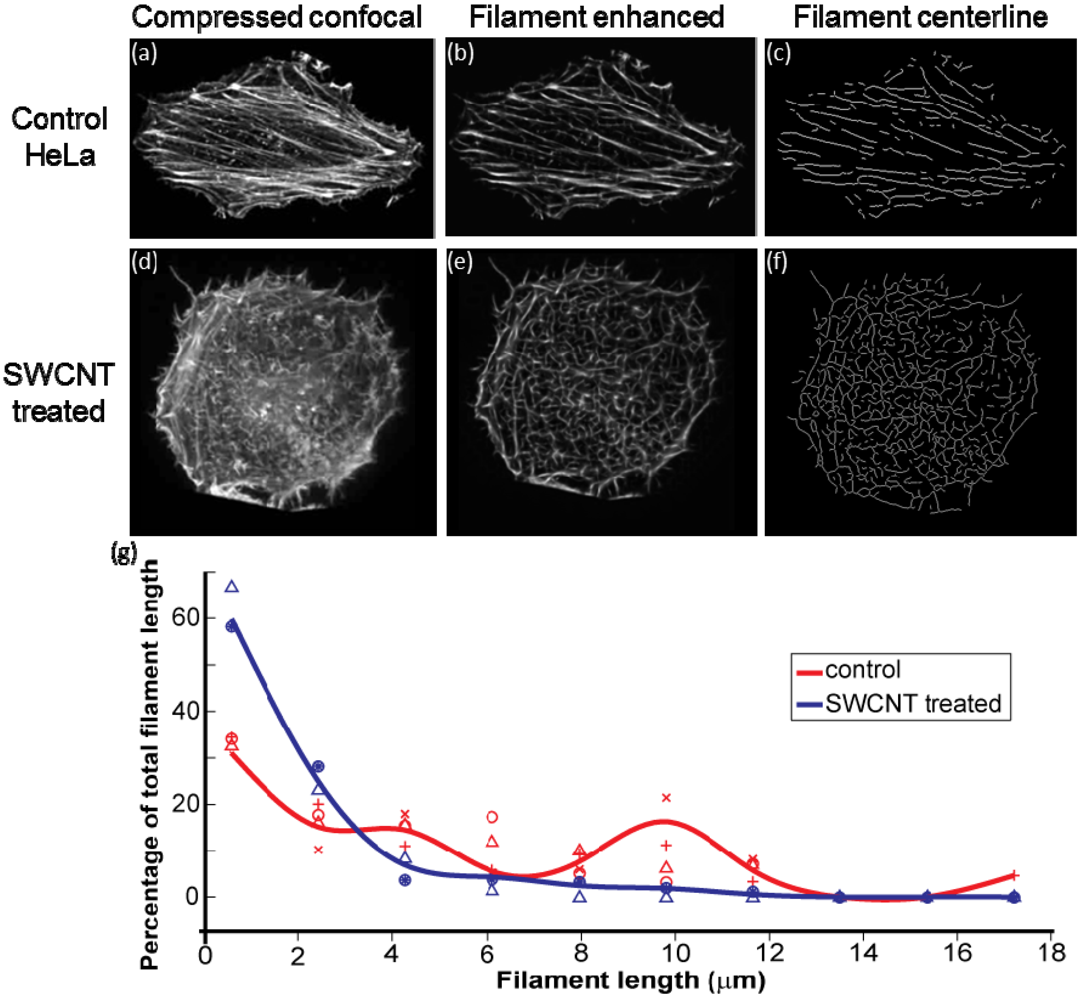
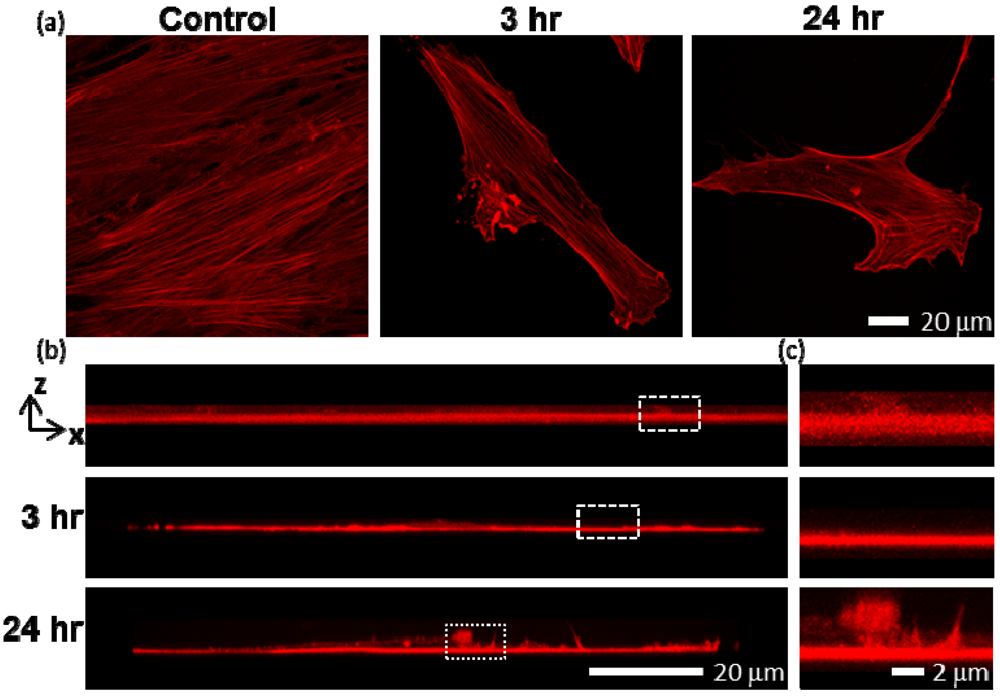
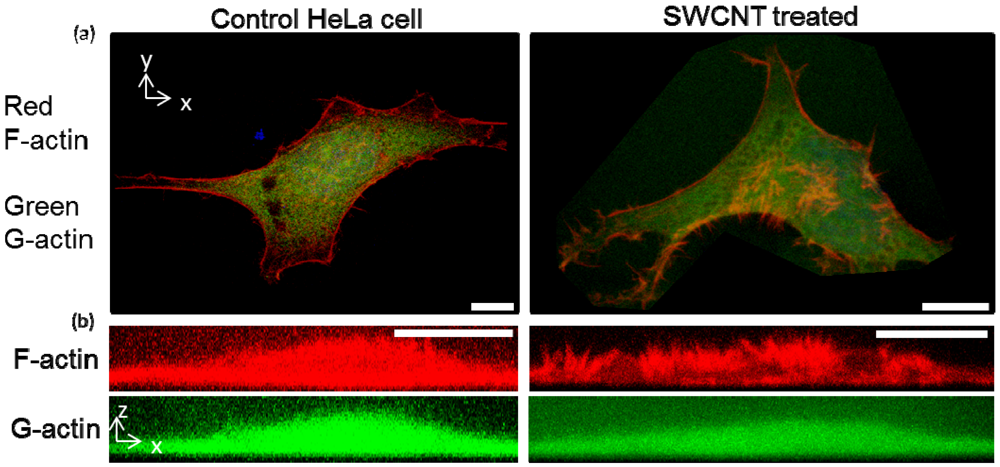
2.1.1. Actin Filament Redistribution in Human Cells


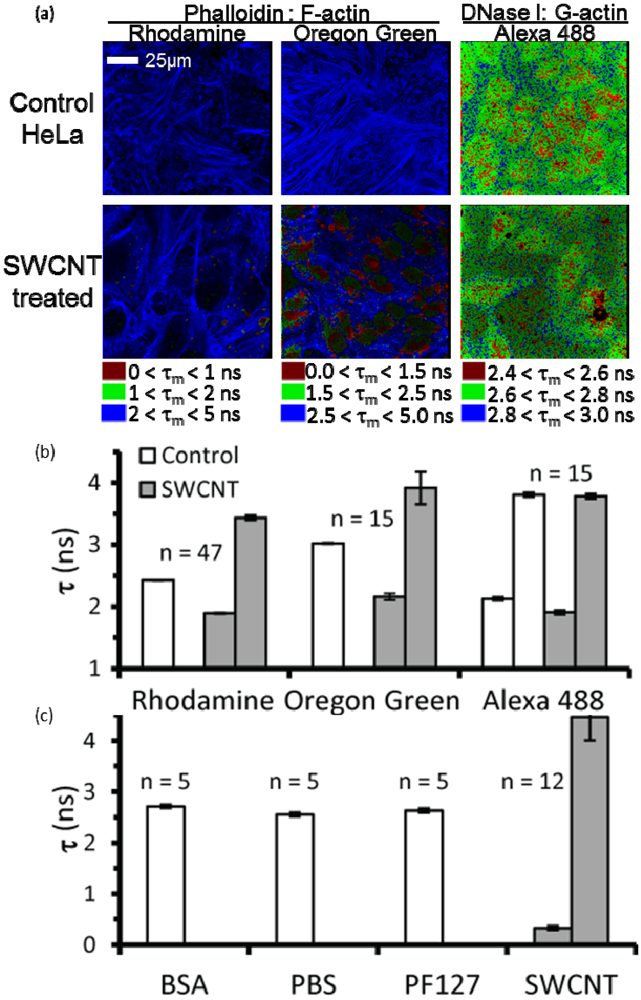
2.1.2. FLIM Shows F-actin-SWCNT Interactions in Vitro and in Situ

2.1.3. Molecular Interactions with Filamentous Actin
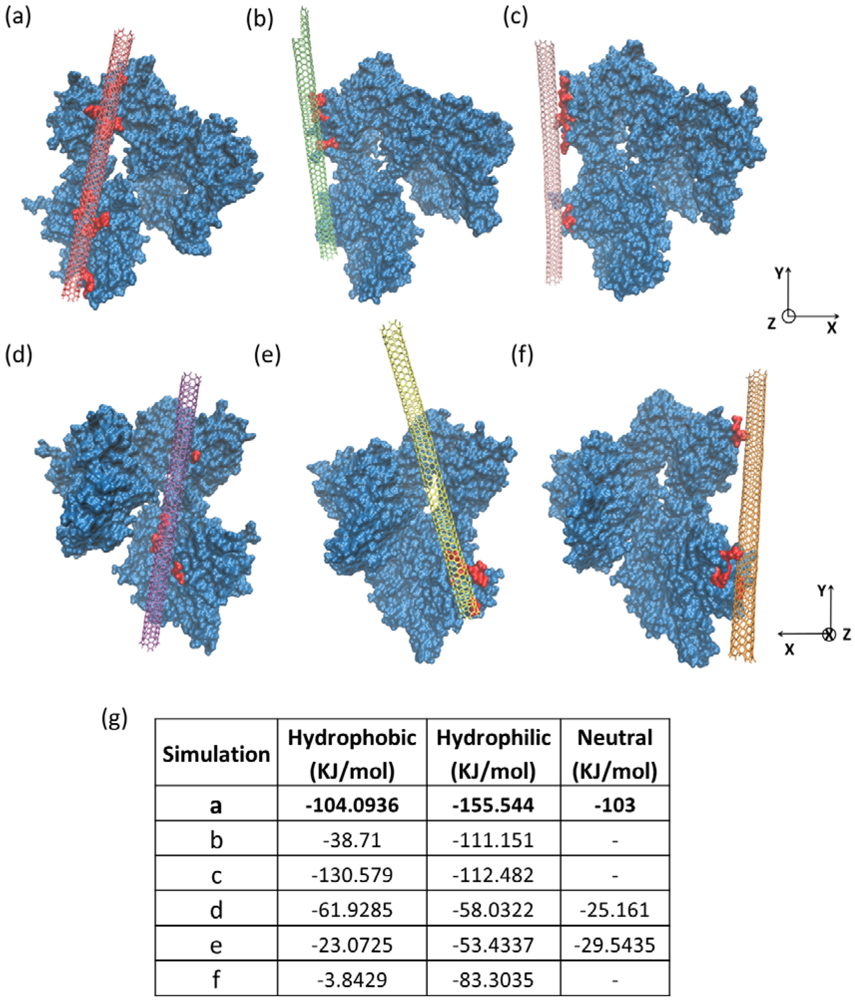

| Charged | Polar | Hydrophobic | ||||||||||||||
|---|---|---|---|---|---|---|---|---|---|---|---|---|---|---|---|---|
| Amino acid | Asp | Arg | Glu | Lys | His | Ser | Asn | Gln | Thr | Tyr | Ile | Gly | Pro | Ala | Phe | Val |
| Energy (−kJ/mol) | 26.4 | 31.4 | 19.7 | 18.7 | 19.0 | 29.6 | 25.2 | 28.1 | 27.1 | 47.0 | 37.4 | 10.4 | 20.7 | 14.0 | 32.7 | 18.8 |
| % interacting residues | 19 | 13 | 8 | 6 | 4 | 6 | 2 | 2 | 2 | 2 | 12 | 8 | 8 | 4 | 4 | 2 |
| F-actin | SWCNTs | |
|---|---|---|
| Lp (μm) | 17 | 22 |
| D (nm) | 6 | 0.7–1.3 |
| Lc (μm) | ~(10) | 0.150 |
| E (GPa) | 1 | 1,000 |
2.1.4. SWCNT-Actin Interactions
2.2. SWCNTs Alter F-Actin Function
2.2.1. Myosin II Partially Redistributes with Altered F-Actin Structures
2.2.2. SWCNT Treatment Alters Cell Force Generation
2.2.3. Cellular Functions Altered by High Levels of SWCNT-F-actin Interactions
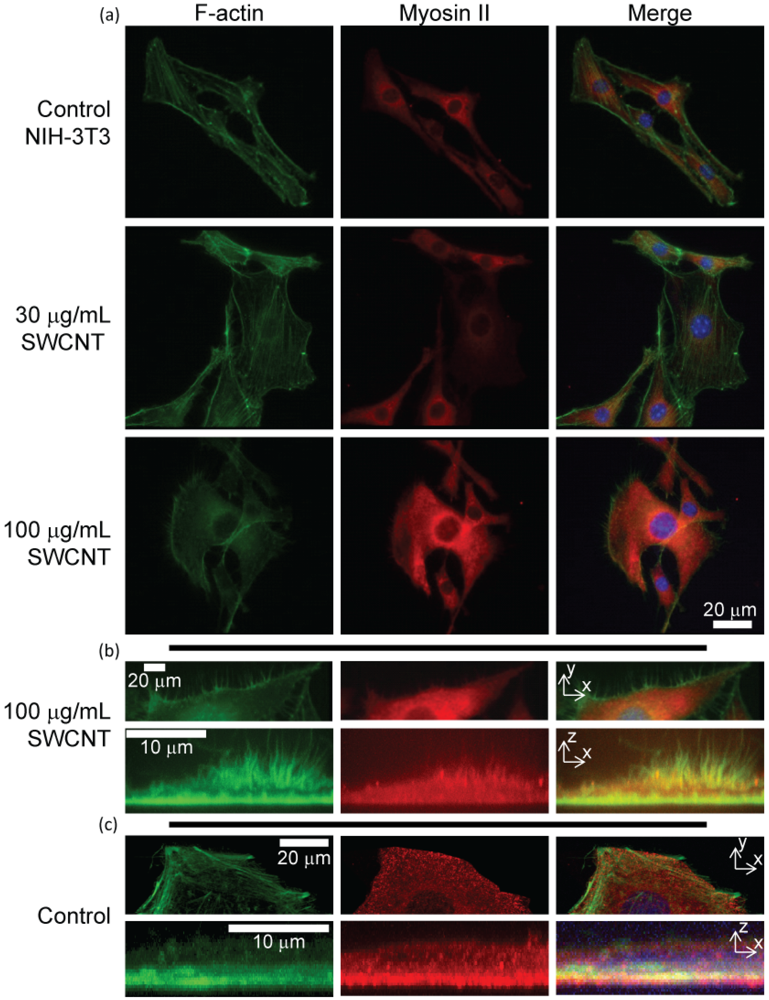
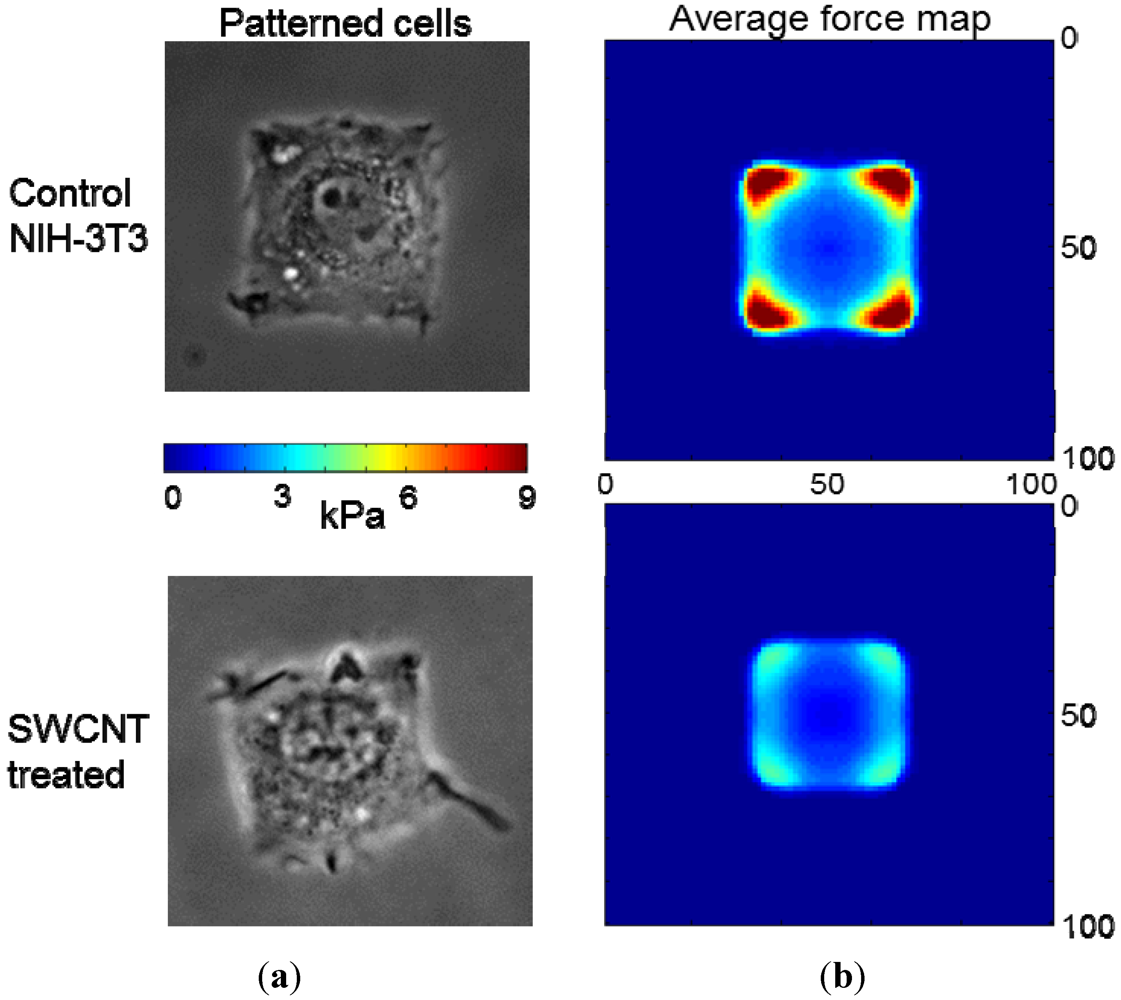
3. Experimental Section
3.1. Synthesis of SWCNTs
3.2. Cell Culture
3.2.1. HeLa
3.2.2. NIH-3T3
3.2.3. hMSC
3.2.4. Incubation with SWCNTs
3.3. Microscopy
3.3.1. Fixation and Labeling
3.3.2. Widefield and Confocal Fluorescence Imaging
3.3.3. FLIM
3.3.4. Traction Force Microscopy
3.4. Filament Image Processing
3.5. Molecular Dynamics Simulation
4. Conclusions
Supplementary Files
Acknowledgments
References
- Dresselhaus, M.S.; Dresselhaus, G.; Eklund, P.C. Science of Fullerenes and Carbon Nanotubes; Academic Press: San Diego, CA, USA, 1996. [Google Scholar]
- Saito, R.; Dresselhaus, G.; Dresselhaus, M.S. Physical Properties of Carbon Nanotubes; Imperial College Press: London, UK, 1998. [Google Scholar]
- Treacy, M.M.J.; Ebbesen, T.W.; Gibson, J.M. Exceptionally high young’s modulus observed for individual carbon nanotubes. Nature 1996, 381, 678–680. [Google Scholar] [CrossRef]
- Odom, T.W.; Huang, J.L.; Kim, P.; Lieber, C.M. Atomic structure and electronic properties of single-walled carbon nanotubes. Nature 1998, 391, 62–64. [Google Scholar] [CrossRef]
- Wildoer, J.W.G.; Venema, L.C.; Rinzler, A.G.; Smalley, R.E.; Dekker, C. Electronic structure of atomically resolved carbon nanotubes. Nature 1998, 391, 59–62. [Google Scholar]
- O’Connell, M.J.; Bachilo, S.M.; Huffman, C.B.; Moore, V.C.; Strano, M.S.; Haroz, E.H.; Rialon, K.L.; Boul, P.J.; Noon, W.H.; Kittrell, C.; et al. Band gap fluorescence from individual single-walled carbon nanotubes. Science 2002, 297, 593–596. [Google Scholar]
- Vashist, S.K.; Zheng, D.; Al-Rubeaan, K.; Luong, J.H.T.; Sheu, F.S. Advances in carbon nanotube based electrochemical sensors for bioanalytical applications. Biotechnol. Adv. 2011, 29, 169–188. [Google Scholar] [CrossRef]
- Bandaru, P.R. Electrical properties and applications of carbon nanotube structures. J. Nanosci. Nanotechnol. 2007, 7, 1239–1267. [Google Scholar] [CrossRef]
- Cherukuri, P.; Gannon, C.J.; Leeuw, T.K.; Schmidt, H.K.; Smalley, R.E.; Curley, S.A.; Weisman, R.B. Mammalian pharmacokinetics of carbon nanotubes using intrinsic near-infrared fluorescence. Proc. Natl. Acad. Sci. USA 2006, 103, 18882–18886. [Google Scholar]
- Liu, Z.; Cai, W.B.; He, L.N.; Nakayama, N.; Chen, K.; Sun, X.M.; Chen, X.Y.; Dai, H.J. In vivo bbiodistribution and highly efficient tumour targeting of carbon nanotubes in mice. Nat. Nanotechnol. 2007, 2, 47–52. [Google Scholar] [CrossRef]
- Welsher, K.; Sherlock, S.P.; Dai, H. Deep-tissue anatomical imaging of mice using carbon nanotube fluorophores in the second near-infrared window. Proc. Natl. Acad. Sci. USA 2011, 108, 8943–8948. [Google Scholar]
- Riemenschneider, J.; Temmen, H.; Monner, H.P. CNT based actuators: Experimental and theoretical investigation of the in-plain strain generation. J. Nanosci. Nanotechnol. 2007, 7, 3359–3364. [Google Scholar] [CrossRef]
- Herrero, M.A.; Toma, F.M.; Al-Jamal, K.T.; Kostarelos, K.; Bianco, A.; Da Ros, T.; Bano, F.; Casalis, L.; Scoles, G.; Prato, M. Synthesis and characterization of a carbon nanotube-dendron series for efficient siRNA delivery. J. Am. Chem. Soc. 2009, 131, 9843–9848. [Google Scholar]
- Liu, Z.; Tabakman, S.; Welsher, K.; Dai, H. Carbon nanotubes in biology and medicine: In vitro and in vivo detection, imaging and drug delivery. Nano Res. 2009, 2, 85–120. [Google Scholar] [CrossRef]
- Lu, Q.; Moore, J.M.; Huang, G.; Mount, A.S.; Rao, A.M.; Larcom, L.L.; Ke, P.C. RNA polymer translocation with single-walled ccarbon nanotubes. Nano Lett. 2004, 4, 2473–2477. [Google Scholar]
- Pantarotto, D.; Singh, R.; McCarthy, D.; Erhardt, M.; Briand, J.P.; Prato, M.; Kostarelos, K.; Bianco, A. Functionalized carbon nanotubes for flasmid DNA gene delivery. Angew. Chem. Int. Ed. 2004, 43, 5242–5246. [Google Scholar]
- Feazell, R.P.; Nakayama-Ratchford, N.; Dai, H.; Lippard, S.J. Soluble single-walled carbon nanotubes as longboat delivery systems for Platinum(IV) anticancer drug design. J. Am. Chem. Soc. 2007, 129, 8438–8439. [Google Scholar]
- Li, R.B.; Wu, R.; Zhao, L.; Wu, M.H.; Yang, L.; Zou, H.F. P-glycoprotein antibody functionalized carbon nanotube overcomes the multidrug resistance of human leukemia cells. ACS Nano 2010, 4, 1399–1408. [Google Scholar] [CrossRef]
- Liu, Z.; Chen, K.; Davis, C.; Sherlock, S.; Cao, Q.Z.; Chen, X.Y.; Dai, H. Drug delivery with carbon nanotubes for in vivo cancer treatment. Cancer Res. 2008, 68, 6652–6660. [Google Scholar]
- Tripisciano, C.; Kraemer, K.; Taylor, A.; Borowiak-Palen, E. Single-wall carbon nanotubes based anticancer drug delivery system. Chem. Phys. Lett. 2009, 478, 200–205. [Google Scholar] [CrossRef]
- Wu, W.; Wieckowski, S.; Pastorin, G.; Benincasa, M.; Klumpp, C.; Briand, J.P.; Gennaro, R.; Prato, M.; Bianco, A. Targeted delivery of amphotericin B to cells by using functionalized carbon nanotubes. Angew. Chem. Int. Ed. 2005, 44, 6358–6362. [Google Scholar]
- Zhang, X.K.; Meng, L.J.; Lu, Q.H.; Fei, Z.F.; Dyson, P.J. Targeted delivery and controlled release of doxorubicin to cancer cells using modified single wall carbon nanotubes. Biomaterials 2009, 30, 6041–6047. [Google Scholar]
- Kam, N.W.S.; O’Connell, M.; Wisdom, J.A.; Dai, H.J. Carbon nanotubes as multifunctional biological transporters and near-infrared agents for selective cancer cell destruction. Proc. Natl. Acad. Sci. USA 2005, 102, 11600–11605. [Google Scholar]
- Lovat, V.; Pantarotto, D.; Lagostena, L.; Cacciari, B.; Grandolfo, M.; Righi, M.; Spalluto, G.; Prato, M.; Ballerini, L. Carbon nanotube substrates boost neuronal electrical signaling. Nano Lett. 2005, 5, 1107–1110. [Google Scholar] [CrossRef]
- Namgung, S.; Kim, T.; Baik, K.Y.; Lee, M.; Nam, J.M.; Hong, S. Fibronectin-carbon-nanotube hybrid nanostructures for controlled cell growth. Small 2011, 7, 56–61. [Google Scholar]
- Harrison, B.S.; Atala, A. Carbon nanotube applications for tissue engineering. Biomaterials 2007, 28, 344–353. [Google Scholar] [CrossRef]
- Bandyopadhyaya, R.; Nativ-Roth, E.; Regev, O.; Yerushalmi-Rozen, R. Stabilization of individual carbon nanotubes in aqueous solutions. Nano Lett. 2002, 2, 25–28. [Google Scholar] [CrossRef]
- Dumortier, G.; Grossiord, J.; Agnely, F.; Chaumeil, J. A review of poloxamer 407 pharmaceutical and pharmacological characteristics. Pharm. Res. 2006, 23, 2709–2728. [Google Scholar] [CrossRef]
- Yaron, P.; Holt, B.; Short, P.; Losche, M.; Islam, M.; Dahl, K. Single wall carbon nanotubes enter cells by endocytosis and not membrane penetration. J. Nanobiotechnol. 2011, 9, 45:1–45:15. [Google Scholar]
- Holt, B.D.; Short, P.A.; Rape, A.D.; Wang, Y.L.; Islam, M.F.; Dahl, K.N. Carbon nanotubes reorganize actin structures in cells and ex vivo. ACS Nano 2010, 4, 4872–4878. [Google Scholar]
- Pollard, T.D.; Earnshaw, W.C.; Lippincott-Schwartz, J. Cell Biology, 2nd ed; Elsevier Inc.: Philadelphia, PA, USA, 2008. [Google Scholar]
- Brown, A.; Discher, D.E. Conformational changes and signaling in cell and matrix physics. Curr. Biol. 2009, 19, R781–R789. [Google Scholar]
- Discher, D.E.; Mooney, D.J.; Zandstra, P.W. Growth factors, matrices, and forces combine and control stem cells. Science 2009, 324, 1673–1677. [Google Scholar]
- Janmey, P. Mechanical properties of cytoskeletal polymers. Curr. Opin. Cell Biol. 1991, 3, 4–11. [Google Scholar] [CrossRef]
- Janmey, P.A.; Chaponnier, C. Medical aspects of the actin cytoskeleton. Curr. Opin. Cell Biol. 1995, 7, 111–117. [Google Scholar] [CrossRef]
- Rape, A.D.; Guo, W.-H.; Wang, Y.-L. The Regulation of traction force in relation to cell shape and focal adhesions. Biomaterials 2011, 32, 2043–2051. [Google Scholar]
- Wang, Y.-L. Dynamics of the cytoskeleton in live cells. Curr. Opin. Cell Biol. 1991, 3, 27–32. [Google Scholar] [CrossRef]
- Cui, D.X.; Tian, F.R.; Ozkan, C.S.; Wang, M.; Gao, H.J. Effect of single wall carbon nanotubes on human HEK293 cells. Toxicol. Lett. 2005, 155, 73–85. [Google Scholar] [CrossRef]
- Kaiser, J.-P.; Wick, P.; Manser, P.; Spohn, P.; Bruinink, A. Single walled carbon nanotubes (swcnt) affect cell physiology and cell architecture. J. Mater. Sci. Mater. Med. 2008, 19, 1523–1527. [Google Scholar] [CrossRef]
- Liu, D.; Yi, C.; Zhang, D.; Zhang, J.; Yang, M. Inhibition of proliferation and differentiation of mesenchymal stem cells by carboxylated carbon nanotubes. ACS Nano 2010, 4, 2185–2195. [Google Scholar]
- Luoto, K.; Holopainen, M.; Perander, M.; Karppinen, K.; Savolainen, K.M. Cellular effects of particles-impact of dissolution on toxicity of man-made mineral fibers. Cent. Eur. J. Public Health 1996, 4, S29–S32. [Google Scholar]
- Shvedova, A.A.; Castranova, V.; Kisin, E.R.; Schwegler-Berry, D.; Murray, A.R.; Gandelsman, V.Z.; Maynard, A.; Baron, P. Exposure to carbon nanotube material: Assessment of canotube cytotoxicity using human keratinocyte cells. J. Toxicol. Environ. Health. Part A 2003, 66, 1909–1926. [Google Scholar]
- Tkach, A.V.; Shurin, G.V.; Shurin, M.R.; Kisin, E.R.; Murray, A.R.; Young, S.H.; Star, A.; Fadeel, B.; Kagan, V.E.; Shvedova, A.A. Direct effects of carbon nanotubes on dendritic cells induce immune suppression upon pulmonary exposure. ACS Nano 2011, 5, 5755–5762. [Google Scholar]
- Yehia, H.; Draper, R.; Mikoryak, C.; Walker, E.; Bajaj, P.; Musselman, I.; Daigrepont, M.; Dieckmann, G.; Pantano, P. Single-walled carbon nanotube interactions with hela cells. J. Nanobiotechnol. 2007, 5, 8:1–8:17. [Google Scholar]
- Holt, B.D.; Dahl, K.N.; Islam, M.F. Quantification of uptake and localization of bovine serum albumin-stabilized single-wall carbon nanotubes in different human cell types. Small 2011, 7, 2348–2355. [Google Scholar] [CrossRef]
- Caplan, A.I. Mesenchymal stem cells. J. Orthop. Res. 1991, 9, 641–650. [Google Scholar] [CrossRef]
- Caplan, A.I.; Bruder, S.P. Mesenchymal stem cells: Building blocks for molecular medicine in the 21st century. Trends Mol. Med. 2001, 7, 259–264. [Google Scholar] [CrossRef]
- Berezin, M.Y.; Achilefu, S. Fluorescence lifetime measurements and biological imaging. Chem. Rev. 2010, 110, 2641–2684. [Google Scholar] [CrossRef]
- Shams, H. Molecular dynamics simulation of Actin-CNT interaction. 2012; in submit. [Google Scholar]
- Islam, M.F.; Milkie, D.E.; Torrens, O.N.; Yodh, A.G.; Kikkawa, J.M. Magnetic heterogeneity and alignment of single wall carbon nanotubes. Phys. Rev. B 2005, 71, 037404:1–037404:4. [Google Scholar]
- Islam, M.F.; Rojas, E.; Bergey, D.M.; Johnson, A.T.; Yodh, A.G. High weight fraction surfactant solubilization of single-wall carbon nanotubes in water. Nano Lett. 2003, 3, 269–273. [Google Scholar] [CrossRef]
- Johnston, D.E.; Islam, M.F.; Yodh, A.G.; Johnson, A.T. Electronic devices based on purified carbon nanotubes grown by high-pressure decomposition of carbon monoxide. Nat. Mater. 2005, 4, 589–592. [Google Scholar] [CrossRef]
- Becker, W. The bh TCSPC Handbook, 3rd ed; Becker & Hickl GmbH: Berlin, Germany, 2008. [Google Scholar]
- Duncan, R.R.; Bergmann, A.; Cousin, M.A.; Apps, D.K.; Shipston, M.J. Multi-dimensional time-correlated single photon counting (TCSPC) fluorescence lifetime imaging microscopy (FLIM) to detect FRET in cells. J. Microsc. 2004, 215, 1–12. [Google Scholar] [CrossRef]
- Köllner, M.; Wolfrum, J. How many photons are necessary for fluorescence-lifetime measurements? Chem. Phys. Lett. 1992, 200, 199–204. [Google Scholar] [CrossRef]
- Dembo, M.; Wang, Y.-L. Stresses at the cell-to-substrate interface during locomotion of fibroblasts. Biophys. J. 1999, 76, 2307–2316. [Google Scholar] [CrossRef]
- Otsu, N. A threshold selection method from gray-level histograms. IEEE Trans. Sys. Man Cyber. 1979, 9, 62–66. [Google Scholar]
- Blum, H. A transformation for extracting new descriptors of shape. In Models for the Perception of Speech and Visual Form; Wathen-Dunn, W., Ed.; MIT Press: Boston, MA, USA, 1967; pp. 362–380. [Google Scholar]
- Basu, S.; Dahl, K.N.; Rohde, G.K. A new accurate method for detecting subcellular filament structures from microscopy image data. In Proceedings of Extended Abstract for CYTO 2012-XXVII Congress of the International Society for Advancement of Cytometry, Leipzig, Germany, 23–27 June 2012.
- Galkin, V.E.; Orlova, A.; Salmazo, A.; Djinovic-Carugo, K.; Egelman, E.H. Opening of tandem calponin homology domains regulates their affinity for F-actin. Nature 2010, 17, 614–616. [Google Scholar]
- Van der Spoel, D.; Lindahl, E.; Hess, B.; Groenhof, G.; Mark, A.E.; Berendsen, H.J.C. GROMACS: Fast, flexible and free. J. Comput. Chem. 2005, 26, 1701–1718. [Google Scholar] [CrossRef]
- Van Gunsteren, W.F.; Billeter, S.R.; Eising, A.A.; Hünenberger, P.H.; Krüger, P.; Mark, A.E.; Scott, W.R.P.; Tironi, I.G. Biomolecular Simulation: The GROMOS96 Manual and User Guide; vdf Hochschulverlag AG an der ETH Zürich: Zürich, Switzerland, 1996. [Google Scholar]
- Humphrey, W.; Dalke, A.; Schulten, K. VMD-visual molecular dynamics. J. Mol. Graphics 1996, 14, 33–38. [Google Scholar] [CrossRef]
© 2012 by the authors; licensee MDPI, Basel, Switzerland. This article is an open access article distributed under the terms and conditions of the Creative Commons Attribution license (http://creativecommons.org/licenses/by/3.0/).
Share and Cite
Holt, B.D.; Shams, H.; Horst, T.A.; Basu, S.; Rape, A.D.; Wang, Y.-L.; Rohde, G.K.; Mofrad, M.R.K.; Islam, M.F.; Dahl, K.N. Altered Cell Mechanics from the Inside: Dispersed Single Wall Carbon Nanotubes Integrate with and Restructure Actin. J. Funct. Biomater. 2012, 3, 398-417. https://doi.org/10.3390/jfb3020398
Holt BD, Shams H, Horst TA, Basu S, Rape AD, Wang Y-L, Rohde GK, Mofrad MRK, Islam MF, Dahl KN. Altered Cell Mechanics from the Inside: Dispersed Single Wall Carbon Nanotubes Integrate with and Restructure Actin. Journal of Functional Biomaterials. 2012; 3(2):398-417. https://doi.org/10.3390/jfb3020398
Chicago/Turabian StyleHolt, Brian D., Hengameh Shams, Travis A. Horst, Saurav Basu, Andrew D. Rape, Yu-Li Wang, Gustavo K. Rohde, Mohammad R. K. Mofrad, Mohammad F. Islam, and Kris Noel Dahl. 2012. "Altered Cell Mechanics from the Inside: Dispersed Single Wall Carbon Nanotubes Integrate with and Restructure Actin" Journal of Functional Biomaterials 3, no. 2: 398-417. https://doi.org/10.3390/jfb3020398
APA StyleHolt, B. D., Shams, H., Horst, T. A., Basu, S., Rape, A. D., Wang, Y.-L., Rohde, G. K., Mofrad, M. R. K., Islam, M. F., & Dahl, K. N. (2012). Altered Cell Mechanics from the Inside: Dispersed Single Wall Carbon Nanotubes Integrate with and Restructure Actin. Journal of Functional Biomaterials, 3(2), 398-417. https://doi.org/10.3390/jfb3020398