

<?xml version="1.0" encoding="UTF-8"?>
<!DOCTYPE article PUBLIC "-//NLM//DTD Journal Publishing DTD v2.3 20070202//EN" "journalpublishing.dtd">
<article xmlns:mml="http://www.w3.org/1998/Math/MathML" xmlns:xlink="http://www.w3.org/1999/xlink" xml:lang="en" article-type="review-article" dtd-version="2.3">
  <front>
    <journal-meta>
      <journal-id journal-id-type="publisher-id">toxins</journal-id>
      <journal-title>Toxins</journal-title>
      <abbrev-journal-title abbrev-type="publisher">Toxins</abbrev-journal-title>
      <abbrev-journal-title abbrev-type="pubmed">Toxins</abbrev-journal-title>
      <issn pub-type="epub">2072-6651</issn>
      <publisher>
        <publisher-name>MDPI</publisher-name>
      </publisher>
    </journal-meta>
    <article-meta>
      <article-id pub-id-type="doi">10.3390/toxins7124862</article-id>
      <article-id pub-id-type="publisher-id">toxins-07-04862</article-id>
      <article-categories>
        <subj-group>
          <subject>Review</subject>
        </subj-group>
      </article-categories>
      <title-group>
        <article-title>Recent Advances in Research on Widow Spider Venoms and Toxins</article-title>
      </title-group>
      <contrib-group>
        <contrib contrib-type="author">
          <name>
            <surname>Yan</surname>
            <given-names>Shuai</given-names>
          </name>
        </contrib>
        <contrib contrib-type="author">
          <name>
            <surname>Wang</surname>
            <given-names>Xianchun</given-names>
          </name>
          <xref rid="c1-toxins-07-04862" ref-type="corresp">*</xref>
        </contrib>
        <contrib contrib-type="editor">
          <name>
            <surname>Lewis</surname>
            <given-names>Richard J.</given-names>
          </name>
          <role>Academic Editor</role>
        </contrib>
        <contrib contrib-type="editor">
          <name>
            <surname>King</surname>
            <given-names>Glenn F.</given-names>
          </name>
          <role>Academic Editor</role>
        </contrib>
      </contrib-group>
      <aff id="af1-toxins-07-04862">Key Laboratory of Protein Chemistry and Developmental Biology of Ministry of Education, College of Life Sciences, Hunan Normal University, Changsha 410081, China; <email>acemalcolm@163.com</email></aff>
      <author-notes>
        <corresp id="c1-toxins-07-04862"><label>*</label>Correspondence: <email>wang_xianchun@263.net</email>; Tel.: +86-731-8887-2556</corresp>
      </author-notes>
      <pub-date pub-type="epub">
        <day>27</day>
        <month>11</month>
        <year>2015</year>
      </pub-date>
      <pub-date pub-type="collection">        <month>12</month>
        <year>2015</year>
      </pub-date>
      <volume>7</volume>
      <issue>12</issue>
      <fpage>5055</fpage>
      <lpage>5067</lpage>
      <history>
        <date date-type="received">
          <day>02</day>
          <month>08</month>
          <year>2015</year>
        </date>
        <date date-type="accepted">
          <day>16</day>
          <month>11</month>
          <year>2015</year>
        </date>
      </history>
      <permissions>
        <copyright-statement>&#xA9; 2015 by the authors; licensee MDPI, Basel, Switzerland.</copyright-statement>
        <copyright-year>2015</copyright-year>
        <license>
          <p>This article is an open access article distributed under the terms and conditions of the Creative Commons by Attribution (CC-BY) license (http://creativecommons.org/licenses/by/4.0/).</p>
        </license>
      </permissions>
      <abstract>
        <p>Widow spiders have received much attention due to the frequently reported human and animal injures caused by them. Elucidation of the molecular composition and action mechanism of the venoms and toxins has vast implications in the treatment of latrodectism and in the neurobiology and pharmaceutical research. In recent years, the studies of the widow spider venoms and the venom toxins, particularly the &#x3B1;-latrotoxin, have achieved many new advances; however, the mechanism of action of the venom toxins has not been completely clear. The widow spider is different from many other venomous animals in that it has toxic components not only in the venom glands but also in other parts of the adult spider body, newborn spiderlings, and even the eggs. More recently, the molecular basis for the toxicity outside the venom glands has been systematically investigated, with four proteinaceous toxic components being purified and preliminarily characterized, which has expanded our understanding of the widow spider toxins. This review presents a glance at the recent advances in the study on the venoms and toxins from the <italic>Latrodectus</italic> species.</p>
      </abstract>
      <kwd-group>
        <kwd>widow spider</kwd>
        <kwd>venom</kwd>
        <kwd>toxin</kwd>
        <kwd>latrotoxin</kwd>
        <kwd>latroeggtoxin</kwd>
        <kwd>advance</kwd>
      </kwd-group>
    </article-meta>
  </front>
  <body>
    <sec id="sec1-toxins-07-04862" sec-type="intro">
      <title>1. Introduction</title>
      <p><italic>Latrodectus</italic> spp. belong to the family Theridiidae (Arthropoda, Arachnida, Araneae) [<xref ref-type="bibr" rid="B1-toxins-07-04862">1</xref>,<xref ref-type="bibr" rid="B2-toxins-07-04862">2</xref>]. The genus contains more than 30 species that are distributed worldwide, including China, Central Asia, Southern Europe, North and South America, India, and Australia [<xref ref-type="bibr" rid="B3-toxins-07-04862">3</xref>,<xref ref-type="bibr" rid="B4-toxins-07-04862">4</xref>,<xref ref-type="bibr" rid="B5-toxins-07-04862">5</xref>]. The <italic>Latrodectus</italic> spp. are highly venomous [<xref ref-type="bibr" rid="B6-toxins-07-04862">6</xref>] and responsible for a number of spider bites and envenomations around the world [<xref ref-type="bibr" rid="B7-toxins-07-04862">7</xref>]. <italic>Latrodectus</italic> spp. venoms have been studied extensively, initially focusing on <italic>L.</italic> <italic>tredecimguttatus</italic> and <italic>L.</italic> <italic>mactans</italic> [<xref ref-type="bibr" rid="B5-toxins-07-04862">5</xref>,<xref ref-type="bibr" rid="B8-toxins-07-04862">8</xref>], but more recently on other <italic>Latrodectus</italic> spp. venoms [<xref ref-type="bibr" rid="B3-toxins-07-04862">3</xref>]. <italic>Latrodectus</italic> spp. are called widow spiders because some females eat the male after mating [<xref ref-type="bibr" rid="B9-toxins-07-04862">9</xref>]. Widow spiders are most often black&#x2014;hence the common name &#x201C;black widow&#x201D;&#x2014;and usually have a red hourglass on the ventral side of their abdomen. The large venom glands and long fangs of the female black widow spiders, commonly used for predation and defense, are adequate to constitute a danger to human beings and, therefore, many cases of envenomation have been presented [<xref ref-type="bibr" rid="B10-toxins-07-04862">10</xref>]. The distant part of each chelicerae is a mobile hollow fang that penetrates the skin during a bite, injecting venom into the prey [<xref ref-type="bibr" rid="B11-toxins-07-04862">11</xref>]. Envenomation by the spider causes neurotoxic symptoms such as sharp pain around the site of bite, whereafter diaphoresis, hypertension, patchy paralysis, <italic>etc.</italic>, may occur [<xref ref-type="bibr" rid="B3-toxins-07-04862">3</xref>]. Although death is rare, remarkable and distressing discomfort is representative [<xref ref-type="bibr" rid="B12-toxins-07-04862">12</xref>], and in many situations a systematic manifestation called latrodectism was developed [<xref ref-type="bibr" rid="B13-toxins-07-04862">13</xref>] which is thought to be associated with an exhaustive release of the neurotransmitters, especially norepinephrine and acetylcholine, due to spider envenomation [<xref ref-type="bibr" rid="B14-toxins-07-04862">14</xref>,<xref ref-type="bibr" rid="B15-toxins-07-04862">15</xref>]. For many decades, antivenom has been considered an effective treatment of latrodectism [<xref ref-type="bibr" rid="B16-toxins-07-04862">16</xref>]. However, in a recent report, Isbister <italic>et al.</italic> [<xref ref-type="bibr" rid="B17-toxins-07-04862">17</xref>] claimed that antivenom was no more effective than placebo in treating latrodectism in Australia, which is at odds with both the past literature and extensive independent clinical experience and needs to be further confirmed [<xref ref-type="bibr" rid="B16-toxins-07-04862">16</xref>].</p>
      <p>Interestingly, different from many other venomous animals including snakes and some other spider species that have toxins only in their venom glands, black widow spiders have toxins not only in their venom glands, but also throughout their body, including in the legs and abdomen, and even in the eggs and newborn spiderlings [<xref ref-type="bibr" rid="B18-toxins-07-04862">18</xref>,<xref ref-type="bibr" rid="B19-toxins-07-04862">19</xref>,<xref ref-type="bibr" rid="B20-toxins-07-04862">20</xref>,<xref ref-type="bibr" rid="B21-toxins-07-04862">21</xref>], which is speculated to be helpful for increasing the probability of individual survival and species continuation. The black widow spider materials, including the venom, eggs, and spider body tissues, can be deemed as a valuable library of biologically active molecules. Inquiries into the venoms and toxins have major significance not only in treatment of the latrodectism, but also in pharmaceutical research and tool reagent development which is supposed to be helpful to elucidate pathological and physiological processes. This review presents a glance at the main advances in recent years in the study of widow spider venoms and toxins.</p>
    </sec>
    <sec id="sec2-toxins-07-04862">
      <title>2. Physiological and Biochemical Analysis of Venoms</title>
      <sec id="sec2dot1-toxins-07-04862">
        <title>2.1. Physiological Analysis</title>
        <p>The venom secreted by widow spider venom glands is a complex mixture of components with diverse biological functions. Many of them are biologically active proteins and peptides, which play a number of adaptive roles: paralyzing, immobilizing, killing, liquefying prey, and restricting competitors [<xref ref-type="bibr" rid="B5-toxins-07-04862">5</xref>]. From early times there have been sporadic reports on the toxicity of the venom of black widow spiders [<xref ref-type="bibr" rid="B5-toxins-07-04862">5</xref>,<xref ref-type="bibr" rid="B22-toxins-07-04862">22</xref>]. In recent years, the systematic analyses of black widow venoms have deepened our understanding of the spider toxicity. For example, before long, the effect of a Chilean black widow spider (<italic>L. mactans</italic>) venom on bovine spermatozoa was investigated. The results indicated that the venom increased the Ca<sup>2+</sup> influx with an EC<sub>50</sub> of 6.1 &#x3BC;g/mL and triggered the acrosome reaction in 43.26% of the cells. The application of potassium (10 mM K<sup>+</sup>) or venom (10 &#x3BC;g/mL) did not affect the morphology or DNA stability of the sperm. The effects induced by high K<sup>+</sup> and venom suggest that direct blocking of K<sup>+</sup> currents alters the passive properties of the plasma membrane, leading to the entry of Ca<sup>2+</sup>. These results show the importance of functional changes induced by depolarizing the spermatozoa and by the venom. This venom possesses one or more molecules that may be used as pharmacological tools for studies on spermatozoa and have potential applications in reproductive biotechnology [<xref ref-type="bibr" rid="B23-toxins-07-04862">23</xref>,<xref ref-type="bibr" rid="B24-toxins-07-04862">24</xref>]. When the brown widow spider (<italic>L. geometricus</italic>) venom was investigated, it was found that the venom damaged the adrenal gland, producing severe alterations on cortex cells and resulting in death by acute adrenal insufficiency. The venom was confirmed to contain fibrinogenolytic and other proteolytic activities, showing specific actions on extracellular matrix proteins such as fibronectin, laminin, collagen type IV, and fibrinogen that might play certain roles in the spider toxicity [<xref ref-type="bibr" rid="B25-toxins-07-04862">25</xref>]. Wang <italic>et al.</italic> [<xref ref-type="bibr" rid="B26-toxins-07-04862">26</xref>] employed multiple physiological and biochemical strategies to systematically analyze the electrical stimulation-collected black widow spider (<italic>L. tredecimguttatus</italic>) venom that was not contaminated with histiocytic proteins and other components and, therefore, was more representative of the pure venom. The venom was demonstrated by gel electrophoresis and mass spectrometry to consist primarily of proteins with molecular masses above 10 kDa, most of which are high-molecular-mass acidic proteins, with fewer proteins and peptides below 10 kDa. The most abundant proteins are distributed around 100 kDa. The venom was demonstrated to be rich in neurotoxins because injection of the venom in mice and <italic>P. americana</italic> led to obvious poisoning symptoms, with LD<sub>50</sub> values of 0.16 mg/kg and 1.87 &#x3BC;g/g, respectively. In addition, the venom could efficiently block the neuromuscular transmission in isolated mouse phrenic nerve-hemidiaphragm and rat vas deferens preparations, and the low-molecular-mass fraction (&lt;10 kDa) of the venom had no obvious effect on the transmission, suggesting that the mammalian toxicity of the venom is primarily based on its larger proteins. Enzymatic analysis indicated that the venom contains multiple kinds of hydrolases, including proteinases, hyaluronidase, alkaline, and acid phosphatases. All of the data demonstrate that the venoms are rich in ion channel modulators and metabolic enzymes, particularly the proteolytic enzymes that can enhance the action of the toxins by breaking down the intercellular reinforcements and basement membrane molecules.</p>
      </sec>
      <sec id="sec2dot2-toxins-07-04862">
        <title>2.2. Whole Venom Proteomics</title>
        <p>The complexity of black widow spider venom has long been appreciated by researchers in the fields of toxicology and medicine. However, it is the recent advances in protein separation and biological mass spectrometry that allow virtually all venom components to be effectively separated and identified. In 2008, Duan <italic>et al.</italic> [<xref ref-type="bibr" rid="B27-toxins-07-04862">27</xref>] employed a combinative strategy to make a proteomic analysis of the venom collected from living adult spiders (<italic>L. tredecimguttatus</italic>) by electrical stimulation. A total of 122 non-redundant venom proteins were unambiguously identified, 75 of which had distinct function annotation. Besides the previously reported widow spider venom proteins including latrotoxins, a variety of hydrolases and other proteins with special activity were found in the venom, such as proteinase, phospholipase, phosphatase, nuclease, fucolectin, venom allergen antigen 5-like protein, and trypsin inhibitor. These results help to understand the complexity and action mechanism of black widow spider venom. Up until now, the mechanism of action of the black widow spider venom has not been completely clear. It was speculated that the intoxication after a bite by a black widow spider must be related to, besides latrotoxins, other venom components such as hydrolases. Hydrolases have also been identified in the venoms of several snakes and other spider species, and some hydrolases, particularly the proteases such as metalloproteases and serine proteases, were demonstrated to have some participation in the noxious effects of the venoms [<xref ref-type="bibr" rid="B28-toxins-07-04862">28</xref>,<xref ref-type="bibr" rid="B29-toxins-07-04862">29</xref>,<xref ref-type="bibr" rid="B30-toxins-07-04862">30</xref>]. Obviously, the hydrolases and other proteins with special activity in the black widow spider venom should have important potentials in enhancing venom toxicity and extending the venom action scope and model. In addition, there are 47 proteins being matched to predicted protein, hypothetical protein, and protein of unknown function, respectively. These proteins are also potential active components of the venom, which need to be further confirmed.</p>
        <p>In an attempt to uncover the dramatic expansion of the black widow toxin arsenal, Haney <italic>et al.</italic> [<xref ref-type="bibr" rid="B31-toxins-07-04862">31</xref>] used a proteomic strategy to determine the venom proteins from the Western black widow spider (<italic>L. hesperus</italic>). Sixty-one proteins were identified with the mass spectrometry technique from an <italic>L. hesperus</italic> protein database that matched peptides collected from <italic>L. hesperus</italic> venom, including 21 latrotoxins, one ICK (inhibitor cystine knot) toxin, and six CRISP (cysteine-rich secretory protein) family toxin proteins. Several types of enzymes were identified in the venom, including hyaluroidases, chitinase, serine proteases, and metalloproteases. These results demonstrate that <italic>L. hesperus</italic> and <italic>L. tredecimguttatus</italic> have similarities in the molecular basis of venom toxicity.</p>
      </sec>
    </sec>
    <sec id="sec3-toxins-07-04862">
      <title>3. Venom Gland Transcriptome</title>
      <p>To more comprehensively analyze the proteinaceous components in the venom, venom gland transpcriptomes have been paid much attention recently. In 2013, a venom gland transcriptome of the spider <italic>L. tredecimguttatus</italic> was constructed by using a combination of next-generation sequencing and conventional DNA sequencing, which resulted in the identification of 9666 and 480 high-confidence protein coding transcripts among 34334 <italic>de novo</italic> sequences and 1024 cDNA sequences, respectively. Functional analyses indicated that mRNAs involved in RNA transcription and spliceosome, protein translation, processing, and transport are highly enriched in the venom glands. Among the high-confidence proteins, 146 were demonstrated to be toxin-like proteins forming 12 families: &#x3B1;-LTX-Lt1a family 1, &#x3B1;-LTX-Lt1a family 2, &#x3B1;-LIX-Lt1a family, &#x3B4;-LIX-Lt1a family, Ank family, Theriditoxin family, SCP family, Ctenitoxin family, Trypsin family, Lycotoxin family, Orphan family, and Scorpion toxin like family (<xref ref-type="table" rid="toxins-07-04862-t001">Table 1</xref>). All six known toxins from <italic>L. tredecimguttatus</italic> and homologues to 16 known toxins from other species were included in the identified transcriptome dataset. The 146 toxin-like proteins were categorized into five classes according to their bioactivities: neurotoxins, assistant toxins, proteases, protease inhibitors, and unknown function toxins. The authors discussed how these toxins work cooperatively in latrodectism: neurotoxins act as the main toxic components and specifically target the nervous system; assistant toxins may enhance the toxicity of neurotoxins; protease inhibitors protect neurotoxins and assistant toxins from proteolytic degradation; and the proteases may aid in the maturation of toxin precursors and help to digest the prey [<xref ref-type="bibr" rid="B32-toxins-07-04862">32</xref>]. In addition, the comparison of the results of the sequence analysis with those of the above-mentioned proteomic identification demonstrates that many toxins identified by sequence analysis, particularly the latrotoxins, enzymes, and enzyme inhibitors, had been identified at the protein level, which provides comprehensive information on the molecular basis of the venom toxicity.</p>
      <table-wrap id="toxins-07-04862-t001" position="float">
        <object-id pub-id-type="pii">toxins-07-04862-t001_Table 1</object-id>
        <label>Table 1</label>
        <caption>
          <p>Toxins identified by sequence analysis from <italic>L. tredecimguttatus</italic> venom gland.</p>
        </caption>
        <table>
          <thead>
            <tr>
              <th align="center" valign="middle" style="border-top:solid thin;border-bottom:solid thin">Family Name</th>
              <th align="center" valign="middle" style="border-top:solid thin;border-bottom:solid thin">Number of Member</th>
              <th align="center" valign="middle" style="border-top:solid thin;border-bottom:solid thin">Function/Activity</th>
            </tr>
          </thead>
          <tbody>
            <tr>
              <td align="center" valign="middle">&#x3B1;-LTX-Lt1a family 1</td>
              <td align="center" valign="middle">12</td>
              <td align="center" valign="middle">main neurotoxins against vertebrates</td>
            </tr>
            <tr>
              <td align="center" valign="middle">&#x3B1;-LTX-Lt1a family 2</td>
              <td align="center" valign="middle">7</td>
              <td align="center" valign="middle">main neurotoxins against vertebrates</td>
            </tr>
            <tr>
              <td align="center" valign="middle">&#x3B1;-LIX-Lt1a family</td>
              <td align="center" valign="middle">2</td>
              <td align="center" valign="middle">main neurotoxins against insects</td>
            </tr>
            <tr>
              <td align="center" valign="middle">&#x3B4;-LIX-Lt1a family</td>
              <td align="center" valign="middle">6</td>
              <td align="center" valign="middle">main neurotoxins against insects</td>
            </tr>
            <tr>
              <td align="center" valign="middle">Ank family</td>
              <td align="center" valign="middle">4</td>
              <td align="center" valign="middle">neurotoxins</td>
            </tr>
            <tr>
              <td align="center" valign="middle">Theriditoxin family</td>
              <td align="center" valign="middle">62</td>
              <td align="center" valign="middle">assistant toxins</td>
            </tr>
            <tr>
              <td align="center" valign="middle">SCP family</td>
              <td align="center" valign="middle">3</td>
              <td align="center" valign="middle">ion channel inhibitors</td>
            </tr>
            <tr>
              <td align="center" valign="middle">Ctenitoxin family</td>
              <td align="center" valign="middle">9</td>
              <td align="center" valign="middle">protease inhibitors</td>
            </tr>
            <tr>
              <td align="center" valign="middle">Trypsin family</td>
              <td align="center" valign="middle">16</td>
              <td align="center" valign="middle">toxin maturation; hydrolysis of prey tissues</td>
            </tr>
            <tr>
              <td align="center" valign="middle">Lycotoxin family</td>
              <td align="center" valign="middle">8</td>
              <td align="center" valign="middle">neurotoxins</td>
            </tr>
            <tr>
              <td align="center" valign="middle">Orphan family</td>
              <td align="center" valign="middle">13</td>
              <td align="center" valign="middle">inhibitors of proteases or ion channels</td>
            </tr>
            <tr>
              <td align="center" valign="middle" style="border-bottom:solid thin">Scorpion toxin like family</td>
              <td align="center" valign="middle" style="border-bottom:solid thin">4</td>
              <td align="center" valign="middle" style="border-bottom:solid thin">largely unknown</td>
            </tr>
          </tbody>
        </table>
      </table-wrap>
      <p>More recently, Haney <italic>et al.</italic> [<xref ref-type="bibr" rid="B31-toxins-07-04862">31</xref>] combined next-generation RNA sequencing and bioinformatic analysis to determine venom gland-specific transcripts from the Western black widow spider (<italic>L. hesperus</italic>) and investigate their evolution. They identified 695 venom gland-specific transcripts (VSTs). Up to 38% of the VSTs had BLAST (basic local alignment search tool) hits, including latrotoxins, ICK toxins, CRISPs, hyaluronidases, chitinase, and proteases, and 59% of the VSTs had predicted protein domains. Among the VSTs there were 45 with significant BLAST similarity to known venom toxins and 17 enzymes that may act to facilitate toxin action. The analysis of <italic>L. hesperus</italic> toxin diversity and evolution indicated that the majority of the diversity among the VSTs with BLAST homology to known toxins was contributed by latrotoxins. A total of 39 VST sequences were identified as latrotoxins. Low-molecular-mass ICK toxins were previously not considered to be a part of the <italic>Latrodectus</italic> spp. venom [<xref ref-type="bibr" rid="B33-toxins-07-04862">33</xref>]. However, the transcriptomic analysis revealed that the sequences encoding these small peptides were also present among the transcriptomes of <italic>L. tredecimguttatus</italic> [<xref ref-type="bibr" rid="B32-toxins-07-04862">32</xref>] and <italic>L. hesprus</italic> [<xref ref-type="bibr" rid="B31-toxins-07-04862">31</xref>]. Among the venom gland-specific transcript set, overall expression is dominated by putative neurotoxins and their associated molecules, although they make up only a minority of the distinct transcripts. Generally speaking, there are many similarities between the transcriptomes of <italic>L. hesperus</italic> and <italic>L. tredecimguttatus,</italic> particularly in the types of toxins, hydrolases, and inhibitors. However, variation was evident when comparing <italic>L. hesperus</italic> protein sequences with the functionally characterized orthologs from <italic>L. tredecimguttatus</italic>. For example, the <italic>L. hesperus</italic> sequence venom_comp106397_c0_seq groups closely with <italic>L. tredecimguttatus</italic> &#x3B4;-latroinsectotoxin, but has 14 ankyrin repeats, as opposed to 13 in the sequence from <italic>L. tredecimguttatus</italic> [<xref ref-type="bibr" rid="B34-toxins-07-04862">34</xref>]. The inferred functions of the identified transcript sequences indicate that the venom of black widow spiders is extremely diverse at the molecular level, and is the product of a complex evolution history.</p>
    </sec>
    <sec id="sec4-toxins-07-04862">
      <title>4. Toxins Purified from Venom</title>
      <sec id="sec4dot1-toxins-07-04862">
        <title>4.1. Main Venom Toxins</title>
        <p>Up until now, at least seven different latrotoxins (LTX) have been isolated from the venom of the <italic>L. tredecimguttatus</italic> spider by means of techniques such as ion exchange chromatography and hydrophobic chromatography [<xref ref-type="bibr" rid="B35-toxins-07-04862">35</xref>,<xref ref-type="bibr" rid="B36-toxins-07-04862">36</xref>,<xref ref-type="bibr" rid="B37-toxins-07-04862">37</xref>] (<xref ref-type="table" rid="toxins-07-04862-t002">Table 2</xref>). All the studied latrotoxins are large acidic proteins (pI ~5.0&#x2013;6.0) with molecular masses ranging from 110 to 140 kDa. Most of them are targeted against insects and are called latroinsectotoxins (LITs) (&#x3B1;, &#x3B2;, &#x3B3;, &#x3B4;, &#x3B5;-LIT) [<xref ref-type="bibr" rid="B27-toxins-07-04862">27</xref>]. &#x3B5;-LIT is also highly toxic to <italic>C. elegans</italic> [<xref ref-type="bibr" rid="B38-toxins-07-04862">38</xref>]. &#x3B1;- LTX is the only known venom component that aims specifically at vertebrates [<xref ref-type="bibr" rid="B35-toxins-07-04862">35</xref>]. &#x3B1;-Latrocrustatoxin (&#x3B1;-LCT) is active only in crustaceans [<xref ref-type="bibr" rid="B37-toxins-07-04862">37</xref>]. To date, the primary structures of four genes respectively encoding four latrotoxins, &#x3B1;-LTX, &#x3B1;-LIT, &#x3B1;-LCT, and &#x3B4;-LIT, were determined using cDNA or intron-less genomic cDNA [<xref ref-type="bibr" rid="B34-toxins-07-04862">34</xref>,<xref ref-type="bibr" rid="B39-toxins-07-04862">39</xref>,<xref ref-type="bibr" rid="B40-toxins-07-04862">40</xref>,<xref ref-type="bibr" rid="B41-toxins-07-04862">41</xref>]. Using electron cryo-microscopy, the three-dimensional (3D) structure of the mature &#x3B1;-LTX monomer was found to contain three regions: the wing (majority of domain II), the body (one quarter of domain II and first 15&#x2013;16 ankyrin repeats), and the head (<italic>ca.</italic> 4.5 <italic>C</italic>-terminal ankyrin repeats) [<xref ref-type="bibr" rid="B42-toxins-07-04862">42</xref>]. All the latrotoxins cause massive release of neurotransmitters from the nerve terminals of the respective animals after binding to specific neuronal receptors [<xref ref-type="bibr" rid="B5-toxins-07-04862">5</xref>]. In addition, Volkova <italic>et al.</italic> [<xref ref-type="bibr" rid="B43-toxins-07-04862">43</xref>] isolated two low-molecular-mass proteins, LMWP and LMWP2, from black widow spider venom, and the two proteins were inactive to mammals and insects. These low-molecular-mass proteins are called latrodectins and appear to augment the neurotoxicity of latrotoxins, probably by increasing their affinity for the membrane target and reducing vertebrate phyla-specificity such that &#x3B1;-LTX becomes active in insects [<xref ref-type="bibr" rid="B8-toxins-07-04862">8</xref>,<xref ref-type="bibr" rid="B44-toxins-07-04862">44</xref>,<xref ref-type="bibr" rid="B45-toxins-07-04862">45</xref>]. Using phylogenetic analyses and evidence from gene structure, McCowan and Garb [<xref ref-type="bibr" rid="B46-toxins-07-04862">46</xref>] showed that latrodectin peptides from black widow spider venom are derived from the ecdysozoan superfamily of neuropeptides containing crustacean hyperglycemic hormones and ion transport peptides. In addition, Akhunov <italic>et al.</italic> [<xref ref-type="bibr" rid="B47-toxins-07-04862">47</xref>,<xref ref-type="bibr" rid="B48-toxins-07-04862">48</xref>] studied Kininase and two bradykinin-potentiating peptides of the <italic>L. tredecimguttatus</italic> venom. They characterized the Kininase as a thiol endopeptidase, which cleaves internal peptide bonds at the proline carboxyl end. The two bradykinin-potentiating peptides prolong depressor effects of bradykinin, stimulate histamine release from cells, and decrease blood pressure in rats. The data available indicate that <italic>Latrodectus</italic> spp. venoms contain a cocktail of toxins and other biologically active substances; however, many of them wait to be isolated and characterized.</p>
        <table-wrap id="toxins-07-04862-t002" position="float">
          <object-id pub-id-type="pii">toxins-07-04862-t002_Table 2</object-id>
          <label>Table 2</label>
          <caption>
            <p>Information on the main toxins purified from the venom.</p>
          </caption>
          <table>
            <thead>
              <tr>
                <th align="center" valign="middle" style="border-top:solid thin;border-bottom:solid thin">Component</th>
                <th align="center" valign="middle" style="border-top:solid thin;border-bottom:solid thin">MW(kDa)</th>
                <th align="center" valign="middle" style="border-top:solid thin;border-bottom:solid thin">Target/Activity</th>
                <th align="center" valign="middle" style="border-top:solid thin;border-bottom:solid thin">References</th>
              </tr>
            </thead>
            <tbody>
              <tr>
                <td align="center" valign="middle">&#x3B1;-LTX</td>
                <td align="center" valign="middle">130</td>
                <td align="center" valign="middle">Vertebrates</td>
                <td align="center" valign="middle">[<xref ref-type="bibr" rid="B35-toxins-07-04862">35</xref>]</td>
              </tr>
              <tr>
                <td align="center" valign="middle">&#x3B1;-LCT</td>
                <td align="center" valign="middle">120</td>
                <td align="center" valign="middle">Crustaceans</td>
                <td align="center" valign="middle">[<xref ref-type="bibr" rid="B37-toxins-07-04862">37</xref>]</td>
              </tr>
              <tr>
                <td align="center" valign="middle">&#x3B1;-LIT</td>
                <td align="center" valign="middle">120</td>
                <td align="center" valign="middle">Insects</td>
                <td align="center" valign="middle">[<xref ref-type="bibr" rid="B36-toxins-07-04862">36</xref>]</td>
              </tr>
              <tr>
                <td align="center" valign="middle">&#x3B2;-LIT</td>
                <td align="center" valign="middle">140</td>
                <td align="center" valign="middle">Insects</td>
                <td align="center" valign="middle">[<xref ref-type="bibr" rid="B36-toxins-07-04862">36</xref>]</td>
              </tr>
              <tr>
                <td align="center" valign="middle">&#x3B3;-LIT</td>
                <td align="center" valign="middle">120</td>
                <td align="center" valign="middle">Insects</td>
                <td align="center" valign="middle">[<xref ref-type="bibr" rid="B36-toxins-07-04862">36</xref>]</td>
              </tr>
              <tr>
                <td align="center" valign="middle">&#x3B4;-LIT</td>
                <td align="center" valign="middle">110</td>
                <td align="center" valign="middle">Insects</td>
                <td align="center" valign="middle">[<xref ref-type="bibr" rid="B36-toxins-07-04862">36</xref>]</td>
              </tr>
              <tr>
                <td align="center" valign="middle">&#x3B5;-LIT</td>
                <td align="center" valign="middle">110</td>
                <td align="center" valign="middle">Insects, <italic>C. elegans</italic></td>
                <td align="center" valign="middle">[<xref ref-type="bibr" rid="B36-toxins-07-04862">36</xref>,<xref ref-type="bibr" rid="B38-toxins-07-04862">38</xref>]</td>
              </tr>
              <tr>
                <td align="center" valign="middle">LMWP</td>
                <td align="center" valign="middle">8</td>
                <td align="center" valign="middle">Increase toxicity of LTXs</td>
                <td align="center" valign="middle">[<xref ref-type="bibr" rid="B43-toxins-07-04862">43</xref>]</td>
              </tr>
              <tr>
                <td align="center" valign="middle" style="border-bottom:solid thin">LMWP2</td>
                <td align="center" valign="middle" style="border-bottom:solid thin">9.5</td>
                <td align="center" valign="middle" style="border-bottom:solid thin">Increase toxicity of LTXs</td>
                <td align="center" valign="middle" style="border-bottom:solid thin">[<xref ref-type="bibr" rid="B43-toxins-07-04862">43</xref>]</td>
              </tr>
            </tbody>
          </table>
        </table-wrap>
      </sec>
      <sec id="sec4dot2-toxins-07-04862">
        <title>4.2. Diversity of &#x3B1;-LTX</title>
        <p>The most studied latrotoxin is &#x3B1;-latrotoxin (&#x3B1;-LTX), which has a molecular mass of about 130 kDa and exerts a lethal effect in vertebrates by inducing a massive neurotransmitter release, acting both in the presence and in the absence of Ca<sup>2+</sup> [<xref ref-type="bibr" rid="B49-toxins-07-04862">49</xref>,<xref ref-type="bibr" rid="B50-toxins-07-04862">50</xref>]. The clinical symptoms of latrodectism are mainly due to the presence of &#x3B1;-LTX homologs in the spider venom [<xref ref-type="bibr" rid="B51-toxins-07-04862">51</xref>]. Western blotting with polyclonal anti-&#x3B1;-LTX antibody revealed that this 130 kDa band presents in the venoms of five tested <italic>Latrodectus</italic> species (<italic>L. tredecimguttatus</italic>, <italic>L. hasselti</italic>, <italic>L. mactans</italic>, <italic>L. lugubris</italic>, and <italic>L. hesperus</italic>) and these proteins have antigenic similarity. However, Western blotting with the monoclonal antibody derived from <italic>L. tredecimguttatus</italic> &#x3B1;-LTX found no binding with any proteins in venoms of the other four species, suggesting that there are important structural differences between &#x3B1;-LTXs in the venoms of different <italic>Latrodectus</italic> species [<xref ref-type="bibr" rid="B51-toxins-07-04862">51</xref>]. It is generally accepted that &#x3B1;-LTX is present in the venoms of all <italic>Latrodectus</italic> species [<xref ref-type="bibr" rid="B51-toxins-07-04862">51</xref>,<xref ref-type="bibr" rid="B52-toxins-07-04862">52</xref>]. However, it was reported that the venom from the Chilean black widow spider (<italic>L. mactans</italic>) did not contain &#x3B1;-LTX [<xref ref-type="bibr" rid="B53-toxins-07-04862">53</xref>]. This may be incorrect because more recently Garb <italic>et al.</italic> [<xref ref-type="bibr" rid="B4-toxins-07-04862">4</xref>] demonstrated that &#x3B1;-LTX is also present in the venom of the spider by analyzing the molecular evolution of &#x3B1;-LTX. By combining 33 kb of <italic>L. hesperus</italic> genomic DNA with RNA-Seq, Bhere <italic>et al.</italic> [<xref ref-type="bibr" rid="B54-toxins-07-04862">54</xref>] characterized the &#x3B1;-LTX gene and discovered a paralog 4.5 kb downstream. A 4 kb intron interrupts the &#x3B1;-LTX coding sequence, while a 10 kb intron in the 3&#x2032;UTR (untranslated region) of the paralog may cause non-sense-mediated decay, which is contrary to previous findings in <italic>L. tredecimguttatus</italic> that no intron is found in the coding sequence of &#x3B1;-LTX [<xref ref-type="bibr" rid="B55-toxins-07-04862">55</xref>]. Phylogenetic analysis confirms these divergent latrotoxins diversified through recent tandem gene duplications. Thus, latrotoxin genes have more complex structures, regulatory controls, and sequence diversity than previously proposed.</p>
      </sec>
      <sec id="sec4dot3-toxins-07-04862">
        <title>4.3. Action Mechanism and Application of &#x3B1;-LTX</title>
        <p>It was found that &#x3B1;-LTX creates Ca<sup>2+</sup>-permeable channels in lipid bilayers, which involves toxin assembly into homotetrameric complexes that harbor a central channel [<xref ref-type="bibr" rid="B56-toxins-07-04862">56</xref>]. The Ca<sup>2+</sup> influx through the channels induced by &#x3B1;-LTX in the presynaptic membrane accounts for a large part of its effects. Three proteins in the plasma membrane, neurexin (NRX), latrophilin (LPH or CIRL), and protein tyrosine phosphatase &#x3C3; (PTP&#x3C3;), have been found to function as the receptors for &#x3B1;-LTX. After binding a receptor, &#x3B1;-LTX can exert its effects through two major mechanisms: (i) Ca<sup>2+</sup>-dependent action involving &#x3B1;-LTX insertion into the plasma membrane and pore formation; and (ii) Ca<sup>2+</sup>-independent action based on receptor-mediated signaling. The advances in the study on the structure and functions of latrotoxins, particularly &#x3B1;-LTX, greatly improved our understanding of the mechanisms regulating neurotransmitter release. For earlier reviews see Ushkaryov <italic>et al.</italic> [<xref ref-type="bibr" rid="B5-toxins-07-04862">5</xref>,<xref ref-type="bibr" rid="B57-toxins-07-04862">57</xref>], Rohou <italic>et al.</italic> [<xref ref-type="bibr" rid="B58-toxins-07-04862">58</xref>], and Silva <italic>et al.</italic> [<xref ref-type="bibr" rid="B59-toxins-07-04862">59</xref>].</p>
        <p>Although much effort has been focused on the research of &#x3B1;-LTX, the mechanism of action of &#x3B1;-LTX has not been completely clear and remains the research hotspot in the related field. In order to further probe and distinguish the two action mechanisms of &#x3B1;-LTX, Deak <italic>et al.</italic> [<xref ref-type="bibr" rid="B60-toxins-07-04862">60</xref>] employed a combination of gene knockout, electrophysiology, and the other related techniques to investigate the effects of &#x3B1;-LTX on the synaptic exocytosis of hippocampal neurons and showed that the Ca<sup>2+</sup>-independent release mechanism of &#x3B1;-LTX requires the synaptic SNARE (soluble <italic>N</italic>-ethylmaleimide-sensitive protein receptor) proteins synaptobrevin/VAMP (synaptic vesicle-associated membrane protein) and SNAP-25 (synaptosomal-associated protein-25), and, at least partly, the synaptic active zone protein Munc13-1. In contrast, the Ca<sup>2+</sup>-dependent mechanism of &#x3B1;-LTX-induced release utilizes a novel pathway of membrane fusion that does not require the classical synaptic fusion machinery, and thus differs from the physiological action potential-induced, Ca<sup>2+</sup>-triggered release pathway. Their data characterize two independently Ca<sup>2+</sup>-triggered pathways of synaptic vesicle fusion at central synapses that likely perform distinct physiological functions.</p>
        <p>Of the three specific receptors for &#x3B1;-LTX, neurexin binds to &#x3B1;-LTX only in the presence of extracellular Ca<sup>2</sup><sup>+</sup>, while latrophilin and protein tyrosine phosphatase &#x3C3; bind to &#x3B1;-LTX even in the absence of extracellular Ca<sup>2</sup><sup>+</sup>. Because the contribution of protein tyrosine phosphatase &#x3C3; is small [<xref ref-type="bibr" rid="B5-toxins-07-04862">5</xref>], latrophilin is a key receptor of Ca<sup>2</sup><sup>+</sup>-independent secretion by &#x3B1;-LTX. The main exogenous ligand of latrophilin 1 is &#x3B1;-LTX [<xref ref-type="bibr" rid="B61-toxins-07-04862">61</xref>]. The precise mechanism of latrophilin-mediated exocytosis in response to &#x3B1;-LTX is not well understood [<xref ref-type="bibr" rid="B62-toxins-07-04862">62</xref>]. Hiramatsu <italic>et al.</italic> [<xref ref-type="bibr" rid="B63-toxins-07-04862">63</xref>] transfected mast cells, typical non-neuronal secretory cells, with latrphilin and investigated the effects of &#x3B1;-LTX on exocytotic release from the transfected mast cells. It was found that &#x3B1;-LTX caused intracellular Ca<sup>2</sup><sup>+</sup> to increase and lead to exocytosis in the presence of extracellular Ca<sup>2</sup><sup>+</sup>. However, neither Ca<sup>2</sup><sup>+</sup> increase nor exocytosis was observed in the absence of extracellular Ca<sup>2</sup><sup>+</sup>. These observations indicate that, in the presence of extracellular Ca<sup>2</sup><sup>+</sup>, latrophilin-bound &#x3B1;-LTX can work as a Ca<sup>2</sup><sup>+</sup> ionophore. In addition, &#x3B1;-LTX was found to affect the signal transduction in mast cells by phosphorylating SNARE proteins including SNAP-23, syntaxin-4, and VAMP-8 through PKC (protein kinase C)-dependent and PKC-independent pathways. These results demonstrate that, in the presence of extracellular Ca<sup>2+</sup>, the latrophilin-mediated toxic effect of &#x3B1;-LTX can be exerted through the elevation of intracellular Ca<sup>2</sup><sup>+</sup> and the phosphorylation of SNARE proteins, which expands our understanding of the latrophilin-mediated action mechanism of &#x3B1;-LTX.</p>
        <p>In the last decades, latrotoxins, particularly &#x3B1;-LTX, from the venom of the black widow spider have been extensively employed as agent tools to investigate the molecular mechanism involved in the regulation of neurotransmitter release. The resulting achievements have greatly improved our understanding of the synaptic transmission [<xref ref-type="bibr" rid="B5-toxins-07-04862">5</xref>]. Besides, Mesngon and McNutt [<xref ref-type="bibr" rid="B64-toxins-07-04862">64</xref>] have probed the possibility of using &#x3B1;-LTX as a therapeutic agent. They developed embryonic stem cell-derived neurons (ESNs) as a therapeutic research platform and evaluated the potential for &#x3B1;-LTX to antagonize botulinum poisoning. The botulinum neurotoxins (BoNTs) are the most poisonous substances known and exhibit zinc-dependent proteolytic activity against members of the core synaptic membrane fusion complex, preventing neurotransmitter release and resulting in neuromuscular paralysis. It was demonstrated that &#x3B1;-LTX attenuated the severity or duration of BoNT-induced paralysis in neurons. Treatment of BoNT-intoxicated ESNs with &#x3B1;-LTX rescued full-length SNAP-25 expression. This is the first demonstration of a successful therapeutic application of &#x3B1;-LTX and suggests that &#x3B1;-LTX treatment may provide the basis for a new class of therapeutic approach to BoNT intoxication.</p>
      </sec>
    </sec>
    <sec id="sec5-toxins-07-04862">
      <title>5. Toxins outside Venom Glands</title>
      <p>Different from many other venomous animals including snakes and some other spider species that have toxins only in their venom glands, widow spiders not only have venom toxins, but also contain non-venom toxins [<xref ref-type="bibr" rid="B18-toxins-07-04862">18</xref>,<xref ref-type="bibr" rid="B19-toxins-07-04862">19</xref>,<xref ref-type="bibr" rid="B20-toxins-07-04862">20</xref>,<xref ref-type="bibr" rid="B21-toxins-07-04862">21</xref>]. Although there were sporadic reports on the relevant studies from very early times, it was not until recently that the toxins outside the venom glands underwent a relatively systematic investigation.</p>
      <sec id="sec5dot1-toxins-07-04862">
        <title>5.1. Egg Toxicity</title>
        <p>By using multiple physiological and biochemical strategies, Yan <italic>et al.</italic> [<xref ref-type="bibr" rid="B65-toxins-07-04862">65</xref>] characterized the aqueous extract of the eggs of <italic>L. tredecimguttatus.</italic> The eggs were demonstrated to be rich in high-molecular-mass proteins and the peptides were below 5 kDa, showing multiple hydrolase activities and neurotoxicities towards mammals and insects. For investigating the possible relationship of proteins in the eggs with the egg toxicity, Li <italic>et al.</italic> [<xref ref-type="bibr" rid="B66-toxins-07-04862">66</xref>] analyzed the protein composition of the eggs using proteomic strategies and compared it with that of the spider&#x2019;s venom. The proteins of eggs were shown to be primarily distributed in the molecular mass range of higher than 55 kDa as well as around 34 kDa, having high abundance proteins with molecular masses of about 60 kDa and 130 kDa. A total of 157 proteins were identified from the egg extract which are involved in important cellular functions and processes including catalysis, transport, and metabolism regulation. Comparison indicated that the protein composition of eggs is more complex than that of venom, and there are only a few similarities between the protein compositions of the two materials. No known typical black widow spider venom proteins were found in the egg extract, suggesting that the eggs have their own distinct toxic mechanism (<xref ref-type="table" rid="toxins-07-04862-t003">Table 3</xref>).</p>
        <table-wrap id="toxins-07-04862-t003" position="float">
          <object-id pub-id-type="pii">toxins-07-04862-t003_Table 3</object-id>
          <label>Table 3</label>
          <caption>
            <p>Comparison of the numbers of proteins identified from the eggs and venom of <italic>L. tredecimguttatus</italic> <sup>a</sup>.</p>
          </caption>
          <table>
            <thead>
              <tr>
                <th align="center" valign="middle" style="border-top:solid thin;border-bottom:solid thin">Classification</th>
                <th align="center" valign="middle" style="border-top:solid thin;border-bottom:solid thin">Egg Extract (%)</th>
                <th align="center" valign="middle" style="border-top:solid thin;border-bottom:solid thin">Venom (%) <sup>b</sup></th>
              </tr>
            </thead>
            <tbody>
              <tr>
                <td align="left" valign="middle">(i) known typical black widow spider venom proteins</td>
                <td align="center" valign="middle">0</td>
                <td align="center" valign="middle">10 (8.2)</td>
              </tr>
              <tr>
                <td align="left" valign="middle">(ii) hydrolases</td>
                <td align="center" valign="middle">12 (7.6)</td>
                <td align="center" valign="middle">13 (10.7)</td>
              </tr>
              <tr>
                <td align="left" valign="middle">(iii) other enzymes</td>
                <td align="center" valign="middle">51 (32.5)</td>
                <td align="center" valign="middle">20 (16.4)</td>
              </tr>
              <tr>
                <td align="left" valign="middle">(iv) proteins of unknown function</td>
                <td align="center" valign="middle">14 (8.9)</td>
                <td align="center" valign="middle">25 (20.5)</td>
              </tr>
              <tr>
                <td align="left" valign="middle">(v) proteins with binding function</td>
                <td align="center" valign="middle">44 (28.0)</td>
                <td align="center" valign="middle">23 (18.9)</td>
              </tr>
              <tr>
                <td align="left" valign="middle">(vi) other proteins</td>
                <td align="center" valign="middle">36 (22.9)</td>
                <td align="center" valign="middle">31 (25.4)</td>
              </tr>
              <tr>
                <td align="left" valign="middle" style="border-bottom:solid thin">Total</td>
                <td align="center" valign="middle" style="border-bottom:solid thin">157 (100)</td>
                <td align="center" valign="middle" style="border-bottom:solid thin">122 (100)</td>
              </tr>
            </tbody>
           </table>
          <table-wrap-foot>
            <fn>
              <p><sup>a</sup>, Li <italic>et al.</italic> [<xref ref-type="bibr" rid="B66-toxins-07-04862">66</xref>]; <sup>b</sup>, Duan <italic>et al.</italic> [<xref ref-type="bibr" rid="B27-toxins-07-04862">27</xref>].</p>
            </fn>
          </table-wrap-foot>
        </table-wrap>
      </sec>
      <sec id="sec5dot2-toxins-07-04862">
        <title>5.2. Toxins Purified from the Eggs</title>
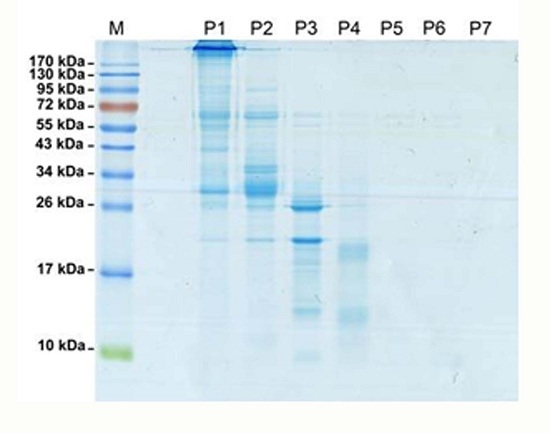
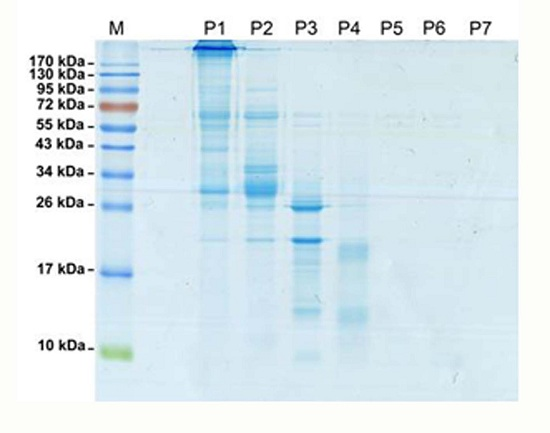
        <p>For obtaining more detailed information on the egg toxicity of the black widow spider, much earlier efforts had been made to purify and characterize the toxic components from the spider eggs; however, the work was unsuccessful or incomplete [<xref ref-type="bibr" rid="B20-toxins-07-04862">20</xref>,<xref ref-type="bibr" rid="B21-toxins-07-04862">21</xref>]. Recently, four proteinaceous bioactive components were purified and preliminarily characterized from the eggs of the black widow spider (<italic>L. tredecimguttatus</italic>); they were named Latroeggtoxin-I to Latroeggtoxin-IV [<xref ref-type="bibr" rid="B67-toxins-07-04862">67</xref>,<xref ref-type="bibr" rid="B68-toxins-07-04862">68</xref>,<xref ref-type="bibr" rid="B69-toxins-07-04862">69</xref>]. Latroeggtoxin-I has a molecular mass of 23.8 kDa and can block the neuromuscular transmission in isolated mouse phrenic nerve-hemidiaphragm preparations completely in a reversible manner. BLAST analysis using the determined <italic>N</italic>-terminal sequence of the protein demonstrated that no significant similarity to the existing proteins was found, indicating that Latroeggtoxin-I is a novel neurotoxic protein purified from the eggs of the black widow spider [<xref ref-type="bibr" rid="B67-toxins-07-04862">67</xref>]. After being abdominally injected into mice and <italic>P. americana</italic>, Latroeggtoxin-II, with a molecular mass of 28.7 kDa, made the animals, especially <italic>P. Americana</italic>, display a series of symptoms of poisoning, including becoming depressed, moving slowly, and lagging in response. Preliminary electrophysiological experiments demonstrated that Latroeggtoxin-II selectively inhibits tetrodotoxin-resistant Na<sup>+</sup> channel currents in rat dorsal root ganglion neurons, without significant effect on the tetrodotoxin-sensitive Na<sup>+</sup> channel currents. Using multiple proteomic strategies, Latroeggtoxin-II was shown to have only a few similarities to the existing proteins in the databases, suggesting that it is also a novel protein isolated from the eggs of the black widow spider [<xref ref-type="bibr" rid="B68-toxins-07-04862">68</xref>]. Preliminary analyses indicate that Latroeggtoxin-III has a molecular mass of about 36.0 kDa and exhibits neurotoxicity against cockroaches but has no obvious effect on mice, suggesting that Latroeggtoxin-III, different from Latroeggtoxin-I and -II, is an insect-specific toxin. When utilizing the determined <italic>N</italic>-terminal sequence of Latroeggtoxin-III to perform a homology analysis using the protein BLAST program, Latroeggtoxin-III was demonstrated to be a proteolytically cleaved product of vitellogenin [<xref ref-type="bibr" rid="B69-toxins-07-04862">69</xref>]. Different from Latroeggtoxin-I to -III, Latroeggtoxin-IV is a broad-spectrum antibacterial peptide of 3.6 kDa, showing inhibitory activity against all the five tested species of bacteria (<italic>S. aureus</italic>, <italic>S.</italic> <italic>typhimurium</italic>, <italic>B. subtilis</italic>, <italic>E. coli</italic>, <italic>P.</italic> <italic>aeruginosa</italic>), with the highest activity against <italic>S. aureus</italic> [<xref ref-type="bibr" rid="B69-toxins-07-04862">69</xref>].</p>
      </sec>
      <sec id="sec5dot3-toxins-07-04862">
        <title>5.3. Spiderling Toxicity</title>
        <p>The early preliminary studies found that the spiderlings of the black widow spider (<italic>L. tredecimguttatus</italic>) had obvious toxicity to animals [<xref ref-type="bibr" rid="B20-toxins-07-04862">20</xref>,<xref ref-type="bibr" rid="B21-toxins-07-04862">21</xref>]. To further probe the black widow spiderling toxicity, Peng <italic>et al.</italic> [<xref ref-type="bibr" rid="B70-toxins-07-04862">70</xref>] performed a systematical analysis of the aqueous extract of newborn black widow spiderlings. The extract was shown to contain 69.42% of proteins varying in molecular masses and isoelectric points. Abdominal injection of the extract into mice and cockroaches caused obvious poisoning symptoms as well as death, with LD<sub>50</sub> being 5.30 mg/kg in mice and 16.74 &#x3BC;g/g in <italic>P. americana</italic>. Electrophysiological experiments indicated that the extract at a concentration of 10 &#x3BC;g/mL could completely block the neuromuscular transmission in isolated mouse phrenic nerve-hemidiaphragm preparations within 21.0 &#xB1; 1.5 min, and 100 &#x3BC;g/mL extract could inhibit a certain percentage of voltage-activated Na<sup>+</sup>, K<sup>+</sup>, and Ca<sup>2</sup><sup>+</sup>channel currents in rat dorsal root ganglion neurons. These results demonstrate that the spiderlings are rich in neurotoxic and other bioactive components, which play important roles in the spiderling toxicity.</p>
      </sec>
      <sec id="sec5dot4-toxins-07-04862">
        <title>5.4. Implications of the Toxins outside Venom Glands</title>
        <p>Why the spiderlings and even the eggs of the black widow spider, like the venom glands, have evolved toxic components is an interesting question. It is speculated that the existence of such components provides a certain protection from some greedy arthropods, which is supported by the report of Russell <italic>et al.</italic> [<xref ref-type="bibr" rid="B71-toxins-07-04862">71</xref>]. They demonstrated that <italic>Latrodectus</italic> egg toxins have deleterious effects on the web-building activity of <italic>A. diadematus</italic>. The web-building activity of the spiders receiving 3&#x2013;5 g/kg body weight was abnormal and one spider receiving 1 g/kg body weight died 6 h after feeding. On the other hand, antimicrobial components may play a dual role in spider-prey interaction, functioning both in the prey capture strategy as well as in protecting the spider from potentially infectious organisms arising from prey ingestion. The adult female black widow spiders usually suspend their egg sacs from the ceiling deep in the retreat, where it is often dark and humid and suitable for the breeding of pathogenic microorganisms. There must be specific mechanisms to protect the eggs and spiderlings. Thus, it is speculated that the antibacterial components may play important roles in protecting the eggs and newborn spiderlings from some pathogenic microorganisms.</p>
      </sec>
    </sec>
    <sec id="sec6-toxins-07-04862" sec-type="conclusions">
      <title>6. Conclusions and Outlook</title>
      <p>The widow spider is a peculiar animal not only for its being one of the most poisonous animals, but also for its toxin distribution throughout its body, even in the eggs and newborn spiderlings. Up until now, research on latrotoxins, particularly the &#x3B1;-LTX, has been extensive; however, the mechanism of action of the toxins has not been fully understood and is still the research hotspot in the relevant field. On the other hand, research on the toxins outside the venom glands is relatively limited. Although there has been a series of studies investigating the toxicity outside the venom glands of the spider and several proteinaceous toxic components were purified and preliminarily characterized, the shortage of natural resources of the toxins limits the detailed structure-function analysis of the toxins. Therefore, gene cloning and heterologous expression might be necessary in further research.</p>
    </sec>
  </body>
  <back>
    <ack>
      <title>Acknowledgments</title>
      <p>This work was supported by grants from National Natural Science Foundation of China (31271135, 31070700) and Cooperative Innovation Center of Engineering and New Products for Developmental Biology of Hunan Province (20134486).</p>
    </ack>
    <notes>
      <title>Author Contributions</title>
      <p>Xianchun Wang conceived the review; Shuai Yan and Xianchun Wang wrote the manuscript.</p>
    </notes>
    <notes>
      <title>Conflicts of Interest</title>
      <p>The authors declare no conflict of interest.</p>
    </notes>
    <ref-list>
      <title>References</title>
      <ref id="B1-toxins-07-04862">
        <label>1.</label>
        <citation citation-type="book">
          <person-group person-group-type="author">
            <name>
              <surname>Platnick</surname>
              <given-names>N.I.</given-names>
            </name>
          </person-group>
          <source>Advances in Spider Taxonomy 1992&#x2013;1995: With Redescriptions 1940&#x2013;1980</source>
          <publisher-name>New York Entomological Society</publisher-name>
          <publisher-loc>New York, NY, USA</publisher-loc>
          <year>1997</year>
          <fpage>1</fpage>
          <lpage>976</lpage>
        </citation>
      </ref>
      <ref id="B2-toxins-07-04862">
        <label>2.</label>
        <citation citation-type="journal">
          <person-group person-group-type="author">
            <name>
              <surname>Levi</surname>
              <given-names>H.W.</given-names>
            </name>
          </person-group>
          <article-title>Number of species of black-widow spiders (Theridiidae: Latrodectus)</article-title>
          <source>Science</source>
          <year>1958</year>
          <volume>127</volume>
          <fpage>1055</fpage>
          <pub-id pub-id-type="doi">10.1126/science.127.3305.1055</pub-id>
          <pub-id pub-id-type="pmid">17793281</pub-id>
        </citation>
      </ref>
      <ref id="B3-toxins-07-04862">
        <label>3.</label>
        <citation citation-type="journal">
          <person-group person-group-type="author">
            <name>
              <surname>Vetter</surname>
              <given-names>R.S.</given-names>
            </name>
            <name>
              <surname>Isbister</surname>
              <given-names>G.K.</given-names>
            </name>
          </person-group>
          <article-title>Medical aspects of spider bites</article-title>
          <source>Annu. Rev. Entomol.</source>
          <year>2008</year>
          <volume>53</volume>
          <fpage>409</fpage>
          <lpage>429</lpage>
          <pub-id pub-id-type="doi">10.1146/annurev.ento.53.103106.093503</pub-id>
          <pub-id pub-id-type="pmid">17877450</pub-id>
        </citation>
      </ref>
      <ref id="B4-toxins-07-04862">
        <label>4.</label>
        <citation citation-type="journal">
          <person-group person-group-type="author">
            <name>
              <surname>Garb</surname>
              <given-names>J.E.</given-names>
            </name>
            <name>
              <surname>Hayashi</surname>
              <given-names>C.Y.</given-names>
            </name>
          </person-group>
          <article-title>Molecular evolution of &#x3B1;-latrotoxin, the exceptionally potent vertebrate neurotoxin in black widow spider venom</article-title>
          <source>Mol. Biol. Evol.</source>
          <year>2013</year>
          <volume>30</volume>
          <fpage>999</fpage>
          <lpage>1014</lpage>
          <pub-id pub-id-type="doi">10.1093/molbev/mst011</pub-id>
          <pub-id pub-id-type="pmid">23339183</pub-id>
        </citation>
      </ref>
      <ref id="B5-toxins-07-04862">
        <label>5.</label>
        <citation citation-type="journal">
          <person-group person-group-type="author">
            <name>
              <surname>Ushkaryov</surname>
              <given-names>Y.A.</given-names>
            </name>
            <name>
              <surname>Volynski</surname>
              <given-names>K.E.</given-names>
            </name>
            <name>
              <surname>Ashton</surname>
              <given-names>A.C.</given-names>
            </name>
          </person-group>
          <article-title>The multiple actions of black widow spider toxins and their selective use in neurosecretion studies</article-title>
          <source>Toxicon</source>
          <year>2004</year>
          <volume>43</volume>
          <fpage>527</fpage>
          <lpage>542</lpage>
          <pub-id pub-id-type="doi">10.1016/j.toxicon.2004.02.008</pub-id>
          <pub-id pub-id-type="pmid">15066411</pub-id>
        </citation>
      </ref>
      <ref id="B6-toxins-07-04862">
        <label>6.</label>
        <citation citation-type="journal">
          <person-group person-group-type="author">
            <name>
              <surname>Garb</surname>
              <given-names>J.E.</given-names>
            </name>
            <name>
              <surname>Gonzalez</surname>
              <given-names>A.</given-names>
            </name>
            <name>
              <surname>Gillespie</surname>
              <given-names>R.G.</given-names>
            </name>
          </person-group>
          <article-title>The black widow spider genus Latrodectus (Araneae: Theridiidae): Phylogeny, biogeography, and invasion history</article-title>
          <source>Mol. Phylogenet. Evol.</source>
          <year>2004</year>
          <volume>31</volume>
          <fpage>1127</fpage>
          <lpage>1142</lpage>
          <pub-id pub-id-type="doi">10.1016/j.ympev.2003.10.012</pub-id>
          <pub-id pub-id-type="pmid">15120405</pub-id>
        </citation>
      </ref>
      <ref id="B7-toxins-07-04862">
        <label>7.</label>
        <citation citation-type="journal">
          <person-group person-group-type="author">
            <name>
              <surname>Jelinek</surname>
              <given-names>G.A.</given-names>
            </name>
          </person-group>
          <article-title>Widow spider envenomation (latrodectism): A worldwide problem</article-title>
          <source>Wilderness Environ. Med.</source>
          <year>1997</year>
          <volume>8</volume>
          <fpage>226</fpage>
          <lpage>231</lpage>
          <pub-id pub-id-type="doi">10.1580/1080-6032(1997)008[0226:WSELAW]2.3.CO;2</pub-id>
        </citation>
      </ref>
      <ref id="B8-toxins-07-04862">
        <label>8.</label>
        <citation citation-type="journal">
          <person-group person-group-type="author">
            <name>
              <surname>Grishin</surname>
              <given-names>E.V.</given-names>
            </name>
          </person-group>
          <article-title>Black widow spider toxins: The present and the future</article-title>
          <source>Toxicon</source>
          <year>1998</year>
          <volume>36</volume>
          <fpage>1693</fpage>
          <lpage>1701</lpage>
          <pub-id pub-id-type="doi">10.1016/S0041-0101(98)00162-7</pub-id>
        </citation>
      </ref>
      <ref id="B9-toxins-07-04862">
        <label>9.</label>
        <citation citation-type="journal">
          <person-group person-group-type="author">
            <name>
              <surname>Andrade</surname>
              <given-names>M.C.B.</given-names>
            </name>
          </person-group>
          <article-title>Female hunger can explain variation in cannibalistic behaviors despite male sacrifice in redback spiders</article-title>
          <source>Behav. Ecol.</source>
          <year>1998</year>
          <volume>1</volume>
          <fpage>33</fpage>
          <lpage>42</lpage>
          <pub-id pub-id-type="doi">10.1093/beheco/9.1.33</pub-id>
        </citation>
      </ref>
      <ref id="B10-toxins-07-04862">
        <label>10.</label>
        <citation citation-type="journal">
          <person-group person-group-type="author">
            <name>
              <surname>Golcuk</surname>
              <given-names>Y.</given-names>
            </name>
            <name>
              <surname>Velibey</surname>
              <given-names>Y.</given-names>
            </name>
            <name>
              <surname>Gonullu</surname>
              <given-names>H.</given-names>
            </name>
            <name>
              <surname>Sahin</surname>
              <given-names>M.</given-names>
            </name>
            <name>
              <surname>Kocabas</surname>
              <given-names>E.</given-names>
            </name>
          </person-group>
          <article-title>Acute toxic fulminant myocarditis after a black widow spider envenomation: Case report and literature review</article-title>
          <source>Clin. Toxicol. (Phila.)</source>
          <year>2013</year>
          <volume>51</volume>
          <fpage>191</fpage>
          <lpage>192</lpage>
          <pub-id pub-id-type="doi">10.3109/15563650.2013.774010</pub-id>
          <pub-id pub-id-type="pmid">23473466</pub-id>
        </citation>
      </ref>
      <ref id="B11-toxins-07-04862">
        <label>11.</label>
        <citation citation-type="journal">
          <person-group person-group-type="author">
            <name>
              <surname>Cavusoglu</surname>
              <given-names>K.</given-names>
            </name>
            <name>
              <surname>Bayram</surname>
              <given-names>A.</given-names>
            </name>
            <name>
              <surname>Maras</surname>
              <given-names>M.</given-names>
            </name>
            <name>
              <surname>Krnd</surname>
              <given-names>T.</given-names>
            </name>
            <name>
              <surname>Cavusoglu</surname>
              <given-names>K.</given-names>
            </name>
          </person-group>
          <article-title>A morphological study on the venom apparatus of spider <italic>Larinioides Cornutus</italic> (Araneae, Araneidae)</article-title>
          <source>Turk. J. Zool.</source>
          <year>2005</year>
          <volume>29</volume>
          <fpage>351</fpage>
          <lpage>356</lpage>
        </citation>
      </ref>
      <ref id="B12-toxins-07-04862">
        <label>12.</label>
        <citation citation-type="book">
          <person-group person-group-type="author">
            <name>
              <surname>White</surname>
              <given-names>J.</given-names>
            </name>
          </person-group>
          <article-title>Clinical toxicology of spider bite</article-title>
          <source>Handbook of Clinical Toxicology of Animal Venoms and Poisons</source>
          <person-group person-group-type="editor">
            <name>
              <surname>Meier</surname>
              <given-names>J.</given-names>
            </name>
            <name>
              <surname>White</surname>
              <given-names>J.</given-names>
            </name>
          </person-group>
          <publisher-name>CRC Press</publisher-name>
          <publisher-loc>Boca Raton, FL, USA</publisher-loc>
          <year>1995</year>
          <fpage>259</fpage>
          <lpage>329</lpage>
        </citation>
      </ref>
      <ref id="B13-toxins-07-04862">
        <label>13.</label>
        <citation citation-type="journal">
          <person-group person-group-type="author">
            <name>
              <surname>Camp</surname>
              <given-names>N.E.</given-names>
            </name>
          </person-group>
          <article-title>Black widow spider envenomation</article-title>
          <source>J. Emerg. Med.</source>
          <year>2014</year>
          <volume>40</volume>
          <fpage>193</fpage>
          <lpage>194</lpage>
          <pub-id pub-id-type="doi">10.1016/j.jen.2014.01.004</pub-id>
          <pub-id pub-id-type="pmid">24606830</pub-id>
        </citation>
      </ref>
      <ref id="B14-toxins-07-04862">
        <label>14.</label>
        <citation citation-type="journal">
          <person-group person-group-type="author">
            <name>
              <surname>Reyes-Lugo</surname>
              <given-names>M.</given-names>
            </name>
            <name>
              <surname>Sanchez</surname>
              <given-names>T.</given-names>
            </name>
            <name>
              <surname>Finol</surname>
              <given-names>H.J.</given-names>
            </name>
            <name>
              <surname>S&#xE1;nchez</surname>
              <given-names>E.E.</given-names>
            </name>
            <name>
              <surname>Su&#xE1;rez</surname>
              <given-names>J.A.</given-names>
            </name>
            <name>
              <surname>Guerreiro</surname>
              <given-names>B.</given-names>
            </name>
            <name>
              <surname>Rodr&#xED;guez-Acosta</surname>
              <given-names>A.</given-names>
            </name>
          </person-group>
          <article-title>Neurotoxic activity and ultrastructural changes in muscles caused by the brown widow spider <italic>Latrodectus geometricus</italic> venom</article-title>
          <source>Rev. Inst. Med. Trop. Sao Paulo</source>
          <year>2009</year>
          <volume>51</volume>
          <fpage>95</fpage>
          <lpage>101</lpage>
          <pub-id pub-id-type="doi">10.1590/S0036-46652009000200007</pub-id>
          <pub-id pub-id-type="pmid">19390738</pub-id>
        </citation>
      </ref>
      <ref id="B15-toxins-07-04862">
        <label>15.</label>
        <citation citation-type="book">
          <person-group person-group-type="author">
            <name>
              <surname>Hahn</surname>
              <given-names>I.H.</given-names>
            </name>
            <name>
              <surname>Lewin</surname>
              <given-names>N.A.</given-names>
            </name>
          </person-group>
          <article-title>Arthropods</article-title>
          <source>Goldfrank&#x2019;s Toxicologic Emergencies</source>
          <edition>8th ed.</edition>
          <person-group person-group-type="editor">
            <name>
              <surname>Flomenbaum</surname>
              <given-names>N.E.</given-names>
            </name>
            <name>
              <surname>Goldfrank</surname>
              <given-names>L.</given-names>
            </name>
            <name>
              <surname>Hoffman</surname>
              <given-names>R.</given-names>
            </name>
            <name>
              <surname>Howland</surname>
              <given-names>M.A.</given-names>
            </name>
            <name>
              <surname>Lewin</surname>
              <given-names>N.</given-names>
            </name>
            <name>
              <surname>Nelson</surname>
              <given-names>L.</given-names>
            </name>
          </person-group>
          <publisher-name>McGraw-Hill Professional</publisher-name>
          <publisher-loc>New York, NY, USA</publisher-loc>
          <year>2006</year>
          <fpage>1603</fpage>
          <lpage>1622</lpage>
        </citation>
      </ref>
      <ref id="B16-toxins-07-04862">
        <label>16.</label>
        <citation citation-type="journal">
          <person-group person-group-type="author">
            <name>
              <surname>White</surname>
              <given-names>J.</given-names>
            </name>
            <name>
              <surname>Weinstein</surname>
              <given-names>S.A.</given-names>
            </name>
          </person-group>
          <article-title>Latrodectism and effectiveness of antivenom</article-title>
          <source>Ann. Emerg. Med.</source>
          <year>2015</year>
          <volume>65</volume>
          <fpage>123</fpage>
          <lpage>124</lpage>
          <pub-id pub-id-type="doi">10.1016/j.annemergmed.2014.08.022</pub-id>
          <pub-id pub-id-type="pmid">25529159</pub-id>
        </citation>
      </ref>
      <ref id="B17-toxins-07-04862">
        <label>17.</label>
        <citation citation-type="journal">
          <person-group person-group-type="author">
            <name>
              <surname>Isbister</surname>
              <given-names>G.K.</given-names>
            </name>
            <name>
              <surname>Page</surname>
              <given-names>C.B.</given-names>
            </name>
            <name>
              <surname>Buckley</surname>
              <given-names>N.A.</given-names>
            </name>
            <name>
              <surname>Fatovich</surname>
              <given-names>D.M.</given-names>
            </name>
            <name>
              <surname>Pascu</surname>
              <given-names>O.</given-names>
            </name>
            <name>
              <surname>MacDonald</surname>
              <given-names>S.P.</given-names>
            </name>
            <name>
              <surname>Calver</surname>
              <given-names>L.A.</given-names>
            </name>
            <name>
              <surname>Brown</surname>
              <given-names>S.G.</given-names>
            </name>
          </person-group>
          <article-title>Randomized controlled trial of intravenous antivenom <italic>versus</italic> placebo for latrodectism: The second Redback Antivenom Evaluation (RAVE-II) study</article-title>
          <source>Ann. Emerg. Med.</source>
          <year>2014</year>
          <volume>64</volume>
          <fpage>620</fpage>
          <lpage>628</lpage>
          <pub-id pub-id-type="doi">10.1016/j.annemergmed.2014.06.006</pub-id>
          <pub-id pub-id-type="pmid">24999282</pub-id>
        </citation>
      </ref>
      <ref id="B18-toxins-07-04862">
        <label>18.</label>
        <citation citation-type="journal">
          <person-group person-group-type="author">
            <name>
              <surname>Kobert</surname>
              <given-names>R.</given-names>
            </name>
          </person-group>
          <article-title>Ueber die giftigen spinnen russlads</article-title>
          <source>Sber. Naturf. Ges. Dorpot.</source>
          <year>1889</year>
          <volume>8</volume>
          <fpage>340</fpage>
          <lpage>362</lpage>
        </citation>
      </ref>
      <ref id="B19-toxins-07-04862">
        <label>19.</label>
        <citation citation-type="journal">
          <person-group person-group-type="author">
            <name>
              <surname>Buffkin</surname>
              <given-names>D.C.</given-names>
            </name>
            <name>
              <surname>Russell</surname>
              <given-names>F.E.</given-names>
            </name>
          </person-group>
          <article-title>A poison from the eggs and spiderlings of the black widow spider</article-title>
          <source>Proc. West. Pharmacol. Soc.</source>
          <year>1971</year>
          <volume>14</volume>
          <fpage>166</fpage>
        </citation>
      </ref>
      <ref id="B20-toxins-07-04862">
        <label>20.</label>
        <citation citation-type="journal">
          <person-group person-group-type="author">
            <name>
              <surname>Buffkin</surname>
              <given-names>D.C.</given-names>
            </name>
            <name>
              <surname>Russell</surname>
              <given-names>F.E.</given-names>
            </name>
            <name>
              <surname>Deshmukh</surname>
              <given-names>A.</given-names>
            </name>
          </person-group>
          <article-title>Preliminary study on the toxicity of black widow spider eggs</article-title>
          <source>Toxicon</source>
          <year>1971</year>
          <volume>9</volume>
          <fpage>393</fpage>
          <lpage>402</lpage>
          <pub-id pub-id-type="doi">10.1016/0041-0101(71)90138-3</pub-id>
        </citation>
      </ref>
      <ref id="B21-toxins-07-04862">
        <label>21.</label>
        <citation citation-type="journal">
          <person-group person-group-type="author">
            <name>
              <surname>Akhunov</surname>
              <given-names>A.</given-names>
            </name>
            <name>
              <surname>Golubenko</surname>
              <given-names>Z.</given-names>
            </name>
            <name>
              <surname>Abdurashidova</surname>
              <given-names>N.A.</given-names>
            </name>
            <name>
              <surname>Mustakimova</surname>
              <given-names>E.C.</given-names>
            </name>
            <name>
              <surname>Ibragimov</surname>
              <given-names>F.A.</given-names>
            </name>
            <name>
              <surname>Mackessy</surname>
              <given-names>S.</given-names>
            </name>
          </person-group>
          <article-title>Comparative biochemistry of the physiologically active components of venom, hemolymphy, and eggs of the karakurt spider (<italic>Latrodectus tredecimguttatus</italic>)</article-title>
          <source>Chem. Nat. Compd.</source>
          <year>2001</year>
          <volume>37</volume>
          <fpage>562</fpage>
          <lpage>565</lpage>
          <pub-id pub-id-type="doi">10.1023/A:1014829218721</pub-id>
        </citation>
      </ref>
      <ref id="B22-toxins-07-04862">
        <label>22.</label>
        <citation citation-type="journal">
          <person-group person-group-type="author">
            <name>
              <surname>Bonnet</surname>
              <given-names>M.S.</given-names>
            </name>
          </person-group>
          <article-title>The toxicology of <italic>Latrodectus tredecimguttatus</italic>: The mediterranean black widow spider</article-title>
          <source>Homeopathy</source>
          <year>2004</year>
          <volume>93</volume>
          <fpage>27</fpage>
          <lpage>33</lpage>
          <pub-id pub-id-type="doi">10.1016/j.homp.2003.10.001</pub-id>
          <pub-id pub-id-type="pmid">14960100</pub-id>
        </citation>
      </ref>
      <ref id="B23-toxins-07-04862">
        <label>23.</label>
        <citation citation-type="journal">
          <person-group person-group-type="author">
            <name>
              <surname>Parodi</surname>
              <given-names>J.</given-names>
            </name>
            <name>
              <surname>Navarrete</surname>
              <given-names>P.</given-names>
            </name>
            <name>
              <surname>Marconi</surname>
              <given-names>M.</given-names>
            </name>
            <name>
              <surname>Guti&#xE9;rrez</surname>
              <given-names>R.S.</given-names>
            </name>
            <name>
              <surname>Mart&#xED;nez-Torres</surname>
              <given-names>A.</given-names>
            </name>
            <name>
              <surname>Mej&#xED;as</surname>
              <given-names>F.R.</given-names>
            </name>
          </person-group>
          <article-title>Tetraethylammonium-sensitive K<sup>+</sup> current in the bovine spermatozoa and its blocking by the venom of the Chilean <italic>Latrodectus mactans</italic></article-title>
          <source>Syst. Biol. Reprod. Med.</source>
          <year>2010</year>
          <volume>56</volume>
          <fpage>37</fpage>
          <lpage>43</lpage>
          <pub-id pub-id-type="doi">10.3109/19396360903497217</pub-id>
          <pub-id pub-id-type="pmid">20170285</pub-id>
        </citation>
      </ref>
      <ref id="B24-toxins-07-04862">
        <label>24.</label>
        <citation citation-type="journal">
          <person-group person-group-type="author">
            <name>
              <surname>Navarrete</surname>
              <given-names>P.</given-names>
            </name>
            <name>
              <surname>Mart&#xED;nez-Torres</surname>
              <given-names>A.</given-names>
            </name>
            <name>
              <surname>Guti&#xE9;rrez</surname>
              <given-names>R.S.</given-names>
            </name>
            <name>
              <surname>Mej&#xED;a</surname>
              <given-names>F.R.</given-names>
            </name>
            <name>
              <surname>Parodi</surname>
              <given-names>J.</given-names>
            </name>
          </person-group>
          <article-title>Venom of the Chilean <italic>Latrodectus mactans</italic> alters bovine spermatozoa calcium and function by blocking the TEA-sensitive K<sup>+</sup> current</article-title>
          <source>Syst. Biol. Reprod. Med.</source>
          <year>2010</year>
          <volume>56</volume>
          <fpage>303</fpage>
          <lpage>310</lpage>
          <pub-id pub-id-type="doi">10.3109/19396368.2010.492447</pub-id>
          <pub-id pub-id-type="pmid">20718617</pub-id>
        </citation>
      </ref>
      <ref id="B25-toxins-07-04862">
        <label>25.</label>
        <citation citation-type="journal">
          <person-group person-group-type="author">
            <name>
              <surname>Guerrero</surname>
              <given-names>B.</given-names>
            </name>
            <name>
              <surname>Finol</surname>
              <given-names>H.J.</given-names>
            </name>
            <name>
              <surname>Reyes-Lugo</surname>
              <given-names>M.</given-names>
            </name>
            <name>
              <surname>Salazar</surname>
              <given-names>A.M.</given-names>
            </name>
            <name>
              <surname>S&#xE1;nchez</surname>
              <given-names>E.E.</given-names>
            </name>
            <name>
              <surname>Estrella</surname>
              <given-names>A.</given-names>
            </name>
            <name>
              <surname>Roschman-Gonz&#xE1;lez</surname>
              <given-names>A.</given-names>
            </name>
            <name>
              <surname>Ibarra</surname>
              <given-names>C.</given-names>
            </name>
            <name>
              <surname>Salvi</surname>
              <given-names>I.</given-names>
            </name>
            <name>
              <surname>Rodr&#xED;guez-Acosta</surname>
              <given-names>A.</given-names>
            </name>
          </person-group>
          <article-title>Activities against hemostatic proteins and adrenal gland ultrastructural changes caused by the brown widow spider <italic>Latrodectus geometricus</italic> (Araneae: Theridiidae) venom</article-title>
          <source>Comp. Biochem. Physiol. C Toxicol. Pharmacol.</source>
          <year>2010</year>
          <volume>151</volume>
          <fpage>113</fpage>
          <lpage>121</lpage>
          <pub-id pub-id-type="doi">10.1016/j.cbpc.2009.09.005</pub-id>
          <pub-id pub-id-type="pmid">19755172</pub-id>
        </citation>
      </ref>
      <ref id="B26-toxins-07-04862">
        <label>26.</label>
        <citation citation-type="journal">
          <person-group person-group-type="author">
            <name>
              <surname>Wang</surname>
              <given-names>X.C.</given-names>
            </name>
            <name>
              <surname>Duan</surname>
              <given-names>Z.G.</given-names>
            </name>
            <name>
              <surname>Yang</surname>
              <given-names>J.</given-names>
            </name>
            <name>
              <surname>Yan</surname>
              <given-names>X.J.</given-names>
            </name>
            <name>
              <surname>Zhou</surname>
              <given-names>H.</given-names>
            </name>
            <name>
              <surname>He</surname>
              <given-names>X.Z.</given-names>
            </name>
            <name>
              <surname>Liang</surname>
              <given-names>S.P.</given-names>
            </name>
          </person-group>
          <article-title>Physiological and biochemical analysis of <italic>L. tredecimguttatus</italic> venom collected by electrical stimulation</article-title>
          <source>J. Physiol. Biochem.</source>
          <year>2007</year>
          <volume>63</volume>
          <fpage>221</fpage>
          <lpage>230</lpage>
          <pub-id pub-id-type="doi">10.1007/BF03165785</pub-id>
          <pub-id pub-id-type="pmid">18309778</pub-id>
        </citation>
      </ref>
      <ref id="B27-toxins-07-04862">
        <label>27.</label>
        <citation citation-type="journal">
          <person-group person-group-type="author">
            <name>
              <surname>Duan</surname>
              <given-names>Z.</given-names>
            </name>
            <name>
              <surname>Yan</surname>
              <given-names>X.</given-names>
            </name>
            <name>
              <surname>Cao</surname>
              <given-names>R.</given-names>
            </name>
            <name>
              <surname>Liu</surname>
              <given-names>Z.</given-names>
            </name>
            <name>
              <surname>Wang</surname>
              <given-names>X.</given-names>
            </name>
            <name>
              <surname>Liang</surname>
              <given-names>S.</given-names>
            </name>
          </person-group>
          <article-title>Proteomic analysis of <italic>Latrodectus tredecimguttatus</italic> venom for uncovering potential latrodectism-related proteins</article-title>
          <source>J. Biochem. Mol. Toxicol.</source>
          <year>2008</year>
          <volume>22</volume>
          <fpage>328</fpage>
          <lpage>336</lpage>
          <pub-id pub-id-type="doi">10.1002/jbt.20244</pub-id>
          <pub-id pub-id-type="pmid">18972397</pub-id>
        </citation>
      </ref>
      <ref id="B28-toxins-07-04862">
        <label>28.</label>
        <citation citation-type="journal">
          <person-group person-group-type="author">
            <name>
              <surname>Futrell</surname>
              <given-names>J.M.</given-names>
            </name>
          </person-group>
          <article-title>Loxoscelism</article-title>
          <source>Am. J. Med. Sci.</source>
          <year>1992</year>
          <volume>304</volume>
          <fpage>261</fpage>
          <lpage>267</lpage>
          <pub-id pub-id-type="doi">10.1097/00000441-199210000-00008</pub-id>
          <pub-id pub-id-type="pmid">1415323</pub-id>
        </citation>
      </ref>
      <ref id="B29-toxins-07-04862">
        <label>29.</label>
        <citation citation-type="journal">
          <person-group person-group-type="author">
            <name>
              <surname>Rash</surname>
              <given-names>L.D.</given-names>
            </name>
            <name>
              <surname>Hodgson</surname>
              <given-names>W.C.</given-names>
            </name>
          </person-group>
          <article-title>Pharmacology and biochemistry of spider venoms</article-title>
          <source>Toxicon</source>
          <year>2002</year>
          <volume>40</volume>
          <fpage>225</fpage>
          <lpage>254</lpage>
          <pub-id pub-id-type="doi">10.1016/S0041-0101(01)00199-4</pub-id>
        </citation>
      </ref>
      <ref id="B30-toxins-07-04862">
        <label>30.</label>
        <citation citation-type="journal">
          <person-group person-group-type="author">
            <name>
              <surname>Nawarak</surname>
              <given-names>J.</given-names>
            </name>
            <name>
              <surname>Sinchaikul</surname>
              <given-names>S.</given-names>
            </name>
            <name>
              <surname>Wu</surname>
              <given-names>C.Y.</given-names>
            </name>
            <name>
              <surname>Liau</surname>
              <given-names>M.Y.</given-names>
            </name>
            <name>
              <surname>Phutrakul</surname>
              <given-names>S.</given-names>
            </name>
            <name>
              <surname>Chen</surname>
              <given-names>S.T.</given-names>
            </name>
          </person-group>
          <article-title>Proteomics of snake venoms from Elapidae and Viperidae families by multidimensional chromatographic methods</article-title>
          <source>Electrophoresis</source>
          <year>2003</year>
          <volume>24</volume>
          <fpage>2838</fpage>
          <lpage>2854</lpage>
          <pub-id pub-id-type="doi">10.1002/elps.200305552</pub-id>
          <pub-id pub-id-type="pmid">12929180</pub-id>
        </citation>
      </ref>
      <ref id="B31-toxins-07-04862">
        <label>31.</label>
        <citation citation-type="journal">
          <person-group person-group-type="author">
            <name>
              <surname>Haney</surname>
              <given-names>R.A.</given-names>
            </name>
            <name>
              <surname>Ayoub</surname>
              <given-names>N.A.</given-names>
            </name>
            <name>
              <surname>Clarke</surname>
              <given-names>T.H.</given-names>
            </name>
            <name>
              <surname>Hayashi</surname>
              <given-names>C.Y.</given-names>
            </name>
            <name>
              <surname>Garb</surname>
              <given-names>J.E.</given-names>
            </name>
          </person-group>
          <article-title>Dramatic expansion of the black widow toxin arsenal uncovered by multi-tissue transcriptomics and venom proteomics</article-title>
          <source>BMC Genomics</source>
          <year>2014</year>
          <volume>15</volume>
          <fpage>366</fpage>
          <lpage>383</lpage>
          <pub-id pub-id-type="doi">10.1186/1471-2164-15-366</pub-id>
          <pub-id pub-id-type="pmid">24916504</pub-id>
        </citation>
      </ref>
      <ref id="B32-toxins-07-04862">
        <label>32.</label>
        <citation citation-type="journal">
          <person-group person-group-type="author">
            <name>
              <surname>He</surname>
              <given-names>Q.</given-names>
            </name>
            <name>
              <surname>Duan</surname>
              <given-names>Z.</given-names>
            </name>
            <name>
              <surname>Yu</surname>
              <given-names>Y.</given-names>
            </name>
            <name>
              <surname>Liu</surname>
              <given-names>Z.</given-names>
            </name>
            <name>
              <surname>Liu</surname>
              <given-names>Z.</given-names>
            </name>
            <name>
              <surname>Liang</surname>
              <given-names>S.</given-names>
            </name>
          </person-group>
          <article-title>The venom gland transcriptome of <italic>Latrodectus tredecimguttatus</italic> revealed by deep sequencing and cDNA library analysis</article-title>
          <source>PLoS ONE</source>
          <year>2013</year>
          <volume>8</volume>
          <pub-id pub-id-type="doi">10.1371/journal.pone.0081357</pub-id>
          <pub-id pub-id-type="pmid">24312294</pub-id>
        </citation>
      </ref>
      <ref id="B33-toxins-07-04862">
        <label>33.</label>
        <citation citation-type="journal">
          <person-group person-group-type="author">
            <name>
              <surname>Kuhn-Nentwig</surname>
              <given-names>L.</given-names>
            </name>
            <name>
              <surname>St&#xF6;klin</surname>
              <given-names>R.</given-names>
            </name>
            <name>
              <surname>Nentwig</surname>
              <given-names>W.</given-names>
            </name>
          </person-group>
          <article-title>Venom composition and strategies in spiders</article-title>
          <source>Adv. Insect Physiol.</source>
          <year>2011</year>
          <volume>40</volume>
          <fpage>1</fpage>
          <lpage>86</lpage>
        </citation>
      </ref>
      <ref id="B34-toxins-07-04862">
        <label>34.</label>
        <citation citation-type="journal">
          <person-group person-group-type="author">
            <name>
              <surname>Dulubova</surname>
              <given-names>I.E.</given-names>
            </name>
            <name>
              <surname>Krasnoperov</surname>
              <given-names>V.G.</given-names>
            </name>
            <name>
              <surname>Khvotchev</surname>
              <given-names>M.V.</given-names>
            </name>
            <name>
              <surname>Pluzhnikov</surname>
              <given-names>K.A.</given-names>
            </name>
            <name>
              <surname>Volkova</surname>
              <given-names>T.M.</given-names>
            </name>
            <name>
              <surname>Grishin</surname>
              <given-names>E.V.</given-names>
            </name>
            <name>
              <surname>Vais</surname>
              <given-names>H.</given-names>
            </name>
            <name>
              <surname>Bell</surname>
              <given-names>D.R.</given-names>
            </name>
            <name>
              <surname>Usherwood</surname>
              <given-names>P.N.</given-names>
            </name>
          </person-group>
          <article-title>Cloning and structure of delta-latroinsectotoxin, a novel insect-specific member of the latrotoxin family: Functional expression requires <italic>C</italic>-terminal truncation</article-title>
          <source>J. Biol. Chem.</source>
          <year>1996</year>
          <volume>271</volume>
          <fpage>7535</fpage>
          <lpage>7543</lpage>
          <pub-id pub-id-type="pmid">8631785</pub-id>
        </citation>
      </ref>
      <ref id="B35-toxins-07-04862">
        <label>35.</label>
        <citation citation-type="journal">
          <person-group person-group-type="author">
            <name>
              <surname>Grasso</surname>
              <given-names>A.</given-names>
            </name>
          </person-group>
          <article-title>Preparation and properties of a neurotoxin purified from the venom of black widow spider (<italic>Latrodectus mactans tredecimguttatus</italic>)</article-title>
          <source>Biochim. Biophys. Acta</source>
          <year>1976</year>
          <volume>439</volume>
          <fpage>406</fpage>
          <lpage>412</lpage>
          <pub-id pub-id-type="doi">10.1016/0005-2795(76)90077-5</pub-id>
        </citation>
      </ref>
      <ref id="B36-toxins-07-04862">
        <label>36.</label>
        <citation citation-type="journal">
          <person-group person-group-type="author">
            <name>
              <surname>Krasnoperov</surname>
              <given-names>V.G.</given-names>
            </name>
            <name>
              <surname>Shamotienko</surname>
              <given-names>O.G.</given-names>
            </name>
            <name>
              <surname>Grishin</surname>
              <given-names>E.V.</given-names>
            </name>
          </person-group>
          <article-title>Isolation and properties of insect-specific neurotoxins from venoms of the spider <italic>Lactodectus mactans tredecimguttatus</italic></article-title>
          <source>Bioorg. Khim.</source>
          <year>1990</year>
          <volume>16</volume>
          <fpage>1138</fpage>
          <lpage>1140</lpage>
          <pub-id pub-id-type="pmid">2285428</pub-id>
        </citation>
      </ref>
      <ref id="B37-toxins-07-04862">
        <label>37.</label>
        <citation citation-type="journal">
          <person-group person-group-type="author">
            <name>
              <surname>Krasnoperov</surname>
              <given-names>V.G.</given-names>
            </name>
            <name>
              <surname>Shamotienko</surname>
              <given-names>O.G.</given-names>
            </name>
            <name>
              <surname>Grishin</surname>
              <given-names>E.V.</given-names>
            </name>
          </person-group>
          <article-title>A crustacean-specific neurotoxin from the venom of the black widow spider <italic>Latrodectus mactans tredecimguttatus</italic></article-title>
          <source>Bioorg. Khim.</source>
          <year>1990</year>
          <volume>16</volume>
          <fpage>1567</fpage>
          <lpage>1569</lpage>
          <pub-id pub-id-type="pmid">2096828</pub-id>
        </citation>
      </ref>
      <ref id="B38-toxins-07-04862">
        <label>38.</label>
        <citation citation-type="journal">
          <person-group person-group-type="author">
            <name>
              <surname>Mee</surname>
              <given-names>C.J.</given-names>
            </name>
            <name>
              <surname>Tomlinson</surname>
              <given-names>S.R.</given-names>
            </name>
            <name>
              <surname>Perestenko</surname>
              <given-names>P.V.</given-names>
            </name>
            <name>
              <surname>de Pomerai</surname>
              <given-names>D.</given-names>
            </name>
            <name>
              <surname>Duce</surname>
              <given-names>I.R.</given-names>
            </name>
            <name>
              <surname>Usherwood</surname>
              <given-names>P.N.</given-names>
            </name>
            <name>
              <surname>Bell</surname>
              <given-names>D.R.</given-names>
            </name>
          </person-group>
          <article-title>Latrophilin is required for toxicity of black widow spider venom in <italic>Caenorhabditis elegans</italic></article-title>
          <source>Biochem. J.</source>
          <year>2004</year>
          <volume>378</volume>
          <fpage>185</fpage>
          <lpage>191</lpage>
          <pub-id pub-id-type="doi">10.1042/bj20031213</pub-id>
          <pub-id pub-id-type="pmid">14594448</pub-id>
        </citation>
      </ref>
      <ref id="B39-toxins-07-04862">
        <label>39.</label>
        <citation citation-type="journal">
          <person-group person-group-type="author">
            <name>
              <surname>Kiyatkin</surname>
              <given-names>N.I.</given-names>
            </name>
            <name>
              <surname>Dulubova</surname>
              <given-names>I.E.</given-names>
            </name>
            <name>
              <surname>Chekhovskaya</surname>
              <given-names>I.A.</given-names>
            </name>
            <name>
              <surname>Grishin</surname>
              <given-names>E.V.</given-names>
            </name>
          </person-group>
          <article-title>Cloning and structure of cDNA encoding &#x3B1;-latrotoxin from black widow spider venom</article-title>
          <source>FEBS Lett.</source>
          <year>1990</year>
          <volume>270</volume>
          <fpage>127</fpage>
          <lpage>131</lpage>
          <pub-id pub-id-type="doi">10.1016/0014-5793(90)81250-R</pub-id>
        </citation>
      </ref>
      <ref id="B40-toxins-07-04862">
        <label>40.</label>
        <citation citation-type="journal">
          <person-group person-group-type="author">
            <name>
              <surname>Kiyatkin</surname>
              <given-names>N.</given-names>
            </name>
            <name>
              <surname>Dulubova</surname>
              <given-names>I.E.</given-names>
            </name>
            <name>
              <surname>Grishin</surname>
              <given-names>E.V.</given-names>
            </name>
          </person-group>
          <article-title>Cloning and structural analysis of &#x3B1;-latroinsectotoxin cDNA: Abundance of ankyrin-like repeats</article-title>
          <source>Eur. J. Biochem.</source>
          <year>1993</year>
          <volume>213</volume>
          <fpage>121</fpage>
          <lpage>127</lpage>
          <pub-id pub-id-type="doi">10.1111/j.1432-1033.1993.tb17741.x</pub-id>
          <pub-id pub-id-type="pmid">8477689</pub-id>
        </citation>
      </ref>
      <ref id="B41-toxins-07-04862">
        <label>41.</label>
        <citation citation-type="journal">
          <person-group person-group-type="author">
            <name>
              <surname>Danilevich</surname>
              <given-names>V.N.</given-names>
            </name>
            <name>
              <surname>Lukianov</surname>
              <given-names>S.A.</given-names>
            </name>
            <name>
              <surname>Grishin</surname>
              <given-names>E.V.</given-names>
            </name>
          </person-group>
          <article-title>Cloning and structure of gene encoded &#x3B1;-latrocrustoxin from the black widow spider venom</article-title>
          <source>Bioorg. Khim.</source>
          <year>1999</year>
          <volume>25</volume>
          <fpage>537</fpage>
          <lpage>547</lpage>
          <pub-id pub-id-type="pmid">10563207</pub-id>
        </citation>
      </ref>
      <ref id="B42-toxins-07-04862">
        <label>42.</label>
        <citation citation-type="journal">
          <person-group person-group-type="author">
            <name>
              <surname>Orlova</surname>
              <given-names>E.V.</given-names>
            </name>
            <name>
              <surname>Rahman</surname>
              <given-names>M.A.</given-names>
            </name>
            <name>
              <surname>Gowen</surname>
              <given-names>B.</given-names>
            </name>
            <name>
              <surname>Volynski</surname>
              <given-names>K.E.</given-names>
            </name>
            <name>
              <surname>Ashton</surname>
              <given-names>A.C.</given-names>
            </name>
            <name>
              <surname>Manser</surname>
              <given-names>C.</given-names>
            </name>
            <name>
              <surname>van Heel</surname>
              <given-names>M.</given-names>
            </name>
            <name>
              <surname>Ushkaryov</surname>
              <given-names>Y.A.</given-names>
            </name>
          </person-group>
          <article-title>Structure of &#x3B1;-latrotoxin oligomers reveals that divalent cation-dependent tetramers form membrane pores</article-title>
          <source>Nat. Struct. Biol.</source>
          <year>2000</year>
          <volume>7</volume>
          <fpage>48</fpage>
          <lpage>53</lpage>
          <pub-id pub-id-type="pmid">10625427</pub-id>
        </citation>
      </ref>
      <ref id="B43-toxins-07-04862">
        <label>43.</label>
        <citation citation-type="journal">
          <person-group person-group-type="author">
            <name>
              <surname>Volkova</surname>
              <given-names>T.M.</given-names>
            </name>
            <name>
              <surname>Pluzhnikov</surname>
              <given-names>K.A.</given-names>
            </name>
            <name>
              <surname>Woll</surname>
              <given-names>P.</given-names>
            </name>
            <name>
              <surname>Grishin</surname>
              <given-names>E.V.</given-names>
            </name>
          </person-group>
          <article-title>Low molecular weight components from black widow spider venom</article-title>
          <source>Toxicon</source>
          <year>1995</year>
          <volume>33</volume>
          <fpage>483</fpage>
          <lpage>489</lpage>
          <pub-id pub-id-type="doi">10.1016/0041-0101(94)00166-6</pub-id>
        </citation>
      </ref>
      <ref id="B44-toxins-07-04862">
        <label>44.</label>
        <citation citation-type="journal">
          <person-group person-group-type="author">
            <name>
              <surname>Grishin</surname>
              <given-names>E.V.</given-names>
            </name>
            <name>
              <surname>Himmelreich</surname>
              <given-names>N.H.</given-names>
            </name>
            <name>
              <surname>Pluzhnikov</surname>
              <given-names>K.A.</given-names>
            </name>
            <name>
              <surname>Pozdnyakova</surname>
              <given-names>N.G.</given-names>
            </name>
            <name>
              <surname>Storchak</surname>
              <given-names>L.G.</given-names>
            </name>
            <name>
              <surname>Volkova</surname>
              <given-names>T.M.</given-names>
            </name>
            <name>
              <surname>Woll</surname>
              <given-names>P.G.</given-names>
            </name>
          </person-group>
          <article-title>Modulation of functional activities of the neurotoxin from black widow spider venom</article-title>
          <source>FEBS Lett.</source>
          <year>1993</year>
          <volume>336</volume>
          <fpage>205</fpage>
          <lpage>207</lpage>
          <pub-id pub-id-type="doi">10.1016/0014-5793(93)80803-3</pub-id>
        </citation>
      </ref>
      <ref id="B45-toxins-07-04862">
        <label>45.</label>
        <citation citation-type="journal">
          <person-group person-group-type="author">
            <name>
              <surname>Kiyatkin</surname>
              <given-names>N.I.</given-names>
            </name>
            <name>
              <surname>Kulikovskaya</surname>
              <given-names>I.M.</given-names>
            </name>
            <name>
              <surname>Grishin</surname>
              <given-names>E.V.</given-names>
            </name>
            <name>
              <surname>Beadle</surname>
              <given-names>D.J.</given-names>
            </name>
            <name>
              <surname>King</surname>
              <given-names>L.A.</given-names>
            </name>
          </person-group>
          <article-title>Functional characterization of black widow spider neurotoxins synthesised in insectcells</article-title>
          <source>Eur. J. Biochem.</source>
          <year>1995</year>
          <volume>230</volume>
          <fpage>854</fpage>
          <lpage>859</lpage>
          <pub-id pub-id-type="doi">10.1111/j.1432-1033.1995.tb20628.x</pub-id>
          <pub-id pub-id-type="pmid">7601146</pub-id>
        </citation>
      </ref>
      <ref id="B46-toxins-07-04862">
        <label>46.</label>
        <citation citation-type="journal">
          <person-group person-group-type="author">
            <name>
              <surname>McCowan</surname>
              <given-names>C.</given-names>
            </name>
            <name>
              <surname>Garb</surname>
              <given-names>J.E.</given-names>
            </name>
          </person-group>
          <article-title>Recruitment and diversification of an ecdysozoan family of neuropeptide hormones for black widow spider venom expression</article-title>
          <source>Gene</source>
          <year>2014</year>
          <volume>536</volume>
          <fpage>366</fpage>
          <lpage>375</lpage>
          <pub-id pub-id-type="doi">10.1016/j.gene.2013.11.054</pub-id>
          <pub-id pub-id-type="pmid">24316130</pub-id>
        </citation>
      </ref>
      <ref id="B47-toxins-07-04862">
        <label>47.</label>
        <citation citation-type="journal">
          <person-group person-group-type="author">
            <name>
              <surname>Akhunov</surname>
              <given-names>A.A.</given-names>
            </name>
            <name>
              <surname>Golubenko</surname>
              <given-names>Z.</given-names>
            </name>
            <name>
              <surname>Sosnina</surname>
              <given-names>N.</given-names>
            </name>
          </person-group>
          <article-title>Isolation and characterization of biological properties of inhibitors angiotensin-1-converting enzyme from the spider venom <italic>Latrodectus tredecimguttatus</italic></article-title>
          <source>Agents Actions Suppl.</source>
          <year>1992</year>
          <volume>38</volume>
          <fpage>469</fpage>
          <lpage>474</lpage>
        </citation>
      </ref>
      <ref id="B48-toxins-07-04862">
        <label>48.</label>
        <citation citation-type="journal">
          <person-group person-group-type="author">
            <name>
              <surname>Akhunov</surname>
              <given-names>A.A.</given-names>
            </name>
            <name>
              <surname>Makevnina</surname>
              <given-names>L.G.</given-names>
            </name>
            <name>
              <surname>Golubenko</surname>
              <given-names>Z.</given-names>
            </name>
            <name>
              <surname>Paskhina</surname>
              <given-names>T.S.</given-names>
            </name>
          </person-group>
          <article-title>Kininase of the <italic>Latrodectus tredecimguttatus</italic> venom: A study of its enzyme substrate specificity</article-title>
          <source>Immunopharmacology</source>
          <year>1996</year>
          <volume>32</volume>
          <fpage>160</fpage>
          <lpage>162</lpage>
          <pub-id pub-id-type="doi">10.1016/0162-3109(95)00081-X</pub-id>
        </citation>
      </ref>
      <ref id="B49-toxins-07-04862">
        <label>49.</label>
        <citation citation-type="journal">
          <person-group person-group-type="author">
            <name>
              <surname>Ceccarelli</surname>
              <given-names>B.</given-names>
            </name>
            <name>
              <surname>Hurlbut</surname>
              <given-names>W.P.</given-names>
            </name>
          </person-group>
          <article-title>Ca<sup>2+</sup>-dependent recycling of synaptic vesicles at the frog neuromuscular junction</article-title>
          <source>J. Cell Biol.</source>
          <year>1980</year>
          <volume>87</volume>
          <fpage>297</fpage>
          <lpage>303</lpage>
          <pub-id pub-id-type="doi">10.1083/jcb.87.1.297</pub-id>
          <pub-id pub-id-type="pmid">6252215</pub-id>
        </citation>
      </ref>
      <ref id="B50-toxins-07-04862">
        <label>50.</label>
        <citation citation-type="journal">
          <person-group person-group-type="author">
            <name>
              <surname>Fesce</surname>
              <given-names>R.</given-names>
            </name>
            <name>
              <surname>Segal</surname>
              <given-names>J.R.</given-names>
            </name>
            <name>
              <surname>Ceccarelli</surname>
              <given-names>B.</given-names>
            </name>
            <name>
              <surname>Hurlbut</surname>
              <given-names>W.P.</given-names>
            </name>
          </person-group>
          <article-title>Effects of black widow spider venom and Ca<sup>2+</sup> on quantal secretion at the frog neuromuscular junction</article-title>
          <source>J. Gen. Physiol.</source>
          <year>1986</year>
          <volume>88</volume>
          <fpage>59</fpage>
          <lpage>81</lpage>
          <pub-id pub-id-type="doi">10.1085/jgp.88.1.59</pub-id>
          <pub-id pub-id-type="pmid">3488369</pub-id>
        </citation>
      </ref>
      <ref id="B51-toxins-07-04862">
        <label>51.</label>
        <citation citation-type="journal">
          <person-group person-group-type="author">
            <name>
              <surname>Graudins</surname>
              <given-names>A.</given-names>
            </name>
            <name>
              <surname>Little</surname>
              <given-names>M.J.</given-names>
            </name>
            <name>
              <surname>Pineda</surname>
              <given-names>S.S.</given-names>
            </name>
            <name>
              <surname>Hains</surname>
              <given-names>P.G.</given-names>
            </name>
            <name>
              <surname>King</surname>
              <given-names>G.F.</given-names>
            </name>
            <name>
              <surname>Broady</surname>
              <given-names>K.W.</given-names>
            </name>
            <name>
              <surname>Nicholson</surname>
              <given-names>G.M.</given-names>
            </name>
          </person-group>
          <article-title>Cloning and activity of a novel &#x3B1;-latrotoxin from red-back spider venom</article-title>
          <source>Biochem. Pharmacol.</source>
          <year>2012</year>
          <volume>83</volume>
          <fpage>170</fpage>
          <lpage>183</lpage>
          <pub-id pub-id-type="doi">10.1016/j.bcp.2011.09.024</pub-id>
          <pub-id pub-id-type="pmid">22001442</pub-id>
        </citation>
      </ref>
      <ref id="B52-toxins-07-04862">
        <label>52.</label>
        <citation citation-type="journal">
          <person-group person-group-type="author">
            <name>
              <surname>Graudins</surname>
              <given-names>A.</given-names>
            </name>
            <name>
              <surname>Padula</surname>
              <given-names>M.</given-names>
            </name>
            <name>
              <surname>Broady</surname>
              <given-names>K.</given-names>
            </name>
            <name>
              <surname>Nicholson</surname>
              <given-names>G.M.</given-names>
            </name>
          </person-group>
          <article-title>Red-back spider (<italic>Latrodectus hasselti</italic>) antivenom prevents the toxicity of widow spider venoms</article-title>
          <source>Ann. Emerg. Med.</source>
          <year>2001</year>
          <volume>37</volume>
          <fpage>154</fpage>
          <lpage>160</lpage>
          <pub-id pub-id-type="doi">10.1067/mem.2001.113033</pub-id>
          <pub-id pub-id-type="pmid">11174232</pub-id>
        </citation>
      </ref>
      <ref id="B53-toxins-07-04862">
        <label>53.</label>
        <citation citation-type="journal">
          <person-group person-group-type="author">
            <name>
              <surname>Parodi</surname>
              <given-names>J.</given-names>
            </name>
            <name>
              <surname>Romero</surname>
              <given-names>F.</given-names>
            </name>
          </person-group>
          <article-title>Synaptic effects of low molecular weight components from Chilean black widow spider venom</article-title>
          <source>Neurotoxicology</source>
          <year>2008</year>
          <volume>29</volume>
          <fpage>1121</fpage>
          <lpage>1126</lpage>
          <pub-id pub-id-type="doi">10.1016/j.neuro.2008.08.006</pub-id>
          <pub-id pub-id-type="pmid">18824024</pub-id>
        </citation>
      </ref>
      <ref id="B54-toxins-07-04862">
        <label>54.</label>
        <citation citation-type="journal">
          <person-group person-group-type="author">
            <name>
              <surname>Bhere</surname>
              <given-names>K.V.</given-names>
            </name>
            <name>
              <surname>Haney</surname>
              <given-names>R.A.</given-names>
            </name>
            <name>
              <surname>Ayoub</surname>
              <given-names>N.A.</given-names>
            </name>
            <name>
              <surname>Garb</surname>
              <given-names>J.E.</given-names>
            </name>
          </person-group>
          <article-title>Gene structure, regulatory control, and evolution of black widow venom latrotoxins</article-title>
          <source>FEBS Lett.</source>
          <year>2014</year>
          <volume>588</volume>
          <fpage>3891</fpage>
          <lpage>3897</lpage>
          <pub-id pub-id-type="doi">10.1016/j.febslet.2014.08.034</pub-id>
          <pub-id pub-id-type="pmid">25217831</pub-id>
        </citation>
      </ref>
      <ref id="B55-toxins-07-04862">
        <label>55.</label>
        <citation citation-type="journal">
          <person-group person-group-type="author">
            <name>
              <surname>Danilevich</surname>
              <given-names>V.N.</given-names>
            </name>
            <name>
              <surname>Grishin</surname>
              <given-names>E.V.</given-names>
            </name>
          </person-group>
          <article-title>The chromosomal genes for black widow spider neurotoxins do not contain introns</article-title>
          <source>Bioorg. Khim.</source>
          <year>2000</year>
          <volume>26</volume>
          <fpage>933</fpage>
          <lpage>939</lpage>
          <pub-id pub-id-type="pmid">11195592</pub-id>
        </citation>
      </ref>
      <ref id="B56-toxins-07-04862">
        <label>56.</label>
        <citation citation-type="journal">
          <person-group person-group-type="author">
            <name>
              <surname>Finkelstein</surname>
              <given-names>A.</given-names>
            </name>
            <name>
              <surname>Rubin</surname>
              <given-names>L.L.</given-names>
            </name>
            <name>
              <surname>Tzeng</surname>
              <given-names>M.C.</given-names>
            </name>
          </person-group>
          <article-title>Black widow spider venom: Effect of purified toxin on lipid bilayer membranes</article-title>
          <source>Science</source>
          <year>1976</year>
          <volume>193</volume>
          <fpage>1009</fpage>
          <lpage>1011</lpage>
          <pub-id pub-id-type="doi">10.1126/science.948756</pub-id>
          <pub-id pub-id-type="pmid">948756</pub-id>
        </citation>
      </ref>
      <ref id="B57-toxins-07-04862">
        <label>57.</label>
        <citation citation-type="journal">
          <person-group person-group-type="author">
            <name>
              <surname>Ushkaryov</surname>
              <given-names>Y.A.</given-names>
            </name>
            <name>
              <surname>Rohou</surname>
              <given-names>A.</given-names>
            </name>
            <name>
              <surname>Sugita</surname>
              <given-names>S.</given-names>
            </name>
          </person-group>
          <article-title>&#x3B1;-Latrotoxin and its receptors</article-title>
          <source>Hardb. Exp. Pharmacol.</source>
          <year>2008</year>
          <volume>184</volume>
          <fpage>171</fpage>
          <lpage>206</lpage>
        </citation>
      </ref>
      <ref id="B58-toxins-07-04862">
        <label>58.</label>
        <citation citation-type="journal">
          <person-group person-group-type="author">
            <name>
              <surname>Rohou</surname>
              <given-names>A.</given-names>
            </name>
            <name>
              <surname>Nield</surname>
              <given-names>J.</given-names>
            </name>
            <name>
              <surname>Ushkaryov</surname>
              <given-names>Y.A.</given-names>
            </name>
          </person-group>
          <article-title>Insecticidal toxins from black widow spider venom</article-title>
          <source>Toxicon</source>
          <year>2007</year>
          <volume>49</volume>
          <fpage>531</fpage>
          <lpage>549</lpage>
          <pub-id pub-id-type="doi">10.1016/j.toxicon.2006.11.021</pub-id>
          <pub-id pub-id-type="pmid">17210168</pub-id>
        </citation>
      </ref>
      <ref id="B59-toxins-07-04862">
        <label>59.</label>
        <citation citation-type="journal">
          <person-group person-group-type="author">
            <name>
              <surname>Silva</surname>
              <given-names>J.P.</given-names>
            </name>
            <name>
              <surname>Suckling</surname>
              <given-names>J.</given-names>
            </name>
            <name>
              <surname>Ushkaryov</surname>
              <given-names>Y.</given-names>
            </name>
          </person-group>
          <article-title>Penelope&#x2019;s web: Using alpha-latrotoxin to untangle the mysteries of exocytosis</article-title>
          <source>J. Neurochem.</source>
          <year>2009</year>
          <volume>111</volume>
          <fpage>275</fpage>
          <lpage>290</lpage>
          <pub-id pub-id-type="doi">10.1111/j.1471-4159.2009.06329.x</pub-id>
          <pub-id pub-id-type="pmid">19682210</pub-id>
        </citation>
      </ref>
      <ref id="B60-toxins-07-04862">
        <label>60.</label>
        <citation citation-type="journal">
          <person-group person-group-type="author">
            <name>
              <surname>De&#xE1;k</surname>
              <given-names>F.</given-names>
            </name>
            <name>
              <surname>Liu</surname>
              <given-names>X.</given-names>
            </name>
            <name>
              <surname>Khvotchev</surname>
              <given-names>M.</given-names>
            </name>
            <name>
              <surname>Li</surname>
              <given-names>G.</given-names>
            </name>
            <name>
              <surname>Kavalali</surname>
              <given-names>E.T.</given-names>
            </name>
            <name>
              <surname>Sugita</surname>
              <given-names>S.</given-names>
            </name>
            <name>
              <surname>S&#xFC;dhof</surname>
              <given-names>T.C.</given-names>
            </name>
          </person-group>
          <article-title>Alpha-latrotoxin stimulates a novel pathway of Ca<sup>2+</sup>-dependent synaptic exocytosis independent of the classical synaptic fusion machinery</article-title>
          <source>J. Neurosci.</source>
          <year>2009</year>
          <volume>29</volume>
          <fpage>8639</fpage>
          <lpage>8648</lpage>
          <pub-id pub-id-type="doi">10.1523/JNEUROSCI.0898-09.2009</pub-id>
          <pub-id pub-id-type="pmid">19587270</pub-id>
        </citation>
      </ref>
      <ref id="B61-toxins-07-04862">
        <label>61.</label>
        <citation citation-type="journal">
          <person-group person-group-type="author">
            <name>
              <surname>Silva</surname>
              <given-names>J.P.</given-names>
            </name>
            <name>
              <surname>Ushkaryov</surname>
              <given-names>Y.A.</given-names>
            </name>
          </person-group>
          <article-title>The latrophilins, &#x201C;split-personality&#x201D; receptors</article-title>
          <source>Adv. Exp. Med. Biol.</source>
          <year>2010</year>
          <volume>706</volume>
          <fpage>59</fpage>
          <lpage>75</lpage>
          <pub-id pub-id-type="pmid">21618826</pub-id>
        </citation>
      </ref>
      <ref id="B62-toxins-07-04862">
        <label>62.</label>
        <citation citation-type="journal">
          <person-group person-group-type="author">
            <name>
              <surname>Martinez</surname>
              <given-names>A.F.</given-names>
            </name>
            <name>
              <surname>Muenke</surname>
              <given-names>M.</given-names>
            </name>
            <name>
              <surname>Arcos-Burgos</surname>
              <given-names>M.</given-names>
            </name>
          </person-group>
          <article-title>From the black widow spider to human behavior: Latrophilins, a relatively unknown class of G protein-coupled receptors, are implicated in psychiatric disorders</article-title>
          <source>Am. J. Med. Genet. B</source>
          <year>2011</year>
          <volume>156</volume>
          <fpage>1</fpage>
          <lpage>10</lpage>
          <pub-id pub-id-type="doi">10.1002/ajmg.b.31137</pub-id>
          <pub-id pub-id-type="pmid">21184579</pub-id>
        </citation>
      </ref>
      <ref id="B63-toxins-07-04862">
        <label>63.</label>
        <citation citation-type="journal">
          <person-group person-group-type="author">
            <name>
              <surname>Hiramatsu</surname>
              <given-names>H.</given-names>
            </name>
            <name>
              <surname>Tadokoro</surname>
              <given-names>S.</given-names>
            </name>
            <name>
              <surname>Nakanishi</surname>
              <given-names>M.</given-names>
            </name>
            <name>
              <surname>Hirashima</surname>
              <given-names>N.</given-names>
            </name>
          </person-group>
          <article-title>Latrotoxin-induced exocytosis in mast cells transfected with latrophilin</article-title>
          <source>Toxicon</source>
          <year>2010</year>
          <volume>56</volume>
          <fpage>1372</fpage>
          <lpage>1380</lpage>
          <pub-id pub-id-type="doi">10.1016/j.toxicon.2010.08.002</pub-id>
          <pub-id pub-id-type="pmid">20708026</pub-id>
        </citation>
      </ref>
      <ref id="B64-toxins-07-04862">
        <label>64.</label>
        <citation citation-type="journal">
          <person-group person-group-type="author">
            <name>
              <surname>Mesngon</surname>
              <given-names>M.</given-names>
            </name>
            <name>
              <surname>McNutt</surname>
              <given-names>P.</given-names>
            </name>
          </person-group>
          <article-title>&#x3B1;-latrotoxin rescues SNAP-25 from BoNT/A-mediated proteolysis in embryonic stem cell-derived neurons</article-title>
          <source>Toxins</source>
          <year>2011</year>
          <volume>3</volume>
          <fpage>489</fpage>
          <lpage>503</lpage>
          <pub-id pub-id-type="doi">10.3390/toxins3050489</pub-id>
          <pub-id pub-id-type="pmid">22069721</pub-id>
        </citation>
      </ref>
      <ref id="B65-toxins-07-04862">
        <label>65.</label>
        <citation citation-type="journal">
          <person-group person-group-type="author">
            <name>
              <surname>Yan</surname>
              <given-names>Y.</given-names>
            </name>
            <name>
              <surname>Li</surname>
              <given-names>J.</given-names>
            </name>
            <name>
              <surname>Zhang</surname>
              <given-names>Y.</given-names>
            </name>
            <name>
              <surname>Peng</surname>
              <given-names>X.</given-names>
            </name>
            <name>
              <surname>Guo</surname>
              <given-names>T.</given-names>
            </name>
            <name>
              <surname>Wang</surname>
              <given-names>J.</given-names>
            </name>
            <name>
              <surname>Hu</surname>
              <given-names>W.</given-names>
            </name>
            <name>
              <surname>Duan</surname>
              <given-names>Z.</given-names>
            </name>
            <name>
              <surname>Wang</surname>
              <given-names>X.</given-names>
            </name>
          </person-group>
          <article-title>Physiological and biochemical characterization of egg extract of black widow spiders to uncover molecular basis of egg toxicity</article-title>
          <source>Biol. Res.</source>
          <year>2014</year>
          <volume>47</volume>
          <fpage>17</fpage>
          <lpage>27</lpage>
          <pub-id pub-id-type="doi">10.1186/0717-6287-47-17</pub-id>
          <pub-id pub-id-type="pmid">25027663</pub-id>
        </citation>
      </ref>
      <ref id="B66-toxins-07-04862">
        <label>66.</label>
        <citation citation-type="journal">
          <person-group person-group-type="author">
            <name>
              <surname>Li</surname>
              <given-names>J.</given-names>
            </name>
            <name>
              <surname>Liu</surname>
              <given-names>H.</given-names>
            </name>
            <name>
              <surname>Duan</surname>
              <given-names>Z.</given-names>
            </name>
            <name>
              <surname>Cao</surname>
              <given-names>R.</given-names>
            </name>
            <name>
              <surname>Wang</surname>
              <given-names>X.</given-names>
            </name>
            <name>
              <surname>Liang</surname>
              <given-names>S.</given-names>
            </name>
          </person-group>
          <article-title>Protein compositional analysis of the eggs of black widow spider (<italic>L. tredecimguttatus</italic>): Implications for the understanding of egg toxicity</article-title>
          <source>J. Biochem. Mol. Toxicol.</source>
          <year>2012</year>
          <volume>26</volume>
          <fpage>510</fpage>
          <lpage>515</lpage>
          <pub-id pub-id-type="doi">10.1002/jbt.21460</pub-id>
          <pub-id pub-id-type="pmid">23225584</pub-id>
        </citation>
      </ref>
      <ref id="B67-toxins-07-04862">
        <label>67.</label>
        <citation citation-type="journal">
          <person-group person-group-type="author">
            <name>
              <surname>Li</surname>
              <given-names>J.</given-names>
            </name>
            <name>
              <surname>Yan</surname>
              <given-names>Y.</given-names>
            </name>
            <name>
              <surname>Wang</surname>
              <given-names>J.</given-names>
            </name>
            <name>
              <surname>Guo</surname>
              <given-names>T.</given-names>
            </name>
            <name>
              <surname>Hu</surname>
              <given-names>W.</given-names>
            </name>
            <name>
              <surname>Duan</surname>
              <given-names>Z.</given-names>
            </name>
            <name>
              <surname>Wang</surname>
              <given-names>X.</given-names>
            </name>
            <name>
              <surname>Liang</surname>
              <given-names>S.</given-names>
            </name>
          </person-group>
          <article-title>Purification and partial characterization of a novel neurotoxic protein from eggs of black widow spiders <italic>(Latrodectus tredecimguttatus</italic>)</article-title>
          <source>J. Biochem. Mol. Toxicol.</source>
          <year>2013</year>
          <volume>27</volume>
          <fpage>337</fpage>
          <lpage>342</lpage>
          <pub-id pub-id-type="doi">10.1002/jbt.21493</pub-id>
          <pub-id pub-id-type="pmid">23670823</pub-id>
        </citation>
      </ref>
      <ref id="B68-toxins-07-04862">
        <label>68.</label>
        <citation citation-type="journal">
          <person-group person-group-type="author">
            <name>
              <surname>Li</surname>
              <given-names>J.</given-names>
            </name>
            <name>
              <surname>Yan</surname>
              <given-names>Y.</given-names>
            </name>
            <name>
              <surname>Yu</surname>
              <given-names>H.</given-names>
            </name>
            <name>
              <surname>Peng</surname>
              <given-names>X.</given-names>
            </name>
            <name>
              <surname>Zhang</surname>
              <given-names>Y.</given-names>
            </name>
            <name>
              <surname>Hu</surname>
              <given-names>W.</given-names>
            </name>
            <name>
              <surname>Duan</surname>
              <given-names>Z.</given-names>
            </name>
            <name>
              <surname>Wang</surname>
              <given-names>X.</given-names>
            </name>
            <name>
              <surname>Liang</surname>
              <given-names>S.</given-names>
            </name>
          </person-group>
          <article-title>Isolation and identification of a sodium channel-inhibiting protein from eggs of black widow spiders</article-title>
          <source>Int. J. Biol. Macromol.</source>
          <year>2014</year>
          <volume>65</volume>
          <fpage>115</fpage>
          <lpage>120</lpage>
          <pub-id pub-id-type="doi">10.1016/j.ijbiomac.2014.01.004</pub-id>
          <pub-id pub-id-type="pmid">24412150</pub-id>
        </citation>
      </ref>
      <ref id="B69-toxins-07-04862">
        <label>69.</label>
        <citation citation-type="journal">
          <person-group person-group-type="author">
            <name>
              <surname>Lei</surname>
              <given-names>Q.</given-names>
            </name>
            <name>
              <surname>Yu</surname>
              <given-names>H.</given-names>
            </name>
            <name>
              <surname>Peng</surname>
              <given-names>X.</given-names>
            </name>
            <name>
              <surname>Yan</surname>
              <given-names>S.</given-names>
            </name>
            <name>
              <surname>Wang</surname>
              <given-names>J.</given-names>
            </name>
            <name>
              <surname>Yan</surname>
              <given-names>Y.</given-names>
            </name>
            <name>
              <surname>Wang</surname>
              <given-names>X.</given-names>
            </name>
          </person-group>
          <article-title>Isolation and preliminary characterization of proteinaceous toxins with insecticidal and antibacterial activities from black widow spider (<italic>L. tredecimguttatus</italic>) eggs</article-title>
          <source>Toxins</source>
          <year>2015</year>
          <volume>7</volume>
          <fpage>886</fpage>
          <lpage>899</lpage>
          <pub-id pub-id-type="doi">10.3390/toxins7030886</pub-id>
          <pub-id pub-id-type="pmid">25785465</pub-id>
        </citation>
      </ref>
      <ref id="B70-toxins-07-04862">
        <label>70.</label>
        <citation citation-type="journal">
          <person-group person-group-type="author">
            <name>
              <surname>Peng</surname>
              <given-names>X.</given-names>
            </name>
            <name>
              <surname>Zhang</surname>
              <given-names>Y.</given-names>
            </name>
            <name>
              <surname>Liu</surname>
              <given-names>J.</given-names>
            </name>
            <name>
              <surname>Yu</surname>
              <given-names>H.</given-names>
            </name>
            <name>
              <surname>Chen</surname>
              <given-names>J.</given-names>
            </name>
            <name>
              <surname>Lei</surname>
              <given-names>Q.</given-names>
            </name>
            <name>
              <surname>Wang</surname>
              <given-names>X.</given-names>
            </name>
            <name>
              <surname>Liang</surname>
              <given-names>S.</given-names>
            </name>
          </person-group>
          <article-title>Physiological and biochemical analysis to reveal the molecular basis for black widow spiderling toxicity</article-title>
          <source>J. Biochem. Mol. Toxicol.</source>
          <year>2014</year>
          <volume>28</volume>
          <fpage>198</fpage>
          <lpage>205</lpage>
          <pub-id pub-id-type="doi">10.1002/jbt.21553</pub-id>
          <pub-id pub-id-type="pmid">24616210</pub-id>
        </citation>
      </ref>
      <ref id="B71-toxins-07-04862">
        <label>71.</label>
        <citation citation-type="journal">
          <person-group person-group-type="author">
            <name>
              <surname>Russell</surname>
              <given-names>F.E.</given-names>
            </name>
            <name>
              <surname>Maret&#x107;</surname>
              <given-names>Z.</given-names>
            </name>
          </person-group>
          <article-title>Effects of Latrodectus egg poison on web building</article-title>
          <source>Toxicon</source>
          <year>1979</year>
          <volume>17</volume>
          <fpage>649</fpage>
          <lpage>650</lpage>
          <pub-id pub-id-type="doi">10.1016/0041-0101(79)90241-1</pub-id>
        </citation>
      </ref>
    </ref-list>
  </back>
</article>