


Abstract
Global climate change increases heat loads in urban areas causing health and productivity risks for millions of people. Inhabitants in tropical and subtropical urban areas are at especial risk due to high population density, already high temperatures, and temperature increases due to climate change. Air conditioning is growing rapidly, especially in South and South-East Asia due to income growth and the need to protect from high heat exposures. Studies have linked increased total hourly electricity use to outdoor temperatures and humidity; modeled future predictions when facing additional heat due to climate change, related air conditioning with increased street level heat and estimated future air conditioning use in major urban areas. However, global and localized studies linking climate variables with air conditioning alone are lacking. More research and detailed data is needed looking at the effects of increasing air conditioning use, electricity consumption, climate change and interactions with the urban heat island effect. Climate change mitigation, for example using renewable energy sources, particularly photovoltaic electricity generation, to power air conditioning, and other sustainable methods to reduce heat exposure are needed to make future urban areas more climate resilient.
1. Introduction
Global climate change will increase outdoor and indoor heat loads, and may harm health and impair work productivity for millions of people [1,2,3,4]. Air conditioning (AC) is a common technical solution to problems of increasing temperatures and includes both temperature and humidity control of the indoor air [5].However, growing AC use increases electricity consumption and therefore climate change, if the energy source is not renewable, contributes to the urban heat island effect and ambient heat exposure. The objective of the paper is to explore these negative feedbacks and sustainability aspects of the issue, looking at the current literature on the subject, identifying research gaps and suggest a methodology on how to analyze the effects of AC in urban areas. Potential preventative approaches are also explored.
The role of cities in sustainable development has become more prominent due to the growing urban population worldwide [6]. Sustainability was first defined over 30 years ago and is widely accepted as an important conceptual framework within which to position urban policy and development. The underlying tension between the associated aspects of sustainability—environmental, social and economic—as well as the wide interpretation of the concept has led to a variety of urban forms being described as “sustainable” [6]. As nodes of energy and material consumption, cities are causally linked to accelerating global ecological decline and are not by themselves sustainable. At the same time, cities and their inhabitants can play a major role in helping to achieve global sustainability [7]. The academic study of sustainable development now holds a variety of perspectives and approaches. It includes a number of policies and practices grounded from communal agrarian utopianism to large-scale capital-intensive consumer market development. Human well-being stands at the center of this analysis of AC use. In parts of the world the hottest season already brings daily ambient heat levels beyond the physiological limits of the human species, particularly for people carrying out physical work [4]. Climate change will create higher heat exposure levels and AC will be needed more and more in highly populated urban areas. To find a sustainable way to provide the energy requirements for urban AC is a major challenge.
2. Physiological Aspects of Heat Exposure and Impacts on Health
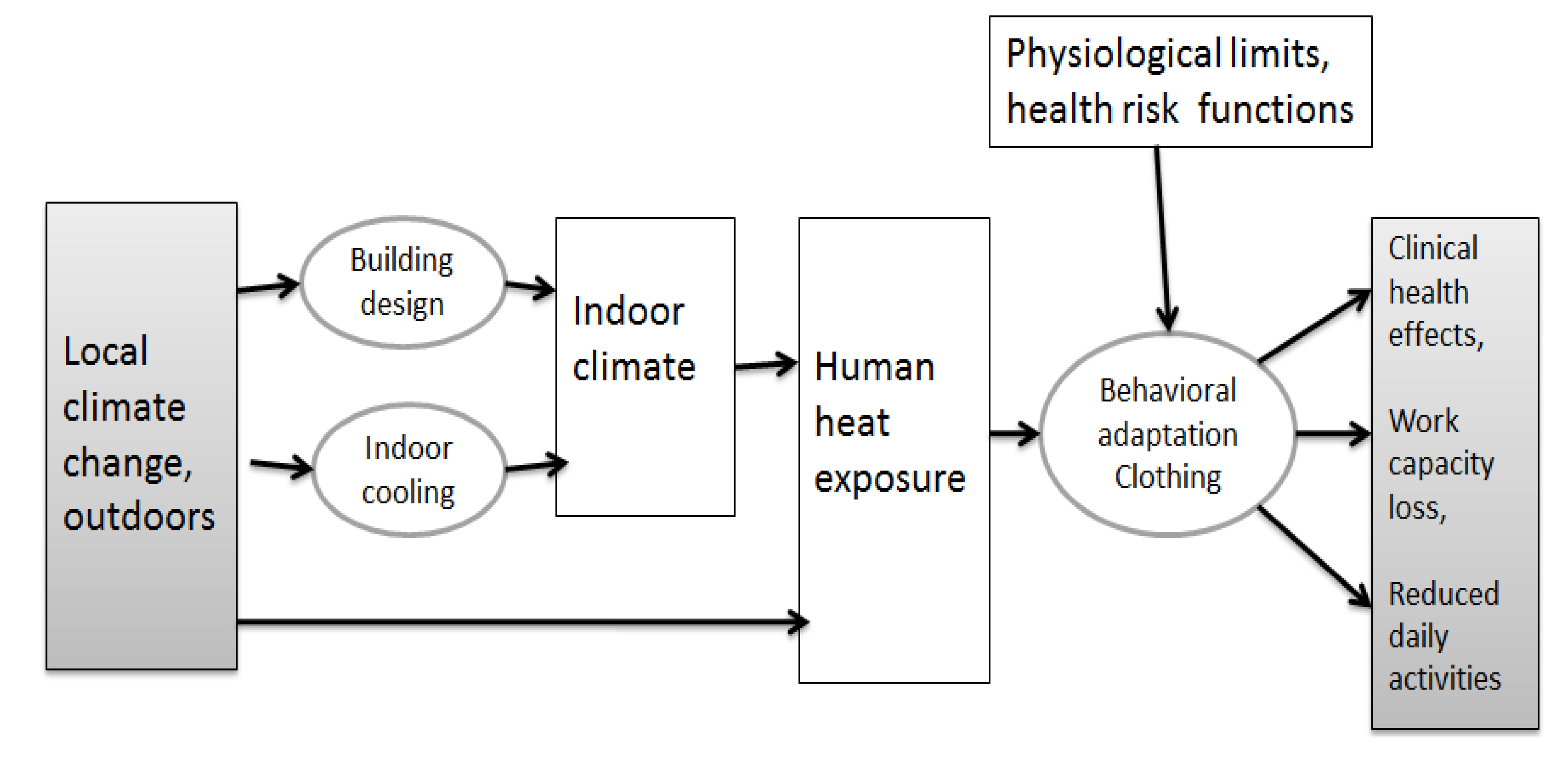
When the ambient temperature reaches or exceeds the human body core temperature of 37 °C, there are well-documented physiological effects on the human body [8], posing risks to some organ systems and also making it progressively harder to work productively. As the core temperature begins to rise, skin blood flow increases and sweating is initiated. Sweating is a powerful way of dissipating heat, however; it also puts a strain on the human body, as dehydration will develop if lost liquid is not replaced. At body core temperatures beyond 38–39 °C, there is an increased risk of heat exhaustion and beyond these temperatures, heat stroke and other heat illnesses can occur. Health consequences range from dehydration, injuries, and heat fatigue to kidney failure and death [8]. The body heat balance is determined by the surrounding air and radiant temperature, humidity, air movement, clothing worn and the metabolic heat generated by human physical activity [8]. Figure 1 outlines the pathways for health and physiological effects. When facing increasing heat levels as a consequence of climate change, these physiological limits will be more frequently bypassed and options to cool physiologically and behaviorally become more difficult, even for acclimatized individuals [4].
Figure 1.
Climate change, excessive heat exposure and health consequences.
3. Ambient Heat Exposure Trends and Cooling Demand
Climate change will lead to changes in ambient temperature, wind speed, humidity, precipitation and cloud cover, affecting electricity demand in different ways. The IPCC Fourth Assessment Report states that hot days, hot nights and heat waves have become and will become more frequent over most land areas. Today, a warming of 0.8 °C has been observed above preindustrial levels [2]. Although, the global community has committed itself to holding warming below 2 °C during this century in order to prevent “dangerous” climate change; present emission trends put the world plausibly on a path toward 4 °C warming within the century, and 6 °C for the next century [9]. This translates into unprecedented heat waves and long-term heat exposure in many places and therefore a heavy dependence and need for indoor cooling systems.
The negative impacts of increased energy costs for cooling are projected to be concentrated in the tropics and subtropics where most of the world’s population resides and where fast growing, dense urban areas are commonplace. In many of these areas the maximum temperatures during the hottest part of the year are already close to, or above, 40 °C and are expected to increase. The threshold to maintain health and daily activities is frequently bypassed in these areas. As a consequence, air conditioning is likely to be increasingly used all year around, in both homes and workplaces [4]. At the regional scale considerable impacts can be seen, particularly in South and South-East Asia, where energy demand for residential air conditioning could increase more than 40 times in 2100 in comparison to 2000, with a 7% growth per year on average. This development is without the additional impacts of climate change, which might add up to an extra 50% in consumption to this. Most of the projected growth in air conditioning is expected to occur in Asia, while the use in Africa will grow more slowly [10].
4. Driving Forces behind Current Air Conditioning Trends
4.1. Greenhouse Gas Emissions
Climate change mitigation translates into the “stabilization of greenhouse gas (GHG) concentrations in the atmosphere at a level that would prevent dangerous anthropogenic interference with the climate system” [2]. Global mitigation efforts can enhance sustainable development prospects in part by reducing the risk of adverse impacts of climate change and also provide co-benefits, such as improved health outcomes. On the other hand, despite continuous improvements in energy intensities, global energy use and supply are projected to continue to grow. Adaptation and mitigation therefore need to be complementary as irrespective of the scale of the mitigation measures that are implemented, adaptation measures will still be required due to the inertia in the climate system. The consequence of this inertia is that mitigation actions need to be initiated in the short term in order to have medium- and long-term benefits and to avoid the technological and institutional “lock-in” of carbon intensive technologies [2]. In addition, the Global Energy Assessment (2012) identifies that the social choices about cooling technology will prove increasingly important in the future. These choices are already causing problems in many parts of the world. For example, in Delhi, India, air conditioning accounts for the highest consumption of electricity during the hottest months, accounting for 28% of the total monthly electricity consumption [11]. This puts a high burden on the electricity distribution system and an increasing risk for electricity blackouts. This has the potential for dire consequences, with increased high health risks from heat stress especially during heat waves, as energy blackouts, like the one seen in India during the summer of 2012 may become commonplace. The India blackout left more than 600 million people without electricity and was the world’s largest blackout to date [12]. This was partly initiated by a weak monsoon that kept temperatures high and triggered an increased use of air conditioners and fans [13].
4.2. The Urban Heat Island Effect
After centuries of intense urbanization, more than 50% of the world’s population live in cities [14]. Irrespective of global climate change, urbanization alters the local intra-urban climate, particularly by reducing rainfall and increasing nighttime temperatures [15]. Built-up areas influence the absorption and reflection of solar radiation, the ability to store heat, the absorption and emittance of long wave radiation, winds and evapo-transpiration (the discharge of liquid water from the earth’s surface to become water vapor in the atmosphere). The built environment is also characterised by human activities affecting the climate, such as the heating and cooling of buildings, motor traffic and industrial production. These activities release heat and moisture and emit air pollution, which affects incoming and outgoing heat radiation [16]. The limited number of trees and vegetation in many urban areas decreases the capacity to cool the air through evapo-transpiration [3].
The “urban heat island effect” is a result of the heat absorption in cities and refers to the difference in temperatures measured inside and outside the city [17]. The elevated temperatures can increase the magnitude and duration of heat waves [16] and cause additional nighttime electricity consumption from AC.As the urban and global climate changes, the ability of buildings to continue to provide healthy and thermally comfortable environments for inhabitants will be further challenged.
AC also directly affects the urban heat island effect. Liu et al. 2011, modeled the effect on a typical office building cluster and found that the largest heat island intensity contributed by AC systems can reach 0.7 °C at midday and the daily average rise is 0.53 °C [18]. Low set-point indoor temperature of the AC units can increase the anthropogenic outdoor air temperature rise even further [18]. Hsieh et al. 2007, did a study in Taipei City, located in the subtropical zone with hot and humid summers. The penetration of AC is higher than 90% in the city. The heat discharged from AC raised the outside temperature by between 0.5 and 2 °C during evenings (7 pm to 2 am) [19]. It was also found that the materials/geometry of buildings and the elevation/positions of heat emissions modify the local ambient climate. A low level location of heat ejection affected the ambient air temperature causing an additional electricity consumption of up to 11% compared to an area with a high penetration of window-type air conditioners [19].
5. Air Conditioning Energy Requirements and Usage Trends
Currently, it is estimated that the world consumes about 1 trillion kilowatt hours (kWh) of electricity for AC annually; more than twice the total energy consumption of Africa for all purposes [20]. It is also estimated that the energy for cooling could increase tenfold by 2050 [20]. Modeling results by Isaac et al. 2009 [10], show that world energy demand for AC will increase rapidly in the 21st century. The increase in the median scenario is from close to 300 TWh in 2000, to about 4000 TWh in 2050 and more than 10,000 TWh in 2100 [10].This development is mostly driven by income growth and perceived need, but also due to increasing temperatures and protection from heat exposure. In contrast, energy demand for heating will increase until 2030 and then stabilize. While heating is commonly done with natural gas, biomass and fossil fuels, AC depends on electric power and water evaporation. The growing use of electricity increases risk for blackouts during summer peak demand and heat waves [21].
Research efforts to reduce the related electricity use involve more efficient AC and coolant gases, such as refrigerant-grade propane which minimize electricity use and emissions. However, so far the improvements have been dwarfed by rising consumer demand, and technical, financial and social barriers [20,22].
Literature on the subject linking temperature directly to AC use is limited although research has identified climate variables being linked with electricity consumption. Studies have statistically analyzed demand impacts using changes in heating or cooling degree days from electricity consumption and meteorological data [23,24,25,26,27]. These two indicators are used in modeling the relationship between the climate and electricity consumption. They measure the sum of the daily variation of the temperature below or above a certain threshold; where deviations from the comfort zone can be analyzed on both cooler and hotter days. Air temperature is found to be the most significant weather variable affecting electricity demand as between an ambient air interval of 15–21 °C, it has been found that the electricity load is relatively insensitive to temperature, which defines the so-called “comfort zone”. Below and above this interval the electricity consumption increases [24]. It is also well known that the temperature gradient between the indoor and outdoor temperature greatly affects electricity consumption of the AC unit [28], where an increase of up to 10% of electricity is observed for every degree change of ambient temperature. Depending on the AC unit-capacity, time used and cooling area sizes [28]. Electricity loads are also found to be dependent on the time of day and previous hour load effects, seasonal and daily weather patterns, weekday versus weekend effects, and holidays [28].
A simulation of the electricity consumption over the hot month of July in the Pennsylvania-New Jersey-Maryland Interconnection (PJM) area of the USA found the impact of a 1.1 °C (2 °F) increase in the daily temperature on hourly peak loads resulted in an average demand increase of about 4% [26]. In Spain, temperature extremes correspond with yearly peak electricity consumption causing a serious problem for the stability and reliability of electricity distribution systems. Greenhouse gas emissions (GHGs) resulting from electric power generation have risen sharply in Spain in the last 12 years and temperature is one of the most important factors affecting the electricity demand of the population [27]. For example in Madrid, in the summer of 2008, maximum “peak consumption” was observed on 30 June, when the outdoor temperature was 39 °C. Residential AC was observed to account for approximately 30% of this maximum “peak consumption” [27].
In Japan it has been reported that the peak electric power load in the Tokyo region rose by approximately 180 MW for each 1 °C rise in air temperature in 2004. On this basis, Ihara et al. 2008, studied three business districts in Tokyo, to estimate the electric power consumption according to air temperature and humidity. This analysis [25] used data from the Japanese Meteorological Agency’s Automated Meteorological Data Acquisition System (AMeDAS) and the electricity company TEPCO. TEPCO’s base load (under the condition of 22 °C and 55%RH) is 40,000 MW. The air temperature inside the buildings was controlled for comfort. It was found that the base load of about 40 W/m2 started to increase at 21 °C by about 2 W/m2 per 1 °C external temperature increase. A linear relationship between electric power consumption and external air temperature was calculated using a multiple regression analysis. The same relationship was found for humidity. The electricity consumption increase during the summer was found to be primarily linked to indoor space cooling [25]. It has to be noted that the air temperature relationship with increasing electricity consumption might differ in other locations, as it depends on, for example, the type of building and also the set-point temperature of the AC unit. On the other hand, the general trend can be assumed to apply to most settings and might even be exacerbated due to poor construction and energy efficiency.
Isaac et al. 2009 [10], projected changes in world energy demand for heating and cooling in the residential sector and found the associated global carbon emissions to rise from about 0.8 GtC in 2000 to about 2.2 GtC in 2100, mainly due to energy use for cooling [10]. Parkpoom et al. 2008 [23], modeled the effects of climate change on electricity consumption in Thailand using regression models to daily load patterns across each month of the year [23]. Temperature projections from the UK Hadley Centre climate model were used in combination with the socioeconomic scenarios from the Intergovernmental Panel on Climate Change.
It was found that mean annual temperatures in Thailand will rise by 1.7 to 3.4 °C by 2080 which will significantly increase Thailand’s peak electricity demand, by 1.5%–3% in 2020, 3.7%–8.3% in 2050 and 6.6%–15.3% in 2080 [23]. This translates to actual estimated energy use increases of several 100 GW by 2080, depending on the climate change projection. If the increase is limited to 200 GW, which fits with IPCC scenario A2 and B2, this climate change impact would approximately amount to an additional 100 typical power stations producing 2,000 MW each [23].
Taking these projections into account, the use and cost of AC will increase as a consequence of climate change. These trends create additional inequity between low and high income countries as “maladaptation” will increase electricity and primary energy demand in most tropical and sub-tropical countries, while there may be a beneficial effect (less heating needed) in more temperate high income countries [11]. Increases in humidity in combination with temperature will increase electricity consumption further [25], especially in hot-humid climates. When facing predictions of additional global warming of 4 °C [9], the cost of additional electricity will become extraordinary.
6. Sustainability Analysis Approach
A life cycle and a systems analysis approach are necessary when looking at the problem and possible solutions. Short-term considerations, such as simply installing inefficient types of AC during hot summers, are not a sustainable solution [11]. In the long term this development can translate into one technology achieving complete market dominance at the expense of the other; referred to as technological “lock-in”. Already now this can be seen and has also caused an institutional lock-in, as the development of technologies both influences and is influenced by the social, economic and cultural setting in which they develop. Once this lock-in is achieved, it can prevent the take up of potentially superior alternatives [29].
In addition, the systems approach emphasizes that individual technologies are not only supported by the wider technological system of which they are part, but also by the institutional framework of social rules and conventions that reinforces that technological system. These include formal constraints, such as legislation, economic aspects, and informal constraints, such as social and behavioral barriers. As modern technological systems are deeply embedded in institutional structures, the above factors leading to lock-in can interact with and reinforce the drivers and feedbacks [29].
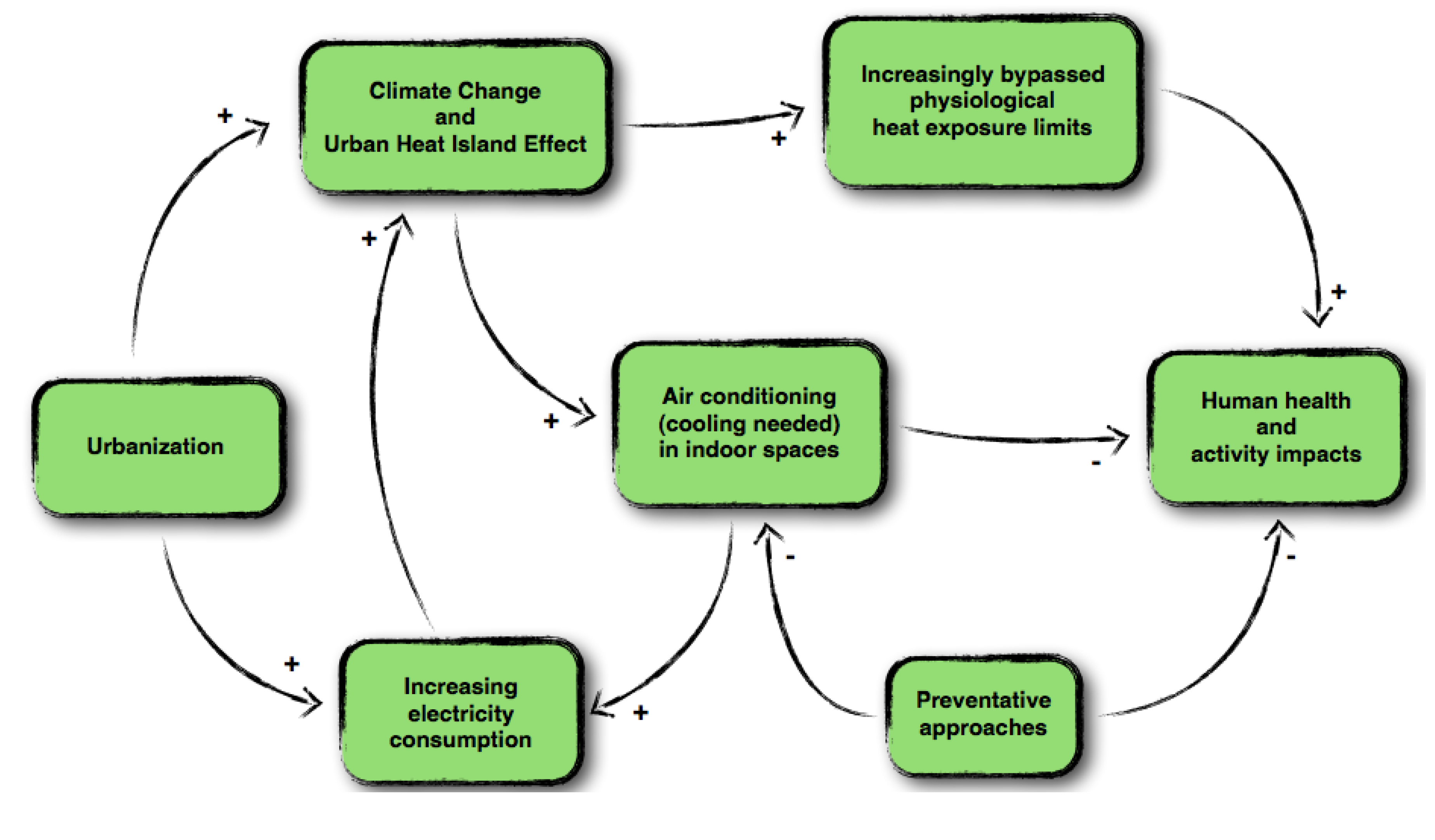
Figure 2 conceptualizes the issue of space cooling and electricity consumption. It presents a significant sustainability issue; where linkages and feedbacks between the uses of AC, climate change and the urban heat island effect are prominent [21].
One has to consider all the drivers and feedbacks when designing alternatives to AC; one also has to take into account that individual technologies are not only supported by the wider technological system, but also the institutional framework that reinforces that technological system. Therefore, it is important to understand innovation systems and how past technological transitions have occurred. This can provide insight into approaches for promoting innovation for greater sustainability [29].
7. Urban Sustainability and Preventative Approaches
Almost 60% of the world’s electricity is consumed in the residential and commercial buildings, most for space heating and cooling, making more efficient energy use, as well as sustainable energy supply in buildings, critical [11]. In contrast, in developing countries, modern building characteristics are dominated by an influence of western architecture, such as glass-dominant structures, predominant use of concrete, and incorporation of large windows and flat concrete roofs, which leads to large cooling loads. Without electricity, the modern building designed for AC becomes a heat trap. This also causes a significant risk for technological lock-in as the building stock is usually sustained for many decades.
The faith in modern scientific solutions to achieving comfort has side-stepped local knowledge in many parts of the world, and cooling comfort is increasingly delegated to technical experts, potentially with primarily commercial concerns. AC has therefore become the most common option for cooling comfort [30].
Figure 2.
Examples of the links between the different concepts in urban settings from a systems approach.
7.1. Urban Planning and Building Design
There are numerous contemporary urban planning and building design initiatives directed towards sustainability and energy conservation (Table 1). Increasing the size of urban parks and gardens and enhancing shading and ventilation channels, will result in a reduction in temperatures in urban areas. With appropriate urban planning, the urban heat island effect could be considerably reduced [31]. Increasing the albedo of urban surfaces, by incorporating more reflecting surfaces and increasing green areas, also reduces local heat [32].
Table 1.
Some technical solutions for heat reduction by urban planners and building designers.
Applying green roofs is a very good mitigation strategy for the urban heat island and roofs constitute about 20%–25% of the urban surface. Green roofs have also been shown to provide thermal insulation to buildings [11]. Energy savings vary between 6%–72% depending on the climate zone and number of floors affected [11]. Moreover, “cool roofs” are solar reflective roofs that absorb less sunlight than conventional roofs. The greater reflectivity is achieved by utilizing a light color of roof surface and special highly reflective and emissive materials, which can reflect at least 60% of sunlight instead of the 10%–20% reflected by traditional dark-colored roofs, reducing indoor heat [11]. The urban-wide conversion into green roofs can give rise to many benefits both on urban and indoor cooling, air quality, storm-water management, biodiversity, increase of the life span of the building materials, reduce noise pollution and decrease the building energy use, especially during the summer [33].
7.2. Solar Electricity for Air Conditioning
A part of the solution could involve renewable energy to power AC units. Solar energy could be an effective method to reduce conventional electricity use and to achieve a reduction of peak electric power during hot days. This can be done in two ways; electricity through solar photovoltaic cells (similar to conventional systems) or by heat driven sorption systems (liquid desiccant systems) [36]. A major advantage of solar energy is that the greatest demand for air conditioning occurs during times of high heat and solar radiation and peak photovoltaic power output [37]. As a result, a building fitted with solar panels, could power the air conditioning system, even during heat waves, as the output would increase.
On the other hand, due to issues of storage and limited electricity output during the night (unless connected to the grid), the greatest value could be in occupational settings such as factories and offices that primarily operate during the day. Photovoltaic power output depends on the area, shading, orientation and watt-class of the panel. In a study from Malaysia [38], a hot-humid tropical country, a comparison of three different solar module technologies was made: poly-crystalline, mono-crystalline and amorphous silicon. Peak solar output in the tropical climate zone is about 800–1000 W/m2 on a sunny day with about 6 h of direct sunlight. The efficiency of current solar modules ranges between10%–20% in conversion capacity. Amorphous silicon solar cells, which are currently the cheapest (and therefore most probably the most adopted technology) could be estimated to have a conversion efficiency no higher than 10% during intense solar radiation. Overall, 1 m2 of solar panels could therefore be estimated to have the capacity to produce up to 100 W of electricity at peak solar radiation with an average over a 12-hourday of 50 W [38].
The solar panel electricity production could be more than enough to power air conditioning for a floor area of similar size to the panels, even when facing significant local climate warming. This has the advantage of reducing peak load and associated costs, especially in the long term. Nevertheless, barriers to the development of “solar cooling systems” exist and are linked to relatively low specific power output, lack of incentive schemes and the investment costs. The economic factor is frequently the central element for energy choices of companies and individuals [36].
7.3. The Importance of FAR and RAR for Solar Energy Cooling Possibilities
The Floor Area Ratio (FAR) [37] is a measure of the mathematical relationship between the total floor size in buildings on a unit of land, and is commonly used to manage urban growth. The FAR is the total building floor area divided by the land area. Thus, a FAR of 2 would indicate that the total floor area of buildings on a site is two times the gross land area of the site [39]. A FAR of 1–1.5 is usually desirable and common in European cities [40]. In Mumbai, India FAR varies from around 1.2 to 4.8 in the more central areas [40].Generally, in most large cities of the world, as technology and infrastructure improve, the FAR in the city center tends to increase and most cities of the world have a policy to increase FAR with time [39], but at the same time put a limit in order to mitigate negative population externalities (e.g., congestion). As urban populations increase, climate change progresses and air conditioning penetration grows, the future electricity consumption and urban heat islands in tropical and sub-tropical areas will increase substantially. From a literature review it was found that localized studies and specific studies linking AC with increasing electricity consumption is lacking. From this we suggest that together with hourly meteorological and AC electricity consumption and penetration data, FAR can be used to estimate and calculate current consumption and future growth in electricity consumption due to AC in urban areas. For example, this schematic equation can be used to estimate effects of temperature variation. However, it has yet to be explored empirically.
Air Conditioning Cooling Electricity Need per degree of external Temperature increase (ACCENT):
- ACCENT = f (FAR, CER, STV, DTV, ULA)
- FAR = FLOOR AREA RATIO
- CER = COOLING ENERGY REQUIRED/m2 OF FLOOR AREA
- STV = SEASONAL TEMPERATURE VARIATION
- DTV = DAILY TEMPERATURE VARIATION
- ULA = URBAN LAND AREA
7.4. Social Aspects
Social choices about cooling options are increasingly important. For instance, in some countries a very large stock of residential, institutional, and commercial buildings are designed to be non-air-conditioned while in other countries electric cooling is the norm [11]. In fact, cultural acceptances of air conditioning vary widely between countries.
For example, they are not common in French homes due to factors such as believing air conditioners cause illness [20]. Thermal comfort is subjective and a dynamic state based on the interaction of people’s metabolism, sensory perceptions, expectations, and acclimatization experiences, as well as the human body’s interaction with the environment. A change in perception and behavior could therefore influence thermal comfort, which requires awareness. Social changes that could take place include accepting higher sweat rates and allow workers to wear lighter clothing [11]. Occupants also need to be provided with a greater choice of strategies, including energy feedback and occupancy monitoring systems, in order to adapt buildings to changing climatic conditions. On the other hand, the social, material and discursive aspects of AC are globalizing at a rapid pace causing a mental dependence on cooling [30]. Social choices and specific behavior will therefore directly affect the demand for cooling technology [11].
8. Conclusions
Air conditioning as a technical solution to protect urban populations from excessive heat exposure creates the challenge of increasing electricity consumption, especially in urban areas. Air conditioning use triggers an increase in energy consumption and therefore greenhouse gas emissions, exacerbating climate change. In addition, the direct heat rejected from the air conditioning unit, adds to street level heat and therefore the urban heat island effect. If not abated, it has the potential to intensify climate change, and put extra loads on the future energy supply, especially during heat waves. On the other hand, air conditioning does protect inhabitants and workers from heat stress providing cooler spaces, which is a necessity when ambient heat levels go beyond what human physiology can cope with.
A society resilient to climate change would ensure that urban planning and architectural design incorporates all relevant approaches to reduce human heat exposures during the hottest part of the year. Future research needs to look at the links between meteorological variables and electricity consumption for air conditioning, and preventative measures, such as opportunities for renewable energy systems.
Acknowledgments
The present work benefited from funds from the Australian National University, Lund University and Umea University in Sweden.
Conflict of Interest
The authors declare no conflict of interest.
References
- Schulte, P.A.; Chun, H. Climate change and occupational safety and health: Establishing a preliminary framework. J. Occup. Environ. Hyg. 2009, 6, 542–554. [Google Scholar] [CrossRef]
- IPCC, Forth Assessment Report, AR4; Cambridge University Press: Cambrige, UK, New York, NY, USA, 2007.
- Ford, D.; Berrang-Ford, L. (Eds.) Climate Change Adaptation in Developed Nations: From Theory to Practice; Springer: Dordrecht, The Netherlands, 2011; p. 490.
- Kjellström, T.; Holmer, I.; Lemke, B. Workplace heat stress, health and productivity—an increasing challenge for low-and middle income countries during climate change. Glob. Health Action 2009. [Google Scholar] [CrossRef]
- Henning, H.-M. Solar assisted air conditioning of buildings—an overview. Appl. Therm. Eng. 2007, 27, 1734–1749. [Google Scholar] [CrossRef]
- Dempsey, N.; Bramley, G.; Power, S.; Brown, C. The social dimension of sustainable development: Defining urban social sustainability. Sustain. Dev. 2011, 19, 289–300. [Google Scholar] [CrossRef]
- Wilhite, H. The conditioning of comfort. Build. Res. Inf. 2009, 37, 84–88. [Google Scholar]
- Parsons, K. Human Thermal Environments, 2nd ed.; Taylor and Francis: New York, NY, USA, 2003. [Google Scholar]
- World Bank, Turn Down the Heat—Why a 4 °C Warmer World Must be Avoided; The Potsdam Institute for Climate Impact Research and Climate Analytics: Washington, DC, USA, 2012.
- Isaac, M.; van Vuuren, D.P. Modeling global residential sector energy demand for heating and air conditioning in the context of climate change. Energ. Policy 2009, 37, 507–521. [Google Scholar] [CrossRef]
- IIASA, Global Energy Assessment-Toward a Sustainable Future; Cambridge University Press: Cambridge, UK, New York, NY, USA; International Institute for Applied Systems Analysis: Laxenburg, Austria, 2012.
- India restores power but jitters remain. Available online: http://tribune.com.pk/story/415896/india-restores-power-but-jitters-remain/ (accessed on 22 October 2012).
- Power back on after India blackouts. Available online: http://www.independent.co.uk/news/world/asia/power-back-on-after-india-blackouts-7998385.html (accessed on 1 August 2012).
- Anderberg, S. The Interrelated Roles of Natural Resources and Sustainability in Urban Planning; (Encyclopedia of Sustainability Science and Technology); Springer Science and Business Media, LLC: Larkspur, CA, USA, 2011. [Google Scholar]
- Kovats, S.; Akhtar, R. Climate, climate change and human health in Asian cities. Environ. Urban. 2008, 20, 165–175. [Google Scholar] [CrossRef]
- Johansson, E. Urban Design and Outdoor Thermal Comfort in Warm Climates—Studies in Fez and Colombo. Ph.D. Thesis, Lund University, Sweden, 2006. [Google Scholar]
- Kovats, R.; Hajat, S. Heat stress and public health: A critical review. Annu. Rev. Public Health 2008, 29, 41–55. [Google Scholar] [CrossRef]
- Liu, J.; Ma, F.; Li, Y. The effect of anthropogenic heat on local heat island intensity and the performance of air conditioning systems. Adv. Mater. Res. 2011, 250–253, 2975–2978. [Google Scholar]
- Hsieh, C.-M.; Aramaki, T.; Hanaki, K. The feedback of heat rejection to air conditioning load during the nighttime in subtropical climate. Energ. Bldg. 2007, 39, 1175–1182. [Google Scholar]
- Dahl, R. Cooling Concepts: Alternatives to Air Conditioning for a Warm World. Environ. Health Perspect. 2013. [Google Scholar] [CrossRef]
- Tremeac, B.; Bousquet, P.; de Munck, C.; Pigeon, G.; Masson, V.; Marchadier, C.; Merchat, M.; Poeuf, P.; Meunier, F. Influence of air conditioning management on heat island in Paris air street temperatures. Appl. Energ. 2012, 95, 102–110. [Google Scholar] [CrossRef]
- Rosenthal, E. The Cost of Cool. Available online: http://www.nytimes.com/2012/08/19/sunday-review/air-conditioning-is-an-environmental-quandary.html?pagewanted=all&_r=0 (accessed on 18 August2012).
- Parkpoom, S.; Harrison, G. Analyzing the Impact of climate change on future electricity demand in Thailand. IEEE Trans. Power Syst. 2008, 23, 1441–1448. [Google Scholar] [CrossRef]
- Valor, E.; Meneu, V.; Caselles, V. Daily air temperature and electricity load in Spain. Am. Meterol. Soc. 2001, 40, 1413–1421. [Google Scholar]
- Ihara, T.; Genchi, Y.; Sato, T.; Yamaguchi, K.; Endo, Y. City-block-scale sensitivity of electricity consumption to air temperature and air humidity in business districts of Tokyo, Japan. Energy 2008, 33, 1634–1645. [Google Scholar] [CrossRef]
- Crowley, C.; Joutz, F. Hourly Electricity Loads: Temperature Elasticities and Climate Change. In Proceedings of 23rd US Association of Energy Economics North American Conference, Mexico City, Mexico, 19–21 October 2003; IAEE: Mexico City, Mexico, 2003. [Google Scholar]
- Izquierdo, M.; Moreno-Rodríguez, A.; González-Gil, A.; García-Hernando, N. Air conditioning in the region of Madrid, Spain: An approach to electricity consumption, economics and CO2 emissions. Energy 2011, 36, 1630–1639. [Google Scholar] [CrossRef]
- New SouthWales Government, One degree of difference. Available online: http://www.savepower.nsw.gov.au/business/power-saving-tips/increase-the-temperature-setpoint-when-cooling.aspx (accessed on 12 February 2013).
- Foxon, T.J. Handbook of Sustainable Development. In Technological Lock-in and the Role of Innovation; Atkinson, G., Dietz, S., Neumayer, E., Eds.; Edward Elgar: Cheltenham, UK, 2006. [Google Scholar]
- Wilhite, H. The conditioning of comfort. Build. Res. Inf. 2009, 37, 84–88. [Google Scholar] [CrossRef]
- Jusuf, S.K.; Wong, N.H.; Hagen, E.; Anggoro, R.; Hong, Y. The influence of land use on the urban heat island in Singapore. Habitat. Int. 2007, 31, 232–242. [Google Scholar] [CrossRef]
- Kikegawa, Y.; Genchi, Y.; Kondo, H.; Hanaki, K. Impacts of city-block-scale countermeasures against urban heat-island phenomena upon a building’s energy-consumption for air-conditioning. Appl. Energy 2006, 83, 649–668. [Google Scholar] [CrossRef]
- Susca, T.; Gaffin, S.R.; Dell’Osso, G.R. Positive effects of vegetation: Urban heat island and green roofs. Environ. Pollut. 2011, 159, 2119–2126. [Google Scholar] [CrossRef]
- Kleerekoper, L.; van Esch, M.; Salcedo, T.B. How to make a city climate-proof, addressing the urban heat island effect. Resour. Conserv. Recycl. 2012, 64, 30–38. [Google Scholar] [CrossRef]
- Gao, C.; Kuklane, K.; Wang, F.; Holmér, I. Personal cooling with phase change materials to improve thermal comfort from a heat wave perspective. Indoor Air 2012, 22, 523–530. [Google Scholar] [CrossRef]
- Desideri, U.; Proietti, S.; Sdringola, P. Solar-powered cooling systems: Technical and economic analysis on industrial refrigeration and air-conditioning applications. Appl. Energy 2009, 86, 1376–1386. [Google Scholar] [CrossRef]
- Farraj, A.; Mallouh, M.A.; Kalender, A.-R.; Al-Shqirate, A.A.-R.; Hammad, M. Experimental Study of Solar Powered Air Conditioning Unit Using Drop—In Hydro Carbon Mixture to Replace R-22. Jordan J. Mechan. Ind. Eng. 2012, 6, 63–70. [Google Scholar]
- Ghazali, A.M.; Malek, A.; Rahman, A. The performance of three different solar panels for solar electricity applying solar tracking device under the Malaysian climate condition. Energy Environ. Res. 2012, 2, 235–234. [Google Scholar]
- Khan, A.; Mahmud, A. FAR as a development control tool: A new growth management technique for Dhaka City. Jahangirnagar Plan. Rev. 2008, 6, 49–56. [Google Scholar]
- Patel, S. Analyzing Urban Layouts. Available online: http://www.udri.org/udri/MumbaiReader10/30%20Shirish%20B%20Patel%20-%20Analyzing%20Urban%20Layouts.pdf (accessed on 22 October 2012).
© 2013 by the authors; licensee MDPI, Basel, Switzerland. This article is an open access article distributed under the terms and conditions of the Creative Commons Attribution license (http://creativecommons.org/licenses/by/3.0/).