


Abstract
Identifying the risk factors for morbidity and mortality effects pre-, during and post-flood may aid the appropriate targeting of flood-related adverse health prevention strategies. We conducted a systematic PubMed search to identify studies examining risk factors for health effects of precipitation-related floods, among Organisation for Economic Co-Operation and Development (OECD) member countries. Research identifying flood-related morbidity and mortality risk factors is limited and primarily examines demographic characteristics such as age and gender. During floods, females, elderly and children appear to be at greater risk of psychological and physical health effects, while males between 10 to 29 years may be at greater risk of mortality. Post-flood, those over 65 years and males are at increased risk of physical health effects, while females appear at greater risk of psychological health effects. Other risk factors include previous flood experiences, greater flood depth or flood trauma, existing illnesses, medication interruption, and low education or socio-economic status. Tailoring messages to high-risk groups may increase their effectiveness. Target populations differ for morbidity and mortality effects, and differ pre-, during, and post-flood. Additional research is required to identify the risk factors associated with pre- and post-flood mortality and post-flood morbidity, preferably using prospective cohort studies.
1. Introduction
Floods are amongst the most significant “natural disasters” in terms of the number of persons affected [1]. Flash floods result in the highest average mortality per event (defined as the number of fatalities divided by the number of persons affected) [1]. The extent to which a flood causes impacts is determined not just by the magnitude of the flood, but also by human and societal choices related to infrastructure, behavior, and other factors. For this reason, the disaster risk management community prefers to not use the term natural disaster when describing floods, as it has a connotation that a disaster cannot be avoided. Health effects of floods may include hospitalization or emergency department visits, psychological effects, physiological injury, illness or infection or mortality [2].
The risk that a flooding event will be a disaster is a function of three factors: the hazard associated with the flood; the human and natural systems exposed to the floodwaters; and the vulnerability of these systems to flooding [3]. The frequency and intensity of extreme precipitation events are likely to increase with climate change [4], with the number of people at risk of being exposed to flooding effects likely to increase [5]. It is anticipated that extreme precipitation events will increase in southern Asia; during winter in northern Europe; in the United Kingdom (UK) during winter, spring, and autumn; and over the southern and central United States (US). It is anticipated such events will decrease during summer in the south of Europe; in Canadian prairies and southern Australia [3]. Extreme precipitation events that were previously rare, occurring once in twenty years, are projected to become more frequent in the future [3,6,7]. Impacts will continue to arise not just because of changes in precipitation intensity, but also because of more people living in harms’ way. Localised human activities, including populating flood prone areas, environmental transformations (such as railway, drinking water and sewage systems), river modifications and, ironically, flood management schemes, can increase the incidence and severity of flood events [8,9,10].
Exposure to being flooded is influenced by environmental, political and commercial activities, as well as geographic proximity [11]. Vulnerability to being flooded appears to be greater in individuals with pre-existing social vulnerability, particularly related to socio-economic, demographic and health factors. Flood impacts are magnified by lack of awareness, limited mobility or physical capacity, fewer resources to protect, insure or repair property and limited social networks [12]. In the UK, there is evidence of significant inequalities in patterns of exposure to floods and the experience of flood impacts in relation to deprivation and poverty, and in terms of age and gender [13].
The broader (non-health related) impacts of exposure to floods include widespread damage to property and possessions, rescue or immediate assistance needs during floods, homelessness, displaced and evacuated households and economic consequences. These broader impacts are unequally distributed amongst populations [14]. Further, there is a suggestion that over time individual responses to flood events have changed from monitoring and implementing adaptive strategies (e.g., preemptively moving belongings to upper levels during flood conducive weather patterns), to dependency on potentially fallible river modification and flood management schemes, followed by diminished capacity to cope [10].
While there is research identifying the health effects of floods [5], and the characteristics of floods associated with health effects, little is known about factors that increase individual vulnerability to these health effects among those flooded (e.g., given that one is flooded, what factors increase vulnerability?). Undeniably the experience of health effects is directly related to being exposed to floodwater, however, not all individuals who are exposed to floodwater experience health effects. Those unexposed directly to floodwater but living in the vicinity of floods can also experience health effects while preparing to evacuate or experiencing relocation from home.
In this review, we focus on member countries of the Organisation for Economic Co-Operation and Development (OECD) as they are relatively comparable, unlike low-income countries. There appears to be a large difference between the overall economic impacts of flooding in high, middle and low income countries in terms of the percentage of gross domestic product (GDP) spent on flood management. For all weather related disasters, expenditure between 2001 to 2006 was 0.1% of average high-income countries GDP, 0.3% of low-income countries and 1.0% of middle-income. The differences can be attributed to the value of the infrastructure with middle-income countries having the largest burden due to expanding asset bases [3].
Figure 1.
Factors increasing vulnerability to health effects of floods before, during and after flooding.
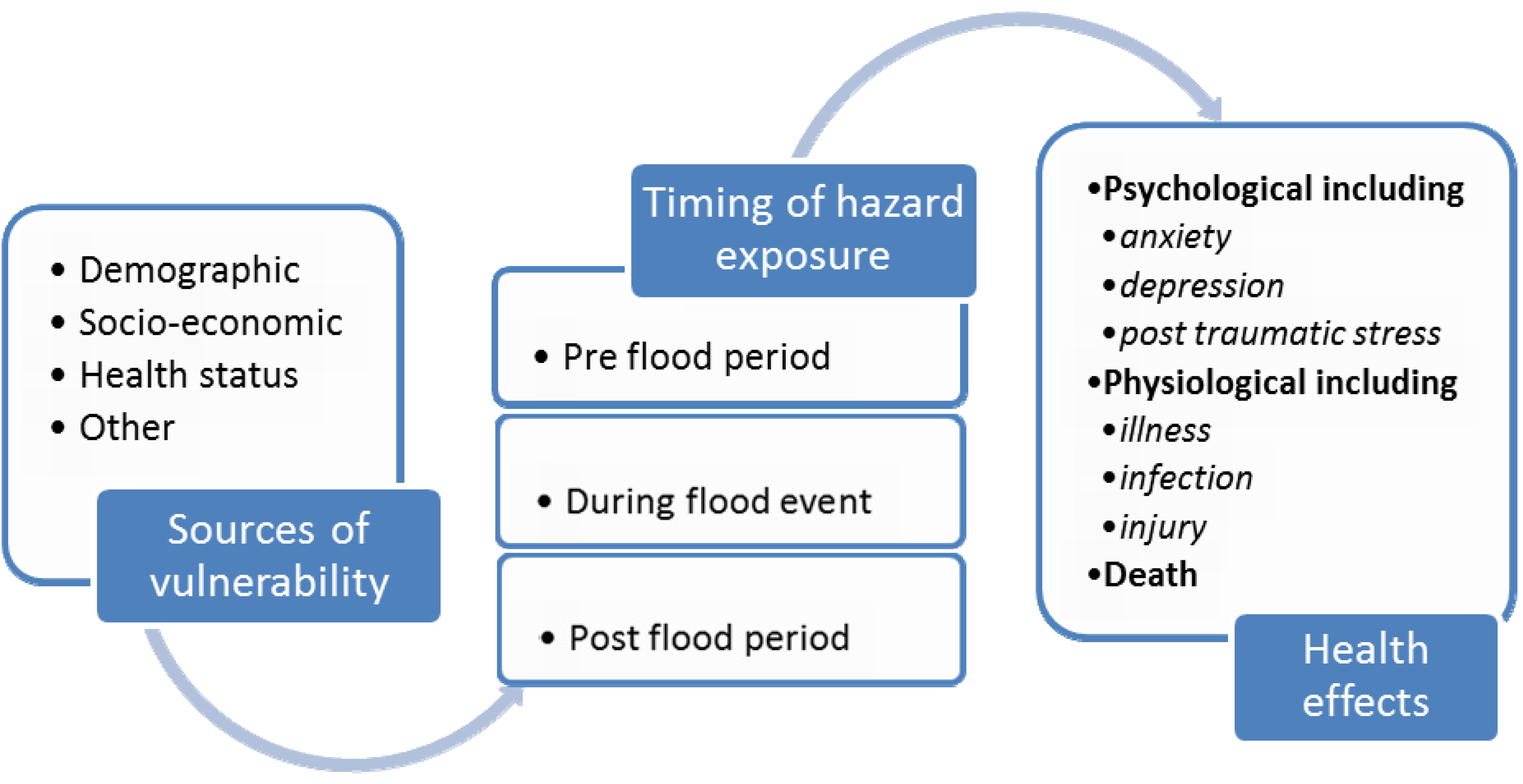
The risk factors (individual, demographic or socio-economic characteristics) increasing vulnerability to health effects of floods may differ based on the timing of exposure, whether before, during or after flood events (see Figure 1). We sought to systematically examine the research identifying risk factors increasing vulnerability to flood-related adverse human health effects before, during and after (short and longer term follow-up) flood events, within OECD countries. Identifying risk factors that increase vulnerability to health effects may aid the appropriate targeting of health prevention strategies [15]. Enabling emergency response and health systems to prepare for and respond to flood disasters by identifying and targeting individuals susceptible to health effects of floods requires identification of these risk factors prior to developing emergency medical systems to enhance disaster response capacity.
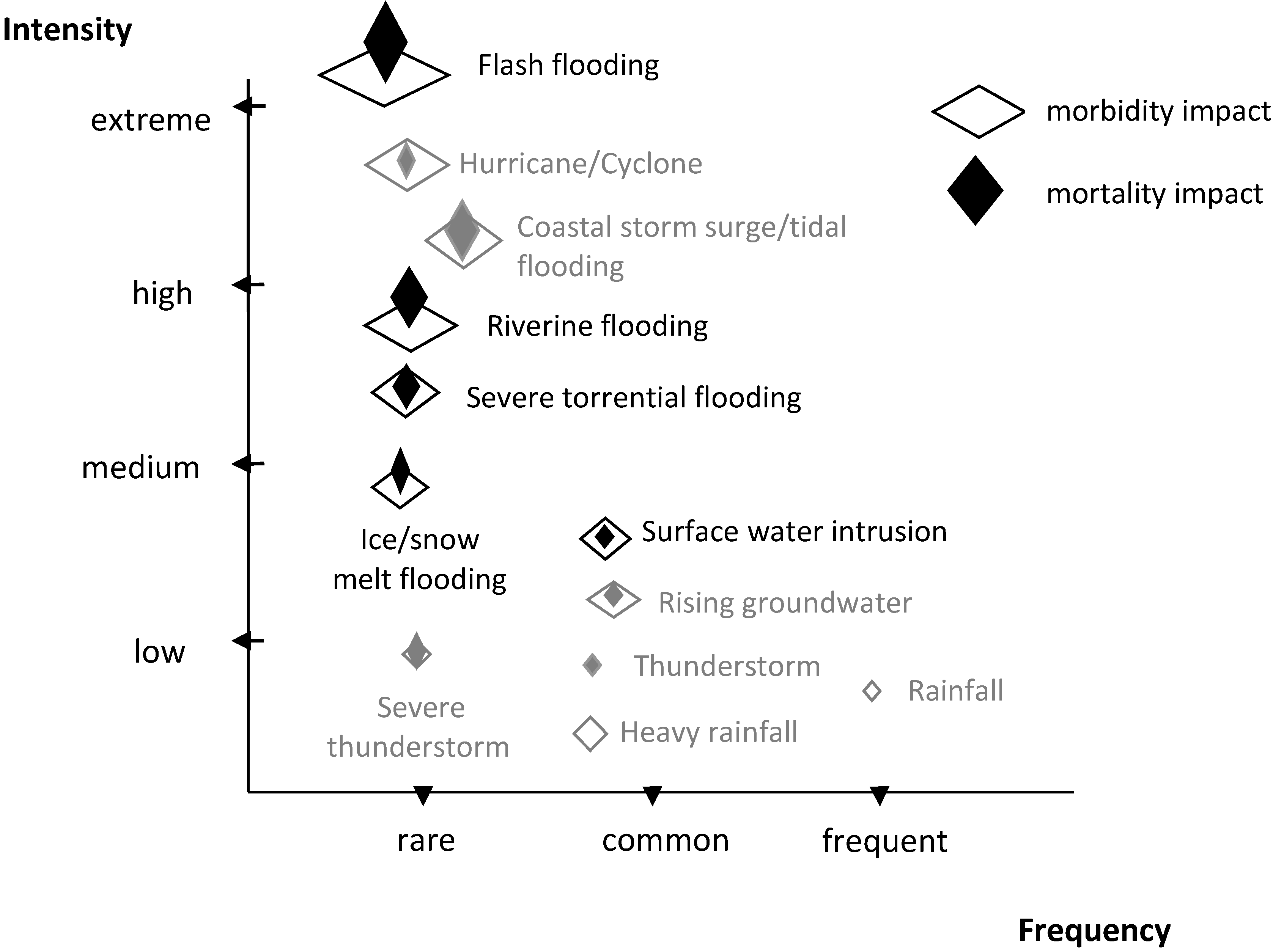
While there are a number of extreme water-related events that have health effects, we focus on extreme and/or prolonged rainfall events (as bolded in Figure 2), sometimes compounded by quick snow melts, which contribute to urban floods, rural ponding, pluvial river, and flash floods, rather than cyclones, coastal storms, or tidal flooding (presented in grey text in Figure 2). When floods are ranked by fatalities per flood event, it is evident that flash floods (especially those from dam failures) and floods associated with tropical storms are the flood types most typically associated with large numbers of fatalities [16].
Figure 2.
Severity, frequency and impact of extreme hydrological weather events. We focused on extreme precipitation-related flood events that are sometimes compounded by snow and ice melt e.g., severe torrential rain, flash and riverine flooding, (bolded) and excluded minor flooding events and those accompanying extreme wind or tides (greyed). The diamond size illustrates the typical magnitude of the morbidity or mortality impact [1,16,17].
2. Experimental Section
To identify the factors that increase vulnerability to the human health effects from floods, we searched PubMed for:
Flood-related terms:
- “floods”[MeSH Terms] OR
- “floods”[All Fields] OR
- “flood”[All Fields]
- AND risk factor terms
- “risk factors”[MeSH Terms] OR
- “risk”[All Fields] AND "factors”[All Fields] OR
- “risk factors”[All Fields]
- AND in humans
- “humans”[MeSH Terms]
We additionally searched the internet and the citation listings of relevant publications. We included all study designs (case series, case reports, cohort studies, controlled before and after studies) that examined relationships between individual risk factors that increase vulnerability to extreme rainfall associated flood-health effects. The focus of this review was an OECD context, as these countries are comparatively similar with respect to management and experience of floods. Studies that examined the impact of coastal floods were excluded from this review.
Studies were included if they fit all the following criteria: (a) examined risk factors, (b) human health effects from flooding, (c) extreme rainfall related flooding, and in (d) in an OECD country. To understand the types of flood-health effects and identify possible vulnerability factors, we specifically sought to identify and categorise the included studies to four potential research questions:
- What are the demographic, socioeconomic, health status, or other factors associated with increased risk of morbidity or mortality, among flooded populations?
- What are the health effects of floods when compared to non-flooded groups?
- What are the characteristics of individuals who experienced flood-related morbidity or mortality?
- With reference to a source population.
- Without reference to source population.
Studies that answer questions 1 and 3a are the primary focus of this review. Studies answering the other questions were included as supportive material.
For all included studies, we extracted data on the study characteristics including design, type of flood event, risk factors, health outcomes, methods, and findings. We categorised findings based on the likely timing of the occurrence of the health outcome, e.g., before, during or after the flood event. Findings from studies examining risk factors for which it was apparent that the outcome preceded and was conceivably related to flood event (such as heart attacks while sandbagging) were categorised as “pre- flood”. Findings from studies examining risk factors for which it was apparent that the outcomes were delayed and were conceivably related to the flooding event (such as respiratory illnesses or psychological effects) were categorised as “post-flood”. Post-flood findings were separated into two further categories short-term (up to three months immediately post-flood) and longer term (three months or longer). The remainder of the findings were categorised as during-flood and include study findings for which it is apparent that the outcomes were the result of and occurred during the flood event itself or where timing was not reported.
3. Results
The PubMed search (May 2013) identified 286 records, of which 45 were obtained in full text. Thirteen of these studies were included after reviewing full texts. The remaining included studies were identified through bibliography “snowballing” and Google searches. In total, we included 38 studies in this review. Of the excluded studies, reasons for exclusion were the study was not related to flooding or it focused on a cyclone, hurricane, coastal or other non-precipitation related flooding event; the study examined non-health effects; or the setting was a non-OECD country.
Of the included studies, 17 studies identify the risk factors associated with health effects amongst flooded populations (i.e., research question 1) [18,19,20,21,22,23,24,25,26,27,28,29,30,31,32,33,34]. The characteristics and findings from these studies are presented in Table A1. A small number of studies (4) identify characteristics increasing the risk of flood health effects (i.e., research question 3a) [16,17,35,36], but these studies do not distinguish between the characteristics that increase risk of exposure to being flooded and the characteristics that increase risk of health effects once flooded. The characteristics and findings from these studies are presented in Table A2.
A total of 16 studies examined the health effects that can be attributed to floods, by comparing the health of the flooded with those who were not flooded (i.e., research question 2) [19,22,25,32,33,37,38,39,40,41,42,43,44,45,46,47]. While some of these studies measured demographics, they typically treat those characteristics as confounders of the flood-health relationship, for example, by adjusting for differences between the groups in terms of age and gender. Although this is valuable information, these studies do not examine age and gender differences between those who experience health effects compared to those who do not, amongst those flooded. Despite this, we included these studies, to identify the health effects attributed to floods and to identify where there may be gaps in terms of knowing which individual risk factors contribute to health effects among flooded populations. The characteristics and findings from these studies are presented in Table A3.
Finally, six studies describe characteristics of those who suffered health effects at the time of floods (i.e., research question 3b) [1,48,49,50,51,52], but it is unclear if the frequency of these characteristics are more common among those flooded than for the source population or if the health effects can be attributed to the floods. However, they may identify suggested areas for future research. The characteristics and findings from these studies are presented in Table A4.
Of the included studies, five address more than one of the research questions and are therefore represented in more than one table [19,22,25,32,33].
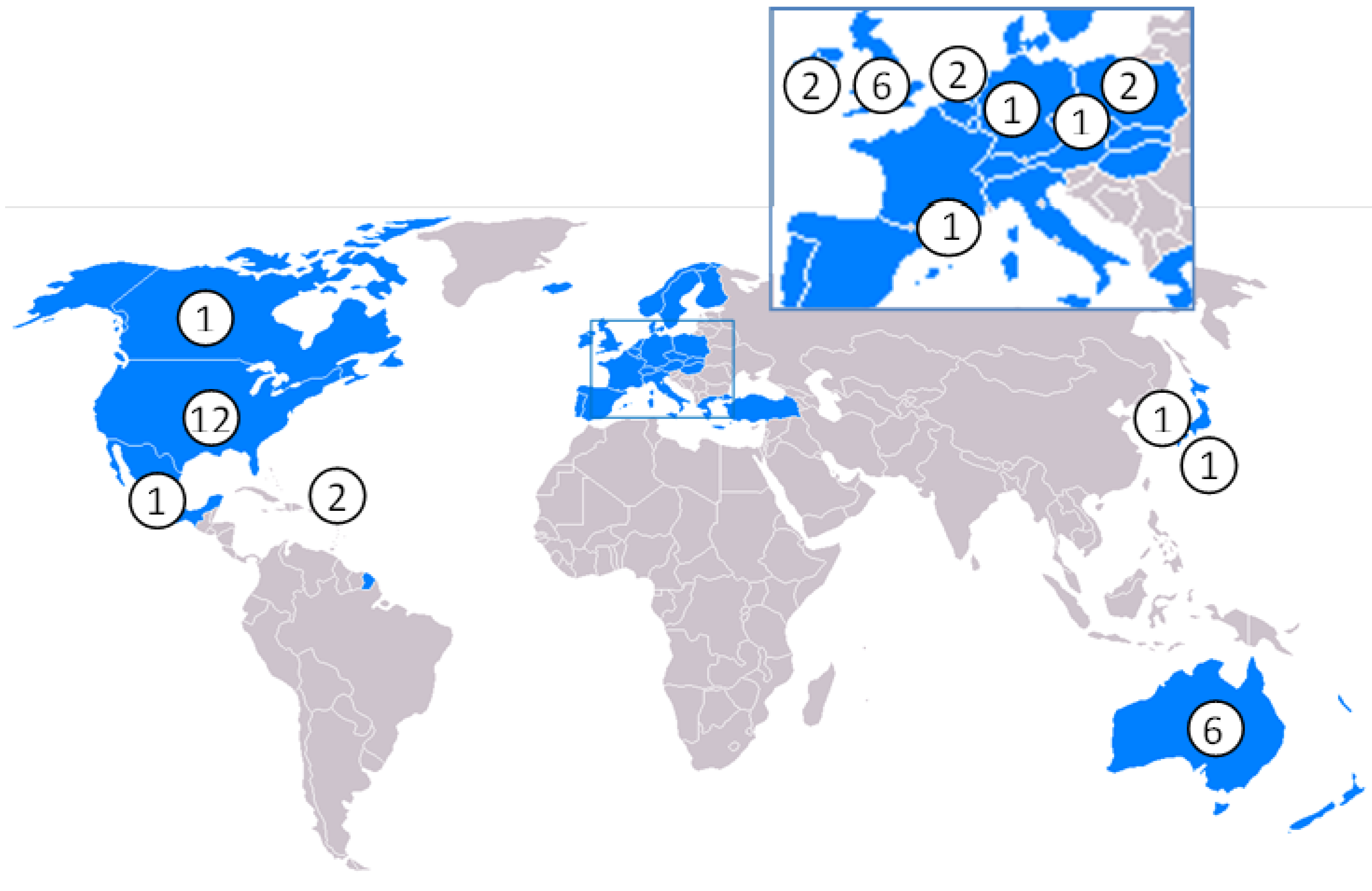
Of the OECD countries (see Figure 3), the studies were primarily conducted in the United States (US) [16,17,21,28,29,31,32,44,47,49,52], United Kingdom (UK) [22,23,37,38,39,40], parts of Europe [18,19,24,26,27,43], and Australia [25,35,36,42,45,50]. There are single studies for Korea [30], Japan [41], Canada [51], and Mexico [46].
Seven studies are cohort design [21,30,31,32,33,37,44], four are case control studies [19,20,39,43], and three are before and after control studies [25,38,42]. The remainder includes cross-sectional surveys, case series, and observational, archival or historical reports.
Figure 3.
Number of studies identified for each OECD country. NB There were studies of Europe and US [48] and worldwide [1] that are not illustrated.
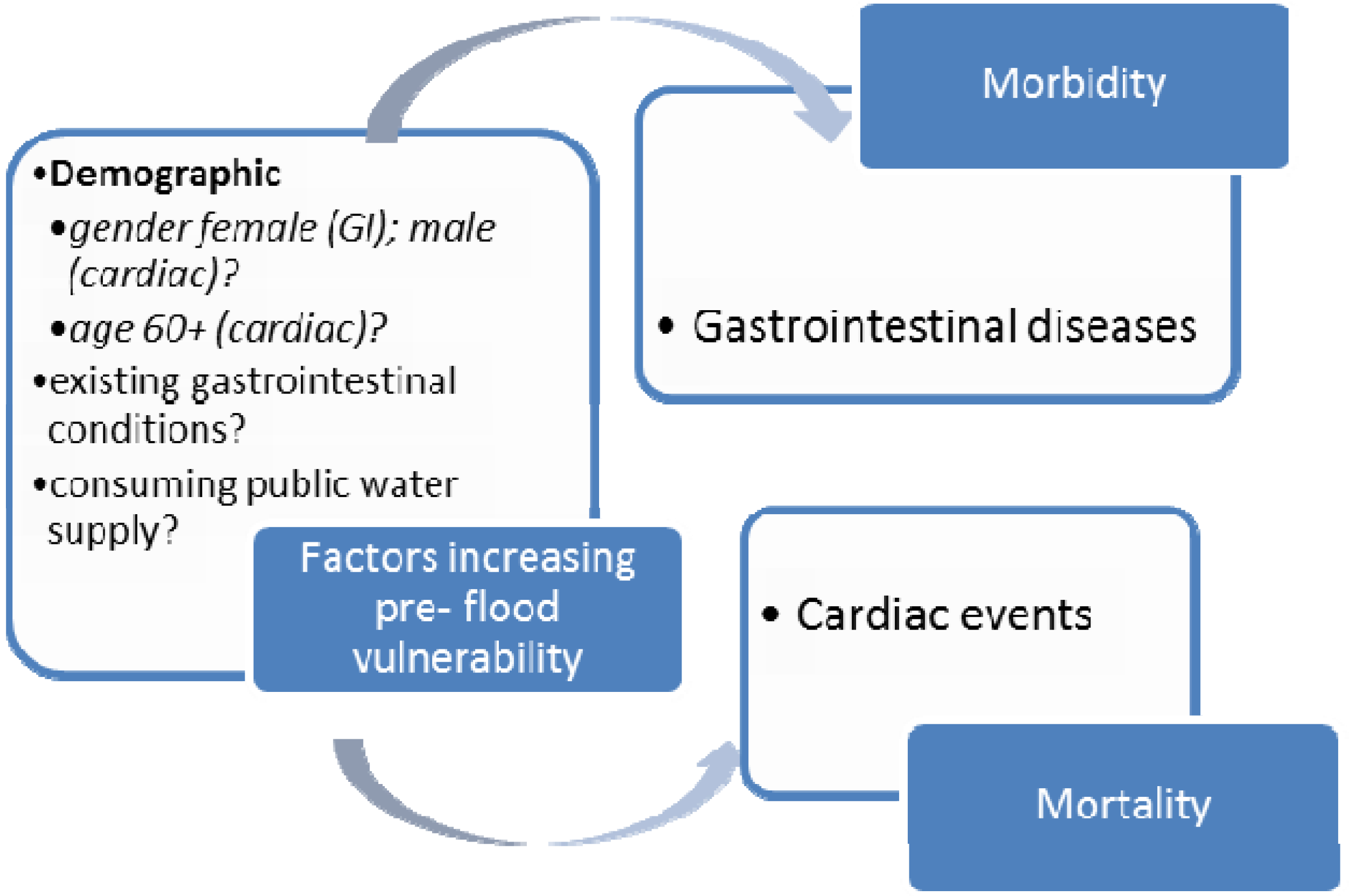
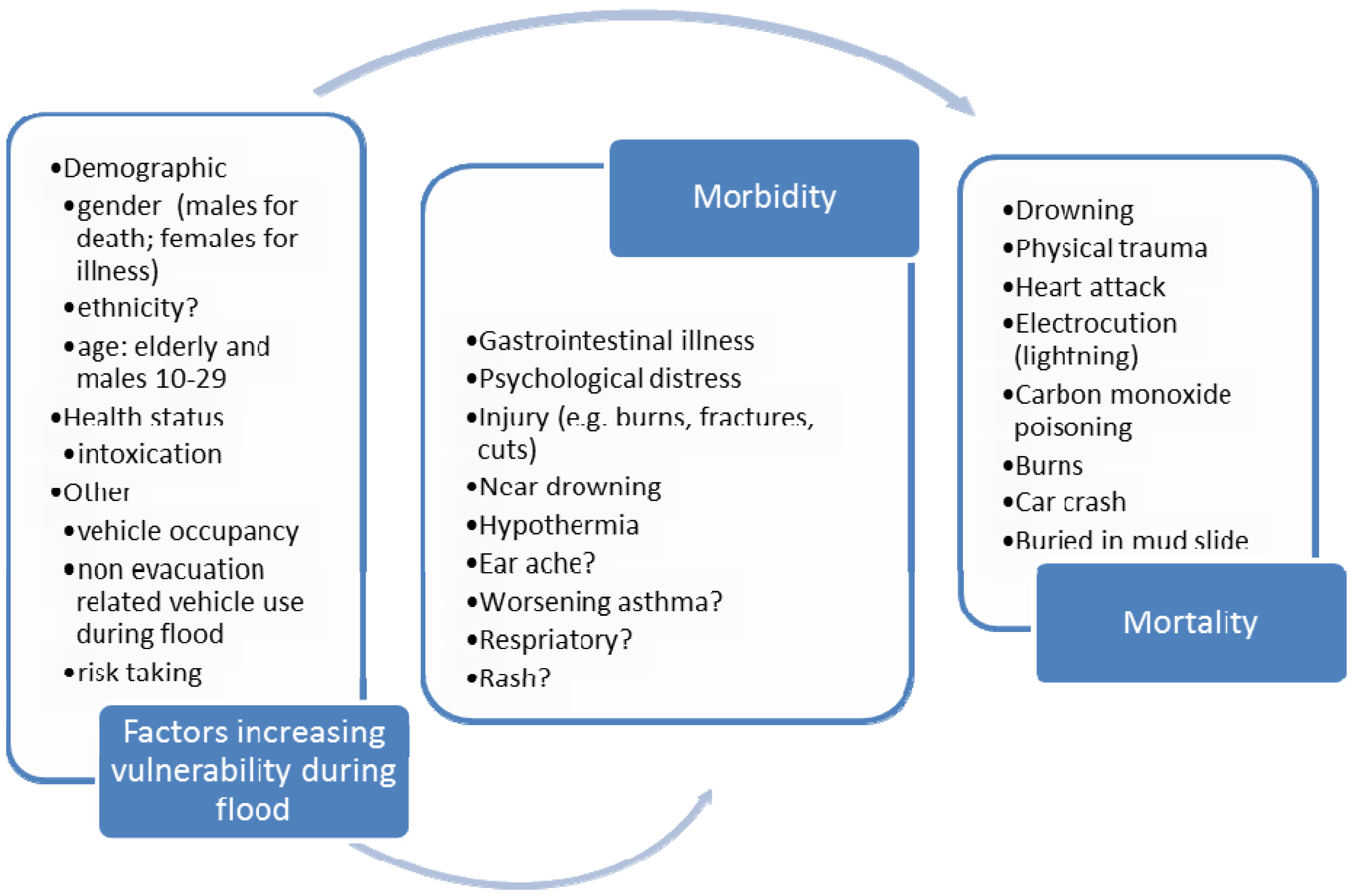
For each study, the extracted findings were collated in an overview figure for each of the time points, (i.e., before, during or after the flood event) (see Figure 4, Figure 5 and Figure 6). Within these figures, the first cell identifies the factors associated with vulnerability, the second cell identifies the range of morbidity outcomes and the third cell, the range of mortality outcomes, with the arrows suggestive of causal pathway connections.
Findings from studies that examined questions 1 and 3a were incorporated into tables (see Table A5 and Table A6) that illustrate the factors associated with statistically significant increasing risk (risk factors), or significantly decreasing risk (protective factors), and factors that were not significantly associated with the health outcomes. Table A5 illustrates during-flood factors, and Table A6 illustrates post-flood factors.
3.1. Health Effects Observed Pre-Flood
Three of the included studies examined flood-related mortality that preceded floods [19,48,49]. Two studies found no mortality [19,48]. The third study, a case series of US flood-attributed deaths during 1986, observed that three of the 24 flood-related deaths preceded the flood event (deaths were attributed to heart attacks while relocating furniture or sandbagging) [49] (see Figure 4).
None of the identified studies examined occurrences of pre-flood morbidity. However, one study found a number of cases of gastrointestinal illness (GI) preceded the flood event [51] (see Figure 4). Genetic testing of the gastrointestinal strain suggests that these cases were related to the flood, and samples of the water supply taken prior to the flood confirm this, as they contain small amounts of the same pathogen. The authors suggest some runoff may have entered the water supply up to a month before the floods, during heavy rainfall (see Figure 4).
Figure 4.
Risk factors increasing vulnerability to health effects before flood events.
3.2. Pre-Flood Vulnerability Factors
3.2.1. Mortality
One US case series noted that overall, 17 of the 24 flood-attributed deaths were male, however it did not specifically report any factors that may increase vulnerability for the three observed pre-flood deaths [49].
3.2.2. Morbidity
No study assessed pre-flood morbidity risk factors among flooded populations. The authors of the study that observed pre-flood morbidity did not specifically focus on the subgroup exposed prior to the flood, however, they did note that overall, 57% of all cases of GI illness were female, the median age 29 years and the majority had consumed public water supply [51].
3.3. Health Effects Observed during Flood
Studies from Europe, US and Australia reported during-flood mortalities; the vast majority were attributed to drowning [16,19,20,35,36,48,49,52]. Mortality was also attributed to: trauma, injury, heart attack, electrocution, burns, carbon monoxide poisoning and car crash (see Figure 5) [19,35,36,48,49,52].
Studies from France [19], England and Wales [22], Germany [18,34], and the US [22], detailed during-flood-event morbidity effects, including: physical injury [18,19], gastrointestinal illness [21], diarrhea [18], and psychological distress [22,34] (see Figure 5).
Figure 5.
Factors increasing vulnerability to health effects during-flood events.
3.4. During-Flood Vulnerability Factors
3.4.1. Mortality
Gender and Age
Only one case-control study, in Puerto Rico, used a flood-exposed control group to examine if gender, or age, influenced the risk of mortality relative to those who were not flooded [20]; neither altered mortality risk [20].
Similarly, crude death rates from storms and floods, in the US from 1979 to 2004 (using 2000 US census data), indicate that deaths did not vary by gender [17]. The majority of other studies, report the proportion of the sample who died by gender [16,35,36,48,49]. For these studies, if we assume an equal gender distribution in the flood-affected populations males are at a much higher risk of dying during floods, particularly males between 35–54 years in Australia [36], and males between the 10 and 29 years in US [16]. However, gender was unknown for 49% of deaths in one study [16] and 16.2% in another [48]. Although not consistently reported, there may be a trend towards females in the oldest age group being vulnerable [36], and cultural factors may drive these differences [1].
Studies reporting during-flood mortality effects do not give a clear picture as to which age groups are at increased risk. Even where they refer back to the source population, they do not distinguish whether an age group was more commonly exposed to the flood or more affected if exposed. However, in the US (1979 to 2004), crude death rates attributed to floods (using 2000 US census data), were highest among those over 55 years [17]. In addition to older age groups (those over 60 [16] and over 70 [35]) being at higher risk, studies in the US (compared to the census population [16]) and in Australia (without comparison group or comparison to census data [35]) found those between 10 and 29 years were also vulnerable to flood-related deaths. The US study found those between 30 and 59 years were less likely to experience flood-related fatalities [16]; however age was not reported for 63% of deaths. In contrast, a study examining fatalities in Australia, using death rates per 1,000,000 population, found increases among those between 35 and 54 years, those 59 years or older and those younger than 25 [36].
Ethnicity
Crude death rates did not vary for ethnicity, among 2,741 deaths associated with storms and floods from natural events, in the US from 1979 to 2004 [17]. In another study, while the authors assert that there are complex interrelations between cause of death and ethnicity (among other factors), no data were presented on ethnicity [48].
Other Factors
There is some suggestion that the numbers of flood deaths are primarily due to unnecessary risky behavior. Mortality risk factors in terms of activity and blood alcohol levels deserve further research [20,48].
Only one study (a 1992 Puerto Rican case-control) used a flood-exposed control group to examine factors related to flood mortality [20]. Vehicle occupancy elevated mortality significantly [OR: 15.9 (95% CI: 3.5–144)] [20]. It is worth noting that the control group had significantly lower income than census details of the exposed population and may not be representative of the exposed population ownership of cars. Also, blood alcohol content was positive for 12 out of 16 adult deaths; of these, five people had a blood alcohol content that exceeded 0.1% [20]. In the same study, use of a vehicle to evacuate a flooded area was protective; using the vehicle for other reasons increased the risk of mortality [20]. Vehicle use was implicated in 48.5% of 73 fatalities from flood events from 1997 to 2008 in Australia and 26.5% were attributed to inappropriate or high-risk behaviour during floods [35]. Similarly, 43% of the known drowning deaths during flood events in the US, between 1969 and 1981, were car related, the remainder were in homes, at campsites or when persons were crossing bridges and streams as pedestrians [52]. The circumstances around death were known in 64% of cases of flood-deaths between 1959 to 2005 in the US. Of these, 63% occurred in vehicles, 19% occurred on or in permanent structures, outside or alongside the flood (i.e., accidental), and 9% were inside flood-water (among those over 12 years, 43% walked through floodwaters to evacuate or reach a car or house, and 16% entered floodwater to help others) [16].
3.4.2. Morbidity
Four identified studies examined the factors associated with increased risk of morbidity, amongst those flooded, during impact [18,19,21,34].
Among those flooded during 2002 in Germany, those over 60 years were at increased risk of reporting the psychological and physical consequences of floods as “very bad” [34]. In this study, tenure (renting or owning home), gender, and location were not significant predictors of psychological or physical consequences [34]. As the survey was conducted retrospectively, three years post-flood, responses may be subject to recall bias.
A study in the US identified the factors associated with increased rates of gastrointestinal illness post-flood, but not separately for the during-flood period [21]. However, this study suggests gastrointestinal symptom episodes were 1.29 times higher during the flood than during the follow-up period (95 % CI: 1.06, 1.58) [21]. A survey, of those flooded in Germany 2002, found exposures associated with the onset of diarrhea were skin contact with floodwater, being female, and water supply from a private pond [18]. In the same study, the only independent risk factor identified for injuries was skin contact with floodwater [18]. A study in France observed that the ages of the flooded subgroup who were injured did not differ from the whole flooded population [19].
3.5. Health Effects Observed Short-Term (up to 3 Months) Post-Flood
Four included studies examined short-term, post-flood, mortality in France [19], Europe and US [48,49] and Canada [51]. One study observed no incidence of death short-term post-flood [19]. Deaths related to post-flood clean-up included heart attacks and vehicle-related drowning [48,49]. Six people died following an E. coli outbreak in Canada attributed to polluted water entering the public water supply during flooding [51] (see Figure 6).
Figure 6.
Factors increasing vulnerability to health effects post-flood events.
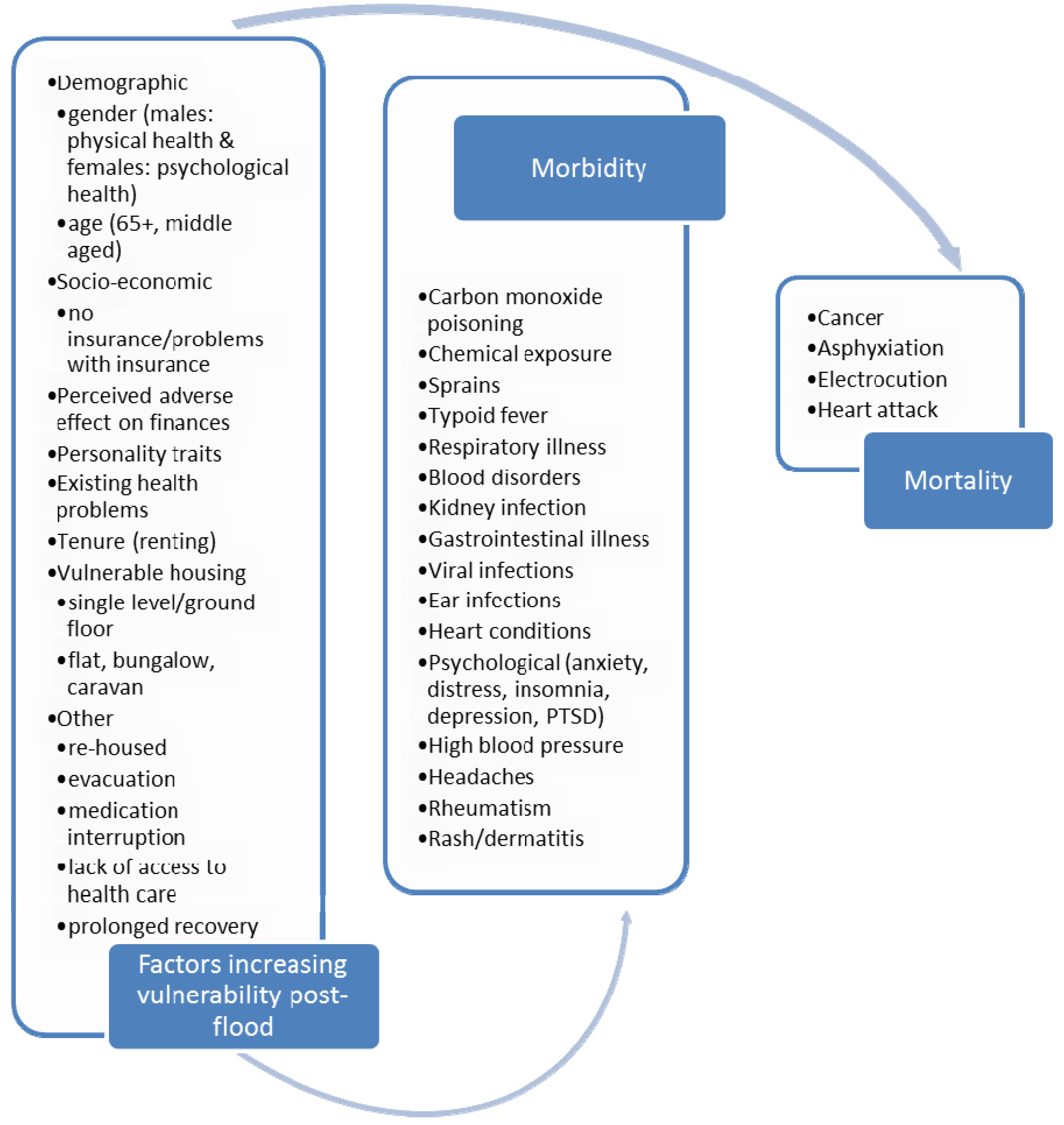
Six included studies examined morbidity effects in the three months post-flood [19,21,24,41,50,51]. Morbidity health effects included: carbon monoxide poisonings; chemical exposures and sprains; and typhoid fever cases, confirmed by culture, that were suspected to be flood-related, however these cases were not from the same region [19]. Other health problems identified included disruption of medication in the context of the elderly and those chronically ill [41], psychological [19], respiratory [19] and gastrointestinal illness (GI) [21,24,50,51], and specific infections (leptospirosis [50] and Tahyna virus [24]) (see Figure 6).
3.6. Short-Term (up to 3 Months) Post-Flood Vulnerability Factors
3.6.1. Mortality
No included studies identify risk factors for short-term mortality, however, the increased proportion of heart attacks observed in two studies may suggest vulnerability among the elderly [48,49].
3.6.2. Morbidity
Four studies examined risk factors for gastrointestinal illness (GI) up to three months post-flooding [21,24,50,51]. In the US there was evidence that those in poor to good health (compared to those with excellent or very good health), and those with existing chronic gastrointestinal symptoms (such as irritable bowel syndrome) were at increased risk of GI (self-reported increased rates of vomiting, liquid or soft diarrhea, or nausea with cramps during a single 24-hour period) [21]. In this study, there was no evidence of increased rates of GI among those who consumed public water supply. Among those five years or younger, any flood contact was associated with GI rates (incidence rate ratios (IRR) 3.18, 95 percent CI: 1.79, 5.66). Among those 12 years or younger, the presence of a septic tank on the home property was not associated with increased rates of GI, and although any contact with floodwater or flood-contaminated items was associated with elevated rates of GI, this association was significant only for those who participated in flood clean-up (IRR 1.40, 95% CI: 1.07, 1.82) or whose house or yard was flooded (IRR 2.42, 95% CI: 1.22, 4.82). Additionally, children whose home or property was flooded were at 1.9 times greater risk of increased rates of GI than children whose homes or yards were not flooded [21]. For those over 50 years, flooding of homes or yards was also associated with higher incidence rates of GI (IRR 6.20, 95% CI: 3.34, 11.51).
A large number of E. coli cases (1,346) were identified following flooding of groundwater into municipal water supply [51]. The cross-sectional study showed a dose-response relationship, with occupants of homes connected to and consuming the public water supply 11.7 times more likely to develop GI than those not exposed to public water supply [51]. Just over half (57%) of the cases were female and the median age of cases was 29 years (range < 1 to 97 years), but this was not compared to controls. This study also found residents continued to brush teeth with, and drink water, despite extensive cautionary publicity and a boil water advisory [51]. In a case series (Czech Republic), risk factors for identification of Tahyna virus (TAHV) antibodies were decreasing distance from flood and increasing age, with no differences based on gender [24]. All cases of leptospirosis, identified in an Australian study, were ill within 2 to 30 days from exposure to floods; all were hospitalised, all were male and the median age was 34. All had direct exposure with floodwater and most had cuts or abrasions [50].
3.7. Health Impacts Observed Long-Term (3 Months Plus) Post-Flood
Two studies examined occurrences of mortality occurring three months or more post-flood [38,39]. One study observed a 50% increase in all-cause mortality among the flooded population in England and an increase in deaths from cancer [38] (see Figure 6). However, a study of 319 flood events in England and Wales identified a reduction in mortality post-flood [39]. The authors concluded that these counter-intuitive results may be biased by displacement of flood-affected individuals (particularly frail and elderly at increased risk of dying) to non-flooded areas (and are therefore not represented in the study) or that the increased support from networks positively affected well-being and reduced mortality [39].
Two studies examined rates of mortality attributed to suicides before and three months plus, post-flooding [45,47]. An Australian study found no significant difference in the rates of suicides after severe flooding [45]. The authors did note that the follow up time was short, and often there is a period of support following floods that can act to protect individuals from feeling suicidal, and suggested a follow-up time of two years [45]. Furthermore, while floods were explicitly considered a contributing factor for a single suicide, the authors note that this may be an under-estimate as natural disaster exposure is not routinely collected on the generic form for reporting suicides [45]. The second study also did not find a significant difference in suicide rates after natural disasters (including floods) in America between 1982 and 1989 [47].
Six studies examined longer-term post-flooding morbidity [22,23,29,37,38,42] and two studies examined health service-use as proxy for morbidity [25,38]. A range of flood-attributed morbidities were identified during the longer-term timeframe (see Figure 6); including earache and infections [23,37]; post-flood cleanup injuries [22,28]; allergies [28]; throat nose, eye, or skin irritations [22,23,28]; kidney [23] or respiratory conditions [22,23,28]; headaches [23,28]; gastrointestinal illnesses [22,23] and heart and high blood pressure issues [22,23]. Among residents whose homes were extensively flooded in England and Australia, there was an increase in likelihood of being admitted to hospital and in general practitioner (GP) attendance rates [25,38]. A number of studies identified mental health or psychological symptoms post-flood. These included: post-traumatic stress disorder, anxiety when it rains, panic attacks, stress and sleeping problems [22,23,26,27,28,30,31,32,33,38,40,43,44,46]. The effects of flooding on psychological symptoms appear to be long lasting [26,46]. In some studies, it is unclear how much of this morbidity can be directly attributed to being flooded [22].
3.8. Long-Term (3 Months Plus) Post-Flood Vulnerability Factors
3.8.1. Mortality
Although two studies examined occurrences of long-term mortality, up to 12 months post-flood, neither study examined the risk factors for mortality among those who were flooded [38,39]. One study, in England, observed an increase in all-cause mortality, particularly among those 45 to 64 years, for males and with a somewhat unexpected rise in deaths from cancer. There was also a significant increase in deaths for adults over 65, especially females over 75 [38], when compared to non-flooded populations. Another study of flooding events in England and Wales identified a reduction in deaths post-flood that did not vary substantially by age, sex, population density or income [39].
An Australian study found having had previous suicide attempts and communicating suicidal intent were significant risk factors for those who committed suicide longer-term post-flood [45]. There were no differences in rates of suicide by gender, marital status, ethnicity, employment status, living arrangements, or stressful life event [45].
3.8.2. Morbidity
Two studies examined service use as a proxy for morbidity and found hospitalisations (or referrals to hospitals) doubled for males only [25,38]. There was a significant increase in general practitioner attendances of 53% (males 81%, females 25%) and significant increases in multiple attendances for males only. A significant increase in newly reported symptoms was also observed in males (33% flooded males reported new physical symptoms compared with 16% of non-flooded males) in England [38]. For those 1 to 4 years and individuals over 55 years, there was also an increase in attendance rates, with no differences associated with social class. A survey of the health of members of flooded and non-flooded households living in the same suburbs of Brisbane before and after flooding found higher percentages claimed worsened health in the year following the flood, with the exception of those over 75 years who were the least affected group [42]. The lack of a difference between those over 75 whose household were flooded compared to those who were not, may indicate that there is no morbidity effect of floods among that age group or that morbidity also increased in those over 75 years living in flood-affected suburbs even though their households were not flooded [42]. The greatest impact of the floods on health was seen in those over 35 years, who are more likely to be homeowners [42]. The number of GP visits did not differ one year post-flood compared to before [42].
The extent of flood exposure appears to be related to morbidity outcomes [25,37]. Among residents whose homes were extensively flooded, there was an increase in likelihood of being admitted to hospital in Australia [25]. Similarly a cohort study in England found, earache and gastroenteritis were associated with greater depth of flooding, as measured by the maximum depth of water in feet over the floor of the lowest habitable room [37]. However the effect of depth of exposure on health may be condition specific, as this study also found no effect of depth of flood exposure on other symptoms, and a counterintuitive trend where greater depth of flooding was correlated with reduced risk of worsening asthma [37].
In a US-based survey, respondent characteristics associated with negative physical health outcomes post-flood included adverse event experiences, older age, lower socioeconomic status (defined as financial difficulties), Hispanic ethnicity, and non-US citizenship, while access to healthcare and lack of local (English) language proficiency were associated with reduced risk [28]. In the same study, adverse event experiences, older age, lower socioeconomic status and more serious home damage were significant risk factors for clean-up injuries. In a similar study, among the 41% of Hispanic respondents with one or more respiratory illnesses post-flood significant associations were observed for respondents lacking US citizenship, with lower income, greater local-language (English) proficiency, those exposed to mold, or increased family conflict. Gender and age were not statistically significant factors influencing post-flood respiratory illnesses among these respondents [29].
3.9. Psychological Health
Ten studies examined a range of factors that appear to be related to the extent of psychological symptoms associated with flood exposure [22,26,27,28,30,32,38,40,42,46]; the results are presented in the following paragraphs. A number of these were methodologically strong prospective cohort studies, examining risk factors for psychological health post-flood among those flooded [30,31,32,33,37,44].
3.9.1. Degree of Flood Impact
It is not surprising that greater exposure to the impact of floods is related to a greater risk of mental health issues post-flooding. Post-flood depression was related to a greater extent of flood impact [32] and having adverse flood event experiences [28] in the US, or flood trauma experiences [27] in Poland. Among those flooded in England and Wales, risk factors for post-traumatic stress (PTS) were deeper water; contamination by floodwater; less warning time; evacuation; and longer recovery [22]. The study also identified risk factors for worse psychological health as measured by the general health questionnaire (GHQ12 score of 4 or more) among those flooded, including evacuation, contamination by floodwater, and less warning time. Similarly, a 2007 study from the UK found that factors related to the impact of floods on psychological health included disruption to essential services, concern that the floods would affect people’s health, perception of an adverse impact on finances and evacuation [40].
3.9.2. Gender and Age
Gender and age appear to influence the risk of longer-term mental health symptoms as a result of flood exposure, but results are inconsistent. In England and Wales, females and all age groups except those over 60 years who were flooded had significantly worse general health than individuals who lived in the same area but were not flooded [22]. The same study suggested that among the flooded, risk factors for PTS were being female and younger than 65 [22]. Two studies support older age as a risk factor for increased mental health effects of floods in Poland [27] and US [28], and adults were at greater risk of distress (scored more than 4 on GHQ12) than subjects of other ages in England [37], yet others [30,32] suggest younger age is a risk factor. A study in Poland reported that females have significantly more psychological symptoms than males [27], while another suggests males are at greater risk [31].
There is possibly an interaction between age and gender in the psychological impact of floods. One study found flood-affected females younger than 65 years had more psychiatric symptoms than flood affected males. This gender difference disappeared in those over 65 [42]. Similarly, a study in England observed that flood-impacted females reported significantly higher psychiatric symptoms compared to non-flood-impacted females [38].
3.9.3. Location and Residential Status
Where a flooded individual lives is important, at least in some situations. Risk factors for long-term PTS in England and Wales were having problems with insurer, being uninsured, and vulnerable housing (such as a ground floor flat, bungalow or caravan) [22]. Additional risk factors for poor psychological health (GHQ12 scores), were longer time to recovery, and living in rental property [22]. In a US study, for a given rating of flood impact, being residents of small towns and rural non-farming communities had a higher negative impact on psychological health [32]. Although flood impact levels were significantly higher among farm residents, it was small communities without farms that had the highest rates of depression [32].
3.9.4. Education and Socio-Economic Status
Several studies identified education and socio-economic status as related to the impact of floods on psychological health. Some US studies found flood-related trauma, distress or depression risk factors include lower income levels [32], occupational status [31] or socio-economic status [28] and in Poland, less education [27]. However, other studies found that deterioration in psychological health post-flood was associated with higher educational level or income (Korea) [30], or that new symptoms of depression were not related to level of education (Puerto Rico) [33]. Finally, a Mexican study found evidence of a strong relationship between education and PTS, but the direction of the relationship was not stated [46]. Comparison of these studies could be confounded by cultural and other factors.
3.9.5. Existing Psychological Factors
There may be psychological factors that determine the impact of flood exposure on an individual’s mental health. A range of psychological traits were found to be either protective or risk factors for PTS [26]. For all measured time points (3 months, 15 months, or 3 years after flooding in Poland), trauma and emotional reactivity were the strongest predictors of intensity of PTS symptoms. There was evidence of an interaction between these two predictors explaining the variance of PTS symptoms 3 years post-flood [26]. Additionally, having had previous psychological symptoms appears to be a risk factor for mental health symptoms following flood exposure in Korea [30], Puerto Rico [33], and the US [32]. Among those flooded, poorer prior health was identified as a risk factor for PTS and worse psychological health, following flooding in England and Wales [22].
3.9.6. Social Connectedness
Floods and other natural disasters are frequently associated with increases in risk factors for suicide. However, a study of 210 undergraduate students who experienced the 2009 Red River Flood in North Dakota, found an association between increased time volunteering in flood efforts and a reduction in the interpersonal risk factors associated with suicide, such as not belonging and feeling burdensome [44]. Similarly, there is evidence of greater impact of floods on post-flood depression in those who are separated or divorced in US [32], yet a study from Korea found a greater impact of floods among those who were married [30].
3.9.7. Other
A range of other factors were identified as risk factors in single studies. For example, being a non-smoker or non-drinker was related to increasing risk of deterioration in health post-flood in Korea [30] as was lack of access to healthcare in US [28]. Interestingly, in the US, being local language (English) deficient or foreign-born appears to be protective against mental health effects of floods [28].
3.9.8. In Utero Flood Exposure
Schizophrenia rates of adults, whose mothers were pregnant during the flood disaster of February 1953, were compared with schizophrenia rates of adults who were in utero prior to or after floods using the Dutch Psychiatric Registry [43]. The results suggest no significant association between prenatal exposure to maternal stress and risk of non-affective psychosis as adults in those born to mothers who experienced flooding while pregnant [43].
4. Discussion
This paper aimed to identify the individual characteristics, or risk factors, that increase vulnerability to the health effects of precipitation related flood events pre-, during and post- impact in OECD countries.
Pre-flood mortality was observed in one of three studies but there was limited examination of risk factors and no comparison group. Pre-flood morbidity was examined in three studies with no observed pre-flood health events in two [19,48]. However, the third study observed that gastrointestinal illnesses can precede flooding events (coinciding with heavy rainfall) [51]. During-flood-related mortality risk factors include being male, particularly between 10 and 29 years [16], elderly [16,17,35], or intoxicated [16], vehicle use during flood, particularly for reasons other than evacuation [16] and risk taking [16,35,52]. The risk factors identified for during-flood gastrointestinal illnesses were being female, skin contact with floodwater and private water supply [18]. Age above 60 increases the risk of during-flood mental or physical illness [34].
Factors increasing vulnerability to injuries post-flood during clean up were being younger than 65 years, having lower socio-economic status, experiencing adverse events from flooding and the extent of flooding to home or property [28]. Risk factors for general physical illness post-flood included age below 45 [30] or above 65 years [28], however one study found no effect of age [31]. Gender was not a risk factor for poor general health in one study [31], while another found being male was [30]. Other risk factors included being a non-smoker or non-drinker, or married [30]; limited access to health care, being a non-US citizen, Hispanic, with greater local language (English) proficiency [28]; medication interruption [41]; experiencing an adverse event from flooding, including greater extent of flooding to home or property [28] and lower socio-economic status (financial difficulties) [28]. The latter was not always the case, as lower socio-economic status or education were found not to be a risk factor for physical health in one study [31] and, in another, lower socio-economic status was protective [30]. Flooded males were more likely than females to increase health care utilization post-flood [25,38]. However, it was unclear if this increase in use was matched by an increase in health symptoms. Perhaps males are more open to accessing health services after floods, than prior to floods, or are more likely to do so after floods, as the clean-up stage may require a medical certificate to secure time off work.
There is evidence floods adversely affect post-flood mental health [22,26,27,28,30,31,32,33,38,40,43,44,46]. The degree of post-flood impact on psychological health was associated with depth of flood, adverse event experiences, lack of warning time, evacuation, and disruption to services [22,27,28,32,40]. Gender (predominately being female [22,27]) and age (younger than 65 [30,32]) appear to influence the risk of mental health symptoms as a result of flood exposure, but these results are inconsistent, with other studies suggesting older age is a risk factor [27,28], while another suggests males are at greater risk [31]. Risk factors for long-term PTS among flooded populations were problems with insurer, prolonged recovery, vulnerable housing [22], and being residents of small towns and rural non-farming communities [32]. There is possibly an interaction between age and gender on the psychological impact of floods, with females and older individuals having greater exposure to flood-related damage and its psychological effects [38,42]. As the studies were not prospective, it is unclear if some of these psychiatric symptoms may have been present before the floods [38], or if health care professionals are more likely to diagnose psychiatric symptoms in females than males. It has been suggested that younger, working males may not be as confronted with home flood-related damage, while females and older individuals are [42]. This lack of exposure to flood-related damage may explain the lack of psychological effects among males under 65 [42].
A number of studies identified lower education and socio-economic status as related to the longer-term impact of floods on psychological health [27,28,31,32]. However, other studies found that deterioration in mental health, post-flood, is related to higher educational level or income [30], or not related to level of education [33]. A range of psychological traits were protective or risk factors for PTS [26]. Having had previous psychological symptoms appears to be a risk factor, for mental health symptoms, following flood exposure [22,30,32,33]. There is evidence of greater impact of floods on post-flood depression in those who were separated or divorced in the US [32], yet a study from Korea found a greater impact of floods among those who were married [30]. The presence of psychological effects of floods, beyond 18 months to 3 years, suggests that the impact can be long lasting and these populations may be inadequately supported.
Gastrointestinal illnesses and infectious diseases are common post-flooding [21,22,23,24,50,51,53]. There is inconsistent evidence if increasing age or gender are risk factors for post-flooding gastrointestinal illness [24,50,51]. The effect of the gastrointestinal illnesses was more severe among those in poor, fair, or good health (compared to those with excellent or very good health); and in those with existing chronic, gastrointestinal symptoms (such as irritable bowel syndrome), particularly for severe diarrhea illness [21]. Exposure to floodwater and cuts or abrasions appeared to increase the risk of GI symptoms [50]. One study found that those in homes connected to and consuming the public water supply (and increasing consumption of this water) were more likely to develop gastroenteritis in Canada [51]. Another found no evidence of this, and instead found that contact with floodwater or having flooded homes or yards were risk factors [21].
Research suggests that shigella, cholera, norovirus, and dengue, among water or vector borne diseases, are commonly associated with flooding and may need to be monitored during and after floods [54,55,56,57,58,59,60]. Of all extreme weather events, heavy rainfall, with or without flooding, is commonly implicated in waterborne disease outbreaks [53,61], particularly in conjunction with warmer temperatures [62,63]. This suggests the need for increased awareness, surveillance and identification of risk factors associated with vulnerability to water or vector-borne diseases, not just immediately following flood events, but also during heavy rainfalls, particularly following dry spells and prior to floods. The observation that gastrointestinal illnesses can precede flooding events [51] is of interest. This observation is supported by a systematic review [53] and recent finding that rainfall upstream of a public water supply was associated with an increase in calls to a nurse phone line for advice on acute gastrointestinal illnesses [64]. Similarly, a significant increase in cases of cholera and other gastrointestinal illnesses pre-flood has been observed in developing countries [65,66]. The presumed cause is contamination from runoff, preceding a flood, resulting from heavy rainfall [65]. During periods of heavy rainfall, proactive measures to assist in ensuring the continued safety of drinking water supplies should be considered. Proactive measures include strategic water supply system planning to aid infrastructure resilience; identification of standby water sources; early detection of deterioration in quality associated with water surges; and flood mitigation measures [67].
The current research compliments earlier research that focused on flood-related exposure susceptibility, recovery, mitigation, preparedness and risk perception, by seeking to identify risk factors associated with the health effects of floods beyond being exposed to floodwater, as not all individuals exposed to floodwater experience health effects. A recent comprehensive review of the human impact of floods overlaps in context and content, however it is focused primarily on flood, population or regional characteristics and their association with human impacts [68]. Another related review examines the health effects that can be attributed to floods, again covering a broad range of flood types, worldwide [69]. The WHO Regional Office for Europe and the Health Protection Agency surveyed a number of European countries to identify mitigation, preparedness and response strategies before, during and after flooding, and additionally examine the health effects of flooding [70]. We focused on precipitation-related floods and OECD countries, as it is likely that there are similarities between these countries in terms of characteristics of extreme precipitation-related flood events, flood mitigation strategies and, risk factors within populations that increase health risks associated with flood events. A limitation of this review is despite the similarities shared by the OECD member counties, comparison of these studies could be confounded by cultural, geographical, political and other factors, as well as within study design differences.
The vast majority of previous research focuses on determining the geographic or socio-demographic factors that increase vulnerability of household exposure to, or economic impact of, floods and subsequent recovery [11,12,13,71,72,73,74,75,76,77,78]. This focus on risk factors for flood exposure and economic impact is perhaps explained by floods being one of the most costly forms of natural disaster. Vulnerability to exposure is determined in relation to social class, ethnicity, age, risk perception [10,14,78] or other factors [11,12,13,71,72,73,74,75,76,77,78]. In addition, strategies to address the impact of risk perception and individual precautionary behavior, such as personally investing in insurance or sandbags [79], has been extensively investigated [80]. More recently, a novel study used a sociopsychometric framework tool to examine risk perception at the municipality level and its impact on risk reducing behaviour [81]. The study identified associations between reliance on traditional flood prevention and Federal-level flood risk management strategies and preparedness to face future floods, without additional measures, despite previous experience of higher than expected damage from past major flooding events in their municipality. The authors conclude that this optimistic perception of security among those surveyed conflicts with their also high ratings of worry and requests for additional protective measures. Respondents value traditional measures, including dikes and precautionary measures, such as urban flood management, legal restrictions on land use, hazard and risk mapping over risk reduction strategies aimed at individual support (such as public awareness programs, private insurance and financial support).
Studying the risk factors increasing the health effects of floods poses strong methodological issues. The majority of studies were based on case series reports. Case series reports typically report on the proportions of individuals who were flood-health affected and provide crude demographic factors (such as distributions of gender, age, and ethnicity). However, as there is relatively little information on unaffected individuals, or baseline population demographics in research conducted in OECD countries, the factors associated with increased risk cannot be accurately determined.
Case-control studies can estimate the risk associated with various exposures. There are four case studies of individuals, who experienced health effects during-flood events using controls who were also flooded [19,20,39,43]. Interestingly these studies were typically unable to identify demographic or socio-economic factors that increased vulnerability to health effects of flood events. Although case-control studies provide stronger evidence, there is the potential for recall bias for the factors and exposures assessed. Further, additional problems occur when assessing the risk factors for flood-related mortality, as the researcher’s ability to measure all but the crudest potential exposures is highly limited or requires a proxy to report for the deceased individual.
A stronger design would be to conduct a prospective cohort study, where a population in a risk area is recruited and various potential risk factors are studied and then followed through a flood event and outcomes measured. Difficulties with this design are that flood events are not predictable, particularly catastrophic ones, individuals will move in and out of flood-prone areas and, for rare events, including mortality, very large sample sizes would be required to identify associated risk factors. Promisingly, seven included studies are cohort studies. One focused on gastrointestinal illnesses [21] and the remainder examined risk factors for psychological health post-flood [30,31,32,33,37,44]. However, we were unable to identify any studies that examined risk factors for mortality among those flooded, pre and post-flood impact. This is a potential area for future research.
The presence of morbidity and mortality effects immediately prior to flooding (due to evacuation, gastrointestinal illnesses and stress) warrants further investigation to identify potential risk factors. Future research should also separate the risk factors for particular health effects associated with flooding, as the risk factors for gastrointestinal illnesses may well be quite different from psychological effects or respiratory illness. In addition, this research area would benefit from prospectively capturing a wider range of data at baseline (beyond gender and age). This would allow detailed examination of potential risk factors.
This review has potential implications for tailoring of flood-related health messages and programs. Pre-flooding morbidity and mortality risk factors suggest that populations at risk of flooding need reminders that using vehicles, for any other reason than evacuation, increases risk of drowning, and that males, particularly those over 60 years, are at greater risk of heart attacks associated with evacuation and mitigation efforts, such as sandbag preparation. During flooding, providing access to appropriate protective clothing might be useful given the increased risks associated with skin contact with water and cleaning up contaminated property. Post flooding, access to routine medical care (including medications) appears to be important, particularly for those with physical and psychological symptoms prior to flooding. Potentially, individuals with existing conditions should be advised to take precautionary actions to prevent worsening of symptoms, particularly in the context of forecasted wet periods, such as storing sufficient essential medication for the management of their condition (ideally in an elevated location) to ensure continuous coverage. Other pre-flood preventative actions could include seeking mental health support and precautionary boiling water for individuals with chronic gastrointestinal symptoms or a predisposition to such symptoms.
5. Conclusions
The psychological and physiological health effects of floods appear disproportionately borne by females, elderly and children during floods, while males between the ages of 10 and 29 are at greater risk of mortality. Factors increasing post-flood impact include being older than 65 years, males at risk of physical health effects, and females at risk of psychological health effects. However, the literature base is relatively small. Studying the effects of floods is not a trivial undertaking and further research is required to identify the risk factors associated with pre-flood mortality and morbidity and post-flood mortality. Ideally prospective cohort studies should be initiated. Public health messages should target females and young people who appear to be at greater risk of psychological and physical health effects of floods, and males at greater risk of mortality, primarily due to risk taking behavior. Public health messages targeting those at risk post-flooding should include: consideration of those with previous experience of flood, low education or socio-economic status, taking medicines (to avoid medicine interruption) and those with existing psychological, chronic gastrointestinal or cardiovascular illnesses (to avoid worsening symptoms). Future research is required to identify how best to reach these vulnerable population groups.
Author’s Contributions
All three authors planned and designed the study, interpreted the results and approved the final manuscript. Dianne Lowe performed the literature search and wrote the first version of the manuscript.
Acknowledgments
This review arises from the PHASE project which has received funding from the European Union in the framework of the Health Programme.
Conflicts of Interest
The authors declare no conflict of interest.
References
- Jonkman, S.N. Global Perspectives on Loss of Human Life Caused by Floods. Natural Hazards 2005, 34, 151–175. [Google Scholar] [CrossRef]
- Greenough, G.; McGeehin, M.; Bernard, S.M.; Trtanj, J.; Riad, J.; Engelberg, D. The potential impacts of climate variability and change on health impacts of extreme weather events in the United States. Environ. Health Perspect. 2001, 109 (Suppl 2), 191–198. [Google Scholar] [CrossRef]
- Managing the Risks of Extreme Events and Disasters to Advance Climate Change Adaptation; IPCC: Cambridge, UK, 2012.
- Diaz, J.H. Global climate changes, natural disasters, and travel health risks. J. Travel Med. 2006, 13, 361–372. [Google Scholar] [CrossRef]
- Du, W.; FitzGerald, G.J.; Clark, M.; Hou, X.Y. Health impacts of floods. Prehosp. Disaster Med. 2010, 25, 265–272. [Google Scholar]
- Dankers, R.; Feyen, L. Flood hazard in Europe in an ensemble of regional climate scenarios. J. Geophys. Res. 2009, 114. [Google Scholar] [CrossRef]
- Dankers, R.; Feyen, L. Climate change impact on flood hazard in Europe: An assessment based on high resolution climate simulations. J. Geophys. Res. 2008, 113. [Google Scholar] [CrossRef]
- Bankoff, G. Constructing vulnerability: The historical, natural and social generation of flooding in metropolitan Manila. Disasters 2003, 27, 224–238. [Google Scholar] [CrossRef]
- Aragón-Durand, F. Urbanisation and flood vulnerability in the peri-urban interface of Mexico City. Disasters 2007, 31, 477–494. [Google Scholar] [CrossRef]
- Castonguay, S. The Production of Flood as Natural Catastrophe: Extreme Events and the Construction of Vulnerability in the Drainage Basin of the St. Francis River (Quebec), Mid-Nineteenth to Mid-Twentieth Century. Environ. Hist. 2007, 12, 820–844. [Google Scholar] [CrossRef]
- Dutta, D.; Khatun, F.; Herath, S. Analysis of flood vulnerability of urban buildings and populations in Hanoi, Vietnam. Seisankenkyu 2005, 57, 338–342. [Google Scholar]
- Whittle, R.; Medd, W.; Deeming, H.; Kashefi, E.; Mort, M.; Twigger Ross, C.; Walker, G.; Watson, N. After the Rain—Learning the Lessons from Flood Recovery in Hull, Final Project Report for Flood, Vulnerability and Urban Resilience: A Real-Time Study of Local Recovery Following the Floods of June 2007 in Hull; Lancaster University: Lancaster, UK, 2010. [Google Scholar]
- Walker, G.; Burningham, K. Flood risk, vulnerability and environmental justice: Evidence and evaluation of inequality in a UK context. Crit. Soc. Policy 2011, 31, 216–240. [Google Scholar] [CrossRef]
- Adelekan, I. Vulnerability assessment of an urban flood in Nigeria: Abeokuta flood 2007. Natural Hazards 2011, 56, 215–231. [Google Scholar] [CrossRef]
- Christoplos, I.; Mitchell, J.; Liljelund, A. Re-framing risk: The changing context of disaster mitigation and preparedness. Disasters 2001, 25, 185–198. [Google Scholar] [CrossRef]
- Ashley, S.; Ashley, W. Flood Fatalities in the United States. J. Appl. Meteorol. Climatol. 2008, 47, 805–818. [Google Scholar] [CrossRef]
- Thacker, M.T.; Lee, R.; Sabogal, R.I.; Henderson, A. Overview of deaths associated with natural events, United States, 1979–2004. Disasters 2008, 32, 303–315. [Google Scholar] [CrossRef]
- Schnitzler, J.; Benzler, J.; Altmann, D.; Mucke, I.; Krause, G. Survey on the population’s needs and the public health response during floods in Germany 2002. J. Public Health Manag. Pract. 2007, 13, 461–464. [Google Scholar] [CrossRef]
- Duclos, P.; Vidonne, O.; Beuf, P.; Perray, P.; Stoebner, A. Flash flood disaster—Nimes, France, 1988. Eur. J. Epidemiol. 1991, 7, 365–371. [Google Scholar] [CrossRef]
- Staes, C.; Orengo, J.C.; Malilay, J.; Rullan, J.; Noji, E. Deaths due to flash floods in Puerto Rico, January 1992: Implications for prevention. Int. J. Epidemiol. 1994, 23, 968–975. [Google Scholar] [CrossRef]
- Wade, T.J.; Sandhu, S.K.; Levy, D.; Lee, S.; LeChevallier, M.W.; Katz, L.; Colford, J.M., Jr. Did a severe flood in the Midwest cause an increase in the incidence of gastrointestinal symptoms? Am. J. Epidemiol. 2004, 159, 398–405. [Google Scholar] [CrossRef]
- Tunstall, S.; Tapsell, S.; Green, C.; Floyd, P.; George, C. The health effects of flooding: Social research results from England and Wales. J. Water Health 2006, 4, 365–380. [Google Scholar]
- Tapsell, S.M.; Penning-Rowsell, E.C.; Tunstall, S.M.; Wilson, T.L. Vulnerability to flooding: Health and social dimensions. Philos. Transact. A Math. Phys. Eng. Sci. 2002, 360, 1511–1525. [Google Scholar] [CrossRef]
- Hubalek, Z.; Zeman, P.; Halouzka, J.; Juricova, Z.; Stovickova, E.; Balkova, H.; Sikutova, S.; Rudolf, I. Mosquitoborne viruses, Czech Republic, 2002. Emerg. Infect. Dis. 2005, 11, 116–118. [Google Scholar] [CrossRef]
- Handmer, J.; Smith, D. Health hazards of floods: Hospital admissions for Lismore. Aust. Geograph. Stud. 1983, 21, 221–230. [Google Scholar] [CrossRef]
- Strelau, J.; Zawadzki, B. Trauma and Temperament as Predictors of Intensity of Posttraumatic Stress Disorder Symptoms after Disaster. Eur. Psychol. 2005, 10, 124–135. [Google Scholar] [CrossRef]
- Norris, F.H.; Kaniasty, K.; Conrad, M.L.; Inman, G.L.; Murphy, A.D. Placing Age Differences in Cultural Context: A Comparison of the Effects of Age on PTSD after Disasters in the United States, Mexico, and Poland. J. Clin. Geropsychol. 2002, 8, 153–173. [Google Scholar] [CrossRef]
- Collins, T.W.; Jimenez, A.M.; Grineski, S.E. Hispanic health disparities after a flood disaster: Results of a population-based survey of individuals experiencing home site damage in El Paso (Texas, USA). J. Immigr. Minor. Health 2013, 15, 415–426. [Google Scholar] [CrossRef]
- Jimenez, A.M.; Collins, T.W.; Grineski, S.E. Intra-ethnic disparities in respiratory health problems among Hispanic residents impacted by a flood. J. Asthma 2013, 50, 463–471. [Google Scholar] [CrossRef]
- Heo, J.H.; Kim, M.H.; Koh, S.B.; Noh, S.; Park, J.H.; Ahn, J.S.; Park, K.C.; Shin, J.; Min, S. A prospective study on changes in health status following flood disaster. Psychiatry Investig. 2008, 5, 186–192. [Google Scholar] [CrossRef]
- Phifer, J.F. Psychological distress and somatic symptoms after natural disaster: Differential vulnerability among older adults. Psychol. Aging 1990, 5, 412–420. [Google Scholar] [CrossRef]
- Ginexi, E.M.; Weihs, K.; Simmens, S.J.; Hoyt, D.R. Natural disaster and depression: A prospective investigation of reactions to the 1993 midwest floods. Am. J. Community Psychol. 2000, 28, 495–518. [Google Scholar]
- Canino, G.; Bravo, M.; Rubio-Stipec, M.; Woodbury, M. The Impact of Disaster on Mental Health: Prospective and Retrospective Analyses. Int. J. Mental Health 1990, 19, 51–69. [Google Scholar]
- Steinfuhrer, A.; Kuhlicke, C. Social Vulnerability and the 2002 Flood: Country Report Germany (Mulde River); FLOODsite Report T11–07–08; UFZ: Leipzig, Germany, 2007. [Google Scholar]
- FitzGerald, G.; Du, W.; Jamal, A.; Clark, M.; Hou, X.Y. Flood fatalities in contemporary Australia (1997–2008). Emerg. Med. Australas 2010, 22, 180–186. [Google Scholar] [CrossRef]
- Coates, L. Flood Fatalities in Australia, 1788–1996. Aust. Geographer 1999, 30, 391–408. [Google Scholar] [CrossRef]
- Reacher, M.; McKenzie, K.; Lane, C.; Nichols, T.; Kedge, I.; Iversen, A.; Hepple, P.; Walter, T.; Laxton, C.; Simpson, J. Health impacts of flooding in Lewes: A comparison of reported gastrointestinal and other illness and mental health in flooded and non-flooded households. Commun. Dis. Public Health 2004, 7, 39–46. [Google Scholar]
- Bennet, G. Bristol floods 1968. Controlled survey of effects on health of local community disaster. Br. Med. J. 1970, 3, 454–458. [Google Scholar] [CrossRef]
- Milojevic, A.; Armstrong, B.; Kovats, S.; Butler, B.; Hayes, E.; Leonardi, G.; Murray, V.; Wilkinson, P. Long-term effects of flooding on mortality in England and Wales, 1994–2005: Controlled interrupted time-series analysis. Environ. Health 2011, 10. [Google Scholar] [CrossRef]
- Paranjothy, S.; Gallacher, J.; Amlot, R.; Rubin, G.J.; Page, L.; Baxter, T.; Wight, J.; Kirrage, D.; McNaught, R.; Palmer, S.R. Psychosocial impact of the summer 2007 floods in England. BMC Public Health 2011, 11. [Google Scholar] [CrossRef]
- Tomio, J.; Sato, H.; Mizumura, H. Interruption of medication among outpatients with chronic conditions after a flood. Prehosp. Disaster Med. 2010, 25, 42–50. [Google Scholar]
- Price, J. Some age-related effects of the 1974 Brisbane floods. Aust. N. Z. J. Psychiatry 1978, 12, 55–58. [Google Scholar] [CrossRef]
- Selten, J.P.; van der Graaf, Y.; van Duursen, R.; Gispen-de Wied, C.C.; Kahn, R.S. Psychotic illness after prenatal exposure to the 1953 Dutch Flood Disaster. Schizophr. Res. 1999, 35, 243–245. [Google Scholar] [CrossRef]
- Gordon, K.H.; Bresin, K.; Dombeck, J.; Routledge, C.; Wonderlich, J.A. The impact of the 2009 Red River Flood on interpersonal risk factors for suicide. Crisis 2011, 32, 52–55. [Google Scholar] [CrossRef]
- De Leo, D.; San Too, L.; Kolves, K.; Milner, A.; Ide, N. Has the Suicide Rate Risen with the 2011 Queensland Floods? J. Loss Trauma Int. Perspect. Stress Coping 2013, 18, 170–178. [Google Scholar]
- Norris, F.H.; Murphy, A.D.; Baker, C.K.; Perilla, J.L. Postdisaster PTSD over four waves of a panel study of Mexico’s 1999 flood. J. Trauma Stress 2004, 17, 283–292. [Google Scholar] [CrossRef]
- Krug, E.G.; Kresnow, M.; Peddicord, J.P.; Dahlberg, L.L.; Powell, K.E.; Crosby, A.E.; Annest, J.L. Retraction: Suicide after natural disasters. N. Engl. J. Med. 1999, 340, 148–149. [Google Scholar] [CrossRef]
- Jonkman, S.; Kelman, I. An analysis of the causes and circumstances of flood disaster deaths. Disasters 2005, 29, 75–97. [Google Scholar] [CrossRef]
- Duclos, P.; Isaacson, J. Preventable deaths related to floods. Am. J. Public Health 1987, 77, 1474. [Google Scholar] [CrossRef]
- Smith, J.K.; Young, M.M.; Wilson, K.L.; Craig, S.B. Leptospirosis following a major flood in Central Queensland, Australia. Epidemiol. Infect. 2012, 25, 1–6. [Google Scholar]
- CCDR. Waterborne Outbreak of Gastroenteritis Associated with a Contaminated Municipal Water Supply, Walkerton, Ontario, May–June 2000. Can. Commun. Dis. Rep. 2000, 26, 170–173. [Google Scholar]
- French, J.; Ing, R.; Von Allmen, S.; Wood, R. Mortality from flash floods: A review of national weather service reports, 1969–81. Public Health Rep. 1983, 98, 584–588. [Google Scholar]
- Cann, K.F.; Thomas, D.R.; Salmon, R.L.; Wyn-Jones, A.P.; Kay, D. Extreme water-related weather events and waterborne disease. Epidemiol. Infect. 2013, 141, 671–686. [Google Scholar] [CrossRef]
- Milojevic, A.; Armstrong, B.; Hashizume, M.; McAllister, K.; Faruque, A.; Yunus, M.; Kim Streatfield, P.; Moji, K.; Wilkinson, P. Health effects of flooding in rural Bangladesh. Epidemiology 2012, 23, 107–115. [Google Scholar] [CrossRef]
- Zaki, S.A.; Shanbag, P. Clinical manifestations of dengue and leptospirosis in children in Mumbai: an observational study. Infection 2010, 38, 285–291. [Google Scholar] [CrossRef]
- Socolovschi, C.; Angelakis, E.; Renvoise, A.; Fournier, P.E.; Marie, J.L.; Davoust, B.; Stein, A.; Raoult, D. Strikes, flooding, rats, and leptospirosis in Marseille, France. Int. J. Infect. Dis. 2011, 15, e710–e715. [Google Scholar] [CrossRef]
- Bhardwaj, P.; Kosambiya, J.K.; Desai, V.K. A case control study to explore the risk factors for acquisition of leptospirosis in Surat city, after flood. Indian J. Med. Sci. 2008, 62, 431–438. [Google Scholar] [CrossRef]
- Schmid, D.; Lederer, I.; Much, P.; Pichler, A.M.; Allerberger, F. Outbreak of norovirus infection associated with contaminated flood water, Salzburg, 2005. Euro. Surveill. 2005, 10. Available online: http://www.eurosurveillance.org/ViewArticle.aspx?ArticleId=2727 (3 December 2013).
- Ivers, L.C.; Ryan, E.T. Infectious diseases of severe weather-related and flood-related natural disasters. Curr. Opin. Infect. Dis. 2006, 19, 408–414. [Google Scholar]
- Vanasco, N.B.; Fusco, S.; Zanuttini, J.C.; Manattini, S.; Dalla Fontana, M.L.; Prez, J.; Cerrano, D.; Sequeira, M.D. Outbreak of human leptospirosis after a flood in Reconquista, Santa Fe, 1998. Rev. Argent. Microbiol. 2002, 34, 124–131. [Google Scholar]
- Curriero, F.C.; Patz, J.A.; Rose, J.B.; Lele, S. The association between extreme precipitation and waterborne disease outbreaks in the United States, 1948–1994. Am. J. Public Health 2001, 91, 1194–1199. [Google Scholar] [CrossRef]
- Thomas, K.M.; Charron, D.F.; Waltner-Toews, D.; Schuster, C.; Maarouf, A.R.; Holt, J.D. A role of high impact weather events in waterborne disease outbreaks in Canada, 1975–2001. Int. J. Environ. Health Res 2006, 16, 167–180. [Google Scholar] [CrossRef]
- Griffith, D.C.; Kelly-Hope, L.A.; Miller, M.A. Review of reported cholera outbreaks worldwide, 1995–2005. Am. J. Trop. Med. Hyg. 2006, 75, 973–977. [Google Scholar]
- Tornevi, A.; Axelsson, G.; Forsberg, B. Association between Precipitation Upstream of a Drinking Water Utility and Nurse Advice Calls Relating to Acute Gastrointestinal Illnesses. PLoS One 2013, 8. [Google Scholar] [CrossRef]
- Hashizume, M.; Wagatsuma, Y.; Faruque, A.S.; Hayashi, T.; Hunter, P.R.; Armstrong, B.; Sack, D.A. Factors determining vulnerability to diarrhoea during and after severe floods in Bangladesh. J. Water Health 2008, 6, 323–332. [Google Scholar] [CrossRef]
- Health assessment of the population affected by flood conditions—Khartoum, Sudan. MMWR Morb. Mortal. Wkly. Rep. 1989, 37, 785–788.
- Guidance on Water Supply and Sanitation in Extreme Weather Events; UNECE/WHO: Copenhagen, Denmark, 2010.
- Doocy, S.; Daniels, A.; Murray, S.; Kirsch, T. The Human Impacts of Floods: A Historical Review of Events 1980–2009 and Systematic Literature Review. PLoS Curr. 2013. [Google Scholar] [CrossRef]
- Ahern, M.; Kovats, R.S.; Wilkinson, P.; Few, R.; Matthies, F. Global health impacts of floods: Epidemiologic evidence. Epidemiol. Rev. 2005, 27, 36–46. [Google Scholar]
- Floods in the WHO European Region: Health Effects and Their Prevention; WHO Regional Office for Europe: Copenhagen, Denmark, 2013.
- De Marchi, B.; Scolobig, A.; Delli Zotti, G.; Del Zotto, M. Risk Construction and Social Vulnerability in an Italian Alpine Region; Institute of International Sociology: Gorizia, Italy, 2007. [Google Scholar]
- Pelling, M. What determines vulnerability to floods; a case study in Georgetown, Guyana. Environ. Urban. 1997, 9, 203–226. [Google Scholar] [CrossRef]
- Brouwer, R.; Akter, S.; Brander, L.; Haque, E. Socioeconomic vulnerability and adaptation to environmental risk: A case study of climate change and flooding in Bangladesh. Risk Anal. 2007, 27, 313–326. [Google Scholar] [CrossRef]
- Kuhlicke, C.; Scolobig, A.; Tapsell, S.; Steinfuhrer, A.; De Marchi, B. Contextualizing social vulnerability: findings from case studies across Europe. Natural Hazards 2011, 58, 789–810. [Google Scholar] [CrossRef]
- Tapsell, S.; McCarthy, S.; Faulkner, H.; Alexander, M. Social Vulnerability to Natural Hazards; Flood Hazard Research Centre: London, UK, 2010. [Google Scholar]
- Thieken, A.; Kreibich, H.; Muller, M.; Merz, B. Coping with floods; preparedness, response and recovery of flood affected residents in Germany in 2002. J. Hydrol. Sci. 2007, 52, 1016–1037. [Google Scholar] [CrossRef]
- Haque, E. Perspectives of Natural Disasters in East and South Asia, and the Pacific Island States: Socio-economic Correlates and Needs Assessment. Natural Hazards 2003, 29, 465–483. [Google Scholar] [CrossRef]
- Fielding, J.; Burningham, K. Environmental Inequality and Flood Hazard. Local Environ. 2005, 10, 379–395. [Google Scholar] [CrossRef]
- Bubeck, P.; Botzen, W.J.; Aerts, J.C. A review of risk perceptions and other factors that influence flood mitigation behavior. Risk Anal. 2012, 32, 1481–1495. [Google Scholar] [CrossRef]
- Parker, D.J.; Priest, S.J.; Tapsell, S.M. Understanding and enhancing the public’s behavioural response to flood warning information. Meteorol. Appl. 2009, 16, 103–114. [Google Scholar] [CrossRef]
- Becker, G.; Aerts, J.; Huitema, D. Influence of flood risk perception and other factors on risk-reducing behaviour: A survey of municipalities along the Rhine. J. Flood Risk Manage. 2013. [Google Scholar] [CrossRef]
Appendix
Table A1.
Studies addressing research Question 1. What are the demographic or other factors associated with increased risk of morbidity or mortality, among those already flooded?
Table A2.
Studies addressing research Question 3a: What are the characteristics of individuals who have experienced flood-related morbidity or mortality, with reference to a source population?
Table A3.
Studies that address research Question 2: What are the health effects of floods when compared to un-flooded groups?
Table A4.
Studies addressing research Question 3b: What are the characteristics of individuals who have experienced flood-related morbidity or mortality, without reference to source population?
Table A5.
During-flood risk factors identified from studies that examined risk factors for those flooded in terms of health effects (i.e., answered research questions 1 and 3a). N.B. ↑ = risk factor; ↓ = protective factor; − = not significant; [x] indicates study reference number.
Table A6.
Post-flood risk factors identified from studies that examined risk factors for those flooded in terms of health effects (i.e., answered research questions 1 and 3a). N.B. ↑ = risk factor; ↓ = protective factor; − = not significant; [x] indicates study reference number.
© 2013 by the authors; licensee MDPI, Basel, Switzerland. This article is an open access article distributed under the terms and conditions of the Creative Commons Attribution license (http://creativecommons.org/licenses/by/3.0/).