
Chalcogenide Glass Optical Waveguides for Infrared Biosensing


Abstract
:1. Introduction
2. Results and Discussion
2.1. Fibre as Useful Tool for Detection
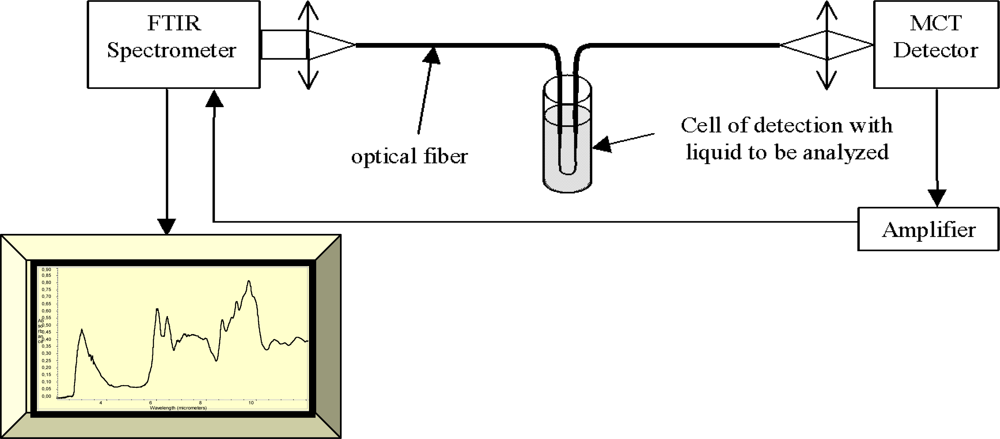
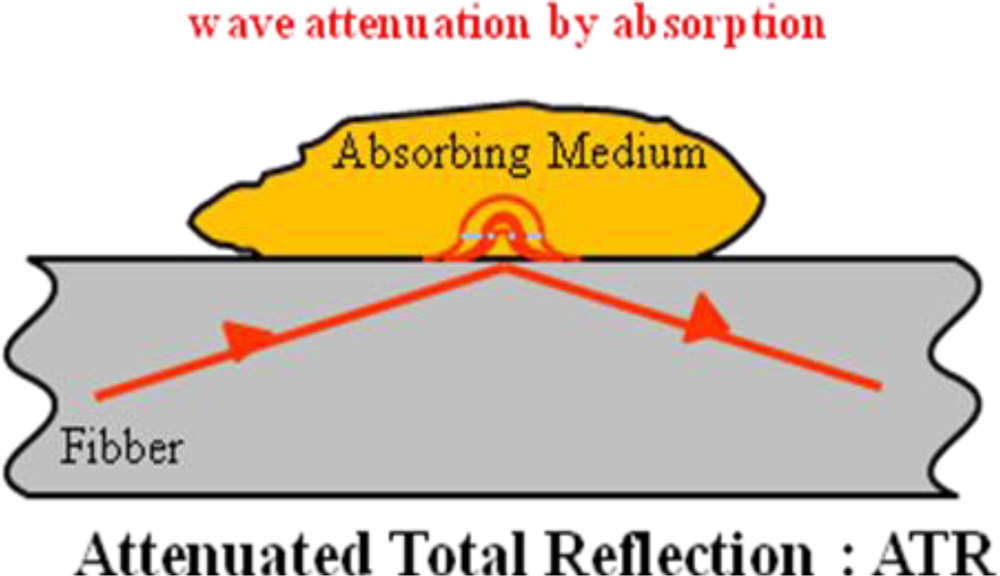
2.1.1. Set Up- Detection by infrared fibre evanescent wave spectroscopy (FEWS)
2.1.2. Examples of sensing
a. Metabolism alterations during cerebral ischemia in rat model
b. Mouse serum analysis
2.2. Chalcogenide Planar Waveguide for Sensing Application
2.2.1. Planar waveguide fabrication
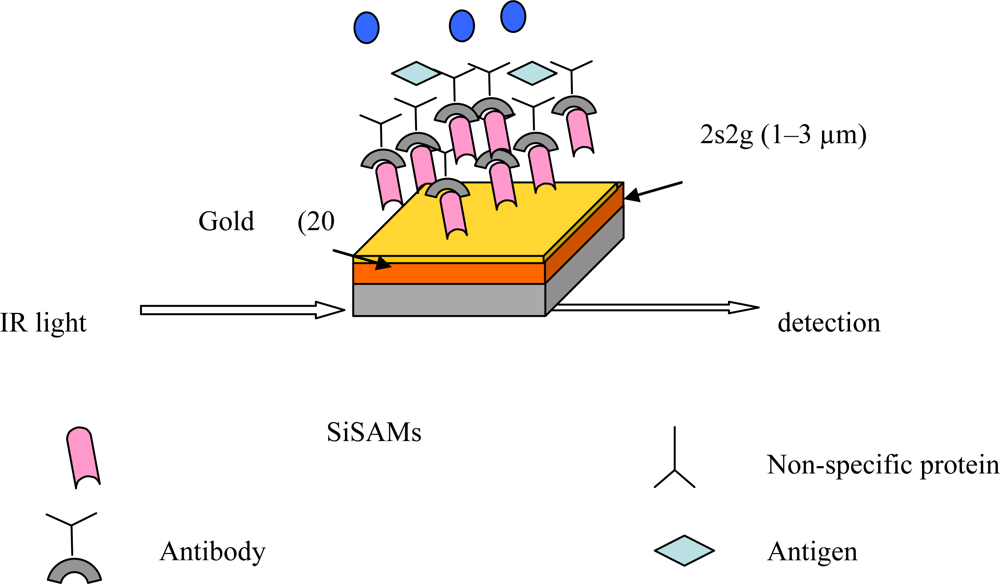
2.2.2. Biofunctionalisation of sulphide films
3. Experimental Section
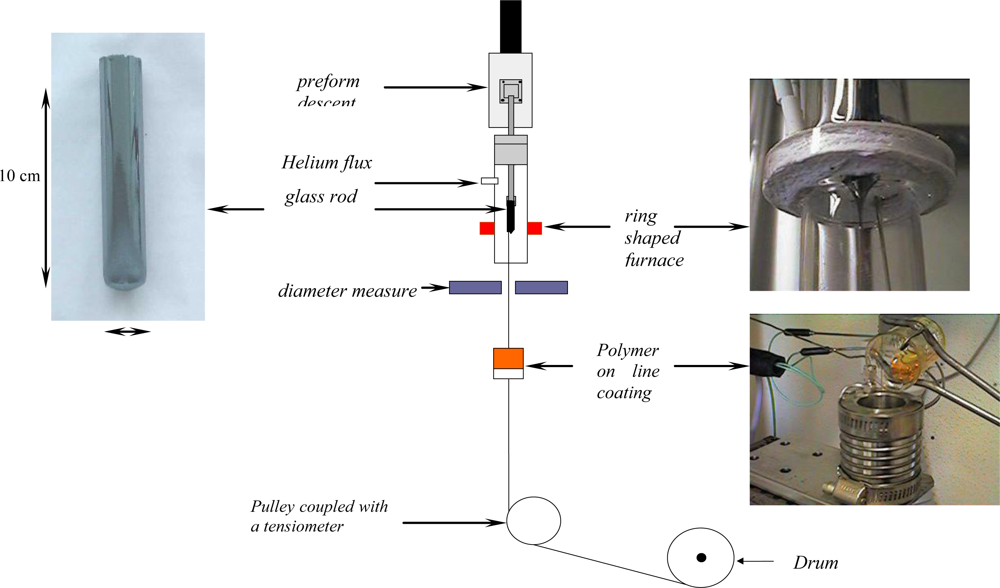
3.1. Synthesis of Glass Targets and Preforms, Fibber and Planar Waveguide Fabrication
4. Conclusions
Acknowledgments
References and Notes
- Houizot, P.; Boussard-Pledel, C.; Faber, A.J.; Cheng, L.K.; Bureau, B.; Van Nijnatten, P.A.; Gielesen, W.L.M.; do Carmo, J.P.; Lucas, J. Infrared single mode chalcogenide glass fibber for space. Opt. Exp 2007, 15, 12529–12538. [Google Scholar]
- Le Person, J.; Colas, F.; Compere, C.; Lehaitre, M.; Anne, M.L.; Boussard-Pledel, C.; Bureau, B.; Adam, J.L.; Deputier, S.; Guilloux-Viry, M. Surface plasmon resonance in chalcogenide glass-based optical system. Sens. Actuat. B 2008, 130, 771–776. [Google Scholar]
- Lucas, P.; Solis, M.A.; Le Coq, D.; Juncker, C.; Riley, M.R.; Collier, J.; Boesewetter, D.E.; Boussard-Pledel, C.; Bureau, B. Infrared biosensors using hydrophobic chalcogenide fibbers sensitized with live cells. Sens. Actuat. B 2006, 119, 355–362. [Google Scholar]
- Michel, K.; Bureau, B.; Boussard-Plédel, C.; Jouan, T.; Adam, J.L.; Staubmann, K.; Baumann, T. Monitoring of pollutant in waste water by infrared spectroscopy using chalcogenide glass optical fibbers. Sens. Actuat. B 2004, 101, 252–259. [Google Scholar]
- Wilhelm, A.A.; Boussard-Pledel, C.; Coulombier, Q.; Lucas, J.; Bureau, B.; Lucas, P. Development of far-infrared-transmitting te based glasses suitable for carbon dioxide detection and space optics. Adv. Mat 2007, 19, 3796–3800. [Google Scholar]
- Keirsse, J.; Boussard-Pledel, C.; Loreal, O.; Sire, O.; Bureau, B.; Leroyer, P.; Turlin, B.; Lucas, J. IR optical fibber sensor for biomedical applications. Vib. Spectrosc 2003, 32, 23–32. [Google Scholar]
- Sanghera, J.S.; Shaw, L.B.; Aggarwal, I.D. Applications of chalcogenide glass optical fibbers. C. R. Chim 2002, 5, 873–883. [Google Scholar]
- Hu, J.; Tarasov, V.; Agarwal, A.; Kimerling, L.; Carlie, N.; Petit, L.; Richardson, K. Fabrication and testing of planar chalcogenide waveguide integrated microfluidic sensor. Opt. Exp 2007, 15, 2307–2314. [Google Scholar]
- Yu, C.X.; Ganjoo, A.; Jain, H.; Pantano, C.; G.Irudayaraj, J. Mid-IR biosensor: Detection and fingerprinting of pathogens on gold island functionalized chalcogenide films. Anal. Chem 2006, 78, 2500–2506. [Google Scholar]
- Anne, M.L.; Salle, E.L.G.L.; Bureau, B.; Tristant, J.; Brochot, F.; Boussard-Plédel, C.; Ma, H.L.; Zhang, X.H.; Adam, J.L. Polymerisation of an industrial resin monitored by infrared fibber evanescent wave spectroscopy. Sens. Actuat. B 2009, 137, 687–691. [Google Scholar]
- Zakery, A.; Elliott, S.R. Optical properties and applications of chalcogenide glasses: a review. J. Non-Cryst. Solids 2003, 330, 1–12. [Google Scholar]
- Ta’eed, V.G.; Pelusi, M.D.; Eggleton, B.J.; Choi, D.Y.; Madden, S.; Bulla, D.A.P.; Luther-Davies, B. All-optical wavelength conversion of 80 Gb/s signal in highly nonlinear serpentine chalcogenide planar waveguides. In Conference on Optical Fibber Communication/National Fibre Optic Engineers Conference, February 24–28, 2008; San Diego, CA, USA; pp. 1449–1451.
- Lamont, M.R.E.; Luther-Davies, B.; Choi, D.Y.; Madden, S.; Eggleton, B.J. Supercontinuum generation in dispersion engineered highly nonlinear (gamma = 10 W/m) As2S3 chalcogenide planar waveguide. Opt. Exp 2008, 16, 14938–14944. [Google Scholar]
- Madden, S.; Choi, D.Y.; Lamont, M.R.E.; Ta’eed, V.; Baker, N.; Pelusi, M.; Luther-Davies, B.; Eggleton, B.J. Chalcogenide glass photonic chip. Opt. Photonics News 2008, 19, 18–23. [Google Scholar]
- Mairaj, A.K.; Chardon, A.M.; Shepherd, D.P.; Hewak, D.W. Laser performance and spectroscopic analysis of optically written channel waveguides in neodymium-doped gallium lanthanum sulphide glass. IEEE J. Sel. Top. Quantum Electron 2002, 8, 1381–1388. [Google Scholar]
- Bureau, B.; Danto, S.; Ma, H.L.; Boussard-Pledel, C.; Zhang, X.H.; Lucas, J. Tellurium based glasses: A ruthless glass to crystal competition. Solid State Sci 2008, 10, 427–433. [Google Scholar]
- Zhang, X.H.; Bureau, B.; Lucas, P.; Boussard-Pledel, C.; Lucas, J. Gasses for seeing beyond visible. Chem.–Eur. J 2008, 14, 432–442. [Google Scholar]
- Guignard, M.; Nazabal, V.; Smektala, F.; Adam, J.L.; Bohnke, O.; Duverger, C.; Moreac, A.; Zeghlache, H.; Kudlinski, A.; Martinelli, G.; Quiquempois, Y. Chalcogenide glasses based on germanium disulfide for second harmonic generation. Adv. Funct. Mater 2007, 17, 3284–3294. [Google Scholar]
- Vigreux-Bercovici, C.; Bonhomme, E.; Pradel, A.; Broquin, J.E.; Labadie, L.; Kern, P. Transmission measurement at 10.6 μm of Te2As3Se5 rib waveguides on As2S3 substrate. Appl. Phys. Lett 2007, 90, 011110:1–011110:3. [Google Scholar]
- Keirsse, J.; Boussard-Pledel, C.; Loreal, O.; Sire, O.; Bureau, B.; Turlin, B.; Leroyer, P.; Lucas, J. Chalcogenide glass fibbers used as biosensors. J. Non-Cryst. Solids 2003, 326, 430–433. [Google Scholar]
- Marquez, E.; Wagner, T.; Gonzalez-Leal, J.M.; Bernal-Oliva, A.M.; Prieto-Alcon, R.; Jimenez-Garay, R.; Ewen, P.J.S. Controlling the optical constants of thermally-evaporated Ge10Sb30S60 chalcogenide glass films by photodoping with silver. J. Non-Cryst. Solids 2000, 274, 62–68. [Google Scholar]
- Fick, J.; Knystautus, E.J.; Villeneuve, A.; Schiettekatte, F.; Roorda, S.; Richardson, K.A. High photoluminescence in erbium-doped chalcogenide thin films. J. Non-Cryst. Solids 2000, 272, 200–208. [Google Scholar]
- Fayek, S.A.; El-Sayed, S.M. Optical properties of amorphous Ge28-xSe72Sbx thin films. NDT E Int 2006, 39, 39–44. [Google Scholar]
- Ivanova, Z.G.; Koughia, K.; Tonchev, D.; Pivin, J.C.; Kasap, S.O. Photoluminescence in Er-implanted amorphous Ge-S-Ga thin films. J. Optoelectron. Adv. Mater 2005, 7, 1271–1276. [Google Scholar]
- Frayret, J.; Barthelemy, E.; Albert, S.; Vigreux, C.; Pradel, A. Te-Ge-Ga thin films deposited by co-thermal evaporation. Optoelectron. Adv. Mater.-Rapid Com 2009, 3, 260–264. [Google Scholar]
- Huang, C.C.; Hewak, D.W. High-purity germanium-sulphide glass for optoelectronic applications synthesised by chemical vapour deposition. Electron. Lett 2004, 40, 863–865. [Google Scholar]
- Frumar, M.; Frumarova, B.; Nemec, P.; Wagner, T.; Jedelsky, J.; Hrdlicka, M. Thin chalcogenide films prepared by pulsed laser deposition - new amorphous materials applicable in optoelectronics and chemical sensors. J. Non-Cryst. Solids 2006, 352, 544–561. [Google Scholar]
- Youden, K.E.; Grevatt, T.; Eason, R.W.; Rutt, H.N.; Deol, R.S.; Wylangowski, G. Pulsed-Laser Deposition of Ga-La-S Chalcogenide Glass Thin-Film Optical Wave-Guides. Appl. Phys. Lett 1993, 63, 1601–1603. [Google Scholar]
- Zakery, A.; Ruan, Y.; Rode, A.V.; Samoc, M.; Luther-Davies, B. Low-loss waveguides in ultrafast laser-deposited As2S3 chalcogenide films. J. Opt. Soc. Am. B 2003, 20, 1844–1852. [Google Scholar]
- Nazabal, V.; Nemec, P.; Jedelsky, J.; Duverger, C.; Le Person, J.; Adam, J.L.; Frumar, M. Dysprosium doped amorphous chalcogenide films prepared by pulsed laser deposition. Opt. Mater 2006, 29, 273–278. [Google Scholar]
- Turnbull, D.A.; Sanghera, J.S.; Nguyen, V.; Aggarwal, I.D. Fabrication of waveguides in sputtered films of GeAsSe glass via photodarkening with above bandgap light. Mater. Lett 2003, 58, 51–54. [Google Scholar]
- Frantz, J.A.; Sanghera, J.S.; Shaw, L.B.; Villalobos, G.; Aggarwal, I.D.; Hewak, D.W. Sputtered films of Er3+-doped gallium lanthanum sulfide glass. Mater. Lett 2006, 60, 1350–1353. [Google Scholar]
- Ramachandran, S.; Bishop, S.G. Photoinduced integrated-optic devices in rapid thermally annealed chalcogenide glasses. IEEE J. Sel. Top. Quantum Electron 2005, 11, 260–270. [Google Scholar]
- Jackson, M.; Mantsch, H.H. biomedical infrared spectroscopy. In Infrared Spectroscopy of Biomolecules; Mantch, H.H., Chapman, D., Eds.; Wiley-Liss: New York, NY, USA, 1996; pp. 311–340. [Google Scholar]
- Naumann, D. Infrared Spectroscopy in Microbiology. In Encyclopedia of Analytical Chemistry; Meyers, R.A., Ed.; Wiley & Sons Ltd: Chichester, UK, 2000; pp. 102–131. [Google Scholar]
- Freeman, D.; Madden, S.; Luther-Davies, B. Fabrication of planar photonic crystals in a chalcogenide glass using a focused ion beam. Opt. Exp 2005, 13, 3079–3086. [Google Scholar]
- Ruan, Y.L.; Li, W.T.; Jarvis, R.; Madsen, N.; Rode, A.; Luther-Davies, B. Fabrication and characterization of low loss rib chalcogenide waveguides made by dry etching. Opt. Exp 2004, 12, 5140–5145. [Google Scholar]
- Choi, D.-Y.; Madden, S.; Rode, A.; Wang, R.; Luther-Davies, B. Fabrication of low loss Ge33As12Se55 (AMTIR-1) planar waveguides. Appl. Phys. Lett 2007, 91, 011115:1–011115:3. [Google Scholar]
- Qian, Y.; Song, J.; Kim, S.; Hu, W.; Nordin, G.P. Compact waveguide splitter networks. Opt. Exp 2008, 16, 4981–4990. [Google Scholar]
- Ulman, A. Formation and structure of self-assembled monolayers. Chem. Rev 1996, 96, 1533–1554. [Google Scholar]




© 2009 by the authors; licensee MDPI, Basel, Switzerland This article is an open access article distributed under the terms and conditions of the Creative Commons Attribution license (http://creativecommons.org/licenses/by/3.0/).
Share and Cite
Anne, M.-L.; Keirsse, J.; Nazabal, V.; Hyodo, K.; Inoue, S.; Boussard-Pledel, C.; Lhermite, H.; Charrier, J.; Yanakata, K.; Loreal, O.; et al. Chalcogenide Glass Optical Waveguides for Infrared Biosensing. Sensors 2009, 9, 7398-7411. https://doi.org/10.3390/s90907398
Anne M-L, Keirsse J, Nazabal V, Hyodo K, Inoue S, Boussard-Pledel C, Lhermite H, Charrier J, Yanakata K, Loreal O, et al. Chalcogenide Glass Optical Waveguides for Infrared Biosensing. Sensors. 2009; 9(9):7398-7411. https://doi.org/10.3390/s90907398
Chicago/Turabian StyleAnne, Marie-Laure, Julie Keirsse, Virginie Nazabal, Koji Hyodo, Satoru Inoue, Catherine Boussard-Pledel, Hervé Lhermite, Joël Charrier, Kiyoyuki Yanakata, Olivier Loreal, and et al. 2009. "Chalcogenide Glass Optical Waveguides for Infrared Biosensing" Sensors 9, no. 9: 7398-7411. https://doi.org/10.3390/s90907398
APA StyleAnne, M.-L., Keirsse, J., Nazabal, V., Hyodo, K., Inoue, S., Boussard-Pledel, C., Lhermite, H., Charrier, J., Yanakata, K., Loreal, O., Le Person, J., Colas, F., Compère, C., & Bureau, B. (2009). Chalcogenide Glass Optical Waveguides for Infrared Biosensing. Sensors, 9(9), 7398-7411. https://doi.org/10.3390/s90907398