
<?xml version="1.0" encoding="UTF-8"?>
<!DOCTYPE article PUBLIC "-//NLM//DTD Journal Publishing DTD v2.3 20070202//EN" "journalpublishing.dtd">
<article xmlns:xlink="http://www.w3.org/1999/xlink" xml:lang="en" article-type="review-article">
<front>
<journal-meta>
<journal-id journal-id-type="publisher-id">ijms</journal-id>
<journal-title>International Journal of Molecular Sciences</journal-title>
<abbrev-journal-title>Int. J. Mol. Sci.</abbrev-journal-title>
<issn pub-type="epub">1422-0067</issn>
<publisher>
<publisher-name>Molecular Diversity Preservation International (MDPI)</publisher-name></publisher></journal-meta>
<article-meta>
<article-id pub-id-type="doi">10.3390/ijms13089545</article-id>
<article-id pub-id-type="publisher-id">ijms-13-09545</article-id>
<article-categories>
<subj-group>
<subject>Review</subject></subj-group></article-categories>
<title-group>
<article-title>Implication of Tumor Microenvironment in Chemoresistance: Tumor-Associated Stromal Cells Protect Tumor Cells from Cell Death</article-title></title-group>
<contrib-group>
<contrib contrib-type="author">
<name><surname>Castells</surname><given-names>Magali</given-names></name><xref ref-type="author-notes" rid="fn1-ijms-13-09545">†</xref></contrib>
<contrib contrib-type="author">
<name><surname>Thibault</surname><given-names>Benoît</given-names></name><xref ref-type="author-notes" rid="fn1-ijms-13-09545">†</xref></contrib>
<contrib contrib-type="author">
<name><surname>Delord</surname><given-names>Jean-Pierre</given-names></name></contrib>
<contrib contrib-type="author">
<name><surname>Couderc</surname><given-names>Bettina</given-names></name><xref ref-type="corresp" rid="c1-ijms-13-09545">*</xref></contrib>
<aff id="af1-ijms-13-09545">EA4553, Institut Claudius Regaud, F-31062 Toulouse, France and University of Toulouse III, Toulouse F-31052, France; E-Mails: <email>castells.magali@claudiusregaud.fr</email> (M.C.); <email>thibault.benoit@claudiusregaud.fr</email> (B.T.); <email>delord.jean-pierre@claudiusregaud.fr</email> (J.-P.D.)</aff></contrib-group>
<author-notes>
<corresp id="c1-ijms-13-09545">
<label>*</label>Author to whom correspondence should be addressed; E-Mail: <email>couderc.bettina@claudiusregaud.fr</email>; Tel.: +33-5-61-42-46-44; Fax: +33-5-61-42-46-31.</corresp><fn id="fn1-ijms-13-09545">
<label>†</label>
<p>These authors contributed equally to this work.</p></fn></author-notes>
<pub-date pub-type="collection">
<year>2012</year></pub-date>
<pub-date pub-type="epub">
<day>30</day>
<month>07</month>
<year>2012</year></pub-date>
<volume>13</volume>
<issue>8</issue>
<fpage>9545</fpage>
<lpage>9571</lpage>
<history>
<date date-type="rev-recd">
<day>13</day>
<month>07</month>
<year>2012</year></date>
<date date-type="accepted">
<day>17</day>
<month>07</month>
<year>2012</year></date></history>
<permissions>
<copyright-statement>© 2012 by the authors; licensee Molecular Diversity Preservation International, Basel, Switzerland.</copyright-statement>
<copyright-year>2012</copyright-year>
<license license-type="open-access" xlink:href="http://creativecommons.org/licenses/by/3.0">
<p>This article is an open-access article distributed under the terms and conditions of the Creative Commons Attribution license (http://creativecommons.org/licenses/by/3.0/).</p></license></permissions>
<abstract>
<p>Tumor development principally occurs following the accumulation of genetic and epigenetic alterations in tumor cells. These changes pave the way for the transformation of chemosensitive cells to chemoresistant ones by influencing the uptake, metabolism, or export of drugs at the cellular level. Numerous reports have revealed the complexity of tumors and their microenvironment with tumor cells located within a heterogeneous population of stromal cells. These stromal cells (fibroblasts, endothelial or mesothelial cells, adipocytes or adipose tissue-derived stromal cells, immune cells and bone marrow-derived stem cells) could be involved in the chemoresistance that is acquired by tumor cells via several mechanisms: (i) cell–cell and cell–matrix interactions influencing the cancer cell sensitivity to apoptosis; (ii) local release of soluble factors promoting survival and tumor growth (crosstalk between stromal and tumor cells); (iii) direct cell-cell interactions with tumor cells (crosstalk or oncologic trogocytosis); (iv) generation of specific niches within the tumor microenvironment that facilitate the acquisition of drug resistance; or (v) conversion of the cancer cells to cancer-initiating cells or cancer stem cells. This review will focus on the implication of each member of the heterogeneous population of stromal cells in conferring resistance to cytotoxins and physiological mediators of cell death.</p></abstract>
<kwd-group>
<kwd>microenvironment</kwd>
<kwd>cancer</kwd>
<kwd>chemoresistance</kwd>
<kwd>apoptosis</kwd></kwd-group></article-meta></front>
<body>
<sec sec-type="intro">
<title>1. Introduction</title>
<p>Most current treatments for peritoneal adenocarcinoma consist of chemotherapy associated with surgery. For example, the standard treatment of ovarian adenocarcinoma is cytoreductive surgery pre and post chemotherapy. Most patients are chemosensitive and cancer free immediately after the treatment. However, depending on the quality of the surgery, 50% to 70% of patients will relapse within one year. When such relapse occurs, in most cases the adenocarcinoma cells have acquired a chemoresistant phenotype. This chemoresistance can be associated with genetic alterations within the cancer cells but recent studies have proposed that it could also be associated with the tumor microenvironment [<xref ref-type="bibr" rid="b1-ijms-13-09545">1</xref>]. Indeed, this microenvironment has become recognized as a major factor influencing the growth of cancer and impacting the outcome of therapy. While the niche cells are not malignant per se, their role in supporting cancer growth is so vital for the survival of the tumor that they have become an attractive target for chemotherapeutic agents [<xref ref-type="bibr" rid="b2-ijms-13-09545">2</xref>]. Meads <italic>et al</italic>. have shown that environment-mediated drug resistance is rapidly induced by signaling events from the tumor microenvironment and is likely to be reversible because removal of the microenvironment restores the drug sensitivity [<xref ref-type="bibr" rid="b1-ijms-13-09545">1</xref>,<xref ref-type="bibr" rid="b3-ijms-13-09545">3</xref>].</p>
<p>The microenvironment (stroma) is made up of endothelial cells, carcinoma-associated fibroblasts (CAFs), adipocytes, mesenchymal cells, mesenchymal stem cells (MSCs; bone marrow derived, BM-MSCs, or carcinoma associated, CA-MSCs), and cells from the immune and inflammatory systems (tumor-associated macrophages, TAM, regulatory T cells, <italic>etc</italic>.). The stromal cells crosstalk not only with tumor cells but also with each other [<xref ref-type="bibr" rid="b4-ijms-13-09545">4</xref>]. Microenvironment cells could potentially induce chemoresistance acquisition in tumor cells by: (i) cell–cell and cell–matrix interactions influencing the cancer cell sensitivity to apoptosis and thereby affecting drug resistance; (ii) local release of soluble factors such as interleukin-6 (IL-6) that promote survival and tumor growth (crosstalk between stromal cells and tumor cells through paracrine factors secreted by the two cell populations) [<xref ref-type="bibr" rid="b1-ijms-13-09545">1</xref>,<xref ref-type="bibr" rid="b5-ijms-13-09545">5</xref>,<xref ref-type="bibr" rid="b6-ijms-13-09545">6</xref>]; (iii) direct cell-cell interactions with tumor cells (crosstalk or oncologic trogocytosis) [<xref ref-type="bibr" rid="b7-ijms-13-09545">7</xref>]; iv) the generation of specific niches within the tumor microenvironment comprising subpopulations of tumor cells that may afford a survival advantage following initial drug exposure and/or enhance hypoxia leading to the up-regulation of growth factors such as platelet-derived growth factor B (PDGF-B), transforming growth factor β (TGF-β), insulin-like growth factor 2 (IGF-2), epidermal growth factor (EGF) by the stromal cells and allowing a paradoxal increase in cell chemoresistance [<xref ref-type="bibr" rid="b8-ijms-13-09545">8</xref>,<xref ref-type="bibr" rid="b9-ijms-13-09545">9</xref>]; (v) the conversion of the cancer cells into cancer-initiating cells or cancer stem cells [<xref ref-type="bibr" rid="b10-ijms-13-09545">10</xref>].</p></sec>
<sec>
<title>2. Cell Adhesion and Chemoresistance</title>
<p>There are “dynamic and reciprocal” exchanges of information between tumor cells and their surrounding. A permissive microenvironment could affect the sensitivity of tumor cells to drug treatment. The composition and organization of the ECM (extracellular matrix) and stromal components contribute to marked gradients in drug concentration, increasing interstitial fluid pressure and metabolic changes, all of which can strongly enhance the resistance of tumor cells to drug agents [<xref ref-type="bibr" rid="b11-ijms-13-09545">11</xref>]. The importance of the microenvironment and the structural organization of cells in a 3D context have been recognized for decades. Indeed, in 1979, Sutherland <italic>et al</italic>. showed that the resistance of mammary tumor cells to adriamycin was higher when the cells were organized spheroidally compared to in a monolayer [<xref ref-type="bibr" rid="b12-ijms-13-09545">12</xref>]. This increased chemoresistance is not due to reduced drug internalization but to the interaction between cells and the extracellular matrix. Over the past decade, a number of studies have demonstrated the increased survival of several tumor models induced by the adhesion of cancer cells, via CAMs and integrins, to extracellular matrix components like fibronectin or laminin [<xref ref-type="bibr" rid="b11-ijms-13-09545">11</xref>]. As an example, L1-cell adhesion molecule (L1-CAM) can prevent cisplatin-induced apoptosis in the ovarian carcinoma cell line OVMz [<xref ref-type="bibr" rid="b13-ijms-13-09545">13</xref>]. Concordantly, the association of an L1-CAM blocking antibody with cytostatic drugs reduces tumor growth <italic>in vivo</italic> in pancreatic and ovarian carcinoma models in relation to an increased number of apoptotic cells, shown by an increased expression of procaspase-8, and to caspase-3 activation [<xref ref-type="bibr" rid="b14-ijms-13-09545">14</xref>]. Erbele <italic>et al</italic>. showed that a cisplatin treatment can trigger the proliferation of oral carcinoma cells adherent to a carcinoma matrix through integrin β1 and NF-κB dependent pathways [<xref ref-type="bibr" rid="b15-ijms-13-09545">15</xref>]. In the same way, integrin binding to ECM and stromal cells can also control cell cycle progression in both haematological and epithelial malignancies. Correai <italic>et al</italic>. described in their review works made by Hazlehurst <italic>et al</italic>. who reported that G1 arrest of myeloma cells induced by β1 integrin adhesion to fibronectin correlates with upregulated levels of cells regulator p27, and enhanced resistance to etoposide [<xref ref-type="bibr" rid="b11-ijms-13-09545">11</xref>,<xref ref-type="bibr" rid="b16-ijms-13-09545">16</xref>]. At last aside from determining cell and tissue architecture, the way cell surface adhesion molecules perceive ECM also affect nuclear structure and chromatin organization. This chromatin reorganization can affect resistance to drugs which bind or disrupt DNA [<xref ref-type="bibr" rid="b11-ijms-13-09545">11</xref>].</p>
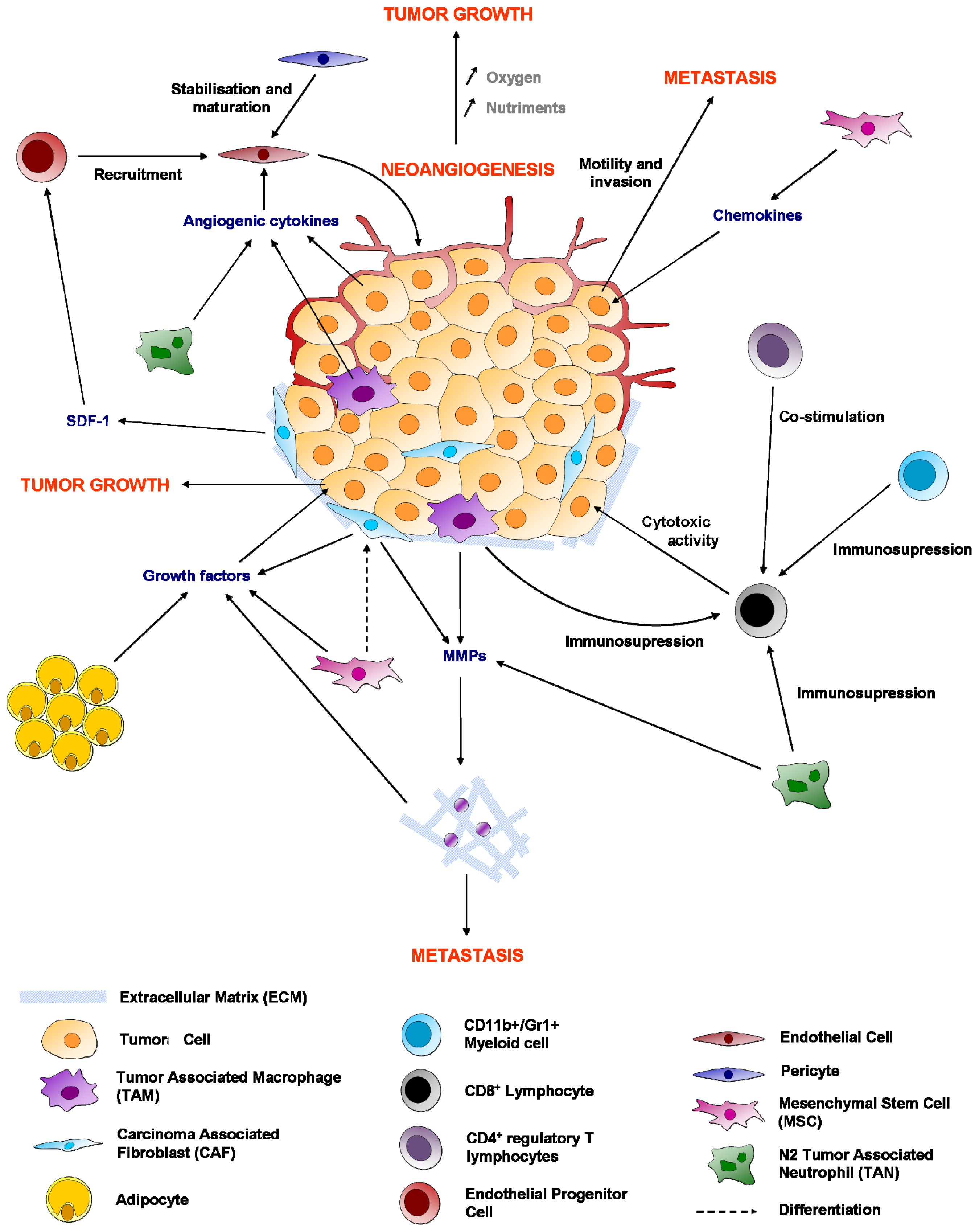
<p>Together, these data show that a “malignant” tissue architectural phenotype is responsible for increased survival of tumors against chemotherapies (<xref ref-type="fig" rid="f1-ijms-13-09545">Figure 1</xref>).</p></sec>
<sec>
<title>3. Endothelial Cells</title>
<p>Blood vessels are an essential part of the tumor since they transport the nutrients and oxygen required for tumor survival and growth. Tumor vascularization, a process enabled by the “angiogenic switch”, induces a decrease in tumor cell apoptosis [<xref ref-type="bibr" rid="b17-ijms-13-09545">17</xref>]. The angiogenesis mechanism is thus also responsible for tumor chemoresistance by promoting resistance to apoptosis.</p>
<sec>
<title>3.1. Growth Factors Involved in Angiogenesis Are Pro Survival</title>
<p>Vascular endothelial growth factor (VEGF) is the most potent angiogenesis inducer. It stimulates endothelial cell proliferation, migration, differentiation and also vessel branching (reviewed recently in [<xref ref-type="bibr" rid="b18-ijms-13-09545">18</xref>]). During the angiogenesis process, VEGF is secreted by several cells including endothelial cells and tumor cells [<xref ref-type="bibr" rid="b19-ijms-13-09545">19</xref>].</p>
<p>Some cancer cells express one of the two VEGF receptors, VEGFR-1 or VEGFR-2 (Flk/KDR), and can be stimulated by VEGF signaling [<xref ref-type="bibr" rid="b20-ijms-13-09545">20</xref>–<xref ref-type="bibr" rid="b22-ijms-13-09545">22</xref>]. VEGF is not only a mitogen but also a survival factor [<xref ref-type="bibr" rid="b23-ijms-13-09545">23</xref>] the overexpression of which can induce resistance to chemotherapeutic drugs in soft tissue sarcoma [<xref ref-type="bibr" rid="b24-ijms-13-09545">24</xref>]. VEGFR-2 expression was correlated with chemoresistance in non-small-cell lung carcinoma [<xref ref-type="bibr" rid="b25-ijms-13-09545">25</xref>] whereas the loss of VEGF expression in colorectal cancer cells caused an increase in apoptosis (spontaneous and chemotherapy induced) [<xref ref-type="bibr" rid="b26-ijms-13-09545">26</xref>]. VEGF modifies the apoptotic signaling pathway in endothelial cells by inducing the expression of anti-apoptotic proteins including survivin and Bcl-2 [<xref ref-type="bibr" rid="b27-ijms-13-09545">27</xref>–<xref ref-type="bibr" rid="b29-ijms-13-09545">29</xref>], and the activation of the PI3K/Akt survival pathway [<xref ref-type="bibr" rid="b30-ijms-13-09545">30</xref>]. Bcl-2 expression or phosphorylation can also be up-regulated by VEGF in VEGFR<sup>+</sup> primary and/or immortalized cancer cells from different sources, leukemia [<xref ref-type="bibr" rid="b31-ijms-13-09545">31</xref>,<xref ref-type="bibr" rid="b32-ijms-13-09545">32</xref>] or in breast cancer [<xref ref-type="bibr" rid="b33-ijms-13-09545">33</xref>]. In chronic lymphocytic leukemia B cells, VEGF interacts directly with STAT1 and STAT3 leading to the up-regulation of other anti-apoptotic proteins, Mcl-1 and XIAP, and protection from cell death [<xref ref-type="bibr" rid="b34-ijms-13-09545">34</xref>]. Pericytes, specialized in the stabilization and maturation of vessels, can promote endothelial cell survival [<xref ref-type="bibr" rid="b35-ijms-13-09545">35</xref>]. They act on endothelial cells by stimulating the expression of VEGF via NF-κB signaling. By secreting vitronectin, the pericytes induce the activation of endothelial cell integrin α<sub>V</sub> leading to the increased expression of the anti-apoptotic protein Bcl-w [<xref ref-type="bibr" rid="b36-ijms-13-09545">36</xref>]. Interestingly, such prosurvival signaling induced by VEGF can be converted into pro-cell death signals by TGFβ1, a regulator of tissue morphogenesis, during an apoptosis step required for angiogenesis [<xref ref-type="bibr" rid="b37-ijms-13-09545">37</xref>].</p>
<p>Chemoresistance acquisition and angiogenesis are two linked processes. Indeed one study showed that chemoresistance acquisition by continuous treatment in neuroblastoma cells was related to transcriptome modifications in angiogenic genes and correlated with a positive influence on angiogenesis <italic>in vitro</italic> and <italic>in vivo</italic> [<xref ref-type="bibr" rid="b38-ijms-13-09545">38</xref>]. In breast cancer cell lines, hypoxia-stimulated VEGF expression was increased by overexpression of Bcl-2 [<xref ref-type="bibr" rid="b39-ijms-13-09545">39</xref>]. In contrast, down-regulation of anti-apoptotic proteins Bcl-2 or survivin by different approaches improved the sensitivity to treatment (radiotherapy or chemotherapy) and inhibited VEGF expression and angiogenesis in two different tumor xenograft models (prostate and colon) [<xref ref-type="bibr" rid="b40-ijms-13-09545">40</xref>,<xref ref-type="bibr" rid="b41-ijms-13-09545">41</xref>].</p></sec>
<sec>
<title>3.2. Endothelial Cell Protection against Apoptosis</title>
<p>In addition to the tumor cells, endothelial cells also need to be eradicated by any cancer treatment to minimize the risk of recurrence. These cells develop their own specific apoptosis resistance pathways depending on the model studied and death inducer. FGF-2, which is also an angiogenic factor, promotes apoptosis resistance in endothelial cells after radiation treatment [<xref ref-type="bibr" rid="b42-ijms-13-09545">42</xref>] or growth factor deprivation [<xref ref-type="bibr" rid="b43-ijms-13-09545">43</xref>]. It has the same prosurvival effects as VEGF, upregulating Bcl-2 and survivin expression [<xref ref-type="bibr" rid="b44-ijms-13-09545">44</xref>] and activating the protein kinase Akt [<xref ref-type="bibr" rid="b45-ijms-13-09545">45</xref>,<xref ref-type="bibr" rid="b46-ijms-13-09545">46</xref>].</p>
<p>Both FGF-2 and VEGF protect endothelial cells from apoptosis after exposure to different chemotherapies, and have an additive effect due to activation of PI3K/Akt signaling pathway [<xref ref-type="bibr" rid="b26-ijms-13-09545">26</xref>]. Cancer cells can act on endothelial cells and protect them from apoptosis after radiation through their secretion of VEGF and the subsequent activation of pro-survival gene expression [<xref ref-type="bibr" rid="b47-ijms-13-09545">47</xref>]. Moreover, in different cancer models, tumor-associated endothelial cells have been shown to differ from those derived from normal organs or cells. For example, the tumor-associated endothelial cells showed increased chemoresistance compared to normal endothelial cells through the expression of PAX2 in renal carcinoma [<xref ref-type="bibr" rid="b48-ijms-13-09545">48</xref>], the overexpression of survivin in a glioma model [<xref ref-type="bibr" rid="b49-ijms-13-09545">49</xref>], and the activation of an NF-κB dependent pathway promoting Akt and VEGF expression and cell survival in hepatocellular carcinoma [<xref ref-type="bibr" rid="b50-ijms-13-09545">50</xref>]. These molecular pathways are also associated with the stimulation of angiogenesis [<xref ref-type="bibr" rid="b48-ijms-13-09545">48</xref>–<xref ref-type="bibr" rid="b50-ijms-13-09545">50</xref>].</p></sec>
<sec>
<title>3.3. Treatments</title>
<p>Specific anti-angiogenic drugs have been developed over the last few years most of which target VEGF signaling (VEGF or VEGFR).</p>
<p>Anti-angiogenic therapies used as a single agent have been shown since the first preclinical studies to inhibit angiogenesis and diminish tumor growth [<xref ref-type="bibr" rid="b51-ijms-13-09545">51</xref>] and also permit an increase in tumor cell apoptosis [<xref ref-type="bibr" rid="b52-ijms-13-09545">52</xref>]. They are used in combination with conventional therapies for their ability to improve delivery [<xref ref-type="bibr" rid="b53-ijms-13-09545">53</xref>] by reducing interstitial fluid pressure [<xref ref-type="bibr" rid="b54-ijms-13-09545">54</xref>]. Moreover, the use of two angiogenic inhibitors together has shown very promising results in a glioma model where a VEGFR2 inhibitor alone did not permit blood vessel regression. A combination with an inhibitor of PDGFR-β overcame the survival mechanism by targeting pericytes, mediators of endothelial cell survival mechanisms, thus demonstrating that in blood vessels, resistant processes work cooperatively [<xref ref-type="bibr" rid="b55-ijms-13-09545">55</xref>]. In clinical trials, anti-angiogenic therapies have been shown to improve the response to chemotherapy in different types of cancer [<xref ref-type="bibr" rid="b56-ijms-13-09545">56</xref>,<xref ref-type="bibr" rid="b57-ijms-13-09545">57</xref>] however when administered alone, they do not permit an improvement of long term benefit [<xref ref-type="bibr" rid="b58-ijms-13-09545">58</xref>].</p>
<p>The paradox between anti-angiogenic therapy expectations and clinical observations is explained by the recent concept developing the idea that anti-angiogenic treatments provide the best results when they provoke “vessel normalization”. These drugs do not abrogate tumor angiogenesis but rather turn transiently anarchic tumor blood vessels, caused by overexpression of angiogenic factors, into normal ones. Not only does this allow a better delivery of chemotherapy and increase the sensitivity to radiotherapy but it also decreases tumor cell extravasation and migration in the blood circulation by reestablishing the endothelial cell barrier [<xref ref-type="bibr" rid="b55-ijms-13-09545">55</xref>,<xref ref-type="bibr" rid="b59-ijms-13-09545">59</xref>]. As with every therapy, resistance to an anti-angiogenic drug can occur mostly due to its mechanism of action. Indeed their aim is to suppress angiogenesis causing hypoxia [<xref ref-type="bibr" rid="b60-ijms-13-09545">60</xref>].</p></sec>
<sec>
<title>3.4. From Hypoxia to Angiogenesis</title>
<p>To survive, tumor cells develop several adaptive mechanisms including metabolic shift (oxidative metabolism to glycolysis) and apoptosis resistance [<xref ref-type="bibr" rid="b61-ijms-13-09545">61</xref>]. The microenvironment can positively influence tumor apoptosis resistance via the activation of resistance signaling pathways. Extreme conditions imposed by the microenvironment can also influence cancer cells by obliging them to modify their phenotype in order to overcome the hypoxia and survive. One of the major ways for tumors to survive in hypoxic conditions is to escape from the local area, thus explaining the high migration and invasion potential of these cells [<xref ref-type="bibr" rid="b60-ijms-13-09545">60</xref>]. Hypoxia is drastic for cancer cells but leads to genetic instability and the selection of the most malignant cells with the highest metastatic abilities [<xref ref-type="bibr" rid="b62-ijms-13-09545">62</xref>]. The key molecule acting during hypoxia is hypoxia-inducible transcription factor 1 (HIF-1) which transactivates hundreds of genes including angiogenic and autocrine growth factors and receptors, glycolytic enzymes and extracellular proteases [<xref ref-type="bibr" rid="b63-ijms-13-09545">63</xref>]. Hypoxia particularly induces VEGF expression in tumor cells thereby activating anti-apoptotic pathways described in point 3.3. [<xref ref-type="bibr" rid="b64-ijms-13-09545">64</xref>]. Hypoxia can also induce an inflammatory state through HIF1 and NF-κB activation leading to the secretion of chemokines and cytokines able to recruit inflammatory cells which also release VEGF [<xref ref-type="bibr" rid="b65-ijms-13-09545">65</xref>].</p>
<p>Anti-angiogenic therapies, through the hypoxic response they cause in cancer cells, could be responsible for an enhancement of metastasis and invasion [<xref ref-type="bibr" rid="b66-ijms-13-09545">66</xref>] and may bring about a more aggressive behavior. This point is controversial and still under investigation. Indeed, while some preclinical studies have shown that local invasiveness and metastasis are triggered by anti-VEGF treatments [<xref ref-type="bibr" rid="b67-ijms-13-09545">67</xref>,<xref ref-type="bibr" rid="b68-ijms-13-09545">68</xref>] others found no effect on metastasis [<xref ref-type="bibr" rid="b69-ijms-13-09545">69</xref>,<xref ref-type="bibr" rid="b70-ijms-13-09545">70</xref>].</p></sec></sec>
<sec>
<title>4. Fibroblasts</title>
<sec>
<title>4.1. Non Activated Fibroblasts</title>
<p>In the particular case of multiple myeloma (MM), a plasma cell cancer, the adhesion between MM cells and bone marrow fibroblasts leads to the secretion of IL-6 by the latter [<xref ref-type="bibr" rid="b71-ijms-13-09545">71</xref>]. This pleiotropic cytokine has demonstrated the capacity to induce the resistance of MM cells to apoptotic stimuli and chemotherapeutic drugs via the Jak/STAT pathway and the expression of the anti-apoptotic protein Bcl-xL [<xref ref-type="bibr" rid="b72-ijms-13-09545">72</xref>].</p></sec>
<sec>
<title>4.2. Myofibroblasts or Carcinoma-Associated Fibroblasts (CAFs)</title>
<p>Myofibroblasts or carcinoma-associated fibroblasts (CAFs) are the most abundant cell type in the tumor microenvironment. While their tumor-promoting effects are well known, their origin and a clearly characterized phenotype have not been well established. They can be distinguished from normal fibroblasts by their expression of certain markers like alpha smooth muscle actin (αSMA), fibroblast activation protein (FAP), tenascin-C or desmin [<xref ref-type="bibr" rid="b73-ijms-13-09545">73</xref>].</p>
<p>Both cancer cells and CAFs are able to secrete prostaglandin E<sub>2</sub> (generated by COX-2 activation) and sphingosine-1-phosphate (S1P), that can act in an autocrine or paracrine fashion to mediate cell survival and chemoresistance <italic>via</italic> PI3K-Akt/PKB pathway activation [<xref ref-type="bibr" rid="b74-ijms-13-09545">74</xref>]. In cholangiocarcinoma, CAFs also secrete platelet growth factor BB (PDGF-BB) which protects the cholangiocarcinoma cells from TRAIL cytotoxicity thus implying involvement of the Hedgehog (Hh) pathway [<xref ref-type="bibr" rid="b75-ijms-13-09545">75</xref>].</p>
<p>CAFs can regulate extracellular matrix composition by secreting periostin, a ligand of αvβ3 and αvβ5 integrins, which allows cancer cell adhesion and migration but also apoptosis resistance by PI3K-Akt/PKB activation in breast cancer models [<xref ref-type="bibr" rid="b76-ijms-13-09545">76</xref>]. Thanks to their expression of the serine protease FAP, CAFs allow collagen I cleavage and thus extracellular matrix remodeling [<xref ref-type="bibr" rid="b77-ijms-13-09545">77</xref>]. By interacting with collagen fibers in an integrin-dependent manner, these cells exert an increased tension between the fibers and ultimately increase the interstitial pressure which diminishes drug uptake and efficacy [<xref ref-type="bibr" rid="b78-ijms-13-09545">78</xref>]. Concordantly, fibroblast-derived 3D matrix has been shown to promote resistance of the PANC-1 line (pancreatic cancer cells) to taxol [<xref ref-type="bibr" rid="b79-ijms-13-09545">79</xref>].</p>
<p>Myofibroblasts have been shown to enhance chemoresistance in a pancreatic carcinoma model <italic>via</italic> an epigenetic inhibition of STAT1 and a reduced expression of caspases (8, 9, 7 and 3). They achieve this by inducing the expression of DNA methyltransferase 1 (DNMT1) and CpG DNA-hypermethylation [<xref ref-type="bibr" rid="b80-ijms-13-09545">80</xref>].</p>
<p>Their abundance in the tumor stroma and various effects on tumor progression and apoptosis resistance has made CAFs a new target in anticancer therapy. The desire to target CAFs instead of normal fibroblasts drove the development of, among others, anti-tenascin-C or anti-FAP molecules. Results from a phase II trial of the anti-tenascin monoclonal antibody 81C6 followed by chemotherapy in malignant glioma were promising compared to the control group [<xref ref-type="bibr" rid="b81-ijms-13-09545">81</xref>].</p>
<p>Stromal fibroblasts are genetically stable compared to tumor cells and constitute a reliable target for immunotherapy. Loeffler <italic>et al</italic>. developed a DNA vaccine which targets FAP by activating CD8<sup>+</sup> T cells in order to specifically kill the CAFs and thereby decrease collagen I expression and enhance drug uptake. The combination of such an anti-FAP vaccine with doxorubicin brought about an inhibition of tumor growth and complete tumor rejection in half of the tested mice whereas there was no survival with doxorubicin treatment alone [<xref ref-type="bibr" rid="b82-ijms-13-09545">82</xref>].</p></sec></sec>
<sec>
<title>5. Mesenchymal Stem Cells (MSCs) or MSC-Like Cells (CA-MSCs)</title>
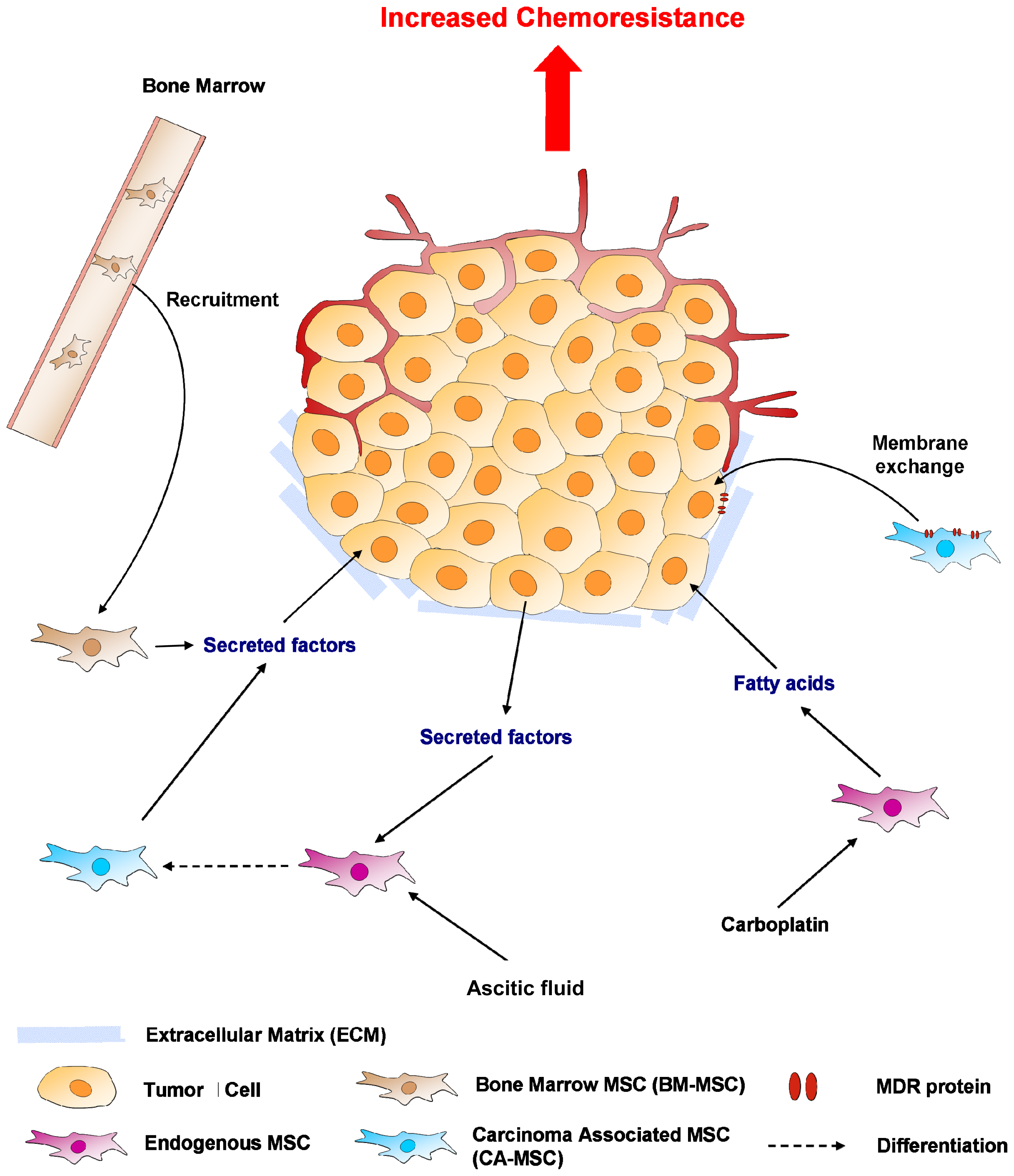
<p>MSCs are multipotent cells capable of differentiating into numerous cell types including adipocytes, osteoblasts, chondrocytes, fibroblasts, perivacular and vascular structures [<xref ref-type="bibr" rid="b3-ijms-13-09545">3</xref>,<xref ref-type="bibr" rid="b83-ijms-13-09545">83</xref>]. MSCs are recruited in large numbers to the stroma of developing tumors the growth of which induces a continuous production of paracrine and endocrine signals that mobilize the MSCs from the bone marrow (BM) [<xref ref-type="bibr" rid="b3-ijms-13-09545">3</xref>]. In some peritoneal cancers such as in ovarian cancer, MSCs have been described as being located around the tumor cells and in the ascitic fluid. These MSCs can no longer be defined as multipotent as they are unable to differentiate in different cell lineages. They are defined as being carcinoma-associated (CA-MSCs) and present some characteristic markers of CAFs (expression of PDGFR, FAP, …) [<xref ref-type="bibr" rid="b84-ijms-13-09545">84</xref>]. Such MSCs are found to stimulate tumor growth, enhance angiogenesis and promote metastasis formation through the release of a large spectrum of growth factors and cytokines [<xref ref-type="bibr" rid="b3-ijms-13-09545">3</xref>,<xref ref-type="bibr" rid="b85-ijms-13-09545">85</xref>,<xref ref-type="bibr" rid="b86-ijms-13-09545">86</xref>]. Roodhart <italic>et al</italic>. [<xref ref-type="bibr" rid="b3-ijms-13-09545">3</xref>], Xu <italic>et al</italic>. [<xref ref-type="bibr" rid="b87-ijms-13-09545">87</xref>], Hao <italic>et al</italic>. [<xref ref-type="bibr" rid="b88-ijms-13-09545">88</xref>], Jin <italic>et al</italic>. [<xref ref-type="bibr" rid="b89-ijms-13-09545">89</xref>] and our groups [<xref ref-type="bibr" rid="b4-ijms-13-09545">4</xref>,<xref ref-type="bibr" rid="b7-ijms-13-09545">7</xref>] have recently shown that MSCs are also involved in the development of chemoresistance to multiple types of chemotherapies (<xref ref-type="fig" rid="f1-ijms-13-09545">Figures 1</xref> and <xref ref-type="fig" rid="f2-ijms-13-09545">2</xref>).</p>
<sec>
<title>5.1. Cell-Cell Contact</title>
<p>MSCs could promote such chemoresistance by direct cell-cell contact. Firstly Xu <italic>et al</italic>. proposed that TGF-β1 produced by BM stromal cells promotes the survival and chemoresistance of leukemia cells via direct cell-to-cell interactions [<xref ref-type="bibr" rid="b87-ijms-13-09545">87</xref>]. They showed that the blockade of TGF-β signaling by LY2109761, which effectively inhibited the pro-survival signaling, could enhance the efficacy of chemotherapy against myelo-monocytic leukemic cells in the BM microenvironment. Rafii <italic>et al</italic>. demonstrated the capacity of CA-MSCs (called Hospicells in their study) to confer chemoresistance to ovarian and breast cancer cells by direct cell-cell contact and the exchange of membrane patches and MDR proteins (oncologic trogocytosis) [<xref ref-type="bibr" rid="b5-ijms-13-09545">5</xref>,<xref ref-type="bibr" rid="b7-ijms-13-09545">7</xref>].</p>
<p>Jin <italic>et al</italic>. showed that MSC cocultured with KBM-5 leukemia cells protected the latter from imatinib-induced cell death. As these anti-apoptotic effects were abrogated by the CXCR4 antagonist AMD3465 or by the inhibitor of integrin-linked kinase QLT0267, they suggested that the upregulation of CXCR4 by imatinib promotes migration of chronic myelogenous leukemia (CML) cells to bone marrow stroma, causing G0-G1 cell cycle arrest and hence ensuring the survival of quiescent CML progenitor cells [<xref ref-type="bibr" rid="b89-ijms-13-09545">89</xref>].</p></sec>
<sec>
<title>5.2. Soluble Factors Released Locally</title>
<p>Roodhart, Hao and Castells showed that MSCs could induce chemoresistance through the release of factors in the neighbourhood of tumors. Castells <italic>et al</italic>. showed that supernatants of CA-MSCs as well as BM-MSCs were able to induce development of chemoresistance by reducing apoptosis. They observed that CA-MSC secretions were able to confer carboplatin resistance to ovarian cancer cells by inhibiting the activation of effector caspases and apoptosis blockade. The activation of PI3K/Akt pathway signaling and phosphorylation of the downstream target Xiap underlined their implication in ovarian cancer chemoresistance.</p>
<p>The factors released in the tumor microenvironment have yet to be identified. Using activated MSCs, Roodhart <italic>et al</italic>. also showed that MSCs are potent mediators of resistance to chemotherapy and revealed targets to enhance chemotherapy efficacy in patients. They claimed that MSCs per se do not induce chemoresistance, rather endogenous MSCs become activated during treatment with platinum analogs and then secrete factors that protect tumor cells against a range of chemotherapeutic drugs. Through a metabolomic approach, they identified two distinct platinum-induced polyunsaturated fatty acids (PIFAs), 12-oxo-5,8,10-heptadecatrienoic acid (KHT) and hexadeca-4,7,10,13-tetraenoic acid (16:4(n-3)), that in minute quantities induce resistance to a broad spectrum of chemotherapeutic agents. Blocking central enzymes involved in the production of these PIFAs (cyclooxygenase-1 and thromboxane synthase) prevents such MSC-induced resistance [<xref ref-type="bibr" rid="b3-ijms-13-09545">3</xref>]. Hao <italic>et al</italic>. demonstrated in myeloma that the secretion of IL-6, VEGF and cell-to-cell contact with microenvironment-derived stromal cells from patients with multiple myeloma (MM-BMSCs) significantly decreased the sensitivity of myeloma cells to bortezomib treatment. Mechanistically, they associated the chemoresistance to the suppression of miRNA-15a expression by the BM-MSCs [<xref ref-type="bibr" rid="b88-ijms-13-09545">88</xref>].</p></sec>
<sec>
<title>5.3. Hypoxia</title>
<p>Pasquet <italic>et al</italic>. showed that CA-MSCs could induce the formation of hypoxic niches around tumors associated with a high expression of HIF1-α [<xref ref-type="bibr" rid="b84-ijms-13-09545">84</xref>]. Benito <italic>et al</italic>. indicated that interactions between leukemia cells and the BM microenvironment promote leukemia cell survival and confer resistance to anti-leukemic drugs [<xref ref-type="bibr" rid="b90-ijms-13-09545">90</xref>]. They correlated the hypoxic areas within the BM microenvironment with a survival advantage to hematopoietic cells and showed that hypoxia promotes chemoresistance in various ALL derived cell lines.</p></sec>
<sec>
<title>5.4. Conversion of Mesenchymal Cells to Cancer-Initiating Cells</title>
<p>In their study, Teng <italic>et al</italic>. have shown that DNA hypermethylation within a specific tumor suppressor gene is sufficient to fully transform a somatic mesenchymal stem cell. MSCs harboring targeted promoter methylations of HIC1/RassF1A displayed several features of cancer stem/initiating cells including loss of anchorage dependence, increased colony formation capability, drug resistance, and pluripotency. Moreover, the cells retained sensitivity to neuron- and osteocyte-induction and displayed both lineage-specific markers and stem cell markers in xenografts. Teng <italic>et al</italic>. proposed that under the influence of different environmental niches, these transformed stem cells could give rise to tissue-specific cancers [<xref ref-type="bibr" rid="b10-ijms-13-09545">10</xref>].</p></sec></sec>
<sec>
<title>6. Immune System</title>
<p>The immune system monitors and eliminates pathogens as well as developing tumors. However, tumor cells can escape from immunity and modify the phenotype of immune cells which become pro-tumor cells enhancing the tumor growth, angiogenesis or metastasis process [<xref ref-type="bibr" rid="b91-ijms-13-09545">91</xref>]. Several mechanisms by which tumors escape from cell death induced by the immune system have already been described [<xref ref-type="bibr" rid="b92-ijms-13-09545">92</xref>]. A few studies have been carried out on the effects of the immune system itself on the tumor resistance to chemotherapy and apoptosis.</p>
<p>Some recent studies reported the capacity of myeloid cells to mediate resistance to anti-angiogenic drugs. Shojaei <italic>et al</italic>. showed that CD11b<sup>+</sup>Gr1<sup>+</sup> cells (which could be dendritic cells, monocytes or neutrophils) could be primed and recruited in tumors where they could mediate anti-VEGF treatment refractoriness. They also showed that combining anti-VEGF treatment and a monoclonal antibody targeting myeloid cells allowed a better growth inhibition than anti-VEGF alone in refractory tumors [<xref ref-type="bibr" rid="b93-ijms-13-09545">93</xref>]. Targeting placental growth factor (PIGF), a pro-angiogenic cytokine, reduces tumor growth, angiogenesis and metastasis and enhances chemotherapy (gemcitabine or cyclophosphamide) and anti-VEGF therapy efficacy in melanoma or pancreatic tumor models. Fischer <italic>et al</italic>. showed that inhibition of the PIGF pathway was responsible for a reduced VEGFR-1<sup>+</sup> macrophage recruitment leading to an improved response to anti-VEGF therapy [<xref ref-type="bibr" rid="b94-ijms-13-09545">94</xref>].</p>
<sec>
<title>6.1. Macrophages</title>
<p>Monocytes and macrophages derive from myeloid cells, which are located in the bone marrow. After maturation, monocytes circulate in the bloodstream and can migrate into tissues where they differentiate into macrophages. Depending on the environmental context and the tumor development stage, activated macrophages can be separated into two distinct phenotypes: M1 (classical activated), which inhibit tumor growth and M2 (alternative activated), which are pro-tumoral. While the exact definition is still controversial, it is clear that tumor-associated macrophages (TAMs) consistently present a highly immunosuppressive M2 profile [<xref ref-type="bibr" rid="b95-ijms-13-09545">95</xref>].</p>
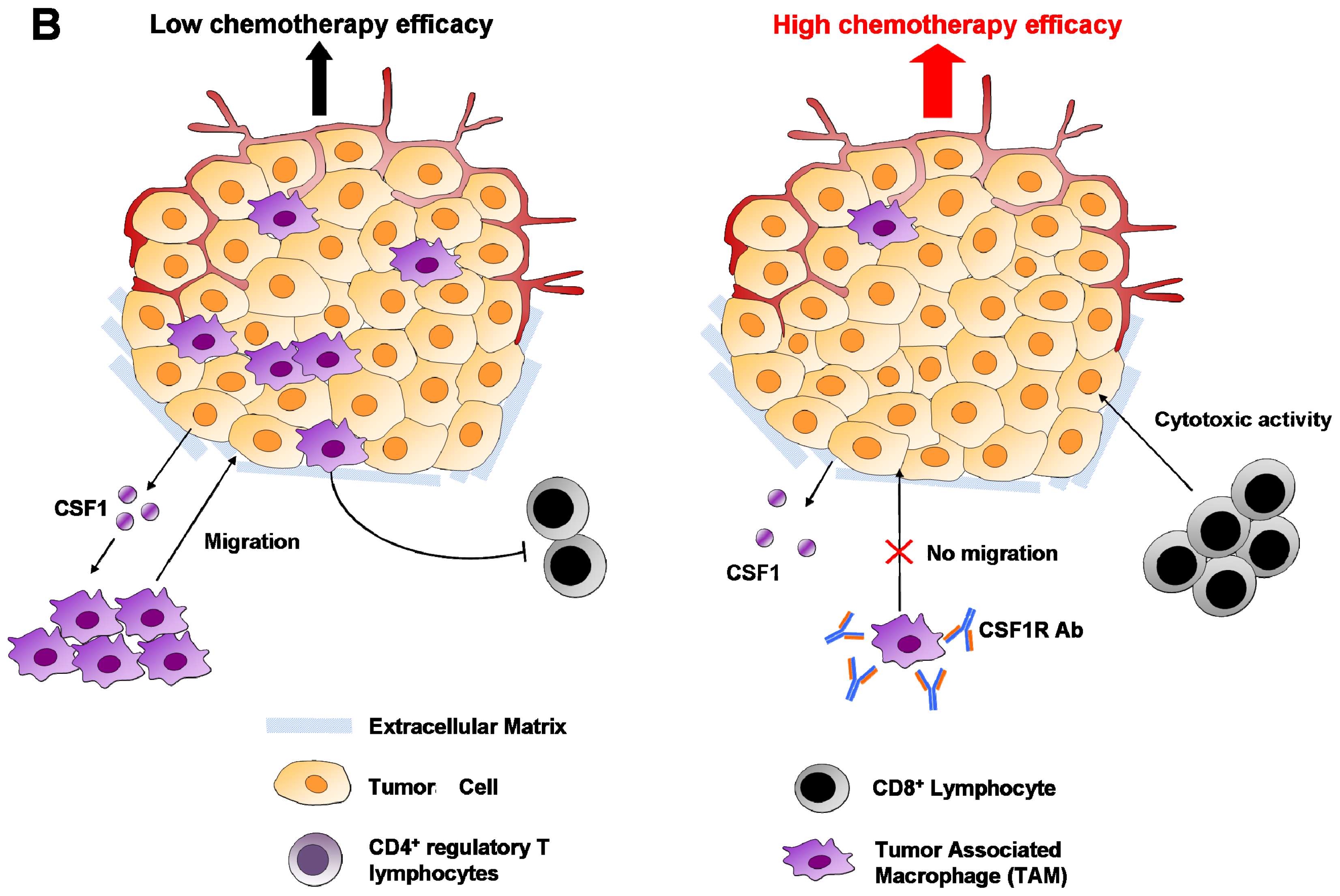
<p>Within developed tumors, there is a balance in favor of tumor progression and the chemoprotective effects of TAMs being closely associated with reduced cytotoxic CD8<sup>+</sup> T-lymphocyte activity. Indeed, hypoxic TAMs suppress CD8<sup>+</sup> T-lymphocytes activity by the activation of inducible Nitric Oxyde Synthase (iNOS) and arginase I (ArgI, liver-type) in a HIF1α-dependant manner. Moreover, the inhibition of TAM recruitment by a CSF1 neutralizing antibody in mammary tumors leads to a better chemosensitivity to paclitaxel, reduced tumor progression and metastasis that was associated with an increased survival of CD8<sup>+</sup> T-cells. [<xref ref-type="bibr" rid="b96-ijms-13-09545">96</xref>].</p>
<p>Shree <italic>et al</italic>. showed that cathepsin-expressing macrophages protect breast cancer cells from cell death induced by the following chemotherapeutic drugs: taxol, etoposide and doxorubicin. They highlighted the growing importance of combining anti-microenvironment drugs with classic chemotherapy. Indeed, the combination of anti-cathepsin with taxol treatment enhances the anti-tumor efficacy, the late-stage survival and decreases the metastatic burden compared to taxol alone in a breast cancer mouse model [<xref ref-type="bibr" rid="b97-ijms-13-09545">97</xref>]. Mononuclear cells (monocyte-like cell line U937) prevent pancreatic cancer cells from camptothecin and genistein induced apoptosis <italic>in vitro</italic> by interleukin-1β-mediated expression of cycloxygenase-2 (COX-2) and the production of prostaglandins [<xref ref-type="bibr" rid="b98-ijms-13-09545">98</xref>].</p></sec>
<sec>
<title>6.2. Cytotoxic CD8<sup>+</sup> T Lymphocytes</title>
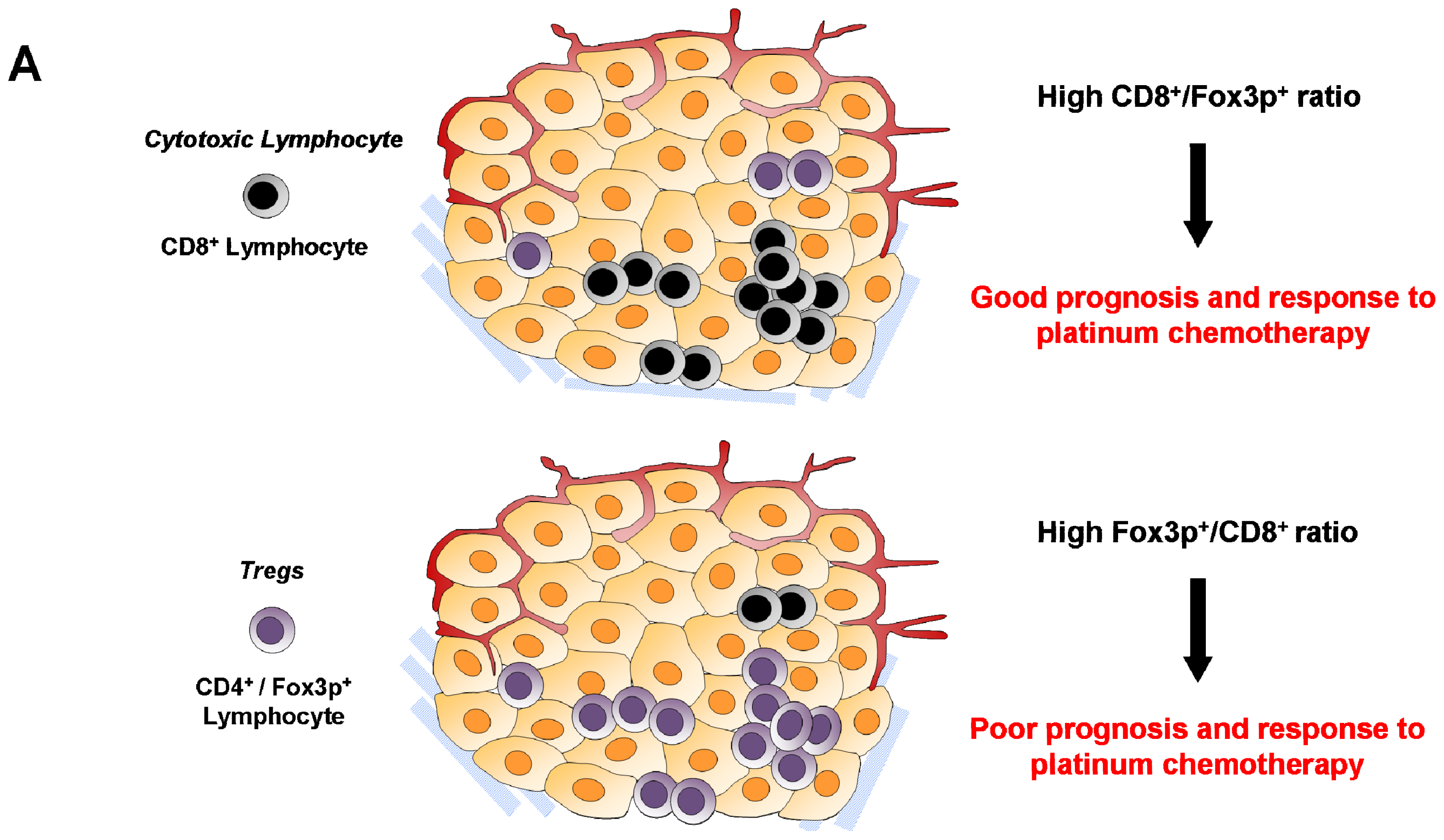
<p>While TAMs are pro-tumoral and enhance chemoresistance, the presence of cytotoxic CD8<sup>+</sup> lymphocytes (CTLs) is usually associated with a good prognosis and a better response to chemotherapy. Indeed, CTLs have an anti-tumor activity in secreting perforine or granzyme which induce apoptosis in tumoral cells. A high density of CD8<sup>+</sup> cells has been correlated with a better response to chemotherapies in primary colorectal cancer or liver metastases [<xref ref-type="bibr" rid="b99-ijms-13-09545">99</xref>,<xref ref-type="bibr" rid="b100-ijms-13-09545">100</xref>]. Denkert <italic>et al</italic>. showed that the presence of lymphocytes infiltrates in breast cancer is correlated with an increased efficacy of anthracycline and taxane neoadjuvent chemotherapy [<xref ref-type="bibr" rid="b101-ijms-13-09545">101</xref>] (<xref ref-type="fig" rid="f1-ijms-13-09545">Figure 1</xref>, <xref ref-type="fig" rid="f3-ijms-13-09545">Figure 3(A,B)</xref>).</p>
<p>Interactions between chemotherapy and CTLs are very tight and the efficacy of the latter can be increased after a first treatment. Indeed, a cyclophosphamide treatment in a mouse model of mesothelioma sensitizes tumor cells to the TRAIL-mediated death induced by CTLs [<xref ref-type="bibr" rid="b102-ijms-13-09545">102</xref>]. Moreover, a chemotherapy treatment (based on paclitaxel, cisplatin or doxorubicin) leads to an up-regulation of mannose-6-phosphate receptors which increases the permeability of tumor cells to granzyme B released by CTLs [<xref ref-type="bibr" rid="b103-ijms-13-09545">103</xref>]. Mattarollo <italic>et al</italic>. showed, in a mouse model of breast adenocarcinoma, that a doxorubicin treatment enhances the proliferation of IFN-γand IL-17 producing CD8<sup>+</sup> T cells. In return, they demonstrated a positive correlation between the CD8α, CD8β and IFN-γ expressionb and the efficacy of doxorubicin treatment in patients with breast cancer [<xref ref-type="bibr" rid="b104-ijms-13-09545">104</xref>]. Chemotherapy and CTLs thus present a synergical effect. The association between a classical chemotherapy treatment and immunotherapy present a very interesting way of therapeutic development.</p></sec>
<sec>
<title>6.3. γδ T Lymphocytes</title>
<p>γδ T lymphocytes are CD3<sup>+</sup> cells expressing a TCR with γ and δ chains. They represent a small population of T lympochytes (5%) and show anti-tumor properties. Recently, the team of Zitvogel demonstrated that IL-17-producing γδ T lymphocytes were implied in the efficacy of chemotherapy. Indeed, in a mouse model lacking these γδ T cells, there is no IL-17 production and CTLs fail to invade tumor. The chemotherapy efficacy is thus impaired [<xref ref-type="bibr" rid="b105-ijms-13-09545">105</xref>].</p></sec>
<sec>
<title>6.4. Regulatory T Cells (Treg)</title>
<p>Regulatory T cells, a Fox3p<sup>+</sup> subpopulation of CD4<sup>+</sup> T lymphocytes, are also implied in response to chemotherapy with controversial conclusions. Their presence is associated with a better survival exclusively in chemotherapy treated patients with an early breast cancer [<xref ref-type="bibr" rid="b106-ijms-13-09545">106</xref>]. However, some other studies shown that the recruitment of Tregs in breast cancer can be associated with a bad clinical outcome and a higher risk of relapse [<xref ref-type="bibr" rid="b107-ijms-13-09545">107</xref>,<xref ref-type="bibr" rid="b108-ijms-13-09545">108</xref>]. In a recent work, Liu <italic>et al</italic>. demonstrated that the equilibrium between CTLs and Tregs in tumors is primordial to predict their response to chemotherapies. In an advanced non-small cell lung cancer context, a high Fox3p<sup>+</sup>/CD8<sup>+</sup> ratio is associated with a poor response to platinum-based chemotherapy [<xref ref-type="bibr" rid="b106-ijms-13-09545">106</xref>].</p></sec>
<sec>
<title>6.5. T Helpers (Th) Cells</title>
<p>CD4<sup>+</sup> naïve T lymphocytes can, after the activation by antigen-presenting cells (APCs), differentiate into effector cells: T helpers (Th). The interactions with APCs and the nature of cytokine environment will define the subtype obtained: Th1, Th2 and Th17. These cells are implied in the activation of the immune system but differ in their cytokine production and biological functions.</p>
<p>Th1 cells are characterized by IFN-γ and TNF-α secretion and are responsible for the activation of CTLs or anti-tumoral macrophages. Tosilini <italic>et al</italic>. recently showed that the presence of Th1 cells was correlated with a prolonged disease-free survival in patients with colorectal cancer [<xref ref-type="bibr" rid="b109-ijms-13-09545">109</xref>].</p>
<p>On the contrary, Th2 cells secrete IL-4 and enhance tumor progression in activating, for example, tumor-associated macrophages [<xref ref-type="bibr" rid="b110-ijms-13-09545">110</xref>]. A few data directly links Th1 and Th2 cells with chemotherapy efficacy. However, the production of IL-4 (Th2 cytokine) is associated with resistance to chemotherapy and thyroid cancer [<xref ref-type="bibr" rid="b111-ijms-13-09545">111</xref>].</p>
<p>Th17 secrete the pro-inflammatory cytokine IL-17 and present both anti-tumor and pro-tumor activities. The microenvironmental context is highly important in the interactions between Th17 cells and the tumor. However, many data link the IL-17 production, as previously cited for γδ lymphocytes, with the establishment of CTLs in the tumor bed and thus the anticancer efficacy [<xref ref-type="bibr" rid="b112-ijms-13-09545">112</xref>].</p>
<p>As reviewed here and by Ding and Zhou, targeting CD4<sup>+</sup> T cells constitutes a new way of immunotherapy in order to increase the chemotherapy efficacy [<xref ref-type="bibr" rid="b113-ijms-13-09545">113</xref>].</p></sec>
<sec>
<title>6.6. Mast Cells</title>
<p>Among stromal cells of immune origin, mast cells (MCs) have been observed to infiltrate tumor masses. Indeed in lymphoid malignancies infiltrating MCs have been demonstrated to support clone survival and proliferation, and to negatively affect prognosis [<xref ref-type="bibr" rid="b114-ijms-13-09545">114</xref>]. Mechanisms of tumor promotion involve the release of proangiogenic factor such as FGF-2 [<xref ref-type="bibr" rid="b115-ijms-13-09545">115</xref>] or VEGF and matrix metalloproteinases (MMP9) but also of immunosuppressive cytokines like interleukin-10 [<xref ref-type="bibr" rid="b116-ijms-13-09545">116</xref>]. As described before those molecules are also implicated in chemoresistance acquisition by tumor cells and MCs could be potential targets for chemotherapy treatment. They have been shown to be a prototypical off-target cell for imatinib therapy in cancer, due to their constitutively high expression of c-Kit, strong reliance on c-Kit signal for development and activation, and aforementioned tumor promoting activities [<xref ref-type="bibr" rid="b114-ijms-13-09545">114</xref>].</p></sec></sec>
<sec>
<title>7. Adipocytes</title>
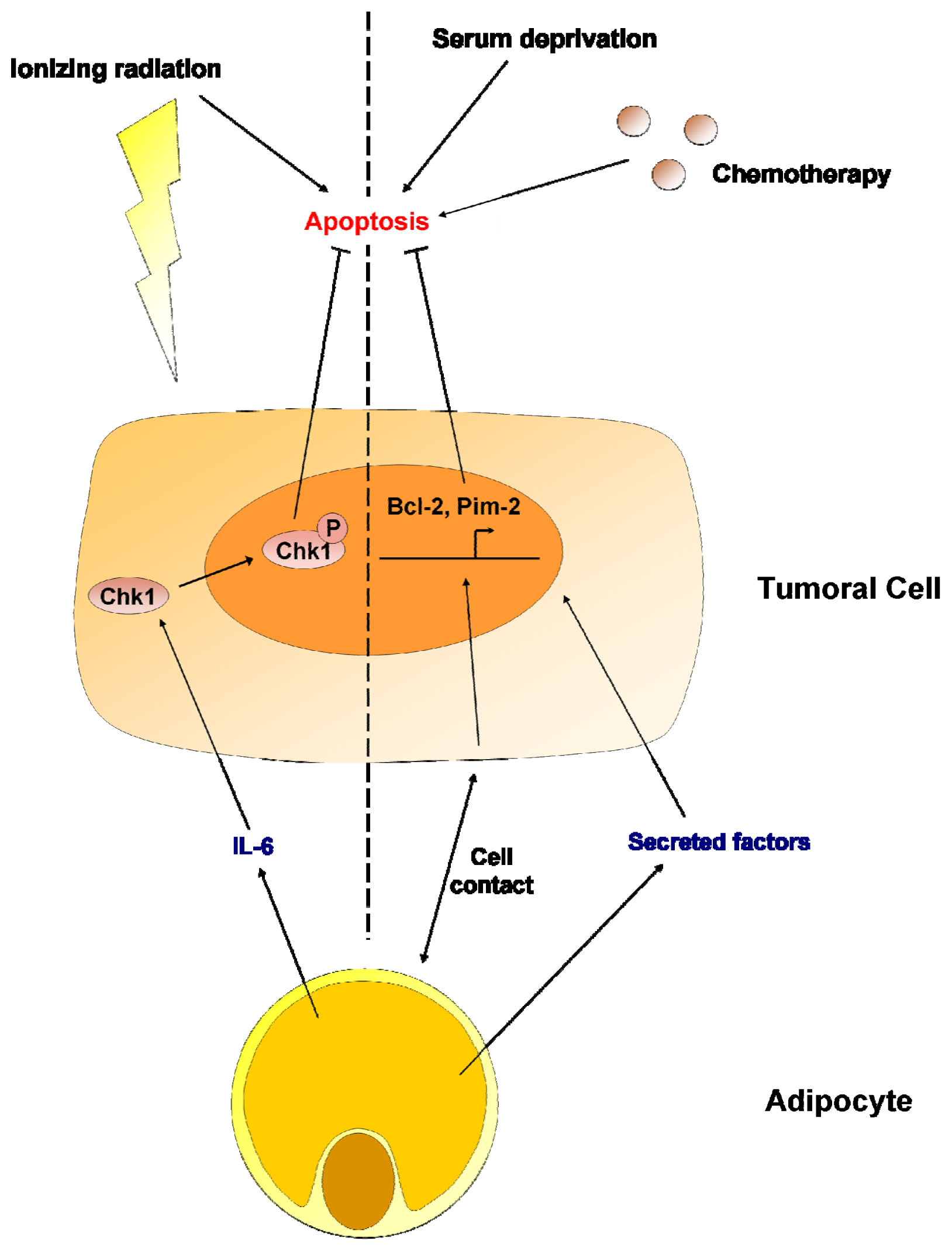
<p>Although representing one of the most abundant parts of the breast cancer stroma, little is known about the cells that make up adipose tissue, adipocytes. What is certain is that they are active endocrine cells able to secrete growth factors and enhance tumor progression. Iyengar <italic>et al</italic>. showed that conditioned media from adipocytes could enhance the survival of breast cancer cells MCF-7 in serum starved media [<xref ref-type="bibr" rid="b117-ijms-13-09545">117</xref>]. Results from a recent study supported the capacity of adipocytes to enhance chemoresistance in leukemia-bearing mice. In another study, 3L3-L1 adipocytes were shown to protect human leukemia cell lines from vincristine, nilotinib, daunorubin and dexamethasone, an effect which was independent of cell contact and associated with the increased expression of anti-apoptotic factors Pim-2 and Bcl-2 [<xref ref-type="bibr" rid="b118-ijms-13-09545">118</xref>]. Bochet <italic>et al</italic>. demonstrated that cancer-associated adipocytes can also promote radioresistance and proposed that this effect could be due to a secretion of IL-6 and the phosphorylation of Chk1 [<xref ref-type="bibr" rid="b119-ijms-13-09545">119</xref>].</p>
<p>Considering the worldwide increase in the incidence of obesity, studying the interactions between adipocytes and cancer cells and their effects on chemotherapy and radiotherapy resistance is crucial in the discovery and development of new therapies (<xref ref-type="fig" rid="f1-ijms-13-09545">Figure 1</xref>,<xref ref-type="fig" rid="f4-ijms-13-09545">4</xref>).</p></sec>
<sec>
<title>8. miRNAs</title>
<p>More and more genes expression appears to be regulated by microRNAs (miRNAs). These small (approximately 22 bp) non-coding RNAs target specifically mRNA for cleavage, destabilization or inhibit their translation [<xref ref-type="bibr" rid="b120-ijms-13-09545">120</xref>].</p>
<p>Expression of some miRNAs is deregulated in cancer and can be involved in chemoresistance through known or unknown mechanisms. MiR-Let-7e, miR-130a are among others associated with both cisplatin and taxol resistance in ovarian cancer [<xref ref-type="bibr" rid="b121-ijms-13-09545">121</xref>]. Some miRNAs, like circulating miR-125b or miR-221 are found to be predictive markers of chemoresistance in breast cancer [<xref ref-type="bibr" rid="b122-ijms-13-09545">122</xref>,<xref ref-type="bibr" rid="b123-ijms-13-09545">123</xref>]. Other miRNAs are known to be implicated in chemoresistance by regulating genes involved in survival or cellular death. In mantle cell lymphoma cluster miR-17~92 allow reexpression of survival pathway PI3K/Akt by targeting negative regulators of this signaling pathway (protein phosphatase PHLPP2 and PTEN) [<xref ref-type="bibr" rid="b124-ijms-13-09545">124</xref>]. This signaling pathway can also be activated via down-regulation of PPP2R1B (a subunit of protein phosphatase 2A) by miR-200c in esophageal cancers [<xref ref-type="bibr" rid="b125-ijms-13-09545">125</xref>]. miR-155 is determinant in breast cancer chemoresistance by inhibiting specifically FOXO3a, which can induce cell death by up-regulation of apoptotic proteins, (BIM, p27, …) and repression of antiapoptotic molecule such as FLIP and Bcl-xL [<xref ref-type="bibr" rid="b126-ijms-13-09545">126</xref>].</p>
<p>Moreover, miRNAs can be overexpressed in cancer cells leading to chemoresistance in response to microenvironment stimuli. Bourguignon and colleagues showed in head and neck squamous cell carcinoma (HNSCC) that miR-21 is up-regulated through the binding of hyaluronic acid to its receptor CD44 and promotion of Nanog-Stat 3 complex formation which allow transcriptional activation and expression of this miRNA. miR-21 up-regulation results in a decrease of a tumor suppressor protein (PDCD4), and an up-regulation of inhibitors of the apoptosis family of proteins (IAPs) as well as chemoresistance [<xref ref-type="bibr" rid="b127-ijms-13-09545">127</xref>]. Stress conditions such as hypoxia lead to profound gene expression modifications and deregulations of several miRNAs [<xref ref-type="bibr" rid="b128-ijms-13-09545">128</xref>]. For instance in HNSCC, miR-98 is up-regulated under hypoxia and leads to down-regulation of, at least, High mobility group A2 protein HMGA2 and potentiates chemoresistance to cisplatin and doxorubicin [<xref ref-type="bibr" rid="b129-ijms-13-09545">129</xref>].</p></sec>
<sec sec-type="conclusions">
<title>9. Conclusions</title>
<p>This review highlights the importance of simultaneously targeting both compartments of the tumor microenvironment (stromal and malignant cells) in cancer therapy. A number of targeted therapeutics is currently under development targeting not only cancer cells but also cells from the microenvironment such as fibroblasts, endothelial cells or mesenchymal stem cells. For example a tri-therapy currently under trial targets PDGFR (expressed by cancer cells, MSCs and fibroblasts), VEGFR (expressed by endothelial cells as well as cancer cells) and FGFR (expressed by fibroblasts and cancer cells). Two thirds of these novel targeted anticancer agents inhibit kinases, including EGFR, Src, and mammalian target of rapamycin (mTOR) activated in cancer cells as well as in microenvironment cells and now several V-ATPases inhibitors are under trial. Although these therapeutic approaches seem convincing they are associated with a lot of side effects associated with the elimination of cells not involved in cancer progression or in chemoresistance. Nevertheless, hope remains as many authors have described cells from the microenvironment which display several differences with their physiological parent cells. Indeed, when we compared some cancer stromal cells with the same cell from another organ and identified several genetic alterations. This enables distinguishing tumor associated fibroblasts (TAFs) from fibroblasts, carcinoma-associated MSCs from BM-MSCs (or ADSCs), and M1 macrophages from tumor-associated macrophages (TAMs). Differences can also be found between cells of the same origin but which have evolved differently depending on the organ and on the evolution of the associated pathologies e.g., Hospicells/CA-MSCs, myofibroblasts/TAFs. This highlights the broad versatility and plasticity of microenvironment cells. Parental cells (such as macrophages, neutrophils or MSCs) can mostly be found with anti tumoral properties. They can however polarize into different states depending on the tumor and acquire pro-tumoral functions when they may also influence chemoresistance acquisition and act on the apoptosis pathways of tumor cells. However, what actually causes this switch of a microenvironment cell from being tumor inhibiting to tumor-promoting remains a mystery. It is feasible that microenvironment cells (such as MSCs) could be activated during chemotherapy treatment (platinium analog) and secrete factors that protect tumor cells against a range of chemotherapeutics. The future goal will be to characterize phenotypic differences between cancer-activated stromal cells and their physiological counterparts in order to define therapies which will specifically target activated stromal cells. Studying the impact of defined genetic alterations on therapeutic response in native tumor microenvironments will be critical for effective drug development, personalized cancer regimens, and the rational design of combination therapies.</p>
<p>Although the manner in which stroma cells activate cancer cells to promote cancer progression and chemoressistance are described, little is known about the mechanisms by which stromal cells are first activated to induce these effects. There is a cross-talk between cancer cells and stromal cells but factors produced by the stromal cells and the cancer cells vary depending on the context and on the microenvironment compartment. As an example, Roodhardt <italic>et al</italic>. described an induction of cancer cell chemoresistance by the MSCs through the release of a fatty acid while Castells <italic>et al</italic>. propose that chemoresistance could be acquired by cancer cells through release of IL-6 and IL-8 by macrophages which were activated by an unidentified secreted factor produced by MSCs in human ovarian cancers [<xref ref-type="bibr" rid="b4-ijms-13-09545">4</xref>]. Therefore, given the mounting evidence supporting the diversity of mechanisms by which microenvironment cells enhance tumor chemoresistance, inhibiting the factors released by stroma cells in a clinical setting will be challenging.</p>
<p>Finally, the implication of fatty acids in cell signaling and cross-talk between cancer cells and their microenvironment and thus their importance in chemotherapy resistance has been demonstrated in several recent studies. Their potential as key modulators of treatment response warrants further fundamental and translational investigation, which could result in them becoming a promising target for therapy.</p>
<p>The mechanisms behind chemosensitivity and chemoresistance are being unraveled however managing patients who have primary chemorefractory disease or relapse after the most aggressive salvage therapies remains a challenge. Conventional anticancer drug screening is typically performed in the absence of accessory cells of the tumor microenvironment, which can profoundly alter antitumor drug activity. Preclinical drug testing in the absence of relevant tumor microenvironment interactions may overestimate potential clinical activity, thus explaining at least in part the gap between preclinical and clinical efficacy in cancers [<xref ref-type="bibr" rid="b130-ijms-13-09545">130</xref>,<xref ref-type="bibr" rid="b131-ijms-13-09545">131</xref>].</p>
<p>The screening of candidate anticancer agents to enrich preclinical pipelines with potential therapeutics able to overcome stroma-mediated drug resistance and act in a synthetically lethal manner must be performed in the context of tumor-stroma interactions.</p></sec></body>
<back>
<ack>
<title>Acknowledgments</title>
<p>The manuscript was revised by AngloScribe, Nîmes for English language editing. We are grateful to Melanie White-Koning for the careful reading of the manuscript.</p></ack>
<ref-list>
<title>References</title>
<ref id="b1-ijms-13-09545"><label>1</label><citation citation-type="journal"><person-group person-group-type="author"><name><surname>Meads</surname><given-names>M.B.</given-names></name><name><surname>Gatenby</surname><given-names>R.A.</given-names></name><name><surname>Dalton</surname><given-names>W.S.</given-names></name></person-group><article-title>Environment-mediated drug resistance: A major contributor to minimal residual disease</article-title><source>Nat. Rev. Cancer</source><year>2009</year><volume>9</volume><fpage>665</fpage><lpage>674</lpage><pub-id pub-id-type="doi">10.1038/nrc2714</pub-id><pub-id pub-id-type="pmid">19693095</pub-id></citation></ref>
<ref id="b2-ijms-13-09545"><label>2</label><citation citation-type="journal"><person-group person-group-type="author"><name><surname>Basak</surname><given-names>G.W.</given-names></name><name><surname>Srivastava</surname><given-names>A.S.</given-names></name><name><surname>Malhotra</surname><given-names>R.</given-names></name><name><surname>Carrier</surname><given-names>E.</given-names></name></person-group><article-title>Multiple myeloma bone marrow niche</article-title><source>Curr. Pharm. Biotechnol</source><year>2009</year><volume>3</volume><fpage>345</fpage><lpage>346</lpage></citation></ref>
<ref id="b3-ijms-13-09545"><label>3</label><citation citation-type="journal"><person-group person-group-type="author"><name><surname>Roodhart</surname><given-names>J.M.</given-names></name><name><surname>Daenen</surname><given-names>L.G.</given-names></name><name><surname>Stigter</surname><given-names>E.C.</given-names></name><name><surname>Prins</surname><given-names>H.J.</given-names></name><name><surname>Gerrits</surname><given-names>J.</given-names></name><name><surname>Houthuijzen</surname><given-names>J.M.</given-names></name><name><surname>Gerritsen</surname><given-names>M.G.</given-names></name><name><surname>Schipper</surname><given-names>H.S.</given-names></name><name><surname>Backer</surname><given-names>M.J.</given-names></name><name><surname>van Amersfoort</surname><given-names>M.</given-names></name><etal/></person-group><article-title>Mesenchymal stem cells induce resistance to chemotherapy through the release of platinum-induced fatty acids</article-title><source>Cancer Cell</source><year>2011</year><volume>3</volume><fpage>370</fpage><lpage>383</lpage></citation></ref>
<ref id="b4-ijms-13-09545"><label>4</label><citation citation-type="journal"><person-group person-group-type="author"><name><surname>Castells</surname><given-names>M.</given-names></name><name><surname>Thibault</surname><given-names>B.</given-names></name><name><surname>Mery</surname><given-names>E.</given-names></name><name><surname>Golzio</surname><given-names>M.</given-names></name><name><surname>Pasquet</surname><given-names>M.</given-names></name><name><surname>Hennebelle</surname><given-names>I.</given-names></name><name><surname>Bourin</surname><given-names>P.</given-names></name><name><surname>Mirshahi</surname><given-names>M.</given-names></name><name><surname>Delord</surname><given-names>J.P.</given-names></name><name><surname>Querleu</surname><given-names>D.</given-names></name><etal/></person-group><article-title>Ovarian ascites-derived Hospicells promote angiogenesis via activation of macrophages</article-title><source>Cancer Lett</source><year>2012</year><comment>in press</comment></citation></ref>
<ref id="b5-ijms-13-09545"><label>5</label><citation citation-type="journal"><person-group person-group-type="author"><name><surname>Lis</surname><given-names>R.</given-names></name><name><surname>Touboul</surname><given-names>C.</given-names></name><name><surname>Mirshahi</surname><given-names>P.</given-names></name><name><surname>Ali</surname><given-names>F.</given-names></name><name><surname>Mathew</surname><given-names>S.</given-names></name><name><surname>Nolan</surname><given-names>D.J.</given-names></name><name><surname>Maleki</surname><given-names>M.</given-names></name><name><surname>Abdalla</surname><given-names>S.A.</given-names></name><name><surname>Raynaud</surname><given-names>C.M.</given-names></name><name><surname>Querleu</surname><given-names>D.</given-names></name><etal/></person-group><article-title>Tumor associated mesenchymal stem cells protects ovarian cancer cells from hyperthermia through CXCL12</article-title><source>Int. J. Cancer</source><year>2011</year><volume>3</volume><fpage>715</fpage><lpage>725</lpage></citation></ref>
<ref id="b6-ijms-13-09545"><label>6</label><citation citation-type="journal"><person-group person-group-type="author"><name><surname>Scherzed</surname><given-names>A.</given-names></name><name><surname>Hackenberg</surname><given-names>S.</given-names></name><name><surname>Froelich</surname><given-names>K.</given-names></name><name><surname>Kessler</surname><given-names>M.</given-names></name><name><surname>Koehler</surname><given-names>C.</given-names></name><name><surname>Hagen</surname><given-names>R.</given-names></name><name><surname>Radeloff</surname><given-names>A.</given-names></name><name><surname>Friehs</surname><given-names>G.</given-names></name><name><surname>Kleinsasser</surname><given-names>N.</given-names></name></person-group><article-title>BMSC enhance the survival of paclitaxel treated squamous cell carcinoma cells in vitro</article-title><source>Cancer Biol. Ther</source><year>2011</year><volume>3</volume><fpage>349</fpage><lpage>357</lpage></citation></ref>
<ref id="b7-ijms-13-09545"><label>7</label><citation citation-type="journal"><person-group person-group-type="author"><name><surname>Rafii</surname><given-names>A.</given-names></name><name><surname>Mirshahi</surname><given-names>P.</given-names></name><name><surname>Poupot</surname><given-names>M.</given-names></name><name><surname>Faussat</surname><given-names>A.M.</given-names></name><name><surname>Simon</surname><given-names>A.</given-names></name><name><surname>Ducros</surname><given-names>E.</given-names></name><name><surname>Mery</surname><given-names>E.</given-names></name><name><surname>Couderc</surname><given-names>B.</given-names></name><name><surname>Lis</surname><given-names>R.</given-names></name><name><surname>Capdet</surname><given-names>J.</given-names></name><etal/></person-group><article-title>Oncologic trogocytosis of an original stromal cells induces chemoresistance of ovarian tumours</article-title><source>PLoS. One</source><year>2008</year><volume>12</volume><fpage>e3894</fpage></citation></ref>
<ref id="b8-ijms-13-09545"><label>8</label><citation citation-type="journal"><person-group person-group-type="author"><name><surname>Rohwer</surname><given-names>N.</given-names></name><name><surname>Cramer</surname><given-names>T.</given-names></name></person-group><article-title>Hypoxia-mediated drug resistance: Novel insights on the functional interaction of HIFs and cell death pathways</article-title><source>Drug Resist. Updat</source><year>2011</year><volume>3</volume><fpage>191</fpage><lpage>201</lpage></citation></ref>
<ref id="b9-ijms-13-09545"><label>9</label><citation citation-type="journal"><person-group person-group-type="author"><name><surname>Tredan</surname><given-names>O.</given-names></name><name><surname>Galmarini</surname><given-names>C.M.</given-names></name><name><surname>Patel</surname><given-names>K.</given-names></name><name><surname>Tannock</surname><given-names>I.F.</given-names></name></person-group><article-title>Drug resistance and the solid tumor microenvironment</article-title><source>J. Natl. Cancer Inst</source><year>2007</year><volume>19</volume><fpage>1441</fpage><lpage>1454</lpage></citation></ref>
<ref id="b10-ijms-13-09545"><label>10</label><citation citation-type="journal"><person-group person-group-type="author"><name><surname>Teng</surname><given-names>I.W.</given-names></name><name><surname>Hou</surname><given-names>P.C.</given-names></name><name><surname>Lee</surname><given-names>K.D.</given-names></name><name><surname>Chu</surname><given-names>P.Y.</given-names></name><name><surname>Yeh</surname><given-names>K.T.</given-names></name><name><surname>Jin</surname><given-names>V.X.</given-names></name><name><surname>Tseng</surname><given-names>M.J.</given-names></name><name><surname>Tsai</surname><given-names>S.J.</given-names></name><name><surname>Chang</surname><given-names>Y.S.</given-names></name><name><surname>Wu</surname><given-names>C.S.</given-names></name><etal/></person-group><article-title>Targeted methylation of two tumor suppressor genes is sufficient to transform mesenchymal stem cells into cancer stem/initiating cells</article-title><source>Cancer Res</source><year>2011</year><volume>13</volume><fpage>4653</fpage><lpage>4663</lpage></citation></ref>
<ref id="b11-ijms-13-09545"><label>11</label><citation citation-type="journal"><person-group person-group-type="author"><name><surname>Correia</surname><given-names>A.L.</given-names></name><name><surname>Bissell</surname><given-names>M.J.</given-names></name></person-group><article-title>The tumor microenvironment is a dominant force in multidrug resistance</article-title><source>Drug Resist. Updat</source><year>2012</year><volume>15</volume><fpage>39</fpage><lpage>49</lpage><pub-id pub-id-type="doi">10.1016/j.drup.2012.01.006</pub-id><pub-id pub-id-type="pmid">22335920</pub-id></citation></ref>
<ref id="b12-ijms-13-09545"><label>12</label><citation citation-type="journal"><person-group person-group-type="author"><name><surname>Sutherland</surname><given-names>R.M.</given-names></name><name><surname>Eddy</surname><given-names>H.A.</given-names></name><name><surname>Bareham</surname><given-names>B.</given-names></name><name><surname>Reich</surname><given-names>K.</given-names></name><name><surname>Vanantwerp</surname><given-names>D.</given-names></name></person-group><article-title>Resistance to adriamycin in multicellular spheroids</article-title><source>Int. J. Radiat. Oncol. Biol. Phys</source><year>1979</year><volume>8</volume><fpage>1225</fpage><lpage>1230</lpage></citation></ref>
<ref id="b13-ijms-13-09545"><label>13</label><citation citation-type="journal"><person-group person-group-type="author"><name><surname>Stoeck</surname><given-names>A.</given-names></name><name><surname>Gast</surname><given-names>D.</given-names></name><name><surname>Sanderson</surname><given-names>M.P.</given-names></name><name><surname>Issa</surname><given-names>Y.</given-names></name><name><surname>Gutwein</surname><given-names>P.</given-names></name><name><surname>Altevogt</surname><given-names>P.</given-names></name></person-group><article-title>L1-CAM in a membrane-bound or soluble form augments protection from apoptosis in ovarian carcinoma cells</article-title><source>Gynecol. Oncol</source><year>2007</year><volume>2</volume><fpage>461</fpage><lpage>469</lpage></citation></ref>
<ref id="b14-ijms-13-09545"><label>14</label><citation citation-type="journal"><person-group person-group-type="author"><name><surname>Schafer</surname><given-names>H.</given-names></name><name><surname>Dieckmann</surname><given-names>C.</given-names></name><name><surname>Korniienko</surname><given-names>O.</given-names></name><name><surname>Moldenhauer</surname><given-names>G.</given-names></name><name><surname>Kiefel</surname><given-names>H.</given-names></name><name><surname>Salnikov</surname><given-names>A.</given-names></name><name><surname>Kruger</surname><given-names>A.</given-names></name><name><surname>Altevogt</surname><given-names>P.</given-names></name><name><surname>Sebens</surname><given-names>S.</given-names></name></person-group><article-title>Combined treatment of L1CAM antibodies and cytostatic drugs improve the therapeutic response of pancreatic and ovarian carcinoma</article-title><source>Cancer Lett</source><year>2012</year><volume>1</volume><fpage>66</fpage><lpage>82</lpage></citation></ref>
<ref id="b15-ijms-13-09545"><label>15</label><citation citation-type="journal"><person-group person-group-type="author"><name><surname>Eberle</surname><given-names>K.E.</given-names></name><name><surname>Sansing</surname><given-names>H.A.</given-names></name><name><surname>Szaniszlo</surname><given-names>P.</given-names></name><name><surname>Resto</surname><given-names>V.A.</given-names></name><name><surname>Berrier</surname><given-names>A.L.</given-names></name></person-group><article-title>Carcinoma matrix controls resistance to cisplatin through talin regulation of NF-kB</article-title><source>PLoS One</source><year>2011</year><volume>6</volume><fpage>e21496</fpage><pub-id pub-id-type="doi">10.1371/journal.pone.0021496</pub-id><pub-id pub-id-type="pmid">21720550</pub-id></citation></ref>
<ref id="b16-ijms-13-09545"><label>16</label><citation citation-type="journal"><person-group person-group-type="author"><name><surname>Hazlehurst</surname><given-names>L.A.</given-names></name><name><surname>Enkemann</surname><given-names>S.A.</given-names></name><name><surname>Beam</surname><given-names>C.A.</given-names></name><name><surname>Argilagos</surname><given-names>R.F.</given-names></name><name><surname>Painter</surname><given-names>J.</given-names></name><name><surname>Shain</surname><given-names>K.H.</given-names></name><name><surname>Saporta</surname><given-names>S.</given-names></name><name><surname>Boulware</surname><given-names>D.</given-names></name><name><surname>Moscinski</surname><given-names>L.</given-names></name><name><surname>Alsina</surname><given-names>M.</given-names></name><etal/></person-group><article-title>Genotypic and phenotypic comparisons of de novo and acquired melphalan resistance in an isogenic multiple myeloma cell line model</article-title><source>Cancer Res</source><year>2003</year><volume>22</volume><fpage>7900</fpage><lpage>7906</lpage></citation></ref>
<ref id="b17-ijms-13-09545"><label>17</label><citation citation-type="journal"><person-group person-group-type="author"><name><surname>Holmgren</surname><given-names>L.</given-names></name><name><surname>O’Reilly</surname><given-names>M.S.</given-names></name><name><surname>Folkman</surname><given-names>J.</given-names></name></person-group><article-title>Dormancy of micrometastases: Balanced proliferation and apoptosis in the presence of angiogenesis suppression</article-title><source>Nat. Med</source><year>1995</year><volume>2</volume><fpage>149</fpage><lpage>153</lpage></citation></ref>
<ref id="b18-ijms-13-09545"><label>18</label><citation citation-type="journal"><person-group person-group-type="author"><name><surname>Carmeliet</surname><given-names>P.</given-names></name><name><surname>Jain</surname><given-names>R.K.</given-names></name></person-group><article-title>Molecular mechanisms and clinical applications of angiogenesis</article-title><source>Nature</source><year>2011</year><volume>7347</volume><fpage>298</fpage><lpage>307</lpage></citation></ref>
<ref id="b19-ijms-13-09545"><label>19</label><citation citation-type="journal"><person-group person-group-type="author"><name><surname>Ferrara</surname><given-names>N.</given-names></name><name><surname>Gerber</surname><given-names>H.P.</given-names></name><name><surname>LeCouter</surname><given-names>J.</given-names></name></person-group><article-title>The biology of VEGF and its receptors</article-title><source>Nat. Med</source><year>2003</year><volume>6</volume><fpage>669</fpage><lpage>676</lpage><pub-id pub-id-type="doi">10.1038/nn1084</pub-id></citation></ref>
<ref id="b20-ijms-13-09545"><label>20</label><citation citation-type="journal"><person-group person-group-type="author"><name><surname>Hicklin</surname><given-names>D.J.</given-names></name><name><surname>Ellis</surname><given-names>L.M.</given-names></name></person-group><article-title>Role of the vascular endothelial growth factor pathway in tumor growth and angiogenesis</article-title><source>J. Clin. Oncol</source><year>2005</year><volume>5</volume><fpage>1011</fpage><lpage>1027</lpage></citation></ref>
<ref id="b21-ijms-13-09545"><label>21</label><citation citation-type="journal"><person-group person-group-type="author"><name><surname>Schwartz</surname><given-names>J.D.</given-names></name><name><surname>Rowinsky</surname><given-names>E.K.</given-names></name><name><surname>Youssoufian</surname><given-names>H.</given-names></name><name><surname>Pytowski</surname><given-names>B.</given-names></name><name><surname>Wu</surname><given-names>Y.</given-names></name></person-group><article-title>Vascular endothelial growth factor receptor-1 in human cancer: Concise review and rationale for development of IMC-18F1 (Human antibody targeting vascular endothelial growth factor receptor-1)</article-title><source>Cancer</source><year>2010</year><volume>4</volume><fpage>S1027</fpage><lpage>S1032</lpage></citation></ref>
<ref id="b22-ijms-13-09545"><label>22</label><citation citation-type="journal"><person-group person-group-type="author"><name><surname>Dias</surname><given-names>S.</given-names></name><name><surname>Hattori</surname><given-names>K.</given-names></name><name><surname>Zhu</surname><given-names>Z.</given-names></name><name><surname>Heissig</surname><given-names>B.</given-names></name><name><surname>Choy</surname><given-names>M.</given-names></name><name><surname>Lane</surname><given-names>W.</given-names></name><name><surname>Wu</surname><given-names>Y.</given-names></name><name><surname>Chadburn</surname><given-names>A.</given-names></name><name><surname>Hyjek</surname><given-names>E.</given-names></name><name><surname>Gill</surname><given-names>M.</given-names></name><etal/></person-group><article-title>Autocrine stimulation of VEGFR-2 activates human leukemic cell growth and migration</article-title><source>J. Clin. Invest</source><year>2000</year><volume>4</volume><fpage>511</fpage><lpage>521</lpage></citation></ref>
<ref id="b23-ijms-13-09545"><label>23</label><citation citation-type="journal"><person-group person-group-type="author"><name><surname>Harmey</surname><given-names>J.H.</given-names></name><name><surname>Bouchier-Hayes</surname><given-names>D.</given-names></name></person-group><article-title>Vascular endothelial growth factor (VEGF), a survival factor for tumour cells: Implications for anti-angiogenic therapy</article-title><source>Bioessays</source><year>2002</year><volume>3</volume><fpage>280</fpage><lpage>283</lpage></citation></ref>
<ref id="b24-ijms-13-09545"><label>24</label><citation citation-type="journal"><person-group person-group-type="author"><name><surname>Zhang</surname><given-names>L.</given-names></name><name><surname>Hannay</surname><given-names>J.A.</given-names></name><name><surname>Liu</surname><given-names>J.</given-names></name><name><surname>Das</surname><given-names>P.</given-names></name><name><surname>Zhan</surname><given-names>M.</given-names></name><name><surname>Nguyen</surname><given-names>T.</given-names></name><name><surname>Hicklin</surname><given-names>D.J.</given-names></name><name><surname>Yu</surname><given-names>D.</given-names></name><name><surname>Pollock</surname><given-names>R.E.</given-names></name><name><surname>Lev</surname><given-names>D.</given-names></name></person-group><article-title>Vascular endothelial growth factor overexpression by soft tissue sarcoma cells: Implications for tumor growth, metastasis, and chemoresistance</article-title><source>Cancer Res</source><year>2006</year><volume>17</volume><fpage>8770</fpage><lpage>8778</lpage></citation></ref>
<ref id="b25-ijms-13-09545"><label>25</label><citation citation-type="journal"><person-group person-group-type="author"><name><surname>Yang</surname><given-names>F.</given-names></name><name><surname>Tang</surname><given-names>X.</given-names></name><name><surname>Riquelme</surname><given-names>E.</given-names></name><name><surname>Behrens</surname><given-names>C.</given-names></name><name><surname>Nilsson</surname><given-names>M.B.</given-names></name><name><surname>Giri</surname><given-names>U.</given-names></name><name><surname>Varella-Garcia</surname><given-names>M.</given-names></name><name><surname>Byers</surname><given-names>L.A.</given-names></name><name><surname>Lin</surname><given-names>H.Y.</given-names></name><name><surname>Wang</surname><given-names>J.</given-names></name><etal/></person-group><article-title>Increased VEGFR-2 gene copy is associated with chemoresistance and shorter survival in patients with non-small-cell lung carcinoma who receive adjuvant chemotherapy</article-title><source>Cancer Res</source><year>2011</year><volume>16</volume><fpage>5512</fpage><lpage>5521</lpage></citation></ref>
<ref id="b26-ijms-13-09545"><label>26</label><citation citation-type="journal"><person-group person-group-type="author"><name><surname>Tran</surname><given-names>J.</given-names></name><name><surname>Master</surname><given-names>Z.</given-names></name><name><surname>Yu</surname><given-names>J.L.</given-names></name><name><surname>Rak</surname><given-names>J.</given-names></name><name><surname>Dumont</surname><given-names>D.J.</given-names></name><name><surname>Kerbel</surname><given-names>R.S.</given-names></name></person-group><article-title>A role for survivin in chemoresistance of endothelial cells mediated by VEGF</article-title><source>Proc. Natl Acad Sci. USA</source><year>2002</year><volume>7</volume><fpage>4349</fpage><lpage>4354</lpage></citation></ref>
<ref id="b27-ijms-13-09545"><label>27</label><citation citation-type="journal"><person-group person-group-type="author"><name><surname>Fukuda</surname><given-names>S.</given-names></name><name><surname>Pelus</surname><given-names>L.M.</given-names></name></person-group><article-title>Survivin, a cancer target with an emerging role in normal adult tissues</article-title><source>Mol. Cancer Ther</source><year>2006</year><volume>5</volume><fpage>1087</fpage><lpage>1098</lpage><pub-id pub-id-type="doi">10.1158/1535-7163.MCT-05-0375</pub-id><pub-id pub-id-type="pmid">16731740</pub-id></citation></ref>
<ref id="b28-ijms-13-09545"><label>28</label><citation citation-type="journal"><person-group person-group-type="author"><name><surname>Nor</surname><given-names>J.E.</given-names></name><name><surname>Christensen</surname><given-names>J.</given-names></name><name><surname>Mooney</surname><given-names>D.J.</given-names></name><name><surname>Polverini</surname><given-names>P.J.</given-names></name></person-group><article-title>Vascular endothelial growth factor (VEGF)-mediated angiogenesis is associated with enhanced endothelial cell survival and induction of Bcl-2 expression</article-title><source>Am. J. Pathol</source><year>1999</year><volume>2</volume><fpage>375</fpage><lpage>384</lpage></citation></ref>
<ref id="b29-ijms-13-09545"><label>29</label><citation citation-type="journal"><person-group person-group-type="author"><name><surname>Samuel</surname><given-names>S.</given-names></name><name><surname>Fan</surname><given-names>F.</given-names></name><name><surname>Dang</surname><given-names>L.H.</given-names></name><name><surname>Xia</surname><given-names>L.</given-names></name><name><surname>Gaur</surname><given-names>P.</given-names></name><name><surname>Ellis</surname><given-names>L.M.</given-names></name></person-group><article-title>Intracrine vascular endothelial growth factor signaling in survival and chemoresistance of human colorectal cancer cells</article-title><source>Oncogene</source><year>2011</year><volume>10</volume><fpage>1205</fpage><lpage>1212</lpage></citation></ref>
<ref id="b30-ijms-13-09545"><label>30</label><citation citation-type="journal"><person-group person-group-type="author"><name><surname>Dias</surname><given-names>S.</given-names></name><name><surname>Shmelkov</surname><given-names>S.V.</given-names></name><name><surname>Lam</surname><given-names>G.</given-names></name><name><surname>Rafii</surname><given-names>S.</given-names></name></person-group><article-title>VEGF(165) promotes survival of leukemic cells by Hsp90-mediated induction of Bcl-2 expression and apoptosis inhibition</article-title><source>Blood</source><year>2002</year><volume>7</volume><fpage>2532</fpage><lpage>2540</lpage></citation></ref>
<ref id="b31-ijms-13-09545"><label>31</label><citation citation-type="journal"><person-group person-group-type="author"><name><surname>Fujio</surname><given-names>Y.</given-names></name><name><surname>Walsh</surname><given-names>K.</given-names></name></person-group><article-title>Akt mediates cytoprotection of endothelial cells by vascular endothelial growth factor in an anchorage-dependent manner</article-title><source>J. Biol. Chem</source><year>1999</year><volume>23</volume><fpage>16349</fpage><lpage>16354</lpage></citation></ref>
<ref id="b32-ijms-13-09545"><label>32</label><citation citation-type="journal"><person-group person-group-type="author"><name><surname>Wang</surname><given-names>L.</given-names></name><name><surname>Chen</surname><given-names>L.</given-names></name><name><surname>Benincosa</surname><given-names>J.</given-names></name><name><surname>Fortney</surname><given-names>J.</given-names></name><name><surname>Gibson</surname><given-names>L.F.</given-names></name></person-group><article-title>VEGF-induced phosphorylation of Bcl-2 influences B lineage leukemic cell response to apoptotic stimuli</article-title><source>Leukemia</source><year>2005</year><volume>3</volume><fpage>344</fpage><lpage>353</lpage></citation></ref>
<ref id="b33-ijms-13-09545"><label>33</label><citation citation-type="journal"><person-group person-group-type="author"><name><surname>Pidgeon</surname><given-names>G.P.</given-names></name><name><surname>Barr</surname><given-names>M.P.</given-names></name><name><surname>Harmey</surname><given-names>J.H.</given-names></name><name><surname>Foley</surname><given-names>D.A.</given-names></name><name><surname>Bouchier-Hayes</surname><given-names>D.J.</given-names></name></person-group><article-title>Vascular endothelial growth factor (VEGF) upregulates BCL-2 and inhibits apoptosis in human and murine mammary adenocarcinoma cells</article-title><source>Br. J. Cancer</source><year>2001</year><volume>2</volume><fpage>273</fpage><lpage>278</lpage></citation></ref>
<ref id="b34-ijms-13-09545"><label>34</label><citation citation-type="journal"><person-group person-group-type="author"><name><surname>Lee</surname><given-names>Y.K.</given-names></name><name><surname>Shanafelt</surname><given-names>T.D.</given-names></name><name><surname>Bone</surname><given-names>N.D.</given-names></name><name><surname>Strege</surname><given-names>A.K.</given-names></name><name><surname>Jelinek</surname><given-names>D.F.</given-names></name><name><surname>Kay</surname><given-names>N.E.</given-names></name></person-group><article-title>VEGF receptors on chronic lymphocytic leukemia (CLL) B cells interact with STAT 1 and 3: Implication for apoptosis resistance</article-title><source>Leukemia</source><year>2005</year><volume>4</volume><fpage>513</fpage><lpage>523</lpage></citation></ref>
<ref id="b35-ijms-13-09545"><label>35</label><citation citation-type="journal"><person-group person-group-type="author"><name><surname>Gerhardt</surname><given-names>H.</given-names></name><name><surname>Betsholtz</surname><given-names>C.</given-names></name></person-group><article-title>Endothelial-pericyte interactions in angiogenesis</article-title><source>Cell Tissue Res</source><year>2003</year><volume>1</volume><fpage>15</fpage><lpage>23</lpage></citation></ref>
<ref id="b36-ijms-13-09545"><label>36</label><citation citation-type="journal"><person-group person-group-type="author"><name><surname>Franco</surname><given-names>M.</given-names></name><name><surname>Roswall</surname><given-names>P.</given-names></name><name><surname>Cortez</surname><given-names>E.</given-names></name><name><surname>Hanahan</surname><given-names>D.</given-names></name><name><surname>Pietras</surname><given-names>K.</given-names></name></person-group><article-title>Pericytes promote endothelial cell survival through induction of autocrine VEGF-A signaling and Bcl-w expression</article-title><source>Blood</source><year>2011</year><volume>10</volume><fpage>2906</fpage><lpage>2917</lpage></citation></ref>
<ref id="b37-ijms-13-09545"><label>37</label><citation citation-type="journal"><person-group person-group-type="author"><name><surname>Ferrari</surname><given-names>G.</given-names></name><name><surname>Pintucci</surname><given-names>G.</given-names></name><name><surname>Seghezzi</surname><given-names>G.</given-names></name><name><surname>Hyman</surname><given-names>K.</given-names></name><name><surname>Galloway</surname><given-names>A.C.</given-names></name><name><surname>Mignatti</surname><given-names>P.</given-names></name></person-group><article-title>VEGF, a prosurvival factor, acts in concert with TGF-beta1 to induce endothelial cell apoptosis</article-title><source>Proc. Natl. Acad Sci. USA</source><year>2006</year><volume>46</volume><fpage>17260</fpage><lpage>17265</lpage></citation></ref>
<ref id="b38-ijms-13-09545"><label>38</label><citation citation-type="journal"><person-group person-group-type="author"><name><surname>Michaelis</surname><given-names>M.</given-names></name><name><surname>Klassert</surname><given-names>D.</given-names></name><name><surname>Barth</surname><given-names>S.</given-names></name><name><surname>Suhan</surname><given-names>T.</given-names></name><name><surname>Breitling</surname><given-names>R.</given-names></name><name><surname>Mayer</surname><given-names>B.</given-names></name><name><surname>Hinsch</surname><given-names>N.</given-names></name><name><surname>Doerr</surname><given-names>H.W.</given-names></name><name><surname>Cinatl</surname><given-names>J.</given-names></name><name><surname>Cinatl</surname><given-names>J.</given-names><suffix>Jr.</suffix></name></person-group><article-title>Chemoresistance acquisition induces a global shift of expression of aniogenesis-associated genes and increased pro-angogenic activity in neuroblastoma cells</article-title><source>Mol. Cancer</source><year>2009</year><pub-id pub-id-type="doi">10.1186/1476-4598-8-80</pub-id></citation></ref>
<ref id="b39-ijms-13-09545"><label>39</label><citation citation-type="journal"><person-group person-group-type="author"><name><surname>Biroccio</surname><given-names>A.</given-names></name><name><surname>Candiloro</surname><given-names>A.</given-names></name><name><surname>Mottolese</surname><given-names>M.</given-names></name><name><surname>Sapora</surname><given-names>O.</given-names></name><name><surname>Albini</surname><given-names>A.</given-names></name><name><surname>Zupi</surname><given-names>G.</given-names></name><name><surname>del Bufalo</surname><given-names>D.</given-names></name></person-group><article-title>Bcl-2 overexpression and hypoxia synergistically act to modulate vascular endothelial growth factor expression and in vivo angiogenesis in a breast carcinoma line</article-title><source>FASEB J</source><year>2000</year><volume>5</volume><fpage>652</fpage><lpage>660</lpage></citation></ref>
<ref id="b40-ijms-13-09545"><label>40</label><citation citation-type="journal"><person-group person-group-type="author"><name><surname>Anai</surname><given-names>S.</given-names></name><name><surname>Goodison</surname><given-names>S.</given-names></name><name><surname>Shiverick</surname><given-names>K.</given-names></name><name><surname>Hirao</surname><given-names>Y.</given-names></name><name><surname>Brown</surname><given-names>B.D.</given-names></name><name><surname>Rosser</surname><given-names>C.J.</given-names></name></person-group><article-title>Knock-down of Bcl-2 by antisense oligodeoxynucleotides induces radiosensitization and inhibition of angiogenesis in human PC-3 prostate tumor xenografts</article-title><source>Mol. Cancer Ther</source><year>2007</year><volume>1</volume><fpage>101</fpage><lpage>111</lpage></citation></ref>
<ref id="b41-ijms-13-09545"><label>41</label><citation citation-type="journal"><person-group person-group-type="author"><name><surname>Tu</surname><given-names>S.P.</given-names></name><name><surname>Cui</surname><given-names>J.T.</given-names></name><name><surname>Liston</surname><given-names>P.</given-names></name><name><surname>Huajiang</surname><given-names>X.</given-names></name><name><surname>Xu</surname><given-names>R.</given-names></name><name><surname>Lin</surname><given-names>M.C.</given-names></name><name><surname>Zhu</surname><given-names>Y.B.</given-names></name><name><surname>Zou</surname><given-names>B.</given-names></name><name><surname>Ng</surname><given-names>S.S.</given-names></name><name><surname>Jiang</surname><given-names>S.H.</given-names></name><etal/></person-group><article-title>Gene therapy for colon cancer by adeno-associated viral vector-mediated transfer of survivin Cys84Ala mutant</article-title><source>Gastroenterology</source><year>2005</year><volume>2</volume><fpage>361</fpage><lpage>375</lpage></citation></ref>
<ref id="b42-ijms-13-09545"><label>42</label><citation citation-type="journal"><person-group person-group-type="author"><name><surname>Fuks</surname><given-names>Z.</given-names></name><name><surname>Persaud</surname><given-names>R.S.</given-names></name><name><surname>Alfieri</surname><given-names>A.</given-names></name><name><surname>McLoughlin</surname><given-names>M.</given-names></name><name><surname>Ehleiter</surname><given-names>D.</given-names></name><name><surname>Schwartz</surname><given-names>J.L.</given-names></name><name><surname>Seddon</surname><given-names>A.P.</given-names></name><name><surname>Cordon-Cardo</surname><given-names>C.</given-names></name><name><surname>Haimovitz-Friedman</surname><given-names>A.</given-names></name></person-group><article-title>Basic fibroblast growth factor protects endothelial cells against radiation-induced programmed cell death in vitro and in vivo</article-title><source>Cancer Res</source><year>1994</year><volume>10</volume><fpage>2582</fpage><lpage>2590</lpage></citation></ref>
<ref id="b43-ijms-13-09545"><label>43</label><citation citation-type="journal"><person-group person-group-type="author"><name><surname>Karsan</surname><given-names>A.</given-names></name><name><surname>Yee</surname><given-names>E.</given-names></name><name><surname>Poirier</surname><given-names>G.G.</given-names></name><name><surname>Zhou</surname><given-names>P.</given-names></name><name><surname>Craig</surname><given-names>R.</given-names></name><name><surname>Harlan</surname><given-names>J.M.</given-names></name></person-group><article-title>Fibroblast growth factor-2 inhibits endothelial cell apoptosis by Bcl-2-dependent and independent mechanisms</article-title><source>Am. J. Pathol</source><year>1997</year><volume>6</volume><fpage>1775</fpage><lpage>1784</lpage></citation></ref>
<ref id="b44-ijms-13-09545"><label>44</label><citation citation-type="journal"><person-group person-group-type="author"><name><surname>O’Connor</surname><given-names>D.S.</given-names></name><name><surname>Schechner</surname><given-names>J.S.</given-names></name><name><surname>Adida</surname><given-names>C.</given-names></name><name><surname>Mesri</surname><given-names>M.</given-names></name><name><surname>Rothermel</surname><given-names>A.L.</given-names></name><name><surname>Li</surname><given-names>F.</given-names></name><name><surname>Nath</surname><given-names>A.K.</given-names></name><name><surname>Pober</surname><given-names>J.S.</given-names></name><name><surname>Altieri</surname><given-names>D.C.</given-names></name></person-group><article-title>Control of apoptosis during angiogenesis by survivin expression in endothelial cells</article-title><source>Am. J. Pathol</source><year>2000</year><volume>2</volume><fpage>393</fpage><lpage>398</lpage></citation></ref>
<ref id="b45-ijms-13-09545"><label>45</label><citation citation-type="journal"><person-group person-group-type="author"><name><surname>Carmeliet</surname><given-names>P.</given-names></name><name><surname>Lampugnani</surname><given-names>M.G.</given-names></name><name><surname>Moons</surname><given-names>L.</given-names></name><name><surname>Breviario</surname><given-names>F.</given-names></name><name><surname>Compernolle</surname><given-names>V.</given-names></name><name><surname>Bono</surname><given-names>F.</given-names></name><name><surname>Balconi</surname><given-names>G.</given-names></name><name><surname>Spagnuolo</surname><given-names>R.</given-names></name><name><surname>Oosthuyse</surname><given-names>B.</given-names></name><name><surname>Dewerchin</surname><given-names>M.</given-names></name><etal/></person-group><article-title>Targeted deficiency or cytosolic truncation of the VE-cadherin gene in mice impairs VEGF-mediated endothelial survival and angiogenesis</article-title><source>Cell</source><year>1999</year><volume>2</volume><fpage>147</fpage><lpage>157</lpage></citation></ref>
<ref id="b46-ijms-13-09545"><label>46</label><citation citation-type="journal"><person-group person-group-type="author"><name><surname>Chavakis</surname><given-names>E.</given-names></name><name><surname>Dimmeler</surname><given-names>S.</given-names></name></person-group><article-title>Regulation of endothelial cell survival and apoptosis during angiogenesis</article-title><source>Arterioscler. Thromb. Vasc. Biol</source><year>2002</year><volume>6</volume><fpage>887</fpage><lpage>893</lpage></citation></ref>
<ref id="b47-ijms-13-09545"><label>47</label><citation citation-type="journal"><person-group person-group-type="author"><name><surname>Brown</surname><given-names>C.K.</given-names></name><name><surname>Khodarev</surname><given-names>N.N.</given-names></name><name><surname>Yu</surname><given-names>J.</given-names></name><name><surname>Moo-Young</surname><given-names>T.</given-names></name><name><surname>Labay</surname><given-names>E.</given-names></name><name><surname>Darga</surname><given-names>T.E.</given-names></name><name><surname>Posner</surname><given-names>M.C.</given-names></name><name><surname>Weichselbaum</surname><given-names>R.R.</given-names></name><name><surname>Mauceri</surname><given-names>H.J.</given-names></name></person-group><article-title>Glioblastoma cells block radiation-induced programmed cell death of endothelial cells</article-title><source>FEBS Lett</source><year>2004</year><volume>1–3</volume><fpage>167</fpage><lpage>170</lpage></citation></ref>
<ref id="b48-ijms-13-09545"><label>48</label><citation citation-type="journal"><person-group person-group-type="author"><name><surname>Fonsato</surname><given-names>V.</given-names></name><name><surname>Buttiglieri</surname><given-names>S.</given-names></name><name><surname>Deregibus</surname><given-names>M.C.</given-names></name><name><surname>Puntorieri</surname><given-names>V.</given-names></name><name><surname>Bussolati</surname><given-names>B.</given-names></name><name><surname>Camussi</surname><given-names>G.</given-names></name></person-group><article-title>Expression of Pax2 in human renal tumor-derived endothelial cells sustains apoptosis resistance and angiogenesis</article-title><source>Am. J. Pathol</source><year>2006</year><volume>2</volume><fpage>706</fpage><lpage>713</lpage></citation></ref>
<ref id="b49-ijms-13-09545"><label>49</label><citation citation-type="journal"><person-group person-group-type="author"><name><surname>Virrey</surname><given-names>J.J.</given-names></name><name><surname>Guan</surname><given-names>S.</given-names></name><name><surname>Li</surname><given-names>W.</given-names></name><name><surname>Schonthal</surname><given-names>A.H.</given-names></name><name><surname>Chen</surname><given-names>T.C.</given-names></name><name><surname>Hofman</surname><given-names>F.M.</given-names></name></person-group><article-title>Increased survivin expression confers chemoresistance to tumor-associated endothelial cells</article-title><source>Am. J. Pathol</source><year>2008</year><volume>2</volume><fpage>575</fpage><lpage>585</lpage></citation></ref>
<ref id="b50-ijms-13-09545"><label>50</label><citation citation-type="journal"><person-group person-group-type="author"><name><surname>Meng</surname><given-names>F.</given-names></name><name><surname>Henson</surname><given-names>R.</given-names></name><name><surname>Patel</surname><given-names>T.</given-names></name></person-group><article-title>Chemotherapeutic stress selectively activates NF-kappa B-dependent AKT and VEGF expression in liver cancer-derived endothelial cells</article-title><source>Am. J. Physiol. Cell Physiol</source><year>2007</year><volume>2</volume><fpage>C749</fpage><lpage>C760</lpage></citation></ref>
<ref id="b51-ijms-13-09545"><label>51</label><citation citation-type="journal"><person-group person-group-type="author"><name><surname>Kim</surname><given-names>K.J.</given-names></name><name><surname>Li</surname><given-names>B.</given-names></name><name><surname>Winer</surname><given-names>J.</given-names></name><name><surname>Armanini</surname><given-names>M.</given-names></name><name><surname>Gillett</surname><given-names>N.</given-names></name><name><surname>Phillips</surname><given-names>H.S.</given-names></name><name><surname>Ferrara</surname><given-names>N.</given-names></name></person-group><article-title>Inhibition of vascular endothelial growth factor-induced angiogenesis suppresses tumour growth in vivo</article-title><source>Nature</source><year>1993</year><volume>6423</volume><fpage>841</fpage><lpage>844</lpage></citation></ref>
<ref id="b52-ijms-13-09545"><label>52</label><citation citation-type="journal"><person-group person-group-type="author"><name><surname>Lee</surname><given-names>C.G.</given-names></name><name><surname>Heijn</surname><given-names>M.</given-names></name><name><surname>di Tomaso</surname><given-names>E.</given-names></name><name><surname>Griffon-Etienne</surname><given-names>G.</given-names></name><name><surname>Ancukiewicz</surname><given-names>M.</given-names></name><name><surname>Koike</surname><given-names>C.</given-names></name><name><surname>Park</surname><given-names>K.R.</given-names></name><name><surname>Ferrara</surname><given-names>N.</given-names></name><name><surname>Jain</surname><given-names>R.K.</given-names></name><name><surname>Suit</surname><given-names>H.D.</given-names></name><name><surname>Boucher</surname><given-names>Y.</given-names></name></person-group><article-title>Anti-Vascular endothelial growth factor treatment augments tumor radiation response under normoxic or hypoxic conditions</article-title><source>Cancer Res</source><year>2000</year><volume>19</volume><fpage>5565</fpage><lpage>5570</lpage></citation></ref>
<ref id="b53-ijms-13-09545"><label>53</label><citation citation-type="journal"><person-group person-group-type="author"><name><surname>Tong</surname><given-names>R.T.</given-names></name><name><surname>Boucher</surname><given-names>Y.</given-names></name><name><surname>Kozin</surname><given-names>S.V.</given-names></name><name><surname>Winkler</surname><given-names>F.</given-names></name><name><surname>Hicklin</surname><given-names>D.J.</given-names></name><name><surname>Jain</surname><given-names>R.K.</given-names></name></person-group><article-title>Vascular normalization by vascular endothelial growth factor receptor 2 blockade induces a pressure gradient across the vasculature and improves drug penetration in tumors</article-title><source>Cancer Res</source><year>2004</year><volume>11</volume><fpage>3731</fpage><lpage>3736</lpage></citation></ref>
<ref id="b54-ijms-13-09545"><label>54</label><citation citation-type="journal"><person-group person-group-type="author"><name><surname>O’Reilly</surname><given-names>M.S.</given-names></name><name><surname>Holmgren</surname><given-names>L.</given-names></name><name><surname>Chen</surname><given-names>C.</given-names></name><name><surname>Folkman</surname><given-names>J.</given-names></name></person-group><article-title>Angiostatin induces and sustains dormancy of human primary tumors in mice</article-title><source>Nat. Med</source><year>1996</year><volume>6</volume><fpage>689</fpage><lpage>692</lpage></citation></ref>
<ref id="b55-ijms-13-09545"><label>55</label><citation citation-type="journal"><person-group person-group-type="author"><name><surname>Carmeliet</surname><given-names>P.</given-names></name><name><surname>Jain</surname><given-names>R.K.</given-names></name></person-group><article-title>Principles and mechanisms of vessel normalization for cancer and other angiogenic diseases</article-title><source>Nat. Rev. Drug Discov</source><year>2011</year><volume>6</volume><fpage>417</fpage><lpage>427</lpage></citation></ref>
<ref id="b56-ijms-13-09545"><label>56</label><citation citation-type="journal"><person-group person-group-type="author"><name><surname>Willett</surname><given-names>C.G.</given-names></name><name><surname>Boucher</surname><given-names>Y.</given-names></name><name><surname>di Tomaso</surname><given-names>E.</given-names></name><name><surname>Duda</surname><given-names>D.G.</given-names></name><name><surname>Munn</surname><given-names>L.L.</given-names></name><name><surname>Tong</surname><given-names>R.T.</given-names></name><name><surname>Chung</surname><given-names>D.C.</given-names></name><name><surname>Sahani</surname><given-names>D.V.</given-names></name><name><surname>Kalva</surname><given-names>S.P.</given-names></name><name><surname>Kozin</surname><given-names>S.V.</given-names></name><etal/></person-group><article-title>Direct evidence that the VEGF-specific antibody bevacizumab has antivascular effects in human rectal cancer</article-title><source>Nat. Med</source><year>2004</year><volume>2</volume><fpage>145</fpage><lpage>147</lpage></citation></ref>
<ref id="b57-ijms-13-09545"><label>57</label><citation citation-type="journal"><person-group person-group-type="author"><name><surname>Xu</surname><given-names>T.</given-names></name><name><surname>Chen</surname><given-names>J.</given-names></name><name><surname>Lu</surname><given-names>Y.</given-names></name><name><surname>Wolff</surname><given-names>J.E.</given-names></name></person-group><article-title>Effects of bevacizumab plus irinotecan on response and survival in patients with recurrent malignant glioma: A systematic review and survival-gain analysis</article-title><source>BMC Cancer</source><year>2010</year><pub-id pub-id-type="doi">10.1186/1471-2407-10-252</pub-id></citation></ref>
<ref id="b58-ijms-13-09545"><label>58</label><citation citation-type="journal"><person-group person-group-type="author"><name><surname>Mayer</surname><given-names>R.J.</given-names></name></person-group><article-title>Two steps forward in the treatment of colorectal cancer</article-title><source>N. Engl. J. Med</source><year>2004</year><volume>23</volume><fpage>2406</fpage><lpage>2408</lpage></citation></ref>
<ref id="b59-ijms-13-09545"><label>59</label><citation citation-type="journal"><person-group person-group-type="author"><name><surname>Jain</surname><given-names>R.K.</given-names></name></person-group><article-title>Normalization of tumor vasculature: An emerging concept in antiangiogenic therapy</article-title><source>Science</source><year>2005</year><volume>5706</volume><fpage>58</fpage><lpage>62</lpage></citation></ref>
<ref id="b60-ijms-13-09545"><label>60</label><citation citation-type="journal"><person-group person-group-type="author"><name><surname>De Bock</surname><given-names>K.</given-names></name><name><surname>Mazzone</surname><given-names>M.</given-names></name><name><surname>Carmeliet</surname><given-names>P.</given-names></name></person-group><article-title>Antiangiogenic therapy, hypoxia, and metastasis: Risky liaisons, or not?</article-title><source>Nat. Rev. Clin. Oncol</source><year>2011</year><volume>7</volume><fpage>393</fpage><lpage>404</lpage></citation></ref>
<ref id="b61-ijms-13-09545"><label>61</label><citation citation-type="journal"><person-group person-group-type="author"><name><surname>Brahimi-Horn</surname><given-names>M.C.</given-names></name><name><surname>Bellot</surname><given-names>G.</given-names></name><name><surname>Pouyssegur</surname><given-names>J.</given-names></name></person-group><article-title>Hypoxia and energetic tumour metabolism</article-title><source>Curr. Opin. Genet. Dev</source><year>2011</year><volume>1</volume><fpage>67</fpage><lpage>72</lpage></citation></ref>
<ref id="b62-ijms-13-09545"><label>62</label><citation citation-type="journal"><person-group person-group-type="author"><name><surname>Bottaro</surname><given-names>D.P.</given-names></name><name><surname>Liotta</surname><given-names>L.A.</given-names></name></person-group><article-title>Cancer: Out of air is not out of action</article-title><source>Nature</source><year>2003</year><volume>6940</volume><fpage>593</fpage><lpage>595</lpage></citation></ref>
<ref id="b63-ijms-13-09545"><label>63</label><citation citation-type="journal"><person-group person-group-type="author"><name><surname>Semenza</surname><given-names>G.L.</given-names></name></person-group><article-title>Targeting HIF-1 for cancer therapy</article-title><source>Nat. Rev. Cancer</source><year>2003</year><volume>10</volume><fpage>721</fpage><lpage>732</lpage></citation></ref>
<ref id="b64-ijms-13-09545"><label>64</label><citation citation-type="journal"><person-group person-group-type="author"><name><surname>Liu</surname><given-names>Y.</given-names></name><name><surname>Cox</surname><given-names>S.R.</given-names></name><name><surname>Morita</surname><given-names>T.</given-names></name><name><surname>Kourembanas</surname><given-names>S.</given-names></name></person-group><article-title>Hypoxia regulates vascular endothelial growth factor gene expression in endothelial cells. Identification of a 5′ enhancer</article-title><source>Circ. Res</source><year>1995</year><volume>3</volume><fpage>638</fpage><lpage>643</lpage></citation></ref>
<ref id="b65-ijms-13-09545"><label>65</label><citation citation-type="journal"><person-group person-group-type="author"><name><surname>Eltzschig</surname><given-names>H.K.</given-names></name><name><surname>Carmeliet</surname><given-names>P.</given-names></name></person-group><article-title>Hypoxia and inflammation</article-title><source>N. Engl. J. Med</source><year>2011</year><volume>7</volume><fpage>656</fpage><lpage>665</lpage></citation></ref>
<ref id="b66-ijms-13-09545"><label>66</label><citation citation-type="journal"><person-group person-group-type="author"><name><surname>Blagosklonny</surname><given-names>M.V.</given-names></name></person-group><article-title>Antiangiogenic therapy and tumor progression</article-title><source>Cancer Cell</source><year>2004</year><volume>1</volume><fpage>13</fpage><lpage>17</lpage></citation></ref>
<ref id="b67-ijms-13-09545"><label>67</label><citation citation-type="journal"><person-group person-group-type="author"><name><surname>Ebos</surname><given-names>J.M.</given-names></name><name><surname>Lee</surname><given-names>C.R.</given-names></name><name><surname>Cruz-Munoz</surname><given-names>W.</given-names></name><name><surname>Bjarnason</surname><given-names>G.A.</given-names></name><name><surname>Christensen</surname><given-names>J.G.</given-names></name><name><surname>Kerbel</surname><given-names>R.S.</given-names></name></person-group><article-title>Accelerated metastasis after short-term treatment with a potent inhibitor of tumor angiogenesis</article-title><source>Cancer Cell</source><year>2009</year><volume>3</volume><fpage>232</fpage><lpage>239</lpage></citation></ref>
<ref id="b68-ijms-13-09545"><label>68</label><citation citation-type="journal"><person-group person-group-type="author"><name><surname>Paez-Ribes</surname><given-names>M.</given-names></name><name><surname>Allen</surname><given-names>E.</given-names></name><name><surname>Hudock</surname><given-names>J.</given-names></name><name><surname>Takeda</surname><given-names>T.</given-names></name><name><surname>Okuyama</surname><given-names>H.</given-names></name><name><surname>Vinals</surname><given-names>F.</given-names></name><name><surname>Inoue</surname><given-names>M.</given-names></name><name><surname>Bergers</surname><given-names>G.</given-names></name><name><surname>Hanahan</surname><given-names>D.</given-names></name><name><surname>Casanovas</surname><given-names>O.</given-names></name></person-group><article-title>Antiangiogenic therapy elicits malignant progression of tumors to increased local invasion and distant metastasis</article-title><source>Cancer Cell</source><year>2009</year><volume>3</volume><fpage>220</fpage><lpage>231</lpage></citation></ref>
<ref id="b69-ijms-13-09545"><label>69</label><citation citation-type="journal"><person-group person-group-type="author"><name><surname>Miles</surname><given-names>D.W.</given-names></name><name><surname>Chan</surname><given-names>A.</given-names></name><name><surname>Dirix</surname><given-names>L.Y.</given-names></name><name><surname>Cortes</surname><given-names>J.</given-names></name><name><surname>Pivot</surname><given-names>X.</given-names></name><name><surname>Tomczak</surname><given-names>P.</given-names></name><name><surname>Delozier</surname><given-names>T.</given-names></name><name><surname>Sohn</surname><given-names>J.H.</given-names></name><name><surname>Provencher</surname><given-names>L.</given-names></name><name><surname>Puglisi</surname><given-names>F.</given-names></name><etal/></person-group><article-title>Phase III study of bevacizumab plus docetaxel compared with placebo plus docetaxel for the first-line treatment of human epidermal growth factor receptor 2-negative metastatic breast cancer</article-title><source>J. Clin. Oncol</source><year>2010</year><volume>20</volume><fpage>3239</fpage><lpage>3247</lpage></citation></ref>
<ref id="b70-ijms-13-09545"><label>70</label><citation citation-type="journal"><person-group person-group-type="author"><name><surname>Padera</surname><given-names>T.P.</given-names></name><name><surname>Kuo</surname><given-names>A.H.</given-names></name><name><surname>Hoshida</surname><given-names>T.</given-names></name><name><surname>Liao</surname><given-names>S.</given-names></name><name><surname>Lobo</surname><given-names>J.</given-names></name><name><surname>Kozak</surname><given-names>K.R.</given-names></name><name><surname>Fukumura</surname><given-names>D.</given-names></name><name><surname>Jain</surname><given-names>R.K.</given-names></name></person-group><article-title>Differential response of primary tumor versus lymphatic metastasis to VEGFR-2 and VEGFR-3 kinase inhibitors cediranib and vandetanib</article-title><source>Mol. Cancer Ther</source><year>2008</year><volume>8</volume><fpage>2272</fpage><lpage>2279</lpage></citation></ref>
<ref id="b71-ijms-13-09545"><label>71</label><citation citation-type="journal"><person-group person-group-type="author"><name><surname>Thomas</surname><given-names>X.</given-names></name><name><surname>Anglaret</surname><given-names>B.</given-names></name><name><surname>Magaud</surname><given-names>J.P.</given-names></name><name><surname>Epstein</surname><given-names>J.</given-names></name><name><surname>Archimbaud</surname><given-names>E.</given-names></name></person-group><article-title>Interdependence between cytokines and cell adhesion molecules to induce interleukin-6 production by stromal cells in myeloma</article-title><source>Leuk. Lymphoma</source><year>1998</year><volume>32</volume><fpage>107</fpage><lpage>119</lpage><pub-id pub-id-type="pmid">10037006</pub-id></citation></ref>
<ref id="b72-ijms-13-09545"><label>72</label><citation citation-type="journal"><person-group person-group-type="author"><name><surname>Shain</surname><given-names>K.H.</given-names></name><name><surname>Landowski</surname><given-names>T.H.</given-names></name><name><surname>Dalton</surname><given-names>W.S.</given-names></name></person-group><article-title>The tumor microenvironment as a determinant of cancer cell survival: A possible mechanism for de novo drug resistance</article-title><source>Curr. Opin. Oncol</source><year>2000</year><volume>6</volume><fpage>557</fpage><lpage>563</lpage></citation></ref>
<ref id="b73-ijms-13-09545"><label>73</label><citation citation-type="journal"><person-group person-group-type="author"><name><surname>Xing</surname><given-names>F.</given-names></name><name><surname>Saidou</surname><given-names>J.</given-names></name><name><surname>Watabe</surname><given-names>K.</given-names></name></person-group><article-title>Cancer associated fibroblasts (CAFs) in tumor microenvironment</article-title><source>Front Biosci</source><year>2010</year><volume>15</volume><fpage>166</fpage><lpage>179</lpage><pub-id pub-id-type="doi">10.2741/3613</pub-id><pub-id pub-id-type="pmid">20036813</pub-id></citation></ref>
<ref id="b74-ijms-13-09545"><label>74</label><citation citation-type="journal"><person-group person-group-type="author"><name><surname>Sirica</surname><given-names>A.E.</given-names></name></person-group><article-title>The role of cancer-associated myofibroblasts in intrahepatic cholangiocarcinoma</article-title><source>Nat. Rev. Gastroenterol. Hepatol</source><year>2012</year><volume>1</volume><fpage>44</fpage><lpage>54</lpage></citation></ref>
<ref id="b75-ijms-13-09545"><label>75</label><citation citation-type="journal"><person-group person-group-type="author"><name><surname>Fingas</surname><given-names>C.D.</given-names></name><name><surname>Bronk</surname><given-names>S.F.</given-names></name><name><surname>Werneburg</surname><given-names>N.W.</given-names></name><name><surname>Mott</surname><given-names>J.L.</given-names></name><name><surname>Guicciardi</surname><given-names>M.E.</given-names></name><name><surname>Cazanave</surname><given-names>S.C.</given-names></name><name><surname>Mertens</surname><given-names>J.C.</given-names></name><name><surname>Sirica</surname><given-names>A.E.</given-names></name><name><surname>Gores</surname><given-names>G.J.</given-names></name></person-group><article-title>Myofibroblast-derived PDGF-BB promotes Hedgehog survival signaling in cholangiocarcinoma cells</article-title><source>Hepatology</source><year>2011</year><volume>6</volume><fpage>2076</fpage><lpage>2088</lpage></citation></ref>
<ref id="b76-ijms-13-09545"><label>76</label><citation citation-type="journal"><person-group person-group-type="author"><name><surname>Ruan</surname><given-names>K.</given-names></name><name><surname>Bao</surname><given-names>S.</given-names></name><name><surname>Ouyang</surname><given-names>G.</given-names></name></person-group><article-title>The multifaceted role of periostin in tumorigenesis</article-title><source>Cell Mol. Life Sci</source><year>2009</year><volume>14</volume><fpage>2219</fpage><lpage>2230</lpage></citation></ref>
<ref id="b77-ijms-13-09545"><label>77</label><citation citation-type="journal"><person-group person-group-type="author"><name><surname>Park</surname><given-names>J.E.</given-names></name><name><surname>Lenter</surname><given-names>M.C.</given-names></name><name><surname>Zimmermann</surname><given-names>R.N.</given-names></name><name><surname>Garin-Chesa</surname><given-names>P.</given-names></name><name><surname>Old</surname><given-names>L.J.</given-names></name><name><surname>Rettig</surname><given-names>W.J.</given-names></name></person-group><article-title>Fibroblast activation protein, a dual specificity serine protease expressed in reactive human tumor stromal fibroblasts</article-title><source>J. Biol. Chem</source><year>1999</year><volume>51</volume><fpage>36505</fpage><lpage>36512</lpage></citation></ref>
<ref id="b78-ijms-13-09545"><label>78</label><citation citation-type="journal"><person-group person-group-type="author"><name><surname>Heldin</surname><given-names>C.H.</given-names></name><name><surname>Rubin</surname><given-names>K.</given-names></name><name><surname>Pietras</surname><given-names>K.</given-names></name><name><surname>Ostman</surname><given-names>A.</given-names></name></person-group><article-title>High interstitial fluid pressure-an obstacle in cancer therapy</article-title><source>Nat. Rev. Cancer</source><year>2004</year><volume>10</volume><fpage>806</fpage><lpage>813</lpage><pub-id pub-id-type="doi">10.1038/nm0804-806</pub-id></citation></ref>
<ref id="b79-ijms-13-09545"><label>79</label><citation citation-type="journal"><person-group person-group-type="author"><name><surname>Serebriiskii</surname><given-names>I.</given-names></name><name><surname>Castello-Cros</surname><given-names>R.</given-names></name><name><surname>Lamb</surname><given-names>A.</given-names></name><name><surname>Golemis</surname><given-names>E.A.</given-names></name><name><surname>Cukierman</surname><given-names>E.</given-names></name></person-group><article-title>Fibroblast-derived 3D matrix differentially regulates the growth and drug-responsiveness of human cancer cells</article-title><source>Matrix. Biol</source><year>2008</year><volume>6</volume><fpage>573</fpage><lpage>585</lpage></citation></ref>
<ref id="b80-ijms-13-09545"><label>80</label><citation citation-type="journal"><person-group person-group-type="author"><name><surname>Muerkoster</surname><given-names>S.S.</given-names></name><name><surname>Werbing</surname><given-names>V.</given-names></name><name><surname>Koch</surname><given-names>D.</given-names></name><name><surname>Sipos</surname><given-names>B.</given-names></name><name><surname>Ammerpohl</surname><given-names>O.</given-names></name><name><surname>Kalthoff</surname><given-names>H.</given-names></name><name><surname>Tsao</surname><given-names>M.S.</given-names></name><name><surname>Folsch</surname><given-names>U.R.</given-names></name><name><surname>Schafer</surname><given-names>H.</given-names></name></person-group><article-title>Role of myofibroblasts in innate chemoresistance of pancreatic carcinoma--epigenetic downregulation of caspases</article-title><source>Int. J. Cancer</source><year>2008</year><volume>8</volume><fpage>1751</fpage><lpage>1760</lpage></citation></ref>
<ref id="b81-ijms-13-09545"><label>81</label><citation citation-type="journal"><person-group person-group-type="author"><name><surname>Reardon</surname><given-names>D.A.</given-names></name><name><surname>Akabani</surname><given-names>G.</given-names></name><name><surname>Coleman</surname><given-names>R.E.</given-names></name><name><surname>Friedman</surname><given-names>A.H.</given-names></name><name><surname>Friedman</surname><given-names>H.S.</given-names></name><name><surname>Herndon</surname><given-names>J.E.</given-names></name><name><surname>McLendon</surname><given-names>R.E.</given-names></name><name><surname>Pegram</surname><given-names>C.N.</given-names></name><name><surname>Provenzale</surname><given-names>J.M.</given-names></name><name><surname>Quinn</surname><given-names>J.A.</given-names></name><etal/></person-group><article-title>Salvage radioimmunotherapy with murine iodine-131-labeled antitenascin monoclonal antibody 81C6 for patients with recurrent primary and metastatic malignant brain tumors: Phase II study results</article-title><source>J. Clin. Oncol</source><year>2006</year><volume>1</volume><fpage>115</fpage><lpage>122</lpage></citation></ref>
<ref id="b82-ijms-13-09545"><label>82</label><citation citation-type="journal"><person-group person-group-type="author"><name><surname>Loeffler</surname><given-names>M.</given-names></name><name><surname>Kruger</surname><given-names>J.A.</given-names></name><name><surname>Niethammer</surname><given-names>A.G.</given-names></name><name><surname>Reisfeld</surname><given-names>R.A.</given-names></name></person-group><article-title>Targeting tumor-associated fibroblasts improves cancer chemotherapy by increasing intratumoral drug uptake</article-title><source>J. Clin. Invest</source><year>2006</year><volume>7</volume><fpage>1955</fpage><lpage>1962</lpage></citation></ref>
<ref id="b83-ijms-13-09545"><label>83</label><citation citation-type="journal"><person-group person-group-type="author"><name><surname>Ringe</surname><given-names>J.</given-names></name><name><surname>Strassburg</surname><given-names>S.</given-names></name><name><surname>Neumann</surname><given-names>K.</given-names></name><name><surname>Endres</surname><given-names>M.</given-names></name><name><surname>Notter</surname><given-names>M.</given-names></name><name><surname>Burmester</surname><given-names>G.R.</given-names></name><name><surname>Kaps</surname><given-names>C.</given-names></name><name><surname>Sittinger</surname><given-names>M.</given-names></name></person-group><article-title>Towards in situ tissue repair: Human mesenchymal stem cells express chemokine receptors CXCR1, CXCR2 and CCR2, and migrate upon stimulation with CXCL8 but not CCL2</article-title><source>J. Cell Biochem</source><year>2007</year><volume>1</volume><fpage>135</fpage><lpage>146</lpage></citation></ref>
<ref id="b84-ijms-13-09545"><label>84</label><citation citation-type="journal"><person-group person-group-type="author"><name><surname>Pasquet</surname><given-names>M.</given-names></name><name><surname>Golzio</surname><given-names>M.</given-names></name><name><surname>Mery</surname><given-names>E.</given-names></name><name><surname>Rafii</surname><given-names>A.</given-names></name><name><surname>Benabbou</surname><given-names>N.</given-names></name><name><surname>Mirshahi</surname><given-names>P.</given-names></name><name><surname>Hennebelle</surname><given-names>I.</given-names></name><name><surname>Bourin</surname><given-names>P.</given-names></name><name><surname>Allal</surname><given-names>B.</given-names></name><name><surname>Teissie</surname><given-names>J.</given-names></name><etal/></person-group><article-title>Hospicells (ascites-derived stromal cells) promote tumorigenicity and angiogenesis</article-title><source>Int. J. Cancer</source><year>2010</year><volume>9</volume><fpage>2090</fpage><lpage>2101</lpage></citation></ref>
<ref id="b85-ijms-13-09545"><label>85</label><citation citation-type="journal"><person-group person-group-type="author"><name><surname>Rhodes</surname><given-names>L.V.</given-names></name><name><surname>Muir</surname><given-names>S.E.</given-names></name><name><surname>Elliott</surname><given-names>S.</given-names></name><name><surname>Guillot</surname><given-names>L.M.</given-names></name><name><surname>Antoon</surname><given-names>J.W.</given-names></name><name><surname>Penfornis</surname><given-names>P.</given-names></name><name><surname>Tilghman</surname><given-names>S.L.</given-names></name><name><surname>Salvo</surname><given-names>V.A.</given-names></name><name><surname>Fonseca</surname><given-names>J.P.</given-names></name><name><surname>Lacey</surname><given-names>M.R.</given-names></name><etal/></person-group><article-title>Adult human mesenchymal stem cells enhance breast tumorigenesis and promote hormone independence</article-title><source>Breast Cancer Res. Treat</source><year>2010</year><volume>2</volume><fpage>293</fpage><lpage>300</lpage></citation></ref>
<ref id="b86-ijms-13-09545"><label>86</label><citation citation-type="journal"><person-group person-group-type="author"><name><surname>Karnoub</surname><given-names>A.E.</given-names></name><name><surname>Dash</surname><given-names>A.B.</given-names></name><name><surname>Vo</surname><given-names>A.P.</given-names></name><name><surname>Sullivan</surname><given-names>A.</given-names></name><name><surname>Brooks</surname><given-names>M.W.</given-names></name><name><surname>Bell</surname><given-names>G.W.</given-names></name><name><surname>Richardson</surname><given-names>A.L.</given-names></name><name><surname>Polyak</surname><given-names>K.</given-names></name><name><surname>Tubo</surname><given-names>R.</given-names></name><name><surname>Weinberg</surname><given-names>R.A.</given-names></name></person-group><article-title>Mesenchymal stem cells within tumour stroma promote breast cancer metastasis</article-title><source>Nature</source><year>2007</year><volume>7162</volume><fpage>557</fpage><lpage>563</lpage></citation></ref>
<ref id="b87-ijms-13-09545"><label>87</label><citation citation-type="journal"><person-group person-group-type="author"><name><surname>Xu</surname><given-names>Y.</given-names></name><name><surname>Tabe</surname><given-names>Y.</given-names></name><name><surname>Jin</surname><given-names>L.</given-names></name><name><surname>Watt</surname><given-names>J.</given-names></name><name><surname>McQueen</surname><given-names>T.</given-names></name><name><surname>Ohsaka</surname><given-names>A.</given-names></name><name><surname>Andreeff</surname><given-names>M.</given-names></name><name><surname>Konopleva</surname><given-names>M.</given-names></name></person-group><article-title>TGF-beta receptor kinase inhibitor LY2109761 reverses the anti-apoptotic effects of TGF-beta1 in myelo-monocytic leukaemic cells co-cultured with stromal cells</article-title><source>Br. J. Haematol</source><year>2008</year><volume>2</volume><fpage>192</fpage><lpage>201</lpage></citation></ref>
<ref id="b88-ijms-13-09545"><label>88</label><citation citation-type="journal"><person-group person-group-type="author"><name><surname>Hao</surname><given-names>M.</given-names></name><name><surname>Zhang</surname><given-names>L.</given-names></name><name><surname>An</surname><given-names>G.</given-names></name><name><surname>Meng</surname><given-names>H.</given-names></name><name><surname>Han</surname><given-names>Y.</given-names></name><name><surname>Xie</surname><given-names>Z.</given-names></name><name><surname>Xu</surname><given-names>Y.</given-names></name><name><surname>Li</surname><given-names>C.</given-names></name><name><surname>Yu</surname><given-names>Z.</given-names></name><name><surname>Chang</surname><given-names>H.</given-names></name><name><surname>Qiu</surname><given-names>L.</given-names></name></person-group><article-title>Bone marrow stromal cells protect myeloma cells from bortezomib induced apoptosis by suppressing microRNA-15a expression</article-title><source>Leuk. Lymphoma</source><year>2011</year><volume>9</volume><fpage>1787</fpage><lpage>1794</lpage></citation></ref>
<ref id="b89-ijms-13-09545"><label>89</label><citation citation-type="journal"><person-group person-group-type="author"><name><surname>Jin</surname><given-names>L.</given-names></name><name><surname>Tabe</surname><given-names>Y.</given-names></name><name><surname>Konoplev</surname><given-names>S.</given-names></name><name><surname>Xu</surname><given-names>Y.</given-names></name><name><surname>Leysath</surname><given-names>C.E.</given-names></name><name><surname>Lu</surname><given-names>H.</given-names></name><name><surname>Kimura</surname><given-names>S.</given-names></name><name><surname>Ohsaka</surname><given-names>A.</given-names></name><name><surname>Rios</surname><given-names>M.B.</given-names></name><name><surname>Calvert</surname><given-names>L.</given-names></name><etal/></person-group><article-title>CXCR4 up-regulation by imatinib induces chronic myelogenous leukemia (CML) cell migration to bone marrow stroma and promotes survival of quiescent CML cells</article-title><source>Mol. Cancer Ther</source><year>2008</year><volume>1</volume><fpage>48</fpage><lpage>58</lpage></citation></ref>
<ref id="b90-ijms-13-09545"><label>90</label><citation citation-type="journal"><person-group person-group-type="author"><name><surname>Benito</surname><given-names>J.</given-names></name><name><surname>Shi</surname><given-names>Y.</given-names></name><name><surname>Szymanska</surname><given-names>B.</given-names></name><name><surname>Carol</surname><given-names>H.</given-names></name><name><surname>Boehm</surname><given-names>I.</given-names></name><name><surname>Lu</surname><given-names>H.</given-names></name><name><surname>Konoplev</surname><given-names>S.</given-names></name><name><surname>Fang</surname><given-names>W.</given-names></name><name><surname>Zweidler-McKay</surname><given-names>P.A.</given-names></name><name><surname>Campana</surname><given-names>D.</given-names></name><etal/></person-group><article-title>Pronounced hypoxia in models of murine and human leukemia: High efficacy of hypoxia-activated prodrug PR-104</article-title><source>PLoS One</source><year>2011</year><volume>8</volume><fpage>e23108</fpage></citation></ref>
<ref id="b91-ijms-13-09545"><label>91</label><citation citation-type="journal"><person-group person-group-type="author"><name><surname>Hanahan</surname><given-names>D.</given-names></name><name><surname>Weinberg</surname><given-names>R.A.</given-names></name></person-group><article-title>Hallmarks of cancer: The next generation</article-title><source>Cell</source><year>2011</year><volume>5</volume><fpage>646</fpage><lpage>674</lpage></citation></ref>
<ref id="b92-ijms-13-09545"><label>92</label><citation citation-type="journal"><person-group person-group-type="author"><name><surname>Igney</surname><given-names>F.H.</given-names></name><name><surname>Krammer</surname><given-names>P.H.</given-names></name></person-group><article-title>Immune escape of tumors: Apoptosis resistance and tumor counterattack</article-title><source>J. Leukoc. Biol</source><year>2002</year><volume>6</volume><fpage>907</fpage><lpage>920</lpage></citation></ref>
<ref id="b93-ijms-13-09545"><label>93</label><citation citation-type="journal"><person-group person-group-type="author"><name><surname>Shojaei</surname><given-names>F.</given-names></name><name><surname>Wu</surname><given-names>X.</given-names></name><name><surname>Malik</surname><given-names>A.K.</given-names></name><name><surname>Zhong</surname><given-names>C.</given-names></name><name><surname>Baldwin</surname><given-names>M.E.</given-names></name><name><surname>Schanz</surname><given-names>S.</given-names></name><name><surname>Fuh</surname><given-names>G.</given-names></name><name><surname>Gerber</surname><given-names>H.P.</given-names></name><name><surname>Ferrara</surname><given-names>N.</given-names></name></person-group><article-title>Tumor refractoriness to anti-VEGF treatment is mediated by CD11b+Gr1+ myeloid cells</article-title><source>Nat. Biotechnol</source><year>2007</year><volume>8</volume><fpage>911</fpage><lpage>920</lpage></citation></ref>
<ref id="b94-ijms-13-09545"><label>94</label><citation citation-type="journal"><person-group person-group-type="author"><name><surname>Fischer</surname><given-names>C.</given-names></name><name><surname>Jonckx</surname><given-names>B.</given-names></name><name><surname>Mazzone</surname><given-names>M.</given-names></name><name><surname>Zacchigna</surname><given-names>S.</given-names></name><name><surname>Loges</surname><given-names>S.</given-names></name><name><surname>Pattarini</surname><given-names>L.</given-names></name><name><surname>Chorianopoulos</surname><given-names>E.</given-names></name><name><surname>Liesenborghs</surname><given-names>L.</given-names></name><name><surname>Koch</surname><given-names>M.</given-names></name><name><surname>de Mol</surname><given-names>M.</given-names></name><etal/></person-group><article-title>Anti-PlGF inhibits growth of VEGF(R)-inhibitor-resistant tumors without affecting healthy vessels</article-title><source>Cell</source><year>2007</year><volume>3</volume><fpage>463</fpage><lpage>475</lpage></citation></ref>
<ref id="b95-ijms-13-09545"><label>95</label><citation citation-type="journal"><person-group person-group-type="author"><name><surname>Biswas</surname><given-names>S.K.</given-names></name><name><surname>Sica</surname><given-names>A.</given-names></name><name><surname>Lewis</surname><given-names>C.E.</given-names></name></person-group><article-title>Plasticity of macrophage function during tumor progression: Regulation by distinct molecular mechanisms</article-title><source>J. Immunol</source><year>2008</year><volume>4</volume><fpage>2011</fpage><lpage>2017</lpage></citation></ref>
<ref id="b96-ijms-13-09545"><label>96</label><citation citation-type="journal"><person-group person-group-type="author"><name><surname>Denardo</surname><given-names>D.G.</given-names></name><name><surname>Brennan</surname><given-names>D.J.</given-names></name><name><surname>Rexhepaj</surname><given-names>E.</given-names></name><name><surname>Ruffell</surname><given-names>B.</given-names></name><name><surname>Shiao</surname><given-names>S.L.</given-names></name><name><surname>Madden</surname><given-names>S.F.</given-names></name><name><surname>Gallagher</surname><given-names>W.M.</given-names></name><name><surname>Wadhwani</surname><given-names>N.</given-names></name><name><surname>Keil</surname><given-names>S.D.</given-names></name><name><surname>Junaid</surname><given-names>S.A.</given-names></name><etal/></person-group><article-title>Leukocyte Complexity Predicts Breast Cancer Survival and Functionally Regulates Response to Chemotherapy</article-title><source>Cancer Discov</source><year>2011</year><pub-id pub-id-type="doi">10.1158/2159-8274</pub-id></citation></ref>
<ref id="b97-ijms-13-09545"><label>97</label><citation citation-type="journal"><person-group person-group-type="author"><name><surname>Shree</surname><given-names>T.</given-names></name><name><surname>Olson</surname><given-names>O.C.</given-names></name><name><surname>Elie</surname><given-names>B.T.</given-names></name><name><surname>Kester</surname><given-names>J.C.</given-names></name><name><surname>Garfall</surname><given-names>A.L.</given-names></name><name><surname>Simpson</surname><given-names>K.</given-names></name><name><surname>Bell-McGuinn</surname><given-names>K.M.</given-names></name><name><surname>Zabor</surname><given-names>E.C.</given-names></name><name><surname>Brogi</surname><given-names>E.</given-names></name><name><surname>Joyce</surname><given-names>J.A.</given-names></name></person-group><article-title>Macrophages and cathepsin proteases blunt chemotherapeutic response in breast cancer</article-title><source>Genes Dev</source><year>2011</year><volume>23</volume><fpage>2465</fpage><lpage>2479</lpage></citation></ref>
<ref id="b98-ijms-13-09545"><label>98</label><citation citation-type="journal"><person-group person-group-type="author"><name><surname>Angst</surname><given-names>E.</given-names></name><name><surname>Reber</surname><given-names>H.A.</given-names></name><name><surname>Hines</surname><given-names>O.J.</given-names></name><name><surname>Eibl</surname><given-names>G.</given-names></name></person-group><article-title>Mononuclear cell-derived interleukin-1 beta confers chemoresistance in pancreatic cancer cells by upregulation of cyclooxygenase-2</article-title><source>Surgery</source><year>2008</year><volume>1</volume><fpage>57</fpage><lpage>65</lpage></citation></ref>
<ref id="b99-ijms-13-09545"><label>99</label><citation citation-type="journal"><person-group person-group-type="author"><name><surname>Halama</surname><given-names>N.</given-names></name><name><surname>Michel</surname><given-names>S.</given-names></name><name><surname>Kloor</surname><given-names>M.</given-names></name><name><surname>Zoernig</surname><given-names>I.</given-names></name><name><surname>Pommerencke</surname><given-names>T.</given-names></name><name><surname>von Knebel Doeberitz</surname><given-names>M.</given-names></name><name><surname>Schirmacher</surname><given-names>P.</given-names></name><name><surname>Weitz</surname><given-names>J.</given-names></name><name><surname>Grabe</surname><given-names>N.</given-names></name><name><surname>Jager</surname><given-names>D.</given-names></name></person-group><article-title>The localization and density of immune cells in primary tumors of human metastatic colorectal cancer shows an association with response to chemotherapy</article-title><source>Cancer Immun</source><year>2009</year><volume>9</volume><fpage>1</fpage><pub-id pub-id-type="pmid">19226101</pub-id></citation></ref>
<ref id="b100-ijms-13-09545"><label>100</label><citation citation-type="journal"><person-group person-group-type="author"><name><surname>Halama</surname><given-names>N.</given-names></name><name><surname>Michel</surname><given-names>S.</given-names></name><name><surname>Kloor</surname><given-names>M.</given-names></name><name><surname>Zoernig</surname><given-names>I.</given-names></name><name><surname>Benner</surname><given-names>A.</given-names></name><name><surname>Spille</surname><given-names>A.</given-names></name><name><surname>Pommerencke</surname><given-names>T.</given-names></name><name><surname>von Knebel</surname><given-names>D.M.</given-names></name><name><surname>Folprecht</surname><given-names>G.</given-names></name><name><surname>Luber</surname><given-names>B.</given-names></name><etal/></person-group><article-title>Localization and density of immune cells in the invasive margin of human colorectal cancer liver metastases are prognostic for response to chemotherapy</article-title><source>Cancer Res</source><year>2011</year><volume>17</volume><fpage>5670</fpage><lpage>5677</lpage></citation></ref>
<ref id="b101-ijms-13-09545"><label>101</label><citation citation-type="journal"><person-group person-group-type="author"><name><surname>Denkert</surname><given-names>C.</given-names></name><name><surname>Loibl</surname><given-names>S.</given-names></name><name><surname>Noske</surname><given-names>A.</given-names></name><name><surname>Roller</surname><given-names>M.</given-names></name><name><surname>Muller</surname><given-names>B.M.</given-names></name><name><surname>Komor</surname><given-names>M.</given-names></name><name><surname>Budczies</surname><given-names>J.</given-names></name><name><surname>Darb-Esfahani</surname><given-names>S.</given-names></name><name><surname>Kronenwett</surname><given-names>R.</given-names></name><name><surname>Hanusch</surname><given-names>C.</given-names></name><etal/></person-group><article-title>Tumor-associated lymphocytes as an independent predictor of response to neoadjuvant chemotherapy in breast cancer</article-title><source>J. Clin. Oncol</source><year>2010</year><volume>1</volume><fpage>105</fpage><lpage>113</lpage></citation></ref>
<ref id="b102-ijms-13-09545"><label>102</label><citation citation-type="journal"><person-group person-group-type="author"><name><surname>Van der Most</surname><given-names>R.G.</given-names></name><name><surname>Currie</surname><given-names>A.J.</given-names></name><name><surname>Cleaver</surname><given-names>A.L.</given-names></name><name><surname>Salmons</surname><given-names>J.</given-names></name><name><surname>Nowak</surname><given-names>A.K.</given-names></name><name><surname>Mahendran</surname><given-names>S.</given-names></name><name><surname>Larma</surname><given-names>I.</given-names></name><name><surname>Prosser</surname><given-names>A.</given-names></name><name><surname>Robinson</surname><given-names>B.W.</given-names></name><name><surname>Smyth</surname><given-names>M.J.</given-names></name><etal/></person-group><article-title>Cyclophosphamide chemotherapy sensitizes tumor cells to TRAIL-dependent CD8 T cell-mediated immune attack resulting in suppression of tumor growth</article-title><source>PLoS One</source><year>2009</year><volume>9</volume><fpage>e6982</fpage></citation></ref>
<ref id="b103-ijms-13-09545"><label>103</label><citation citation-type="journal"><person-group person-group-type="author"><name><surname>Ramakrishnan</surname><given-names>R.</given-names></name><name><surname>Assudani</surname><given-names>D.</given-names></name><name><surname>Nagaraj</surname><given-names>S.</given-names></name><name><surname>Hunter</surname><given-names>T.</given-names></name><name><surname>Cho</surname><given-names>H.I.</given-names></name><name><surname>Antonia</surname><given-names>S.</given-names></name><name><surname>Altiok</surname><given-names>S.</given-names></name><name><surname>Celis</surname><given-names>E.</given-names></name><name><surname>Gabrilovich</surname><given-names>D.I.</given-names></name></person-group><article-title>Chemotherapy enhances tumor cell susceptibility to CTL-mediated killing during cancer immunotherapy in mice</article-title><source>J. Clin. Invest</source><year>2010</year><volume>4</volume><fpage>1111</fpage><lpage>1124</lpage></citation></ref>
<ref id="b104-ijms-13-09545"><label>104</label><citation citation-type="journal"><person-group person-group-type="author"><name><surname>Mattarollo</surname><given-names>S.R.</given-names></name><name><surname>Loi</surname><given-names>S.</given-names></name><name><surname>Duret</surname><given-names>H.</given-names></name><name><surname>Ma</surname><given-names>Y.</given-names></name><name><surname>Zitvogel</surname><given-names>L.</given-names></name><name><surname>Smyth</surname><given-names>M.J.</given-names></name></person-group><article-title>Pivotal role of innate and adaptive immunity in anthracycline chemotherapy of established tumors</article-title><source>Cancer Res</source><year>2011</year><volume>14</volume><fpage>4809</fpage><lpage>4820</lpage></citation></ref>
<ref id="b105-ijms-13-09545"><label>105</label><citation citation-type="journal"><person-group person-group-type="author"><name><surname>Ma</surname><given-names>Y.</given-names></name><name><surname>Aymeric</surname><given-names>L.</given-names></name><name><surname>Locher</surname><given-names>C.</given-names></name><name><surname>Mattarollo</surname><given-names>S.R.</given-names></name><name><surname>Delahaye</surname><given-names>N.F.</given-names></name><name><surname>Pereira</surname><given-names>P.</given-names></name><name><surname>Boucontet</surname><given-names>L.</given-names></name><name><surname>Apetoh</surname><given-names>L.</given-names></name><name><surname>Ghiringhelli</surname><given-names>F.</given-names></name><name><surname>Casares</surname><given-names>N.</given-names></name><etal/></person-group><article-title>Contribution of IL-17-producing gamma delta T cells to the efficacy of anticancer chemotherapy</article-title><source>J. Exp. Med</source><year>2011</year><volume>3</volume><fpage>491</fpage><lpage>503</lpage></citation></ref>
<ref id="b106-ijms-13-09545"><label>106</label><citation citation-type="journal"><person-group person-group-type="author"><name><surname>Liu</surname><given-names>H.</given-names></name><name><surname>Zhang</surname><given-names>T.</given-names></name><name><surname>Ye</surname><given-names>J.</given-names></name><name><surname>Li</surname><given-names>H.</given-names></name><name><surname>Huang</surname><given-names>J.</given-names></name><name><surname>Li</surname><given-names>X.</given-names></name><name><surname>Wu</surname><given-names>B.</given-names></name><name><surname>Huang</surname><given-names>X.</given-names></name><name><surname>Hou</surname><given-names>J</given-names></name></person-group><article-title>Tumor-infiltrating lymphocytes predict response to chemotherapy in patients with advance non-small cell lung cancer</article-title><source>Cancer Immunol. Immunother</source><year>2012</year><pub-id pub-id-type="doi">10.1007/s00262-012-1231-7</pub-id></citation></ref>
<ref id="b107-ijms-13-09545"><label>107</label><citation citation-type="journal"><person-group person-group-type="author"><name><surname>Gobert</surname><given-names>M.</given-names></name><name><surname>Treilleux</surname><given-names>I.</given-names></name><name><surname>Bendriss-Vermare</surname><given-names>N.</given-names></name><name><surname>Bachelot</surname><given-names>T.</given-names></name><name><surname>Goddard-Leon</surname><given-names>S.</given-names></name><name><surname>Arfi</surname><given-names>V.</given-names></name><name><surname>Biota</surname><given-names>C.</given-names></name><name><surname>Doffin</surname><given-names>A.C.</given-names></name><name><surname>Durand</surname><given-names>I.</given-names></name><name><surname>Olive</surname><given-names>D.</given-names></name><etal/></person-group><article-title>Regulatory T cells recruited through CCL22/CCR4 are selectively activated in lymphoid infiltrates surrounding primary breast tumors and lead to an adverse clinical outcome</article-title><source>Cancer Res</source><year>2009</year><volume>5</volume><fpage>2000</fpage><lpage>2009</lpage></citation></ref>
<ref id="b108-ijms-13-09545"><label>108</label><citation citation-type="journal"><person-group person-group-type="author"><name><surname>Bates</surname><given-names>G.J.</given-names></name><name><surname>Fox</surname><given-names>S.B.</given-names></name><name><surname>Han</surname><given-names>C.</given-names></name><name><surname>Leek</surname><given-names>R.D.</given-names></name><name><surname>Garcia</surname><given-names>J.F.</given-names></name><name><surname>Harris</surname><given-names>A.L.</given-names></name><name><surname>Banham</surname><given-names>A.H.</given-names></name></person-group><article-title>Quantification of regulatory T cells enables the identification of high-risk breast cancer patients and those at risk of late relapse</article-title><source>J. Clin. Oncol</source><year>2006</year><volume>34</volume><fpage>5373</fpage><lpage>5380</lpage></citation></ref>
<ref id="b109-ijms-13-09545"><label>109</label><citation citation-type="journal"><person-group person-group-type="author"><name><surname>Tosolini</surname><given-names>M.</given-names></name><name><surname>Kirilovsky</surname><given-names>A.</given-names></name><name><surname>Mlecnik</surname><given-names>B.</given-names></name><name><surname>Fredriksen</surname><given-names>T.</given-names></name><name><surname>Mauger</surname><given-names>S.</given-names></name><name><surname>Bindea</surname><given-names>G.</given-names></name><name><surname>Berger</surname><given-names>A.</given-names></name><name><surname>Bruneval</surname><given-names>P.</given-names></name><name><surname>Fridman</surname><given-names>W.H.</given-names></name><name><surname>Pages</surname><given-names>F.</given-names></name><etal/></person-group><article-title>Clinical impact of different classes of infiltrating T cytotoxic and helper cells (Th1, th2, treg, th17) in patients with colorectal cancer</article-title><source>Cancer Res</source><year>2011</year><volume>4</volume><fpage>1263</fpage><lpage>1271</lpage></citation></ref>
<ref id="b110-ijms-13-09545"><label>110</label><citation citation-type="journal"><person-group person-group-type="author"><name><surname>Denardo</surname><given-names>D.G.</given-names></name><name><surname>Barreto</surname><given-names>J.B.</given-names></name><name><surname>Andreu</surname><given-names>P.</given-names></name><name><surname>Vasquez</surname><given-names>L.</given-names></name><name><surname>Tawfik</surname><given-names>D.</given-names></name><name><surname>Kolhatkar</surname><given-names>N.</given-names></name><name><surname>Coussens</surname><given-names>L.M.</given-names></name></person-group><article-title>CD4(+) T cells regulate pulmonary metastasis of mammary carcinomas by enhancing protumor properties of macrophages</article-title><source>Cancer Cell</source><year>2009</year><volume>2</volume><fpage>91</fpage><lpage>102</lpage></citation></ref>
<ref id="b111-ijms-13-09545"><label>111</label><citation citation-type="journal"><person-group person-group-type="author"><name><surname>Stassi</surname><given-names>G.</given-names></name><name><surname>Todaro</surname><given-names>M.</given-names></name><name><surname>Zerilli</surname><given-names>M.</given-names></name><name><surname>Ricci-Vitiani</surname><given-names>L.</given-names></name><name><surname>di Liberto</surname><given-names>D.</given-names></name><name><surname>Patti</surname><given-names>M.</given-names></name><name><surname>Florena</surname><given-names>A.</given-names></name><name><surname>di Gaudio</surname><given-names>F.</given-names></name><name><surname>di Gesu</surname><given-names>G.</given-names></name><name><surname>de Maria</surname><given-names>R.</given-names></name></person-group><article-title>Thyroid cancer resistance to chemotherapeutic drugs via autocrine production of interleukin-4 and interleukin-10</article-title><source>Cancer Res</source><year>2003</year><volume>20</volume><fpage>6784</fpage><lpage>6790</lpage></citation></ref>
<ref id="b112-ijms-13-09545"><label>112</label><citation citation-type="journal"><person-group person-group-type="author"><name><surname>Zou</surname><given-names>W.</given-names></name><name><surname>Restifo</surname><given-names>N.P.</given-names></name></person-group><article-title>T(H)17 cells in tumour immunity and immunotherapy</article-title><source>Nat. Rev. Immunol</source><year>2010</year><volume>4</volume><fpage>248</fpage><lpage>256</lpage><pub-id pub-id-type="doi">10.1038/nphoton.2010.28</pub-id></citation></ref>
<ref id="b113-ijms-13-09545"><label>113</label><citation citation-type="journal"><person-group person-group-type="author"><name><surname>Ding</surname><given-names>Z.C.</given-names></name><name><surname>Zhou</surname><given-names>G</given-names></name></person-group><article-title>Cytotoxic chemotherapy and CD4+ effector T cells: An emerging alliance for durable antitumor effects</article-title><source>Clin. Dev. Immunol</source><year>2012</year><pub-id pub-id-type="doi">10.1155/2012/890178</pub-id></citation></ref>
<ref id="b114-ijms-13-09545"><label>114</label><citation citation-type="journal"><person-group person-group-type="author"><name><surname>Pittoni</surname><given-names>P.</given-names></name><name><surname>Piconese</surname><given-names>S.</given-names></name><name><surname>Tripodo</surname><given-names>C.</given-names></name><name><surname>Colombo</surname><given-names>M.P.</given-names></name></person-group><article-title>Tumor-intrinsic and -extrinsic roles of c-Kit: Mast cells as the primary off-target of tyrosine kinase inhibitors</article-title><source>Oncogene</source><year>2011</year><volume>7</volume><fpage>757</fpage><lpage>769</lpage></citation></ref>
<ref id="b115-ijms-13-09545"><label>115</label><citation citation-type="journal"><person-group person-group-type="author"><name><surname>Johansson</surname><given-names>A.</given-names></name><name><surname>Rudolfsson</surname><given-names>S.</given-names></name><name><surname>Hammarsten</surname><given-names>P.</given-names></name><name><surname>Halin</surname><given-names>S.</given-names></name><name><surname>Pietras</surname><given-names>K.</given-names></name><name><surname>Jones</surname><given-names>J.</given-names></name><name><surname>Stattin</surname><given-names>P.</given-names></name><name><surname>Egevad</surname><given-names>L.</given-names></name><name><surname>Granfors</surname><given-names>T.</given-names></name><name><surname>Wikstrom</surname><given-names>P.</given-names></name><etal/></person-group><article-title>Mast cells are novel independent prognostic markers in prostate cancer and represent a target for therapy</article-title><source>Am. J. Pathol</source><year>2010</year><volume>2</volume><fpage>1031</fpage><lpage>1041</lpage></citation></ref>
<ref id="b116-ijms-13-09545"><label>116</label><citation citation-type="journal"><person-group person-group-type="author"><name><surname>Pittoni</surname><given-names>P.</given-names></name><name><surname>Colombo</surname><given-names>M.P.</given-names></name></person-group><article-title>The dark side of mast cell-targeted therapy in prostate cancer</article-title><source>Cancer Res</source><year>2012</year><volume>4</volume><fpage>831</fpage><lpage>835</lpage></citation></ref>
<ref id="b117-ijms-13-09545"><label>117</label><citation citation-type="journal"><person-group person-group-type="author"><name><surname>Iyengar</surname><given-names>P.</given-names></name><name><surname>Combs</surname><given-names>T.P.</given-names></name><name><surname>Shah</surname><given-names>S.J.</given-names></name><name><surname>Gouon-Evans</surname><given-names>V.</given-names></name><name><surname>Pollard</surname><given-names>J.W.</given-names></name><name><surname>Albanese</surname><given-names>C.</given-names></name><name><surname>Flanagan</surname><given-names>L.</given-names></name><name><surname>Tenniswood</surname><given-names>M.P.</given-names></name><name><surname>Guha</surname><given-names>C.</given-names></name><name><surname>Lisanti</surname><given-names>M.P.</given-names></name><etal/></person-group><article-title>Adipocyte-secreted factors synergistically promote mammary tumorigenesis through induction of anti-apoptotic transcriptional programs and proto-oncogene stabilization</article-title><source>Oncogene</source><year>2003</year><volume>41</volume><fpage>6408</fpage><lpage>6423</lpage></citation></ref>
<ref id="b118-ijms-13-09545"><label>118</label><citation citation-type="journal"><person-group person-group-type="author"><name><surname>Behan</surname><given-names>J.W.</given-names></name><name><surname>Yun</surname><given-names>J.P.</given-names></name><name><surname>Proektor</surname><given-names>M.P.</given-names></name><name><surname>Ehsanipour</surname><given-names>E.A.</given-names></name><name><surname>Arutyunyan</surname><given-names>A.</given-names></name><name><surname>Moses</surname><given-names>A.S.</given-names></name><name><surname>Avramis</surname><given-names>V.I.</given-names></name><name><surname>Louie</surname><given-names>S.G.</given-names></name><name><surname>Butturini</surname><given-names>A.</given-names></name><name><surname>Heisterkamp</surname><given-names>N.</given-names></name><etal/></person-group><article-title>Adipocytes impair leukemia treatment in mice</article-title><source>Cancer Res</source><year>2009</year><volume>19</volume><fpage>7867</fpage><lpage>7874</lpage></citation></ref>
<ref id="b119-ijms-13-09545"><label>119</label><citation citation-type="journal"><person-group person-group-type="author"><name><surname>Bochet</surname><given-names>L.</given-names></name><name><surname>Meulle</surname><given-names>A.</given-names></name><name><surname>Imbert</surname><given-names>S.</given-names></name><name><surname>Salles</surname><given-names>B.</given-names></name><name><surname>Valet</surname><given-names>P.</given-names></name><name><surname>Muller</surname><given-names>C.</given-names></name></person-group><article-title>Cancer-associated adipocytes promotes breast tumor radioresistance</article-title><source>Biochem. Biophys. Res. Commun</source><year>2011</year><volume>1</volume><fpage>102</fpage><lpage>106</lpage></citation></ref>
<ref id="b120-ijms-13-09545"><label>120</label><citation citation-type="journal"><person-group person-group-type="author"><name><surname>Ma</surname><given-names>J.</given-names></name><name><surname>Dong</surname><given-names>C.</given-names></name><name><surname>Ji</surname><given-names>C.</given-names></name></person-group><article-title>MicroRNA and drug resistance</article-title><source>Cancer Gene Ther</source><year>2010</year><volume>8</volume><fpage>523</fpage><lpage>531</lpage></citation></ref>
<ref id="b121-ijms-13-09545"><label>121</label><citation citation-type="journal"><person-group person-group-type="author"><name><surname>Sorrentino</surname><given-names>A.</given-names></name><name><surname>Liu</surname><given-names>C.G.</given-names></name><name><surname>Addario</surname><given-names>A.</given-names></name><name><surname>Peschle</surname><given-names>C.</given-names></name><name><surname>Scambia</surname><given-names>G.</given-names></name><name><surname>Ferlini</surname><given-names>C.</given-names></name></person-group><article-title>Role of microRNAs in drug-resistant ovarian cancer cells</article-title><source>Gynecol. Oncol</source><year>2008</year><volume>3</volume><fpage>478</fpage><lpage>486</lpage></citation></ref>
<ref id="b122-ijms-13-09545"><label>122</label><citation citation-type="journal"><person-group person-group-type="author"><name><surname>Wang</surname><given-names>H.</given-names></name><name><surname>Tan</surname><given-names>G.</given-names></name><name><surname>Dong</surname><given-names>L.</given-names></name><name><surname>Cheng</surname><given-names>L.</given-names></name><name><surname>Li</surname><given-names>K.</given-names></name><name><surname>Wang</surname><given-names>Z.</given-names></name><name><surname>Luo</surname><given-names>H.</given-names></name></person-group><article-title>Circulating MiR-125b as a marker predicting chemoresistance in breast cancer</article-title><source>PLoS One</source><year>2012</year><volume>4</volume><fpage>e34210</fpage></citation></ref>
<ref id="b123-ijms-13-09545"><label>123</label><citation citation-type="journal"><person-group person-group-type="author"><name><surname>Zhao</surname><given-names>R.</given-names></name><name><surname>Wu</surname><given-names>J.</given-names></name><name><surname>Jia</surname><given-names>W.</given-names></name><name><surname>Gong</surname><given-names>C.</given-names></name><name><surname>Yu</surname><given-names>F.</given-names></name><name><surname>Ren</surname><given-names>Z.</given-names></name><name><surname>Chen</surname><given-names>K.</given-names></name><name><surname>He</surname><given-names>J.</given-names></name><name><surname>Su</surname><given-names>F.</given-names></name></person-group><article-title>Plasma miR-221 as a predictive biomarker for chemoresistance in breast cancer patients who previously received neoadjuvant chemotherapy</article-title><source>Onkologie</source><year>2011</year><volume>12</volume><fpage>675</fpage><lpage>680</lpage></citation></ref>
<ref id="b124-ijms-13-09545"><label>124</label><citation citation-type="journal"><person-group person-group-type="author"><name><surname>Rao</surname><given-names>E.</given-names></name><name><surname>Jiang</surname><given-names>C.</given-names></name><name><surname>Ji</surname><given-names>M.</given-names></name><name><surname>Huang</surname><given-names>X.</given-names></name><name><surname>Iqbal</surname><given-names>J.</given-names></name><name><surname>Lenz</surname><given-names>G.</given-names></name><name><surname>Wright</surname><given-names>G.</given-names></name><name><surname>Staudt</surname><given-names>L.M.</given-names></name><name><surname>Zhao</surname><given-names>Y.</given-names></name><name><surname>McKeithan</surname><given-names>T.W.</given-names></name><etal/></person-group><article-title>The miRNA-17 approximately 92 cluster mediates chemoresistance and enhances tumor growth in mantle cell lymphoma via PI3K/AKT pathway activation</article-title><source>Leukemia</source><year>2012</year><volume>5</volume><fpage>1064</fpage><lpage>1072</lpage></citation></ref>
<ref id="b125-ijms-13-09545"><label>125</label><citation citation-type="journal"><person-group person-group-type="author"><name><surname>Hamano</surname><given-names>R.</given-names></name><name><surname>Miyata</surname><given-names>H.</given-names></name><name><surname>Yamasaki</surname><given-names>M.</given-names></name><name><surname>Kurokawa</surname><given-names>Y.</given-names></name><name><surname>Hara</surname><given-names>J.</given-names></name><name><surname>Moon</surname><given-names>J.H.</given-names></name><name><surname>Nakajima</surname><given-names>K.</given-names></name><name><surname>Takiguchi</surname><given-names>S.</given-names></name><name><surname>Fujiwara</surname><given-names>Y.</given-names></name><name><surname>Mori</surname><given-names>M.</given-names></name><etal/></person-group><article-title>Overexpression of miR-200c induces chemoresistance in esophageal cancers mediated through activation of the Akt signaling pathway</article-title><source>Clin. Cancer Res</source><year>2011</year><volume>9</volume><fpage>3029</fpage><lpage>3038</lpage></citation></ref>
<ref id="b126-ijms-13-09545"><label>126</label><citation citation-type="journal"><person-group person-group-type="author"><name><surname>Kong</surname><given-names>W.</given-names></name><name><surname>He</surname><given-names>L.</given-names></name><name><surname>Coppola</surname><given-names>M.</given-names></name><name><surname>Guo</surname><given-names>J.</given-names></name><name><surname>Esposito</surname><given-names>N.N.</given-names></name><name><surname>Coppola</surname><given-names>D.</given-names></name><name><surname>Cheng</surname><given-names>J.Q.</given-names></name></person-group><article-title>MicroRNA-155 regulates cell survival, growth, and chemosensitivity by targeting FOXO3a in breast cancer</article-title><source>J. Biol. Chem</source><year>2010</year><volume>23</volume><fpage>17869</fpage><lpage>17879</lpage></citation></ref>
<ref id="b127-ijms-13-09545"><label>127</label><citation citation-type="journal"><person-group person-group-type="author"><name><surname>Bourguignon</surname><given-names>L.Y.</given-names></name><name><surname>Earle</surname><given-names>C.</given-names></name><name><surname>Wong</surname><given-names>G.</given-names></name><name><surname>Spevak</surname><given-names>C.C.</given-names></name><name><surname>Krueger</surname><given-names>K.</given-names></name></person-group><article-title>Stem cell marker (Nanog) and Stat-3 signaling promote MicroRNA-21 expression and chemoresistance in hyaluronan/CD44-activated head and neck squamous cell carcinoma cells</article-title><source>Oncogene</source><year>2012</year><volume>2</volume><fpage>149</fpage><lpage>160</lpage></citation></ref>
<ref id="b128-ijms-13-09545"><label>128</label><citation citation-type="journal"><person-group person-group-type="author"><name><surname>Loscalzo</surname><given-names>J.</given-names></name></person-group><article-title>The cellular response to hypoxia: Tuning the system with microRNAs</article-title><source>J. Clin. Invest</source><year>2010</year><volume>11</volume><fpage>3815</fpage><lpage>3817</lpage></citation></ref>
<ref id="b129-ijms-13-09545"><label>129</label><citation citation-type="journal"><person-group person-group-type="author"><name><surname>Hebert</surname><given-names>C.</given-names></name><name><surname>Norris</surname><given-names>K.</given-names></name><name><surname>Scheper</surname><given-names>M.A.</given-names></name><name><surname>Nikitakis</surname><given-names>N.</given-names></name><name><surname>Sauk</surname><given-names>J.J.</given-names></name></person-group><article-title>High mobility group A2 is a target for miRNA-98 in head and neck squamous cell carcinoma</article-title><source>Mol. Cancer</source><year>2007</year><volume>6</volume><pub-id pub-id-type="doi">10.1186/1476-4598-6-5</pub-id></citation></ref>
<ref id="b130-ijms-13-09545"><label>130</label><citation citation-type="journal"><person-group person-group-type="author"><name><surname>Hanahan</surname><given-names>D.</given-names></name><name><surname>Coussens</surname><given-names>L.M.</given-names></name></person-group><article-title>Accessories to the crime: Functions of cells recruited to the tumor microenvironment</article-title><source>Cancer Cell</source><year>2012</year><volume>3</volume><fpage>309</fpage><lpage>322</lpage></citation></ref>
<ref id="b131-ijms-13-09545"><label>131</label><citation citation-type="journal"><person-group person-group-type="author"><name><surname>Margolin</surname><given-names>D.A.</given-names></name><name><surname>Silinsky</surname><given-names>J.</given-names></name><name><surname>Grimes</surname><given-names>C.</given-names></name><name><surname>Spencer</surname><given-names>N.</given-names></name><name><surname>Aycock</surname><given-names>M.</given-names></name><name><surname>Green</surname><given-names>H.</given-names></name><name><surname>Cordova</surname><given-names>J.</given-names></name><name><surname>Davis</surname><given-names>N.K.</given-names></name><name><surname>Driscoll</surname><given-names>T.</given-names></name><name><surname>Li</surname><given-names>L.</given-names></name></person-group><article-title>Lymph node stromal cells enhance drug-resistant colon cancer cell tumor formation through SDF-1alpha/CXCR4 paracrine signaling</article-title><source>Neoplasia</source><year>2011</year><volume>9</volume><fpage>874</fpage><lpage>886</lpage></citation></ref></ref-list>
<sec sec-type="display-objects">
<title>Figures</title>
<fig id="f1-ijms-13-09545" position="float">
<label>Figure 1</label>
<caption>
<p>Non-exhaustive interactions between cancer and its microenvironment. The recruitment of endothelial cells and pericytes by the tumor leads to the formation of new vessels and an increased supply of oxygen and nutrients. Within the tumor site, immune cells usually acquire a tumor-associated immunosuppressive phenotype, except for cytotoxic CD8<sup>+</sup> lymphocytes which kill cancer cells. Pro-tumoral effects of adipocytes, carcinoma associated fibroblasts (CAFs) or mesenchymal stem cells (MSCs) include the secretion of growth factors enhancing tumor growth and the secretion of matrix metalloproteases (MMPs) which degrade the extracellular matrix and potentialize metastasis.</p></caption>
<graphic xlink:href="ijms-13-09545f1.gif"/></fig>
<fig id="f2-ijms-13-09545" position="float">
<label>Figure 2</label>
<caption>
<p>Chemoprotective effects of mesenchymal stem cells (MSCs) in ovarian cancer. In the ovarian stroma, MSCs present multiple phenotypes: they could be recruited from the bone marrow (BM-MSCs), established within the peritoneum (endogenous MSCs) or differentiated into a carcinoma-associated phenotype (CA-MSCs) via ovarian cancer cell secreted factors or molecules contained in the ascites. All these cells promote ovarian cancer cell resistance to carboplatin by several mechanisms including the secretion of unsaturated fatty acids (for endogenous MSCs activated by a carboplatin treatment) or that of factors with the exchange of MDR efflux pumps (for CA-MSCs).</p></caption>
<graphic xlink:href="ijms-13-09545f2.gif"/></fig>
<fig id="f3-ijms-13-09545" position="float">
<label>Figure 3</label>
<caption>
<p>Effects of the stromal immune cell composition on the resistance to chemotherapy. (<bold>A</bold>) The sensitivity of non-small cell lung cancer to platinum chemotherapy is determined by the balance between regulatory CD4<sup>+</sup>/Fox3p<sup>+</sup> lymphocytes and cytotoxic CD8<sup>+</sup> lymphocytes; (<bold>B</bold>) Tumor associated macrophages (TAMs) are recruited into the tumor by secretion of colony stimulating factor 1 (CSF1) from tumor cells. TAMs inhibit the survival of CD8<sup>+</sup> lymphocytes and lead to a reduced sensitivity to paclitaxel. Blocking CSF1 receptor (CSF1R) by a monoclonal antibody inhibits TAMs recruitment and allows a better cytotoxic activity and chemotherapy efficiency.</p></caption>
<graphic xlink:href="ijms-13-09545f3a.gif"/>
<graphic xlink:href="ijms-13-09545f3b.gif"/></fig>
<fig id="f4-ijms-13-09545" position="float">
<label>Figure 4</label>
<caption>
<p>Effects of adipocytes on cancer cell resistance to apoptosis. The secretion of interleukin-6 (IL-6) by adipocytes activates Chk1 protein in breast cancer cells, which results in an enhanced resistance to radiotherapy. Adipocyte-secreted molecules enhance breast cancer cell resistance to serum deprivation via the activation of a pro-survival program. A cell-cell contact between adipocytes and leukemia cells is responsible for the transcription of anti-apoptotic proteins (Bcl-2 and Pim-2), which enhance the resistance to chemotherapy.</p></caption>
<graphic xlink:href="ijms-13-09545f4.gif"/></fig></sec></back></article>