<?xml version="1.0" encoding="UTF-8"?>
<!DOCTYPE article PUBLIC "-//NLM//DTD Journal Publishing DTD v2.3 20070202//EN" "journalpublishing.dtd">
<article xmlns:xlink="http://www.w3.org/1999/xlink" xml:lang="en" article-type="review-article">
<front>
<journal-meta>
<journal-id journal-id-type="publisher-id">ijms</journal-id>
<journal-title>International Journal of Molecular Sciences</journal-title>
<abbrev-journal-title>Int. J. Mol. Sci.</abbrev-journal-title>
<issn pub-type="epub">1422-0067</issn>
<publisher>
<publisher-name>Molecular Diversity Preservation International (MDPI)</publisher-name></publisher></journal-meta>
<article-meta>
<article-id pub-id-type="doi">10.3390/ijms13033203</article-id>
<article-id pub-id-type="publisher-id">ijms-13-03203</article-id>
<article-categories>
<subj-group>
<subject>Review</subject></subj-group></article-categories>
<title-group>
<article-title>Tannins, Peptic Ulcers and Related Mechanisms</article-title></title-group>
<contrib-group>
<contrib contrib-type="author">
<name><surname>de Jesus</surname><given-names>Neyres Zinia Taveira</given-names></name></contrib>
<contrib contrib-type="author">
<name><surname>de Souza Falcão</surname><given-names>Heloina</given-names></name></contrib>
<contrib contrib-type="author">
<name><surname>Gomes</surname><given-names>Isis Fernandes</given-names></name></contrib>
<contrib contrib-type="author">
<name><surname>de Almeida Leite</surname><given-names>Thiago Jose</given-names></name></contrib>
<contrib contrib-type="author">
<name><surname>de Morais Lima</surname><given-names>Gedson Rodrigues</given-names></name></contrib>
<contrib contrib-type="author">
<name><surname>Barbosa-Filho</surname><given-names>Jose Maria</given-names></name></contrib>
<contrib contrib-type="author">
<name><surname>Tavares</surname><given-names>Josean Fechine</given-names></name></contrib>
<contrib contrib-type="author">
<name><surname>Silva</surname><given-names>Marcelo Sobral da</given-names></name></contrib>
<contrib contrib-type="author">
<name><surname>de Athayde-Filho</surname><given-names>Petrônio Filgueiras</given-names></name></contrib>
<contrib contrib-type="author">
<name><surname>Batista</surname><given-names>Leonia Maria</given-names></name><xref ref-type="corresp" rid="c1-ijms-13-03203">*</xref></contrib>
<aff id="af1-ijms-13-03203">Department of Pharmaceutical Sciences, Federal University of Paraiba, João Pessoa 58051-970, PB, Brazil; E-Mails: <email>neyresj@hotmail.com</email> (N.Z.T.J.); <email>heloinafalcao@yahoo.com.br</email> (H.S.F.); <email>isisfarmacia@hotmail.com</email> (I.F.G.); <email>thiago454@yahoo.com.br</email> (T.J.A.L.); <email>gedson@ltf.ufpb.br</email> (G.R.M.L.); <email>jbarbosa@ltf.ufpb.br</email> (J.M.B.-F.); <email>josean@ltf.ufpb.br</email> (J.F.T.); <email>marcelosobral@ltf.ufpb.br</email> (M.S.S.); <email>athayde-filho@ltf.ufpb.br</email> (P.F.A.-F.)</aff></contrib-group>
<author-notes>
<corresp id="c1-ijms-13-03203">
<label>*</label>Author to whom correspondence should be addressed; E-Mail: <email>leoniab@uol.com.br</email>; Tel.: +55-83-32167003; Fax: +55-83-32167502.</corresp></author-notes>
<pub-date pub-type="collection">
<year>2012</year></pub-date>
<pub-date pub-type="epub">
<day>08</day>
<month>3</month>
<year>2012</year></pub-date>
<volume>13</volume>
<issue>3</issue>
<fpage>3203</fpage>
<lpage>3228</lpage>
<history>
<date date-type="received">
<day>29</day>
<month>1</month>
<year>2012</year></date>
<date date-type="rev-recd">
<day>26</day>
<month>2</month>
<year>2012</year></date>
<date date-type="accepted">
<day>28</day>
<month>2</month>
<year>2012</year></date></history>
<permissions>
<copyright-statement>© 2012 by the authors; licensee Molecular Diversity Preservation International, Basel, Switzerland.</copyright-statement>
<copyright-year>2012</copyright-year>
<license license-type="open-access" xlink:href="http://creativecommons.org/licenses/by/3.0">
<p>This article is an open-access article distributed under the terms and conditions of the Creative Commons Attribution license (http://creativecommons.org/licenses/by/3.0/).</p></license></permissions>
<abstract>
<p>This review of the current literature aims to study correlations between the chemical structure and gastric anti-ulcer activity of tannins. Tannins are used in medicine primarily because of their astringent properties. These properties are due to the fact that tannins react with the tissue proteins with which they come into contact. In gastric ulcers, this tannin-protein complex layer protects the stomach by promoting greater resistance to chemical and mechanical injury or irritation. Moreover, in several experimental models of gastric ulcer, tannins have been shown to present antioxidant activity, promote tissue repair, exhibit anti <italic>Helicobacter pylori</italic> effects, and they are involved in gastrointestinal tract anti-inflammatory processes. The presence of tannins explains the anti-ulcer effects of many natural products.</p></abstract>
<kwd-group>
<kwd>tannins</kwd>
<kwd>antiulcer activity</kwd>
<kwd>gastric ulcer</kwd>
<kwd>natural products</kwd>
<kwd><italic>Helicobacter pylori</italic></kwd></kwd-group></article-meta></front>
<body>
<sec sec-type="intro">
<title>1. Introduction</title>
<p>Tannins are poly-phenols present in plants, foods and beverages, and are of great economic and ecological interest [<xref ref-type="bibr" rid="b1-ijms-13-03203">1</xref>–<xref ref-type="bibr" rid="b7-ijms-13-03203">7</xref>]. They are water soluble and with molecular weights ranging between 500 and 3000 Daltons. They also form complexes with water-insoluble proteins, alkaloids and gelatin. They are responsible for the astringent taste of many fruits and vegetables, causing precipitation of salivary glycol-proteins and reducing oral lubrication [<xref ref-type="bibr" rid="b8-ijms-13-03203">8</xref>].</p>
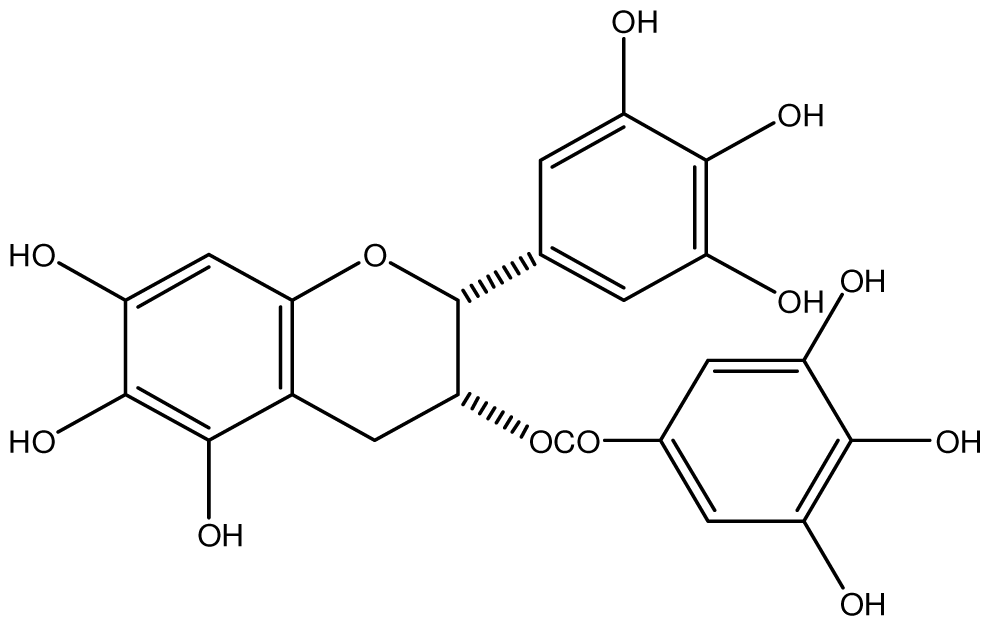
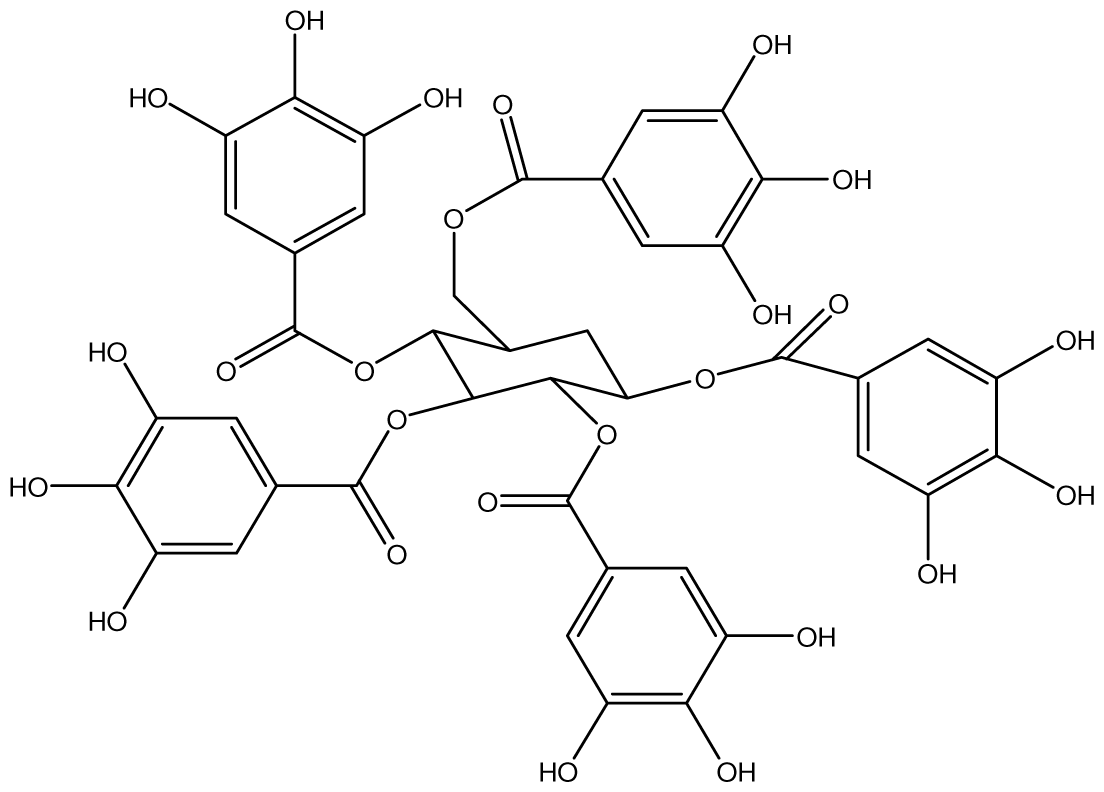
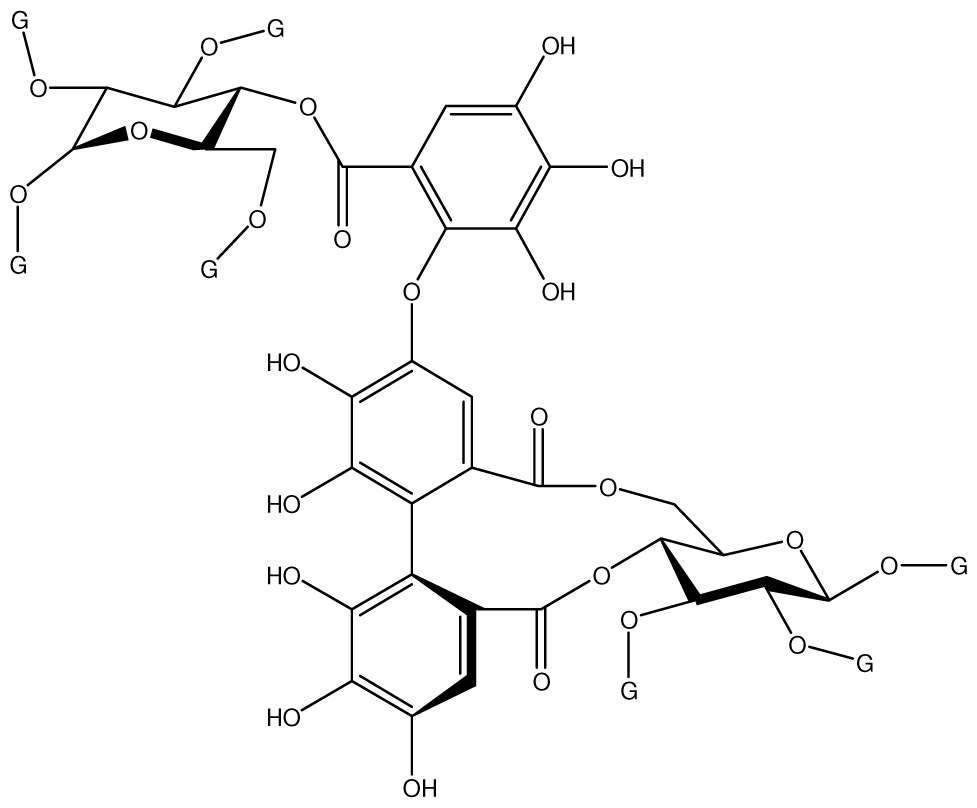
<p>Being phenolic compounds, tannins are chemically reactive and form inter and intra-molecular hydrogen bonds. They are easily oxidized by specific plant enzymes and influenced by metals such as ferric chloride, (which causes a darkening solution). Classically, the chemical structures of tannins are divided into two groups: hydrolysable, and condensed. The hydrolysable tannins consist of gallic acid esters, and ellagic acid glycosides, formed from shikimate, where the hydroxyl sugar groups are esterified with phenolic acids [<xref ref-type="bibr" rid="b9-ijms-13-03203">9</xref>].</p>
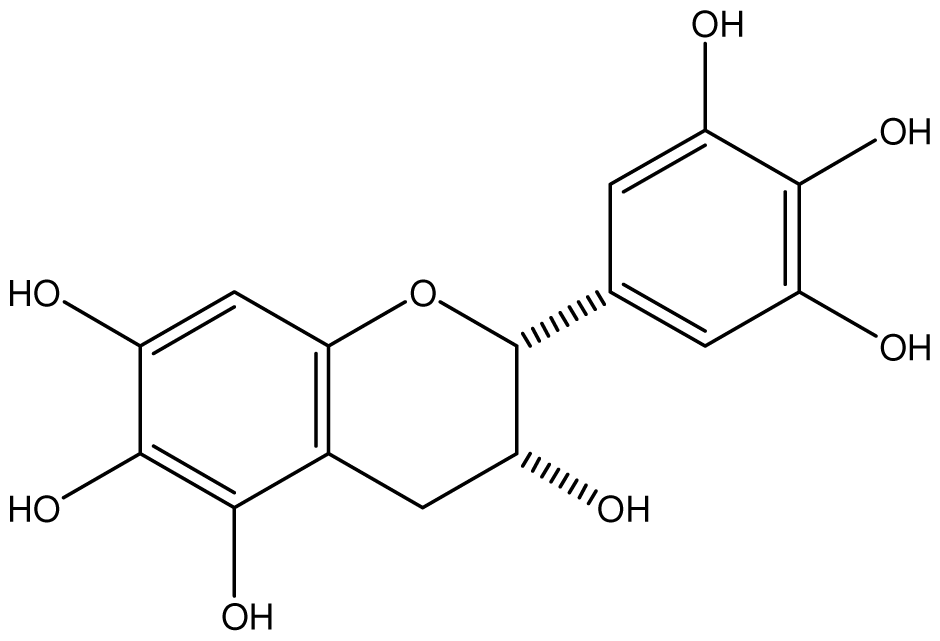
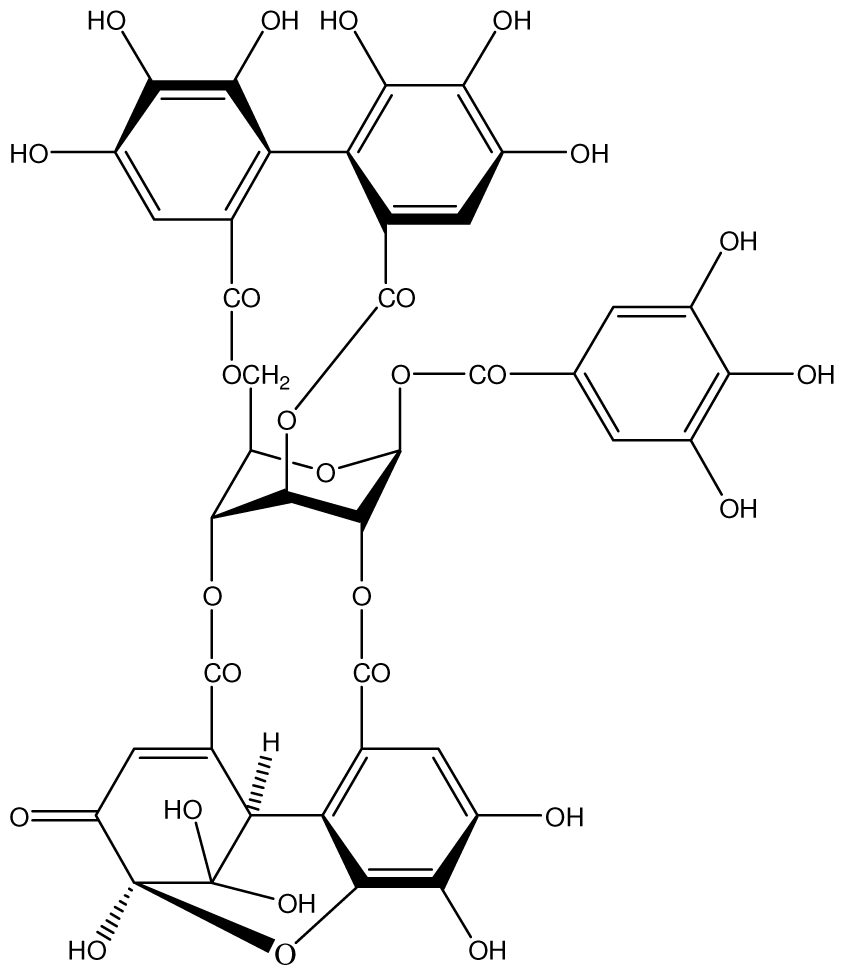
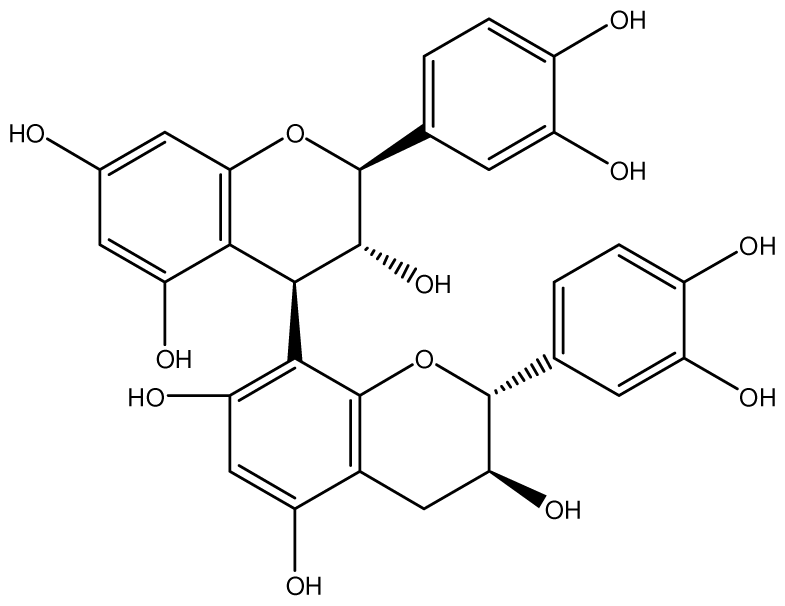
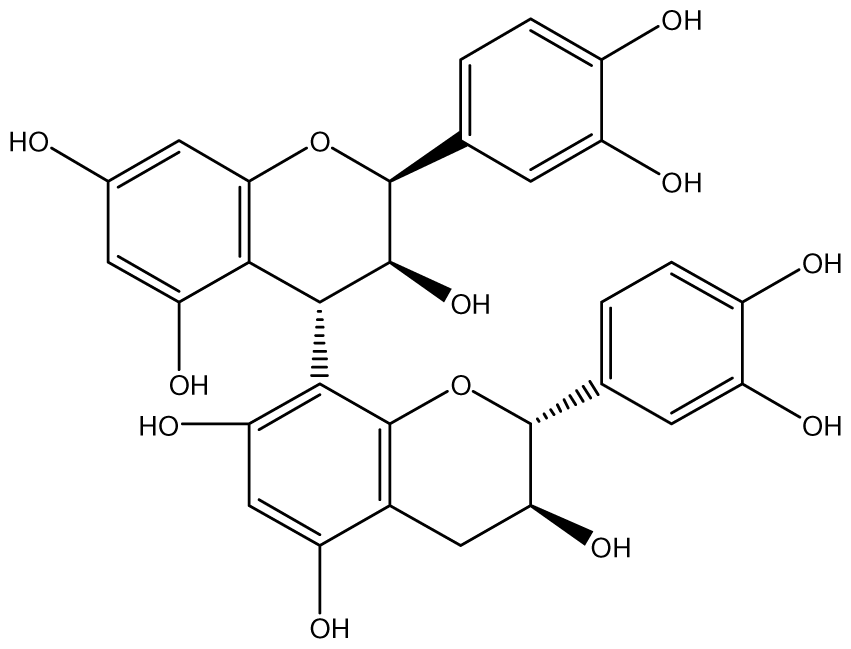
<p>Ellagitannins are much more frequent in nature than gallic tannins, and it is likely that the hexahydroxydiphenílic biphenyl acid system results from oxidative coupling between two gallic acids. Largely found in the plant kingdom, condensed tannins or proanthocyanidins are polymers of flavan-3-ol and/or flavan-3,4-diol products of phenylpropanol metabolism [<xref ref-type="bibr" rid="b10-ijms-13-03203">10</xref>]. Proanthocyanidins, (probably so named because of red pigments from the classes of anthocyanidins, cyanidin and delphinidin), have a rich structural diversity resulting from substitutions between flavan units, a great diversity of positions, connections, and compound stereochemistry [<xref ref-type="bibr" rid="b9-ijms-13-03203">9</xref>].</p>
<p>Many plant species producing tannins are used in folk medicine for different purposes. The tannin’s drug applications are mainly related to their astringent properties. They exert internal anti-diarrheal and antiseptic effects by waterproofing the outer layers of more exposed mucous membranes. Precipitating proteins, tannins provide antimicrobial and antifungal effects. Tannins are also haemostatic, and can serve as an antidote in poisoning cases [<xref ref-type="bibr" rid="b8-ijms-13-03203">8</xref>]. In the process of healing wounds, burns and inflammations, tannins help by forming a protective layer (tannin-protein/tannin-polysaccharide complex), over injured epithelial tissues permitting the healing process below to occur naturally [<xref ref-type="bibr" rid="b9-ijms-13-03203">9</xref>]. Studies show that many tannins act as radical scavengers, intercepting active free radicals [<xref ref-type="bibr" rid="b9-ijms-13-03203">9</xref>], various degenerative diseases such cancer, multiple sclerosis, atherosclerosis and aging process itself are associated with high concentrations of intercellular free radicals.</p>
<p>In the course of our continuing search for naturally bioactive products from plants, we have published plant extract and compound reviews demonstrating various activities such as: inhibition of mammary, cervical uterine, and ovarian neoplasia [<xref ref-type="bibr" rid="b11-ijms-13-03203">11</xref>–<xref ref-type="bibr" rid="b13-ijms-13-03203">13</xref>]; inhibition of hydroxy-3-methyl-glutaryl (HMG) CoA reductase, of angiotensin-converting enzyme (ACE), and of acetylcholinesterase (AChE) [<xref ref-type="bibr" rid="b14-ijms-13-03203">14</xref>–<xref ref-type="bibr" rid="b16-ijms-13-03203">16</xref>]; of convulsion, and anxiety disorders [<xref ref-type="bibr" rid="b17-ijms-13-03203">17</xref>,<xref ref-type="bibr" rid="b18-ijms-13-03203">18</xref>]; central analgesic activity [<xref ref-type="bibr" rid="b19-ijms-13-03203">19</xref>] a treatment for Parkinson’s disease [<xref ref-type="bibr" rid="b20-ijms-13-03203">20</xref>]; a preventative for osteoporosis [<xref ref-type="bibr" rid="b21-ijms-13-03203">21</xref>]; an antileishmanial [<xref ref-type="bibr" rid="b22-ijms-13-03203">22</xref>]; a giardicide [<xref ref-type="bibr" rid="b23-ijms-13-03203">23</xref>]; an anti-leprotic [<xref ref-type="bibr" rid="b24-ijms-13-03203">24</xref>]; an anti-hypoglycemic [<xref ref-type="bibr" rid="b25-ijms-13-03203">25</xref>] an anti-inflammatory [<xref ref-type="bibr" rid="b26-ijms-13-03203">26</xref>–<xref ref-type="bibr" rid="b29-ijms-13-03203">29</xref>]; a malaria treatment [<xref ref-type="bibr" rid="b30-ijms-13-03203">30</xref>]; anti-ulcer activities [<xref ref-type="bibr" rid="b31-ijms-13-03203">31</xref>] and effects on HIV-1 Protease [<xref ref-type="bibr" rid="b32-ijms-13-03203">32</xref>]. Our group has also reviewed both poisonous and medicinal plants in Northeastern Brazil [<xref ref-type="bibr" rid="b33-ijms-13-03203">33</xref>,<xref ref-type="bibr" rid="b34-ijms-13-03203">34</xref>], among others [<xref ref-type="bibr" rid="b35-ijms-13-03203">35</xref>–<xref ref-type="bibr" rid="b54-ijms-13-03203">54</xref>].</p>
<p>In a previous paper, this research group reviewed alkaloids and flavonoids with anti-ulcer activity [<xref ref-type="bibr" rid="b55-ijms-13-03203">55</xref>,<xref ref-type="bibr" rid="b56-ijms-13-03203">56</xref>]. The aim of this study is to review the literature on the bioactivity of tannins against the peptic ulcer.</p></sec>
<sec>
<title>2. Pathophysiology of the Peptic Ulcer</title>
<p>Peptic ulcer is one of the world’s major gastro-intestinal disorders, embracing both gastric and duodenal ulcers, and affecting 10% of the world population [<xref ref-type="bibr" rid="b57-ijms-13-03203">57</xref>]. The patho-physiology of peptic disease is attributed to the imbalance between aggressive factors like acid, pepsin, and Helicobacter infection, and the local mucosa defenses like bicarbonate secretion, mucus and prostaglandins [<xref ref-type="bibr" rid="b58-ijms-13-03203">58</xref>]. <italic>Helicobacter pylori</italic> infection, use of non-steroidal anti-inflammatory drugs-NSAIDs, emotional stress, alcohol abuse, and smoking are the principal etiological factors associated with peptic ulcer [<xref ref-type="bibr" rid="b59-ijms-13-03203">59</xref>].</p>
<p>In <italic>Helicobacter pylori</italic> infections a gram negative bacterium colonizes the human stomach, and is a risk factor for the development of peptic ulcer and gastric adenocarcinoma [<xref ref-type="bibr" rid="b60-ijms-13-03203">60</xref>]. The vacuolating cytototoxin (VacA) is a major virulence factor, and causes cell vacuolation and subsequent tissue damage [<xref ref-type="bibr" rid="b61-ijms-13-03203">61</xref>,<xref ref-type="bibr" rid="b62-ijms-13-03203">62</xref>]. Other bacterial factors also involved in the development of peptic ulcers are cytotoxin-associated gene island pathogenicity (CagA), lipopolysaccharides, flagellin and urease [<xref ref-type="bibr" rid="b62-ijms-13-03203">62</xref>].</p>
<p>Tissue damage to the gastrointestinal mucosa (or hemorrhagic injury) is produced by exogenous compounds as well, mainly NSAIDs and ethanol [<xref ref-type="bibr" rid="b63-ijms-13-03203">63</xref>]. NSAIDs damage the stomach by suppressing synthesis of gastric prostaglandins. Gastric acid exacerbates NSAID effects by deepening superficial lesions, interfering with platelet aggregation, and impairing the ulcer healing process [<xref ref-type="bibr" rid="b59-ijms-13-03203">59</xref>].</p>
<p>The suppression of stomach acid secretions is a key therapeutic target for ulcers, and includes the use of antacids, specific muscarinic M1 receptor antagonists, targeting gastrin receptors and histamine H2 receptors, and the use of proton pump inhibitors [<xref ref-type="bibr" rid="b58-ijms-13-03203">58</xref>].</p>
<p>The exposure of gastric mucosa to aggressive factors such as absolute ethanol, stress, and ischemia followed by reperfusion, and the use of NSAIDs produce pathological changes and the development of inflammation, hemorrhagic erosions, and ulcers with the acute involvement of free radicals, or Reactive Oxygen Species (ROS) [<xref ref-type="bibr" rid="b64-ijms-13-03203">64</xref>–<xref ref-type="bibr" rid="b66-ijms-13-03203">66</xref>]. These radicals are normally neutralized by the action of the antioxidant system consisting of organic substances containing thiol groups such as glutathione, vitamins C and E, NADPH, antioxidant enzymes such as peroxidase, superoxide dismutase, glutathione peroxidase, glutathione reductase and others [<xref ref-type="bibr" rid="b67-ijms-13-03203">67</xref>]. When there is an imbalance between ROS and the antioxidant defense mechanisms, ROS lead to oxidative modifications in the cellular membrane and intracellular molecules resulting in peroxidation of membrane lipids, accumulation of lipid peroxides, and cellular damage [<xref ref-type="bibr" rid="b68-ijms-13-03203">68</xref>].</p>
<p>Mucosal defensives are nitric oxide-NO [<xref ref-type="bibr" rid="b69-ijms-13-03203">69</xref>], mucus [<xref ref-type="bibr" rid="b70-ijms-13-03203">70</xref>], bicarbonate [<xref ref-type="bibr" rid="b71-ijms-13-03203">71</xref>] gastrin [<xref ref-type="bibr" rid="b72-ijms-13-03203">72</xref>] and prostaglandins [<xref ref-type="bibr" rid="b73-ijms-13-03203">73</xref>], as well mucosal blood flow [<xref ref-type="bibr" rid="b74-ijms-13-03203">74</xref>].</p></sec>
<sec>
<title>3. Plants with Peptic Anti-Ulcer Activity</title>
<p>Plants rich in tannins have been traditionally used for their medicinal effects and several studies have demonstrated their anti-ulcer effects.</p>
<p>Annuk <italic>et al</italic>. (1999) investigated the effect of the leaves (aqueous extract) of <italic>Arctostaphylos uva-ursi</italic> (Ericaceae) and <italic>Vaccinium vitis-idaea</italic> (Ericaceae), for susceptibility of ten strains of <italic>Helicobacter pylori</italic>. It was established that the extracts were clearly bacteriostatic [<xref ref-type="bibr" rid="b75-ijms-13-03203">75</xref>].</p>
<p>Perera <italic>et al</italic>. (2001) compared the effect of aqueous bark extract from <italic>Rhizophora mangle</italic> (Rizophoraceae) against cimetidine on gastric ulceration induced by ethanol- hydrochloric acid in rats, determining the quality and quantity of the mucus. The extract inhibited ulceration and promoted higher mucus volumes [<xref ref-type="bibr" rid="b76-ijms-13-03203">76</xref>]. Berenguer <italic>et al</italic>. (2006) determined its effects in a model of diclofenac-induced ulcer in rats. Pretreatment with <italic>Rhizophora mangle</italic> resulted in a significant decrease of the ulcerated area, with increases in glutathione peroxidase and superoxide dismutase activity [<xref ref-type="bibr" rid="b77-ijms-13-03203">77</xref>]. The authors suggest that the gastro protective effect of the extract in this experimental model is antioxidant and prostaglandin dependent.</p>
<p>Gonzales <italic>et al</italic>. (2001) conducted studies with aqueous methanolic extract from the leaves of <italic>Maytenus aquifolium</italic> (Celastraceae), <italic>Soroceae bomplandii</italic> (Moraceae), and <italic>Zolernia ilicifolia</italic> (Fabaceae) evaluating anti-ulcer activity through ethanol and indomethacin/bethanecol ulcer induction in mice. <italic>Maytenus aquifolium</italic> lowered all ulcerogenic parameters in the ethanol test. <italic>Soroceae bomplandii</italic> produced anti-ulcerogenic effects in both experimental models, while <italic>Zolernia ilicifolia</italic> showed significant effects only for indometacin/bethanecol-induced gastric lesions [<xref ref-type="bibr" rid="b78-ijms-13-03203">78</xref>].</p>
<p>Martins <italic>et al</italic>. (2002) evaluated the anti-ulcer activity of acetone soluble fraction (AFSAB) from bark extract of <italic>Styphnodendron adstringens</italic> (Leguminosae), in acute models of gastric ulceration, and for basal and bethanecol-stimulated gastric acid secretion in rats. AFSAB promoted significant decreases in gastric lesions from ethanol and hypothermic restraint-stress, and significantly decreased the basal as well as bethanecol-stimulated gastric secretory volume, and total acidity [<xref ref-type="bibr" rid="b79-ijms-13-03203">79</xref>].</p>
<p>Rafhael and Kuttan (2003), demonstrated elevated levels of glutathione (GSH) gastric mucosa, and ethanol lesion inhibition in rats using methanolic extract from <italic>Phyllanthus amarus</italic> (Euphorbiacea) [<xref ref-type="bibr" rid="b80-ijms-13-03203">80</xref>]. GSH is a well-known antioxidant abundantly present as a low-molecular mass thiol in most organisms [<xref ref-type="bibr" rid="b81-ijms-13-03203">81</xref>].</p>
<p>Khennouf <italic>et al</italic>. (2003) examined the gastro-protective effects of 70% acetone leave extracts of <italic>Quercus suber</italic> and <italic>Quercus coccifera</italic> (Fagaceae), as well as tannins purified from these extracts, in mice and rabbits using an ethanol-induced gastric ulcer model. Both extracts, as well as the purified tannins prevented the formation of stomach lesions and strongly inhibited lipid peroxidation in rabbit brain homogenate. The authors suggest that the gastro-protective effects are related to the anti-lipoperoxidant properties [<xref ref-type="bibr" rid="b82-ijms-13-03203">82</xref>].</p>
<p>Hiruma-Lima <italic>et al</italic>. (2006) investigated hydroalcoholic extract (HE) of <italic>Qualea grandiflora</italic> (Vochysiaceae) bark in both acute and sub-acute gastric ulcer models in rodents. The oral administration of HE exhibited anti-ulcer activity in HCl/ethanol, indomethacin/bethanecol, and stress models [<xref ref-type="bibr" rid="b83-ijms-13-03203">83</xref>]. Shay (1945) [<xref ref-type="bibr" rid="b84-ijms-13-03203">84</xref>], showed that HE alone reduced the severity of gastric lesions. When given by intra-duodenal route, HE changes the pH, but does not modify others parameters of the gastric juice. HE presented healing activity in sub-acute gastric ulcers [<xref ref-type="bibr" rid="b83-ijms-13-03203">83</xref>].</p>
<p>Andreo <italic>et al.</italic> (2006) evaluated methanolic (MeOH) and dichloromethane (DCM) extracts from the leaves of <italic>Mouriri pusa</italic> (Melastomataceae) in gastric ulcer, (HCl/ethanol, absolute ethanol, non-steroidal anti-inflammatory drug, stress, and pylorus ligature) models in mice and rats. The best results were obtained after pretreatment with MeOH extract, DCM extract did not show significant anti-ulcerogenic activity. The mechanism involving the anti-ulcerogenic activity of MeOH extract seems to be related to NO generation, with participation by an endogenous sulfhydryl group [<xref ref-type="bibr" rid="b85-ijms-13-03203">85</xref>]. Vasconcelos <italic>et al</italic>. (2008) showed positive data in both 14 and 30 days of treatment with this extract [<xref ref-type="bibr" rid="b86-ijms-13-03203">86</xref>] and Vasconcelos <italic>et al</italic>. (2010) investigated the effect of a tannins fraction from <italic>Mouriri pusa</italic> leaves (methanolic extract) on the prevention, and healing of gastric ulcers. The tannins fraction reduced the lesion area while promoting a larger regenerative mucosa which implies both gastro protective effects and healing enhancement [<xref ref-type="bibr" rid="b87-ijms-13-03203">87</xref>].</p>
<p>Zayachkivska <italic>et al</italic>. (2006) investigated the gastro-duodenal protective effects of proanthocyanidins (PA) from <italic>Viburnum opulus</italic> (Caprifoliaceae) on stress-induced gastrointestinal damage. The study showed that the PA exert potent protective activity, via increases in NO generation, suppression of lipid peroxidation, augmented antioxidant activity, and changes in the glycol-conjugate content of gastro-duodenal mucosa in rats [<xref ref-type="bibr" rid="b88-ijms-13-03203">88</xref>].</p>
<p>Pre-clinical trials of <italic>Emblica officinalis</italic> Gaertn (Euforbiaceae), known as Indian gooseberry or amla—which is notably the most important medicinal plant in the Indian traditional system of medicine—the Ayurveda have shown that this species possesses a wide spectrum of pharmacological properties. Experiments have shown that amla possesses a gastroprotective effect in addition to antioxidant activity, anti-inflammatory and free radical scavenging. These pharmacological properties are directly linked to the chemical compounds. Several studies suggest that it contains tannins, alkaloids, and phenolic compounds [<xref ref-type="bibr" rid="b89-ijms-13-03203">89</xref>].</p></sec>
<sec>
<title>4. Purified Tannins and Peptic Antiulcer Activity</title>
<p>Tannins are used in medicine primarily because of their astringent properties; they react with the proteins of the tissue layers. Tannins precipitate micro proteins at the site of the peptic ulcer, forming a protective pellicle that prevents absorption of toxic substances, and promote resistance to the action of proteolytic enzymes, an associated activity against <italic>Helicobacter pylori</italic> [<xref ref-type="bibr" rid="b86-ijms-13-03203">86</xref>].</p>
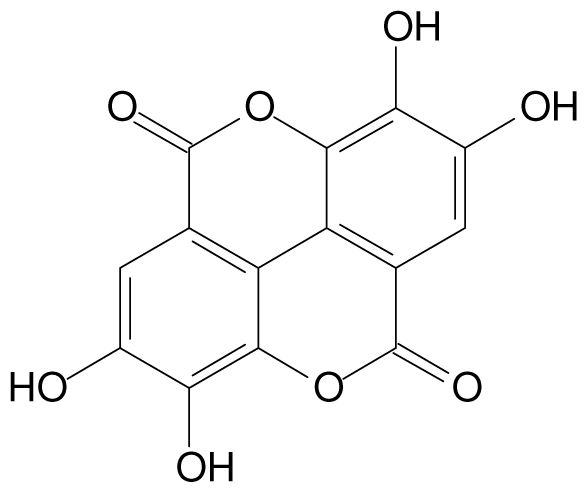
<p>Murakami <italic>et al</italic>. (1991) showed that ellagic acid is a potent competitive inhibitor of gastric H<sup>+</sup>, K<sup>+</sup>-ATPase, and proposed that ellagic acid may compete with ATP at the ATP hydrolysis site, thus markedly inhibiting acid secretion, and stress-induced gastric lesions [<xref ref-type="bibr" rid="b90-ijms-13-03203">90</xref>]. Enzyme inhibition was also evident for tannic acid [<xref ref-type="bibr" rid="b91-ijms-13-03203">91</xref>].</p>
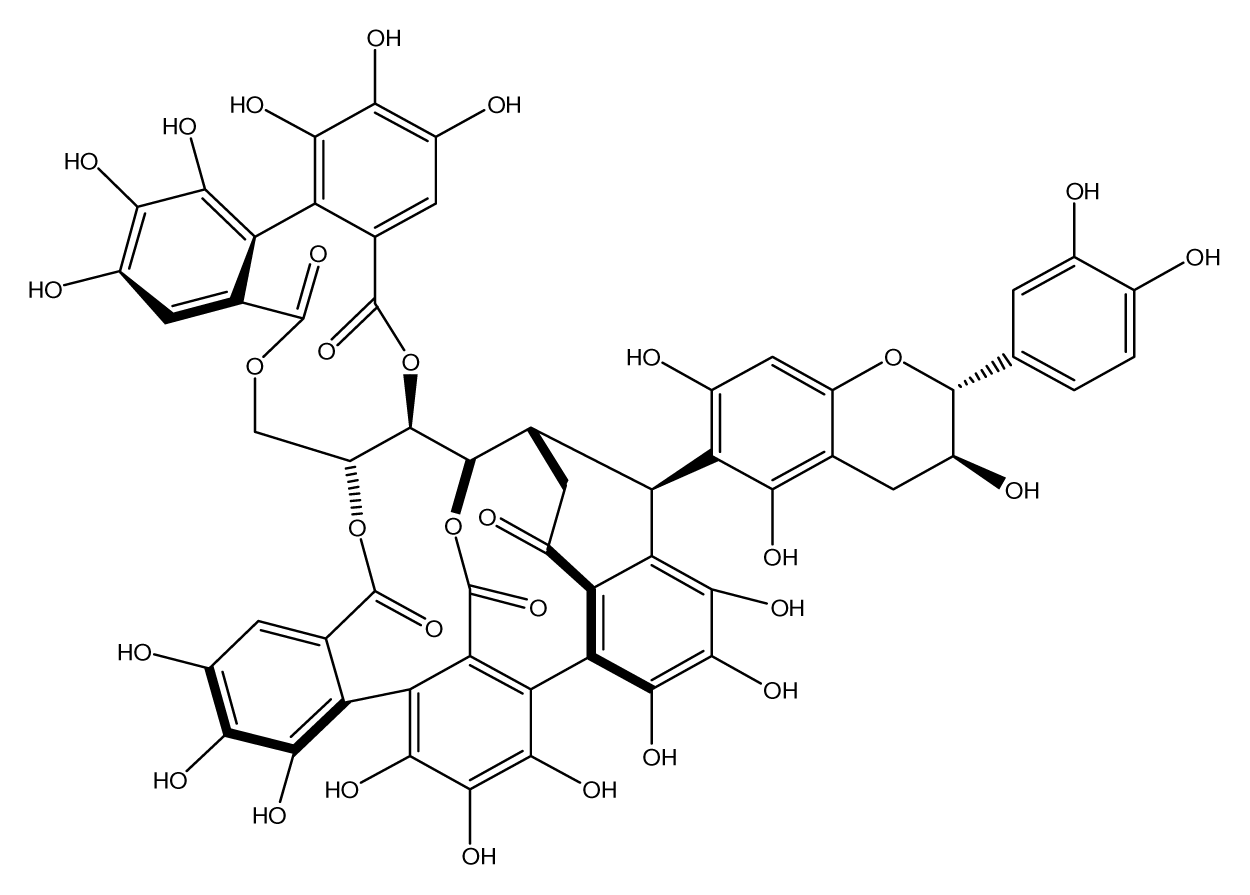
<p>Khennouf <italic>et al</italic>. 2003 examined the gastroprotective effects of tannins purified from <italic>Quercus suber</italic> and <italic>Quercus coccifera</italic> (pedunculagin, phillyraeoidin A, castalagin and acutissimin B) on ethanol-induced gastric lesions in mice, and concluded that the protection afforded by these substances was very high, and might be due to the inhibition of acid secretion [<xref ref-type="bibr" rid="b82-ijms-13-03203">82</xref>].</p>
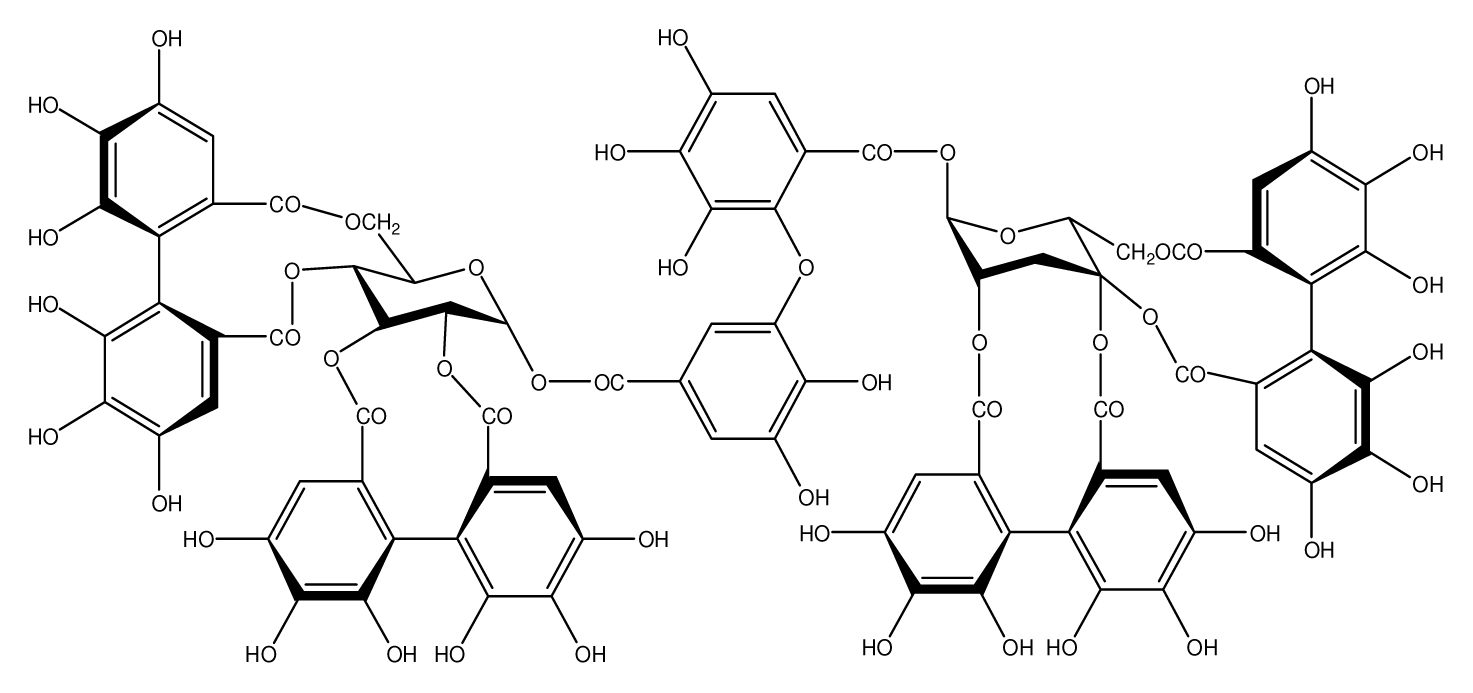
<p>Purified tannins were tested against <italic>Helicobacter pylori</italic> by Funatogawa <italic>et al</italic>. (2004). Twenty hydrolysable tannins, 3 catechin and 6 proanthocyanidins were tested. All of the hydrolysable tannins tested demonstrated promising antibacterial activity against <italic>Helicobacter pylori</italic> [<xref ref-type="bibr" rid="b92-ijms-13-03203">92</xref>].</p>
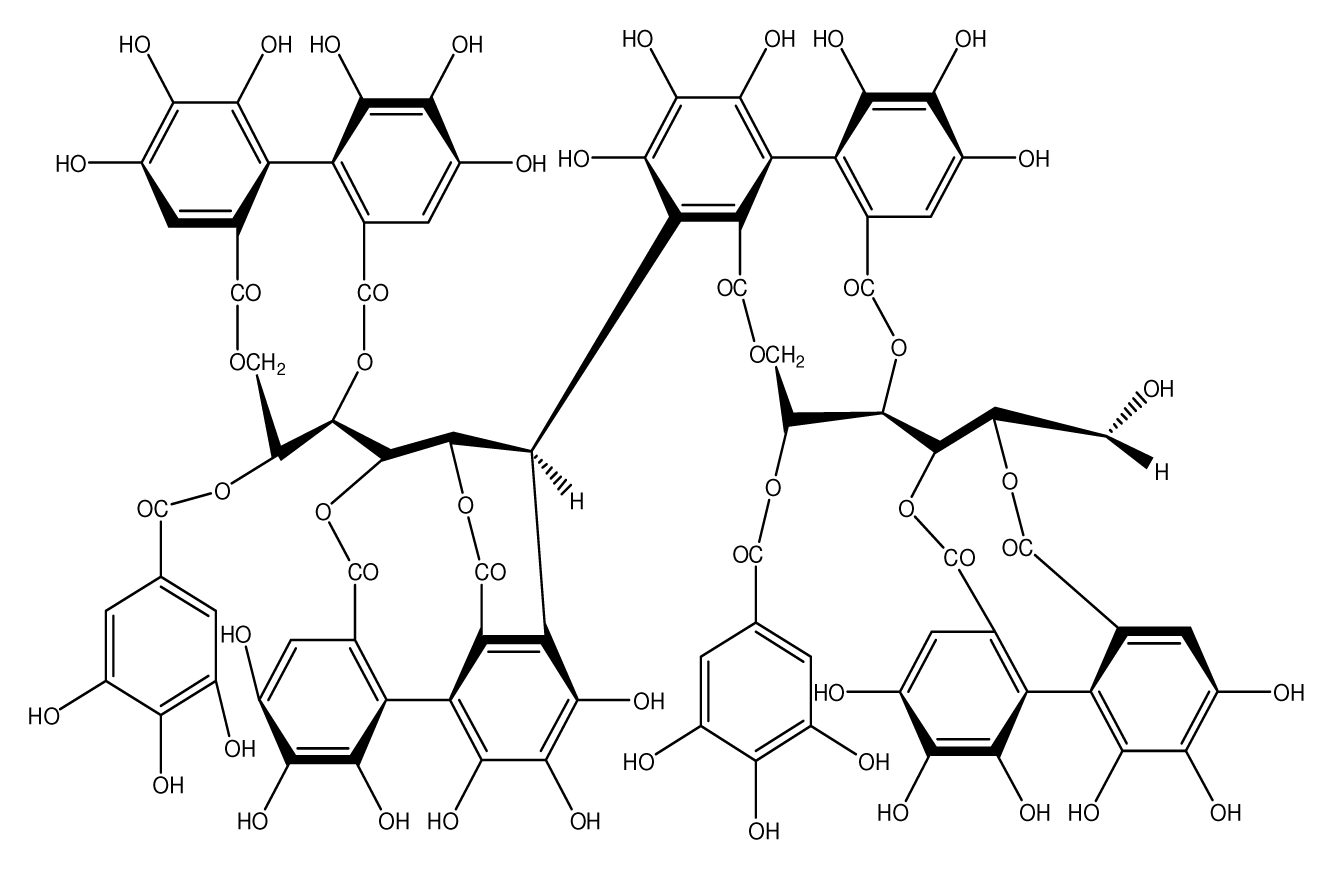
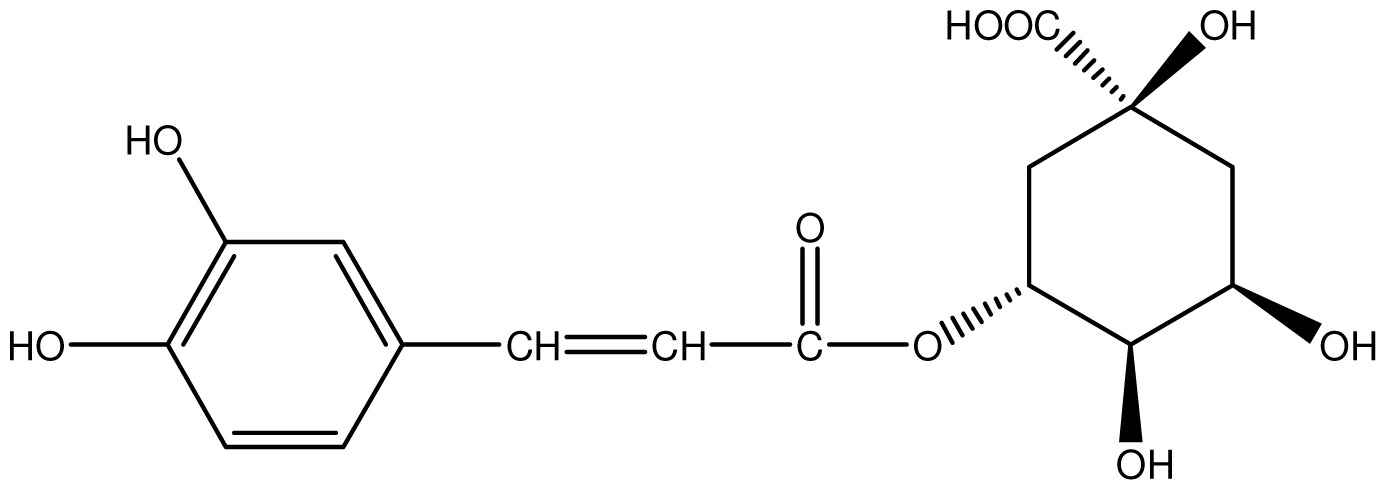
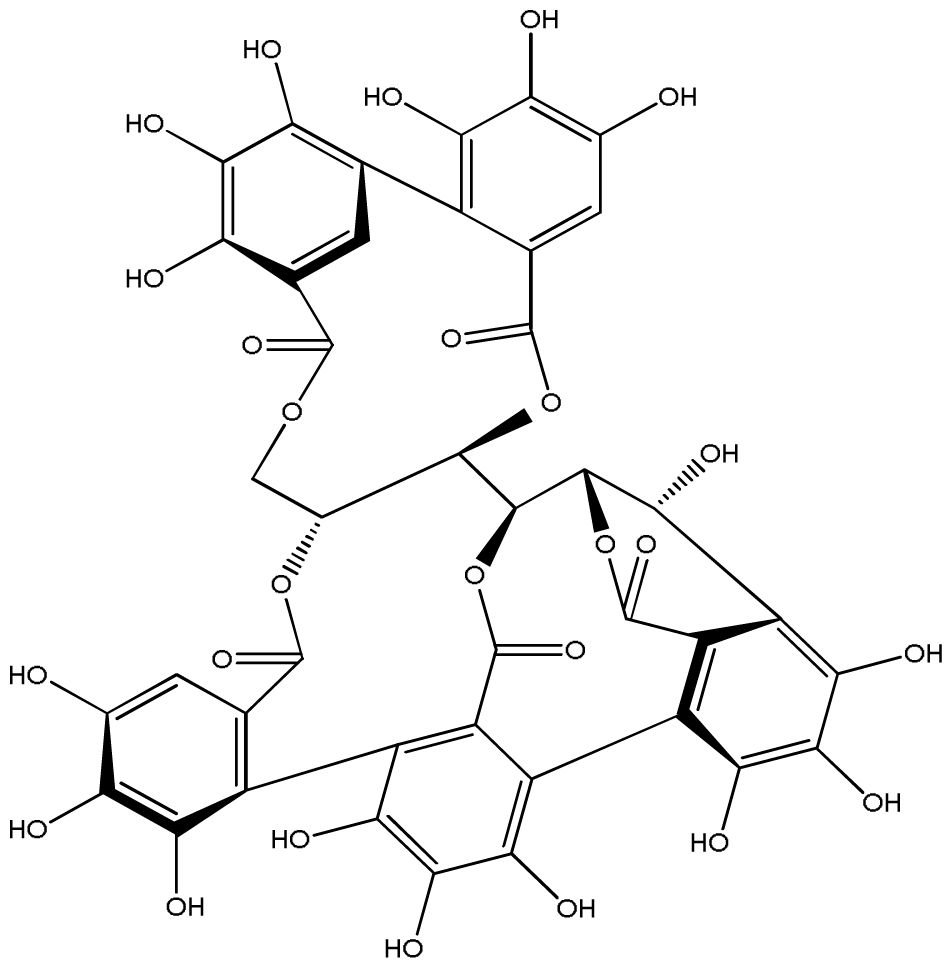
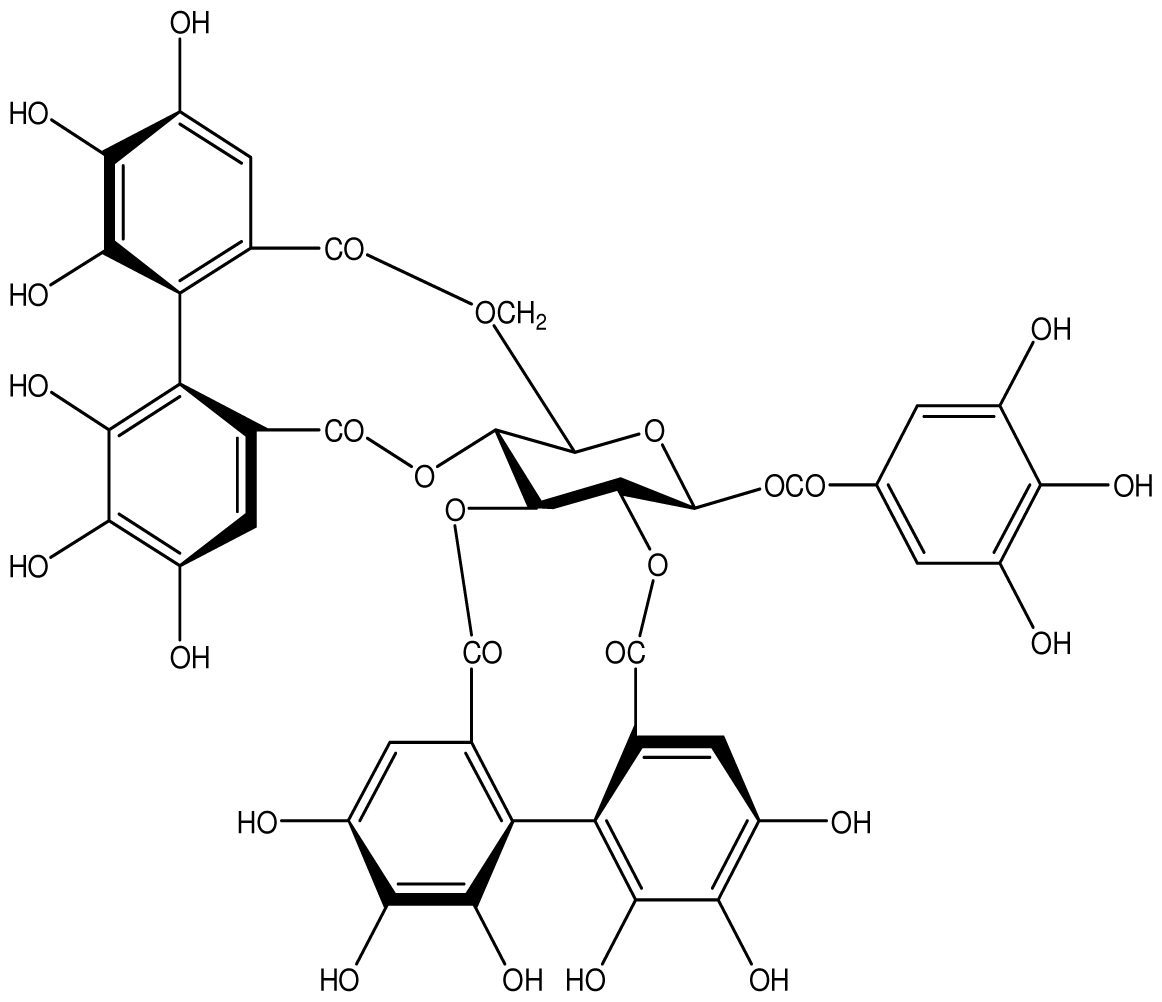
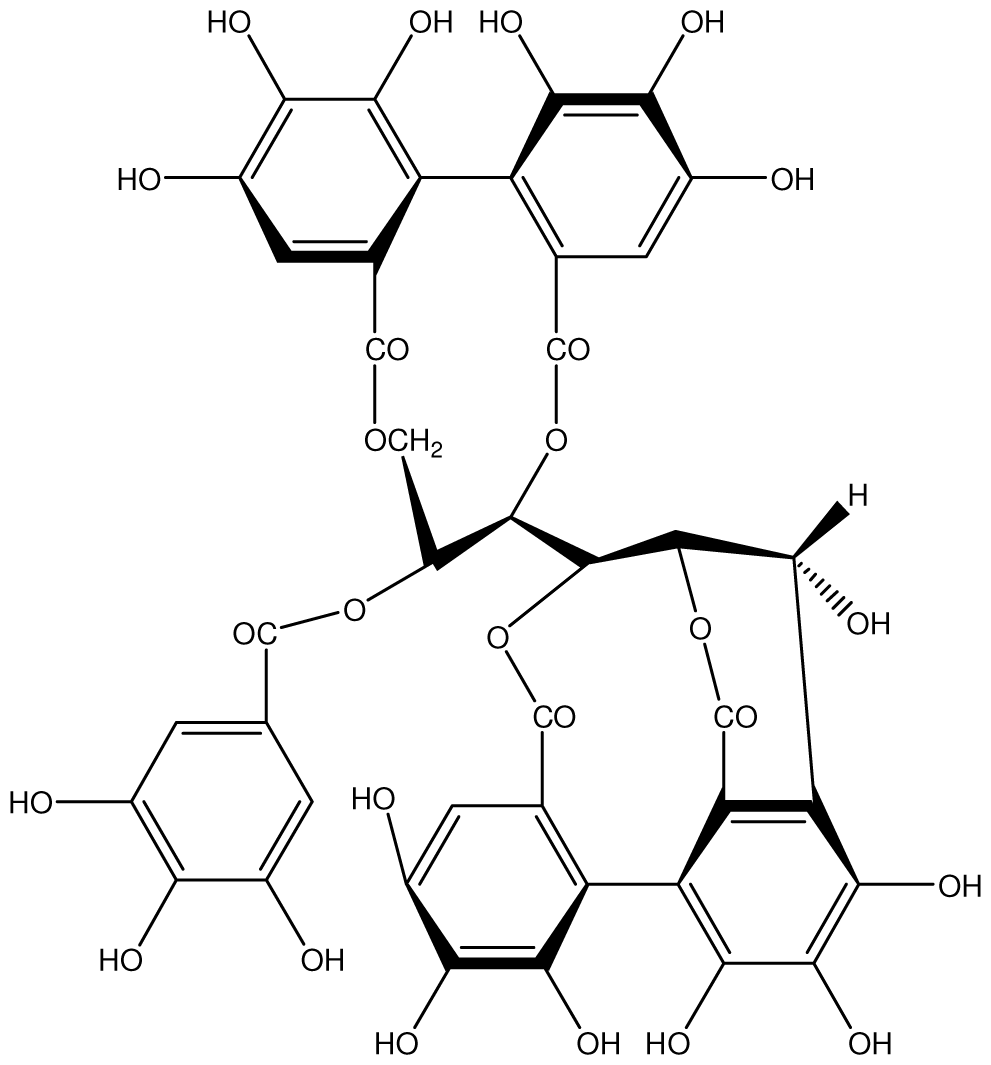
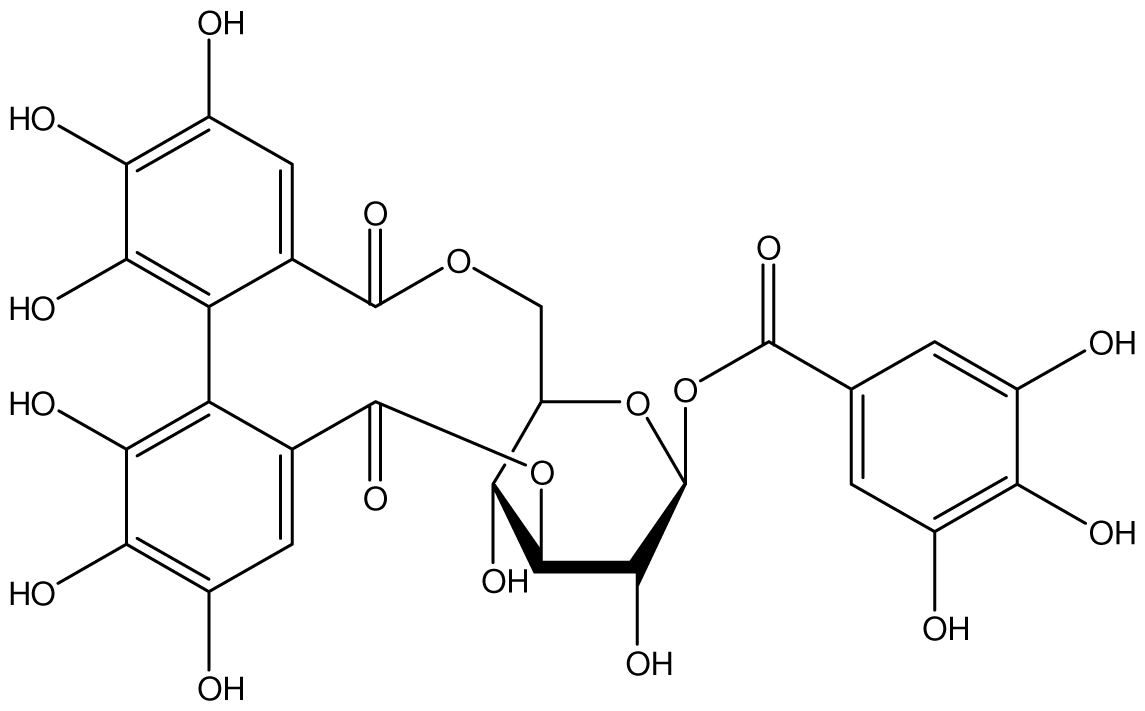
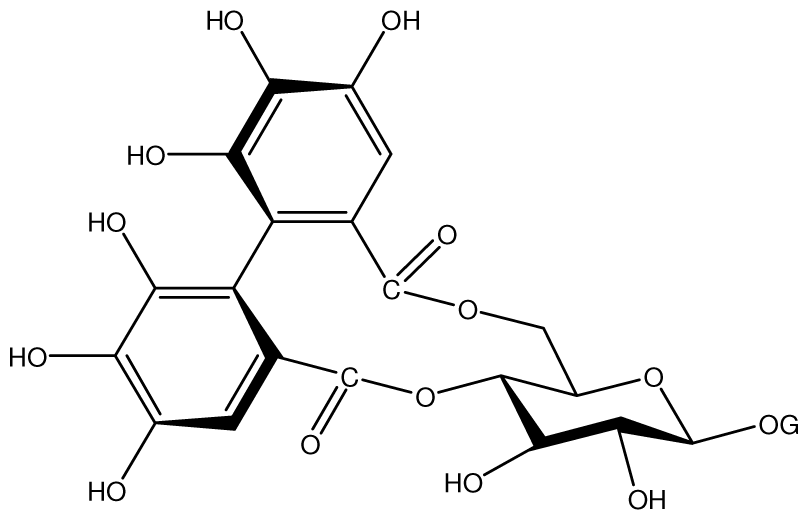
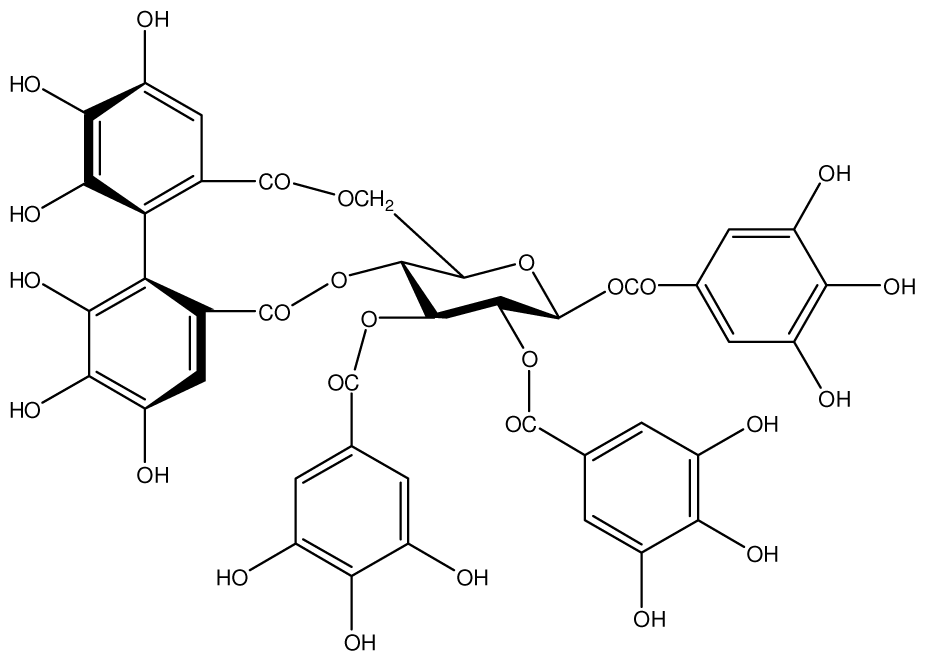
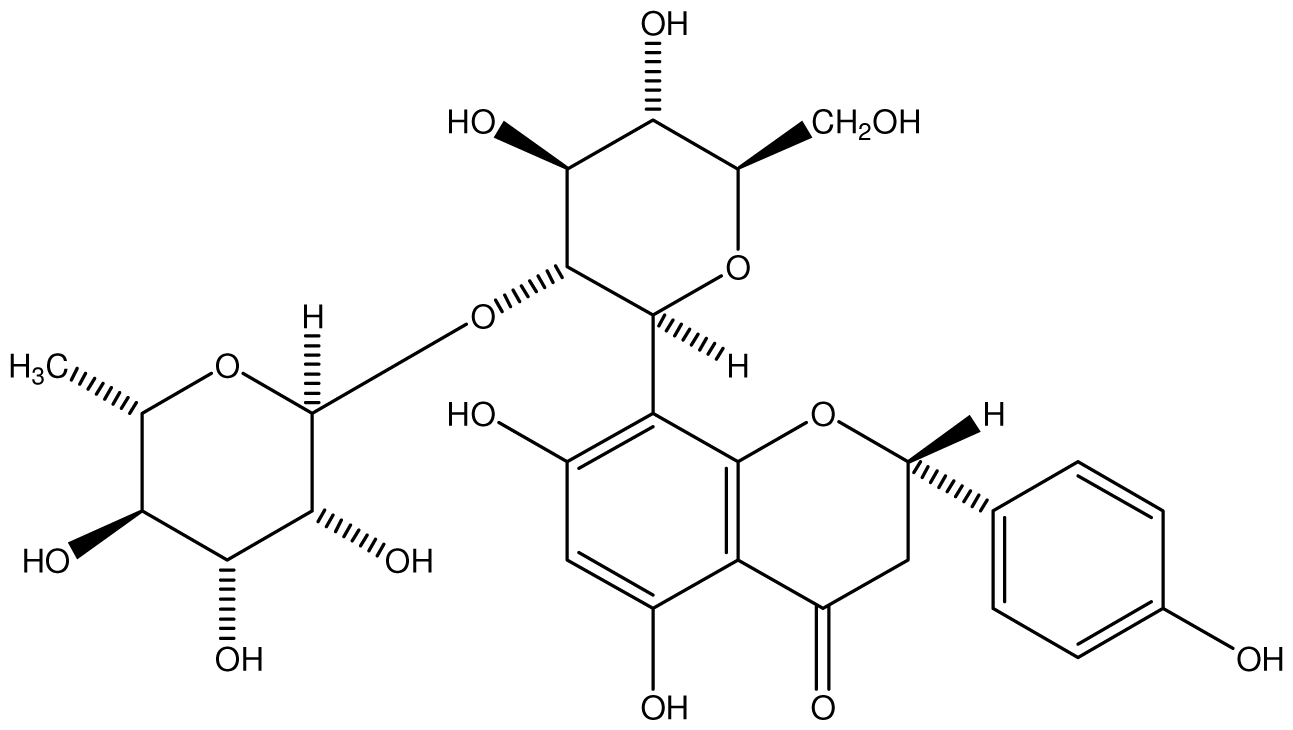
<p>In several experimental models of gastric ulcer, purified tannins have shown to be involved with gastrointestinal tract anti-inflammatory actions, promotion of tissue repair, acid secretion inhibition, and to present both antioxidant and anti-<italic>Helicobacter pylori</italic> activity (<xref ref-type="table" rid="t1-ijms-13-03203">Table 1</xref>).</p></sec>
<sec sec-type="methods">
<title>5. Material and Methods</title>
<p>In the present work, the anti-ulcer activity of the plants and tannins was searched through the data bank of the University of Illinois in Chicago, the NAPRALERT (Acronym for Natural Products ALERT), and the sites ScienceDirect and Pubmed. The data were updated in April 2011, using anti-ulcer plants, or tannins in the legend. The tannins and references selected for this work were also consulted as to details for both models and mechanisms.</p></sec>
<sec sec-type="conclusions">
<title>6. Conclusions</title>
<p>Scientific literature demonstrates that tannins are involved in the anti-ulcer activities of several medicinal plants. Purified substances from these secondary tannic metabolites exhibit activity in experimental models both <italic>in vivo</italic> and <italic>in vitro</italic> for the peptic ulcer. The presence of these phenolic compounds would explain the anti-ulcer benefits of numerous natural products.</p></sec></body>
<back>
<ack>
<title>Acknowledgements</title>
<p>The authors thank the University of Illinois in Chicago, USA, for the use of the NAPRALERT database for this study and also thank the financial support provided by CNPq/CAPES/PRONEX and FAPEMAT.</p></ack>
<ref-list>
<title>References</title>
<ref id="b1-ijms-13-03203"><label>1</label><citation citation-type="journal"><person-group person-group-type="author"><name><surname>Karamaæ</surname><given-names>M</given-names></name></person-group><article-title>Chelation of Cu(II), Zn(II), and Fe(II) by tannin constituents of selected edible nuts</article-title></citation></ref>
<ref id="b2-ijms-13-03203"><label>2</label><citation citation-type="journal"><person-group person-group-type="author"><name><surname>Amarowicz</surname><given-names>R.</given-names></name><name><surname>Estrella</surname><given-names>I.</given-names></name><name><surname>Hernández</surname><given-names>T.</given-names></name><name><surname>Dueñas</surname><given-names>M.</given-names></name><name><surname>Troszyñska</surname><given-names>A.</given-names></name><name><surname>Kosiñska</surname><given-names>A.</given-names></name><name><surname>Pegg</surname><given-names>R.B.</given-names></name></person-group><article-title>Antioxidant activity of a red lentil extract and its fractions</article-title><source>Int. J. Mol. Sci</source><year>2009</year><volume>10</volume><fpage>5513</fpage><lpage>5527</lpage><pub-id pub-id-type="doi">10.3390/ijms10125513</pub-id><pub-id pub-id-type="pmid">20054484</pub-id></citation></ref>
<ref id="b3-ijms-13-03203"><label>3</label><citation citation-type="journal"><person-group person-group-type="author"><name><surname>Yoshida</surname><given-names>T.</given-names></name><name><surname>Amakura</surname><given-names>Y.</given-names></name><name><surname>Yosh</surname><given-names>M.</given-names></name></person-group><article-title>Structural features and biological properties of ellagitannins in some plant families of the order Myrtales</article-title><source>Int. J. Mol. Sci</source><year>2010</year><volume>11</volume><fpage>79</fpage><lpage>106</lpage><pub-id pub-id-type="doi">10.3390/ijms11010079</pub-id><pub-id pub-id-type="pmid">20162003</pub-id></citation></ref>
<ref id="b4-ijms-13-03203"><label>4</label><citation citation-type="journal"><person-group person-group-type="author"><name><surname>Politi</surname><given-names>F.A.S.</given-names></name><name><surname>Mello</surname><given-names>J.C.P.</given-names></name><name><surname>Migliato</surname><given-names>K.F.</given-names></name><name><surname>Nepomuceno</surname><given-names>A.L.A.</given-names></name><name><surname>Moreira</surname><given-names>R.R.D.</given-names></name><name><surname>Pietro</surname><given-names>R.C.L.R.</given-names></name></person-group><article-title>Antimicrobial, cytotoxic and antioxidant activities and determination of the total tannin content of bark extracts <italic>Endopleura uchi</italic></article-title><source>Int. J. Mol. Sci</source><year>2011</year><volume>12</volume><fpage>2757</fpage><lpage>2768</lpage><pub-id pub-id-type="doi">10.3390/ijms12042757</pub-id><pub-id pub-id-type="pmid">21731469</pub-id></citation></ref>
<ref id="b5-ijms-13-03203"><label>5</label><citation citation-type="journal"><person-group person-group-type="author"><name><surname>Okuda</surname><given-names>T.</given-names></name><name><surname>Ito</surname><given-names>H.</given-names></name></person-group><article-title>Tannins of constant structure in medicinal and food plants-hydrolysable tannins and polyphenols related to tannins</article-title><source>Molecules</source><year>2011</year><volume>16</volume><fpage>2191</fpage><lpage>2217</lpage><pub-id pub-id-type="doi">10.3390/molecules16032191</pub-id></citation></ref>
<ref id="b6-ijms-13-03203"><label>6</label><citation citation-type="journal"><person-group person-group-type="author"><name><surname>Blenn</surname><given-names>C.</given-names></name><name><surname>Wyrsch</surname><given-names>P.</given-names></name><name><surname>Althaus</surname><given-names>F.R.</given-names></name></person-group><article-title>The ups and downs of tannins as inhibitors of poly(ADP-ribose)glycohydrolase</article-title><source>Molecules</source><year>2011</year><volume>16</volume><fpage>1854</fpage><lpage>1877</lpage><pub-id pub-id-type="doi">10.3390/molecules16021854</pub-id><pub-id pub-id-type="pmid">21343889</pub-id></citation></ref>
<ref id="b7-ijms-13-03203"><label>7</label><citation citation-type="journal"><person-group person-group-type="author"><name><surname>Zhao</surname><given-names>S.</given-names></name><name><surname>Liu</surname><given-names>J.Y.</given-names></name><name><surname>Chen</surname><given-names>S.Y.</given-names></name><name><surname>Shi</surname><given-names>L.L.</given-names></name><name><surname>Liu</surname><given-names>Y.J.</given-names></name><name><surname>Ma</surname><given-names>C.</given-names></name></person-group><article-title>Antioxidant potential of polyphenols and tannins from burs of <italic>Castanea mollissima</italic> Blume</article-title><source>Molecules</source><year>2011</year><volume>16</volume><fpage>8590</fpage><lpage>8600</lpage><pub-id pub-id-type="doi">10.3390/molecules16108590</pub-id><pub-id pub-id-type="pmid">21993248</pub-id></citation></ref>
<ref id="b8-ijms-13-03203"><label>8</label><citation citation-type="journal"><person-group person-group-type="author"><name><surname>Albuquerque</surname><given-names>U.P.</given-names></name><name><surname>Monteiro</surname><given-names>J.M.</given-names></name><name><surname>Araújo</surname><given-names>E.L.</given-names></name></person-group><article-title>Taninos: uma abordagem da química à ecologia</article-title><source>Quim. Nova</source><year>2005</year><volume>28</volume><fpage>892</fpage><lpage>896</lpage><pub-id pub-id-type="doi">10.1590/S0100-40422005000500029</pub-id></citation></ref>
<ref id="b9-ijms-13-03203"><label>9</label><citation citation-type="book"><person-group person-group-type="author"><name><surname>Simões</surname><given-names>C.M.O.</given-names></name><name><surname>Schenkel</surname><given-names>E.P.</given-names></name><name><surname>Gosmann</surname><given-names>G.</given-names></name><name><surname>Mello</surname><given-names>J.C.P.</given-names></name><name><surname>Mentz</surname><given-names>L.A.</given-names></name></person-group><source>Farmacognosia da Planta ao Medicamento</source><edition>5th ed</edition><publisher-name>Editora da UFRGS</publisher-name><publisher-loc>Porto Alegre, Brasil</publisher-loc><year>2003</year><fpage>424</fpage></citation></ref>
<ref id="b10-ijms-13-03203"><label>10</label><citation citation-type="journal"><person-group person-group-type="author"><name><surname>Heil</surname><given-names>M.</given-names></name><name><surname>Delsinne</surname><given-names>T.</given-names></name><name><surname>Hilpert</surname><given-names>A.</given-names></name><name><surname>Schürkens</surname><given-names>S.</given-names></name><name><surname>Andary</surname><given-names>C.</given-names></name><name><surname>Linsenmair</surname><given-names>E.K.</given-names></name><name><surname>Sousa</surname><given-names>M.</given-names></name><name><surname>Mckey</surname><given-names>D.</given-names></name></person-group><article-title>Reduced chemical defense in ant-plants? A critical re-evaluation of a widely accepted hypothesis</article-title><source>Oikos</source><year>2002</year><volume>99</volume><fpage>457</fpage><lpage>468</lpage><pub-id pub-id-type="doi">10.1034/j.1600-0706.2002.11954.x</pub-id></citation></ref>
<ref id="b11-ijms-13-03203"><label>11</label><citation citation-type="journal"><person-group person-group-type="author"><name><surname>Moura</surname><given-names>M.D.</given-names></name><name><surname>Torres</surname><given-names>A.R.</given-names></name><name><surname>Oliveira</surname><given-names>R.A.G.</given-names></name><name><surname>Diniz</surname><given-names>M.F.F.M.</given-names></name><name><surname>Barbosa-Filho</surname><given-names>J.M.</given-names></name></person-group><article-title>Natural products as inhibitors of models of mammary neoplasia</article-title><source>Br. J. Phytother</source><year>2001</year><volume>5</volume><fpage>124</fpage><lpage>145</lpage></citation></ref>
<ref id="b12-ijms-13-03203"><label>12</label><citation citation-type="journal"><person-group person-group-type="author"><name><surname>Moura</surname><given-names>M.D.</given-names></name><name><surname>Silva</surname><given-names>J.S.</given-names></name><name><surname>Oliveira</surname><given-names>R.A.G.</given-names></name><name><surname>Diniz</surname><given-names>M.F.F.M.</given-names></name><name><surname>Barbosa-Filho</surname><given-names>J.M.</given-names></name></person-group><article-title>Natural products reported as potential inhibitors of uterine cervical neoplasia</article-title><source>Acta Farm. Bonaerense</source><year>2002</year><volume>21</volume><fpage>67</fpage><lpage>74</lpage></citation></ref>
<ref id="b13-ijms-13-03203"><label>13</label><citation citation-type="journal"><person-group person-group-type="author"><name><surname>Silva</surname><given-names>J.S.</given-names></name><name><surname>Moura</surname><given-names>M.D.</given-names></name><name><surname>Oliveira</surname><given-names>R.A.G.</given-names></name><name><surname>Diniz</surname><given-names>M.F.F.</given-names></name><name><surname>Barbosa-Filho</surname><given-names>J.M.</given-names></name></person-group><article-title>Natural product inhibitors of ovarian neoplasia</article-title><source>Phytomedicine</source><year>2003</year><volume>10</volume><fpage>221</fpage><lpage>232</lpage><pub-id pub-id-type="doi">10.1078/094471103321659988</pub-id><pub-id pub-id-type="pmid">12725581</pub-id></citation></ref>
<ref id="b14-ijms-13-03203"><label>14</label><citation citation-type="journal"><person-group person-group-type="author"><name><surname>Gonçalves</surname><given-names>M.C.R.</given-names></name><name><surname>Moura</surname><given-names>L.S.A.</given-names></name><name><surname>Rabelo</surname><given-names>L.A.</given-names></name><name><surname>Barbosa-Filho</surname><given-names>J.M.</given-names></name><name><surname>Cruz</surname><given-names>H.M.M.</given-names></name><name><surname>Cruz</surname><given-names>J.</given-names></name></person-group><article-title>Natural products inhibitors of HMG CoA reductase</article-title><source>Rev. Bras. Farm.</source><year>2000</year><volume>81</volume><fpage>63</fpage><lpage>71</lpage></citation></ref>
<ref id="b15-ijms-13-03203"><label>15</label><citation citation-type="journal"><person-group person-group-type="author"><name><surname>Barbosa-Filho</surname><given-names>J.M.</given-names></name><name><surname>Martins</surname><given-names>V.K.M.</given-names></name><name><surname>Rabelo</surname><given-names>L.A.</given-names></name><name><surname>Moura</surname><given-names>M.D.</given-names></name><name><surname>Silva</surname><given-names>M.S.</given-names></name><name><surname>Cunha</surname><given-names>E.V.L.</given-names></name><name><surname>Souza</surname><given-names>M.F.V.</given-names></name><name><surname>Almeida</surname><given-names>R.N.</given-names></name><name><surname>Medeiros</surname><given-names>I.A.</given-names></name></person-group><article-title>Natural products inhibitors of the angiotensin converting enzyme (ACE). A review between 1980–2000</article-title><source>Rev. Bras. Farmacogn</source><year>2006</year><volume>16</volume><fpage>421</fpage><lpage>446</lpage><pub-id pub-id-type="doi">10.1590/S0102-695X2006000300021</pub-id></citation></ref>
<ref id="b16-ijms-13-03203"><label>16</label><citation citation-type="journal"><person-group person-group-type="author"><name><surname>Barbosa-Filho</surname><given-names>J.M.</given-names></name><name><surname>Medeiros</surname><given-names>K.C.P.</given-names></name><name><surname>Diniz</surname><given-names>M.F.F.M.</given-names></name><name><surname>Batista</surname><given-names>L.M.</given-names></name><name><surname>Athayde-Filho</surname><given-names>P.F.</given-names></name><name><surname>Silva</surname><given-names>M.S.</given-names></name><name><surname>Cunha</surname><given-names>E.V.L.</given-names></name><name><surname>Almeida</surname><given-names>J.R.G.S.</given-names></name><name><surname>Quintans-Júnior</surname><given-names>L.J.</given-names></name></person-group><article-title>Natural products inhibitors of the enzyme acetylcholinesterase</article-title><source>Rev. Bras. Farmacogn</source><year>2006</year><volume>16</volume><fpage>258</fpage><lpage>285</lpage><pub-id pub-id-type="doi">10.1590/S0102-695X2006000200021</pub-id></citation></ref>
<ref id="b17-ijms-13-03203"><label>17</label><citation citation-type="journal"><person-group person-group-type="author"><name><surname>Quintans-Júnior</surname><given-names>L.J.</given-names></name><name><surname>Almeida</surname><given-names>J.R.G.S.</given-names></name><name><surname>Lima</surname><given-names>J.T.</given-names></name><name><surname>Nunes</surname><given-names>X.P.</given-names></name><name><surname>Siqueira</surname><given-names>J.S.</given-names></name><name><surname>Oliveira</surname><given-names>L.E.G.</given-names></name><name><surname>Almeida</surname><given-names>R.N.</given-names></name><name><surname>Athayde-Filho</surname><given-names>P.F.</given-names></name><name><surname>Barbosa-Filho</surname><given-names>J.M.</given-names></name></person-group><article-title>Plants with anticonvulsant properties— a review</article-title><source>Rev. Bras. Farmacogn</source><year>2008</year><volume>18</volume><fpage>798</fpage><lpage>819</lpage><pub-id pub-id-type="doi">10.1590/S0102-695X2008000500026</pub-id></citation></ref>
<ref id="b18-ijms-13-03203"><label>18</label><citation citation-type="journal"><person-group person-group-type="author"><name><surname>Sousa</surname><given-names>F.C.F.</given-names></name><name><surname>Melo</surname><given-names>C.T.V.</given-names></name><name><surname>Citó</surname><given-names>M.C.O.</given-names></name><name><surname>Félix</surname><given-names>F.H.C.</given-names></name><name><surname>Vasconcelos</surname><given-names>S.M.M.</given-names></name><name><surname>Fonteles</surname><given-names>M.M.F.</given-names></name><name><surname>Barbosa-Filho</surname><given-names>J.M.</given-names></name><name><surname>Viana</surname><given-names>G.S.B.</given-names></name></person-group><article-title>Plantas medicinais e seus constituintes bioativos: Uma revisão da bioatividade e potenciais benefícios nos distúrbios da ansiedade em modelos animais</article-title><source>Rev. Bras. Farmacogn</source><year>2008</year><volume>18</volume><fpage>642</fpage><lpage>654</lpage><pub-id pub-id-type="doi">10.1590/S0102-695X2008000400023</pub-id></citation></ref>
<ref id="b19-ijms-13-03203"><label>19</label><citation citation-type="journal"><person-group person-group-type="author"><name><surname>Almeida</surname><given-names>R.N.</given-names></name><name><surname>Navarro</surname><given-names>D.S.</given-names></name><name><surname>Barbosa-Filho</surname><given-names>J.M.</given-names></name></person-group><article-title>Plants with central analgesic activity</article-title><source>Phytomedicine</source><year>2001</year><volume>8</volume><fpage>310</fpage><lpage>322</lpage><pub-id pub-id-type="doi">10.1078/0944-7113-00050</pub-id><pub-id pub-id-type="pmid">11515723</pub-id></citation></ref>
<ref id="b20-ijms-13-03203"><label>20</label><citation citation-type="journal"><person-group person-group-type="author"><name><surname>Morais</surname><given-names>L.C.S.L.</given-names></name><name><surname>Barbosa-Filho</surname><given-names>J.M.</given-names></name><name><surname>Almeida</surname><given-names>R.N.</given-names></name></person-group><article-title>Plants and bioactive compounds for the treatment of Parkinson’s disease</article-title><source>Arq. Bras. Fitomed. Cient</source><year>2003</year><volume>1</volume><fpage>127</fpage><lpage>132</lpage></citation></ref>
<ref id="b21-ijms-13-03203"><label>21</label><citation citation-type="journal"><person-group person-group-type="author"><name><surname>Pereira</surname><given-names>J.V.</given-names></name><name><surname>Modesto-Filho</surname><given-names>J.</given-names></name><name><surname>Agra</surname><given-names>M.F.</given-names></name><name><surname>Barbosa-Filho</surname><given-names>J.M.</given-names></name></person-group><article-title>Plant and plant-derived compounds employed in prevention of the osteoporosis</article-title><source>Acta Farm. Bonaerense</source><year>2002</year><volume>21</volume><fpage>223</fpage><lpage>234</lpage></citation></ref>
<ref id="b22-ijms-13-03203"><label>22</label><citation citation-type="journal"><person-group person-group-type="author"><name><surname>Rocha</surname><given-names>L.G.</given-names></name><name><surname>Almeida</surname><given-names>J.R.G.S.</given-names></name><name><surname>Macedo</surname><given-names>R.O.</given-names></name><name><surname>Barbosa-Filho</surname><given-names>J.M.</given-names></name></person-group><article-title>A review of natural products with antileishmanial activity</article-title><source>Phytomedicine</source><year>2005</year><volume>12</volume><fpage>514</fpage><lpage>535</lpage><pub-id pub-id-type="doi">10.1016/j.phymed.2003.10.006</pub-id><pub-id pub-id-type="pmid">16008131</pub-id></citation></ref>
<ref id="b23-ijms-13-03203"><label>23</label><citation citation-type="journal"><person-group person-group-type="author"><name><surname>Amaral</surname><given-names>F.M.M.</given-names></name><name><surname>Ribeiro</surname><given-names>M.N.S.</given-names></name><name><surname>Barbosa-Filho</surname><given-names>J.M.</given-names></name><name><surname>Reis</surname><given-names>A.S.</given-names></name><name><surname>Nascimento</surname><given-names>F.R.F.</given-names></name><name><surname>Macedo</surname><given-names>R.O.</given-names></name></person-group><article-title>Plants and chemical constituents with giardicidal activity</article-title><source>Rev. Bras. Farmacogn</source><year>2006</year><volume>16</volume><fpage>696</fpage><lpage>720</lpage><pub-id pub-id-type="doi">10.1590/S0102-695X2006000500017</pub-id></citation></ref>
<ref id="b24-ijms-13-03203"><label>24</label><citation citation-type="journal"><person-group person-group-type="author"><name><surname>Barbosa-Filho</surname><given-names>J.M.</given-names></name><name><surname>Nascimento-Júnior</surname><given-names>F.A.</given-names></name><name><surname>Tomaz</surname><given-names>A.C.A.</given-names></name><name><surname>Athayde-Filho</surname><given-names>P.F.</given-names></name><name><surname>Silva</surname><given-names>M.S.</given-names></name><name><surname>Cunha</surname><given-names>E.V.L</given-names></name><name><surname>Souza</surname><given-names>M.F.V.</given-names></name><name><surname>Batista</surname><given-names>L.M.</given-names></name><name><surname>Diniz</surname><given-names>M.F.F.M.</given-names></name></person-group><article-title>Natural products with antileprotic activity</article-title><source>Rev. Bras. Farmacogn.</source><year>2007</year><volume>17</volume><fpage>141</fpage><lpage>148</lpage><pub-id pub-id-type="doi">10.1590/S0102-695X2007000100022</pub-id></citation></ref>
<ref id="b25-ijms-13-03203"><label>25</label><citation citation-type="journal"><person-group person-group-type="author"><name><surname>Barbosa-Filho</surname><given-names>J.M.</given-names></name><name><surname>Vasconcelos</surname><given-names>T.H.C.</given-names></name><name><surname>Alencar</surname><given-names>A.A.</given-names></name><name><surname>Batista</surname><given-names>L.M.</given-names></name><name><surname>Oliveira</surname><given-names>R.A.G.</given-names></name><name><surname>Guedes</surname><given-names>D.N.</given-names></name><name><surname>Falcão</surname><given-names>H.S.</given-names></name><name><surname>Moura</surname><given-names>M.D.</given-names></name><name><surname>Diniz</surname><given-names>M.F.F.M.</given-names></name><name><surname>Modesto-Filho</surname><given-names>J.</given-names></name></person-group><article-title>Plants and their active constituents from South, Central, and North America with hypoglycemic activity</article-title><source>Rev. Bras. Farmacogn</source><year>2005</year><volume>15</volume><fpage>392</fpage><lpage>413</lpage><pub-id pub-id-type="doi">10.1590/S0102-695X2005000400021</pub-id></citation></ref>
<ref id="b26-ijms-13-03203"><label>26</label><citation citation-type="journal"><person-group person-group-type="author"><name><surname>Falcão</surname><given-names>H.S.</given-names></name><name><surname>Lima</surname><given-names>I.O.</given-names></name><name><surname>Santos</surname><given-names>V.L.</given-names></name><name><surname>Dantas</surname><given-names>H.F.</given-names></name><name><surname>Diniz</surname><given-names>M.F.F.M.</given-names></name><name><surname>Barbosa-Filho</surname><given-names>J.M.</given-names></name><name><surname>Batista</surname><given-names>L.M.</given-names></name></person-group><article-title>Review of the plants with anti-inflammatory activity studied in Brazil</article-title><source>Rev. Bras. Farmacogn</source><year>2005</year><volume>15</volume><fpage>381</fpage><lpage>391</lpage><pub-id pub-id-type="doi">10.1590/S0102-695X2005000400020</pub-id></citation></ref>
<ref id="b27-ijms-13-03203"><label>27</label><citation citation-type="journal"><person-group person-group-type="author"><name><surname>Barbosa-Filho</surname><given-names>J.M.</given-names></name><name><surname>Piuvezam</surname><given-names>M.R.</given-names></name><name><surname>Moura</surname><given-names>M.D.</given-names></name><name><surname>Silva</surname><given-names>M.S.</given-names></name><name><surname>Lima</surname><given-names>K.V.B.</given-names></name><name><surname>Cunha</surname><given-names>E.V.L.</given-names></name><name><surname>Fechine</surname><given-names>I.M.</given-names></name><name><surname>Takemura</surname><given-names>O.S.</given-names></name></person-group><article-title>Anti-inflammatory activity of alkaloids: A twenty century review</article-title><source>Rev. Bras. Farmacogn.</source><year>2006</year><volume>16</volume><fpage>109</fpage><lpage>139</lpage><pub-id pub-id-type="doi">10.1590/S0102-695X2006000100020</pub-id></citation></ref>
<ref id="b28-ijms-13-03203"><label>28</label><citation citation-type="journal"><person-group person-group-type="author"><name><surname>Lima</surname><given-names>G.R.M.</given-names></name><name><surname>Montenegro</surname><given-names>C.A.</given-names></name><name><surname>Almeida</surname><given-names>C.L.F.</given-names></name><name><surname>Athayde-Filho</surname><given-names>P.F.</given-names></name><name><surname>Barbosa-Filho</surname><given-names>J.M.</given-names></name><name><surname>Batista</surname><given-names>L.M.</given-names></name></person-group><article-title>Database survey of anti-inflammatory plants in South America: A review</article-title><source>Int. J. Mol. Sci</source><year>2011</year><volume>12</volume><fpage>2692</fpage><lpage>2749</lpage><pub-id pub-id-type="doi">10.3390/ijms12042692</pub-id><pub-id pub-id-type="pmid">21731467</pub-id></citation></ref>
<ref id="b29-ijms-13-03203"><label>29</label><citation citation-type="journal"><person-group person-group-type="author"><name><surname>Souto</surname><given-names>A.L.</given-names></name><name><surname>Tavares</surname><given-names>J.F.</given-names></name><name><surname>Silva</surname><given-names>M.S.</given-names></name><name><surname>Diniz</surname><given-names>M.F.F.M.</given-names></name><name><surname>Athayde-Filho</surname><given-names>P.F.</given-names></name><name><surname>Barbosa Filho</surname><given-names>J.M.</given-names></name></person-group><article-title>Anti-inflammatory activity of alkaloids: An update from 2000 to 2010</article-title><source>Molecules</source><year>2011</year><volume>16</volume><fpage>8515</fpage><lpage>8534</lpage><pub-id pub-id-type="doi">10.3390/molecules16108515</pub-id><pub-id pub-id-type="pmid">21989312</pub-id></citation></ref>
<ref id="b30-ijms-13-03203"><label>30</label><citation citation-type="journal"><person-group person-group-type="author"><name><surname>Mariath</surname><given-names>I.R.</given-names></name><name><surname>Falcão</surname><given-names>H.S.</given-names></name><name><surname>Barbosa-Filho</surname><given-names>J.M.</given-names></name><name><surname>Sousa</surname><given-names>L.C.F.</given-names></name><name><surname>Tomaz</surname><given-names>A.C.A.</given-names></name><name><surname>Batista</surname><given-names>L.M.</given-names></name><name><surname>Diniz</surname><given-names>M.F.F.M.</given-names></name><name><surname>Athayde-Filho</surname><given-names>P.F.</given-names></name><name><surname>Tavares</surname><given-names>J.F.</given-names></name><name><surname>Silva</surname><given-names>M.S.</given-names></name><etal/></person-group><article-title>Plants of the American continent with antimalarial activity</article-title><source>Rev. Bras. Farmacogn</source><year>2009</year><volume>19</volume><fpage>158</fpage><lpage>192</lpage><pub-id pub-id-type="doi">10.1590/S0102-695X2009000100026</pub-id></citation></ref>
<ref id="b31-ijms-13-03203"><label>31</label><citation citation-type="journal"><person-group person-group-type="author"><name><surname>Falcão</surname><given-names>H.S.</given-names></name><name><surname>Mariath</surname><given-names>I.R.</given-names></name><name><surname>Diniz</surname><given-names>M.F.F.M.</given-names></name><name><surname>Batista</surname><given-names>L.M.</given-names></name><name><surname>Barbosa-Filho</surname><given-names>J.M.</given-names></name></person-group><article-title>Plants of the American continent with antiulcer activity</article-title><source>Phytomedicine</source><year>2008</year><volume>15</volume><fpage>132</fpage><lpage>146</lpage><pub-id pub-id-type="doi">10.1016/j.phymed.2007.07.057</pub-id><pub-id pub-id-type="pmid">17904832</pub-id></citation></ref>
<ref id="b32-ijms-13-03203"><label>32</label><citation citation-type="journal"><person-group person-group-type="author"><name><surname>Ribeiro Filho</surname><given-names>J.</given-names></name><name><surname>Falcão</surname><given-names>H.S.</given-names></name><name><surname>Batista</surname><given-names>L.M.</given-names></name><name><surname>Barbosa Filho</surname><given-names>J.M.</given-names></name><name><surname>Piuvezam</surname><given-names>M.R.</given-names></name></person-group><article-title>Effects of plant extracts on HIV-1 protease</article-title><source>Curr. HIV Res</source><year>2010</year><volume>8</volume><fpage>531</fpage><lpage>544</lpage><pub-id pub-id-type="doi">10.2174/157016210793499204</pub-id><pub-id pub-id-type="pmid">20946094</pub-id></citation></ref>
<ref id="b33-ijms-13-03203"><label>33</label><citation citation-type="journal"><person-group person-group-type="author"><name><surname>Agra</surname><given-names>M.F.</given-names></name><name><surname>Freitas</surname><given-names>P.F.</given-names></name><name><surname>Barbosa-Filho</surname><given-names>J.M.</given-names></name></person-group><article-title>Synopsis of the plants known as medicinal and poisonous in Northeast of Brazil</article-title><source>Rev. Bras. Farmacogn</source><year>2007</year><volume>17</volume><fpage>114</fpage><lpage>140</lpage><pub-id pub-id-type="doi">10.1590/S0102-695X2007000100021</pub-id></citation></ref>
<ref id="b34-ijms-13-03203"><label>34</label><citation citation-type="journal"><person-group person-group-type="author"><name><surname>Agra</surname><given-names>M.F.</given-names></name><name><surname>Silva</surname><given-names>K.N.</given-names></name><name><surname>Basílio</surname><given-names>I.J.L.D.</given-names></name><name><surname>Freitas</surname><given-names>P.F.</given-names></name><name><surname>Barbosa-Filho</surname><given-names>J.M.</given-names></name></person-group><article-title>Survey of medicinal plants used in the region Northeast of Brazil</article-title><source>Rev. Bras. Farmacogn</source><year>2008</year><volume>18</volume><fpage>472</fpage><lpage>508</lpage><pub-id pub-id-type="doi">10.1590/S0102-695X2008000300023</pub-id></citation></ref>
<ref id="b35-ijms-13-03203"><label>35</label><citation citation-type="journal"><person-group person-group-type="author"><name><surname>Silva</surname><given-names>F.L.</given-names></name><name><surname>Fischer</surname><given-names>D.C.H.</given-names></name><name><surname>Tavares</surname><given-names>J.F.</given-names></name><name><surname>Silva</surname><given-names>M.S.</given-names></name><name><surname>Athayde-Filho</surname><given-names>P.F.</given-names></name><name><surname>Barbosa-Filho</surname><given-names>J.M.</given-names></name></person-group><article-title>Compilation of secondary metabolites from <italic>Bidens pilosa</italic> L</article-title><source>Molecules</source><year>2011</year><volume>16</volume><fpage>1070</fpage><lpage>1102</lpage><pub-id pub-id-type="doi">10.3390/molecules16021070</pub-id><pub-id pub-id-type="pmid">21270729</pub-id></citation></ref>
<ref id="b36-ijms-13-03203"><label>36</label><citation citation-type="journal"><person-group person-group-type="author"><name><surname>Gonçalves</surname><given-names>M.C.R.</given-names></name><name><surname>Diniz</surname><given-names>M.F.F.M.</given-names></name><name><surname>Borba</surname><given-names>J.D.C.</given-names></name><name><surname>Nunes</surname><given-names>X.P.</given-names></name><name><surname>Barbosa-Filho</surname><given-names>J.M.</given-names></name></person-group><article-title>Berinjela (<italic>Solanum melongena</italic> L.): mito ou realidade no combate as dislipidemias?</article-title><source>Rev. Bras. Farmacogn</source><year>2006</year><volume>16</volume><fpage>252</fpage><lpage>257</lpage></citation></ref>
<ref id="b37-ijms-13-03203"><label>37</label><citation citation-type="journal"><person-group person-group-type="author"><name><surname>Barbosa-Filho</surname><given-names>J.M.</given-names></name><name><surname>Alencar</surname><given-names>A.A.</given-names></name><name><surname>Nunes</surname><given-names>X.P.</given-names></name><name><surname>Tomaz</surname><given-names>A.C.A.</given-names></name><name><surname>Sena-Filho</surname><given-names>J.G.</given-names></name><name><surname>Athayde-Filho</surname><given-names>P.F.</given-names></name><name><surname>Silva</surname><given-names>M.S.</given-names></name><name><surname>Souza</surname><given-names>M.F.V.</given-names></name><name><surname>Cunha</surname><given-names>E.V.L.</given-names></name></person-group><article-title>Sources of alpha-, beta-, gamma-, delta- and epsilon-carotenes: A twentieth century review</article-title><source>Rev. Bras. Farmacogn</source><year>2008</year><volume>18</volume><fpage>135</fpage><lpage>154</lpage><pub-id pub-id-type="doi">10.1590/S0102-695X2008000100023</pub-id></citation></ref>
<ref id="b38-ijms-13-03203"><label>38</label><citation citation-type="journal"><person-group person-group-type="author"><name><surname>Alves</surname><given-names>J.S.</given-names></name><name><surname>Castro</surname><given-names>J.C.M.</given-names></name><name><surname>Freire</surname><given-names>M.O.</given-names></name><name><surname>Cunha</surname><given-names>E.V.L.</given-names></name><name><surname>Barbosa-Filho</surname><given-names>J.M.</given-names></name><name><surname>Silva</surname><given-names>M.S.</given-names></name></person-group><article-title>Complete assignment of the 1H and 13C spectra of four triterpenes of the ursane, artane, lupane and friedelane groups</article-title><source>Magn. Reson. Chem</source><year>2000</year><volume>38</volume><fpage>201</fpage><lpage>206</lpage><pub-id pub-id-type="doi">10.1002/(SICI)1097-458X(200003)38:3&lt;201::AID-MRC622&gt;3.0.CO;2-0</pub-id></citation></ref>
<ref id="b39-ijms-13-03203"><label>39</label><citation citation-type="journal"><person-group person-group-type="author"><name><surname>Sena-Filho</surname><given-names>J.G.</given-names></name><name><surname>Duringer</surname><given-names>J.M.</given-names></name><name><surname>Maia</surname><given-names>G.L.A.</given-names></name><name><surname>Tavares</surname><given-names>J.F.</given-names></name><name><surname>Xavier</surname><given-names>H.S.</given-names></name><name><surname>Silva</surname><given-names>M.S.</given-names></name><name><surname>Cunha</surname><given-names>E.V.L.</given-names></name><name><surname>Barbosa-Filho</surname><given-names>J.M.</given-names></name></person-group><article-title>Ecdysteroids from <italic>Vitex</italic> species: Distribution and compilation of their 13C-NMR spectral data</article-title><source>Chem. Biodivers</source><year>2008</year><volume>5</volume><fpage>707</fpage><lpage>713</lpage><pub-id pub-id-type="doi">10.1002/cbdv.200890067</pub-id><pub-id pub-id-type="pmid">18493957</pub-id></citation></ref>
<ref id="b40-ijms-13-03203"><label>40</label><citation citation-type="journal"><person-group person-group-type="author"><name><surname>Oliveira</surname><given-names>S.L.</given-names></name><name><surname>Silva</surname><given-names>M.S.</given-names></name><name><surname>Tavares</surname><given-names>J.F.</given-names></name><name><surname>Sena-Filho</surname><given-names>J.G.</given-names></name><name><surname>Lucena</surname><given-names>H.F.S.</given-names></name><name><surname>Romero</surname><given-names>M.A.V.</given-names></name><name><surname>Barbosa-Filho</surname><given-names>J.M.</given-names></name></person-group><article-title>Tropane alkaloids from genus <italic>Erythroxylum</italic>: Distribution and compilation of 13C-NMR spectral data</article-title><source>Chem. Biodivers</source><year>2010</year><volume>7</volume><fpage>302</fpage><lpage>326</lpage><pub-id pub-id-type="doi">10.1002/cbdv.200800290</pub-id><pub-id pub-id-type="pmid">20151378</pub-id></citation></ref>
<ref id="b41-ijms-13-03203"><label>41</label><citation citation-type="journal"><person-group person-group-type="author"><name><surname>Palmeira-Junior</surname><given-names>S.F.</given-names></name><name><surname>Conserva</surname><given-names>L.M.</given-names></name><name><surname>Barbosa Filho</surname><given-names>J.M.</given-names></name></person-group><article-title>Clerodane diterpenes from <italic>Croton</italic> species: Distribution and a compilation of their and 13C NMR</article-title><source>Nat. Prod. Commun</source><year>2006</year><volume>1</volume><fpage>319</fpage><lpage>344</lpage></citation></ref>
<ref id="b42-ijms-13-03203"><label>42</label><citation citation-type="journal"><person-group person-group-type="author"><name><surname>Sena Filho</surname><given-names>J.G.</given-names></name><name><surname>Duringer</surname><given-names>J.M.</given-names></name><name><surname>Uchoa</surname><given-names>D.E.A.</given-names></name><name><surname>Xavier</surname><given-names>H.S.</given-names></name><name><surname>Barbosa Filho</surname><given-names>J.M.</given-names></name><name><surname>Braz Filho</surname><given-names>R.</given-names></name></person-group><article-title>Distribution of iridoid glucosides in plants from the genus <italic>Lippia</italic> (Verbenaceae): An investigation of <italic>Lippia alba</italic> (Mill.) N.E. Brown</article-title><source>Nat. Prod. Commun</source><year>2007</year><volume>2</volume><fpage>715</fpage><lpage>716</lpage></citation></ref>
<ref id="b43-ijms-13-03203"><label>43</label><citation citation-type="journal"><person-group person-group-type="author"><name><surname>Almeida</surname><given-names>C.L.F.</given-names></name><name><surname>Falcão</surname><given-names>H.S.</given-names></name><name><surname>Lima</surname><given-names>G.R.M.</given-names></name><name><surname>Montenegro</surname><given-names>C.A.</given-names></name><name><surname>Lira</surname><given-names>N.S.</given-names></name><name><surname>Athayde-Filho</surname><given-names>P.F.</given-names></name><name><surname>Rodrigues</surname><given-names>L.C.</given-names></name><name><surname>Souza</surname><given-names>M.F.V.</given-names></name><name><surname>Barbosa-Filho</surname><given-names>J.M.</given-names></name><name><surname>Batista</surname><given-names>L.M.</given-names></name></person-group><article-title>Bioactivities from marine algae of the genus <italic>Gracilaria</italic></article-title><source>Int. J. Mol. Sci</source><year>2011</year><volume>12</volume><fpage>4550</fpage><lpage>4573</lpage><pub-id pub-id-type="doi">10.3390/ijms12074550</pub-id><pub-id pub-id-type="pmid">21845096</pub-id></citation></ref>
<ref id="b44-ijms-13-03203"><label>44</label><citation citation-type="journal"><person-group person-group-type="author"><name><surname>Lira</surname><given-names>N.S.</given-names></name><name><surname>Montes</surname><given-names>R.C.</given-names></name><name><surname>Tavares</surname><given-names>J.F.</given-names></name><name><surname>Silva</surname><given-names>M.S.</given-names></name><name><surname>Cunha</surname><given-names>E.V.L.</given-names></name><name><surname>Athayde-Filho</surname><given-names>P.F.</given-names></name><name><surname>Rodrigues</surname><given-names>L.C.</given-names></name><name><surname>Dias</surname><given-names>C.S.</given-names></name><name><surname>Barbosa-Filho</surname><given-names>J.M.</given-names></name></person-group><article-title>Brominated compounds from marine sponges of the genus <italic>Aplysin</italic>a and a compilation of their 13C NMR spectral data</article-title><source>Mar. Drugs</source><year>2011</year><volume>9</volume><fpage>2316</fpage><lpage>2368</lpage><pub-id pub-id-type="doi">10.3390/md9112316</pub-id><pub-id pub-id-type="pmid">22163189</pub-id></citation></ref>
<ref id="b45-ijms-13-03203"><label>45</label><citation citation-type="journal"><person-group person-group-type="author"><name><surname>Honório</surname><given-names>J.E.R.</given-names><suffix>Júnior</suffix></name><name><surname>Soares</surname><given-names>P.M.</given-names></name><name><surname>Melo</surname><given-names>C.L.</given-names></name><name><surname>Arruda Filho</surname><given-names>A.C.V.</given-names></name><name><surname>Sena Filho</surname><given-names>J.G.</given-names></name><name><surname>Barbosa Filho</surname><given-names>J.M.</given-names></name><name><surname>Sousa</surname><given-names>F.C.F.</given-names></name><name><surname>Fonteles</surname><given-names>M.M.F.</given-names></name><name><surname>Leal</surname><given-names>L.K.A.</given-names></name><name><surname>Queiroz</surname><given-names>M.G.R.</given-names></name><etal/></person-group><article-title>Atividade farmacológica da monocrotalina isolada de plantas do gênero <italic>Crotalaria</italic></article-title><source>Rev. Bras. Farmacogn</source><year>2010</year><volume>20</volume><fpage>453</fpage><lpage>458</lpage><pub-id pub-id-type="doi">10.1590/S0102-695X2010000300025</pub-id></citation></ref>
<ref id="b46-ijms-13-03203"><label>46</label><citation citation-type="book"><person-group person-group-type="author"><name><surname>Vasconcelos</surname><given-names>S.M.M.</given-names></name><name><surname>Honório-Júnior</surname><given-names>J.E.R.</given-names></name><name><surname>Abreu</surname><given-names>R.N.D.C.</given-names></name><name><surname>Silva</surname><given-names>M.C.C.</given-names></name><name><surname>Barbosa-Filho</surname><given-names>J.M.</given-names></name><name><surname>Lobato</surname><given-names>R.F.G.</given-names></name></person-group><article-title>Pharmacologic study of some plant species from the Brazilian Northeast: <italic>Calotropis procera</italic>, <italic>Agava sisalana</italic>, <italic>Solanum paludosum</italic>, <italic>Dioscorea cayenensis</italic> and <italic>Crotalaria retusa</italic></article-title><source>Medicinal Plants: Classification, Biosynthesis and Pharmacology</source><person-group person-group-type="editor"><name><surname>Varela</surname><given-names>A.</given-names></name><name><surname>Ibanez</surname><given-names>J.</given-names></name></person-group><publisher-name>Nova Science Publishers</publisher-name><publisher-loc>Hauppauge, NY, USA</publisher-loc><year>2009</year><volume>4</volume><fpage>189</fpage><lpage>202</lpage></citation></ref>
<ref id="b47-ijms-13-03203"><label>47</label><citation citation-type="book"><person-group person-group-type="author"><name><surname>Vasconcelos</surname><given-names>S.M.M.</given-names></name><name><surname>Pereira</surname><given-names>E.C.</given-names></name><name><surname>Chaves</surname><given-names>E.M.C.</given-names></name><name><surname>Lobato</surname><given-names>R.F.G.</given-names></name><name><surname>Barbosa-Filho</surname><given-names>J.M.</given-names></name><name><surname>Patrocínio</surname><given-names>M.C.A.</given-names></name></person-group><article-title>Pharmacologic study of <italic>Amburana cearensis</italic> and <italic>Aniba</italic> genus</article-title><source>Recent Progress in Medicinal Plants Volume 30: Drug Plant IV</source><person-group person-group-type="editor"><name><surname>Singh</surname><given-names>V.K.</given-names></name><name><surname>Govil</surname><given-names>J.N.</given-names></name></person-group><publisher-name>Studium Press</publisher-name><publisher-loc>Houston, TX, USA</publisher-loc><year>2010</year><volume>30–51</volume><fpage>64</fpage></citation></ref>
<ref id="b48-ijms-13-03203"><label>48</label><citation citation-type="book"><person-group person-group-type="author"><name><surname>Barbosa-Filho</surname><given-names>J.M.</given-names></name><name><surname>Sette</surname><given-names>I.M.F.</given-names></name><name><surname>Cunha</surname><given-names>E.V.L.</given-names></name><name><surname>Guedes</surname><given-names>D.N.</given-names></name><name><surname>Silva</surname><given-names>M.S.</given-names></name></person-group><article-title>Protoberberine alkaloids</article-title><source>The Alkaloids</source><person-group person-group-type="editor"><name><surname>Cordell</surname><given-names>G.A.</given-names></name></person-group><publisher-name>Elsevier Amsterdam</publisher-name><publisher-loc>The Netherlands</publisher-loc><year>2005</year><volume>62–1</volume><fpage>75</fpage></citation></ref>
<ref id="b49-ijms-13-03203"><label>49</label><citation citation-type="journal"><person-group person-group-type="author"><name><surname>Conserva</surname><given-names>L.M.</given-names></name><name><surname>Pereira</surname><given-names>C.A.B.</given-names></name><name><surname>Barbosa-Filho</surname><given-names>J.M.</given-names></name></person-group><article-title>Alkaloids of the Hernandiaceae: Occurrence and a compilation of their biological activities</article-title><source>Alkaloids Chem. Biol</source><year>2005</year><volume>62</volume><fpage>175</fpage><lpage>243</lpage><pub-id pub-id-type="pmid">16265923</pub-id></citation></ref>
<ref id="b50-ijms-13-03203"><label>50</label><citation citation-type="journal"><person-group person-group-type="author"><name><surname>Barbosa-Filho</surname><given-names>J.M.</given-names></name><name><surname>da-Cunha</surname><given-names>E.V.L.</given-names></name><name><surname>Gray</surname><given-names>A.I.</given-names></name></person-group><article-title>Alkaloids of the Menispermaceae</article-title><source>Alkaloids Chem. Biol</source><year>2000</year><volume>54</volume><fpage>1</fpage><lpage>190</lpage><pub-id pub-id-type="doi">10.1016/S0099-9598(00)54002-4</pub-id></citation></ref>
<ref id="b51-ijms-13-03203"><label>51</label><citation citation-type="book"><person-group person-group-type="author"><name><surname>Andrade</surname><given-names>N.C.</given-names></name><name><surname>Cunha</surname><given-names>E.V.L.</given-names></name><name><surname>Silva</surname><given-names>M.S.</given-names></name><name><surname>Agra</surname><given-names>M.F.</given-names></name><name><surname>Barbosa-Filho</surname><given-names>J.M.</given-names></name></person-group><article-title>Terpenoids of the Annonaceae: Distribution and compilation of 13C NMR data</article-title><source>Recent Research Developments in Phytochemistry</source><person-group person-group-type="editor"><name><surname>Gayathri</surname><given-names>A.</given-names></name></person-group><publisher-name>Research Signpost</publisher-name><publisher-loc>Kerala, India</publisher-loc><year>2003</year><volume>7</volume><fpage>1</fpage><lpage>85</lpage></citation></ref>
<ref id="b52-ijms-13-03203"><label>52</label><citation citation-type="book"><person-group person-group-type="author"><name><surname>Almeida</surname><given-names>R.N.</given-names></name><name><surname>Barbosa-Filho</surname><given-names>J.M.</given-names></name></person-group><article-title>Drogas psicotrópicas</article-title><source>Psicofarmacologia—Fundamentos Práticos</source><edition>1st ed</edition><person-group person-group-type="editor"><name><surname>Almeida</surname><given-names>R.N.</given-names></name></person-group><publisher-name>Guanabara Koogan</publisher-name><publisher-loc>Rio de Janeiro, Brasil</publisher-loc><year>2006</year><fpage>3</fpage><lpage>24</lpage></citation></ref>
<ref id="b53-ijms-13-03203"><label>53</label><citation citation-type="book"><person-group person-group-type="author"><name><surname>Barbosa-Filho</surname><given-names>J.M.</given-names></name><name><surname>Silva</surname><given-names>T.M.S.</given-names></name><name><surname>Sette</surname><given-names>I.M.F.</given-names></name><name><surname>Franca</surname><given-names>F.</given-names></name><name><surname>Agra</surname><given-names>M.F.</given-names></name><name><surname>Soares</surname><given-names>F.P.</given-names></name><name><surname>Costa</surname><given-names>J.F.O.</given-names></name><name><surname>Santos</surname><given-names>R.R.</given-names></name></person-group><source>Plantas da Caatinga: Perfil Botânico, Fitoquímica e Atividade Biológica</source><edition>1st ed</edition><person-group person-group-type="editor"><name><surname>Giulietti</surname><given-names>A.M.</given-names></name><name><surname>de Queiroz</surname><given-names>L.P.</given-names></name></person-group><publisher-name>IMSEAR</publisher-name><publisher-loc>Brasília, Brasil</publisher-loc><year>2006</year><volume>4</volume><fpage>19</fpage><lpage>497</lpage></citation></ref>
<ref id="b54-ijms-13-03203"><label>54</label><citation citation-type="book"><person-group person-group-type="author"><name><surname>Agra</surname><given-names>M.F.</given-names></name><name><surname>Camara</surname><given-names>C.A.</given-names></name><name><surname>Barbosa-Filho</surname><given-names>J.M.</given-names></name><name><surname>Silva</surname><given-names>T.M.S.</given-names></name><name><surname>Almeida</surname><given-names>R.N.</given-names></name><name><surname>Medeiros</surname><given-names>I.A.</given-names></name><name><surname>Nurit</surname><given-names>K.</given-names></name><name><surname>Oliveira</surname><given-names>F.S.</given-names></name><name><surname>Freire</surname><given-names>K.R.L.</given-names></name><name><surname>Morais</surname><given-names>L.C.S.L.</given-names></name></person-group><article-title>Medicinais e Produtoras de Princípios Ativos</article-title><source>Espécies da Flora Nordestina de Importância Econômica Potencial</source><person-group person-group-type="editor"><name><surname>Everaldo</surname><given-names>V.S.B.</given-names></name><name><surname>Sampaio</surname><given-names>E.V.S.B.</given-names></name></person-group><publisher-name>Associação de Plantas do Nordeste</publisher-name><publisher-loc>Recife, Brasil</publisher-loc><year>2005</year><volume>1</volume><fpage>135</fpage><lpage>198</lpage></citation></ref>
<ref id="b55-ijms-13-03203"><label>55</label><citation citation-type="journal"><person-group person-group-type="author"><name><surname>Mota</surname><given-names>K.S.L.</given-names></name><name><surname>Dias</surname><given-names>G.E.N.</given-names></name><name><surname>Pinto</surname><given-names>M.E.F.</given-names></name><name><surname>Luiz-Ferreira</surname><given-names>A.</given-names></name><name><surname>Souza-Brito</surname><given-names>A.R.M.</given-names></name><name><surname>Hiruma-Lima</surname><given-names>C.A.</given-names></name><name><surname>Barbosa-Filho</surname><given-names>J.M.</given-names></name><name><surname>Batista</surname><given-names>L.M.</given-names></name></person-group><article-title>Flavonoids with gastroprotective activity</article-title><source>Molecules</source><year>2009</year><volume>14</volume><fpage>979</fpage><lpage>1012</lpage><pub-id pub-id-type="doi">10.3390/molecules14030979</pub-id><pub-id pub-id-type="pmid">19305355</pub-id></citation></ref>
<ref id="b56-ijms-13-03203"><label>56</label><citation citation-type="journal"><person-group person-group-type="author"><name><surname>Falcão</surname><given-names>H.S.</given-names></name><name><surname>Leite</surname><given-names>J.A.</given-names></name><name><surname>Barbosa-Filho</surname><given-names>J.M.</given-names></name><name><surname>Athayde-Filho</surname><given-names>P.F.</given-names></name><name><surname>Chaves</surname><given-names>M.C.O.</given-names></name><name><surname>Moura</surname><given-names>M.D.</given-names></name><name><surname>Ferreira</surname><given-names>A.L.</given-names></name><name><surname>Almeida</surname><given-names>A.B.A.</given-names></name><name><surname>Souza-Brito</surname><given-names>A.R.M.</given-names></name><name><surname>Diniz</surname><given-names>M.F.F.M.</given-names></name><etal/></person-group><article-title>Gastric and duodenal antiulcer activity of alkaloids: A review</article-title><source>Molecules</source><year>2008</year><volume>13</volume><fpage>3198</fpage><lpage>3223</lpage><pub-id pub-id-type="doi">10.3390/molecules13123198</pub-id><pub-id pub-id-type="pmid">19104486</pub-id></citation></ref>
<ref id="b57-ijms-13-03203"><label>57</label><citation citation-type="journal"><person-group person-group-type="author"><name><surname>Zapata-Colindres</surname><given-names>J.C.</given-names></name><name><surname>Zepeda-Gomez</surname><given-names>S.</given-names></name><name><surname>Montano-Loza</surname><given-names>A.</given-names></name><name><surname>Vazquez-Ballesteros</surname><given-names>E.</given-names></name><name><surname>Jesus-Villalobos</surname><given-names>J.</given-names></name><name><surname>Valdovinos-Andraca</surname><given-names>F.</given-names></name></person-group><article-title>The association of <italic>Helicobacter pylori</italic> infection and nonsteroidal anti-inflammatory drugs in peptic ulcer disease</article-title><source>Can. J. Gastroenterol</source><year>2006</year><volume>20</volume><fpage>277</fpage><lpage>280</lpage><pub-id pub-id-type="pmid">16609757</pub-id></citation></ref>
<ref id="b58-ijms-13-03203"><label>58</label><citation citation-type="journal"><person-group person-group-type="author"><name><surname>Jain</surname><given-names>K.S.</given-names></name><name><surname>Shah</surname><given-names>A.K.</given-names></name><name><surname>Bariwal</surname><given-names>J.</given-names></name><name><surname>Shelke</surname><given-names>S.M.</given-names></name><name><surname>Kale</surname><given-names>A.P.</given-names></name><name><surname>Jagtap</surname><given-names>J.R.</given-names></name><name><surname>Bhosale</surname><given-names>A.V.</given-names></name></person-group><article-title>Recent advances in proton pump inhibitors and management of acid-peptic disorders</article-title><source>Bioorg. Med. Chem</source><year>2007</year><volume>15</volume><fpage>1181</fpage><lpage>1205</lpage><pub-id pub-id-type="doi">10.1016/j.bmc.2006.07.068</pub-id><pub-id pub-id-type="pmid">17150362</pub-id></citation></ref>
<ref id="b59-ijms-13-03203"><label>59</label><citation citation-type="journal"><person-group person-group-type="author"><name><surname>Malfertheiner</surname><given-names>P.</given-names></name><name><surname>Chan</surname><given-names>F.K.L.</given-names></name><name><surname>McColl</surname><given-names>K.E.L.</given-names></name></person-group><article-title>Peptic ulcer disease</article-title><source>Lancet</source><year>2009</year><volume>374</volume><fpage>1449</fpage><lpage>1461</lpage><pub-id pub-id-type="doi">10.1016/S0140-6736(09)60938-7</pub-id><pub-id pub-id-type="pmid">19683340</pub-id></citation></ref>
<ref id="b60-ijms-13-03203"><label>60</label><citation citation-type="journal"><person-group person-group-type="author"><name><surname>Suerbaum</surname><given-names>S.</given-names></name><name><surname>Michetti</surname><given-names>P.</given-names></name></person-group><article-title><italic>Helicobacter pylori</italic> infection</article-title><source>N. Engl. J. Med</source><year>2002</year><volume>347</volume><fpage>1175</fpage><lpage>1186</lpage><pub-id pub-id-type="doi">10.1056/NEJMra020542</pub-id><pub-id pub-id-type="pmid">12374879</pub-id></citation></ref>
<ref id="b61-ijms-13-03203"><label>61</label><citation citation-type="journal"><person-group person-group-type="author"><name><surname>Tombola</surname><given-names>F.</given-names></name><name><surname>Campello</surname><given-names>S.</given-names></name><name><surname>De Luca</surname><given-names>L.</given-names></name><name><surname>Ruggiero</surname><given-names>P.</given-names></name><name><surname>Del Giudice</surname><given-names>G.</given-names></name><name><surname>Papini</surname><given-names>E.</given-names></name><name><surname>Zoratti</surname><given-names>M.</given-names></name></person-group><article-title>Plant polyphenols inhibit VacA, a toxin secreted by the gastric phathogen <italic>Helicobacter pylori</italic></article-title><source>FEBS Lett</source><year>2003</year><volume>543</volume><fpage>184</fpage><lpage>189</lpage><pub-id pub-id-type="doi">10.1016/S0014-5793(03)00443-5</pub-id><pub-id pub-id-type="pmid">12753930</pub-id></citation></ref>
<ref id="b62-ijms-13-03203"><label>62</label><citation citation-type="journal"><person-group person-group-type="author"><name><surname>Backert</surname><given-names>S.</given-names></name><name><surname>Naumann</surname><given-names>M.</given-names></name></person-group><article-title>What a disorder: Proinflammatory signaling pathways induced by <italic>Helicobacter pylori</italic></article-title><source>Trends Microbiol</source><year>2010</year><volume>18</volume><fpage>479</fpage><lpage>486</lpage><pub-id pub-id-type="doi">10.1016/j.tim.2010.08.003</pub-id><pub-id pub-id-type="pmid">20863705</pub-id></citation></ref>
<ref id="b63-ijms-13-03203"><label>63</label><citation citation-type="journal"><person-group person-group-type="author"><name><surname>Repetto</surname><given-names>M.G.</given-names></name><name><surname>Llessuy</surname><given-names>S.F.</given-names></name></person-group><article-title>Antioxidant properties of natural compounds used in popular medicine for gastric ulcer</article-title><source>Braz. J. Med. Biol. Res</source><year>2002</year><volume>35</volume><fpage>523</fpage><lpage>534</lpage><pub-id pub-id-type="pmid">12011936</pub-id></citation></ref>
<ref id="b64-ijms-13-03203"><label>64</label><citation citation-type="journal"><person-group person-group-type="author"><name><surname>Wada</surname><given-names>K.</given-names></name><name><surname>Kamisaki</surname><given-names>Y.</given-names></name><name><surname>Kentaro</surname><given-names>N.</given-names></name><name><surname>Kishimoto</surname><given-names>Y.</given-names></name><name><surname>Ashida</surname><given-names>K.</given-names></name><name><surname>Itoh</surname><given-names>T.</given-names></name></person-group><article-title>Effect of plaunotol on gastric injury induced by ischaemia-reperfusion in rats</article-title><source>J. Pharm. Pharmacol</source><year>1997</year><volume>49</volume><fpage>903</fpage><lpage>907</lpage><pub-id pub-id-type="doi">10.1111/j.2042-7158.1997.tb06133.x</pub-id><pub-id pub-id-type="pmid">9306259</pub-id></citation></ref>
<ref id="b65-ijms-13-03203"><label>65</label><citation citation-type="journal"><person-group person-group-type="author"><name><surname>Kwieciente</surname><given-names>S.</given-names></name><name><surname>Brzozowski</surname><given-names>T.</given-names></name><name><surname>Konturek</surname><given-names>S.J.</given-names></name></person-group><article-title>Effect of reactive oxygen species action on gastric mucosa in various models of mucosal injury</article-title><source>J. Physiol. Pharmacol</source><year>2002</year><volume>53</volume><fpage>761</fpage><lpage>773</lpage><pub-id pub-id-type="pmid">12510862</pub-id></citation></ref>
<ref id="b66-ijms-13-03203"><label>66</label><citation citation-type="journal"><person-group person-group-type="author"><name><surname>Odabasoglu</surname><given-names>F.</given-names></name><name><surname>Cakir</surname><given-names>A.</given-names></name><name><surname>Suleyman</surname><given-names>H.</given-names></name><name><surname>Aslan</surname><given-names>A.</given-names></name><name><surname>Bayr</surname><given-names>Y.</given-names></name><name><surname>Halici</surname><given-names>M.</given-names></name><name><surname>Kaza</surname><given-names>C.</given-names></name></person-group><article-title>Gastroprotective and antioxidant effects of usnic acid on indomethacin-induced gastric ulcer in rats</article-title><source>J. Ethnopharmacol</source><year>2006</year><volume>103</volume><fpage>59</fpage><lpage>65</lpage><pub-id pub-id-type="doi">10.1016/j.jep.2005.06.043</pub-id><pub-id pub-id-type="pmid">16169175</pub-id></citation></ref>
<ref id="b67-ijms-13-03203"><label>67</label><citation citation-type="journal"><person-group person-group-type="author"><name><surname>Chattophadhyay</surname><given-names>I.</given-names></name><name><surname>Bandyopadhyay</surname><given-names>U.</given-names></name><name><surname>Biswas</surname><given-names>K.</given-names></name><name><surname>Maity</surname><given-names>P.</given-names></name><name><surname>Banerjee</surname><given-names>R.K.</given-names></name></person-group><article-title>Indomethacin inactivates gastric peroxidase to induced reactive oxygen mediated gastric mucosal injury and curcumin protects it by preventing peroxidase inactivation and scavenging reactive oxygen</article-title><source>Free Rad. Biol. Med</source><year>2006</year><volume>40</volume><fpage>1397</fpage><lpage>1408</lpage><pub-id pub-id-type="doi">10.1016/j.freeradbiomed.2005.12.016</pub-id><pub-id pub-id-type="pmid">16631530</pub-id></citation></ref>
<ref id="b68-ijms-13-03203"><label>68</label><citation citation-type="journal"><person-group person-group-type="author"><name><surname>Cartea</surname><given-names>M.A.</given-names></name><name><surname>Francisco</surname><given-names>M.</given-names></name><name><surname>Soengas</surname><given-names>P.</given-names></name><name><surname>Velasco</surname><given-names>P.</given-names></name></person-group><article-title>Phenolic compounds in <italic>Brassica</italic> vegetables</article-title><source>Molecules</source><year>2011</year><volume>16</volume><fpage>251</fpage><lpage>280</lpage></citation></ref>
<ref id="b69-ijms-13-03203"><label>69</label><citation citation-type="journal"><person-group person-group-type="author"><name><surname>Konturek</surname><given-names>P.C.</given-names></name><name><surname>Brzozowski</surname><given-names>T.</given-names></name><name><surname>Walter</surname><given-names>B.</given-names></name><name><surname>Burnat</surname><given-names>G.</given-names></name><name><surname>Hess</surname><given-names>T.</given-names></name><name><surname>Hahn</surname><given-names>E.G.</given-names></name><name><surname>Konturek</surname><given-names>S.J.</given-names></name></person-group><article-title>Gherlin induced gastroprotective against ischemia reperfusion injury involves an activation of sensory afferent nerves and hyperemia mediated by nitric oxide</article-title><source>Eur. J. Pharmacol</source><year>2006</year><volume>536</volume><fpage>171</fpage><lpage>181</lpage><pub-id pub-id-type="doi">10.1016/j.ejphar.2006.02.032</pub-id><pub-id pub-id-type="pmid">16581065</pub-id></citation></ref>
<ref id="b70-ijms-13-03203"><label>70</label><citation citation-type="journal"><person-group person-group-type="author"><name><surname>Kim</surname><given-names>H.</given-names></name><name><surname>Kim</surname><given-names>K.H.</given-names></name></person-group><article-title>Role of nitric oxide and muçus in isquemia/reperfusion induced gastric mucosal injury in rats</article-title><source>Pharmacology</source><year>2001</year><volume>62</volume><fpage>200</fpage><lpage>207</lpage><pub-id pub-id-type="doi">10.1159/000056095</pub-id><pub-id pub-id-type="pmid">11359995</pub-id></citation></ref>
<ref id="b71-ijms-13-03203"><label>71</label><citation citation-type="journal"><person-group person-group-type="author"><name><surname>Wallace</surname><given-names>J.L.</given-names></name></person-group><article-title>Gastric resistance to acid: Is the mucus-bicarbonate barrier functionally redundant?</article-title><source>Am. J. Physiol</source><year>1989</year><volume>256</volume><fpage>G31</fpage><lpage>G38</lpage><pub-id pub-id-type="pmid">2492159</pub-id></citation></ref>
<ref id="b72-ijms-13-03203"><label>72</label><citation citation-type="journal"><person-group person-group-type="author"><name><surname>Komori</surname><given-names>M.</given-names></name><name><surname>Tsuji</surname><given-names>S.</given-names></name><name><surname>Sun</surname><given-names>W.</given-names></name><name><surname>Tsujii</surname><given-names>M.</given-names></name><name><surname>Kawai</surname><given-names>N.</given-names></name><name><surname>Yasumaru</surname><given-names>M.</given-names></name><name><surname>Kakiuchi</surname><given-names>Y.</given-names></name><name><surname>Kimura</surname><given-names>A.</given-names></name><name><surname>Sasaki</surname><given-names>Y.</given-names></name><name><surname>Higashiyama</surname><given-names>S.</given-names></name><etal/></person-group><article-title>Gastrin enhances gastric mucosal integrity through cyclooxygenase 2 upregulation in rats</article-title><source>Am. J. Physiol. Gastrointest. Liver Physiol</source><year>2002</year><volume>283</volume><fpage>1368</fpage><lpage>1378</lpage></citation></ref>
<ref id="b73-ijms-13-03203"><label>73</label><citation citation-type="journal"><person-group person-group-type="author"><name><surname>Parente</surname><given-names>L.</given-names></name><name><surname>Parretti</surname><given-names>M.</given-names></name></person-group><article-title>Advances in the pathophysiology of constitutive and inducible cyclooxygenases: Two enzymes in the spolight</article-title><source>Biochem. Pharmacol</source><year>2003</year><volume>65</volume><fpage>153</fpage><lpage>159</lpage><pub-id pub-id-type="doi">10.1016/S0006-2952(02)01422-3</pub-id><pub-id pub-id-type="pmid">12504791</pub-id></citation></ref>
<ref id="b74-ijms-13-03203"><label>74</label><citation citation-type="journal"><person-group person-group-type="author"><name><surname>Abdel Salam</surname><given-names>O.M.</given-names></name><name><surname>Czimmer</surname><given-names>J.</given-names></name><name><surname>Debreceni</surname><given-names>A.</given-names></name><name><surname>Szolcsanyi</surname><given-names>J.</given-names></name><name><surname>Mozsik</surname><given-names>G.</given-names></name></person-group><article-title>Gastric mucosal integrity: gastric mucosal blood flow and microcirculation</article-title><source>J. Physiol</source><year>2001</year><volume>95</volume><fpage>105</fpage><lpage>127</lpage></citation></ref>
<ref id="b75-ijms-13-03203"><label>75</label><citation citation-type="journal"><person-group person-group-type="author"><name><surname>Annuk</surname><given-names>H.</given-names></name><name><surname>Hirmo</surname><given-names>S.</given-names></name><name><surname>Türi</surname><given-names>E.</given-names></name><name><surname>Mikelsaar</surname><given-names>M.</given-names></name><name><surname>Arak</surname><given-names>E.</given-names></name><name><surname>Wadström</surname><given-names>T.</given-names></name></person-group><article-title>Effect on cell surface hydrophobicity and susceptibility of <italic>Helicobacter pylori</italic> to medicinal plant extracts</article-title><source>FEMS Microbiol. Lett</source><year>1999</year><volume>172</volume><fpage>41</fpage><lpage>45</lpage><pub-id pub-id-type="doi">10.1111/j.1574-6968.1999.tb13447.x</pub-id><pub-id pub-id-type="pmid">10079525</pub-id></citation></ref>
<ref id="b76-ijms-13-03203"><label>76</label><citation citation-type="journal"><person-group person-group-type="author"><name><surname>Perera</surname><given-names>L.M.S.</given-names></name><name><surname>Ruedas</surname><given-names>D.</given-names></name><name><surname>Gómez</surname><given-names>B.C.</given-names></name></person-group><article-title>Gastric antiulcer effects of <italic>Rhizophora mangle</italic> L</article-title><source>J. Ethnopharmacol</source><year>2001</year><volume>77</volume><fpage>1</fpage><lpage>3</lpage><pub-id pub-id-type="doi">10.1016/S0378-8741(01)00277-X</pub-id><pub-id pub-id-type="pmid">11483370</pub-id></citation></ref>
<ref id="b77-ijms-13-03203"><label>77</label><citation citation-type="journal"><person-group person-group-type="author"><name><surname>Berenguer</surname><given-names>B.</given-names></name><name><surname>Sánchez</surname><given-names>L.M.</given-names></name><name><surname>Quílez</surname><given-names>A.</given-names></name><name><surname>López-Barreiro</surname><given-names>M.</given-names></name><name><surname>Haro</surname><given-names>O.</given-names></name><name><surname>De Gálvez</surname><given-names>J.</given-names></name><name><surname>Martín</surname><given-names>M.J.</given-names></name></person-group><article-title>Protective and antioxidant effects of <italic>Rizophora mangle</italic> L. against NSAID-induced gastric ulcers</article-title><source>J. Ethnopharmacol</source><year>2006</year><volume>103</volume><fpage>194</fpage><lpage>200</lpage><pub-id pub-id-type="doi">10.1016/j.jep.2005.08.029</pub-id><pub-id pub-id-type="pmid">16182483</pub-id></citation></ref>
<ref id="b78-ijms-13-03203"><label>78</label><citation citation-type="journal"><person-group person-group-type="author"><name><surname>Gonzales</surname><given-names>F.G.</given-names></name><name><surname>Portela</surname><given-names>T.Y.</given-names></name><name><surname>Stipp</surname><given-names>E.J.</given-names></name><name><surname>Di Stasi</surname><given-names>L.C.</given-names></name></person-group><article-title>Antiulcerogenic and analgesic effects of <italic>Maytenus aquifolium</italic>, <italic>Soroceae bomplandii</italic> and <italic>Zolernia ilicifolia</italic></article-title><source>J. Ethnopharmacol</source><year>2001</year><volume>77</volume><fpage>41</fpage><lpage>47</lpage><pub-id pub-id-type="doi">10.1016/S0378-8741(01)00268-9</pub-id><pub-id pub-id-type="pmid">11483377</pub-id></citation></ref>
<ref id="b79-ijms-13-03203"><label>79</label><citation citation-type="journal"><person-group person-group-type="author"><name><surname>Martins</surname><given-names>D.T.O.</given-names></name><name><surname>Lima</surname><given-names>J.C.S.</given-names></name><name><surname>Rao</surname><given-names>V.S.N.</given-names></name></person-group><article-title>The acetone soluble fraction from bark extract of <italic>Stryphynodendron adstringeens</italic> (Mart.) Coville inhibits gastric acid secretion and experimental gastric ulceration in rats</article-title><source>Phytother. Res</source><year>2002</year><volume>16</volume><fpage>427</fpage><lpage>431</lpage><pub-id pub-id-type="doi">10.1002/ptr.928</pub-id><pub-id pub-id-type="pmid">12203261</pub-id></citation></ref>
<ref id="b80-ijms-13-03203"><label>80</label><citation citation-type="journal"><person-group person-group-type="author"><name><surname>Rafhael</surname><given-names>K.R.</given-names></name><name><surname>Kuttan</surname><given-names>R.</given-names></name></person-group><article-title>Inhibition of experimental gastric lesion and inflammation by <italic>Phyllanthus amarus</italic> extract</article-title><source>J. Ethnopharmacol</source><year>2003</year><volume>87</volume><fpage>193</fpage><lpage>197</lpage><pub-id pub-id-type="doi">10.1016/S0378-8741(03)00120-X</pub-id><pub-id pub-id-type="pmid">12860307</pub-id></citation></ref>
<ref id="b81-ijms-13-03203"><label>81</label><citation citation-type="journal"><person-group person-group-type="author"><name><surname>Birdane</surname><given-names>F.M.</given-names></name><name><surname>Cemek</surname><given-names>M.</given-names></name><name><surname>Birdane</surname><given-names>Y.O.</given-names></name><name><surname>Gülçin</surname><given-names>I.</given-names></name><name><surname>Büyükokuroglu</surname><given-names>M.E.</given-names></name></person-group><article-title>Benefical effects of <italic>Foeniculum vulgare</italic> on ethanol-induced acute gastric mucosal injury in rats</article-title><source>Word J. Gastoenterol</source><year>2007</year><volume>13</volume><fpage>607</fpage><lpage>611</lpage></citation></ref>
<ref id="b82-ijms-13-03203"><label>82</label><citation citation-type="journal"><person-group person-group-type="author"><name><surname>Khennouf</surname><given-names>S.</given-names></name><name><surname>Benabdallah</surname><given-names>H.</given-names></name><name><surname>Gharzouli</surname><given-names>K.</given-names></name><name><surname>Amira</surname><given-names>S.</given-names></name><name><surname>Ito</surname><given-names>H.</given-names></name><name><surname>Kim</surname><given-names>T.</given-names></name><name><surname>Yoshida</surname><given-names>T.</given-names></name><name><surname>Gharzouli</surname><given-names>A.</given-names></name></person-group><article-title>Effect of tannins from <italic>Quercus suber</italic> and <italic>Quercus coccifera</italic> leaves on ethanol-induced gastric lesions in mice</article-title><source>J. Agric. Food Chem</source><year>2003</year><volume>51</volume><fpage>1469</fpage><lpage>1473</lpage><pub-id pub-id-type="doi">10.1021/jf020808y</pub-id><pub-id pub-id-type="pmid">12590500</pub-id></citation></ref>
<ref id="b83-ijms-13-03203"><label>83</label><citation citation-type="journal"><person-group person-group-type="author"><name><surname>Hiruma-Lima</surname><given-names>C.A.</given-names></name><name><surname>Santos</surname><given-names>L.C.</given-names></name><name><surname>Pellizzon</surname><given-names>C.H.</given-names></name><name><surname>Silveira</surname><given-names>G.G.</given-names></name><name><surname>Vasconcelos</surname><given-names>P.C.P.</given-names></name><name><surname>Vilegas</surname><given-names>W.</given-names></name><name><surname>Souza Brito</surname><given-names>A.R.M.</given-names></name></person-group><article-title><italic>Qualea grandiflora</italic>, a Brasilian cerrado medicinal plant presentes an important antiulcer activity</article-title><source>J. Ethnopharmacol</source><year>2006</year><volume>104</volume><fpage>207</fpage><lpage>214</lpage><pub-id pub-id-type="doi">10.1016/j.jep.2005.09.002</pub-id><pub-id pub-id-type="pmid">16216456</pub-id></citation></ref>
<ref id="b84-ijms-13-03203"><label>84</label><citation citation-type="journal"><person-group person-group-type="author"><name><surname>Shay</surname><given-names>H.</given-names></name><name><surname>Komarov</surname><given-names>S.A.</given-names></name><name><surname>Fels</surname><given-names>S.S.</given-names></name><name><surname>Meranze</surname><given-names>D.</given-names></name><name><surname>Gruestein</surname><given-names>M.</given-names></name><name><surname>Siplet</surname><given-names>H.</given-names></name></person-group><article-title>A simple method for the uniform production of gastric ulceration in the rat</article-title><source>Gastroenterology</source><year>1945</year><volume>5</volume><fpage>43</fpage><lpage>61</lpage></citation></ref>
<ref id="b85-ijms-13-03203"><label>85</label><citation citation-type="journal"><person-group person-group-type="author"><name><surname>Andreo</surname><given-names>M.A.</given-names></name><name><surname>Ballesteros</surname><given-names>K.V.R.</given-names></name><name><surname>Hiruma-Lima</surname><given-names>C.A.</given-names></name><name><surname>Rocha</surname><given-names>L.R.M.</given-names></name><name><surname>Souza Brito</surname><given-names>A.R.M.</given-names></name><name><surname>Vilegas</surname><given-names>W.</given-names></name></person-group><article-title>Effect of <italic>Mouriri pusa</italic> extracts on experimentally induced gastric lesions in rodents: Role of endogenous sulfhydryls compouds and nitric oxide in gastroprotection</article-title><source>J. Ethnopharmacol</source><year>2006</year><volume>107</volume><fpage>431</fpage><lpage>441</lpage><pub-id pub-id-type="doi">10.1016/j.jep.2006.04.001</pub-id><pub-id pub-id-type="pmid">16698206</pub-id></citation></ref>
<ref id="b86-ijms-13-03203"><label>86</label><citation citation-type="journal"><person-group person-group-type="author"><name><surname>Vasconcelos</surname><given-names>P.C.P.</given-names></name><name><surname>Kushima</surname><given-names>H.</given-names></name><name><surname>Andreo</surname><given-names>M.</given-names></name><name><surname>Hiruma-Lima</surname><given-names>C.A.</given-names></name><name><surname>Vilegas</surname><given-names>W.</given-names></name><name><surname>Takahira</surname><given-names>R.K.</given-names></name><name><surname>Pellizon</surname><given-names>C.H.</given-names></name></person-group><article-title>Studies of gastric mucosa regeneration and safety promoted by <italic>Mouriri pusa</italic> treatment in acetic acid ulcer model</article-title><source>J. Ethnopharmacol</source><year>2008</year><volume>115</volume><fpage>293</fpage><lpage>301</lpage><pub-id pub-id-type="doi">10.1016/j.jep.2007.10.005</pub-id><pub-id pub-id-type="pmid">18023306</pub-id></citation></ref>
<ref id="b87-ijms-13-03203"><label>87</label><citation citation-type="journal"><person-group person-group-type="author"><name><surname>Vasconcelos</surname><given-names>P.C.P.</given-names></name><name><surname>Andreo</surname><given-names>M.A.</given-names></name><name><surname>Vilegas</surname><given-names>W.</given-names></name><name><surname>Pellizzon</surname><given-names>C.H.</given-names></name></person-group><article-title>Effect of <italic>Mouriri pusa</italic> tannins and flavonoids on prevention and treatment against experimental gastric ulcer</article-title><source>J. Etnopharmacol</source><year>2010</year><volume>131</volume><fpage>146</fpage><lpage>153</lpage><pub-id pub-id-type="doi">10.1016/j.jep.2010.06.017</pub-id></citation></ref>
<ref id="b88-ijms-13-03203"><label>88</label><citation citation-type="journal"><person-group person-group-type="author"><name><surname>Zayachkivska</surname><given-names>O.S.</given-names></name><name><surname>Gzhegotsky</surname><given-names>M.R.</given-names></name><name><surname>Terletska</surname><given-names>O.I.</given-names></name><name><surname>Lutsyk</surname><given-names>D.A.</given-names></name><name><surname>Yaschenko</surname><given-names>A.M.</given-names></name><name><surname>Dzhura</surname><given-names>O.R.</given-names></name></person-group><article-title>Influence of <italic>Viburnum opulus</italic> proanthocyanidins on stress-induced gastrointestinal mucosal damage</article-title><source>J. Physiol. Pharmacol</source><year>2006</year><volume>57</volume><fpage>155</fpage><lpage>167</lpage><pub-id pub-id-type="pmid">17218766</pub-id></citation></ref>
<ref id="b89-ijms-13-03203"><label>89</label><citation citation-type="journal"><person-group person-group-type="author"><name><surname>Baliga</surname><given-names>M.S.</given-names></name><name><surname>Dsouza</surname><given-names>J.J.</given-names></name></person-group><article-title>Amla (<italic>Emblica officinalis</italic> Gaertn), a wonder berry in the treatment and prevention of cancer</article-title><source>Eur. J. Cancer Prev</source><year>2011</year><volume>20</volume><fpage>225</fpage><lpage>239</lpage><pub-id pub-id-type="doi">10.1097/CEJ.0b013e32834473f4</pub-id><pub-id pub-id-type="pmid">21317655</pub-id></citation></ref>
<ref id="b90-ijms-13-03203"><label>90</label><citation citation-type="journal"><person-group person-group-type="author"><name><surname>Murakami</surname><given-names>S.</given-names></name><name><surname>Isobe</surname><given-names>Y.</given-names></name><name><surname>Kijima</surname><given-names>H.</given-names></name><name><surname>Nagai</surname><given-names>H.</given-names></name><name><surname>Muramatu</surname><given-names>M.</given-names></name><name><surname>Otomu</surname><given-names>S.</given-names></name></person-group><article-title>Inhibition of gastric H<sup>+</sup>, K<sup>+</sup>-ATPase and acid secretion by ellagic acid</article-title><source>Planta Med</source><year>1991</year><volume>57</volume><fpage>305</fpage><lpage>308</lpage><pub-id pub-id-type="doi">10.1055/s-2006-960103</pub-id><pub-id pub-id-type="pmid">1663631</pub-id></citation></ref>
<ref id="b91-ijms-13-03203"><label>91</label><citation citation-type="journal"><person-group person-group-type="author"><name><surname>Murakami</surname><given-names>S.</given-names></name><name><surname>Muramatsu</surname><given-names>M.</given-names></name><name><surname>Otomo</surname><given-names>S.</given-names></name></person-group><article-title>Inhibitory effect of tannic acid on gastric H<sup>+</sup>, K<sup>+</sup>-ATPase</article-title><source>J. Nat. Prod</source><year>1992</year><volume>55</volume><fpage>513</fpage><lpage>516</lpage><pub-id pub-id-type="doi">10.1021/np50082a022</pub-id><pub-id pub-id-type="pmid">1324983</pub-id></citation></ref>
<ref id="b92-ijms-13-03203"><label>92</label><citation citation-type="journal"><person-group person-group-type="author"><name><surname>Funatogawa</surname><given-names>K.</given-names></name><name><surname>Hayashi</surname><given-names>S.</given-names></name><name><surname>Shimomura</surname><given-names>H.</given-names></name><name><surname>Yoshida</surname><given-names>T.</given-names></name><name><surname>Hatano</surname><given-names>T.</given-names></name><name><surname>Ito</surname><given-names>H.</given-names></name><name><surname>Hirai</surname><given-names>Y.</given-names></name></person-group><article-title>Antibacterial activity of hydrolysable tannins derived from medicinal plants against <italic>Helicobacter pylori</italic></article-title><source>Microbiol. Immunol</source><year>2004</year><volume>48</volume><fpage>251</fpage><lpage>261</lpage><pub-id pub-id-type="pmid">15107535</pub-id></citation></ref>
<ref id="b93-ijms-13-03203"><label>93</label><citation citation-type="journal"><person-group person-group-type="author"><name><surname>Okuda</surname><given-names>T.</given-names></name><name><surname>Yoshida</surname><given-names>T.</given-names></name><name><surname>Hatano</surname><given-names>T.</given-names></name></person-group><article-title>Correlation of oxidative transformations of hydrolysable tannins and plant evolution</article-title><source>Phytochemistry</source><year>2000</year><volume>55</volume><fpage>513</fpage><lpage>529</lpage><pub-id pub-id-type="doi">10.1016/S0031-9422(00)00232-6</pub-id><pub-id pub-id-type="pmid">11130661</pub-id></citation></ref>
<ref id="b94-ijms-13-03203"><label>94</label><citation citation-type="journal"><person-group person-group-type="author"><name><surname>Kang</surname><given-names>J.</given-names></name><name><surname>Liu</surname><given-names>Y.</given-names></name><name><surname>Xie</surname><given-names>M.X.</given-names></name><name><surname>Lia</surname><given-names>S.</given-names></name><name><surname>Jianga</surname><given-names>M.</given-names></name><name><surname>Wanga</surname><given-names>Y.D.</given-names></name></person-group><article-title>Interactions of human serum albumin with chlorogenic acid and ferulic acid</article-title><source>Biochim. Biophys. Acta</source><year>2004</year><volume>1674</volume><fpage>205</fpage><lpage>214</lpage><pub-id pub-id-type="doi">10.1016/j.bbagen.2004.06.021</pub-id><pub-id pub-id-type="pmid">15374625</pub-id></citation></ref>
<ref id="b95-ijms-13-03203"><label>95</label><citation citation-type="journal"><person-group person-group-type="author"><name><surname>Lampire</surname><given-names>O.</given-names></name><name><surname>Mila</surname><given-names>I.</given-names></name><name><surname>Raminosoa</surname><given-names>M.</given-names></name><name><surname>Michon</surname><given-names>V.</given-names></name><name><surname>Catherine</surname><given-names>H.</given-names></name><name><surname>Penhoat</surname><given-names>D.</given-names></name><name><surname>Faucheur</surname><given-names>N.</given-names></name><name><surname>Laprevote</surname><given-names>O.</given-names></name><name><surname>Scalbert</surname><given-names>A.</given-names></name></person-group><article-title>Polyphenols isolated from the bark of <italic>Castanea sativa</italic> Mill. Chemical structures and auto association</article-title><source>Phytochemistry</source><year>1998</year><volume>49</volume><fpage>623</fpage><lpage>631</lpage><pub-id pub-id-type="doi">10.1016/S0031-9422(98)00114-9</pub-id></citation></ref>
<ref id="b96-ijms-13-03203"><label>96</label><citation citation-type="journal"><person-group person-group-type="author"><name><surname>Yoshida</surname><given-names>T.</given-names></name><name><surname>Ito</surname><given-names>H.</given-names></name><name><surname>Hipolito</surname><given-names>I.J.</given-names></name></person-group><article-title>Pentameric ellagitannin oligomers in melastomataceous plants-chemotaxonomic significance</article-title><source>Phytochemistry</source><year>2005</year><volume>66</volume><fpage>1972</fpage><lpage>1983</lpage><pub-id pub-id-type="doi">10.1016/j.phytochem.2005.01.006</pub-id><pub-id pub-id-type="pmid">16153403</pub-id></citation></ref>
<ref id="b97-ijms-13-03203"><label>97</label><citation citation-type="journal"><person-group person-group-type="author"><name><surname>Yoshimura</surname><given-names>M.</given-names></name><name><surname>Ito</surname><given-names>H.</given-names></name><name><surname>Miyashita</surname><given-names>K.</given-names></name><name><surname>Hatano</surname><given-names>T.</given-names></name><name><surname>Taniguchi</surname><given-names>S.</given-names></name><name><surname>Amakura</surname><given-names>Y.</given-names></name><name><surname>Yoshida</surname><given-names>T.</given-names></name></person-group><article-title>Flavonol glucuronides and C-glucosidic ellagitannins from <italic>Melaleuca squarrosa</italic></article-title><source>Phytochemistry</source><year>2008</year><volume>69</volume><fpage>3062</fpage><lpage>3069</lpage><pub-id pub-id-type="doi">10.1016/j.phytochem.2008.04.004</pub-id><pub-id pub-id-type="pmid">18501392</pub-id></citation></ref>
<ref id="b98-ijms-13-03203"><label>98</label><citation citation-type="journal"><person-group person-group-type="author"><name><surname>Zheng</surname><given-names>G.</given-names></name><name><surname>Xu</surname><given-names>L.</given-names></name><name><surname>Wu</surname><given-names>P</given-names></name><name><surname>Xie</surname><given-names>H.</given-names></name><name><surname>Jiang</surname><given-names>Y.</given-names></name><name><surname>Chen</surname><given-names>F.</given-names></name><name><surname>Wei</surname><given-names>X.</given-names></name></person-group><article-title>Polyphenols from longan seeds and their radical-scavenging activity</article-title><source>Food Chem.</source><year>2009</year><volume>116</volume><fpage>433</fpage><lpage>436</lpage><pub-id pub-id-type="doi">10.1016/j.foodchem.2009.02.059</pub-id></citation></ref>
<ref id="b99-ijms-13-03203"><label>99</label><citation citation-type="journal"><person-group person-group-type="author"><name><surname>Ito</surname><given-names>H.</given-names></name><name><surname>Kobayashi</surname><given-names>E.</given-names></name><name><surname>Tamakatsu</surname><given-names>Y.</given-names></name><name><surname>Li</surname><given-names>S.H.</given-names></name><name><surname>Hatano</surname><given-names>T.</given-names></name><name><surname>Sakagami</surname><given-names>H.</given-names></name><name><surname>Kusama</surname><given-names>K.</given-names></name><name><surname>Satoh</surname><given-names>K.</given-names></name><name><surname>Sugita</surname><given-names>D.</given-names></name><name><surname>Shimura</surname><given-names>S.</given-names></name><etal/></person-group><article-title>Polyphenols from <italic>Eriobotrya japonica</italic> and their cytotoxicity against human oral tumor cell lines</article-title><source>Chem. Pharm. Bull</source><year>2000</year><volume>48</volume><fpage>687</fpage><lpage>693</lpage><pub-id pub-id-type="doi">10.1248/cpb.48.687</pub-id><pub-id pub-id-type="pmid">10823708</pub-id></citation></ref>
<ref id="b100-ijms-13-03203"><label>100</label><citation citation-type="journal"><person-group person-group-type="author"><name><surname>Ito</surname><given-names>H.</given-names></name><name><surname>Miyake</surname><given-names>M.</given-names></name><name><surname>Nishitani</surname><given-names>E.</given-names></name><name><surname>Mori</surname><given-names>K.</given-names></name><name><surname>Hatano</surname><given-names>T.</given-names></name><name><surname>Okuda</surname><given-names>T.</given-names></name><name><surname>Konoshima</surname><given-names>T.</given-names></name><name><surname>Takasaki</surname><given-names>M.</given-names></name><name><surname>Kozuka</surname><given-names>M.</given-names></name><name><surname>Mukainaka</surname><given-names>T.</given-names></name><name><surname>Tokuda</surname><given-names>H.</given-names></name><name><surname>Nishino</surname><given-names>H.</given-names></name><name><surname>Yoshida</surname><given-names>T.</given-names></name></person-group><article-title>Anti-tumor promoting activity of polyphenols from <italic>Cowania mexicana</italic> and <italic>Coleogyne ramosissima</italic></article-title><source>Cancer Lett</source><year>1999</year><volume>143</volume><fpage>5</fpage><lpage>13</lpage><pub-id pub-id-type="doi">10.1016/S0304-3835(99)00160-3</pub-id><pub-id pub-id-type="pmid">10465331</pub-id></citation></ref>
<ref id="b101-ijms-13-03203"><label>101</label><citation citation-type="journal"><person-group person-group-type="author"><name><surname>Silva</surname><given-names>H.R.</given-names></name><name><surname>Silva</surname><given-names>C.C.M.</given-names></name><name><surname>Caland Neto</surname><given-names>L.B.</given-names></name><name><surname>Lopes</surname><given-names>J.A.D.</given-names></name><name><surname>Citó</surname><given-names>A.M.G.L.</given-names></name><name><surname>Chaves</surname><given-names>M.H.</given-names></name></person-group><article-title>Constituintes químicos das cascas do caule de <italic>Cenostigma macrophyllus</italic>: Ocorrência de colesterol</article-title><source>Quim. Nova</source><year>2007</year><volume>30</volume><fpage>1877</fpage><lpage>1881</lpage><pub-id pub-id-type="doi">10.1590/S0100-40422007000800015</pub-id></citation></ref>
<ref id="b102-ijms-13-03203"><label>102</label><citation citation-type="journal"><person-group person-group-type="author"><name><surname>Babich</surname><given-names>H.</given-names></name><name><surname>Krupka</surname><given-names>M.E.</given-names></name><name><surname>Nissim</surname><given-names>H.A.</given-names></name><name><surname>Zuckerbraun</surname><given-names>H.L.</given-names></name></person-group><article-title>Differential <italic>in vitro</italic> cytotoxicity of (−)-epicatechin gallate (ECG) to cancer and normal cells from the human oral cavity</article-title><source>Toxicol. In Vitro</source><year>2005</year><volume>19</volume><fpage>231</fpage><lpage>242</lpage><pub-id pub-id-type="doi">10.1016/j.tiv.2004.09.001</pub-id><pub-id pub-id-type="pmid">15649637</pub-id></citation></ref>
<ref id="b103-ijms-13-03203"><label>103</label><citation citation-type="journal"><person-group person-group-type="author"><name><surname>Fielman</surname><given-names>K.S.</given-names></name></person-group><article-title>Recent progress in ellagitannin chemistry</article-title><source>Phytochemistry</source><year>2005</year><volume>66</volume><fpage>1984</fpage><lpage>2000</lpage><pub-id pub-id-type="doi">10.1016/j.phytochem.2004.11.015</pub-id><pub-id pub-id-type="pmid">16153404</pub-id></citation></ref>
<ref id="b104-ijms-13-03203"><label>104</label><citation citation-type="journal"><person-group person-group-type="author"><name><surname>Jin</surname><given-names>Z.X.</given-names></name><name><surname>Ito</surname><given-names>H.</given-names></name><name><surname>Yoshida</surname><given-names>T.</given-names></name></person-group><article-title>Dimeric and trimeric ellagitannins from <italic>Corylus heterophylla</italic></article-title><source>Phytochemistry</source><year>1998</year><volume>48</volume><fpage>333</fpage><lpage>338</lpage><pub-id pub-id-type="doi">10.1016/S0031-9422(97)01091-1</pub-id></citation></ref>
<ref id="b105-ijms-13-03203"><label>105</label><citation citation-type="journal"><person-group person-group-type="author"><name><surname>Champavier</surname><given-names>Y.</given-names></name><name><surname>Comte</surname><given-names>G.</given-names></name><name><surname>Vercauteren</surname><given-names>J.</given-names></name><name><surname>Allais</surname><given-names>D.P.</given-names></name><name><surname>Chulia</surname><given-names>A.J.</given-names></name></person-group><article-title>Norterpenoid and sesquiterpenoid glucosides from <italic>Juniperus phoeniceae</italic> and <italic>Galega officinalis</italic></article-title><source>Phytochemistry</source><year>1999</year><volume>50</volume><fpage>1219</fpage><lpage>1223</lpage><pub-id pub-id-type="doi">10.1016/S0031-9422(98)00697-9</pub-id></citation></ref>
<ref id="b106-ijms-13-03203"><label>106</label><citation citation-type="journal"><person-group person-group-type="author"><name><surname>Shu</surname><given-names>P.</given-names></name><name><surname>Hong</surname><given-names>J.L.</given-names></name><name><surname>Wu</surname><given-names>G.</given-names></name><name><surname>Yu</surname><given-names>B.Y.</given-names></name><name><surname>Qin</surname><given-names>M.J.</given-names></name></person-group><article-title>Analysis of flavonoids and phenolic acids in <italic>Iris tectorum</italic> by HPLC-DAD-ESI-MS</article-title><source>Chin. J. Nat. Med</source><year>2010</year><volume>8</volume><fpage>202</fpage><lpage>207</lpage><pub-id pub-id-type="doi">10.3724/SP.J.1009.2010.00202</pub-id></citation></ref>
<ref id="b107-ijms-13-03203"><label>107</label><citation citation-type="journal"><person-group person-group-type="author"><name><surname>Taniguchi</surname><given-names>S.</given-names></name><name><surname>Nakamura</surname><given-names>N.</given-names></name><name><surname>Nose</surname><given-names>M.</given-names></name><name><surname>Takeda</surname><given-names>S.</given-names></name><name><surname>Uchi</surname><given-names>R.Y.</given-names></name><name><surname>Ito</surname><given-names>H.</given-names></name><name><surname>Yoshida</surname><given-names>T.</given-names></name><name><surname>Yazaki</surname><given-names>K.</given-names></name></person-group><article-title>Production of macrocyclic ellagitannin oligomers by <italic>Oenothera laciniata</italic> callus cultures</article-title><source>Phytochemistry</source><year>1998</year><volume>48</volume><fpage>981</fpage><lpage>985</lpage><pub-id pub-id-type="doi">10.1016/S0031-9422(97)01007-8</pub-id><pub-id pub-id-type="pmid">9673031</pub-id></citation></ref>
<ref id="b108-ijms-13-03203"><label>108</label><citation citation-type="journal"><person-group person-group-type="author"><name><surname>Yokozawa</surname><given-names>T.</given-names></name><name><surname>Chen</surname><given-names>C.P.</given-names></name><name><surname>Dong</surname><given-names>E.</given-names></name><name><surname>Tanaka</surname><given-names>T.</given-names></name><name><surname>Nonaka</surname><given-names>G.</given-names></name><name><surname>Nishioka</surname><given-names>I.</given-names></name></person-group><article-title>Study on the inhibitory effect of tannins and flavonoids against the 1,1-diphenyl-2-picrylhydrazyl radical</article-title><source>Biochem. Pharmacol</source><year>1998</year><volume>56</volume><fpage>213</fpage><lpage>222</lpage><pub-id pub-id-type="doi">10.1016/S0006-2952(98)00128-2</pub-id><pub-id pub-id-type="pmid">9698075</pub-id></citation></ref>
<ref id="b109-ijms-13-03203"><label>109</label><citation citation-type="journal"><person-group person-group-type="author"><name><surname>Heijmen</surname><given-names>F.H.</given-names></name><name><surname>Pont</surname><given-names>J.S.</given-names></name><name><surname>Middelkoop</surname><given-names>E.</given-names></name><name><surname>Kreis</surname><given-names>R.W.</given-names></name><name><surname>Hoekstra</surname><given-names>M.J.</given-names></name></person-group><article-title>Cross-linking of dermal sheep collagen with tannic acid</article-title><source>Biomaterials</source><year>1997</year><volume>18</volume><fpage>749</fpage><lpage>754</lpage><pub-id pub-id-type="doi">10.1016/S0142-9612(96)00202-5</pub-id><pub-id pub-id-type="pmid">9158858</pub-id></citation></ref>
<ref id="b110-ijms-13-03203"><label>110</label><citation citation-type="journal"><person-group person-group-type="author"><name><surname>Tani</surname><given-names>S.</given-names></name></person-group><article-title>Effects of tannic acid and tannic acid-starch on the experimental gastric ulcer in rat</article-title><source>Yakugaku Zasshi</source><year>1976</year><volume>96</volume><fpage>648</fpage><lpage>652</lpage><pub-id pub-id-type="pmid">987196</pub-id></citation></ref>
<ref id="b111-ijms-13-03203"><label>111</label><citation citation-type="journal"><person-group person-group-type="author"><name><surname>Tani</surname><given-names>S.</given-names></name><name><surname>Sakurai</surname><given-names>Y.</given-names></name><name><surname>Kondo</surname><given-names>Y.</given-names></name></person-group><article-title>Effects of tannins and some related compounds on ethanol-induced gastric lesions in the rat</article-title><source>Yakugaku Zasshi</source><year>1986</year><volume>106</volume><fpage>347</fpage><lpage>349</lpage><pub-id pub-id-type="pmid">3735077</pub-id></citation></ref>
<ref id="b112-ijms-13-03203"><label>112</label><citation citation-type="journal"><person-group person-group-type="author"><name><surname>Piao</surname><given-names>M.J.</given-names></name><name><surname>Kang</surname><given-names>K.A.</given-names></name><name><surname>Zhang</surname><given-names>R.</given-names></name><name><surname>Ko</surname><given-names>D.O.</given-names></name><name><surname>Wang</surname><given-names>Z.H.</given-names></name><name><surname>Lee</surname><given-names>K.H.</given-names></name><name><surname>Chang</surname><given-names>W.Y.</given-names></name><name><surname>Chae</surname><given-names>S.</given-names></name><name><surname>Jee</surname><given-names>Y.</given-names></name><name><surname>Shin</surname><given-names>T.</given-names></name><etal/></person-group><article-title>Antioxidant properties of 1,2,3,4,6-penta-<italic>O</italic>-galloyl-β-d-glucose from <italic>Elaeocarpus sylvestris</italic> var. ellipticus</article-title><source>Food Chem</source><year>2009</year><volume>115</volume><fpage>412</fpage><lpage>418</lpage><pub-id pub-id-type="doi">10.1016/j.foodchem.2008.12.020</pub-id></citation></ref>
<ref id="b113-ijms-13-03203"><label>113</label><citation citation-type="journal"><person-group person-group-type="author"><name><surname>Li</surname><given-names>J.H.</given-names></name><name><surname>Nesumi</surname><given-names>A.</given-names></name><name><surname>Shimizu</surname><given-names>K.</given-names></name><name><surname>Sakata</surname><given-names>Y.</given-names></name><name><surname>Liang</surname><given-names>M.Z.</given-names></name><name><surname>He</surname><given-names>Q.Y.</given-names></name><name><surname>Zhou</surname><given-names>H.J.</given-names></name><name><surname>Hashimoto</surname><given-names>F.</given-names></name></person-group><article-title>Chemosystematics of tea trees based on tea leaf polyphenols as phenetic markers</article-title><source>Phytochemistry</source><year>2010</year><volume>71</volume><fpage>1342</fpage><lpage>1349</lpage><pub-id pub-id-type="doi">10.1016/j.phytochem.2010.05.002</pub-id><pub-id pub-id-type="pmid">20553697</pub-id></citation></ref>
<ref id="b114-ijms-13-03203"><label>114</label><citation citation-type="journal"><person-group person-group-type="author"><name><surname>Hung</surname><given-names>C.R.</given-names></name><name><surname>Cheng</surname><given-names>J.T.</given-names></name><name><surname>Neu</surname><given-names>S.L.</given-names></name></person-group><article-title>Prophylactic effects of sucralfate and geraniin on ethanol-induced gastric mucosal damage in rats</article-title><source>Chin. J. Physiol</source><year>1995</year><volume>38</volume><fpage>211</fpage><lpage>217</lpage><pub-id pub-id-type="pmid">8925673</pub-id></citation></ref>
<ref id="b115-ijms-13-03203"><label>115</label><citation citation-type="journal"><person-group person-group-type="author"><name><surname>Guo</surname><given-names>Q.</given-names></name><name><surname>Zhao</surname><given-names>B.</given-names></name></person-group><article-title>Electron spin resonance study of free radicals formed from a procyanidin-rich pine (<italic>Pinus maritima</italic>) bark extract, pycnogenol</article-title><source>Free Rad. Biol. Med</source><year>1999</year><volume>27</volume><fpage>1308</fpage><lpage>1312</lpage><pub-id pub-id-type="doi">10.1016/S0891-5849(99)00168-9</pub-id><pub-id pub-id-type="pmid">10641725</pub-id></citation></ref>
<ref id="b116-ijms-13-03203"><label>116</label><citation citation-type="journal"><person-group person-group-type="author"><name><surname>Spencer</surname><given-names>J.P.E.</given-names></name><name><surname>Schroeter</surname><given-names>H.</given-names></name><name><surname>Shenoy</surname><given-names>B.</given-names></name><name><surname>Srai</surname><given-names>S.K.S.</given-names></name><name><surname>Debnam</surname><given-names>E.S.</given-names></name><name><surname>Evans</surname><given-names>C.R.</given-names></name></person-group><article-title>Epicatechin is the primary bioavailable form of the procyanidin dimers B2 and B5 after transfer across the small intestine</article-title><source>Biochem. Biophys. Res. Commun</source><year>2001</year><volume>285</volume><fpage>588</fpage><lpage>593</lpage><pub-id pub-id-type="doi">10.1006/bbrc.2001.5211</pub-id><pub-id pub-id-type="pmid">11453632</pub-id></citation></ref>
<ref id="b117-ijms-13-03203"><label>117</label><citation citation-type="journal"><person-group person-group-type="author"><name><surname>Takahashi</surname><given-names>T.</given-names></name><name><surname>Kamiya</surname><given-names>T.</given-names></name><name><surname>Hasegawa</surname><given-names>A.</given-names></name><name><surname>Yokoo</surname><given-names>Y.</given-names></name></person-group><article-title>Procyanidin oligomers selectively and intensively promote proliferation of mouse hair epithelial cells <italic>in vitro</italic> and activate hair follicle growth <italic>in vivo</italic></article-title><source>J. Invest. Dermatol</source><year>1999</year><volume>112</volume><fpage>310</fpage><lpage>316</lpage><pub-id pub-id-type="doi">10.1046/j.1523-1747.1999.00532.x</pub-id><pub-id pub-id-type="pmid">10084307</pub-id></citation></ref>
<ref id="b118-ijms-13-03203"><label>118</label><citation citation-type="journal"><person-group person-group-type="author"><name><surname>Walters</surname><given-names>D.</given-names></name><name><surname>Meurer-Grimes</surname><given-names>B.</given-names></name><name><surname>Rovira</surname><given-names>I.</given-names></name></person-group><article-title>Antifungal activity of three spermidine conjugates</article-title><source>FEMS Microbiol. Lett</source><year>2001</year><volume>201</volume><fpage>255</fpage><lpage>258</lpage><pub-id pub-id-type="doi">10.1111/j.1574-6968.2001.tb10765.x</pub-id><pub-id pub-id-type="pmid">11470370</pub-id></citation></ref></ref-list>
<sec sec-type="display-objects">
<title>Table</title>
<table-wrap id="t1-ijms-13-03203" position="float">
<label>Table 1</label>
<caption>
<p>Chemical structures and action of purified tannins in the peptic ulcer.</p></caption>
<table frame="hsides" rules="groups">
<thead>
<tr>
<th align="center" valign="middle">Tannin</th>
<th align="center" valign="middle">Chemical structure</th>
<th align="center" valign="middle">Model assay/way of route/dose</th>
<th align="center" valign="middle">Organism tested</th>
<th align="center" valign="middle">Activity</th>
<th align="center" valign="middle">Ref.</th></tr></thead>
<tbody>
<tr>
<td align="left" valign="middle"><bold>Acutissimmin</bold></td>
<td align="left" valign="middle">
<graphic xlink:href="ijms-13-03203f1.gif"/></td>
<td align="left" valign="middle">Ethanol-induced ulcers/Intragastric/50.0 mg/kg</td>
<td align="center" valign="middle">Mouse</td>
<td align="center" valign="middle">Active</td>
<td align="center" valign="middle">[<xref ref-type="bibr" rid="b82-ijms-13-03203">82</xref>]</td></tr>
<tr>
<td align="left" valign="middle"><bold>Agrimoniin</bold></td>
<td align="left" valign="middle">
<graphic xlink:href="ijms-13-03203f2.gif"/></td>
<td align="left" valign="middle"><italic>Helicobacter pylori</italic>-MIC (25 μg/mL)</td>
<td align="center" valign="middle"><italic>In vitro</italic></td>
<td align="center" valign="middle">Active</td>
<td align="center" valign="middle">[<xref ref-type="bibr" rid="b92-ijms-13-03203">92</xref>]</td></tr>
<tr>
<td align="left" valign="middle"><bold>Alienanin B</bold></td>
<td align="left" valign="middle">
<graphic xlink:href="ijms-13-03203f3.gif"/></td>
<td align="left" valign="middle"><italic>Helicbacter pylori</italic>-MIC (25 μg/mL)</td>
<td align="center" valign="middle"><italic>In vitro</italic></td>
<td align="center" valign="middle">Active</td>
<td align="center" valign="middle">[<xref ref-type="bibr" rid="b92-ijms-13-03203">92</xref>,<xref ref-type="bibr" rid="b93-ijms-13-03203">93</xref>]</td></tr>
<tr>
<td align="left" valign="middle"><bold>Chlorogenic acid</bold></td>
<td align="left" valign="middle">
<graphic xlink:href="ijms-13-03203f4.gif"/></td>
<td align="left" valign="middle"><italic>Helicobacter pylori</italic>-MIC (&gt;100 μg/mL)</td>
<td align="center" valign="middle"><italic>In vitro</italic></td>
<td align="center" valign="middle">Inactive</td>
<td align="center" valign="middle">[<xref ref-type="bibr" rid="b92-ijms-13-03203">92</xref>,<xref ref-type="bibr" rid="b94-ijms-13-03203">94</xref>]</td></tr>
<tr>
<td colspan="6" align="left" valign="middle">
<hr/></td></tr>
<tr>
<td align="left" valign="middle"><bold>Castalagin</bold></td>
<td align="left" valign="middle">
<graphic xlink:href="ijms-13-03203f5.gif"/></td>
<td align="left" valign="middle">Ethanol-induced ulcers/Intragastric/50.0 mg/kg</td>
<td align="center" valign="middle">Mouse</td>
<td align="center" valign="middle">Active</td>
<td align="center" valign="middle">[<xref ref-type="bibr" rid="b82-ijms-13-03203">82</xref>,<xref ref-type="bibr" rid="b95-ijms-13-03203">95</xref>]</td></tr>
<tr>
<td align="left" valign="middle"><bold>Casuarictin</bold></td>
<td align="left" valign="middle">
<graphic xlink:href="ijms-13-03203f6.gif"/></td>
<td align="left" valign="middle"><italic>Helicobacter pylori</italic>-MIC (12.5 μg/mL)</td>
<td align="center" valign="middle"><italic>In vitro</italic></td>
<td align="center" valign="middle">Active</td>
<td align="center" valign="middle">[<xref ref-type="bibr" rid="b92-ijms-13-03203">92</xref>,<xref ref-type="bibr" rid="b96-ijms-13-03203">96</xref>]</td></tr>
<tr>
<td align="left" valign="middle"><bold>Casuarinin</bold></td>
<td align="left" valign="middle">
<graphic xlink:href="ijms-13-03203f7.gif"/></td>
<td align="left" valign="middle"><italic>Helicobacter pylori</italic>-MIC (12.5 μg/mL)</td>
<td align="center" valign="middle"><italic>In vitro</italic></td>
<td align="center" valign="middle">Active</td>
<td align="center" valign="middle">[<xref ref-type="bibr" rid="b92-ijms-13-03203">92</xref>,<xref ref-type="bibr" rid="b97-ijms-13-03203">97</xref>]</td></tr>
<tr>
<td align="left" valign="middle"><bold>Corilagin</bold></td>
<td align="left" valign="middle">
<graphic xlink:href="ijms-13-03203f8.gif"/></td>
<td align="left" valign="middle"><italic>Helicobacter pylori</italic>-MIC (6.25 μg/mL)</td>
<td align="center" valign="middle"><italic>In vitro</italic></td>
<td align="center" valign="middle">Active</td>
<td align="center" valign="middle">[<xref ref-type="bibr" rid="b92-ijms-13-03203">92</xref>,<xref ref-type="bibr" rid="b98-ijms-13-03203">98</xref>]</td></tr>
<tr>
<td align="left" valign="middle"><bold>8-CRHA-Glc naringenin</bold></td>
<td align="left" valign="middle">
<graphic xlink:href="ijms-13-03203f9.gif"/></td>
<td align="left" valign="middle"><italic>Helicobacter pylori</italic>-MIC (&gt;100 μg/mL)</td>
<td align="center" valign="middle"><italic>In vitro</italic></td>
<td align="center" valign="middle">Inactive</td>
<td align="center" valign="middle">[<xref ref-type="bibr" rid="b92-ijms-13-03203">92</xref>,<xref ref-type="bibr" rid="b99-ijms-13-03203">99</xref>]</td></tr>
<tr>
<td align="left" valign="middle"><bold>Elaeagnatin A</bold></td>
<td align="left" valign="middle">
<graphic xlink:href="ijms-13-03203f10.gif"/></td>
<td align="left" valign="middle"><italic>Helicobacter pylori</italic>-MIC (25 μg/mL)</td>
<td align="center" valign="middle"><italic>In vitro</italic></td>
<td align="center" valign="middle">Active</td>
<td align="center" valign="middle">[<xref ref-type="bibr" rid="b92-ijms-13-03203">92</xref>,<xref ref-type="bibr" rid="b100-ijms-13-03203">100</xref>]</td></tr>
<tr>
<td align="left" valign="middle"><bold>Elagic acid</bold></td>
<td align="left" valign="middle">
<graphic xlink:href="ijms-13-03203f11.gif"/></td>
<td align="left" valign="middle">Stress-induced ulcers(water immersion)/intraperitoneal/5, 10 and 25 mg/kg</td>
<td align="center" valign="middle">Rat</td>
<td align="center" valign="middle">Active</td>
<td align="center" valign="middle">[<xref ref-type="bibr" rid="b90-ijms-13-03203">90</xref>,<xref ref-type="bibr" rid="b101-ijms-13-03203">101</xref>]</td></tr>
<tr>
<td align="left" valign="middle"/>
<td align="left" valign="middle">Pylorus-ligated animals/Intraperitoneal/5, 10 and 25 mg/kg</td>
<td align="center" valign="middle">Rat</td>
<td align="center" valign="middle">Active</td>
<td align="center" valign="middle">[<xref ref-type="bibr" rid="b90-ijms-13-03203">90</xref>,<xref ref-type="bibr" rid="b101-ijms-13-03203">101</xref>]</td></tr>
<tr>
<td align="left" valign="middle"/>
<td align="left" valign="middle">Inhibition of gastric H+, K+-ATPase</td>
<td align="center" valign="middle">Hog gastric mucosal</td>
<td align="center" valign="middle">Active</td>
<td align="center" valign="middle">[<xref ref-type="bibr" rid="b90-ijms-13-03203">90</xref>,<xref ref-type="bibr" rid="b101-ijms-13-03203">101</xref>]</td></tr>
<tr>
<td align="left" valign="middle"><bold>Epicatechin</bold></td>
<td align="left" valign="middle">
<graphic xlink:href="ijms-13-03203f12.gif"/></td>
<td align="left" valign="middle"><italic>Helicobacter pylori</italic>-MIC (&gt;100 μg/mL)</td>
<td align="center" valign="middle"><italic>In vitro</italic></td>
<td align="center" valign="middle">Inactive</td>
<td align="center" valign="middle">[<xref ref-type="bibr" rid="b92-ijms-13-03203">92</xref>,<xref ref-type="bibr" rid="b102-ijms-13-03203">102</xref>]</td></tr>
<tr>
<td align="left" valign="middle"><bold>Epicatechin gallate</bold></td>
<td align="left" valign="middle">
<graphic xlink:href="ijms-13-03203f13.gif"/></td>
<td align="left" valign="middle"><italic>Helicobacter pylori</italic>-MIC (50 μg/mL)</td>
<td align="center" valign="middle"><italic>In vitro</italic></td>
<td align="center" valign="middle">Active (Less)</td>
<td align="center" valign="middle">[<xref ref-type="bibr" rid="b92-ijms-13-03203">92</xref>,<xref ref-type="bibr" rid="b102-ijms-13-03203">102</xref>]</td></tr>
<tr>
<td align="left" valign="middle"><bold>Epigallocatechin gallate</bold></td>
<td align="left" valign="middle">
<graphic xlink:href="ijms-13-03203f14.gif"/></td>
<td align="left" valign="middle"><italic>Helicobacter pylori</italic>-MIC (25 μg/mL)</td>
<td align="center" valign="middle"><italic>In vitro</italic></td>
<td align="center" valign="middle">Active</td>
<td align="center" valign="middle">[<xref ref-type="bibr" rid="b92-ijms-13-03203">92</xref>,<xref ref-type="bibr" rid="b102-ijms-13-03203">102</xref>]</td></tr>
<tr>
<td align="left" valign="middle"><bold>Geraniin</bold></td>
<td align="left" valign="middle">
<graphic xlink:href="ijms-13-03203f15.gif"/></td>
<td align="left" valign="middle"><italic>Helicobacter pylori</italic>-MIC (12.5 μg/mL)</td>
<td align="center" valign="middle"><italic>In vitro</italic></td>
<td align="center" valign="middle">Active</td>
<td align="center" valign="middle">[<xref ref-type="bibr" rid="b92-ijms-13-03203">92</xref>]</td></tr>
<tr>
<td align="left" valign="middle"/>
<td align="left" valign="middle">Stress induced ulcer</td>
<td align="center" valign="middle">Mouse</td>
<td align="center" valign="middle">Active</td>
<td align="center" valign="middle">[<xref ref-type="bibr" rid="b92-ijms-13-03203">92</xref>,<xref ref-type="bibr" rid="b103-ijms-13-03203">103</xref>]</td></tr>
<tr>
<td align="left" valign="middle"><bold>Heterophylliin G</bold></td>
<td align="left" valign="middle">
<graphic xlink:href="ijms-13-03203f16.gif"/></td>
<td align="left" valign="middle"><italic>Helicobacter pylori</italic>-MIC (12.5 μg/mL)</td>
<td align="center" valign="middle"><italic>In vitro</italic></td>
<td align="center" valign="middle">Active</td>
<td align="center" valign="middle">[<xref ref-type="bibr" rid="b92-ijms-13-03203">92</xref>,<xref ref-type="bibr" rid="b104-ijms-13-03203">104</xref>]</td></tr>
<tr>
<td align="left" valign="middle"><bold>Hippophenin A</bold></td>
<td align="left" valign="middle">
<graphic xlink:href="ijms-13-03203f17.gif"/></td>
<td align="left" valign="middle"><italic>Helicobacter pylori</italic>-MIC (12.5 μg/mL)</td>
<td align="center" valign="middle"><italic>In vitro</italic></td>
<td align="center" valign="middle">Active</td>
<td align="center" valign="middle">[<xref ref-type="bibr" rid="b92-ijms-13-03203">92</xref>,<xref ref-type="bibr" rid="b100-ijms-13-03203">100</xref>]</td></tr>
<tr>
<td align="left" valign="middle"><bold>Iridin</bold></td>
<td align="left" valign="middle">
<graphic xlink:href="ijms-13-03203f18.gif"/></td>
<td align="left" valign="middle"><italic>Helicobacter pylori</italic>-MIC (&gt;100 μg/mL)</td>
<td align="center" valign="middle"><italic>In vitro</italic></td>
<td align="center" valign="middle">Inactive</td>
<td align="center" valign="middle">[<xref ref-type="bibr" rid="b92-ijms-13-03203">92</xref>,<xref ref-type="bibr" rid="b105-ijms-13-03203">105</xref>]</td></tr>
<tr>
<td align="left" valign="middle"><bold>Isorhamnetin 3-</bold><bold><italic>O</italic></bold><bold>-rutinoside</bold></td>
<td align="left" valign="middle">
<graphic xlink:href="ijms-13-03203f19.gif"/></td>
<td align="left" valign="middle"><italic>Helicobacter pylori</italic>-MIC (&gt;100 μg/mL)</td>
<td align="center" valign="middle"><italic>In vitro</italic></td>
<td align="center" valign="middle">Inactive</td>
<td align="center" valign="middle">[<xref ref-type="bibr" rid="b92-ijms-13-03203">92</xref>,<xref ref-type="bibr" rid="b106-ijms-13-03203">106</xref>]</td></tr>
<tr>
<td align="left" valign="middle"><bold>Nobotanin B</bold></td>
<td align="left" valign="middle">
<graphic xlink:href="ijms-13-03203f20.gif"/></td>
<td align="left" valign="middle"><italic>Helicobacter pylori</italic>-MIC (12.5 μg/mL)</td>
<td align="center" valign="middle"><italic>In vitro</italic></td>
<td align="center" valign="middle">Active</td>
<td align="center" valign="middle">[<xref ref-type="bibr" rid="b92-ijms-13-03203">92</xref>,<xref ref-type="bibr" rid="b96-ijms-13-03203">96</xref>]</td></tr>
<tr>
<td align="left" valign="middle"><bold>Oenothein A</bold></td>
<td align="left" valign="middle">
<graphic xlink:href="ijms-13-03203f21.gif"/></td>
<td align="left" valign="middle"><italic>Helicobacter pylori</italic>-MIC (12.5 μg/mL)</td>
<td align="center" valign="middle"><italic>In vitro</italic></td>
<td align="center" valign="middle">Active</td>
<td align="center" valign="middle">[<xref ref-type="bibr" rid="b92-ijms-13-03203">92</xref>]</td></tr>
<tr>
<td align="left" valign="middle"><bold>Oenothein B</bold></td>
<td align="left" valign="middle">
<graphic xlink:href="ijms-13-03203f22.gif"/></td>
<td align="left" valign="middle"><italic>Helicobacter pylori</italic>-MIC (12.5 μg/mL)</td>
<td align="center" valign="middle"><italic>In vitro</italic></td>
<td align="center" valign="middle">Active</td>
<td align="center" valign="middle">[<xref ref-type="bibr" rid="b92-ijms-13-03203">92</xref>,<xref ref-type="bibr" rid="b107-ijms-13-03203">107</xref>]</td></tr>
<tr>
<td align="left" valign="middle"><bold>Pedunculagin</bold></td>
<td align="left" valign="middle">
<graphic xlink:href="ijms-13-03203f23.gif"/></td>
<td align="left" valign="middle">Ethanol-induced ulcers/Intragastric/50.0 mg/kg</td>
<td align="center" valign="middle">Mouse</td>
<td align="center" valign="middle">Active</td>
<td align="center" valign="middle">[<xref ref-type="bibr" rid="b82-ijms-13-03203">82</xref>,<xref ref-type="bibr" rid="b108-ijms-13-03203">108</xref>]</td></tr>
<tr>
<td align="left" valign="middle"><bold>Penta-</bold><bold><italic>O</italic></bold><bold>-galloyl-β-</bold><bold><sc>d</sc></bold><bold>-glucose</bold></td>
<td align="left" valign="middle">
<graphic xlink:href="ijms-13-03203f24.gif"/></td>
<td align="left" valign="middle"><italic>Helicobacter pylori</italic>-MIC (12.5 μg/mL)</td>
<td align="center" valign="middle"><italic>In vitro</italic></td>
<td align="center" valign="middle">Active</td>
<td align="center" valign="middle">[<xref ref-type="bibr" rid="b92-ijms-13-03203">92</xref>,<xref ref-type="bibr" rid="b109-ijms-13-03203">109</xref>]</td></tr>
<tr>
<td align="left" valign="middle"><bold>Phillyraeoidin A</bold></td>
<td align="left" valign="middle">
<graphic xlink:href="ijms-13-03203f25.gif"/></td>
<td align="left" valign="middle">Ethanol-induced ulcers/Intragastric/50.0 mg/kg</td>
<td align="center" valign="middle">Mouse</td>
<td align="center" valign="middle">Active</td>
<td align="center" valign="middle">[<xref ref-type="bibr" rid="b82-ijms-13-03203">82</xref>,<xref ref-type="bibr" rid="b110-ijms-13-03203">110</xref>]</td></tr>
<tr>
<td colspan="6" align="left" valign="middle">
<hr/></td></tr>
<tr>
<td align="left" valign="middle"><bold>Procyanidin B1</bold></td>
<td align="left" valign="middle">
<graphic xlink:href="ijms-13-03203f26.gif"/></td>
<td align="left" valign="middle"><italic>Helicobacter pylori</italic>-MIC (&gt;100 μg/mL)</td>
<td align="center" valign="middle"><italic>In vitro</italic></td>
<td align="center" valign="middle">Inactive</td>
<td align="center" valign="middle">[<xref ref-type="bibr" rid="b92-ijms-13-03203">92</xref>,<xref ref-type="bibr" rid="b111-ijms-13-03203">111</xref>]</td></tr>
<tr>
<td align="left" valign="middle"><bold>Procyanidin B3</bold></td>
<td align="left" valign="middle">
<graphic xlink:href="ijms-13-03203f27.gif"/></td>
<td align="left" valign="middle"><italic>Helicobacter pylori</italic>-MIC (50 μg/mL)</td>
<td align="center" valign="middle"><italic>In vitro</italic></td>
<td align="center" valign="middle">Minimal activity</td>
<td align="center" valign="middle">[<xref ref-type="bibr" rid="b92-ijms-13-03203">92</xref>,<xref ref-type="bibr" rid="b111-ijms-13-03203">111</xref>]</td></tr>
<tr>
<td align="left" valign="middle"><bold>Procyanidin B4</bold></td>
<td align="left" valign="middle">
<graphic xlink:href="ijms-13-03203f28.gif"/></td>
<td align="left" valign="middle"><italic>Helicobacter pylori</italic>-MIC (50 μg/mL)</td>
<td align="center" valign="middle"><italic>In vitro</italic></td>
<td align="center" valign="middle">Minimal activity</td>
<td align="center" valign="middle">[<xref ref-type="bibr" rid="b92-ijms-13-03203">92</xref>,<xref ref-type="bibr" rid="b111-ijms-13-03203">111</xref>]</td></tr>
<tr>
<td align="left" valign="middle"><bold>Procyanidin B5</bold></td>
<td align="left" valign="middle">
<graphic xlink:href="ijms-13-03203f29.gif"/></td>
<td align="left" valign="middle"><italic>Helicobacter pylori</italic>-MIC (25 μg/mL)</td>
<td align="center" valign="middle"><italic>In vitro</italic></td>
<td align="center" valign="middle">active</td>
<td align="center" valign="middle">[<xref ref-type="bibr" rid="b92-ijms-13-03203">92</xref>,<xref ref-type="bibr" rid="b112-ijms-13-03203">112</xref>]</td></tr>
<tr>
<td align="left" valign="middle"><bold>Procyanidin C1</bold></td>
<td align="left" valign="middle">
<graphic xlink:href="ijms-13-03203f30.gif"/></td>
<td align="left" valign="middle"><italic>Helicobacter pylori</italic>-MIC (&gt;100 μg/mL)</td>
<td align="center" valign="middle"><italic>In vitro</italic></td>
<td align="center" valign="middle">Inactive</td>
<td align="center" valign="middle">[<xref ref-type="bibr" rid="b92-ijms-13-03203">92</xref>,<xref ref-type="bibr" rid="b113-ijms-13-03203">113</xref>]</td></tr>
<tr>
<td align="left" valign="middle"><bold>Procyanidin polymer</bold></td>
<td align="left" valign="middle">
<graphic xlink:href="ijms-13-03203f31.gif"/></td>
<td align="left" valign="middle"><italic>Helicobacter pylori</italic>-MIC (&gt;100 μg/mL)</td>
<td align="center" valign="middle"><italic>In vitro</italic></td>
<td align="center" valign="middle">Inactive</td>
<td align="center" valign="middle">[<xref ref-type="bibr" rid="b92-ijms-13-03203">92</xref>,<xref ref-type="bibr" rid="b99-ijms-13-03203">99</xref>]</td></tr>
<tr>
<td align="left" valign="middle"><bold>Rugosin D</bold></td>
<td align="left" valign="middle">
<graphic xlink:href="ijms-13-03203f32.gif"/></td>
<td align="left" valign="middle"><italic>Helicobacter pylori</italic>-MIC (25 μg/mL)</td>
<td align="center" valign="middle"><italic>In vitro</italic></td>
<td align="center" valign="middle">Active</td>
<td align="center" valign="middle">[<xref ref-type="bibr" rid="b92-ijms-13-03203">92</xref>]</td></tr>
<tr>
<td align="left" valign="middle"><bold>Strictinin</bold></td>
<td align="left" valign="middle">
<graphic xlink:href="ijms-13-03203f33.gif"/></td>
<td align="left" valign="middle"><italic>Helicobacter pylori</italic>-MIC (6.25 μg/mL)</td>
<td align="center" valign="middle"><italic>In vitro</italic></td>
<td align="center" valign="middle">Active</td>
<td align="center" valign="middle">[<xref ref-type="bibr" rid="b114-ijms-13-03203">114</xref>]</td></tr>
<tr>
<td align="left" valign="middle"><bold>Tannic acid</bold></td>
<td align="left" valign="middle">
<graphic xlink:href="ijms-13-03203f34.gif"/></td>
<td align="left" valign="middle">Shay ulcer/oral/50.0 mg/kg</td>
<td align="center" valign="middle">Rat</td>
<td align="center" valign="middle">Active</td>
<td align="center" valign="middle">[<xref ref-type="bibr" rid="b115-ijms-13-03203">115</xref>,<xref ref-type="bibr" rid="b116-ijms-13-03203">116</xref>]</td></tr>
<tr>
<td align="left" valign="middle"/>
<td align="left" valign="middle">Acetic acid-induced ulcer/oral/200.0 mg/kg</td>
<td align="center" valign="middle">Rat</td>
<td align="center" valign="middle">Active</td>
<td align="center" valign="middle">[<xref ref-type="bibr" rid="b116-ijms-13-03203">116</xref>]</td></tr>
<tr>
<td align="left" valign="middle"/>
<td align="left" valign="middle">Pylorus-ligated animals/oral/50.0, 100.0 and 500 mg/kg</td>
<td align="center" valign="middle">Rat</td>
<td align="center" valign="middle">Active</td>
<td align="center" valign="middle">[<xref ref-type="bibr" rid="b116-ijms-13-03203">116</xref>]</td></tr>
<tr>
<td align="left" valign="middle"/>
<td align="left" valign="middle">Ethanol induced gastric lesions/gastric intubation/100.0 mg/kg</td>
<td align="center" valign="middle">Rat</td>
<td align="center" valign="middle">Active</td>
<td align="center" valign="middle">[<xref ref-type="bibr" rid="b117-ijms-13-03203">117</xref>]</td></tr>
<tr>
<td align="left" valign="middle"/>
<td align="left" valign="middle">Inhibition of gastric H<sup>+</sup>, K<sup>+</sup>-ATPase</td>
<td align="center" valign="middle">Hog gastric mucosal</td>
<td align="center" valign="middle">Active</td>
<td align="center" valign="middle">[<xref ref-type="bibr" rid="b118-ijms-13-03203">118</xref>]</td></tr>
<tr>
<td align="left" valign="middle"><bold>Tellimagrandin I</bold></td>
<td align="left" valign="middle">
<graphic xlink:href="ijms-13-03203f35.gif"/></td>
<td align="left" valign="middle"><italic>Helicobacter pylori</italic>-MIC (12.5 μg/mL)</td>
<td align="center" valign="middle"><italic>In vitro</italic></td>
<td align="center" valign="middle">Active</td>
<td align="center" valign="middle">[<xref ref-type="bibr" rid="b92-ijms-13-03203">92</xref>]</td></tr>
<tr>
<td colspan="6" align="left" valign="middle">
<hr/></td></tr>
<tr>
<td align="left" valign="middle"><bold>Tellimagrandin II</bold></td>
<td align="left" valign="middle">
<graphic xlink:href="ijms-13-03203f36.gif"/></td>
<td align="left" valign="middle"><italic>Helicobacter pylori</italic>-MIC (6.25 μg/mL)</td>
<td align="center" valign="middle"><italic>In vitro</italic></td>
<td align="center" valign="middle">Active</td>
<td align="center" valign="middle">[<xref ref-type="bibr" rid="b92-ijms-13-03203">92</xref>]</td></tr>
<tr>
<td align="left" valign="middle"><bold>Tri-</bold><bold><italic>N-</italic></bold><bold>coumaroyl-spermidine</bold></td>
<td align="left" valign="middle">
<graphic xlink:href="ijms-13-03203f37.gif"/></td>
<td align="left" valign="middle"><italic>Helicobacter pylori</italic>-MIC (&gt;100 μg/mL)</td>
<td align="center" valign="middle"><italic>In vitro</italic></td>
<td align="center" valign="middle">Inactive</td>
<td align="center" valign="middle">[<xref ref-type="bibr" rid="b92-ijms-13-03203">92</xref>,<xref ref-type="bibr" rid="b118-ijms-13-03203">118</xref>]</td></tr></tbody></table></table-wrap></sec></back></article>