<?xml version="1.0" encoding="UTF-8"?>
<!DOCTYPE article PUBLIC "-//NLM//DTD Journal Publishing DTD v2.3 20070202//EN" "journalpublishing.dtd">
<article xmlns:xlink="http://www.w3.org/1999/xlink" xml:lang="en" article-type="research-article">
<front>
<journal-meta>
<journal-id journal-id-type="publisher-id">ijms</journal-id>
<journal-title>International Journal of Molecular Sciences</journal-title>
<abbrev-journal-title>Int. J. Mol. Sci.</abbrev-journal-title>
<issn pub-type="epub">1422-0067</issn>
<publisher>
<publisher-name>Molecular Diversity Preservation International (MDPI)</publisher-name></publisher></journal-meta>
<article-meta>
<article-id pub-id-type="doi">10.3390/ijms12063459</article-id>
<article-id pub-id-type="publisher-id">ijms-12-03459</article-id>
<article-categories>
<subj-group>
<subject>Article</subject></subj-group></article-categories>
<title-group>
<article-title>An Optimized Protocol for DNA Extraction from Wheat Seeds and Loop-Mediated Isothermal Amplification (LAMP) to Detect <italic>Fusarium graminearum</italic> Contamination of Wheat Grain</article-title></title-group>
<contrib-group>
<contrib contrib-type="author">
<name><surname>Abd-Elsalam</surname><given-names>Kamel</given-names></name><xref ref-type="aff" rid="af1-ijms-12-03459">1</xref><xref ref-type="aff" rid="af2-ijms-12-03459">2</xref><xref ref-type="aff" rid="af3-ijms-12-03459">3</xref><xref ref-type="corresp" rid="c1-ijms-12-03459">*</xref></contrib>
<contrib contrib-type="author">
<name><surname>Bahkali</surname><given-names>Ali</given-names></name><xref ref-type="aff" rid="af1-ijms-12-03459">1</xref><xref ref-type="aff" rid="af2-ijms-12-03459">2</xref></contrib>
<contrib contrib-type="author">
<name><surname>Moslem</surname><given-names>Mohamed</given-names></name><xref ref-type="aff" rid="af1-ijms-12-03459">1</xref></contrib>
<contrib contrib-type="author">
<name><surname>Amin</surname><given-names>Osama E.</given-names></name><xref ref-type="aff" rid="af1-ijms-12-03459">1</xref></contrib>
<contrib contrib-type="author">
<name><surname>Niessen</surname><given-names>Ludwig</given-names></name><xref ref-type="aff" rid="af4-ijms-12-03459">4</xref></contrib></contrib-group>
<aff id="af1-ijms-12-03459">
<label>1</label> King Saud University, College of Science, Botany and Microbiology Department, P.O. Box 2455, Riyadh 1145, Saudi Arabia; E-Mails: <email>abhakali@ksu.edu.sa</email> (A.B.); <email>mbmoslem@ksu.edu.sa</email> (M.M.); <email>osamaemam@gmail.com</email> (O.A.)</aff>
<aff id="af2-ijms-12-03459">
<label>2</label> Center of Excellence in Biotechnology Research, King Saud University, P.O. Box 2455, Riyadh 11451, Saudi Arabia</aff>
<aff id="af3-ijms-12-03459">
<label>3</label> Plant Pathology Research Institute, Agricultural Research Center, Giza 12655, Egypt</aff>
<aff id="af4-ijms-12-03459">
<label>4</label> Technische Universität München, Lehrstuhl für Technische Mikrobiologie, Weihenstephaner Steig 16, D-85350 Freising, Germany; E-Mail: <email>niessen@wzw.tum.de</email></aff>
<author-notes>
<corresp id="c1-ijms-12-03459">
<label>*</label>Author to whom correspondence should be addressed; E-Mail: <email>kamel200@ksu.edu.sa</email>; Tel.: +966-92-1467-5870; Fax: +966-1467-5833.</corresp></author-notes>
<pub-date pub-type="collection">
<year>2011</year></pub-date>
<pub-date pub-type="epub">
<day>01</day>
<month>6</month>
<year>2011</year></pub-date>
<volume>12</volume>
<issue>6</issue>
<fpage>3459</fpage>
<lpage>3472</lpage>
<history>
<date date-type="received">
<day>31</day>
<month>3</month>
<year>2011</year></date>
<date date-type="rev-recd">
<day>28</day>
<month>4</month>
<year>2011</year></date>
<date date-type="accepted">
<day>18</day>
<month>5</month>
<year>2011</year></date></history>
<permissions>
<copyright-statement>© 2011 by the authors; licensee Molecular Diversity Preservation International, Basel, Switzerland.</copyright-statement>
<copyright-year>2011</copyright-year>
<license license-type="open-access" xlink:href="http://creativecommons.org/licenses/by/3.0">
<p>This article is an open-access article distributed under the terms and conditions of the Creative Commons Attribution license (http://creativecommons.org/licenses/by/3.0/).</p></license></permissions>
<abstract>
<p>A simple, rapid, and efficient method for isolating genomic DNA from germinated seeds of wheat that is free from polysaccharides and polyphenols is reported. DNA was extracted, treated with RNase, measured and tested for completeness using agarose gel electrophoresis. DNA purification from wheat grains yielded abundant, amplifiable DNA with yields typically between 100 and 200 ng DNA/mg. The effectiveness and reliability of the method was tested by assessing quantity and quality of the isolated DNA using three PCR-based markers. Inter-simple sequence repeats (ISSRs) were used to assess the genetic diversity between different wheat varieties. Specific PCR primer pair Tox5-1/Tox5-2 and a loop-mediated isothermal amplification (LAMP) procedure were used to detect genomic DNA of <italic>Fusarium graminearum</italic> in contaminated wheat seeds. In this method there is no need to use liquid nitrogen for crushing germinated seedlings. The protocol takes approximately one hour to prepare high quality DNA. In combination with the LAMP assay it is a fast and cost-effective alternative to traditional diagnostic methods for the early detection of toxigenic fusaria in cereals.</p></abstract>
<kwd-group>
<kwd>DNA isolation</kwd>
<kwd>loop-mediated isothermal amplification</kwd>
<kwd>LAMP</kwd>
<kwd>PCR</kwd>
<kwd>seed-borne fungi</kwd></kwd-group></article-meta></front>
<body>
<sec sec-type="intro">
<title>1. Introduction</title>
<p>It is generally quite difficult to extract and purify high-quality DNA from cereals because of the occurrence of polysaccharides, proteins, and DNA polymerase inhibitors such like tannins, alkaloids, and polyphenols in the extracts. The presence of these compounds reduces the quality and quantity of DNA which often make the sample non-amplifiable [<xref ref-type="bibr" rid="b1-ijms-12-03459">1</xref>]. Polysaccharides are universal contaminants in plant extracts and can make DNA pellets slimy and difficult to handle. Particular problematic contaminants are those of an anionic nature which can be inhibitory to additional enzymatic analysis of the DNA, <italic>i.e.</italic>, restriction analysis [<xref ref-type="bibr" rid="b2-ijms-12-03459">2</xref>]. DNA extraction performed on seeds has been previously described using halves of single dry seeds of wheat, barley, and rice [<xref ref-type="bibr" rid="b3-ijms-12-03459">3</xref>] as well as seeds of other species [<xref ref-type="bibr" rid="b4-ijms-12-03459">4</xref>] in order to perform RFLP and PCR based analysis of plant genotypes and genetic variation studies. Early diagnosis of <italic>Fusarium</italic> species is necessary for successful management of plant disease and subsequent prevention of toxins entering the food chain [<xref ref-type="bibr" rid="b5-ijms-12-03459">5</xref>]. Several PCR assays have been developed to detect genes involved in the biosynthesis of mycotoxins [<xref ref-type="bibr" rid="b6-ijms-12-03459">6</xref>]. Application of such assays in quality control may allow early detection of mycotoxin producing <italic>Fusarium</italic> spp. within a food or feed product [<xref ref-type="bibr" rid="b7-ijms-12-03459">7</xref>]. Correlations between a positive detection result and the presence of trichothecene mycotoxins have been found [<xref ref-type="bibr" rid="b8-ijms-12-03459">8</xref>]. Recently, a new nucleic acid amplification technique, loop-mediated isothermal amplification (LAMP) has been described as an easy and rapid diagnostic tool for the early detection of microbes [<xref ref-type="bibr" rid="b9-ijms-12-03459">9</xref>]. LAMP assays have been developed for rapid detection of fungi in clinical samples [<xref ref-type="bibr" rid="b9-ijms-12-03459">9</xref>–<xref ref-type="bibr" rid="b14-ijms-12-03459">14</xref>], in plants [<xref ref-type="bibr" rid="b15-ijms-12-03459">15</xref>,<xref ref-type="bibr" rid="b16-ijms-12-03459">16</xref>] and during the process of brewing [<xref ref-type="bibr" rid="b17-ijms-12-03459">17</xref>]. Loop-mediated isothermal amplification of DNA is a simple and rapid procedure for the specific detection of genomic DNA using a set of six oligonucleotide primers with eight binding sites hybridizing specifically to diverse areas of a target gene, and a thermophilic DNA polymerase from <italic>Geobacillus stearothermophilus</italic> for DNA amplification [<xref ref-type="bibr" rid="b18-ijms-12-03459">18</xref>]. Recently, Niessen and Vogel [<xref ref-type="bibr" rid="b19-ijms-12-03459">19</xref>] published a set of LAMP primers for the specific detection of <italic>Fusarium graminearum</italic> DNA which was based on the genomic DNA sequence of the <italic>gaoA</italic> gene. DNA isolation from cereal grains can be a very time-consuming and difficult procedure. However, in order to provide quality DNA for LAMP analysis, there is need for a rapid and easy-to-use low-cost protocol that can be adapted to the extraction and purification of DNA from cereal grains. The objectives of the present study were to develop a rapid and simple method for the direct extraction and purification of DNA from germinated wheat seeds. As a result, we describe the improvement of a single-seed DNA extraction protocol from germinated wheat seeds and demonstrate its usefulness to provide DNA template for the <italic>F. graminearum</italic> specific loop-mediated isothermal amplification of the <italic>gaoA</italic> target gene fragment as well as for the use with the group specific PCR primer pair Tox5-1/Tox5-2 [<xref ref-type="bibr" rid="b20-ijms-12-03459">20</xref>] and with Inter-simple sequence repeat (ISSRs) DNA markers [<xref ref-type="bibr" rid="b21-ijms-12-03459">21</xref>].</p></sec>
<sec sec-type="materials|methods">
<title>2. Materials and Methods</title>
<sec>
<title>2.1. Plant Material</title>
<p>To investigate the genetic diversity of some wheat varieties from Saudi Arabia and Egypt using ISSR markers, nine wheat varieties (Giza 168, West Bred, Yecora rojo, Soundi 1, Soundi 2, Hab Ahmar and Lughaimi, Sama, and Sakha 61) were obtained from Ministry of Agriculture, Saudi Arabia and from Agricultural research Center, Giza, Egypt.</p></sec>
<sec>
<title>2.2. Germination of Seeds</title>
<p>Single seeds were germinated in a 24-well cell culture cluster (Costar Corporation, Cambridge, MA, USA) containing filter paper (2 cm), one seed per well and 1.5 mL sterilized water. Plates were placed in the dark at 27 ± 2 °C for 5 days.</p></sec>
<sec>
<title>2.3. Wheat Seedling Inoculation</title>
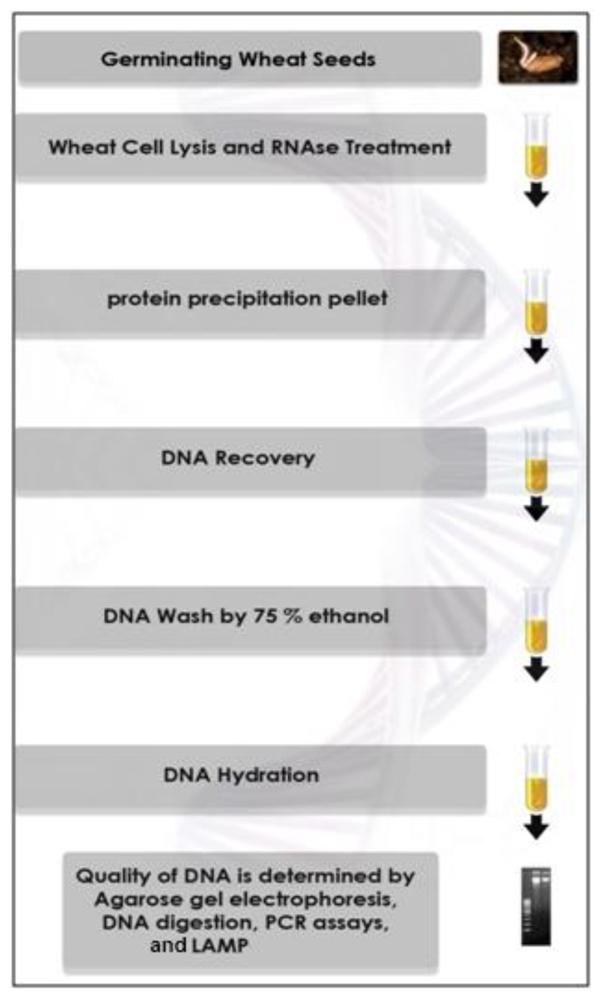
<p>Four strains of <italic>F. graminearum</italic> were inoculated on PDA slants and incubated for 2–4 weeks and spores were harvested as previously reported by Hilton <italic>et al.</italic> [<xref ref-type="bibr" rid="b22-ijms-12-03459">22</xref>]. Wheat seedlings were inoculated by placing 10 μL of <italic>F. graminearum</italic> conidial suspension (containing 10<sup>6</sup> conidia) on each emerging seedling leaf. Two leaves per seedling were inoculated. Control plants were treated with 10 μL of sterile distilled water. Inoculated plants were incubated in a moist chamber for 72 h and returned to the growth chamber at 21 °C (day)/16 °C (night) temperatures with day/night regime of 16 h/8 h. Total DNA of infested wheat samples was purified immediately after incubation as illustrated below (see <xref ref-type="fig" rid="f1-ijms-12-03459">Figure 1</xref>).</p></sec>
<sec>
<title>2.4. Fungal Cultures</title>
<p>Fungal isolates used in the current study are listed in <xref ref-type="table" rid="t1-ijms-12-03459">Table 1</xref>. Fungal cultures were maintained at 10 °C on synthetic nutrient agar (SNA) medium [<xref ref-type="bibr" rid="b23-ijms-12-03459">23</xref>] (0.5 g/L MgSO<sub>4</sub>·7 H<sub>2</sub>O, 1 g/L KNO<sub>3</sub> (Roth, Karlsruhe, Germany), 0.2 g/L sucrose, 0.2 g/L glucose, 0.5 g/L KCl, 1 g/L KH<sub>2</sub>PO<sub>4</sub> and 15 g/L agar (Merck, Darmstadt, Germany).</p></sec>
<sec>
<title>2.5. DNA Extraction</title>
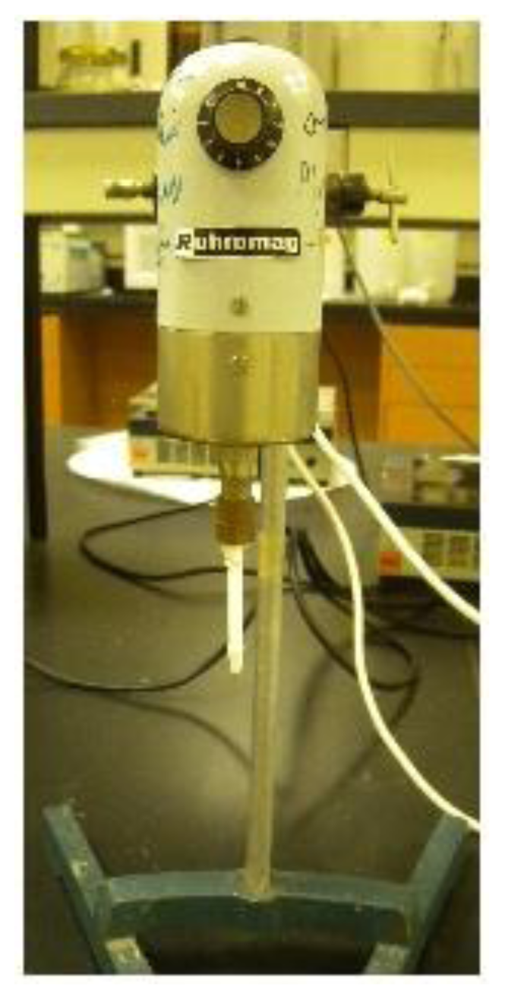
<p>For extraction of DNA from fungal mycelia, cultures were grown on disposable polystyrene Petri dishes (4 cm) which were filled with 1800 μL SNA. After solidification a layer of liquid medium (1400 μL Potato Dextrose Broth (PDB, 24 g/L; Scharlau, Barcelona, Spain) was added [<xref ref-type="bibr" rid="b24-ijms-12-03459">24</xref>]. The fungal isolates were transferred by inoculating a small mycelial disk from the edge of an actively growing colony onto the prepared Petri dishes that were subsequently incubated for 2–3 days at 28 °C. The mycelium grows fast and can easily be scraped from duplex media. Prior to DNA extraction, mycelia were lifted from the solid medium using sterilized pipette tips and transferred into sterile 1.5 mL microfuge tubes. Alternatively, a clean and sterile spatula was used to scrape myclia from the surface of the agar media before transfer. Germinated wheat seeds were transferred individually to sterile 1.5 mL microfuge tubes for DNA extraction. A hand-operated as well as an electric grinder model R10 (Retsch, Haan, Germany) (<xref ref-type="fig" rid="f2-ijms-12-03459">Figure 2</xref>) was used to homogenize 100 mg of fresh mycelia or one germinated wheat seed (about 100 mg) per 1.5 mL microfuge tube.</p>
<p>To prevent cross-contamination of DNA, the pestle tip was sanitized between isolations by dipping in 70% ethanol and the homogenizer was turned on for 3 s and subsequently the pestle tip was rinsed in sterile distilled water and dried using sterilized filter paper [<xref ref-type="bibr" rid="b24-ijms-12-03459">24</xref>]. The primary mechanical breakdown of germinated wheat seeds was carried out with DNA extraction buffer (300 μL) using a hand operated homogenizer instead of liquid nitrogen. Another three hundred micro liter pre-warmed (at 65 °C) DNA extraction buffer (200 mM Tris-HCl, pH 8.5, 250 mM NaCl, 25 mM EDTA, 0.5% SDS, 1% PVP) was added to the homogenized samples. Six micro liters of RNaseA (20 μg/mL water) were added and the microfuge tubes were incubated at 65 °C in a water bath for 15 min with irregular shaking and swirling every 5 min. For protein precipitation, 160 μL of 3 M sodium acetate (pH 5.3) were added and mixed carefully by inverting the tube. The mixture was centrifuged at 15,000× g for 8 min at room temperature. The supernatant was carefully transferred to a new tube and was precipitated with one equal volume of cold isopropanol at 4 °C, and thoroughly mixed to produce filamentous DNA followed by 10 min incubation at room temperature. Genomic DNA was collected by centrifugation at 8900× g for 10 min. The resulting pellet was washed twice with 75% ethanol at ambient temperature and subseqently centrifuged at 5700× g for 2 min. The pellet obtained was dried under vacuum using a Vacufuge Concentrator 5301 (Eppendorf, Hamburg, Germamy) at 37 °C for 5 min with &lt;20 mbar pressure. In the final step, DNA was eluted in 100 μL of sterile deionized water and kept at −20 °C until used as template for PCR or LAMP amplification. The extraction protocol is sketched schematically in <xref ref-type="fig" rid="f1-ijms-12-03459">Figure 1</xref> (see above).</p>
<p>The isolated DNA was measured by using the Nano-Drop (ND-1000) spectrophotometer (NanoDrop Technologies, Welmington, USA). DNA concentrations were confirmed using agarose gel electrophoresis. Ten microliters of purified DNA from the proposed procedure was run on a 1.5% (w/v) agarose gel containing 0.1 μg/mL of ethidium bromide. DNA was visualized using the Biorad Gel Doc System (Biorad, NSW, Australia).</p></sec>
<sec>
<title>2.6. Inter-Simple Sequence Repeats (ISSRs)</title>
<p>In this study, primer ISSR W8 containing eight CT-repeats was used for estimating genetic polymorphism of wheat varieties. PCR amplification was performed in a Techne Thermal Cycler-TC-3000 (Techne, Cambridge, UK). Polymerase chain reactions were performed using 50 ng of template DNA in 25 μL reaction volume using 0.2 unit of <italic>taq</italic> DNA polymerase (JenaBoscience, Jena, Germany) with the included reaction buffer containing (20 mM Tris-HCl, 10 mM (NH<sub>4</sub>)<sub>2</sub>SO<sub>4</sub>, 10 mM KCl, 2 mM MgSO<sub>4</sub>, 0.1% Triton X-100, pH 8.8), 20 pmol of ISSR W8 primer (see <xref ref-type="table" rid="t2-ijms-12-03459">Table 2</xref>), 0.2 mmol/L of each dNTP. ISSR PCR was carried out in a final volume of 25 μL according to the following thermal cycling protocol: initial denaturation at 94 °C for 3 min; followed by 35 cycles of denaturating at 94 °C for 30 s, annealing at 45 °C for 30 s, elongation at 72 °C for 30 s, followed by a final extension step at 72 °C for 5 min.</p></sec>
<sec>
<title>2.7. Trichodiene Synthase (Tri5) Gene Assay</title>
<p>The PCR primers Tox5-1 and Tox5-2 were used to amplify a 658 bp fragment from the trichodiene synthase gene <italic>tri5</italic> of trichothecene producing <italic>Fusarium</italic> species [<xref ref-type="bibr" rid="b20-ijms-12-03459">20</xref>]. The PCR mixture used was as described earlier and the PCR conditions were: initial denaturation at 94 °C for 3 min; followed by 35 cycles of denaturating at 94 °C for 30 s, annealing at 63 °C for 30 s, elongation at 72 °C for 1 min, followed by a final extension step at 72 °C for 7 min.</p></sec>
<sec>
<title>2.8. LAMP Reaction</title>
<p>Loop-mediated isothermal amplification (LAMP) of <italic>F. graminearum</italic> DNA was accomplished using the protocol described by Tomita <italic>et al</italic>. [<xref ref-type="bibr" rid="b25-ijms-12-03459">25</xref>] with slight modifications. Six primers as described in Niessen and Vogel [<xref ref-type="bibr" rid="b19-ijms-12-03459">19</xref>] were used in this study with nucleic acid sequences and concentrations as shown in <xref ref-type="table" rid="t2-ijms-12-03459">Table 2</xref>. The master mix was prepared containing per 25 μL reaction: 2.5 μL 10 × LAMP buffer (200 mM Tris-HCl, 100 mM KCl, 100 mM (NH<sub>4</sub>)<sub>2</sub>SO<sub>4</sub>, 80 mM MgSO<sub>4</sub>, 1% (w/v) Triton X-100, pH 8.8, all chemicals from Sigma-Aldrich, Taufkirchen, Germany), 3.5 μL dNTP mix (10 mM each, MP Biomedicals, Heidelberg, Germany), 2.6 μL primer mix (1.6 mM FIP-gaoA ID4, 1.6 mM BIP-gaoA ID4, 0.2 mM F3-gaoA ID4, 0.2 mM B3-gaoA ID4, 0.8 mM LoopF-gaoA ID4, 0.8 mM LoopB-gaoA ID4, Eurofins MWG Operon, Ebersberg, Germany), 8 U (1.0 μL) Bst DNA polymerase, large fragment (8000 U/mL, New England Biolabs, Frankfurt, Germany), 1 μL calcein reagent (see below). Sterile deionized water was added to result in a 25 μL total reaction volume, including template DNA. 2 μL of template DNA solution were added per reaction. The calcein reagent was prepared by mixing a 2 × LAMP buffer (see above) in which MgSO<sub>4</sub> was substituted by 25 mM MnCl<sub>2</sub> with calcein (Sigma-Aldrich, Taufkirchen, Germany) to result in a 2.5 mM solution. This solution was diluted 1:1 with with 80% glycerol and filter sterilized through a 0.2 μm filter cartridge (Sartorius, Göttingen, Germany). Aliquots of the calcein reagent were stored at −20 °C. Master mixes were distributed into 200 μL PCR tubes (Multiply μStrip Pro 8-strip, Sarstedt, Nümbrecht, Germany) and sample DNA was added. Water was added instead of DNA in negative controls. Amplificaton of DNA during LAMP was indicated by a bright green fluorescence under UV<sub>366nm</sub> light visible in the positive samples as compared to negative samples and the negative control with no fluorescence. Direct visualization of amplified product was achieved by separation of the LAMP reactions on 1.5% agarose gels following incubation. Gels were run at 60 V, 55 mA for 45 min and stained with ethidium bromide solution (1 g/mL). PCR amplicons were documented using a Biorad Gel Doc System (Biorad, NSW, Australia).</p></sec></sec>
<sec sec-type="results">
<title>3. Results</title>
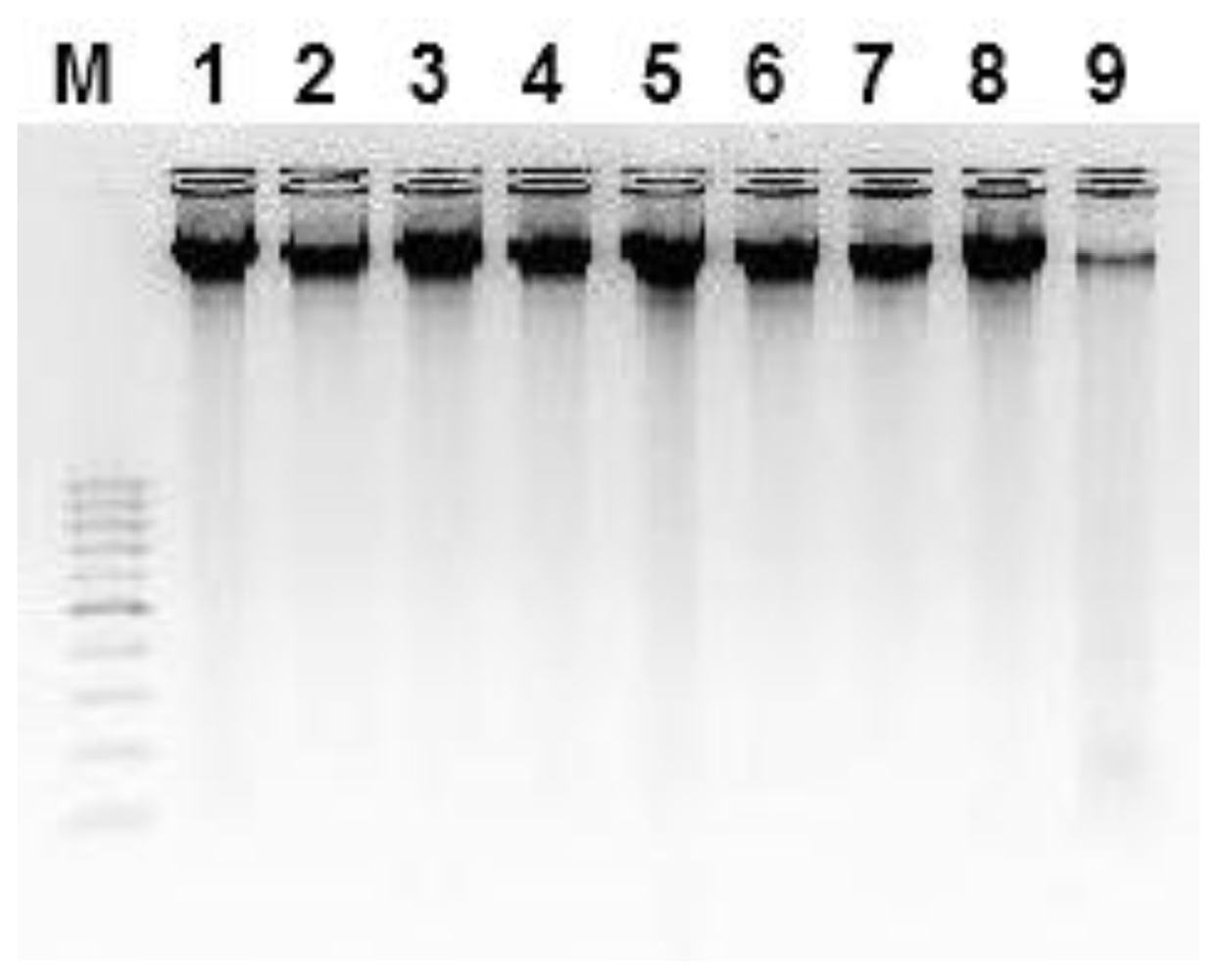
<p>The DNA isolated was mainly high molecular DNA with only a very small proportion of lower molecular DNA (see <xref ref-type="fig" rid="f3-ijms-12-03459">Figure 3</xref>). It had minimal contamination by polysaccharides and phenolic compounds as was confirmed by good digestibility with restriction endonucleases as well as by a 260/280 nm ration around 1.8 indicating high purity of DNA and absence of proteins and phenols (data not shown). RNase treatment was sufficient for degrading RNA. Treatment with RNase A can be done either after the nucleic acids have been isolated or by inclusion in the extraction buffer [<xref ref-type="bibr" rid="b26-ijms-12-03459">26</xref>]. The resulting DNA pellets were all colorless and dissolved easily in water. DNA yields ranged from 100 to 200 ng per 100 mg of homogenized material which is supposed to be sufficient material to conduct 200 PCRs (<xref ref-type="fig" rid="f3-ijms-12-03459">Figure 3</xref>).</p>
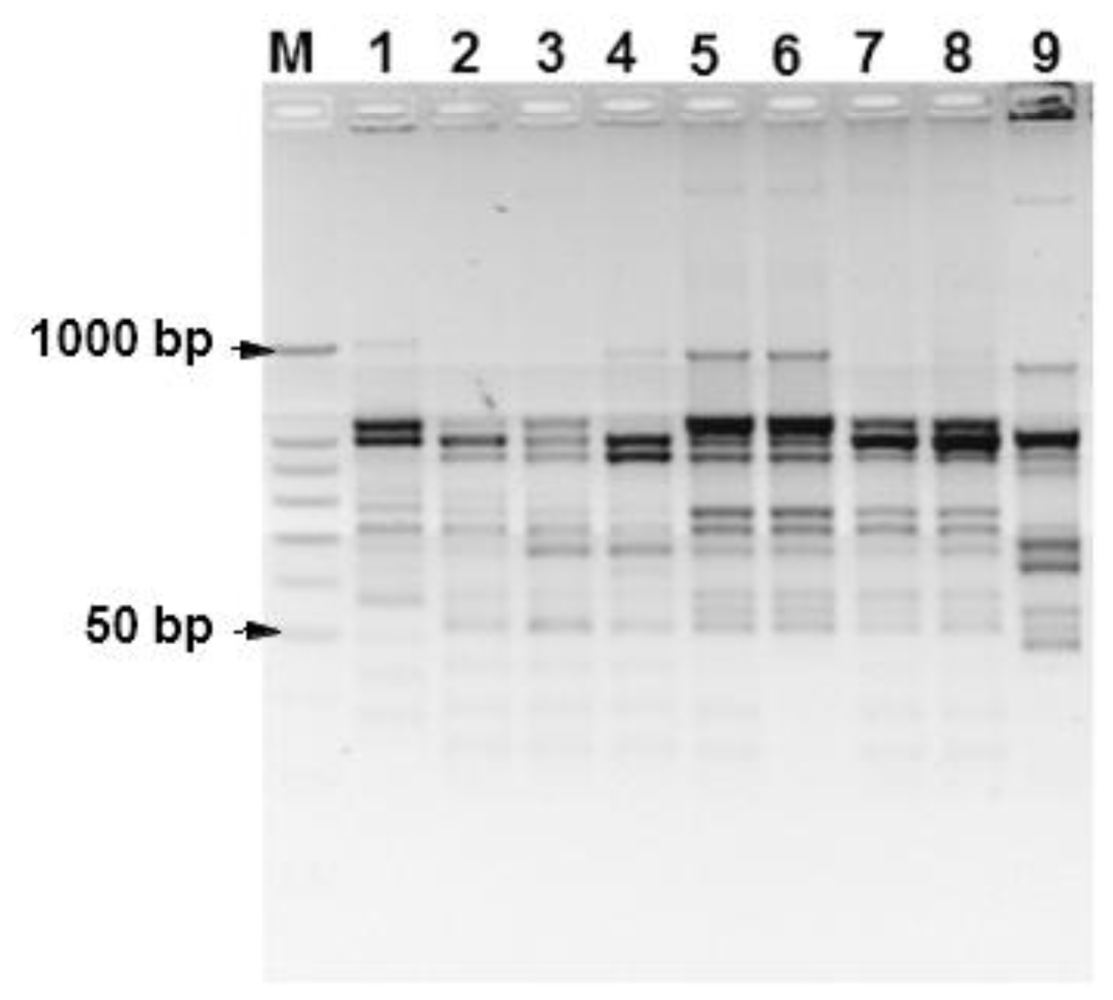
<p>In order to facilitate the efficiency and reliability of the DNA extraction method and the quality of the extracted DNA the seed DNA of wheat varieties was amplified using primer ISSR W8. It was confirmed that 21 ISSR fragments with the expected range of length between 50–2000 bp were amplified. Among these, 5 ISSR fragments were monomorphic in the tested varieties in the range from 90–900 bp (<xref ref-type="fig" rid="f4-ijms-12-03459">Figure 4</xref>). The percentage of polymorphic bands was 42% in the tested varieties. The ISSR W8 primer clearly differentiated between Egyptian (Giza 168 and Sakha 10) and Saudi Arabian wheat varieties.</p>
<p>Quality of the extracted fungal DNA was tested by using preparations from isolates of <italic>F. cerealis</italic>, <italic>F. chlamydosporum</italic>, <italic>F. concolor</italic>, <italic>F. culmorum</italic>, <italic>F. graminearum</italic>, <italic>F. langsethiae</italic>, <italic>F. incarnatum</italic>, <italic>F. proliferatum</italic> and <italic>F. verticillioides</italic> to test for amplifiability of a 658-bp fragment from the trichodiene synthase (<italic>tri5</italic>) gene [<xref ref-type="bibr" rid="b20-ijms-12-03459">20</xref>]. <xref ref-type="table" rid="t1-ijms-12-03459">Table 1</xref> shows the strains used and the results obtained. Detection of a 658 pb product occurred in the species which have been described to be producers of trichothecene mycotoxins in the literature.</p>
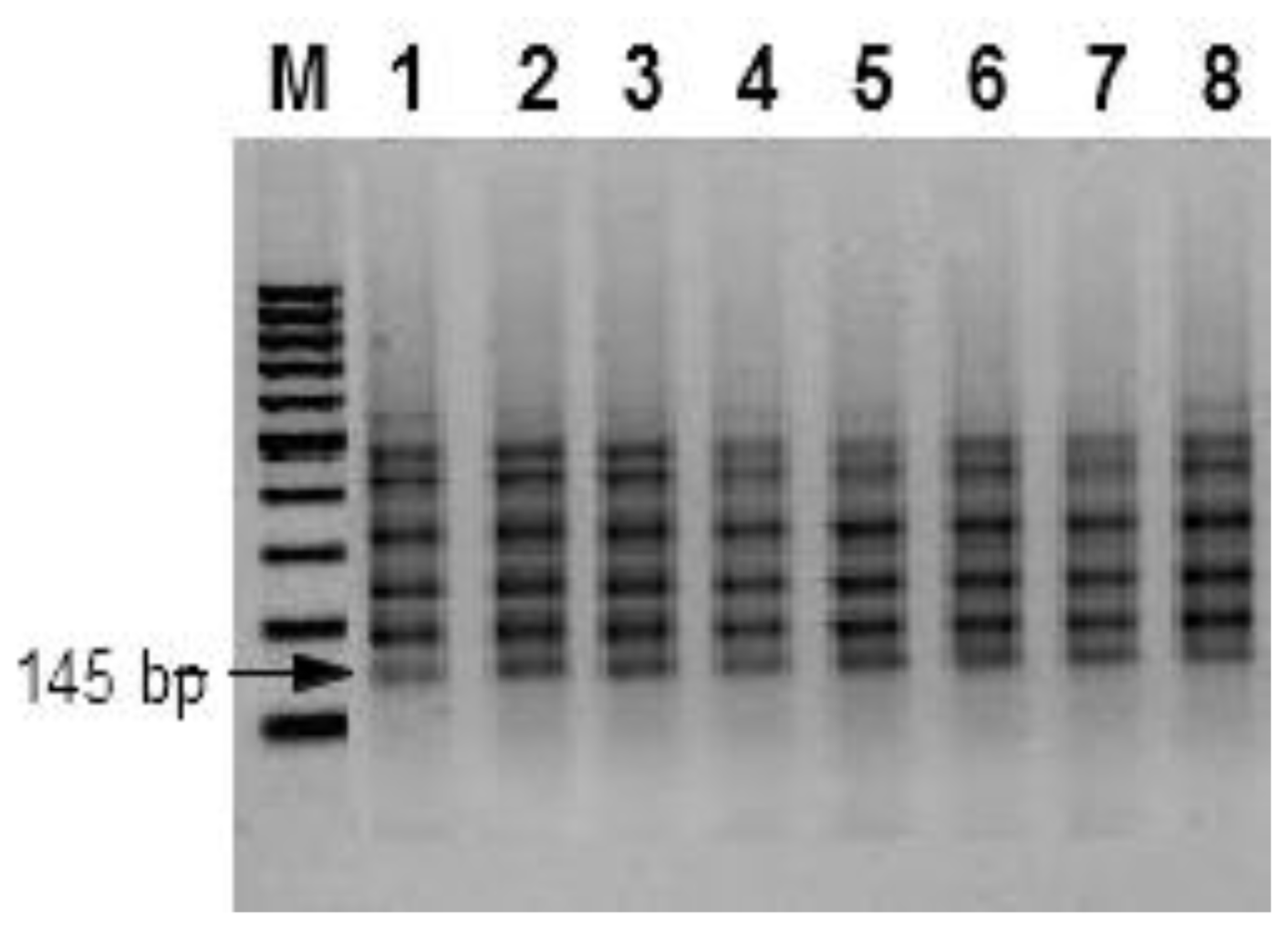
<p>LAMP reactions were accomplished using the primer set given in <xref ref-type="table" rid="t1-ijms-12-03459">Table 1</xref>. The primers were published previously [<xref ref-type="bibr" rid="b19-ijms-12-03459">19</xref>]. They were selected to identify six different regions on the <italic>gaoA</italic> gene of <italic>F. graminearum</italic>. A pair of loop primers was used in order to accelerate DNA amplification during LAMP. Detection of DNA amplification during LAMP under the conditions chosen was done routinely using the indirect calcein fluorescence reaction described by Tomita <italic>et al.</italic> [<xref ref-type="bibr" rid="b25-ijms-12-03459">25</xref>]. In order to demonstrate congruence of the results obtained with calcein indirect fluorescence, LAMP reactions were separated on an agarose gel and stained with ethidium bromide. The size of the LAMP reaction products ranged from 145 bp up to the loading well on the agarose gel, indicating specific amplification of the target sequence (<xref ref-type="fig" rid="f5-ijms-12-03459">Figure 5</xref>). Visualization of DNA amplification during LAMP was achieved by inspection of the reaction vessels under UV<sub>366nm</sub> trans-illumination after adding manganese quenched calcein to the master mix.</p>
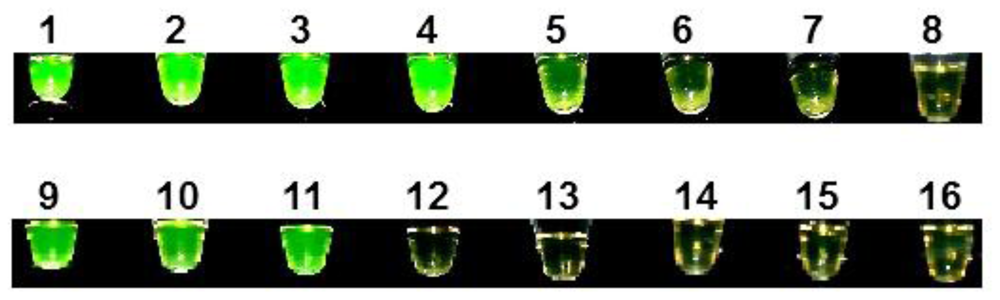
<p>As shown in <xref ref-type="fig" rid="f6-ijms-12-03459">Figure 6</xref>, positive reactions showed brilliant green fluorescence in addition to turning turbid while negative reactions showed no fluorescence and no turbidity. Inspection of the reaction vessels under daylight showed that positive reactions turned from light orange to greenish-yellow with turbidity whereas negative reactions remained light orange and stayed clear. Positive results were obtained for the four <italic>F. graminearum</italic> isolates tested, while all reactions with <italic>Fusarium</italic> spp. or other fungal species included for comparison (<xref ref-type="table" rid="t2-ijms-12-03459">Table 2</xref>) were negative with a response identical to the negative control to which no DNA was added. <italic>F. culmorum</italic> showed an intermediate reaction with a slight fluorescence in the LAMP reaction (see <xref ref-type="fig" rid="f6-ijms-12-03459">Figure 6</xref>, Sample 5).</p>
<p>Electrophoresis of the corresponding reaction showed that DNA was amplified under the reaction conditions in this sample (see <xref ref-type="fig" rid="f5-ijms-12-03459">Figure 5</xref>, lane 5). Intensity of the fluorescence signals obtained was independent from DNA concentrations in positive samples as long as their DNA concentrations were above the limit of detection. When DNA was extracted according to the new protocol from wheat seeds inoculated with <italic>Fusarium</italic> species, a fluorescent signal was produced only in samples infected with <italic>F. graminearum</italic> strains.(see <xref ref-type="fig" rid="f6-ijms-12-03459">Figure 6</xref>, Samples 9–11) indicating the effectiveness of the extraction method for the analysis of infected samples using species specific LAMP.</p></sec>
<sec sec-type="discussion">
<title>4. Discussion</title>
<p>The contamination of cereals by <italic>Fusarium</italic> species is a universal problem, and reliable and sensitive detection methods are needed. In order to use diagnostic PCR, rapid methods for isolation of <italic>Fusarium</italic> DNA were previously developed [<xref ref-type="bibr" rid="b27-ijms-12-03459">27</xref>,<xref ref-type="bibr" rid="b28-ijms-12-03459">28</xref>]. The major objective of the current study was to further optimize DNA extraction thus to allow constant quality of extracts and high efficiency of amplification in LAMP and PCR based methods. Mechanical grinding of cells directly in the DNA isolation buffer for extraction of DNA turned out to be very simple and cost effective since it did not need the use of liquid nitrogen. This is especially advantageous when huge numbers of samples need to be tested. Zhang and Stewart [<xref ref-type="bibr" rid="b29-ijms-12-03459">29</xref>] described a similar extraction protocol that uses an electric drill equipped with a bit to which a plastic tip was molded, which fit the bottom of a 1.5 mL micro tube for grinding cotton tissue. They used the macerated tissue for CTAB-based DNA extraction. During the SDS lysis phase, proteins and polysaccharides become trapped in large complexes that are coated with dodecyl sulfate. Additionally, the SDS might bind to proteins also in the purification step of the extraction, thus inhibiting degradation of the extracted DNA [<xref ref-type="bibr" rid="b30-ijms-12-03459">30</xref>,<xref ref-type="bibr" rid="b31-ijms-12-03459">31</xref>]. In the current method, contaminants were further removed by an isopropanol precipitation of DNA. Also, RNA contamination was fully removed by RNase A. The addition of high molar concentrations of NaCl in the extraction buffer increases the solubility of polysaccharides in ethanol, thus effectively inhibiting co-precipitation of the polysaccharides together with the DNA [<xref ref-type="bibr" rid="b32-ijms-12-03459">32</xref>]. PVP in the extraction buffer could promote the quantity and purity of DNA. According to Zidani <italic>et al.</italic> [<xref ref-type="bibr" rid="b33-ijms-12-03459">33</xref>], PVP promotes precipitation of phenolic compounds which often adhere to DNA forming stained extracts and interfering with DNA amplification reactions. During the current study the quality of DNA extracts was checked by determining the ratio of absorbance at A260/280. The ratio obtained varied from 1.6 to 1.8 indicating that the isolated DNA was free from protein contamination [<xref ref-type="bibr" rid="b34-ijms-12-03459">34</xref>]. Suitability of the DNA extraction protocol was demonstrated by applying three different types of amplification technologies. Random amplification of inter-simple sequence repeats or micro satellites was achieved using a primer which hybridizes to simple sequence repeats (SSRs) thus allowing amplification of the spacer regions between two binding sites. Results showed that microsatellites were amplified with the genomic DNA extracted from single seeds of different wheat varieties. The method described is therefore suitable for routine application in high-throughput molecular genetic analyses, such as breeding programs and gene mapping [<xref ref-type="bibr" rid="b35-ijms-12-03459">35</xref>]. Specific PCR amplification of a 658 bp portion of the <italic>tri5</italic> gene was done using primers Tox5-1 and Tox5-2 as reported by Niessen and Vogel [<xref ref-type="bibr" rid="b20-ijms-12-03459">20</xref>]. Amplification resulted in a single band of 650 bp in agarose gels for isolates of <italic>F. cerealis</italic>, <italic>F. chlamydosporum</italic>, <italic>F. concolor</italic>, <italic>F. culmorum</italic>, <italic>F. graminearum</italic>, <italic>F. langsethiae</italic>, <italic>F. incarnatum</italic>, <italic>F. proliferatum</italic> and <italic>F. verticillioides</italic> studied. Except for the latter two, all species have been described as producers of thrichothecene mycotoxins in the literature and can therefore be supposed to have a homolog of the <italic>tri5</italic> gene. <italic>F. proliferatum</italic> and <italic>F. verticillioides</italic>, however, do not produce trichothecenes but are typical producers of fumonisins. Positive reaction of the DNA extracted from the two species with the <italic>tri5</italic> specific primers was unexpected and could be a result of DNA transfer from other preparations during extraction. It is therefore of extreme importance to thoroughly clean all equipment before starting the next sample preparation. LAMP using a primer set targeted to the <italic>gaoA</italic> gene was used for detecting <italic>F. graminearum</italic> contamination in wheat seeds as well as to identify pure cultures of the fungus. The assay developed by Niessen and Vogel [<xref ref-type="bibr" rid="b19-ijms-12-03459">19</xref>] is cost-effective and suits high throughput detection of <italic>F. graminearum</italic> in wheat seeds. The LAMP assay is practically equipment-free, requiring only a device such as a water bath or simple heating block to maintain a constant temperature. It is therefore much less technically demanding as compared to PCR. Detectable copies of DNA were obtained after only 1 h of incubation under isothermal incubation at 63 °C, and visual evaluation of the outcome could be carried out using a simple UV lamp. A bright green fluorescence was easily detectable in samples in which DNA synthesis had taken place under the given conditions whereas negative samples did not fluoresce. The major advantage over other fluorescent stains, e.g., ethidium bromide [<xref ref-type="bibr" rid="b36-ijms-12-03459">36</xref>], SYBR green, propidium iodide [<xref ref-type="bibr" rid="b37-ijms-12-03459">37</xref>], Eva green [<xref ref-type="bibr" rid="b38-ijms-12-03459">38</xref>,<xref ref-type="bibr" rid="b39-ijms-12-03459">39</xref>] and the like which intercalate into the double stranded DNA structure, is that no inhibition of the amplification process occurs. The LAMP fluorescence detection reagent contains manganese loaded calcein which starts fluorescing after removal of the bivalent cation by complexation with pyrophosphate, a typical by product of DNA biosynthesis [<xref ref-type="bibr" rid="b19-ijms-12-03459">19</xref>,<xref ref-type="bibr" rid="b25-ijms-12-03459">25</xref>,<xref ref-type="bibr" rid="b40-ijms-12-03459">40</xref>]. Thus no interaction between the stain and the process of DNA amplification occurs.</p></sec>
<sec sec-type="conclusions">
<title>5. Conclusions</title>
<p>We describe a new and rapid protocol for DNA isolation from single wheat seeds and fungal mycelia which is fast, consistent and low-priced. The current method can be used for DNA extraction from developing (immature) seeds of cereals, such as barley, maize, sorghum, <italic>etc.</italic> The method can be used to prepare DNA from numerous wheat grains in short time for molecular analysis of plant varieties with ISSR based methods as well as specific amplification of DNA in PCR- and LAMP-based assays for the detection of toxigenic <italic>Fusarium</italic> spp. in cereals and pure cultures. The proposed method enables the extraction of DNA from a large number of samples rapidly and efficiently. It does not require expensive and environmentally hazardous reagents and equipment. It can therefore be performed even in low-technology laboratories for high throughput sample preparation suitable for various molecular analytical techniques.</p></sec></body>
<back>
<ack>
<title>Acknowledgements</title>
<p>This work was financially supported by grants from the National Plan of Science and Technology, King Abdulaziz City of Science and Technology, Riyadh, Saudi Arabia (10-Bio-971-02). We gratefully thank Hans-Peter Klink DSMZ, Germany for providing <italic>Fusarium</italic> reference strains.</p></ack>
<ref-list>
<title>References</title>
<ref id="b1-ijms-12-03459"><label>1</label><citation citation-type="journal"><person-group person-group-type="author"><name><surname>Sarwat</surname><given-names>M</given-names></name><name><surname>Negi</surname><given-names>MS</given-names></name><name><surname>Lakshmikumaran</surname><given-names>M</given-names></name><name><surname>Tyagi</surname><given-names>AK</given-names></name><name><surname>Das</surname><given-names>S</given-names></name><name><surname>Srivastava</surname><given-names>PS</given-names></name></person-group><article-title>A standardized protocol for genomic DNA isolation from <italic>Terminalia arjuna</italic> for genetic diversity analysis</article-title><source>Electron. J. Biotechnol</source><year>2006</year><volume>9</volume><fpage>86</fpage><lpage>91</lpage><pub-id pub-id-type="doi">10.2225/vol9-issue1-fulltext-3</pub-id></citation></ref>
<ref id="b2-ijms-12-03459"><label>2</label><citation citation-type="journal"><person-group person-group-type="author"><name><surname>Braid</surname><given-names>MD</given-names></name><name><surname>Daniels</surname><given-names>LM</given-names></name><name><surname>Kitts</surname><given-names>CL</given-names></name></person-group><article-title>Removal of PCR inhibitors from soil DNA by chemical flocculation</article-title><source>J. Microbiol. Methods</source><year>2003</year><volume>52</volume><fpage>389</fpage><pub-id pub-id-type="pmid">12531508</pub-id></citation></ref>
<ref id="b3-ijms-12-03459"><label>3</label><citation citation-type="journal"><person-group person-group-type="author"><name><surname>Chungwongse</surname><given-names>J</given-names></name><name><surname>Martin</surname><given-names>GB</given-names></name><name><surname>Tanksley</surname><given-names>SD</given-names></name></person-group><article-title>Pregermination genotypic screening using PCR amplification of half-seeds</article-title><source>Theor. Appl. Genet</source><year>1993</year><volume>86</volume><fpage>694</fpage><lpage>698</lpage></citation></ref>
<ref id="b4-ijms-12-03459"><label>4</label><citation citation-type="journal"><person-group person-group-type="author"><name><surname>Kang</surname><given-names>HW</given-names></name><name><surname>Cho</surname><given-names>YG</given-names></name><name><surname>Yoon</surname><given-names>UH</given-names></name><name><surname>Eun</surname><given-names>MY</given-names></name></person-group><article-title>A rapid DNA extraction method for RFLP and PCR analysis from single dry seed</article-title><source>Plant Mol. Biol. Report</source><year>1998</year><volume>16</volume><fpage>1</fpage><lpage>9</lpage><pub-id pub-id-type="doi">10.1023/A:1017158311412</pub-id></citation></ref>
<ref id="b5-ijms-12-03459"><label>5</label><citation citation-type="book"><person-group person-group-type="author"><name><surname>Desjardins</surname><given-names>AE</given-names></name></person-group><source>Fusarium Mycotoxins Chemistry, Genetics and Biology</source><publisher-name>APS Press</publisher-name><publisher-loc>St. Paul, MN, USA</publisher-loc><year>2006</year><fpage>145</fpage><lpage>194</lpage></citation></ref>
<ref id="b6-ijms-12-03459"><label>6</label><citation citation-type="journal"><person-group person-group-type="author"><name><surname>Niessen</surname><given-names>L</given-names></name></person-group><article-title>PCR-based detection and quantification of mycotoxin-producing fungi</article-title><source>Adv. Food Nutr. Res</source><year>2008</year><volume>54</volume><fpage>81</fpage><lpage>138</lpage><pub-id pub-id-type="pmid">18291305</pub-id></citation></ref>
<ref id="b7-ijms-12-03459"><label>7</label><citation citation-type="journal"><person-group person-group-type="author"><name><surname>Mulé</surname><given-names>G</given-names></name><name><surname>Gonzalez-Jaen</surname><given-names>MT</given-names></name><name><surname>Hornok</surname><given-names>L</given-names></name><name><surname>Nicholson</surname><given-names>P</given-names></name><name><surname>Waalwijk</surname><given-names>C</given-names></name></person-group><article-title>Advances in molecular diagnosis of toxigenic <italic>Fusarium</italic> species: A review</article-title><source>Food Addit. Contam</source><year>2005</year><volume>22</volume><fpage>316</fpage><lpage>323</lpage><pub-id pub-id-type="doi">10.1080/02652030500058296</pub-id><pub-id pub-id-type="pmid">16019801</pub-id></citation></ref>
<ref id="b8-ijms-12-03459"><label>8</label><citation citation-type="journal"><person-group person-group-type="author"><name><surname>Schnerr</surname><given-names>H</given-names></name><name><surname>Vogel</surname><given-names>RF</given-names></name><name><surname>Niessen</surname><given-names>L</given-names></name></person-group><article-title>Correlation between DNA of tricothecene-producing <italic>Fusarium</italic> species and deoxynivalenol concentrations in wheat-samples</article-title><source>Lett. Appl. Microbiol</source><year>2002</year><volume>35</volume><fpage>121</fpage><lpage>125</lpage><pub-id pub-id-type="doi">10.1046/j.1472-765X.2002.01146.x</pub-id><pub-id pub-id-type="pmid">12100586</pub-id></citation></ref>
<ref id="b9-ijms-12-03459"><label>9</label><citation citation-type="journal"><person-group person-group-type="author"><name><surname>Parida</surname><given-names>M</given-names></name><name><surname>Sannarangaiah</surname><given-names>S</given-names></name><name><surname>Dash</surname><given-names>PK</given-names></name><name><surname>Rao</surname><given-names>PV</given-names></name><name><surname>Morita</surname><given-names>K</given-names></name></person-group><article-title>Loop mediated isothermal amplification (LAMP): A new generation of innovative gene amplification technique; perspectives in clinical diagnosis of infectious diseases</article-title><source>Rev. Med. Virol</source><year>2008</year><volume>18</volume><fpage>407</fpage><lpage>421</lpage><pub-id pub-id-type="doi">10.1002/rmv.593</pub-id><pub-id pub-id-type="pmid">18716992</pub-id></citation></ref>
<ref id="b10-ijms-12-03459"><label>10</label><citation citation-type="journal"><person-group person-group-type="author"><name><surname>Endo</surname><given-names>S</given-names></name><name><surname>Komori</surname><given-names>T</given-names></name><name><surname>Ricci</surname><given-names>G</given-names></name><name><surname>Sano</surname><given-names>A</given-names></name><name><surname>Yokoyama</surname><given-names>K</given-names></name><name><surname>Ohori</surname><given-names>A</given-names></name><name><surname>Kamai</surname><given-names>K</given-names></name><name><surname>Franco</surname><given-names>M</given-names></name><name><surname>Miyaji</surname><given-names>M</given-names></name><name><surname>Nishimura</surname><given-names>K</given-names></name></person-group><article-title>Detection of gp43 of <italic>Paracoccidioides brasiliensis</italic> by the loop-mediated isothermal amplification (LAMP) method</article-title><source>FEMS Microbiol. Lett</source><year>2004</year><volume>234</volume><fpage>93</fpage><lpage>97</lpage><pub-id pub-id-type="doi">10.1111/j.1574-6968.2004.tb09518.x</pub-id><pub-id pub-id-type="pmid">15109725</pub-id></citation></ref>
<ref id="b11-ijms-12-03459"><label>11</label><citation citation-type="journal"><person-group person-group-type="author"><name><surname>Ohori</surname><given-names>A</given-names></name><name><surname>Endo</surname><given-names>S</given-names></name><name><surname>Yokoyama</surname><given-names>K</given-names></name><name><surname>Yarita</surname><given-names>K</given-names></name><name><surname>Yamaguchi</surname><given-names>M</given-names></name><name><surname>Kamai</surname><given-names>K</given-names></name><name><surname>Miyaji</surname><given-names>M</given-names></name><name><surname>Nishimura</surname><given-names>K</given-names></name></person-group><article-title>Rapid identification of <italic>Ochroconis gallopava</italic> by a loop-mediated isothermal amplification (LAMP) method</article-title><source>Vet. Microbiol</source><year>2006</year><volume>114</volume><fpage>359</fpage><lpage>365</lpage><pub-id pub-id-type="doi">10.1016/j.vetmic.2005.11.064</pub-id><pub-id pub-id-type="pmid">16386386</pub-id></citation></ref>
<ref id="b12-ijms-12-03459"><label>12</label><citation citation-type="journal"><person-group person-group-type="author"><name><surname>Uemura</surname><given-names>N</given-names></name><name><surname>Makimura</surname><given-names>K</given-names></name><name><surname>Onozaki</surname><given-names>M</given-names></name><name><surname>Otsuka</surname><given-names>Y</given-names></name><name><surname>Shibuya</surname><given-names>Y</given-names></name><name><surname>Yazaki</surname><given-names>H</given-names></name><name><surname>Kikuchi</surname><given-names>Y</given-names></name><name><surname>Abe</surname><given-names>S</given-names></name><name><surname>Kudoh</surname><given-names>S</given-names></name></person-group><article-title>Development of a loop-mediated isothermal amplification method for diagnosis of <italic>Pneumocystis pneumonia</italic></article-title><source>J. Medic. Microbiol</source><year>2008</year><volume>57</volume><fpage>50</fpage><lpage>57</lpage><pub-id pub-id-type="doi">10.1099/jmm.0.47216-0</pub-id></citation></ref>
<ref id="b13-ijms-12-03459"><label>13</label><citation citation-type="journal"><person-group person-group-type="author"><name><surname>Matsuzawa</surname><given-names>T</given-names></name><name><surname>Tanaka</surname><given-names>R</given-names></name><name><surname>Horie</surname><given-names>Y</given-names></name><name><surname>Gonoi</surname><given-names>T</given-names></name><name><surname>Yaguchi</surname><given-names>T</given-names></name></person-group><article-title>Development of rapid and specific molecular discrimination methods for pathogenic <italic>Emericella</italic> species</article-title><source>Jpn. J. Med. Mycol</source><year>2010</year><volume>51</volume><fpage>109</fpage><lpage>116</lpage><pub-id pub-id-type="doi">10.3314/jjmm.51.109</pub-id></citation></ref>
<ref id="b14-ijms-12-03459"><label>14</label><citation citation-type="journal"><person-group person-group-type="author"><name><surname>Sun</surname><given-names>J</given-names></name><name><surname>Najafzadeh</surname><given-names>MJ</given-names></name><name><surname>Vicente</surname><given-names>V</given-names></name><name><surname>Xi</surname><given-names>L</given-names></name><name><surname>de Hoog</surname><given-names>GS</given-names></name></person-group><article-title>Rapid detection of pathogenic fungi using loop-mediated isothermal amplification, exemplified by <italic>Fonsecaea</italic> agents of chromoblastomycosis</article-title><source>J. Microbiol. Methods</source><year>2010</year><volume>80</volume><fpage>19</fpage><lpage>24</lpage><pub-id pub-id-type="doi">10.1016/j.mimet.2009.10.002</pub-id><pub-id pub-id-type="pmid">19835914</pub-id></citation></ref>
<ref id="b15-ijms-12-03459"><label>15</label><citation citation-type="journal"><person-group person-group-type="author"><name><surname>Tomlinson</surname><given-names>JA</given-names></name><name><surname>Barker</surname><given-names>I</given-names></name><name><surname>Boonham</surname><given-names>N</given-names></name></person-group><article-title>Faster, simpler, more-specific methods for improved molecular detection of <italic>Phytophthora ramorum</italic> in the field</article-title><source>Appl. Environ. Microbiol</source><year>2007</year><volume>73</volume><fpage>4040</fpage><lpage>4047</lpage><pub-id pub-id-type="doi">10.1128/AEM.00161-07</pub-id><pub-id pub-id-type="pmid">17449689</pub-id></citation></ref>
<ref id="b16-ijms-12-03459"><label>16</label><citation citation-type="journal"><person-group person-group-type="author"><name><surname>Gadkar</surname><given-names>V</given-names></name><name><surname>Rillig</surname><given-names>MC</given-names></name></person-group><article-title>Evaluation of loop-mediated isothermal amplification (LAMP) to rapidly detect arbuscular mycorrhizal fungi</article-title><source>Soil Biol. Biochem</source><year>2008</year><volume>40</volume><fpage>540</fpage><lpage>543</lpage><pub-id pub-id-type="doi">10.1016/j.soilbio.2007.08.018</pub-id></citation></ref>
<ref id="b17-ijms-12-03459"><label>17</label><citation citation-type="journal"><person-group person-group-type="author"><name><surname>Hayashi</surname><given-names>N</given-names></name><name><surname>Arai</surname><given-names>R</given-names></name><name><surname>Tada</surname><given-names>S</given-names></name><name><surname>Taguchi</surname><given-names>H</given-names></name><name><surname>Ogawa</surname><given-names>Y</given-names></name></person-group><article-title>Detection and identification of <italic>Brettanomyces/Dekkera</italic> sp. yeasts with a loop-mediated isothermal amlificatioin method</article-title><source>Food Microbiol</source><year>2007</year><volume>24</volume><fpage>778</fpage><lpage>785</lpage><pub-id pub-id-type="doi">10.1016/j.fm.2007.01.007</pub-id><pub-id pub-id-type="pmid">17613376</pub-id></citation></ref>
<ref id="b18-ijms-12-03459"><label>18</label><citation citation-type="journal"><person-group person-group-type="author"><name><surname>Notomi</surname><given-names>T</given-names></name><name><surname>Okayama</surname><given-names>H</given-names></name><name><surname>Masubuchi</surname><given-names>H</given-names></name><name><surname>Yonekawa</surname><given-names>T</given-names></name><name><surname>Watanabe</surname><given-names>K</given-names></name><name><surname>Amino</surname><given-names>N</given-names></name><name><surname>Hase</surname><given-names>T</given-names></name></person-group><article-title>Loop-mediated isothermal amplification of DNA</article-title><source>Nucleic Acids Res</source><year>2000</year><volume>28</volume><fpage>e63</fpage><pub-id pub-id-type="doi">10.1093/nar/28.12.e63</pub-id><pub-id pub-id-type="pmid">10871386</pub-id></citation></ref>
<ref id="b19-ijms-12-03459"><label>19</label><citation citation-type="journal"><person-group person-group-type="author"><name><surname>Niessen</surname><given-names>L</given-names></name><name><surname>Vogel</surname><given-names>RF</given-names></name></person-group><article-title>Detection of <italic>Fusarium graminearum</italic> DNA using a loop-mediated isothermal amplification (LAMP) assay</article-title><source>Int. J. Food Microbiol</source><year>2010</year><volume>140</volume><fpage>183</fpage><lpage>191</lpage><pub-id pub-id-type="doi">10.1016/j.ijfoodmicro.2010.03.036</pub-id><pub-id pub-id-type="pmid">20442002</pub-id></citation></ref>
<ref id="b20-ijms-12-03459"><label>20</label><citation citation-type="journal"><person-group person-group-type="author"><name><surname>Niessen</surname><given-names>L</given-names></name><name><surname>Vogel</surname><given-names>RF</given-names></name></person-group><article-title>Group specific PCR-detection of potential trichochecene producing <italic>Fusarium</italic>-species in pure cultures and cereal samples</article-title><source>Syst. Appl. Microbiol</source><year>1998</year><volume>21</volume><fpage>618</fpage><lpage>621</lpage><pub-id pub-id-type="doi">10.1016/S0723-2020(98)80075-1</pub-id><pub-id pub-id-type="pmid">9924828</pub-id></citation></ref>
<ref id="b21-ijms-12-03459"><label>21</label><citation citation-type="journal"><person-group person-group-type="author"><name><surname>Nagaoka</surname><given-names>T</given-names></name><name><surname>Ogihara</surname><given-names>Y</given-names></name></person-group><article-title>Applicability of inter-simple sequence repeat polymorphisms in wheat for use as DNA markers in comparison to RFLP and RAPD markers</article-title><source>Theor. Appl. Genet</source><year>1997</year><volume>94</volume><fpage>597</fpage><lpage>602</lpage><pub-id pub-id-type="doi">10.1007/s001220050456</pub-id></citation></ref>
<ref id="b22-ijms-12-03459"><label>22</label><citation citation-type="journal"><person-group person-group-type="author"><name><surname>Hilton</surname><given-names>AJ</given-names></name><name><surname>Jenkinson</surname><given-names>P</given-names></name><name><surname>Hollins</surname><given-names>TW</given-names></name><name><surname>Parry</surname><given-names>DW</given-names></name></person-group><article-title>Relationship between cultivar height and severity of Fusarium ear blight in wheat</article-title><source>Plant Pathol</source><year>1999</year><volume>48</volume><fpage>202</fpage><lpage>208</lpage><pub-id pub-id-type="doi">10.1046/j.1365-3059.1999.00339.x</pub-id></citation></ref>
<ref id="b23-ijms-12-03459"><label>23</label><citation citation-type="journal"><person-group person-group-type="author"><name><surname>Nirenberg</surname><given-names>H</given-names></name></person-group><article-title>A simplified method for identifying <italic>Fusarium</italic> species occurring in wheat</article-title><source>Can. J. Bot</source><year>1981</year><volume>59</volume><fpage>1599</fpage><lpage>1609</lpage><pub-id pub-id-type="doi">10.1139/b81-217</pub-id></citation></ref>
<ref id="b24-ijms-12-03459"><label>24</label><citation citation-type="journal"><person-group person-group-type="author"><name><surname>Moslem</surname><given-names>MA</given-names></name><name><surname>Bahkali</surname><given-names>AH</given-names></name><name><surname>Abd-Elsalam</surname><given-names>KA</given-names></name><name><surname>Wit</surname><given-names>PJGM</given-names></name></person-group><article-title>An efficient method for DNA extraction from Cladosporioid fungi</article-title><source>Genet. Mol. Res</source><year>2010</year><volume>9</volume><fpage>2283</fpage><lpage>2291</lpage><pub-id pub-id-type="doi">10.4238/vol9-4gmr936</pub-id><pub-id pub-id-type="pmid">21128208</pub-id></citation></ref>
<ref id="b25-ijms-12-03459"><label>25</label><citation citation-type="journal"><person-group person-group-type="author"><name><surname>Tomita</surname><given-names>N</given-names></name><name><surname>Mori</surname><given-names>Y</given-names></name><name><surname>Kanda</surname><given-names>H</given-names></name><name><surname>Notomi</surname><given-names>T</given-names></name></person-group><article-title>Loop-mediated isothermal amplification (LAMP) of gene sequences and simple visual detection of products</article-title><source>Nat. Protoc</source><year>2008</year><volume>3</volume><fpage>877</fpage><lpage>882</lpage><pub-id pub-id-type="doi">10.1038/nprot.2008.57</pub-id><pub-id pub-id-type="pmid">18451795</pub-id></citation></ref>
<ref id="b26-ijms-12-03459"><label>26</label><citation citation-type="journal"><person-group person-group-type="author"><name><surname>Abd-Elsalam</surname><given-names>KA</given-names></name><name><surname>Asran-Amal</surname><given-names>A</given-names></name><name><surname>El-Samawaty</surname><given-names>A</given-names></name></person-group><article-title>Isolation of high quality DNA from cotton and its fungal pathogens</article-title><source>J. Plant Dis. Prot</source><year>2007</year><volume>114</volume><fpage>113</fpage><lpage>116</lpage></citation></ref>
<ref id="b27-ijms-12-03459"><label>27</label><citation citation-type="journal"><person-group person-group-type="author"><name><surname>Knoll</surname><given-names>S</given-names></name><name><surname>Mulfinger</surname><given-names>S</given-names></name><name><surname>Niessen</surname><given-names>L</given-names></name><name><surname>Vogel</surname><given-names>RF</given-names></name></person-group><article-title>Rapid preparation of <italic>Fusarium</italic> DNA from cereals for diagnostic PCR using sonification and an extraction kit</article-title><source>Plant Pathol</source><year>2002</year><volume>51</volume><fpage>728</fpage><lpage>734</lpage><pub-id pub-id-type="doi">10.1046/j.1365-3059.2002.00763.x</pub-id></citation></ref>
<ref id="b28-ijms-12-03459"><label>28</label><citation citation-type="journal"><person-group person-group-type="author"><name><surname>Nicolaisen</surname><given-names>M</given-names></name><name><surname>Supronienė</surname><given-names>S</given-names></name><name><surname>Nielsen</surname><given-names>KL</given-names></name><name><surname>Lazzaro</surname><given-names>I</given-names></name><name><surname>Spliid</surname><given-names>NH</given-names></name><name><surname>Justesen</surname><given-names>AF</given-names></name></person-group><article-title>Real-time PCR for quantification of eleven individual <italic>Fusarium</italic> species in cereals</article-title><source>J. Microbiol. Methods</source><year>2009</year><volume>76</volume><fpage>234</fpage><lpage>240</lpage><pub-id pub-id-type="doi">10.1016/j.mimet.2008.10.016</pub-id><pub-id pub-id-type="pmid">19047000</pub-id></citation></ref>
<ref id="b29-ijms-12-03459"><label>29</label><citation citation-type="journal"><person-group person-group-type="author"><name><surname>Zhang</surname><given-names>J</given-names></name><name><surname>Stewart</surname><given-names>JM</given-names></name></person-group><article-title>Economical and rapid method for extracting cotton genomic DNA</article-title><source>J. Cotton Sci</source><year>2000</year><volume>4</volume><fpage>193</fpage><lpage>201</lpage></citation></ref>
<ref id="b30-ijms-12-03459"><label>30</label><citation citation-type="journal"><person-group person-group-type="author"><name><surname>Dean</surname><given-names>TR</given-names></name><name><surname>Roop</surname><given-names>B</given-names></name><name><surname>Betancourt</surname><given-names>D</given-names></name><name><surname>Menetrez</surname><given-names>MY</given-names></name></person-group><article-title>A simple multiplex polymerase chain reaction assay for the identification of four environmentally relevant fungal contaminants</article-title><source>J. Microbiol. Methods</source><year>2005</year><volume>61</volume><fpage>9</fpage><lpage>16</lpage><pub-id pub-id-type="doi">10.1016/j.mimet.2004.10.015</pub-id><pub-id pub-id-type="pmid">15676191</pub-id></citation></ref>
<ref id="b31-ijms-12-03459"><label>31</label><citation citation-type="journal"><person-group person-group-type="author"><name><surname>Deshmukh</surname><given-names>VP</given-names></name><name><surname>Thakare</surname><given-names>PV</given-names></name><name><surname>Chaudhari</surname><given-names>US</given-names></name><name><surname>Gawande</surname><given-names>PA</given-names></name></person-group><article-title>A simple method for isolation of genomic DNA from fresh and dry leaves of <italic>Terminalia arjuna</italic> (Roxb.) Wight and Argot</article-title><source>Electron. J. Biotechnol</source><year>2007</year><volume>10</volume><fpage>468</fpage><lpage>472</lpage></citation></ref>
<ref id="b32-ijms-12-03459"><label>32</label><citation citation-type="journal"><person-group person-group-type="author"><name><surname>Ribeiro</surname><given-names>RA</given-names></name><name><surname>Lovato</surname><given-names>MB</given-names></name></person-group><article-title>Comparative analysis of different DNA extraction protocols in fresh and herbarium specimens of the genus Dalbergia</article-title><source>Genet. Mol. Res</source><year>2007</year><volume>6</volume><fpage>173</fpage><lpage>187</lpage><pub-id pub-id-type="pmid">17469067</pub-id></citation></ref>
<ref id="b33-ijms-12-03459"><label>33</label><citation citation-type="journal"><person-group person-group-type="author"><name><surname>Zidani</surname><given-names>S</given-names></name><name><surname>Ferchichi</surname><given-names>A</given-names></name><name><surname>Chaieb</surname><given-names>M</given-names></name></person-group><article-title>Genomic DNA extraction method from earl millet (<italic>Pennisetum glaucum</italic>) leaves</article-title><source>Afr. J. Biotechnol</source><year>2005</year><volume>8</volume><fpage>862</fpage><lpage>866</lpage></citation></ref>
<ref id="b34-ijms-12-03459"><label>34</label><citation citation-type="book"><person-group person-group-type="author"><name><surname>Weising</surname><given-names>K</given-names></name><name><surname>Nybom</surname><given-names>H</given-names></name><name><surname>Wolff</surname><given-names>K</given-names></name><name><surname>Kahl</surname><given-names>G</given-names></name></person-group><source>DNA Fingerprinting in Plants: Principles, Methods and Applications</source><edition>2nd ed</edition><publisher-name>CRC Press</publisher-name><publisher-loc>Boca Raton, FL, USA</publisher-loc><year>2005</year><fpage>106</fpage><lpage>107</lpage></citation></ref>
<ref id="b35-ijms-12-03459"><label>35</label><citation citation-type="book"><person-group person-group-type="author"><name><surname>Christopher</surname><given-names>M</given-names></name><name><surname>Cordeiro</surname><given-names>G</given-names></name><name><surname>Waters</surname><given-names>D</given-names></name><name><surname>Henry</surname><given-names>R</given-names></name></person-group><article-title>Marker Assisted Selection in Rice Improvement</article-title><source>A Report for the Rural Industries Research and Development Corporation; RIRDC Publication No. 04/011</source><publisher-name>RIRDC</publisher-name><publisher-loc>Kingston, Australia</publisher-loc><year>2004</year></citation></ref>
<ref id="b36-ijms-12-03459"><label>36</label><citation citation-type="journal"><person-group person-group-type="author"><name><surname>Nagamine</surname><given-names>K</given-names></name><name><surname>Watanabe</surname><given-names>K</given-names></name><name><surname>Ohtsuka</surname><given-names>K</given-names></name><name><surname>Hase</surname><given-names>T</given-names></name><name><surname>Notomi</surname><given-names>T</given-names></name></person-group><article-title>Loop-meidated isothermal amplification reaction using a non denatured template</article-title><source>Clin. Chem</source><year>2001</year><volume>9</volume><fpage>1742</fpage><lpage>1743</lpage></citation></ref>
<ref id="b37-ijms-12-03459"><label>37</label><citation citation-type="journal"><person-group person-group-type="author"><name><surname>Hill</surname><given-names>J</given-names></name><name><surname>Beriwal</surname><given-names>S</given-names></name><name><surname>Chandra</surname><given-names>I</given-names></name><name><surname>Paul</surname><given-names>VK</given-names></name><name><surname>Kapil</surname><given-names>A</given-names></name><name><surname>Singh</surname><given-names>T</given-names></name><name><surname>Wadowsky</surname><given-names>RM</given-names></name><name><surname>Singh</surname><given-names>V</given-names></name><name><surname>Goyal</surname><given-names>A</given-names></name><name><surname>Jahnukainen</surname><given-names>T</given-names></name><etal/></person-group><article-title>Loop-mediated isothermal amplification assay for rapid detection of common strains of <italic>Escherichia coli</italic></article-title><source>J. Clin. Microbiol</source><year>2008</year><volume>46</volume><fpage>2800</fpage><lpage>2804</lpage><pub-id pub-id-type="doi">10.1128/JCM.00152-08</pub-id><pub-id pub-id-type="pmid">18550738</pub-id></citation></ref>
<ref id="b38-ijms-12-03459"><label>38</label><citation citation-type="journal"><person-group person-group-type="author"><name><surname>Poon</surname><given-names>LL</given-names></name><name><surname>Wong</surname><given-names>BW</given-names></name><name><surname>Ma</surname><given-names>EH</given-names></name><name><surname>Chan</surname><given-names>KH</given-names></name><name><surname>Chow</surname><given-names>LM</given-names></name><name><surname>Abeyewickreme</surname><given-names>W</given-names></name><name><surname>Tangpukdee</surname><given-names>N</given-names></name><name><surname>Yuen</surname><given-names>KY</given-names></name><name><surname>Guan</surname><given-names>Y</given-names></name><name><surname>Looareesuwan</surname><given-names>S</given-names></name><name><surname>Peiris</surname><given-names>JS</given-names></name></person-group><article-title>Sensitive and inexpensive molecular test for falciparum malaria: detecting <italic>Plasmodium falciparum</italic> DNA directly from heat-treated blood by loop-mediated isothermal amplification</article-title><source>Clin. Chem</source><year>2006</year><volume>52</volume><fpage>303</fpage><lpage>306</lpage><pub-id pub-id-type="pmid">16339303</pub-id></citation></ref>
<ref id="b39-ijms-12-03459"><label>39</label><citation citation-type="journal"><person-group person-group-type="author"><name><surname>Qiao</surname><given-names>YM</given-names></name><name><surname>Guo</surname><given-names>YC</given-names></name><name><surname>Zhang</surname><given-names>XE</given-names></name><name><surname>Zhou</surname><given-names>YF</given-names></name><name><surname>Zhang</surname><given-names>ZP</given-names></name><name><surname>Wei</surname><given-names>HP</given-names></name><name><surname>Yang</surname><given-names>RF</given-names></name><name><surname>Wang</surname><given-names>DB</given-names></name></person-group><article-title>Loop-mediated isothermal amplification for rapid detection of <italic>Bacillus anthracis</italic> spores</article-title><source>Biotechnol. Lett</source><year>2007</year><volume>29</volume><fpage>1939</fpage><lpage>1946</lpage><pub-id pub-id-type="doi">10.1007/s10529-007-9472-9</pub-id><pub-id pub-id-type="pmid">17673950</pub-id></citation></ref>
<ref id="b40-ijms-12-03459"><label>40</label><citation citation-type="journal"><person-group person-group-type="author"><name><surname>Boehme</surname><given-names>CC</given-names></name><name><surname>Nabeta</surname><given-names>P</given-names></name><name><surname>Henastroza</surname><given-names>G</given-names></name><name><surname>Rubhana</surname><given-names>R</given-names></name><name><surname>Rahim</surname><given-names>Z</given-names></name><name><surname>Gerhardt</surname><given-names>M</given-names></name><name><surname>Sanga</surname><given-names>E</given-names></name><name><surname>Hoelscher</surname><given-names>M</given-names></name><name><surname>Notomi</surname><given-names>T</given-names></name><name><surname>Hase</surname><given-names>T</given-names></name><name><surname>Perkins</surname><given-names>MD</given-names></name></person-group><article-title>Operational feasibility of using loop-mediated isothermal amplification (LAMP) for the diagnosis of pulmonary TB in microscopy centres of developing countries</article-title><source>J. Clin. Microbiol</source><year>2007</year><volume>45</volume><fpage>1936</fpage><lpage>1940</lpage><pub-id pub-id-type="doi">10.1128/JCM.02352-06</pub-id><pub-id pub-id-type="pmid">17392443</pub-id></citation></ref></ref-list>
<sec sec-type="display-objects">
<title>Figures and Tables</title>
<fig id="f1-ijms-12-03459" position="float">
<label>Figure 1</label>
<caption>
<p>Flow diagram of the current method for DNA isolation from germinated wheat seeds.</p></caption>
<graphic xlink:href="ijms-12-03459f1.gif"/></fig>
<fig id="f2-ijms-12-03459" position="float">
<label>Figure 2</label>
<caption>
<p>Electric homogenizer model R10 (Retsch, Haan, Germany).</p></caption>
<graphic xlink:href="ijms-12-03459f2.gif"/></fig>
<fig id="f3-ijms-12-03459" position="float">
<label>Figure 3</label>
<caption>
<p>Agarose gel-electrophoresis of 100 ng representative wheat DNA extracted from germinated wheat seeds of different varieties. Lanes: M, 100 bp DNA marker, Lane 1, Giza 168; Lane 2, West Bred; Lane 3, Yecora rojo; Lane 4, Soundi 1; Lane 5, Soundi 2; Lane 6, Hab Ahmar; Lane 7, Lughaimi; Lane 8, Sama; and Lane 9, Sakha 10.</p></caption>
<graphic xlink:href="ijms-12-03459f3.gif"/></fig>
<fig id="f4-ijms-12-03459" position="float">
<label>Figure 4</label>
<caption>
<p>Random amplification of SSR markers from genomic DNA extracted from single seeds of different wheat varieties using the ISSR W8 primer. M, Bench Top PCR markers (Promega). Lane 1, Giza 168; Lane 2, West Bred; Lane 3, Yecora rojo; Lane 4, Soundi 1; Lane 5, Soundi 2; Lane 6, Hab Ahmar; Lane 7, Lughaimi; Lane 8, Sama; and Lane 9, Sakha 10.</p></caption>
<graphic xlink:href="ijms-12-03459f4.gif"/></fig>
<fig id="f5-ijms-12-03459" position="float">
<label>Figure 5</label>
<caption>
<p>Agarose gel electrophoresis of loop-mediated isothermal amplification products amplified from genomic DNA extacted during the current study. 1 = <italic>F. graminearum</italic> PPathRI 0555, 2 = <italic>F. graminearum</italic> DSMZ 1096, 3 = <italic>F. graminearum</italic> DSMZ 893, 4 = <italic>F. graminearum</italic> DSMZ 4527, 5 = <italic>F. culmorum</italic> DSMZ 1094, 6–8 = DNA from wheat seedling after artificial inoculation with <italic>F. graminearum</italic> DSMZ 893.</p></caption>
<graphic xlink:href="ijms-12-03459f5.gif"/></fig>
<fig id="f6-ijms-12-03459" position="float">
<label>Figure 6</label>
<caption>
<p>Visual appearance of LAMP-PCR products by using primer set gaoA ID4 and indirect calcein fluorescence detection under UV366 nm light. The reactions were incubated in a water bath for 60 min at 63 °C. 1 = <italic>F. graminearum</italic> PPathRI 0555, 2 = <italic>F. graminearum</italic> DSMZ 1096, 3 = <italic>F. graminearum</italic> DSMZ 893, 4 = <italic>F. graminearum</italic> DSMZ 4527, 5 = <italic>F. culmorum</italic> DSMZ 1094, 6 = <italic>F. avenaceum</italic> TMW 4.0140, 7 = <italic>F. cerealis</italic> DSMZ 8704, 8 = <italic>F. chlamydosporum</italic> DSMZ 62169, 9–11 = DNA from infested wheat seedling with <italic>F. graminearum</italic>, 12 = <italic>F. verticillioides</italic> DSMZ 62452, 13 = <italic>F. oxysporum</italic> PPathRI 0003, 14 = <italic>F. oxysporum</italic> f. sp. <italic>vasinfectum</italic> PPathRI 0421, 15 = <italic>Alternaria alternata,</italic> PPathRI 0500, 16 = <italic>Aspergillus flavus</italic> PPathRI 0111.</p></caption>
<graphic xlink:href="ijms-12-03459f6.gif"/></fig>
<table-wrap id="t1-ijms-12-03459" position="float">
<label>Table 1</label>
<caption>
<p>List of fungal species and isolates used to evaluate primer specificity in the <italic>tri5</italic> gene specifc PCR and <italic>F. graminearum</italic> specific LAMP assays.</p></caption>
<table frame="hsides" rules="groups">
<thead>
<tr>
<th align="left" valign="bottom">Fungal Species</th>
<th align="left" valign="bottom">Reference Strain</th>
<th align="left" valign="bottom">tri5 Gene</th>
<th align="left" valign="bottom">LAMP GaoA ID4</th></tr></thead>
<tbody>
<tr>
<td align="left" valign="top"><italic>F. avenaceum</italic></td>
<td align="left" valign="top">DSMZ 62785</td>
<td align="center" valign="top">−</td>
<td align="center" valign="top">−</td></tr>
<tr>
<td align="left" valign="top"><italic>F. avenaceum</italic></td>
<td align="left" valign="top">TMW 4.0140</td>
<td align="center" valign="top">−</td>
<td align="center" valign="top">−</td></tr>
<tr>
<td align="left" valign="top"><italic>F. cerealis</italic></td>
<td align="left" valign="top">DSMZ 8704</td>
<td align="center" valign="top">+</td>
<td align="center" valign="top">−</td></tr>
<tr>
<td align="left" valign="top"><italic>F. chlamydosporum</italic></td>
<td align="left" valign="top">DSMZ 62169</td>
<td align="center" valign="top">+</td>
<td align="center" valign="top">−</td></tr>
<tr>
<td align="left" valign="top"><italic>F. chlamydosporum</italic></td>
<td align="left" valign="top">PPathRI 0222</td>
<td align="center" valign="top">+</td>
<td align="center" valign="top">−</td></tr>
<tr>
<td align="left" valign="top"><italic>F. concolor</italic></td>
<td align="left" valign="top">DSMZ 62179</td>
<td align="center" valign="top">+</td>
<td align="center" valign="top">−</td></tr>
<tr>
<td align="left" valign="top"><italic>F. culmorum</italic></td>
<td align="left" valign="top">DSMZ 1094</td>
<td align="center" valign="top">+</td>
<td align="center" valign="top">−</td></tr>
<tr>
<td align="left" valign="top"><italic>F. graminearum</italic></td>
<td align="left" valign="top">PPathRI 0555</td>
<td align="center" valign="top">+</td>
<td align="center" valign="top">+</td></tr>
<tr>
<td align="left" valign="top"><italic>F. graminearum</italic></td>
<td align="left" valign="top">DSMZ 1096</td>
<td align="center" valign="top">+</td>
<td align="center" valign="top">+</td></tr>
<tr>
<td align="left" valign="top"><italic>F. graminearum</italic></td>
<td align="left" valign="top">DSMZ 893</td>
<td align="center" valign="top">+</td>
<td align="center" valign="top">+</td></tr>
<tr>
<td align="left" valign="top"><italic>F. graminearum</italic></td>
<td align="left" valign="top">TMW 4.0208</td>
<td align="center" valign="top">+</td>
<td align="center" valign="top">+</td></tr>
<tr>
<td align="left" valign="top"><italic>F. langsethiae</italic></td>
<td align="left" valign="top">TMW 4.0072</td>
<td align="center" valign="top">+</td>
<td align="center" valign="top">−</td></tr>
<tr>
<td align="left" valign="top"><italic>F. incarnatum</italic></td>
<td align="left" valign="top">DSMZ 62403</td>
<td align="center" valign="top">+</td>
<td align="center" valign="top">−</td></tr>
<tr>
<td align="left" valign="top"><italic>F. proliferatum</italic></td>
<td align="left" valign="top">DSMZ 62376</td>
<td align="center" valign="top">+</td>
<td align="center" valign="top">−</td></tr>
<tr>
<td align="left" valign="top"><italic>F. verticillioides</italic></td>
<td align="left" valign="top">DSMZ 62452</td>
<td align="center" valign="top">+</td>
<td align="center" valign="top">−</td></tr>
<tr>
<td align="left" valign="top"><italic>F. oxysporum</italic></td>
<td align="left" valign="top">PPathRI 0003</td>
<td align="center" valign="top">−</td>
<td align="center" valign="top">−</td></tr>
<tr>
<td align="left" valign="top"><italic>F. oxysporum</italic> f. sp. <italic>vasinfectum</italic></td>
<td align="left" valign="top">PPathRI 0421</td>
<td align="center" valign="top">−</td>
<td align="center" valign="top">−</td></tr>
<tr>
<td align="left" valign="top"><italic>Alternaria alternata</italic></td>
<td align="left" valign="top">PPathRI 0500</td>
<td align="center" valign="top">−</td>
<td align="center" valign="top">−</td></tr>
<tr>
<td align="left" valign="top"><italic>Aspergillus flavus</italic></td>
<td align="left" valign="top">PPathRI 0111</td>
<td align="center" valign="top">−</td>
<td align="center" valign="top">−</td></tr>
<tr>
<td align="left" valign="top"><italic>Macrophomina phaseolina</italic></td>
<td align="left" valign="top">PPathRI 0342</td>
<td align="center" valign="top">−</td>
<td align="center" valign="top">−</td></tr>
<tr>
<td align="left" valign="top"><italic>Rhizoctonia solani</italic></td>
<td align="left" valign="top">PPathRI 0471</td>
<td align="center" valign="top">−</td>
<td align="center" valign="top">−</td></tr></tbody></table>
<table-wrap-foot><fn id="tfn1-ijms-12-03459">
<p>TMW = Technische Mikrobiologie Weihenstephan, Freising, Germany; DSMZ = Deutsche Sammlung von Mikroorganismen und Zellkulturen, Darmstadt, Germany; PPathRI = Plant Pathology Research Institute, Giza, Egypt.</p></fn></table-wrap-foot></table-wrap>
<table-wrap id="t2-ijms-12-03459" position="float">
<label>Table 2</label>
<caption>
<p>Primers list used in the current study.</p></caption>
<table frame="hsides" rules="groups">
<thead>
<tr>
<th align="left" valign="bottom">Primer Code</th>
<th align="left" valign="bottom">Primer Sequence</th>
<th align="left" valign="bottom">Concentrations</th></tr></thead>
<tbody>
<tr>
<td align="left" valign="top">ISSR W8</td>
<td align="left" valign="top">5′-CTC TCT CTC TCT CTC TCT-3′</td>
<td align="center" valign="top">20 pmol</td></tr>
<tr>
<td align="left" valign="top">Tox5-1</td>
<td align="left" valign="top">5′-GCT GCT CAT CAC TTT GCT CAG-3′</td>
<td align="center" valign="top">20 pmol</td></tr>
<tr>
<td align="left" valign="top">Tox5-2</td>
<td align="left" valign="top">5′CTG ATC TGG TCA CGC TCA TC-3′</td>
<td align="center" valign="top">20 pmol</td></tr>
<tr>
<td align="left" valign="top">FIP-gaoA ID4</td>
<td align="left" valign="top">5′-CGC AAG TGA CGG CCC AGT TGC TTC GAG CCT CAG CAC CTA-3′</td>
<td align="center" valign="top">1.6 mM</td></tr>
<tr>
<td align="left" valign="top">BIP-gaoA ID4</td>
<td align="left" valign="top">5′-TGC AAC AAG GCC ATT GAT GGC CGT TGG CGC CAT AGA ATG T-3′</td>
<td align="center" valign="top">1.6 mM</td></tr>
<tr>
<td align="left" valign="top">F3-gaoA ID4</td>
<td align="left" valign="top">5′-AGG GAG TCT TCA GTT CCT GA-3′</td>
<td align="center" valign="top">0.2 mM</td></tr>
<tr>
<td align="left" valign="top">B3-gaoA ID4</td>
<td align="left" valign="top">5′-GTG AGG GGG CTT TGG ATC-3′</td>
<td align="center" valign="top">0.2 mM</td></tr>
<tr>
<td align="left" valign="top">LoopF-gaoA ID4</td>
<td align="left" valign="top">5′-GTT GCG AGA AAT GGC GCT TCC G-3′</td>
<td align="center" valign="top">0.8 mM</td></tr>
<tr>
<td align="left" valign="top">LoopB-gaoA ID4</td>
<td align="left" valign="top">5′-ACA AGG ATA CCT TTT GGC AC-3′</td>
<td align="center" valign="top">0.8 mM</td></tr></tbody></table>
<table-wrap-foot><fn id="tfn2-ijms-12-03459">
<p>All nucleotides were purchased from Eurofins MWG Operon, Ebersberg, Germany.</p></fn></table-wrap-foot></table-wrap></sec></back></article>