
<?xml version="1.0" encoding="UTF-8"?>
<!DOCTYPE article PUBLIC "-//NLM//DTD Journal Publishing DTD v2.3 20070202//EN" "journalpublishing.dtd">
<article xmlns:xlink="http://www.w3.org/1999/xlink" xml:lang="en" article-type="research-article">
<front>
<journal-meta>
<journal-id journal-id-type="publisher-id">ijms</journal-id>
<journal-title>International Journal of Molecular Sciences</journal-title>
<abbrev-journal-title>Int. J. Mol. Sci.</abbrev-journal-title>
<issn pub-type="epub">1422-0067</issn>
<publisher>
<publisher-name>Molecular Diversity Preservation International (MDPI)</publisher-name></publisher></journal-meta>
<article-meta>
<article-id pub-id-type="doi">10.3390/ijms12021222</article-id>
<article-id pub-id-type="publisher-id">ijms-12-01222</article-id>
<article-categories>
<subj-group>
<subject>Article</subject></subj-group></article-categories>
<title-group>
<article-title>Role of Rho Kinase in Microvascular Damage Following Cerebral Ischemia Reperfusion in Rats</article-title></title-group>
<contrib-group>
<contrib contrib-type="author">
<name><surname>Liu</surname><given-names>Kang</given-names></name><xref ref-type="aff" rid="af1-ijms-12-01222">1</xref><xref ref-type="aff" rid="af2-ijms-12-01222">2</xref><xref ref-type="fn" rid="fn1-ijms-12-01222">†</xref></contrib>
<contrib contrib-type="author">
<name><surname>Li</surname><given-names>Zhen</given-names></name><xref ref-type="aff" rid="af1-ijms-12-01222">1</xref><xref ref-type="fn" rid="fn1-ijms-12-01222">†</xref></contrib>
<contrib contrib-type="author">
<name><surname>Wu</surname><given-names>Tao</given-names></name><xref ref-type="aff" rid="af1-ijms-12-01222">1</xref></contrib>
<contrib contrib-type="author">
<name><surname>Ding</surname><given-names>Suju</given-names></name><xref ref-type="aff" rid="af1-ijms-12-01222">1</xref><xref ref-type="corresp" rid="c1-ijms-12-01222">*</xref></contrib></contrib-group>
<aff id="af1-ijms-12-01222">
<label>1</label> Department of Neurology, Changhai Hospital, Second Military Medical University, Shanghai 200433, China; E-Mails: <email>lllkkkjjj12345@sina.com</email> (K.L.); <email>wutao.doctor@hotmail.com</email> (T.W.); <email>jxleezhen@163.com</email> (Z.L.)</aff>
<aff id="af2-ijms-12-01222">
<label>2</label> Department of Neurology, the 456th Hospital of PLA, Jinan 250031, China</aff>
<author-notes><fn id="fn1-ijms-12-01222" fn-type="equal">
<label>†</label>
<p>These two authors contributed equally to this work.</p></fn>
<corresp id="c1-ijms-12-01222">
<label>*</label>Author to whom correspondence should be addressed; E-Mail: <email>dingsuju@yahoo.com</email>; Tel.: +86-21-25070615; Fax: +86-21-55780019.</corresp></author-notes>
<pub-date pub-type="epub">
<day>18</day>
<month>2</month>
<year>2011</year></pub-date>
<pub-date pub-type="collection">
<year>2011</year></pub-date>
<volume>12</volume>
<issue>2</issue>
<fpage>1222</fpage>
<lpage>1231</lpage>
<history>
<date date-type="received">
<day>12</day>
<month>12</month>
<year>2010</year></date>
<date date-type="rev-recd">
<day>21</day>
<month>1</month>
<year>2011</year></date>
<date date-type="accepted">
<day>7</day>
<month>2</month>
<year>2011</year></date></history>
<permissions>
<copyright-statement>© 2011 by the authors; licensee MDPI, Basel, Switzerland.</copyright-statement>
<copyright-year>2011</copyright-year>
<license license-type="open-access" xlink:href="http://creativecommons.org/licenses/by/3.0">
<p>This article is an open-access article distributed under the terms and conditions of the Creative Commons Attribution license (http://creativecommons.org/licenses/by/3.0/).</p></license></permissions>
<abstract>
<p>Rho kinase (ROCK) is a well-known downstream effector of Rho and plays an important role in various physiopathological processes. In this study, we aim to investigate the correlation between ROCK and microvascular damage in rat brain subjected to middle cerebral artery occlusion (MCAO) and reperfusion, and to elucidate the mechanisms underlying the microvascular damage. ROCK and matrix metalloproteinase 9 (MMP9) mRNA levels were determined by real time quantitative PCR, Laminin was detected by immunofluorescence and Blood Brain Barrier (BBB) permeability was examined by Evans Blue (EB) in rat MCAO models. We observed similar patterns of changes in ROCK expression, brain EB content, and Laminin expression at different time points after brain ischemia. Statistical analysis further confirmed a significant linear correlation of ROCK expression with the onset of microvascular damage in brain. Furthermore, the ROCK inhibitor fasudil decreased brain EB content but increased Laminin expression. These results provide strong evidence that ROCK mediates microvascular damage. In addition, we found that fasudil could significantly inhibit MMP9 expression induced by ischemia. Thus, our findings suggest that ROCK promotes microvascular damage by upregulating MMP9 and reveal ROCK as a promising therapeutic target for stroke.</p></abstract>
<kwd-group>
<kwd>ischemia reperfusion</kwd>
<kwd>MMP9</kwd>
<kwd>blood brain barrier</kwd>
<kwd>Laminin</kwd>
<kwd>Rho kinase</kwd></kwd-group></article-meta></front>
<body>
<sec sec-type="intro">
<label>1.</label>
<title>Introduction</title>
<p>Approximately 700,000 individuals are afflicted with a stroke each year in the United States and currently approximately two million survivors of stroke live in the U.S. with prolonged disability. In China, 1.5 million people die from stroke each year and in developed countries stroke is the third leading cause of death, only surpassed by heart disease and cancer [<xref ref-type="bibr" rid="b1-ijms-12-01222">1</xref>]. The economic, social and psychological costs of stroke are so significant that intense research has focused on understanding the underlying pathophysiology of stroke and the development of effective therapeutic options.</p>
<p>Therapies that reinstate cerebral blood flow (CBF) to the ischemic territory are partially efficacious but may lead to disability due to lack of neurovascular unit protection and the resulting brain microvascular damage after reperfusion. Microvascular damage, in turn, results in the accumulation of neutrophils, the activation of leukocytes and the release of inflammatory cytokines, which then promote a cellular inflammatory response and form a positive feedback. Consequently, release of oxidants, proteolytic enzymes and inflammatory cytokines change the blood brain barrier (BBB) permeability properties, leading to brain edema formation. Remarkably, matrix metalloproteinases (MMPs) released by activated leukocytes affect the integrity of the neurovascular unit, degrading the basal membrane [<xref ref-type="bibr" rid="b2-ijms-12-01222">2</xref>]. In particular, MMP9 has been known to contribute to hemorrhages after stroke and thrombolysis by t-PA treatment [<xref ref-type="bibr" rid="b3-ijms-12-01222">3</xref>]. Moreover, MMP9 knockout mice did not display BBB disruption after transient ischemia [<xref ref-type="bibr" rid="b4-ijms-12-01222">4</xref>]. These results suggest that MMP9 plays an important role in BBB disruption after stroke and indicate MMP9 as a promising therapeutic target for stroke.</p>
<p>Rho kinase (ROCK), a downstream effector of Rho, is a serine/threonine kinase that is activated when bound to the active GTP-bound form of Rho. Recent studies demonstrated that ROCK is activated in cerebral ischemia and ROCK inhibitors reduce infarct size in focal cerebral ischemia [<xref ref-type="bibr" rid="b5-ijms-12-01222">5</xref>]. However, the molecular details of the contribution of ROCK to brain microvascular damage remain largely elusive. Therefore, in this study, we investigated the relationship between ROCK expression and microvascular damage in rat brain subjected to middle cerebral artery occlusion and reperfusion (MCAO). We further examined the effect of ROCK inhibitor on microvascular damage and MMP9 expression to elucidate the mechanisms underlying the microvascular damage. Our results established a correlation among ROCK, brain EB content, laminin expression and MMP9 expression following MCAO, demonstrating the protective effects of fasudil on microvascular damage during cerebral ischemia.</p></sec>
<sec sec-type="materials|methods">
<label>2.</label>
<title>Materials and Methods</title>
<sec>
<label>2.1.</label>
<title>Experimental Animals and MCAO Model</title>
<p>Adult male Sprague-Dawley rats (300 ± 30 g) were cared for according to the Guide for the Care and Use of Laboratory Animals. The committee for experimental animals of Second Military Medical University approved all surgical procedures. Rats were anesthetized with chloral hydrate (350 mg/kg intraperitoneally; IP) and subjected to MCAO as described previously [<xref ref-type="bibr" rid="b6-ijms-12-01222">6</xref>]. In brief, we exposed the right common carotid artery, internal carotid artery, and external carotid artery surgically. A 4–0 monofilament nylon suture (Beijing Sunbio Biotech Co. Ltd.) with a rounded tip was inserted into the internal carotid artery through the external carotid artery stump and gently advanced to occlude the MCA. After 60 min of MCAO, the suture was removed to restore blood flow (reperfusion confirmed by laser Doppler). Sham-operated rats were manipulated in the same way; the monofilament was inserted to a depth of 1.0–2.0 mm with the MCA not occluded. Core body temperatures were monitored with a rectal probe and maintained at 37 °C during the whole procedure. All surgical procedures were performed under an operating stereomicroscope.</p>
<p>In one set, 120 rats were randomly divided into sham group, reperfusion 6 h group, reperfusion 24 h group, reperfusion 48 h group, and reperfusion 72 h group (24 rats per group). In another set, 72 rats were randomly divided into sham group, reperfusion 24 h group, and ROCK inhibitor (fasudil) treated group (24 rats per group) and were IP administered with saline or fasudil (15 mg/kg) once before operation and once 12 h after operation.</p></sec>
<sec>
<label>2.2.</label>
<title>Ischemic Core and Penumbra Dissections</title>
<p>The ischemic core and penumbra of the cortex were dissected following the protocols described previously [<xref ref-type="bibr" rid="b7-ijms-12-01222">7</xref>]. Briefly, each hemisphere was cut longitudinally, from dorsal to ventral at 1.5 mm from the midline to exclude medial brain structures that were supplied primarily by the anterior cerebral artery. A transverse diagonal incision at approximately the “2 o’clock” position separated the core from the penumbra.</p></sec>
<sec>
<label>2.3.</label>
<title>Determination of BBB Permeability</title>
<p>Evans Blue (EB, 2% in saline, 4 mL/kg) was injected intravenously 24 h after the onset of MCAO. The chest was subsequently opened under halothane anesthesia 1 h later. Rats were perfused with saline through the left ventricle at 110 mm Hg pressure until colorless perfusion fluid was obtained from the right atrium. After decapitation, the brain was blocked into 2 segments that included the levels bregma +2.7 and −0.3 mm. Coronal blocks were next divided into right and left hemispheres for local measurement of EB dye. Samples were weighed and placed in 50% trichloroacetic acid solution. Following homogenization and centrifugation, the extracted dye was diluted with ethanol (1:3), and its fluorescence was determined at 620 nm. Calculations were based on external standards in the same solvent (100–500 ng/mL). The tissue content of EB was quantified from a linear standard curve derived from known amounts of the dye and was expressed per gram of tissue.</p></sec>
<sec>
<label>2.4.</label>
<title>Immunofluorescence Staining for Laminin</title>
<p>For tissue harvesting, the rats were anesthetized with a lethal dose of sodium pentobarbital (80 mg/kg body weight). After decapitation, the brain was washed in 20% phosphate-buffered sucrose, then embedded and mounted in Tissue-Tek OCT compound. Serial longitudinal frozen sections (4 μm) were cut, fixed, and washed with phosphate-buffered saline (PBS) for 5 min, 3 times. After incubation with 5% normal goat serum for 1 h at RT, the sections were incubated with Laminin primary antibody (rabbit anti rat, Abcam) in a humid chamber at 32 °C for 1 h. The immunoreaction was visualized by treatment with CY3-conjugated goat anti-rabbit secondary antibody (Jackson) at 32 °C for 30 min in the dark. Immunostained sections were mounted and analyzed using a Leica epifluorescence microscope (Leica Microsystems Wetzlar GmbH, Germany). Three fields were randomly selected and semi-quantitation of the positive staining was performed using Leica-Qwin software with the florescence value calculated as Ga (positive gray value)–GA (background gray value).</p></sec>
<sec>
<label>2.5.</label>
<title>RNA Isolation and Real-Time Quantitative PCR</title>
<p>Total RNA was isolated from right cortical samples by Trizol reagent (Invitrogen), and RT was performed with TOYOBO RT kit (TOYOBO) according to the manufacturer’s instructions. PCR was performed with primers for ROCK (forward: 5′-CTGCTGAAGTCGTGCTTGCA-3′;</p>
<p>Reverse: 5′-AGCATGTTATCGGGCTTCACA-3′, amplicon: 79 bp);</p>
<p>MMP9 (forward: 5′-ACGAGGACTCCCCTCTGCAT-3′;</p>
<p>Reverse: 5′-AGGCCTTGGGTCAGGTTTAGA-3′, amplicon: 83 bp);</p>
<p>GAPDH was used as an internal standard (forward: 5′-CAGTGCCAGCCTCGTCTCAT-3′;</p>
<p>Reverse: 5′-TGGTAACCAGGCGTCCGATA-3′, amplicon: 79 bp).</p>
<p>The PCR products were quantified by ABI Prism<sup>®</sup> 7900HT Sequence Detection System.</p></sec>
<sec>
<label>2.6.</label>
<title>Statistical Analyses</title>
<p>All data are expressed as <italic>χ̄</italic> ± <italic>s</italic>. All data were analyzed with SPSS11.0 statistical software. One-way ANOVA, Bonferroni, Kruskal-Wallis H test and Pearson correlated analysis were performed. <italic>P</italic> &lt; 0.05 was considered as statistically significant.</p></sec></sec>
<sec sec-type="results">
<label>3.</label>
<title>Results</title>
<sec>
<label>3.1.</label>
<title>Expression of ROCK at Different Time Points after MCAO</title>
<p>By real-time quantitative PCR, we observed the changes of mRNA level of ROCK at different time points after MCAO (<xref ref-type="table" rid="t1-ijms-12-01222">Table 1</xref>). The expression level of ROCK increased 6 h after reperfusion and the increase was significant compared with a sham group (<italic>P</italic> &lt; 0.01). The expression of ROCK kept increasing 6–24 h after reperfusion, and then decreased gradually 48 h after perfusion. The different time points group all showed significant difference in ROCK expression compared with the sham group (<italic>P</italic> &lt; 0.01), while there was no significant difference between 24 h after reperfusion group and 6 h after reperfusion group (<italic>P</italic> &gt; 0.05).</p></sec>
<sec>
<label>3.2.</label>
<title>BBB Permeability at Different Time Points after MCAO</title>
<p>By EB method, we measured EB contents at different time points after MCAO (<xref ref-type="table" rid="t1-ijms-12-01222">Table 1</xref>). Clearly, EB content increased 6 h after perfusion, with significant difference from sham group (<italic>P</italic> &lt; 0.01). EB content gradually increased 6–48 h after perfusion, suggesting that BBB permeability increased gradually and microvascular structure was gradually damaged. However, EB content began to decrease 48 h after perfusion. The difference in EB content was significant when each individual group was compared with sham group (<italic>P</italic> &lt; 0.01) or compared with each other (<italic>P</italic> &lt; 0.01).</p></sec>
<sec>
<label>3.3.</label>
<title>Expression of Laminin at Different Time Points after MCAO</title>
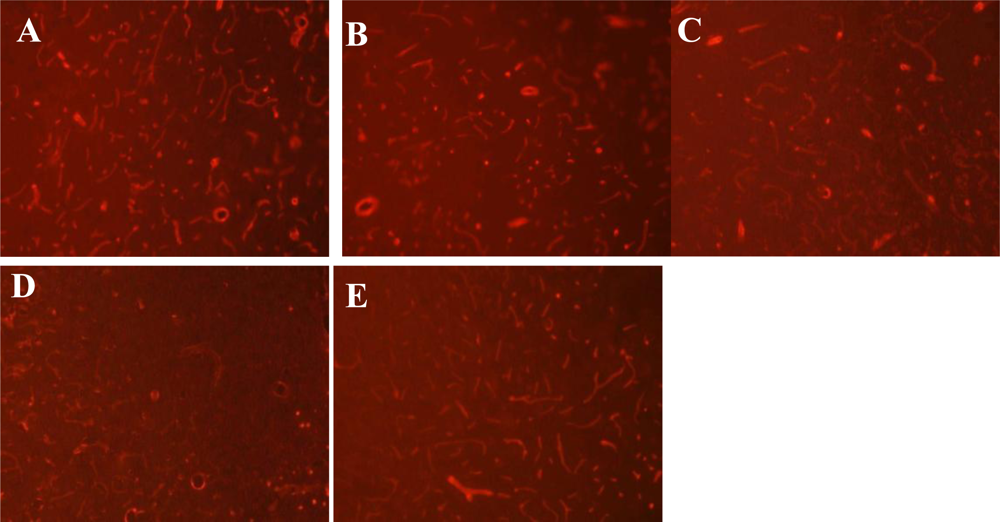
<p>By immunofluorescence staining, we detected the expression of Laminin in the microvascular basal membrane in rat ischemic penumbra. As shown in <xref ref-type="fig" rid="f1-ijms-12-01222">Figure 1</xref>, we observed different staining patterns for Laminin at different time points after MCAO. While strong positive staining for Laminin was detected in the sham group, slightly weaker staining was observed 6 h after perfusion. Moreover, 24 h after perfusion, the staining for Laminin was significantly weaker with both the positive areas and the staining intensity decreased. We could also observe basal membrane damage such as breakdown. The weakest staining for Laminin was observed at 48 h after perfusion, when both the positive areas and staining intensity were lowest. The staining was blurry and the shape was irregular, demonstrating that substantial basal membrane damage occurred. In comparison, the staining for Laminin was recovered and microvascular regeneration could be observed 72 h after perfusion.</p>
<p>To obtain a quantitative comparison of Laminin expression, we performed semi-quantitative analysis with Leica-Qwin software. The results demonstrated that Laminin expression decreased gradually 6–48 h after perfusion, was lowest at 48 h after perfusion, and then gradually increased (<xref ref-type="table" rid="t1-ijms-12-01222">Table 1</xref>). At the different time points, all groups showed significant difference in Laminin expression compared with the sham group (<italic>P</italic> &lt; 0.01). In addition, although there was no significant difference between the 24 h after reperfusion group and 72 h after reperfusion group (<italic>P</italic> &gt; 0.05), there was a significant difference when any other two groups were compared (<italic>P</italic> &lt; 0.05).</p></sec>
<sec>
<label>3.4.</label>
<title>Correlation among ROCK mRNA Level, Brain EB Content and Laminin Expression after MCAO</title>
<p>Since we observed similar changes in ROCK mRNA level, brain EB content and Laminin expression after MCAO, next we attempted to address their association. Based on statistical analysis, the correlation coefficient r between ROCK expression and brain EB content was 0.925, and it was statistically significant (<italic>P</italic> = 0.025 &lt; 0.05). The correlation coefficient r between ROCK expression and Laminin expression was −0.955, and it was also statistically significant (<italic>P</italic> = 0.011 &lt; 0.05). Thus, these data suggest that ROCK expression is positively correlated with BBB permeability and negatively correlated with Laminin expression.</p></sec>
<sec>
<label>3.5.</label>
<title>ROCK Inhibitor Decreases BBB Permeability after MCAO</title>
<p>Since ROCK plays a role in the pathology of stroke, we decided to use the ROCK inhibitor fasudil to evaluate its effects on microvascular damage after MCAO. First, we examined the impact of fasudil on BBB permeability by measuring brain EB content. As shown in <xref ref-type="table" rid="t2-ijms-12-01222">Table 2</xref>, compared with the sham group, brain EB content was significantly higher in both the 24 h reperfusion group and 24 h reperfusion plus fasudil group (<italic>P</italic> &lt; 0.05). However, brain EB content was significantly lower in the 24 h reperfusion plus fasudil group than in the 24 h reperfusion group (<italic>P</italic> &lt; 0.05), suggesting that the ROCK inhibitor decreases BBB permeability.</p></sec>
<sec>
<label>3.6.</label>
<title>ROCK Inhibitor Rescues Laminin Expression after MCAO</title>
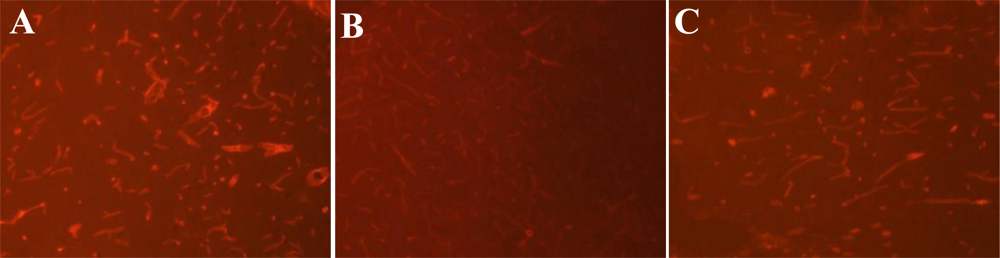
<p>Next we examined the effect of fasudil on basal membrane by immunofluorescence staining for Laminin. As shown in <xref ref-type="fig" rid="f2-ijms-12-01222">Figure 2</xref>, compared with the sham group, 24 h after perfusion, the staining for Laminin was much weaker and basal membrane breakdown was obvious. Interestingly, fasudil partially rescued positive staining for Laminin and promoted microvascular regeneration.</p>
<p>Further semi-quantitative analysis demonstrated that Laminin expression was significantly lower in both the 24 h reperfusion group and 24 h reperfusion plus fasudil group compared with the sham group (<italic>P</italic> &lt; 0.05). Nevertheless, Laminin expression was significantly higher in the 24 h reperfusion plus fasudil group compared with the 24 h reperfusion group (<italic>P</italic> &lt; 0.05) (<xref ref-type="table" rid="t2-ijms-12-01222">Table 2</xref>). Collectively, these data suggest that the ROCK inhibitor could antagonize basal lamina damage and the downregulation of Laminin following brain ischemia reperfusion.</p></sec>
<sec>
<label>3.7.</label>
<title>ROCK Inhibitor Inhibits MMP9 Expression after MCAO</title>
<p>Finally, we examined the effect of fasudil on MMP9 expression after MCAO. Real-time quantitative PCR experiments demonstrated that the mRNA level of MMP9 was significantly higher in both the 24 h reperfusion group and the 24 h reperfusion plus fasudil group, compared with the sham group (<italic>P</italic> &lt; 0.05). However, the mRNA level of MMP9 was significantly lower in the 24 h reperfusion plus fasudil group compared with 24 h reperfusion group (<italic>P</italic> &lt; 0.05) (<xref ref-type="table" rid="t2-ijms-12-01222">Table 2</xref>). Thus, these results indicate that ROCK inhibitor inhibits MMP9 expression following brain ischemia reperfusion.</p></sec></sec>
<sec sec-type="discussion">
<label>4.</label>
<title>Discussion</title>
<p>Cerebral microvessels have a unique feature, which protects sensitive brain cells from disturbing elements circulating in the blood. The BBB exists primarily as a selective diffusion barrier at the level of the cerebral microvascular endothelium, characterized by the presence of tight cell-cell junctions and a lack of fenestrations. Pericytes and endothelial cells are ensheathed by the basal membrane, a 30 to 40 nm thick membrane. The basal membrane is one of the three basic components in the microvasculature and its main component is Laminin. Accumulating evidence indicates that Laminin dysfunction leads to basal membrane damage, microvascular impairment and BBB defects, which in turn results in brain edema and hemorrhage transformation after perfusion. It has been reported recently that Laminin expression was downregulated during ischemia-reperfusion [<xref ref-type="bibr" rid="b8-ijms-12-01222">8</xref>]. Thus, Laminin level may reflect the integrity of basal membrane and indicate possible microvascular damages.</p>
<p>ROCK is a well-known downstream effector of Rho and plays an important role in various physiopathological processes. For example, ROCK is implicated in vascular smooth muscle cell contraction, actin cytoskeleton organization, cell adhesion and motility, and gene expression. At the molecular level, ROCK activates signaling cascades that accelerate inflammation/oxidative stress, thrombus formation, and fibrosis, thus contributing to microvascular damage.</p>
<p>Recently, the ROCK inhibitor fasudil was reported to protect the vascular endothelium by inhibiting neutrophil adhesion and reducing neutrophil-induced endothelial injury, indicating the critical role of the Rho/ROCK pathway in diabetic retinal microvasculopathy [<xref ref-type="bibr" rid="b9-ijms-12-01222">9</xref>]. In the present study, we found similar pattern of changes in ROCK expression, brain EB content that indicates BBB permeability, and Laminin expression at different time points after brain ischemia reperfusion. Statistical analysis further confirmed the correlation among ROCK mRNA level, brain EB content and Laminin expression as we documented. These results strongly suggest that ROCK is involved in microvascular damage. Furthermore, by use of the ROCK inhibitor fasudil, we found that fasudil decreased brain EB content but increased Laminin expression, thus exhibiting protective effects against microvascular damage. These results provide further evidence that ROCK mediates microvascular damage.</p>
<p>Matrix metalloproteinases (MMPs) play important roles in the pathogenesis of CNS diseases that share common pathophysiological processes, such as BBB disruption, oxidative stress, remodeling of the extracellular matrix (ECM) and inflammation [<xref ref-type="bibr" rid="b10-ijms-12-01222">10</xref>]. The expression of MMPs, especially MMP2, MMP9 and MMP10, is induced by cerebral ischemia [<xref ref-type="bibr" rid="b11-ijms-12-01222">11</xref>]. Among MMPs, MMP9 is crucially involved in BBB disruption due to the degradation of the ECM and damage of basal lamina, which consequently leads to brain edema and hemorrhage [<xref ref-type="bibr" rid="b12-ijms-12-01222">12</xref>–<xref ref-type="bibr" rid="b14-ijms-12-01222">14</xref>]. Most recently, MMP9 was found to promote hemorrhagic transformation and spontaneous intracerebral hemorrhage during hypertension [<xref ref-type="bibr" rid="b15-ijms-12-01222">15</xref>]. MMP9 is also involved in the pathogenesis of early brain injury of subarachnoid hemorrhage through degrading Laminin [<xref ref-type="bibr" rid="b16-ijms-12-01222">16</xref>]. In accordance with these reported studies, here we found that MMP9 expression was increased significantly in the rat ischemic penumbra 24 h after reperfusion, thus confirming the induction of MMP9 by brain ischemia. Interestingly, we found that fasudil could significantly inhibit MMP9 expression induced by ischemia, suggesting that ROCK may promote microvascular damage by upregulating MMP9 expression during ischemia reperfusion. However, further investigation of the potential mechanism by which ROCK regulates MMP9 during cerebral ischemia will be necessary to confirm our conclusion and will be the aim of our next study.</p>
<p>In summary, to our knowledge, we are the first to establish the correlation among ROCK mRNA level, brain EB content and Laminin expression following MCAO. Our results provide strong evidence that ROCK mediates microvascular damage. In addition, by use of the ROCK inhibitor fasudil, our study suggests a novel mechanism by which ROCK may upregulate MMP9 expression to contribute to microvascular damage during cerebral ischemia. Taken together, our findings reveal ROCK as a promising therapeutic target for stroke.</p></sec></body>
<back>
<ack>
<p>We thank Jianming Jiang, Xiaojun Hou, Xiaoying Bi, Jiasi Li, Shuguang Li, Shengdong Chen, Jianfeng Wong, and Shi Wang for technical assistance.</p></ack>
<ref-list>
<title>References</title>
<ref id="b1-ijms-12-01222"><label>1.</label><citation citation-type="journal"><person-group person-group-type="author"><name><surname>Doyle</surname><given-names>KP</given-names></name><name><surname>Simon</surname><given-names>RP</given-names></name><name><surname>Stenzel-Poore</surname><given-names>MP</given-names></name></person-group><article-title>Mechanisms of ischemic brain damage</article-title><source>Neuropharmacology</source><year>2008</year><volume>55</volume><fpage>310</fpage><lpage>318</lpage><pub-id pub-id-type="doi">10.1016/j.neuropharm.2008.01.005</pub-id><pub-id pub-id-type="pmid">18308346</pub-id></citation></ref>
<ref id="b2-ijms-12-01222"><label>2.</label><citation citation-type="journal"><person-group person-group-type="author"><name><surname>Weiss</surname><given-names>N</given-names></name><name><surname>Miller</surname><given-names>F</given-names></name><name><surname>Cazaubon</surname><given-names>S</given-names></name><name><surname>Couraud</surname><given-names>PO</given-names></name></person-group><article-title>The blood-brain barrier in brain homeostasis and neurological diseases</article-title><source>Biochim. Biophys. Acta</source><year>2009</year><volume>1788</volume><fpage>842</fpage><lpage>857</lpage><pub-id pub-id-type="doi">10.1016/j.bbamem.2008.10.022</pub-id><pub-id pub-id-type="pmid">19061857</pub-id></citation></ref>
<ref id="b3-ijms-12-01222"><label>3.</label><citation citation-type="journal"><person-group person-group-type="author"><name><surname>Montaner</surname><given-names>J</given-names></name><name><surname>Alvarez-Sabin</surname><given-names>J</given-names></name><name><surname>Molina</surname><given-names>CA</given-names></name><name><surname>Angles</surname><given-names>A</given-names></name><name><surname>Abilleira</surname><given-names>S</given-names></name><name><surname>Arenillas</surname><given-names>J</given-names></name><name><surname>Monasterio</surname><given-names>J</given-names></name></person-group><article-title>Matrix metalloproteinase expression is related to hemorrhagic transformation after cardioembolic stroke</article-title><source>Stroke</source><year>2001</year><volume>32</volume><fpage>2762</fpage><lpage>2767</lpage><pub-id pub-id-type="doi">10.1161/hs1201.99512</pub-id><pub-id pub-id-type="pmid">11739970</pub-id></citation></ref>
<ref id="b4-ijms-12-01222"><label>4.</label><citation citation-type="journal"><person-group person-group-type="author"><name><surname>Asahi</surname><given-names>M</given-names></name><name><surname>Wang</surname><given-names>X</given-names></name><name><surname>Mori</surname><given-names>T</given-names></name><name><surname>Sumii</surname><given-names>T</given-names></name><name><surname>Jung</surname><given-names>JC</given-names></name><name><surname>Moskowitz</surname><given-names>MA</given-names></name><name><surname>Fini</surname><given-names>ME</given-names></name><name><surname>Lo</surname><given-names>EH</given-names></name></person-group><article-title>Effects of matrix metalloproteinase-9 gene knock-out on the proteolysis of blood-brain barrier and white matter components after cerebral ischemia</article-title><source>J. Neurosci</source><year>2001</year><volume>21</volume><fpage>7724</fpage><lpage>7732</lpage><pub-id pub-id-type="pmid">11567062</pub-id></citation></ref>
<ref id="b5-ijms-12-01222"><label>5.</label><citation citation-type="journal"><person-group person-group-type="author"><name><surname>Rikitake</surname><given-names>Y</given-names></name><name><surname>Kim</surname><given-names>HH</given-names></name><name><surname>Huang</surname><given-names>Z</given-names></name><name><surname>Seto</surname><given-names>M</given-names></name><name><surname>Yano</surname><given-names>K</given-names></name><name><surname>Asano</surname><given-names>T</given-names></name><name><surname>Moskowitz</surname><given-names>MA</given-names></name><name><surname>Liao</surname><given-names>JK</given-names></name></person-group><article-title>Inhibition of Rho kinase (ROCK) leads to increased cerebral blood flow and stroke protection</article-title><source>Stroke</source><year>2005</year><volume>36</volume><fpage>2251</fpage><lpage>2257</lpage><pub-id pub-id-type="doi">10.1161/01.STR.0000181077.84981.11</pub-id><pub-id pub-id-type="pmid">16141422</pub-id></citation></ref>
<ref id="b6-ijms-12-01222"><label>6.</label><citation citation-type="journal"><person-group person-group-type="author"><name><surname>Longa</surname><given-names>EZ</given-names></name><name><surname>Weinstein</surname><given-names>PR</given-names></name><name><surname>Carlson</surname><given-names>S</given-names></name><name><surname>Cummins</surname><given-names>R</given-names></name></person-group><article-title>Reversible middle cerebral artery occlusion without craniectomy in rats</article-title><source>Stroke</source><year>1989</year><volume>20</volume><fpage>84</fpage><lpage>91</lpage><pub-id pub-id-type="doi">10.1161/01.STR.20.1.84</pub-id><pub-id pub-id-type="pmid">2643202</pub-id></citation></ref>
<ref id="b7-ijms-12-01222"><label>7.</label><citation citation-type="journal"><person-group person-group-type="author"><name><surname>Ashwal</surname><given-names>S</given-names></name><name><surname>Tone</surname><given-names>B</given-names></name><name><surname>Tian</surname><given-names>HR</given-names></name><name><surname>Cole</surname><given-names>DJ</given-names></name><name><surname>Pearce</surname><given-names>WJ</given-names></name></person-group><article-title>Core and penumbral nitric oxide synthase activity during cerebral ischemia and reperfusion</article-title><source>Stroke</source><year>1998</year><volume>29</volume><fpage>1037</fpage><lpage>1046</lpage><pub-id pub-id-type="doi">10.1161/01.STR.29.5.1037</pub-id><pub-id pub-id-type="pmid">9596255</pub-id></citation></ref>
<ref id="b8-ijms-12-01222"><label>8.</label><citation citation-type="journal"><person-group person-group-type="author"><name><surname>Zhang</surname><given-names>W</given-names></name><name><surname>Zhao</surname><given-names>WQ</given-names></name><name><surname>Lu</surname><given-names>HD</given-names></name></person-group><article-title>Change of neurovascular unit after ischemia-reperfusion damage in rat brain</article-title><source>Chin. J. Geriatr. Heart Brain Vessel Dis</source><year>2008</year><volume>10</volume><fpage>620</fpage><lpage>622</lpage></citation></ref>
<ref id="b9-ijms-12-01222"><label>9.</label><citation citation-type="journal"><person-group person-group-type="author"><name><surname>Arita</surname><given-names>R</given-names></name><name><surname>Hata</surname><given-names>Y</given-names></name><name><surname>Nakao</surname><given-names>S</given-names></name><name><surname>Kita</surname><given-names>T</given-names></name><name><surname>Miura</surname><given-names>M</given-names></name><name><surname>Kawahara</surname><given-names>S</given-names></name><name><surname>Zandi</surname><given-names>S</given-names></name><name><surname>Almulki</surname><given-names>L</given-names></name><name><surname>Tayyari</surname><given-names>F</given-names></name><name><surname>Shimokawa</surname><given-names>H</given-names></name><etal/></person-group><article-title>Rho kinase inhibition by fasudil ameliorates diabetes-induced microvascular damage</article-title><source>Diabetes</source><year>2009</year><volume>58</volume><fpage>215</fpage><lpage>226</lpage><pub-id pub-id-type="doi">10.2337/db08-0762</pub-id><pub-id pub-id-type="pmid">18840783</pub-id></citation></ref>
<ref id="b10-ijms-12-01222"><label>10.</label><citation citation-type="journal"><person-group person-group-type="author"><name><surname>Gasche</surname><given-names>Y</given-names></name><name><surname>Soccal</surname><given-names>PM</given-names></name><name><surname>Kanemitsu</surname><given-names>M</given-names></name><name><surname>Copin</surname><given-names>JC</given-names></name></person-group><article-title>Matrix mettalloproteinases and diseases of the central nervous system with a special emphasis on ischemic brain</article-title><source>Front Biosci</source><year>2006</year><volume>11</volume><fpage>1289</fpage><lpage>1301</lpage><pub-id pub-id-type="doi">10.2741/1883</pub-id><pub-id pub-id-type="pmid">16368516</pub-id></citation></ref>
<ref id="b11-ijms-12-01222"><label>11.</label><citation citation-type="journal"><person-group person-group-type="author"><name><surname>Cuadrado</surname><given-names>E</given-names></name><name><surname>Rosell</surname><given-names>A</given-names></name><name><surname>Penalba</surname><given-names>A</given-names></name><name><surname>Slevin</surname><given-names>M</given-names></name><name><surname>Alvarez-Sabín</surname><given-names>J</given-names></name><name><surname>Ortega-Aznar</surname><given-names>A</given-names></name><name><surname>Montaner</surname><given-names>J</given-names></name></person-group><article-title>Vascular MMP-9/TIMP-2 and neuronal MMP-10 up-regulation in human brain after stroke: A combined laser microdissection and protein array study</article-title><source>J. Proteome Res</source><year>2009</year><volume>8</volume><fpage>3191</fpage><lpage>3197</lpage><pub-id pub-id-type="doi">10.1021/pr801012x</pub-id><pub-id pub-id-type="pmid">19317417</pub-id></citation></ref>
<ref id="b12-ijms-12-01222"><label>12.</label><citation citation-type="journal"><person-group person-group-type="author"><name><surname>Lescot</surname><given-names>T</given-names></name><name><surname>Fulla-Oller</surname><given-names>L</given-names></name><name><surname>Palmier</surname><given-names>B</given-names></name><name><surname>Po</surname><given-names>C</given-names></name><name><surname>Beziaud</surname><given-names>T</given-names></name><name><surname>Puybasset</surname><given-names>L</given-names></name><name><surname>Plotkine</surname><given-names>M</given-names></name><name><surname>Gillet</surname><given-names>B</given-names></name><name><surname>Meric</surname><given-names>P</given-names></name><name><surname>Marchand-Leroux</surname><given-names>C</given-names></name></person-group><article-title>Effect of acute Poly(ADP-Ribose) polymerase inhibition by 3-AB on blood-brain barrier permeability and edema formation after focal traumatic brain injury in rats</article-title><source>J. Neurotrauma</source><year>2010</year><volume>27</volume><fpage>1069</fpage><lpage>1079</lpage><pub-id pub-id-type="doi">10.1089/neu.2009.1188</pub-id><pub-id pub-id-type="pmid">20380552</pub-id></citation></ref>
<ref id="b13-ijms-12-01222"><label>13.</label><citation citation-type="journal"><person-group person-group-type="author"><name><surname>Maddahi</surname><given-names>A</given-names></name><name><surname>Chen</surname><given-names>Q</given-names></name><name><surname>Edvinsson</surname><given-names>L</given-names></name></person-group><article-title>Enhanced cerebrovascular expression of matrix metalloproteinase-9 and tissue inhibitor of metalloproteinase-1 via the MEK/ERK pathway during cerebral ischemia in the rat</article-title><source>BMC Neurosci</source><year>2009</year><volume>4</volume><fpage>56</fpage></citation></ref>
<ref id="b14-ijms-12-01222"><label>14.</label><citation citation-type="journal"><person-group person-group-type="author"><name><surname>Barr</surname><given-names>TL</given-names></name><name><surname>Latour</surname><given-names>LL</given-names></name><name><surname>Lee</surname><given-names>KY</given-names></name><name><surname>Schaewe</surname><given-names>TJ</given-names></name><name><surname>Luby</surname><given-names>M</given-names></name><name><surname>Chang</surname><given-names>GS</given-names></name><name><surname>El-Zammar</surname><given-names>Z</given-names></name><name><surname>Alam</surname><given-names>S</given-names></name><name><surname>Hallenbeck</surname><given-names>JM</given-names></name><name><surname>Kidwell</surname><given-names>CS</given-names></name><etal/></person-group><article-title>Blood-brain barrier disruption in humans is independently associated with increased matrix metalloproteinase-9</article-title><source>Stroke</source><year>2010</year><volume>41</volume><fpage>123</fpage><lpage>128</lpage><pub-id pub-id-type="doi">10.1161/STROKEAHA.109.570515</pub-id></citation></ref>
<ref id="b15-ijms-12-01222"><label>15.</label><citation citation-type="journal"><person-group person-group-type="author"><name><surname>Wakisaka</surname><given-names>Y</given-names></name><name><surname>Chu</surname><given-names>Y</given-names></name><name><surname>Miller</surname><given-names>JD</given-names></name><name><surname>Rosenberg</surname><given-names>GA</given-names></name><name><surname>Heistad</surname><given-names>DD</given-names></name></person-group><article-title>Spontaneous intracerebral hemorrhage during acute and chronic hypertension in mice</article-title><source>J. Cereb. Blood Flow Metab</source><year>2010</year><volume>30</volume><fpage>56</fpage><lpage>69</lpage><pub-id pub-id-type="doi">10.1038/jcbfm.2009.183</pub-id><pub-id pub-id-type="pmid">19724290</pub-id></citation></ref>
<ref id="b16-ijms-12-01222"><label>16.</label><citation citation-type="journal"><person-group person-group-type="author"><name><surname>Guo</surname><given-names>Z</given-names></name><name><surname>Sun</surname><given-names>X</given-names></name><name><surname>He</surname><given-names>Z</given-names></name><name><surname>Jiang</surname><given-names>Y</given-names></name><name><surname>Zhang</surname><given-names>X</given-names></name></person-group><article-title>Role of matrix metalloproteinase-9 in apoptosis of hippocampal neurons in rats during early brain injury after subarachnoid hemorrhage</article-title><source>Neurol. Sci</source><year>2010</year><volume>31</volume><fpage>143</fpage><lpage>149</lpage><pub-id pub-id-type="pmid">20033829</pub-id></citation></ref></ref-list>
<sec sec-type="display-objects">
<title>Figures and Tables</title>
<fig id="f1-ijms-12-01222" position="float">
<label>Figure 1.</label>
<caption>
<p>Immunofluorescence staining for Laminin at basal membrane in rat ischemic penumbra. Laminin expression was observed using aLeica epifluorescence microscope. The red signal represents positive staining. (<bold>A</bold>) sham; (<bold>B</bold>) reperfusion 6 h; (<bold>C</bold>) reperfusion 24 h; (<bold>D</bold>) reperfusion 48 h; (<bold>E</bold>) reperfusion 72 h. Amplification: 40×.</p></caption>
<graphic xlink:href="ijms-12-01222f1.gif"/></fig>
<fig id="f2-ijms-12-01222" position="float">
<label>Figure 2.</label>
<caption>
<p>Immunofluorescence staining for Laminin at basal membrane in rat ischemic penumbra. Laminin expression was observed using a Leica epifluorescence microscope. The red signal represents positive staining. (<bold>A</bold>) sham; (<bold>B</bold>) reperfusion 24 h; (<bold>C</bold>) reperfusion 24 h + fasudil. Amplification: 40 ×.</p></caption>
<graphic xlink:href="ijms-12-01222f2.gif"/></fig>
<table-wrap id="t1-ijms-12-01222" position="float">
<label>Table 1.</label>
<caption>
<p>The mRNA level of ROCK, brain Evans Blue (EB) content, and semi-quantitation of Laminin expression following middle cerebral artery occlusion (MCAO).</p></caption>
<table frame="hsides" rules="groups">
<thead>
<tr>
<th align="left" valign="top"><bold>Group</bold></th>
<th align="center" valign="top"><bold><italic>n</italic></bold></th>
<th align="center" valign="top"><bold>ROCK mRNA</bold></th>
<th align="center" valign="top"><bold>EB content (μg/g)</bold></th>
<th align="center" valign="top"><bold>Laminin expression</bold></th></tr></thead>
<tbody>
<tr>
<td align="left" valign="top">sham</td>
<td align="center" valign="top">5</td>
<td align="center" valign="top">0.466 ± 0. 030</td>
<td align="center" valign="top">0.202 ±0.019</td>
<td align="center" valign="top">168.91 ± 6.73</td></tr>
<tr>
<td align="left" valign="top">ischemia reperfusion</td>
<td align="center" valign="top"/>
<td align="center" valign="top"/></tr>
<tr>
<td align="left" valign="top">reperfusion 6 h</td>
<td align="center" valign="top">5</td>
<td align="center" valign="top">0.617 ± 0.017 <xref ref-type="table-fn" rid="tfn1-ijms-12-01222">*</xref></td>
<td align="center" valign="top">1.372 ± 0.123 <xref ref-type="table-fn" rid="tfn1-ijms-12-01222">*</xref></td>
<td align="center" valign="top">149.45 ± 4.38 <xref ref-type="table-fn" rid="tfn1-ijms-12-01222">*</xref></td></tr>
<tr>
<td align="left" valign="top">reperfusion 24 h</td>
<td align="center" valign="top">5</td>
<td align="center" valign="top">0.662 ± 0.016 <xref ref-type="table-fn" rid="tfn1-ijms-12-01222">*</xref></td>
<td align="center" valign="top">3.764 ± 0.160 <xref ref-type="table-fn" rid="tfn1-ijms-12-01222">*</xref></td>
<td align="center" valign="top">115.56 ± 8.29 <xref ref-type="table-fn" rid="tfn1-ijms-12-01222">*</xref></td></tr>
<tr>
<td align="left" valign="top">reperfusion 48 h</td>
<td align="center" valign="top">5</td>
<td align="center" valign="top">0.838 ± 0.036 <xref ref-type="table-fn" rid="tfn1-ijms-12-01222">*</xref></td>
<td align="center" valign="top">4.650 ± 0.286 <xref ref-type="table-fn" rid="tfn1-ijms-12-01222">*</xref></td>
<td align="center" valign="top">82.95 ± 12.33 <xref ref-type="table-fn" rid="tfn1-ijms-12-01222">*</xref></td></tr>
<tr>
<td align="left" valign="top">reperfusion 72 h</td>
<td align="center" valign="top">5</td>
<td align="center" valign="top">0.713 ± 0.018 <xref ref-type="table-fn" rid="tfn1-ijms-12-01222">*</xref></td>
<td align="center" valign="top">2.982 ± 0.163 <xref ref-type="table-fn" rid="tfn1-ijms-12-01222">*</xref></td>
<td align="center" valign="top">124.34 ± 5.29 <xref ref-type="table-fn" rid="tfn1-ijms-12-01222">*</xref></td></tr></tbody></table>
<table-wrap-foot><fn id="tfn1-ijms-12-01222">
<label>*</label>
<p><italic>P</italic> &lt; 0.01 <italic>vs.</italic> sham group.</p></fn></table-wrap-foot></table-wrap>
<table-wrap id="t2-ijms-12-01222" position="float">
<label>Table 2.</label>
<caption>
<p>The mRNA level of MMP9, brain Evans Blue (EB) content, and semi-quantitation of Laminin expression following middle cerebral artery occlusion (MCAO) and fasudil treatment.</p></caption>
<table frame="hsides" rules="groups">
<thead>
<tr>
<th align="center" valign="middle"><bold>Group</bold></th>
<th align="center" valign="middle"><bold>EB content (mg/g) (<italic>n</italic> = 5)</bold></th>
<th align="center" valign="middle"><bold>Laminin expression (<italic>n</italic> = 5)</bold></th>
<th align="center" valign="middle"><bold>MMP9 mRNA (<italic>n</italic> = 10)</bold></th></tr></thead>
<tbody>
<tr>
<td align="center" valign="top">sham</td>
<td align="center" valign="top">0.210 ± 0.039</td>
<td align="center" valign="top">167.89 ± 8.97</td>
<td align="center" valign="top">0.514 ± 0.055</td></tr>
<tr>
<td align="center" valign="top">MCAO</td>
<td align="center" valign="top">3.376 ± 0. 134 <xref ref-type="table-fn" rid="tfn2-ijms-12-01222">*</xref></td>
<td align="center" valign="top">109.72 ± 12.01 <xref ref-type="table-fn" rid="tfn2-ijms-12-01222">*</xref></td>
<td align="center" valign="top">0.762 ± 0.021 <xref ref-type="table-fn" rid="tfn2-ijms-12-01222">*</xref></td></tr>
<tr>
<td align="center" valign="top">Fasudil</td>
<td align="center" valign="top">1.930 ± 0.079 <xref ref-type="table-fn" rid="tfn2-ijms-12-01222">*</xref><sup>,</sup><xref ref-type="table-fn" rid="tfn3-ijms-12-01222">†</xref></td>
<td align="center" valign="top">142.02 ± 4.82 <xref ref-type="table-fn" rid="tfn2-ijms-12-01222">*</xref><sup>,</sup><xref ref-type="table-fn" rid="tfn3-ijms-12-01222">†</xref></td>
<td align="center" valign="top">0.659 ± 0.028 <xref ref-type="table-fn" rid="tfn2-ijms-12-01222">*</xref><sup>,</sup><xref ref-type="table-fn" rid="tfn3-ijms-12-01222">†</xref></td></tr></tbody></table>
<table-wrap-foot><fn id="tfn2-ijms-12-01222">
<label>*</label>
<p><italic>P</italic> &lt; 0.05 <italic>vs.</italic> sham group;</p></fn><fn id="tfn3-ijms-12-01222">
<label>†</label>
<p><italic>P</italic> &lt; 0.05 <italic>vs.</italic> MCAO group.</p></fn></table-wrap-foot></table-wrap></sec></back></article>