
<?xml version="1.0" encoding="UTF-8"?>
<!DOCTYPE article PUBLIC "-//NLM//DTD Journal Publishing DTD v2.3 20070202//EN" "journalpublishing.dtd">
<article xmlns:xlink="http://www.w3.org/1999/xlink" xml:lang="en" article-type="review-article">
<front>
<journal-meta>
<journal-id journal-id-type="publisher-id">ijms</journal-id>
<journal-title>International Journal of Molecular Sciences</journal-title>
<abbrev-journal-title>Int. J. Mol. Sci.</abbrev-journal-title>
<issn pub-type="epub">1422-0067</issn>
<publisher>
<publisher-name>Molecular Diversity Preservation International (MDPI)</publisher-name></publisher></journal-meta>
<article-meta>
<article-id pub-id-type="doi">10.3390/ijms10062860</article-id>
<article-id pub-id-type="publisher-id">ijms-10-02860</article-id>
<article-categories>
<subj-group>
<subject>Review</subject></subj-group></article-categories>
<title-group>
<article-title>Protease Inhibitors from Plants with Antimicrobial Activity</article-title></title-group>
<contrib-group>
<contrib contrib-type="author">
<name><surname>Kim</surname><given-names>Jin-Young</given-names></name><xref ref-type="aff" rid="af1-ijms-10-02860">1</xref><xref ref-type="fn" rid="fn1-ijms-10-02860">#</xref></contrib>
<contrib contrib-type="author">
<name><surname>Park</surname><given-names>Seong-Cheol</given-names></name><xref ref-type="aff" rid="af1-ijms-10-02860">1</xref><xref ref-type="fn" rid="fn1-ijms-10-02860">#</xref></contrib>
<contrib contrib-type="author">
<name><surname>Hwang</surname><given-names>Indeok</given-names></name><xref ref-type="aff" rid="af4-ijms-10-02860">4</xref></contrib>
<contrib contrib-type="author">
<name><surname>Cheong</surname><given-names>Hyeonsook</given-names></name><xref ref-type="aff" rid="af4-ijms-10-02860">4</xref></contrib>
<contrib contrib-type="author">
<name><surname>Nah</surname><given-names>Jae-Woon</given-names></name><xref ref-type="aff" rid="af2-ijms-10-02860">2</xref></contrib>
<contrib contrib-type="author">
<name><surname>Hahm</surname><given-names>Kyung-Soo</given-names></name><xref ref-type="aff" rid="af1-ijms-10-02860">1</xref><xref ref-type="aff" rid="af3-ijms-10-02860">3</xref></contrib>
<contrib contrib-type="author">
<name><surname>Park</surname><given-names>Yoonkyung</given-names></name><xref ref-type="aff" rid="af1-ijms-10-02860">1</xref><xref ref-type="aff" rid="af4-ijms-10-02860">4</xref><xref ref-type="corresp" rid="c1-ijms-10-02860">*</xref></contrib></contrib-group>
<aff id="af1-ijms-10-02860">
<label>1</label> Research Center for Proteineous Materials, Chosun University, Gwangju 501-759, Korea; E-Mails:
<email>jyfrog@hanmail.net</email> (J.-Y.K.);
<email>schpark9@gnu.ac.kr</email> (S.-C.P.);
<email>kshahm@chosun.ac.kr</email> (K.-S.H.)</aff>
<aff id="af2-ijms-10-02860">
<label>2</label> Department of Polymer Science and Engineering, Sunchon National University, 315 Maegok, Suncheon, Korea; E-Mail:
<email>jwnah@sunchon.ac.kr</email> (J.-W.N.)</aff>
<aff id="af3-ijms-10-02860">
<label>3</label> Department of Cellular &amp; Molecular Medicine, School of Medicine, Chosun University, Gwangju 501-759, Korea</aff>
<aff id="af4-ijms-10-02860">
<label>4</label> Department of Biotechnology and BK21 Research Team for Protein Activity Control, Chosun University, Gwangju 501-759, Korea; E-Mails:
<email>usename@hanmail.net</email> (I.H.);
<email>hscheong@chosun.ac.kr</email> (H.C.)</aff>
<author-notes><fn id="fn1-ijms-10-02860">
<label><sup>#</sup></label>
<p>These authors contributed equally to this work</p></fn>
<corresp id="c1-ijms-10-02860">
<label>*</label> Author to whom correspondence should be addressed; E-Mail:
<email>y_k_park@chosun.ac.kr</email>; Tel. +82-62-230-6854; Fax: +82-62-227-8345</corresp></author-notes>
<pub-date pub-type="collection">
<month>6</month>
<year>2009</year></pub-date>
<pub-date pub-type="epub">
<day>23</day>
<month>6</month>
<year>2009</year></pub-date>
<volume>10</volume>
<issue>6</issue>
<fpage>2860</fpage>
<lpage>2872</lpage>
<history>
<date date-type="received">
<day>20</day>
<month>5</month>
<year>2009</year></date>
<date date-type="rev-recd">
<day>20</day>
<month>6</month>
<year>2009</year></date>
<date date-type="accepted">
<day>20</day>
<month>6</month>
<year>2009</year></date></history>
<permissions>
<copyright-statement>© 2009 by the authors; licensee Molecular Diversity Preservation International, Basel, Switzerland.</copyright-statement>
<copyright-year>2009</copyright-year>
<license license-type="open-access" xlink:href="http://creativecommons.org/licenses/by/3.0">
<p>This article is an open-access article distributed under the terms and conditions of the Creative Commons Attribution license (http://creativecommons.org/licenses/by/3.0/).</p></license></permissions>
<abstract>
<p>Antimicrobial proteins (peptides) are known to play important roles in the innate host defense mechanisms of most living organisms, including plants, insects, amphibians and mammals. They are also known to possess potent antibiotic activity against bacteria, fungi, and even certain viruses. Recently, the rapid emergence of microbial pathogens that are resistant to currently available antibiotics has triggered considerable interest in the isolation and investigation of the mode of action of antimicrobial proteins (peptides). Plants produce a variety of proteins (peptides) that are involved in the defense against pathogens and invading organisms, including ribosome-inactivating proteins, lectins, protease inhibitors and antifungal peptides (proteins). Specially, the protease inhibitors can inhibit aspartic, serine and cysteine proteinases. Increased levels of trypsin and chymotrypsin inhibitors correlated with the plants resistance to the pathogen. Usually, the purification of antimicrobial proteins (peptides) with protease inhibitor activity was accomplished by salt-extraction, ultrafiltration and C<sub>18</sub> reverse phase chromatography, successfully. We discuss the relation between antimicrobial and anti-protease activity in this review. Protease inhibitors from plants potently inhibited the growth of a variety of pathogenic bacterial and fungal strains and are therefore excellent candidates for use as the lead compounds for the development of novel antimicrobial agents.</p></abstract>
<kwd-group>
<kwd>plants</kwd>
<kwd>chromatographic columns</kwd>
<kwd>antimicrobial peptide</kwd>
<kwd>pathogenic bacterial and fungal strains</kwd>
<kwd>protease inhibitors</kwd>
<kwd>novel antimicrobial agents</kwd></kwd-group></article-meta></front>
<body>
<sec sec-type="intro">
<label>1.</label>
<title>Introduction</title>
<p>Antimicrobial peptides have been isolated from a wide variety of organisms, including animals, bacteria, insects and plants [<xref ref-type="bibr" rid="b1-ijms-10-02860">1</xref>–<xref ref-type="bibr" rid="b6-ijms-10-02860">6</xref>]. Innate immunity is an ancient defense strategy used by multicellular organisms to control natural flora and combat pathogens.</p>
<p>Plants produce compounds that act as natural defenses against pests and pathogens. Anti-microbial peptides provide the first line of defense against invading microbes in both plants and animals. Peptides ranging from 15 to 40 amino acids in length, most of which are hydrophobic and cationic, are generally involved in innate immunity. Such peptides provide protection against bacteria, fungi and viruses by acting on the cell membranes of the pathogens [<xref ref-type="bibr" rid="b7-ijms-10-02860">7</xref>,<xref ref-type="bibr" rid="b8-ijms-10-02860">8</xref>]. Recently, several antimicrobial plant proteins and peptides that inhibit the growth of agronomically important pathogens have been isolated from various plant sources [<xref ref-type="bibr" rid="b9-ijms-10-02860">9</xref>]. These proteins have been divided into the following subfamilies: chitinases, β-1,3-glucanases, thaumatin-like (TL) proteins, proteinase inhibitors, endoproteinases, peroxidases, ribonuclease-like proteins, γ-thionin and plant defensins, oxalate oxidases, oxalateoxidase-like proteins and other proteins of unknown biological properties [<xref ref-type="bibr" rid="b10-ijms-10-02860">10</xref>–<xref ref-type="bibr" rid="b16-ijms-10-02860">16</xref>]. Protease inhibitors are ubiquitously plentiful in tubers and plant seeds [<xref ref-type="bibr" rid="b17-ijms-10-02860">17</xref>]. Proteinase inhibitors are found in plants belonging to a variety of systematic groups, although high levels of proteinase inhibitors are often found in many plants belonging to the <italic>Solanaceae</italic> family [<xref ref-type="bibr" rid="b18-ijms-10-02860">18</xref>]. Protease inhibitors in plants are usually considered to work as storage proteins (nitrogen source) and as a defense mechanism [<xref ref-type="bibr" rid="b19-ijms-10-02860">19</xref>]. They have recently received improved interest because of their ability to potently inhibit carcinogenesis in a wide variety of <italic>in vivo</italic> and <italic>in vitro</italic> systems [<xref ref-type="bibr" rid="b20-ijms-10-02860">20</xref>]. Several phytopathogenic fungi are known to produce extracellular proteinases [<xref ref-type="bibr" rid="b21-ijms-10-02860">21</xref>], and recent results suggest that proteinases play an active role in the development of diseases [<xref ref-type="bibr" rid="b22-ijms-10-02860">22</xref>]. Plants synthesize inhibitory polypeptides that can suppress the enzyme activities in response to attack by proteinases produced by phytopathogenic microorganisms [<xref ref-type="bibr" rid="b23-ijms-10-02860">23</xref>]. This phenomenon was first recorded in tomatoes infected with <italic>Phytophthora infestans</italic> [<xref ref-type="bibr" rid="b24-ijms-10-02860">24</xref>], in which increased levels of trypsin and chymotrypsin inhibitors were found to be correlated with the plants resistance to the pathogen. Later studies showed that potato tubers accumulate 20- to 24-kDa protein inhibitors of serine proteinases in response to mechanical wounding and infection with <italic>P. infestans</italic> [<xref ref-type="bibr" rid="b25-ijms-10-02860">25</xref>,<xref ref-type="bibr" rid="b26-ijms-10-02860">26</xref>]. In this review, we discuss the role of antimicrobial proteins (peptide) as protease inhibitors and their ability to overcome such resistance and emerge as a potential new class of antimicrobial agents produced from natural products [<xref ref-type="bibr" rid="b27-ijms-10-02860">27</xref>–<xref ref-type="bibr" rid="b30-ijms-10-02860">30</xref>].</p></sec>
<sec>
<label>2.</label>
<title>Antimicrobial Proteins (Peptides) Produced by Various Plants</title>
<p>Antimicrobial peptides have been detected in a wide variety of agricultural plant species and have been implicated in the resistance of such plants to microbial infections. The localization of antimicrobial peptides in a wide range of plant tissues and their potent <italic>in vitro</italic> antimicrobial activity indicates that they may serve a general protective role against plant pathogens. These peptides are highly expressed both locally and systemically during pathogen attack, which supports the suggestion that they play a role in plant protection [<xref ref-type="bibr" rid="b31-ijms-10-02860">31</xref>].</p>
<p>Thionins were the first plant peptides reported to have activity against plant pathogens [<xref ref-type="bibr" rid="b32-ijms-10-02860">32</xref>]. Thionins have been shown to alter cell membrane permeability and to interact with artificial liposomes that contain phosphatidylserine. Wheat α-thionin contains 45 amino acid residues. Several families of cysteine-rich peptides have since been characterized, including defensins, lipid transfer proteins (LTPs), hevein-type peptides and knottin-type peptides [<xref ref-type="bibr" rid="b33-ijms-10-02860">33</xref>], as well as peptide maltose binding protein (MBP)-1 from maize [<xref ref-type="bibr" rid="b34-ijms-10-02860">34</xref>] and a group of 20-residue peptides (Ib-AMPs) isolated from the seeds of <italic>Impatiens balsamina</italic>.</p>
<p>Plant defensins, which are phylogenetically separate, but structurally similar to thionin, do not appear to cause substantial membrane permeabilization. Defensin PTH-1 from potato has 47 amino acid residues. However, there is little information available concerning possible mechanisms of action for more recently described plant peptide families, such as the so-called lipid transfer proteins (LTP), which are extracellular peptides involved in plant defense against pathogens. There is also not much information available regarding the DL1 and DL2 families (from potato tuber) of antipathogenic peptides, which may be phylogenetically related to each other and share some common features with snake-venom desintegrins [<xref ref-type="bibr" rid="b35-ijms-10-02860">35</xref>]. From a structural point of view, LTP2 from barley is known to contain 90 amino acid residues, while no equivalent data are available for the DL1 and DL2 peptides.</p>
<p>Novel plant antibiotic peptides include the snakin/GASA (gibberellic acid-stimulated <italic>Arabiopsis</italic>) family of 12-cystein peptides, which were initially isolated from potato, but later found to be ubiquitous [<xref ref-type="bibr" rid="b36-ijms-10-02860">36</xref>]. Novel antibiotic peptides also include shepherdins, which are linear glycine/histidine-rich peptides isolated from the roots of the shepherdins purse (<italic>Capsella bursa-pastoris</italic>) [<xref ref-type="bibr" rid="b37-ijms-10-02860">37</xref>]. Finally, macrocyclic cystein-knot peptides have also been recovered from different plants belonging from the rubiaceae (coffee and other tropical plants) violacea families during screening for anti-HIV compounds [<xref ref-type="bibr" rid="b38-ijms-10-02860">38</xref>].</p>
<p>Several antimicrobial peptides have been purified from potato tubers. For example, a 5-kDa Pseudothionin <italic>Solanum tuberosum</italic> (Pth-St1) was found to be active against bacterial and fungal pathogens of potato such as <italic>Clavibacter michiganensis</italic> subspecies <italic>sepedonicus</italic>, <italic>Pseudomonas solanacearum</italic> and <italic>Fusarium solani</italic>. Pth-St1 does not inhibit trypsin or insect α-amylase activities, and, in contrast with true thionins, it does not affect cell-free protein synthesis or β-glucuronidase activity [<xref ref-type="bibr" rid="b39-ijms-10-02860">39</xref>]. Snakin-1 (stSN1) and Skakin-2 (stSN2) were also found to be active against the fungal pathogens, <italic>Clavibacter michiganensis</italic> subspecies <italic>sepedonicus, Botrytis cinerea</italic> at concentrations &lt; 10 μM. Snakin-1 and Snakin-2 cause aggregation of both gram-positive and gram-negative bacteria. Snakin-1 has 63 amino acid residues (Mr 6,922), 12 of which are cysteines. In addition, Snakin-1 is unrelated to any previously isolated proteins, although it is homologous to the amino acid sequences deduced from cloned cDNAs that encode gibberellin-inducible mRNAs and has some sequence motifs that are homologous with kistrin and other hemotoxic snake venoms. For example, the corresponding StSN2 cDNA encodes a signal sequence followed by a 15-residue acidic sequence that precedes the mature StSN2 peptide, which is a basic (isoelectric point = 9.16) peptide that is 66 amino acid residues long (molecular weight of 7,025 Da) [<xref ref-type="bibr" rid="b40-ijms-10-02860">40</xref>,<xref ref-type="bibr" rid="b41-ijms-10-02860">41</xref>]. Finally, the potato (<italic>Solanum tuberosum</italic> L) tuber storage protein, patatin, was purified to homogeneity and found to have antioxidant and antiradical activity [<xref ref-type="bibr" rid="b42-ijms-10-02860">42</xref>]. Patatin, which has a molecular mass of 45 kDa, comprises about 40% of the total soluble protein.</p></sec>
<sec>
<label>3.</label>
<title>Three Classes of Antibiotic Peptides/Proteins from Potatoes</title>
<p>Based on the results of previous studies, antibiotic peptides/proteins purified from potato tubers can be divided into three classes. The first class, which includes the major proteins (peptides) in potato tubers, is composed of the globulins termed ‘tuberins’. It has recently been reported that a glycoprotein with a molecular weight of approximately 45,000 Da accounted for approximately 40% of the total soluble protein in potato; therefore, the alternate name ‘patatin’ has been widely accepted. Patatin exhibits acyl hydrolase activity as a particular phospholipase on phospholipid and lysophopholipid substrates and also acts as an esterase. In a recent study, patatin was found to have hydrolytic activity as an acidic β-1,3-glucanase. It is believed that this glucanase contributes to plant defense against fungal pathogens by digesting β-1,3-glucans in hyphal cell walls and that it is often involved in the pathogenesis-related (PR) protein response [<xref ref-type="bibr" rid="b43-ijms-10-02860">43</xref>].</p>
<p>The second class of antibiotic peptides/proteins is potato defensins, which include Pthe-St1, Snakin-1 and Snakin-2. Defencins were initially isolated during extraction of the insoluble proteins produced by potato tubers and have potent antimicrobial activity. The cell wall associated peptide snakin-1 produced by the potato was initially purified as a member of what appears to be a widely distributed peptide type, the Snakin/GASA family. This peptide was found to developmentally accumulate in different tissues of potato plants and the expression of its corresponding gene was unaffected by a variety of abiotic or biotic challenges. The snakin-2 peptide, which represents a widely divergent snakin subfamily, is also active <italic>in vitro</italic> against bacterial and fungal plant pathogens. Furthermore, in contrast with snakin-1, expression of the gene corresponding to snakin-2 is affected by various external treatments, including pathogen infection. Although the Snakin/GASA peptides are only 38% homologous, they are basic and rich in Cys residues and have almost identical antibacterial activity spectra with aggregation of bacteria [<xref ref-type="bibr" rid="b41-ijms-10-02860">41</xref>]. The third class of antibiotic peptides/proteins is protease inhibitors [<xref ref-type="bibr" rid="b44-ijms-10-02860">44</xref>,<xref ref-type="bibr" rid="b45-ijms-10-02860">45</xref>]. For example, protease inhibitors have been shown to be involved with the wound-induced defense response of plants against herbivores and pathogens [<xref ref-type="bibr" rid="b46-ijms-10-02860">46</xref>]. They are also known to accumulate in potato leaves in response to wounding and UV irradiation [<xref ref-type="bibr" rid="b47-ijms-10-02860">47</xref>]. Recently, protease inhibitors have received new interest due to their potent ability to prevent carcinogenesis in a wide variety of <italic>in vivo</italic> and <italic>in vitro</italic> systems [<xref ref-type="bibr" rid="b48-ijms-10-02860">48</xref>]. Carboxypeptidase inhibitors and serine protease inhibitors from potato and other plants have also been reported to have inhibitory effects against tumor cell growth [<xref ref-type="bibr" rid="b49-ijms-10-02860">49</xref>–<xref ref-type="bibr" rid="b51-ijms-10-02860">51</xref>]. Moreover, by increasing the level of cholecystokinin via the inhibition of trypsin, serine protease inhibitors can be used to reduce food intake in humans [<xref ref-type="bibr" rid="b52-ijms-10-02860">52</xref>]. Furthermore, it has been reported that carboxypeptidase inhibitor, which contains 39-amino acids and three disulfide bridges, is an antagonist of human epidermal growth factor [<xref ref-type="bibr" rid="b49-ijms-10-02860">49</xref>]. Moreover, it was purified antimicrobial proteins (peptides) from potato, that shares homology with an acid phosphatase. Evaluation of its inhibition spectrum revealed that it has good inhibition against <italic>Ralstonia solanacearum</italic>, <italic>Rhizoctonia solani</italic> and <italic>Alternaria solani</italic> [<xref ref-type="bibr" rid="b53-ijms-10-02860">53</xref>].</p>
<p>However, the direct effects of these antipathogenic peptides produced by potato have been poorly studied to date. In addition, there is currently no direct evidence that peptides isolated from potato exert a toxic effect on phytopathogens. Therefore, this study was conducted to evaluate low molecular-weight potato peptides with antimicrobial activity and identify the mechanism by which they exert their protective role.</p></sec>
<sec>
<label>4.</label>
<title>Protease Inhibitors with Antimicrobial Activities from Various Plants</title>
<p>Protease inhibitors are ubiquitous in tubers and plant seeds [<xref ref-type="bibr" rid="b44-ijms-10-02860">44</xref>], and are generally believed to act as storage proteins and a defense mechanism [<xref ref-type="bibr" rid="b45-ijms-10-02860">45</xref>]. Protease inhibitors control the action of proteases that are indispensable for the growth and development of the organism. They play an important role in the protection of plant tissues from pest and pathogen attack by virtue of an antinutritional interaction. Protease inhibitors were considered to inhibit the growth of microorganism by antifeedent mechanism [<xref ref-type="bibr" rid="b54-ijms-10-02860">54</xref>]. For example, it has been shown that protease inhibitors participate in the wound-induced defense response of plants to herbivores and pathogens [<xref ref-type="bibr" rid="b46-ijms-10-02860">46</xref>]. Recently, protease inhibitors have received new interest due to their potent ability to prevent carcinogenesis in a wide variety of <italic>in vivo</italic> and <italic>in vitro</italic> systems [<xref ref-type="bibr" rid="b55-ijms-10-02860">55</xref>]. In fact, serine protease inhibitors from potato and other plants have also been reported to have inhibitory effects on tumor cell growth [<xref ref-type="bibr" rid="b51-ijms-10-02860">51</xref>,<xref ref-type="bibr" rid="b56-ijms-10-02860">56</xref>–<xref ref-type="bibr" rid="b57-ijms-10-02860">57</xref>]. In addition, because serine protease inhibitors can increase the level of cholecystokinin via the inhibition of trypsin, they may be useful for reducing food intake in humans [<xref ref-type="bibr" rid="b58-ijms-10-02860">58</xref>].</p>
<p>For protease inhibitors to be used in humans they must be nontoxic and capable of inhibiting each of the major intestinal proteases, including pancreatic trypsin, α-chymotrypsin, and elastase. Several potentially nontoxic protease inhibitors, mostly of bacterial or plant origin, have been purified from barley seeds, cabbage leaves, and Streptomyces and are commercially available for prevention of protease-induced perianal dermatitis [<xref ref-type="bibr" rid="b59-ijms-10-02860">59</xref>]. Because potato tuber proteins (peptides) efficiently inhibit human fecal proteases, they could also be useful for the treatment of peri-anal dermatitis [<xref ref-type="bibr" rid="b59-ijms-10-02860">59</xref>].</p>
<sec>
<label>4.1.</label>
<title>Potide-G from Potato (Solanum tuberosum L. cv. Golden Valley)</title>
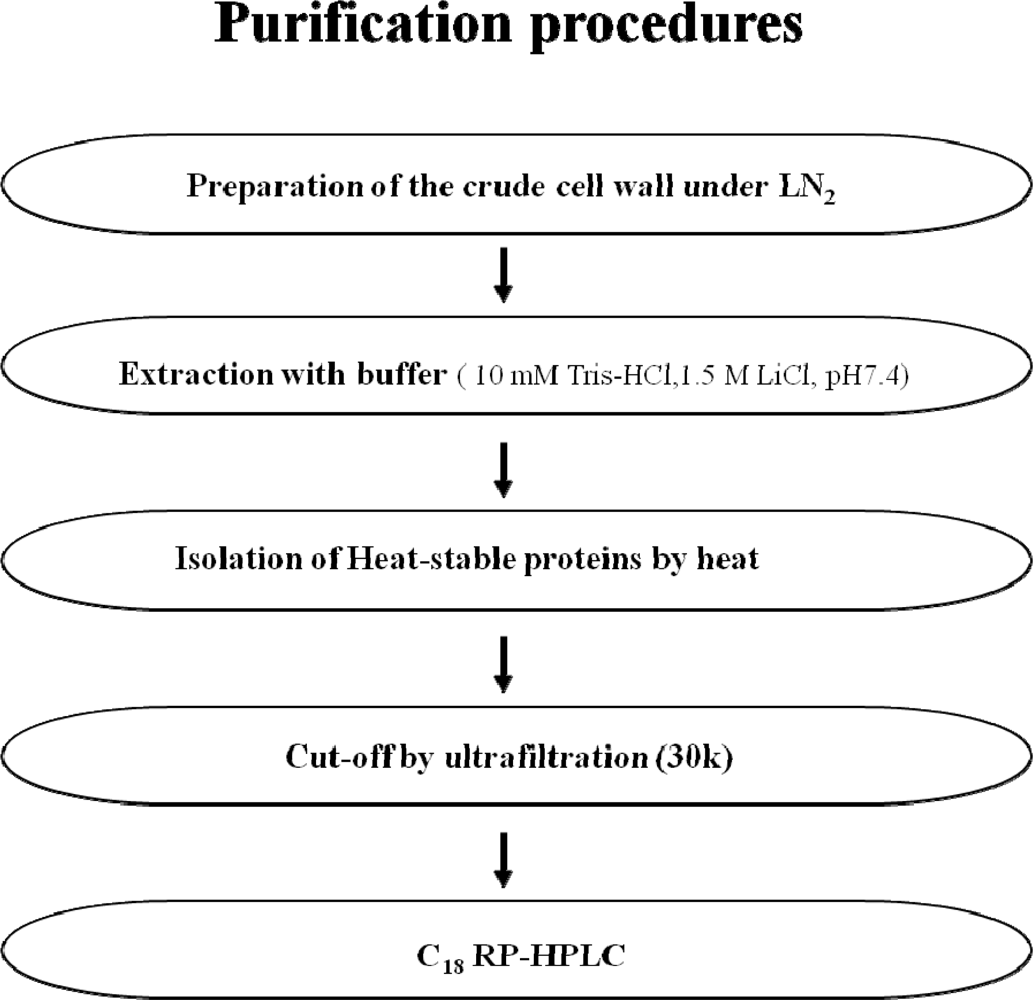
<p>Potide-G is a small (5578.9 Da) antimicrobial peptide that was isolated from potato tubers (<italic>Solanum tuberosum</italic> L. cv. Golden Valley) (<xref ref-type="fig" rid="f1-ijms-10-02860">Figure 1</xref>).</p>
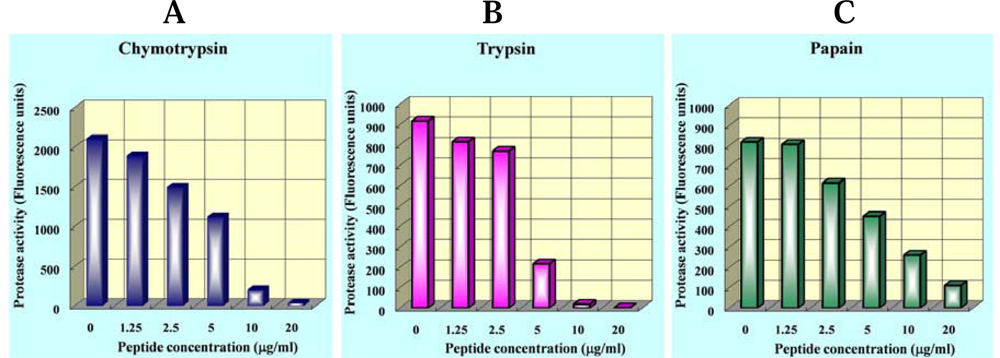
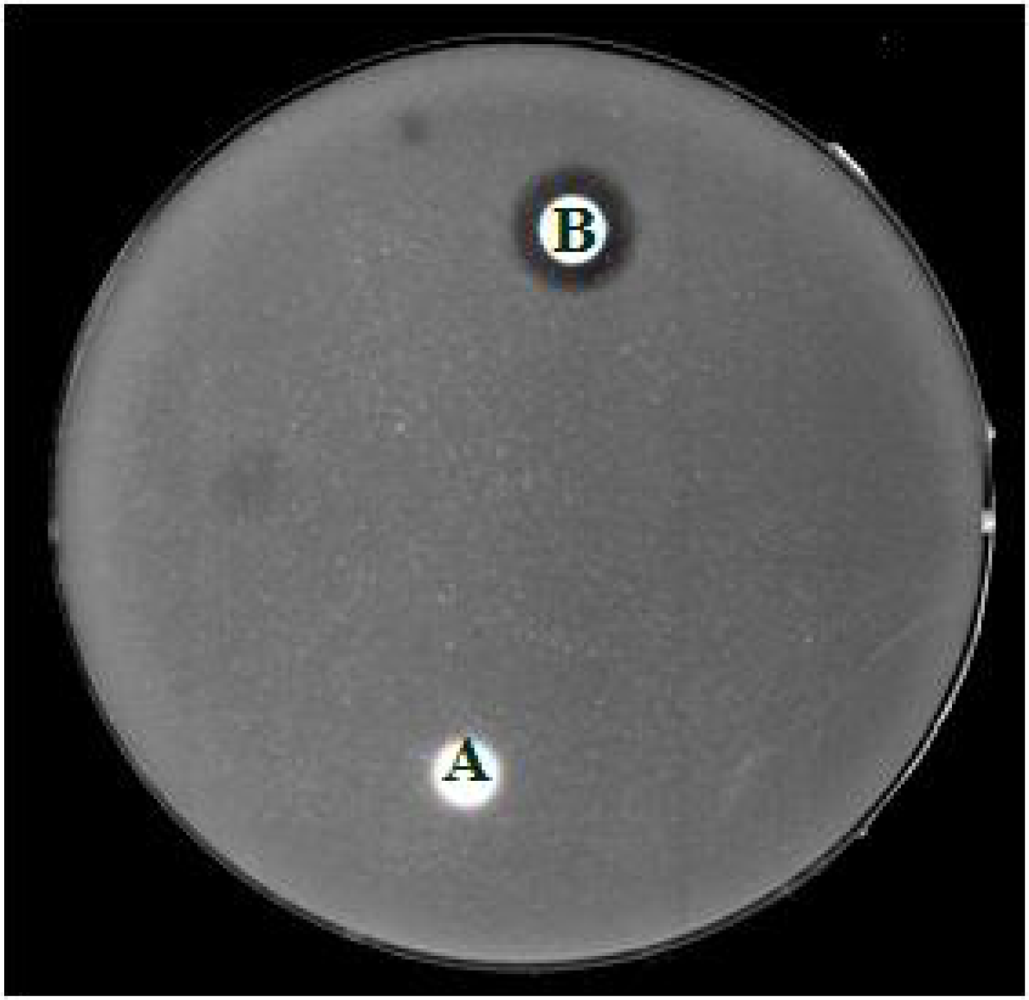
<p>This antimicrobial peptide was heat-stable and almost completely suppressed the proteolytic activity of trypsin, chymotrypsin and papain (<xref ref-type="fig" rid="f2-ijms-10-02860">Figure 2</xref>), with no hemolytic activity. In addition, potide-G potently inhibited the growth of a variety of bacteria (<italic>Staphylococcus aureus</italic>, <italic>Listeria monocytogenes</italic>, <italic>Escherichia coli</italic>, and <italic>Clavibacter michiganense</italic> subsp. michiganinse) and fungi (<italic>Candida albicans</italic> and <italic>Rhizoctonia solani</italic>) (<xref ref-type="fig" rid="f3-ijms-10-02860">Figure 3</xref>). The N-terminal sequence (residues 1 to 11) of the protein was found to be identical to that of potato proteinase inhibitor, which is a member of the Kunitz superfamily [<xref ref-type="bibr" rid="b60-ijms-10-02860">60</xref>].</p></sec>
<sec>
<label>4.2.</label>
<title>A napin-like Polypeptide from Dwarf Chinese White Cabbage Seeds</title>
<p>Napins are 1:1 disulfide-linked complexes with a smaller (ca. 4kDa) subunit and a larger (ca. 10kDa) subunit. A heterodimeric 11-kDa napin-like polypeptide has been isolated from Chinese white cabbage (Brassica chinensis cv dwarf) seeds. The N-terminal sequence of the 7-kDa subunit manifests striking similarity to the napin large chain, albumin and trypsin inhibitors. The N-terminal sequence of the 4-kDa subunit is homologous to the napin large chain and an antimicrobial peptide. Napin was found to have antibacterial activity against <italic>Pseudomonas aeruginosia</italic>, <italic>Bacillus subtilis</italic>, <italic>Bacillus cereus</italic>, and <italic>Bacillus megaterium</italic> [<xref ref-type="bibr" rid="b61-ijms-10-02860">61</xref>].</p></sec>
<sec>
<label>4.3.</label>
<title>Potamin-1 (PT-1), Trypsin-Chymotrypsin Protease Inhibitor Obtained from Potato</title>
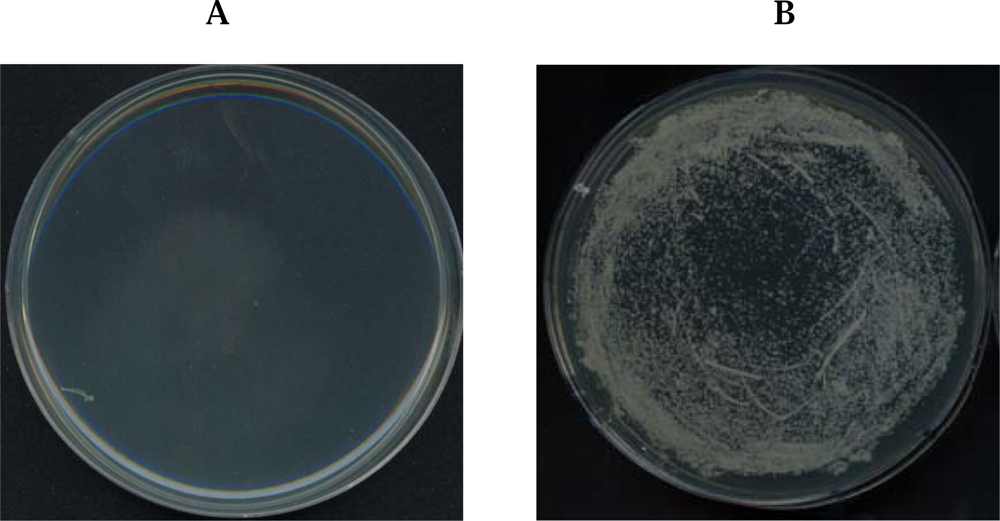
<p>A potamin-1 (PT-1) trypsin-chymotrypsin protease inhibitor was isolated from the tubers of the potato (<italic>Solanum tuberosum</italic> L cv. Gogu). The potamin-1 (PT-1) was thermostable and possessed antimicrobial activity, but lacked hemolytic activity. PT-1 strongly inhibited pathogenic microbial strains including <italic>Candida albicans</italic>, <italic>Rhizoctonia solani</italic>, and <italic>Clavibacter michiganense</italic> subsp. michiganinse. The N-terminal sequence of PT-1 was NH<sub>2</sub>-DICTCCAGTKGCNTTSANGAFICEG QSDPKKPKACPLNCDPHIAYA-. The sequence was 62% homologous with a serine protease inhibitor belonging to the Kunitz family, and the peptide inhibited chymotrypsin, trypsin, and papain. PT-1 was composed of polypeptide chains joined by disulfide bridge(s). Reduced PT-1 almost completely lost its activity against fungi and proteases, indicating that the disulfide bridge is essential for its protease inhibitor and antibacterial activity [<xref ref-type="bibr" rid="b62-ijms-10-02860">62</xref>] (<xref ref-type="fig" rid="f4-ijms-10-02860">Figure 4</xref>). Generally, trypsin/chymotrypsin inhibitor forms to dimer by intermolecular disulfide bond. Its disulfide bond is important to maintain the antiproteolytic activity [<xref ref-type="bibr" rid="b54-ijms-10-02860">54</xref>]. Our previous report showed that PT-1 forms a dimer by chemical crosslinking, naturally. In addition, native PT-1 showed a dimeric molecular weight on non-reducing PAGE (data not shown), meaning the formation of intermolecular disulfide bond.</p></sec>
<sec>
<label>4.4.</label>
<title>Protein Proteinase Inhibitors in Legume Seeds</title>
<p>Protein proteinase inhibitors are widely distributed in plant seeds, particularly legumes. The specificity and potency of inhibition depend on defined inhibitory sites and the animal species of the target proteinase. Feeding experiments involving diets containing isolated soybean trypsin inhibitors (the Kunitz soybean trypsin inhibitor STI and the Bowman-Birk trypsinchymotrypsin inhibitor BBI) caused insignificant growth depression in rats and chicks. Furthermore, these experiments induced enlargement of the pancreas in rats, chicks and mice, but not in pigs, dogs, calves, monkeys and presumably humans. The trypsin-inhibitory site has been found to be responsible for the induction of pancreatic enlargement. Trypsin-chymotrypsin inhibitors produced by soybeans and chickpeas inhibit insect midgut proteinases, supporting the belief that proteinase inhibitors comprise a built-in defense mechanism of the seed against insects. In addition, it has been found that proteinase inhibitors such as BBI are involved in the prevention of tumorigenesis, which suggests a possible positive contribution of the inhibitors to the nutritional value of legume seeds. BBI is also an effective inhibitor of nephrotoxicity induced by the antibiotic, gentamicin. BBI does not cause side effects and does affect antimicrobial activity. Finally, it is important to note that the <italic>in vitro</italic> effects of proteinase inhibitors on animals should be interpreted with caution when related to humans [<xref ref-type="bibr" rid="b63-ijms-10-02860">63</xref>].</p></sec></sec>
<sec sec-type="conclusions">
<label>5.</label>
<title>Conclusions</title>
<p>Understanding the biochemical basis of the antiproteolytic and antimicrobial activities of protease inhibitors and elucidation the structure-function relationship of their activity are essential for mechanical study of their bifunctional action. Reduced protease inhibitors were found to not have antiproteolytic function or antimicrobial activity, which indicates that they are dimers in solution. These results indicate that structural changes in protease inhibitors upon manipulation of the disulfide linkage may induce a loss of both the antiproteolytic and antimicrobial activity.</p>
<p>Studying plant defense responses and developing newer ecofriendly strategies for protecting plants against pests and pathogens is currently one of the most dynamic areas of research in plant science. The results obtained in this study suggest that protease inhibitors are involved in the defense response of the host plant against phytopathogens. We propose that they are useful as effective antimicrobial agents and that further study is warranted. In addition, they may have the potential for use as a non-cytotoxic clinical agents.</p></sec></body>
<back>
<ack>
<p>This work was supported by the Korea Science and Engineering Foundation (KOSEF) grant funded by the Korea government (2008-0061776).</p></ack>
<ref-list>
<title>References and Notes</title>
<ref id="b1-ijms-10-02860"><label>1.</label><citation citation-type="journal"><person-group person-group-type="author"><name><surname>Broekaert</surname><given-names>W</given-names></name><name><surname>Terras</surname><given-names>F</given-names></name><name><surname>Cammue</surname><given-names>BPA</given-names></name><name><surname>Osborne</surname><given-names>R</given-names></name></person-group><article-title>Plant defensins: novel antimicrobial peptides as components of the host defense system</article-title><source>Plant Physiol</source><year>1995</year><volume>108</volume><fpage>1353</fpage><lpage>1358</lpage><pub-id pub-id-type="doi">10.1104/pp.108.4.1353</pub-id><pub-id pub-id-type="pmid">7659744</pub-id></citation></ref>
<ref id="b2-ijms-10-02860"><label>2.</label><citation citation-type="journal"><person-group person-group-type="author"><name><surname>Montesinos</surname><given-names>E</given-names></name></person-group><article-title>Antimicrobial peptides and plant disease control</article-title><source>FEMS Microbiol. Lett</source><year>2007</year><volume>270</volume><fpage>1</fpage><lpage>11</lpage><pub-id pub-id-type="doi">10.1111/j.1574-6968.2007.00683.x</pub-id><pub-id pub-id-type="pmid">17371298</pub-id></citation></ref>
<ref id="b3-ijms-10-02860"><label>3.</label><citation citation-type="journal"><person-group person-group-type="author"><name><surname>Hoffmann</surname><given-names>JA</given-names></name></person-group><article-title>Innate immunity of insects</article-title><source>Curr. Opin. Immunol</source><year>1995</year><volume>7</volume><fpage>4</fpage><lpage>10</lpage><pub-id pub-id-type="doi">10.1016/0952-7915(95)80022-0</pub-id><pub-id pub-id-type="pmid">7772280</pub-id></citation></ref>
<ref id="b4-ijms-10-02860"><label>4.</label><citation citation-type="journal"><person-group person-group-type="author"><name><surname>Marcos</surname><given-names>JF</given-names></name><name><surname>Muñoz</surname><given-names>A</given-names></name><name><surname>Pérez-Payá</surname><given-names>E</given-names></name><name><surname>Misra</surname><given-names>S</given-names></name><name><surname>López-García</surname><given-names>B</given-names></name></person-group><article-title>Identification and Rational Design of Novel Antimicrobial Peptides for Plant Protection</article-title><source>Annu. Rev. Phytopathol</source><year>2008</year><volume>46</volume><fpage>273</fpage><lpage>301</lpage><pub-id pub-id-type="doi">10.1146/annurev.phyto.121307.094843</pub-id><pub-id pub-id-type="pmid">18439131</pub-id></citation></ref>
<ref id="b5-ijms-10-02860"><label>5.</label><citation citation-type="journal"><person-group person-group-type="author"><name><surname>Barra</surname><given-names>D</given-names></name><name><surname>Simmaco</surname><given-names>M</given-names></name></person-group><article-title>Amphibian skin: a promising resource for antimicrbial peptides</article-title><source>Trends Biotechnol</source><year>1995</year><volume>13</volume><fpage>205</fpage><lpage>209</lpage><pub-id pub-id-type="doi">10.1016/S0167-7799(00)88947-7</pub-id><pub-id pub-id-type="pmid">7598843</pub-id></citation></ref>
<ref id="b6-ijms-10-02860"><label>6.</label><citation citation-type="journal"><person-group person-group-type="author"><name><surname>Lehrer</surname><given-names>R</given-names></name><name><surname>Lichtenstein</surname><given-names>AK</given-names></name><name><surname>Ganz</surname><given-names>T</given-names></name></person-group><article-title>Defensins: antimicrobial and cytotoxic peptides of mammalian cells</article-title><source>Annu. Rev. Immunol</source><year>1993</year><volume>11</volume><fpage>105</fpage><lpage>128</lpage><pub-id pub-id-type="doi">10.1146/annurev.iy.11.040193.000541</pub-id><pub-id pub-id-type="pmid">8476558</pub-id></citation></ref>
<ref id="b7-ijms-10-02860"><label>7.</label><citation citation-type="journal"><person-group person-group-type="author"><name><surname>Bulet</surname><given-names>P</given-names></name><name><surname>Stocklin</surname><given-names>R</given-names></name><name><surname>Menin</surname><given-names>L</given-names></name></person-group><article-title>Anti-microbial peptides: from invertebrates to vertebrates</article-title><source>Immunol. Rev</source><year>2004</year><volume>198</volume><fpage>169</fpage><lpage>184</lpage><pub-id pub-id-type="doi">10.1111/j.0105-2896.2004.0124.x</pub-id><pub-id pub-id-type="pmid">15199962</pub-id></citation></ref>
<ref id="b8-ijms-10-02860"><label>8.</label><citation citation-type="journal"><person-group person-group-type="author"><name><surname>Boman</surname><given-names>H</given-names></name></person-group><article-title>Antibacterial peptides: basic facts and emerging concepts</article-title><source>J. Intern. Med</source><year>2003</year><volume>254</volume><fpage>197</fpage><lpage>215</lpage><pub-id pub-id-type="doi">10.1046/j.1365-2796.2003.01228.x</pub-id><pub-id pub-id-type="pmid">12930229</pub-id></citation></ref>
<ref id="b9-ijms-10-02860"><label>9.</label><citation citation-type="journal"><person-group person-group-type="author"><name><surname>Ng</surname><given-names>TB</given-names></name></person-group><article-title>Antifungal proteins and peptides of leguminous and non-leguminous origins</article-title><source>Peptides</source><year>2004</year><volume>25</volume><fpage>1215</fpage><lpage>1222</lpage><pub-id pub-id-type="doi">10.1016/j.peptides.2004.03.012</pub-id><pub-id pub-id-type="pmid">15245883</pub-id></citation></ref>
<ref id="b10-ijms-10-02860"><label>10.</label><citation citation-type="journal"><person-group person-group-type="author"><name><surname>Franco</surname><given-names>OL</given-names></name><name><surname>Rigden</surname><given-names>DJ</given-names></name><name><surname>Melo</surname><given-names>FR</given-names></name><name><surname>Grossi-de-Sa</surname><given-names>MF</given-names></name></person-group><article-title>Plant α-amylase inhibitors and their interaction with insect α-amylases - structure, function and potential for crop protection</article-title><source>Eur. J. Biochem</source><year>2002</year><volume>269</volume><fpage>397</fpage><lpage>412</lpage><pub-id pub-id-type="doi">10.1046/j.0014-2956.2001.02656.x</pub-id><pub-id pub-id-type="pmid">11856298</pub-id></citation></ref>
<ref id="b11-ijms-10-02860"><label>11.</label><citation citation-type="journal"><person-group person-group-type="author"><name><surname>Bryngelsson</surname><given-names>T</given-names></name><name><surname>Sommer-Knudsen</surname><given-names>J</given-names></name><name><surname>Gregersen</surname><given-names>PL</given-names></name><name><surname>Collinge</surname><given-names>DB</given-names></name><name><surname>Ek</surname><given-names>B</given-names></name><name><surname>Thordal-Christensen</surname><given-names>H</given-names></name></person-group><article-title>Purification, characterization, and molecular cloning of basic PR-1-type pathogenesis-related proteins from barley</article-title><source>Mol. Plant-Microb. Interact</source><year>1994</year><volume>7</volume><fpage>267</fpage><lpage>275</lpage><pub-id pub-id-type="doi">10.1094/MPMI-7-0267</pub-id></citation></ref>
<ref id="b12-ijms-10-02860"><label>12.</label><citation citation-type="journal"><person-group person-group-type="author"><name><surname>Molina</surname><given-names>A</given-names></name><name><surname>Gorlach</surname><given-names>J</given-names></name><name><surname>Volrath</surname><given-names>S</given-names></name><name><surname>Ryals</surname><given-names>J</given-names></name></person-group><article-title>Wheat genes encoding two types of PR-1 proteins are pathogen inducible, but do not respond to activators of systemic acquired resistance</article-title><source>Mol. Plant-Microb. Interact</source><year>1999</year><volume>12</volume><fpage>53</fpage><lpage>58</lpage><pub-id pub-id-type="doi">10.1094/MPMI.1999.12.1.53</pub-id></citation></ref>
<ref id="b13-ijms-10-02860"><label>13.</label><citation citation-type="journal"><person-group person-group-type="author"><name><surname>Rauscher</surname><given-names>M</given-names></name><name><surname>Adam</surname><given-names>AL</given-names></name><name><surname>Wirtz</surname><given-names>S</given-names></name><name><surname>Guggenheim</surname><given-names>R</given-names></name><name><surname>Mendgen</surname><given-names>K</given-names></name><name><surname>Deising</surname><given-names>HB</given-names></name></person-group><article-title>PR-1 protein inhibits the differentiation of rust infection hyphae in leaves of acquired resistant broad bean</article-title><source>Plant J</source><year>1999</year><volume>19</volume><fpage>625</fpage><lpage>633</lpage><pub-id pub-id-type="doi">10.1046/j.1365-313x.1999.00545.x</pub-id><pub-id pub-id-type="pmid">10571848</pub-id></citation></ref>
<ref id="b14-ijms-10-02860"><label>14.</label><citation citation-type="journal"><person-group person-group-type="author"><name><surname>Seetharaman</surname><given-names>K</given-names></name><name><surname>Whitehead</surname><given-names>E</given-names></name><name><surname>Keller</surname><given-names>NP</given-names></name><name><surname>Waniska</surname><given-names>RD</given-names></name><name><surname>Rooney</surname><given-names>LW</given-names></name></person-group><article-title><italic>In Vitro</italic> Activity of Sorgum Seed Antifungal Proteins against Grain Mold Pathogens</article-title><source>J. Agric. Food Chem</source><year>1997</year><volume>45</volume><fpage>3666</fpage><lpage>3671</lpage><pub-id pub-id-type="doi">10.1021/jf960924z</pub-id></citation></ref>
<ref id="b15-ijms-10-02860"><label>15.</label><citation citation-type="journal"><person-group person-group-type="author"><name><surname>Park</surname><given-names>Y</given-names></name><name><surname>Choi</surname><given-names>BH</given-names></name><name><surname>Kwak</surname><given-names>J-S</given-names></name><name><surname>Kang</surname><given-names>C-W</given-names></name><name><surname>Lim</surname><given-names>H-T</given-names></name><name><surname>Cheong</surname><given-names>H-S</given-names></name><name><surname>Hahm</surname><given-names>K-S</given-names></name></person-group><article-title>Kunitz-Type Serine Protease Inhibitor from Potato (Solanum tuberosum L. cv. Jopung)</article-title><source>J. Agric. Food Chem</source><year>2005</year><volume>53</volume><fpage>6491</fpage><lpage>6496</lpage><pub-id pub-id-type="doi">10.1021/jf0505123</pub-id><pub-id pub-id-type="pmid">16076139</pub-id></citation></ref>
<ref id="b16-ijms-10-02860"><label>16.</label><citation citation-type="journal"><person-group person-group-type="author"><name><surname>Christensen</surname><given-names>AB</given-names></name><name><surname>Ho Cho</surname><given-names>B</given-names></name><name><surname>Naesby</surname><given-names>M</given-names></name><name><surname>Gregersen</surname><given-names>PL</given-names></name><name><surname>Brandt</surname><given-names>J</given-names></name><name><surname>Madriz-ordenana</surname><given-names>K</given-names></name><name><surname>Collinge</surname><given-names>DB</given-names></name><name><surname>Thordal-Christensen</surname><given-names>H</given-names></name></person-group><article-title>The molecular characterization of two barley proteins establishes the novel PR-17 family of pathogenesis-related proteins</article-title><source>Mol. Plant Pathol</source><year>2002</year><volume>3</volume><fpage>135</fpage><lpage>144</lpage><pub-id pub-id-type="doi">10.1046/j.1364-3703.2002.00105.x</pub-id><pub-id pub-id-type="pmid">20569319</pub-id></citation></ref>
<ref id="b17-ijms-10-02860"><label>17.</label><citation citation-type="journal"><person-group person-group-type="author"><name><surname>Ryan</surname><given-names>CA</given-names></name></person-group><article-title>Proteolytic enzymes and their inhibitors in plant</article-title><source>Annu. Rev. Plant Physiol</source><year>1977</year><volume>24</volume><fpage>173</fpage><lpage>196</lpage></citation></ref>
<ref id="b18-ijms-10-02860"><label>18.</label><citation citation-type="journal"><person-group person-group-type="author"><name><surname>Plate</surname><given-names>NA</given-names></name><name><surname>Valuev</surname><given-names>LI</given-names></name><name><surname>Valueva</surname><given-names>TA</given-names></name><name><surname>Chupov</surname><given-names>VV</given-names></name></person-group><article-title>Biospecific haemosorbents based on proteinase inhibitor. I. Synthesis and properties</article-title><source>Biomaterials</source><year>1993</year><volume>14</volume><fpage>51</fpage><lpage>56</lpage><pub-id pub-id-type="doi">10.1016/0142-9612(93)90075-D</pub-id><pub-id pub-id-type="pmid">8425025</pub-id></citation></ref>
<ref id="b19-ijms-10-02860"><label>19.</label><citation citation-type="journal"><person-group person-group-type="author"><name><surname>Putzai</surname><given-names>A</given-names></name><name><surname>Grant</surname><given-names>G</given-names></name><name><surname>Stewart</surname><given-names>JC</given-names></name><name><surname>Watt</surname><given-names>WB</given-names></name></person-group><article-title>Isolation of soybean trypsin inhibitors by affinity chromatography on anhydrotrypsin-Sepharose 4B</article-title><source>Anal. Biochem</source><year>1988</year><volume>172</volume><fpage>108</fpage><lpage>112</lpage><pub-id pub-id-type="doi">10.1016/0003-2697(88)90418-6</pub-id><pub-id pub-id-type="pmid">3189755</pub-id></citation></ref>
<ref id="b20-ijms-10-02860"><label>20.</label><citation citation-type="journal"><person-group person-group-type="author"><name><surname>Kennedy</surname><given-names>AR</given-names></name></person-group><article-title>Chemopreventive agents: protease inhibitors</article-title><source>Pharmacol. Ther</source><year>1998</year><volume>78</volume><fpage>167</fpage><lpage>209</lpage><pub-id pub-id-type="doi">10.1016/S0163-7258(98)00010-2</pub-id><pub-id pub-id-type="pmid">9690817</pub-id></citation></ref>
<ref id="b21-ijms-10-02860"><label>21.</label><citation citation-type="journal"><person-group person-group-type="author"><name><surname>Kalashnikova</surname><given-names>EE</given-names></name><name><surname>Chernyshova</surname><given-names>MP</given-names></name><name><surname>Ignatov</surname><given-names>VV</given-names></name></person-group><article-title>The extracellular proteases of the phytopathogenic bacterium Xanthomonas campestris</article-title><source>Mikrobiologiia</source><year>2003</year><volume>72</volume><fpage>498</fpage><lpage>502</lpage><pub-id pub-id-type="pmid">14526540</pub-id></citation></ref>
<ref id="b22-ijms-10-02860"><label>22.</label><citation citation-type="journal"><person-group person-group-type="author"><name><surname>Sara</surname><given-names>M</given-names></name><name><surname>Heale</surname><given-names>JB</given-names></name></person-group><article-title>The roles of aspartic proteinase and endopectin lyase enzymes in the primary stages of infection and pathogenesis of various host tissues by different isolates of Botrytis cinerea Pers ex. Pers</article-title><source>Physiol. Mol. Plant Pathol</source><year>1990</year><volume>36</volume><fpage>303</fpage><lpage>324</lpage><pub-id pub-id-type="doi">10.1016/0885-5765(90)90061-2</pub-id></citation></ref>
<ref id="b23-ijms-10-02860"><label>23.</label><citation citation-type="journal"><person-group person-group-type="author"><name><surname>Ryan</surname><given-names>CA</given-names></name></person-group><article-title>Protease inhibitors in plants: genes for improving defenses against insects and pathogens</article-title><source>Annu. Rev. Phytopathol</source><year>1990</year><volume>28</volume><fpage>425</fpage><lpage>449</lpage><pub-id pub-id-type="doi">10.1146/annurev.py.28.090190.002233</pub-id></citation></ref>
<ref id="b24-ijms-10-02860"><label>24.</label><citation citation-type="journal"><person-group person-group-type="author"><name><surname>Woloshuk</surname><given-names>CP</given-names></name><name><surname>Meulenhoff</surname><given-names>JS</given-names></name><name><surname>Sela-Buurlage</surname><given-names>M</given-names></name><name><surname>van den Elzen</surname><given-names>PJ</given-names></name><name><surname>Cornelissen</surname><given-names>BJ</given-names></name></person-group><article-title>Pathogen-induced proteins with inhibitory activity toward Phytophthora infestans</article-title><source>Plant Cell</source><year>1991</year><volume>3</volume><fpage>619</fpage><lpage>628</lpage><pub-id pub-id-type="pmid">1841721</pub-id></citation></ref>
<ref id="b25-ijms-10-02860"><label>25.</label><citation citation-type="journal"><person-group person-group-type="author"><name><surname>Valueva</surname><given-names>TA</given-names></name><name><surname>Revina</surname><given-names>TA</given-names></name><name><surname>Kladnitskaya</surname><given-names>GV</given-names></name><name><surname>Mosolov</surname><given-names>VV</given-names></name></person-group><article-title>Kunitz-type proteinase inhibitors from intact and Phytophthorainfected potato tuber</article-title><source>FEBS Lett</source><year>1998</year><volume>426</volume><fpage>131</fpage><lpage>134</lpage><pub-id pub-id-type="doi">10.1016/S0014-5793(98)00321-4</pub-id><pub-id pub-id-type="pmid">9598993</pub-id></citation></ref>
<ref id="b26-ijms-10-02860"><label>26.</label><citation citation-type="journal"><person-group person-group-type="author"><name><surname>Valueva</surname><given-names>TA</given-names></name><name><surname>Revina</surname><given-names>TA</given-names></name><name><surname>Gvozdeva</surname><given-names>EL</given-names></name><name><surname>Gerasimova</surname><given-names>NG</given-names></name><name><surname>Ozeretskovskaya</surname><given-names>OL</given-names></name></person-group><article-title>Role of proteinase inhibitors in potato protection</article-title><source>Bioorg. Khim</source><year>2003</year><volume>29</volume><fpage>499</fpage><lpage>504</lpage><pub-id pub-id-type="pmid">14601405</pub-id></citation></ref>
<ref id="b27-ijms-10-02860"><label>27.</label><citation citation-type="journal"><person-group person-group-type="author"><name><surname>Epand</surname><given-names>RM</given-names></name><name><surname>Vogel</surname><given-names>HJ</given-names></name></person-group><article-title>Diversity of antimicrobial peptides and their mechanisms of action</article-title><source>Biochim. Biophys. Acta</source><year>1999</year><volume>1462</volume><fpage>11</fpage><lpage>28</lpage><pub-id pub-id-type="doi">10.1016/S0005-2736(99)00198-4</pub-id><pub-id pub-id-type="pmid">10590300</pub-id></citation></ref>
<ref id="b28-ijms-10-02860"><label>28.</label><citation citation-type="journal"><person-group person-group-type="author"><name><surname>Hancock</surname><given-names>RE</given-names></name><name><surname>Lehrer</surname><given-names>R</given-names></name></person-group><article-title>Cationic peptides: a new source of antibiotics</article-title><source>Trends Biotechnol</source><year>1998</year><volume>16</volume><fpage>82</fpage><lpage>88</lpage><pub-id pub-id-type="doi">10.1016/S0167-7799(97)01156-6</pub-id><pub-id pub-id-type="pmid">9487736</pub-id></citation></ref>
<ref id="b29-ijms-10-02860"><label>29.</label><citation citation-type="journal"><person-group person-group-type="author"><name><surname>Shai</surname><given-names>Y</given-names></name><name><surname>Oren</surname><given-names>Z</given-names></name></person-group><article-title>From “Carpet” mechanism to de-novo designed diastereomeric cell-selective antimicrobial peptides</article-title><source>Peptides</source><year>2001</year><volume>22</volume><fpage>1629</fpage><lpage>1641</lpage><pub-id pub-id-type="doi">10.1016/S0196-9781(01)00498-3</pub-id><pub-id pub-id-type="pmid">11587791</pub-id></citation></ref>
<ref id="b30-ijms-10-02860"><label>30.</label><citation citation-type="journal"><person-group person-group-type="author"><name><surname>Lohner</surname><given-names>K</given-names></name><name><surname>Prenner</surname><given-names>EJ</given-names></name></person-group><article-title>Differential scanning calorimetry and x-ray diffraction studies of the specificity of the interaction of antimicrobial peptides with membrane-mimetic systems</article-title><source>Biochim. Biophys. Acta</source><year>1999</year><volume>1462</volume><fpage>141</fpage><lpage>156</lpage><pub-id pub-id-type="doi">10.1016/S0005-2736(99)00204-7</pub-id><pub-id pub-id-type="pmid">10590306</pub-id></citation></ref>
<ref id="b31-ijms-10-02860"><label>31.</label><citation citation-type="journal"><person-group person-group-type="author"><name><surname>Glazebrook</surname><given-names>J</given-names></name></person-group><article-title>Genes controlling expression of defense responses in <italic>Arabidopsis</italic></article-title><source>Curr. Opin. Plant Biol</source><year>1999</year><volume>2</volume><fpage>280</fpage><lpage>286</lpage><pub-id pub-id-type="doi">10.1016/S1369-5266(99)80050-8</pub-id><pub-id pub-id-type="pmid">10458996</pub-id></citation></ref>
<ref id="b32-ijms-10-02860"><label>32.</label><citation citation-type="journal"><person-group person-group-type="author"><name><surname>Fernandez de Caleya</surname><given-names>R</given-names></name><name><surname>Gonzalez-Pascual</surname><given-names>B</given-names></name><name><surname>Garcia-Olmedo</surname><given-names>F</given-names></name><name><surname>Carbonero</surname><given-names>P</given-names></name></person-group><article-title>Susceptibility of phytopathogenic bacteria to wheat purothionins <italic>in vitro</italic></article-title><source>App. Microbiol</source><year>1972</year><volume>23</volume><fpage>998</fpage><lpage>1000</lpage></citation></ref>
<ref id="b33-ijms-10-02860"><label>33.</label><citation citation-type="journal"><person-group person-group-type="author"><name><surname>Garcia-Olmedo</surname><given-names>F</given-names></name><name><surname>Molina</surname><given-names>A</given-names></name><name><surname>Alamillo</surname><given-names>JM</given-names></name><name><surname>Rodriguez-Palenzuela</surname><given-names>P</given-names></name></person-group><article-title>Plant defense peptides</article-title><source>Biopolymers Pept. Sci</source><year>1998</year><volume>47</volume><fpage>473</fpage><lpage>491</lpage></citation></ref>
<ref id="b34-ijms-10-02860"><label>34.</label><citation citation-type="journal"><person-group person-group-type="author"><name><surname>Garcia-Olmedo</surname><given-names>F</given-names></name><name><surname>Molina</surname><given-names>A</given-names></name><name><surname>Sefura</surname><given-names>A</given-names></name><name><surname>Moreno</surname><given-names>M</given-names></name></person-group><article-title>The defensive role of nonspecific lipid-trasfer proteins in plants</article-title><source>Trends Microbiol</source><year>1995</year><volume>3</volume><fpage>72</fpage><lpage>74</lpage><pub-id pub-id-type="doi">10.1016/S0966-842X(00)88879-4</pub-id><pub-id pub-id-type="pmid">7728389</pub-id></citation></ref>
<ref id="b35-ijms-10-02860"><label>35.</label><citation citation-type="journal"><person-group person-group-type="author"><name><surname>Calvete</surname><given-names>JJ</given-names></name><name><surname>Moreno-Murciano</surname><given-names>MP</given-names></name><name><surname>Sanz</surname><given-names>L</given-names></name><name><surname>Jurgens</surname><given-names>M</given-names></name><name><surname>Schraker</surname><given-names>M</given-names></name><name><surname>Raida</surname><given-names>M</given-names></name><name><surname>Benjamin</surname><given-names>DC</given-names></name><name><surname>Fox</surname><given-names>JW</given-names></name></person-group><article-title>The disulfide bond pattern of catrocollastatin C, a disintegrin-like/cysteine-rich protein isolated from <italic>Crotalus atrox</italic> venom</article-title><source>Protein Sci</source><year>2000</year><volume>9</volume><fpage>1365</fpage><lpage>1373</lpage><pub-id pub-id-type="doi">10.1110/ps.9.7.1365</pub-id><pub-id pub-id-type="pmid">10933502</pub-id></citation></ref>
<ref id="b36-ijms-10-02860"><label>36.</label><citation citation-type="journal"><person-group person-group-type="author"><name><surname>Herzog</surname><given-names>M</given-names></name><name><surname>Dorne</surname><given-names>AM</given-names></name><name><surname>Grellet</surname><given-names>F</given-names></name></person-group><article-title>GASA, a gibberellin-regulated gene family from <italic>Arabidopsis thaliana</italic> related to the tomato GAST1 gene</article-title><source>Plant Mol. Biol</source><year>1995</year><volume>27</volume><fpage>743</fpage><lpage>752</lpage><pub-id pub-id-type="doi">10.1007/BF00020227</pub-id><pub-id pub-id-type="pmid">7727751</pub-id></citation></ref>
<ref id="b37-ijms-10-02860"><label>37.</label><citation citation-type="journal"><person-group person-group-type="author"><name><surname>Park</surname><given-names>CJ</given-names></name><name><surname>Park</surname><given-names>CB</given-names></name><name><surname>Hong</surname><given-names>S-S</given-names></name><name><surname>Lee</surname><given-names>H-S</given-names></name><name><surname>Lee</surname><given-names>SY</given-names></name><name><surname>Kim</surname><given-names>C</given-names></name></person-group><article-title>Characterization and cDNA cloning of two glycine- and histidine- rich antimicrobial peptides from the roots of shepherd’s purse, Capsella bursa-pastoris</article-title><source>Plant Mol. Biol</source><year>2000</year><volume>44</volume><fpage>187</fpage><lpage>197</lpage><pub-id pub-id-type="doi">10.1023/A:1006431320677</pub-id><pub-id pub-id-type="pmid">11117262</pub-id></citation></ref>
<ref id="b38-ijms-10-02860"><label>38.</label><citation citation-type="journal"><person-group person-group-type="author"><name><surname>Tam</surname><given-names>JP</given-names></name><name><surname>Lu</surname><given-names>Y-A</given-names></name><name><surname>Yang</surname><given-names>J-L</given-names></name><name><surname>Chiu</surname><given-names>K-W</given-names></name></person-group><article-title>Anunusual structural motif antimicrobial peptides containing end-to-end macrocycle and cystein-knot disulfides</article-title><source>Proc Natl Acad Sci USA</source><year>1999</year><volume>96</volume><fpage>8913</fpage><lpage>8918</lpage><pub-id pub-id-type="doi">10.1073/pnas.96.16.8913</pub-id><pub-id pub-id-type="pmid">10430870</pub-id></citation></ref>
<ref id="b39-ijms-10-02860"><label>39.</label><citation citation-type="journal"><person-group person-group-type="author"><name><surname>Moreno</surname><given-names>M</given-names></name><name><surname>Segura</surname><given-names>A</given-names></name><name><surname>Garcia-Olmedo</surname><given-names>F</given-names></name></person-group><article-title>Pseudothionin-Sth1, a potato peptide active against potato pathogens</article-title><source>Eur. J. Biochem</source><year>1994</year><volume>223</volume><fpage>135</fpage><lpage>139</lpage><pub-id pub-id-type="doi">10.1111/j.1432-1033.1994.tb18974.x</pub-id><pub-id pub-id-type="pmid">8033886</pub-id></citation></ref>
<ref id="b40-ijms-10-02860"><label>40.</label><citation citation-type="journal"><person-group person-group-type="author"><name><surname>Segura</surname><given-names>A</given-names></name><name><surname>Moreno</surname><given-names>M</given-names></name><name><surname>Madueno</surname><given-names>F</given-names></name><name><surname>Molina</surname><given-names>A</given-names></name><name><surname>Garcia-Olmedo</surname><given-names>F</given-names></name></person-group><article-title>Snakin-1, a peptide from potato that is active against plant pathogens</article-title><source>Molecular Plant-Microbe Interactions</source><year>1999</year><volume>12</volume><fpage>16</fpage><lpage>23</lpage><pub-id pub-id-type="doi">10.1094/MPMI.1999.12.1.16</pub-id><pub-id pub-id-type="pmid">9885189</pub-id></citation></ref>
<ref id="b41-ijms-10-02860"><label>41.</label><citation citation-type="journal"><person-group person-group-type="author"><name><surname>Berricak-Kibo</surname><given-names>M</given-names></name><name><surname>Segura</surname><given-names>A</given-names></name><name><surname>Moreno</surname><given-names>M</given-names></name><name><surname>Lopez</surname><given-names>G</given-names></name><name><surname>Garcia-Olmedo</surname><given-names>F</given-names></name><name><surname>Molina</surname><given-names>A</given-names></name></person-group><article-title>Snain-2, an antimicrobial peptide from potato whose gene is locally induced by wounding and responds to pathogen infection</article-title><source>Plant Physiol</source><year>2002</year><volume>128</volume><fpage>951</fpage><lpage>961</lpage><pub-id pub-id-type="doi">10.1104/pp.010685</pub-id><pub-id pub-id-type="pmid">11891250</pub-id></citation></ref>
<ref id="b42-ijms-10-02860"><label>42.</label><citation citation-type="journal"><person-group person-group-type="author"><name><surname>Liu</surname><given-names>Y-W</given-names></name><name><surname>Han</surname><given-names>C-H</given-names></name><name><surname>Lee</surname><given-names>M-H</given-names></name><name><surname>Hsu</surname><given-names>F-L</given-names></name><name><surname>Hou</surname><given-names>W-C</given-names></name></person-group><article-title>Patatin, the tuber storage protein of potato (Solanum tuberosum L.) exhibits antioxidant activity <italic>in vitro</italic></article-title><source>J. Agric. Food Chem</source><year>2003</year><volume>51</volume><fpage>4389</fpage><lpage>4393</lpage><pub-id pub-id-type="doi">10.1021/jf030016j</pub-id><pub-id pub-id-type="pmid">12848515</pub-id></citation></ref>
<ref id="b43-ijms-10-02860"><label>43.</label><citation citation-type="journal"><person-group person-group-type="author"><name><surname>Van Loon</surname><given-names>LC</given-names></name><name><surname>Van Strien</surname><given-names>EA</given-names></name></person-group><article-title>The families of pathogenesis-related proteins, their activities and comparative analysis of PR-1 type proteins</article-title><source>Physiol. Mol. Plant Pathol</source><year>1999</year><volume>55</volume><fpage>85</fpage><lpage>97</lpage><pub-id pub-id-type="doi">10.1006/pmpp.1999.0213</pub-id></citation></ref>
<ref id="b44-ijms-10-02860"><label>44.</label><citation citation-type="journal"><person-group person-group-type="author"><name><surname>Garcia-Olmeda</surname><given-names>F</given-names></name><name><surname>Sakedo</surname><given-names>G</given-names></name><name><surname>Sanchez-Monge</surname><given-names>R</given-names></name><name><surname>Gomez</surname><given-names>L</given-names></name><name><surname>Royo</surname><given-names>J</given-names></name><name><surname>Carbonero</surname><given-names>P</given-names></name></person-group><article-title>Plant proteinaceous inhibitors of proteinases</article-title><source>Plant Cell Mol. Biol</source><year>1987</year><volume>4</volume><fpage>275</fpage><lpage>334</lpage></citation></ref>
<ref id="b45-ijms-10-02860"><label>45.</label><citation citation-type="journal"><person-group person-group-type="author"><name><surname>Bergey</surname><given-names>DR</given-names></name><name><surname>Howe</surname><given-names>GA</given-names></name><name><surname>Ryan</surname><given-names>CA</given-names></name></person-group><article-title>Polypeptide signaling for plant defensive genes exhibits analogies to defense signaling in animals</article-title><source>Proc. Natl. Acad. Sci. USA</source><year>1996</year><volume>93</volume><fpage>12053</fpage><lpage>12058</lpage><pub-id pub-id-type="doi">10.1073/pnas.93.22.12053</pub-id><pub-id pub-id-type="pmid">8901530</pub-id></citation></ref>
<ref id="b46-ijms-10-02860"><label>46.</label><citation citation-type="journal"><person-group person-group-type="author"><name><surname>Conconi</surname><given-names>A</given-names></name><name><surname>Smerdson</surname><given-names>MJ</given-names></name><name><surname>Howe</surname><given-names>GA</given-names></name><name><surname>Ryan</surname><given-names>CA</given-names></name></person-group><article-title>The octadecanoid signalling pathway in plants mediates a response to ultraviolet radiation</article-title><source>Nature</source><year>1996</year><volume>383</volume><fpage>826</fpage><lpage>829</lpage><pub-id pub-id-type="doi">10.1038/383826a0</pub-id><pub-id pub-id-type="pmid">8893008</pub-id></citation></ref>
<ref id="b47-ijms-10-02860"><label>47.</label><citation citation-type="journal"><person-group person-group-type="author"><name><surname>Graham</surname><given-names>JS</given-names></name><name><surname>Pearce</surname><given-names>G</given-names></name><name><surname>Merryweather</surname><given-names>J</given-names></name><name><surname>Titani</surname><given-names>K</given-names></name><name><surname>Ericsson</surname><given-names>LH</given-names></name><name><surname>Ryan</surname><given-names>CA</given-names></name></person-group><article-title>Wound-induced proteinase inhibitors from tomato leaves. II. The cDNA-deduced primary structure of the pre-inhibitor II</article-title><source>J. Biol. Chem</source><year>1985</year><volume>260</volume><fpage>6561</fpage><lpage>6564</lpage><pub-id pub-id-type="pmid">3838986</pub-id></citation></ref>
<ref id="b48-ijms-10-02860"><label>48.</label><citation citation-type="journal"><person-group person-group-type="author"><name><surname>Kennedy</surname><given-names>AR</given-names></name></person-group><article-title>Chemopreventive agents: protease inhibitors</article-title><source>Pharmacol. Ther</source><year>1998</year><volume>78</volume><fpage>167</fpage><lpage>209</lpage><pub-id pub-id-type="doi">10.1016/S0163-7258(98)00010-2</pub-id><pub-id pub-id-type="pmid">9690817</pub-id></citation></ref>
<ref id="b49-ijms-10-02860"><label>49.</label><citation citation-type="journal"><person-group person-group-type="author"><name><surname>Blanco-Aparicio</surname><given-names>C</given-names></name><name><surname>Molina</surname><given-names>MA</given-names></name><name><surname>Fernández-Salas</surname><given-names>E</given-names></name><name><surname>Frazier</surname><given-names>ML</given-names></name><name><surname>Mas</surname><given-names>JM</given-names></name><name><surname>Querol</surname><given-names>E</given-names></name><name><surname>Avilés</surname><given-names>FX</given-names></name><name><surname>de Llorens</surname><given-names>R</given-names></name></person-group><article-title>Potato carboxypeptidase inhibitor, a T-knot protein, is an epidermal growth factor antagonist that inhibitors tumor cell growth</article-title><source>J. Biol. Chem</source><year>1998</year><volume>273</volume><fpage>12370</fpage><lpage>12377</lpage><pub-id pub-id-type="doi">10.1074/jbc.273.20.12370</pub-id><pub-id pub-id-type="pmid">9575190</pub-id></citation></ref>
<ref id="b50-ijms-10-02860"><label>50.</label><citation citation-type="journal"><person-group person-group-type="author"><name><surname>Kennedy</surname><given-names>AR</given-names></name></person-group><article-title>The Bowman-Birk inhibitor from soybeans as an anticarcinogenic agent</article-title><source>Am. J. Clin. Nutr</source><year>1998</year><volume>68</volume><fpage>1406S</fpage><lpage>1412S</lpage><pub-id pub-id-type="pmid">9848508</pub-id></citation></ref>
<ref id="b51-ijms-10-02860"><label>51.</label><citation citation-type="journal"><person-group person-group-type="author"><name><surname>Huang</surname><given-names>C</given-names></name><name><surname>Ma</surname><given-names>W-Y</given-names></name><name><surname>Ryan</surname><given-names>CA</given-names></name><name><surname>Dong</surname><given-names>Z</given-names></name></person-group><article-title>Proteinase inhibitors I and II from potatoes specifically block UV-induced activator protein-1 activation through a pathway that is independent of extracellular signal-regulated kinases, c-jun Nterminal kinases, and P38 kinase</article-title><source>Proc. Natl. Acad. Sci. USA</source><year>1997</year><volume>94</volume><fpage>11957</fpage><lpage>11962</lpage><pub-id pub-id-type="doi">10.1073/pnas.94.22.11957</pub-id><pub-id pub-id-type="pmid">9342344</pub-id></citation></ref>
<ref id="b52-ijms-10-02860"><label>52.</label><citation citation-type="journal"><person-group person-group-type="author"><name><surname>Hill</surname><given-names>AJ</given-names></name><name><surname>Peikin</surname><given-names>SR</given-names></name><name><surname>Ryan</surname><given-names>CA</given-names></name><name><surname>Blundell</surname><given-names>JE</given-names></name></person-group><article-title>Oral administration of proteinase inhibitor II from potatoes reduces energy intake in man</article-title><source>Physiol. Behav</source><year>1990</year><volume>48</volume><fpage>241</fpage><lpage>246</lpage><pub-id pub-id-type="doi">10.1016/0031-9384(90)90307-P</pub-id><pub-id pub-id-type="pmid">2255726</pub-id></citation></ref>
<ref id="b53-ijms-10-02860"><label>53.</label><citation citation-type="journal"><person-group person-group-type="author"><name><surname>Jie</surname><given-names>F</given-names></name><name><surname>Fenghua</surname><given-names>Y</given-names></name><name><surname>Yin</surname><given-names>G</given-names></name><name><surname>Chenggang</surname><given-names>L</given-names></name><name><surname>Jin</surname><given-names>X</given-names></name><name><surname>Changling</surname><given-names>Z</given-names></name><name><surname>Liyuan</surname><given-names>H</given-names></name></person-group><article-title>A novel antimicrobial protein isolated potato shares homology with an acid phosphatase</article-title><source>Biochem. J</source><year>2003</year><volume>376</volume><fpage>481</fpage><lpage>487</lpage><pub-id pub-id-type="doi">10.1042/BJ20030806</pub-id><pub-id pub-id-type="pmid">12927022</pub-id></citation></ref>
<ref id="b54-ijms-10-02860"><label>54.</label><citation citation-type="journal"><person-group person-group-type="author"><name><surname>Vernekar</surname><given-names>JV</given-names></name><name><surname>tanksale</surname><given-names>AM</given-names></name><name><surname>Ghatge</surname><given-names>MS</given-names></name><name><surname>Deshpande</surname><given-names>VV</given-names></name></person-group><article-title>Novel bifunctional alkaline protease inhibitor: Protease inhibitory activity as the biochemical basis of antifyngal activity</article-title><source>Biophys. Res. Commun</source><year>2001</year><volume>285</volume><fpage>1018</fpage><lpage>1024</lpage><pub-id pub-id-type="doi">10.1006/bbrc.2001.5257</pub-id></citation></ref>
<ref id="b55-ijms-10-02860"><label>55.</label><citation citation-type="journal"><person-group person-group-type="author"><name><surname>Kennedy</surname><given-names>AR</given-names></name></person-group><article-title>Chemopreventive agents: protease inhibitors</article-title><source>Pharmacol. Ther</source><year>1998</year><volume>78</volume><fpage>167</fpage><lpage>209</lpage><pub-id pub-id-type="doi">10.1016/S0163-7258(98)00010-2</pub-id><pub-id pub-id-type="pmid">9690817</pub-id></citation></ref>
<ref id="b56-ijms-10-02860"><label>56.</label><citation citation-type="journal"><person-group person-group-type="author"><name><surname>Carmen</surname><given-names>B-A</given-names></name><name><surname>Miguel</surname><given-names>AM</given-names></name><name><surname>Ester</surname><given-names>F-S</given-names></name><name><surname>Marsha</surname><given-names>LF</given-names></name><name><surname>Jos</surname><given-names>MM</given-names></name><name><surname>Enrique</surname><given-names>Q</given-names></name><name><surname>Francesc</surname><given-names>AA</given-names></name><name><surname>Rafael</surname><given-names>L</given-names></name></person-group><article-title>Potato carboxypeptidase inhibitor, a T-knot protein, is an epidermal growth factor antagonist that inhibitors tumor cell growth</article-title><source>J. Biol. Chem</source><year>1998</year><volume>273</volume><fpage>12370</fpage><lpage>12377</lpage><pub-id pub-id-type="doi">10.1074/jbc.273.20.12370</pub-id><pub-id pub-id-type="pmid">9575190</pub-id></citation></ref>
<ref id="b57-ijms-10-02860"><label>57.</label><citation citation-type="journal"><person-group person-group-type="author"><name><surname>Kennedy</surname><given-names>AR</given-names></name></person-group><article-title>The Bowman-Birk inhibitor from soybeans as an anticarcinogenic agent</article-title><source>Am. J. Clin. Nutr</source><year>1998</year><volume>68</volume><fpage>1406S</fpage><lpage>1412S</lpage><pub-id pub-id-type="pmid">9848508</pub-id></citation></ref>
<ref id="b58-ijms-10-02860"><label>58.</label><citation citation-type="journal"><person-group person-group-type="author"><name><surname>Hill</surname><given-names>AJ</given-names></name><name><surname>Peikin</surname><given-names>SR</given-names></name><name><surname>Ryan</surname><given-names>CA</given-names></name><name><surname>Blundell</surname><given-names>JE</given-names></name></person-group><article-title>Oral administration of proteinase inhibitor II from potatoes reduces energy intake in man</article-title><source>Physiol. Behav</source><year>1990</year><volume>48</volume><fpage>241</fpage><lpage>246</lpage><pub-id pub-id-type="doi">10.1016/0031-9384(90)90307-P</pub-id><pub-id pub-id-type="pmid">2255726</pub-id></citation></ref>
<ref id="b59-ijms-10-02860"><label>59.</label><citation citation-type="journal"><person-group person-group-type="author"><name><surname>Ruseler-van Embden</surname><given-names>JGH</given-names></name><name><surname>van Lieshout</surname><given-names>LMC</given-names></name><name><surname>Smits</surname><given-names>SA</given-names></name><name><surname>van Kessel</surname><given-names>I</given-names></name><name><surname>Laman</surname><given-names>JD</given-names></name></person-group><article-title>Potato tuber proteins efficiently inhibit human faecal proteolytic activity: implications for treatment of peri-anal dermatitis</article-title><source>Eur. J. Clin. Invest</source><year>2004</year><volume>34</volume><fpage>303</fpage><lpage>311</lpage><pub-id pub-id-type="doi">10.1111/j.1365-2362.2004.01330.x</pub-id><pub-id pub-id-type="pmid">15086363</pub-id></citation></ref>
<ref id="b60-ijms-10-02860"><label>60.</label><citation citation-type="journal"><person-group person-group-type="author"><name><surname>Kim</surname><given-names>MH</given-names></name><name><surname>Park</surname><given-names>S-C</given-names></name><name><surname>Kim</surname><given-names>J-Y</given-names></name><name><surname>Lee</surname><given-names>SY</given-names></name><name><surname>Lim</surname><given-names>HT</given-names></name><name><surname>Cheong</surname><given-names>H</given-names></name><name><surname>Hahm</surname><given-names>K-S</given-names></name><name><surname>Park</surname><given-names>Y</given-names></name></person-group><article-title>Purification and characterization of a heat-stable serine protease inhibitor from the tubers of new potato variety “Golden Valley”</article-title><source>Biochem. Biophys. Res. Commun</source><year>2006</year><volume>346</volume><fpage>681</fpage><lpage>686</lpage><pub-id pub-id-type="doi">10.1016/j.bbrc.2006.05.186</pub-id><pub-id pub-id-type="pmid">16777063</pub-id></citation></ref>
<ref id="b61-ijms-10-02860"><label>61.</label><citation citation-type="journal"><person-group person-group-type="author"><name><surname>Ngai</surname><given-names>PH</given-names></name><name><surname>Ng</surname><given-names>TB</given-names></name></person-group><article-title>A napin-like polypeptide from dwarf Chinese white cabbage seeds with translation-inhibitory, trypsin-inhibitory, and antibacterial activities</article-title><source>Peptides</source><year>2004</year><volume>25</volume><fpage>171</fpage><lpage>176</lpage><pub-id pub-id-type="doi">10.1016/j.peptides.2003.12.012</pub-id><pub-id pub-id-type="pmid">15062997</pub-id></citation></ref>
<ref id="b62-ijms-10-02860"><label>62.</label><citation citation-type="journal"><person-group person-group-type="author"><name><surname>Kim</surname><given-names>J-Y</given-names></name><name><surname>Park</surname><given-names>S-C</given-names></name><name><surname>Kim</surname><given-names>MH</given-names></name><name><surname>Lim</surname><given-names>HT</given-names></name><name><surname>Park</surname><given-names>Y</given-names></name><name><surname>Hahm</surname><given-names>K-S</given-names></name></person-group><article-title>Antimicrobial activity studies on a trypsin-chymotrypsin protease inhibitor obtained from potato</article-title><source>Biochem. Biophys. Res. Commun</source><year>2005</year><volume>330</volume><fpage>921</fpage><lpage>927</lpage><pub-id pub-id-type="doi">10.1016/j.bbrc.2005.03.057</pub-id><pub-id pub-id-type="pmid">15809084</pub-id></citation></ref>
<ref id="b63-ijms-10-02860"><label>63.</label><citation citation-type="journal"><person-group person-group-type="author"><name><surname>Birk</surname><given-names>Y</given-names></name></person-group><article-title>Protein proteinase inhibitors in legume seeds</article-title><source>Arch. Latinoam. Nutr</source><year>1996</year><volume>44</volume><fpage>26</fpage><lpage>30</lpage></citation></ref></ref-list>
<sec sec-type="display-objects">
<title>Figures</title>
<fig id="f1-ijms-10-02860" position="float">
<label>Figure 1.</label>
<caption>
<p>Scheme for the purification of antimicrobial peptides from potato tubers.</p></caption>
<graphic xlink:href="ijms-10-02860f1.gif"/></fig>
<fig id="f2-ijms-10-02860" position="float">
<label>Figure 2.</label>
<caption>
<p>Inhibition of chymotrypsin, trypsin and papain by Potide-G. Fluorescently labeled casein was incubated at room temperature with 25 μg of the indicated enzyme for 60 min, with or without the indicated concentration of potide-G, after which the fluorescence was measured. Modified with permission from REF. <xref ref-type="bibr" rid="b60-ijms-10-02860">60</xref>.(2006) <italic>Biochem Biophys Res Commun</italic>.</p></caption>
<graphic xlink:href="ijms-10-02860f2.gif"/></fig>
<fig id="f3-ijms-10-02860" position="float">
<label>Figure 3.</label>
<caption>
<p>Antifungal activity of potide-G on agar containg <italic>C. albicans.</italic> After peptide was untreated (A) or treated (B, 5 μg) on paper discs, the plated was incubated for 24 hr at 37 °C.</p></caption>
<graphic xlink:href="ijms-10-02860f3.gif"/></fig>
<fig id="f4-ijms-10-02860" position="float">
<label>Figure 4.</label>
<caption>
<p>Antibacterial assay of PT-1 peptide in the absence (A) or presence (B) of DTT against <italic>S. aureus</italic>. After reducing the intramolecular disulfide bonds of peptide with DTT, substance was mixed with bacterial cell suspension.</p></caption>
<graphic xlink:href="ijms-10-02860f4.gif"/></fig></sec></back></article>