

Anti-Inflammatory Activities of Licorice Extract and Its Active Compounds, Glycyrrhizic Acid, Liquiritin and Liquiritigenin, in BV2 Cells and Mice Liver
Abstract
1. Introduction
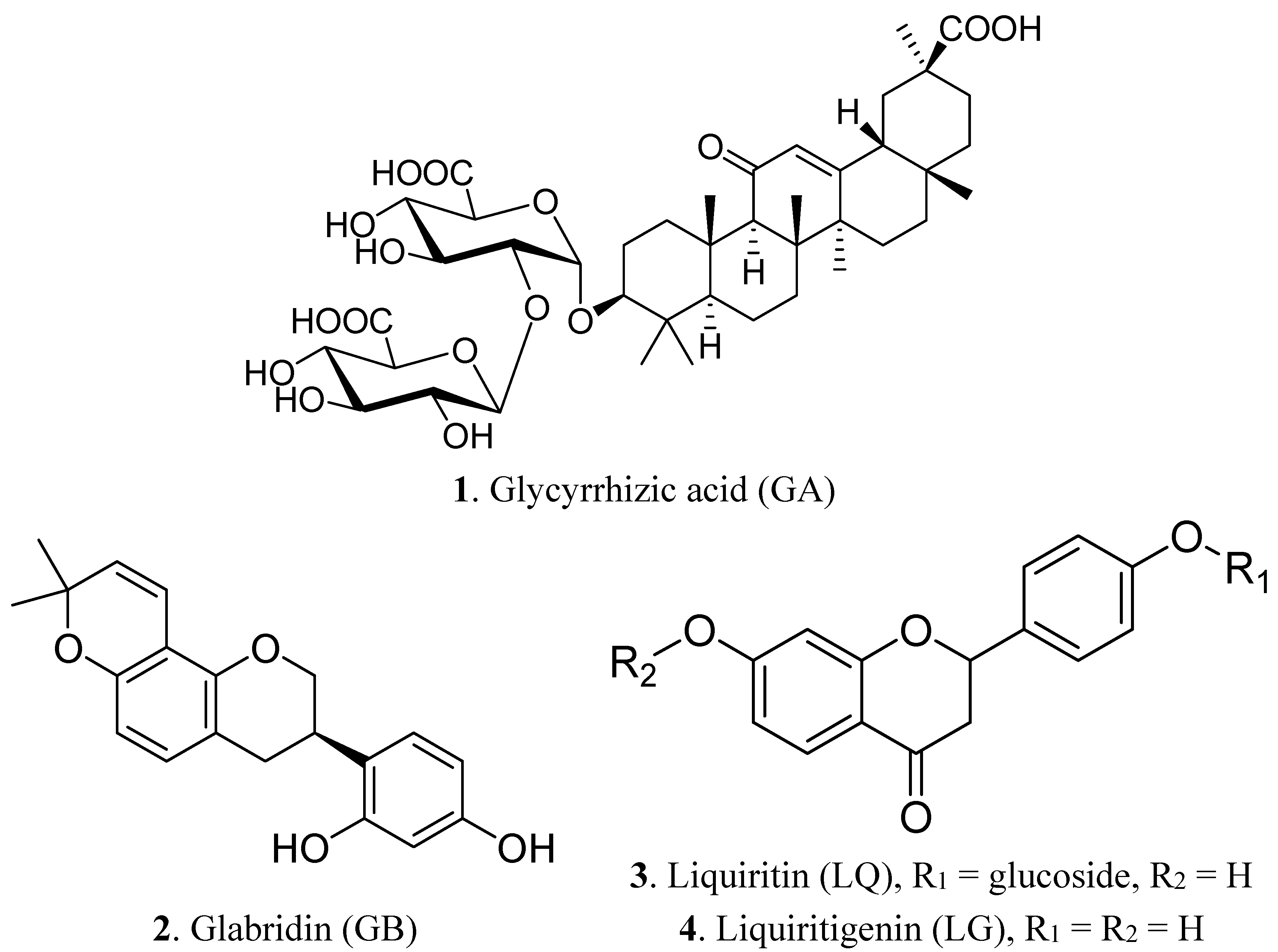
2. Results and Discussion
2.1. Component Analysis of Licorice Extract

| Sample (Parts) | Solvent | GA (%) | GB (%) | LQ (%) | LG (%) |
|---|---|---|---|---|---|
| 1 (root twigs) | Water | 0.75 ± 0.02 | ND 1 | 0.26 ± 0.02 | 0.07 ± 0.01 |
| 2 (root twigs) | 70% EtOH | 1.68 ± 0.09 | 0.16 ± 0.02 | 1.09 ± 0.04 | 0.08 ± 0.01 |
| 3 (root intercept) | Water | 0.51 ± 0.01 | ND 1 | 0.15 ± 0.01 | 0.04 ± 0.001 |
| 4 (root intercept) | 70% EtOH | 1.09 ± 0.01 | 0.08 ± 0.01 | 0.50 ± 0.01 | 0.01 ± 0.002 |
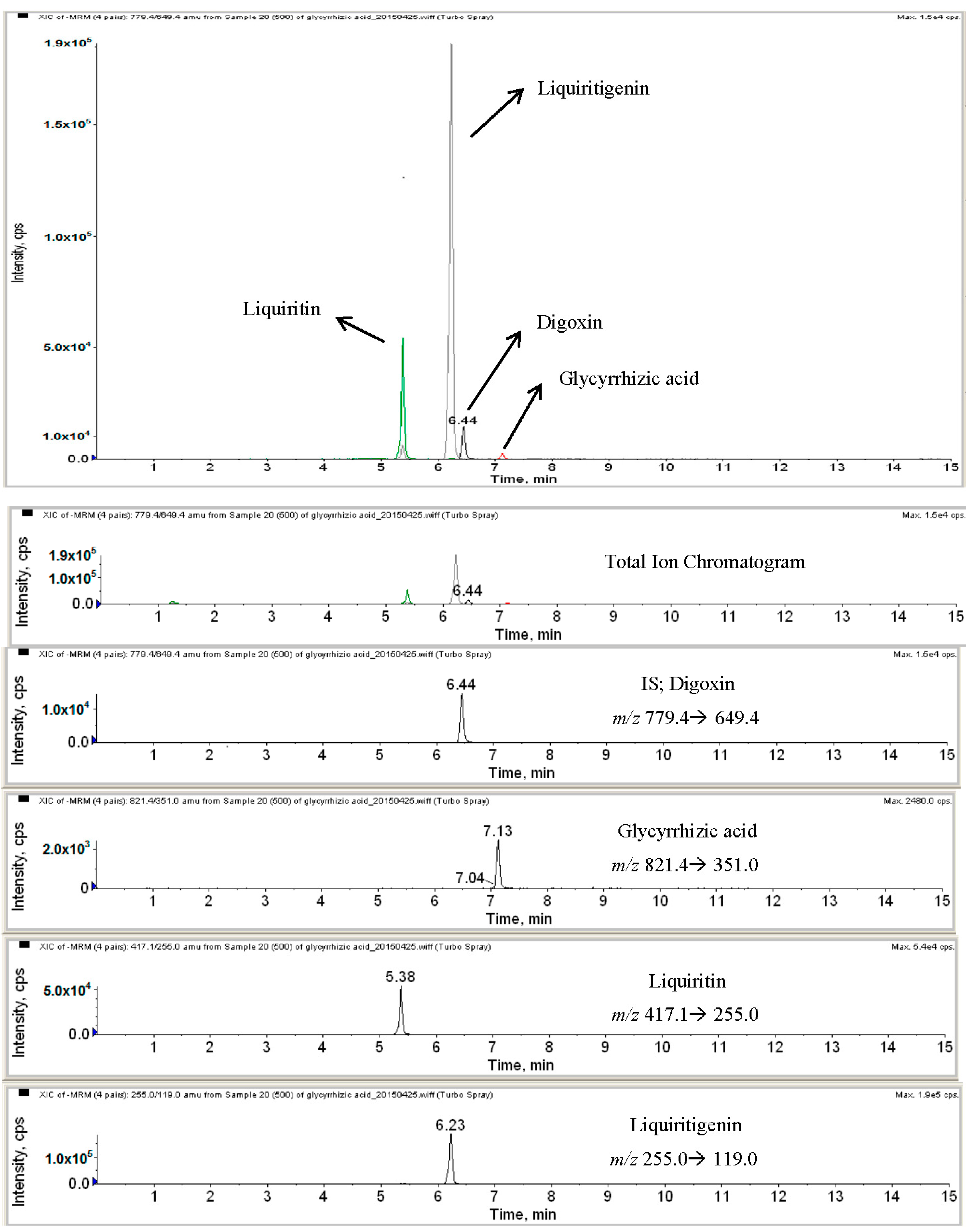
2.2. HPLC-MS Analysis of Licorice Extracts
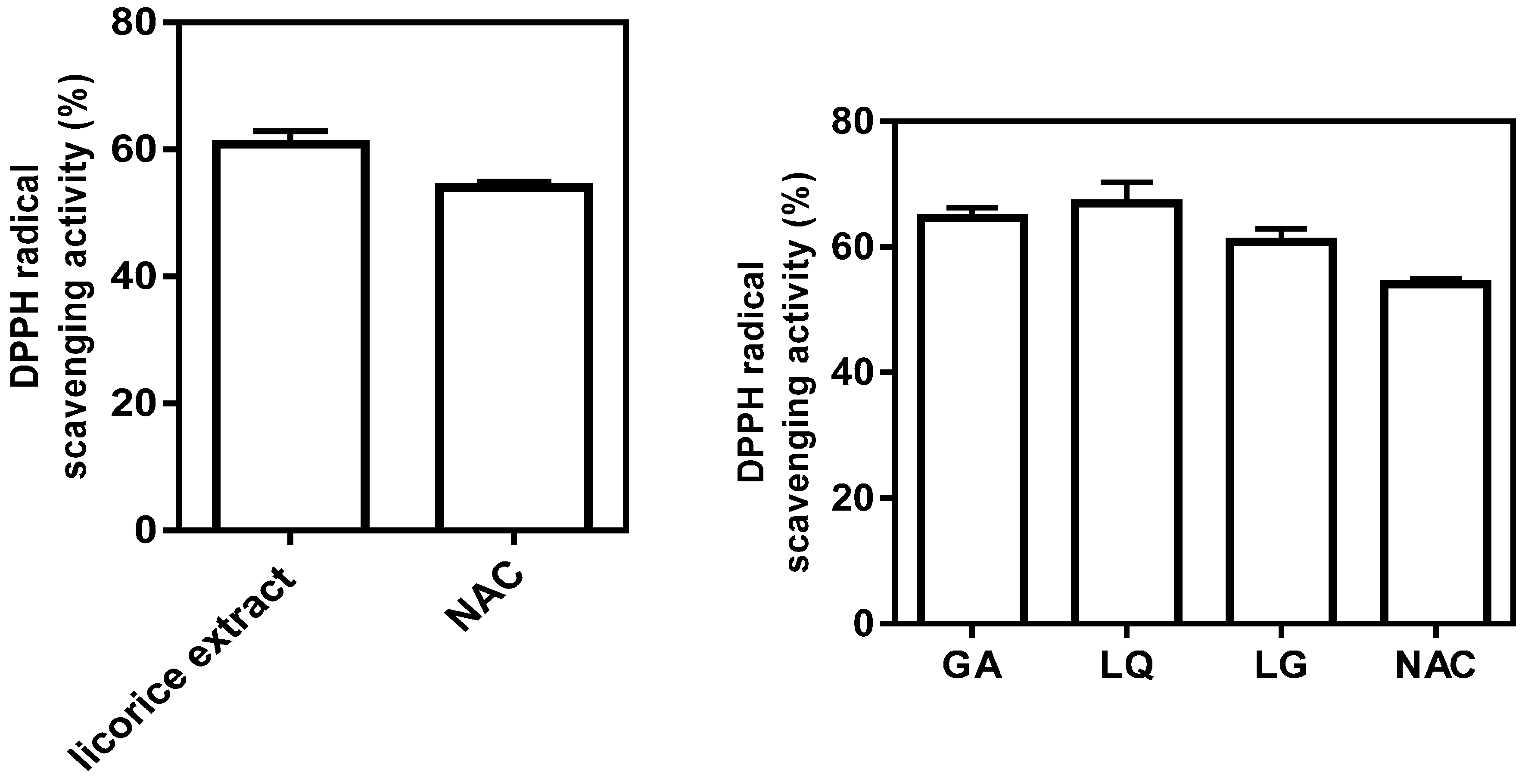
2.3. Antioxidative Activity of Licorice Ingredients
2.4. GA, LQ and LG Inhibited NO Production and Decreased the Expression Levels of iNOS and COX-2
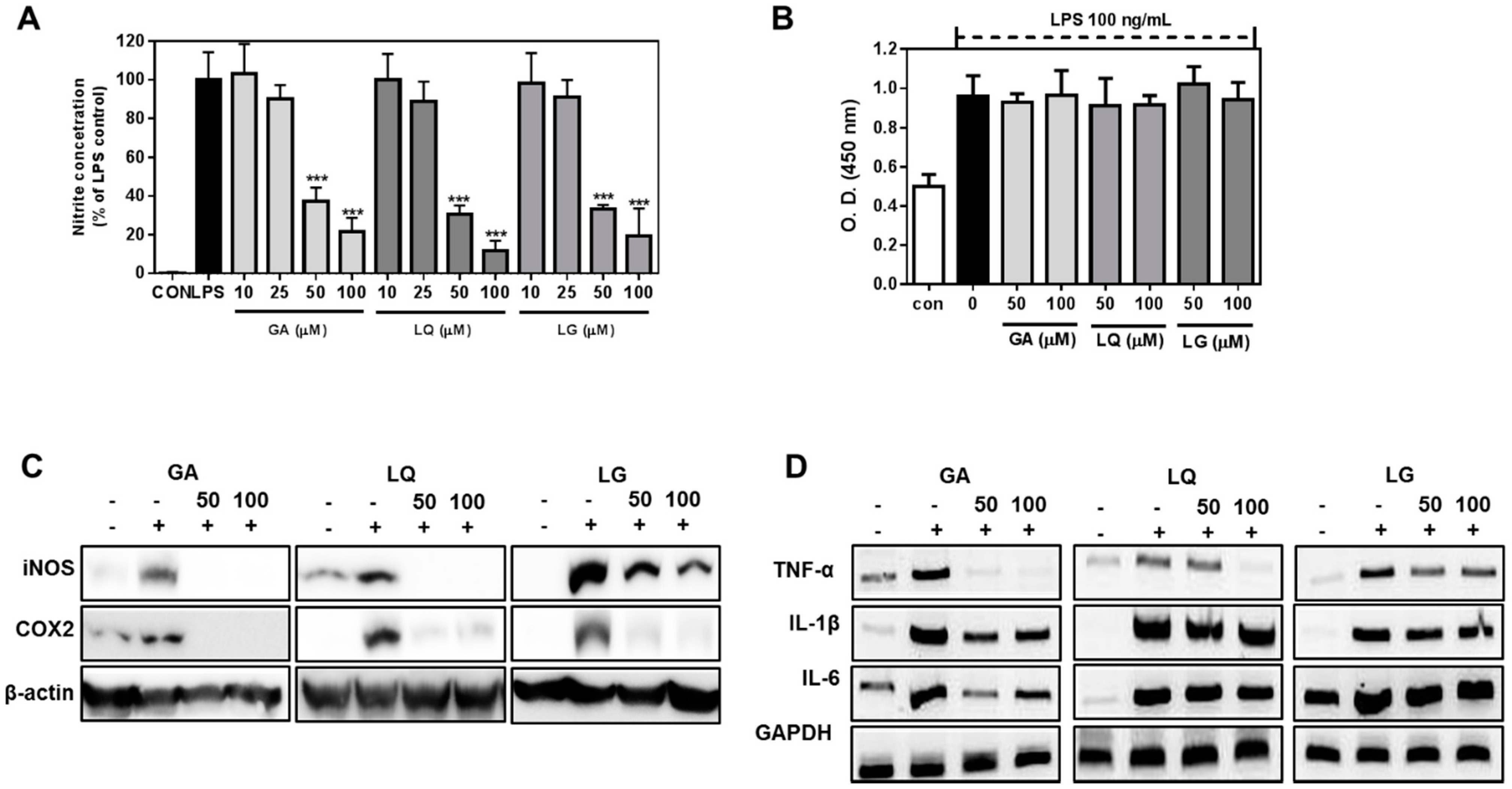
2.5. Hepatoprotective Effect of Licorice Extract on the t-BHP-Induced Damage in Mice Liver
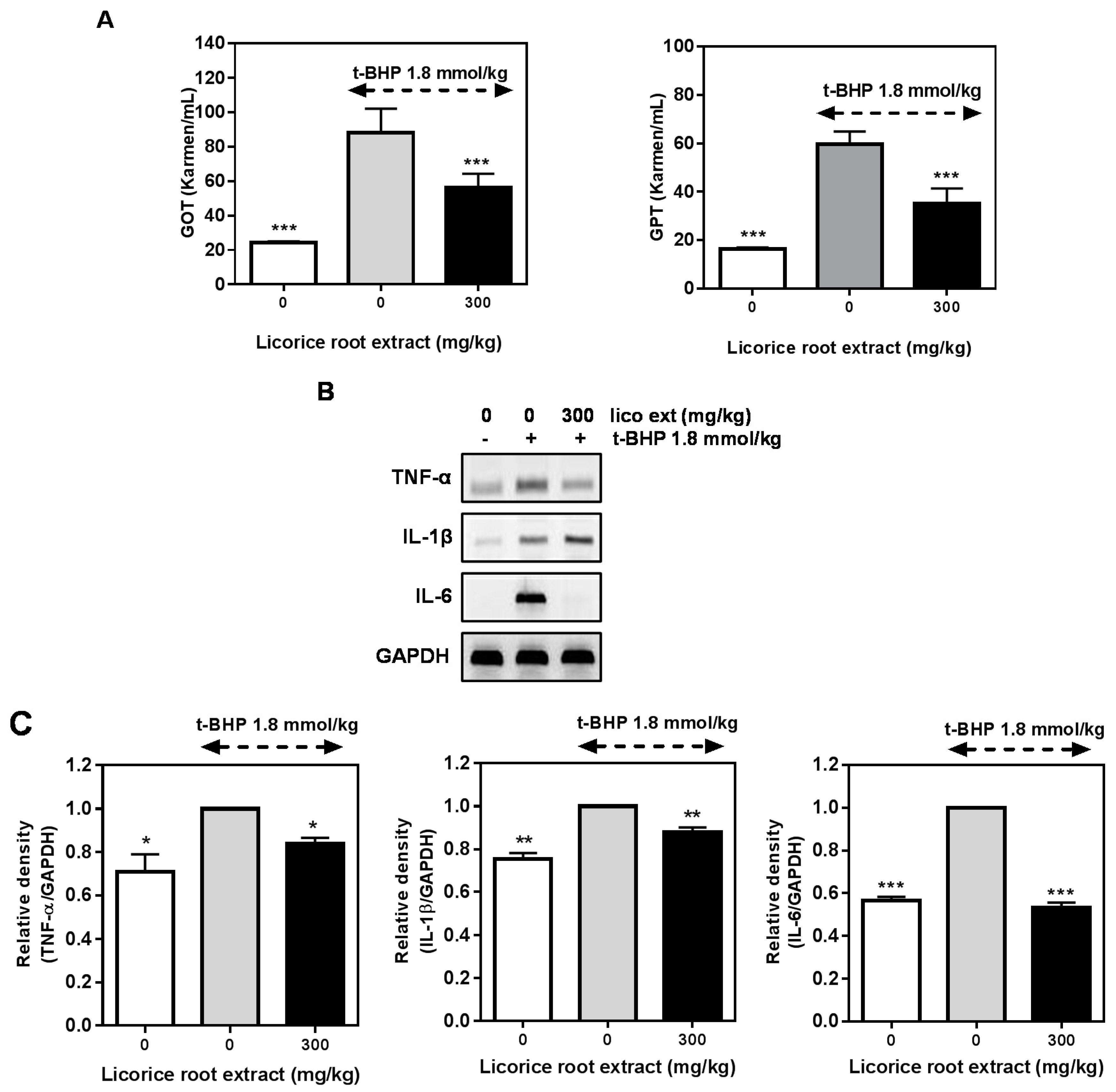
3. Experimental Section
3.1. BV2 Microglial Cell Culture
3.2. Chemicals and Reagents
3.3. The Original Material
3.4. Extraction and Isolation
3.5. Analysis of HPLC-MS Instrument and Conditions
3.6. Animals and Treatment
3.7. 2,2-Diphenyl-1-picrylhydrazyl Radical Scavenging Activity
3.8. Cell Viability Assay
3.9. Nitrite Assay
3.10. Western Blot Analysis
3.11. RNA Purification and Quantitative RT-PCR
| Gene | Accession No. | Sequences | Product Size (bp) |
|---|---|---|---|
| TNF-α | NM_012675.3 | 5′-CTGGCGTGTTCATCCGTTCT-3′ 5′-GACATTCCGGGATCCAGTGA-3′ | 283 |
| IL-1β | NM_031512.2 | 5′-GAAGAGCCCGTCCTCTGTGA-3′ 5′-GTGGGTGTGCCGTCTTTCAT-3′ | 290 |
| IL-6 | NM_012589.2 | 5′-CCCACCAGGAACGAAAGTCA-3′ 5′-TCAGAATTGCCATTGCACAAC-3′ | 270 |
| GAPDH | NM_017008.4 | 5′-ATGGTGAAGGTCGGTGTGAAC-3′ 5′-TGTAGTTGAGGTCAATGAAGG-3′ | 150 |
3.12. Statistical Analysis
4. Conclusions
Acknowledgments
Author Contributions
Conflicts of Interest
References
- Nencini, C.; Giorgi, G.; Micheli, L. Protective effect of silymarin on oxidative stress in rat brain. Phytomedicine 2007, 14, 129–135. [Google Scholar] [CrossRef] [PubMed]
- Reddy, B.V.; Sundari, J.S.; Balamurugan, E.; Menon, V.P. Prevention of nicotine and streptozotocin treatment induced circulatory oxidative stress by bis-1,7-(2-hydroxyphenyl)-hepta-1,6-diene-3,5-dione in diabetic rats. Mol. Cell. Biochem. 2009, 331, 1271–133. [Google Scholar] [CrossRef] [PubMed]
- Rumyana, S.; Magdalena, K.; Vessela, V.; M., M. Some In Vitro/In Vivo Chemically-Induced Experimental Models of Liver Oxidative Stress in Rats. Biomed. Res. Inter. 2014, 2014. [Google Scholar] [CrossRef]
- Gumpricht, E.; Dahl, R.; Devereaux, M.W.; Ronald, J.S. Licorice compounds glycyrrhizin and 18β-glycyrrhetinic acid are potent modulators of bile acid-induced cytotoxicity in rat hepatocytes. J. Biol. Chem. 2005, 280, 10556–10563. [Google Scholar] [CrossRef] [PubMed]
- Tanaka, A.; Horiuchi, M.; Umano, K.; Takayuki, S. Antioxidant and antiinflammatory activities of water distillate and its dichloromethane extract from licorice root (Glycyrrhiza uralensis) and chemical composition of dichloromethane extract. J. Sci. Food Agric. 2008, 88, 1158–1165. [Google Scholar] [CrossRef]
- Takhshid, M.A.; Mehrabani, D.; Ai, J.; Zarepoor, M. The healing effect of licorice extract in acetic acid-induced ulcerative colitis in rat model. Comp. Clin. Pathol. 2012, 21, 1139–1144. [Google Scholar] [CrossRef]
- Rahnama, M.; Mehrabani, D.; Japoni, S.; Edjtehadi, M.; Firoozi, M.S. The healing effect of licorice (Glycyrrhiza glabra) on Helicobacter pylori infected peptic ulcers. J. Res. Med. Sci. 2013, 18, 532–533. [Google Scholar] [PubMed]
- Paola, M.; Mariateresa, M.; Mariateresa, R.; Santo, P.; Sonia, P.; Cosimo, P. Metabolic profiling of roots of liquorice (Glycyrrhiza glabra) from different geographical areas by ESI/MS/MS and determination of major metabolites by LC-ESI/MS and LC-ESI/MS/MS. J. Pharm. Biomed. Anal. 2011, 54, 535–544. [Google Scholar]
- Mohamed, A.F.; Andrea, P.; Ludger, A.W. Comparative metabolite profiling and fingerprinting of medicinal licorice roots using a multiplex approach of GC-MS, LC-MS and 1D NMR techniques. Phytochemistry 2012, 76, 60–72. [Google Scholar]
- Cantelli-Forti, G.; Maffei, F.; Hrelia, R.; Bugamelli, F.; Bernardi, M.; Intino, R.D.; Maranesi, M.; Raggi, M.A. Interaction of Licorice on Glycyrrhizin Pharrmacokinetics. Environ. Health. Perspect. 1994, 102, 65–68. [Google Scholar] [CrossRef] [PubMed]
- Kim, S.S.; Lim, J.; Bang, Y.; Gal, J.; Lee, S.U.; Cho, Y.C.; Yoon, G.; Kang, B.Y.; Cheon, S.H.; Choi, H.J. Licochalcone E activates Nrf2/antioxidant response element signaling pathway in both neuronal and microglial cells: Therapeutic relevance to neurodegenerative disease. J. Nutr. Biochem. 2012, 23, 1314–1324. [Google Scholar] [CrossRef] [PubMed]
- Kim, J.; Kim, J.; Shim, J.; Lee, S.; Kim, J.; Lim, S.S.; Lee, K.W.; Lee, H.J. Licorice-derived dehydroglyasperin C increases MKP-1 expression and suppresses inflammation-mediated neurodegeneration. Neurochem. Inter. 2013, 63, 732–740. [Google Scholar] [CrossRef] [PubMed]
- Rodriquez-Mateos, A.D.; Vauzour, D.; Krueger, C.G.; Shanmuganayagam, D.; Reed, J.; Calani, L.; Mena, P.; Del Rio, D.; Crozier, A. Bioavailialility, bioactivity and impact on health of dietary flavonoids and related compounds: An update. Arch. Toxicol. 2014, 88, 1803–1853. [Google Scholar] [CrossRef] [PubMed]
- Hwang, J.M.; Yu, J.Y.; Jang, Y.O.; Kim, B.T.; Han, K.J.; Jeon, Y.M.; Lee, J.C. A phenolic acid phenethyl urea compound inhibits lipopolysaccharide-induced production of nitric oxide and pro-inflammatory cytokines in cell culture. Inter. Immunopharmacol. 2010, 10, 526–532. [Google Scholar] [CrossRef] [PubMed]
- Kitts, D.D.; Wijewickreme, A.N.; Hu, C. Antioxidant properties of a North American ginseng extract. Mol. Cell. Biochem. 2000, 203, 1–10. [Google Scholar] [CrossRef] [PubMed]
- Farr, D.R. Functional foods. Cancer Lett. 1997, 114, 59–63. [Google Scholar] [CrossRef]
- Van Poppel, G.; van den Berg, H. Vitamins and cancer. Cancer Lett. 1997, 114, 195–202. [Google Scholar] [CrossRef]
- Deng, Y.; Wu, K.; Wan, J.; Li, L.; Jiang, R.; Jia, M.; Jing, Y.; Zhang, L. Aminotriazole attenuated carbon tetrachloride-induced oxidative liver injury in mice. Food Chem. Toxicol. 2012, 50, 3073–3078. [Google Scholar] [CrossRef] [PubMed]
- Upur, H.; Amat, N.; Blazekovic, B.; Talip, A. Protective effect of Cichorium glandulosum root extract on carbon tetrachloride-induced and galactosamine-induced hepatotoxicity in mice. Food Chem. Toxicol. 2009, 47, 2022–2030. [Google Scholar] [CrossRef] [PubMed]
- Chung, S.J.; Lee, C.H.; Lee, H.S.; Kim, S.T.; Sohn, U.D.; Park, E.S.; Bang, J.S.; Lee, J.H.; Chung, Y.H.; Jeong, J.H. The role of phosphatidylcholine and deoxycholic acid in inflammation. Life Sci. 2014, 108, 88–93. [Google Scholar] [CrossRef] [PubMed]
- Melih, A.; Savas, D.; Selma, A.Y.; Kubilay, G.; Emine, T.; Erkan, T.; Rauf, T.A.; Aysun, B.; Mehmet, N.E. Attenuation of ureteral obstruction-induced renal injury by polyenylphosphatidylcholine. Inter. J. Urol. 2007, 14, 350–356. [Google Scholar]
- Jeong, H.G.; You, H.J.; Park, S.J.; Moon, A.R.; Chung, Y.C.; Kang, S.K.; Chun, H.K. Hepatoprotective effects of 18β-glycyrrhetinic acid on carbon tetrachloride-induced liver injury: inhibition of cytochrome P4502E1 expression. Pharmacol. Res. 2002, 46, 221–227. [Google Scholar] [CrossRef]
- Lin, W.L.; Wang, C.J.; Tsai, Y.Y.; Liu, C.L.; Hwang, J.M.; Tseng, T.H. Inhibitory effect of esculetin on oxidative damage induced by t-butyl hydoperoxide in rat liver. Arch. Toxicol. 2000, 74, 467–472. [Google Scholar] [CrossRef] [PubMed]
- Hwang, J.M.; Wang, C.J.; Chou, F.P.; Tseng, T.H.; Hsieh, Y.S.; Lin, W.L.; Chu, C.Y. Inhibitory effect of berberine on tert-butyl hydroperoxide-induced oxidative damage in rat liver. Arch. Toxicol. 2002, 76, 664–670. [Google Scholar] [CrossRef] [PubMed]
- Liu, C.L.; Wang, J.M.; Chu, C.Y.; Cheng, M.T.; Tseng, T.H. In vivo protective effect of protocatechuic acid on tert-butyl hydroperoxide-induced rat hepatotoxicity. Food Chem. Toxicol. 2002, 40, 635–641. [Google Scholar] [CrossRef]
- Munhoz, C.D.; García-Bueno, B.; Madrigal, J.L.; Lepsch, L.B.; Scavone, C.; Leza, J.C. Stressinduced neuroinflammation: Mechanisms and new pharmacological targets. J. Med. Biol. Res. 2008, 41, 1037–1046. [Google Scholar] [CrossRef]
- Hesslinger, C.; Strub, A.; Boer, R.; Ulrich, W.R.; Lehner, M.D.; Braun, C. Inhibition of inducible nitric oxide synthase in respiratory diseases. Biochem. Soc. Trans. 2009, 37, 886–891. [Google Scholar] [CrossRef] [PubMed]
- Kanwar, J.R.; Kanwar, R.K.; Burrow, H.; Baratchi, S. Recent advances on the roles of NO in cancer and chronic inflammatory disorders. Curr. Med. Chem. 2009, 16, 2373–2794. [Google Scholar] [CrossRef] [PubMed]
- Zhang, R.; Li, S. COX-2 as a novel target of CRF family peptides participating in inflammation. Biochem. Biophys. Res. Commun. 2009, 382, 483–485. [Google Scholar] [CrossRef] [PubMed]
- Gyamfi, M.A.; Yonamine, M.; Aniya, Y. Free-radical scavenging action of medicinal herbs from Ghana: Thonningia sanguinea on experimentally induced liver injuries. Gen. Pharmacol. 1999, 32, 661–667. [Google Scholar] [CrossRef]
- Weissman, B.A.; Gross, S.S. Measurement of NO and NO synthase. Curr. Prot. Neurosci. 2001, 7. [Google Scholar] [CrossRef]
- Sample Availability: Samples of the compounds licorice extract are available from the authors.
© 2015 by the authors. Licensee MDPI, Basel, Switzerland. This article is an open access article distributed under the terms and conditions of the Creative Commons Attribution license ( http://creativecommons.org/licenses/by/4.0/).
Share and Cite
Yu, J.-Y.; Ha, J.Y.; Kim, K.-M.; Jung, Y.-S.; Jung, J.-C.; Oh, S. Anti-Inflammatory Activities of Licorice Extract and Its Active Compounds, Glycyrrhizic Acid, Liquiritin and Liquiritigenin, in BV2 Cells and Mice Liver. Molecules 2015, 20, 13041-13054. https://doi.org/10.3390/molecules200713041
Yu J-Y, Ha JY, Kim K-M, Jung Y-S, Jung J-C, Oh S. Anti-Inflammatory Activities of Licorice Extract and Its Active Compounds, Glycyrrhizic Acid, Liquiritin and Liquiritigenin, in BV2 Cells and Mice Liver. Molecules. 2015; 20(7):13041-13054. https://doi.org/10.3390/molecules200713041
Chicago/Turabian StyleYu, Ji-Yeon, Jae Yeo Ha, Kyung-Mi Kim, Young-Suk Jung, Jae-Chul Jung, and Seikwan Oh. 2015. "Anti-Inflammatory Activities of Licorice Extract and Its Active Compounds, Glycyrrhizic Acid, Liquiritin and Liquiritigenin, in BV2 Cells and Mice Liver" Molecules 20, no. 7: 13041-13054. https://doi.org/10.3390/molecules200713041
APA StyleYu, J.-Y., Ha, J. Y., Kim, K.-M., Jung, Y.-S., Jung, J.-C., & Oh, S. (2015). Anti-Inflammatory Activities of Licorice Extract and Its Active Compounds, Glycyrrhizic Acid, Liquiritin and Liquiritigenin, in BV2 Cells and Mice Liver. Molecules, 20(7), 13041-13054. https://doi.org/10.3390/molecules200713041