
Extraction of Antioxidant Components from Bidens pilosa Flowers and Their Uptake by Human Intestinal Caco-2 Cells


Abstract
:
1. Introduction
2. Results and Discussion
2.1. Species Identification
2.2. Chemistry
2.2.1. Yield, Total Phenolic and Flavonoid Contents of BPR Flower Extracts
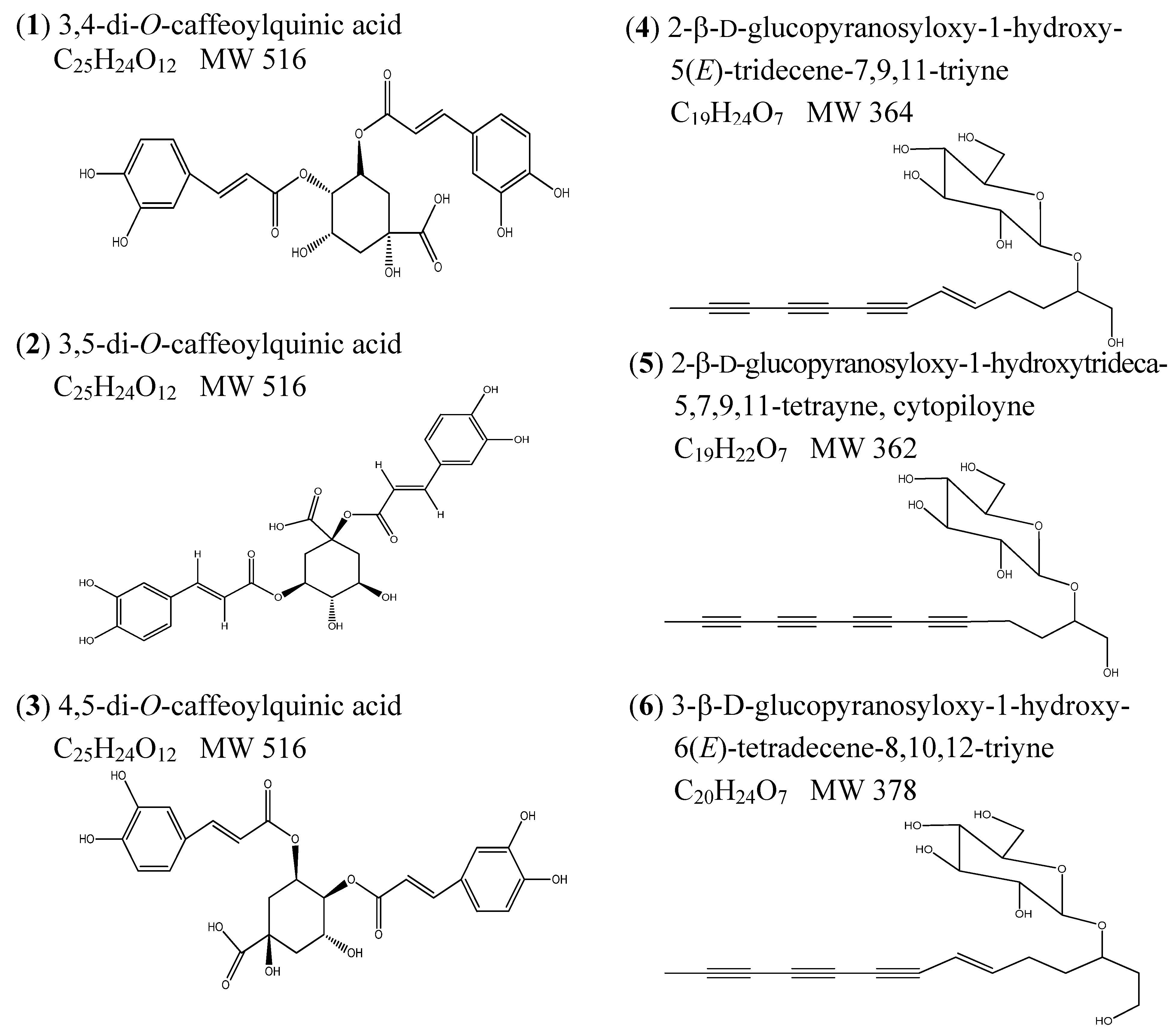
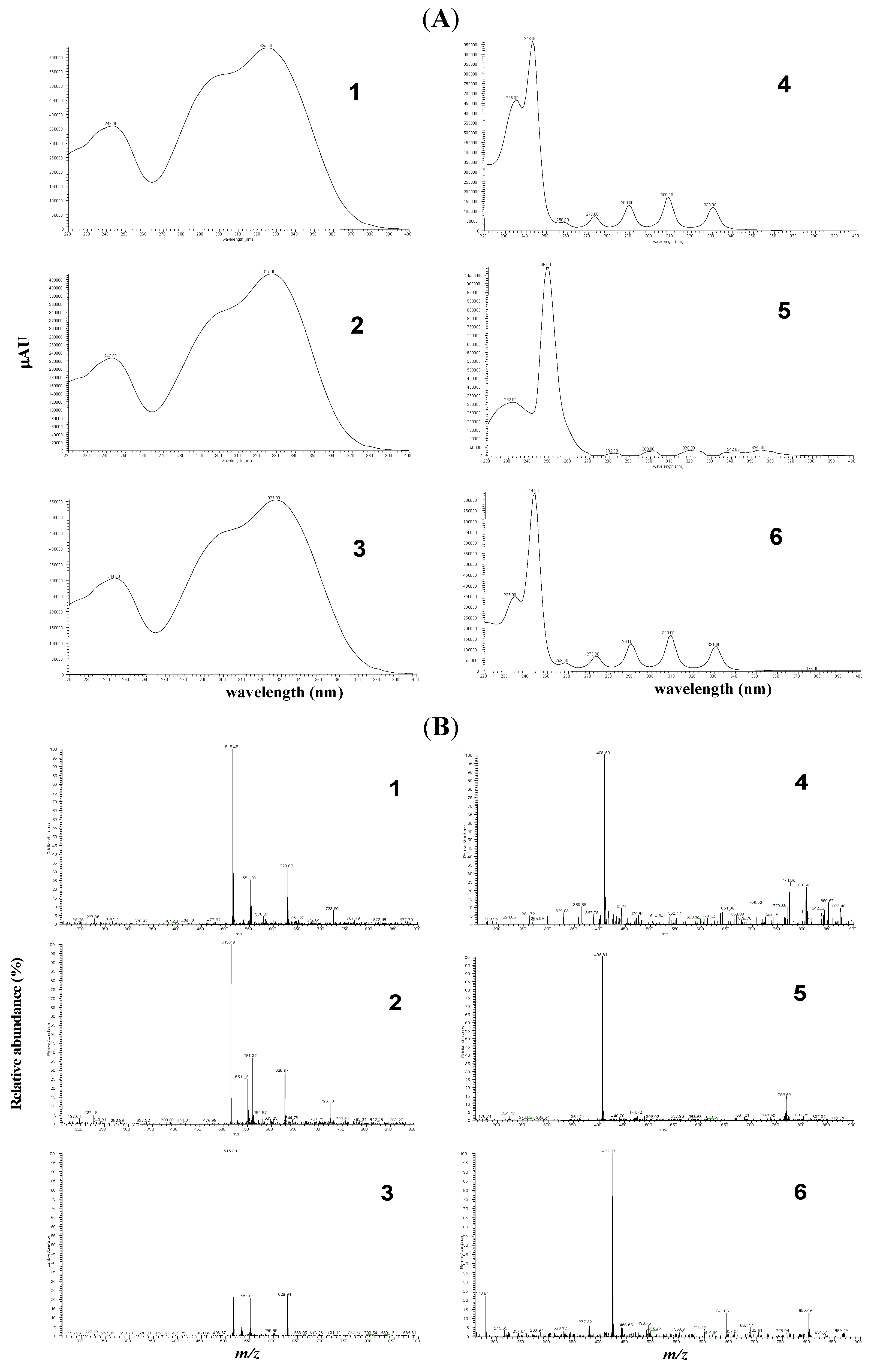
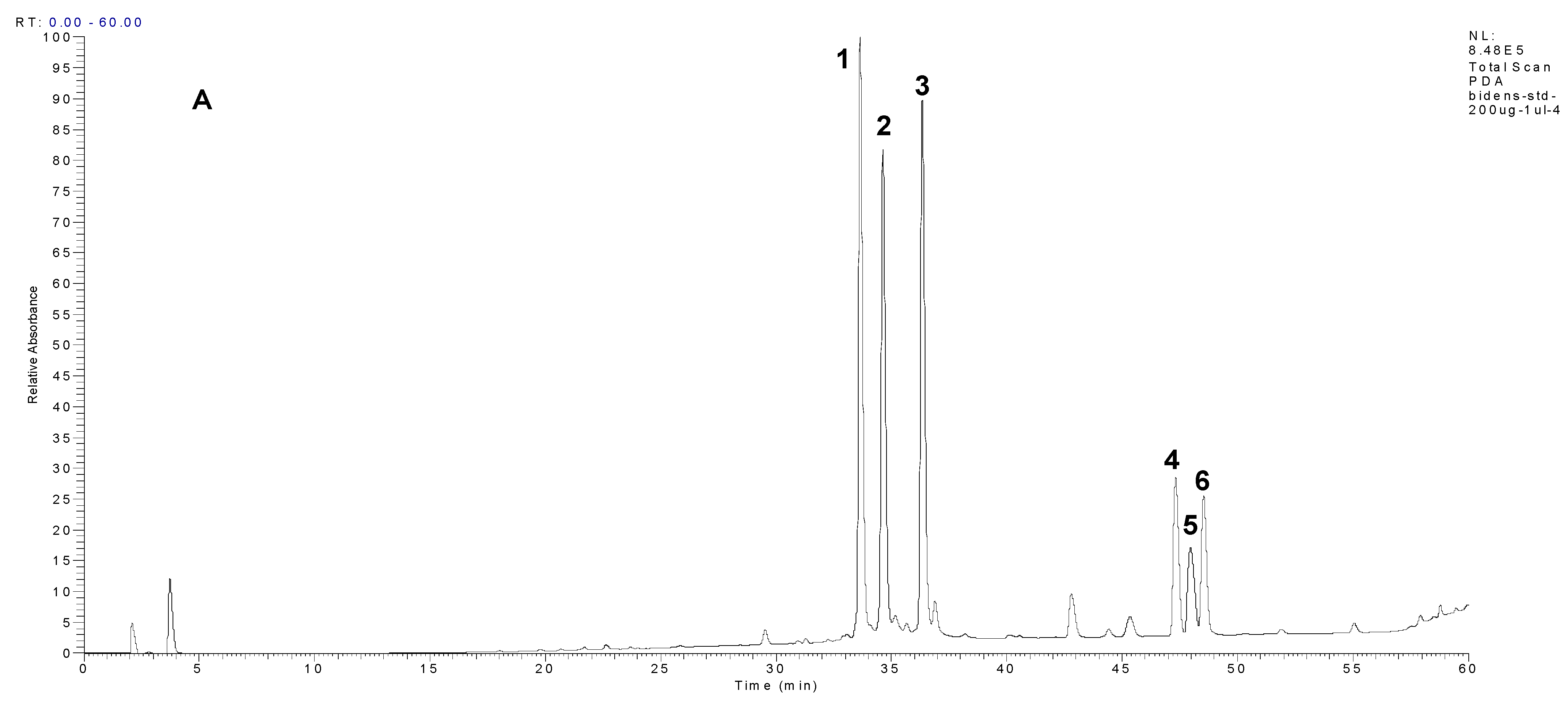
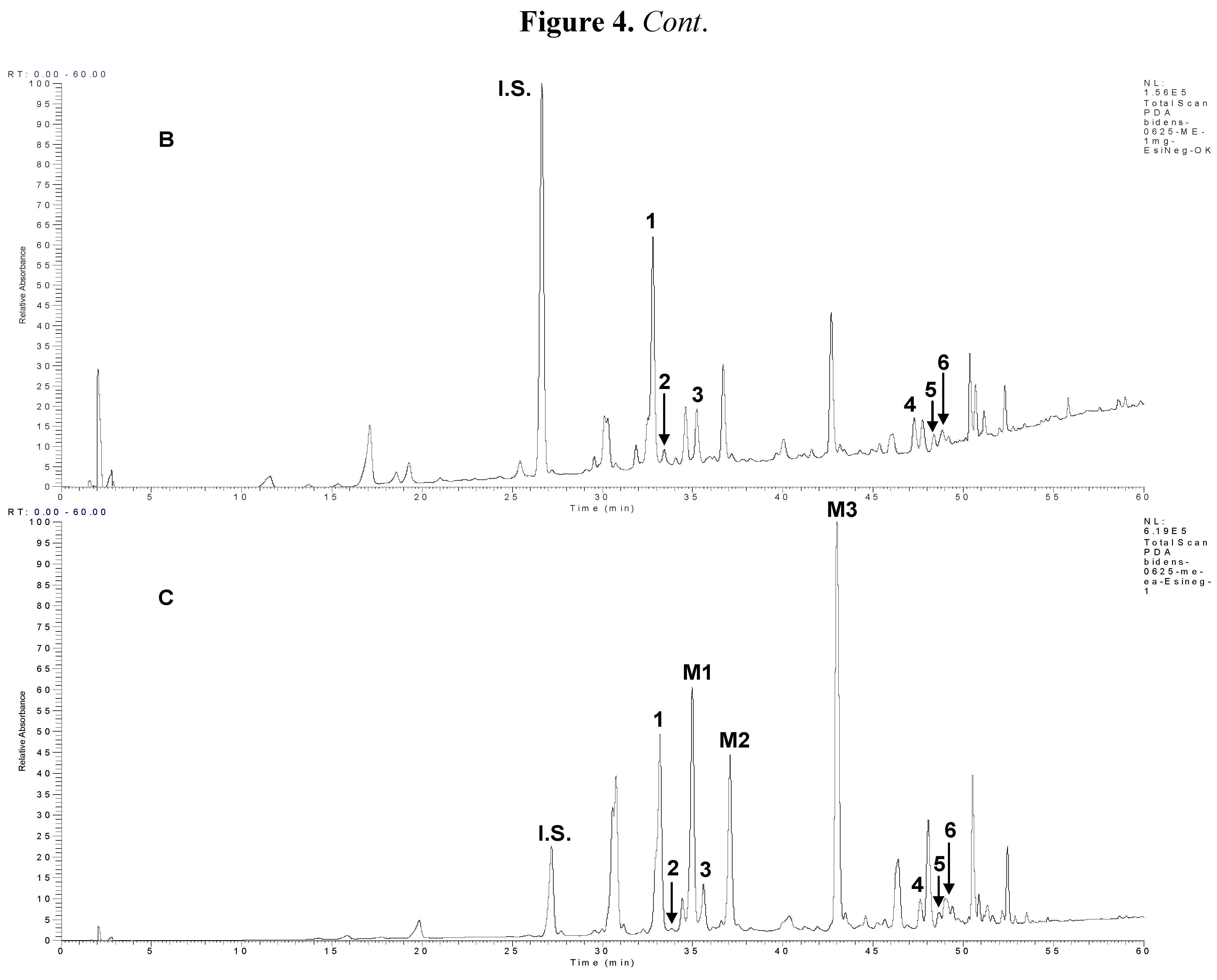
2.2.2. Chemical Characterization by HPLC and LC-MS
2.2.3. Free Radical Scavenging Activity of Different Solvent Extracts
2.2.4. Trolox Equivalent Antioxidant Capacity (TEAC)
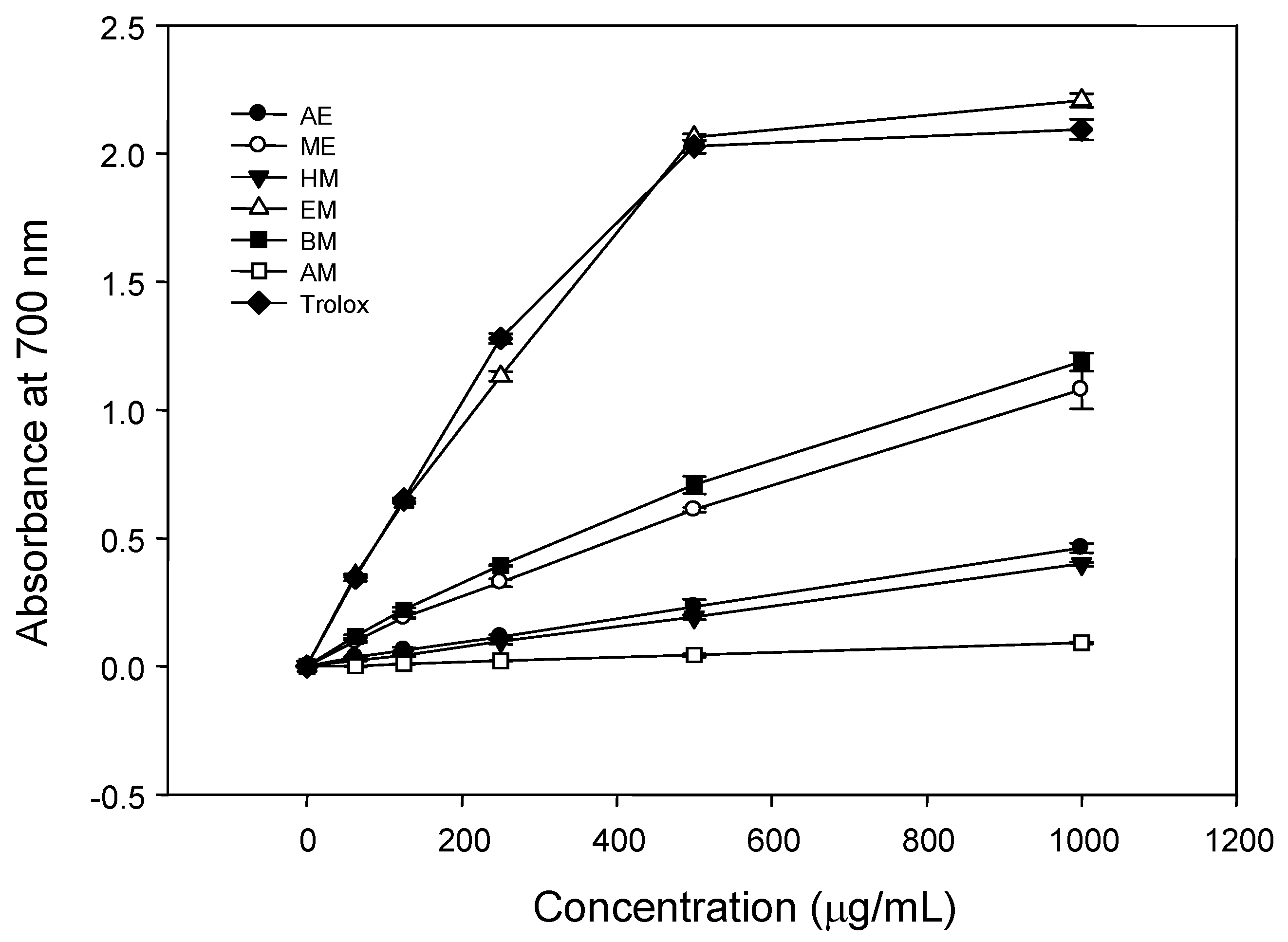
2.2.5. Ferric Reducing Antioxidant Power (FRAP)
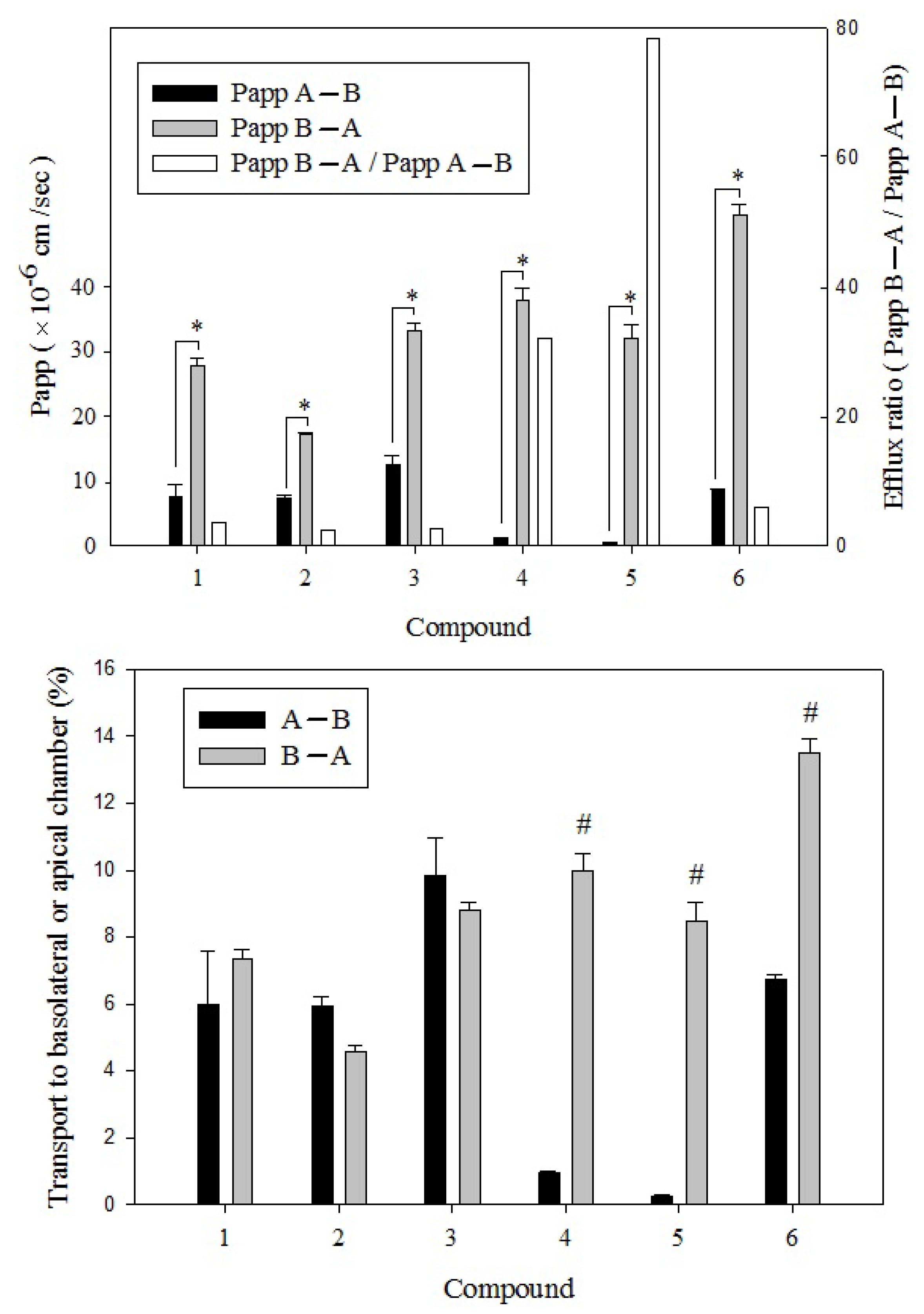
2.3. Permeability and Efflux Ratio in Caco-2 cells
3. Experimental
3.1. Chemicals and Reagents
3.2. Source of Bidens pilosa L. var. radiata Sch. Bip. (BPR)
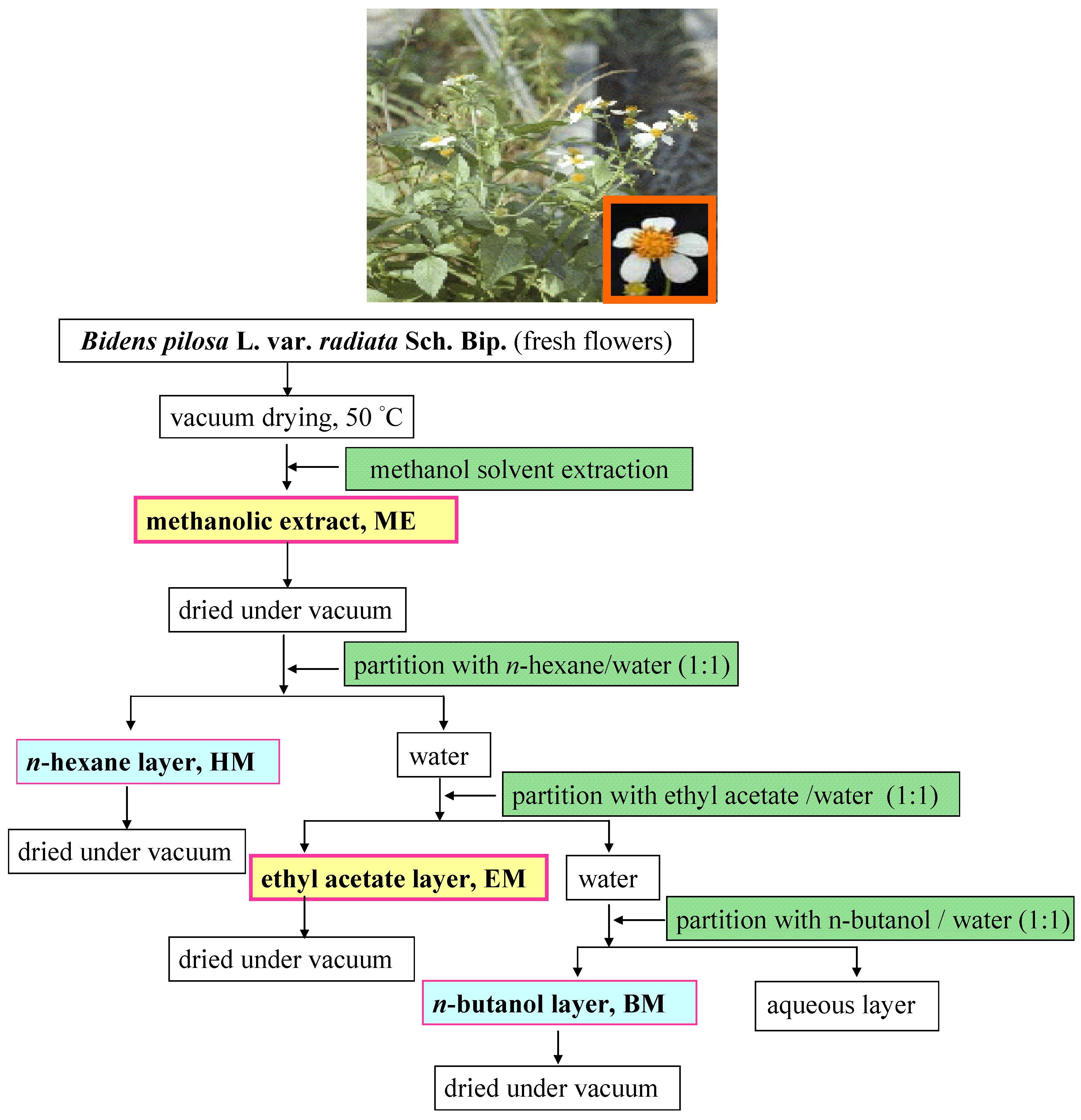
3.3. Solvent Extraction and Partition Fractionation
3.4. Assay of Total Phenolics
3.5. Assay of Total Flavonoids
3.6. Evaluation of Antioxidant Activity
3.6.1. Free Radical Scavenging Activity Determination (DPPH)
3.6.2. Trolox Equivalent Antioxidant Capacity (TEAC)
3.6.3. Ferric Reducing Antioxidant Power Determination
3.7. HPLC and LC-MS Analysis of Main Compounds in BPR
3.7.1. Preparation of Standard Stock and Sample Solutions
3.7.2. HPLC Operation
3.7.3. LC-MS Analysis
3.8. Biological Evaluation
3.8.1. Cell Culture
3.8.2. Transepithelial Transport and Uptake
3.9. Statistical Analysis
4. Conclusions
Acknowledgments
References
- Silva, L.F.; Fischer, D.C.H.; Tavares, J.F.; Silva, M.S.; de Athayde-Filho, P.F.; Barbosa-Filho, J.M. Compilation of secondary metabolites from Bidens pilosa L. Molecules 2008, 16, 1070–1102. [Google Scholar] [CrossRef] [PubMed]
- Horiuchi, M.; Seyama, Y. Improvement of the antiinflamatory and antiallergic activity of Bidens pilosa L. var. radiata Scherff treated with enzyme (cellulosine). J. Health Sci. 2008, 54, 294–301. [Google Scholar] [CrossRef]
- Hsu, Y.J.; Lee, T.H.; Chang, C.L.T.; Huang, Y.T.; Yang, W.C. Anti-diabetic mechanism of Bidens pilosa extract: Stimulation of insulin release from beta cells. J. Ethnophamacol. 2009, 122, 379–383. [Google Scholar] [CrossRef] [PubMed]
- Chang, S.L.; Chang, C.L.T.; Chiang, Y.M.; Hsieh, R.H.; Tzeng, C.R.; Wu, T.K.; Sytwu, H.K.; Yang, N.S.; Shyur, L.F.; Yang, W.C. Polyacetylenic compound and butanol fraction from Bidens pilosa Linn can modulate the differentiation of helper T cells and prevent autoimmune diabetes in non-obese diabetic mice. Planta Med. 2004, 70, 1045–1051. [Google Scholar] [CrossRef] [PubMed]
- Alvarez, A.; Pomar, F.; Sevilla, M.A.; Montero, M.J. Gastric antisecretory and antiulcer activities of an ethanolic extract of Bidens pilosa L. var. radiata Schult. Bip. J. Ethnopharmacol. 1999, 67, 333–340. [Google Scholar] [CrossRef]
- Pereira, R.L.C.; Ibrahim, T.; Lucchetti, L.; Silva, A.J.R.; Moraes, V.L.G. Immunosuppressive and anti-inflammatory effects of methanolic extract and the polyacetylene isolated from Bidens pilosa L. Immunopharmacology 1999, 43, 31–37. [Google Scholar] [CrossRef]
- Bairwa, K.; Kumar, R.; Sharma, R.J.; Roy, R.K. An updated review on Bidens Pilosa L. Pharma. Chem. 2010, 2, 325–337. [Google Scholar]
- Cortés-Rojas, D.F.; Chagas-Paula, D.A.; da Costa, F.B.; Souza, C.R.F.; Oliveira, W.P. Bioactive compounds in Bidens pilosa L. populations: A key step in the standardization of phytopharmaceutical preparations. Rev. Bras. Farmacogn. 2012. Available online: http://dx.doi.org/10.1590/S0102–695X2012005000100 (accessed on 23 August 2012).
- Wat, C.K.; Johns, T.; Towers, G.H.N. Phototoxic and antibiotic activities of plants of the Asteraceae used in folk medicine. J. Ethnopharmacol. 1980, 2, 279–290. [Google Scholar] [CrossRef]
- Ganjewalaa, D.; Kumara, S.; Ambikaa, K.; Luthrab, R. Plant polyacetylenic glycosides occurrence, biosynthesis and biological activities. Pharmacologyonline 2008, 2, 113–131. [Google Scholar]
- Tobinaga, S.; Sharma, M.K.; Aalbersberg, W.G.L.; Watanabe, K.; Iguchi, K.; Narui, K.; Sasatsu, M.; Waki, S. Isolation and identification of a potent antimalarial and antibacterial polyacetylene from Bidens pilosa. Planta Med. 2009, 75, 624–628. [Google Scholar] [CrossRef] [PubMed]
- Wu, L.W.; Chiang, Y.M.; Chuang, H.C.; Wang, S.Y.; Yang, G.W.; Chen, Y.H.; Lai, L.Y.; Shyur, L.F. Polyacetylenes function as anti-angiogenic agents. Pharm. Res. 2004, 21, 2112–2119. [Google Scholar] [CrossRef] [PubMed]
- Minto, R.E.; Blacklock, B.J. Biosynthesis and function of polyacetylenes and allied natural products. Prog. Lipid Res. 2008, 47, 233–306. [Google Scholar] [CrossRef] [PubMed]
- Jung, J.K.; Lee, S.U.; Kozukue, N.; Levin, C.E.; Friedman, M. Distribution of phenolic compounds and antioxidative activities in parts of sweet potato (Ipomoea batata L.) plants and in home processed roots. J. Food Comp. Anal. 2011, 24, 29–37. [Google Scholar] [CrossRef]
- Chien, S.C.; Young, P.H.; Hsu, Y.J.; Chen, C.H.; Tien, Y.J.; Shiu, S.Y.; Li, T.H.; Yang, C.W.; Marimuthu, P.; Tsai, L.F.L.; et al. Anti-diabetic properties of three common Bidens pilosa variants in Taiwan. Phytochemistry 2009, 70, 1246–1254. [Google Scholar] [CrossRef] [PubMed]
- Chiang, Y.M.; Chuang, D.Y.; Wang, S.Y.; Kuo, Y.H.; Tsai, P.W.; Shyur, L.F. Metabolite profiling and chemopreventive bioactivity of plant extracts from Bidens pilosa. J. Ethnopharma. 2004, 95, 409–419. [Google Scholar] [CrossRef] [PubMed]
- Tsai, L.C.; Wang, J.C.; Hsieh, H.M.; Liu, K.L.; Linacre, A.; Lee, J.C. Bidens identification using the noncoding regions of chloroplast genome and nuclear ribosomal DNA. Forensic. Sci. Int. Genet. 2008, 2, 35–40. [Google Scholar] [CrossRef] [PubMed]
- Iqbal, S.; Younas, U.; Chan, K.W.; Zia-Ul-Haq, M.; Ismail, M. Chemical composition of Artemisia annua L. leaves and antioxidant potential of extracts as a function of extraction solvents. Molecules 2012, 17, 6020–6032. [Google Scholar] [CrossRef] [PubMed]
- Choi, Y.; Jeong, H.S.; Lee, J. Antioxidant activity of methanolic extracts from some grains consumed in Korea. Food Chem. 2007, 103, 130–138. [Google Scholar] [CrossRef]
- Ghasemzadeh, A.; Jaafar, H.Z.E.; Rahmat, A. Effects of solvent type on phenolics and flavonoids content and antioxidant activities in two varieties of young ginger (Zingiber officinale Roscoe) extracts. J. Med. Plants Res. 2011, 5, 1147–1154. [Google Scholar]
- Tsimogiannis, D.; Samiotaki, M.; Panayotou, G.; Oreopoulou, V. Characterization of flavonoid subgroups and hydroxyl substitution by HPLC-MS/MS. Molecules 2007, 12, 593–606. [Google Scholar] [CrossRef] [PubMed]
- Christensen, L.P.; Kreutzmann, S. Determination of polyacetylenes in carrot roots (Daucus carota L.) by high-performance liquid chromatography coupled with diode array detection. J. Sep. Sci. 2007, 30, 483–490. [Google Scholar] [CrossRef] [PubMed]
- Simoes-Pires, C.A.; Queiroz, E.F.; Henriques, A.T.; Hostettmann, K. Isolation and on-line identification of antioxidant compounds from three Baccharis species by HPLC-UV-MS/MS with post-column derivatisation. Phytochem. Anal. 2005, 16, 307–314. [Google Scholar] [CrossRef] [PubMed]
- Shimoi, K.; Okada, H.; Furugori, M.; Goda, T.; Takase, T.; Suzuki, M.; Hara, Y.; Yamamoto, H.; Kinae, N. Intestinal absorption of luteolin and luteolin 7-O-L-glucoside in rats and humans. FEBS Lett. 1998, 438, 220–224. [Google Scholar] [CrossRef]
- Brand-Williams, W.; Cuvelier, M.E.; Berset, C. Use of free radical method to evaluate antioxidant activity. LWT-Food Sci. Technol. 1995, 28, 25–30. [Google Scholar] [CrossRef]
- Eklund, P.C.; Langvik, O.K.; Warna, J.P.; Salmi, T.O.; Willfor, S.M.; Sjoholm, R.E. Chemical studies on antioxidant mechanisms and free radical scavenging properties of lignans. Org. Bimol. Chem. 2005, 21, 3336–3347. [Google Scholar] [CrossRef] [PubMed]
- Chyau, C.C.; Ko, P.T.; Mau, J.L. Antioxidant properties of aqueous extracts from Terminalia catappa leaves. LWT-Food Sci. Technol. 2006, 39, 1099–1108. [Google Scholar] [CrossRef]
- Rice-Evans, C.; Miller, N.J. Total antioxidant status in plasma and body fluids. Method. Enzymol. 1994, 234, 279–293. [Google Scholar]
- Chen, Y.H.; Chang, F.R.; Lin, Y.J.; Wang, L.; Chen, J.F.; Wu, Y.C. Wu, M.J. Identification of phenolic antioxidants from Sword Brake fern (Pteris ensiformis Burm.). Food Chem. 2007, 105, 48–56. [Google Scholar] [CrossRef]
- Floegel, A.; Kim, D.O.; Chung, S.J.; Koo, S.I.; Chun, O.K. Comparison of ABTS/DPPH assays to measure antioxidant capacity in popular antioxidant-rich US foods. J. Food Comps. Anal. 2011, 24, 1043–1048. [Google Scholar] [CrossRef]
- Bhaumik, U.K.; Kumar, A.D.; Selvan, V.T.; Saha, P.; Gupta, M.; Mazumder, U.K. Antioxidant and free radical scavenging property of methanol extract of Blumea lanceolaria leaf in different in vitro models. Pharmacologyonline 2008, 2, 74–89. [Google Scholar]
- Qiang, Z.; Ye, Z.; Hauck, C.; Murphy, P.A.; McCoy, J.A.; Widrlechner, M.P.; Reddy, M.B.; Hendrich, S. Permeability of rosmarinic acid in Prunella vulgaris and ursolic acid in Salvia officinalis extracts across Caco-2 cell monolayers. J. Ethnopharmacol. 2011, 137, 1107–1112. [Google Scholar] [CrossRef] [PubMed]
- Walgren, R.A.; Walle, U.K.; Walle, T. Transport of quercetin and its glucosides across human intestinal epithelial Caco-2 cells. Biochem. Pharmacol. 1998, 55, 1721–1727. [Google Scholar] [CrossRef]
- Polli, J.W.; Wring, S.A.; Humphreys, J.E.; Huang, L.; Morgan, J.B.; Webster, L.O.; Serabjit-Singh, C.S. Rational use of in vitro P-glycoprotein assays in drug discovery. J. Pharmacol. Exp. Ther. 2001, 299, 620–628. [Google Scholar] [PubMed]
- Vaidyanathan, J.B.; Walle, T. Transport and metabolism of the tea flavonoid (−)-epicatechin by the human intestinal cell line Caco-2. Pharm. Res. 2001, 18, 1420–1425. [Google Scholar] [CrossRef] [PubMed]
- Silvia Taga, M.; Miller, E.E.; Pratt, D.E. Chia seeds as a source of natural lipid antioxidants. J. Am. Oil Chem. Soc. 1984, 61, 928–931. [Google Scholar] [CrossRef]
- Zhishen, J.; Mengcheng, T.; Jianming, W. Research on antioxidant activity of flavonoids from natural materials. Food Chem. 1999, 64, 555–559. [Google Scholar] [CrossRef]
- Shimada, K.; Fujikawa, K.; Yahara, K.; Nakamura, T. Antioxidative properties of xanthone on the auto oxidation of soybean in cylcodextrin emulsion. J. Agric. Food Chem. 1992, 40, 945–948. [Google Scholar] [CrossRef]
- Arnao, M.B.; Cano, A.; Hernandez-Ruiz, J.; Garcia-Canovas, F.; Acosta, M. Inhibition by l-ascorbic acid and other antioxidants of the 2.2’-azino-bis(3-ethylbenzthiazoline-6-sulfonic acid) oxidation catalyzed by peroxidase: A new approach for determining total antioxidant status of foods. Anal. Biochem. 1996, 236, 255–261. [Google Scholar] [CrossRef] [PubMed]
- Oyaizu, M. Studies on products of browning reactions: Antioxidant activities of products of browning reaction prepared from glucosamine. Japan J. Nutr. 1986, 44, 307–315. [Google Scholar] [CrossRef]
- Søltoft, M.; Eriksen, M.R.; Träger, A.W.B.; Nielsen, J.; Laursen, K.H.; Husted, S.; Halekoh, U.; Knuthsen, P. Comparison of polyacetylene content in organically and conventionally grown carrots using a fast ultrasonic liquid extraction method. J. Agric. Food Chem. 2010, 58, 7673–7679. [Google Scholar] [CrossRef] [PubMed]
- Zhou, S.; Feng, X.; Kestell, P.; Paxton, J.W.; Baguley, B.C.; Chan, E. Transport of the investigational anti-cancer drug 5,6-dimethylxanthenone-4-acetic acid and its acyl glucuronide by human intestinal Caco-2 cells. Eur. J. Pharm. Sci. 2005, 24, 513–524. [Google Scholar] [CrossRef] [PubMed]
- Madgula, V.L.; Avula, B.; Choi, Y.W.; Pullela, S.V.; Khan, I.A.; Walker, L.A.; Khan, S.I. Transport of Schisandra chinensis extract and its biologically-active compounds across Caco-2 cell monolayers—an in vitro model of intestinal transport. J. Pharm. Pharmacol. 2008, 60, 363–370. [Google Scholar] [CrossRef] [PubMed]
Sample Availability: Samples of the methanol extract and ethyl acetate fraction obtained using liquid-liquid partition from the methanol extract of BPR are available from the authors. |



| Extract 1 | Yield (%) | Content (mg/g dry wt.) | |
|---|---|---|---|
| Total phenolics 2 | Total flavonoids 3 | ||
| AE ME | 31.05 ± 10.75 b 40.40 ± 1.21 a | 105.05 ± 3.73 d 538.10 ± 0.96 b | 172.11 ± 2.14 d 235.06 ± 3.46 c |
| HM | 3.83 ± 0.50 d | 51.71 ± 4.76 e | 79.82 ± 2.45 f |
| EM | 5.97 ± 0.35 d | 752.15 ± 7.53 a | 469.10 ± 0.97 a |
| BM AM | 5.56 ± 1.65 d 15.61 ± 0.14 c | 236.02 ± 1.18 c 25.12 ± 0.43 f | 363.19 ± 5.07 b 108.08 ± 8.49 e |
| Peak No. 1 | Retention Time (min) | Content (mg/g dry weight) 2 | |
|---|---|---|---|
| Methanolic extract | Ethyl acetate fractionate | ||
| 1 | 33.72 | 33.4 ± 0.01 b3 | 39.8 ± 0.32 a |
| 2 | 35.15 | 123.0 ± 0.55 b | 220.0 ± 0.13 a |
| 3 | 36.95 | 58.3 ± 0.03 b | 67.3 ± 0.87 a |
| 4 | 49.12 | 76.9 ± 0.41 b | 109.0 ± 0.99 a |
| 5 | 49.68 | 16.4 ± 0.09 b | 23.0 ± 0.29 a |
| 6 | 50.27 | 15.9 ± 0.07 b | 25.8 ± 0.56 a |
| Extract 1 | DPPH IC50 (μg/mL) 2 | TEAC IC50 (μg/mL) 3 |
|---|---|---|
| AE | 1045.4 ± 63.6 b | 818.5 ± 74.3 b |
| ME | 207.3 ± 43.5 d | 340.3± 29.5 c |
| HM | 260.2 ± 5.0 cd | 294.4 ± 18.0 cd |
| EM | 82.8. ± 3.7 e | 135.3 ± 1.0 d |
| BM | 284.4 ± 5.1 c | 365.3 ± 13.5 c |
| AM | 1634.2 ± 48.4 a | 1633.4 ± 224.2 a |
© 2013 by the authors; licensee MDPI, Basel, Switzerland. This article is an open access article distributed under the terms and conditions of the Creative Commons Attribution license (http://creativecommons.org/licenses/by/3.0/).
Share and Cite
Lee, W.-C.; Peng, C.-C.; Chang, C.-H.; Huang, S.-H.; Chyau, C.-C. Extraction of Antioxidant Components from Bidens pilosa Flowers and Their Uptake by Human Intestinal Caco-2 Cells. Molecules 2013, 18, 1582-1601. https://doi.org/10.3390/molecules18021582
Lee W-C, Peng C-C, Chang C-H, Huang S-H, Chyau C-C. Extraction of Antioxidant Components from Bidens pilosa Flowers and Their Uptake by Human Intestinal Caco-2 Cells. Molecules. 2013; 18(2):1582-1601. https://doi.org/10.3390/molecules18021582
Chicago/Turabian StyleLee, Wen-Chin, Chiung-Chi Peng, Chi-Huang Chang, Shiau-Huei Huang, and Charng-Cherng Chyau. 2013. "Extraction of Antioxidant Components from Bidens pilosa Flowers and Their Uptake by Human Intestinal Caco-2 Cells" Molecules 18, no. 2: 1582-1601. https://doi.org/10.3390/molecules18021582
APA StyleLee, W.-C., Peng, C.-C., Chang, C.-H., Huang, S.-H., & Chyau, C.-C. (2013). Extraction of Antioxidant Components from Bidens pilosa Flowers and Their Uptake by Human Intestinal Caco-2 Cells. Molecules, 18(2), 1582-1601. https://doi.org/10.3390/molecules18021582