A Systematic Underpinning and Framing of the Servicescape: Reflections on Future Challenges in Healthcare Services


Abstract
1. Introduction
2. Previous Research
2.1. Servicescape
2.2. Servicescapes in the Healthcare Industry: Healthscapes
3. Method
3.1. Research Perspectives
3.1.1. Databases Searched
3.1.2. Keywords Searched
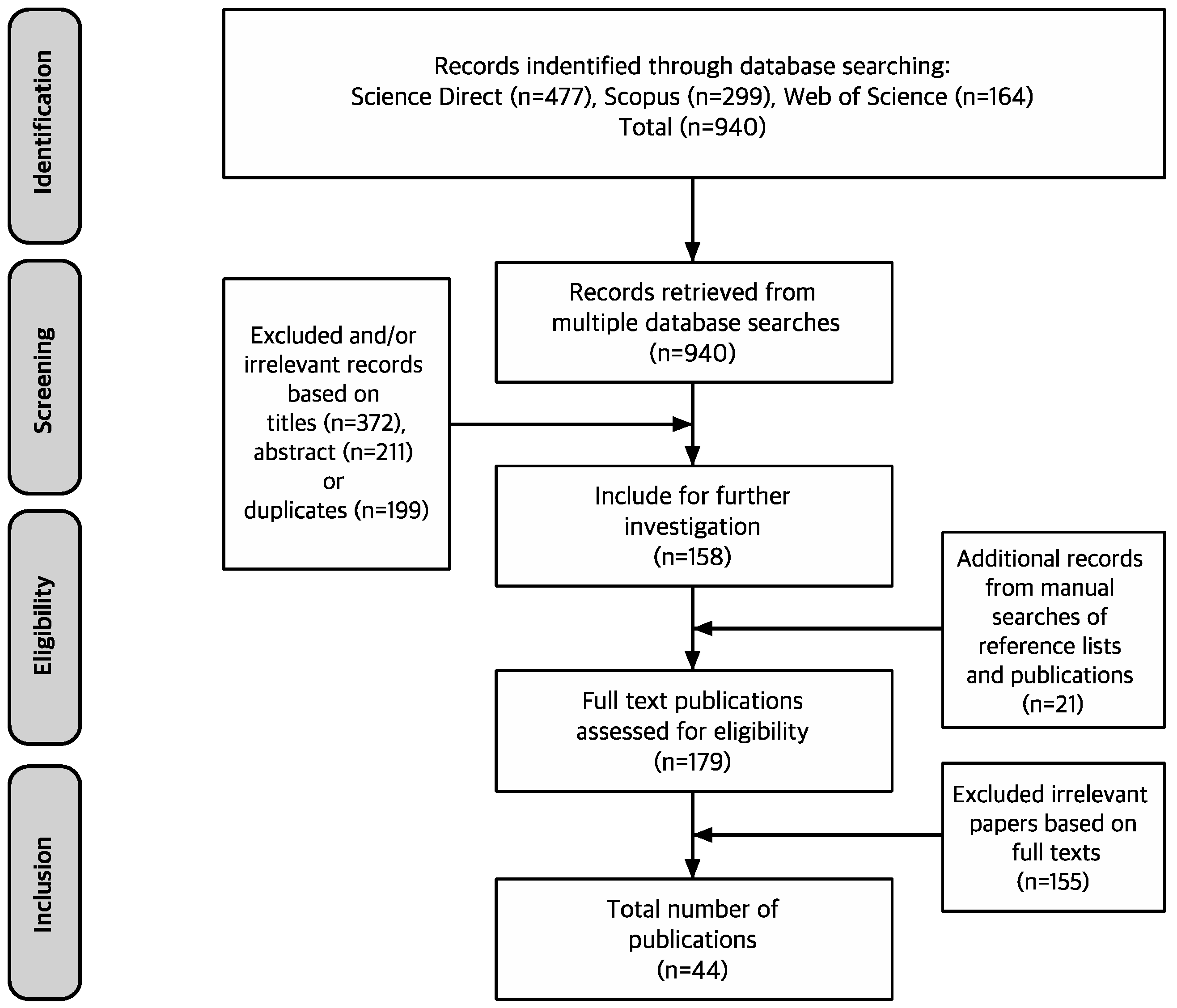
3.1.3. Selection of Research Papers for Inclusion in the Review
3.2. Data Analysis
3.2.1. Classification of the Servicescape Typology
- Type 01: intangible and hedonic (e.g., hotel, resort, and airline)
- Type 02: tangible and hedonic (e.g., cinema, restaurant, and department store)
- Type 03: intangible and utilitarian (e.g., hospital)
- Type 04: tangible and utilitarian (e.g., discount department and gas station)
3.2.2. Classification of Article Types
- TC: theoretical and conceptual papers
- MP: modeling papers
- LR: literature reviews
- DF: dimension/factor analysis
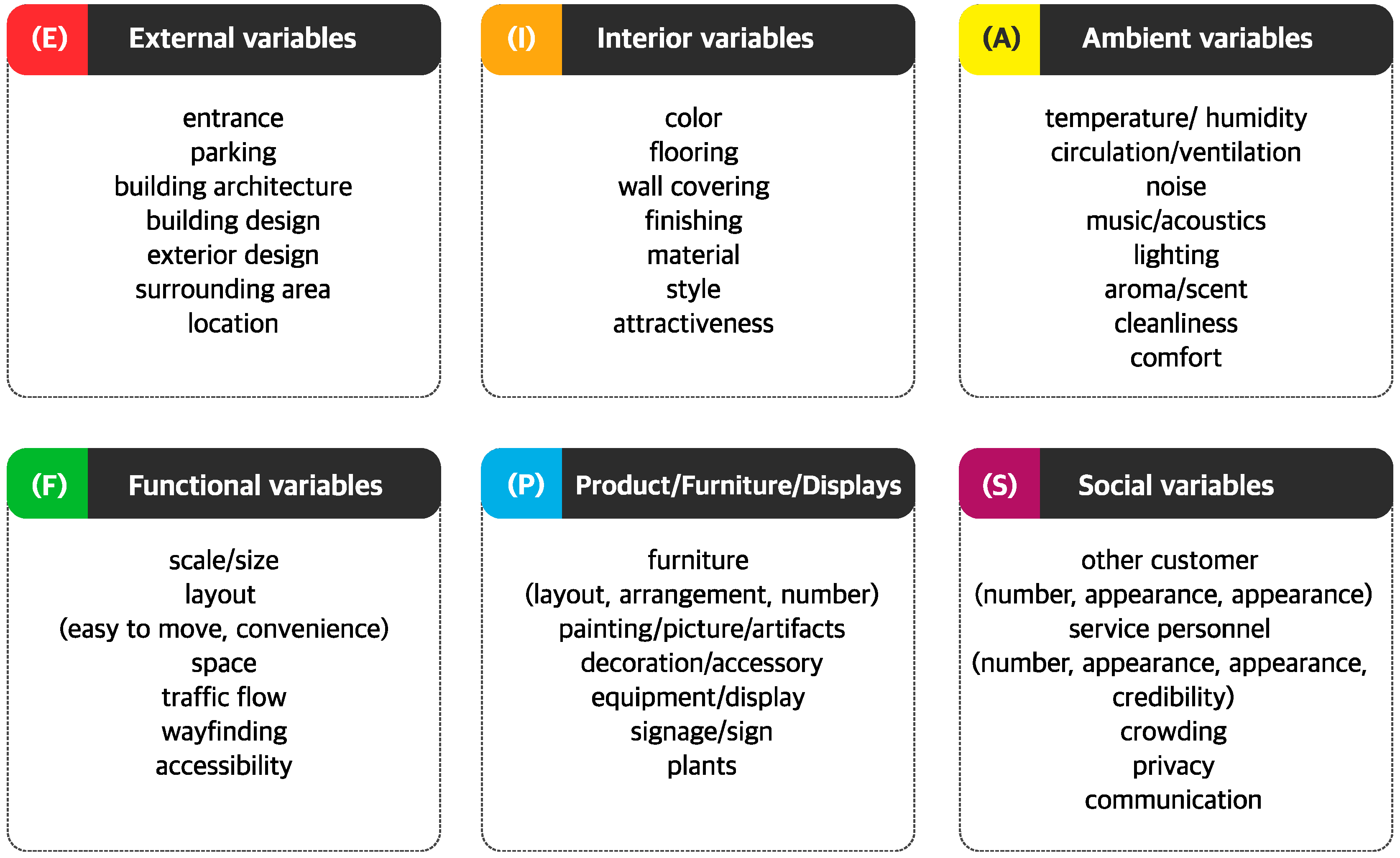
3.2.3. Classification of Servicescape Factors
4. Research Findings
4.1. Academic Evolution of the Servicescape Literature
4.1.1. Terminology Used
4.1.2. Research Fields of Servicescape Literature
4.1.3. Research Methodology
4.2. Framework of the Servicescape
4.2.1. Independent Variables
4.2.2. Special Mediating/Moderating Variables
4.2.3. Stakeholder Perspectives
4.3. Factor Classification by Servicescape Typology
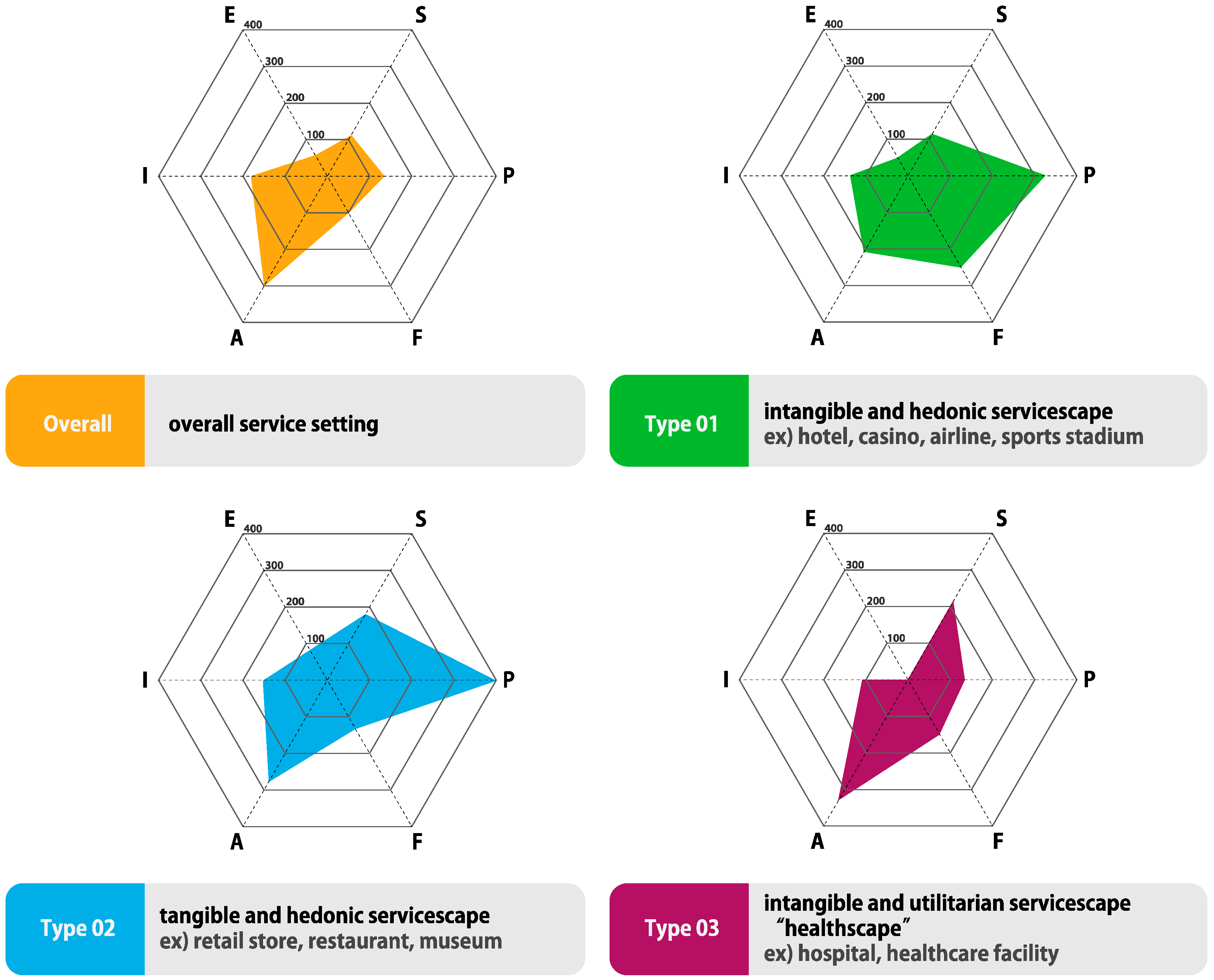
4.3.1. Overall Service Setting
4.3.2. Intangible and Hedonic Servicescape (Type 01)
4.3.3. Tangible and Hedonic Servicescape (Type 02)
4.3.4. Intangible and Utilitarian Servicescape (Type 03)
4.3.5. Tangible and Utilitarian Servicescape (Type 04)
4.3.6. Visualization of Factor Classification
4.4. Results and Summary
4.4.1. Academic Terminologies and Journal Fields
4.4.2. Research Methodology
4.4.3. Conceptual Framework
4.4.4. Environmental Factors by Different Service Typology
5. Discussion and Implications
5.1. Discussion and Future Challenges
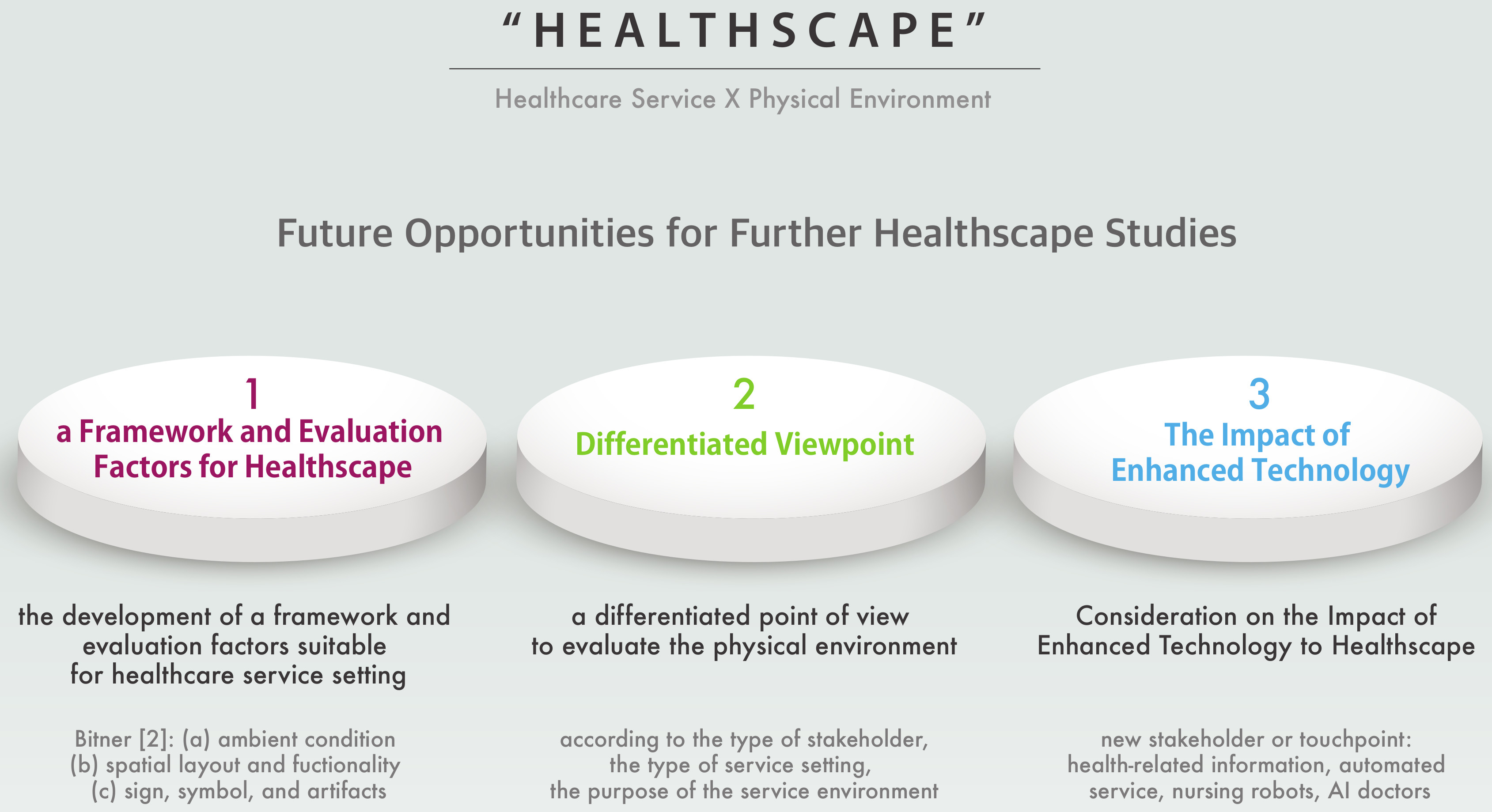
5.1.1. The Development of a Framework and Evaluation Factors for Healthscape
5.1.2. A Differentiated Point of View to Evaluate Healthscape
5.1.3. Consideration on the Impact of Enhanced Technology to Healthscape
5.2. Implications
5.2.1. Academic Implications
5.2.2. Managerial and Policy Implications
6. Conclusions
Acknowledgments
Author Contributions
Conflicts of Interest
Appendix A

| ID | Author | Year | Terminology Used | Journal Name | Journal Type | Service Typology | Data Collection Methods/Sample |
|---|---|---|---|---|---|---|---|
| SC01 | Booms et al. [50] | 1982 | Cornell Hotel and Restaurant Administration Quarterly | ||||
| SC02 | Baker [29] | 1986 | Atmosphere | The services Challenge | TC | Overall service setting | |
| SC03 | Baker et al. [51] | 1992 | Environment, Physical Features | Journal of Retailing | MP | Type 02 | Self-reporting survey and video recording analysis/American retail store (n = 147) |
| SC04 | Bitner [2] | 1992 | Servicescape | The Journal of Marketing | TC, MP | Overall service setting | |
| SC05 | Baker et al. [52] | 1994 | Store Atmosphere | Journal of the Academy of Marketing Science | MP, DF | Type 02 | Self-reporting survey/USA Retail customers (undergraduate students) (n = 297) |
| SC06 | Wakefield et al. [3] | 1994 | Servicescape | Journal of Services Marketing | MP | Type 01 | Self-reporting survey/five leisure stadium customers (n = 3900) |
| SC07 | Berman et al. [53] | 1995 | Atmosphere | Type 02 | |||
| SC08 | Hutton et al. [16] | 1995 | Healthscapes | Healthcare Management Review | TC, MP | Type 03 | Literature review/healthcare service setting |
| SC09 | Hutton et al. [17] | 1995 | Healthscapes | Marketing Health Services | TC | Type 03 | Literature review/healthcare service setting |
| SC10 | Steven et al. [54] | 1995 | DINESERV | Cornell Hotel and Restaurant Administration Quarterly, | Type 02 | Restaurant | |
| SC11 | Wakefield et al. [30] | 1996 | Servicescape | Journal of Services Marketing | MP, DF | Type 01 | Self-reporting survey/American leisure service setting (football, baseball, and casino) (n = 1263) |
| SC12 | Wakefield et al. [55] | 1999 | Tangible Service Factors | Psychology & Marketing | MP, DF | Type 01 | Self-reporting survey/USA leisure service setting (professional hockey games, a family recreation center, movie theater) (n = 260,115,124) |
| SC13 | Turley et al. [21] | 2000 | Atmosphere | Journal of Business Research | TC, LR | Type 02 | |
| SC14 | Hightower et al. [4] | 2002 | Physical environment | Journal of Business Research | MP | Type 01 | Self-reporting survey/American baseball stadium (n = 125) |
| SC15 | Raajpoot [12] | 2002 | TANGSERV | Journal of Foodservice Business Research | DF | Type 02 | Self-reporting survey/restaurants Users (n = 234) |
| SC16 | Hightower [56] | 2003 | Servicescape | Marketing Management Journal | TC | Type 03 | Literature review/American funeral service provider * |
| SC17 | Lucas [5] | 2003 | Servicescape | UNLV Gaming Research & Review Journal | MP, DF | Type 01 | Self-reporting survey/American hotel casino (n = 195) |
| SC18 | Lin [6] | 2004 | Servicescape | International Journal of Hospitality Management | TC, LR | Overall service setting | |
| SC19 | Kottasz [7] | 2006 | Atmospheric Cue | Journal of Nonprofit and Public Sector Marketing | MP, DF | Type 02 | Self-reporting survey/UK Museum visitors (n = 140) |
| SC20 | Zeithaml et al. [8] | 2006 | |||||
| SC21 | Newman [15] | 2007 | Servicescape | The Service Industries Journal | MP, DF | Type 01 | Self-reporting survey/international airport (n = 100) |
| SC22 | Ryu et al. [13] | 2007 | Physical environment | Journal of Hospitality & Tourism Research | MP, DF | Type 02 | Self-reporting survey/USA Upscale restaurants (n = 253) |
| SC23 | Edwards et al. [57] | 2008 | Atmosphere | Journal of Foodservice | TC | Type 02 | Restaurants |
| SC24 | Harris et al. [14] | 2008 | Servicescape | European Journal of Marketing | MP, DF | Type 02 | Self-reporting survey/UK restaurant patrons (n = 271) |
| SC25 | Lee et al. [27] | 2008 | Festivalscapes | Journal of Business Research | MP, DF | Type 01 | Self-reporting survey/Korean Dance festival participants (n = 472) |
| SC26 | Ryu et al. [9] | 2008a | Physical Environment | The Service Industries Journal | MP, DF | Type 02 | Self-reporting survey/USA Upscale restaurants (n = 253) |
| SC27 | Ryu et al. [42] | 2008b | Dinescape | Journal of Foodservice Business Research | DF | Type 02 | Self-reporting survey/USA three Upscale restaurants (n = 319) |
| SC28 | Han et al. [39] | 2009 | Physical Environment | Journal of Hospitality & Tourism Research | MP, DF | Type 02 | Self-reporting survey/USA restaurants customers (n = 279) |
| SC29 | Kim et al. [38] | 2009 | Servicescape | International journal of hospitality management | MP, DF | Type 02 | Self-reporting survey/Canada theme restaurants (n = 208) |
| SC30 | Lee [18] | 2011 | Servicescape | International Journal of Design | MP, DF | Type 03 | Self-reporting survey/American student healthcare clinic (n = 151) |
| SC31 | Rosenbaum et al. [19] | 2011 | Servicescape | Managing Service Quality | TC | Type 03 | conceptual paper/American cancer resource center |
| SC32 | Jeon et al. [58] | 2012 | Servicescape | Service Business | MP, DF | Type 01 | Self-reporting survey/South Korea international airport passengers (n = 290) |
| SC33 | Mason et al. [59] | 2012 | Festivalscape | Tourism Management | MP, DF | Type 01 | Self-reporting survey/Italian food and wine festival visitors (n = 380) |
| SC34 | Han [10] | 2013 | Physical environment | Tourism Management | MP, DF | Type 01 | Self-reporting survey/Multiple Asian Countrieslow cost airlines passengers (n = 331) |
| SC35 | Lee et al. [43] | 2014 | Servicescape | Journal of Asian Architecture and Building Engineering | MP, DF | Type 01 | Self-reporting survey/Korean five public service facilities (community center, sports complex, youth center, cultural center) (n = 594) |
| SC36 | Wu et al. [60] | 2014 | Physical environment | Journal of Hospitality and Tourism Research | MP, DF | Type 01 | Self-reporting survey/Taiwan theme parks customers (n = 424) |
| SC37 | Lee et al. [45] | 2015 | Servicescape | Journal of Asian Architecture and Building Engineering | MP, DF | Type 01 | Self-reporting survey/South Korea Hotel consumers (n = 202) |
| SC38 | Lee et al. [44] | 2015 | Servicescape | Journal of Asian Architecture and Building Engineering | DF | Type 02 | Self-reporting survey/Taiwan theme restaurant consumers (n = 279) |
| SC39 | Loureiro [61] | 2015 | Servicescape | Current Issues in Tourism | MP, DF | Type 03 | Self-reporting survey/Portugal private hospital patients (n = 332) |
| SC40 | Wang et al. [40] | 2015 | Servicescape | Journal of Hospitality and Tourism Research | - | Type 02 | Online Self-reporting survey/USA and ethnic Chinese restaurants Users (n = 274,275) |
| SC41 | Ali et al. [11] | 2016 | Physical environment | Tourism Management | MP, DF | Type 01 | Self-reporting survey/Malaysia International airport Users (n = 271) |
| SC42 | Kim et al. [46] | 2016 | Servicescape | International Journal of Sport Management Recreation & Tourism | DF | Type 02 | Self-reporting survey/USA Fitness center Users (n = 178) |
| SC43 | Moon et al. [62] | 2016 | Physical Environment | Asia Pacific Journal of Tourism Research | MP, DF | Type 01 | Self-reporting survey/Korean airports passengers (n = 214) |
| SC44 | Sahoo et al. [20] | 2016 | Healthscape | International Journal of Health Care Quality Assurance | DF | Type 03 | Self-reporting survey/India private hospital patients (n = 378) |
References
- Zeithaml, V.A.; Parasuraman, A.; Berry, L.L. Problems and Strategies in Services Marketing. J. Mark. 1985, 49, 33–46. [Google Scholar] [CrossRef] [Scilit]
- Bitner, M.J. Servicescapes: The Impact of Physical Surroundings on Customers and Employees. J. Mark. 1992, 56, 57–71. [Google Scholar] [CrossRef] [Scilit]
- Wakefield, K.L.; Blodgett, J.G. The Importance of Servicescapes in Leisure Service Settings. J. Serv. Mark. 1994, 8, 66–76. [Google Scholar] [CrossRef] [Scilit]
- Hightower, R.; Brady, M.K.; Baker, T.L. Investigating the Role of the Physical Environment in Hedonic Service Consumption: An Exploratory Study of Sporting Events. J. Bus. Res. 2002, 55, 697–707. [Google Scholar] [CrossRef] [Scilit]
- Lucas, A.F. The Determinants and Effects of Slot Servicescape Satisfaction in a Las Vegas Hotel Casino. UNLV Gaming Res. Rev. J. 2003, 7, 1–19. [Google Scholar]
- Lin, I.Y. Evaluating a Servicescape: The Effect of Cognition and Emotion. Int. J. Hosp. Manag. 2004, 23, 163–178. [Google Scholar] [CrossRef] [Scilit]
- Kottasz, R. Understanding the Influences of Atmospheric Cues on the Emotional Responses and Behaviours of Museum Visitors. J. Nonprofit Public Sector Mark. 2006, 16, 95–121. [Google Scholar] [CrossRef] [Scilit]
- Zeithaml, V.A.; Bitner, M.J.; Gremler, D.D. Services Marketing: Integrating Customer Focus across the Firm, 4th ed.; McGraw-Hill: New York, NY, USA, 2006. [Google Scholar]
- Ryu, K.; Jang, S. Retracted Article: Influence of Restaurants’ Physical Environments on Emotion and Behavioral Intention. Serv. Ind. J. 2008, 28, 1151–1165. [Google Scholar] [CrossRef] [Scilit]
- Han, H. Effects of in-Flight Ambience and Space/Function on Air Travelers’ Decision to Select a Low-Cost Airline. Tour. Manag. 2013, 37, 125–135. [Google Scholar] [CrossRef] [Scilit]
- Ali, F.; Kim, W.G.; Ryu, K. The Effect of Physical Environment on Passenger Delight and Satisfaction: Moderating Effect of National Identity. Tour. Manag. 2016, 57, 213–224. [Google Scholar] [CrossRef] [Scilit]
- Raajpoot, N.A. Tangserv: A Multiple Item Scale for Measuring Tangible Quality in Foodservice Industry. J. Foodserv. Bus. Res. 2002, 5, 109–127. [Google Scholar] [CrossRef] [Scilit]
- Ryu, K.; Jang, S.S. The Effect of Environmental Perceptions on Behavioral Intentions through Emotions: The Case of Upscale Restaurants. J. Hosp. Tour. Res. 2007, 31, 56–72. [Google Scholar] [CrossRef] [Scilit]
- Harris, L.C.; Ezeh, C. Servicescape and Loyalty Intentions: An Empirical Investigation. Eur. J. Mark. 2008, 42, 390–422. [Google Scholar] [CrossRef] [Scilit]
- Newman, A.J. Uncovering Dimensionality in the Servicescape: Towards Legibility. Serv. Ind. J. 2007, 27, 15–28. [Google Scholar] [CrossRef] [Scilit]
- Hutton, J.D.; Richardson, L.D. Healthscapes: The Role of the Facility and Physical Environment on Consumer Attitudes, Satisfaction, Quality Assessments, and Behaviors. Health Care Manag. Rev. 1995, 20, 48–61. [Google Scholar] [CrossRef] [Scilit]
- Hutton, J.D.; Richardson, L.D. Healthscapes: The Importance of Place. Mark. Health Serv. 1995, 15, 10–11. [Google Scholar] [CrossRef] [Scilit]
- Lee, S. Evaluating Serviceability of Healthcare Servicescapes: Service Design Perspective. Int. J. Des. 2011, 5, 61–71. [Google Scholar]
- Rosenbaum, M.S.; Smallwood, J.A. Cancer Resource Centres: Transformational Services and Restorative Servicescapes. J. Mark. Manag. 2011, 27, 1404–1425. [Google Scholar] [CrossRef] [Scilit]
- Sahoo, D.; Ghosh, T.; Callanan, I. Healthscape Role towards Customer Satisfaction in Private Healthcare. Int. J. Health Care Qual. Assur. 2016, 29, 614–627. [Google Scholar] [CrossRef] [Scilit] [PubMed]
- Turley, L.W.; Milliman, R.E. Atmospheric Effects on Shopping Behavior: A Review of the Experimental Evidence. J. Bus. Res. 2000, 49, 193–211. [Google Scholar] [CrossRef] [Scilit]
- Aubert-Gamet, V.; Cova, B. Servicescapes: From Modern Non-Places to Postmodern Common Places. J. Bus. Res. 1999, 44, 37–45. [Google Scholar] [CrossRef] [Scilit]
- Mari, M.; Poggesi, S. Servicescape Cues and Customer Behavior: A Systematic Literature Review and Research Agenda. Serv. Ind. J. 2013, 33, 171–199. [Google Scholar] [CrossRef] [Scilit]
- Koernig, S.K. E-Scapes: The Electronic Physical Environment and Service Tangibility. Psychol. Mark. 2003, 20, 151–167. [Google Scholar] [CrossRef] [Scilit]
- Harris, L.C.; Goode, M.M.M. Online Servicescapes, Trust, and Purchase Intentions. J. Serv. Mark. 2010, 24, 230–243. [Google Scholar] [CrossRef] [Scilit]
- Lee, S.; Jeong, M. Effects of E-Servicescape on Consumers’ Flow Experiences. J. Hosp. Tour. Tech. 2012, 3, 47–59. [Google Scholar] [CrossRef] [Scilit]
- Lee, Y.K.; Lee, C.K.; Lee, S.K.; Babin, B.J. Festivalscapes and Patrons’ Emotions, Satisfaction, and Loyalty. J. Bus. Res. 2008, 61, 56–64. [Google Scholar] [CrossRef] [Scilit]
- Kotler, P. Atmospherics as a Marketing Tool. J. Retail. 1973, 49, 48–64. [Google Scholar]
- Baker, J. The Role of the Environment in Marketing Services: The Consumer Perspective. Serv. Chall. Integr. Compet. Advant. 1986, 1, 79–84. [Google Scholar]
- Wakefield, K.L.; Blodgett, J.G. The Effect of the Servicescape on Customers’ Behavioral Intentions in Leisure Service Settings. J. Serv. Mark. 1996, 10, 45–61. [Google Scholar] [CrossRef] [Scilit]
- Han, J.; Kang, H.J.; Kwon, G.H. Understanding the Servicescape of Nurse Assistive Robot: The Perspective of Healthcare Service Experience. In Proceedings of the 14th International Conference on Ubiquitous Robots and Ambient Intelligence (URAI), Jeju, Korea, 28 June–1 July 2017. [Google Scholar]
- Moher, D.; Liberati, A.; Tetzlaff, J.; Altman, D.G.; Prisma Group. Preferred Reporting Items for Systematic Reviews and Meta-Analyses: The PRISMA Statement. Ann Intern Med. 2009, 151, 264–269. [Google Scholar] [CrossRef] [PubMed]
- Moher, D.; Shamseer, L.; Clarke, M.; Ghersi, D.; Liberati, A.; Petticrew, M.; Shekelle, P.; Stewart, L.A. Preferred Reporting Items for Systematic Review and Meta-Analysis Protocols (Prisma-P) 2015 Statement. Syst. Rev. 2015, 4, 1–9. [Google Scholar] [CrossRef] [PubMed]
- Lee, K.; Chung, K.W.; Nam, K.Y. The Role of Servicescapes as Touchpoints for Different Service Settings. In Proceedings of the 2013 IEEE Tsinghua International Design Management Symposium (TIDMS), Shenzhen, China, 1–2 December 2013. [Google Scholar]
- Taylor, S.A.; Baker, T.L. An Assessment of the Relationship between Service Quality and Customer Satisfaction in the Formation of Consumers’ Purchase Intentions. J. Retail. 1994, 70, 163–178. [Google Scholar] [CrossRef] [Scilit]
- Hoffman, K.D.; Bateson, J.E.G. Essentials of Services Marketing: Concepts, Strategies and Cases, 2nd ed.; South-Western Pub.: Nashville, TN, USA, 2001. [Google Scholar]
- Cronin, J.J.; Brady, M.K.; Hult, G.T.M. Assessing the Effects of Quality, Value, and Customer Satisfaction on Consumer Behavioral Intentions in Service Environments. J. Retail. 2000, 76, 193–218. [Google Scholar] [CrossRef] [Scilit]
- Kim, W.G.; Moon, Y.J. Customers’ Cognitive, Emotional, and Actionable Response to the Servicescape: A Test of the Moderating Effect of the Restaurant Type. Int. J. Hosp. Manag. 2009, 28, 144–156. [Google Scholar] [CrossRef] [Scilit]
- Han, H.; Ryu, K. The Roles of the Physical Environment, Price Perception, and Customer Satisfaction in Determining Customer Loyalty in the Restaurant Industry. J. Hosp. Tour. Res. 2009, 33, 487–510. [Google Scholar] [CrossRef] [Scilit]
- Wang, C.Y.; Mattila, A.S. The Impact of Servicescape Cues on Consumer Prepurchase Authenticity Assessment and Patronage Intentions to Ethnic Restaurants. J. Hosp. Tour. Res. 2015, 39, 346–372. [Google Scholar] [CrossRef] [Scilit]
- Nguyen, N. The Collective Impact of Service Workers and Servicescape on the Corporate Image Formation. Int. J. Hosp. Manag. 2006, 25, 227–244. [Google Scholar] [CrossRef] [Scilit]
- Ryu, K.; Jang, S.C. Dinescape: A Scale for Customers' Perception of Dining Environments. J. Foodserv. Bus. Res. 2008, 11, 2–22. [Google Scholar] [CrossRef] [Scilit]
- Lee, S.Y.; Kim, J.H. Effects of Servicescape on Perceived Service Quality, Satisfaction and Behavioral Outcomes in Public Service Facilities. J. Asian Archit. Build. Eng. 2014, 13, 125–131. [Google Scholar] [CrossRef] [Scilit]
- Lee, C.J.; Wang, Y.C.; Cai, D.C. Physical Factors to Evaluate the Servicescape of Theme Restaurants. J. Asian Archit. Build. Eng. 2015, 14, 97–104. [Google Scholar] [CrossRef] [Scilit]
- Lee, S.H.; Lee, H. The Design of Servicescape Based on Benefit Sought in Hotel Facilities: A Survey Study of Hotel Consumers in Seoul. J. Asian Arch. Build. Eng. 2015, 14, 633–640. [Google Scholar] [CrossRef] [Scilit]
- Kim, K.T.; Bae, J.; Kim, J.C.; Lee, S.; Kim, K.T. The Servicescape in the Fitness Center: Measuring Fitness Center’s Services. Int. J. Sport Manag. Recreat. Tour. 2016, 21, 1–20. [Google Scholar] [CrossRef] [Scilit]
- Bonfanti, A. Customers’ Needs and Expectations on Servicescape Surveillance Management. TQM J. 2016, 28, 887–906. [Google Scholar] [CrossRef] [Scilit]
- Berrouiguet, S.; Perez-Rodriguez, M.M.; Larsen, M.; Baca-García, E.; Courtet, P.; Oquendo, M. From eHealth to iHealth: Transition to participatory and personalized medicine in mental health. J. Med. Internet Res. 2018, 20, e2. [Google Scholar] [CrossRef] [Scilit] [PubMed]
- Tian, K.; Sautter, P.; Fisher, D.; Fischbach, S.; Luna-Nevarez, C.; Boberg, K.; Kroger, J.; Vann, R. Transforming health care: Empowering therapeutic communities through technology-enhanced narratives. J. Consum. Res. 2014, 41, 237–260. [Google Scholar] [CrossRef] [Scilit]
- Booms, B.H.; Bitner, M.J. Marketing Services by Managing the Environment. Cornell Hotel Restaur. Adm. Q. 1982, 23, 35–40. [Google Scholar] [CrossRef] [Scilit]
- Baker, J.; Levy, M.; Grewal, D. An Experimental Approach to Making Retail Store Environmental Decisions. J. Retail. 1992, 68, 445–460. [Google Scholar]
- Baker, J.; Grewal, D.; Parasuraman, A. The Influence of Store Environment on Quality Inferences and Store Image. J. Acad. Mark. Sci. 1994, 22, 328–339. [Google Scholar] [CrossRef] [Scilit]
- Berman, B.; Evans, J.R.; Lowry, J.R. Retail Management: A Strategic Approach, 7th ed.; Prentice Hall College Division: Upper Saddle River, NJ, USA, 1997. [Google Scholar]
- Steven, P.; Knutson, B.; Patton, M. Dineserv: A Tool for Measuring Service Quality in Restaurant. Cornell Hotel Restaur. Adm. Q. 1995, 36, 56–60. [Google Scholar] [CrossRef] [Scilit]
- Wakefield, K.L.; Blodgett, J.G. Customer Response to Intangible and Tangible Service Factors. Psychol. Mark. 1999, 16, 51–68. [Google Scholar] [CrossRef] [Scilit]
- Hightower, R. Framework for Managing the Servicescape: A Sustainable Competitive Advantage. Mark. Manag. J. 2003, 13, 84–95. [Google Scholar]
- Edwards, J.S.A.; Gustafsson, I.B. The Room and Atmosphere as Aspects of the Meal: A Review. J. Foodserv. 2008, 19, 22–34. [Google Scholar] [CrossRef] [Scilit]
- Jeon, S.; Kim, M.S. The Effect of the Servicescape on Customers’ Behavioral Intentions in an International Airport Service Environment. Serv. Bus. 2012, 6, 279–295. [Google Scholar] [CrossRef] [Scilit]
- Mason, M.C.; Paggiaro, A. Investigating the Role of Festivalscape in Culinary Tourism: The Case of Food and Wine Events. Tour. Manag. 2012, 33, 1329–1336. [Google Scholar] [CrossRef] [Scilit]
- Wu, H.C.; Li, M.Y.; Li, T. A Study of Experiential Quality, Experiential Value, Experiential Satisfaction, Theme Park Image, and Revisit Intention. J. Hosp. Tour. Res. 2014, 42, 26–73. [Google Scholar] [CrossRef] [Scilit]
- Loureiro, S.M.C. Medical Tourists’ Emotional and Cognitive Response to Credibility and Servicescape. Curr. Issues Tour. 2015, 20, 1633–1652. [Google Scholar] [CrossRef] [Scilit]
- Moon, H.; Yoon, H.J.; Han, H. Role of Airport Physical Environments in the Satisfaction Generation Process: Mediating the Impact of Traveller Emotion. Asia Pac. J. Tour. Res. 2016, 21, 193–211. [Google Scholar] [CrossRef] [Scilit]


| Term | References |
|---|---|
| Servicescape | SC04, SC06, SC11, SC16, SC17, SC18, SC21, SC24, SC29, SC30, SC31, SC32, SC35, SC37, SC38, SC39, SC40, SC42 |
| Physical environment | SC14, SC22, SC26, SC28, SC34, SC36, SC41, SC43 |
| Tangible (Tangserv) | SC12 (SC15) |
| Atmosphere | SC02, SC05, SC07, SC13, SC19, SC23 |
| Festivalscape | SC25, SC33 |
| Dinescape (Dineserv) | SC27 (SC10) |
| Healthscape | SC08, SC09, SC44 |
| Field of Journal | References | Freq. (%) |
|---|---|---|
| Marketing/ Management/ Business/Service | SC02, SC04, SC05, SC06, SC08, SC09, SC11, SC12, SC13, SC14, SC15, SC16, SC19, SC21, SC23, SC24, SC25, SC26, SC27, SC29, SC31, SC32 | 22 (50%) |
| Tourism/Hotel | SC10, SC18, SC22, SC28, SC33, SC34, SC36, SC39, SC40, SC41, SC42, SC43 | 12 (27%) |
| Food/Restaurant | SC01, SC10, SC15, SC23, SC27 | 5 (11%) |
| Design/Architecture | SC30, SC35, SC37, SC38 | 4 (9%) |
| Sports/Game | SC17, SC42 | 2 (4%) |
| Psychology | SC12 | 1 (2%) |
| Retail | SC03 | 1 (2%) |
| Healthcare | SC08, SC09, SC44 | 3 (6%) |
| Research Methodology | References | Freq. (%) |
|---|---|---|
| TC | SC02, SC09, SC16, SC23, SC31 | 5 (11%) |
| MP | SC03, SC06, SC14 | 3 (6%) |
| DF | SC15, SC27, SC38, SC42, SC44 | 5 (11%) |
| TC/MP | SC04, SC08 | 2 (4%) |
| MP/DF | SC05, SC11, SC12, SC17, SC19, SC21, SC22, SC24, SC25, SC26, SC28, SC29, SC30, SC32, SC33, SC34, SC35, SC36, SC37, SC39, SC41, SC43 | 22 (50%) |
| TC/LR | SC13, SC18 | 2 (4%) |
| Journal Index | PAD | ER | SQ | LI | I | RE | BR | PI |
|---|---|---|---|---|---|---|---|---|
| SC03 | + | |||||||
| SC04 | + | + | ||||||
| SC05 | (+) | + | ||||||
| SC06 | (+) | + | ||||||
| SC08 | + | + | ||||||
| SC11 | (+) | (+) | + | + | ||||
| SC12 | (+) | (+) | + | |||||
| SC14 | (+) | + | ||||||
| SC17 | (+) | + | + | |||||
| SC19 | + | + | ||||||
| SC21 | (+) | + | ||||||
| SC22 | (+) | + | ||||||
| SC24 | + | |||||||
| SC25 | (+) | + | ||||||
| SC26 | (+) | + | ||||||
| SC28 | (+) | + | (+) | |||||
| SC29 | (+) | + | ||||||
| SC30 | + | + | + | |||||
| SC31 | + | |||||||
| SC32 | (+) | + | ||||||
| SC33 | (+) | + | ||||||
| SC34 | (+) | + | + | |||||
| SC35 | (+) | (+) | + | + | ||||
| SC36 | + | (+) | + | |||||
| SC37 | + | |||||||
| SC39 | + | + | + | |||||
| SC40 | + | |||||||
| SC41 | + | + | ||||||
| SC43 | (+) | + |
| Overall Service Setting | ||||||||
| ID | Factors | Attributes/Items | (E) | (I) | (A) | (F) | (P) | (S) |
| SC01 | 1. Architecture 2. Lighting 3. Temperature 4. Furnishings 5. Layout 6. Color | + | + | ++ | + | + | ||
| SC02 | 1. Ambient factor 2. Design factor 3. Social factor | 1. air quality, noise, scent, cleanliness 2. aesthetic (architecture, color, scale, material, texture, shape, style, accessory), functional (layout, comfort, signage) 3. other customer (number, appearance, behavior), service personnel (number, appearance, behavior) | + | +++ ++ | +++ ++ | ++ | ++ | +++ +++ |
| SC04 | 1. Ambient factors 2. Spatial layout and functionality 3. Signs, symbols and artifacts | 1. temperature, air quality, noise, music, and odor 2. layout, equipment, and furnishings 3. signage, personal artifacts, and style of décor | + | +++ ++ | + | +++ + | ||
| SC18 | 1. Visual cues 2. Auditory cues 3. Olfactory cues | 1. color, space and function, lighting 2. music, non-musical sound | + | +++ | + | |||
| SC20 | 1. Facility exterior 2. Facility interior | + | + | |||||
| Total (n = 5) | 3 (60%) | 9 (180%) | 15 (300%) | 5 (100%) | 7 (140%) | 6 (120%) | ||
| (Type 01) Intangible and Hedonic Servicescape | ||||||||
| ID | Factor | Attributes/Items | (E) | (I) | (A) | (F) | (P) | (S) |
| SC06 | 1. Spatial layout and functionality 2. Aesthetics | 1. stadium seats, ticket windows/gates, hallways/walkways, entrances/exits, food service areas, and rest-rooms 2. external environment, exterior construction, interior construction, score-boards, and facility cleanliness | ++ | + | + | +++ +++ ++ | ++ | |
| SC11 | 1. Layout accessibility 2. Facility aesthetics 3. Seating comfort 4. Electronic equipment/displays 5. Facility cleanliness | 1. layout of exit and entry, furnishing, and equipment layout 2. architectural design, color, and interior design 3. physical seat and space of seat 4. signs, symbols, and artifacts for leisure experience 5. facility cleanliness | + | ++ | + | + | +++ +++ + | |
| SC12 | 1. Building design and décor 2. Equipment 3. Ambience | 1. outside appearance, interior design, layout, seats 2. electric equipment 3. cleanliness, temperature, and neatness of employees‘ appearance | + | + | ++ | + | ++ | + |
| SC14 | 1. Servicescape | 1. enough employee, enough space, superior interior environment, smell, lighting, cleanliness, comfortable physical facility, pleasing interior layout, color, material, interior accessory | +++ + | + | ++ | + | ||
| SC17 | 1. Ambient factor 2. Layout/Navigation 3. Cleanliness 4. Interior décor 5. Seating comfort | 1. architecture, interior design, and spatial layout 2. clean slot door 3. padding, back rests, fabric/heat-dissipating seat, and uncrowded seat 4. lighting, color, and door décor 5. internal climate, music, and visual graphic | + | +++ | +++ + | + | +++ ++ | + |
| SC21 | 1. Space 2. Way-findings | 1. spatial density 2. legibility of internal design such as central passageways and meeting places | + | + | + | |||
| SC25 | 1. Program contents 2. Staff 3. Facility 4. Food 5. Souvenir 6. Convenience 7. Information | 1. skip (regardless of this study) 2. kind guides and staff, quick responsiveness on request, willingness to help, enough knowledge, courteous guides and staff, number of event guides and staff 3. comfortable festival sites, facility, space/size, cleanliness, atmosphere of site, layout 4. quality, price, available traditional food, variety 5. variety, quality, price 6. restroom, parking lot, rest area 7. installed signboards, prepared pamphlets, total variance explained | ++ | + | +++ ++ | +++ +++ | +++ +++ | |
| SC32 | 1. Ambient factor 2. Functional factor 3. Aesthetic factor 4. Safety factor 5. Social factor | 1. humidity, circulation, temperature, light, scent, noise 2. comfort, flow of traffic, signage, size, layout, arrangement 3. color, accessory, decoration, architecture, materials 4. fire equipment, safety sign, hazard detector, antiskid tool 5. other customer (number, appearance, behavior), service personnel (number, appearance, behavior) | + | +++ | +++ ++ | +++ + | +++ +++ + | +++ +++ |
| SC33 | 1. Fun 2. Food 3. Comfort | 1. food quality, beverage quality 2. promotional activity, live entertainment, time of scheduled events, printed information, exhibition and trade stands, signposting, helpfulness of staff 3. feeling of safety, cleanliness of restroom, number of seats, cleanliness of sites, accessibility for elderly/disabled and children, accessibility to public toilets | ++ | ++ | + | |||
| SC34 | 1. Ambient onditions 2. Space/Function | 1 Air quality, temperature, odor, noise 2. layout, equipment/amenity | +++ + | + | ++ | |||
| SC35 | 1. Attractiveness 2. Cleanliness 3. Layout 4. Comfort | 1. Finishes, colors, and facilities 2. Clean facilities, entrances, corridors, and restrooms 3. Easy access to designated places 4. Comfortable air, temperature, and brightness | +++ | +++ | +++ + | + | ||
| SC36 | 1. Design 2. Equipment 3. Environment 4. Ambience 5. Social Factors | + | + | + | + | + | ||
| SC37 | 1. Cleanliness 2. Layout 3. Facility aesthetics 4. Ambience | 1. cleanliness 2. accessibility, layout 3. exterior design style, interior design style, color, finishing material, decoration, furniture and lighting 4. temperature, lighting, air quality | + | +++ + | +++ + | ++ | + | |
| SC41 | 1. Layout accessibility 2. Facility ambience and aesthetics 3. Functionality 4. Cleanliness | 1. sign, baggage trolley, layout for people (elderly, pregnant woman), location, accessibility 2. color, decoration, brightness, temperature, music, aroma 3. spacious seating, signs, electronic facility, internet connectivity, charging device, electronic walkway | + | +++ + | +++ | +++ +++ +++ | ||
| SC43 | 1. Layout Accessibility 2. Facility Aesthetics 3. Functionality 4. Cleanliness | 1. layout 2. color, attractive character, fashion, attractive facility 3. waiting area, seating, electronics displays information, high-quality displays, exciting electronic facility 4. restroom, food service area, clean | +++ + | + | +++ + | +++ | ||
| Total (n = 15) | 7 (47%) | 21 (140%) | 31 (207%) | 39 (260%) | 50 (333%) | 17 (113%) | ||
| (Type 02) Tangible and Hedonic Servicescape | ||||||||
| ID | Factor | Attributes/Items | (E) | (I) | (A) | (F) | (P) | (S) |
| SC03 | 1. Ambient factor 2. Social factor | + | + | |||||
| SC05 | 1. Ambient factors 2. Design factors 3. Social factors | 1. music, lighting 2. color, brass trim on displays, layout, organization of merchandise 3. number of salesperson, greeting by salesperson, salesperson dress | + | ++ | + | ++ | +++ | |
| SC07 | 1. Store exterior 2. General interior 3. Layout and design 4. Point-of-purchase 5. Decoration ariables | + | + | + | + | |||
| SC10 | 1. Reliability 2. Responsiveness 3. Empathy 4. Assurance 5. Tangibles | + | ||||||
| SC13 | 1. External variables 2. General interior variables 3. Layout and design variables 4. Point of purchase and decoration variables 5. Human variables | 1. store front, marquee, entrance, display windows, building architecture, parking, surrounding area 2. flooring/carpeting, lighting, scent, sounds, temperature, cleanliness, fixtures, wall coverings, cash register placement 3. floor Space allocation, product groupings, traffic flow, department locations, allocations within department 4. product displays, racks and cases, posters, signs, cards, wall decorations 5. crowding, customer characteristics, employee characteristics, employee uniforms | +++ ++++ | +++ + | +++ ++ | +++ ++ | +++ +++ + | +++ + |
| SC15 | 1. Layout/design factors 2. Product/service factors 3. Ambient/social factors | 1. interior decoration, building design, dining hall size, restaurant location, seating arrangement 2. food presentation, size of food serving, Menu design, food variety 3. light, crowding, music, temperature | + | + | +++ | ++ | +++ ++ | + |
| SC19 | 1. Exterior factors 2. Interior factors 3. Layout and design 4. Decorations 5. Human factors | + | + | + | + | + | ||
| SC22 | 1. Facility aesthetics 2. Lighting 3. Ambience 4. Layout 5. Dining equipment 6. Employees | 1. attractive paintings and/or pictures, appealing wall décor, beautiful plants and/or flowers, warm colors, high quality furniture 2. warm lighting, welcoming lighting, comfortable lighting 3. relaxing music, pleasing music, comfortable temperature, enticing aroma 4. enough seat space, crowded seating arrangement, easy-to-move layout 5. high quality tableware, attractive linens, attractive table setting 6. attractive employees, neat and well-dressed employees | ++ | +++ + | +++ +++ +++ | ++ | ||
| SC23 | 1. Internal variables 2. Layout and design 3. Human variables 4. Social facilitation | 1. music, noise, and odor 2. table layout and seating 3. density and crowding 4. eating alone or with others | +++ | ++ | +++ | |||
| SC24 | 1. Ambient condition 2. Design factors 3. Staff behavior 4. Staff image | 1. music, aroma, cleanliness 2. implicit communications, furnishing 3. customer orientation, credibility 4. competence, physical attractiveness | +++ | + | +++ +++ | |||
| SC26 | 1. Facility aesthetics 2. Lighting 3. Ambience 4. Layout 5. Dining equipment 6. Employees | 1. attractive paintings and/or pictures, appealing wall décor, beautiful plants and/or flowers, warm colors, high quality furniture 2. warm lighting, welcoming lighting, comfortable lighting 3. relaxing music, pleasing music, comfortable temperature, enticing aroma 4. enough seat space, crowded seating arrangement, easy-to-move layout 5. high quality tableware, attractive linens, attractive table setting 6. attractive employees, neat and well-dressed employees | ++ | +++ + | +++ +++ +++ | ++ | ||
| SC27 | 1. Facility Aesthetics 2. Ambience 3. Lighting 4. Table settings 5. Layout 6. Service staff | 1. attractive paintings and/or pictures, appealing wall décor, beautiful plants and/or flowers, warm colors, high quality furniture 2. relaxing music, pleasing music, comfortable temperature, enticing aroma 3. warm lighting, welcoming lighting, comfortable lighting 4. high quality tableware, attractive linens, attractive table setting 5. enough seat space, crowded seating arrangement, easy-to-move layout 6. attractive employees, neat and well-dressed employees | ++ | +++ + | +++ +++ +++ | ++ | ||
| SC28 | 1. Decor and artifacts 2. Spatial layout 3. Ambient conditions | 1. painting/pictures, plant/flower, ceiling décor, wall décor, color, furniture 2. layout, table/seating arrangement 3. lighting, music, temperature, aroma | +++ | +++ + | + | +++ +++ | ||
| SC29 | 1. Ambience ondition 2. Facility aesthetics 3. Layout 4. Electric equipment 5. Seating comfort | 1. lighting level, temperature, aroma, and background music 2. architecture, interior, décor, color, and overall attractiveness 3. tables, service areas, and passageways 4. audio/video equipment 5. comfortable seat and uncrowded seat | + | +++ + | +++ + | ++ | +++ ++ | |
| SC38 | 1. Aesthetics 2. Ambient 3. Space/Function 4. Seating comfort 5. Cleanliness | 1. architecture, interior décor, style, color 2. temperature, aroma, music, lighting 3. seating space, aisle space, sign, tableware 4. comfortable distance, seat accessibility, comfortable seats 5. employee, restroom, overall cleanliness | + | +++ ++ | +++ + | ++ | +++ ++ | + |
| SC40 | 1. Physical setting 2. Service provider 3. Other customers | + | ++ | |||||
| SC42 | 1. Accessibility/Convenience 2. Signage 3. Facility layout 4. Design 5. Equipment/facility condition 6. Ambient 7. Facility system 8. Social | 1. parking, accessibility, location 2. sign 3. large, design for all level of ability, enough space, waiting time 4. layout, fashion, attractive, layout 5. high quality, working condition, well equipped, safe, maintenance 6. noise, cleanliness, comfortable, music 7. light, temperature, air quality, heating/ventilation 8. employee (helpful, friendly), customer (helpful, friendly) | ++ | ++ | +++ +++ + | +++ +++ + | +++ ++ | +++ + |
| Total (n = 17) | 14 (82%) | 28 (165%) | 48 (282%) | 23 (135%) | 68 (400%) | 31 (182%) | ||
| (Type 03) Intangible and Utilitarian Servicescape | ||||||||
| ID | Factor | Attributes/Items | (E) | (I) | (A) | (F) | (P) | (S) |
| SC08 | 1. Ambient conditions 2. Space/function 3. Signs, symbols, artifacts | + | + | + | ||||
| SC09 | - | |||||||
| SC16 | 1. Ambient factor 2. Design factor 3. Social interaction factor | 1. ambient items 2. aesthetic, functional 3. customer, Employee | + | ++ | + | ++ | ||
| SC30 | 1. Ambient factor 2. Serviceability factor | 1. temperature, air quality, acoustics, visual attractiveness, lighting, furniture 2. convenience in layout, privacy, communication staff, way-finding, cleanliness | + | +++ ++ | ++ | + | ++ | |
| SC31 | 1. Restorative dimension 2. Physical dimension 3. Social dimension | 1. being away, fascination, compatibility 2. ambient condition: temperature, air quality, noise, music, odor space/function: layout, equipment, furnishings signs/symbols/artifacts: signage, artifacts, style of decor 3. employees, members, emotional contagion | + | +++ ++ | + | +++ + | +++ | |
| SC39 | 1. Ambient factor 2. Design factor 3. Social factor | 1. odor, light, cleanliness, temperature, music, noise 2. rest room, color, quality, attractive interior, picture 3. employee (dressed, helpful, friendly, number), customer appearance | ++ | +++ +++ | + | + | +++ ++ | |
| SC44 | 1. Service personnel conduct and cleanliness 2. Service delivery 3. Ambience and facilities 4. Location and look 5. Appealing decoration 6. Upgraded safety service | 1. staff care, employee behavior, staff welcome, laundry service, corridor cleanliness, ambulance service, toilet cleanliness 2. care room, recovery room, waiting chair, waiting area 3. appealing physical facility, color, furnishing, attractive layout 4. lighting, location, spacious look 5. peer group visit, appealing entrance decor, odor, noise 6. safety and security measures, medical equipment update | +++ | +++ + | +++ ++ | +++ | +++ | |
| Total (n = 7) | 0 (0%) | 8 (114%) | 23 (328%) | 11 (157%) | 10 (143%) | 15 (214%) | ||
© 2018 by the authors. Licensee MDPI, Basel, Switzerland. This article is an open access article distributed under the terms and conditions of the Creative Commons Attribution (CC BY) license (http://creativecommons.org/licenses/by/4.0/).
Share and Cite
Han, J.; Kang, H.-J.; Kwon, G.H. A Systematic Underpinning and Framing of the Servicescape: Reflections on Future Challenges in Healthcare Services. Int. J. Environ. Res. Public Health 2018, 15, 509. https://doi.org/10.3390/ijerph15030509
Han J, Kang H-J, Kwon GH. A Systematic Underpinning and Framing of the Servicescape: Reflections on Future Challenges in Healthcare Services. International Journal of Environmental Research and Public Health. 2018; 15(3):509. https://doi.org/10.3390/ijerph15030509
Chicago/Turabian StyleHan, Jieun, Hyo-Jin Kang, and Gyu Hyun Kwon. 2018. "A Systematic Underpinning and Framing of the Servicescape: Reflections on Future Challenges in Healthcare Services" International Journal of Environmental Research and Public Health 15, no. 3: 509. https://doi.org/10.3390/ijerph15030509
APA StyleHan, J., Kang, H.-J., & Kwon, G. H. (2018). A Systematic Underpinning and Framing of the Servicescape: Reflections on Future Challenges in Healthcare Services. International Journal of Environmental Research and Public Health, 15(3), 509. https://doi.org/10.3390/ijerph15030509