

Designing Organizational Eco-Map to Develop a Customer Value Proposition for a “Slow Tourism” Destination


Abstract
1. Introduction
2. Literature Review
2.1. Business Models, Business Model Innovation, and Customer Value Proposition
2.2. Resources Based View on Competitive Advantage, Cultural Resources, and the Organizational Eco-Map
2.3. Cultural Heritage Tourism, Food, and Relaxation Are “Slow Tourism” Destination
3. Case Study Research: Delivering New Customer Value Proposition of RCM
3.1. Research Design and Methodology
3.2. Data Analysis and Interpretation
3.3. An Application of Organizational Eco-Map to Develop a Customer Value Proposition of Riga Central Market
4. Conclusions, Limitation of the Research, and Future Work
Funding
Acknowledgments
Conflicts of Interest
References
- Adner, Ron. 2017. Ecosystem as Structure: An Actionable Construct for Strategy. Journal of Management 43: 39–58. [Google Scholar] [CrossRef] [Scilit]
- Akama, John S. 2003. Measuring tourist satisfaction with Kenya’s wildlife safari: A case study of Tsavo West National Park. Tourism Management 24: 73–81. [Google Scholar] [CrossRef] [Scilit]
- Amit, Raphael, and Christoph Zott. 2012. Creating value through business model innovation. MIT Sloan Management Review 53: 41–49. [Google Scholar]
- Amit, Raphael, and Christoph Zott. 2016. Business Model Design: A Dynamic Capability Perspective. In The Oxford Handbook of Dynamic Capabilities. Edited by David J. Teece and Sohvi Heaton. Oxford: Oxford Handbooks. [Google Scholar]
- Barney, Jay. 1991. Firm Resources and Sustained Competitive Advantage. Journal of Management 17: 99–120. [Google Scholar] [CrossRef] [Scilit]
- Battistella, Cinza, Maria Rosita Cagnina, Lucia Cicero, and Nadia Preghenella. 2018. Sustainable Business Models of SMEs: Challenges in Yacht Tourism Sector. Sustainability 10: 3437. [Google Scholar] [CrossRef] [Scilit]
- Boniface, Priscilla. 2003. Tasting Tourism: Traveling for Food and Drink. Hampshire: Ashgate Publishing Limited. [Google Scholar]
- Caffyn, Alison. 2007. Slow Tourism Alison Caffyn—Tourism Research Consultant. Available online: https://www.slideserve.com/Jimmy/ludlow (accessed on 24 May 2019).
- Capron, Laurence, Pierre Dussauge, and Will Mitchell. 1998. Resource redeployment following horizontal acquisitions in Europe and North America, 1988–1992. Strategic Management Journal 19: 631–61. [Google Scholar] [CrossRef]
- Chassan, Jacob Bernard. 1979. Research Design in Clinical Psychology and Psychiatry. New York: Irvington Publishers Inc. [Google Scholar]
- Chesbrough, Henry. 2010. Business model innovation: opportunities and barriers. Long-Range Planning 43: 354–63. [Google Scholar] [CrossRef] [Scilit]
- Chirjevskis, Andrejs, and Iveta Ludviga. 2009. Managing the Culture of Diversity: National and Cultural Identities as the basis of Sustained Competitive Advantages in Globalised Markets. International Journal of Diversity in Organisations, Communities & Nations 9: 85–97. [Google Scholar]
- Čirjevskis, Andrejs. 2016. Designing dynamically “signature business model” that support durable competitive advantage. Journal of Open Innovation: Technology, Market, and Complexity 2: 1–21. [Google Scholar] [CrossRef] [Scilit]
- Čirjevskis, Andrejs. 2017. Acquisition based dynamic capabilities and reinvention of business models: Bridging two perspectives together. Entrepreneurship and Sustainability Issues 4: 516–25. [Google Scholar] [CrossRef] [Scilit]
- Čirjevskis, Andrejs. 2019. The role of dynamic capabilities as drivers of business model innovation in mergers and acquisitions of technology-advanced firms. Journal of Open Innovation: Technology, Market, and Complexity 5: 12. [Google Scholar] [CrossRef] [Scilit]
- Čirjevskis, Andrejs, and Arina Antonova. 2013. Exploring the Interrelation of Heterogeneous Cultural Resources and Customer Value Proposition: Organizational Eco Map. Paper presented at 2nd International Conference on Social Sciences and Society (ICSSS 2012), San Diego, CA, USA, 1–2 November 2012. [Google Scholar]
- Clegg, Frances G. 1990. Simple Statistics. Cambridge: Cambridge University Press. [Google Scholar]
- Dallen, Timothy J., and Stephen W. Boyd. 2003. Heritage Tourism. Essex: Pearson Education Limited. [Google Scholar]
- Dickinson, Janet E., Les M. Lumsdon, and Derrek Robbins. 2010. Slow Travel: Issues for Tourism and Climate Change. Journal of Sustainable Tourism 19: 281–300. [Google Scholar] [CrossRef] [Scilit]
- Eisenhardt, Kathleen M. 1989. Building theories from case study research. Academy of Management Review 14: 532–50. [Google Scholar] [CrossRef] [Scilit]
- Estonian Word. 2017. The UN Classifies Estonia as a Northern European Country. Available online: https://estonianworld.com/life/un-reclassifies-estonia-northern-european-country/ (accessed on 24 July 2019).
- Foss, Nikolai J., and Tina Saebi. 2018. Business models and business model innovation: Between wicked and paradigmatic problems. Long-Range Planning 51: 9–21. [Google Scholar] [CrossRef] [Scilit]
- Fullagar, Simone, Kevin Markwell, and Erica Wilson, eds. 2012. Slow Tourism: Experiences and Mobilities. Bristol: Channel View. [Google Scholar]
- Hartman, Ann. 1995. Diagrammatic Assessment of Family Relationships. Families in Society 76: 111–22. [Google Scholar] [CrossRef] [Scilit]
- Høgevold, Nils M., Göran Svensson, and Carmen Padin. 2015. A sustainable business model in services: An assessment and validation. International Journal of Services Sciences 7: 17–33. [Google Scholar] [CrossRef] [Scilit]
- Hojman, David, and Pippa Hunter-Jones. 2012. Wine tourism: Chilean wine regions and routes. Journal of Business Research 65: 13–21. [Google Scholar] [CrossRef] [Scilit]
- Jay Way Travel. 2016. Riga Central Market. Posted on April 2, by Stephan Delbo. Available online: https://jaywaytravel.com/blog/riga-central-market/ (accessed on 22 July 2019).
- Johnson, Mark W., Clayton M. Christensen, and Henning Kagermann. 2008. Reinventing your business model. Harvard Business Review 86: 57–68. [Google Scholar]
- Konrath, Jill. 2006. Selling to Big Companies. Chicago: Dearborn Trade Publishing. [Google Scholar]
- Kozak, Metin. 2001. Comparative assessment of tourist satisfaction with destinations across two nationalities. Tourism Management 22: 391–401. [Google Scholar] [CrossRef] [Scilit]
- Krejcie, Robert V., and Daryle W. Morgan. 1970. Determine sample size for research activities. Educational and Phycological Measurement 30: 607–10. [Google Scholar] [CrossRef] [Scilit]
- Lambert, Susan Ch. 2008. A Conceptual Framework for Business Model Research. Available online: https://domino.fov.uni-mb.si/proceedings.nsf/0/1e893ee544d680fec12574810042ac2d/$file/22lambert.pdf (accessed on 24 July 2019).
- Latvian Tourism Development Agency. 2010. The Latvian Tourism Marketing Strategy 2010–2015. Riga: Latvian Tourism Development Agency. [Google Scholar]
- Lindič, Jaka, and Carlos M Silva. 2011. Value proposition as a catalyst for a customer focused innovation. Management Decision Journal 49: 1694–708. [Google Scholar] [CrossRef] [Scilit]
- Lopez-Guzman, Tomás, and Sandra Sánchez-Cañizar. 2012. Culinary tourism in Cordoba (Spain). British Food Journal 114: 168–79. [Google Scholar] [CrossRef] [Scilit]
- Mayer, Heike, and Paul L. Knox. 2006. Slow Cities: Sustainable Places in a Fast World. Journal of Urban Affairs 28: 321–34. [Google Scholar] [CrossRef] [Scilit]
- Merritt, Jennifer. 2007. An Appetite for Travel. Available online: http://www.travelagentcentral.com/niche-special-needs-travel/appetite-travel (accessed on 24 May 2019).
- Mihalič, Tanja, Vesna Žabkar, and Ljubica Knežević Cvelbar. 2012. A hotel sustainability business model: Evidence from Slovenia. Journal of Sustainable Tourism 20: 701–19. [Google Scholar] [CrossRef] [Scilit]
- Osterwalder, Alexander, and Yves Pigneur. 2010. Business Model Generation. Self-Published. Hoboken: John Wiley and Sons. [Google Scholar]
- Penrose, Edith T. 1959. A Theory of the Growth of the Firm. Oxford: Basil Blackwell. [Google Scholar]
- Penrose, Edith T., and Christos Pitelis. 2009. The Theory of the Growth of the Firm Penrose. Oxford: Oxford University Press, p. 665. [Google Scholar]
- Ragavan, Neethiahnanthan A., Hema Subramonian, and Saeed P. Sharif. 2014. Tourists’ perceptions of destination travel attributes: An application to International tourists to Kuala Lumpur. Procedia- Social and Behavioral Sciences 144: 403–11. [Google Scholar] [CrossRef] [Scilit]
- Reinhold, Stephan, Florian J. Zach, and Dejan Krizaj. 2018. Business models in tourism—State of the art. Tourism Review. Available online: https://www.emerald.com/insight/content/doi/10.1108/TR-02-2018-0027/full/html (accessed on 24 July 2019).
- Rigas Centraltirgus. n.d. Available online: https://www.rct.lv/en (accessed on 24 May 2019).
- Roscoe, John T. 1975. Fundamental Research Statistics for the Behavioural Sciences, 2nd ed. New York: Holt Rinehart & Winston. [Google Scholar]
- Rugman, Alan M., and Alain Verbeke. 2002. Strategic Management Journal, Edith Penrose’s contribution to the resource-based view of strategic management. Strategic Management Journal 23: 769–80. [Google Scholar] [CrossRef] [Scilit]
- Sarkar, Runa, and Anup Sinha. 2015. The village as a social entrepreneur: Balancing conservation and livelihoods. Tourism Management Perspectives 16: 100–6. [Google Scholar] [CrossRef] [Scilit]
- Scapens, Robert W. 1990. Researching management accounting practice: the role of case study. British Accounting Review 22: 259–81. [Google Scholar] [CrossRef] [Scilit]
- Schumpeter, Joseph A. 1936. The Theory of Economic Development: An Inquiry into Profits, Capital, Credit, Interest, and the Business Cycle. Translated from the German by Redvers Opie. Cambridge: Harvard University Press, p. 255. [Google Scholar]
- Sekaran, Uma, and Roger Bougie. 2016. Research Methods for Business: A Skill-Building Approach. Chester: John Wiley & Sons, p. 420. [Google Scholar]
- Serdane, Zanda. 2017. Slow Tourism in a Slow Country: The Case of Latvia. Ph.D. thesis, Salford Business School, University of Salford, Salford, UK. Available online: http://usir.salford.ac.uk/id/eprint/43513/7/Zanda_Serdane_SLOW_TOURISM_IN_SLOW_COUNTRIES.pdf (accessed on 24 July 2019).
- Sims, Rebbeca. 2009. Food, place and authenticity: local food and the sustainable tourism experience. Journal of Sustainable Tourism 17: 321–36. [Google Scholar] [CrossRef] [Scilit]
- Souto, Jaime E. 2015. Business model innovation and business concept innovation as the context of incremental innovation and radical innovation. Tourism Management 51: 142–55. [Google Scholar] [CrossRef] [Scilit]
- Szromek, Adam R., and Krzysztof Herman. 2019. A Business Creation in Post-Industrial Tourism Objects: Case of the Industrial Monuments Route. Sustainability 11: 1451. [Google Scholar] [CrossRef] [Scilit]
- Szromek, Adam R., and Mateusz Naramski. 2019. A Business Model in Spa Tourism Enterprises: Case Study from Poland. Sustainability 11: 2880. [Google Scholar] [CrossRef] [Scilit]
- Tallman, Stephen, Yadong Luo, and Peter J. Buckley. 2018. Business model in global competition. Global Strategy Journal 8: 517–35. [Google Scholar] [CrossRef] [Scilit]
- Teece, David J. 2018. Business models and dynamic capabilities. Long Range Planning 51: 40–49. [Google Scholar] [CrossRef] [Scilit]
- Terhorst, Julia. 2019. Discovering New Forms of Tourism: Slow Tourism. Breda University of Applied Science. Available online: http://www.tourism-master.com/2013/01/22/discovering-new-forms-of-tourism-slow-tourism/ (accessed on 24 July 2019).
- Tham, Aaron, and Danny Huang. 2018. Game on! A new integrated resort business model. Tourism Review. Available online: https://www.emerald.com/insight/content/doi/10.1108/TR-03-2017-0036/full/html?fullSc=1 (accessed on 24 July 2019).
- Weigert, Maxime. 2018. Jumia travel in Africa: Expanding the boundaries of the online travel agency business model. Tourism Review. Available online: https://www.emerald.com/insight/content/doi/10.1108/TR-04-2017-0073/full/html (accessed on 24 July 2019).
- Zott, Christoph, Raphael Amit, and Lorenzo Massa. 2011. The Business Model: Recent Developments and Future Research. Journal of Management 37: 1019–42. [Google Scholar] [CrossRef] [Scilit]
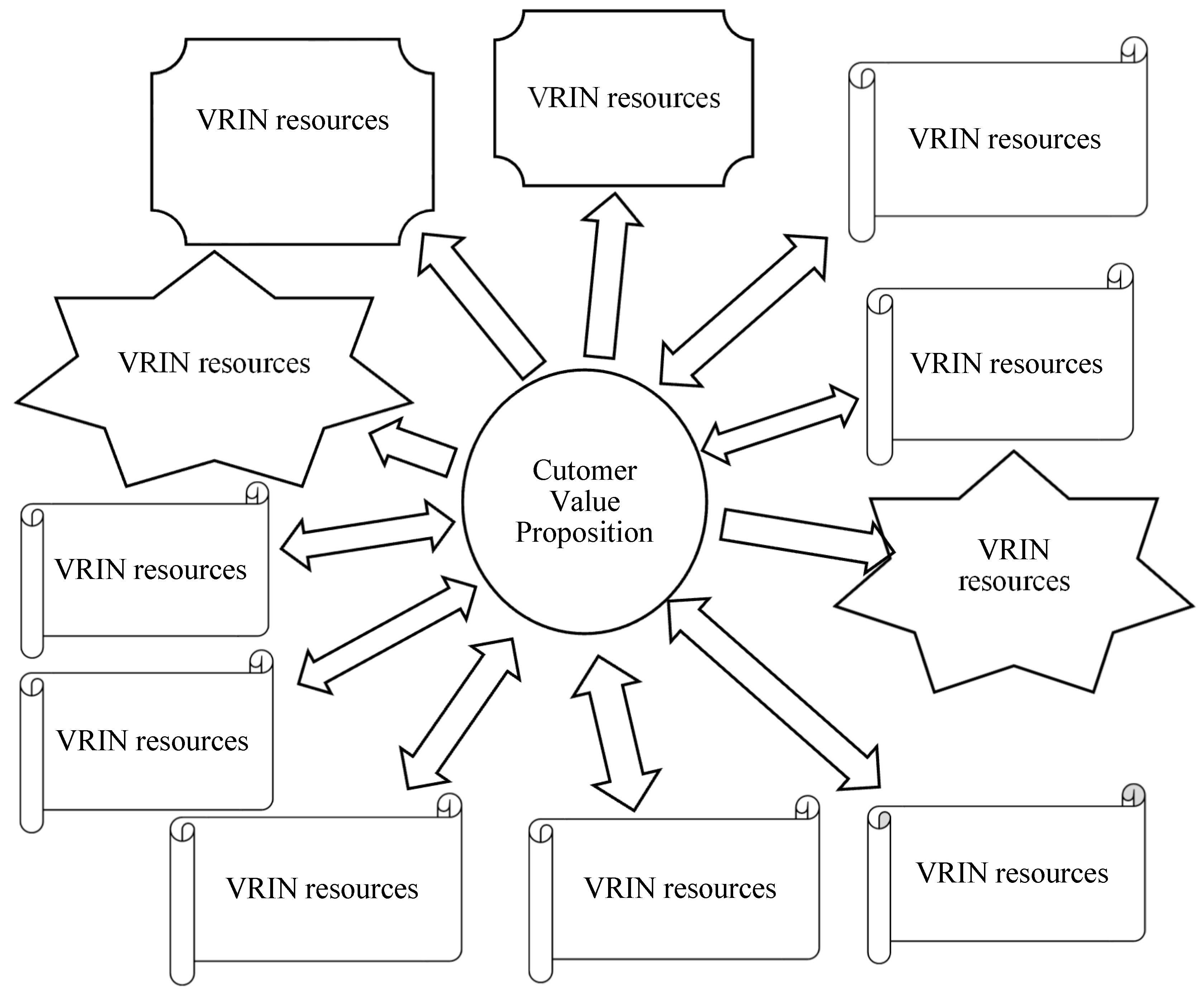
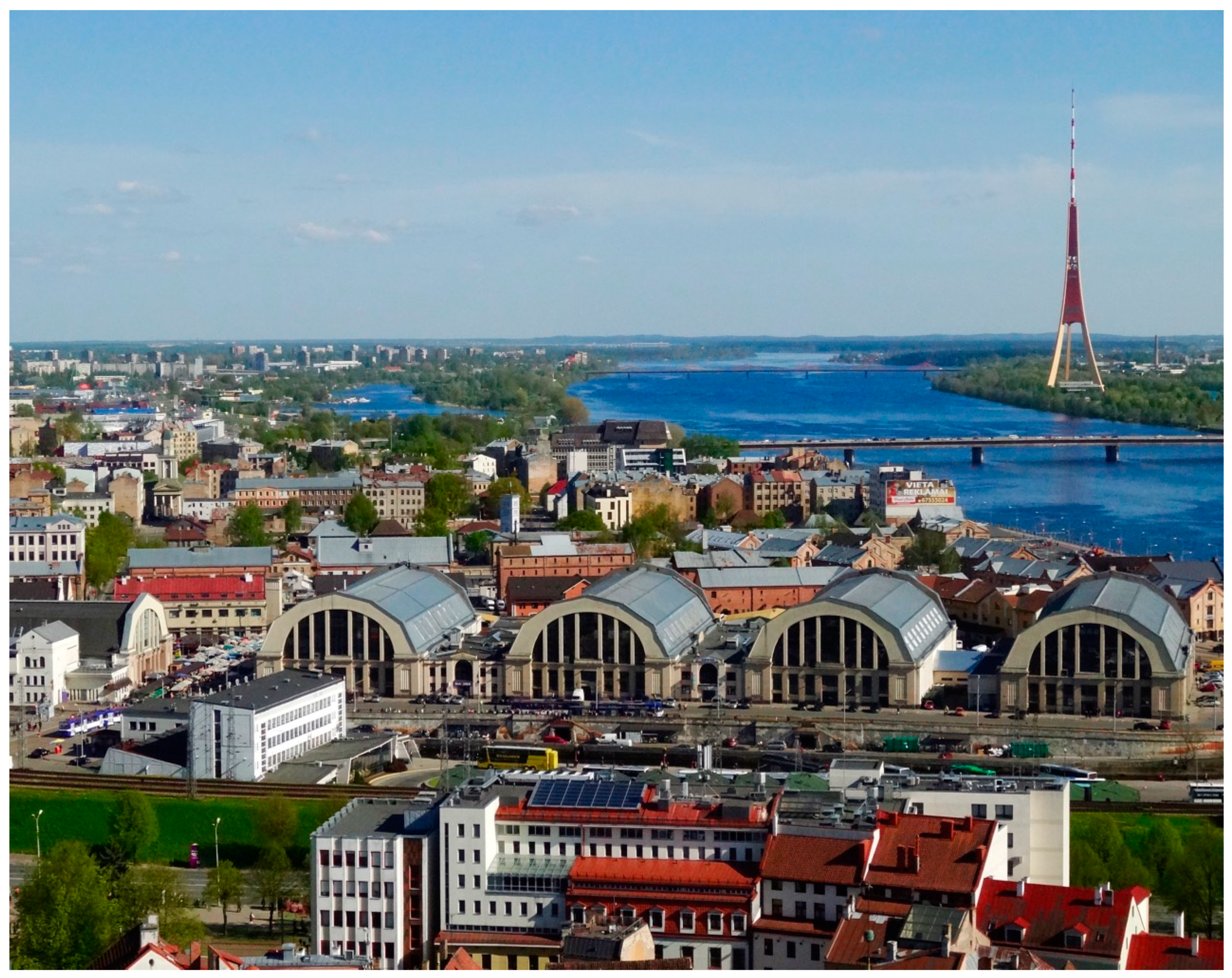
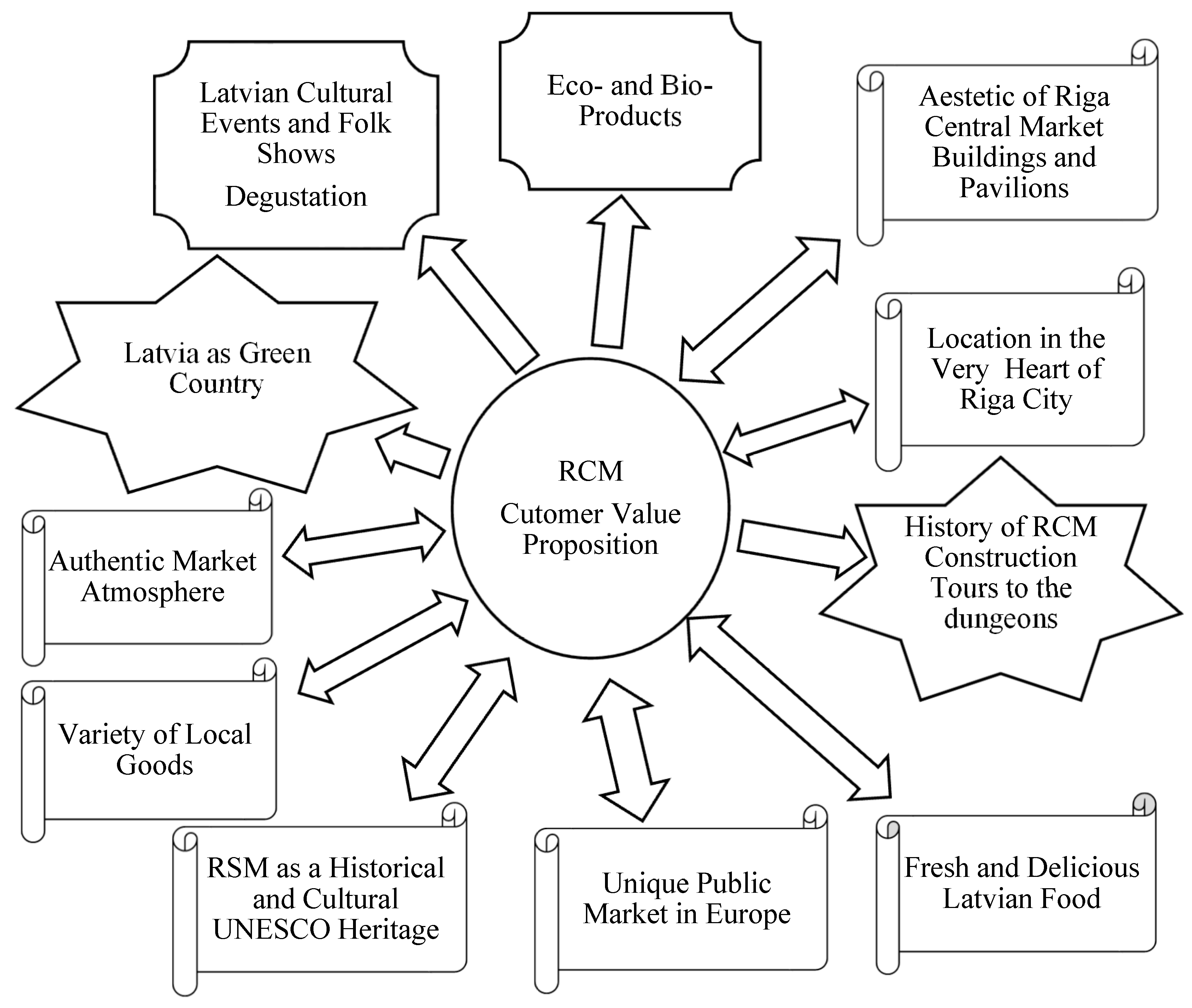

| Key Resources | Definition |
|---|---|
| Physical | Assets like manufacturing facilities, buildings, vehicles, machinery, point-of-sales, and distribution networks |
| Intellectual | Brands, proprietary knowledge, patents and copyrights, partnerships, and customer databases |
| Human | Talented management and employees |
| Financial | Cash, lines of credit, or a stock option pool |
| Cultural | Stories and ritual; local food, drinks, and cuisine; historical and cultural heritage, community image and identity, overall unique atmosphere and environment (Chirjevskis and Ludviga 2009). |
| PERFA Framework of CVP | Definition | Relevance for RCM’s CVP |
|---|---|---|
| Performance | The way the organization works intending to serve best their customer while doing so profitably | Cultural and historical heritage, uniqueness and authentic market atmosphere, variety of local goods. |
| Ease of use | The degree to which customers believe using a certain product will be effort-free | Developed infrastructure at RCM, accessibility, and well-developed transport links. |
| Reliability | The ability of a product to deliver according to its expectations | RCM strives to live up to tourists’ expectations, yet some improvements are needed. |
| Flexibility | Organization’s ability to reallocate and reconfiguration its organizational resources, process and strategies as a response to environmental changes | Low level of flexibility, improvements needed. |
| Affectivity | Feeling or emotions associated with using organization products and services | Visiting RCM causes either very positive or very negative emotions, which is considered to be a strong point; improvements needed. |
© 2019 by the author. Licensee MDPI, Basel, Switzerland. This article is an open access article distributed under the terms and conditions of the Creative Commons Attribution (CC BY) license (http://creativecommons.org/licenses/by/4.0/).
Share and Cite
Čirjevskis, A. Designing Organizational Eco-Map to Develop a Customer Value Proposition for a “Slow Tourism” Destination. Adm. Sci. 2019, 9, 57. https://doi.org/10.3390/admsci9030057
Čirjevskis A. Designing Organizational Eco-Map to Develop a Customer Value Proposition for a “Slow Tourism” Destination. Administrative Sciences. 2019; 9(3):57. https://doi.org/10.3390/admsci9030057
Chicago/Turabian StyleČirjevskis, Andrejs. 2019. "Designing Organizational Eco-Map to Develop a Customer Value Proposition for a “Slow Tourism” Destination" Administrative Sciences 9, no. 3: 57. https://doi.org/10.3390/admsci9030057
APA StyleČirjevskis, A. (2019). Designing Organizational Eco-Map to Develop a Customer Value Proposition for a “Slow Tourism” Destination. Administrative Sciences, 9(3), 57. https://doi.org/10.3390/admsci9030057

