1. Symmetry
Symmetry is one of the most powerful concepts in science and can be used to describe animate and inanimate objects of nature and man-made ‘products’. Symmetry and complexity determine the essence of nonlinear science that can describe the expansion of the Universe, the evolution of life and even the globalisation of human economies and societies [
1]. As Mainzer described in his book-triad [
1,
2,
3] symmetry and complexity are fundamental principles in science of 21
st century connecting natural, cognitive, and social sciences, mathematics, humanities, and philosophy. Symmetry was primarily related to simplicity of order, beauty and harmony. However, the Universe is far from being static, balanced and neatly ordered. The symmetry breaking leads to new orders and structures, and transitions from unstable to balanced states involving processes of self-assembling governed by the laws of nonlinear dynamics.
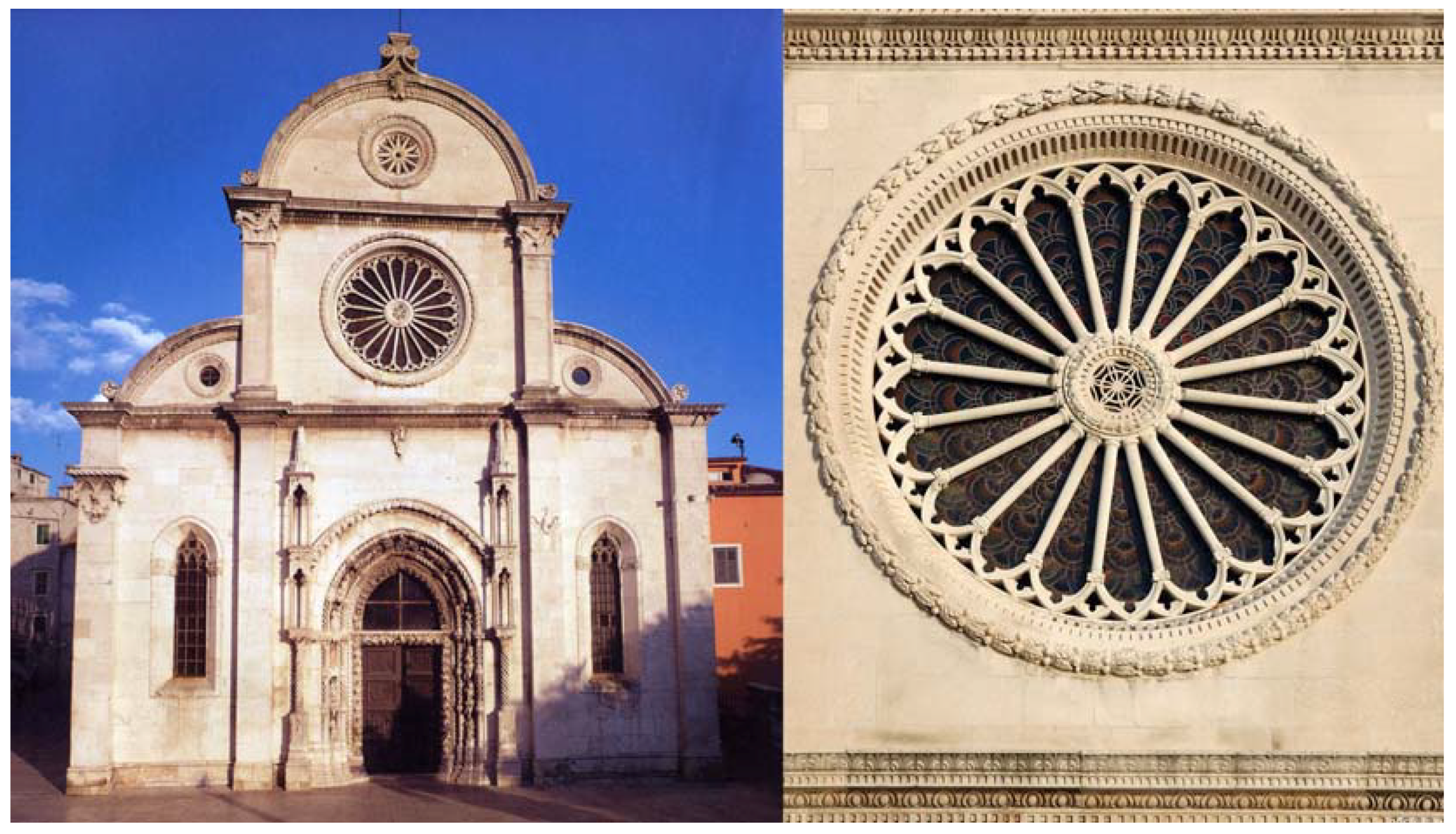
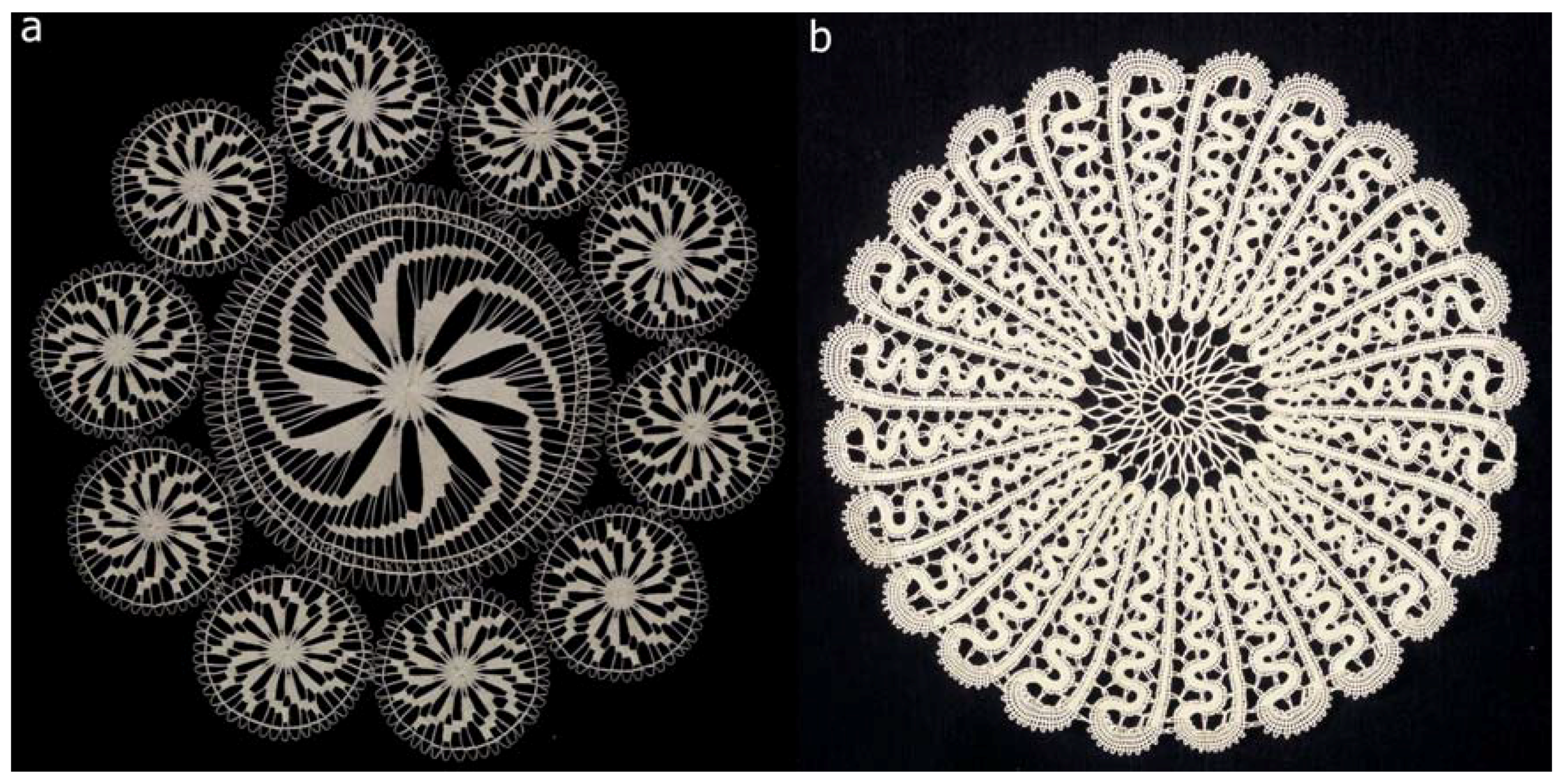
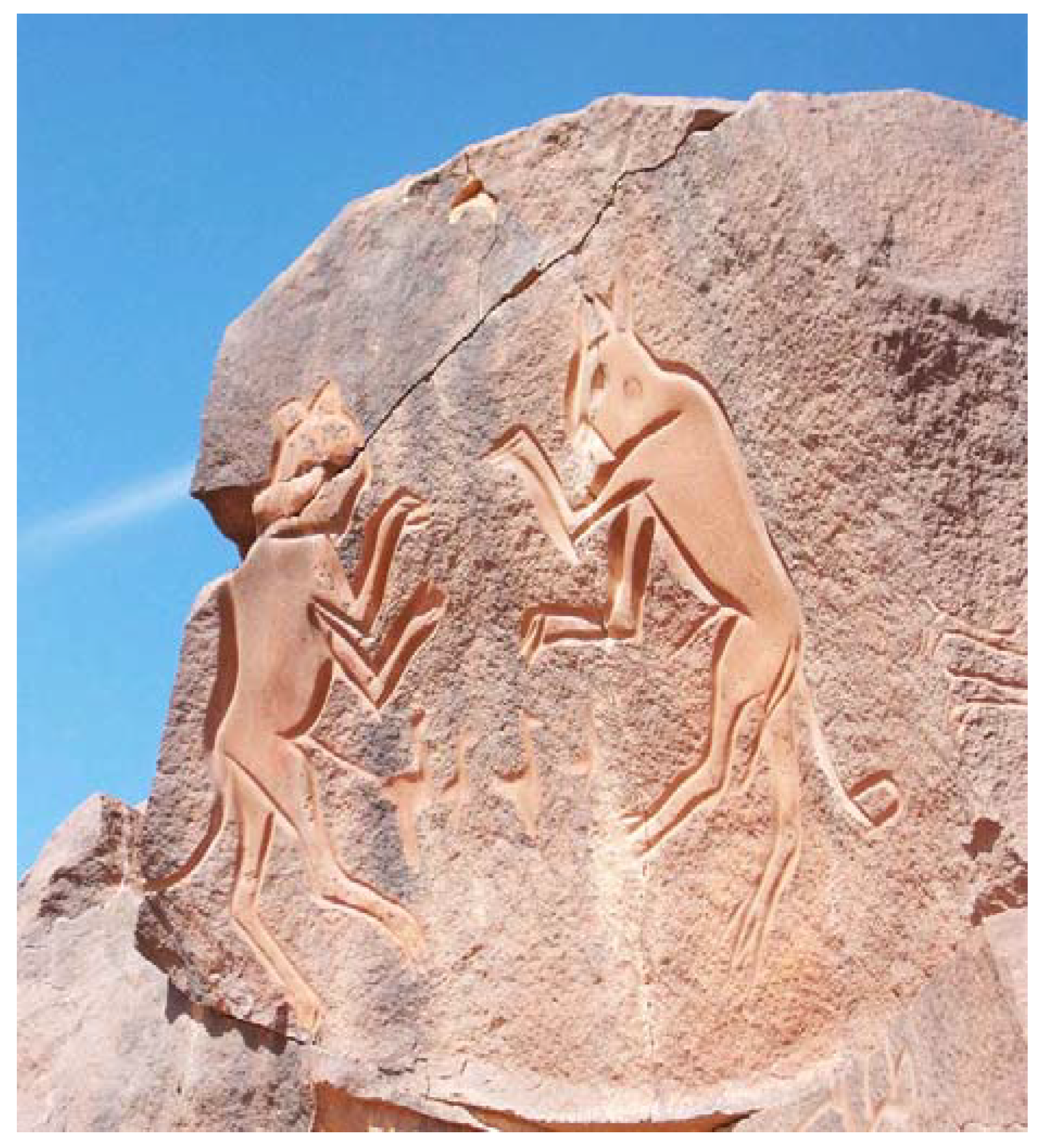
At the same time symmetry is multi-cultural phenomenon. Symmetry is visually appealing to the human eye provoking the aesthetic pleasure. It can be found in pictures, drawings, sculptures, architecture (
Figure 1,
Figure 2 and
Figure 3), music, textile (
Figure 4) and pottery decoration, and many other human-made objects. Symmetry and chirality have been recognized in Nature since the prehistoric times (
Figure 5).
Through history symmetry elements were used to illustrate the essence of life in philosophical context and to describe myths. Different symmetries in the religious symbols such as Christian, Jewish, Hindu, Islamic, Buddhist, Shinto, Sikh, Raha’i and Jain, have been used over centuries. The development of human society directed artists to use symmetry for decoration purposes or to frame an aesthetic value of the artistic object and sometimes to send a particular message to an observer.
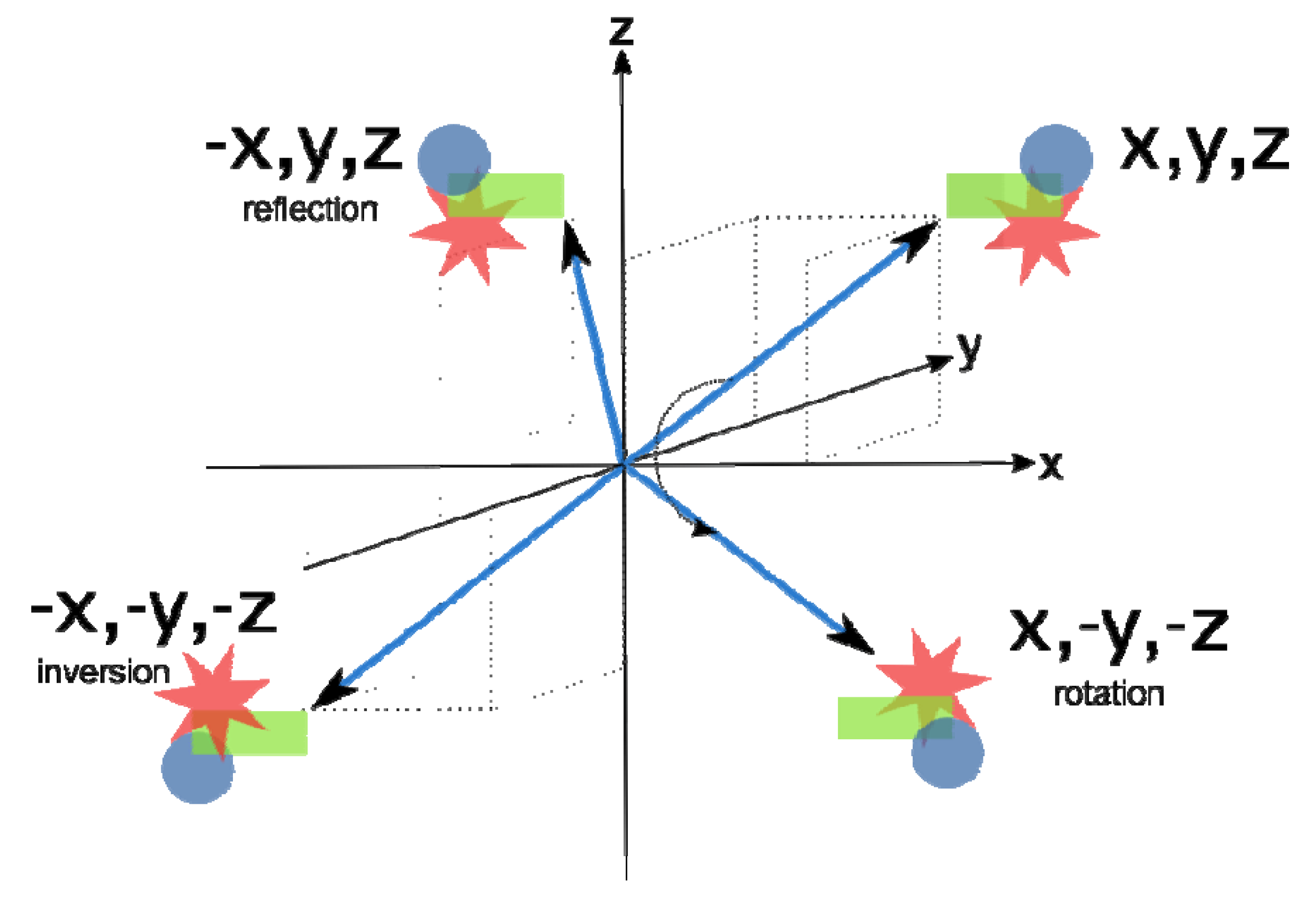
The symmetry of an object is defined in terms of transformations that bring the object into its initial form; it means that the object is unchanged or invariant upon transformation. Generally, such transformations can be operated by rotation, inversion, and reflection (mirror plane) (
Figure 6).
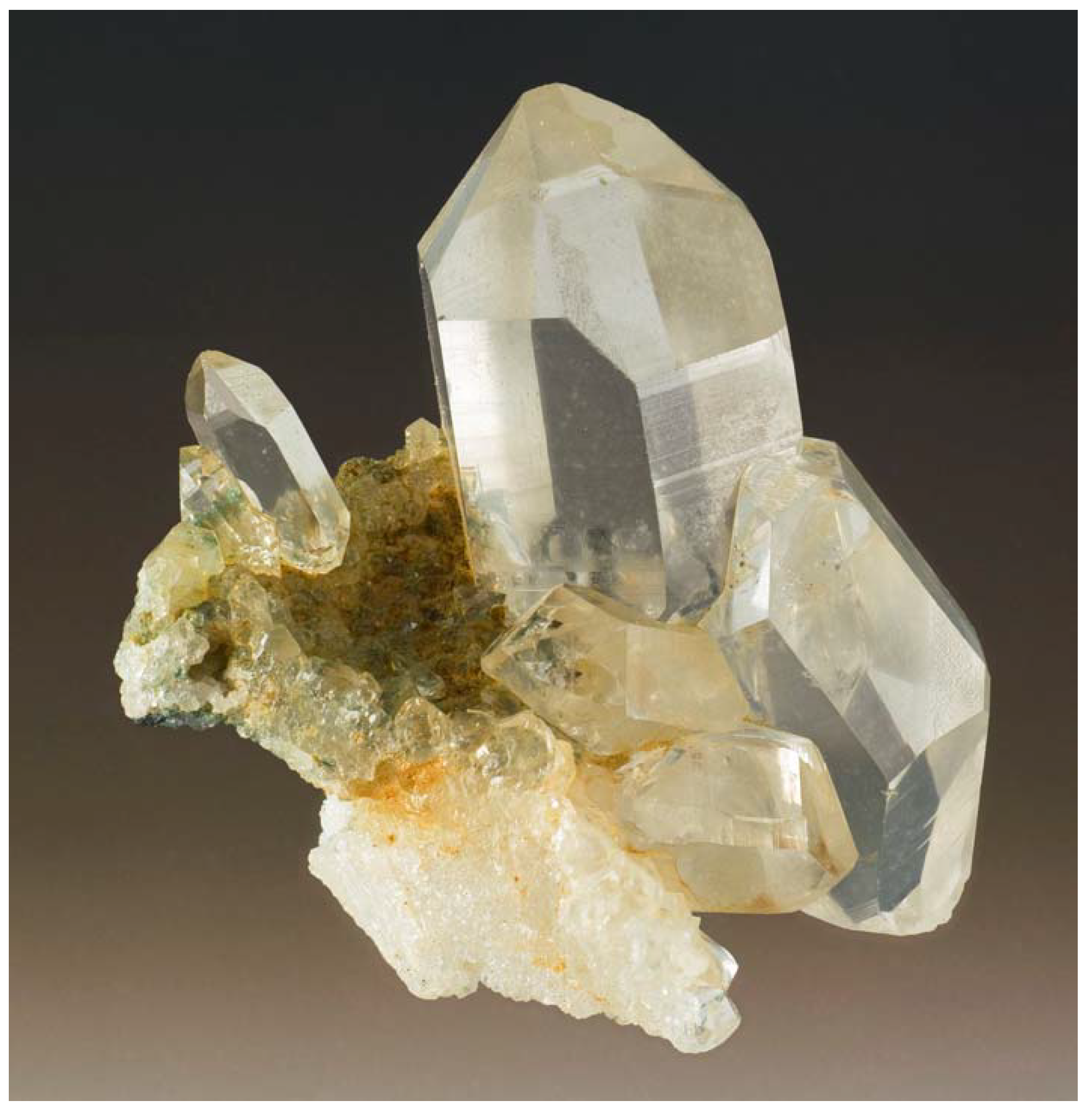
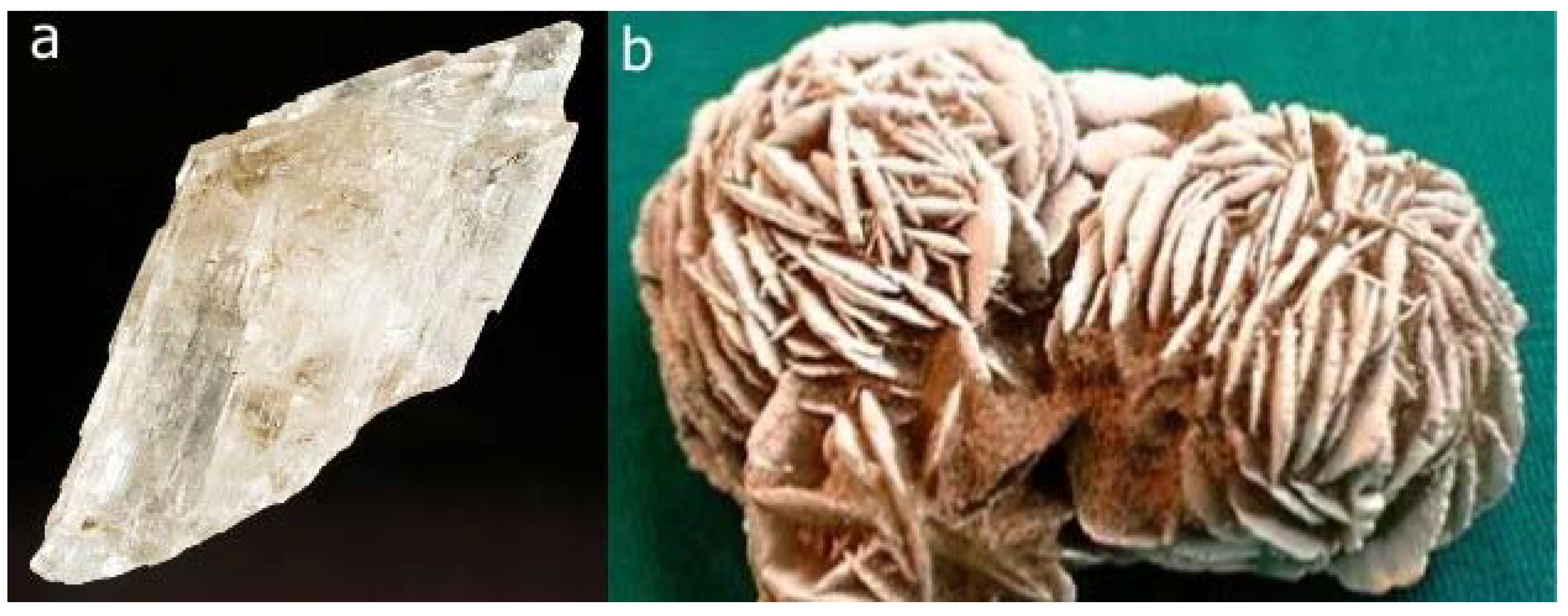
Mathematical description of symmetry operations is provided by the group theory which in chemistry leads to point groups describing the internal molecular symmetry and space groups in crystallography. The symmetries of natural minerals in
Figure 7,
Figure 8a and
8b and synthetic crystals are classified into seven different classes with fourteen different three-dimensional lattice-types, named as Bravais’s lattices. The set of symmetry elements which forms a point group describes the symmetry of the crystal as a whole and may be recognised from the external shape of the crystal; there are such 32 point groups.
However, internal symmetry of crystals at atomic level which describes the atom arrangements in the Bravais crystal lattice, in addition to operations of the first order symmetry elements (inversion, rotation and mirror plane), involves also translation symmetry. Their combinations define 230 space groups which describe the symmetry of arrangements within the crystals which are either enantiomorphic or non-enantiomorphic space groups. The enatiomorphic space groups comprise 65 possibilities and chiral molecules can crystallise in the space groups that do not involve mirror-reflection and inversion operations.
“
Science is our view of Nature through symmetry spectacles and we understand Nature in language of symmetry” was summarised by J. Rosen [
4]. This concise definition points out the role of symmetry in description of physical phenomena and their mathematical formulation. The basic laws of classical physics defining Nature’s phenomena in all parts of Universe at any time are always the same and thus they are symmetrical. However, the systems created in accord to these laws are subjected to changes, and generally not symmetrical. To understand relation of symmetry and asymmetry in the simplest way one can follow transformations and see what changes and what remains the same. In the classical physics approach mirror symmetry (
Figure 6) is conserved in the strong and electromagnetic interactions whereas quantum physics considers the parity violation of the weak force, distinguishing left from right at subatomic level [
5]. The experiment of β-decay of
60Co performed by Lee and Yang in 1956 [
6] revealed deviation from the parity law of weak interactions which govern the decay. Physics of elementary particles based on quantum mechanics defines spins and helicity recognizing chirality at a subatomic level. The projection of a spin onto the direction of particle motion defines its helicity (chirality). Thus, the spin of the particle can be used to define a handedness (chirality) for that particle. In most circumstances, two-left handed fermions interact more strongly than right-handed or opposite-handed fermions. Fine energy differences between photon induced transitions between atomic states offered an additional evidence of parity violation. Such experiments are very delicate and reflect the strange preference for left-handedness of the Universe. The ‘Standard Model’ involved explanation of parity violation at subatomic level and earned the Nobel prize to Glashow, Salam and Weinberg in 1979 “for their contributions to the theory of the unified weak and electromagnetic interaction between elementary particles, including
inter alla the prediction of the weak neutral current.”
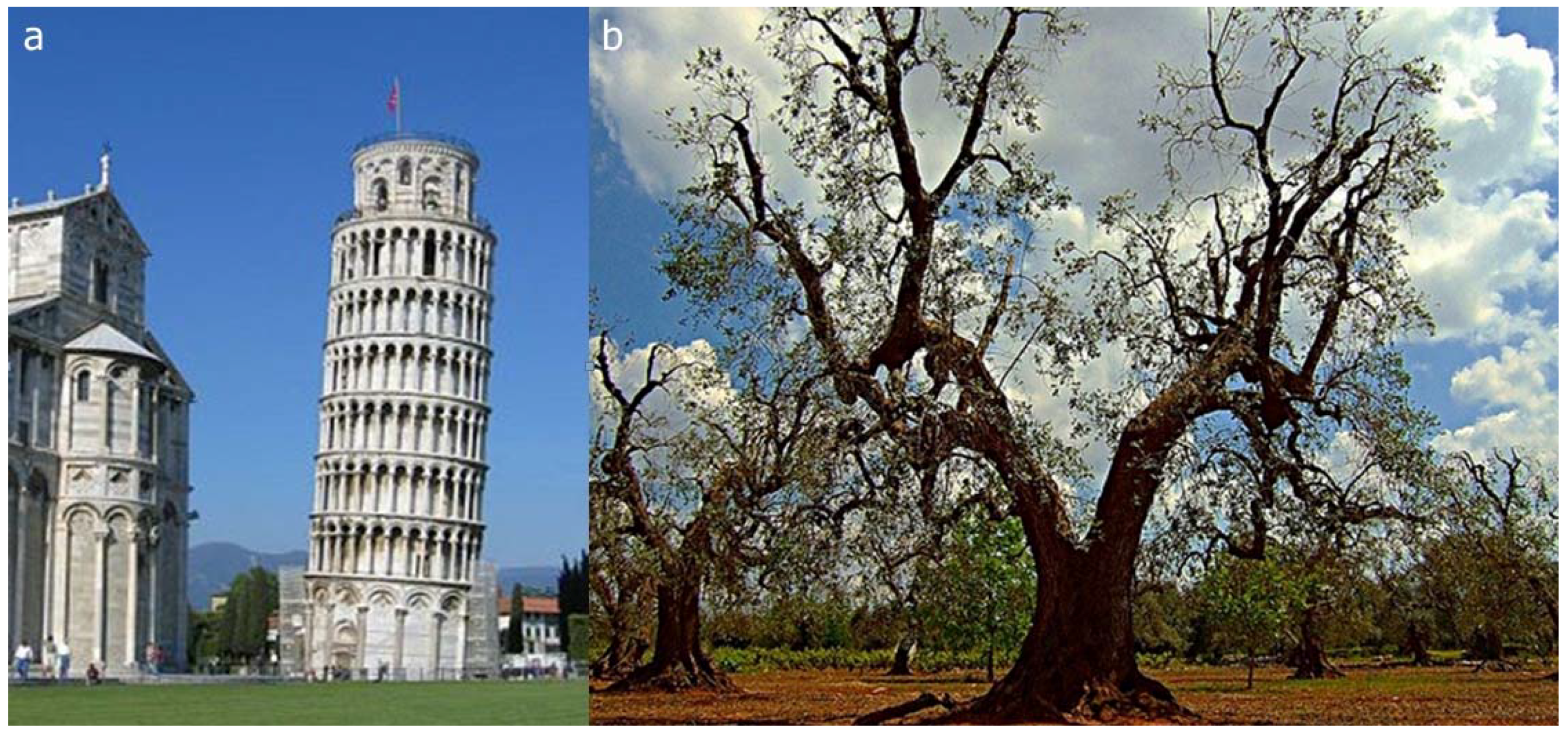
On the other hand, perception of symmetry can be perceived by human mind or vision where intrinsic asymmetry exists. Thus, approximate symmetry is a softening of the dichotomy between symmetry and asymmetry. In addition to exact mathematical definition there are different effects that affect approximate symmetry as illustrated by two selected examples (
Figure 9a and b).
The concept used matters in recognising symmetry (
vs. asymmetry) of the objects and phenomena but also the scale of magnification used by an observer. Concepts can be modified or changed by time as our knowledge expands using more technologically improved experimental techniques. For quite a long time bilateral symmetry was assigned to animal and human (Vitruvian man) bodies and number of plants, and high morphological symmetry to bacteria such as
E. coli and
B.
subtillis. Now, the violation of bilateral symmetry in lower and evolutionary higher organisms is obvious [
7,
8,
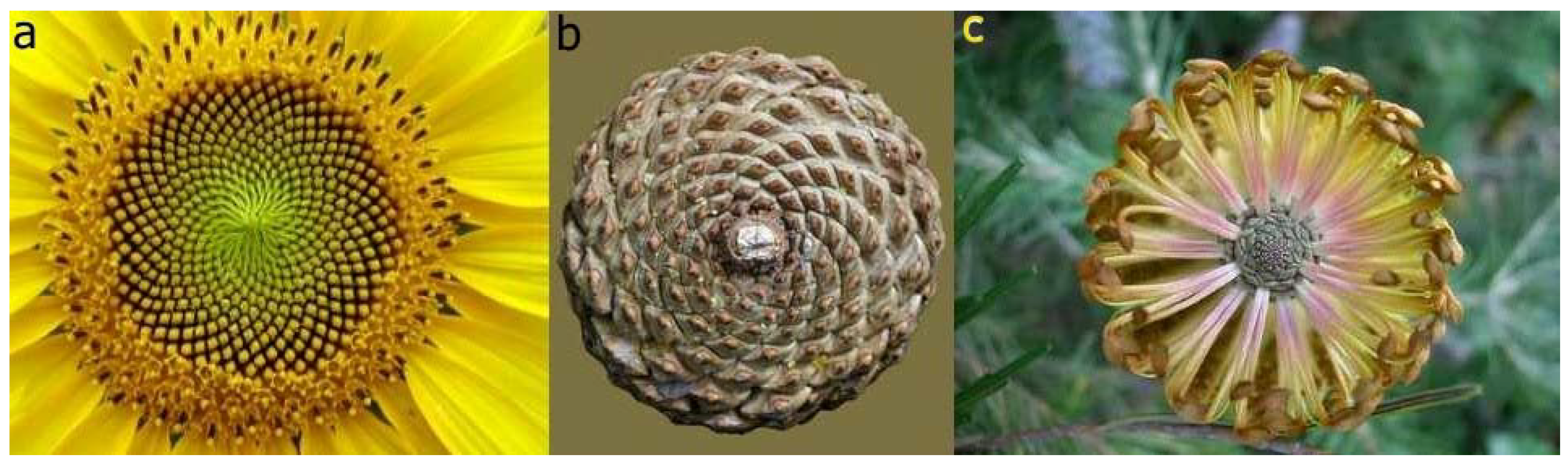
9]. Phyllotaxis (originally from Greek means arrangement of leaves) explains and mathematically describes by Fibonacci series the asymmetry in flower petals, seed heads, pine cones, leaf arrangements, vegetable and fruits (
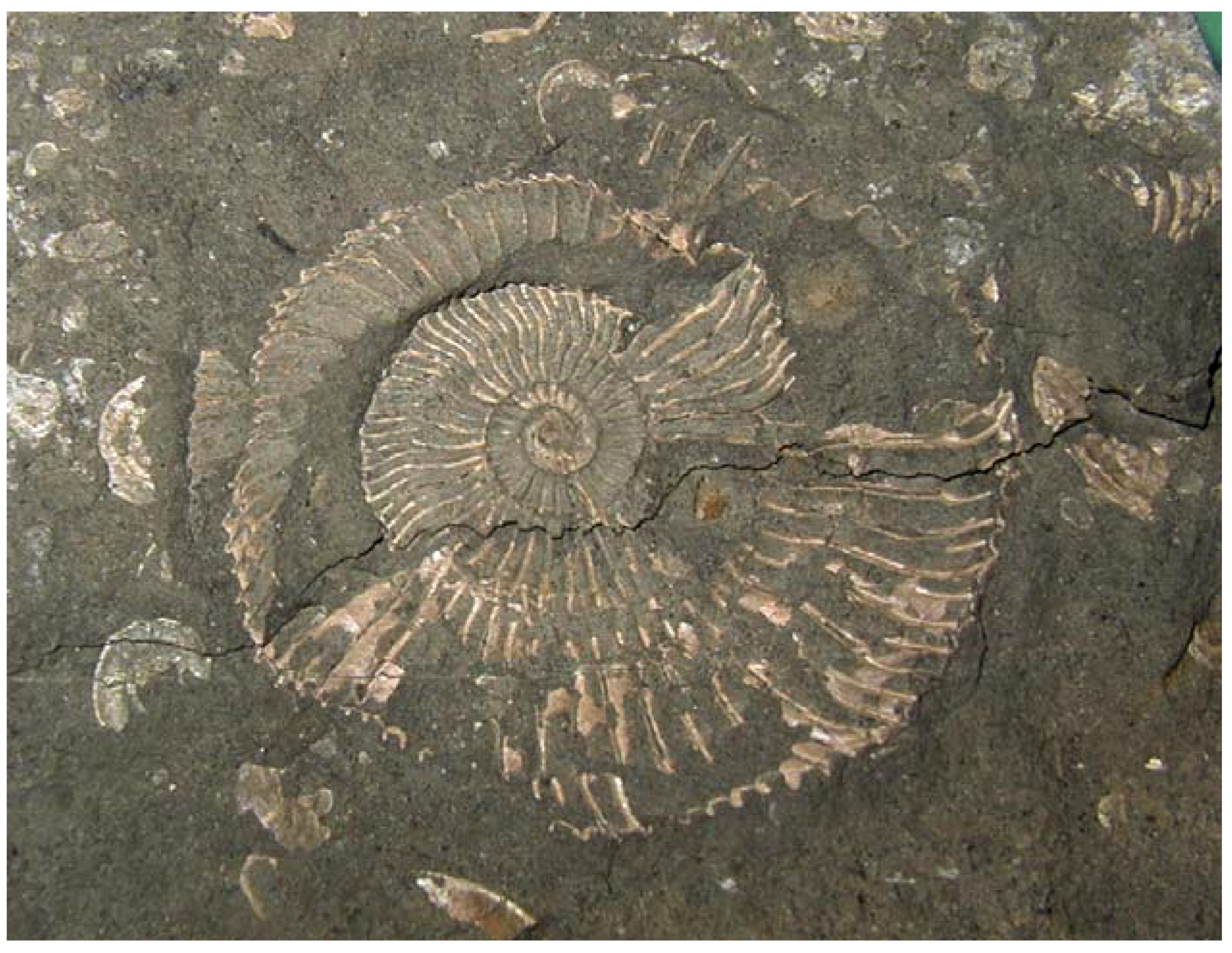
Figures 10 a, b, and c). The evidences of chirality in distant past of Earth are fossils and ammonites (
Figure 11).
Symmetry breaking is unavoidable when dynamical concept of cell functioning is applied. Polar distribution of internal and external products of a cell mechanism is an asymmetrical process (polarity of a cell) [
7]. Asymmetrical cell divisions in plants is influenced by cooperative function of intrinsic (developmental) and extrinsic (ecological) factors as exemplified in embryogenesis, formation of stomata, and ground tissue formation on model plant
Arabidopsis thaliana [
8]. The common bilateral symmetry of flowers can disappear by evolution in order to make pollination by insects more efficient. From the present knowledge it is clear that just genes alone do not influence asymmetry but their role is highly dominant [
10]. However, the mechanisms for symmetry breaking (left-right asymmetry) in plants and animals remain to be discovered [
10,
11]. By all means left-right asymmetry originates in a single cell starting at an embryo level. Disorders in asymmetry of living species, such as reversed body asymmetry-named
situs inversus, are of outmost importance for human health. Totally reversed human body asymmetry,
situs inversus, is not a problem by itself but becomes a problem when organs are symmetrical. For example, heart composed of two left halves, body with two left lungs, two left kidneys are lethal for human beings [
12]. To link asymmetry at subcellular and higher levels up to the level of the whole organism, will be the way to understand the life mechanisms and their dynamics.
On the other hand, proteins that are chiral molecules, representing asymmetry, can be assembled into homomeric, symmetric structures. However, the asymmetry imposed by the limitation of
l-amino acids does not appear to extend to the level of quaternary structures (homomeric complexes) as observed by Chothia [
13]. Among proteins oligomeric form is preferred over the monomeric one where the homomeric assemblies are much more represented. One can propose different reasons to support formation of symmetric homomers. According to Baker
et al. [
14] in favour of symmetric structures are energetically favourable interactions (tested on dimers). Plaxco and Gross [
15] found their approach also valid for larger scale multimers. In spite of important role of homomers in biology, only anecdotal knowledge on their principle of evolution and assembly exists. However, an application of electrospray-ionization mass spectrometry, that allows study of protein assembling, together with 3D-structures of proteins, and bioinformatics can predict evolutionary routes leading to protein oligomers [
16].
2. Chirality (Left-Right Asymmetry) of Molecules
The abundance of literature devoted to discovery of molecular chirality is proportional to its importance in life and its origin, and many fields of chemistry [
17,
18,
19,
20]. However, one among the numerous published articles
On wine,
chirality and crystallography written by Z.S. Derewenda [
20] offers a special ‘flavour’. The article was dedicated to the 160
th anniversary of Pasteur’s discovery and 60
th years of International Union of Crystallography and the scientific journal
Acta Crystallographica.
The first physical phenomenon related to chirality – optical activity- was discovered by J.B. Biot in 1815 [
21]; when a beam of plane-polarised light passes through a solution of optically active compound, the plane of polarization is rotated levorotatory or dextrorotatory. By convention, rotation to the left is given a minus (−) sign, and the rotation to the right is given a plus (+) sign. From the time of Biot’s discovery there were no significant contributions until 1848 when L. Pasteur [
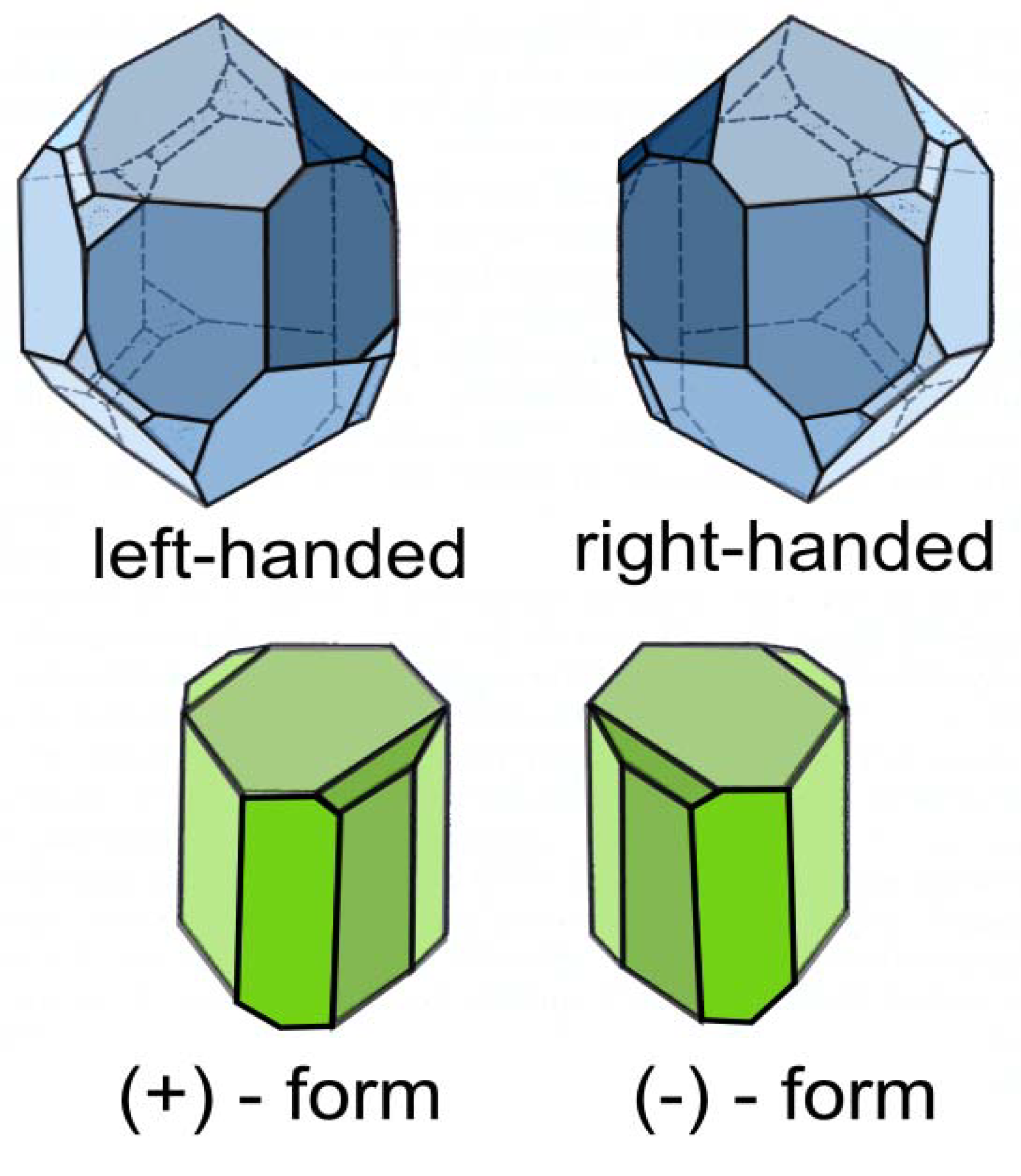
22] studied the crystals of tartrates isolated from wine lees. He observed a spontaneous resolution of that two crystal forms which were mirror images. Pasteur managed to separate ‘left-handed’ crystals from ‘right-handed’ ones by hand (
Figure 12) and characterized them as ‘dissymmetric’.
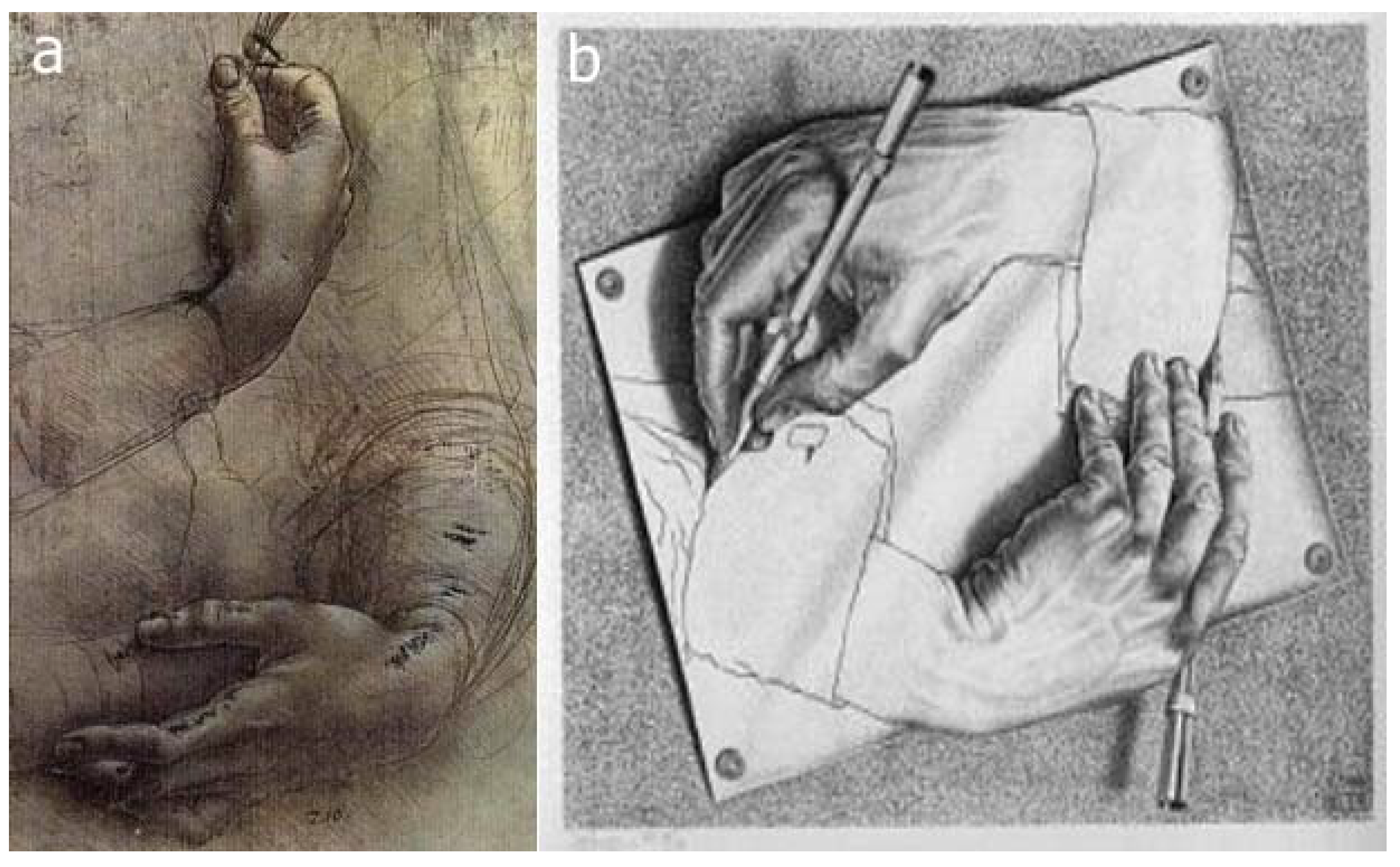
Pasteur detected that crystals of each separated piles had been optically active and their specific rotations were equal in amount but opposite in sign whereas the original sample having a mixture of right and left in equal proportions (racemate with ratio 50:50) was optically inactive. Pasteur’s method of enantiomer separations from a racemic mixture using crystallization has been in use nowadays. Briefly, Pasteur discovered enantiomers. The term chirality (in Greek means hand;
Figures 13 a) and b) has been saved from the past to the present days. It originates from Lord Kelvin in 1884 [
23].
Pasteur’s explanation of the phenomenon was as bright as its discovery. The explanation for this phenomenon was based on molecules as stated by him. “There is no doubt that in the
dextro tartaric acid exists an asymmetric arrangement having a non-superimposable image. It is no less certain that the
levo acid possesses precisely the inverse asymmetric arrangement.” At the time of Pasteur’s discovery neither tetrahedral carbon atom arrangement nor Kekulé’s theory were known. A tetrahedral model of carbon atom proposed simultaneously by J. H. van’t Hoff [
24] and J.A. Le Bel in 1874 [
25] added a new value to Pasteur’s discovery and offered an explanation of chirality by introducing ‘asymmetrically’ substituted carbon atom. That model is the most general type of chirality whereas topological and conformational chiralities are more complex. A tetrahedral concept of a carbon atom invented by van’t Hoff and Le Bel was used by E. Fischer to recognise the optical isomers and conformational differences which helped him to resolve stereochemistry of carbohydrates [
26]. He was able to establish relative configurations of each studied carbohydrate using glyceraldehyde as a standard. Almost six decades passed before the absolute configuration of glyceraldehyde was confirmed to be correct by M. J. Bijvoet’s determination of an absolute configuration by use of anomalous dispersion of X-rays. He determined the absolute configuration of rubidium sodium tartrate and other salts of tartaric acid [
27]. These days anomalous dispersion is widely used for determination of phases of structure factors in X-ray structure analysis of proteins. After the experimental evidences resolved the problem of the absolute configuration of the chiral molecule Prelog, Cahn and Ingold had worked out nomenclature to unambiguously define the absolute configuration [
28]. The previously used notations of D and L were replaced by
R and
S (originating from Latin words
rectus and
sinister).
Pasteur’s discovery initiated a novel approach in correlating properties of molecules and their symmetries. From
d- and
l-tartaric acid enantiomers he prepared diastereomers with
l-cinchonine. The solubility of enantiomers of tartaric acid are identical whereas of their salts with
l-cinchonine are different. The resolution of enantiomers through their conversion into diasteromeric salts or covalent diasteromeric derivatives is nowadays a common procedure. Fischer found the reactions of diasteromers mediated by natural chiral catalysts (enzymes) to be particularly selective. On his experience of enzymatic reactions Fischer introduced ‘key and lock’ hypothesis [
29] that explains the molecular recognition processes and became the mostly used paradigm. The recognition of ‘proper’ enantiomer in life processes is of utmost importance. Therefore, the enantiomericaly pure drugs must be used, only. The enantiomers can have physically and biologically different properties; one enantiomer can be drug whereas the other one can be harmful (medical accidents caused by thalidomide). There is an imperative for synthetic chemists to produce homochiral drug. Enzymatically driven syntheses are widely in use for stereoselective reactions. However, asymmetric synthesis should be mentioned too; chiral catalyst transforms an achiral substrate into a homochiral product. An efficient example dates back to 70-ties of last century in Monsanto where W. Knowlles and co-workers used rhodium complex with a chiral phosphine ligand which catalysed a selective H
2 –addition to prochiral substrate where a chiral centre with high enantioselectivity was generated. This procedure was commercialised in synthesis of
l-dopamine, an anti-Parkinsonic drug. Recent years a significant progress has been made on use of asymmetric synthesis even on large scale stereoselective processes [
30]. Under nanoscience umbrella there is a large number of variations in preparations that can generate the chiral-assemblies from achiral molecules. However, many cooperative phenomena influencing supramolecular processes have not been completely understood, yet. Very interesting phenomena are transfer, expression and amplification of chirality at surfaces but their mechanism has not been not known, yet [
31].
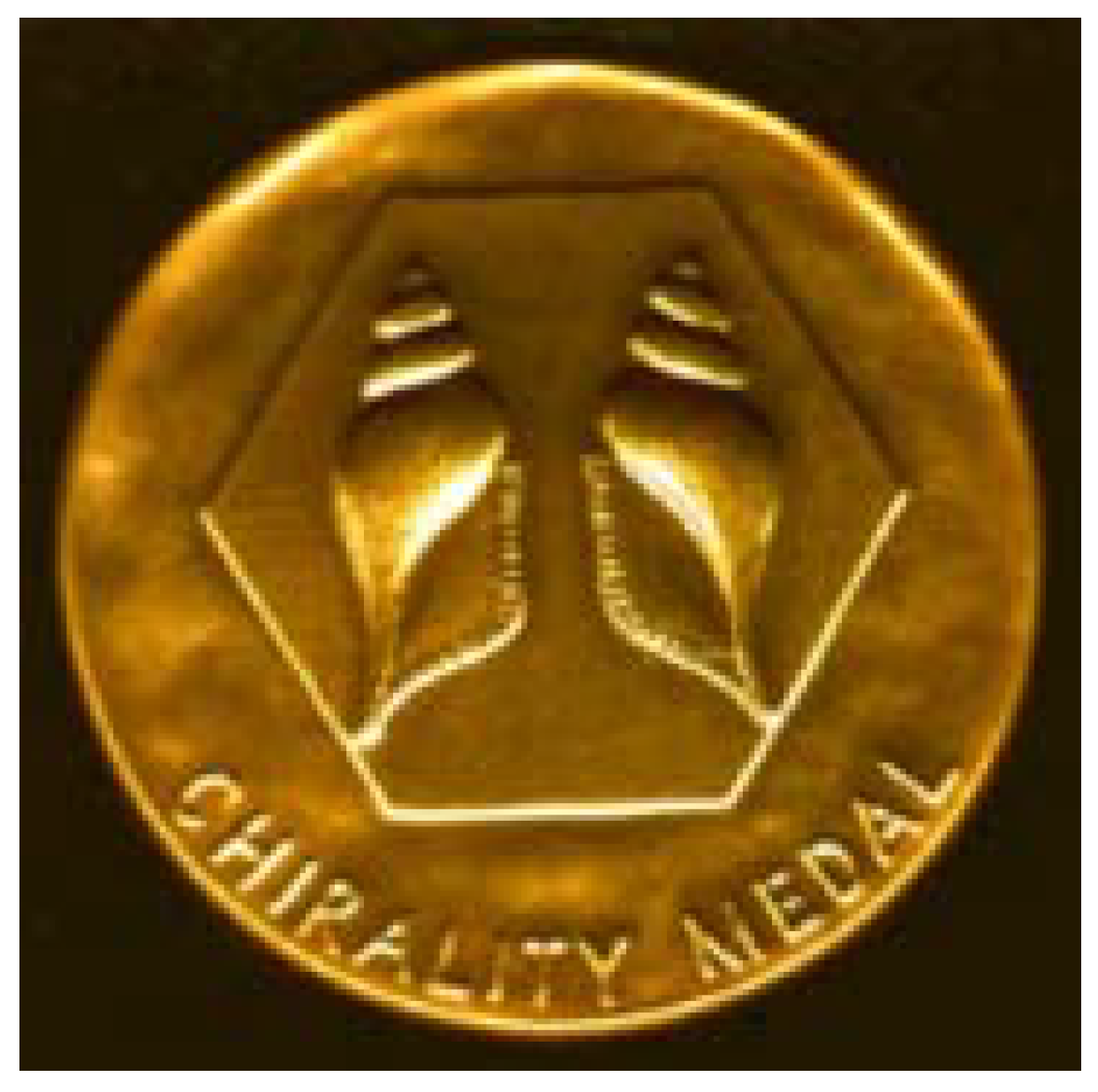
The importance of chirality in various fields of chemistry, material science, and life sciences motivated The Italian Chemical Society to introduce the
Chirality Medal (
Figure 14) to honour internationally recognized scientists who have made a distinguished contribution to all aspects of chirality. The medal has been awarded annually since 1991. In 2010 the Chirality Medal will be awarded to Prof. Kenji Mori for his seminal contributions to the importance of chirality of pheromones in signalling processes.
3. Homochirality of Life
Homochirality is a characteristic hallmark of life. The presence of
l-amino acids and
d-carbohydrates in almost all known living beings was firmly documented and there is no dilemma on that. However, what is the reason for homochiral preference in life has been an open question over a century [
32,
33,
34,
35]. To discuss all possible explanations would be out of the focus of this paper. There is one more reason for not going into the long lasting debate. On February 2, 2010
Science Daily announced the very attractive news, that theory of primordial soup origin of life is rejected. Instead of the commonly accepted ‘soup theory’ an alternative view that life arose from gases such as hydrogen, carbon dioxide, nitrogen and hydrogen sulphide and energy for syntheses came from deep-sea hydrothermal vent having tiny compartments or pores. The theory has been supported by a series of experiments performed by G. Wächtershäuser [
36]. In view of this theory it might be that a role of chiral mineral layers of earth core would be revisited.
Although the basic building blocks of proteins are homochiral (
l-amino acids), representing a symmetry break (lack of bilateral symmetry), they undergo a special order. Thus,
l-amino acids form the right α-helices and β-sheets with right-handed twist. In spite of protein complex structures, there are principles which govern conformations, packing, and topologies in their asymmetrical tertiary structures. The structural elements, responsible for protein fold were used for classification; quite a number of databases and servers are available to classify each particular protein. However, limitations imposed by
l-amino acids asymmetry do not extend to the quaternary structure of protein [
13]. Protein assembling usually generates symmetrical structures in accord with rotation symmetries although there are some exceptions. The homomeric assembling can occur as a process of agglomeration under influence of the surrounding media (during crystallization) on a particular protein or can be an intrinsic property of a given protein adjusted for its cell function during evolution [
14,
15,
16,
37]. Very interesting analysis of homomeric structures that allowed authors [
15] to propose routes of homomer evolution was published; the results obtained suggested that evolutionary route of a homomer can be predicted from its interface sizes, only. However, it is very important that heteromeric and homomeric protein assemblies are involved in functioning of a cell [
37,
38,
39,
40]. Significantly improved analytical techniques based on mass spectrometry and proteomics together with genetic experiments will offer more evidence on the process of protein assembly. The energy evaluation of different ways of assembling also gives an insight into the formation of homomers [
41]. The classification of protein assemblies provided by Levy, Pereira-Leal, Chothia, and Teichmann at
http://www.3Dcomplex.org [
42] enables an overview of protein oligomers whereas their structural symmetry and functions were discussed in the review by Goodsell and Olson [
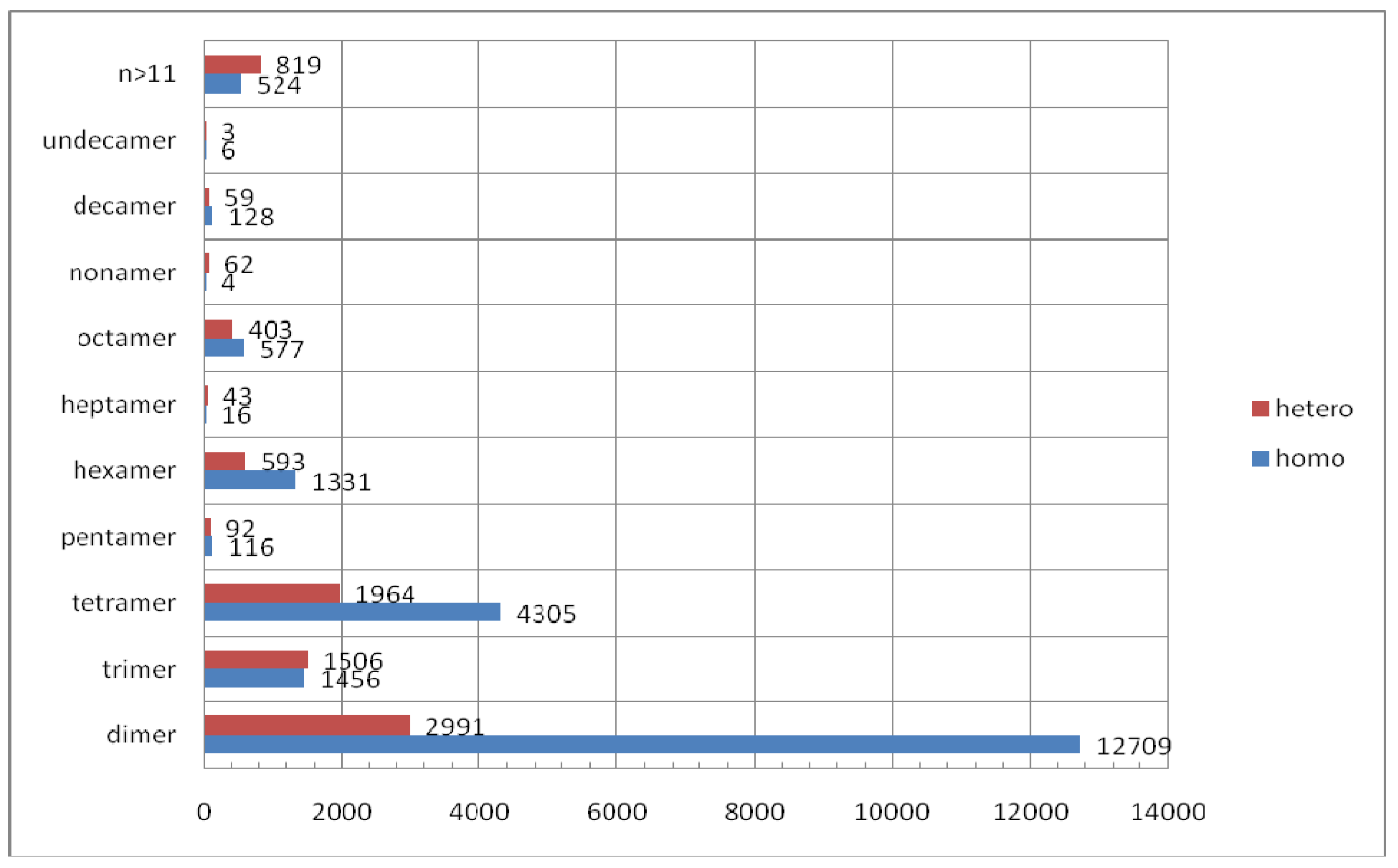
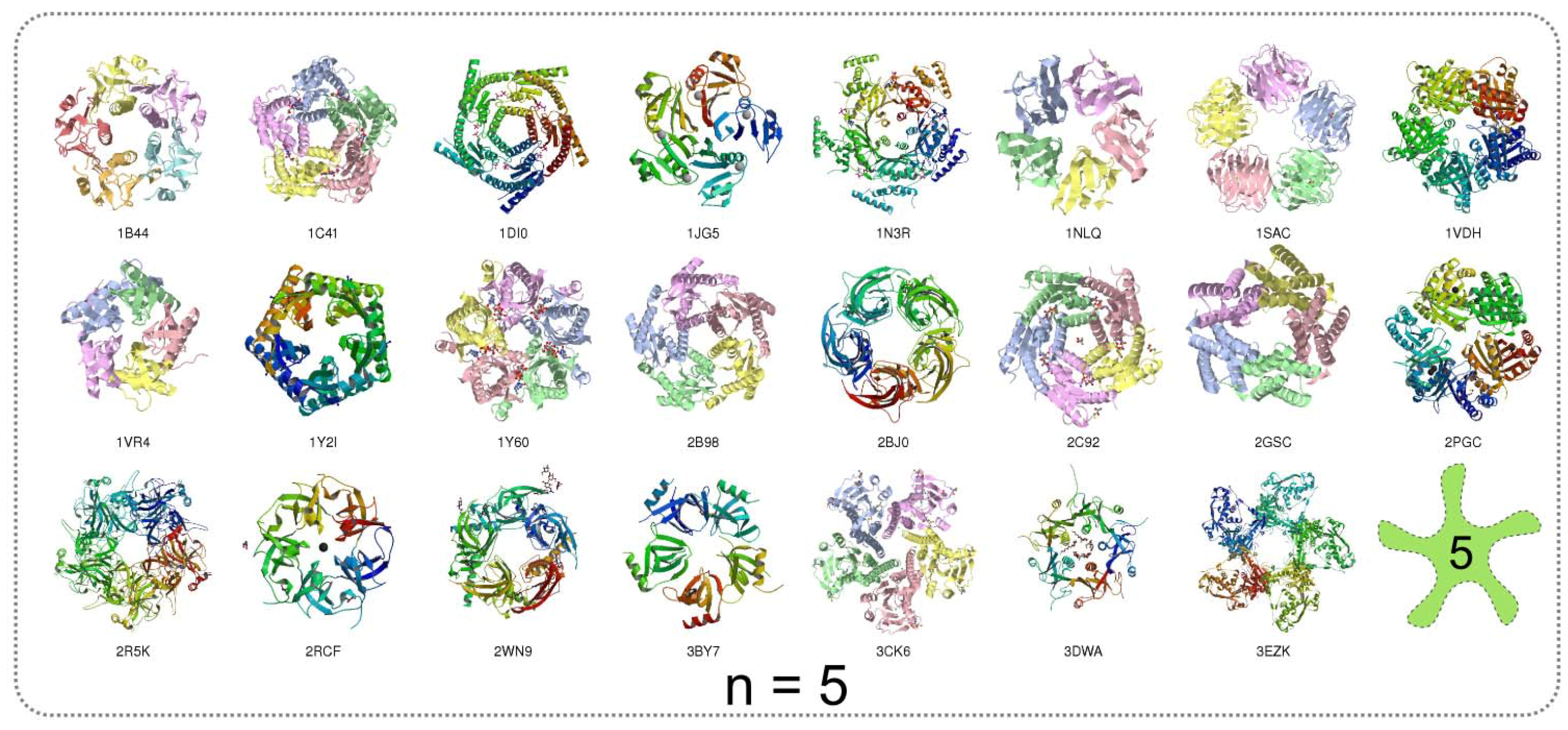
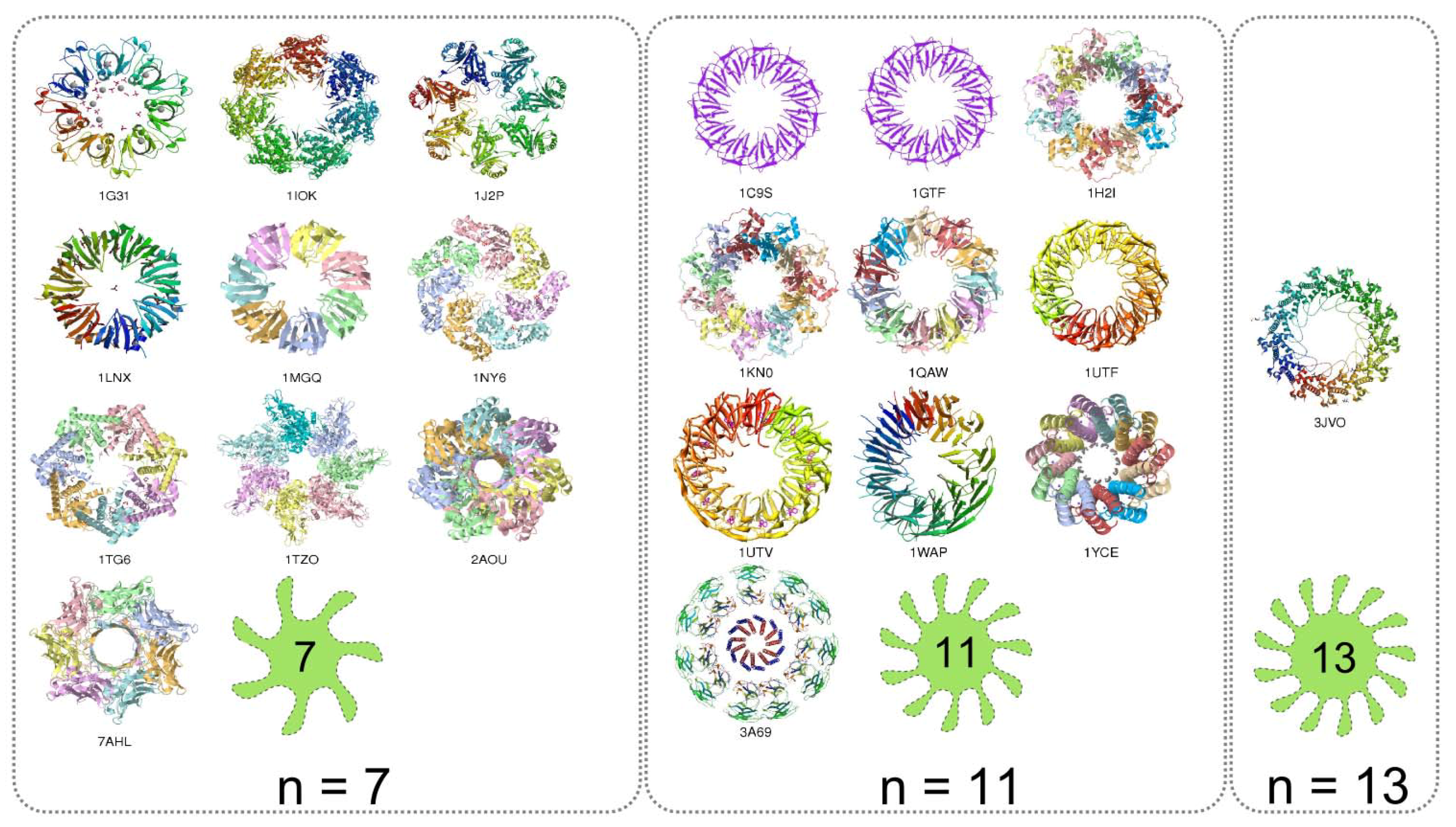
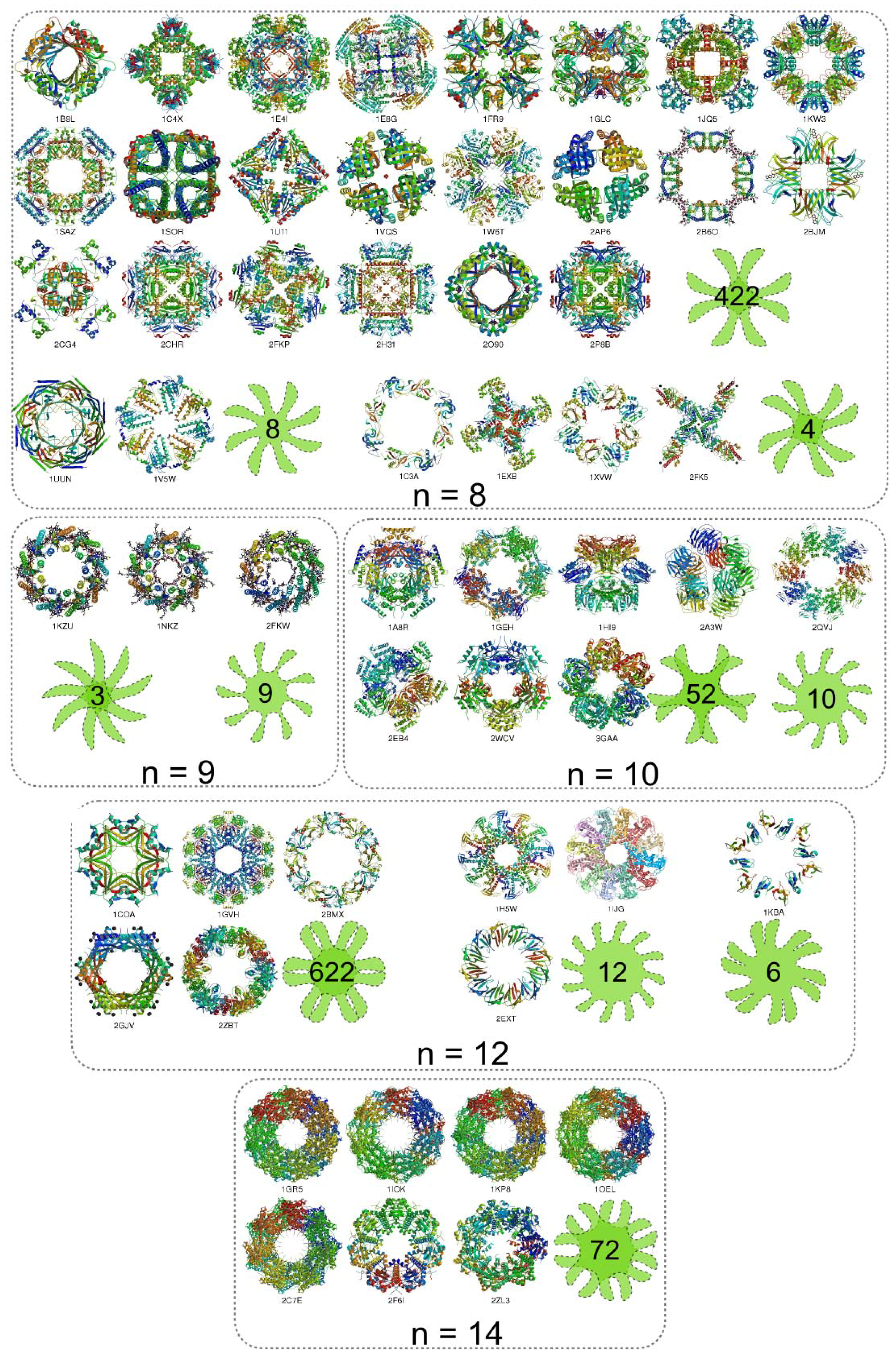
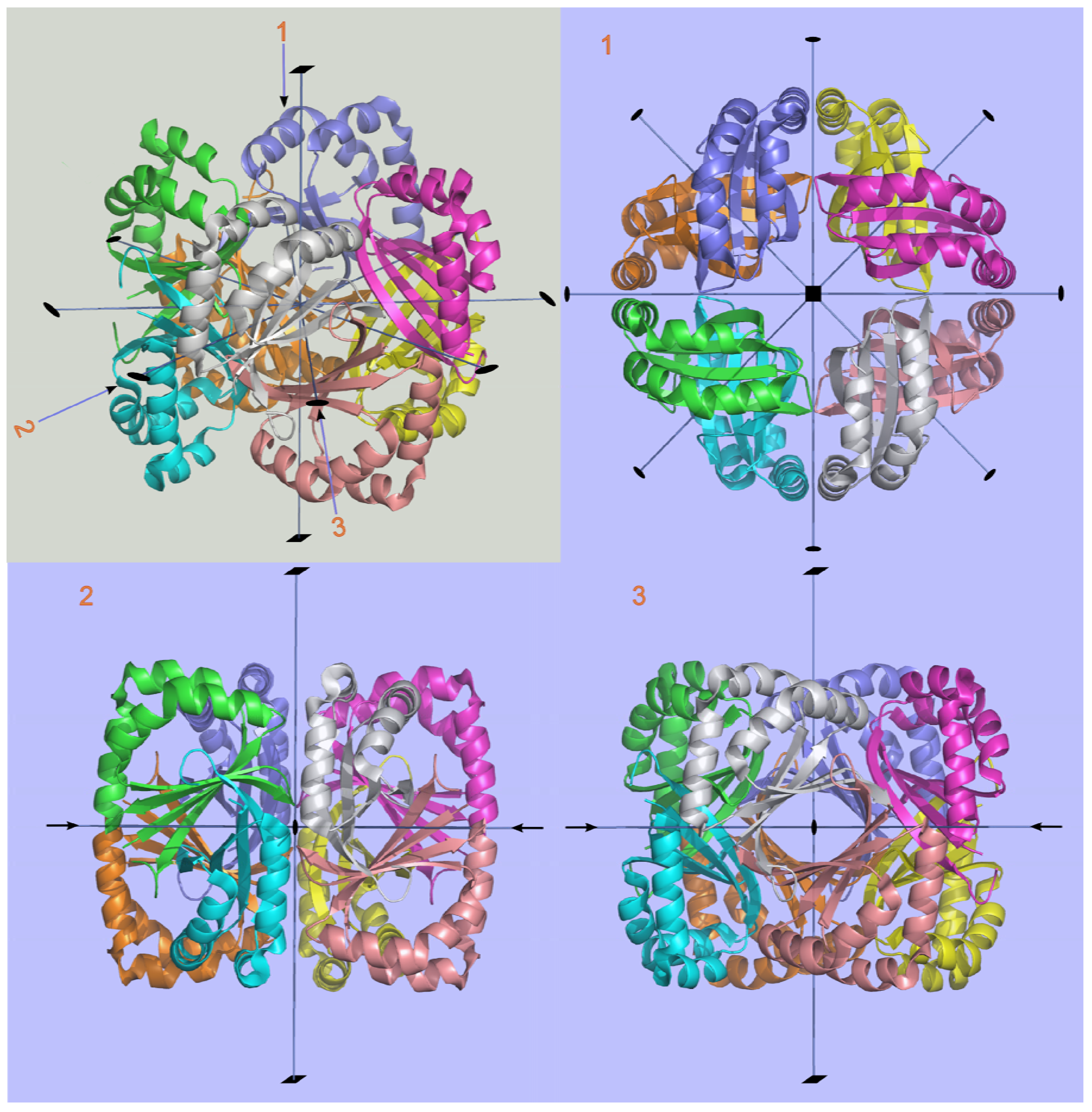
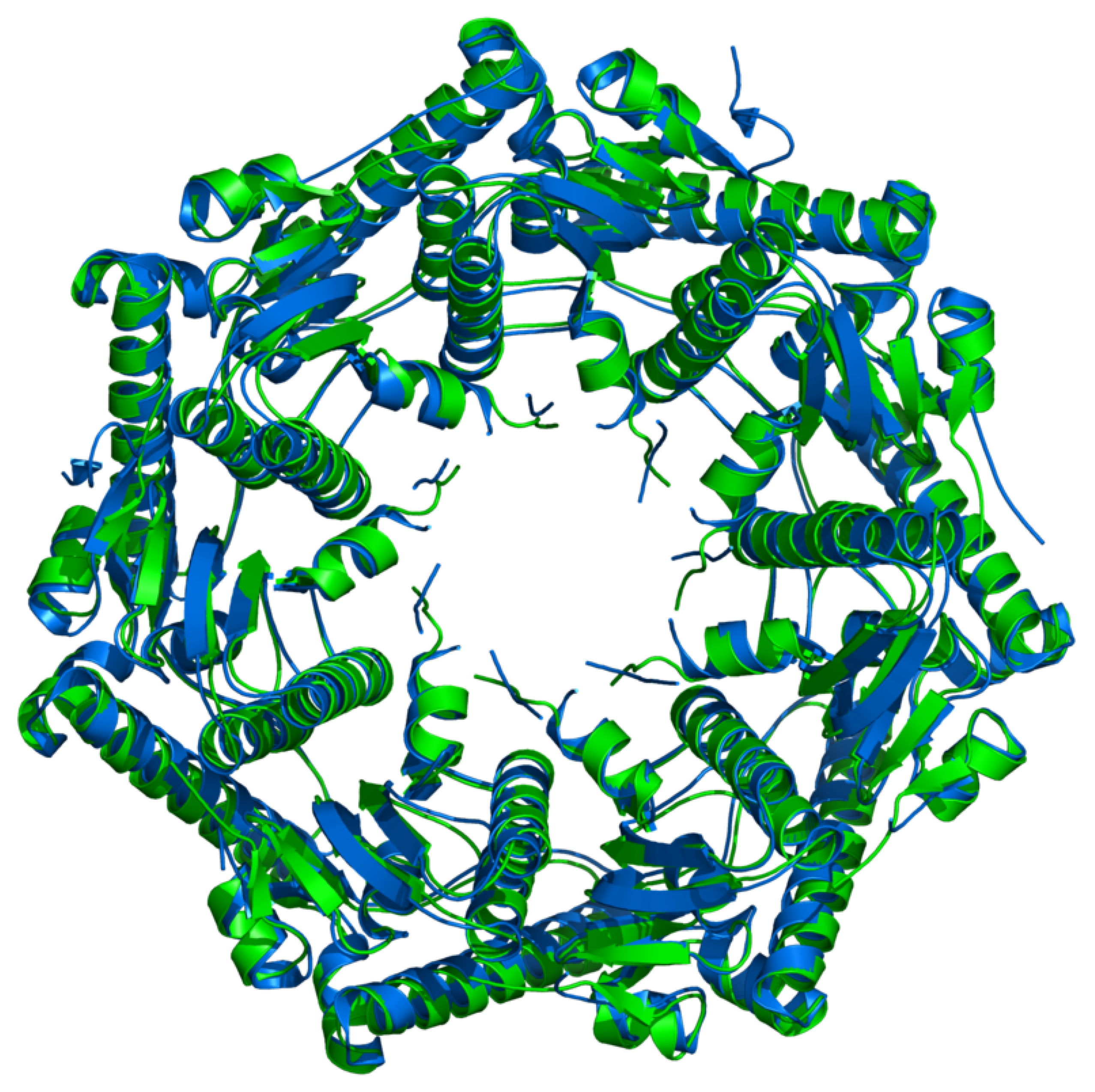
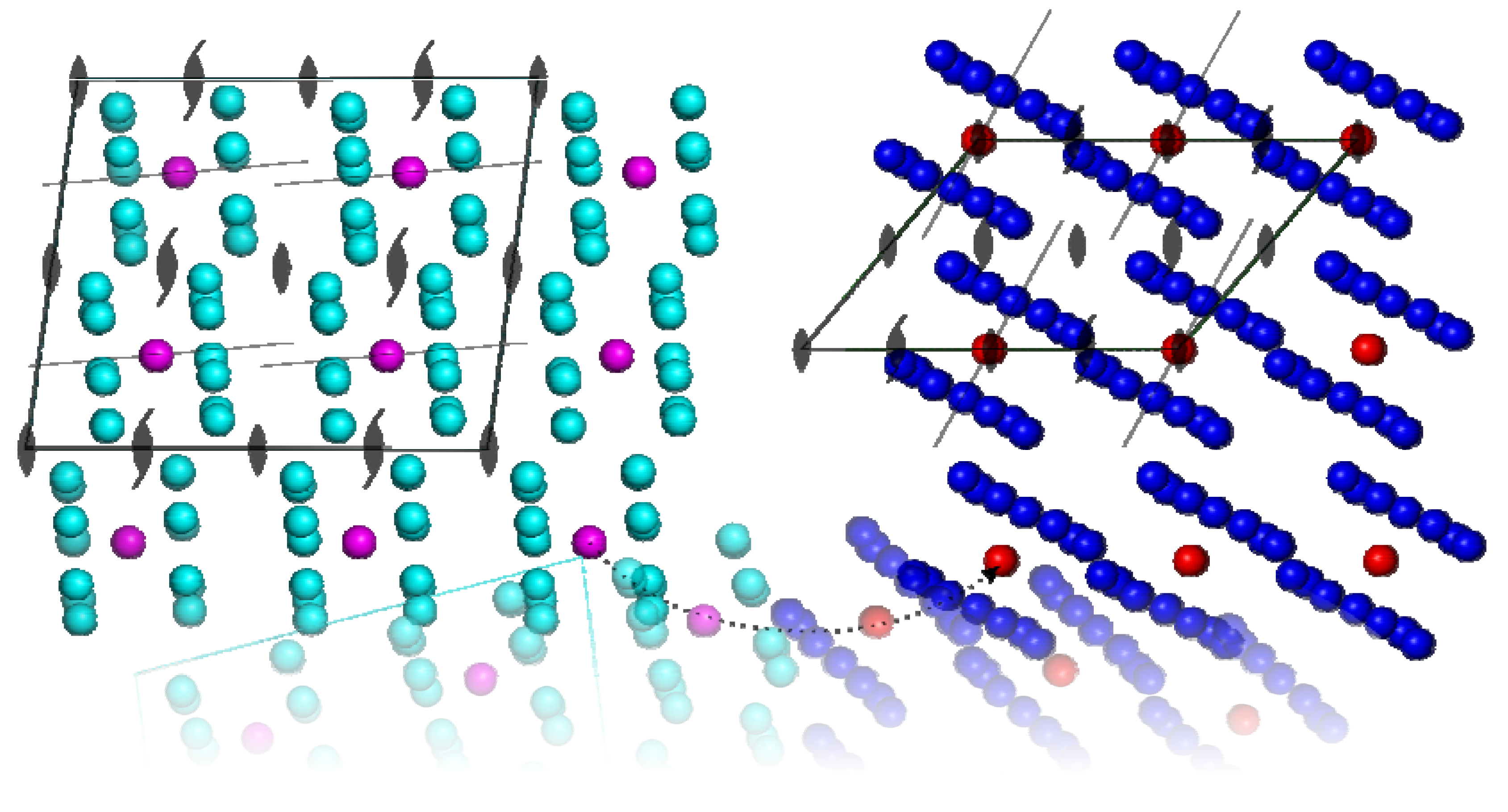
37]. We would like to pay attention to homomers revealing primarily non-crystallographic symmetry (NCS) in crystals and to discuss them in view of symmetry–asymmetry relationship.