Evaluation of Three MODIS-Derived Vegetation Index Time Series for Dryland Vegetation Dynamics Monitoring




Abstract
1. Introduction
2. Study Area and Data
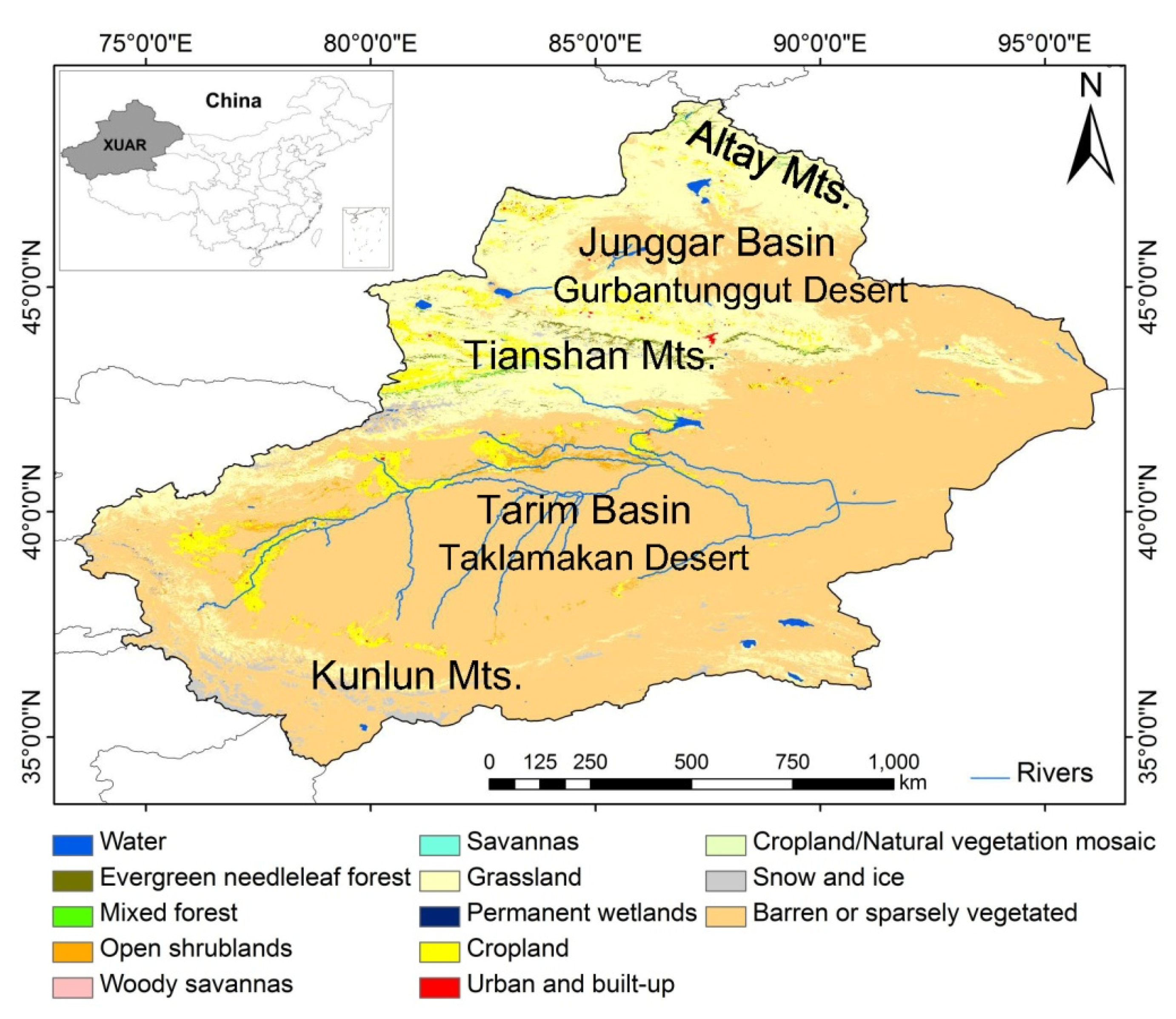
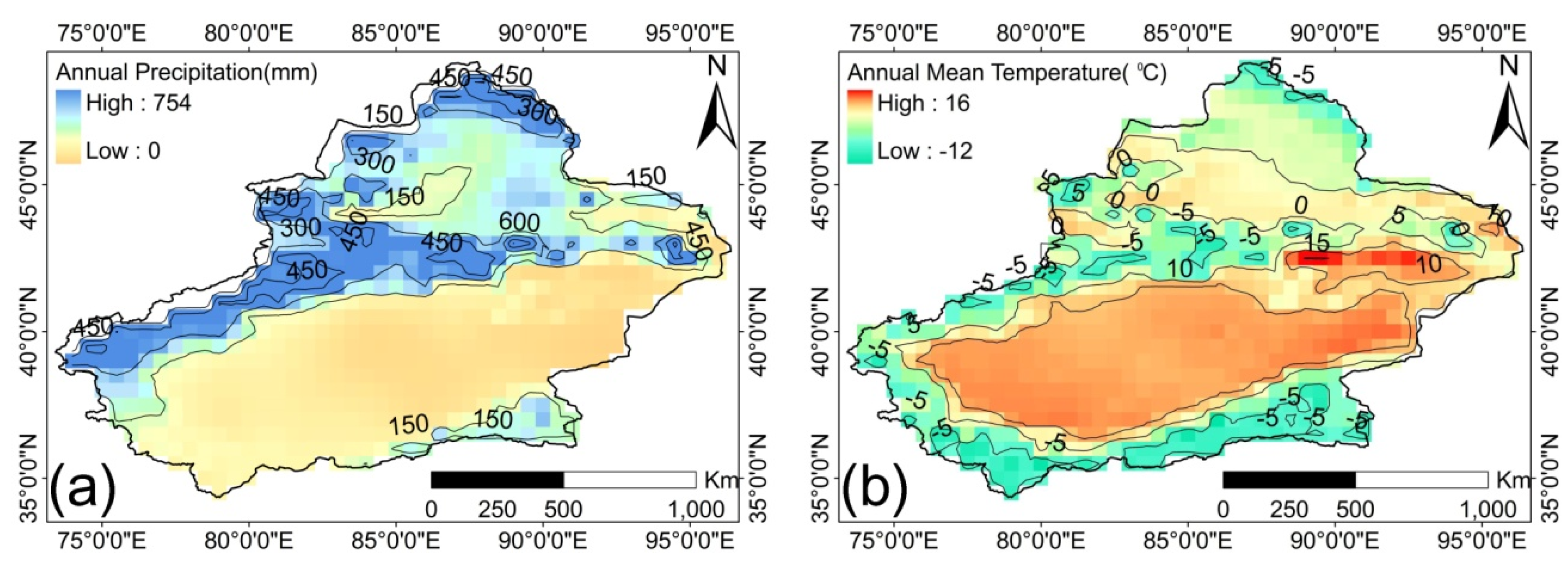
2.1. Study Area
2.2. Data
3. Methods
3.1. VI Derivation
3.2. VI Means and Variability
3.3. Phenological Metric Detection

| Metric | Abbreviation | Definition |
|---|---|---|
| Start of the season | SOS | Time for which the left edge has increased to 30% of the seasonal amplitude measured from the left minimum level. |
| End of the season | EOS | Time for which the right edge has decreased to 30% of the seasonal amplitude measured from the right minimum level. |
4. Results
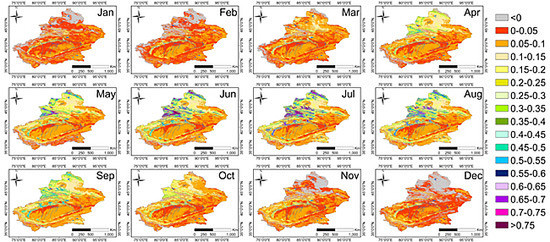
4.1. Mean Monthly VI
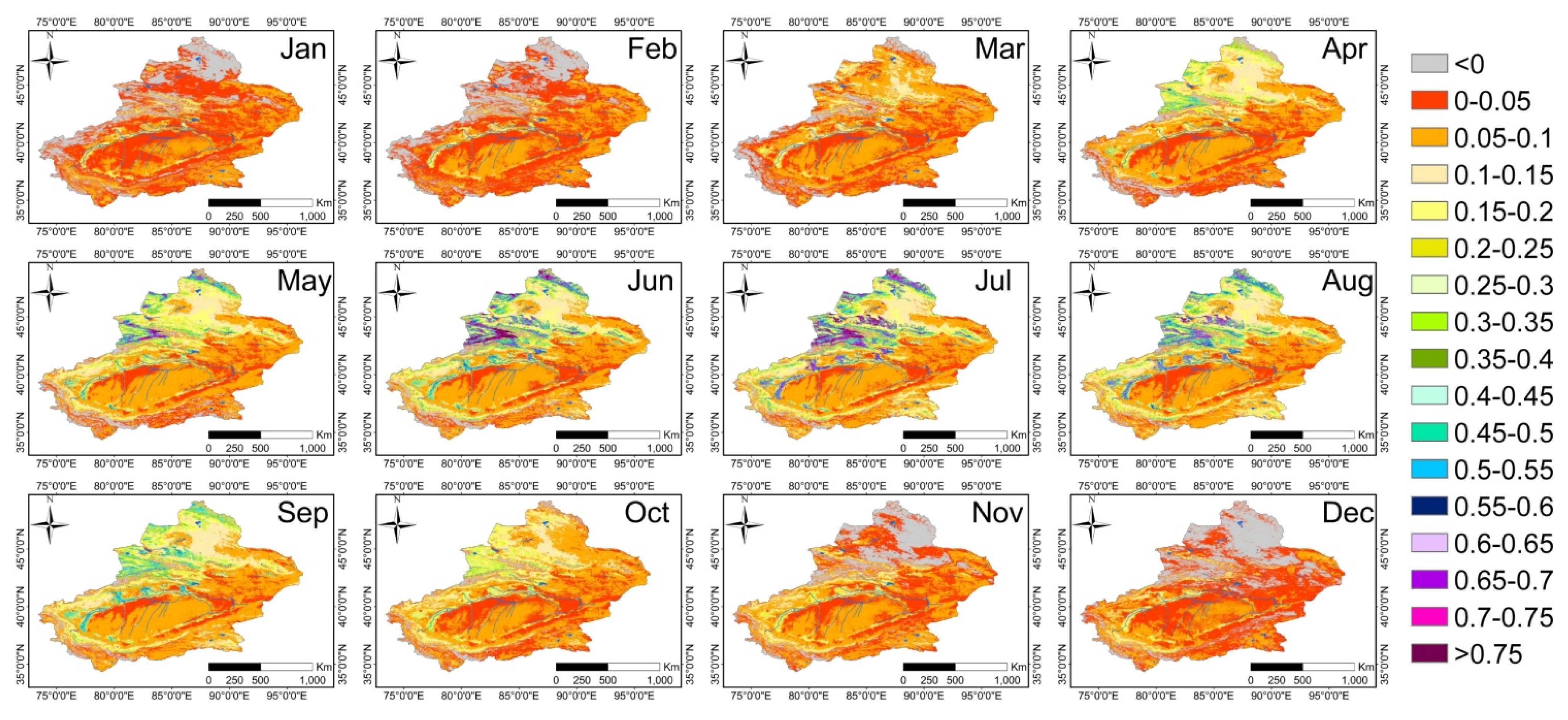
4.2. Mean Annual VI and Variability
4.2.1. Mean Annual VI
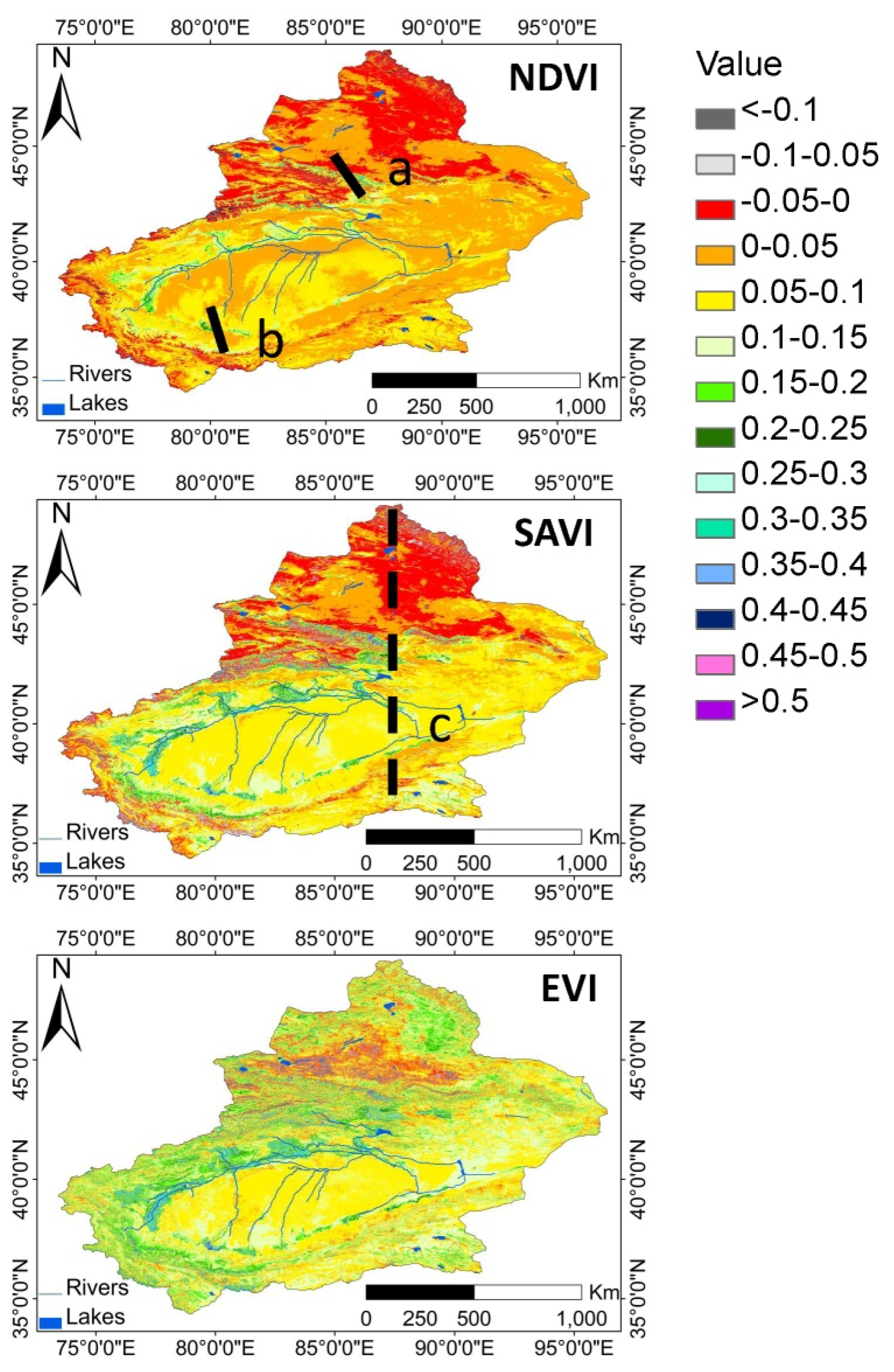
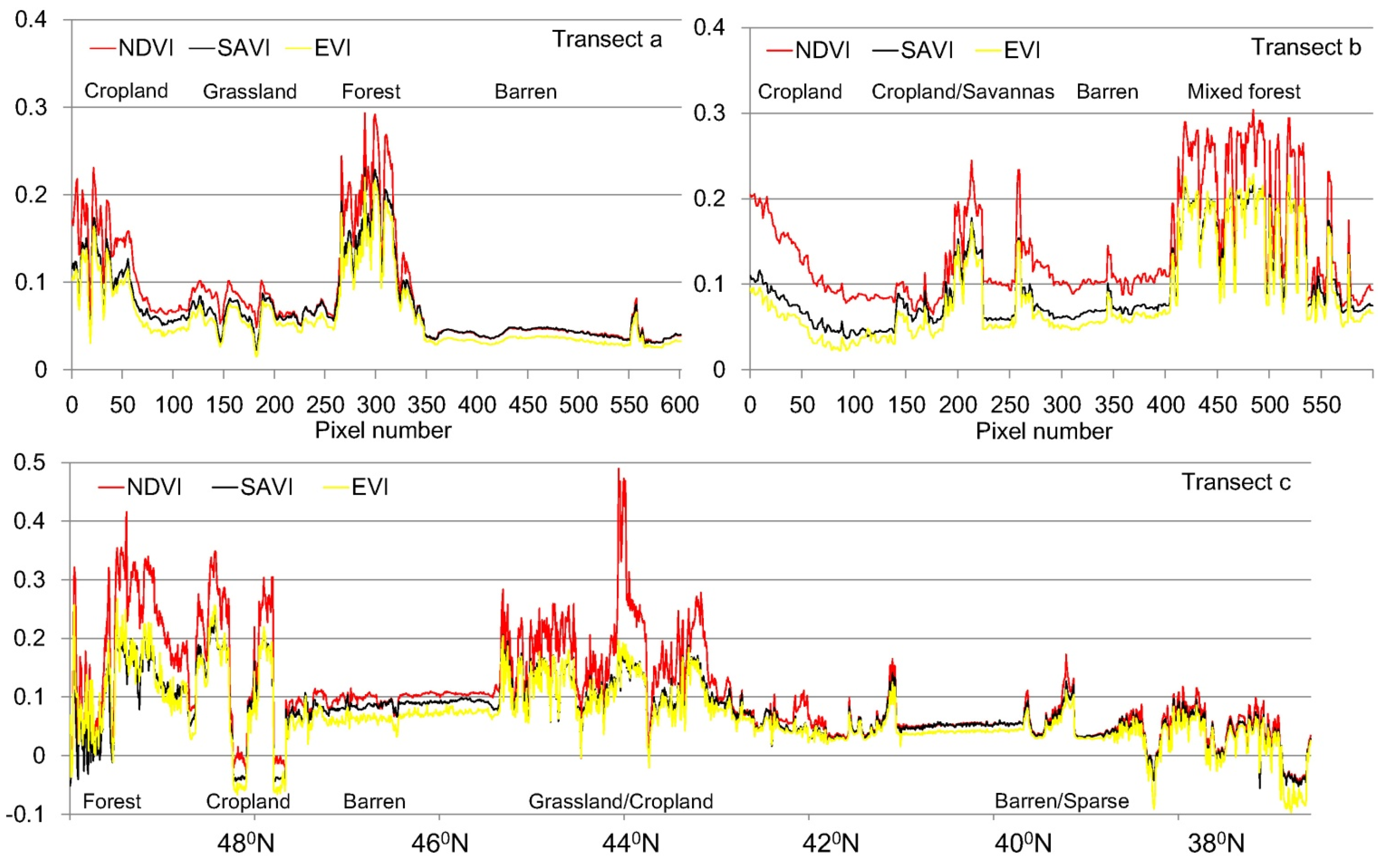
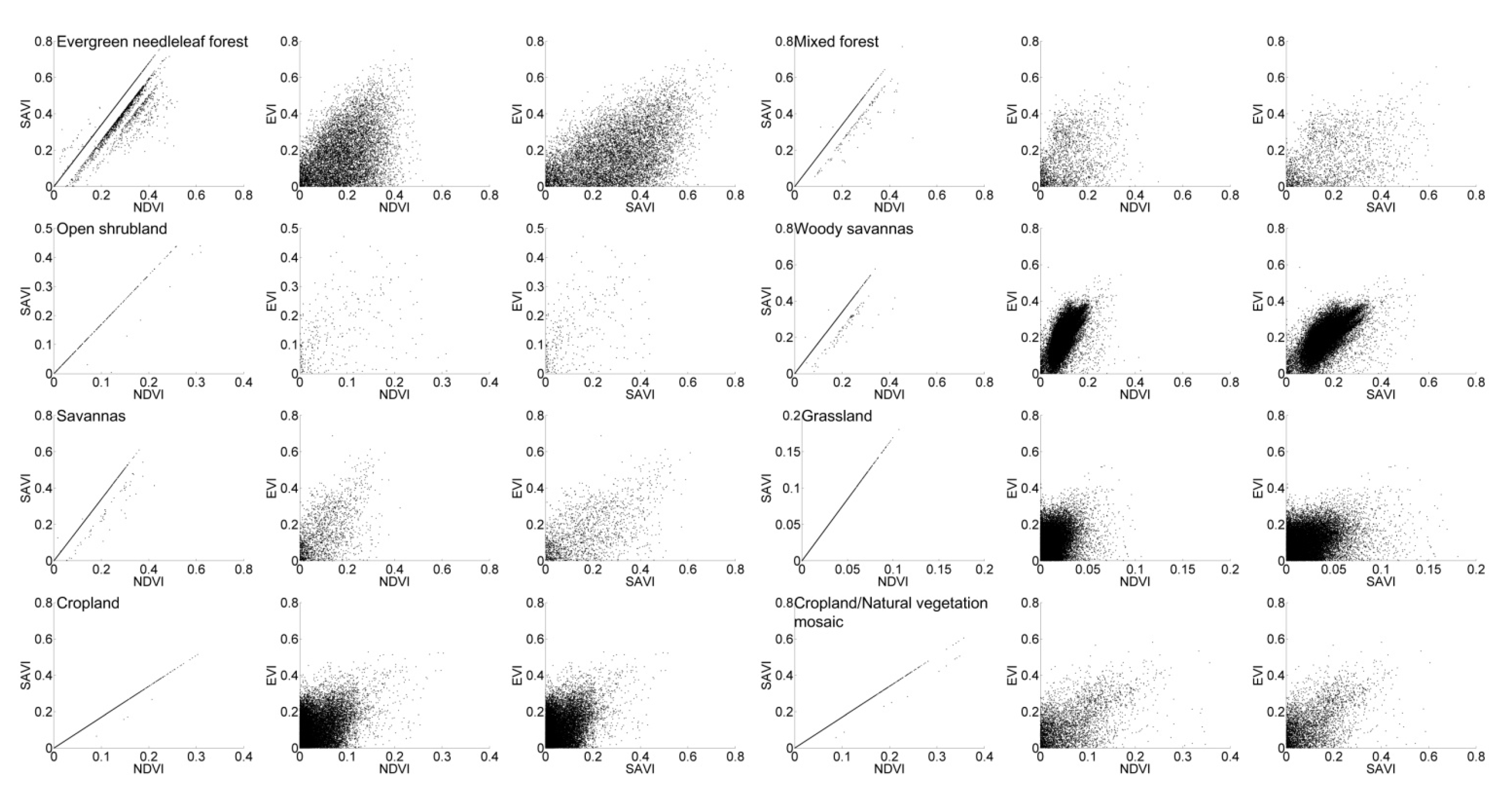
| Vegetation Type | NDVI and SAVI | NDVI and EVI | SAVI and EVI |
|---|---|---|---|
| Evergreen Needleleaf Forest | 0.9422 | 0.4093 | 0.4916 |
| Mixed Forest | 0.9773 | 0.3675 | 0.4032 |
| Open Shrubland | 0.9867 | 0.4163 | 0.4585 |
| Woody Savannas | 0.9949 | 0.6504 | 0.6630 |
| Savannas | 0.9849 | 0.5447 | 0.5717 |
| Grassland | 0.9999 | 0.2886 | 0.2886 |
| Cropland | 0.9998 | 0.4095 | 0.4096 |
| Cropland/Natural Vegetation Mosaic | 0.9987 | 0.5149 | 0.5196 |
4.2.2. Mean Annual VI Variability
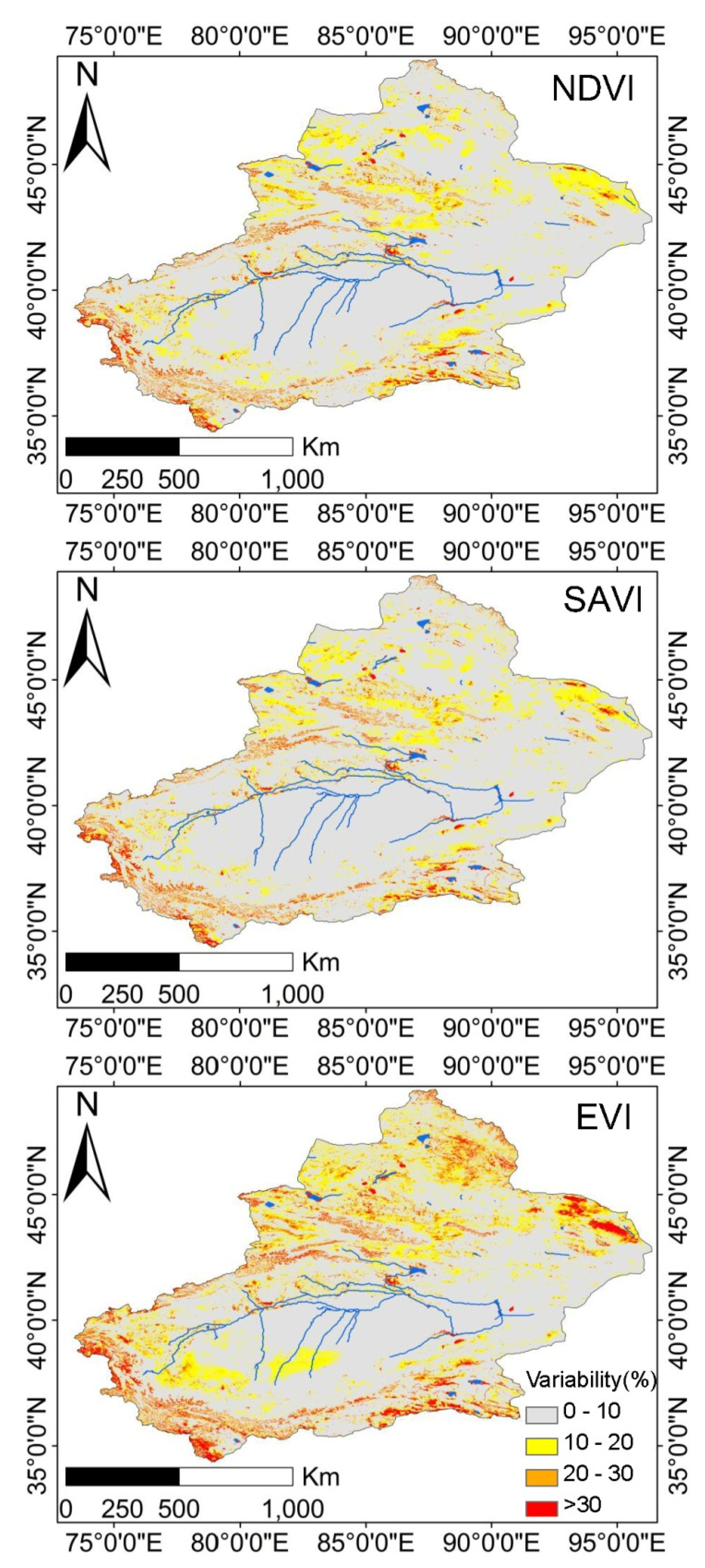
| Percentage | NDVI | SAVI | EVI |
|---|---|---|---|
| 0%–10% | 77.44 | 78.91 | 69.16 |
| 10%–20% | 15.93 | 14.74 | 18.89 |
| 20%–30% | 3.24 | 2.93 | 5.67 |
| >30% | 3.39 | 3.42 | 6.28 |
4.3. Phenological Metric Detection
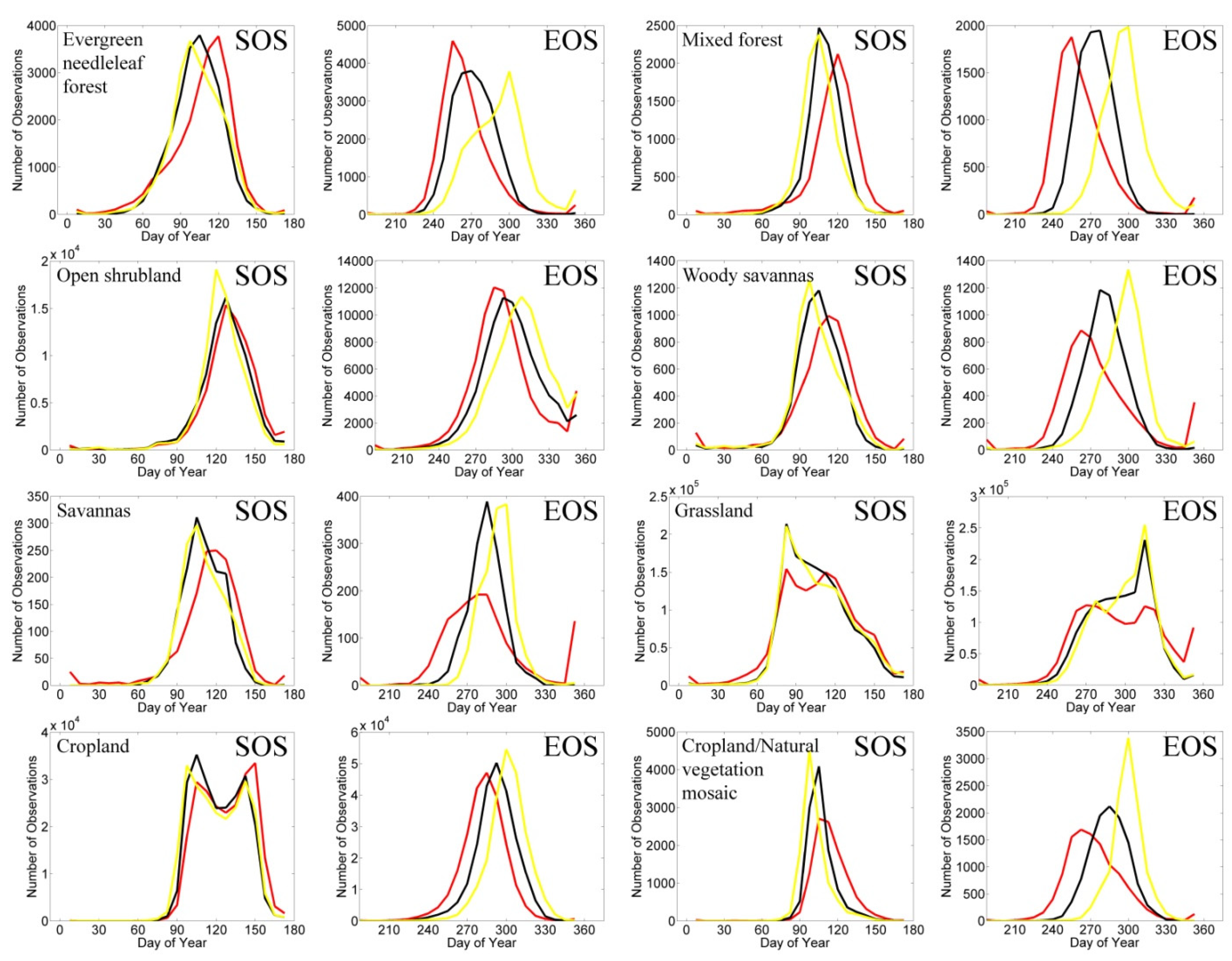
| SOSNDVI | SOSSAVI | SOSEVI | EOSNDVI | EOSSAVI | EOSEVI | |||||||
|---|---|---|---|---|---|---|---|---|---|---|---|---|
| Mean | SD | Mean | SD | Mean | SD | Mean | SD | Mean | SD | Mean | SD | |
| Evergreen needleleaf forest | 117.4 | 29.1 | 112.8 | 21.4 | 113.0 | 24.4 | 277.3 | 26.3 | 284.9 | 20.2 | 306.3 | 28.0 |
| Mixed forest | 127.0 | 26.6 | 119.5 | 15.0 | 114.9 | 15.8 | 274.3 | 28.1 | 286.8 | 15.2 | 311.3 | 19.3 |
| Open shrubland | 142.2 | 27.6 | 137.7 | 22.7 | 135.6 | 20.9 | 308.0 | 35.7 | 315.1 | 28.0 | 324.1 | 28.0 |
| Woody savannas | 120.2 | 37.6 | 113.8 | 24.2 | 112.5 | 26.8 | 288.4 | 45.1 | 294.7 | 24.1 | 310.6 | 26.6 |
| Savannas | 125.6 | 32.4 | 120.7 | 16.3 | 120.9 | 17.4 | 297.7 | 47.0 | 298.0 | 14.4 | 307.6 | 14.3 |
| Grassland | 117.7 | 35.4 | 115.9 | 28.0 | 117.1 | 29.0 | 311.2 | 42.6 | 311.6 | 29.3 | 314.4 | 28.2 |
| Cropland | 139.1 | 21.9 | 133.3 | 20.7 | 132.5 | 22.1 | 296.5 | 19.6 | 306.4 | 18.0 | 316.1 | 17.1 |
| Cropland/natural vegetation mosaic | 124.6 | 17.8 | 116.7 | 11.9 | 111.6 | 12.0 | 285.9 | 25.9 | 298.8 | 16.4 | 314.0 | 13.3 |
5. Discussion
5.1. VI Variability
5.2. Phenological Metric Detection
6. Conclusions
Acknowledgments
Author Contributions
Conflicts of Interest
References
- Reynolds, J.F.; Smith, D.M.S.; Lambin, E.F.; Turner, B.L., II; Mortimore, M.; Batterbury, S.P.J.; Downing, T.E.; Dowlatabadi, H.; Fernández, R.J.; Herrick, J.E.; et al. Global desertification: Building a science for dryland development. Science 2007, 316, 847–851. [Google Scholar] [CrossRef] [PubMed]
- UNEP. Global Environment Outlook 5. Available online: http://www.unep.org/geo/ geo5.asp (accessed on 31 January 2015).
- Herrmann, S.M.; Anyamba, A.; Tucker, C.J. Recent trends in vegetation dynamics in the African Sahel and their relationship to climate. Glob. Environ. Chang. 2005, 15, 394–404. [Google Scholar] [CrossRef]
- Wessels, K.J.; Prince, S.D.; Malherbe, J.; Small, J.; Frost, P.E.; VanZyl, D. Can human-induced land degradation be distinguished from the effects of rainfall variability? A case study in South Africa. J. Arid Environ. 2007, 68, 271–297. [Google Scholar] [CrossRef]
- Gibbes, C.; Southworth, J.; Waylen, P.; Child, B. Climate variability as a dominant driver of post-disturbance savanna dynamics. Appl. Geogr. 2014, 53, 389–401. [Google Scholar] [CrossRef]
- Seaquist, J.W.; Hickler, T.; Eklundh, L.; Ardö, J.; Heumann, B.W. Disentangling the effects of climate and people on Sahel vegetation dynamics. Biogeosciences 2009, 6, 469–477. [Google Scholar] [CrossRef]
- Myneni, R.B.; Keeling, C.; Tucker, C.; Asrar, G.; Nemani, R. Increased plant growth in the northern high latitudes from 1981 to 1991. Nature 1997, 386, 698–702. [Google Scholar] [CrossRef]
- Zhou, L.; Tucker, C.J.; Kaufmann, R.K.; Slayback, D.; Shabanov, N.V.; Myneni, R.B. Variations in northern vegetation activity inferred from satellite data of vegetation index during 1981 to 1999. J. Geophys. Res. 2001, 106, 20069–20083. [Google Scholar] [CrossRef]
- Morisette, J.T.; Richardson, A.D.; Knapp, A.K.; Fisher, J.I.; Graham, E.A.; Abatzoglou, J. Tracking the rhythm of the seasons in the face of global change: Phenological research in the 21st century. Front. Ecol. Environ. 2009, 7, 253–260. [Google Scholar] [CrossRef]
- Goetz, S.; Prince, S.D. Modeling terrestrial carbon exchange and storage: Evidence and implications of functional convergence in light-use efficiency. Adv. Ecol. Res. 1999, 28, 57–92. [Google Scholar]
- Myneni, R.B.; Hall, F.G.; Sellers, P.J.; Marshak, A.L. The interpretation of spectral vegetation indexes. IEEE Trans. Geosci. Remote Sens. 1995, 33, 481–486. [Google Scholar] [CrossRef]
- Weiss, J.L.; Gutzler, D.S.; Coonrod, J.E.A.; Dahm, C.N. Long-term vegetation monitoring with NDVI in a diverse semi-arid setting, central New Mexico, USA. J. Arid Environ. 2004, 58, 249–272. [Google Scholar] [CrossRef]
- Anyamba, A.; Tucker, C.J. Analysis of Sahelian vegetation dynamics using NOAA-AVHRR NDVI data from 1981–2003. J. Arid Environ. 2005, 63, 596–614. [Google Scholar] [CrossRef]
- Fensholt, R.; Sandholt, I. Evaluation of MODIS and NOAA AVHRR Vegetation Indices with in situ measurements in a semi-arid environment. Int. J. Remote Sens. 2005, 26, 2561–2594. [Google Scholar] [CrossRef]
- Heumann, B.W.; Seaquist, J.W.; Eklundh, L.; Jönsson, P. AVHRR derived phenological change in the Sahel and Soudan, Africa, 1982–2005. Remote Sens. Environ. 2007, 108, 385–392. [Google Scholar] [CrossRef]
- Walker, J.J.; Beurs, K.M.D.; Wynne, R.H. Dryland vegetation phenology across an elevation gradient in Arizona, USA, investigated with fused MODIS and Landsat data. Remote Sens. Environ. 2014, 144, 85–97. [Google Scholar] [CrossRef]
- Huete, A.; Didan, K.; Miura, T.; Rodriguez, E.P.; Gao, X.; Ferreira, L.G. Overview of the radiometric and biophysical performance of the MODIS Vegetation Indices. Remote Sens. Environ. 2002, 83, 195–213. [Google Scholar] [CrossRef]
- Tucker, J.C.; Pinzon, E.J.; Brown, E.M.; Slayback, A.D.; Pak, W.E.; Mahoney, R.; Vermote, E.; Saleous, N.E. An extended AVHRR 8-Km NDVI dataset compatible with MODIS and SPOT Vegetation NDVI data. Int. J. Remote Sens. 2005, 26, 4485–4498. [Google Scholar] [CrossRef]
- Huete, A.R.; Jackson, R.D.; Post, D.F. Spectral response of a plant canopy with different soil backgrounds. Remote Sens. Environ. 1985, 17, 37–53. [Google Scholar] [CrossRef]
- Huete, A.R. A soil-adjusted vegetation index (SAVI). Remote Sens. Environ. 1988, 25, 295–309. [Google Scholar] [CrossRef]
- Qi, J.; Chehbouni, A.; Huete, A.R.; Kerr, Y.H.; Sorooshian, S. A modified soil adjusted vegetation index (MSAVI). Remote Sens. Environ. 1994, 48, 119–126. [Google Scholar] [CrossRef]
- Rondeaux, G.; Steven, M.; Baret, F. Optimization of soil-adjusted vegetation indices. Remote Sens. Environ. 1996, 55, 95–107. [Google Scholar] [CrossRef]
- Jiang, Z.; Huete, A.R.; Didan, K.; Miura, T. Development of a two-band Enhanced Vegetation Index without a blue band. Remote Sens. Environ. 2008, 112, 3833–3845. [Google Scholar] [CrossRef]
- Li, M.; Qu, J.J.; Hao, X.J. Investigating phenological changes using MODIS Vegetation Indices in deciduous broadleaf forest over Continental USA during 2000–2008. Ecol. Inf. 2010, 5, 410–417. [Google Scholar] [CrossRef]
- Motohka, T.; Nasahara, K.N.; Miyata, A.; Mano, M.; Tsuchida., S. Evaluation of optical satellite remote sensing for rice paddy phenology in monsoon Asia using continuous in situ dataset. Int. J. Remote Sens. 2009, 30, 4343–4357. [Google Scholar] [CrossRef]
- Motohka, T.; Nasahara, K.N.; Oguma, H.; Tsuchida, S. Applicability of green-red Vegetation Index for remote sensing of vegetation phenology. Remote Sens. 2010, 2, 2369–2387. [Google Scholar] [CrossRef]
- Nagai, S.; Saitoh, T.M.; Kobayashi, H.; Ishihara, M.; Suzuki, R.; Motohka, T.; Nasahara, K.N.; Muraoka, H. In situ examination of the relationship between various Vegetation Indices and canopy phenology in an evergreen coniferous forest, Japan. Int. J. Remote Sens. 2012, 33, 6202–6214. [Google Scholar] [CrossRef]
- Rocha, A.V.; Shaver, G.R. Advantages of a two band EVI calculated from solar and photosynthetically active radiation fluxes. Agric. For. Meteorol. 2009, 149, 1560–1563. [Google Scholar] [CrossRef]
- Wu, W. The Generalized Difference Vegetation Index (GDVI) for dryland characterization. Remote Sens. 2014, 6, 1211–1233. [Google Scholar] [CrossRef]
- Bannari, A.; Morin, D.; Bonn, F.; Huete, A.R. A review of vegetation indices. Remote Sens. Rev. 1995, 13, 95–120. [Google Scholar] [CrossRef]
- Rodríguez-Moreno, V.M.; Bullock, S.H. Vegetation response to hydrologic and geomorphic factors in an arid region of the Baja California Peninsula. Environ. Monit. Assess. 2014, 186, 1009–1021. [Google Scholar] [CrossRef] [PubMed]
- Sjöström, M.; Ardö, J.; Eklundh, L.; El-Tahir, B.A.; El-Khidir, H.A.M.; Hellström, M.; Pilesjö, P.; Seaquist, J. Evaluation of satellite based indices for gross primary production estimates in a sparse savanna in the Sudan. Biogeosciences 2009, 6, 129–138. [Google Scholar] [CrossRef]
- Peñuelas, J.; Filella, I.; Zhang, X.; Llorens, L.; Ogaya, R.; Lloret, F. Complex spatiotemporal phenological shifts as a response to rainfall changes. N. Phytol. 2004, 161, 837–846. [Google Scholar] [CrossRef]
- Fensholt, R.; Simon, R.P. Evaluation of earth observation based global long term vegetation trends-comparing GIMMS and MODIS global NDVI time series. Remote Sens. Environ. 2012, 119, 131–147. [Google Scholar] [CrossRef]
- White, M.; de Beurs, K.M.; Idan, K.D.; Inouye, D.W.; Richardson, A.D.; Jenson, O.P.; Keefe, J.O.; Zhang, G.; Nemani, R.R.; van Leeuwen, W.J.D.; et al. Intercomparison, interpretation, and assessment of spring phenology in North America estimated from remote sensing for 1982–2006. Glob. Chang. Biol. 2009, 15, 2335–2359. [Google Scholar] [CrossRef]
- Richardson, A.D.; Black, T.A.; Ciais, P.; Delbart, N.; Friedl, M.A.; Gobron, N.; Hollinger, D.Y.; Kutsch, W.L.; Lonqdos, B.; et al. Influence of spring and autumn phenological transitions on forest ecosystem productivity. Philos. Trans. R. Soc. B 2010, 365, 3227–3246. [Google Scholar] [CrossRef] [PubMed]
- Yan, C.Z.; Wang, T.; Han, Z.W.; Qie, Y.F. Surveying sandy deserts and desertified lands in north-western China by remote sensing. Int. J. Remote Sens. 2007, 28, 3603–3618. [Google Scholar] [CrossRef]
- Lu, L.; Kuenzer, C.; Guo, H.; Li, Q.; Long, T.; Li, X. A novel land cover classification map based on a MODIS time-series in Xinjiang, China. Remote Sens. 2014, 6, 3387–3408. [Google Scholar] [CrossRef]
- Friedl, M.A.; Sulla-Menashe, D.; Tan, B.; Schneider, A.; Ramankutty, N.; Sibley, A.; Huang, X. MODIS Collection 5 global land cover: algorithm refinements and characterization of new datasets. Remote Sens. Environ. 2010, 114, 168–182. [Google Scholar] [CrossRef]
- Zhang, H.; Wu, J.W.; Zheng, Q.H.; Yu, Y.J. A preliminary study of oasis evolution in the Tarim Basin, Xinjiang, China. J. Arid Environ. 2003, 55, 545–553. [Google Scholar]
- Wang, T.; Yan, C.Z.; Song, X.; Xie, J.L. Monitoring recent trends in the area of Aeolian desertified land using Landsat images in China’s Xinjiang region. ISPRS J. Photogramm. Remote Sens. 2012, 68, 184–190. [Google Scholar] [CrossRef]
- Statistics Bureau of Xinjiang Uygur Autonomous Region. Xinjiang Statistical Year Book 2011; China Statistics Press: Beijing, China, 2011. [Google Scholar]
- Lovell, J.L.; Graetz, R.D. Filtering pathfinder AVHRR land NDVI data for Australia. Int. J. Remote Sens. 2001, 22, 2649–2654. [Google Scholar] [CrossRef]
- Jönsson, P.; Eklundh, L. Timesat—A program for analyzing time-series of satellite sensor data. Comput. Geosci. 2004, 30, 833–845. [Google Scholar] [CrossRef]
- Hird, J.N.; McDermid, G.J. Noise reduction of NDVI time series: An empirical comparison of selected techniques. Remote Sens. Environ. 2009, 113, 248–258. [Google Scholar] [CrossRef]
- Wang, C.; Fritschi, F.B.; Stacey, G.; Yang, Z. Phenology-based assessment of perennial energy crops in North American Tallgrass Prairie. Annu. Assoc. Am. Geogr. 2011, 101, 741–751. [Google Scholar] [CrossRef]
- Lu, L.; Wang, C.; Guo, H.; Li, Q. Detecting winter wheat phenology with SPOT-VEGETATION data in the North China Plain. Geocarto Int. 2014, 29, 244–255. [Google Scholar] [CrossRef]
- Wang, X.W.; Xie, H.J.; Liang, T.G. Evaluation of MODIS snow cover and cloud mask and its application in Northern Xinjiang, China. Remote Sens. Environ. 2008, 112, 1497–1513. [Google Scholar] [CrossRef]
- Wilson, A.M.; Parmentier, B.; Jetz, W. Systematic land cover bias in Collection 5 MODIS cloud mask and derived products—A global overview. Remote Sens. Environ. 2014, 141, 149–154. [Google Scholar] [CrossRef]
- Samanta, A.; Ganguly, S.; Myneni, R.B. MODIS Enhanced Vegetation Index data do not show greening of Amazon forests during the 2005 drought. N. Phytol. 2011, 189, 11–15. [Google Scholar] [CrossRef] [PubMed]
- Liu, R.G.; Liu, Y. Generation of new cloud masks from MODIS land surface reflectance products. Remote Sens. Environ. 2013, 133, 21–37. [Google Scholar] [CrossRef]
- Kremer, R.G.; Running, S.W. Community type differentiation using NOAA/AVHRR data within a sagebrush-steppe ecosystem. Remote Sens. Environ. 1993, 46, 311–318. [Google Scholar] [CrossRef]
- Peters, A.J.; Eve, M.D. Satellite monitoring of desert plant community response to moisture availability. Environ. Monit. Assess. 1995, 37, 273–287. [Google Scholar] [CrossRef] [PubMed]
- Zhang, X.; Friedl, M.A.; Schaaf, C.B. Global vegetation phenology from Moderate Resolution Imaging Spectroradiometer (MODIS): Evaluation of global patterns and comparison with in situ measurements. J. Geophys. Res. 2006. [Google Scholar] [CrossRef]
- Jones, M.O.; Kimball, J.S.; Jones, L.A.; McDonald, K.C. Satellite passive microwave detection of North America start of season. Remote Sens. Environ. 2012, 123, 324–333. [Google Scholar] [CrossRef]
- Hmimina, G.; Dufrêne, E.; Pontailler, J.Y.; Delpierre, N.; Aubinet, M.; Caquet, B.; Grandcourt, A.D.; Burban, B.; Flechard, C.; Granier, A.; et al. Evaluation of the potential of MODIS satellite data to predict vegetation phenology in different biomes: An investigation using ground-based NDVI measurements. Remote Sens. Environ. 2013, 132, 145–158. [Google Scholar] [CrossRef]
© 2015 by the authors; licensee MDPI, Basel, Switzerland. This article is an open access article distributed under the terms and conditions of the Creative Commons Attribution license (http://creativecommons.org/licenses/by/4.0/).
Share and Cite
Lu, L.; Kuenzer, C.; Wang, C.; Guo, H.; Li, Q. Evaluation of Three MODIS-Derived Vegetation Index Time Series for Dryland Vegetation Dynamics Monitoring. Remote Sens. 2015, 7, 7597-7614. https://doi.org/10.3390/rs70607597
Lu L, Kuenzer C, Wang C, Guo H, Li Q. Evaluation of Three MODIS-Derived Vegetation Index Time Series for Dryland Vegetation Dynamics Monitoring. Remote Sensing. 2015; 7(6):7597-7614. https://doi.org/10.3390/rs70607597
Chicago/Turabian StyleLu, Linlin, Claudia Kuenzer, Cuizhen Wang, Huadong Guo, and Qingting Li. 2015. "Evaluation of Three MODIS-Derived Vegetation Index Time Series for Dryland Vegetation Dynamics Monitoring" Remote Sensing 7, no. 6: 7597-7614. https://doi.org/10.3390/rs70607597
APA StyleLu, L., Kuenzer, C., Wang, C., Guo, H., & Li, Q. (2015). Evaluation of Three MODIS-Derived Vegetation Index Time Series for Dryland Vegetation Dynamics Monitoring. Remote Sensing, 7(6), 7597-7614. https://doi.org/10.3390/rs70607597