


Abstract
Rural areas are facing a spectrum of landscape changes and vulnerability as a consequence of financial and environmental crises. Innovative approaches are required to maintain the provision of social services and manage ecosystem services in these areas. We explore the capacity of social farming to create viable and sustainable rural and periurban areas according to a social-ecological perspective. We use the key elements of social-ecological systems under social farming practices to analyse (1) the role of local communities and non-formal institutions; (2) the involvement of target stakeholders; and (3) the explicit connection between agroecosystems and human wellbeing. To do so, we selected and described four cases of local social farming initiatives in terms of the key elements of social-ecological systems and conducted a literature review to provide an overview of the explicit impact of social farming on the quality of life. We found that social farming illustrates hybrid governance solutions beyond market instruments that could be applied for the governance of agroecosystems. It can also provide a range of other wellbeing and cultural ecosystem services to rural and urban inhabitants. Greater cooperation between social farming and ecosystem service science could rebound in rural landscape sustainability.
1. Introduction
Predominantly rural areas cover over 52% of the territory in the European Union and involve approximately 23% of its population [1]. Its agrarian landscapes hold cultural, ethnological and environmental values. This has also been considered in the recent Cork Declaration on Rural Development and Agriculture, which recognizes new roles for agriculture and rural areas to better face emerging challenges and societal demands in terms of the provision of public goods, environmental sustainability, and improved quality of life for both rural and urban inhabitants [2].
However, in the context of globalization and urbanized societies, rural areas are vulnerable to financial and environmental crises. Due to the increasing scarcity in public resources, innovative agricultural practices are needed to create viable and sustainable rural and periurban areas, embracing and making explicit the ecosystem services and benefits provided by it. The financial crisis, begun in 2007–2008, has had a significant impact on public expenditure (the decline of social spending is below average in some Mediterranean European countries such as Greece, Portugal or Italy). Following OECD projections, public spending on health and long-term care services for the older population might need to almost double from on average 7% in 2009 to 13% in 2050 across the OECD [3]. Thus, rural areas are particularly vulnerable to the decline in public services and social support, as these areas are characterized by a depopulation pattern, aging of rural communities and geographical isolation due to the specific settlement of the population and the difficulty in organizing effective services for the local inhabitants [4]. Mediterranean systems, such as agroecosystems, can be considered complex adaptive social-ecological systems in which the relationships between humans and nature have created the socio-cultural and ecological conditions to deliver a diverse flow of ecosystem services [5]. In this way, the social-ecological system framework recognizes that biophysical and social systems are interdependent [6,7], being a suitable framework for exploring sustainability through the study of complex relationships established between ecosystem services and the factors that generate and influence the provision, governance and use of ecosystem services [8].
The ecosystem services approach was popularized by the Millennium Ecosystem Assessment (MA) in the early 2000s [9] and has become one of the strongest arguments promoting nature conservation because of humans’ dependence on it [10] through its direct and indirect repercussion on economic, cultural, ethnological and environmental values. In this sense, agroecosystems are the source of the most essential landscape services demanded by both urban and rural populations, such as provisioning ecosystem services (e.g., food from farming, forestry and genetic materials), regulating ecosystem services (e.g., climate regulation, water regulation, pollination, soil fertility, mass stabilization and control of erosion rates) and the preservation of cultural ecosystem services (e.g., cultural heritage, recreation and spiritual interactions with nature) [11,12,13,14]. Following economic theory, many ecosystem services delivered by landscapes have a public good character—i.e., they are accessible (non-rival) and can be enjoyed jointly by society (non-excludable)—at the same time, they are not tradable in conventional markets and are invisible to institutions regulating and maintaining their use [15]. The current human transformation of land cover has led to the loss and abandonment of most intangible ecosystem services, especially those involved in the regulation of ecological processes (regulating ecosystem services) or those related to spiritual enrichment, culture or local identity (cultural ecosystem services) [16,17]. Farming intensification has been promoted, in the most productive areas, for the maximization of provisioning ecosystem services with market prices [18,19]. This conversion threatens sustainable landscapes and the ability of an agroecosystem to provide a diverse flow of services [18,20]; thus, these public goods cannot be taken for granted [15]. At this point, rural areas and their ecosystem services are vulnerable to global change consequences and to the predominant land use planning trends [21,22].
To promote landscape sustainability, the ecosystem service approach has focused on the argument of how human wellbeing depends on nature [9]. As stated by [23], there is a growing body of literature that demonstrates how contact with nature positively impacts human wellbeing not only in terms of extractive products (e.g., food, freshwater, timber). In spite of the mainstream of the ecosystem service approach and its repercussions at international forums, the explicit connections between ecosystem services and human wellbeing have been infrequently studied and have rarely been incorporated effectively into environmental and land-use planning policies. Some work has been done on how ecosystems regulate infectious diseases or extreme natural events [24] through the ecohealth perspective (http://www.ecohealth.net/); however, it is notable how there has been no impact on the most intangible components of wellbeing, such as mental health, freedom of action and election and having good social relationships [25,26].
At this point, innovative solutions are needed to maintain the provision of public services and manage ecosystem services in both rural and periurban areas. Better understanding, valuation and promotion of the ecosystem services supplied by agrarian landscapes are needed, in addition to using public funds effectively and efficiently [27].
In this light, social farming (SF; also called care farming or green care) could be considered an example of transition management and social innovation in rural and periurban areas [28]. SF emerged over the last decade from social and health sciences in the search for a synergy between promoting landscape multi-functionality (maintaining extensive agriculture in rural landscapes) and community-based social and health care. SF involves all kinds of interactions and activities with natural environments, such as agroecosystems and farming land, including plants and/or animals. These interventions are conducted in order to promote the quality of life of a given group of users (people with diverse disabilities, children, young people, elders, offenders, refugees, people from trafficking, people suffering long-term unemployment, gender violence victims, etc.) with established and well defined wellbeing objectives (to reach physical, psychological, emotional, social, educational benefits, etc.) [29,30]. It involves a different understanding and use of rural space and the rhythm of nature and promotes social services in many different areas, including rehabilitation, care, therapy, lifelong education, employment support, and women’s empowerment, which contribute to social inclusion, to the reinforcement of social protection nets and to the quality of life of rural and periurban inhabitants [30]. SF also works on how community-based management with a bottom-up approach could furnish social services and build non-formal regulating institutions.
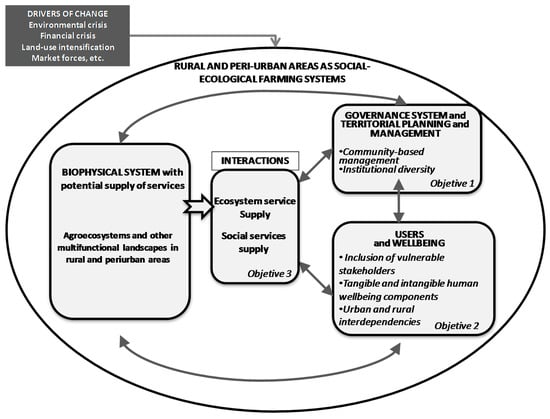
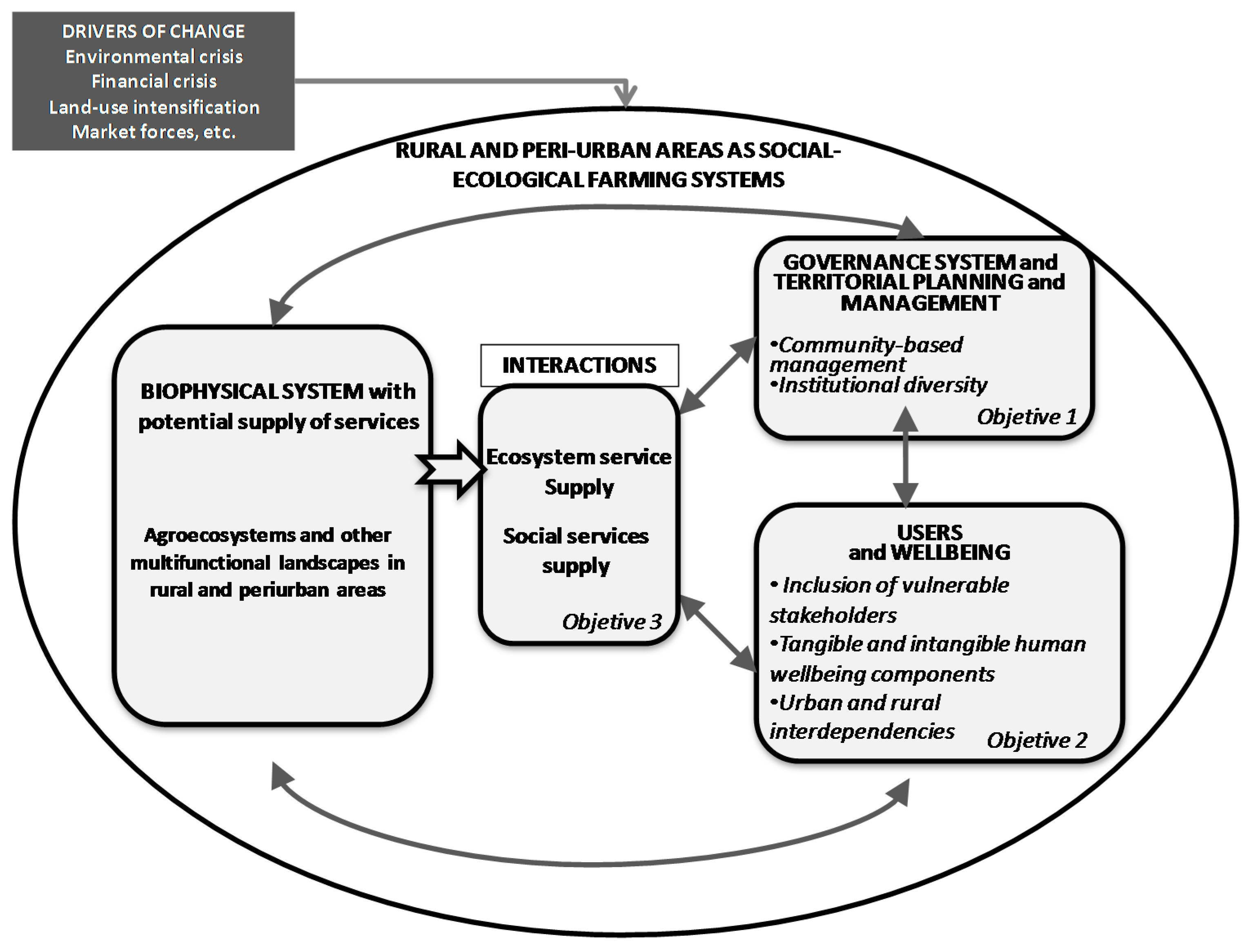
The main goal of this study is to explore the capacity of SF to create viable and sustainable rural and periurban areas according to a social-ecological perspective, embracing and making explicit the ecosystem services and benefits provided by it. To do so, we cover three specific objectives. First, we analyse the role of local communities and non-formal institutions under SF practices in order to present alternative governance situations that could apply for ecosystem service management (objective 1). Later, we analyse the target stakeholders of SF practices and the way that they become involved (objective 2) and examine the explicit connection between ecosystem services and benefits provided by areas agrarian landscapes under SF practices and human wellbeing components (objective 3) (Figure 1). To address objectives 1 and 2, we illustrate four empirical cases in which SF is being conducted in Mediterranean countries (Italy and Spain). In objective 3, a literature review is performed.
Figure 1.
General framework for analysing sustainability in social-ecological systems adapted for social farming (SF) practices (based on [7,8]) and used to achieve three specific objectives. Under this framework, a biophysical system with the capacity to supply services is represented with the services supplied, the system’s users and the governance system, which are jointly affected by direct and indirect drivers of change.
2. Materials and Methods
We use social-ecological framework components to analyse the complex relationships between biophysical and social systems [6,7] in agricultural areas conducting SF. In other words, we conceptually identify and characterize the governance system (objective 1), the system’s users (referring to all branches of stakeholders involved in SF; objective 2) and the supplied services (ecosystem services and the social services co-produced as a result of biophysical and governance dynamics and social needs; objective 3) (Figure 1).
To support the conceptual arguments at objectives 1 and 2, we selected and described four cases of local SF initiatives. The case studies used describe two SF projects developed in a specific area involving different rural initiatives (Era Valley and Turin area in Italy) and two SF projects related to specific initiatives (Orti ETICI, Italy and L’Olivera Cooperative, Lleida, Spain). In detail, the Era Valley SF experience (Pisa, Tuscany, Italy) is an important and advanced case in Italy, where there is a network of citizens, farms and other private actors aiming to provide innovative social services for diverse target groups. The case of civic food in the Turin area (Piedmont, Italy) was developed as a network of approximately 35 farms and 15 social cooperatives organized around the city of Turin and provides social services, job inclusion and innovative services for the local population. As specific projects of SF, first we describe Orti ETICI (San Piero a Grado, Pisa, Tuscany, Italy), organized on 3.5 hectares of public land belonging to Pisa University, where horticulture production is linked to the inclusion and wellbeing of less empowered people. Second, we present the case of L’Olivera Cooperative (Vallbona de les Monges, Catalonia, Spain), an agricultural cooperative working for social integration that is currently both a social centre for adults with mental disabilities and a farm. These cases were selected because they are representatives of SF conducted in the Mediterranean region, where the rural system has faced many difficulties in maintaining its traditional farming style and ecosystem services and where the existence of rural communities is increasingly challenging. Within the general framework of the rural transition that is taking place in Europe, these cases are particularly relevant because they can be recognized amongst the most structured experiences of SF, where rural activities have moved away from the ethics of profit towards the provision of social services for the community.
The design of a long-term study is particularly relevant for promoting SF at different geographical levels, ranging from local, national to European. In this regard, since 2004, we have explored and studied SF in several areas while investigating the pathway development of SF in various Italian and European regions [28,30,31]. During this time, the method that we most often used was based on participatory action [32], focusing on social services and SF in rural areas. In this research, data gathering was both quantitative (e.g., number of projects, type of agriculture production and its surface) and qualitative (e.g., the viewpoints of the various stakeholders, the common steps in building a common framework, and the identification of influential political stakeholders). Thus, the learning cycle was repeated and adapted in several case studies [33]. Therefore, information and data about the case studies presented here were collected mainly from our research group within this long-term study using different data-gathering tools (Table 1). In particular, the data presented in the manuscript have been systematized following different descriptive fields in order to facilitate consultation. The information compiled is related to the following: (a) SF activity start date; (b) location of the area and type of landscape where activities are performed; (c) type of agricultural production; (d) forerunners (the pioneering or innovation brokers who have promoted and developed the activity); (e) stakeholders groups (the group of actors with a stake on SF); (f) governance systems (the systems for governing ecosystem and social services developed within different SF initiatives); (g) services supply (the ecosystem and social services supplied); (h) human wellbeing (the benefits produced for humans through the use of agricultural and rural resources within different SF initiatives); and (i) aspects of innovation (the innovative models developed to manage agricultural and rural resources and produce ecosystem and social services).
Table 1.
Data-gathering tools and period of investigation for the case studies presented.
For objective 3, a compilation of SF benefits was created following a literature review. For this compilation, we reviewed published papers (peer-reviewed) that were indexed in the ISI Web of Science (https://www.accesowok.fecyt.es/) and were on the topic of SF (using the following existing terminology: SF, care farming, green care and therapeutic horticulture, among others). We also reviewed papers focused on ecosystem services and health benefits from interactions with natural environments and home gardens. This literature review is not a systematic analysis of all publications regarding SF but provides an overview of the positive impacts of SF on landscape management and governance, users, ecosystem services and benefits for wellbeing.
3. Results and Discussion
3.1. Managing Agrarian Landscapes under SF Practices
Some proposed solutions for managing agricultural ecosystems involve government regulation or market incentives. However, a growing number of approaches focus on cooperative solutions [34], such as SF in the Mediterranean context, where community-based management and a bottom-up approach provide and manage social services, thus creating an institutional change where social services depend not only on public expenditure but on the responsibility of many private and public actors that adopt proactive and collaborative attitudes. This is the case of Era Valley (Table 2, case one), which is the most advanced case of SF in Italy in terms of structure and governance and currently represents a model for many other local initiatives. This project progressively involved local farms and institutional actors in the formal recognition of SF and was the first case in Italy. In fact, the approach developed in the Era Valley has impacted other areas of Tuscany (e.g., Pisa, Lucca, Grosseto and the Valdarno area). The governance system implemented was based on using two tools: a Memorandum of Understanding and an SF Board. The Memorandum of Understanding aims to promote SF as a way to foster social cohesion, sustainability and participation in local development. It has supported and consolidated the participation of public bodies, local associations, universities, trade associations, cooperatives and agricultural enterprises. The SF Board is a permanent forum on SF and aims to promote community interventions and methodologies in the development of the multifunctionality of the agricultural system. Within the SF Board, which can be divided into thematic working groups, stakeholders discuss, share opinions and ideas and take collective initiative. By participating in the SF Board, a plurality of public and private organizations or bodies with their own roles contribute to the local system of governance of SF in the Era Valley.
Table 2.
Case studies description.
A complex governance system is also found in the Turin area in Italy (Table 2, case two), where various institutions and actors, including local action groups, collaborate to promote SF initiatives and networks. These actors are fully aware of the importance of designing innovative welfare models, which can be defined as mixed, based on subsidiarity, coproduction and civic economy. SF could also help create public goods in the health and social field by connecting the public and private interests. It is particularly evident in the case of Orti ETICI (Table 2, case three). Orti ETICI works in an environment where various actors and stakeholders have common and integrated objectives through a process in which food production, research and inclusion coexist at the same time and place. The marketing of the agricultural production of Orti ETICI in the local urban market produces a virtuous circle between rural production and the urban community. In other words, the sale of agricultural products through purchasing groups meets the need of local urban consumers for high-quality food while economically sustaining social and labour inclusion. Thus, public and private stakeholders, users and the urban and rural communities around Orti ETICI co-produce food, work, welfare and opportunities of inclusion and reintegration—social, economic and environmental values—where all parties involved benefit. In all cases, it is also important to highlight some weaknesses. Building a structured dialogue among actors coming from different domains, as SF proposes, is not easy and requires lots of effort, a significant level of collaboration, and a partial shift from personal to community interests. Thus, the application of SF governance models it is not easy, particularly when many stakeholders from different domains are involved, as the level of complexity of governance system can affect functionality, efficacy and response capacity.
In biodiversity and ecosystem service conservation, this community-based governance approach has been implemented in particular cases, such as in the inclusion of indigenous communities or other local communities for biodiversity conservation or resource co-management [35]. However, legal institutions and markets have taken central stage in environmental policies. On the one hand, the principal use of legal instruments is the declaration of natural protected areas as the more extended strategy for biodiversity conservation [36] where there is a top-down intervention by the state. Under this model, local actors have restricted access to decisions and interactions with protected areas. In the case of the Doñana natural protected area (Southwest Spain), for instance, local actors feel that they have no say in decision making regarding ecosystem services in the protected area [37]. On the other hand, market instruments, as described by [38], follow two main trends: in the first, public intervention corrects market failures through state taxes and subsidies (i.e., payments for ecosystem services), and in the second, private transactions in markets are created for ecosystem services (e.g., wetland banking or emission trading systems). This extended commodification of nature is under discussion in relation to the ethics of trading with nature, obscuring the significance of the ecological processes behind landscape service provision (masking the ecological complexity), equity issues and the simplification of the institutional diversity required to manage social-ecological systems [39].
The most recent ecosystem service literature on governance suggests that sustainable social-ecological systems require institutional diversity, i.e., understanding institutional diversity as the presence of non-formal institutions, legal institutions and market institutions [40] across organization scales [7,37]. Recent examples in home gardens managed by the community show that an individual’s sense of belonging to a community might act as an incentive itself to conserve landraces as a way of maintaining cultural identity [41]. It could also help to resolve social conflicts over access to ecosystem services and to promote social justice, participation, stakeholder engagement, more socially supported decisions and incentives for conservation. As stated in [42], there is little experience in the design of multi-level governance systems. Thus, the practical application of SF represents experience gained in this direction, as it promotes building new networks with consumers as well as connections between urban and rural citizens (see Table 2).
3.2. Target Stakeholders in SF Experiences: Towards Social Inclusion and Urban-Rural Interdependence
The ecosystem service approach recognizes that in landscape planning, there are different types of stakeholders with different degrees of dependence and influence on ecosystem service delivery. Those who stand to lose or gain significantly from ecosystem services but who are not directly involved in decision making, such as non-associated farmers, are vulnerable [43]. In fact, as [44] has shown, if such less-visible stakeholders are under-represented, there is a risk of masking their participation in environmental management policies.
SF especially focuses on vulnerable stakeholders in two different ways. On the one hand, the direct beneficiaries of these practices are disadvantaged people who could be integrated into a living context where their personal capabilities are valued and enhanced. Through SF, it is possible to support a range of less-empowered or marginalized people, including those with intellectual, physical or sensory disabilities, people with mental health issues, those with a history of addiction, prisoners and ex-prisoners, women, young people, the elderly, those experiencing social disadvantages, immigrants and ethnic groups, HIV-positive people and others [28]. This is a crucial aspect in all SF practices and is particularly evident in the case of L’Olivera Cooperative (Table 2, case four). L’Olivera was developed under the idea of an innovative model of responsible agriculture for co-producing economic and social value, but at the same time, it helps to preserve rural areas in Catalonia that otherwise would have been impoverished socially, environmentally and economically. L’Olivera is an agricultural cooperative for social integration that aims to organize rural resources to meet community needs and manages health and social services through the employment of socially disadvantaged people. L’Olivera stresses the importance of social and moral values based on giving and reciprocity, which together produce new value in the creation of private and public goods. The L’Olivera model supports society while operating in the market economy and enhancing social relations, the connection of formal and informal networks of services and the active employment of socially disadvantaged people.
On the other hand, the farmers are indirect beneficiaries because they can build new networks with consumers, create new short supply-consumption chains, involve more stakeholders in agricultural activities, and enhance the image of agriculture in society as well as their own reputation and visibility. All these impacts could increase their empowerment, giving farmers a voice in planning as well as engaging them in social activities. In addition, SF may help to improve the economic status of farmers by diversifying their sources of income. This is the case of civic food in both L’Olivera and Turin. In L’Olivera (Table 2, case four), the traditional language of economics is being changed as well as the application of theoretical paradigms to environmental protection, health and the inclusion of vulnerable people who can enrich the business and its productivity. In the Turin area (Table 2, case two), SF promotes the creation of public goods—social and environmental—intersected with the production of private goods—economic—where business activities are linked to the state and local communities in a subsidiary form following a relational and productive model. The SF network in the Turin area has created job opportunities for several disadvantaged people, but it has also produced innovative services (e.g., rural kindergartens, daycares, etc.) for families and the elderly. The participation of farmers in the SF network has provided them with an invaluable benefit in terms of the reputation and recognition of their products in the food market. Local organic agricultural products with social content (civic food) are recognized by urban consumers in the area as meeting their social, environmental and economic needs both as individuals and as a community.
SF not only focuses on generating positive outcomes for service users but also provides an opportunity to increase the economic viability of individual farms and the socio-personal satisfaction of farmers. The integration between agricultural and social activities can also empower farmers and enhance the image of agriculture as perceived by public opinion. As a result, SF practices can be supported by urban dwellers who can purchase the agricultural products directly (i.e., a short value chain) or through intermediaries. People in urban poles can redefine their own survival strategies and support local producers who share common ethical concerns, as in the case of farmers involved in SF, to indirectly provide both people and farmers a better quality of community life. The organization of such civic markets could increase the income opportunities for SF farms as well as for the people involved in the working activities. This relation with urban centres can therefore have a positive impact by supporting social and economic activities in rural areas [28].
3.3. Ecosystem Services and Human Wellbeing Benefits Provided by Agrarian Landscapes with SF Practices
Through SF practices, agroecosystems deliver multiple ecosystem services, ranging from provisioning ecosystem services, such as the acquisition of quality food products, which are often attached to organic production and local consumption patterns [45,46], to regulating ecosystem services (spending time in healthy outdoor spaces) and cultural ecosystem services (Table 3). Regarding the latter, cultural ecosystem services have received less attention in environmental research and policy [47]. The few studies on cultural ecosystem services are restricted to aesthetic or recreational values and their assessment in economic terms [48]. This may be explained by the fact that cultural ecosystem services are more intangible and subjective than other service categories and by the difficulty of defining ecosystem structures and the processes underpinning their provision [47].
Table 3.
Impacts of SF (derived from four key elements: relationships with the farmer, natural surroundings, activities performed and contact with animals, plants and other living things) on various beneficiaries (users and their families, farmers, land use and environmental managers, consumers and society in general) and their relation to social-ecological components (in terms of management-governance, users and wellbeing and ecosystem services (the ES nomenclature follows the CICES classification system; see http://cices.eu/). Key papers investigating each impact are mentioned as sources obtained from the literature review. ES: ecosystem service. MG: management governance.
Under SF practices, cultural ecosystem services can be clearly established in terms of intellectual (e.g., intellectual stimulation, improved working skills and engagement in meaningful activities), spiritual (e.g., expressing emotions, being appreciated, feeling connected to nature, and landscape aesthetic enjoyment) and physical (exercise) interactions within the agrarian landscape (Table 3). SF has the potential to draw on human wellbeing-nature connections, social interactions and cohesion, since these are part of a social community, self-efficacy, self-esteem, etc. Additionally, contact with nature has a positive effect on health indicators by reducing stress levels, enhancing mood, facilitating social contact and providing opportunities for personal development (Table 3). In this way and independent of economic assessments, the ecosystem services provided under SF practices could be valued following socio-cultural and health indicators. SF can generate positive health-related benefits [49] thanks to contact with nature, which is important to human beings simply because people can find relief from being in natural places [30].
Within the context of global change, a profound reconfiguration of the relationships between human wellbeing and nature is occurring [50]. Human disconnection and disaffection with nature can lead to (1) higher environmental degradation because underestimations of its importance lead to depleted resources, investments and efforts in conservation and lower environmental concerns, and (2) unhealthy and unhappy populations [51,52]. Consequently, it is important to implement nature-based solutions, such as SF, aimed at reconnecting human wellbeing with natural landscapes though the ecosystem services and benefits obtained by this interaction.
4. Conclusions
In the current financial and environmental crises in which public services are scarce, particularly in rural areas and agrarian landscapes, sustainability is threatened. However, hybrid governance models, such as those provided by SF experiences, could be created where state and community work together to co-produce social services. In fact, as observed in the case studies, by linking economic actors, local communities and public bodies, SF could offer innovative solutions to maintain the provision of social and ecosystem services in rural and periurban areas that could be explored for new rural development policies for the period 2014–2020 [68]. Despite some weaknesses that can emerge from the application of SF governance models due to their complexity, SF offers a governance innovation highlighting the significance of bottom-up approaches and mixed possibilities in the governance of agroecosystems to increase their sustainability.
At the same time, this specific management practice and multi-actor involvement can provide a range of other wellbeing and cultural ecosystem services to human communities. The Millennium Ecosystem Assessment establishes clear relations between provisioning ecosystem services and the wellbeing components of security—the basic material for a good life and health. Similarly, regulating ecosystem services are also linked to health and security. However, the importance of cultural ecosystem services in terms of health, good social relations, or freedom of choice and action remains almost invisible [9]. SF offers an example of how human wellbeing is linked to the conservation of agroecosystems through cultural ecosystem services and health benefits. In the future, higher cooperation is needed between SF and ecosystem service science to better understand the explicit connections between nature and human wellbeing, from biophysical systems and ecological processes to the supply of services, institutional dynamics and social needs. In fact, the health, economic, socio-cultural and environmental values associated with multifunctional areas in rural communities should be considered as effective arguments for their enhancement and sustainable conservation.
Acknowledgments
Funding for this research was provided by the mobility grant Jose Castillejo from the Spanish Ministry of Education, Culture and Sports; a grant from the Spanish National Institute for Agriculture and Food Research and Technology, co-funded by the Social European Fund (Doc-INIA CCAA); and the IMIDRA research projects: Social Farming viability at Madrid Region and Assessment of Ecosystem Services provided by Agroecosystems. The authors are also grateful to two anonymous reviewers for their valuable and constructive comments.
Author Contributions
Marina García-Llorente and Francesco Di Iacovo conceived and designed the study; Cristiano M. Rossignoli and Roberta Moruzzo selected the case studies; Marina García-Llorente conducted the study; Cristiano M. Rossignoli, Roberta Moruzzo and Francesco Di Iacovo provided conceptual and analytical advice; Marina García-Llorente and Cristiano M. Rossignoli wrote most of the paper; and Marina García-Llorente, Cristiano M. Rossignoli, Roberta Moruzzo and Francesco Di Iacovo contributed to the discussion.
Conflicts of Interest
The authors declare no conflicts of interest.
References
- European Commission (EC). Rural Development in the EU—Statistical and Economic Information, Report 2013. Available online: http://ec.europa.eu/agriculture/statistics/rural-development/2013/full-text_en.pdf (accessed on 24 November 2016).
- Agriculture and Rural Development. Cork 2.0: European Conference on Rural Development. 2016. Available online: http://ec.europa.eu/agriculture/events/rural-development-2016_en.htm (accessed on 21 October 2016).
- The Organisation for Economic Co-operation and Development (OECD). Social Spending during the Crisis, Social Expenditure (SOCX) Date Updated 2012. 2012. Available online: www.oecd.org/els/social/expenditure (accessed on 24 November 2016).
- Barié, K.; Thode, E. (Eds.) Redesigning European welfare states—Ways forward. In Proceedings of the Vision Europe Summit, Berlin, Germany, 17–18 November 2015; Bertelsmann Stiftung: Gütersloh, Germany, 2015.
- Aronson, J.; Bodiou, J.; Boeuf, G. The Mediterranean Region: Biological Diversity through Time and Space; Oxford University Press: Oxford, UK, 2010. [Google Scholar]
- Liu, J.; Dietz, T.; Carpenter, S.R.; Alberti, M.; Folke, C.; Moran, E.; Pell, A.N.; Deadman, P.; Kratz, T.; Lubchenco, J.; et al. Complexity of coupled human and natural systems. Science 2007, 317, 1513–1516. [Google Scholar] [CrossRef] [PubMed]
- Ostrom, E. A General framework for analyzing sustainability of social-ecological systems. Science 2009, 325, 419–422. [Google Scholar] [CrossRef] [PubMed]
- García-Llorente, M.; Iniesta-Arandia, I.; Willaarts, B.A.; Harrison, P.A.; Berry, P.; del Mar Bayo, M.; Castro, A.J.; Montes, C.; Martín-López, B. Biophysical and sociocultural factors underlying spatial trade-offs of ecosystem services in semiarid watersheds. Ecol. Soc. 2015, 20, 39. [Google Scholar] [CrossRef]
- Millennium Ecosystem Assessment. Ecosystems and Human Well-Being: Biodiversity Synthesis; World Resources Institute: Washington, DC, USA, 2005. [Google Scholar]
- Díaz, S.; Fargione, J.; Iii, F.S.C.; Tilman, D. Biodiversity loss threatens human well-being. PLoS Biol. 2006, 4, e277. [Google Scholar] [CrossRef] [PubMed]
- European Commission (EC). Fact Sheet, EU Rural Development Policy 2007–2013; EC: Brussels, Belgium, 2008. [Google Scholar]
- Power, A.G. Ecosystem services and agriculture: Tradeoffs and synergies. Philos. Trans. R. Soc. B Biol. Sci. 2010, 365, 2959–2971. [Google Scholar] [CrossRef] [PubMed]
- Evaluación de los Ecosistemas del Milenio de España (EME). La Evaluación de los Ecosistemas del Milenio de España. Síntesis de Resultados; Fundación Biodiversidad, Ministerio de Medio Ambiente y Medio Rural y Marino: Madrid, Spain, 2011. [Google Scholar]
- Peters, R. (Ed.) Delivering Environmental Services Using Rural Development Policy; EU Rural Review; European Commission: Brussels, Belgium, 2013; p. 15.
- The European Network in Rural Development (ENRD), European Commission. Public Goods and Public Intervention in Agriculture, Final Report. 2010. Available online: https://enrd.ec.europa.eu/public-goods_en (accessed on 24 November 2016).
- Foley, J.A.; DeFries, R.; Asner, G.P.; Barford, C.; Bonan, G.; Carpenter, S.R.; Chapin, F.S.; Coe, M.T.; Daily, G.C.; Gibbs, H.K.; et al. Global consequences of land use. Science 2005, 309, 570–574. [Google Scholar] [CrossRef] [PubMed]
- Slemp, C.; Davenport, M.A.; Seekamp, E.; Brehm, J.M.; Schoonover, J.E.; Williard, K.W.J. Growing too fast: Local stakeholders speak out about growth and its consequences for community well-being in the urban–rural interface. Landsc. Urban Plan. 2012, 106, 139–148. [Google Scholar] [CrossRef]
- García-Llorente, M.; Martín-López, B.; Nunes, P.A.L.D.; Castro, A.J.; Montes, C. A choice experiment study for land-use scenarios in semi-arid watershed environments. J. Arid Environ. 2012, 87, 219–230. [Google Scholar] [CrossRef]
- Oteros-Rozas, E.; Martín-López, B.; González, J.A.; Plieninger, T.; López, C.A.; Montes, C. Socio-cultural valuation of ecosystem services in a transhumance social-ecological network. Reg. Environ. Chang. 2013, 14, 1269–1289. [Google Scholar] [CrossRef]
- Martín-López, B.; Gómez-Baggethun, E.; García-Llorente, M.; Montes, C. Trade-offs across value-domains in ecosystem services assessment. Ecol. Indic. 2014, 37, 220–228. [Google Scholar] [CrossRef]
- Pretty, J.; Toulmin, C.; Williams, S. Sustainable intensification in African agriculture. Int. J. Agric. Sustain. 2011, 9, 5–24. [Google Scholar] [CrossRef]
- Steffen, W.; Persson, Å.; Deutsch, L.; Zalasiewicz, J.; Williams, M.; Richardson, K.; Crumley, C.; Crutzen, P.; Folke, C.; Gordon, L.; et al. The Anthropocene: From global change to planetary stewardship. Ambio 2011, 40, 739–761. [Google Scholar] [CrossRef] [PubMed]
- Sandifer, P.A.; Sutton-Grier, A.E.; Ward, B.P. Exploring connections among nature, biodiversity, ecosystem services, and human health and well-being: Opportunities to enhance health and biodiversity conservation. Ecosyst. Serv. 2015, 12, 1–15. [Google Scholar] [CrossRef]
- Patz, J.A.; Confalonieri, U.E. Human health: Ecosystem regulation of infectious diseases. In Ecosystems and Human Well-Being: Current State and Trends: Findings of the Condition and Trends Working Group of the Millennium Ecosystem Assessment; Hassan, R.M., Scholes, R., Ash, N., Eds.; Island Press: Washington, DC, USA, 2005. [Google Scholar]
- Summers, J.K.; Smith, L.M.; Case, J.L.; Linthurst, R.A. A review of the elements of human well-being with an emphasis on the contribution of ecosystem services. Ambio 2012, 41, 327–340. [Google Scholar] [CrossRef] [PubMed]
- Russell, R.; Guerry, A.D.; Balvanera, P.; Gould, R.K.; Basurto, X.; Chan, K.M.A.; Klain, S.; Levine, J.; Tam, J. Humans and nature: How knowing and experiencing nature affect well-Being. Annu. Rev. Environ. Resour. 2013, 38, 473–502. [Google Scholar] [CrossRef]
- Di Iacovo, F. Agriculture and social sustainability. In Sustainability of the Agri-Food System: Strategies and Performances; Universitas Studiorum: Mantova, Italy, 2014. [Google Scholar]
- Iacovo, F.D.; Moruzzo, R.; Rossignoli, C.; Scarpellini, P. Transition management and social innovation in rural areas: Lessons from social farming. J. Agric. Educ. Ext. 2014, 20, 327–347. [Google Scholar] [CrossRef]
- Di Iacovo, F. Social farming: Charity work, income generation or something else? In Farming for Health. Proceedings of the Community of Practice Farming for Health; Dessein, J., Ed.; ILVO: Merelbeke, Belgium, 2008; pp. 55–67. [Google Scholar]
- Di Iacovo, F.; O’Connor, D. Supporting Policies for Social Farming in Europe: Progressing Multifunctionality in Responsive Rural Areas. Progressing Multifunctionality in Responsive Rural Areas. SoFar project: Supporting EU Agricultural Policies; ARSIA, LCD: Firenze, Italy, 2009; Available online: http://sofar.unipi.it/index_file/book.htm t (accessed on 24 November 2016).
- Di Iacovo, F.; Moruzzo, R.; Rossignoli, C.M.; Scarpellini, P. Measuring the effects of transdisciplinary research: The case of a social farming project. Futures 2016, 75, 24–35. [Google Scholar] [CrossRef]
- Lewin, K. Action Research and Minority Problems. J. Soc. Issues 1946, 2, 34–46. [Google Scholar] [CrossRef]
- Riel, M.; Lepori, K. A meta-analysis of the outcomes of action research. In Proceedings of the Annual Meeting—American Educational Research Association, New Orleans, LA, USA, 8–12 April 2011.
- Stallman, H.R. Ecosystem services in agriculture: Determining suitability for provision by collective management. Ecol. Econ. 2011, 71, 131–139. [Google Scholar] [CrossRef]
- Méndez-López, M.E.; García-Frapolli, E.; Pritchard, D.J.; Sánchez González, M.C.; Ruiz-Mallén, I.; Porter-Bolland, L.; Reyes-Garcia, V. Local participation in biodiversity conservation initiatives: A comparative analysis of different models in South East Mexico. J. Environ. Manag. 2014, 145, 321–329. [Google Scholar] [CrossRef] [PubMed]
- Chape, S.; Harrison, J.; Spalding, M.; Lysenko, I. Measuring the extent and effectiveness of protected areas as an indicator for meeting global biodiversity targets. Philos. Trans. R. Soc. B Biol. Sci. 2005, 360, 443–455. [Google Scholar] [CrossRef] [PubMed]
- Gómez-Baggethun, E.; Kelemen, E.; Martín-López, B.; Palomo, I.; Montes, C. Scale misfit in ecosystem service governance as a source of environmental conflict. Soc. Nat. Resour. 2013, 26, 1202–1216. [Google Scholar] [CrossRef]
- Gómez-Baggethun, E.; Ruiz-Pérez, M. Economic valuation and the commodification of ecosystem services. Prog. Phys. Geogr. 2011, 35, 613–628. [Google Scholar] [CrossRef]
- Kallis, G.; Gómez-Baggethun, E.; Zografos, C. To value or not to value? That is not the question. Ecol. Econ. 2013, 94, 97–105. [Google Scholar] [CrossRef]
- Williamson, O.E. The mew institutional economics: Taking stock, looking ahead. J. Econ. Lit. 2000, 38, 595–613. [Google Scholar] [CrossRef]
- Calvet-Mir, L.; Gómez-Baggethun, E.; Reyes-García, V. Beyond food production: Ecosystem services provided by home gardens. A case study in Vall Fosca, Catalan Pyrenees, Northeastern Spain. Ecol. Econ. 2012, 74, 153–160. [Google Scholar] [CrossRef]
- Berkes, F. Evolution of co-management: Role of knowledge generation, bridging organizations and social learning. J. Environ. Manag. 2009, 90, 1692–1702. [Google Scholar] [CrossRef] [PubMed]
- Iniesta-Arandia, I.; García-Llorente, M.; Aguilera, P.A.; Montes, C.; Martín-López, B. Socio-cultural valuation of ecosystem services: Uncovering the links between values, drivers of change, and human well-being. Ecol. Econ. 2014, 108, 36–48. [Google Scholar] [CrossRef]
- Reed, M.S.; Graves, A.; Dandy, N.; Posthumus, H.; Hubacek, K.; Morris, J.; Prell, C.; Quinn, C.H.; Stringer, L.C. Who’s in and why? A typology of stakeholder analysis methods for natural resource management. J. Environ. Manag. 2009, 90, 1933–1949. [Google Scholar] [CrossRef] [PubMed]
- González, C.G.; Perpinyà, A.B.; Pujol, A.F.T.I.; Martín, A.V.; Belmonte, N.V. La Agricultura Social en Catalunya: Innovación Social y Dinamización Agroecológica Para la Ocupación de Personas en Riesgo de Exclusión. Revista de Estudios sobre Despoblación y Desarrollo Rural (Ager) 2014, 14, 65–97. [Google Scholar]
- De Angelis, C. (Ed.) Year Book 2015. Agricoltura Sociale. Bene Comune; Coordinamento Nazionale, Comunità di Accoglienza (CNCA), Comunità Edizioni: Roma, Italy, 2015.
- Daniel, T.C.; Muhar, A.; Arnberger, A.; Aznar, O.; Boyd, J.W.; Chan, K.M.A.; Costanza, R.; Elmqvist, T.; Flint, C.G.; Gobster, P.H.; et al. Von der Contributions of cultural services to the ecosystem services agenda. Proc. Natl. Acad. Sci. USA 2012, 109, 8812–8819. [Google Scholar] [CrossRef] [PubMed]
- Milcu, A.; Hanspach, J.; Abson, D.; Fischer, J. Cultural ecosystem services: A literature review and prospects for future research. Ecol. Soc. 2013, 18, 44. [Google Scholar] [CrossRef]
- Sempik, J. Green care and mental health: Gardening and farming as health and social care. Ment. Health Soc. Incl. 2010, 14, 15–22. [Google Scholar] [CrossRef]
- Cumming, G.S.; Buerkert, A.; Hoffmann, E.M.; Schlecht, E.; von Cramon-Taubadel, S.; Tscharntke, T. Implications of agricultural transitions and urbanization for ecosystem services. Nature 2014, 515, 50–57. [Google Scholar] [CrossRef] [PubMed]
- Miller, J.R. Biodiversity conservation and the extinction of experience. Trends Ecol. Evol. 2005, 20, 430–434. [Google Scholar] [CrossRef] [PubMed]
- Nisbet, E.K.; Zelenski, J.M.; Murphy, S.A. The nature relatedness scale: Linking individuals’ connection with nature to environmental concern and behavior. Environ. Behav. 2009, 41, 715–740. [Google Scholar] [CrossRef]
- Elings, M.; Hassink, J. Green Care Farms, A safe community between illness or addiction and the wider society. Ther. Communities Int. J. Ther. Support. Organ. 2008, 3, 310–322. [Google Scholar]
- Sempik, J.; Rickhuss, C.; Beeston, A. The effects of social and therapeutic horticulture on aspects of social behaviour. Br. J. Occup. Ther. 2014, 77, 313–319. [Google Scholar] [CrossRef]
- Diamant, E.; Waterhouse, A. Gardening and belonging: Reflections on how social and therapeutic horticulture may facilitate health, wellbeing and inclusion. Br. J. Occup. Ther. 2010, 73, 84–88. [Google Scholar] [CrossRef]
- Berget, B.; Braastad, B.O. Animal-assisted therapy with farm animals for persons with psychiatric disorders. Ann. DellIstituto Super. Sanità 2011, 47, 384–390. [Google Scholar]
- Leck, C.; Evans, N.; Upton, D. Agriculture—Who cares? An investigation of “care farming” in the UK. J. Rural Stud. 2014, 34, 313–325. [Google Scholar] [CrossRef]
- Hine, R.; Peacock, J.; Pretty, J. Care Farming in the UK: Evidence and Opportunities; Report for the National Care Farming Initiative; University of Essex: Colchester, UK, 2008. [Google Scholar]
- Van Elsen, T.; Günther, A.; Pedroli, B. The contribution of care farms to landscapes of the future: A challenge of multifunctional agriculture. In Farming for Health; Hassink, J., Dijk, M.V., Eds.; Springer: Dordrecht, The Netherlands, 2006; pp. 91–100. [Google Scholar]
- Pedersen, I.; Ihlebæk, C.; Kirkevold, M. Important elements in farm animal-assisted interventions for persons with clinical depression: a qualitative interview study. Disabil. Rehabil. 2012, 34, 1526–1534. [Google Scholar] [CrossRef] [PubMed]
- Pedersen, I.; Nordaunet, T.; Martinsen, E.W.; Berget, B.; Braastad, B.O. Farm animal-assisted intervention: Relationship between work and contact with farm animals and change in depression, anxiety, and self-efficacy among persons with clinical depression. Issues Ment. Health Nurs. 2011, 32, 493–500. [Google Scholar] [CrossRef] [PubMed]
- Gonzalez, M.T.; Hartig, T.; Patil, G.G.; Martinsen, E.W.; Kirkevold, M. Therapeutic horticulture in clinical depression: A prospective study of active components. J. Adv. Nurs. 2010, 66, 2002–2013. [Google Scholar] [CrossRef] [PubMed]
- Dessein, J.; Bock, B.B.; de Krom, M.P.M.M. Investigating the limits of multifunctional agriculture as the dominant frame for Green Care in agriculture in Flanders and the Netherlands. J. Rural Stud. 2013, 32, 50–59. [Google Scholar] [CrossRef]
- Ferwerda-van Zonneveld, R.T.; Oosting, S.J.; Kijlstra, A. Care farms as a short-break service for children with Autism Spectrum Disorders. NJAS Wagening. J. Life Sci. 2012, 59, 35–40. [Google Scholar] [CrossRef]
- Hassink, J.; Hulsink, W.; Grin, J. Farming with care: The evolution of care farming in the Netherlands. NJAS Wagening. J. Life Sci. 2014, 68, 1–11. [Google Scholar] [CrossRef]
- Berget, B.; Ekeberg, Ø.; Braastad, B.O. Attitudes to animal-assisted therapy with farm animals among health staff and farmers. J. Psychiatr. Ment. Health Nurs. 2008, 15, 576–581. [Google Scholar] [CrossRef] [PubMed]
- De Bruin, S.R.; Oosting, S.J.; Tobi, H.; Blauw, Y.H.; Schols, J.M.; De Groot, C.P. Day care at green care farms: A novelway to stimulate dietary intake of community-dwelling older people with dementia? J. Nutr. Health Aging 2010, 14, 352–357. [Google Scholar] [CrossRef] [PubMed]
- Di Iacovo, F.; Moruzzo, R.; Rossignoli, C. Social farming and social innovation in the perspective of new rural policies. In Proceedings of the 2nd International Conference on Agriculture in an Urbanizing Societies, Rome, Italy, 14–17 September 2015.

© 2016 by the authors; licensee MDPI, Basel, Switzerland. This article is an open access article distributed under the terms and conditions of the Creative Commons Attribution (CC-BY) license (http://creativecommons.org/licenses/by/4.0/).