

Incremental Change, Transition or Transformation? Optimising Change Pathways for Climate Adaptation in Spatial Planning



Abstract
:1. Introduction
2. Research Approach
2.1. Research Context
2.2. Problem Statement
2.3. Research Objective and Approach
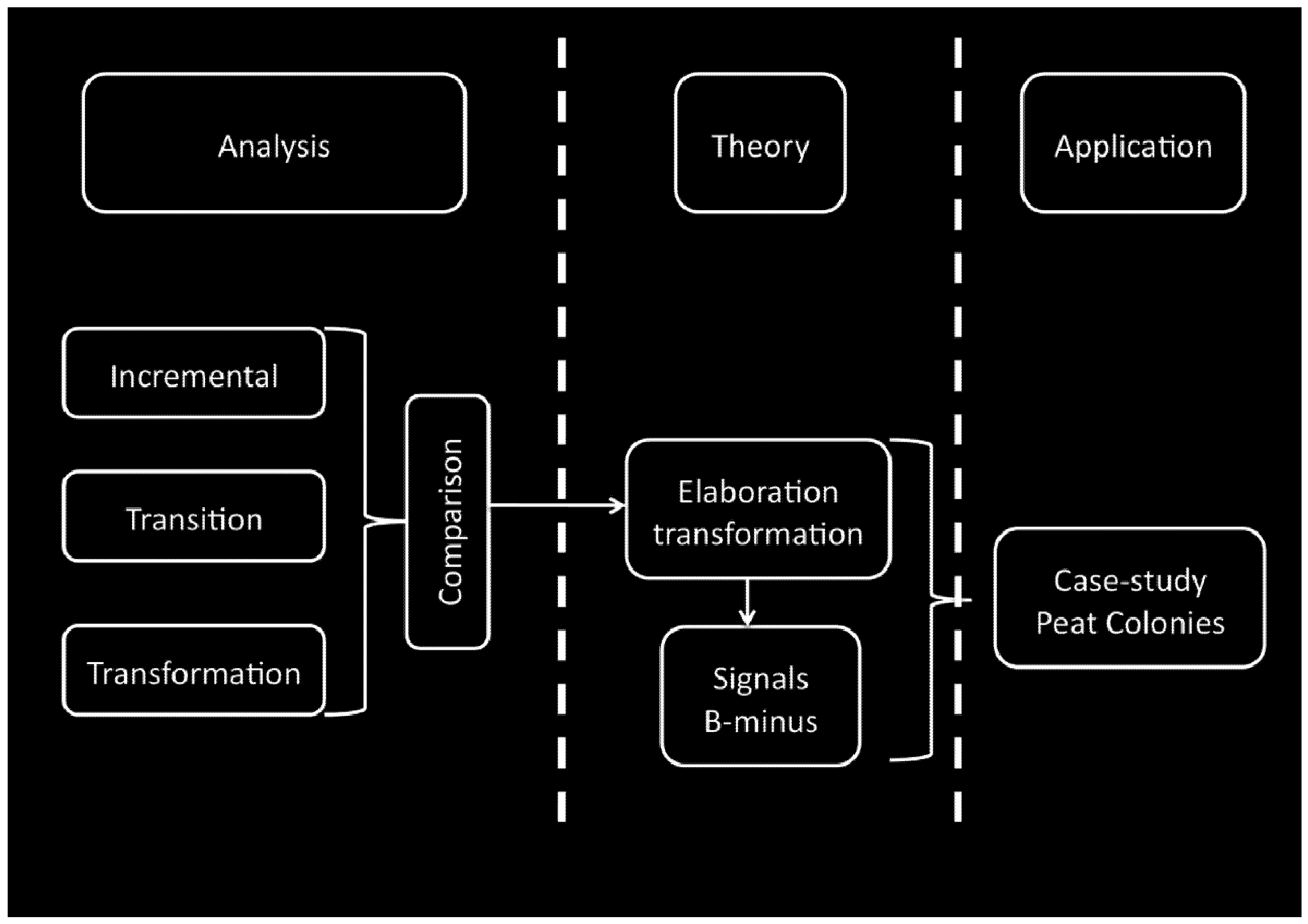
- Analysis of existing change concepts (section three);
- Comparison of change concepts (section four);
- Further concept development of the preferred concept. The applied method to intensify theorising, were the so-called pizza debates. These debates consisted of small group sessions providing an iterative process of consecutive brainstorm → capture → writing → brainstorm → elaboration → capture → writing (section five);
- Spatial identification of key change elements: (1) Early warning signals and (2) Creation of starting points of transformation (section six);
- Application of the theoretical concept in a case study (section seven).
3. Analysis of Change Processes
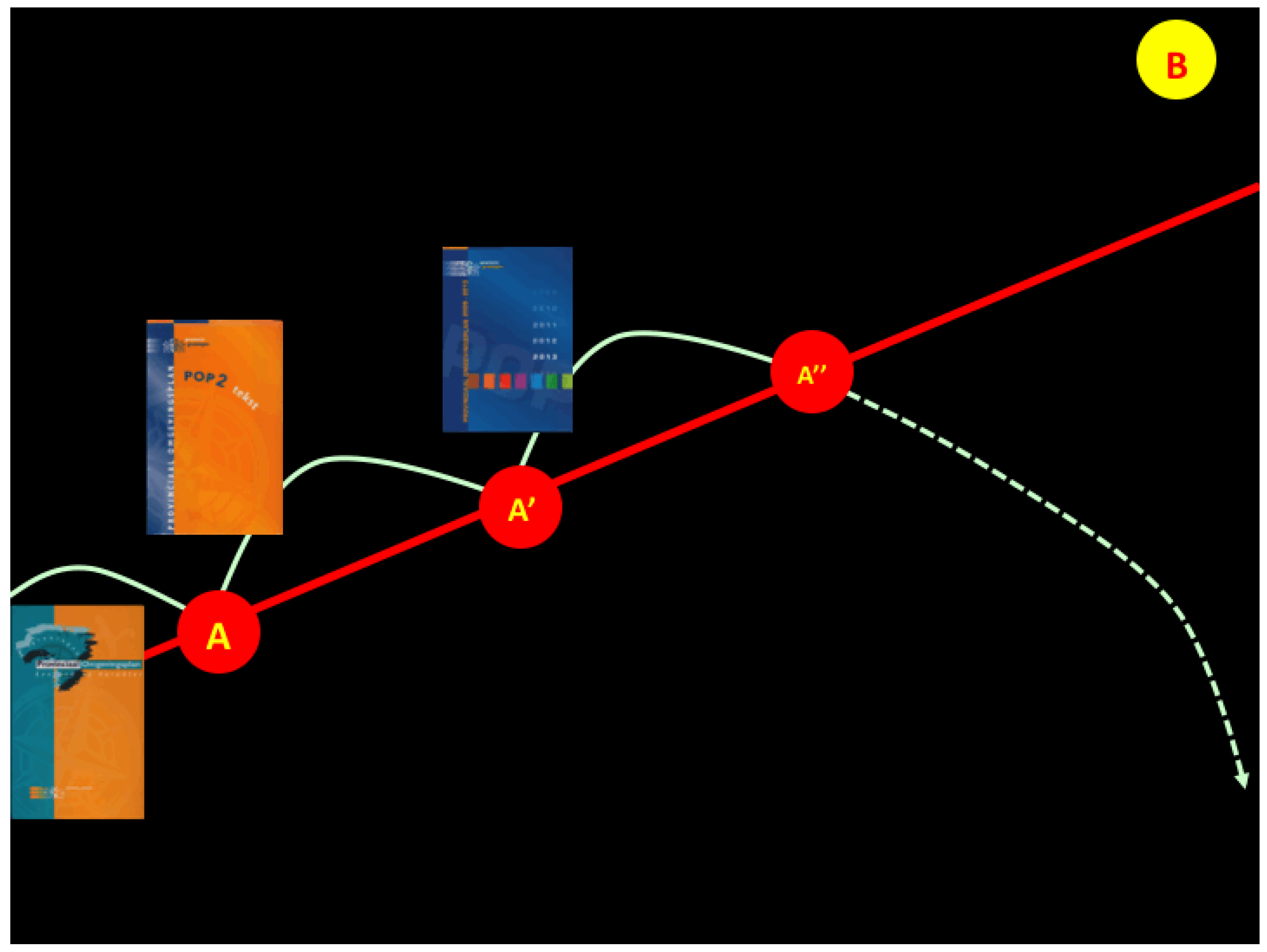
3.1. Incremental Change
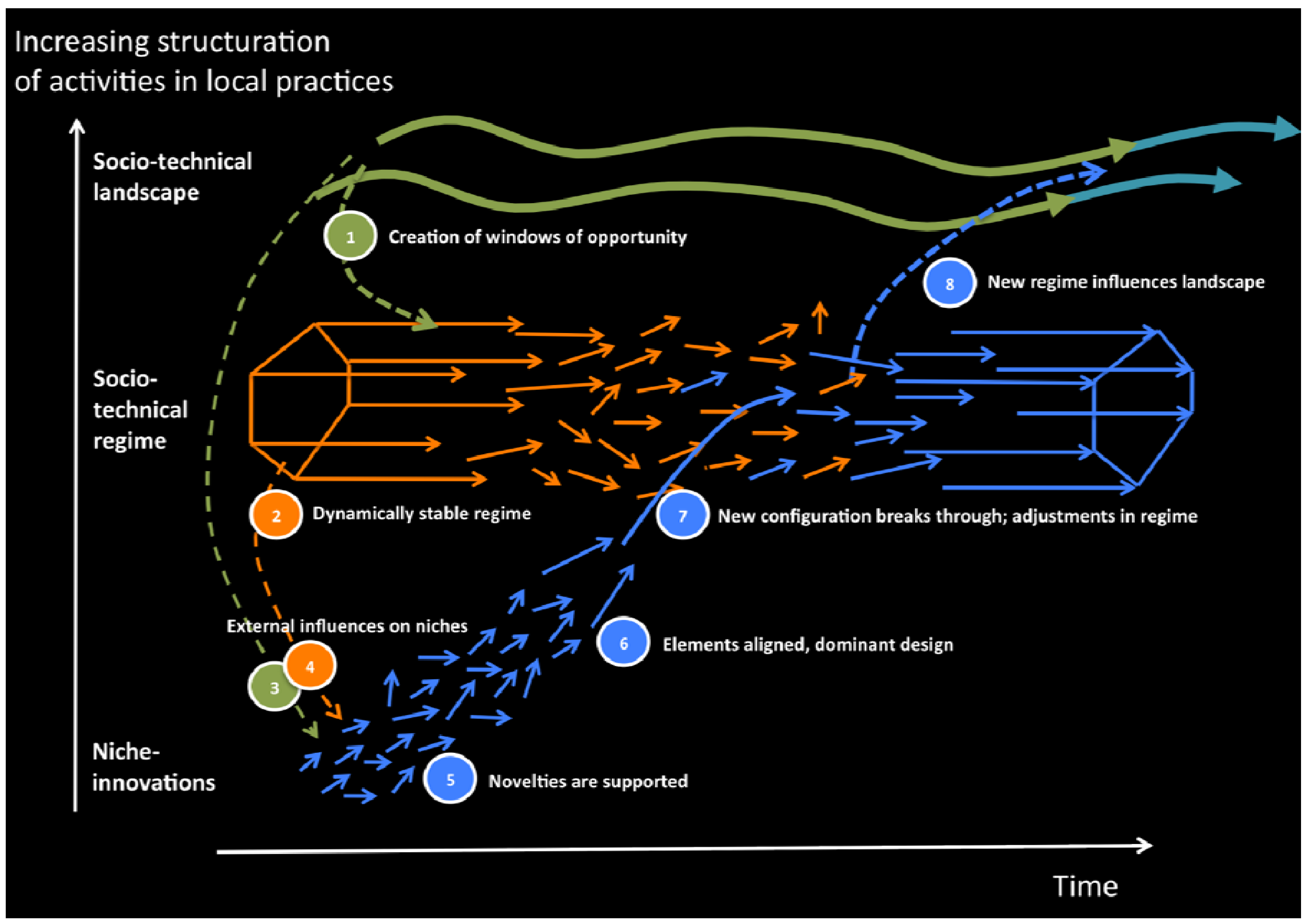
3.2. Transition
3.3. Transformation
4. Comparison
4.1. Criteria
- The extent to which the process of change enhances adaptation to climate change in spatial planning;
- The suitability of describing fundamental change: e.g. a shift from one system to another?
- The appropriateness to define and achieve a long-term future?
4.2. Comparison
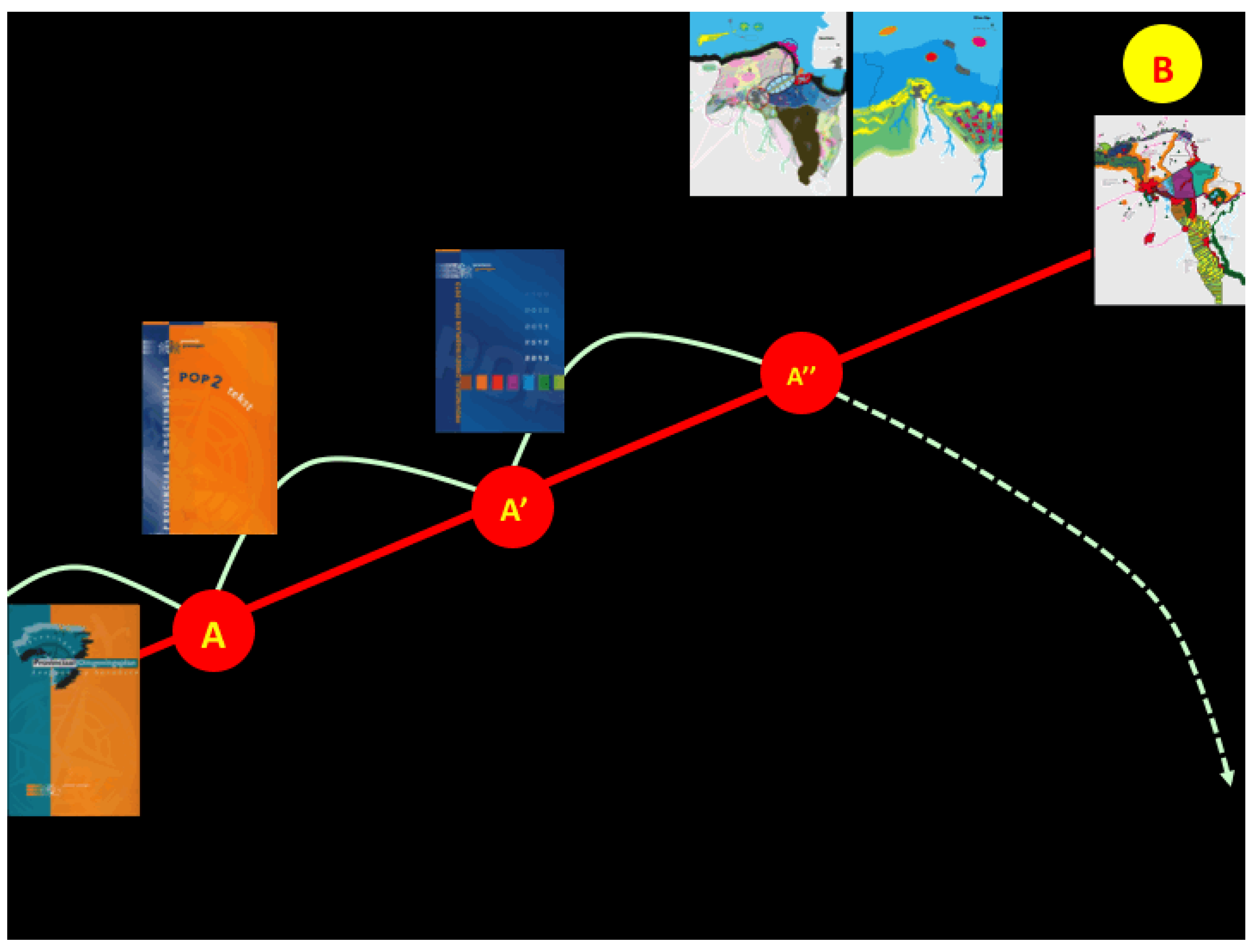
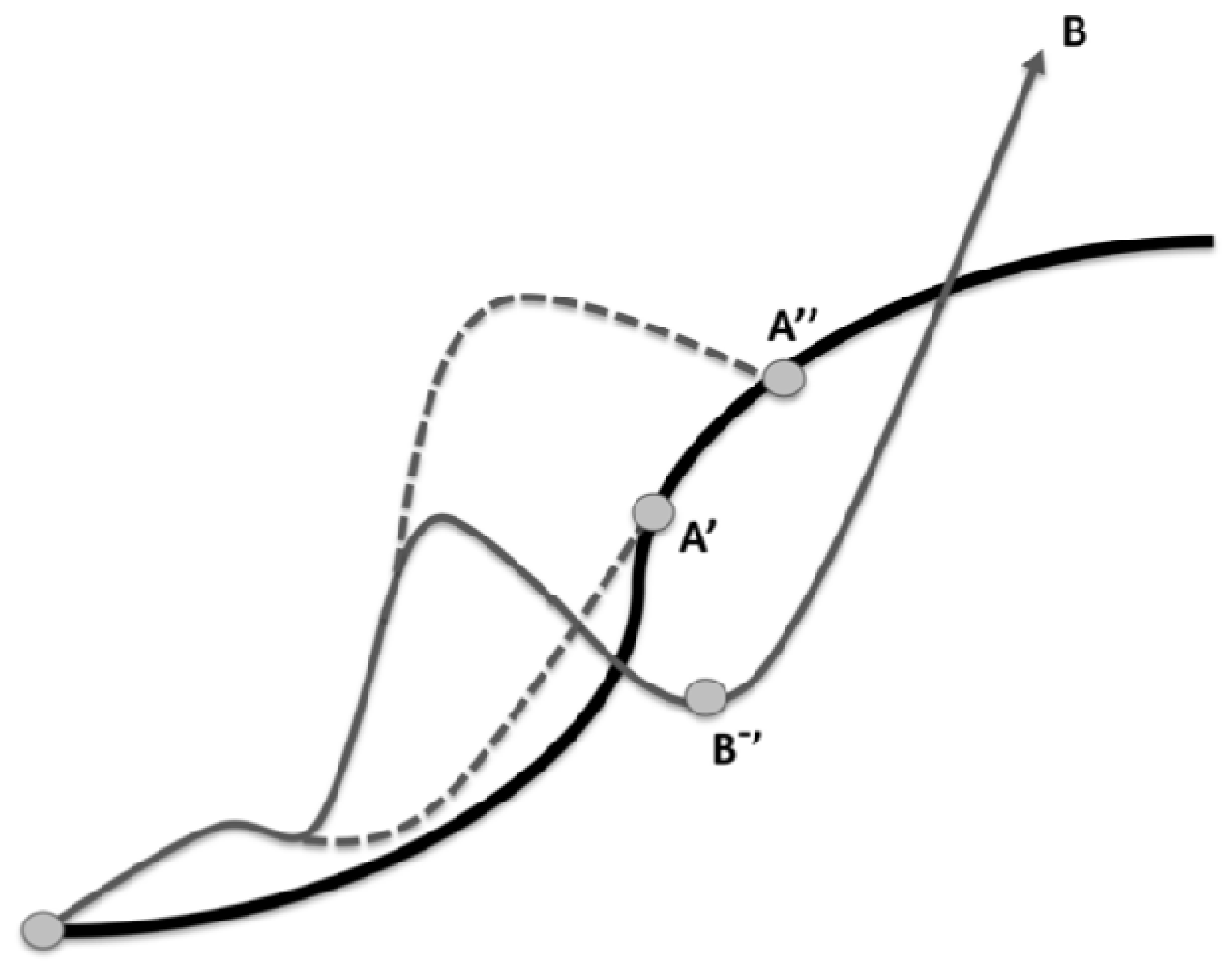
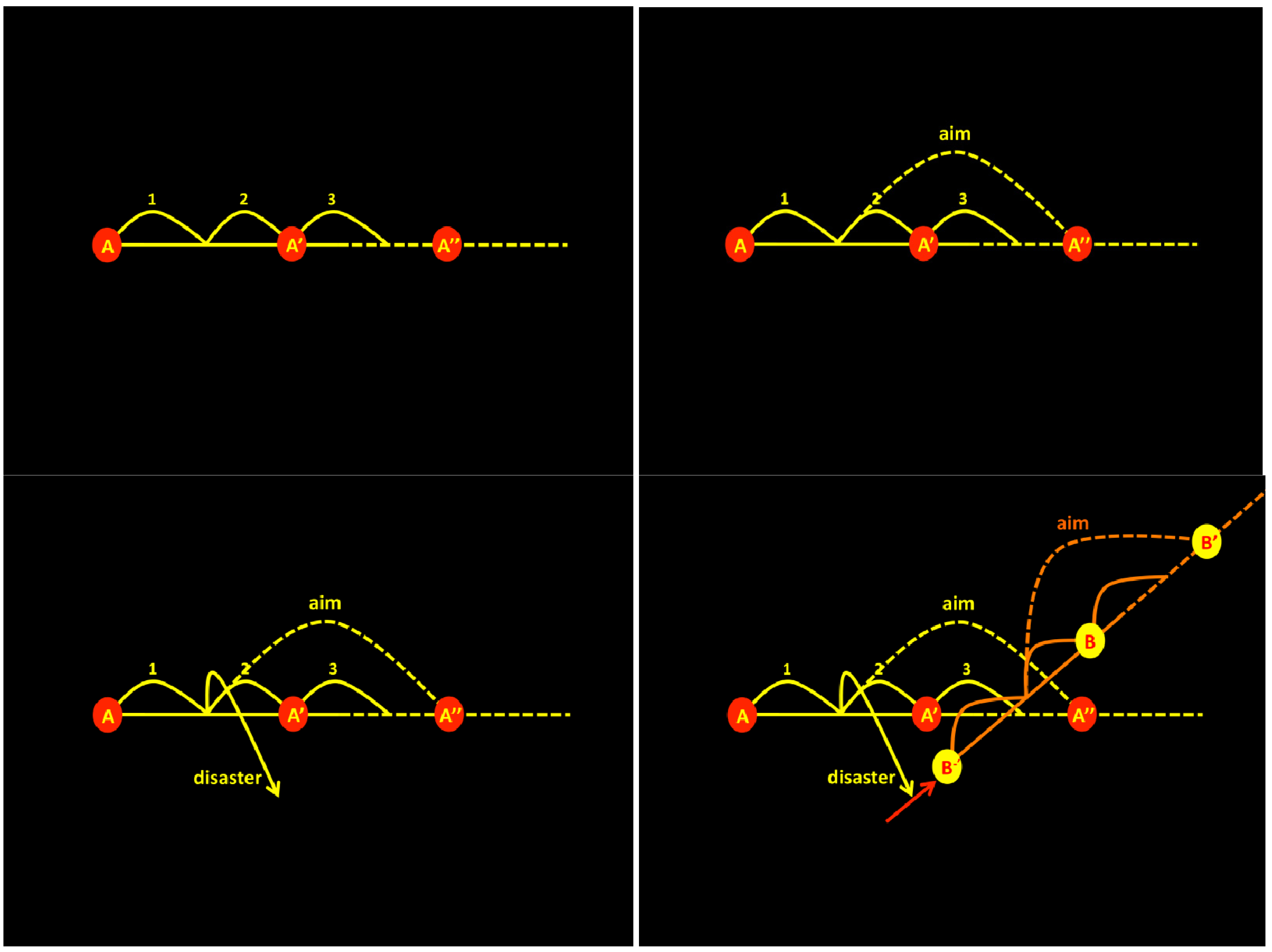
- Enhancing adaptation in spatial planning. All three pathways can enhance climate adaptation in spatial planning. However, incremental change does offer the least potential to do so, because this process leans most to existing habits, decision-making and current policies. Hence, in spatial planning changes are less elaborated and the spatial patterns are to a large extent similar to what had been realised in recent history. The transition pathway aims to change from a current state of the system to a future, climate adaptive, one. Hence it offers a good pathway to enhance climate adaptation. It depends on the magnitude of required change if transition pathways are suitable enough to reach this required change. When the change is expected to be more rigorous, the existing system needs to be able to transform into another, better equipped system. In that case, the transformation pathway is more suitable;
- Fundamental change. When a serious change is expected to happen, or is required to meet future change, the existing spatial patterns must be able to transform in something new that is capable of dealing with those changes and become resilient. A transformational pathway, implying systems change, seems to be the most likely pathway to be satisfying, because this process aims to change existing patterns in something else, becoming prepared for the new demands. To a lesser extent transition pathways allow for change, but in less fundamental ways as the system remains the same while transitioning to a better version. Incremental change is the least suitable process, as it focuses on little changes that are in general not fundamental;
- Long-term future. Incremental change, transitions and transformations offer the possibility to identify long-term desired futures. In many of the regular spatial plans, focusing on incremental change, such a long-term perspective is defined. However, in the wake of all kinds of practicalities this ambitious future becomes out of sight as soon as practical political decisions need to be made. In transitional as well as transformational processes this long-term desired future is conditional. Without a sound idea about a desired future, transition and transformation are not useful, because it is unclear where to aim for. The difference between the two relates back to the second criterion: when change is more fundamental, transformation seems to be more suitable.
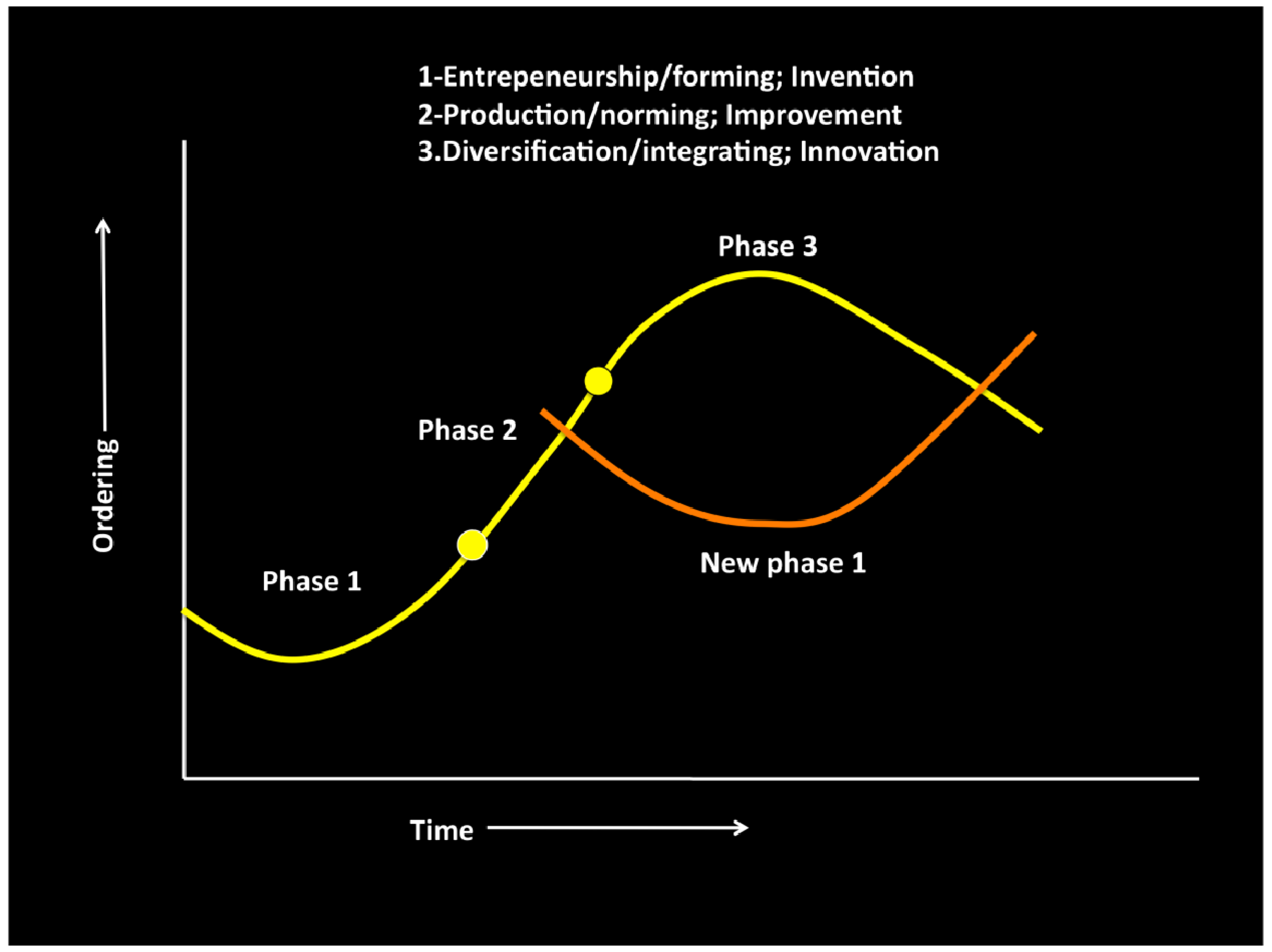
5. Theorising Transformation
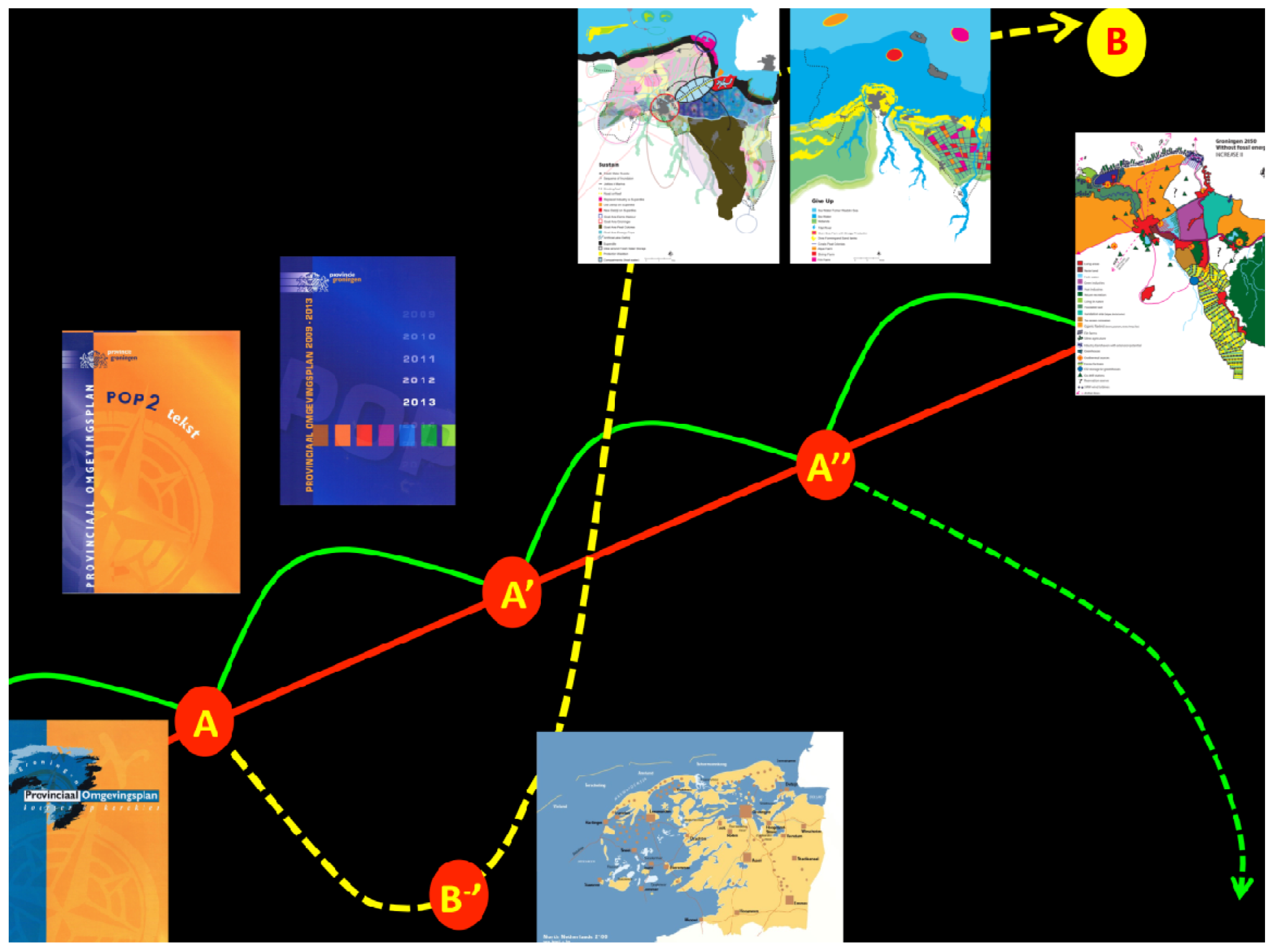
6. Signals
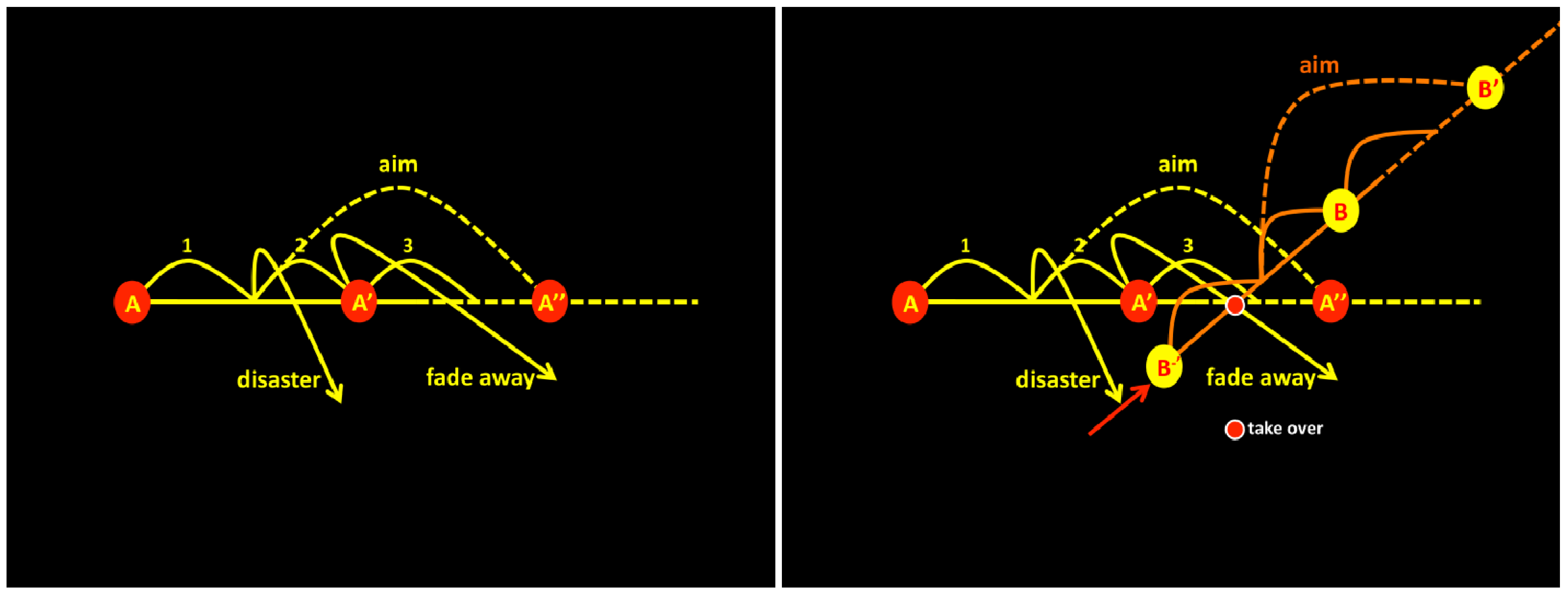
- Observation or active search for signals announcing a transformation, so-called early warning signals [44];
- The active creation of harbingers of a transformation.
6.1. Early Warning
- Critical slowing down: The intrinsic rates of change in the system decrease, leading to a system state that more and more resembles its past state. Two symptoms are distinguished: increase of autocorrelation and increase of variance.
- Skewness: An unstable equilibrium, which marks the border of the basin of attraction, approaches the attractor from one side. In the vicinity of this unstable point the rates of change are lower. As a result, the system will tend to stay in the vicinity of the unstable point relatively longer.
- Flickering: The system moves back and forth between the basins of attraction of two alternative attractors.
- Types of spatial patterns: (1) scale-invariant distributions of patch sizes and increased spatial coherence, or (2) the appearance of regular patterns in systems governed by local disturbances.

| Announcement of system change (early warning signals, derived from [39]) | Possible translation into spatial dimensions |
|---|---|
| Critical slowing down (increase of autocorrelation, increase of variance) | Maintaining old historic structures, re-emphasize existing patterns of functions |
| Repetitive policies (the longer policies remain unchanged or are repeated over and over again, the closer we are to a system change) | |
| Skewness | Dominance of one centre over another, core- periphery |
| Flickering | Temporarily repetitive occupation for living, temporarily repetitive flooding |
| 1. Scale-invariant distributions of patch sizes/increased spatial coherence | Urban sprawl, repetitive urban patterns/building blocks |
| 2. Increase of regular patterns |
6.2. Creation
- Once enough edges are added, properties of the network suddenly increase in quality [46];
- Directed networks consist of a core (a giant, strongly connected component), links-in and links-out, as well as other islands and tendrils, represented visually by Broder et al [47] as a bow-tie;
- The small world effect [48] describes the characteristics of networks: if the number of nodes in the network increases, while connected by a short path, the total length of paths will increase logarithmically and a high level of clustering will occur;
- The increase of connectivity of nodes in a network depends on the fitness to compete for links [49]. This fitter-gets-richer phenomenon helps to understand the evolution of competitive systems in nature and society;
- Robust networks are formed by numerously connected nodes, which are highly clustered and know a minimum distance between any random pair [50].
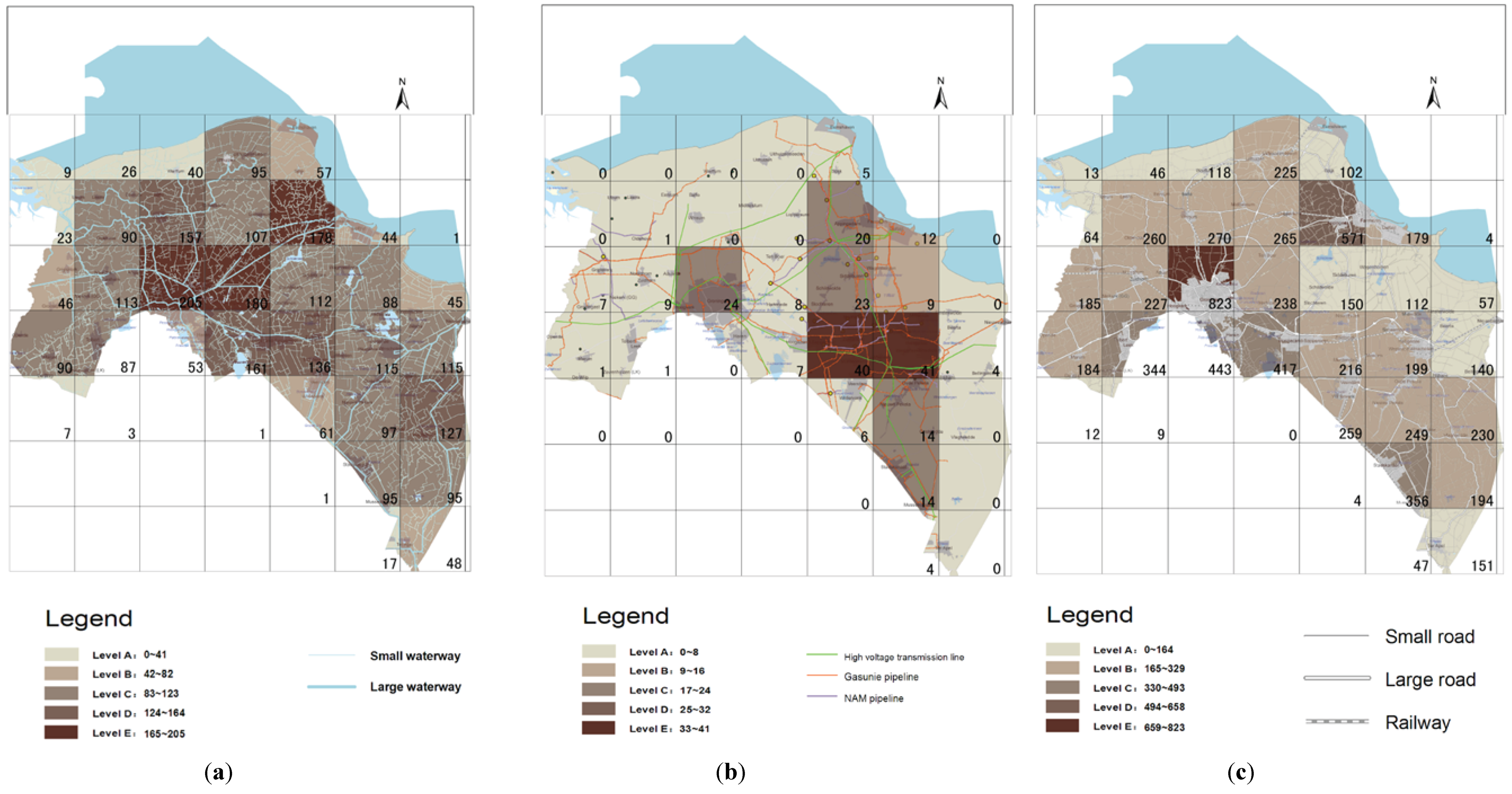
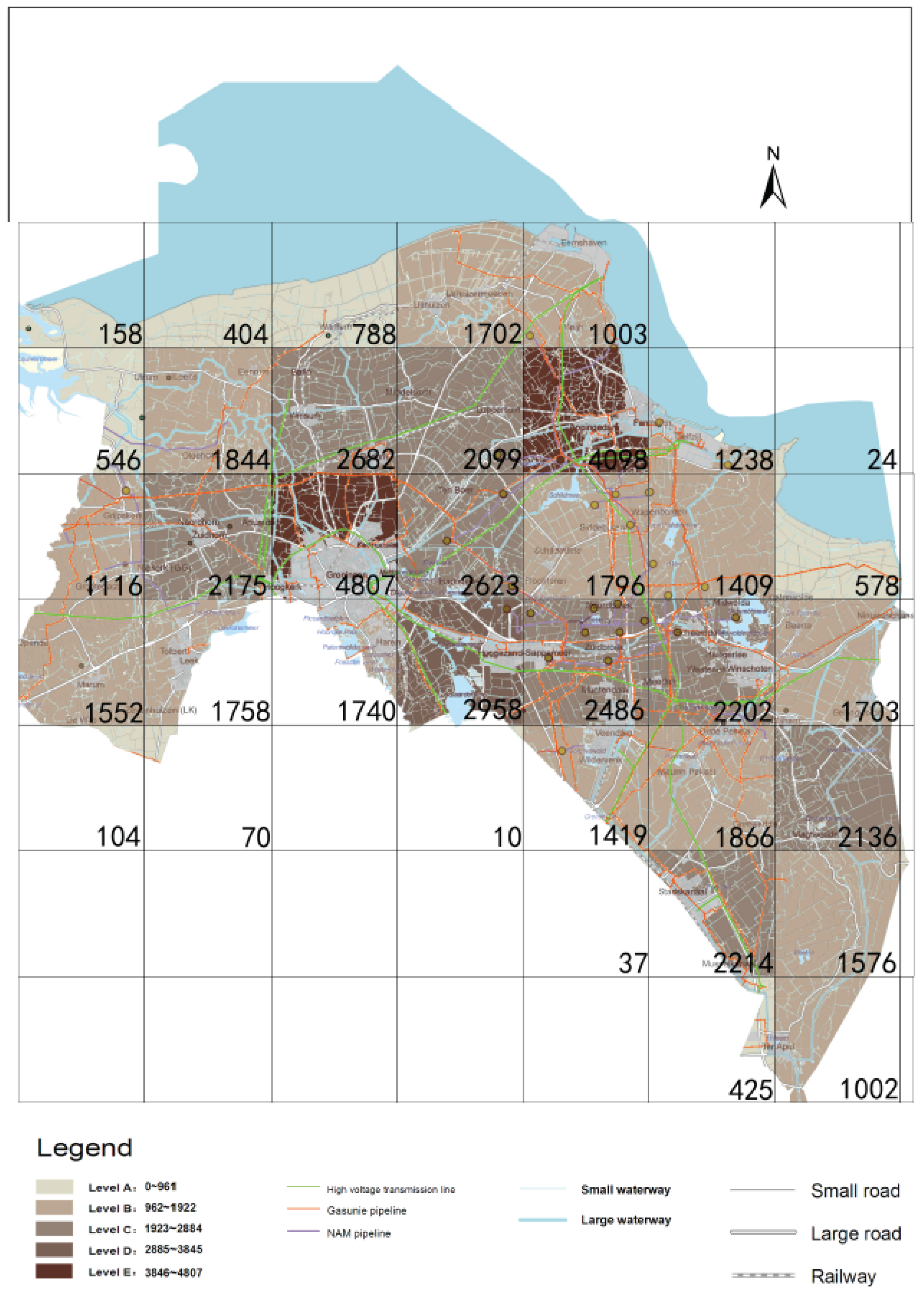
7. Application in the Peat Colonies
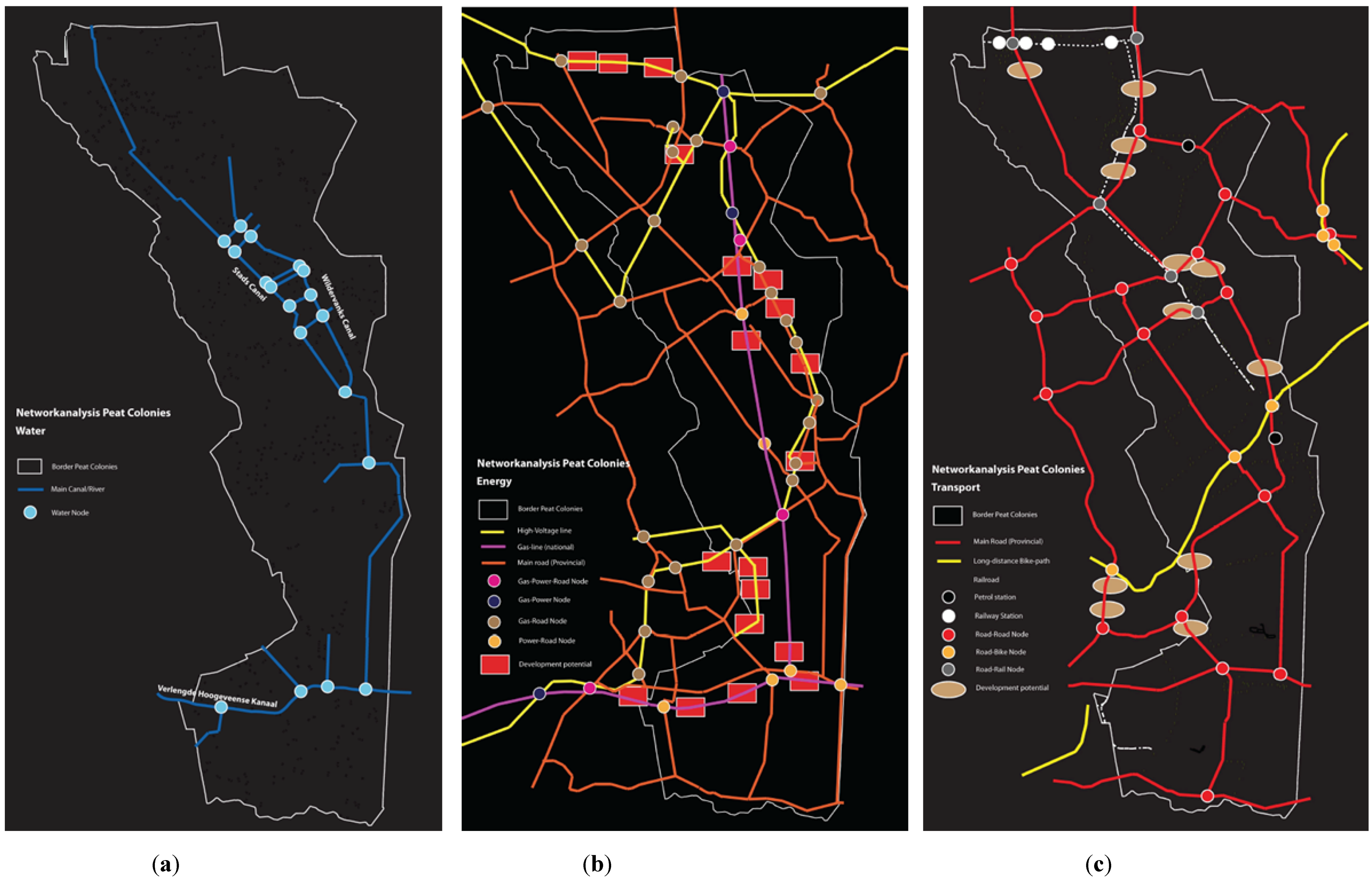
- Mapping existing networks. Each of the networks, water, energy and transportation were mapped and analysed. The water network consists of a dense pattern of canals and smaller waterways and contains a couple larger canals and natural streams. The energy network is determined by the larger gas- and electricity-grids and their fine mazes, delivering energy to individual homes. The transportation network consists of the main roads and railways and the denser local streets.
- Identifying ‘announcing’ nodes. The key nodes in the networks are identified by the density and connectivity of individual nodes. The ones with the densest and connective links are seen as the places where a potential system change might occur. Hence these nodes are identified as the ones that announce an upcoming change. When or how this change will happen is difficult to predict. These nodes are represented on the maps as small circles (Figure 12). These nodes function as announcer ‘B-minuses’.
- Determine ‘creation’ nodes. The analysis of the networks (e.g. the key nodes) in relation with existing urban (residential, industrial) functions and existing network infrastructure appoints us at areas that are positioned in developmental vicinity. These areas are represented in the maps as ovals (in the transport network) or rectangles in the energy network (Figure 12). Here the nodes can be created that are capable to start transformational change, the creating ‘B-minuses’.
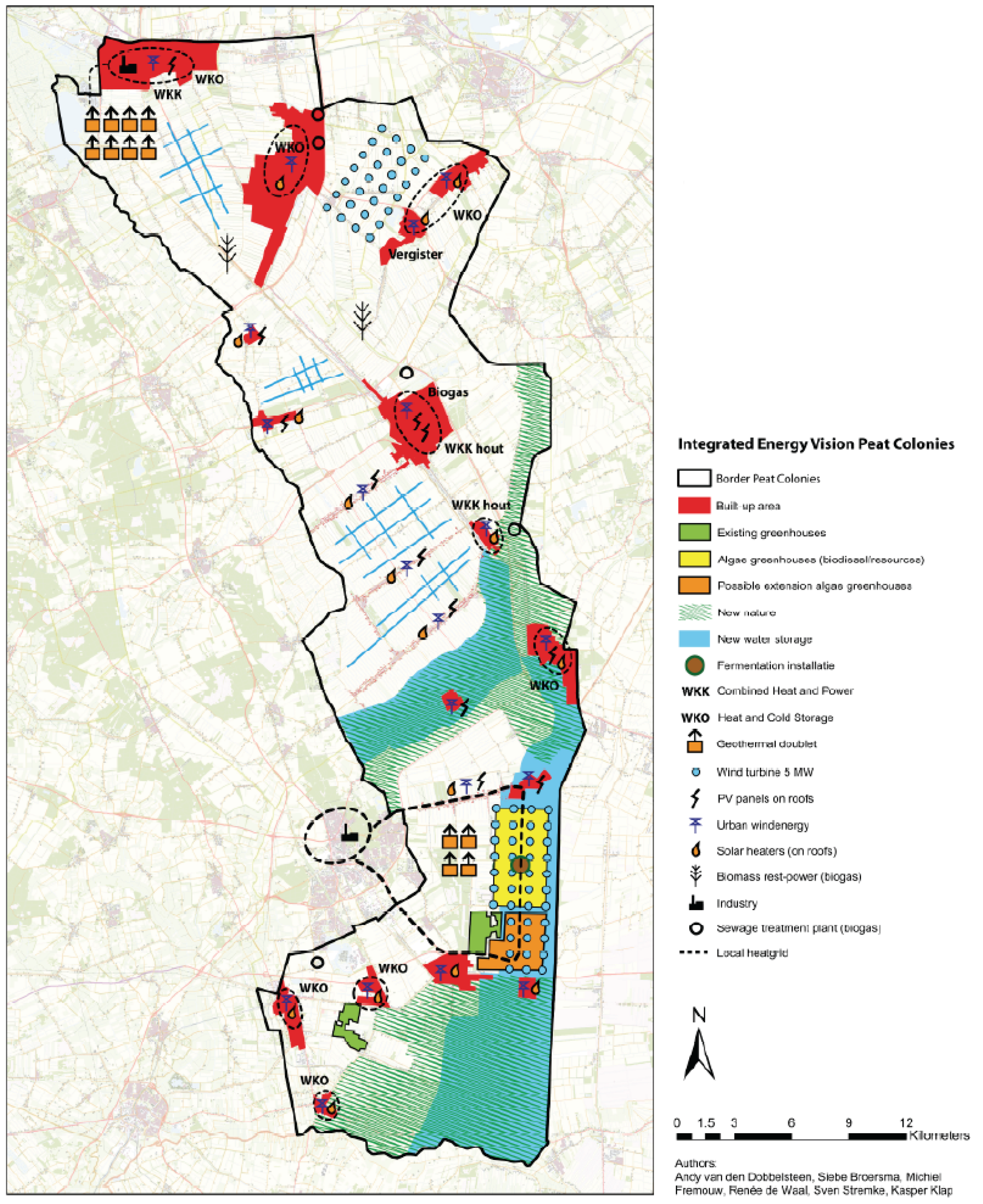
- Climate proof design. The final stage of the application was the use of the identified nodes in the spatial proposal for a climate proof area (Figure 13), in which mitigation and adaptation strategies are combined. The nodes were taken as the directing force for this design. After having identified the key nodes in the networks and the accompanying areas with high developmental potential, the choice for a specific development still needed to be made. Fundamental for this choice has been whether areas are seen as ordinary development areas, e.g. new urban neighbourhoods or economic development zones, or as areas that provide climate adaptation and mitigation contributions. In this case study the choice has been made for the latter option. Among others the following examples are proposed in the design:
- −
- Self-sufficient villages are combined with decentralised large-scale energy generation in the South East. Here the innovative Algae greenhouses are projected as well. A heat-ring is projected to connect these greenhouses with geothermal production areas and transport the heat towards consumers in the larger towns.
- −
- Two low-lying areas are created for floating algae greenhouses, in combination with storage of surpluses of rainwater. These areas function as the connecting zones of so called ‘water-farms’, where water-based agriculture is practiced and clean water is provided, between the eastern and western parts of the Peat Colonies.
- −
- The best-connected nodes in the energy network are used to form the starting points of the heat networks. These isolated areas function in the beginning as solitary elements, but can be connected with each other using the energy network, at a later stage. One big robust heat network emerges.
- −
- Other towns and villages are provided with heat from local supplied renewable energy sources, of which the location is based on the local available renewable energy potentials of heat-generation and storage in the soil.
8. Conclusions
| A-apostrophe | B-minus |
|---|---|
| Tame problems | Wicked problems |
| Moderate environments | Turbulent environments |
| Transition | Transformation |
| Linear thinking | Non-linear (dynamic) thinking |
Acknowledgments
Conflict of Interest
References
- Steffen, W.; Sanderson, A.; Jäger, J.; Tyson, P.D.; Moore, B., III; Matson, P.A.; Richardson, K.; Oldfield, F.; Schellnhuber, H.-J.; Turner, B.L., II; et al. Global Change and the Earth System: A Planet under Pressure; Springer-Verlag: Heidelberg, Germany, 2004. [Google Scholar]
- Walker, B.; Barrett, S.; Polasky, S.; Galaz, V.; Folke, C.; Engström, G.; Ackerman, F.; Arrow, K.; Carpenter, S.; Chopra, S.; et al. Looming global-scale failures and missing institutions. Science 2009, 325, 1345–1346. [Google Scholar]
- Chapin, F.S., III; Carpenter, S.R.; Kofinas, G.P.; Folke, C.; Abel, N.; Clark, W.C.; Olsson, P.; Stafford Smith, D.M.; Walker, B.; Young, O.R.; et al. Ecosystem stewardship: Sustainability strategies for a rapidly changing planet. Trends. Ecol. Evol. 2009, 25, 241–249. [Google Scholar]
- Business Planning for Turbulent Times: New Methods for Applying Scenarios; Ramirez, R.; Selsky, J.W.; van der Heijden, K. (Eds.) Earthscan Publications Ltd.: London, UK, 2008.
- Emery, F.E.; Trist, E.L. The causal texture of organizational environments. Hum. Relat. 1965, 18, 21–32. [Google Scholar] [CrossRef]
- Steffen, W.; Crutzen, P.J.; McNeill, J.R. The Anthropocene: Are humans now overwhelming the great forces of Nature? Ambio. 2007, 36, 614–621. [Google Scholar] [CrossRef]
- Olsson, P. Navigating transformations in social-ecological systems. In Presented at the NCCARF-Seminar, Melbourne, Australia, 10 February 2011.
- Dietz, T.; Ostrom, E.; Stern, P.C. The struggle to govern the commons. Science 2003, 302, 1907–1912. [Google Scholar] [CrossRef]
- Folke, C.; Hahn, T.; Olsson, P.; Norberg, J. Adaptive governance of social–ecological systems. Ann. Rev. Env. Resour. 2005, 30, 441–473. [Google Scholar] [CrossRef]
- Berkman, P.A.; Young, O.R. Governance and environmental change in the Arctic Ocean. Science 2009, 324, 339–340. [Google Scholar]
- Conklin, J. Wicked Problems and Social Complexity; CogNexus Institute: Napa, USA; p. 11. Available online: http://cognexus.org/wpf/wickedproblems.pdf (accessed on 13 December 2010).
- Rittel, H.; Webber, M. Dilemmas in a general theory of planning. Pol. Stud. 1973, 4, 155–69. [Google Scholar]
- Australian Government. Tackling Wicked Problems; A Public Policy Perspective; Australian Public Service Commission: Canberra, Australia, 2007.
- VROM-raad. De Hype Voorbij, Klimaatverandering Als Structureel Ruimtelijk Vraagstuk, Advies 060; VROM-raad: Den Haag, The Netherlands, 2007.
- Lazarus, R. Super Wicked Problems and Climate Change: Restraining the Present to Liberate the Future; Cornell Law Review; Georgetown Public Law Research: Washington, DC, USA, 2009; pp. 1053–233. [Google Scholar]
- Provincie Groningen. Provinciaal Omgevingsplan; Vastgesteld op 14 December 2000; Provincie Groningen: Groningen, The Netherlands, 2000.
- Provincie Groningen. Provinciaal Omgevingsplan, POP 2 tekst en kaarten; Vastgesteld op 5 Juli 2006; Provincie Groningen: Groningen, The Netherlands, 2000.
- Provincie Groningen. Provinciaal Omgevingsplan 2009-2013; Vastgesteld op 17 Juni 2009; Provincie Groningen: Groningen, The Netherlands, 2009.
- Roggema, R. Spatial Impact of the Adaptation to Climate Change in the Province of Groningen, Move with Time; Climate Changes Spatial Planning & Province of Groningen: Groningen, The Netherlands, 2007.
- Rotmans, J.; Kemp, R.; van Asselt, M.; Geels, F.; Verbong, G.; Molendijk, K. Transities en Transitiemanagement: De Casus Van Een Emissiearme Energievoorziening; ICIS: Maastricht, The Netherlands, 2000. [Google Scholar]
- De Roo, G. A Theory of Transition and its Relevance to Planning Theory and Practice. A Non-Linear Understanding of Spatial Development. In Proceedings of the VIIth meeting of Aesop’s Thematic Group on Complexity and Planning, Milano, Italy, 22–23 February 2008.
- Zuijderhoudt, R. Op Zoek Naar Synergie, Omgaan Met Onoplosbare Problemen. Ph.D. Thesis, University of Amsterdam, Amsterdam, The Netherlands, 2007. [Google Scholar]
- Hurst, D.K. Crisis en Vernieuwing: De Uitdaging van Organisativerandering; Scriptum: Schiedam, The Netherlands, 1997. [Google Scholar]
- Peters, J.; Wetzels, R. Niets Nieuws Onder de Zon en Andere Toevalligheden, Strategie uit Chaos; Uitgeverij Business Contact: Amsterdam, The Netherlands, 1997. [Google Scholar]
- Homan, T. Organisatiedynamica; Sdu uitgevers: Den Haag, The Netherlands, 2005. [Google Scholar]
- Panarchy: Understanding Transformations in Human and Natural Systems; Gunderson, L.; Holling, C.S. (Eds.) Island Press: Washington, DC, USA, 2002.
- Geels, F.W.; Kemp, R. Transitions, Transformations and Reproduction: Dynamics of Socio-Technical Systems. In Flexibility and Stability in Economic Transformation; McKelvey, M., Holmén, M., Eds.; Oxford University Press: New York, NY, USA, 2006; pp. 227–256. [Google Scholar]
- Chapin, F.S., III; McGuire, A.D.; Ruess, R.W.; Hollingsworth, T.N.; Mack, M.C.; Johnstone, J.F.; Kasischke, E.S.; Euskirchen, E.S.; Jones, J.B.; Jorgenson, J.F.; et al. Resilience of Alaska’s boreal forest to climatic change. Can. J. Forest Res. 2010, 40. [Google Scholar] [CrossRef]
- Folke, C.; Carpenter, S.R.; Walker, B.; Scheffer, M.; Chapin, T.; Rockström, J. Resilience thinking: Integrating resilience, adaptability and transformability. Ecol. Soc. 2010, 15, p. 20. Available online: http://www.ecologyandsociety.org/vol15/iss4/art20/ (accessed on 15 December 2010).
- Olsson, P.; Gunderson, L.H.; Carpenter, S.R.; Ryan, P.; Lebel, L.; Folke, C.; Holling, C. Shooting the rapids: Navigating transitions to adaptive governance of social-ecological systems. Ecol. Soc. 2006, 11, p. 18. Available online: http://www.ecologyandsociety.org/vol11/iss1/art18/ (accessed on 15 December 2010).
- Perez, C. Technological Revolutions and Financial Capital; Edgar Elgar: Cheltenham, UK, 2002. [Google Scholar]
- Blauwhof, G.; Verbaan, W. Wolk 777, Over Crisis, Krimp en Duurzaamheid; Uitgeverij Blauwdruk: Wageningen, The Netherlands, 2009. [Google Scholar]
- Ainsworth-Land, G.T. Grow or Die. The Unifying Principle of Transformation; John Wiley & Sons: New York, NY, USA, 1986. [Google Scholar]
- Geels, F.W. Technological transitions as evolutionary reconfiguration processes: A multilevel perspective and a case study. Res. Policy 2002, 31, 1257–1274. [Google Scholar] [CrossRef]
- Geels, F.W. Processes and patterns in transitions and system innovations: Refining the co-evolutionary multi-level perspective. Technol. Forecast Soc. 2005, 72, 681–696. [Google Scholar] [CrossRef]
- Geels, F.W. The multi-level perspective on sustainability transitions: Responses to seven criticisms. Technol. Forecast Soc. 2011, 1, 24–40. [Google Scholar]
- Kemp, R.; Rip, A.; Schot, J.W. Constructing transition paths through the management of niches. In Path Dependence and Creation; Garud, R., Karnoe, P., Eds.; Lawrence Erlbaum: Mahwah, NJ, USA, 2001; pp. 269–299. [Google Scholar]
- Castells, M. The Rise of the Network Society; Blackwell: Oxford, UK, 1996. [Google Scholar]
- Franzen, G.; Bouwman, M. De Mentale Wereld van Merken; Samsom: Alphen aan den Rijn, The Netherlands, 1999. [Google Scholar]
- Roberts, K. The Lovemarks Effect, Winning the Consumer Revolution; PowerHouse Books: New York, NY, USA, 2006. [Google Scholar]
- Ghodeswar, B.M. Building brand identity in competitive markets: A conceptual model. JPBM 2008, 17, 4–12. [Google Scholar]
- Gladwell, M. The Tipping Point: How Little Things Can Make a Big Difference; Time Warner Book Group: New York, NY, USA, 2000. [Google Scholar]
- Berger, R.; Chambwera, M. Beyond Cost-Benefit: Developing a Complete Toolkit for Adaptation Decisions; IIED: London, UK, 2010. [Google Scholar]
- Scheffer, M.; Bascompte, J.; Brock, W.A.; Brovkin, V.; Carpenter, S.R.; Dakos, V.; Held, H.; van Nes, E.H.; Rietkerk, M.; Sugihara, G. Early-warning signals for critical transitions. Nature 2009, 461, 53–59. [Google Scholar]
- The Structure and Dynamics of Networks; Newman, M.; Barabási, A-L.; Watts, D.J. (Eds.) Princeton University Press: New Jersey, NY, USA, 2006.
- Erdós, P.; Rényi, A. On the evolution of randam graphs. In Publications of the Mathematical Institute of the Hungarian Academy of Sciences; Mathematical Institute of the Hungarian Academy of Sciences: Budapest, Hungary, 1960; pp. 17–61. [Google Scholar]
- Broder, A.; Kumar, R.; Maghoul, F.; Raghavan, P.; Rajagopalan, S.; Stata, R.; Tomkins, A.; Wiener, J. Graph structure in the Web. Computer Networks 2000, 33, 309–320. [Google Scholar] [CrossRef]
- Watts, D.J.; Strogatz, S.H. Collective dynamics of ‘small-world’ networks. Nature 1998, 393, 440–442. [Google Scholar] [CrossRef]
- Bianconi, G.; Barabási, A.L. Competition and multiscaling in evolving networks. Europhys. Lett. 2001, 54, 436–442. [Google Scholar] [CrossRef]
- Solé, R.V.; Pastor-Satorras, R.; Smith, E.; Kepler, T.B. A model of large-scale proteome evolution. Adv. Complex Syst. 2002, 5, 43–54. [Google Scholar] [CrossRef]
- Hao, H.; Wang, X. Spatial Planning for Climate Change Adaptation-Test and Improve Spatial Planning Methodology for the CCA. BSc-Thesis, Van Hall Larenstein, Wageningen, The Netherlands, 2010. [Google Scholar]
- Broersma, S.; Fremouw, M.; Stremke, S.; van den Dobbelsteen, A.; de Waal, R. Duurzame Energiestructuurvisie Voor de Veenkoloniën; TU Delft/WUR: Delft, The Netherlands, 2011. [Google Scholar]
© 2012 by the authors; licensee MDPI, Basel, Switzerland. This article is an open access article distributed under the terms and conditions of the Creative Commons Attribution license (http://creativecommons.org/licenses/by/3.0/).
Share and Cite
Roggema, R.; Vermeend, T.; Dobbelsteen, A.V.d. Incremental Change, Transition or Transformation? Optimising Change Pathways for Climate Adaptation in Spatial Planning. Sustainability 2012, 4, 2525-2549. https://doi.org/10.3390/su4102525
Roggema R, Vermeend T, Dobbelsteen AVd. Incremental Change, Transition or Transformation? Optimising Change Pathways for Climate Adaptation in Spatial Planning. Sustainability. 2012; 4(10):2525-2549. https://doi.org/10.3390/su4102525
Chicago/Turabian StyleRoggema, Rob, Tim Vermeend, and Andy Van den Dobbelsteen. 2012. "Incremental Change, Transition or Transformation? Optimising Change Pathways for Climate Adaptation in Spatial Planning" Sustainability 4, no. 10: 2525-2549. https://doi.org/10.3390/su4102525

