


Abstract
Steel fibre reinforced concrete (SFRC) is a construction material investigated for more than 40 years including for pavement applications. A number of studies have demonstrated the technical merits of SFRC pavements over conventional concrete pavements; however little work has been carried out on the environmental and economical impact of SFRC during the pavement's life cycle. Therefore, extended research was undertaken within the framework of the EU funded project “EcoLanes” to estimate the environmental and economical loadings of SFRC pavements. The innovative concept of the project is the use of recycled steel tyre-cord wire as concrete fibre reinforcement, which provides additional environmental benefits for tyre recycling over landfilling. Within the project framework a demonstration of a steel-fibre-reinforced roller-compacted concrete (SFR-RCC) pavement was constructed in a rural area in Cyprus. In order to assess the economical and environmental picture of the demonstration pavement, life cycle cost analysis (LCCA) and life cycle assessment (LCA) studies were undertaken, which also compared the under study pavement design with four conventional alternatives. The main output of the studies is that SFR-RCC is more environmentally and economically sustainable than others. In addition, various concrete mix designs were investigated by considering parameters such as fibre type and dosage, cement type, and transportation distances to the construction site. Fibre dosage has been highlighted as a crucial factor compared with economical and environmental loadings in SFR-RCC pavement construction.1. Introduction
Plain concrete pavements have low tensile strength and strain capacity, however these structural characteristics are improved by fibre addition, allowing reduction of the pavement layer thickness [1]. This improvement can be significant and depends on fibre characteristics and dosage [2]. The most significant influence of fibre reinforcement is to delay and control the tensile cracking of concrete [3]. Therefore it is found to have significant impact on the pavement cost due to reduced thickness requirements, less maintenance costs and longer useful life [2]. Comparing with the life cycle of an asphalt road, SFRC pavements have been reported to last twice as long [1].
The largest volume application of SFRC has been in airport pavements due to high and damaging loads [4]. Steel fibres significantly improve the impact resistance of concrete making it a suitable material for structures subjected to impact loads [5]. SFRC pavement eliminates spring load restrictions. It does not rut, washboard or shove as in asphalt roadways; and it provides fuel savings for heavy vehicles versus asphalt pavements [1]. All the above factors suggest that SFRC pavements are the most beneficial pavement type from an engineering and economical prospective. On the other hand, the current high cost of steel fibres in many regions may not justify their use, despite the lower life cycle costs achieved due to reduced maintenance requirements [2,3]. To facilitate the extended use of SFRC in pavement construction (especially in developing countries), it is necessary to develop alternative sources of low-cost steel fibre reinforcement. This was one of the main objectives of “EcoLanes” [6].
“EcoLanes” was a three-year specific targeted research project (completed in September 2009), funded under the FP6-2005-Transport-4 call 3B of the European Commission. The work programme of “EcoLanes” comprised nine work packages: four for research/technological/development activities, three for demonstration activities, one for dissemination and one for management activities; the project consortium comprised eleven academic and industrial partners from Cyprus, France, Italy, Romania, Turkey and the United Kingdom [7]. The main aim of this project was the development, testing and validation of SFRC pavements that will contribute towards the strategic objectives of the thematic area of sustainable surface transport, including reduction of costs in the range of 10–20%, construction time by 15% and energy consumption by up to 40% [6]. The following were amongst the main objectives of the project.
Development of recycled steel tyre-cord (RTC) fibre reinforcement as an economical alternative to industrially-produced steel fibres, used normally in SFRC construction (section 3.1).
Development of wet- and dry-consistency SFRC mixes, which have reduced energy requirements and use recycled materials. Wet consistency SFRC is made with conventional plastic concrete, whist dry-consistency concrete is made with roller-compacted concrete (RCC) [6].
Development as well as experimental and theoretical validation of the concept of the Long Lasting Rigid Pavements (LLRP) made with “low-energy” wet- and dry-consistency SFRC.
Development of methodologies for the life cycle assessment and economic cost of LLRP made with wet- and dry-consistency SFRC (as elaborated in the present study).
Development of guidelines for producing LLRP made with dry-consistency SFRC [8].
Design and construction (in different European environments and climatic regions) of four demonstration pavements made with dry-consistency SFRC (see section 2.3 for demonstration in Cyprus [9].
The main aim of this paper is to present the results of the LCA and LCCA undertaken by “EcoLanes” on the environmental impact and economic cost of the proposed LLRPs made with “low-energy” wet and dry SFRC. This includes, LCA and LCCA of the demonstration pavement constructed in Cyprus, LCA and LCCA comparison of five alternative pavement types as well as a parametric LCA and LCCA studies on wet and dry SFRC. To provide the context of this work, the paper also summarises the “EcoLanes” findings on the development of low-cost RTC fibre reinforcement as well as on the development of the wet and dry SFRC mixes and LLRPs made with “low energy” SFRC.
2. Experimental Section
2.1. Life Cycle Methodology in Pavement Construction
Environmental and economical impact of SFRC pavement construction was estimated by a life cycle methodology. LCA is a cradle-to-grave analysis avoiding the environmental ‘problem shifting’ to another stage in a product's life cycle. LCA perspective can be applied in analysing the origins of issues, comparing variation for improvement purpose, designing new products, and choosing between comparable products [10].
Agency cost and user cost are the two components used for expressing the LCCA of the pavement. The first is associated with costs incurred directly by the agency over the life of the pavement and usually includes construction costs, maintenance costs and operation costs. Costs incurred by pavement users travelling and on the facility and those who cannot use the facility due to agency or self-imposed detour requirements are characterised as user cost. Generally, user cost is an aggregation of user delay costs (because of construction and maintenance work zones), vehicle operating costs and crash costs (risk of traffic accidents) [11].
According to a Life project titled “SUSCON”, LCA output of a flexible asphalt pavement construction in Cyprus indicates that the largest impact to the environmental score is the asphalt production and use as well as bitumen production [12]. The recycling of asphalt pavement is not considered an option as gas emissions increase with the recycling rate. In addition, the asphalt-laying operation is considered a nuisance because bitumen fumes can cause irritation to the mucous membranes of eyes and the respiratory track. Therefore, national regulations of mean exposure values have been set for road workers [13]. In order to assess a more preferable road design, comparison studies were implemented for diverse concrete pavements [14,15]. In the Netherlands, a study has illustrated that the value of concrete pavements is less or quite similar to asphalt pavements in terms of environmental impacts and costs criteria. Furthermore, SFRC was concluded to be more attractive than jointed plain concrete and continuously reinforced concrete pavements because of improved strength capacity and lower score, respectively [16]. However, more extended research is required to compare the environmental impact and cost of SFRC and asphalt pavements, and also to consider the use of post-consumer tyre products in the road industry. Landfill tax (introduced in many countries) increases the interest in decreasing the amount of solid waste deposited in landfills and investigating new alternatives to make use of by-products [17].
2.2. Adopted Methodology
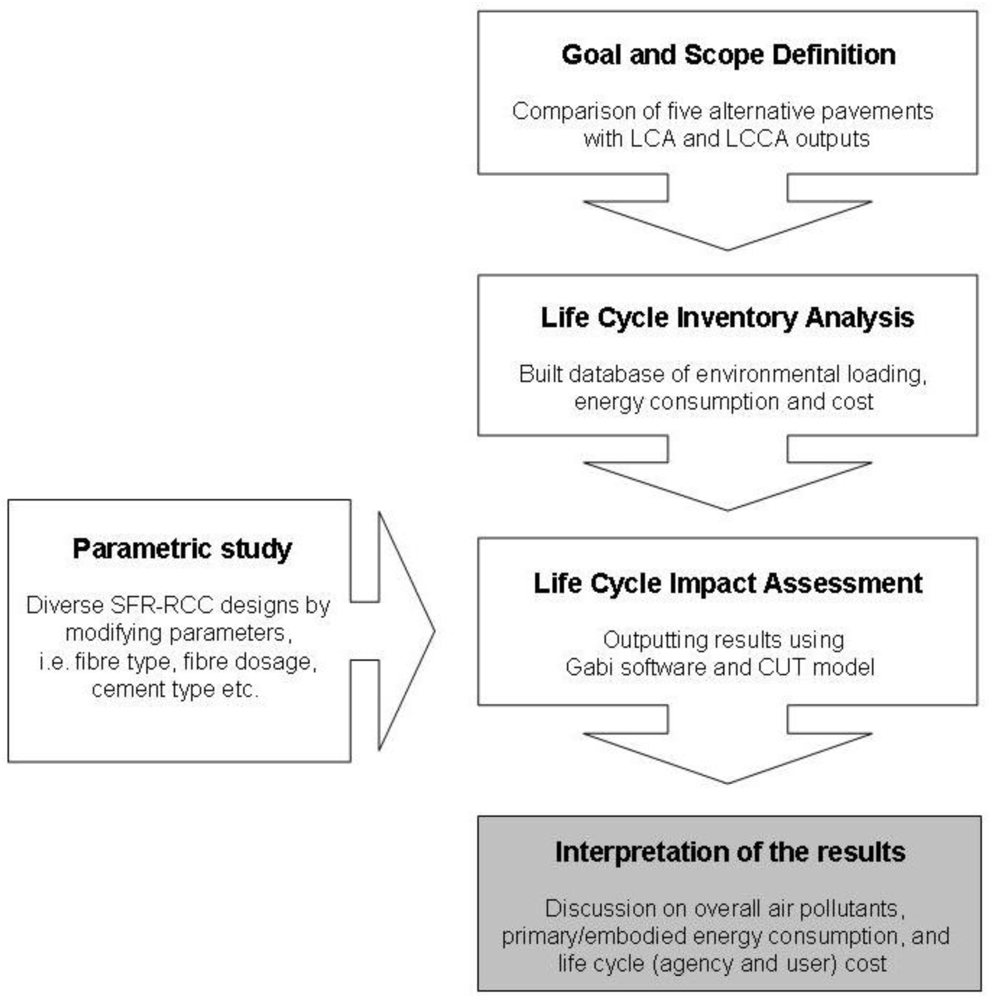
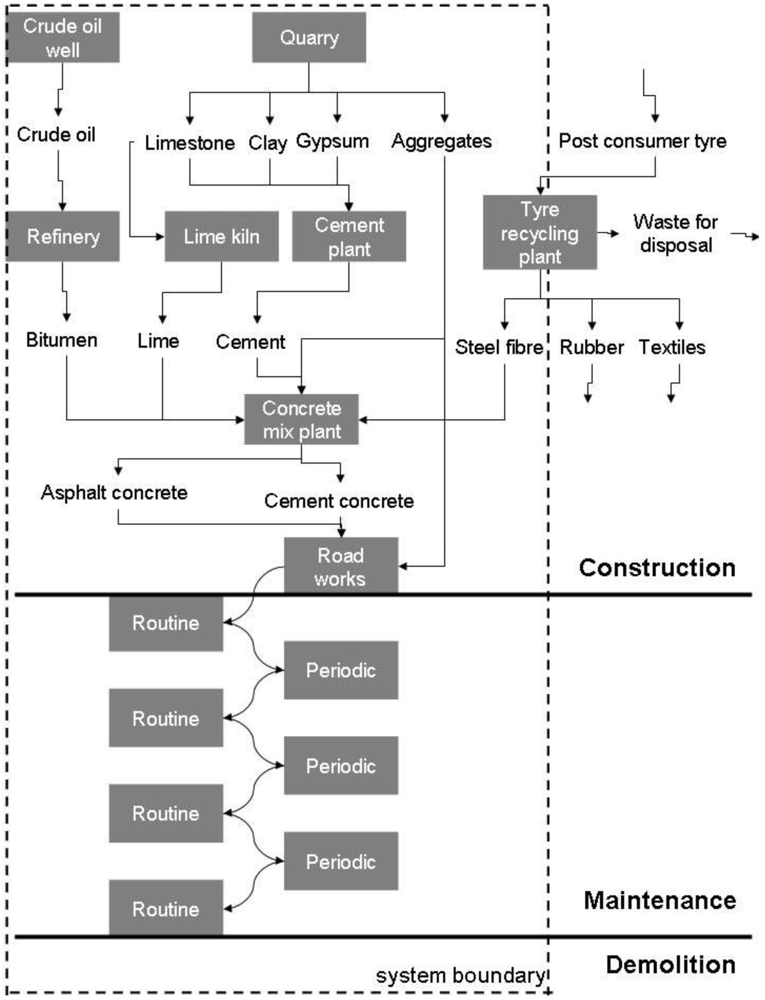
The overall methodology of the life cycle assessment (LCA) is summarised in Figure 1. After the Goal and Scope of work were set, an Inventory Analysis was undertaken to assemble environmental, energy and cost data from local and literature sources. Life Cycle Impact Assessment was implemented by loading all data gathered by the previous phase in the LCA and life cycle cost analysis (LCCA) software named Gabi and CUT model respectively [18].
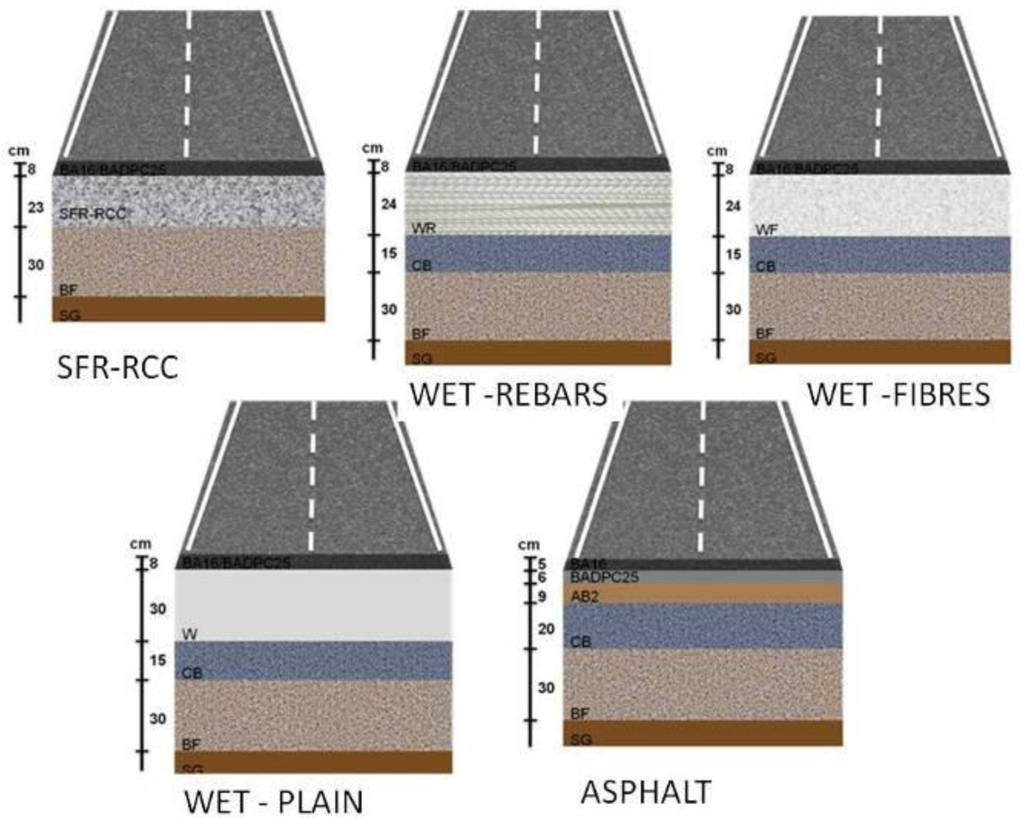
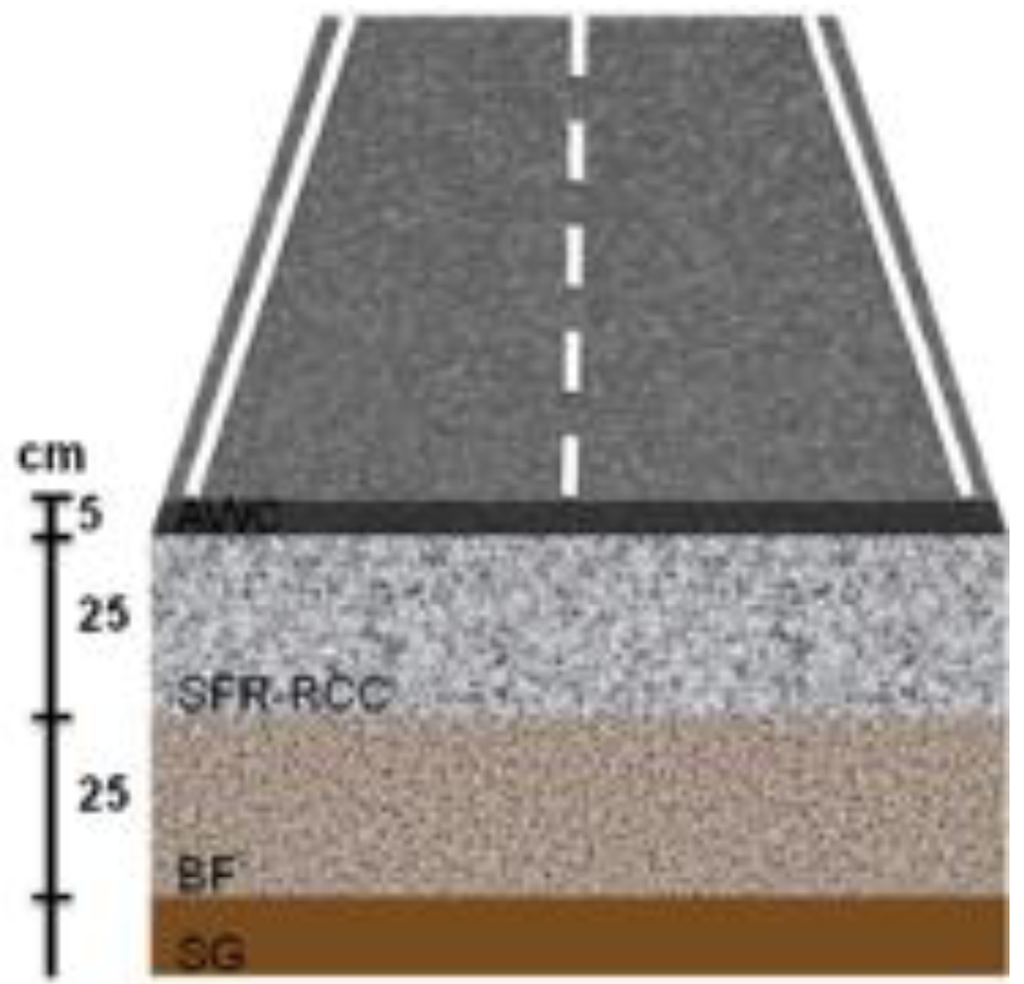
The LCA and LCCA was initially undertaken for the “EcoLanes” demonstration pavement constructed in Cyprus, whose profile is illustrated in Figure 3, and this was followed by a parametric study carried out to assess the effects of design parameters on the LCA and LCCA outputs of the proposed pavement type. Life cycle results include, in addition to the parametric study output, a comparison of a steel fibre-reinforced roller-compacted concrete (SFR-RCC) pavement with four alternatives: one flexible asphalt pavement and three concrete rigid alternatives (see Figure 2). The design of the SFR-RCC was altered in the comparison study to apply in a global scale and not only to the local construction conditions (geological and meteorological variables) [18-20].
2.3. Demonstration Pavement Overlay in Cyprus
To demonstrate the research findings of “EcoLanes”, the Public Works Department in Cyprus constructed (in April 2009) an SFR-RCC pavement overlay on a problematic section of the old road leading to Galataria village (road F624)—at Pafos district, Cyprus—lying on a layer of bentonitic clay [9,21,22]. Figure 3 illustrates the road cross section as constructed by the Public Works Department [18-20].
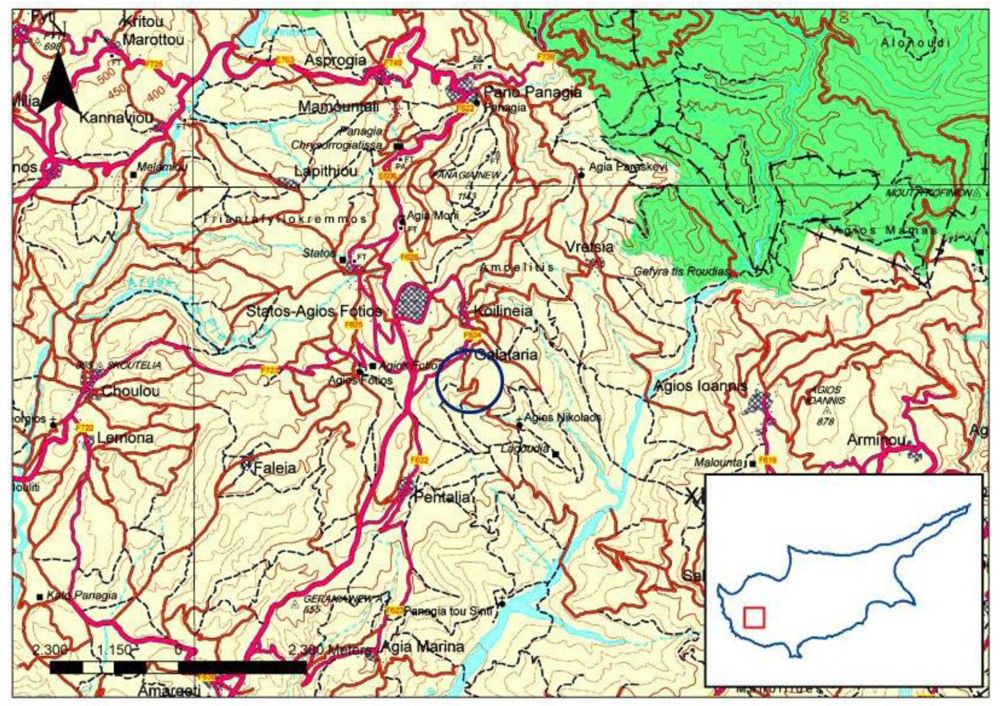
The area is situated between the villages of Pentalia and Galataria (road F624) where the steep ground morphology and the continuous landslides and active land creep observed, render the existing ground an unsuitable foundation for supporting the transportation network of the area (see Figure 4) [18].
The objective of reconstructing a stretch of the F624 road was to minimise the problems of asphalt differential displacement and cracking (and subsequent infiltration of rainwater causing further instability and deterioration problems to the pavements), thus improving the safety and comfort of the area's transport infrastructure, and at the same time reducing the maintenance operations (and hence the costs incurred) regularly required to keep the road up to acceptable standards.
Due to the unstable geology, it was decided that the road improvement should be achieved by strengthening the existing road system without disturbing the sensitive ground and this meant that no preparation work could be carried out on the sub-grade and sub-base of the existing pavement. Consequently, a LLRP overlay, made with SFR-RCC (containing 2% by mass recycled RTC fibres) was constructed rather than a flexible one. The existing asphalt layer was ground up by using a milling machine to achieve a better bond between the existing pavement and the new SFR-RCC overlay [21,22].
The SFR-RCC was transported by insulated trucks (covered for the duration of the trip to avoid any moisture loss due to high temperatures and wind effects) and fed into an asphalt paver, which placed the material in a single 30 cm-thick layer along the whole transverse road width.
To avoid moisture loss from the concrete mix to the base, water was sprayed just before the laying of the SFR-RCC overlay started. To prevent moisture loss from the top surface, a curing membrane was applied immediately after rolling was completed.
The placed SFR-RCC was initially compacted from the surface by using the tamping, vibrating, and pressing compaction systems of the paver, achieving (directly out of the back of the paver) densities equal to or greater than 90% of a modified Proctor test. This resulted in a working width, 25 cm-paving depth, transverse road profile, surface accuracy, and surface texture of the highest possible quality achievable for roadway pavements.
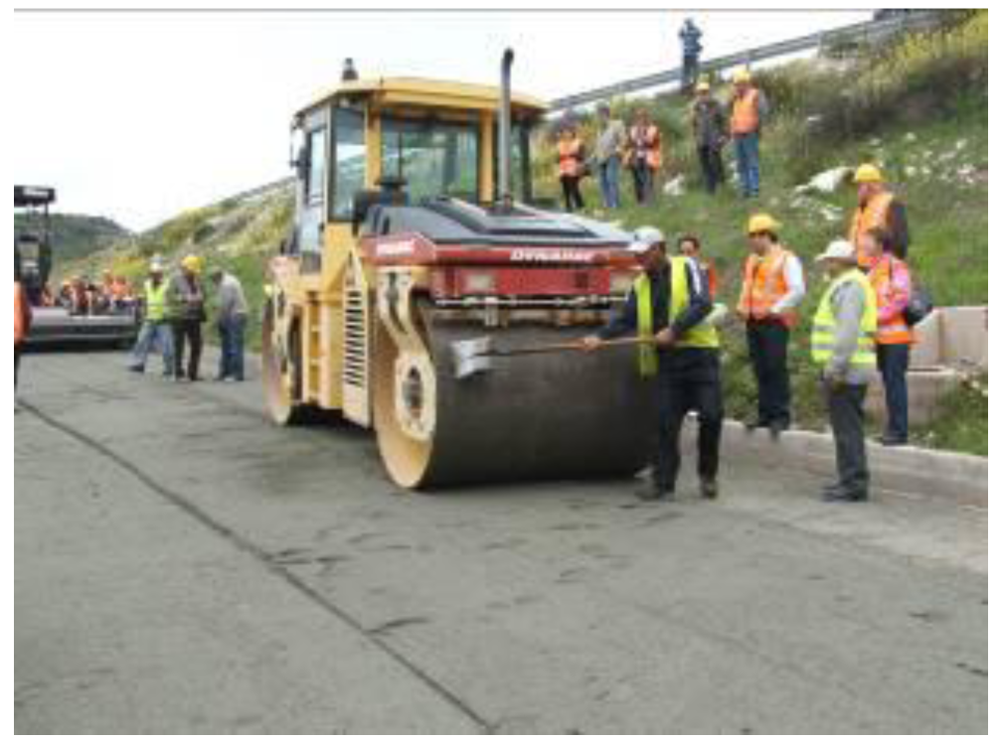
A heavy duty dual drum vibrating roller compacted the SFR-RCC pavement overlay by passing over it until the pavement overlay met the density requirements as mentioned above (design density was achieved) (see Figure 5). The edges of the pavement overlay were compacted in a similar way by a lighter vibrating roller.
2.4. Inventory Analysis
Figure 6 illustrates a flow chart of the work carried out to collect relevant information. Energy consumption data of materials were collected from the following industries: (i) a local ready mixed concrete plant; (ii) a local cement works and quarries company; (iii) a local asphalt plant; (iv) a local lime quarry and (v) a local aggregates quarries company. Material costs for construction and maintenance works were obtained from the Public Works Department. Maintenance strategies were designed based on the Public Works Department feedback. The cost and energy consumption cost for the recycled steel tyre-cord fibres were provided by the “EcoLanes” partner Adriatica Rciclaggio e Ambiente s.r.l. (ADRIA).
Emissions data could only be obtained from published literature as no constant air monitoring strategies were implemented by the industry or the government of Cyprus and therefore no available air quality data are available. The following list of emissions references is held in the LCI database.
Airborne pollutants, emitted from hot mix asphalt batching plants, were obtained from the U.S. Environmental Protection Agency and Minnesota Pollution Control Agency [23].
Crude oil extraction from deep well produces airborne emissions [24]. Bitumen production at a refinery process also causes pollution in air, water and soil (data obtained from Gabi software database).
Ready mix concrete mix plants, cement manufacture plants and raw material extraction processes cause high pollution by air emissions [25]. In addition, rock crushing plants for aggregates production emits pollutants [26].
The Gabi tool has data for energy production plants in Cyprus. Transportation emissions were calculated by Gabi by choosing the appropriate type of vehicle and inputting the distance from plants or extraction sites to the road work site or plants. In addition, diesel consumption for vehicle transportation was also included using Gabi database on diesel at refinery.
3. Results and Discussion
3.1. Development of Recycled Steel Tyre-Cord Fibre Reinforcement for Concrete Pavements
As discussed in section 1, concrete is normally reinforced with industrially-produced steel fibres, mainly to improve its post-cracking mechanical behaviour; however, the high cost of these steel fibres can restrict the extensive use of SFRC in pavement construction. Thus, as discussed above, one of the objectives of “EcoLanes” was to develop and use a cheaper alternative to industrially-produced steel fibres, such as RTC fibres, produced by the mechanical treatment of post-consumer tyres [6].
These RTC fibres have variable geometrical characteristics and contain rubber particles on their surface. If the fibres are added in the concrete mix without removing the rubber or minimising their geometrical variability, fibre agglomeration will form in the concrete, affecting the concrete's mechanical properties. Thus, in order to avoid fibre agglomeration in SFRC pavements, “EcoLanes” developed optimised processes and a hardware prototype that cleans and minimises the geometrical variability of RTC fibres [6].
By the end of the project, 105 tonnes of processed RTC fibres were supplied for the project's research and demonstration activities, including the development of wet- and dry-consistency SFRC mixes, development of the concept of LLRP made with wet- and dry-consistency SFRC as well as the construction of the four demonstration pavements, including the one in Cyprus (examined in the current study).
3.2. Development of Wet- and Dry-Consistency SFRC Mixes
To facilitate the use of RTC fibres in concrete pavements for surface transport, wet- and dry-consistency SFRC mixes were developed and optimised by EcoLanes. This included experimental investigation of the fresh (e.g., workability) and hardened properties (compressive and flexural) and durability (corrosion, freeze-thaw and flexural fatigue) of these SFRC mixes, For comparison purposes, the behaviour of SFRC mixes with industrially-produced steel fibres was also assessed [27,28].
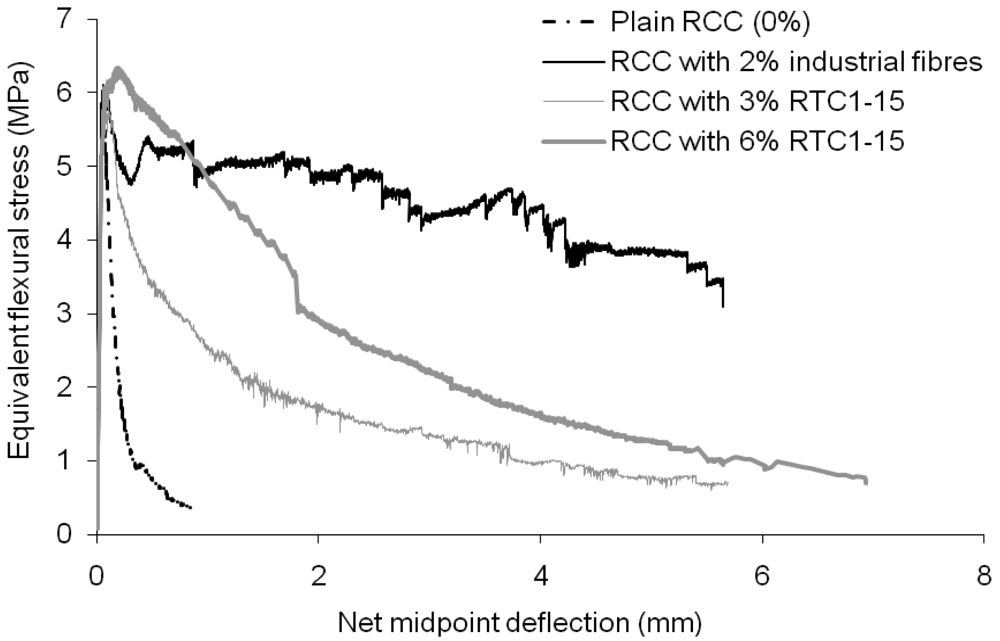
The experimental results confirmed that the mechanical behaviour of wet- and dry-consistency concrete (especially flexural strength and toughness) is improved by the addition of steel fibres. The results indicated that industrially-produced steel fibres are more efficient at reinforcing concrete than RTC fibres (Figure 7). However, it was shown that RTC fibres have the potential to offer a viable alternative to the industrially-produced steel fibres, if used in high amounts (e.g., 6% by mass of concrete) or blended with industrially-produced steel fibres. In addition, it was indicated that the flexural behaviour of dry-consistency SFRC mixes (i.e., SFR-RCC), made with recycled concrete aggregates, is equivalent to the one obtained from SFR-RCC mixes made with natural aggregates [6,27].
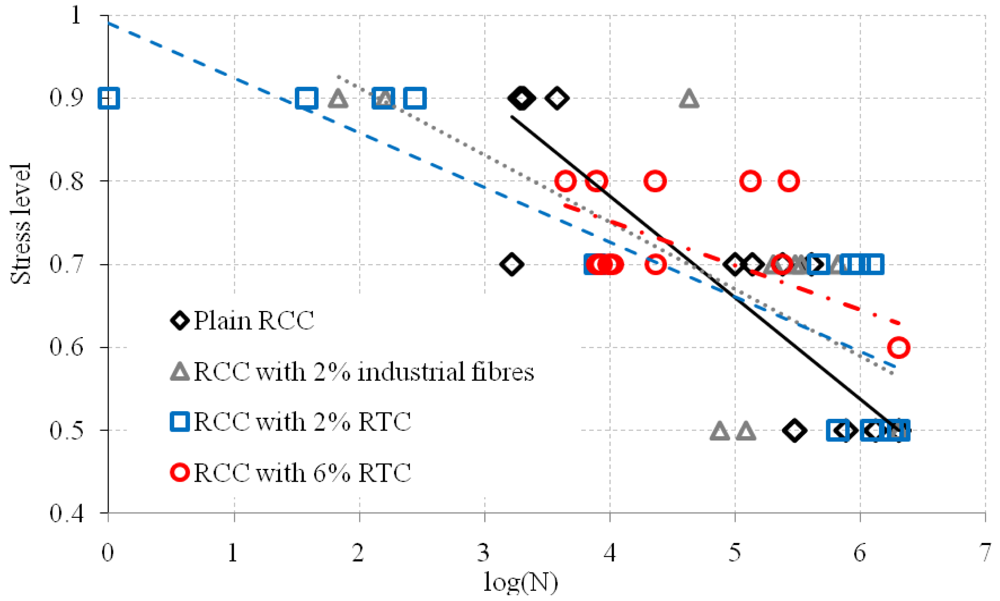
Results of fatigue bending tests of SFRC prisms, carried out for both wet- and dry-consistency SFRC mixes, showed that dry-consistency SFRC containing 2% (by mass) RTC fibres has better fatigue performance than plain dry-concrete (especially at stress levels below 0.7 as shown in Figure 8) [28,29].
In addition, work carried out to assess the durability of the developed SFRC mixes showed that mechanical behaviour is barely affected by corrosive environments; it was observed that wet and dry SFRC containing 6% (by mass of concrete) RTC fibres demonstrates better freeze-thaw resistance than concrete mixes reinforced with industrially produced steel fibres. In addition, the results obtained for corrosion resistance indicate that the mechanical behaviour of wet and dry SFRC is not affected by corrosion, despite the rusty appearance of concrete [28].
3.3. Development, Experimental and Theoretical Validation of the Concept of the Long-Lasting Rigid Pavements
Concrete pavements normally last longer than asphalt pavements [30], and to arrive at economical and sustainable designs for SFRC pavements (reinforced with RTC fibres), the concept of long-lasting rigid pavements made with “low energy” SFRC was developed by “EcoLanes” [31]. This concept was validated at the Technical University of Iasi by undertaking accelerated cyclic load tests of trial SFRC sectors [32]. By the end of the project, 1.5 million load cycles were accomplished and the experimental results indicated that there was no failure in any of the sectors, showing that (over a design life of 30 years) the proposed concrete roads would survive at least 20.5 million-single-axis of traffic. Extensive analytical and numerical (elastic and inelastic finite element) analyses of plain-concrete and SFRC pavements were also undertaken, with the aim of developing appropriate design tools and failure criteria for wet- and dry-consistency SFRC pavements. Existing design methods for concrete pavements were also examined, and a design framework and software were developed for LLRP made with wet- and dry-consistency SFRC [33].
3.4. LCA and LCCA Results
3.4.1. Demonstration Pavement in Cyprus
Table 1 summarises the LCA and LCCA output parameters for the demonstration pavement. These parameters were chosen in order to proceed with the comparison and parametric studies. Regarding environmental aspects of the LCA, it was decided to evaluate the mass of the total airborne emissions rather than any other parameter, such as CO2 equivalents. The reason was to simplify the next phase comparison between the alternative pavement designs. For energy consumption assessment, primary energy and embodied energy were calculated. Embodied energy is the sum of primary energy, which is the energy consumed by all the pavement life cycle processes and produced in the power plants; and the feedstock energy that represents the amount of energy that could be produced by crude oil if it was not used in bitumen production. Finally LCCA estimated parameters are the life cycle cost, agency cost and user cost. The output values reflect the construction of 1 km 2-lane pavement with width 7 m and the pavement lifespan was set to 40 years [19,20,34-36].
3.4.2. Comparison of SFR-RCC Pavement Design with Four Alternative Pavements
SFR-RCC and the alternative pavement designs LCA and LCCA results are summarised in Tables 2 and 3 respectively. The assessment involved analysis of the five pavement designs from the construction until the maintenance and finally the demolition. Similar construction conditions were considered within the framework of the analysis, such as: the road length was set to 1 km and the road was divided into two lanes with 7 m length, according to the demonstration pavement construction design. Moreover, the maintenance strategy was designed for forty years after the construction phase and before the demolition phase [18].
Energy was distinguished as being either primary or embodied because of the relevant high asphalt use in pavement construction. Table 2 clearly illustrates that energy consumption is much lower for the SFR-RCC pavement. Actually, SFR-RCC pavement consumes almost 40% lower, primary or embodied, energy in comparison with asphalt pavement. Airborne emissions are also greatly reduced compared with all the other alternatives. More specifically, SFR-RCC pavement emits approximately 41% less atmospheric pollutants that asphalt pavement [19].
Asphalt pavement, as proven, causes most environmental burden compared with any of the concrete alternatives; even though cement manufacture is globally one of the most environmentally unsustainable industries. Rehabilitation work needed in the mid-life of the pavement life cycle is the most important contributor to the increase in environmental loading. Within twenty years, asphalt layers will need to be demolished and replaced within the framework of the road maintenance; however, concrete pavements have a lifespan, or are assumed to have a lifespan, of approximately 40 years [18].
From the economical aspect of the project, SFR-RCC pavement is the least expensive (see Table 3). However, this does not apply regarding the agency cost. In fact, asphalt pavement agency cost is less than SFR-RCC pavement agency cost by approximately 12%. On the other hand, user cost of the asphalt pavement is almost eighteen times higher than rigid pavement alternatives. This is primarily due to the maintenance phase in the asphalt pavement, mainly the rehabilitation work that is required within twenty years after construction [20].
3.4.2. Parametric Analysis Output
A parametric study was also undertaken to assess the effect of key concrete-mix parameters on the environmental loadings, energy consumption and construction cost of SFR-RCC pavements. These parameters (see Table 4) included type of concrete (wet and dry consistency), type of steel fibres (industrially produced and RTC fibres), type of aggregates (natural and recycled-concrete aggregates) as well as fibre content (for recycled fibres only). The mechanical properties of the concrete mix designs considered in this parametric study were assessed experimentally by “EcoLanes” [27], while the required pavement depth was estimated by using the design algorithm and software developed for wet- and dry-consistency SFRC [33]. The parametric analysis was undertaken for a two-lane (7 m width) 1km rural road [19].
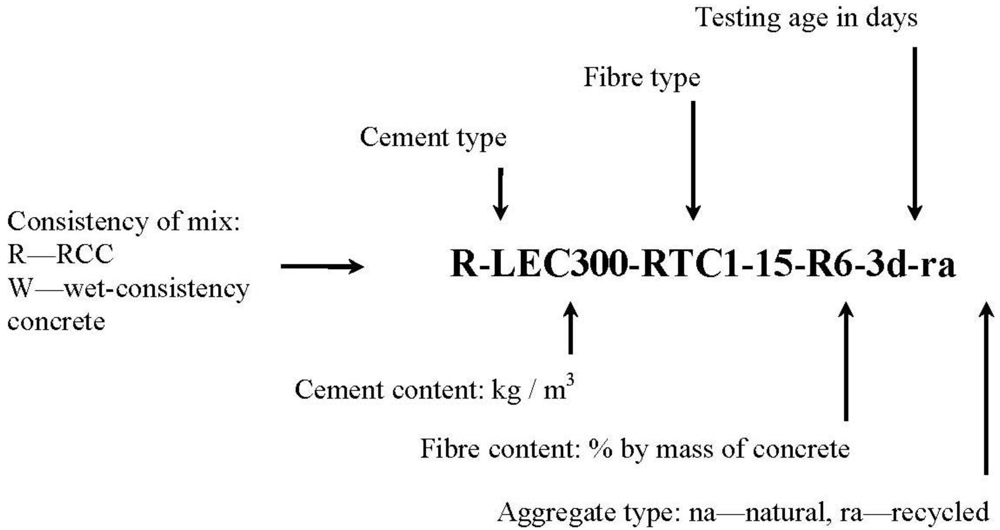
Figure 9 illustrates the terminology used to describe the mix designs shown in Table 4. The first tem R or W is for dry (i.e., RCC) or wet concrete respectively. The second term is the cement input (LEC is for low energy cement) including the quantity in kg. The third term is the fibre type where I2C1/54 is for industrial steel fibres and RTC is for recycled steel fibres. The fourth term is the fibre content in % by mass of concrete. Finally, the testing period in days and whether natural or recycled aggregates were used in concrete production are identified.
The results of the LCA study show that wet concrete reinforced with industrially produced steel fibres appears to have lower air emissions (30%) and energy consumption (29%) than the plain RCC (see Table 5). In contrast, RCC reinforced with industrially produced fibres has more environmental loadings and energy consumption that the wet concrete mix, but these are still lower that those determined for plain RCC (18% less air emissions and 16% less energy consumption). Wet concrete appears to have lower values than the RCC because of the mix design; although the cement content is higher in wet concrete by 80 kg per m3 of concrete, the natural aggregate content of the wet mix is lower (by 215 kg per m3 of concrete) [19].
Table 5 shows that industrially produced steel fibres seem to be a more environmentally attractive material in pavement construction than the RTC 15–25 RTC fibres. Regarding the latter, it is essential to mention the use of recycled materials produced from post consumer tyres, which would otherwise have been disposed of in landfill sites. In comparison, industrial steel fibres are made from steel, which is an alloy consisting mostly of iron extracted from iron ores. Raw material extracted from ground reserves is limited, therefore abiding by the three R's (Reduce Reuse Recycle) of waste management is a more environmentally correct approach. The reason is that for 1 kg of recycled steel fibre produced, 70% is type RTC 1–15 and the remaining 30% is type RTC 15–25. Therefore, more steel fibre production is needed for type RTC 15–25 compared to the industrial fibre production for concrete with the same fibre dosage. In addition, the most expensive alternative is the RCC reinforced with industrially produced fibres because of the high purchase cost of the industrially-produced fibres. Hence, the industrially produced fibres are not economically sustainable for use as reinforcement in concrete pavements [19].
On the other hand, minimising the percentage of natural aggregates used and increasing the content of recycled concrete aggregates, the air emission values declined by only 28 kg. This difference is so small because of the similar aggregation crushing processes: natural aggregates are crushed in the quarries using similar equipment to that used to crush recycled concrete aggregates [19].
Moreover, fibre dosage plays a significant role in the LCA result influenced by the layer depth of each design and therefore by the fibre's quantity input (see Table 6). RCC reinforced with 5% (by mass of concrete) RTC 15–25 RTC fibres have lower emissions and energy consumption values than all the RCC mix designs (19% less than the plain RCC). This SFR-RCC mix has better mechanical characteristics than the other RCC mixes and, hence, a smaller layer depth is required to support the design load due to traffic [19].
The LCA results indicate that the cement type used in the concrete mix design has some effect on the emissions and energy consumption determined for the concrete layer production (see Table 7). It is noted that the SFR-RCC mix design and depth is used for the cement comparisons. In the case of LEC used in the above parametric analysis, the LCA results values of emissions and energy consumption are the lowest (1.5% less than for the concrete mix made with Ordinary Portland cement). Cement dosage used in the mix design was 300 kg of cement per m3 of concrete, except CEMIIA-L (200) which is 200 kg of cement per m3 of concrete [19].
The transportation distances of the raw materials' (aggregates, concrete and fibres) production site to the construction site influence air emissions and energy consumption values. By increasing the transportation distance by a factor of 10, the air emissions are higher by 0.93% and the energy consumption is further increased by 6.7% [19].
Regarding the concrete layer construction cost, RCC reinforced with 5% (by mass of concrete) RTC 15–25 RTC fibres has the lowest cost up to 24% less in relation to the most expensive RCC mix reinforced with industrially produced fibres. This is due to the highest purchase cost of the industrial fibres. Comparing RCC and wet-consistency concrete mixes, it is well proven that the first is less expensive, mostly because of the lower laying costs. Generally, the cost of RCC reinforced with steel fibres is not constant because it depends on the steel fibre type used in the mix design and the layer depth. The RCC mix reinforced with RTC fibres RTC 15–25 cost less in relation to other RCC mix designs because of the fibres' cost. However, increasing the fibre dosage, the layer cost does not respectively increase because the layer depth varies according to the design method, which defines a minimum depth even if the mechanical properties are improved (see Table 4) [20].
4. Conclusions
In conclusion, the proposed SFR-RCC pavement design is well sustainable alternative to SFRC for use in road construction industry both in economical and environmental terms. Given available design methodology, existing laying and material production equipment, SFR-RCC pavement may be the ideal new approach in road construction.
However, further work can be done towards a more environmental and economical pavement design. Most importantly, the life cycle studies showed that the steel fibre type and dosage can greatly influence the environmental (emissions and energy consumption) and economical indicators of concrete pavement layer. This is because the pavement layer depth, required to support the traffic load, is affected by the mechanical properties of SFRC which in turn are influenced by fibre type and dosage. On the other hand, recycled concrete aggregates may replace natural aggregates used in concrete mix, achieving only a small reduction in air emissions. But, it is more environmentally sustainable to recycle wastes than to extract natural resources. This should have an added value to the LCA/LCCA output comparing the two alternatives, even if the benefit of using recycled aggregates seems rather de minimis.
Finally, recommendations should be made on air quality in-situ monitoring rather than using reference data sources. However, within the framework of the project, the lack of data availability on a local scale forced researchers to use data that may not necessary apply. Therefore, obtaining better data quality is significant for more accurate conclusions.

Acknowledgments
This research has been financially supported by the 6th Framework Programme of the European Community within the framework of specific research and technological development programme “Integrating and strengthening the European Research Area”, under contract number 031530.
References
- Mohammadi, Y.; Ghasemzadeh, H.M.; Talari, T.B.; Ghorbani, M.A. Replacing Fibre reinforced concrete with bitumen asphalt in airports. Proc. World Acad. Sci. Eng. Technol. 2009, 58, 30–34. [Google Scholar]
- Elsaigh, W.A. Steel Fibre Reinforced Concrete Ground Slabs: A Comparative Evaluation of Plain and Steel Fiber Reinforced Concrete Ground Slabs. MEng (Transport); University of Pretoria: Pretoria, South Africa, 2001. [Google Scholar]
- Elsaigh, W.A.; Kearsley, E.P.; Robberts, J.M. Steel Fibre Reinforced Concrete for Road Pavement Applications. Proceedings of the 24th Southern African Transport Conference, Pretoria, South Africa, 11–13 July 2005; pp. 191–201.
- Johnston, C.D. Steel fiber-reinforced concrete—present and future in engineering construction. Composites 1982, 13, 113–121. [Google Scholar]
- Nataraja, M.C.; Nagaraj, T.S.; Basavaraja, S.B. Reproportioning of steel fibre reinforced concrete mixes and their impact resistance. Cem. Concr. Res. 2005, 35, 2350–2359. [Google Scholar]
- Neocleous, K.; Angelakopoulos, H.; Pilakoutas, K.; Guadagnini, M. Fibre-reinforced roller-compacted concrete transport pavements. Proc. Inst. Civ. Eng.: Transp. 2011, 164, 97–109. [Google Scholar]
- EcoLanes. Economical and Sustainable Pavement Infrastructure for Surface Transport. EU FP6 STREP project, contract 031530. Available online: http://ecolanes.shef.ac.uk (accessed on 12 January 2010).
- Koutselas, K.; Neocleous, K.; Angelakopoulos, H.; Pilakoutas, K. Specifications for the Construction of Steel Fibre-Reinforced Roller Compacted Concrete Roads. Proceedings of the 11th International Conference on Concrete Roads—The answer to New Challenges, Seville, Spain, 13–15 October 2010.
- Pilakoutas, K.; Neocleous, K.; Angelakopoulos, H.; Koutselas, K. Economical and sustainable pavements-the ecolanes project. Concrete 2010, 44, 60–61. [Google Scholar]
- Guinée, J.B. Handbook on Life Cycle Assessment: Operational Guide to the ISO Standards; Kluwer Academic: Dordrecht, The Netherlands, 2002; p. 692. [Google Scholar]
- Walls, J.I.; Smith, M.R. Life-Cycle Cost Analysis in Pavement Design—In Search of Better Investment Decisions; U.S. Department of Transportation, Federal Highway Administration, Pavement Division, HNG-40, Office of Engineering: Washington, DC, USA, 1998; p. 107. [Google Scholar]
- SUSCON. Life Cycle Assessment of Road Pavement; National Technical University of Athens, Sustainable Construction in Public and Private Works through IPP approach “SUSCON” (Life05 ENV/GR/000235) project: Athens, Greece; 8; November; 2006; p. 28. [Google Scholar]
- Jullien, A.; Moneron, P.; Quaranta, G.; Gaillard, D. Air emissions from pavement layers composed of varying rates of reclaimed asphalt. Resour. Conserv. Recycl. 2006, 47, 356–374. [Google Scholar]
- Athena-Institute. A Life Cycle Perspective on Concrete and Asphalt Roadways: Embodied Primary Energy and Global Warming Potentials; Cement Association of Canada: Ottawa, Canada, 2006; p. 68. [Google Scholar]
- Stripple, H. Life Cycle Assessment of Road: A Pilot Study for Inventory Analysis; IVL Swedish Environmental Research Institute: Stockholm, Sweden, 2001. [Google Scholar]
- Van Leest, A.J.; Van der Loos, R.M.M.; Venmans, A.A.M.; Van Hartskamp, S.B. Decision Support Model for Road Pavements Based on Whole Life Costing, Life-Cycle Analysis, and Multi-Criteria Analysis. Proceedings of the Tenth International Symposium on Concrete Roads, Brussels, Belgium, 18–22 September 2006.
- Roth, L.; Eklund, M. Environmental evaluation of reuse of by-products as road construction materials in Sweden. Waste Manage. 2003, 23, 107–116. [Google Scholar]
- Achilleos, C.; Hadjimitsis, D.G. Comparison of conventional and “ECO” transportation pavements in cyprus using life cycle approach. Proc. World Acad. Sci. Eng. Technol. 2010, 66, 379–383. [Google Scholar]
- Achilleos, C.; Hadjimitsis, D.G.; Themistocleous, K. Environmental Impact and Energy Consumption of Demonstrations; WP4 (Environmental Studies and Site Processes) Deliverable Report 4.6, FP6 EU STREP Project EcoLanes (031530); 2009; p. 28. [Google Scholar]
- Achilleos, C.; Hadjimitsis, D.G.; Themistocleous, K. Life-cycle Costing of Demonstrations; WP4 (Environmental Studies and Site Processes) Deliverable Report 4.7, FP6 EU STREP Project EcoLanes (031530); 2009; p. 20. [Google Scholar]
- Neophytou, P.O. Problems in the Specific Environment (Cyprus)—Section of the Old Road to Galataria Village—F624; WP7 (Demonstrations in an Eastern Mediterranean Environment) Deliverable Report 7.1b, FP6 EU STREP Project EcoLanes (031530); 2008; p. 92. [Google Scholar]
- Neophytou, P.O. Construction of the Road Using New Techniques to Solve the Defined Problems (Section of the Old Road to Galataria Village—F624, Pafos, Cyprus); WP7 (Demonstrations in an Eastern Mediterranean Environment) Deliverable Report 7.3b, FP6 EU STREP Project EcoLanes (031530); 2009; p. 26. [Google Scholar]
- Minnesota-Pollution-Control-Agency. Asphalt air emission calculator. Available online: http://www.pca.state.mn.us/publications/sbeg-asohalt.xls (15 November 2009).
- Lewis, C.A. Fuel and Energy Production Emission Factors; Deliverable No. 20, FP4 EU project MEET (ST-96-SC.204); 1997; p. 65. [Google Scholar]
- Sjunnesson, J. Life Cycle Assessment of Concrete; Department of Technology and Society: Lund, Sweden, 2005. [Google Scholar]
- Oklahoma-Department-of-Environmental-Quality. Rock crushing plant applications device. Available online: http://www.deq.state.ok.us/AQDNew/resources/rockcrusheradvice.pdf (15 November 2006).
- Angelakopoulos, H. Recycled Steel Fibre Reinforced Roller-Compacted Concrete. PhD Thesis, The University of Sheffield, Sheffield, UK, 2011. [Google Scholar]
- Graeff, A. Long Term Performance of Recycled Steel Fibre Reinforced Concrete for Pavement Applications. PhD Thesis, The University of Sheffield, Sheffield, UK, 2011. [Google Scholar]
- Graeff, A.; Vania, M.; Peres, N.N.; Silva-Filho, L.C.P.; Neocleous, K.; Pilakoutas, K. Use of recycled steel fibres recovered from post-consumer tyres as fatigue reinforcement for concrete pavements. Proceedings of the Second International Conference on Best Practices for Concrete Pavements, Florianopolis, Santa Catarina, Brazil, 2–4 November 2011.
- Embacher, R.A.; Snyder, M.B. Life-cycle cost comparison of asphalt and concrete pavements on low-volume roads case study comparisons. Transp. Res. Rec. 2001, 1749, 28–37. [Google Scholar]
- Andrei, R.; Taranu, N.; Zarojanu, H.G.; Vlad, N.V.; Boboc, V.; Vrancianu, I.D.; Nerges, M. State-of-the-Art Report on Design and Construction of Long Lasting Rigid Pavements–LLRP; WP3 (Pavement Testing, Analysis and Design) Deliverable Report 3.1, FP6 EU STREP Project EcoLanes (031530); 2007; p. 38. [Google Scholar]
- Cososchi, B.; Taranu, N.; Zarojanu, H.G.; Andrei, R.; Boboc, V.; Muscalu, M.; Banu, O.M. Accelerated Load Testing 200 k to 1.5 m Passes; WP3 (Pavement Testing, Analysis and Design) Deliverable Report 3.5, FP6 EU STREP Project EcoLanes (031530); 2009; p. 37. [Google Scholar]
- Taranu, N.; Zarojanu, H.G.; Andrei, R.; Boboc, V.; Cojocaru, R.; Muscalu, M.; Banu, O.M.; Puslau, E. Developing of Guidelines for the Design of SFRC Pavements; WP3 (Pavement Testing, Analysis and Design) Deliverable Report 3.6, FP6 EU STREP Project EcoLanes (031530); 2009; p. 25. [Google Scholar]
- Hadjimitsis, D.G.; Themistocleous, K.; Achilleos, C.; Kallis, S.; Neofytou, P.; Neocleous, K.; Pilakoutas, K. Life cycle costing of a new transportation pavement constructed in the paphos district area in cyprus as a pilot study of the EcoLanes Project. Proceedings of the Second International Conference on Environmental Management, Engineering, Planning and Economics (CEMEPE 09) & SECOTOX Conference, Mykonos island, Greece, 21–26 June 2009.
- Hadjimitsis, D.G.; Themistocleous, K.; Achilleos, C.; Kallis, S.; Neofytou, P.; Neocleous, K.; Pilakoutas, K. Life cycle costing and assessment for innovative transportation pavement in cyprus. Proceedings of the Sixth International Conference on Maintenance and Rehabilitation of Pavements and Technological Control (MAIREPAV6), Turin, Italy, 8–10 July 2009.
- Hadjimitsis, D.G.; Themistocleous, K.; Achilleos, C.; Kallis, S.; Neofytou, P.; Neocleous, K.; Pilakoutas, K. Environmental Impact and Energy Consumption of Transport Pavements in Cyprus. Proceedings of the 11th International Conference on Environmental Science, Crete, Greece, 3–5 September 2009; pp. A419–A425.
© 2011 by the authors; licensee MDPI, Basel, Switzerland. This article is an open access article distributed under the terms and conditions of the Creative Commons Attribution license (http://creativecommons.org/licenses/by/3.0/).